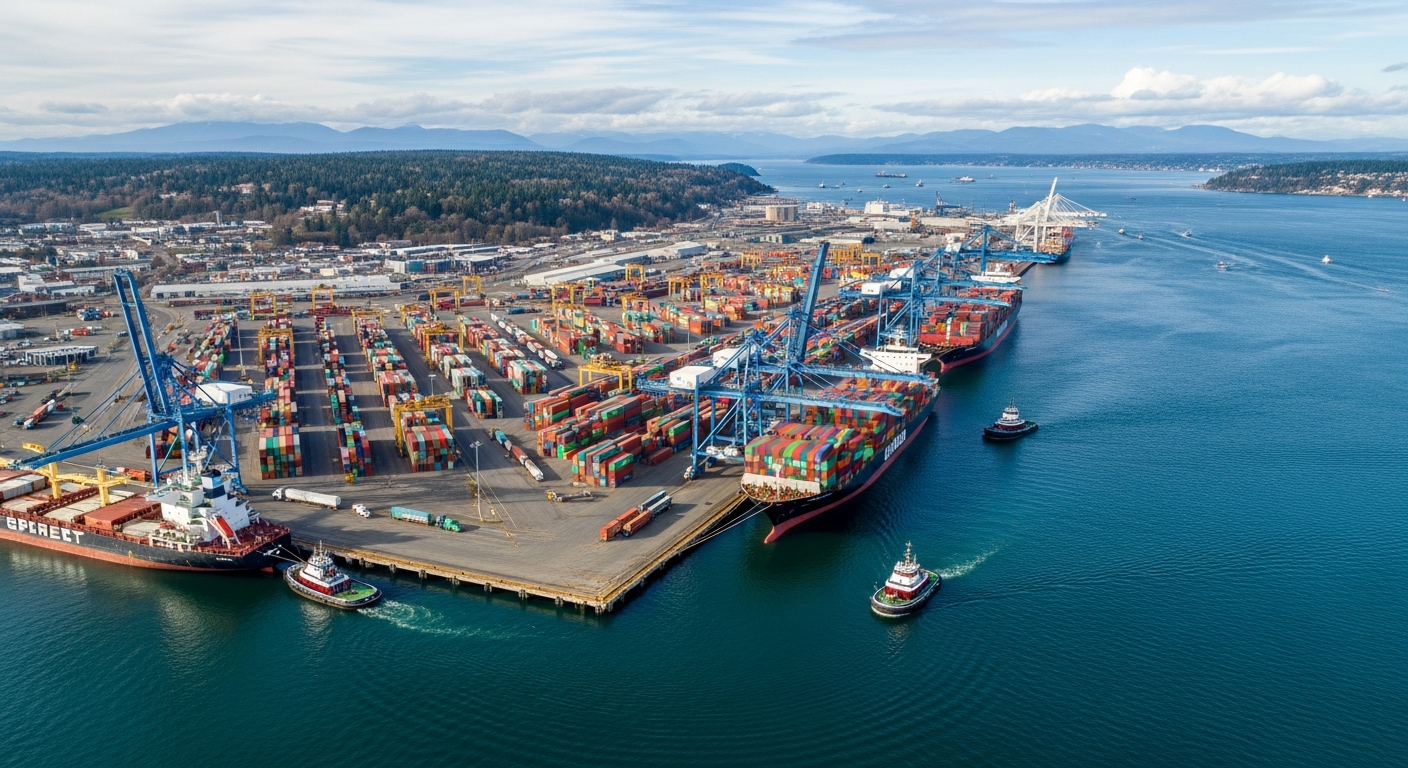
For Everett-area businesses, importers, shippers, and logistics operators, the Port of Everett’s $11.25 million federal grant to rebuild Pier 3 is a supply chain story. Pier 3 — the port’s longest berth at 730 feet — has been operating well below its original structural capacity for years, limiting which cargo-handling equipment can run on it and therefore limiting what kinds of freight can move through it. The rebuild changes that. Here is what businesses need to know about what the project restores and why it matters for Snohomish County’s logistics position.
The Problem the Grant Solves
Pier 3 was built in 1973 with a design live load of 800 pounds per square foot — the rating that allows standard cargo-handling equipment to operate on it. Structural degradation over five decades has forced successive deratings. Today, the south side of the pier is rated at 600 lbs/sqft. The north side is 400 lbs/sqft. Some sections are lower.
In practice, that means the heavier cranes, forklifts, and handling equipment that would otherwise run on a full-capacity pier cannot be permitted. Cargo that requires that equipment has to be handled differently — or routed elsewhere. The rebuild installs new vertical piles and restores damaged structural elements, returning the pier to its full capacity and allowing normal heavy-equipment operations to resume.
What It Means for the Port’s Cargo Mix
The Port of Everett Seaport handles bulk commodities (alumina ore, cement), forest products, and general cargo. A fully restored Pier 3 expands the port’s ability to handle a more diverse mix of freight — particularly cargo requiring heavy handling equipment that the derated pier currently cannot support.
For businesses that import or export through Puget Sound, a stronger Port of Everett means more optionality. The port is already designated by MARAD as a Strategic Commercial Seaport — one of only 18 nationwide — based on its importance to Department of Defense logistics. The rebuild reinforces that designation and the port’s position as a viable alternative to Port of Seattle or Tacoma for certain cargo categories.
The Industrial Market Context
Snohomish County is currently the most affordable industrial and warehouse market in the Puget Sound region. Q1 2026 data from Kidder Mathews shows asking rents running $0.70 to $1.00 per square foot monthly on a triple-net basis — the value end of a market where Seattle-side King County runs up to $1.60/sqft. With 10.39% industrial vacancy across the Seattle metro, Snohomish County is in a tenant-favorable window that is unlikely to last.
A higher-capacity Pier 3 makes the Port of Everett a more competitive import/export hub for businesses already operating in those Snohomish County industrial parks. The supply chain logic is straightforward: affordable warehouse space plus a functioning deepwater port with full cargo-handling capacity is a logistics combination that the county’s industrial corridor — running along Highway 9, SR 9, and the I-5 corridor north of Everett — is well positioned to promote. The full Snohomish County industrial market analysis is at this site’s warehouse market guide for Q1 2026.
Defense Logistics: The DOD Connection
As a MARAD Strategic Commercial Seaport, the Port of Everett supports Department of Defense cargo movements — military equipment, supplies, and materiel that move through commercial ports during exercises, deployments, and mobilizations. The Navy’s presence at Naval Station Everett, combined with the Port’s Strategic Seaport designation, makes Everett a node in the military logistics network that extends from Puget Sound to the Pacific.
The Pier 3 rebuild strengthens that node. For contractors and businesses that support the defense supply chain — from aerospace suppliers in the Paine Field corridor to logistics companies that handle defense cargo — a fully operational Pier 3 is relevant infrastructure.
How to Engage With the Port
The Port of Everett’s seaport operations team handles cargo inquiries directly. The project covers planning, engineering, environmental review, permitting, and construction — a multi-year timeline. Businesses with active or planned cargo operations at Pier 3 should contact the Port directly at portofeverett.com for scheduling and operational impact information as the project progresses.
The complete guide to the Pier 3 grant — including the full structural history and MARAD designation background — is at the Port of Everett Pier 3 complete 2026 guide.
Frequently Asked Questions
What types of cargo will Pier 3 handle after the rebuild?
A more diverse cargo mix than the derated pier currently allows. Historically: bulk alumina ore, cement, general cargo, forest products. Full 800 lbs/sqft restoration allows heavier cargo-handling equipment to operate.
Does the Pier 3 rebuild affect current shipping operations?
Construction phasing and operational impacts have not been announced. Contact the Port of Everett directly at portofeverett.com for scheduling questions.
What is the Port of Everett’s overall capacity?
Washington’s third largest container port and a MARAD Strategic Commercial Seaport, supporting 40,000+ local jobs. Handles bulk, breakbulk, and general cargo.
How does the Pier 3 rebuild connect to Snohomish County’s industrial market?
Snohomish County is the most affordable Puget Sound industrial market at $0.70–$1.00/sqft NNN. A stronger Pier 3 adds import/export capability that supports businesses in county industrial parks.
How does a business inquire about Port of Everett shipping services?
Contact portofeverett.com directly. The Port handles bulk, breakbulk, and general cargo inquiries through its seaport operations team.
Leave a Reply