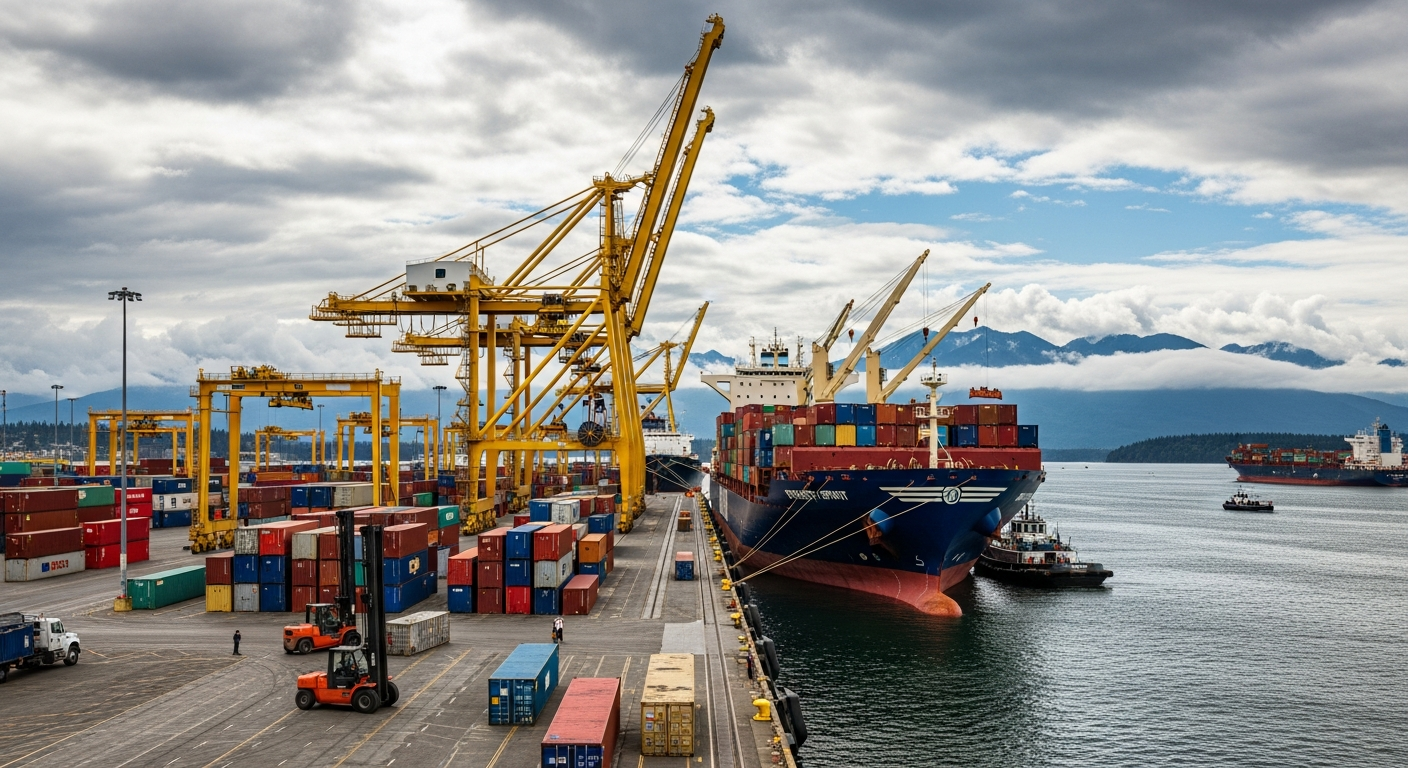
On April 27, 2026, MARAD announced the Port of Everett had won an $11.25 million competitive federal grant to rebuild Pier 3 — the port’s longest berth, built in 1973, and now operating at a fraction of its original structural capacity. The grant comes from MARAD’s Port Infrastructure Development Program, awarded nationally on a competitive basis to ports that can demonstrate clear benefits to freight movement and national defense. Here is the complete guide to what Pier 3 is, why it needs this work, and what the rebuild means for Everett’s supply chain.
What Pier 3 Is and What’s Wrong With It
Pier 3 is the longest berth at the Port of Everett Seaport — 730 feet long with a 120-foot-wide concrete deck, constructed in 1973. For over five decades it has been the backbone of the Port’s cargo operations, handling bulk alumina ore, cement, general cargo, and forest products moving through Puget Sound.
The problem is structural. Pier 3 was originally engineered for a uniform live load of 800 pounds per square foot. Over the years, degradation has required the pier to be derated. The south side now carries a maximum of 600 lbs/sqft. The north side is rated at 400 lbs/sqft. Some sections are derated further. In practical terms, this means the heavy cargo-handling equipment that would otherwise run on the pier cannot be permitted on the structure — limiting the Port’s operational flexibility and the types of cargo it can process.
“The Port is grateful to the U.S. Department of Transportation for this critical maritime infrastructure investment that will ensure the Port of Everett Seaport continues to safely support 40,000-plus local jobs, regional economic development, and the Washington state economy,” said Port CEO and Executive Director Lisa Lefeber at the time of the announcement.
What the $11.25 Million Grant Funds
The PIDP grant covers the full scope of the Pier 3 Strengthening Safety and Commerce project: planning and engineering, environmental review, permitting, and construction. The core construction work is installing new vertical piles beneath the pier and restoring other damaged structural elements — the work that will return Pier 3 to its full live-load capacity and allow heavy equipment to operate on the deck again.
The grant was part of a broader $22 million federal investment in Northwest Washington port infrastructure announced by Rep. Rick Larsen. The Swinomish Indian Tribal Community received the remaining funds for a separate project. PIDP grants are awarded nationally on a competitive basis — ports must demonstrate clear benefits to the safety, efficiency, or reliability of freight movement to qualify.
Why the Port of Everett Is One of 18
The Port of Everett holds a MARAD Strategic Commercial Seaport designation — one of only 18 ports in the United States to carry that status. The designation is based on the port’s importance to Department of Defense cargo movements. Strategic Commercial Seaports are the civilian maritime infrastructure the military counts on for logistics during mobilizations and sustained operations.
That designation is part of why the Port of Everett consistently wins federal investment. It’s not just about commerce — it’s about defense supply chain resilience. A degraded Pier 3 is a gap in that chain. Restoring it to full capacity makes Everett’s role in the national maritime network more secure.
The Broader Waterfront Context
The Pier 3 grant arrives alongside ongoing investment across Everett’s waterfront. The $6.75 million wharf rebuild on West Marine View is nearing completion. The Millwright District is under construction. Waterfront Place Restaurant Row has new tenants operating. The Edgewater Bridge — which improves access to the waterfront corridor — opened April 29, 2026.
The Pier 3 rebuild is the seaport side of that same story. While the marina-facing development attracts restaurants and housing, the industrial seaport is quietly receiving federal infrastructure investment that underpins the economic base all that development rests on. The Waterfront Place complete guide covers the marina and restaurant district in detail.
Frequently Asked Questions
What is the Port of Everett Pier 3 federal grant?
An $11.25 million MARAD PIDP grant to rebuild Pier 3 — installing new piles and restoring structural capacity on the port’s 730-foot longest berth, originally built in 1973.
Why does Pier 3 need to be rebuilt?
Structural degradation has derated the pier from 800 lbs/sqft original capacity to 600 lbs/sqft (south) and 400 lbs/sqft (north), preventing full-capacity cargo operations and heavy equipment use.
What cargo does Pier 3 handle?
Historically: bulk alumina ore, cement, general cargo, and forest products. Full structural restoration would allow a more diverse cargo mix and heavier equipment.
How many jobs does the Port of Everett support?
Port CEO Lisa Lefeber cited 40,000-plus local jobs supported by the Port of Everett Seaport’s operations.
What is the MARAD Strategic Commercial Seaport designation?
A federal designation held by only 18 U.S. ports, based on importance to Department of Defense cargo movements. The Port of Everett holds this designation.
Who announced the grant?
Rep. Rick Larsen announced the $22 million Northwest Washington port infrastructure package. MARAD’s formal announcement came April 27, 2026.
When will the Pier 3 rebuild be completed?
No specific date has been announced. The grant covers planning through construction — a multi-year process for marine infrastructure of this scale.
Leave a Reply