Related on Tygart Media: trust gap · Notion prompt patterns · Notion AI review.
The 60-second version
Notion AI doesn’t make you smarter. It makes your existing editorial infrastructure faster. If your workspace is well-organized, well-tagged, and well-written, the agent produces output that feels like a sharp teammate. If your workspace is sparse, contradictory, or under-tagged, the agent produces output that feels generic. Editorial Surface Area is the operator’s term for the substrate the agent runs on. The smartest move before scaling agents is widening that surface — not buying more credits.
Why this matters more than tooling debates
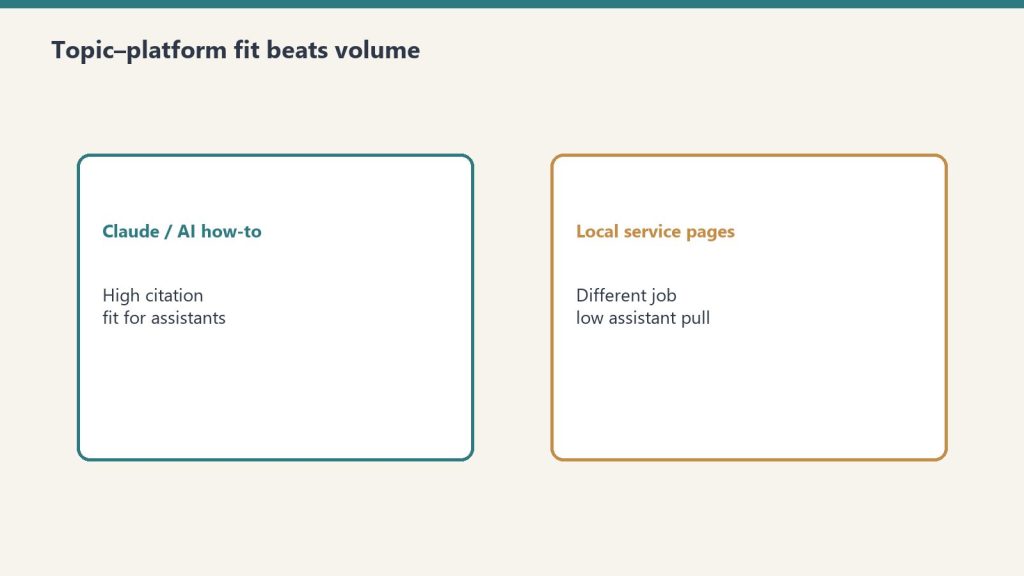
Most operator conversations about AI fixate on which model is best, which platform is winning, and which prompts to use. Those debates miss the underlying mechanic: the agent’s output is a function of the input substrate. A great agent on a thin substrate produces thin work. A mediocre agent on a deep substrate produces strong work. The substrate is the leverage point.
This is why two operators using the same Notion AI on the same plan get wildly different value. The one with three years of organized project notes, tagged client databases, and structured meeting archives gets an agent that can synthesize anything. The one who joined Notion last month and hasn’t filled in fields gets an agent that hallucinates plausibly.
What editorial surface area actually consists of
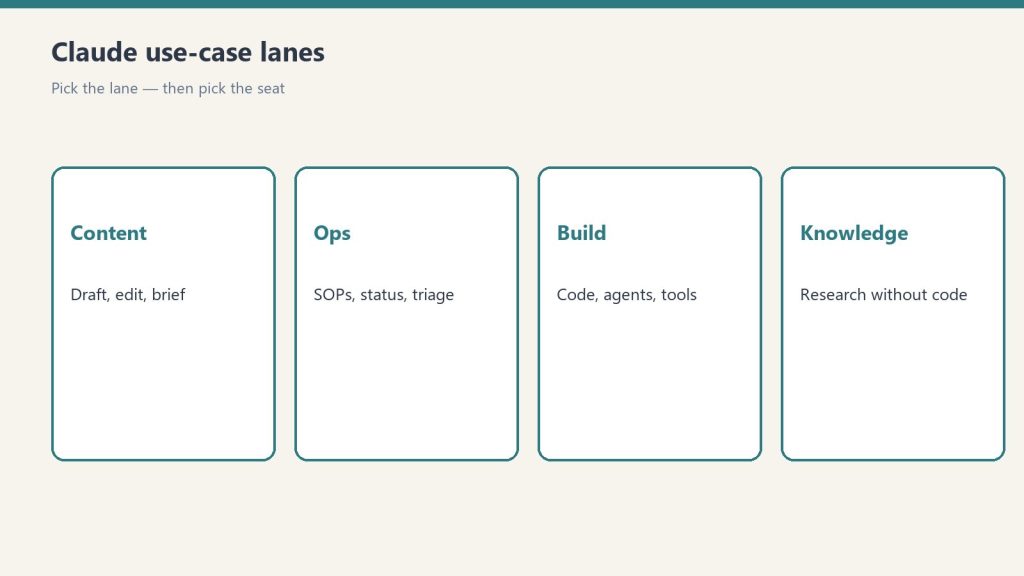
Five layers, in rough order of impact:
1. Structured databases with consistent properties. Not pages, databases. With named columns, controlled vocabularies, and reliable filling. This is the substrate agents query best.
2. Cross-linked pages. Pages that reference each other through Notion’s link system give the agent a navigable graph. Standalone pages are dead ends.
3. Tagged content with controlled taxonomy. Tags only help if they’re consistent. Twenty different spellings of “client” produces an agent that can’t find anything.
4. Written-down conventions. A page that says “this is how we name projects, this is how we structure client folders” gives the agent the rules of your house.
5. Historical archives. Old meeting notes, decided projects, retired playbooks. Agents synthesize patterns from history. The deeper the archive, the better the synthesis.
The operator’s mistake
The mistake is treating AI as a substitute for editorial work rather than as an amplifier of it. The pattern goes:
1. Operator decides to “use AI more”
2. Operator turns on Custom Agents
3. Outputs feel underwhelming
4. Operator concludes AI isn’t ready
5. Real conclusion: the substrate wasn’t ready
The fix isn’t different prompts or different models. The fix is widening the surface. Spend two weeks tightening database schemas, cross-linking pages, normalizing tags. Then run the agent again. The improvement is dramatic.
How to widen your editorial surface area

Five moves that pay back fast:
1. Pick three databases and standardize their properties. Same column types, same controlled vocabularies, same filling discipline.
2. Add a “context” page to every major project. A short page that captures decisions made, constraints, and stakeholder map.
3. Build a glossary page. What you call things. Your acronyms. Your team conventions.
4. Migrate Slack-quality conversations into Notion. The decisions that happen in Slack but never make it to a Notion page are invisible to the agent.
5. Set a “tag review” calendar event monthly. Twenty minutes to clean up taxonomy drift.
The Tygart Media thesis
This idea has a name in the Tygart Media editorial line: gates before volume. You don’t scale by adding more outputs. You scale by tightening the gates that produce the outputs. AI amplifies whatever you point it at. If you point it at a sloppy substrate, you get sloppy output at scale. If you point it at a tight substrate, you get tight output at scale.
The work that feels boring — schema cleanup, tag discipline, archive organization — is the work that makes AI worth running.
What to read next
Gates Before Volume (the operational version of this idea), Second-Brain Architecture (how to structure the substrate), Trust Gap (why even good substrate doesn’t eliminate human review).
Leave a Reply