Related on Tygart Media: how Notion Skills work · AI autofill databases · Notion second brain setup.
The 60-second version
A Notion AI Agent isn’t a chatbot. It’s a worker that lives inside your workspace and acts on it. The base version waits for prompts. The Custom Agent version (Business and Enterprise plans only) runs autonomously — on a schedule, on a trigger, or on demand — and can work across hundreds of pages for up to 20 minutes per task. Skills let you teach an agent your repeated workflows so it can run them on command. Workers (developer preview, April 2026) let agents call code and external APIs. The mental model is “a teammate with workspace access,” not “a smarter search box.”
Why the distinction matters
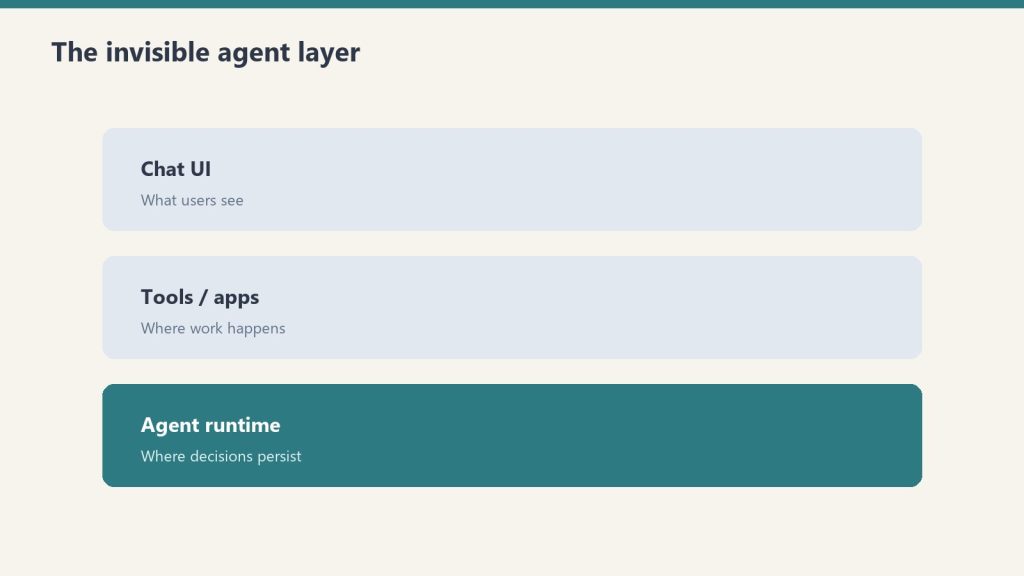
Most coverage treats “Notion AI” as one thing. It isn’t. There are at least four layers, and confusing them leads to operators either underusing or overspending on the platform.
Layer 1: Notion AI in a doc. This is the inline AI you summon with the space bar or /. It rewrites, summarizes, and drafts inside the page you’re on. It’s a writing assistant. It doesn’t act outside the page.
Layer 2: AI Autofill on databases. This populates or updates database properties based on row content. Basic Autofill is included on Business and Enterprise plans. Custom Agent Autofill uses Notion Credits for richer reasoning. It’s an enrichment layer, not an agent in the proactive sense.
Layer 3: Standard Notion Agent. Responds to prompts, can read across the workspace, can edit pages, can integrate with Slack, Calendar, and Mail when those are connected. Reactive — it does what you ask, when you ask.
Layer 4: Custom Agent. Proactive. Runs on schedule or trigger. Can work autonomously for up to 20 minutes. Can have skills attached. Can call Workers (in developer preview). This is the layer most people mean when they say “agents.” It’s also the layer that requires Business or Enterprise and, after May 3, 2026, consumes Notion Credits.
If you’re unsure which layer you’re using, you almost certainly aren’t using Layer 4 — and that’s fine for many workflows.
What agents are good at right now
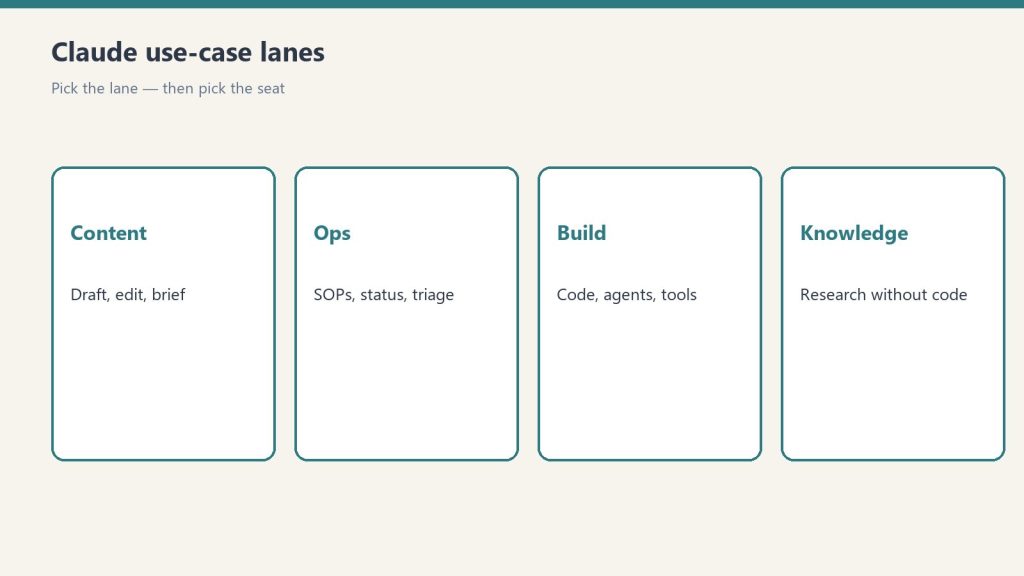
Three categories where agents earn their keep without much fuss:
1. Database hygiene. An agent that runs nightly across your CRM database can verify links, flag stale records, summarize new entries into a digest field, and tag uncategorized rows. This is dull, repetitive work and it stops being your problem.
2. Recurring document production. Weekly status updates, daily standups, meeting prep briefs. Anything where the format is stable and the inputs change. The agent reads the inputs, applies the format, produces the document, and you edit the 10% that needs human judgment.
3. Cross-source synthesis. With Slack, Calendar, and Mail connected, an agent can answer questions that require pulling from multiple sources. “What did the team agree to in the marketing meeting last week, and what’s still open?” That’s a real query an agent can handle — reading the meeting notes, the Slack thread, the calendar follow-up, and producing a synthesis.
What agents are not good at yet
Equally important to name the gaps.
Anything requiring judgment about people. Performance review drafting, hiring decisions, conflict mediation. The agent can summarize and surface; it shouldn’t decide.
Compliance-sensitive output. Legal language, regulated medical content, financial guidance. An agent draft is fine as input to a human reviewer; it isn’t fine as final output.
Novel reasoning under uncertainty. Agents do well when the pattern is established. They do worse when the situation has no precedent in your workspace. “Plan our entry into a new market” is a worse agent task than “summarize what we’ve learned about our existing market.”
Stateful work across long timelines. Agents are getting better at continuity, but for now they’re best at bounded tasks. A 20-minute autonomous run is an upper bound, not a target.
How to think about which layer you need
A simple decision tree:
– Just want help drafting? → Layer 1 (inline Notion AI).
– Want a database to maintain itself? → Layer 2 (Autofill). Use Custom Agent Autofill only when basic isn’t smart enough.
– Want to ask questions across your workspace and get pulls and edits? → Layer 3 (standard agent).
– Want recurring autonomous work on a schedule? → Layer 4 (Custom Agent). Be ready to budget Notion Credits after May 3, 2026.
Most operators land on a mix of Layers 1, 2, and 3. Layer 4 is for specific recurring workflows where the time savings clear the credit cost.
Leave a Reply