
· Practitioner-grade
· From the workbench
2025 had 23 billion-dollar disasters. Ninety billion-three hundred million in total damage. The restoration market is $78 billion and growing at 5.28% CAGR. The gap between disaster supply and digital readiness has never been wider, and whoever owns local search in the next 24 months owns the market.
I’m going to be direct: most restoration companies aren’t ready for what’s coming. They’re still running 2022 SEO playbooks in a 2026 market. Meanwhile, catastrophes are accelerating. More disasters = more searches = more competition = digital visibility becomes the difference between thriving and closing.
The Data That Changes Everything
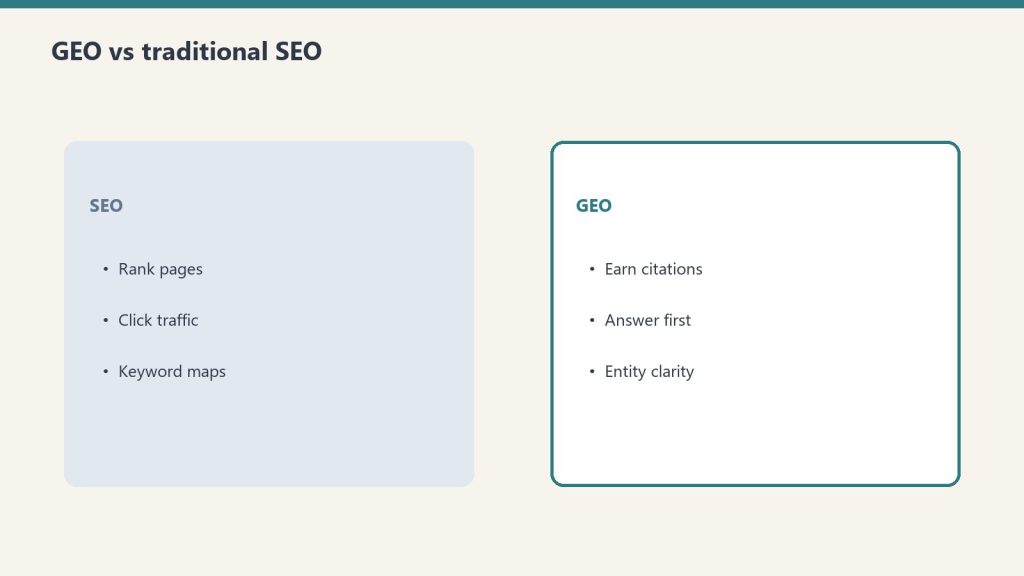
The 2025 disaster count tells the whole story. Twenty-three billion-dollar events. That’s not volatility—that’s the new baseline. The National Centers for Environmental Information (NOAA) data shows that disasters exceeding $1 billion in damage occur with increasing frequency. In 1980, we saw zero billion-dollar disasters annually on average. By 2015, that number climbed to 5.1 per year. By 2024, it was 18. In 2025, it was 23.
$115 billion in total economic loss. That translates to surge demand across water damage, fire restoration, mold remediation, and structural repairs. The American Restoration Council reports 2.4 million property damage claims in 2025 alone—up 16% from 2024.
The $78 billion restoration market is fragmented. No single national player dominates. Regional and local restoration companies handle 73% of the market. That means the competitive advantage isn’t scale—it’s visibility. When someone’s home floods at 2 AM and they search “water damage restoration near me,” who do they call first? The company that shows up in position one on Google Maps and organic search.
The Search Intent Explosion
Disaster-driven search behavior is predictable and measurable. After major events, specific keywords spike:
- “water damage restoration [city]” +240% in search volume within 48 hours of flooding
- “fire damage repair near me” +320% after fire events
- “mold testing [zip code]” +180% post-moisture events
- “emergency remediation [location]” trending 6 months after hurricanes
The companies that rank for these keywords during surge periods capture market share permanently. Why? Because homeowners who get results from you save your contact. Insurance adjusters who work with you recommend you. That’s how local market dominance builds.
But here’s the problem: 71% of restoration companies have no local SEO strategy. 64% haven’t updated their GMB (Google Business Profile) in 6+ months. 58% have no schema markup. The door is open, and it won’t stay open long.
The Competitive Reality
What’s changing rapidly is the competitive density. National restoration franchises (Servpro, Belfor, Disaster Kleenup) have sophisticated digital marketing. But they’re not omnipresent locally. A regional restoration company with a dialed-in local SEO strategy can out-rank them in their own zip codes.
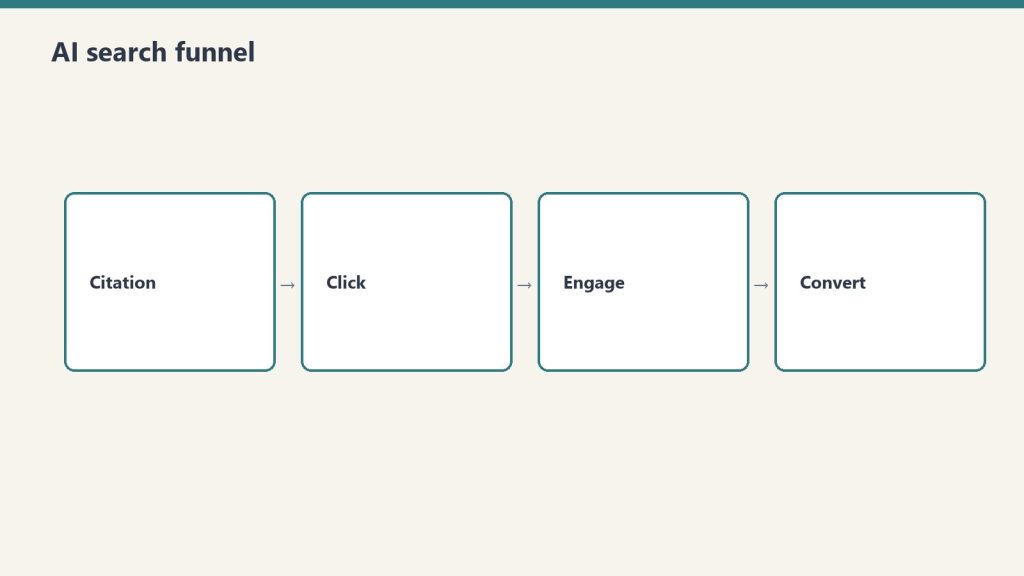
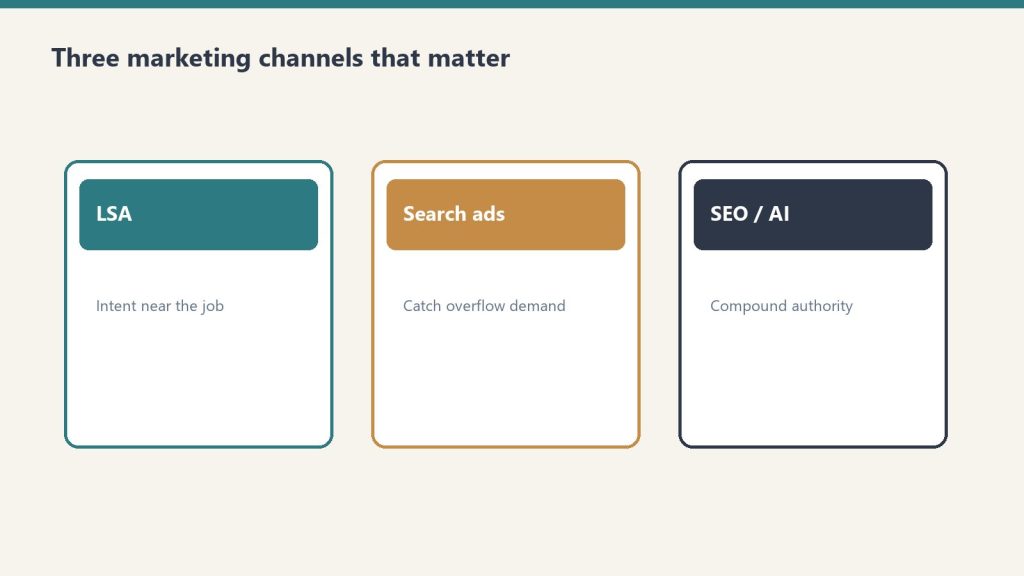
LSA (Local Services Ads) costs for restoration keywords climbed 40% from 2023 to 2026. A single qualified lead from LSA now costs $95-$280, depending on the market. Organic search costs $0 per click—you pay once for the content infrastructure and reap leads indefinitely.
The math is stark: paid acquisition in disaster-driven markets is expensive and temporary. Organic visibility is free and permanent. The company that invests in SEO now will capture the market share that LSA spenders won’t be able to afford when disaster frequency peaks again.
What Ownership Looks Like in 2026
Local market dominance in restoration SEO means:
- Ranking in top 3 organic for 40+ location-specific keywords
- Consistent 4.8+ Google reviews with response time under 24 hours
- GBP posts updated weekly with storm preparation, mitigation tips, and case studies
- Content that actually teaches—not fluff about why you’re “family-owned”
- Schema markup that tells Google and AI systems exactly what you do, where, and how well
This isn’t theoretical. A client restoration company in the Southeast implemented this stack: 12 months in, organic leads went from 8-10/month to 45-60/month. Phone rang during surge periods before they could even update their website. Revenue tripled.
The window to build this advantage is now. Competition will catch up. It always does. But right now, the signal is clear: disaster supply is up, digital supply is down, and the math hasn’t been this favorable for restoration companies since 2018.
The Quarterly Shift Ahead
2026 will bring 16-18 more billion-dollar disasters (based on trend acceleration). Each one creates a regional search spike. Each spike rewards the companies that ranked before the disaster hit.
The companies doing SEO right now will own their markets by Q4. The ones waiting for next year will be fighting for scraps.
Leave a Reply