Most restoration owners think their pricing problem is the matrix. It is not. The pricing problem is strategy: choosing which jobs to take, which programs to participate in, which markets to compete in, and what gross margin target to defend. Operators who get strategy right consistently produce 35 to 45 percent gross margins. Operators who do not consistently produce 12 to 18 percent gross margins on the same matrix.
This article complements our restoration pricing master guide by focusing on the strategic choices that surround the line-item work.
The Three Restoration Pricing Models
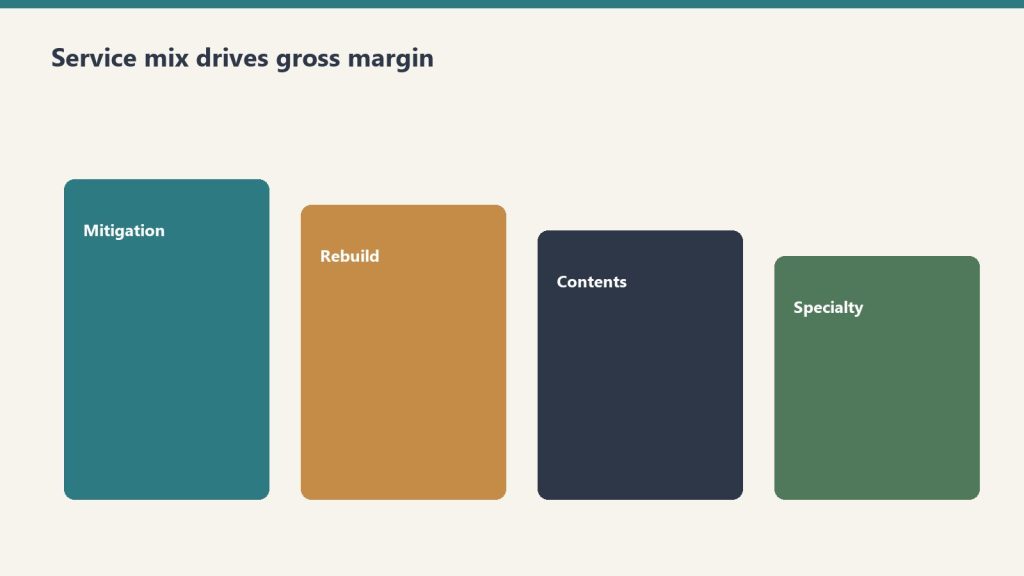
Every restoration company runs on one of three pricing models, and the choice has more impact on profitability than any line-item decision:
- Pure TPA / matrix pricing — high volume, lower margin, predictable referral flow, heavy paperwork burden
- Hybrid TPA + cash — diversified revenue, higher blended margin, requires sales capability
- Cash-only / direct-to-consumer — highest margin per job, requires marketing investment, more sensitive to local economy
Each model has a different cost structure, a different sales motion, and a different capital requirement. The strategic mistake is trying to run all three with the same operations.
Setting a Gross Margin Target
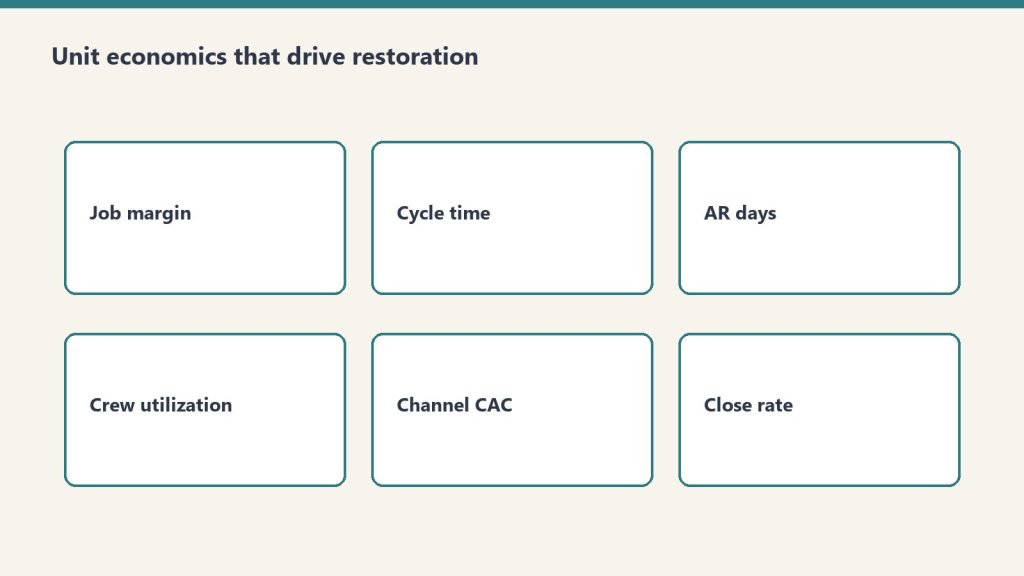
Healthy restoration companies target 35 to 45 percent gross margin on the blended business. TPA-only operators trend toward the lower end; cash-heavy operators trend toward the higher end. Setting a target margin and walking away from jobs that do not meet it is the single most important strategic discipline in the business.
The math works like this: if your overhead absorption requires 35 percent gross margin to break even, every job below that target consumes capacity that should go to better work. Saying yes to those jobs feels like growth but is actually destruction.
Pricing for Value, Not Cost
The most expensive mistake in restoration pricing is the cost-plus mindset: figure out your cost, add a margin, send the estimate. Cost-plus pricing leaves money on the table on every cash job and ignores the value the customer is actually receiving (immediate response, displacement avoidance, professional handling of insurance).
Value-based pricing on cash work uses tiered options, value-anchoring (presenting the most expensive option first), and outcome framing (“we save you the displacement, the insurance battle, and the risk of secondary damage”).
Defending Pricing Without Discounting
Discounting is the gateway drug of restoration pricing. Once an operator starts discounting to win jobs, the local market remembers, and every future job comes in at the discounted rate. The discipline is to defend price without discounting: re-scope the work, drop optional line items, offer payment terms, but never cut the unit prices.
The reps who close at full price are the reps who can articulate why the work costs what it costs and what happens if it is not done correctly. Training the sales conversation matters more than the price itself.
Programs to Avoid
Some TPA programs are not worth participating in at any margin level. The signals that a program is destructive: required participation in third-party billing platforms with high transaction fees, mandatory upfront deductible collection, slow pay (90+ days), excessive audit reductions, or volume requirements that consume more capacity than the revenue justifies.
Walking away from bad programs is harder than joining them — but it is what separates 35 percent margin operators from 12 percent margin operators.
Related on Tygart Media: Starlink on a water job · S500 in the van · local SEO for restoration.
Frequently Asked Questions
What gross margin should a restoration company target?
Healthy restoration companies target 35 to 45 percent gross margin. TPA-only operators commonly run 25 to 35 percent. Cash-only or premium-cash operators commonly run 45 to 60 percent. Below 25 percent gross margin, the business cannot absorb overhead and grow simultaneously.
Should I price the same for cash and insurance jobs?
No. Insurance jobs should be priced to the matrix with disciplined documentation. Cash jobs should be priced for value with tiered options. Pricing identically across both channels means under-charging on cash work or over-pricing insurance work that never gets approved.
How do I compete with low-priced restoration companies in my market?
You do not compete on price. You compete on response speed, scope clarity, communication, warranty, and outcome. Low-priced competitors win the customers who shop on price; you want the customers who shop on confidence. Marketing, sales training, and reputation are the real defenses against low pricing.
When should I walk away from a TPA program?
Walk away when the program requires capacity that would generate more gross profit elsewhere, when transaction fees and audit reductions push the effective margin below your target, or when payment terms exceed 60 days consistently. Calculate the true cost of participation, not just the headline volume.
What is the right gross margin to target on cash jobs specifically?
50 to 60 percent gross margin is the right target for cash work in most markets. Cash jobs carry more sales effort, more collection risk, and no TPA referral funnel — so the margin must compensate. Operators consistently producing 30 percent margin on cash work are leaving substantial profit on the table.
Get The Signal
What we actually ran, what it measured, and what it means for a restoration shop — every week, including the flops.
Leave a Reply