Tag: workflow automation

  • Is Zapier Building the Everything App? The Connector That Became an Orchestrator

    Is Zapier Building the Everything App? The Connector That Became an Orchestrator

    What Is Zapier?
    Zapier is a no-code automation platform founded in 2011 that connects over 8,000 apps through a unified workflow engine. Originally built around simple “if this, then that” triggers, Zapier has transformed in 2025–2026 into an AI orchestration platform—adding autonomous agents, multi-model AI routing, natural language workflow building, and an MCP server that exposes its entire integration library to external AI models including Claude.

    Every company in this series has come at the everything app from a position of strength. Microsoft from enterprise software. Google from search. OpenAI from the frontier model. Mistral from sovereignty and open source. But none of them started where Zapier started: already inside your workflows, connected to every tool you use, trusted with the actual operations of your business.

    That’s the sleeper advantage in this race. While everyone else is building toward the everything app from the outside in, Zapier has been inside the everything app since the day you first connected your Gmail to your CRM.

    The question is whether a 13-year-old automation company can evolve fast enough to own the AI orchestration layer—or whether it becomes the platform that makes everyone else’s AI more powerful.

    📚 Everything App Series

    This is article 9 in our ongoing series examining which AI companies are building the everything app:

    The Transformation: From Connector to Orchestrator

    For most of its first decade, Zapier’s value proposition was simple: connect two apps without writing code. You set a trigger (“when I get a new email in Gmail”), define an action (“add a row to my Google Sheet”), and Zapier ran the automation in the background. Powerful, but fundamentally passive. Zapier did what you told it to do.

    In 2025, that changed fundamentally. Zapier relaunched its positioning as an AI Orchestration Platform and shipped three products that move it from passive connector to active AI layer:

    Zapier Copilot lets you describe a workflow in plain language and watch Zapier build it. Instead of manually connecting triggers and actions, you say “whenever a new lead comes in from our website form, research them on LinkedIn, score them, and add the qualified ones to our CRM with a draft follow-up email.” Copilot builds the multi-step Zap. This collapses the skill barrier that kept many users on simpler workflows.

    Zapier Agents, launched in January 2025 and reaching general availability in December 2025, are autonomous AI teammates. Unlike Zaps (which follow a fixed sequence), Agents decide how to accomplish a goal. You give an Agent a role—”you are our inbound lead coordinator”—a set of tools from Zapier’s app library, and a goal. The Agent reasons through the task, calls the appropriate tools in whatever order makes sense, handles exceptions, and reports back. In August 2025, Zapier added agent-to-agent orchestration, letting Agents delegate subtasks to specialist Agents—the first multi-agent architecture available to non-developers at scale.

    Zapier Canvas is the visual command center that maps how all of this fits together: your Zaps, Tables, Interfaces, Chatbots, and Agents displayed as a connected system. Canvas makes the invisible visible—you can finally see the full automation architecture of your business and edit it from a single surface.

    The 8,000-App Moat

    Here’s the number that matters more than any AI feature: 8,000 connected apps.

    Building an AI integration with a single app is straightforward. Building reliable, maintained, authenticated integrations with 8,000 apps—including niche tools that serve specific industries, legacy enterprise software, and the long tail of SaaS that most AI companies ignore—is a 13-year infrastructure investment that no new entrant can replicate quickly.

    Every AI model that wants to take actions in the real world faces the same problem: getting access to the apps where work actually happens. OpenAI is building these integrations one by one. Google has its own ecosystem but a limited integration library beyond Workspace. Microsoft covers the Office stack but leaves everything else to third parties.

    Zapier already has the connectors. That means Zapier Agents can operate across your full stack on day one—not the curated stack of apps a closed AI platform supports, but the actual combination of tools your business uses, however idiosyncratic.

    Zapier MCP: The Move That Changes the Competitive Map

    The most strategically significant product Zapier shipped in 2025 wasn’t Agents. It was Zapier MCP.

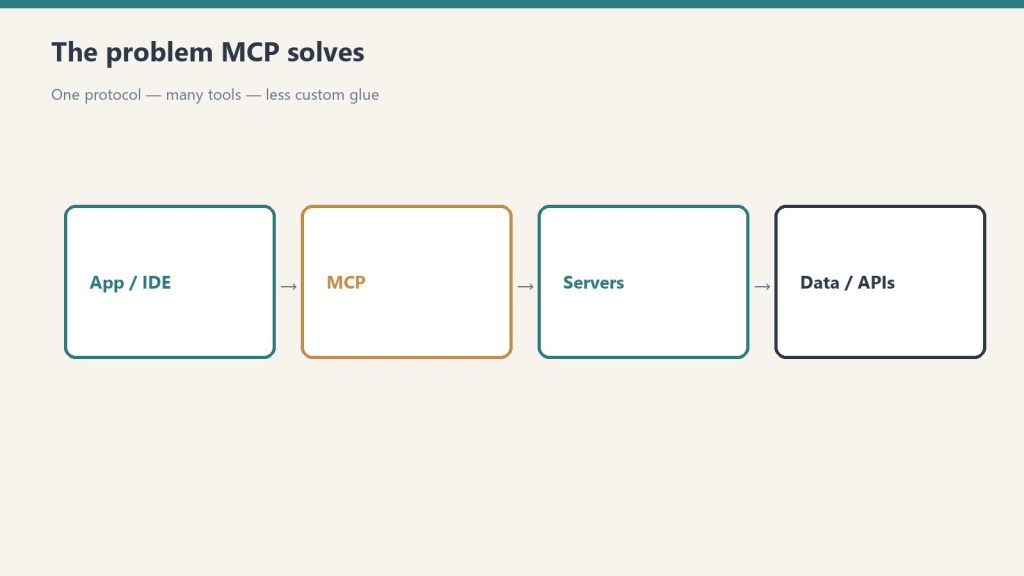
    Model Context Protocol (MCP) is the emerging standard that lets AI models call external tools. Zapier built an MCP server that exposes its entire integration library—all 8,000+ apps, tens of thousands of actions—to any AI model that speaks MCP. Claude can use it. GPT-4o can use it. Any MCP-compatible AI can use it.

    This is Zapier making a platform bet rather than a product bet. Instead of trying to be the AI model that users talk to, Zapier is becoming the action layer that every AI model reaches into when it needs to do something in the real world. The developer and coding agents plug in through the SDK. The AI assistants plug in through MCP. IT administrators see everything through unified audit logs and governance controls.

    Zapier is an official Anthropic integration partner. When Claude users need their AI to actually send an email, update a CRM record, add a calendar event, or post to Slack—Zapier is the infrastructure doing that work. That’s not a small bet. That’s positioning as the execution layer for the entire AI industry.

    The Financial Position: Profitable, Independent, Patient

    One underappreciated aspect of Zapier’s strategic position is its financial independence. Unlike most AI companies burning through venture capital at extraordinary rates, Zapier has been profitable for years. It has raised minimal external funding—approximately $1.4 million in a 2012 seed round and nothing significant since—and generates its own growth from revenue.

    Revenue reached $310 million in 2024 and is projected to approach $400 million in 2025. The company serves over 100,000 business customers. Its valuation is estimated around $5 billion—modest relative to OpenAI, Anthropic, or Mistral’s recent rounds, but built on actual cash flow rather than projected futures.

    This matters for the everything app question because Zapier is not under pressure to show explosive AI growth to justify a valuation. It can evolve its platform deliberately, double down on enterprise reliability, and build the trust that enterprise automation requires—without the distraction of a fundraising cycle or the fear of running out of runway.

    Zapier’s Approach to Enterprise AI Governance

    One of the signal differences between Zapier’s AI platform and its competitors is the emphasis on controls alongside capability. The February 2026 product updates focused specifically on AI guardrails and governance: who can create agents, what apps agents can access, what actions require human approval, and full audit logs of everything that ran.

    This is the unsexy but critical work of making AI deployable in regulated environments. An autonomous agent that can send emails, update databases, and call external APIs is a significant liability risk without proper governance. Zapier’s enterprise controls—managed credentials, admin dashboards, approval workflows for high-risk actions, comprehensive audit trails—represent years of enterprise trust-building that AI-first startups are only beginning to think about.

    The AI guardrails feature allows administrators to set boundaries on what Agents can do autonomously versus what requires a human in the loop. This isn’t a limitation on Zapier’s AI ambitions—it’s the feature that gets Zapier past the enterprise security review that blocks most AI tools from production deployment.

    The Notion Everything Database Connection

    If you’re using Notion as an everything database—as we explored earlier in this series—Zapier is one of the most powerful connectors in your stack. Zapier’s Notion integration supports triggers on database property changes, creating and updating pages, querying databases, and more. Zapier Agents can use these Notion actions as tools, meaning an Agent can reason about your Notion data, make decisions, and update records—all without you touching a line of code.

    The practical architecture looks like this: your Notion everything database stores structured business context. A Zapier Agent monitors specific triggers (a new record appears, a property changes, a status updates). The Agent pulls relevant context from Notion, reasons over it using its AI model, takes actions across your other connected apps, and writes results back to Notion. The entire workflow runs in the background, governed by your Zapier admin controls, with full audit logs.

    For teams building on the Notion everything database model, Zapier isn’t competing with that architecture—it’s the automation and agent layer that makes it operational. You design the data model in Notion; Zapier handles the movement and the intelligence on top of it.

    Where Zapier Falls Short

    Zapier’s everything app candidacy has real limits, and they’re worth naming plainly.

    First, Zapier is a B2B tool that has never built meaningful consumer presence. Everything apps in the historical sense—WeChat, Line, Grab, Gojek—succeed by capturing daily personal habits: messaging, payments, food delivery. Zapier operates in the workflow automation category, which is powerful for businesses but invisible to consumers. There is no path from Zapier’s current position to consumer everything app.

    Second, Zapier depends on the apps in its library. If OpenAI, Google, or Microsoft decides to deprecate their public APIs or make integration prohibitively expensive, Zapier’s connectors break. The 8,000-app moat is only as strong as those 8,000 companies’ continued willingness to maintain open APIs. As AI platforms consolidate, that willingness may erode.

    Third, Zapier’s AI layer is not a frontier model. Zapier Agents use third-party models (primarily OpenAI’s GPT-4o and related) for their reasoning capabilities. This means Zapier’s AI quality ceiling is set by someone else. When OpenAI ships a better model, Zapier agents get smarter—but so does every OpenAI customer. Zapier cannot differentiate on model quality the way Mistral or OpenAI can.

    Finally, the no-code positioning that made Zapier accessible also limits its ceiling. Complex enterprise workflows—the kind that justify serious AI investment—often require the custom logic, error handling, and integration depth that Zapier’s visual interface makes difficult. Competitors like n8n (open-source), Make (formerly Integromat), and enterprise-focused platforms like MuleSoft are taking direct aim at the workflows Zapier can’t handle.

    The Verdict: The Action Layer, Not the Interface Layer

    Is Zapier building the everything app? Not in the way the term is usually understood. Zapier is not trying to be the app you open every morning, the one that knows your identity, your preferences, and your social graph. It has no interest in capturing your attention or your feed.

    Zapier is building something that might matter more for AI’s actual impact on work: the universal action layer. The layer that every AI model reaches into when it needs to do something that matters. The layer that connects AI reasoning to business reality across the entire software ecosystem—not the 50 apps in one company’s walled garden, but the 8,000 apps that businesses actually use.

    In a world where every AI platform is competing to be your interface, Zapier is quietly becoming the infrastructure that makes any interface actually work. That’s not the everything app thesis. It’s the everything execution thesis. And given that 13 years of profitable growth and 100,000 enterprise customers are backing it, it may be the most durable bet in this entire series.

    Key Takeaway

    Zapier is not competing to be the everything app. It’s becoming the action layer that makes every everything app actually functional—the 8,000-integration infrastructure that AI models plug into when they need to do real work in real systems.

    What’s Next in This Series

    This article closes the core competitive series on everything app contenders. But the conversation isn’t finished. Two threads we’ve opened in this series deserve their own deep dives: the xAI infrastructure pivot story—whether Elon Musk is quietly turning Colossus and X into the “everything app ability” rather than the everything app itself—and a Track 2 series on how to actually connect each of these platforms to a Notion everything database as your operational backbone.

    If you’ve been following this series from the beginning, you’ve seen the landscape of AI consolidation from nine different angles. The conclusion that keeps emerging: the everything app isn’t a product. It’s a position. And the race to own that position is just getting started.

    Frequently Asked Questions About Zapier and the Everything App

    What is Zapier’s current AI platform called?

    Zapier relaunched in 2025 as an AI Orchestration Platform. The platform includes Zapier Agents (autonomous AI teammates), Zapier Copilot (natural language workflow builder), Zapier Canvas (visual system map), Zapier Tables, Zapier Interfaces, Zapier Chatbots, and Zapier MCP (an integration server for external AI models). The foundational Zaps automation engine remains the core, with these AI products layered on top.

    What is Zapier MCP and why does it matter?

    Zapier MCP is a Model Context Protocol server that exposes Zapier’s entire integration library to external AI models. Any MCP-compatible AI—including Claude, GPT-4o, and others—can use Zapier MCP to take actions across the 8,000+ apps Zapier connects. This makes Zapier the action execution layer for AI systems built by other companies, not just for Zapier’s own agents. Zapier is an official Anthropic integration partner through this mechanism.

    How many apps does Zapier connect?

    As of 2026, Zapier connects over 8,000 apps. This integration library has been built and maintained over 13 years and represents Zapier’s primary competitive moat. No AI-first entrant has built a comparable breadth of authenticated, maintained app integrations.

    What are Zapier Agents?

    Zapier Agents are autonomous AI teammates that reason about goals rather than following fixed if-then sequences. Launched in January 2025 and reaching general availability in December 2025, Agents can browse the web, read data sources, update CRMs, draft communications, and delegate to other specialist agents through multi-agent orchestration. They’re configured with a role, a set of tool permissions, and a goal—then run autonomously within governance guardrails set by administrators.

    How does Zapier integrate with Notion?

    Zapier’s Notion integration supports database triggers, page creation and updates, and database queries. Zapier Agents can use these as tools in their reasoning loops, enabling autonomous workflows that read from and write to Notion databases. For teams using Notion as an everything database, Zapier provides the automation and agent execution layer that makes that data architecture operational across connected business apps.

    Is Zapier profitable?

    Yes. Zapier has been profitable for years and has raised minimal external funding since a $1.4 million seed round in 2012. Revenue reached $310 million in 2024 with projections near $400 million for 2025. This financial independence distinguishes Zapier from most AI platform companies and gives it patience to evolve its platform without fundraising pressure.

    What are Zapier’s AI governance features?

    Zapier offers enterprise AI governance through managed credentials, admin controls on which users and teams can create or deploy agents, approval workflows for high-risk actions, AI guardrails that bound what agents can do autonomously, and comprehensive audit logs of all agent activity. These controls were prominently featured in the February 2026 product update and represent Zapier’s push to make AI deployment safe for regulated enterprise environments.

    How does Zapier compare to Make (Integromat) and n8n?

    Make and n8n are Zapier’s primary competitors in workflow automation. Make offers more complex branching logic at competitive pricing. n8n is open-source and self-hostable, appealing to developers and privacy-conscious enterprises. Zapier differentiates on breadth of integrations, ease of use for non-technical users, and its newer AI layer (Agents, Copilot, MCP). For enterprises prioritizing AI orchestration with governance controls, Zapier’s platform depth currently leads. For developers wanting maximum flexibility or self-hosting, n8n is the primary alternative.

  • Claude Code Is Shipping 2–3 Releases Per Week — What the v2.1 Cadence Means for Engineering Teams

    Claude Code Is Shipping 2–3 Releases Per Week — What the v2.1 Cadence Means for Engineering Teams

    Last refreshed: May 15, 2026

    Between April 15 and April 29, 2026, the Claude Code team shipped releases from v2.1.89 to v2.1.123 — 34 version increments in 14 days, or roughly 2–3 production releases per week. For an agentic coding tool that engineering teams run in their daily development workflow, this release cadence is worth understanding, both for what it signals about the product’s development velocity and for the practical implications of staying current.

    What’s Driving the Cadence

    The v2.1 series is where Claude Code’s parallel agents architecture is being built out. The desktop redesign for parallel agents shipped on April 14, and the v2.1 releases since then represent the iterative work of making parallel agent workflows — running multiple agents simultaneously from a single workspace — stable and usable at production quality. Rapid iteration on a new architectural feature explains the compressed release schedule better than any other factor.

    The new onboarding guide for Claude Code teams, published April 28 on code.claude.com, is a related signal. Documentation for team-scale adoption typically follows (not precedes) the stability work that makes team-scale adoption advisable. Publishing the onboarding guide now suggests the team considers the core parallel agents architecture stable enough for broader engineering team adoption.

    Parallel Agents: The Architecture Change That Matters

    The April 14 desktop redesign for parallel agents is the most significant Claude Code architectural change of the quarter. Previously, Claude Code operated as a single-agent tool — one active task at a time per workspace. The parallel agents redesign allows developers to run multiple agents simultaneously, each working on independent tasks within the same workspace, with Claude coordinating between them.

    The practical applications are significant: running tests while implementing a feature, refactoring one module while debugging another, generating documentation in parallel with code review. Tasks that previously required sequential attention can now run concurrently, compressing the time from specification to working code.

    Implications for Engineering Teams Evaluating Adoption

    The combination of the new onboarding guide and the parallel agents architecture makes this the right moment for engineering teams that have been evaluating Claude Code to make a decision. The tool has moved from “impressive demo” to “documented team workflow” with the April 28 guide, and the parallel agents capability meaningfully changes the productivity math for teams doing complex, multi-threaded development work.

    For teams already using Claude Code, staying current with the v2.1 series matters more than it did in earlier versions. The 2–3 weekly releases aren’t cosmetic — they’re iterating on the parallel agents infrastructure that the most powerful new workflows depend on. Check the changelog at code.claude.com/docs/en/changelog before major projects to ensure you’re running a recent build.

    Source: Claude Code Changelog | GitHub Releases

  • Cowork Is No Longer a Research Preview — Here’s What Changes for Non-Developers Today

    Cowork Is No Longer a Research Preview — Here’s What Changes for Non-Developers Today

    Last refreshed: May 15, 2026

    Anthropic’s Cowork feature — the desktop automation tool aimed squarely at non-developers — moved out of research preview on April 29, 2026, and is now generally available on both macOS and Windows. It ships with a feature set that represents a meaningful step forward for anyone who has been running scheduled tasks, file workflows, and multi-step automations through Claude without writing a line of code.

    What’s New in the GA Release

    The GA release lands on Pro, Max, Team, and Enterprise plans. The headline additions are expanded analytics, OpenTelemetry support for enterprise observability, and role-based access controls — the last of these being the signal that Cowork is now ready for team deployments, not just individual power users.

    Persistent agent threads are now live across both mobile (iOS and Android) and desktop, which means you can start a Cowork task on your laptop and monitor or manage it from your phone. The new Customize section consolidates skills, plugins, and connectors into a single panel, replacing what was previously a scattered setup experience across multiple menus.

    Recurring and on-demand task scheduling is also included, enabling the kind of “set it and check it” automation workflows that Cowork was always promising but only partially delivering during the preview period.

    Why This Matters for Non-Developers

    Cowork’s core bet has always been that the most valuable use cases for AI automation don’t belong to engineers — they belong to operators, marketers, content teams, and business owners who know exactly what they want done but have no interest in writing Python scripts or JSON configs to get there. The GA release validates that bet with a production-grade infrastructure story: OpenTelemetry means IT and enterprise security teams can audit what the agents are doing; role-based access controls mean managers can delegate without handing over full system access.

    For the non-developer using Cowork day-to-day, the practical change is reliability. Research previews carry an implicit asterisk — “this works, mostly, until it doesn’t.” GA means the feature is supported, documented, and subject to real SLAs. Scheduled tasks that have been running through the preview period should now be more stable, and new automations can be built with the expectation that they’ll still work next month.

    The Enterprise Observability Story

    The addition of Cowork data into the Analytics API and OpenTelemetry support is worth noting separately. This is the detail that unlocks enterprise adoption at scale. Procurement and security teams at larger organizations have consistently asked for auditability before green-lighting AI automation tools. Cowork now has an answer: every agent action can be traced, logged, and routed into whatever observability stack the enterprise already runs.

    For Team and Enterprise plan subscribers, this should accelerate internal approval processes for Cowork deployments that may have stalled during the preview period.

    What Stays the Same

    The fundamental Cowork model — Claude running autonomous tasks on behalf of the user, triggered by schedule or on-demand, guided by skills and connectors — is unchanged. If you’ve been running workflows in the preview, the transition to GA should be seamless. The Customize section reorganizes the setup experience but doesn’t require rebuilding existing configurations.

    Plans and pricing remain unchanged from the research preview tier placement — Cowork is included in Pro, Max, Team, and Enterprise, with no new add-on cost announced alongside the GA release.

    The Bottom Line

    Cowork GA is the milestone that turns a promising experiment into a product you can build operational workflows around. The combination of persistent threads, role-based access, and OpenTelemetry support brings Cowork into alignment with what enterprise buyers require from any automation tool they’re willing to run at scale. For individual users, the reliability improvement and the cleaner Customize panel are the day-one wins. For teams, the observability story is the green light many have been waiting for.

    Source: Anthropic Cowork Release Notes

  • The Context Stack: How I Give Claude Memory Across 27 Sites and 6 Businesses

    The Context Stack: How I Give Claude Memory Across 27 Sites and 6 Businesses

    Last refreshed: May 15, 2026

    The most common question I get from people who read the Split-Brain Architecture piece is some version of: how does Claude actually know what it’s working on? If you are managing 27 sites, 6 businesses, and hundreds of ongoing tasks, how do you avoid spending the first ten minutes of every session re-explaining your entire operation to an AI that has no memory of yesterday?

    The answer is what I call the Context Stack. It is not a single file or a single tool — it is a layered system where each layer handles a different time horizon of memory, and Claude reads exactly what it needs for the task at hand without being overwhelmed by everything else.

    The Problem With AI Memory

    Claude does not have persistent memory across sessions by default. Every conversation starts blank. For someone running a simple use case — drafting an email, summarizing a document — this is fine. For someone running a content network across 27 WordPress sites with different brand voices, different SEO strategies, different clients, and different publishing schedules, a blank slate every session is an operational catastrophe.

    The naive solution is to paste a giant context document at the start of every conversation. I tried this. It doesn’t work. Not because Claude can’t read it — it can — but because a 5,000-word context dump at the start of every session is cognitively expensive for the human, slows down the first response, and buries the relevant information under a pile of irrelevant information.

    The right solution is a stack: different layers of context loaded at different times, for different purposes.

    Layer One — The Global Layer (Always Loaded)

    The global layer is the context that is true across everything I do, all the time. It lives in a CLAUDE.md file at the workspace root and in a persistent system prompt inside Claude’s project settings.

    What goes here: my name, my email, the fact that I manage a network of WordPress sites, the Notion workspace structure, the proxy URL and authentication pattern for WordPress API calls, and a handful of behavioral rules that apply universally — brevity preferences, how I want work logged, what “done” means to me.

    What does not go here: anything site-specific, client-specific, or task-specific. The global layer is 200 lines maximum. Anthropic’s own guidance on CLAUDE.md length is right — longer files reduce adherence. I treat the 200-line limit as a hard constraint, not a guideline.

    Layer Two — The Site Layer (Loaded Per Project)

    Each WordPress site I manage has its own Claude Project, and each project has its own knowledge files. These files contain everything Claude needs to work on that specific site without me having to explain it: the brand voice, the target audience, the top-performing content, the internal linking structure, the credentials, the publishing cadence, and the current content roadmap.

    I generate these files programmatically when I onboard a new site. They pull from the WordPress REST API, the site’s GA4 data, and the Notion database for that client. A site knowledge file for an established site runs about 800–1,200 words. Claude reads it at the start of any session for that project and immediately knows the difference between how to write for a Houston restoration contractor versus a New York luxury lender.

    The site layer is why I can switch from working on a restoration contractor to a luxury lender to a live comedy platform in the same afternoon without losing context. The context travels with the project, not with me.

    Layer Three — The Task Layer (Loaded On Demand)

    The task layer is ephemeral. It is the specific context for the thing I am doing right now: the article brief, the GA data from this session, the list of posts that need refreshing, the client’s feedback on last week’s content.

    This layer lives nowhere permanent. I paste it into the conversation, Claude uses it, and when the session ends it is gone. The task layer is intentionally disposable. If it matters beyond this session, it gets promoted to the site layer or the global layer. If it doesn’t matter beyond this session, it doesn’t need to be stored.

    Most AI users try to make everything permanent. The discipline of the context stack is knowing what deserves permanence and what doesn’t.

    Layer Four — The Second Brain (Asynchronous)

    The second brain layer is Notion. It is not loaded into Claude’s context window directly — it is queried via the Notion MCP when Claude needs specific information.

    What lives here: every session log, every publish log, every piece of competitive intelligence, every client preference that has emerged over time, the Promotion Ledger for autonomous behaviors, the Second Brain database of extracted knowledge from prior sessions.

    The key distinction: Notion is not context I push into Claude. It is context Claude pulls from Notion when it needs it. The MCP connection means Claude can search the Second Brain mid-session, find a relevant prior session log, and use it — without me having to remember that the prior session happened.

    This is the layer that makes the system feel like it has long-term memory even though it doesn’t. Claude doesn’t remember. But it can look things up, and the things worth looking up are stored.

    What This Looks Like In Practice

    A typical session for me starts with a project context already loaded (site layer). Within thirty seconds Claude knows which site it’s working on, what voice to use, and what the current priorities are. I drop in the task layer — a GA report, a list of post IDs, a brief — and we are working within two minutes of starting.

    When something important happens — a new client preference, a site credential change, a strategy decision — I say “log this to Notion” and Claude writes it to the Second Brain. I don’t maintain the second brain manually. Claude maintains it as a byproduct of doing the work.

    When I need to recall something from months ago — what we decided about the internal linking structure for a specific site, what the client said about their brand voice in March — Claude searches Notion and finds it. The retrieval is imperfect but it is dramatically better than my own memory.

    The Honest Constraints

    This system took months to build and it is still not finished. The site knowledge files need updating when strategies change and I don’t always remember to update them. The Second Brain has gaps where sessions weren’t logged properly. The global CLAUDE.md drifts toward bloat and needs periodic pruning.

    The bigger constraint is that this architecture assumes you are operating at a certain scale — multiple sites, multiple clients, recurring workflows. If you are running one site for one business, the overhead of building and maintaining this stack is probably not worth it. A well-written CLAUDE.md and a single Notion page of context will get you most of the way there.

    But if you are scaling past three or four sites, or if you find yourself re-explaining the same context in every session, the stack pays for itself quickly. The ten minutes you spend building a site knowledge file saves you two minutes per session indefinitely.

    The goal is not to give Claude everything. The goal is to give Claude exactly what it needs, when it needs it, at the right layer of permanence.

    Building Your Own Context Stack?

    Email me what you are managing and I will tell you which layers you actually need.

    Most people over-engineer the global layer and under-invest in the site layer. Five minutes of conversation usually fixes it.

    Email Will → will@tygartmedia.com

  • Error Handling and Fallbacks in Notion AI Workflows

    Error Handling and Fallbacks in Notion AI Workflows

    Error Handling and Fallbacks in Notion AI Workflows

    The 60-second version

    The default failure mode of a Notion agent is “stop.” That’s almost never what you want in production. Robust workflows define what happens for each kind of failure: agent times out, Worker fails, external API is down, the schema mismatched, the credit pool emptied. Each needs a planned response — retry, fall back to manual, escalate to human, log and continue. Without explicit handling, “the agent stopped working” becomes a mystery debug session.

    Five failure modes and their handling

    1. Agent timeout (rare but exists). A 20-minute Custom Agent run that doesn’t complete. Handling: log the timeout, surface to the human owner, don’t auto-retry (likely to repeat the same problem).
    2. Worker timeout (more common). Worker hits 30-second limit. Handling: structured error return from the Worker; agent decides whether to retry, partial-result, or fail. Don’t silently re-invoke.
    3. External API failure. API down, rate limited, or returning errors. Handling: retry with exponential backoff (max 3 attempts), then fall back to “external system unavailable” path with human notification.
    4. Schema mismatch. Agent expected JSON shape A, Worker returned shape B. Handling: validate at the boundary, log the mismatch, fall back to a default response, alert human to fix the schema drift.
    5. Credit exhaustion. Workspace credit pool hits zero (post-May 4). Handling: this is hard — the agent stops mid-execution. Mitigation is preventative: monitor credit consumption, alert at 75% of monthly budget, top up before zero.

    Three practical patterns

    The retry-with-backoff pattern.
    First attempt fails → wait 1 second, retry. Second fails → wait 4 seconds, retry. Third fails → escalate to human. Don’t retry indefinitely.
    The fallback-output pattern.
    When the primary path fails, return a known-safe default with metadata indicating it’s a fallback. Downstream consumers can check the metadata and decide whether to use the fallback or alert.
    The human-escalation pattern.
    Define clear handoff criteria. When the agent can’t complete, who gets pinged, with what context, in what channel? “Pings someone eventually” is not a plan.

    Logging requirements

    Production agent workflows need three log streams:
    Action log: what the agent did and when
    Error log: what failed, with enough context to diagnose
    Decision log: when the agent chose between options, what it chose and why
    Without all three, debugging takes 10x longer than it should.

    Where this goes wrong

    1. Trusting the default failure behavior. “The agent stopped” is rarely the right response. Define explicit handling.
    2. Silent retries. Retries that don’t log produce mysterious “sometimes it works” behavior. Always log retry attempts.
    3. No credit monitoring. Hitting credit zero stops every agent in the workspace. Monitor consumption proactively.

    What to read next

    Workers in TypeScript, Multi-Agent Orchestration, Security Posture, ROI Math.

  • Notion AI vs Zapier AI: Which Automation Layer Wins For Your Use Case

    Notion AI vs Zapier AI: Which Automation Layer Wins For Your Use Case

    Notion AI vs Zapier AI: Which Automation Layer Wins For Your Use Case

    The 60-second version

    Zapier and Notion AI overlap in concept (automate routine work) but optimize for different operators. Zapier: massive integration catalog, no-code, simple triggers and actions, optimized for “if this, then that” patterns. Notion AI: AI reasoning native, deep workspace context, optimized for “decide what to do given context, then act.” Use Zapier for breadth of simple automations. Use Notion Agents for depth of reasoning. The two are complementary.

    When Zapier wins

    • You need many simple automations across many apps
    • Non-technical operators need to build automations themselves
    • The trigger logic is straightforward (if X, do Y)
    • You don’t have or want AI reasoning in the loop
    • You’re not heavily invested in Notion as a platform

    When Notion Agents win

    • The workflow requires understanding Notion workspace content
    • AI reasoning about whether and how to act matters
    • Schedule-driven autonomous work is the goal
    • The workflow output is in Notion or affects Notion data
    • You want agents that can compose multi-step reasoning

    What Zapier does that Notion Agents don’t

    • Thousands of app integrations out of the box
    • Visual no-code building accessible to non-developers
    • Flat-rate pricing easier to budget
    • Established for years; lots of recipes and patterns

    What Notion Agents do that Zapier doesn’t

    • AI reasoning native to the workflow
    • Workspace context understanding
    • Skills (natural-language workflow definitions)
    • Workers for custom code
    • Database fluency at the platform level

    The combined pattern

    Many operators use both:
    – Zapier for cross-app plumbing (lead from form → CRM → Slack → email)
    – Notion Agents for workspace reasoning (synthesize lead context, decide priority, draft response)
    – Sometimes Zapier triggers a Notion agent run
    Treat them as layers: Zapier moves data; Notion Agents make decisions about that data.

    Where this goes wrong

    1. Trying to use Zapier for AI reasoning. Zapier has AI features but they’re shallow compared to Notion Agents.
    2. Trying to use Notion Agents for cross-app plumbing. Possible via Workers/MCP, but Zapier’s integration catalog is broader.
    3. Picking based on price alone. The right tool for the job costs less than the wrong tool, even at higher per-task pricing.

    What to read next

    Notion Agents vs n8n Alone, n8n MCP Bridge, Workers + External APIs, AI-Native Company Patterns.

  • Notion Agents vs n8n Alone: When the Workflow Belongs Inside Notion

    Notion Agents vs n8n Alone: When the Workflow Belongs Inside Notion

    Notion Agents vs n8n Alone: When the Workflow Belongs Inside Notion

    The 60-second version

    This isn’t either-or. n8n is the deterministic workflow engine — when X happens, do Y across these 5 apps. Notion Agents are the reasoning layer — given the context, decide whether X actually warrants action and what the right action is. Combined via the n8n MCP bridge, they form a complete automation stack: agent reasons, n8n executes. Operators who treat them as competitors miss the leverage.

    When Notion Agents win

    • The workflow needs to read and synthesize Notion workspace content
    • Natural-language understanding of context matters
    • The “decide whether to act” question is the hard part
    • Schedule-driven autonomous work is the goal
    • The workflow output is itself in Notion

    When n8n wins

    • Pure cross-app data movement (no reasoning needed)
    • Hundreds of integration options matter
    • Visual workflow building with branching logic
    • High-volume deterministic automations
    • Workflows that don’t touch Notion at all

    The combined pattern

    The pattern that’s emerging:
    Notion Agent decides what to do based on context
    n8n workflow executes the cross-app coordination
    – Connected via the n8n MCP bridge inside Notion
    Example: Agent reads new lead in Notion → reasons whether it matches ICP → if yes, calls n8n workflow that updates Salesforce, sends Slack notification, schedules follow-up email.

    What n8n does that Notion Agents don’t

    • Massive integration catalog (Salesforce, Stripe, hundreds of others)
    • Visual flow building
    • High-throughput deterministic execution
    • Self-hosting option for compliance-sensitive use cases

    What Notion Agents do that n8n doesn’t

    • Natural-language understanding of unstructured workspace content
    • Native Notion database manipulation
    • Skills (saved natural-language workflows)
    • Workers for custom code execution
    • Schedule-driven autonomous reasoning

    Where this goes wrong

    1. Trying to do everything in one tool. Reasoning in n8n (limited) or deterministic execution in Notion Agents (expensive) is the wrong direction.
    2. Skipping the MCP bridge. Without it, you re-implement n8n integrations as Workers. Don’t.
    3. Letting agent reasoning replace simple n8n triggers. If the trigger is “row added to database,” that’s deterministic. Just use n8n.

    What to read next

    n8n MCP Bridge, Workers + External APIs, Notion AI vs Zapier, MCP foundation piece.

  • The n8n MCP Bridge: Letting Notion Agents Run Your Existing Automations

    The n8n MCP Bridge: Letting Notion Agents Run Your Existing Automations

    The n8n MCP Bridge: Letting Notion Agents Run Your Existing Automations

    The 60-second version

    n8n is where many ops teams already run their cross-app automations. Notion’s n8n MCP bridge lets Custom Agents call those automations as tools. The agent decides what to do; n8n executes the cross-app work. This combines two strengths: Notion AI’s natural-language understanding and database fluency, and n8n’s mature integration library and workflow tooling. You don’t have to rebuild your n8n setup inside Notion.

    What this enables

    Three patterns that get easier:
    1. Agent-triggered cross-app workflows. Agent reads a Notion page, decides an action is needed, calls the relevant n8n workflow which handles the actual work (Salesforce update, Stripe charge, file move, whatever).
    2. Existing n8n investment compounds. Every n8n workflow you’ve built becomes a tool the agent can use. The library grows as your agent-callable surface grows.
    3. Workflow logic stays in n8n. When the workflow logic changes, you change it in n8n once. All agents using that workflow inherit the change automatically.

    When to use n8n vs Workers

    Notion has Workers (developer preview) for custom code. n8n is for cross-app workflows. The split:
    Workers when you need custom logic that doesn’t exist as an integration
    n8n when you need to coordinate across many existing apps with mature connectors
    Both for complex flows where Workers handle specific computation and n8n handles app coordination
    For most ops teams, n8n is the right starting point. Workers are an advanced layer.

    Where this goes wrong

    1. Treating the agent as a smarter n8n trigger. The agent’s value is judgment about when to run the workflow. If you can express the trigger as a simple condition, just run n8n directly.
    2. Letting agents call destructive workflows without confirmation. Agent + n8n + Salesforce delete = potential disaster. Add human approval steps for destructive operations.
    3. Not versioning n8n workflows that agents call. When you change a workflow, agents don’t know. Version your workflows so agent prompts can pin to specific versions.

    What to read next

    Workers for Agents, MCP foundation piece, Notion Agents vs n8n Alone, The Solo Operator’s Stack.

  • Notion AI for Customer Success: QBRs, Health Scores, and Account Plans

    Notion AI for Customer Success: QBRs, Health Scores, and Account Plans

    Notion AI for Customer Success: QBRs, Health Scores, and Account Plans

    The 60-second version

    CS work is constrained by CSM bandwidth. The bandwidth gets eaten by documentation: QBRs, account plans, health score updates, internal reporting. Custom Agents take that documentation work over so CSMs can spend their time on customer calls. The result is CS teams that cover more accounts at the same headcount or go deeper on the same accounts. Either way, the math improves.

    Four CS-specific agent patterns

    1. The QBR draft agent. Triggered before QBR season. For each account: pulls usage data (via integration), product adoption metrics, support ticket trends, key milestones, prior QBR action items. Drafts the QBR deck content in the team’s template. CSM customizes for the specific customer instead of building from scratch.
    2. The health score maintenance agent. Daily or weekly. Reads usage data, support patterns, engagement signals, NPS responses. Updates each account’s health score in the customer database. Surfaces accounts that dropped a tier in the last week.
    3. The account plan agent. Monthly per account. Reviews account activity, identifies expansion opportunities, surfaces stalled adoption areas, drafts the updated account plan with specific next-quarter goals.
    4. The renewal risk agent. Continuous. Scans accounts approaching renewal. Cross-references health score, recent engagement, support ticket sentiment, and upcoming contract dates. Flags 60-90 days before renewal so CSM has runway to address issues.

    What stays CSM

    • Customer conversations
    • Expansion negotiations
    • Crisis response when accounts are unhappy
    • The judgment about which accounts deserve which level of investment
    • Reading the customer relationship temperature
      The agent surfaces signals; the CSM interprets them.

    The leverage math

    A typical CSM covers 25-40 accounts. Documentation work consumes 30-40% of their week. Custom Agents take that to 10-15%. The CSM either covers more accounts (50-60) or goes deeper on the same accounts (more strategic, more frequent touch).
    The strategic question: which path matches your business? Higher coverage favors expansion-led businesses. Deeper accounts favor retention-led businesses. Don’t let agents accidentally pick the path for you by default.

    Where CS teams go wrong

    1. Letting agents update health scores autonomously into a “you’re red” customer-facing alert. Health scores have political weight inside the customer’s organization. Auto-flagging customers as red without human review can damage the relationship.
    2. Skipping the QBR review. The agent draft is starting material. The customization for that specific customer is what makes the QBR land. Don’t ship the agent draft as-is.
    3. Trusting renewal risk flags without context. A customer can look “at risk” by the data while being fine in the relationship. CSM context wins. Don’t escalate based on the agent flag alone.

    What to read next

    Notion AI for Sales Teams, Account Research, AI-Native Company Patterns.

  • Notion AI for Operations Managers: SOPs, Runbooks, and the Audit Trail

    Notion AI for Operations Managers: SOPs, Runbooks, and the Audit Trail

    Notion AI for Operations Managers: SOPs, Runbooks, and the Audit Trail

    The 60-second version

    Ops managers spend their days holding the operational fabric together — keeping SOPs current, ensuring procedures get followed, catching exceptions, communicating status. Custom Agents excel at exactly this category of work because the patterns are well-defined and the value of consistency is high. The ops manager’s job shifts from “running procedures” to “designing the agents that run procedures and handling what they can’t.”

    Four agents every ops function needs

    1. The SOP currency agent. Runs weekly. Reads each SOP page. Cross-references it against recent activity in related databases. Flags SOPs that haven’t been updated in 90 days OR where the actual practice has drifted from the documented process. Output: a one-page report on SOP health.
    2. The procedure execution agent. Triggered by named events (onboarding new hire, incident response, monthly close). Walks through the procedure step by step, executing or assigning each step, logging completion to an audit trail database. Pauses when human input is required.
    3. The exception triage agent. Watches a designated “exceptions” database. Categorizes incoming exceptions by type, urgency, and owner. Drafts initial response. Flags pattern exceptions (multiple of the same type) for systemic review.
    4. The status synthesis agent. Reads across team databases. Produces the weekly ops report — what’s running, what’s at risk, what shipped, what’s behind. Goes to leadership. Saves the ops manager 4-6 hours weekly.

    The audit trail dividend

    Custom Agents write audit logs by default. Every step they take, every page they read, every change they make is logged. For ops functions in regulated environments — finance, healthcare, legal-adjacent — this is meaningful. The agent’s audit trail is more thorough than what humans typically log because humans cut corners on logging when they’re under time pressure. Agents don’t.
    This shifts the conversation with auditors. “Show me your procedure” becomes “here’s the procedure and here’s every execution log for the last 12 months.” That’s a posture change.

    Where ops managers go wrong with agents

    1. Building agents for procedures that aren’t documented well. If the SOP is vague, the agent’s execution will be vague. Tighten the SOP first. Then build the agent.
    2. Trusting agent execution without sampling. Sample 10% of agent runs monthly. Look at the audit trail. Verify it matches reality. Drift happens silently.
    3. Replacing exception handling with an agent. Exception handling is judgment work. Agents categorize and surface; humans decide. Don’t let the agent close exception tickets autonomously without review.

    What this enables

    Ops managers running this pattern report: more time on systemic improvement, less time on procedure execution. More confidence in audit posture, less anxiety about gaps. More leverage per ops headcount, fewer manual handoffs.

    What to read next

    SOX Testing pieces in finance cluster, Compliance, Editorial Surface Area, AI-Native Company Patterns.