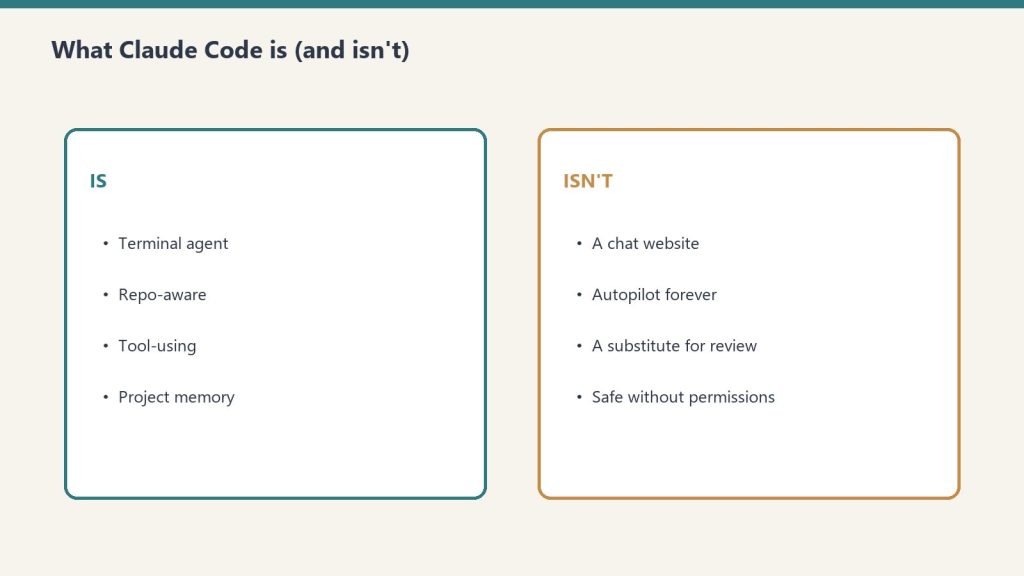
Between April 15 and April 29, 2026, the Claude Code team shipped releases from v2.1.89 to v2.1.123 — 34 version increments in 14 days, or roughly 2–3 production releases per week. For an agentic coding tool that engineering teams run in their daily development workflow, this release cadence is worth understanding, both for what it signals about the product’s development velocity and for the practical implications of staying current.
What’s Driving the Cadence
What’s driving the cadence.
The v2.1 series is where Claude Code’s parallel agents architecture is being built out. The desktop redesign for parallel agents shipped on April 14, and the v2.1 releases since then represent the iterative work of making parallel agent workflows — running multiple agents simultaneously from a single workspace — stable and usable at production quality. Rapid iteration on a new architectural feature explains the compressed release schedule better than any other factor.
The new onboarding guide for Claude Code teams, published April 28 on code.claude.com, is a related signal. Documentation for team-scale adoption typically follows (not precedes) the stability work that makes team-scale adoption advisable. Publishing the onboarding guide now suggests the team considers the core parallel agents architecture stable enough for broader engineering team adoption.
Parallel Agents: The Architecture Change That Matters
Parallel agents — the architecture change that matters.
The April 14 desktop redesign for parallel agents is the most significant Claude Code architectural change of the quarter. Previously, Claude Code operated as a single-agent tool — one active task at a time per workspace. The parallel agents redesign allows developers to run multiple agents simultaneously, each working on independent tasks within the same workspace, with Claude coordinating between them.
The practical applications are significant: running tests while implementing a feature, refactoring one module while debugging another, generating documentation in parallel with code review. Tasks that previously required sequential attention can now run concurrently, compressing the time from specification to working code.
Implications for Engineering Teams Evaluating Adoption
Implications for engineering teams evaluating adoption.
The combination of the new onboarding guide and the parallel agents architecture makes this the right moment for engineering teams that have been evaluating Claude Code to make a decision. The tool has moved from “impressive demo” to “documented team workflow” with the April 28 guide, and the parallel agents capability meaningfully changes the productivity math for teams doing complex, multi-threaded development work.
For teams already using Claude Code, staying current with the v2.1 series matters more than it did in earlier versions. The 2–3 weekly releases aren’t cosmetic — they’re iterating on the parallel agents infrastructure that the most powerful new workflows depend on. Check the changelog at code.claude.com/docs/en/changelog before major projects to ensure you’re running a recent build.
Anthropic’s Cowork feature — the desktop automation tool aimed squarely at non-developers — moved out of research preview on April 29, 2026, and is now generally available on both macOS and Windows. It ships with a feature set that represents a meaningful step forward for anyone who has been running scheduled tasks, file workflows, and multi-step automations through Claude without writing a line of code.
What’s New in the GA Release
What’s new in the Cowork GA release.
The GA release lands on Pro, Max, Team, and Enterprise plans. The headline additions are expanded analytics, OpenTelemetry support for enterprise observability, and role-based access controls — the last of these being the signal that Cowork is now ready for team deployments, not just individual power users.
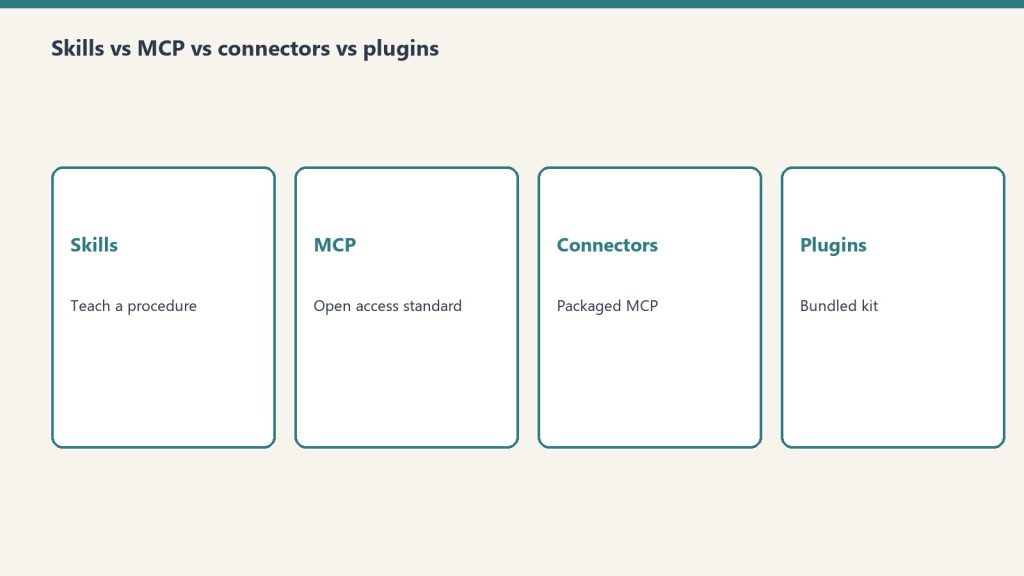
Persistent agent threads are now live across both mobile (iOS and Android) and desktop, which means you can start a Cowork task on your laptop and monitor or manage it from your phone. The new Customize section consolidates skills, plugins, and connectors into a single panel, replacing what was previously a scattered setup experience across multiple menus.
Recurring and on-demand task scheduling is also included, enabling the kind of “set it and check it” automation workflows that Cowork was always promising but only partially delivering during the preview period.
Why This Matters for Non-Developers
Why this matters for non-developers.
Cowork’s core bet has always been that the most valuable use cases for AI automation don’t belong to engineers — they belong to operators, marketers, content teams, and business owners who know exactly what they want done but have no interest in writing Python scripts or JSON configs to get there. The GA release validates that bet with a production-grade infrastructure story: OpenTelemetry means IT and enterprise security teams can audit what the agents are doing; role-based access controls mean managers can delegate without handing over full system access.
For the non-developer using Cowork day-to-day, the practical change is reliability. Research previews carry an implicit asterisk — “this works, mostly, until it doesn’t.” GA means the feature is supported, documented, and subject to real SLAs. Scheduled tasks that have been running through the preview period should now be more stable, and new automations can be built with the expectation that they’ll still work next month.
The Enterprise Observability Story
The enterprise observability story.
The addition of Cowork data into the Analytics API and OpenTelemetry support is worth noting separately. This is the detail that unlocks enterprise adoption at scale. Procurement and security teams at larger organizations have consistently asked for auditability before green-lighting AI automation tools. Cowork now has an answer: every agent action can be traced, logged, and routed into whatever observability stack the enterprise already runs.
For Team and Enterprise plan subscribers, this should accelerate internal approval processes for Cowork deployments that may have stalled during the preview period.
What Stays the Same
The fundamental Cowork model — Claude running autonomous tasks on behalf of the user, triggered by schedule or on-demand, guided by skills and connectors — is unchanged. If you’ve been running workflows in the preview, the transition to GA should be seamless. The Customize section reorganizes the setup experience but doesn’t require rebuilding existing configurations.
Plans and pricing remain unchanged from the research preview tier placement — Cowork is included in Pro, Max, Team, and Enterprise, with no new add-on cost announced alongside the GA release.
The Bottom Line
Cowork GA is the milestone that turns a promising experiment into a product you can build operational workflows around. The combination of persistent threads, role-based access, and OpenTelemetry support brings Cowork into alignment with what enterprise buyers require from any automation tool they’re willing to run at scale. For individual users, the reliability improvement and the cleaner Customize panel are the day-one wins. For teams, the observability story is the green light many have been waiting for.
The most common question I get from people who read the Split-Brain Architecture piece is some version of: how does Claude actually know what it’s working on? If you are managing 27 sites, 6 businesses, and hundreds of ongoing tasks, how do you avoid spending the first ten minutes of every session re-explaining your entire operation to an AI that has no memory of yesterday?
The answer is what I call the Context Stack. It is not a single file or a single tool — it is a layered system where each layer handles a different time horizon of memory, and Claude reads exactly what it needs for the task at hand without being overwhelmed by everything else.
The Problem With AI Memory
The problem with AI memory.
Claude does not have persistent memory across sessions by default. Every conversation starts blank. For someone running a simple use case — drafting an email, summarizing a document — this is fine. For someone running a content network across 27 WordPress sites with different brand voices, different SEO strategies, different clients, and different publishing schedules, a blank slate every session is an operational catastrophe.
The naive solution is to paste a giant context document at the start of every conversation. I tried this. It doesn’t work. Not because Claude can’t read it — it can — but because a 5,000-word context dump at the start of every session is cognitively expensive for the human, slows down the first response, and buries the relevant information under a pile of irrelevant information.
The right solution is a stack: different layers of context loaded at different times, for different purposes.
Layer One — The Global Layer (Always Loaded)
Layer one — the global layer always loaded.
The global layer is the context that is true across everything I do, all the time. It lives in a CLAUDE.md file at the workspace root and in a persistent system prompt inside Claude’s project settings.
What goes here: my name, my email, the fact that I manage a network of WordPress sites, the Notion workspace structure, the proxy URL and authentication pattern for WordPress API calls, and a handful of behavioral rules that apply universally — brevity preferences, how I want work logged, what “done” means to me.
What does not go here: anything site-specific, client-specific, or task-specific. The global layer is 200 lines maximum. Anthropic’s own guidance on CLAUDE.md length is right — longer files reduce adherence. I treat the 200-line limit as a hard constraint, not a guideline.
Layer Two — The Site Layer (Loaded Per Project)
Each WordPress site I manage has its own Claude Project, and each project has its own knowledge files. These files contain everything Claude needs to work on that specific site without me having to explain it: the brand voice, the target audience, the top-performing content, the internal linking structure, the credentials, the publishing cadence, and the current content roadmap.
I generate these files programmatically when I onboard a new site. They pull from the WordPress REST API, the site’s GA4 data, and the Notion database for that client. A site knowledge file for an established site runs about 800–1,200 words. Claude reads it at the start of any session for that project and immediately knows the difference between how to write for a Houston restoration contractor versus a New York luxury lender.
The site layer is why I can switch from working on a restoration contractor to a luxury lender to a live comedy platform in the same afternoon without losing context. The context travels with the project, not with me.
Layer Three — The Task Layer (Loaded On Demand)
The task layer is ephemeral. It is the specific context for the thing I am doing right now: the article brief, the GA data from this session, the list of posts that need refreshing, the client’s feedback on last week’s content.
This layer lives nowhere permanent. I paste it into the conversation, Claude uses it, and when the session ends it is gone. The task layer is intentionally disposable. If it matters beyond this session, it gets promoted to the site layer or the global layer. If it doesn’t matter beyond this session, it doesn’t need to be stored.
Most AI users try to make everything permanent. The discipline of the context stack is knowing what deserves permanence and what doesn’t.
Layer Four — The Second Brain (Asynchronous)
Layer four — the second brain asynchronous.
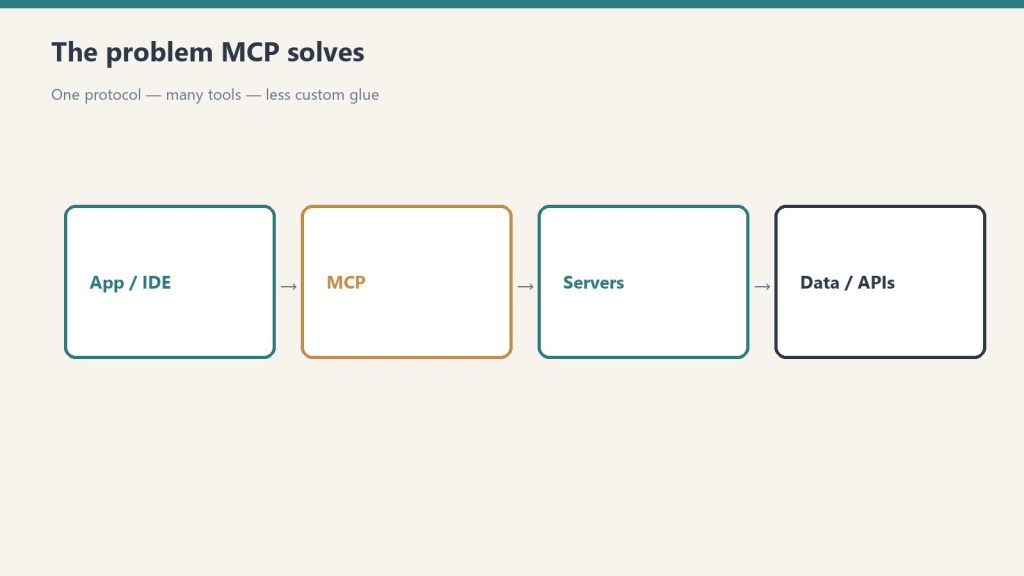
The second brain layer is Notion. It is not loaded into Claude’s context window directly — it is queried via the Notion MCP when Claude needs specific information.
What lives here: every session log, every publish log, every piece of competitive intelligence, every client preference that has emerged over time, the Promotion Ledger for autonomous behaviors, the Second Brain database of extracted knowledge from prior sessions.
The key distinction: Notion is not context I push into Claude. It is context Claude pulls from Notion when it needs it. The MCP connection means Claude can search the Second Brain mid-session, find a relevant prior session log, and use it — without me having to remember that the prior session happened.
This is the layer that makes the system feel like it has long-term memory even though it doesn’t. Claude doesn’t remember. But it can look things up, and the things worth looking up are stored.
What This Looks Like In Practice
A typical session for me starts with a project context already loaded (site layer). Within thirty seconds Claude knows which site it’s working on, what voice to use, and what the current priorities are. I drop in the task layer — a GA report, a list of post IDs, a brief — and we are working within two minutes of starting.
When something important happens — a new client preference, a site credential change, a strategy decision — I say “log this to Notion” and Claude writes it to the Second Brain. I don’t maintain the second brain manually. Claude maintains it as a byproduct of doing the work.
When I need to recall something from months ago — what we decided about the internal linking structure for a specific site, what the client said about their brand voice in March — Claude searches Notion and finds it. The retrieval is imperfect but it is dramatically better than my own memory.
The Honest Constraints
This system took months to build and it is still not finished. The site knowledge files need updating when strategies change and I don’t always remember to update them. The Second Brain has gaps where sessions weren’t logged properly. The global CLAUDE.md drifts toward bloat and needs periodic pruning.
The bigger constraint is that this architecture assumes you are operating at a certain scale — multiple sites, multiple clients, recurring workflows. If you are running one site for one business, the overhead of building and maintaining this stack is probably not worth it. A well-written CLAUDE.md and a single Notion page of context will get you most of the way there.
But if you are scaling past three or four sites, or if you find yourself re-explaining the same context in every session, the stack pays for itself quickly. The ten minutes you spend building a site knowledge file saves you two minutes per session indefinitely.
The goal is not to give Claude everything. The goal is to give Claude exactly what it needs, when it needs it, at the right layer of permanence.
Building Your Own Context Stack?
Email me what you are managing and I will tell you which layers you actually need.
Most people over-engineer the global layer and under-invest in the site layer. Five minutes of conversation usually fixes it.
The default failure mode of a Notion agent is “stop.” That’s almost never what you want in production. Robust workflows define what happens for each kind of failure: agent times out, Worker fails, external API is down, the schema mismatched, the credit pool emptied. Each needs a planned response — retry, fall back to manual, escalate to human, log and continue. Without explicit handling, “the agent stopped working” becomes a mystery debug session.
Five failure modes and their handling
Five failure modes and their handling.
1. Agent timeout (rare but exists). A 20-minute Custom Agent run that doesn’t complete. Handling: log the timeout, surface to the human owner, don’t auto-retry (likely to repeat the same problem). 2. Worker timeout (more common). Worker hits 30-second limit. Handling: structured error return from the Worker; agent decides whether to retry, partial-result, or fail. Don’t silently re-invoke. 3. External API failure. API down, rate limited, or returning errors. Handling: retry with exponential backoff (max 3 attempts), then fall back to “external system unavailable” path with human notification. 4. Schema mismatch. Agent expected JSON shape A, Worker returned shape B. Handling: validate at the boundary, log the mismatch, fall back to a default response, alert human to fix the schema drift. 5. Credit exhaustion. Workspace credit pool hits zero (post-May 4). Handling: this is hard — the agent stops mid-execution. Mitigation is preventative: monitor credit consumption, alert at 75% of monthly budget, top up before zero.
Three practical patterns
Three practical patterns.
The retry-with-backoff pattern.
First attempt fails → wait 1 second, retry. Second fails → wait 4 seconds, retry. Third fails → escalate to human. Don’t retry indefinitely. The fallback-output pattern.
When the primary path fails, return a known-safe default with metadata indicating it’s a fallback. Downstream consumers can check the metadata and decide whether to use the fallback or alert. The human-escalation pattern.
Define clear handoff criteria. When the agent can’t complete, who gets pinged, with what context, in what channel? “Pings someone eventually” is not a plan.
Logging requirements
Logging requirements.
Production agent workflows need three log streams:
– Action log: what the agent did and when
– Error log: what failed, with enough context to diagnose
– Decision log: when the agent chose between options, what it chose and why
Without all three, debugging takes 10x longer than it should.
Where this goes wrong
1. Trusting the default failure behavior. “The agent stopped” is rarely the right response. Define explicit handling. 2. Silent retries. Retries that don’t log produce mysterious “sometimes it works” behavior. Always log retry attempts. 3. No credit monitoring. Hitting credit zero stops every agent in the workspace. Monitor consumption proactively.
What to read next
Workers in TypeScript, Multi-Agent Orchestration, Security Posture, ROI Math.
Zapier and Notion AI overlap in concept (automate routine work) but optimize for different operators. Zapier: massive integration catalog, no-code, simple triggers and actions, optimized for “if this, then that” patterns. Notion AI: AI reasoning native, deep workspace context, optimized for “decide what to do given context, then act.” Use Zapier for breadth of simple automations. Use Notion Agents for depth of reasoning. The two are complementary.
When Zapier wins
When Zapier wins the automation layer.
You need many simple automations across many apps
Non-technical operators need to build automations themselves
The trigger logic is straightforward (if X, do Y)
You don’t have or want AI reasoning in the loop
You’re not heavily invested in Notion as a platform
When Notion Agents win
When Notion Agents win.
The workflow requires understanding Notion workspace content
AI reasoning about whether and how to act matters
Schedule-driven autonomous work is the goal
The workflow output is in Notion or affects Notion data
You want agents that can compose multi-step reasoning
What Zapier does that Notion Agents don’t
Thousands of app integrations out of the box
Visual no-code building accessible to non-developers
Flat-rate pricing easier to budget
Established for years; lots of recipes and patterns
What Notion Agents do that Zapier doesn’t
AI reasoning native to the workflow
Workspace context understanding
Skills (natural-language workflow definitions)
Workers for custom code
Database fluency at the platform level
The combined pattern
The combined pattern.
Many operators use both:
– Zapier for cross-app plumbing (lead from form → CRM → Slack → email)
– Notion Agents for workspace reasoning (synthesize lead context, decide priority, draft response)
– Sometimes Zapier triggers a Notion agent run
Treat them as layers: Zapier moves data; Notion Agents make decisions about that data.
Where this goes wrong
1. Trying to use Zapier for AI reasoning. Zapier has AI features but they’re shallow compared to Notion Agents. 2. Trying to use Notion Agents for cross-app plumbing. Possible via Workers/MCP, but Zapier’s integration catalog is broader. 3. Picking based on price alone. The right tool for the job costs less than the wrong tool, even at higher per-task pricing.
What to read next
Notion Agents vs n8n Alone, n8n MCP Bridge, Workers + External APIs, AI-Native Company Patterns.
This isn’t either-or. n8n is the deterministic workflow engine — when X happens, do Y across these 5 apps. Notion Agents are the reasoning layer — given the context, decide whether X actually warrants action and what the right action is. Combined via the n8n MCP bridge, they form a complete automation stack: agent reasons, n8n executes. Operators who treat them as competitors miss the leverage.
When Notion Agents win
When Notion Agents win.
The workflow needs to read and synthesize Notion workspace content
Natural-language understanding of context matters
The “decide whether to act” question is the hard part
Schedule-driven autonomous work is the goal
The workflow output is itself in Notion
When n8n wins
When n8n wins.
Pure cross-app data movement (no reasoning needed)
Hundreds of integration options matter
Visual workflow building with branching logic
High-volume deterministic automations
Workflows that don’t touch Notion at all
The combined pattern
The combined pattern.
The pattern that’s emerging:
– Notion Agent decides what to do based on context
– n8n workflow executes the cross-app coordination
– Connected via the n8n MCP bridge inside Notion
Example: Agent reads new lead in Notion → reasons whether it matches ICP → if yes, calls n8n workflow that updates Salesforce, sends Slack notification, schedules follow-up email.
What n8n does that Notion Agents don’t
Massive integration catalog (Salesforce, Stripe, hundreds of others)
Visual flow building
High-throughput deterministic execution
Self-hosting option for compliance-sensitive use cases
What Notion Agents do that n8n doesn’t
Natural-language understanding of unstructured workspace content
Native Notion database manipulation
Skills (saved natural-language workflows)
Workers for custom code execution
Schedule-driven autonomous reasoning
Where this goes wrong
1. Trying to do everything in one tool. Reasoning in n8n (limited) or deterministic execution in Notion Agents (expensive) is the wrong direction. 2. Skipping the MCP bridge. Without it, you re-implement n8n integrations as Workers. Don’t. 3. Letting agent reasoning replace simple n8n triggers. If the trigger is “row added to database,” that’s deterministic. Just use n8n.
What to read next
n8n MCP Bridge, Workers + External APIs, Notion AI vs Zapier, MCP foundation piece.
n8n is where many ops teams already run their cross-app automations. Notion’s n8n MCP bridge lets Custom Agents call those automations as tools. The agent decides what to do; n8n executes the cross-app work. This combines two strengths: Notion AI’s natural-language understanding and database fluency, and n8n’s mature integration library and workflow tooling. You don’t have to rebuild your n8n setup inside Notion.
What this enables
What the n8n MCP bridge enables.
Three patterns that get easier: 1. Agent-triggered cross-app workflows. Agent reads a Notion page, decides an action is needed, calls the relevant n8n workflow which handles the actual work (Salesforce update, Stripe charge, file move, whatever). 2. Existing n8n investment compounds. Every n8n workflow you’ve built becomes a tool the agent can use. The library grows as your agent-callable surface grows. 3. Workflow logic stays in n8n. When the workflow logic changes, you change it in n8n once. All agents using that workflow inherit the change automatically.
When to use n8n vs Workers
When to use n8n vs Workers.
Notion has Workers (developer preview) for custom code. n8n is for cross-app workflows. The split:
– Workers when you need custom logic that doesn’t exist as an integration
– n8n when you need to coordinate across many existing apps with mature connectors
– Both for complex flows where Workers handle specific computation and n8n handles app coordination
For most ops teams, n8n is the right starting point. Workers are an advanced layer.
Where this goes wrong
Where this goes wrong.
1. Treating the agent as a smarter n8n trigger. The agent’s value is judgment about when to run the workflow. If you can express the trigger as a simple condition, just run n8n directly. 2. Letting agents call destructive workflows without confirmation. Agent + n8n + Salesforce delete = potential disaster. Add human approval steps for destructive operations. 3. Not versioning n8n workflows that agents call. When you change a workflow, agents don’t know. Version your workflows so agent prompts can pin to specific versions.
What to read next
Workers for Agents, MCP foundation piece, Notion Agents vs n8n Alone, The Solo Operator’s Stack.
CS work is constrained by CSM bandwidth. The bandwidth gets eaten by documentation: QBRs, account plans, health score updates, internal reporting. Custom Agents take that documentation work over so CSMs can spend their time on customer calls. The result is CS teams that cover more accounts at the same headcount or go deeper on the same accounts. Either way, the math improves.
Four CS-specific agent patterns
Four CS-specific agent patterns.
1. The QBR draft agent. Triggered before QBR season. For each account: pulls usage data (via integration), product adoption metrics, support ticket trends, key milestones, prior QBR action items. Drafts the QBR deck content in the team’s template. CSM customizes for the specific customer instead of building from scratch. 2. The health score maintenance agent. Daily or weekly. Reads usage data, support patterns, engagement signals, NPS responses. Updates each account’s health score in the customer database. Surfaces accounts that dropped a tier in the last week. 3. The account plan agent. Monthly per account. Reviews account activity, identifies expansion opportunities, surfaces stalled adoption areas, drafts the updated account plan with specific next-quarter goals. 4. The renewal risk agent. Continuous. Scans accounts approaching renewal. Cross-references health score, recent engagement, support ticket sentiment, and upcoming contract dates. Flags 60-90 days before renewal so CSM has runway to address issues.
What stays CSM
What stays CSM.
Customer conversations
Expansion negotiations
Crisis response when accounts are unhappy
The judgment about which accounts deserve which level of investment
Reading the customer relationship temperature
The agent surfaces signals; the CSM interprets them.
The leverage math
A typical CSM covers 25-40 accounts. Documentation work consumes 30-40% of their week. Custom Agents take that to 10-15%. The CSM either covers more accounts (50-60) or goes deeper on the same accounts (more strategic, more frequent touch).
The strategic question: which path matches your business? Higher coverage favors expansion-led businesses. Deeper accounts favor retention-led businesses. Don’t let agents accidentally pick the path for you by default.
Where CS teams go wrong
Where CS teams go wrong.
1. Letting agents update health scores autonomously into a “you’re red” customer-facing alert. Health scores have political weight inside the customer’s organization. Auto-flagging customers as red without human review can damage the relationship. 2. Skipping the QBR review. The agent draft is starting material. The customization for that specific customer is what makes the QBR land. Don’t ship the agent draft as-is. 3. Trusting renewal risk flags without context. A customer can look “at risk” by the data while being fine in the relationship. CSM context wins. Don’t escalate based on the agent flag alone.
What to read next
Notion AI for Sales Teams, Account Research, AI-Native Company Patterns.
Ops managers spend their days holding the operational fabric together — keeping SOPs current, ensuring procedures get followed, catching exceptions, communicating status. Custom Agents excel at exactly this category of work because the patterns are well-defined and the value of consistency is high. The ops manager’s job shifts from “running procedures” to “designing the agents that run procedures and handling what they can’t.”
Four agents every ops function needs
Four agents every ops function needs.
1. The SOP currency agent. Runs weekly. Reads each SOP page. Cross-references it against recent activity in related databases. Flags SOPs that haven’t been updated in 90 days OR where the actual practice has drifted from the documented process. Output: a one-page report on SOP health. 2. The procedure execution agent. Triggered by named events (onboarding new hire, incident response, monthly close). Walks through the procedure step by step, executing or assigning each step, logging completion to an audit trail database. Pauses when human input is required. 3. The exception triage agent. Watches a designated “exceptions” database. Categorizes incoming exceptions by type, urgency, and owner. Drafts initial response. Flags pattern exceptions (multiple of the same type) for systemic review. 4. The status synthesis agent. Reads across team databases. Produces the weekly ops report — what’s running, what’s at risk, what shipped, what’s behind. Goes to leadership. Saves the ops manager 4-6 hours weekly.
The audit trail dividend
The audit trail dividend.
Custom Agents write audit logs by default. Every step they take, every page they read, every change they make is logged. For ops functions in regulated environments — finance, healthcare, legal-adjacent — this is meaningful. The agent’s audit trail is more thorough than what humans typically log because humans cut corners on logging when they’re under time pressure. Agents don’t.
This shifts the conversation with auditors. “Show me your procedure” becomes “here’s the procedure and here’s every execution log for the last 12 months.” That’s a posture change.
Where ops managers go wrong with agents
Where ops managers go wrong with agents.
1. Building agents for procedures that aren’t documented well. If the SOP is vague, the agent’s execution will be vague. Tighten the SOP first. Then build the agent. 2. Trusting agent execution without sampling. Sample 10% of agent runs monthly. Look at the audit trail. Verify it matches reality. Drift happens silently. 3. Replacing exception handling with an agent. Exception handling is judgment work. Agents categorize and surface; humans decide. Don’t let the agent close exception tickets autonomously without review.
What this enables
Ops managers running this pattern report: more time on systemic improvement, less time on procedure execution. More confidence in audit posture, less anxiety about gaps. More leverage per ops headcount, fewer manual handoffs.
What to read next
SOX Testing pieces in finance cluster, Compliance, Editorial Surface Area, AI-Native Company Patterns.
Skills are how you stop re-prompting. If you find yourself typing the same instructions to your Notion Agent every Friday — “summarize this week’s project updates in our team format with a green/yellow/red status and an action items list” — that’s a skill waiting to be saved. Once captured, you call it by name and the agent runs the workflow. Skills became prominent with Notion 3.3 in February 2026 and they’re the bridge between “I have an AI assistant” and “I have an AI teammate that knows how we do things here.”
What a skill actually is
What a skill actually is.
A skill is three things bundled:
1. A trigger phrase or name — what you call it when you want it run
2. The instructions — the prompt logic the agent follows
3. The context boundaries — which databases, pages, or sources the agent can pull from
That last piece is what separates a skill from a saved prompt. A saved prompt is just text. A skill is text with scope. The agent knows where to look, what format to produce, and which pages to update.
The four skills every operator should build first
The four skills every operator should build first.
If you’re new to skills, these four pay back the time investment within a week. 1. The weekly digest skill. Reads your project database, your meeting notes, and your Slack archive. Produces a one-page digest in your team’s format. Run it Friday afternoon. You stop writing weekly updates. 2. The brief-prep skill. Triggered before a meeting. Pulls the relevant project page, the last meeting notes with this person or team, any open action items, and synthesizes a one-page brief. Run it 30 minutes before the meeting. You stop showing up cold. 3. The inbox-to-action skill. Reads new entries in a specified database (support requests, sales leads, content pitches). Categorizes them, assigns owners based on rules you set, and drafts a first response. You stop processing inbound manually. 4. The doc-reshape skill. Takes any document and reformats it into your team’s house style — your headings, your sections, your tone. Solves the “we have great content from a partner but it doesn’t read like us” problem.
How to build a skill that actually works
How to build a skill that actually works.
Three rules, learned the hard way: Be specific about format. “Summarize” produces wildly different outputs depending on the agent’s mood. “Produce a one-page summary with these five sections in this order, max two sentences per section, in active voice” produces consistent outputs. Specificity is the difference between a skill you trust and a skill you babysit. Bound the context tightly. The temptation is to give the agent access to everything. The result is slower runs, more credits consumed, and outputs that pull from irrelevant sources. Pin the skill to specific databases or page trees. You can always expand later. Test it five times before you trust it. Run the skill against five different inputs and look at the outputs side by side. The variance you see is the variance you’ll get in production. If the spread is too wide, tighten the instructions until the outputs converge.
What skills can’t do well yet
Skills inherit the limits of the underlying agent. They struggle with:
– Tasks that require fresh judgment. A skill that’s supposed to “decide whether this lead is qualified” produces inconsistent results because the criteria aren’t fully explicit. Better to have the skill score the lead on five named dimensions and let a human make the call.
– Long autonomous chains. A skill that triggers another skill that triggers another skill is a debugging nightmare. Keep skills atomic. Compose them in workflows outside the skill itself.
– Cross-workspace work. A skill in one Notion workspace can’t reach into another. If you operate across multiple workspaces, you need parallel skills, not one shared skill.
Skills and the May 3 cliff
After May 3, 2026, every Custom Agent run consumes Notion Credits. That includes skills run by Custom Agents. The implication: a well-built skill that takes 30 seconds to run is cheap; a sloppy skill that takes 8 minutes because the context isn’t bounded is expensive.
This is why “specificity” and “context boundaries” graduated from style advice to financial advice. Tight skills cost less. Sloppy skills bleed credits. The audit you should be doing on your skills before May 4 is the same audit you’d do on any line item: is the output worth the cost?
What to read next
If skills are interesting to you, the natural follow-up reads in this corpus are the Custom Agents foundation piece (skills run on Custom Agents), the May 3 cliff (when skill costs become real), and the Building Your First Notion Skill walkthrough in Deep Technical (step by step).