Tag: Real Estate

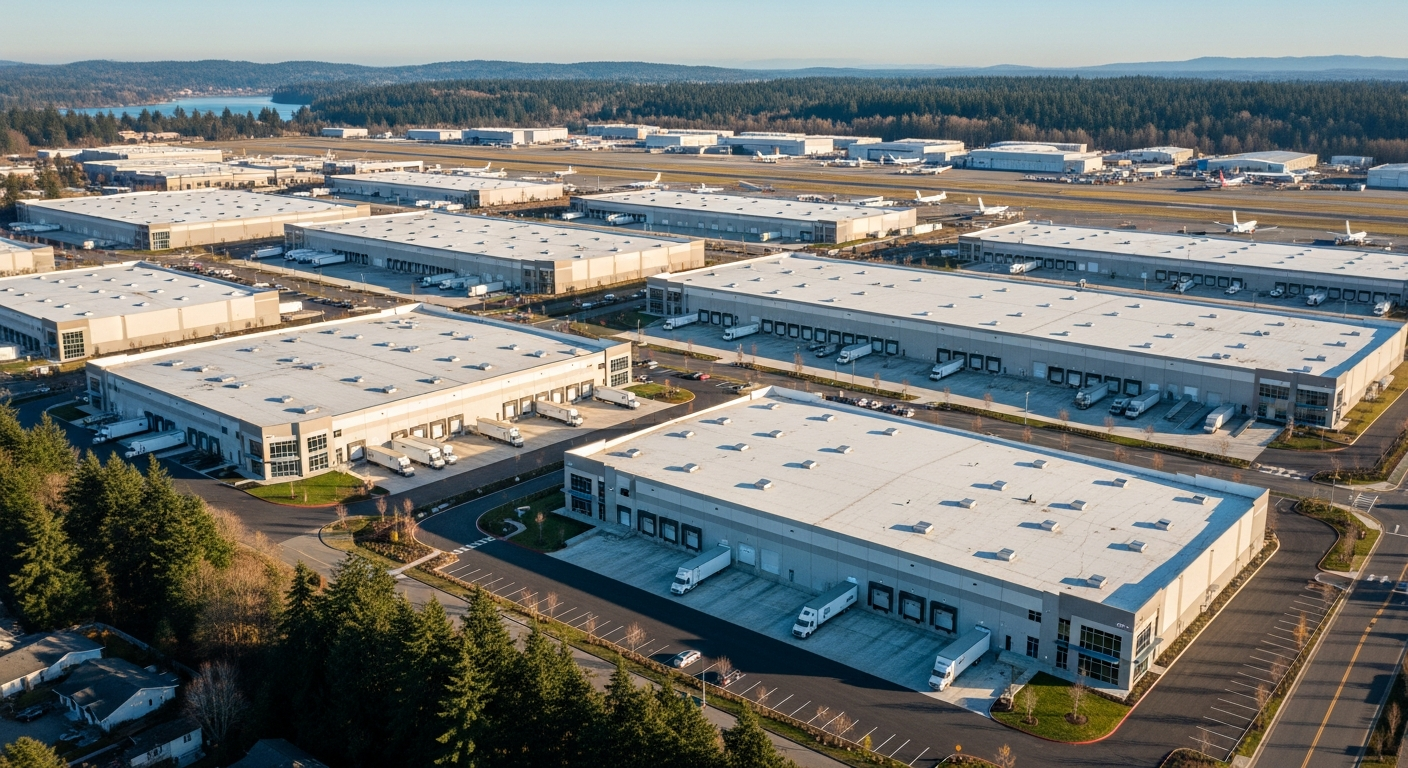
  • Snohomish County Has the Most Affordable Warehouse Space in Puget Sound — What Q1 2026’s Industrial Market Means for Everett

    Snohomish County Has the Most Affordable Warehouse Space in Puget Sound — What Q1 2026’s Industrial Market Means for Everett

    Q: How much does warehouse space cost in Snohomish County in 2026?
    A: Snohomish County warehouse rents in 2026 are running approximately $0.70 to $1.00 per square foot monthly on a triple-net basis — the most affordable warehouse market in the Puget Sound region. The broader Seattle metro ranges from $0.70 to $1.60/SF monthly, making Snohomish County the value end of the market by a significant margin.

    The Number That Matters: $0.70 to $1.00 per Square Foot

    If you’re an Everett-area business looking for industrial or warehouse space in 2026, the market conditions haven’t been this favorable in over a decade. Snohomish County’s warehouse and industrial rents are running $0.70 to $1.00 per square foot monthly (NNN), making it the most affordable industrial submarket in the entire Puget Sound region, according to WareCRE’s 2026 Seattle Warehouse Market Report. That’s below Southend markets like Kent and Renton, below Pierce County, and well below the Seattle in-city markets at the top of the range.

    To put that in annual terms: $0.70 to $1.00/SF monthly is $8.40 to $12.00/SF annually on a triple-net lease. For a 20,000-square-foot distribution or manufacturing facility, that’s $168,000 to $240,000 per year in base rent — before operating expenses that you’re responsible for as a tenant under NNN terms, but still well below what comparable space costs in King County.

    And those asking rents are the ceiling right now, not the floor. Kidder Mathews’ Q1 2026 Seattle Industrial Market Report shows vacancy at 10.39 percent across the Seattle metro industrial market, up from 9.74 percent at year-end 2025. At that vacancy level, with net absorption running negative (-130,751 square feet absorbed in Q1 2026) and only two speculative projects totaling 478,740 square feet under construction across the entire market, landlords are dealing. Effective rents — after concessions like free rent periods and tenant improvement allowances — are running below the published asking rates across the region.

    The Market Context: Why It’s the Best Tenant Window in a Decade

    The Puget Sound industrial market is correcting from a 2021-2022 boom cycle that pushed vacancy to historic lows. Speculative development that was planned during that peak is now delivering into a softened demand environment. The result is the most tenant-friendly industrial market the region has seen in more than ten years.

    Cushman & Wakefield’s April 2026 Industrial MarketBeat report describes the national picture this way: “Peak industrial vacancy likely in rearview mirror as demand holds and supply slows.” The national vacancy rate ended Q1 2026 at 7.0 percent — flat with year-end 2025, and 10 basis points below the Q3 2025 peak. The West region runs hotter than the national average at 7.9 percent, and Seattle specifically came in at 9.7 percent for Q1 2026.

    That 9.7 percent Seattle metro figure blends markets with very different profiles — Southend logistics hubs, South Seattle last-mile space, and Eastside flex. Snohomish County’s position within that range reflects its role as the region’s industrial value market: strong fundamentals, affordable rents, and proximity to the Port and to Paine Field’s aerospace manufacturing cluster without the price premium of South King County.

    Tariffs have added a wrinkle to the demand picture. Container volume growth at the Northwest Seaport Alliance reversed from 16 percent year-over-year to 0.2 percent, according to WareCRE’s 2026 report — a direct effect of tariff uncertainty on import volumes. For Everett specifically, which handles breakbulk and project cargo rather than containerized imports, this tariff impact is less acute than it is for the container-focused markets south of Seattle. But it’s part of the broader softening that has tilted conditions toward tenants.

    What This Means for Everett Businesses Specifically

    For businesses in the Everett corridor — manufacturing, distribution, aerospace supply chain, construction materials — Q1 2026 is the moment to renegotiate or explore. A few specific scenarios:

    If you’re renewing a lease: Don’t auto-renew. Take this market to your landlord and negotiate. Vacancy is up, absorption is negative, and landlords are offering concessions that weren’t available 18 months ago. Free rent periods, tenant improvement allowances, and rate reductions are all on the table in a 10-percent-vacancy market.

    If you’re looking for your first industrial space: Snohomish County’s $0.70 to $1.00/SF range gives you significant square footage for your budget. The Port of Everett’s bonded warehouse space, Norton Terminal cargo yard, and on-dock rail connection make this a particularly attractive location for businesses with freight-intensive operations.

    If you’re an aerospace or defense supplier: The Port of Everett Seaport — which just landed an $11.25 million federal grant to rebuild Pier 3 — is actively expanding its cargo-handling capacity. Industrial space near the Port and near Paine Field puts you in the middle of that ecosystem at the market’s most affordable price point.

    The Port’s Industrial Footprint: What’s Already There

    The Port of Everett is not just a transshipment point — it’s an industrial anchor. The Seaport campus includes Norton Terminal (40 acres, paved, lit, and secured), bonded warehouse space, a 15-acre secondary cargo yard, 40-foot MLLW deep-water access, and on-dock rail. That infrastructure supports freight-intensive tenants at a scale that most Puget Sound industrial parks can’t replicate.

    The Port’s broader economic footprint — $21 billion in U.S. exports annually, 40,000-plus jobs supported, $433 million in state and local tax revenues — makes Snohomish County’s industrial corridor one of the most economically active in the Pacific Northwest, despite not getting the same press as South King County’s distribution hubs.

    The Snohomish County office market also showed improvement in Q1 2026, with vacancy ticking down to 10.7 percent and posting a third consecutive quarter of positive net absorption. The industrial and office markets are telling a consistent story: Snohomish County is a market with more space available than King County, at lower prices, and with occupiers slowly returning.

    What Comes Next

    With only two industrial construction projects totaling 478,740 square feet active across the Seattle metro, new supply isn’t going to flood the Snohomish County market in the next 12 to 18 months. Cushman & Wakefield’s assessment — that peak vacancy may be behind us — suggests the window of maximum tenant leverage may be closing at the national level, even if local conditions lag that trend by a quarter or two.

    For Everett: the Pier 3 rebuild will take multiple years from planning through construction, but when it’s done, the Port will have a pier capable of handling more diverse and heavier freight. That means more industrial activity flowing through the waterfront corridor, more demand for warehouse and staging space near the Seaport, and a strengthened case for industrial site selection decisions that prioritize proximity to the Port.

    Right now, $0.70 to $1.00/SF is the entry price. That’s the Snohomish County advantage — and in this market, it’s also the moment to use it.

    Frequently Asked Questions

    What is the average warehouse rent in Snohomish County in 2026?

    Snohomish County warehouse rents are approximately $0.70 to $1.00 per square foot monthly (NNN) in 2026, making it the most affordable industrial submarket in the Puget Sound region. The broader Seattle metro ranges from $0.70 to $1.60/SF monthly.

    Is the Seattle industrial real estate market a buyer’s or tenant’s market right now?

    As of Q1 2026, it is the most tenant-friendly industrial market in over a decade. Vacancy is at 10.39 percent across the Seattle metro, net absorption was negative in Q1 2026, and landlords are offering concessions including free rent and TI allowances.

    How does tariff uncertainty affect the Snohomish County industrial market?

    Tariffs reversed container volume growth at the Northwest Seaport Alliance from 16 percent year-over-year to 0.2 percent, softening demand in logistics-heavy submarkets. Snohomish County and the Port of Everett, which focus on breakbulk and project cargo rather than containerized imports, are somewhat insulated from this trend.

    Where is industrial space available near the Port of Everett?

    The Port of Everett Seaport campus includes Norton Terminal (40 acres), bonded warehouse space, a 15-acre secondary cargo yard, and on-dock rail. Additional industrial space in the Everett corridor is available through commercial brokers; the Port’s business development team can also connect businesses with Port-adjacent space options.

    Is now a good time to lease industrial space in Everett?

    Q1 2026 represents favorable conditions for tenants: vacancy is elevated, new supply is limited, and landlords are offering concessions. Cushman & Wakefield’s April 2026 report suggests peak industrial vacancy may be in the rearview nationally, which means the current window of maximum tenant leverage may be narrowing.

  • Buying a Home Near Water in Everett in 2026: What the Critical Areas Update Changes for Anyone Looking at a Lot Near a Wetland, Stream, or Bluff

    Buying a Home Near Water in Everett in 2026: What the Critical Areas Update Changes for Anyone Looking at a Lot Near a Wetland, Stream, or Bluff

    Featured Snippet

    **What should I check before buying an Everett home near a wetland, stream, or bluff in 2026?**

    Before closing on any Everett property near water, a slope, or a wildlife corridor, check the parcel’s critical area overlays on the City of Everett GIS map. The Critical Areas Regulations (Chapter 19.37) are being updated under Washington’s Growth Management Act — the City Council held a public hearing April 15, 2026 and a vote is targeted in the coming weeks. The February 13, 2026 second review draft updates wetland buffer widths, stream classifications, geologic hazard setbacks, and the technical studies any future addition or remodel will require. Critical area overlays affect buildable area, accessory dwelling unit eligibility, fence and outbuilding placement, and occasionally insurance and resale.


    If you’re house-hunting in Everett in 2026 — especially in north Everett, the Bayside corridor, around Howarth Park, near Forest Park, on Rucker Hill, the bluff blocks, or anywhere along a creek or ravine — there is one piece of city code you should understand before making an offer.

    It’s called the Critical Areas Regulations, Chapter 19.37 of the Everett Municipal Code. It’s being updated right now. And the February 13, 2026 second review draft changes some of the technical assumptions a buyer should make about a near-water lot.

    This is the buyer’s read.

    Why It Matters at the Offer Stage

    Critical area overlays govern what can be built on, added to, or modified on a parcel. They don’t just affect a hypothetical future development; they affect concrete decisions a current owner will face:

    • Whether you can add a detached garage or accessory dwelling unit
    • Where you can place a fence relative to a wetland edge
    • What’s required to expand the existing footprint
    • What happens if the existing house needs significant repair or rebuild
    • Whether the lot can be subdivided
    • What documentation is required to remove or replace trees inside a buffer

    A house that looks like it has plenty of yard for an ADU may have most of that yard inside a stream buffer. A backyard with a view of a ravine may include a geologic hazard slope that limits where any new structure can go.

    The new code makes these answers more important to know before close, not after.

    What’s Being Updated and When

    Everett’s last comprehensive Critical Areas Regulations update was 2007. Washington’s Growth Management Act required cities to update by December 31, 2025. Everett published a first review draft on October 31, 2025 and a second review draft on February 13, 2026.

    • April 15, 2026 — City Council public hearing on the update
    • Council vote targeted in the coming weeks
    • The ordinance applies to new development, additions, and disturbance after adoption

    If you close before the vote, the property is yours under the existing 2007-vintage rules. Any future addition, ADU, or significant remodel — though — will likely face the new rules.

    The Five Critical Area Categories — Where Everett’s Buyers Encounter Them

    • Wetlands — Anywhere along Howarth Park’s perimeter, Pigeon Creek’s lowland reaches, the wetlands at Forest Park’s edges, and many low-lying parcels around the city
    • Streams — Pigeon Creek and its tributaries, the Snohomish River edge, and many small unnamed reaches
    • Frequently flooded areas — The regulatory floodplain along the Snohomish River and parts of low Bayside
    • Geologically hazardous areas — The Everett bluff, Rucker Hill’s slopes, the bluff blocks throughout the city, and ravine sides
    • Critical aquifer recharge areas — Less commonly visible, but check the GIS map

    The Buyer’s Checklist

    Before you make an offer on a near-water or near-slope lot:

    1. Pull the parcel’s overlay map

    Use the City of Everett GIS portal to look up the address. The portal layers critical area overlays on top of the parcel boundary, so you can see at a glance which categories apply.

    2. Read the parcel’s history

    Permits, geotechnical reports, wetland delineations, and habitat assessments commissioned by prior owners may be on file with the city. If they exist, your due diligence period is the time to review them.

    3. Verify what existing structures are legally established

    A house grandfathered under earlier code is fine to occupy. A detached structure built without permit, or built inside a buffer that didn’t exist when it was constructed, may not be. Title and permit records resolve this.

    4. Map your future plans against the overlay

    If you bought thinking you’d add an ADU, ask: where on the lot would the ADU sit relative to the wetland buffer, stream buffer, or slope setback under the new rules? The answer determines whether the plan is feasible.

    5. Get a credentialed consultant if the lot is complicated

    For lots with multiple overlays or for lots where the buyer plans significant future work, a wetland or geotechnical consultant during due diligence is well-spent money. They can read the overlays the way the city’s planning staff will.

    6. Ask the listing agent direct questions

    “What overlays touch this parcel?” “What is the buffer width on the wetland or stream?” “What permits has the city issued on this address?” These are reasonable questions during diligence and the answers belong in writing.

    What Changes Specifically Under the New Rules That Buyers Should Know

    • Wetland buffers can be wider under the February 13 draft for some wetland categories. A lot whose old-code buildable area looked generous may have less buildable area under the new rules.
    • Stream classifications can shift, changing the buffer regime on a parcel. A creek that was Category B yesterday may be reclassified, with a different buffer.
    • Mitigation sequencing tightens. Buyers planning future builds should expect a longer documentation path before approval.
    • Geotechnical study expectations are updated. A 2018 geotechnical report on a sloped parcel may no longer satisfy current expectations for a new application.
    • Habitat assessments are scoped more rigorously. Parcels in Fish and Wildlife Habitat Conservation Areas face additional study burdens.

    The Resale and Insurance Angle

    Some buyers ask whether critical area overlays affect resale or homeowner insurance:

    • Resale. Overlays don’t prevent resale, but they’re a disclosure item. Future buyers will pull the same overlay map. Lots with developable buildable areas that have shrunk under the new rules will price reflective of that.
    • Insurance. Frequently flooded areas (the regulatory floodplain) are a flood insurance question — separate from critical area buffer rules but on the same maps. Lenders may require flood insurance on parcels inside the floodplain. Geologic hazard area designation does not directly affect homeowner insurance pricing in most cases, but a known landslide-prone slope can show up in carrier underwriting.

    When the Critical Areas Update Doesn’t Affect Your Decision

    Plenty of Everett homes are not in a critical area overlay at all. The new rules don’t affect them. The check-the-overlay-map step is what tells you whether to read further. Most Everett buyers will close on parcels with clean overlays and never think about Chapter 19.37 again.

    For the buyers who don’t — the ones looking at the lot with the creek, the wetland, the slope, or the ravine — the 2026 update is part of the homework.

    Frequently Asked Questions

    Q: How do I check whether an Everett property is in a critical area overlay?

    A: Use the City of Everett’s GIS map. Search the parcel’s address; the map layers critical area overlays for wetlands, streams, frequently flooded areas, geologically hazardous areas, and critical aquifer recharge areas.

    Q: Do the Critical Areas Regulations affect closing on a property?

    A: The regulations don’t prevent closing. They affect what you can do with the property after close — additions, ADUs, fences, outbuildings, and substantial alterations. They are part of due diligence, not a closing barrier.

    Q: If I close before the council vote, do the old rules apply forever?

    A: The old rules apply to applications submitted while they’re in force. After adoption, new applications for additions, ADUs, or significant remodels are reviewed under the new rules. Existing legally established structures generally remain.

    Q: Are wetland buffers wider under the February 13 2026 draft?

    A: For some wetland categories, yes — the draft updates tables 37.2 and 37.3 based on Best Available Science. Specific buffer width changes depend on wetland category and rating.

    Q: Do critical area overlays affect homeowner insurance?

    A: Frequently flooded areas (the regulatory floodplain) are a flood insurance question, and lenders may require flood insurance on parcels inside it. Geologic hazard area designation doesn’t directly affect most homeowner insurance pricing, but documented landslide-prone slopes may show up in underwriting.

    Q: Should I get a wetland or geotechnical consultant during due diligence?

    A: For complicated parcels — multiple overlays, future ADU plans, sloped lots — yes. Consultants can read the overlays the way the city’s planning staff will and tell you what your future buildable area actually is.

    Q: Where can I read the actual February 13 2026 draft?

    A: The City of Everett’s planning portal publishes the draft ordinance text and supporting maps. The ordinance itself is the authoritative reference.

    Q: What’s the most common surprise for Everett buyers in critical area parcels?

    A: That the lot’s buildable area, after applying buffer widths, is materially smaller than the parcel boundary suggests — and that ADU plans, in particular, often run into stream or wetland buffers that weren’t visible from the listing photos.


  • What Everett’s Critical Areas Update Means If You Own Land Near a Wetland, Stream, or Bluff: A 2026 Property Owner’s and Builder’s Guide

    What Everett’s Critical Areas Update Means If You Own Land Near a Wetland, Stream, or Bluff: A 2026 Property Owner’s and Builder’s Guide

    Featured Snippet

    **What does Everett’s 2026 Critical Areas Regulations update mean for property owners and builders?**

    If your parcel touches a wetland, stream, frequently flooded area, geologically hazardous slope/bluff, or critical aquifer recharge area, the February 13, 2026 second review draft of Chapter 19.37 changes the buffer width, mitigation sequence, and technical-study requirements you have to meet before disturbing the feature. Wetland buffer tables 37.2 and 37.3 are updated; some categories carry wider buffers than the 2007 rules. Stream classifications are revised. Geotechnical and habitat study expectations are tightened. The City Council held a public hearing on April 15, 2026 and is targeting a vote in the coming weeks.


    If you own a lot, an in-fill site, or a development parcel in Everett that touches any of the city’s critical areas, the regulations updating right now will determine what you can build, where you can put it, and how much site work it will take to get there.

    This is the property owner and builder read of Chapter 19.37’s 2026 update — the practical consequences, before the council vote.

    Step One — Find Out If Your Parcel Has a Critical Area Overlay

    Before you read the ordinance text, check your specific parcel against the city’s GIS overlays. The five categories the rules cover:

    • Wetlands — Howarth, Pigeon Creek, Forest Park edges, low-lying parcels in many corridors
    • Streams — named (Pigeon Creek, Snohomish River edge) and unnamed reaches throughout the city
    • Frequently flooded areas — the regulatory floodplain, including parts of the Snohomish River corridor
    • Geologically hazardous areas — bluff faces, landslide-prone slopes, erosion zones, seismic hazard areas
    • Critical aquifer recharge areas — zones over drinking-water aquifers

    Many parcels carry more than one overlay. A lot above the Snohomish River may sit inside a frequently flooded area at the base, a wetland in the riparian zone, and a geologic hazard area on the bluff. Each overlay applies independently. Where they conflict, the more restrictive rule prevails.

    What Changes in the Wetland Tables

    Tables 37.2 and 37.3 — the wetland buffer width tables — are updated in the February 13, 2026 draft to reflect Best Available Science. The practical translation:

    • Buffer widths shift by wetland category. A Category I wetland (highest functional value) carries a different buffer than a Category IV. The draft recalibrates several of those category-buffer pairings.
    • Some buffers widen. For affected parcels, the developable area inside the parcel boundary shrinks proportionally.
    • Mitigation may now be required where it wasn’t. A site that previously qualified for a buffer reduction or averaging may face a different review under the updated standards.

    Owners with parcels containing a wetland edge should expect the buildable footprint analysis from a 2018 site plan to be different than what the new code produces. The size of the difference depends on the wetland category, the rating, and the parcel geometry.

    What Changes for Streams

    The draft revises stream classifications and the corresponding buffer widths. For owners whose parcels front, back, or contain a stream:

    • Stream classifications can shift. Reclassification under the new draft can move a parcel from one buffer regime to another.
    • Buffer widths recalibrate. The directional change varies by stream type.
    • Wildlife habitat overlays may expand on some corridors. The Fish and Wildlife Habitat Conservation Areas designation pulls in additional protections.

    The planning commission’s February 17, 2026 hearing recorded that stream provisions were among the most-discussed elements of the draft. Owners with stream-adjacent parcels should check the specific stream’s classification under the new draft against the old code.

    What Changes for Geologic Hazard Parcels

    Buffer and setback rules for landslide-prone slopes and bluff edges are recalibrated. The Everett bluff is the most visible example, but the city has many smaller landslide-classified slopes inland.

    For owners building on or near a slope:

    • Geotechnical study expectations are updated — qualifications, scope, content
    • Setback distances may shift — both from the slope crest and from the toe
    • Erosion and seismic hazard overlays apply independently of the landslide rules

    Practical implication: any project at the design stage that relied on a 2018 geotechnical report should expect the report’s setback and stabilization assumptions to be reviewed against the new standard.

    What Changes for Mitigation Sequencing

    The draft tightens the standard sequence applicants follow when a critical area impact is unavoidable:

    1. Avoid — design the project to avoid the impact

    2. Minimize — if avoidance isn’t feasible, minimize the extent

    3. Mitigate — if minimization isn’t sufficient, mitigate the residual impact

    State law requires this sequence. The draft reinforces and clarifies how Everett applies it. The practical effect: a site plan that could previously skip directly to mitigation must now demonstrate avoidance and minimization first. That changes the documentation burden and the design iteration timeline.

    Technical Study Requirements — The New Documentation Burden

    For applicants, the most operationally consequential change is often the updated qualifications, scope, and content expectations for:

    • Wetland delineations
    • Stream studies
    • Geotechnical reports
    • Habitat assessments
    • Hydrogeological assessments (for aquifer recharge parcels)

    Practical translation: engage credentialed consultants earlier in the design process than the old rules required. Wetland delineations are field-season-dependent (most reliable late spring through early fall in Everett); geotechnical work has its own schedule; habitat assessments may require surveys in specific windows.

    For owners targeting a 2026 or 2027 permit submittal, that schedule matters more under the new rules than the old.

    What Owners Can Do Before the Council Vote

    • Pull your parcel’s overlays now from the city’s GIS map. This is free and doesn’t commit you to anything.
    • Compare the existing rules against the February 13 draft for the categories that touch your parcel. The ordinance text is the authoritative reference.
    • Engage a consultant early if you’re planning to build, add, or sell. Wetland delineations and geotechnical reports take weeks; starting before the vote gets ahead of any application backlog.
    • Submit comment to the council if you have technical objections to specific provisions. The April 15, 2026 hearing was the formal moment, but written comment continues to be accepted on the record before the vote.
    • Plan for the documentation gap. If your project plan was built against 2007-vintage rules, expect to redo at least some of the supporting studies.

    Vesting and Existing Applications — The Critical Practical Question

    Property owners with active applications often ask: which version of the rules applies to my project?

    The general principle in Washington land use law is that complete applications submitted before a code change are vested under the rules in force at the time of submittal. However:

    • “Complete application” has a specific procedural definition the city uses
    • Pre-application meetings do not create vesting
    • Material changes to a vested application may trigger review under the new rules

    For owners with applications in progress, this is the single most important question to confirm with city planning staff before the council vote.

    Frequently Asked Questions

    Q: How do I find out if my Everett parcel has a critical area overlay?

    A: Check the City of Everett’s GIS map. It shows critical area overlays on individual parcels for all five categories — wetlands, streams, frequently flooded areas, geologically hazardous areas, and critical aquifer recharge areas.

    Q: Will the Critical Areas Regulations update affect my existing house?

    A: The regulations primarily govern new development, additions, and disturbance of critical areas. Existing legally established structures are typically grandfathered, though substantial alterations or expansions trigger review.

    Q: Are wetland buffers wider under the February 13 2026 draft than under the 2007 rules?

    A: For some wetland categories, yes. The draft updates tables 37.2 and 37.3 to reflect Best Available Science, which generally produces wider buffers for higher-functional-value wetlands. Specific buffer width changes depend on the wetland category and rating.

    Q: How do the changes affect mitigation sequencing for development?

    A: The draft tightens the avoid/minimize/mitigate sequence — meaning applicants must demonstrate avoidance and minimization steps more rigorously before mitigation is approved as the resolution path.

    Q: When does the Everett City Council vote on the Critical Areas Regulations update?

    A: The council held a public hearing on April 15, 2026 and is targeting a vote in the coming weeks. The exact date will be published on the council agenda.

    Q: Can I still submit comment to the council after the April 15 hearing?

    A: Written comment is generally accepted on the record up to the moment of the vote. The published council agenda for the vote will indicate any additional public comment opportunities.

    Q: What happens to my application if I submitted before the new rules pass?

    A: The general rule under Washington land use law is that complete applications submitted before a code change are vested under the rules in force at submittal. The specific application of vesting to your project should be confirmed with Everett planning staff before the council vote.

    Q: Do I need a wetland delineation or geotechnical report before the vote?

    A: If you are planning a project on a critical-area parcel, getting credentialed studies started early is a practical hedge — both because the studies have field-season constraints and because any post-adoption application backlog can extend timelines. Whether they’re required depends on the project scope and the parcel.


  • Everett’s Wetland and Stream Rules Are About to Change: What the Critical Areas Update Means for Anyone Building, Buying, or Living Near Water

    Everett’s Wetland and Stream Rules Are About to Change: What the Critical Areas Update Means for Anyone Building, Buying, or Living Near Water

    What is this? Everett is in the middle of updating its Critical Areas Regulations — the section of the Everett Municipal Code that governs how close anything new can be built to a wetland, a stream, a steep landslide-prone slope, or a designated wildlife habitat. The City Council held a public hearing on the proposed update on April 15, 2026 and is moving toward a vote in the coming weeks. The new rules adjust buffer widths, mitigation requirements, and the technical standards developers must meet on parcels that touch any of those features. If you own land, are looking to buy, or live near Forest Park, the Snohomish River corridor, Howarth, Pigeon Creek, or the city’s bluff edges, the update affects what can — and cannot — be built around you.

    If you have ever wondered why a vacant Everett lot has stayed vacant for years even when home prices were climbing, the answer is often hidden in a single section of city code: Chapter 19.37, the Critical Areas Regulations.

    That chapter — which protects wetlands, streams, frequently flooded areas, landslide-prone slopes, and important wildlife habitat — sets the buffer widths, building setbacks, mitigation requirements, and technical-study requirements every Everett property owner has to follow before disturbing those features. It is also one of the most frequently misunderstood parts of the municipal code, because it cuts across so many properties. Lots near Howarth Park, Pigeon Creek, Forest Park, the Snohomish River edge, and the city’s many ravine-cut blocks all carry critical-area overlays.

    This week, Everett’s update of those regulations is closer to adoption than it has been at any point in the multi-year process. Here’s what’s actually in front of the council, what would change for residents and developers, and where the city is in the timeline.

    What the City Is Required to Do

    Critical Areas Regulations updates are not optional. Under Washington’s Growth Management Act, every city in the state has to periodically review and update its critical-area rules to incorporate Best Available Science — the current scientific consensus on what actually protects sensitive habitat.

    Everett’s last comprehensive update was in 2007. The state’s deadline for the current periodic update was December 31, 2025, which the city has been working toward for several cycles. The city published a first review draft on October 31, 2025 and a second review draft on February 13, 2026, the latter of which is the version under active council consideration.

    In other words: the council does not have the option of leaving the rules alone. The only choice is what version to adopt and on what schedule.

    What Critical Areas Are Covered

    The Everett Municipal Code defines five categories of critical areas:

    • Wetlands — areas saturated long enough to support hydrophytic vegetation
    • Streams and other Fish and Wildlife Habitat Conservation Areas — including riparian corridors and habitat for state-listed species
    • Frequently flooded areas — typically the regulatory floodplain
    • Geologically hazardous areas — landslide-prone slopes, erosion zones, and seismic hazard areas
    • Critical aquifer recharge areas — zones where surface activity affects groundwater used for drinking water

    Each category has its own buffer requirement and its own mitigation standard, and a single parcel can be touched by more than one. A property near a wetland on a steep slope is subject to both wetland and geologic-hazard rules, with the more restrictive prevailing.

    What’s Changing in the February 13 Draft

    The February 13 draft preserves the basic five-category framework but updates several technical components that determine how the rules apply on a given lot. Among the most consequential:

    • Wetland buffer widths. The draft updates Tables 37.2 and 37.3 — the wetland buffer width tables — to reflect current Best Available Science. In practice, that adjusts how many feet of undisturbed land must remain between a wetland edge and a building, fence, or hard surface. For some wetland categories, the draft buffers are wider than the rules currently in place.
    • Stream buffer standards. The draft revises stream classifications and the corresponding buffer widths. Stream buffers were one of the most-discussed elements at the planning commission’s February 17 hearing.
    • Mitigation sequencing. The draft tightens the standard sequence applicants have to follow when an impact to a critical area is unavoidable: first avoid, then minimize, then compensate, in that order.
    • No-net-loss standard. The draft preserves the existing short-term goal of no net loss of critical-area functions and values, and adds a long-term goal of a net gain.

    The city’s posted public document — Everett Critical Area Regulations Periodic Update REVIEW DRAFT February 13 2026 — runs to several hundred pages. Comments and responses through April 1, 2026 are also published on the city’s website.

    What Stakeholders Have Said

    The hearings and comment record show a familiar split on critical-area rules.

    • The Port of Everett submitted comments dated January 8, 2026 raising concerns about how the proposed buffers and mitigation requirements would interact with redevelopment of port-owned waterfront parcels.
    • The Master Builders Association of King and Snohomish Counties (MBAKS) submitted comments at the January 28 planning commission meeting raising concerns about the cost and feasibility implications of wider buffers on infill parcels.
    • The Washington State Department of Fish and Wildlife submitted comments dated March 2, 2026 supporting science-based buffers and asking for additional protections for habitat-conservation areas.

    Each set of comments is published on the city’s website at everettwa.gov. The council saw all of them before the April 15 public hearing.

    What Happens Next

    The procedural path runs roughly like this:

    1. Planning commission recommendation — issued February 17, 2026
    2. Council briefings and discussions — held in March and April 2026
    3. Council public hearing — held April 15, 2026
    4. Council action on an ordinance — anticipated in the weeks following the public hearing

    The exact council vote date has not been finalized as of this article, but the city’s project documents indicate the council expects to act in the spring of 2026.

    Once adopted, the new ordinance applies to any new permit application after the effective date. Pending applications already in the pipeline are typically processed under the rules in place when they were filed (a “vested rights” question that applicants and city staff handle on a case-by-case basis).

    Why This Matters for Regular Residents

    The Critical Areas Regulations update is not the kind of city-hall story that lights up social media. It does not have a dollar figure attached, and the most consequential changes are technical adjustments in tables of buffer widths.

    But for an Everett resident, the practical reach is broad:

    • If you own a vacant or underbuilt lot anywhere near a wetland, stream, slope edge, or known habitat area, the buffer and mitigation rules in the new ordinance will determine what you can do with it.
    • If you live in a neighborhood with sensitive features — Pigeon Creek, the Snohomish River edge, the bluff that drops off Bayside, the wooded ravines that run between Forest Park and the south end — the rules determine what your neighbors can build.
    • If you are watching environmental quality on the Snohomish River and Port Gardner Bay, buffer standards on contributing streams are one of the few city-level levers that materially affect what runs into the bay over time.

    This is also one of the few regulatory updates Everett does where the technical content matters far more than the political framing. The buffers either reflect current science or they don’t. The mitigation sequence is either tight or it isn’t. Two parcels with identical zoning can have very different development potential depending on what the critical-areas overlay says.

    What to Do Next

    If you want to engage:

    • Read the documents. The City of Everett’s 2025 Critical Area Ordinance Update page hosts the February 13 review draft, the comment-and-response document, and all stakeholder letters at everettwa.gov/3354/2025-Critical-Area-Ordinance-Update.
    • Email comments to staff. The city has accepted written comments at cao@everettwa.gov.
    • Attend a council meeting. The City Council meets at 3002 Wetmore Avenue. Regular meetings are at 6:30 p.m. on most Wednesdays; fourth Wednesdays start at 12:30 p.m. Agendas are posted at everettwa.gov/AgendaCenter. The council’s next action on the critical-areas ordinance will be on a regular meeting agenda.
    • Check your parcel. If you own land in Everett and want to know whether a critical-area overlay touches your parcel, the city’s GIS map and the Permit Center can both tell you. The Permit Center is at City Hall, 2930 Wetmore Avenue.

    Frequently Asked Questions

    Will my house become non-conforming if the rules change?
    For an existing legally permitted structure, no. Critical-areas rules apply to new development and to expansions of existing development. An existing house in a buffer is generally treated as a legal nonconforming use, with limited rules around expansion and replacement.

    If buffers get wider, can the city take part of my yard?
    No. The buffer is a regulatory setback that limits what new construction or land disturbance can happen there. It is not a property taking. The land remains yours.

    Does this affect routine yard work?
    Generally no for ordinary maintenance. Significant tree removal, grading, structures, or land disturbance within a critical area or its buffer typically requires a permit and may require an environmental review.

    How does this connect to the Comprehensive Plan?
    The Critical Areas Regulations are one of the implementing tools of the city’s Comprehensive Plan. The plan sets the policy direction; the critical-areas chapter is where the specific land-use rules live.

    When does the new ordinance take effect?
    After the council adopts an ordinance and the city publishes the adoption notice. Effective dates are typically set 30 days after publication unless the ordinance specifies otherwise.

    Are there exemptions?
    Yes — the code includes a list of activities that are exempt from full review (certain routine maintenance, emergency repairs, some agricultural activity). The exemption list is part of the chapter and is being reviewed in the update.

    Will this change be appealed?
    Critical-areas updates are sometimes appealed to the Growth Management Hearings Board. Whether anyone files an appeal will depend on the final adopted text and which stakeholders feel their issues weren’t resolved.


    Sources: City of Everett 2025 Critical Area Ordinance Update project page (everettwa.gov); Everett Critical Area Regulations Periodic Update REVIEW DRAFT, February 13, 2026; Planning Commission record, February 17, 2026; comments-and-responses document dated April 1, 2026; Port of Everett comment letter, January 8, 2026; MBAKS comment letter, January 28, 2026; WDFW comment letter, March 2, 2026; City Council public hearing, April 15, 2026; Washington State Growth Management Act; Everett Municipal Code Chapter 19.37.

  • Snohomish County’s Office Vacancy Just Dropped to 10.7% — What the Q1 2026 Numbers Mean for Waterfront Place and Everett’s Build-Out

    Snohomish County’s Office Vacancy Just Dropped to 10.7% — What the Q1 2026 Numbers Mean for Waterfront Place and Everett’s Build-Out

    Quick Answer: Snohomish County’s office market just posted its third straight quarter of positive net absorption, ending Q1 2026 at 10.7% vacancy with asking rents at $31.20 per square foot — a small but real signal that the office side of the Everett story is firming up while the housing side cools. The numbers come from Kidder Mathews’ Q1 2026 Seattle Office Market Report, and they matter because the Port of Everett’s Waterfront Place build-out is planning 447,500 square feet of office on top of an apartment market that just turned soft. Office is the harder leasing story right now. The Q1 numbers say it is starting to turn.

    Snohomish County’s Office Vacancy Just Dropped to 10.7% — What the Q1 2026 Numbers Mean for Waterfront Place and Everett’s Build-Out

    Most of the housing-market coverage in Everett right now is about the same story told three different ways: the rental market is down 2% year over year, the new-construction market closed exactly one home above list this month, and the condo market is actually outperforming single-family. Those are three pieces of one residential picture.

    The office market is a separate picture. And Kidder Mathews — the commercial brokerage that publishes the most-cited Seattle Office Market Report — just released its Q1 2026 numbers for Snohomish County. The headline is unflashy and important: vacancy ended the quarter at 10.7%, asking rents nudged up to $31.20 PSF, and the county posted its third straight quarter of positive net absorption. None of those numbers will trend on social media. All of them will show up in the leasing decisions that determine whether the next phase of Waterfront Place is a building full of offices or a building waiting for tenants.

    The Q1 2026 Numbers, Plain

    From Kidder Mathews’ Q1 2026 Seattle Office Market Report, here is the Snohomish County row:

    • Overall vacancy: 10.7% at the end of Q1 2026, down slightly from the prior quarter and a touch below the 10.8% rate at the close of Q1 2025.
    • Net absorption: Positive 37,931 square feet — the third straight positive quarter. Net absorption is leasing brokers’ favorite single number because it captures whether more space got filled than emptied during the period.
    • Total leasing activity: Slowed to 59,395 square feet during Q1 2026, including renewals.
    • Asking rent: $31.20 per square foot, a 0.8% improvement on the prior quarter’s $30.96 PSF.

    That is a market that is not setting records and is not falling apart. It is grinding up. For office, that is a normal story. For Snohomish County office in 2026, after a few years of soft national office demand, it is a meaningful story.

    Why 10.7% Is the Right Number to Watch

    Vacancy alone is a noisy number. A market can have 10% vacancy because nobody wants the space, or because half the inventory is old and the other half is brand new and leasing fast. What changes the read is the trend.

    Snohomish County office vacancy ended Q1 2025 at 10.8%, ended Q4 2025 a hair higher, and ended Q1 2026 at 10.7%. That is a four-quarter window in which vacancy has effectively moved sideways with a slight downward bias. Pair that with three straight quarters of positive net absorption and a 0.8% bump in asking rents, and you have the soft outline of a market floor. Not a recovery. Not a boom. A floor.

    That distinction matters for anyone watching Waterfront Place and the Millwright District. A floor is what you need to start signing leases on new product. A floor is what makes pre-leasing offices in a downtown waterfront development work as a financial pro forma.

    What This Means for Waterfront Place’s 447,500 SF of Office

    The Port of Everett’s master plan for Waterfront Place includes 447,500 square feet of office at full build-out, alongside the 660 housing units, the two hotels, and the 63,000 square feet of retail and restaurant space. The first major office product on the waterfront is the Millwright District Phase 2 office — covered earlier this month when we wrote about what 120,000 square feet of waterfront office space means for Everett.

    The Q1 numbers are the leasing context for that 120,000 square feet. If county-wide office had ended Q1 at 13% with three straight quarters of negative absorption, the Millwright pre-leasing pitch would be a hard one. Tenants would have leverage, asking rents would be soft, and the calendar from groundbreaking to stabilized occupancy would be longer than the financing model assumed.

    At 10.7% with a positive absorption trend and rents nudging up, the pitch is different. Waterfront-view office at $31-plus-PSF is a defensible play in a market where vacancy is not bleeding out. It does not guarantee anything. It just removes one of the legitimate reasons to be skeptical.

    What This Means for Downtown Office

    The other pressure point in Snohomish County office is the existing downtown Everett inventory — older Class B and Class C buildings along Colby, Hewitt, and Wetmore that have been competing with the move to remote and hybrid work for half a decade. Those buildings do not benefit from the same waterfront-view pitch.

    What they do benefit from is the absorption trend. If the county is filling 38,000 square feet net per quarter, some of that is going into existing downtown space. A market with positive net absorption broadly is a market in which downtown landlords have a chance to lease, even if the asking rents are well below the $31.20 county average and the deals require concessions that would have been unthinkable in 2019. The signal here is permission to underwrite, not a green light to raise rents.

    The Broader Puget Sound Comparison

    Snohomish County’s 10.7% vacancy compares to the broader Seattle/Puget Sound regional office vacancy, which ended Q3 2025 at 22.7% per the same Kidder Mathews series. That gap — 12 percentage points between the county and the regional average — is the structural advantage Snohomish County has been quietly building. Office demand drains out of the urban core when work-from-home becomes permanent. It does not drain out of the suburban Class A market in the same way, especially in a corridor with Boeing’s commercial aerospace anchor, the Naval Station Everett anchor, and a residential population that does not commute south to Seattle.

    The Waterfront Place office product is being designed to sit inside that gap. Class A finishes, water views, walking-distance restaurants, dedicated parking, and a corridor that has not been hollowed out by the urban-flight pattern that hit downtown Seattle. The Q1 2026 absorption number is a small piece of evidence that the gap is real and that the leasing thesis has a floor under it.

    What to Watch in Q2

    The next Kidder Mathews report will land in mid-July, capturing Q2 2026 absorption. Three things to watch:

    1. Whether net absorption stays positive. A fourth straight positive quarter would convert the floor read into a recovery read.
    2. Whether asking rents push past $31.50 PSF. That is the threshold above which Class A new product can be priced confidently.
    3. Whether leasing activity recovers from the 59,395 SF Q1 figure. Q1 leasing was slow. Q2 is the test of whether decision-makers are sitting on the sidelines or actually backing out of the market.

    What This Doesn’t Say

    It does not say office is back. It does not say the rest of 2026 is a guaranteed recovery. It does not address the suburban-to-suburban moves that are powering most of the absorption (companies giving up old space for newer space — net-positive county-wide, net-zero or worse for individual landlords). It does not isolate Everett from Bothell, Lynnwood, or Mill Creek inside the county number. And it does not predict whether tariffs, interest rates, or the broader macroeconomic story will rewrite the leasing calendar.

    What it does say, in the most boring possible language: the floor is holding, the absorption is positive, and the rents are nudging up. That is the leasing context the next phase of Waterfront Place is going to be pitched into. The Port has been building toward this moment for a decade. The Q1 numbers say the moment is plausible.

    Frequently Asked Questions

    What is the Snohomish County office vacancy rate in Q1 2026?

    10.7% per Kidder Mathews’ Q1 2026 Seattle Office Market Report, a slight decrease from 10.8% in Q1 2025 and a small improvement from the prior quarter.

    What were Snohomish County’s Q1 2026 office asking rents?

    $31.20 per square foot, up 0.8% from the prior quarter’s $30.96 PSF.

    What is net absorption?

    Net absorption is the change in occupied office space during a period — total square feet leased and moved into, minus total square feet vacated. Positive net absorption means more space got filled than emptied. Snohomish County posted 37,931 SF of positive net absorption in Q1 2026, its third straight positive quarter.

    How much office space is planned at Waterfront Place?

    The Port of Everett’s master plan calls for 447,500 square feet of office at full build-out. Millwright District Phase 2 includes 120,000 square feet of waterfront office in pre-leasing.

    How does Snohomish County compare to the broader Seattle office market?

    Snohomish County’s 10.7% vacancy is significantly tighter than the broader Seattle/Puget Sound regional vacancy, which Kidder Mathews reported at 22.7% in Q3 2025. Suburban Class A markets in Snohomish County have held up better than the urban Seattle core through the work-from-home shift.

    When is the next Kidder Mathews report?

    Q2 2026 data typically lands in mid-July.

    Is this a good time to lease office space in Everett?

    Tenants still hold meaningful leverage at 10.7% vacancy, especially in older Class B and Class C downtown product. Asking rents are firming but concessions remain available. The trend favors landlords gradually but has not flipped to a clear landlord market.

  • Everett Wants to Lock In 7 Mobile Home Parks: The New NR-MHC Zone and the May 6 Public Hearing

    Everett Wants to Lock In 7 Mobile Home Parks: The New NR-MHC Zone and the May 6 Public Hearing

    What is the NR-MHC zone Everett is proposing? The Neighborhood Residential – Manufactured Home Community (NR-MHC) zone is a new land use category the City of Everett is creating to protect seven existing manufactured home parks from being redeveloped into other uses. The proposal amends Sections 15.02 and 19.03–19.13 of the Everett Municipal Code and repeals Title 17 (Mobile Home Parks). The Everett City Council holds a public hearing on the ordinance on Wednesday, May 6, 2026, at 6:30 p.m. in council chambers at 3002 Wetmore Ave.

    If you live at Creekside, Fairway Estates, Lago De Plata Villa, Loganberry, Mobile Country Club, Silver Shores Senior, or Westridge, the City of Everett is about to put your community on the zoning map in a way it has never been before — and the public hearing is May 6.

    The proposal creates a new zoning designation called Neighborhood Residential – Manufactured Home Community (NR-MHC). In plain language, that means the underlying land where these seven parks sit can no longer be quietly rezoned for apartments, retail, or anything else without the city explicitly saying so. The new zone is a fence around the use itself, not just the buildings.

    For people who own the home but rent the lot, that’s the difference between knowing where you live in five years and not.

    What this ordinance actually does

    The proposed code amendment, posted by Everett Planning – Public Notices on April 10, 2026, would do four things at once:

    • Create the new NR-MHC zoning category in Title 19 EMC (Sections 15.02, 19.03, 19.04, 19.05, and 19.13).
    • Apply the new NR-MHC zone to seven specific manufactured housing communities (the addresses are below).
    • Repeal Title 17 of the Everett Municipal Code — the older “Mobile Home Parks” chapter — folding that regulation into the unified development code.
    • Implement two specific policies from Everett’s adopted Comprehensive Plan:
      • HO-10: Protect manufactured/mobile home communities from redevelopment into other uses.
      • HO-19: Collaborate with local partners to preserve and maintain affordable housing units.

    Goal 4 of the Comprehensive Plan, which the city is invoking here, reads: “Ensure equitable access to opportunity and housing choice throughout the city’s neighborhoods so that all residents may choose their neighborhood.”

    The seven communities being put on the map

    Per the city’s public notice, the new NR-MHC designation would apply to:

    • Creekside Mobile Home Park — 5810 Fleming St.
    • Fairway Estates Mobile Home Park — 1427 100th St.
    • Lago De Plata Villa — 620 112th St.
    • Loganberry Mobile Home Park — 9931 18th Ave. W.
    • Mobile Country Club — 1415 84th St.
    • Silver Shores Senior Mobile Home Park — 11622 Silver Lake Road
    • Westridge Mobile Home Park — 7701 Hardeson Rd.

    That’s roughly the manufactured-housing population of Everett’s south end, plus a chunk of the Silver Lake area. Several of these are 55+ communities. Several have been in place for decades. None of them, until now, have had a zoning designation that says “this is a manufactured home community and that’s the use we’re protecting.”

    Why this matters more than a typical code update

    Manufactured home parks are one of the only forms of unsubsidized affordable homeownership left in Snohomish County. The standard pattern in Puget Sound over the last 20 years has been straightforward and unkind: a park sells, residents get notice to relocate, and the land is redeveloped into apartments or townhomes. Households that owned their manufactured home but rented the lot lose the home equity they had — moving a manufactured home is often more expensive than the home is worth, and many older units can’t legally be relocated under current code at all.

    The NR-MHC zone doesn’t make a sale impossible. It does make redeveloping the land into a different use a slow, public, and explicit process — one that requires the city to actively rezone the parcel out of the protected category, with the corresponding hearings and political visibility.

    That’s the tradeoff the city is asking residents and property owners to weigh. A landowner gives up the ability to swap to a higher-value use without a zoning fight. The community gains time, predictability, and a place at the table.

    The HO-10 policy, in plain English

    HO-10 — “Protect manufactured/mobile home communities from redevelopment into other uses” — has been on the books in the Everett Comprehensive Plan as adopted policy. The NR-MHC zone is the implementation tool. Comprehensive plans are aspirational; zoning ordinances are how they actually bind. This is the city moving an aspiration into the ordinance code.

    HO-19 — “Collaborate with local partners to preserve and maintain affordable housing units” — sets the broader frame. The state Housing Trust Fund, nonprofit park-acquisition models like ROC USA, and Snohomish County’s preservation programs all become more effective when the underlying land use is locked in. Without a zone, those programs are buying parks that could still be rezoned. With a zone, they’re buying parks the city has formally committed to keeping as housing.

    What residents and owners can actually do before May 6

    The public hearing is the formal step. The council has already taken first action; earlier procedural votes occurred in January 2026. The May 6 hearing is the council’s last formal opportunity to take public testimony before voting.

    If you live in or own one of the seven parks:

    • Read the public hearing notice and the proposed ordinance language at the city’s posted PDF.
    • Submit written comment to the city before the hearing — written comment becomes part of the record and is read by council members ahead of the vote.
    • Show up at 6:30 p.m. on Wednesday, May 6, 2026, in council chambers (3002 Wetmore Ave., 3rd floor), or join the hybrid video link the city posts on the meeting agenda.
    • Sign up for public comment at the meeting if you want to speak. Each commenter typically gets two to three minutes.

    If you have a related comprehensive plan or zoning map change you want considered alongside this: the city is also accepting specific amendment requests — applications to change the comprehensive plan text, the land use map, or Title 19 EMC — until 5 p.m. Monday, May 4, 2026. Pre-screening meetings are available; contact Planning at (425) 257-8810 or Everett2044@everettwa.gov.

    The bigger picture for Everett’s housing inventory

    Manufactured housing parks aren’t huge inventory in absolute terms — the seven communities together represent a few hundred to perhaps a thousand homes — but they punch well above their weight in unsubsidized affordability. A manufactured home in Snohomish County typically lists below $200,000 even in an environment where the median single-family list price is multiple times that. Every household kept in a manufactured home is a household not absorbing rental supply elsewhere in Everett.

    The city’s 2044 Comprehensive Plan target for total housing units is in the tens of thousands. Compared to that, NR-MHC is a small piece. But it is one of the clearest pieces — a discrete decision the city can make once that compounds for decades.

    Frequently Asked Questions

    Does the NR-MHC zone freeze rents at the affected parks?
    No. Land use zoning controls what can be built or operated on a parcel. It does not control lot rents, which are governed separately. A separate body of state law — and any private lease — governs the rent paid by manufactured home owners to park owners.

    Does NR-MHC stop a park owner from selling?
    No. Owners retain the right to sell. What changes is what a future buyer can use the land for. Without a zoning amendment, the buyer is purchasing a manufactured home community — that’s what NR-MHC permits. A future owner who wanted a different use would need to apply to rezone, which is a public process.

    Why is the city repealing Title 17?
    Title 17 EMC is the older “Mobile Home Parks” chapter that predates Everett’s unified development code. The city is consolidating that regulation into Title 19 EMC and the new NR-MHC zone, so all land-use rules live in one place.

    Can the new zone be undone later?
    A future council could amend zoning code, just like any council can. But the NR-MHC zone moves the default from “park can be redeveloped unless someone fights it” to “park stays unless the city actively rezones it.” The political cost of removing the protection is meaningfully higher than the cost of never adopting it.

    What happens at the May 6 hearing if the council approves the ordinance?
    The ordinance takes effect after the council vote (typically with a short waiting period for publication). The new NR-MHC designation appears on the zoning map. Existing parks continue to operate as they do now; the zoning simply matches the use that’s already there.

    I don’t live at one of the seven parks. Why should I care?
    Two reasons. First, the same redevelopment pressure that affects manufactured home parks affects other older, more affordable housing across Everett — apartment complexes, older single-family neighborhoods. How the city handles this ordinance signals how it’ll handle the next one. Second, displaced households don’t disappear; they move into the rest of the rental market and the rest of the city’s housing inventory.

    The bottom line for Everett

    The NR-MHC zone is one of those quiet, technical, slow-moving ordinances that disappears into a code book and then quietly does its job for thirty years. May 6 is the day to weigh in if you have a stake in any of the seven parks, or in how Everett protects its remaining unsubsidized affordable housing.

    Sources

  • The Hub @ Everett Is Half-Open and Topgolf Is Stuck: An April 2026 Status Check on the Old Everett Mall Redevelopment

    The Hub @ Everett Is Half-Open and Topgolf Is Stuck: An April 2026 Status Check on the Old Everett Mall Redevelopment

    What is The Hub @ Everett? The Hub @ Everett is the new name and design for the redeveloped Everett Mall — an outdoor walkable shopping district replacing the former indoor mall, anchored by a planned three-level Topgolf, with Ulta Beauty and At Home moving into the former Sears box. The relocated $2 million Mall Station opened in December 2025, and the broader redevelopment is targeted to open in 2026, though Topgolf’s exact opening date is on hold pending the company’s corporate restructuring.

    If you have driven past the Everett Mall in the last six months, you have already noticed it: the old indoor mall is becoming something else. The interior food court is gone, the central building has been carved up, and the walls between the parking lot and the storefronts are coming down. What is going up in its place has a new name — The Hub @ Everett — and a very different idea of what a shopping center is supposed to do in 2026.

    We have been watching this one for a while because it is one of the largest physical transformations happening anywhere in the city right now, and it is the rare Everett project that is changing what the south end of town actually looks like — not just adding apartments, but completely rethinking 11 acres at the corner of Everett Mall Way and the Mall Station bus loop.

    Here is where things actually stand in April 2026.

    The Hub @ Everett, in plain English

    The Hub @ Everett is the rebrand and redesign of the former Everett Mall. The owner, Brixton Capital, announced the transformation in August 2022 and has spent the years since working through demolition, permitting, transit relocation, and tenant negotiations.

    The big idea is to flip the model. Instead of an indoor mall with everything pointed inward and a parking moat around the outside, The Hub is an outdoor walkable shopping street that runs through the middle of the property. Storefronts open to the sidewalk. Restaurants get patios. The center spine becomes the front door. Brixton’s design team at AD Collaborative described it as turning the mall inside out.

    The result is roughly a 20% reduction in overall retail square footage, traded for outdoor walkways, gathering space, restaurant patios, and the new entertainment anchor that is supposed to give the whole district a reason to exist after 8 p.m.

    That entertainment anchor is Topgolf.

    The Topgolf piece

    The Topgolf at The Hub is going up on the southeast side of the property, next to the Regal Cinemas and LA Fitness. The permitted plan is a three-level, 68,000 square foot building with restaurant, bar, event space, and the chain’s signature outfield with electronic targets that golf balls embed RFID tags to score. Everett approved the building permits for the Topgolf project in January 2025.

    That is the good news. The complicated news is that the opening date is no longer a sure thing.

    Topgolf’s parent company has been working through a corporate restructuring since late 2024 that has affected new construction starts across the country. As of late December 2025, Brixton Capital said publicly that they look “forward to working with them further as they solidify their timing,” which is the polite way of saying nobody has a confirmed opening date for the Everett location. A Topgolf spokesperson confirmed at the same time that the company has no updates to share on the Everett project specifically.

    So the permits are in. The site is ready. The financing on the broader Hub project is moving forward. The question is when Topgolf the company is in a position to actually start vertical construction on a 68,000 square foot building in south Everett. That answer has not arrived yet.

    What is actually open and moving

    While Topgolf waits, the rest of The Hub is not waiting on it. Two big tenant moves are reshaping the rest of the property right now.

    The first is Ulta Beauty. The second is At Home. Both are relocating into the former Sears building on the north side of the mall — a 100,000-plus square foot box that has been vacant since Sears closed and that has been the single biggest empty space on the property. Putting two anchor-scale national tenants into that building is the most important leasing event the redevelopment has had to date, because it solves the dead-anchor problem that hollowed out so many American malls in the late 2010s.

    The third big move is one most people have already used without thinking about it. Everett Transit’s Mall Station — the bus loop where Everett Transit and Community Transit routes meet on the south side of the property — relocated about 500 feet west of its original location and reopened in December 2025. The City of Everett funded the $2 million station relocation specifically because the old station was sitting on a piece of land that Brixton needed to redevelop. Now riders board from a rebuilt facility, and the redevelopment got the parcel back.

    That is the kind of unsexy infrastructure handshake that has to happen before private redevelopment can actually move forward, and the fact that it closed cleanly is one of the reasons the rest of The Hub is on schedule.

    Why this matters for Everett’s south end

    The Everett Mall has been the center of gravity for retail south of 41st Street for about 45 years. When it opened in 1980, it pulled shoppers from every direction. By the late 2010s, it was doing what almost every American indoor mall has done — bleeding tenants, struggling on Saturday traffic, and watching anchor stores close and not get replaced. Sears, Macy’s, JCPenney — the cycle was familiar.

    What is happening at The Hub is the bet that the cure for an old indoor mall is not a slightly nicer indoor mall but a fundamentally different kind of place: an outdoor district with food, entertainment, and walkable retail that gives people a reason to stay for hours instead of running in for one errand.

    If that bet works, the practical effect for Everett residents is significant. The Hub sits at one of the most accessible spots in the city — Everett Mall Way, with direct freeway access from I-5 and SR 526, and the relocated Mall Station for transit riders. A redeveloped center with Topgolf, two new anchor tenants, restaurants, and outdoor space puts a real entertainment-and-retail destination on the south end of town for the first time since the original mall’s heyday.

    If the bet does not work — if Topgolf’s restructuring drags on, if the outdoor format does not pull Saturday traffic the way Brixton expects — then south Everett gets a partially redeveloped property with empty pad sites for years. That is the version every city in the country is trying to avoid right now with mall redevelopments.

    The honest read on the timeline

    The original target for The Hub was a 2026 opening for the redeveloped portions, with Topgolf as part of that opening. As of April 2026, the realistic read is more nuanced:

    The mall station is open. The non-Topgolf tenant moves are progressing. Ulta and At Home moving into the former Sears is real. The outdoor walkable design is being built out in the central portion of the property. The Topgolf opening is the part that has slipped, and nobody is publicly committing to a new date.

    That makes The Hub one of those projects where the headlines and the ground truth are pulling in different directions. The headline version is “mall redevelopment opens in 2026.” The ground truth version is “the mall redevelopment is opening in pieces over the next 18 to 24 months, with the Topgolf piece on its own timeline that depends on a national chain’s restructuring.” Both are true.

    What to watch

    A few specific things will tell us where The Hub actually lands over the next year:

    Watch when Ulta and At Home actually open in the former Sears box. Permits, signage, and hiring announcements are the leading indicators. Both tenants closing the gap between “moving in” and “open for business” is the most important leasing milestone for the redevelopment.

    Watch for any movement on the Topgolf vertical construction. Right now the site is permitted and ready. A Topgolf groundbreaking would change the conversation about The Hub immediately. Right now there is silence.

    Watch the rest of the central spine. The reason the outdoor walkable design works — or does not — is the smaller restaurants and shops that fill in between the anchors. Brixton has not announced a complete tenant lineup yet for the central walkway portion of the project. Each new lease announcement is a real signal about how attractive the redevelopment is to mid-size national and regional tenants.

    We will keep watching. The Hub @ Everett is one of those projects where the version of south Everett that exists in 2030 is going to be meaningfully different depending on how this redevelopment lands. Worth paying attention to.

    Frequently Asked Questions

    Where is The Hub @ Everett located?

    The Hub @ Everett is the redevelopment of the former Everett Mall at 1402 SE Everett Mall Way in south Everett, on roughly 11 acres at the intersection of Everett Mall Way and the relocated Mall Station bus loop.

    Is the old Everett Mall closed?

    Parts of the original indoor mall have been demolished as part of the redevelopment, including the central food court area. Some existing tenants are still operating, and others — including Ulta Beauty and At Home — are relocating to the former Sears building as the new outdoor walkable design is built out around them.

    When will Topgolf in Everett open?

    The City of Everett approved the building permits for the three-level, 68,000 square foot Topgolf in January 2025. As of April 2026, Topgolf has not announced a confirmed opening date. The chain’s parent company is working through a corporate restructuring that has affected new construction starts nationally, and Brixton Capital — the mall’s owner — has said publicly that the timing is still being worked out.

    What is replacing the old Sears at the Everett Mall?

    Ulta Beauty and At Home are relocating into the former Sears building on the north side of The Hub @ Everett. Putting two national anchor-scale tenants into that space is the biggest leasing event the redevelopment has had to date.

    Why was the Mall Station moved?

    Everett Transit’s Mall Station was relocated about 500 feet west of its original location to clear the parcel for Brixton Capital’s redevelopment. The new $2 million station opened in December 2025 and serves Everett Transit and Community Transit routes.

    Who owns the Everett Mall?

    The Everett Mall is owned by Brixton Capital, a private real estate investment firm, which announced the redevelopment plan and rebrand to The Hub @ Everett in August 2022.

    What does The Hub @ Everett look like compared to the old indoor mall?

    The Hub flips the indoor mall model into an outdoor walkable shopping district. A central pedestrian street runs through the property with storefronts, restaurants with patios, and gathering spaces opening directly to it. The redesign reduces overall retail square footage by about 20% in exchange for outdoor walkways, restaurant patios, and the entertainment anchor space for Topgolf.


  • Moving to Port Gardner in Everett: A 2026 Relocating Resident’s Guide to Rucker Hill, the Bluff Bay Views, and a Neighborhood Built in 1890

    Moving to Port Gardner in Everett: A 2026 Relocating Resident’s Guide to Rucker Hill, the Bluff Bay Views, and a Neighborhood Built in 1890

    If you’re considering Port Gardner, this is the relocation read. What the bluff bay views actually mean day to day, what the architecture stock looks like in a 1890-platted neighborhood, how the walkability to downtown and the marina works, and how the neighborhood compares to Northwest Everett, Bayside, and Boulevard Bluffs.

    What Port Gardner Is

    Port Gardner is Everett’s second-oldest neighborhood — the original 50-acre townsite the Rucker brothers platted in 1890 as the founding act of the Everett Land Company. The boundaries are clear: Possession Sound and Port Gardner Bay to the west, the Snohomish River to the east, a combination of Hewitt and Pacific avenues to the north, and 41st Street to the south. That puts you immediately south of Northwest Everett and immediately west of Bayside, with downtown Everett at the neighborhood’s northern edge.

    Architecture Stock — What You’re Actually Buying

    Port Gardner has one of the most architecturally diverse housing stocks in the city for its size. On a single block you can find:

    • Queen Anne mansions from the 1890s — turrets, wraparound porches, ornate trim. Many are still in original-family ownership; supply at any given time is limited.
    • Craftsman bungalows from the 1910s and 1920s — smaller in scale, deep porches, built with care for materials. The most plentiful category in the neighborhood.
    • Mid-century cottages infilled during Everett’s wartime housing crunch — often the most affordable entry point into the neighborhood.
    • Maritime-influenced homes near the bluff — designed to capture water views, often with renovations that have preserved historic exterior detail while modernizing the interior.

    The practical implication for a buyer: the inspection conversation in Port Gardner is different from the inspection conversation in a 2010s subdivision. Older homes mean older systems, which means budget for some combination of foundation, electrical, plumbing, or insulation work depending on when the home was last updated. The flip side is that these are homes built when materials were better and craftsmanship was the assumption — many Craftsman bungalows in Port Gardner have outlasted three generations of newer construction.

    The Bluff Bay View, Honestly

    Almost everyone north of Hewitt has some kind of water view. Honest framing: bay views in Port Gardner are not the unobstructed open-water views of, say, an oceanfront in California. They take in Possession Sound, Port Gardner Bay, and — closer in — the Port of Everett’s working waterfront with its cargo cranes, marina, and (on weekdays) the cargo barges loading oversized Boeing parts. Some buyers find that working-waterfront foreground charming. Others want the postcard-clean view and end up choosing Boulevard Bluffs or another neighborhood instead. Walk both before deciding.

    Walkability — What’s a Real Walk From Here

    Port Gardner is one of the more walkable historic neighborhoods in Everett:

    • Downtown Everett: a short walk to the north — restaurants, the Historic Everett Theatre, Hewitt Avenue retail.
    • Grand Avenue Park: inside the neighborhood, with bay views and an active community use pattern.
    • Waterfront Place: a flat fifteen-minute walk down the hill to the Port of Everett marina, Boxcar Park, and the new Fisherman’s Harbor restaurants.
    • Everett Station / transit: a longer walk or short drive to the regional bus and Sound Transit hub, including the post-merger Community Transit network.

    Schools, Services, Amenities

    Port Gardner is in the Everett Public Schools district. Specific school assignments depend on the home’s address — verify with the district before contracting. There are no commercial corridors inside the neighborhood; restaurants, grocery, and most services are reached either north (downtown Everett) or down the hill (Waterfront Place). For most relocating buyers, that pattern is a feature, not a bug — the neighborhood stays residential and quiet.

    Comparing to the Neighbors

    How Port Gardner stacks up against the neighborhoods relocating buyers most often weigh against it:

    • Northwest Everett: The closest comparable. Slightly larger geographically, anchored by Everett Community College and Grand Avenue Park. Newer-resident energy. Our Northwest Everett guide covers the comparison in depth.
    • Bayside: Directly east of Port Gardner, between the neighborhood and the river. Different residential character; less of the historic-architecture density.
    • Boulevard Bluffs / View Ridge–Madison: Newer, family-oriented neighborhoods further south. Newer schools, newer parks, newer construction. The trade-off: less of the original-Everett story.

    The Right-Buyer Profile, Honestly

    Port Gardner is the right neighborhood if you:

    • Value historic architecture and want the inspection-conversation reality of older homes.
    • Want walkability to downtown and to the waterfront more than walkability to schools.
    • Like the working-waterfront character of the bay view rather than wanting an unobstructed open-water view.
    • Plan to invest in your home over time — many Port Gardner homes reward sustained restoration work with both lifestyle and resale upside.

    It’s the wrong neighborhood if you want new construction, family-oriented school catchments at the doorstep, or a neighborhood with commercial conveniences inside its boundaries. Both Boulevard Bluffs and View Ridge–Madison are better fits for those buyers.

    Frequently Asked Questions

    Are most Port Gardner homes original?

    Many are, particularly the Craftsman bungalow stock from the 1910s and 1920s and the Queen Anne mansions from the 1890s. Mid-century cottages were infilled during Everett’s wartime housing crunch.

    How does pricing compare to Northwest Everett?

    Pricing is comparable to Northwest Everett at the historic-bluff level, with Port Gardner often slightly more for premium Rucker Hill addresses and slightly less for blocks further from the bluff. Our three-submarket Everett housing guide walks through the broader comparison.

    What’s the schools situation?

    Port Gardner is in the Everett Public Schools district. Specific assignments depend on the home’s address; verify with the district before contracting.

    Can I walk to the marina from a Port Gardner home?

    Yes. From Rucker Hill or the bluff streets, the walk to Waterfront Place at the Port of Everett is flat (well, downhill on the way out) and runs about fifteen minutes. The walk back is uphill.

    What’s the commute like?

    Downtown Everett is short. Paine Field and the Boeing complex are 10–20 minutes by car depending on traffic. Seattle is 30–45 minutes most days; Everett Station provides Sound Transit and bus connections. The post-merger Everett/Community Transit network covers the regional bus side.

    Is HOA membership required?

    The Port Gardner Neighborhood Association is a voluntary residents’ association — not an HOA in the legal/contract sense. Most Port Gardner homes have no HOA dues; verify on a property-by-property basis through the seller’s disclosure.

    Related Exploring Everett Coverage

  • Relocating to Northwest Everett in 2026: The Complete New Resident Guide for Buyers Moving from Seattle, King County, or Out of State

    Relocating to Northwest Everett in 2026: The Complete New Resident Guide for Buyers Moving from Seattle, King County, or Out of State

    Thinking about relocating to Everett, Washington? Northwest Everett is one of the strongest choices in Snohomish County for buyers coming from Seattle, King County, or out of state who want a walkable, historic neighborhood with water access and a price point 30–40% below comparable Seattle neighborhoods. Here’s what new residents need to know before making an offer.

    Why New Residents Choose Northwest Everett

    The calculation for most relocating buyers is straightforward: pre-1920 Craftsman and foursquare homes, a walkable grid, direct views of Port Gardner Bay and the Olympic Mountains, and entry-level prices roughly half of comparable Seattle neighborhoods like Queen Anne or Ballard. A fully restored Grand Avenue home with water views runs just over $1 million in 2026 — a figure that would buy a 1,200-square-foot Ballard condo. That price gap, combined with the neighborhood’s intact historic character, is the single biggest reason transplants pick Northwest Everett over alternatives further south.

    What to Budget Beyond the Purchase Price

    Older homes carry older systems. Buyers coming from newer construction should budget for knob-and-tube electrical remediation if the home hasn’t been rewired, asbestos testing in basements and original ductwork, lead-based paint disclosures on any home built before 1978, and chimney and foundation inspections on the oldest Grand Avenue stock. Home inspectors in Everett who specialize in pre-1920 housing are a known short list — ask your agent for the three or four names they trust on historic homes before scheduling an inspection. Rehabilitation loans, including FHA 203(k) and similar products, are actively used in the neighborhood and worth understanding before writing an offer on a fixer.

    Commute Realities for New Residents

    Commuting from Northwest Everett depends heavily on where you work. For Boeing Everett and Paine Field workers, the drive south on I-5 to the 526 interchange is a 15–20 minute commute outside peak hours. For downtown Seattle commuters, the Sounder commuter rail from Everett Station is the practical option — a 10-minute drive or bus ride from the neighborhood, then a 60-minute train ride to King Street Station. Commuters who rely on buses should pay close attention to the Community Transit merger timeline, which is phasing through 2027 and will eventually unify Everett Transit and CT service under a single fare system. For new residents the takeaway is that the commute picture is actively improving, not deteriorating.

    Schools for Relocating Families

    Family buyers should map their exact block against Everett Public Schools boundaries before making an offer — elementary boundary lines for View Ridge and Hawthorne run through the neighborhood and can change which school a child attends within a single street. Middle school is North Middle School. High school is Everett High School, the 1910 historic building on Colby that serves as the neighborhood’s most visible civic landmark. Running Start at EvCC is a practical option for high-schoolers who want to start college coursework early on the adjacent campus.

    The First 30 Days: What to Set Up

    New residents should plan to set up Snohomish County PUD electric service, Puget Sound Energy natural gas (most older homes are gas-heated), Everett water and sewer billing, and Waste Management trash and recycling. The Everett Public Library main branch at 2702 Hoyt issues library cards same-day with a utility bill and ID. Voter registration through Snohomish County Elections is straightforward online. For residents coming from out of state, Washington driver’s license conversion needs to happen within 30 days of establishing residency — the nearest Department of Licensing office is on Broadway.

    The 2026 Civic Picture

    Two local civic decisions are worth watching as you settle in. The Everett Charter Review process is actively evaluating changes to city government structure, and the outcomes could affect everything from how city council districts are drawn to how the mayor relates to the council. The parallel Snohomish County Charter Review is doing the same at the county level. New residents should subscribe to city council agendas and attend at least one charter review session in their first six months — the decisions being finalized in 2026 and early 2027 will shape the neighborhood’s civic environment for the next decade.

    Related Coverage From Tygart Media’s Exploring Everett Series

  • Everett’s New Construction Market Just Showed Its Hand: Why Only One Home Closed This Month

    Everett’s New Construction Market Just Showed Its Hand: Why Only One Home Closed This Month

    Q: What’s happening with new construction in the Everett housing market right now?
    A: New construction in Everett is sitting on more inventory than it wants to be. In April 2026, only a single new-construction home in Everett closed on market — and it sold over list price, which almost never happens in this segment in a softer market. Across Snohomish County as a whole, new-construction average pricing came in around $923,988, down 2.3% year-over-year, with inventory climbing to about 3.2 months and closed sales off 34.3%. The short version: buyers have more leverage, builders are competing harder on financing incentives than on headline prices, and the new-build segment is noticeably softer than resale.

    Everett’s New Construction Market Just Showed Its Hand: Why Only One Home Closed This Month

    Most of the Everett housing coverage lately has been about the resale market. Price bands. Median numbers. Neighborhoods where prices are up double digits and neighborhoods where they are underwater. Rentals softening. That’s a useful lens. It’s also hiding a quieter story that is arguably more interesting for anyone trying to understand where Everett is actually headed.

    The new-construction side of the market is telling a completely different story from resale this month. We stopped by the numbers, and the gap is wider than we expected.

    The Number That Jumps Off the Page

    One new-construction home in Everett closed last month. One. And it went over list price — which is almost the last thing you expect in the new-build segment when inventory is elevated and rates have nudged back up. That’s not the sign of a healthy new-construction market. That’s the sign of a market where buyers are only pulling the trigger on very specific homes, and builders are holding the rest of their inventory waiting for either a rate break or a concession package that moves someone off the fence.

    Zoom out one step to Snohomish County as a whole — which is how most of the new-construction data gets rolled up, because individual city-level samples get thin fast — and the story gets clearer. New-construction average pricing countywide is sitting around $923,988, down 2.3% year-over-year. Inventory is running around 3.2 months. Closed sales are off 34.3% compared to where the segment was a year ago.

    Resale in Everett is not pristine either — we’ve been writing about the softening mid-market for weeks — but the new-construction picture is measurably more strained.

    Why New Construction Is Softer Than Resale Right Now

    Three things are happening at the same time, and they compound.

    One: mortgage rates moved higher in April. That is the single biggest pressure on affordability in the market. When rates move, the monthly payment calculation on a $900,000 new build goes up faster than on a $600,000 resale, and buyers who were barely hitting the ratio on a new construction quote walk away. Resale buyers at lower price points absorb the same rate increase with less total dollar damage.

    Two: new construction is a buyer’s option, not a buyer’s necessity. If you are relocating for a Boeing North Line job or a Naval Station Everett assignment and you need to close in 60 days, you are shopping the resale market. New construction buyers are usually the move-up or move-over buyer who has the luxury of waiting — and right now, “wait and see what rates do” is a real strategy.

    Three: inventory. When a builder has unsold standing inventory at month-end, they are paying carrying costs — interest on construction loans, insurance, HOA dues on finished units. That pushes builders toward incentives (rate buydowns, closing cost credits, appliance packages) rather than headline price cuts. Headline prices hold, monthly payments effectively drop through financing support, and the MLS-reported median looks flatter than the actual buying experience.

    What This Means If You’re Buying in Everett

    If you are shopping new construction in Everett right now, you have more leverage than you have had in several seasons. That doesn’t mean builders are desperate — most of them aren’t — but the conversation you can have about rate buydowns, closing credits, or upgrade packages is genuinely a different conversation than it was a year ago.

    A couple of practical notes from what we are seeing on the ground:

    • Ask about financing incentives before you ask about price cuts. Builders are much more willing to subsidize a 2-1 buydown or cover points than to reduce the sticker. Your monthly payment is what matters.
    • Standing inventory is where the flexibility is. Homes under construction that aren’t spec’d to a specific buyer are the ones builders want to move before carrying costs keep piling up. Ask the agent which homes are past their original target close date.
    • Comps are thinner in the new-build segment. Because volume is down, each closed sale has outsized weight in the comp set. One closing at the list price shifts the reported median more than it used to.
    • Pay attention to what’s included. In a softer market, builders sometimes quietly upgrade the standard package — nicer countertops, higher appliance tier — instead of cutting price. Two quotes at the same headline price may be meaningfully different products.

    What This Means If You’re a Seller with a Newer Home

    If you bought a new construction in Everett in 2022, 2023, or 2024 and you’re looking at selling into this market, the calculus is real. You are competing directly with builders who have financing incentives you can’t match. You can’t write a rate buydown. You can’t throw in an appliance package.

    What you can do is lean into the things new construction can’t offer. Landscaping that has actually grown in. A backyard that doesn’t look like raw dirt. Window coverings. The kind of move-in readiness that makes a buyer with a two-week closing timeline choose your home over a builder’s inventory that still needs a walk-through punch list.

    For anyone in a newer neighborhood where you are on market against active new construction just a few blocks away, pricing below the builder’s advertised headline is often the wrong move. Pricing to a realistic monthly payment after adjusting for the builder’s available buydown is closer to the honest comparison.

    The Bigger Picture for Everett

    Everett has a lot of new construction pipeline coming. The Millwright District Phase 2 will put more than 300 new units on the waterfront. Waterfront Place’s existing units at the Sawyer and Carling are 95% full, which is a strong signal on urban mid-rise demand but doesn’t tell us much about single-family new construction at the Everett city limits or out toward Silver Lake.

    What April’s data actually says is that the Everett housing market is not one market. It is at least three markets running in parallel. Urban waterfront apartments are leasing. The resale middle market is softening but functional. The new-construction single-family segment is under real pressure. If you are making a decision in any one of those segments, the others are not reliable comparisons.

    The next few months are going to tell us how much of this softness is rate-driven (and therefore reversible the moment rates move) and how much is a structural shift in Everett’s buyer pool. If rates break, the new-construction segment probably moves first and moves sharply. If they don’t, builders will keep leaning on incentives through the summer and some of that standing inventory will start to feel like opportunity to patient buyers.

    We’ll keep watching. If you are making a real buying or selling decision, get hyperlocal. The countywide averages are useful context, but the actual number that matters is the monthly payment on a specific house in a specific neighborhood, against an honest comparison of what else you can buy at that same monthly payment right now.

    Frequently Asked Questions

    How many new construction homes closed in Everett last month?
    One. That single closing went over list price, which is an unusual outcome in a segment where inventory is otherwise elevated.

    What is the average price on new construction in Snohomish County right now?
    Countywide, new-construction average pricing came in around $923,988, down 2.3% year-over-year.

    How much new-construction inventory is on the market?
    Across Snohomish County, new-construction inventory is running around 3.2 months. Closed sales are off 34.3% compared to the same period a year ago.

    Why is new construction softer than resale right now?
    A combination of higher mortgage rates in April, the fact that new-construction buyers can usually afford to wait, and builder carrying costs on standing inventory. Builders are competing with financing incentives rather than headline price cuts, which is a different lever than resale sellers can pull.

    Should I ask for a price cut or an incentive?
    For most new-construction buyers in this market, financing incentives — rate buydowns, closing cost credits, appliance packages — are a more productive conversation than asking for a straight price reduction. Builders resist cutting the sticker because it affects the comp set for their entire project. They are more willing to subsidize the payment.

    Is it a good time to sell a newer home in Everett?
    It’s harder than it was a year ago because you are competing directly with builders offering financing support you can’t match. Lean into what resale can offer that new construction cannot — mature landscaping, move-in-ready condition, window coverings already installed, a yard that isn’t raw dirt.

    How is this different from what you’ve written about the Everett resale market?
    The resale market in Everett is softer than it was but still functional, with meaningful variance by neighborhood and price band. The new-construction segment is measurably more strained than resale right now, and the dynamics — financing incentives, standing inventory, builder carrying costs — are specific to new builds.

    Deeper Coverage in the Exploring Everett Series

    For a more comprehensive treatment of the issues raised in this article, see: