Tag: Port of Everett

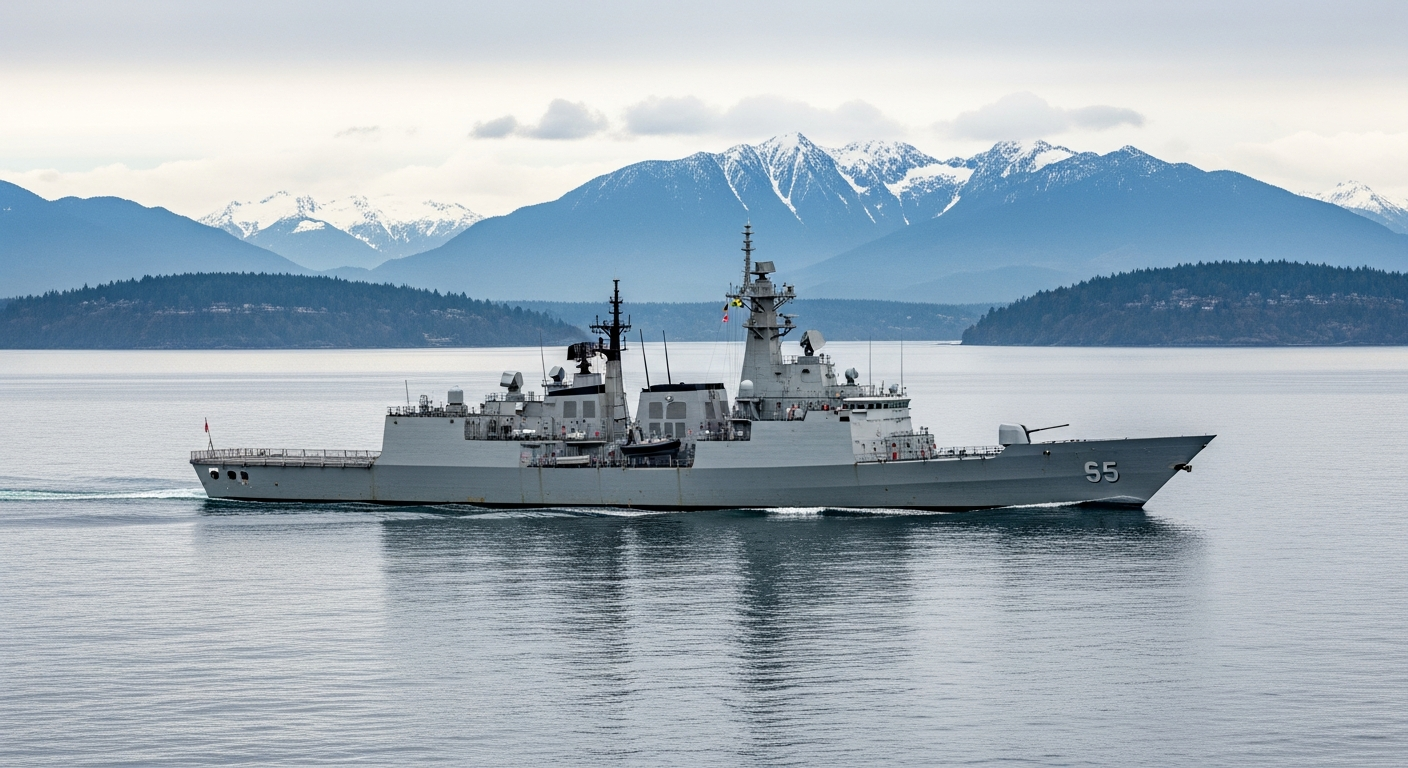
  • The FF(X) Gets Real: What the Navy’s $282.9M Ingalls Contract Means for Naval Station Everett’s Homeport Bid

    The FF(X) Gets Real: What the Navy’s $282.9M Ingalls Contract Means for Naval Station Everett’s Homeport Bid

    Q: Has the Navy awarded a contract for the new FF(X) frigate?
    A: Yes. On April 28, 2026, the U.S. Navy awarded a $282.9 million contract to HII’s Ingalls Shipbuilding in Pascagoula, Mississippi, to begin lead yard support work on the FF(X) class frigate — the Navy’s new small surface combatant meant to replace the cancelled Constellation-class program. The first $80.6 million covers pre-construction activities including securing materials, refining designs, and beginning to cut and shape raw structural steel.

    Steel Is About to Get Cut. Here’s What That Means for Everett.

    For the past five months, the FF(X) frigate program has existed primarily as an announcement, a design concept, and a lobbying opportunity. As of April 28, 2026, it exists as a contract.

    The U.S. Navy awarded HII’s Ingalls Shipbuilding a $282.9 million lead yard support contract, according to simultaneous announcements from the Pentagon and Huntington Ingalls Industries. The award authorizes Ingalls to begin pre-construction work on the first ship of the new FF(X) class — and the first $80.6 million activates immediately, giving Ingalls the green light to start cutting and shaping raw steel for the main structural foundation of the frigate.

    That is a different kind of news than what has surrounded the FF(X) program since December. Announcements get made. Designs get chosen. Committees hold meetings. Contracts start programs. And for Naval Station Everett — which has been fighting to be named as the homeport for the incoming frigate fleet — the clock just started in a way it hadn’t before.

    What the $282.9M Contract Actually Covers

    Under the terms of the contract, Ingalls will perform what the Pentagon terms “lead yard support activities” — the pre-construction phase work that front-loads as much design refinement and material preparation as possible before formal construction begins.

    Specifically, Ingalls is authorized to begin cutting and shaping raw materials to support future phases of work on the main structure foundation and the overall construction sequencing plan for the first frigate, according to the company. The contract also covers securing key materials and finalizing design details ahead of full construction authorization.

    “We are excited to partner with the Navy to bring these preproduction steps under contract to accelerate delivery of the frigates that our warfighters need,” Brian Blanchette, president of Ingalls Shipbuilding, said in the company’s April 28 announcement.

    Of the initial $80.6 million tranche, 73% — roughly $58.8 million — comes from the Navy’s fiscal year 2026 shipbuilding and conversion appropriations. The remaining 27%, about $21.8 million, is funded through Navy research and development accounts. The Pentagon’s contract announcement cited “unusual and compelling urgency” as the justification for awarding the contract without competitive bids.

    The Golden Fleet Context: FF(X) Is Part of a Bigger Picture

    The FF(X) contract is part of President Trump’s “Golden Fleet” initiative, a broader shipbuilding push that also includes development work on the BBG(X) — a new, much larger surface combatant class informally referred to as the Trump-class battleship. Together, the FF(X) and BBG(X) represent the Navy’s attempt to recapitalize its surface force on two ends of the size and firepower spectrum.

    The fiscal year 2026 budget request, according to an April 21 Navy news release, includes $65.8 billion to buy 18 warships and 16 auxiliary ships, including three submarines, a destroyer, an amphibious assault ship, and the first FF(X) frigate. Design and development funding for the BBG(X) is included as well.

    The FF(X) program was formally announced in December 2025 by then-Secretary of the Navy John Phelan, who chose the Coast Guard’s Legend-class National Security Cutter as the design framework to accelerate development timelines and reduce costs compared to building a purpose-designed warship from scratch. Ingalls, which builds the Legend-class cutters, was the natural choice as lead yard.

    Phelan, who made the call to cancel the Constellation program and launch FF(X), was ousted from his position last week — but the program he set in motion is now under contract and generating steel work in Pascagoula.

    The Urgency Matters for Everett

    The “unusual and compelling urgency” language in the Pentagon’s contract announcement isn’t routine bureaucratic boilerplate. It’s a formal legal justification for bypassing the standard competitive bidding process — a step the DoD takes when waiting for competition would harm national security or mission-critical timelines.

    In plain terms: the Navy wants frigates faster than a normal acquisition timeline would allow, and it’s willing to use procedural shortcuts to get there. The target for the first FF(X) delivery remains 2028.

    For Naval Station Everett, urgency is a double-edged signal. On one hand, an accelerated build timeline is good news for the community’s homeport ambitions — if ships are coming off the line sooner, the homeport decision has to be made sooner. On the other hand, accelerated programs sometimes lock in decisions early to avoid further delays, which means Snohomish County’s window to make its case may be shorter than it appears.

    The original Constellation-class program had designated Naval Station Everett as the homeport for up to 12 frigates. That designation evaporated with the November 2025 cancellation. The FF(X) program has not made a homeport announcement, and the Snohomish County Military Affairs Committee — which reconvened on February 23, 2026, specifically to advocate for Everett’s position — is still in active engagement with the congressional delegation and Navy leadership.

    Representative Rick Larsen (WA-02), who serves on the House Armed Services Committee, has been the primary congressional voice for preserving NAVSTA Everett’s role in the frigate program. Larsen’s position on HASC gives him a direct line into budget and procurement decisions that will ultimately determine where these ships are homeported.

    What the $340M Economic Argument Looks Like Now

    Snohomish County’s economic case for homeporting the FF(X) fleet at Naval Station Everett has been framed around a roughly $340 million annual economic impact figure — the combined value of ship crews, support staff, contractor spending, and multiplier effects that each additional frigate homeport assignment generates for the local economy. That case was built for a 12-frigate assignment; the size of the FF(X) fleet and its homeport allocation haven’t been determined.

    But the contract award sharpens the argument’s urgency. When the FF(X) was a program under consideration, Everett could advocate based on capacity, infrastructure, and existing relationships. Now that Ingalls is cutting steel, the program has a real timeline — and homeporting decisions for new surface combatants typically follow construction milestones, not precede them by years.

    Naval Station Everett’s existing assets — deepwater berths capable of handling multiple destroyers and a carrier, established surface warfare maintenance facilities, a strong Fleet & Family Support infrastructure, and an existing destroyer squadron presence — remain the core of its competitive position. For Navy families already stationed at NAVSTA Everett, the practical question of whether a frigate rotation is coming affects PCS planning, school enrollment decisions, and community investment for the next five to seven years.

    What to Watch Next

    Three forward indicators will determine how this story develops for Everett:

    The FF(X) homeport announcement. No timeline has been given. But as Ingalls moves from lead yard support into formal construction phases, the Navy’s Surface Forces Pacific and Forces Atlantic commands will need to plan basing, maintenance, and operational schedules. A homeport announcement could come as early as late 2026 or as late as the 2027-2028 delivery window approaches.

    FY2027 appropriations. The FF(X) is funded in FY2026 as a single-ship start. How many hulls Congress authorizes in FY2027 — and how the funding is structured — will determine how quickly the fleet scales up and whether the economic case for a dedicated Pacific homeport strengthens or softens.

    The fate of FFG-62 and FFG-63. The first two Constellation-class ships, the USS Constellation and USS Congress, are still being completed at Fincantieri Marinette. Their homeport assignments — wherever they land — may signal the Navy’s thinking about Pacific frigate basing before the FF(X) homeport decision is formally made.

    For now, the $282.9 million contract is what Everett’s advocates needed to see: confirmation that the program is real, funded, and moving. The complete guide to where the FF(X) program stands — and what NAVSTA Everett has to do to win the homeport — remains the framework for following this story. The contract award adds a new chapter, but the outcome is still unwritten.

    Frequently Asked Questions

    What did the Navy just award to Ingalls Shipbuilding?

    The Navy awarded a $282.9 million contract to HII’s Ingalls Shipbuilding on April 28, 2026, for lead yard support work on the FF(X) class frigate program. The initial $80.6 million tranche authorizes pre-construction activities including cutting and shaping raw structural steel, securing key materials, and refining the design ahead of formal ship construction.

    What is the FF(X) frigate program?

    The FF(X) is the U.S. Navy’s new small surface combatant program, announced in December 2025 to replace the cancelled Constellation-class (FFG-62) frigate program. It uses the Coast Guard’s Legend-class National Security Cutter as a design framework and is being built by HII’s Ingalls Shipbuilding yard in Pascagoula, Mississippi. The Navy aims to deliver the first ship by 2028.

    Is Naval Station Everett going to be the homeport for the FF(X) frigates?

    No homeport decision has been announced for the FF(X) program. Naval Station Everett had been designated as the homeport for the cancelled Constellation-class frigates. Snohomish County’s Military Affairs Committee has been actively lobbying for Everett to receive the FF(X) homeport designation, but as of April 2026 no announcement has been made.

    Why did the Navy skip competitive bidding for this contract?

    The Pentagon cited “unusual and compelling urgency” as the justification for awarding the contract without a competitive bidding process. This standard is applied when waiting for competition would harm national security or cause unacceptable delays in mission-critical programs. The Navy’s target delivery date of 2028 for the first FF(X) is the primary driver of that urgency posture.

    What is the “Golden Fleet” and how does FF(X) fit into it?

    The Golden Fleet is President Trump’s shipbuilding initiative to rapidly expand the U.S. Navy’s surface fleet. The FF(X) (a new small combatant frigate) and the BBG(X) (a new large combatant sometimes called the Trump-class battleship) are the two new ship classes at the center of the initiative, representing opposite ends of the size and firepower spectrum.

    What Navy ships are currently homeported at Naval Station Everett?

    As of 2026, Naval Station Everett is homeport to several surface combatants including USS Gridley (DDG-101), which is currently deployed as part of the USS Nimitz’s Southern Seas 2026 cruise. NAVSTA Everett has deepwater pier infrastructure capable of handling destroyers and carrier-class vessels, making it one of the Navy’s most capable Pacific homeports.

    When will we know where FF(X) frigates will be homeported?

    No timeline has been given for a homeport announcement. Such decisions typically follow construction milestones and fleet planning cycles. Given the 2028 delivery target for the first FF(X), a homeport decision could come as early as late 2026 or as late as 2027 as the delivery window approaches.

    How can Everett residents stay informed about the FF(X) program?

    The best sources for official FF(X) program updates are USNI News (news.usni.org), Stars and Stripes (stripes.com), and Navy.mil press releases. For Everett-specific advocacy, the Snohomish County Military Affairs Committee and Rep. Rick Larsen’s congressional office (larsen.house.gov) are the primary local points of contact.
  • Snohomish County Has the Most Affordable Warehouse Space in Puget Sound — What Q1 2026’s Industrial Market Means for Everett

    Snohomish County Has the Most Affordable Warehouse Space in Puget Sound — What Q1 2026’s Industrial Market Means for Everett

    Q: How much does warehouse space cost in Snohomish County in 2026?
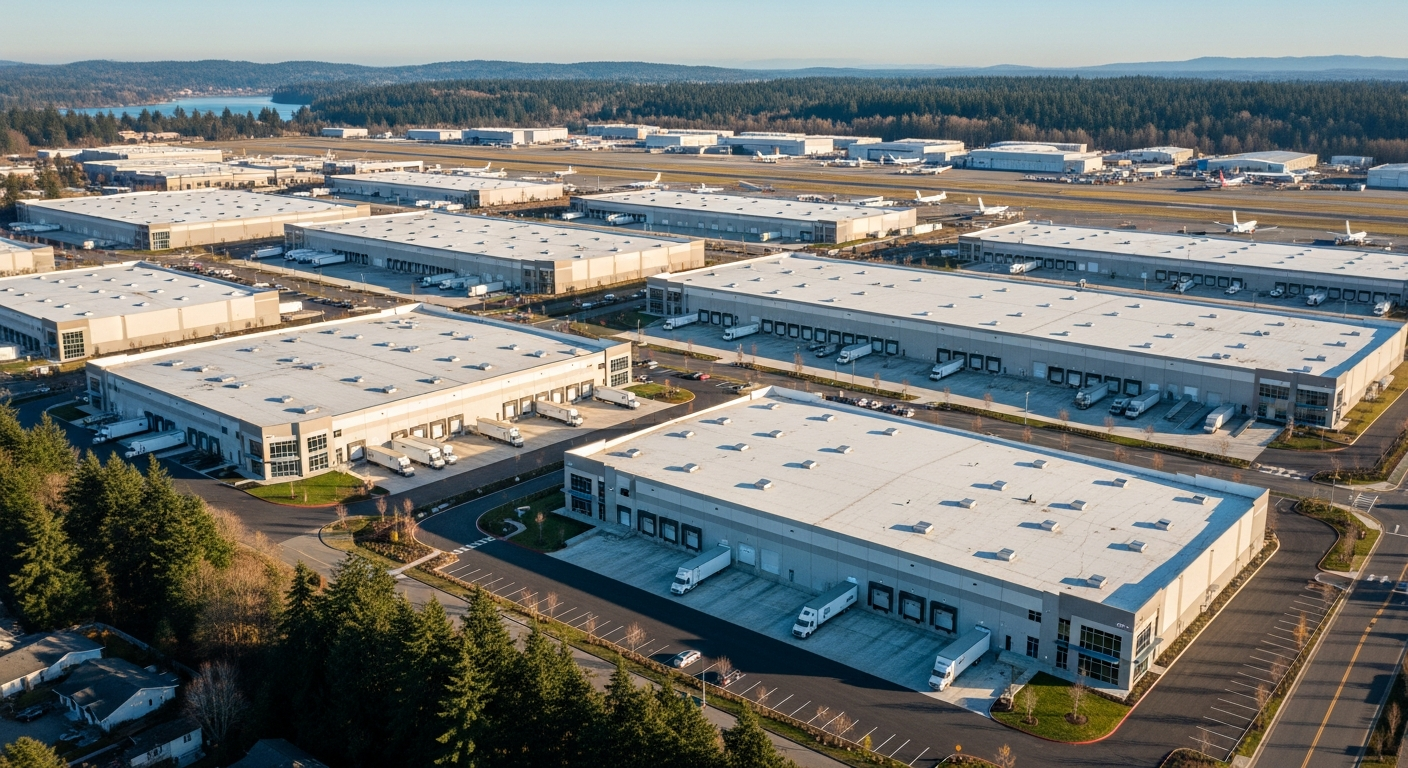
    A: Snohomish County warehouse rents in 2026 are running approximately $0.70 to $1.00 per square foot monthly on a triple-net basis — the most affordable warehouse market in the Puget Sound region. The broader Seattle metro ranges from $0.70 to $1.60/SF monthly, making Snohomish County the value end of the market by a significant margin.

    The Number That Matters: $0.70 to $1.00 per Square Foot

    If you’re an Everett-area business looking for industrial or warehouse space in 2026, the market conditions haven’t been this favorable in over a decade. Snohomish County’s warehouse and industrial rents are running $0.70 to $1.00 per square foot monthly (NNN), making it the most affordable industrial submarket in the entire Puget Sound region, according to WareCRE’s 2026 Seattle Warehouse Market Report. That’s below Southend markets like Kent and Renton, below Pierce County, and well below the Seattle in-city markets at the top of the range.

    To put that in annual terms: $0.70 to $1.00/SF monthly is $8.40 to $12.00/SF annually on a triple-net lease. For a 20,000-square-foot distribution or manufacturing facility, that’s $168,000 to $240,000 per year in base rent — before operating expenses that you’re responsible for as a tenant under NNN terms, but still well below what comparable space costs in King County.

    And those asking rents are the ceiling right now, not the floor. Kidder Mathews’ Q1 2026 Seattle Industrial Market Report shows vacancy at 10.39 percent across the Seattle metro industrial market, up from 9.74 percent at year-end 2025. At that vacancy level, with net absorption running negative (-130,751 square feet absorbed in Q1 2026) and only two speculative projects totaling 478,740 square feet under construction across the entire market, landlords are dealing. Effective rents — after concessions like free rent periods and tenant improvement allowances — are running below the published asking rates across the region.

    The Market Context: Why It’s the Best Tenant Window in a Decade

    The Puget Sound industrial market is correcting from a 2021-2022 boom cycle that pushed vacancy to historic lows. Speculative development that was planned during that peak is now delivering into a softened demand environment. The result is the most tenant-friendly industrial market the region has seen in more than ten years.

    Cushman & Wakefield’s April 2026 Industrial MarketBeat report describes the national picture this way: “Peak industrial vacancy likely in rearview mirror as demand holds and supply slows.” The national vacancy rate ended Q1 2026 at 7.0 percent — flat with year-end 2025, and 10 basis points below the Q3 2025 peak. The West region runs hotter than the national average at 7.9 percent, and Seattle specifically came in at 9.7 percent for Q1 2026.

    That 9.7 percent Seattle metro figure blends markets with very different profiles — Southend logistics hubs, South Seattle last-mile space, and Eastside flex. Snohomish County’s position within that range reflects its role as the region’s industrial value market: strong fundamentals, affordable rents, and proximity to the Port and to Paine Field’s aerospace manufacturing cluster without the price premium of South King County.

    Tariffs have added a wrinkle to the demand picture. Container volume growth at the Northwest Seaport Alliance reversed from 16 percent year-over-year to 0.2 percent, according to WareCRE’s 2026 report — a direct effect of tariff uncertainty on import volumes. For Everett specifically, which handles breakbulk and project cargo rather than containerized imports, this tariff impact is less acute than it is for the container-focused markets south of Seattle. But it’s part of the broader softening that has tilted conditions toward tenants.

    What This Means for Everett Businesses Specifically

    For businesses in the Everett corridor — manufacturing, distribution, aerospace supply chain, construction materials — Q1 2026 is the moment to renegotiate or explore. A few specific scenarios:

    If you’re renewing a lease: Don’t auto-renew. Take this market to your landlord and negotiate. Vacancy is up, absorption is negative, and landlords are offering concessions that weren’t available 18 months ago. Free rent periods, tenant improvement allowances, and rate reductions are all on the table in a 10-percent-vacancy market.

    If you’re looking for your first industrial space: Snohomish County’s $0.70 to $1.00/SF range gives you significant square footage for your budget. The Port of Everett’s bonded warehouse space, Norton Terminal cargo yard, and on-dock rail connection make this a particularly attractive location for businesses with freight-intensive operations.

    If you’re an aerospace or defense supplier: The Port of Everett Seaport — which just landed an $11.25 million federal grant to rebuild Pier 3 — is actively expanding its cargo-handling capacity. Industrial space near the Port and near Paine Field puts you in the middle of that ecosystem at the market’s most affordable price point.

    The Port’s Industrial Footprint: What’s Already There

    The Port of Everett is not just a transshipment point — it’s an industrial anchor. The Seaport campus includes Norton Terminal (40 acres, paved, lit, and secured), bonded warehouse space, a 15-acre secondary cargo yard, 40-foot MLLW deep-water access, and on-dock rail. That infrastructure supports freight-intensive tenants at a scale that most Puget Sound industrial parks can’t replicate.

    The Port’s broader economic footprint — $21 billion in U.S. exports annually, 40,000-plus jobs supported, $433 million in state and local tax revenues — makes Snohomish County’s industrial corridor one of the most economically active in the Pacific Northwest, despite not getting the same press as South King County’s distribution hubs.

    The Snohomish County office market also showed improvement in Q1 2026, with vacancy ticking down to 10.7 percent and posting a third consecutive quarter of positive net absorption. The industrial and office markets are telling a consistent story: Snohomish County is a market with more space available than King County, at lower prices, and with occupiers slowly returning.

    What Comes Next

    With only two industrial construction projects totaling 478,740 square feet active across the Seattle metro, new supply isn’t going to flood the Snohomish County market in the next 12 to 18 months. Cushman & Wakefield’s assessment — that peak vacancy may be behind us — suggests the window of maximum tenant leverage may be closing at the national level, even if local conditions lag that trend by a quarter or two.

    For Everett: the Pier 3 rebuild will take multiple years from planning through construction, but when it’s done, the Port will have a pier capable of handling more diverse and heavier freight. That means more industrial activity flowing through the waterfront corridor, more demand for warehouse and staging space near the Seaport, and a strengthened case for industrial site selection decisions that prioritize proximity to the Port.

    Right now, $0.70 to $1.00/SF is the entry price. That’s the Snohomish County advantage — and in this market, it’s also the moment to use it.

    Frequently Asked Questions

    What is the average warehouse rent in Snohomish County in 2026?

    Snohomish County warehouse rents are approximately $0.70 to $1.00 per square foot monthly (NNN) in 2026, making it the most affordable industrial submarket in the Puget Sound region. The broader Seattle metro ranges from $0.70 to $1.60/SF monthly.

    Is the Seattle industrial real estate market a buyer’s or tenant’s market right now?

    As of Q1 2026, it is the most tenant-friendly industrial market in over a decade. Vacancy is at 10.39 percent across the Seattle metro, net absorption was negative in Q1 2026, and landlords are offering concessions including free rent and TI allowances.

    How does tariff uncertainty affect the Snohomish County industrial market?

    Tariffs reversed container volume growth at the Northwest Seaport Alliance from 16 percent year-over-year to 0.2 percent, softening demand in logistics-heavy submarkets. Snohomish County and the Port of Everett, which focus on breakbulk and project cargo rather than containerized imports, are somewhat insulated from this trend.

    Where is industrial space available near the Port of Everett?

    The Port of Everett Seaport campus includes Norton Terminal (40 acres), bonded warehouse space, a 15-acre secondary cargo yard, and on-dock rail. Additional industrial space in the Everett corridor is available through commercial brokers; the Port’s business development team can also connect businesses with Port-adjacent space options.

    Is now a good time to lease industrial space in Everett?

    Q1 2026 represents favorable conditions for tenants: vacancy is elevated, new supply is limited, and landlords are offering concessions. Cushman & Wakefield’s April 2026 report suggests peak industrial vacancy may be in the rearview nationally, which means the current window of maximum tenant leverage may be narrowing.

  • Port of Everett Lands $11.25 Million Federal Grant to Rebuild Pier 3 — Here’s What It Means for Everett’s Working Waterfront

    Port of Everett Lands $11.25 Million Federal Grant to Rebuild Pier 3 — Here’s What It Means for Everett’s Working Waterfront

    Q: What is the Port of Everett Pier 3 federal grant?
    A: In April 2026, the Port of Everett was awarded an $11.25 million grant from the federal Port Infrastructure Development Program (PIDP) to modernize and strengthen Pier 3, the seaport’s longest berth. The project will install new vertical piles, restore damaged structural elements, and restore the pier to its full cargo-handling capacity — unlocking more diverse freight operations at one of the West Coast’s 18 federally designated Strategic Commercial Seaports.

    The Grant: $11.25 Million to Fix the Pier That Holds Up Everett’s Supply Chain

    The U.S. Department of Transportation’s Maritime Administration (MARAD) announced on April 27, 2026, that the Port of Everett had been selected for an $11.25 million competitive grant under the Port Infrastructure Development Program (PIDP). The award came as part of a broader $22 million federal investment in Northwest Washington port infrastructure, with the Swinomish Indian Tribal Community receiving the remaining funds for a separate project.

    PIDP grants are awarded nationally on a competitive basis. To qualify, projects must demonstrably improve the safety, efficiency, or reliability of freight movement into, out of, or within a port. The Port of Everett’s Pier 3 project cleared that bar — and it’s not hard to see why when you understand what Pier 3 actually does and what’s been happening to it structurally.

    Port of Everett CEO and Executive Director Lisa Lefeber didn’t undersell the significance: “The Port is grateful to the U.S. Department of Transportation for this critical maritime infrastructure investment that will ensure the Port of Everett Seaport continues to safely support 40,000-plus local jobs, regional economic development, and the Washington state economy.”

    What Pier 3 Is — and Why It Needs This Work

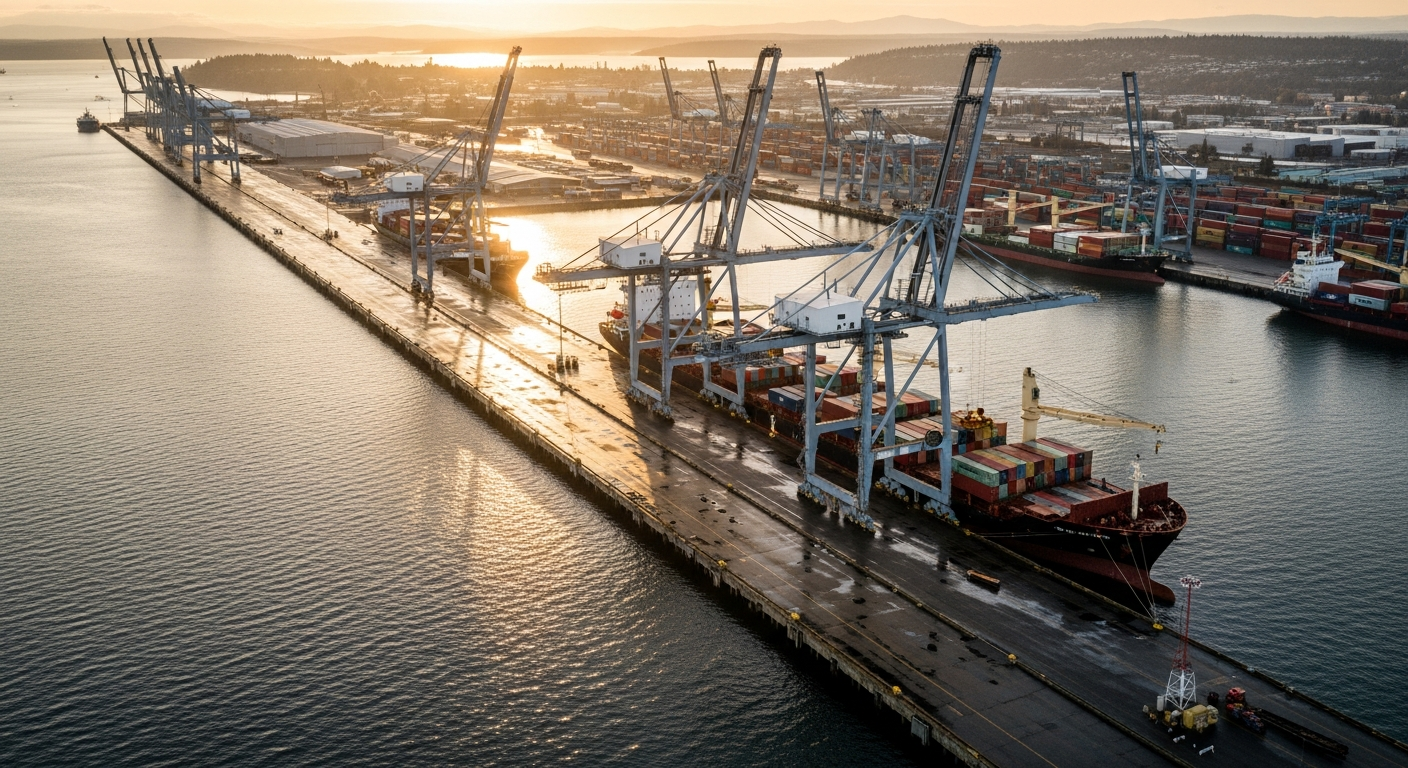
    Pier 3 is the longest berth at the Port of Everett Seaport, measuring 730 feet long with a 120-foot-wide concrete deck. It was constructed in 1973 and has facilitated global and regional trade for over five decades — handling bulk alumina ore, cement, general cargo, and forest products across those years.

    But Pier 3 has a structural problem. The pier was originally engineered to carry a uniform live load of 800 pounds per square foot. In recent years, that rating had to be derated — the south side dropped to 600 pounds per square foot, the north side to 400 pounds per square foot, and some sections were derated even further. In practical terms, that means the pier cannot be used to its full operational potential. Cargo-handling equipment that would otherwise operate on the pier isn’t permitted because the structure can’t safely carry the load.

    That’s the problem the $11.25 million fixes. The Pier 3 Strengthening Safety and Commerce project will install new vertical piles beneath the pier and restore other damaged piles, adding new structural life to a facility that Washington’s construction industry, the U.S. military, and global maritime commerce all rely on.

    What Pier 3 Does Today — and What It Will Be Able to Do After

    Right now, despite its compromised load rating, Pier 3 is doing a lot. Its primary use is bulk cement operations. That’s because Pier 3 sits directly adjacent to a 55,000-ton dry bulk cement storage dome at Hewitt Terminal — one of the largest cement storage facilities in the Pacific Northwest. The cement stored and moved through this terminal is a critical supply chain asset for Washington state’s construction industry. Every major building project from Seattle to Bellingham that uses concrete is connected, at some point, to freight moving through this pier.

    The north side of Pier 3 serves a different critical function: ship repair. A Seaport tenant uses that berth for maintenance and repair work on vessels serving the U.S. Navy, Department of Defense, U.S. Coast Guard, Washington State Ferries, and the commercial fishing fleet. That’s not a minor side operation — it’s a direct service line to the military and to the state’s ferry system, the largest in the country.

    After the strengthening project is complete, the pier’s operational envelope expands significantly. The restored load ratings will allow cargo-handling equipment to operate across the full deck, which means the Port can diversify the types of freight Pier 3 can handle — moving beyond its current cement-primary profile to take on breakbulk cargo, project cargo, and other freight categories where the Port already has a strong reputation.

    Pier 3’s Position in the Larger Port Complex

    What makes this grant especially significant is Pier 3’s location within the Seaport’s freight network. The pier sits close to Norton Terminal — the Port’s award-winning, 40-acre, paved, lit, and fully secured cargo yard — as well as adjacent bonded warehouse space, an additional 15-acre cargo yard, 40-foot mean lower low water (MLLW) depth, and on-dock rail access. That combination of deep-water berth, secured yard, and rail connectivity is rare on the West Coast and is a primary reason why the Port has built a reputation for handling oversized and high-value cargo.

    Pier 3 is also part of the reason why the Port of Everett can make a claim that would sound improbable on paper: the Port handles 100 percent of the oversized aerospace parts for Boeing’s 767, 777, 777X, and KC-46 Tanker programs. Those parts — too large to move by truck — come down the Snohomish River from the Paine Field manufacturing campus and load out at the Seaport. Restoring Pier 3’s full operational capacity directly supports that aerospace export pipeline.

    Strategic Commercial Seaport Status: What That Actually Means

    Tim Ryker, the Port of Everett’s Chief of Seaport Operations, highlighted a dimension of the project that goes beyond commercial freight: “It will also allow us to better serve in our role as a Strategic Commercial Seaport in support of our national defense and our military partners.”

    That’s not boilerplate language. The Port of Everett is one of just five Strategic Commercial Seaports on the West Coast and one of only 18 nationwide. That federal designation — from MARAD, the same agency that awarded this grant — means the Port must maintain military-readiness capability and be prepared to support Department of Defense cargo movements on short notice. With Pier 3 operating below its designed capacity, that readiness posture is constrained. The strengthening project restores it.

    The Economic Numbers Behind the Pier

    The Port of Everett Seaport sits 25 miles north of Seattle in naturally deep water. It ranks as the second largest export customs district in Washington state and the fifth on the West Coast. The port supports nearly $21 billion worth of U.S. exports annually, or roughly $30 billion when both imports and exports are counted together. The regional transportation network tied to those operations supports more than 40,000 jobs and $433 million in state and local tax revenues.

    With more than 60 percent of jobs in Snohomish County tied to trade, the Port’s infrastructure isn’t a footnote to Everett’s economy — it is a primary driver of it. An $11.25 million investment in the structural integrity of the port’s longest berth is, in that context, exactly the kind of infrastructure maintenance that holds the whole system together.

    The funding covers the full scope of the Pier 3 project: planning and engineering, environmental review, permitting, and construction. Representative Rick Larsen, who shared news of the award with Port representatives, has been a consistent advocate for Pacific Northwest port infrastructure funding in Congress.

    What We’re Watching Next

    The PIDP grant covers the complete project lifecycle, so the next step is the planning and engineering phase — the environmental review and permitting work that will precede construction. Given the Port’s track record on infrastructure projects like the Segment E bulkhead rebuild on West Marine View Drive (which is wrapping up final-phase construction right now after 20 years), we expect planning to move efficiently. What we’ll be watching: the environmental review timeline, the contractor selection process, and whether the project schedule aligns with the Port’s broader 2026 capital plan outlined in its $70 million 2026 budget.

    For a deep look at what the Port’s working waterfront actually handles on a daily basis, the Hat Island Ferry harbor tour remains the best public window into that operation.

    Frequently Asked Questions

    What is the Port Infrastructure Development Program (PIDP)?

    PIDP is a federal competitive grant program administered by MARAD (U.S. Department of Transportation Maritime Administration). Grants go to port infrastructure projects that improve the safety, efficiency, or reliability of freight movement. Awards are competitive and national in scope.

    Why was Pier 3 derated?

    Pier 3 was originally designed to carry 800 pounds per square foot but has experienced structural deterioration over its 53-year life. Damaged piles and structural elements required engineers to reduce the allowable load rating — to 600 PSF on the south side, 400 PSF on the north side, with some areas lower. The $11.25 million project will install new piles and restore the structure.

    How many jobs does the Port of Everett support?

    The Port of Everett’s regional transportation network supports more than 40,000 jobs and $433 million in state and local tax revenues. More than 60 percent of Snohomish County jobs are tied to trade.

    What cargo goes through Pier 3 today?

    Pier 3 currently handles bulk cement operations (adjacent to a 55,000-ton cement storage dome) and ship repair work for the U.S. Navy, Coast Guard, Washington State Ferries, and the commercial fishing fleet. After strengthening, it will be able to handle a broader range of cargo types including breakbulk and project cargo.

    What is a Strategic Commercial Seaport?

    A MARAD-designated Strategic Commercial Seaport must maintain readiness to support Department of Defense cargo movements on short notice while minimizing disruption to commercial operations. The Port of Everett is one of 5 on the West Coast and 18 nationwide with this designation.

  • Anthony’s HomePort Everett Is Serving Halibut Season Right Now — And the Deck Views Are Worth the Drive

    Anthony’s HomePort Everett Is Serving Halibut Season Right Now — And the Deck Views Are Worth the Drive

    Q: What’s the best waterfront seafood restaurant in Everett, WA?
    A: Anthony’s HomePort Everett at 1726 W Marine View Dr serves fresh Northwest seafood — including wild halibut in season — with direct views of Port Gardner Bay and the Olympic Mountains. It’s the closest thing Everett has to a destination seafood house, and halibut season makes it required eating right now. Call (425) 252-3333 for reservations. Last verified: April 2026.

    Anthony’s HomePort Everett Is Serving Halibut Season Right Now — And the Deck Views Are Worth the Drive

    There are maybe four or five restaurants in Everett where the location alone is part of the meal. Anthony’s HomePort is one of them. Sit at a window table — or better, on the deck when the weather allows — and you’re looking straight at Port Gardner Bay, with Camano Island off to the left, Whidbey Island stretching across the horizon, Hat Island visible in the distance, and the Olympic Mountains stacked up behind all of it on a clear day. That view doesn’t get old.

    We mention the view first because Anthony’s earns it twice: once through real estate and once through the food. Right now, in late April, we’re deep into halibut season, which is the single best reason to walk in the door at this particular moment. Wild Pacific halibut is a short window every year, and Anthony’s has built a three-course halibut menu around it. The fish comes from longtime supplier partners and is sourced for the clean, white, delicate flake that makes fresh-caught halibut so different from what you get frozen or out of season. If you have any interest in Pacific Northwest seafood, this is the move right now.

    The Restaurant

    Anthony’s HomePort Everett sits at 1726 W Marine View Drive on Everett’s working waterfront, just south of the Port of Everett’s main marina complex. It’s part of the Anthony’s Restaurants family — a Pacific Northwest institution founded by Anthony and Anne Hinds that runs locations from Olympia to Bellingham — and the HomePort brand is their more relaxed, neighborhood-facing concept: come as you are, families welcome, no need to dress up, but the fish quality is the same across every Anthony’s property.

    The Everett location has been feeding locals off this stretch of Marine View Drive for years. It’s one of those places Everett residents walk past without necessarily thinking of it as “their” restaurant — until they finally sit down for dinner and realize they’ve been missing out. The 562 Yelp reviews and 2,953 OpenTable diners averaging 4.6 stars tell the same story: this place is reliable and the setting rewards it.

    The Deck

    Late April is the edge of deck season in Everett, and Anthony’s has a proper outdoor patio that’s worth sitting on whenever the skies cooperate. On a clear evening you can watch the marina traffic, catch a sunset over the Olympics, and hear the gulls complaining about something. It’s the kind of outdoor dining experience that most of the county genuinely doesn’t have access to — this isn’t a parking lot patio with a heat lamp, it’s a working waterfront deck with actual water in front of you.

    The indoor seating is equally solid if the weather doesn’t cooperate. Large windows frame the marina from inside, and the window seats go fast. Reservations via OpenTable are strongly recommended, especially on weekends.

    What to Order

    Right now, halibut. The three-course halibut season menu is the reason you’re here in April and May. Wild halibut has a clean sweetness and a texture that doesn’t survive freezing, so when the season’s open and the fish is fresh, you order it. Anthony’s sources theirs from longtime partner fisheries to maintain that freshness across the season.

    Beyond halibut, the menu is a solid tour of Pacific Northwest seafood done well:

    • Sockeye salmon chargrilled and finished with sundried tomato basil butter, served with champ potatoes and seasonal vegetables. This is the anchor of the menu outside of halibut season, and rightfully so — sockeye is the most flavorful of the Pacific salmon species and Anthony’s treats it simply enough to let that come through.
    • Wild Alaska true cod lightly panko-crusted, with ginger slaw and fries. Best fish and chips on the waterfront, full stop.
    • Dungeness crab when available. Seasonally dependent and worth asking about when you sit down.
    • Calamari, chowder, and Caesar salad round out the starters. The chowder is the move if you’re cold and want something warming before the main.
    • Scallop specials rotate through the menu and are worth asking the server about.

    Budget for $40–$90 per person depending on what you order and whether you’re doing cocktails. It’s not cheap, but it’s not pretending to be something it isn’t either — this is a proper seafood dinner with views that justify the price.

    The Hours and Getting There

    Dinner service runs Monday through Thursday and Sunday from 3:00 PM to 8:00 PM, and Friday and Saturday from 3:00 PM to 9:00 PM. Lunch service is also available on weekdays — check their website or call ahead for the most current schedule, as seasonal hours can shift. The number is (425) 252-3333.

    The address is 1726 W Marine View Drive, Everett, WA 98201. From I-5, take exit 193 (Marine View Drive) and follow it north along the water. Parking is free in the adjacent lot. The restaurant sits on the bay side of Marine View Drive, and the turn is easy to miss the first time — look for the Anthony’s sign before you hit the Port of Everett’s main entrance.

    How It Fits the Waterfront Dining Scene

    Everett’s waterfront dining scene has gotten genuinely interesting over the last two years. Fisherman Jack’s brought a dim sum-and-Asian-fusion angle to the marina end of the Port. Sound to Summit’s marina taproom brought PNW craft beer to the south side of the port. Rustic Cork’s rooftop brought wine and weekend brunch to Waterfront Place. South Fork Baking Co. anchors the pastry-and-coffee end of things at Fisherman’s Harbor.

    Anthony’s HomePort fills a different slot in that map: it’s the dedicated seafood house, the place you go when the occasion calls for sitting down to a proper fish dinner with someone you want to impress or a night out that feels like a real night out. The rest of the waterfront scene is excellent, but none of them are doing what Anthony’s does with a halibut filet in April.

    The Bottom Line

    Anthony’s HomePort Everett is not a secret. It’s been sitting on this stretch of Marine View Drive for years, doing Northwest seafood correctly with better views than most restaurants in the county. The halibut season window is short, the deck is usable right now, and the reservations fill up on weekends. If you’ve been meaning to go, this is the week to stop meaning it and just go.

    Reservations via OpenTable recommended. Walk-ins welcome but take your chances on weekends.


    Frequently Asked Questions

    What is Anthony’s HomePort Everett?

    Anthony’s HomePort Everett is a Pacific Northwest seafood restaurant at 1726 W Marine View Drive on the Everett waterfront, overlooking Port Gardner Bay. Part of the Anthony’s Restaurants family, it serves fresh seasonal fish, Dungeness crab, sockeye salmon, and wild halibut in season, with indoor and outdoor deck seating.

    When does halibut season run at Anthony’s HomePort Everett?

    Pacific halibut season typically runs from spring through early summer. Anthony’s celebrates the season with a dedicated halibut menu while the fish is in season. Check with the restaurant directly for current availability: (425) 252-3333.

    What are the best things to order at Anthony’s HomePort Everett?

    In season, wild halibut is the top pick. Year-round standouts include chargrilled sockeye salmon with sundried tomato basil butter, panko-crusted Alaska true cod with ginger slaw, Dungeness crab when available, and the seafood chowder as a starter.

    Does Anthony’s HomePort Everett have outdoor seating?

    Yes. Anthony’s has an outdoor deck and patio with direct waterfront views of Port Gardner Bay, Camano Island, Whidbey Island, and the Olympic Mountains. The deck is available weather permitting. Large windows also provide waterfront views from the indoor dining room.

    What are the hours and how do I make a reservation?

    Dinner service is Monday through Thursday and Sunday 3:00 PM–8:00 PM, and Friday–Saturday 3:00 PM–9:00 PM. Lunch is also available on weekdays — call (425) 252-3333 or check their website for current hours. Reservations via OpenTable are recommended for weekends.

    Where is Anthony’s HomePort Everett and where do I park?

    The address is 1726 W Marine View Drive, Everett, WA 98201. Take I-5 exit 193 and head north on Marine View Drive. Free parking in the adjacent lot. Look for the Anthony’s sign on the bay side before you reach the Port of Everett main entrance.

    How does Anthony’s HomePort compare to other Everett waterfront restaurants?

    Anthony’s is the dedicated seafood house on the Everett waterfront — it fills a different slot from newer spots like Fisherman Jack’s (Asian fusion), Rustic Cork (wine bar), and Sound to Summit (craft brewery). If you want a traditional Northwest seafood dinner with deck views, Anthony’s is the move.

  • The $6.75M Wharf Rebuild on West Marine View Is About to Finish — Here’s What 20 Years of Bulkhead Work Looks Like When It’s Done

    The $6.75M Wharf Rebuild on West Marine View Is About to Finish — Here’s What 20 Years of Bulkhead Work Looks Like When It’s Done

    Quick Answer: The Port of Everett’s $6.75 million final-phase bulkhead and wharf rebuild — the project running along West Marine View Drive at Port Gardner Landing — is on track to wrap by May 2026 after starting in early September 2025. Bergerson Construction is replacing roughly 165 lineal feet of aging wooden bulkhead with steel piles to stabilize State Route 529 above it, and the wharf overhead is getting fresh decking, ADA-compliant trail connection, and new landscaping. It is the last piece of a 20-year bulkhead replacement effort that has quietly been holding the marina in place for two decades.

    The $6.75M Wharf Rebuild on West Marine View Is About to Finish — Here’s What 20 Years of Bulkhead Work Looks Like When It’s Done

    If you’ve driven southbound on West Marine View Drive any time since last September and wondered why one lane has been closed near Port Gardner Landing and the Grand Avenue Park Bridge, the answer is the most quietly important construction project on the Everett waterfront. The Port of Everett’s final phase of marina bulkhead replacement and wharf rebuild — a $6.75 million contract awarded to Oregon-based Bergerson Construction — is on schedule to complete in May 2026. After 20 years of bulkhead work, segment by segment, this is the piece that finishes the system.

    It is not the splashiest project on the waterfront. It does not come with a ribbon cutting and a brewery opening. But it is the structural reason the road above it stays put, and the reason the marina behind it does not slowly slide into Port Gardner Bay. So we walked the project, read the contracts, and figured out what May actually means.

    What’s Actually Being Replaced

    The project is doing two things in one footprint:

    Segment E bulkhead. The Port is pulling out approximately 165 lineal feet of aging wooden bulkhead and driving steel piles in its place. That bulkhead is the engineered wall that separates the marina from the highway above it. It is the reason State Route 529 — better known locally as West Marine View Drive — has not subsided into the water. The original wooden structure is decades old. Steel piles will hold the same line with significantly more long-term stability and capacity to support the corridor above.

    Wharf reconstruction. Directly above the bulkhead, the section of overwater wharf is being torn out and replaced with new decking. New landscaping is going in alongside it, and the rebuilt wharf will tie into the Port’s waterfront trail system with an ADA-compliant connection — closing a long-standing accessibility gap on the trail. Pedestrian separation from the busy roadway is part of the design, which matters on a corridor that carries commuter, freight, and military traffic in and out of Naval Station Everett.

    Why SR 529 Is the Real Story

    The official name of the project — “Segment E Wharf and State Highway 529 Stability Improvements” — buries the lead. This is a stability project for a state highway as much as it is a marina project. SR 529 / West Marine View Drive is the spine of the Everett waterfront. It connects downtown to the Port, to NAVSTA Everett, and to the freight and military supply chain that runs through the seaport. The wooden bulkhead that has been holding it up was placed before most of the apartments at Waterfront Place were even drawings. It earned its retirement.

    The Washington State Department of Transportation is a stakeholder in the project for the same reason. Anything that happens to the bulkhead happens to the roadway. Replacing 165 LF of aging wood with engineered steel piles is the kind of unsexy infrastructure investment that quietly extends the design life of a critical regional corridor by decades.

    Why This Is the End of a 20-Year Project

    The Port has been replacing bulkhead segments along this stretch of waterfront in phases for two decades. Each segment has been a distinct contract, a distinct construction window, and a distinct round of permitting with state and federal regulators. Segment E is the final phase. When Bergerson hands the keys back to the Port in May, the bulkhead replacement program — the one that has been running quietly underneath every photo of the marina since the early 2000s — is structurally complete.

    That matters because the next 20 years of waterfront development at Waterfront Place — the 660 housing units at full build-out, the 447,500 square feet of office, the two hotels, the 63,000 square feet of retail and restaurants — all sit on top of, or directly behind, a marina that is now backed by modern bulkhead the entire length of Segment A through E.

    The Lane Closure Story

    The construction has required southbound lane closures on West Marine View Drive in the work zone, with traffic reduced to one lane in the affected section. Public access to the trail in that area has also been re-routed during the work window. If you have been driving north-south through the Port and noticing the cone line near Grand Avenue Park Bridge, that is the project. The lane closures end when the project ends — May 2026 is the target.

    How the Project Connects to the Port’s $70M 2026 Budget

    The Segment E work is being delivered out of the Port’s preservation and maintenance budget rather than its capital expansion budget. The Port Commission’s adopted $70 million 2026 budget — covered in our breakdown of what Everett’s waterfront is actually getting this year — sets aside $7.1 million for maintenance and preservation, including pier strengthening, marina bulkhead work, boat launch updates, and dredging. The Bergerson contract was awarded in May 2025, so Segment E is largely a 2025-funded project crossing into 2026, but the maintenance posture that allowed it sits squarely in the 2026 budget posture as well.

    That posture matters for residents and tenants. The Port is funding both the new buildings — $2.6 million in the 2026 budget for new public infrastructure and Waterfront Place retail and restaurant buildings — and the unglamorous work of keeping the existing marina structurally sound. Segment E is the second category.

    What Changes for Trail Users in May

    For everyday waterfront users, the most visible change in May will be the trail itself. The new ADA-compliant connection through the rebuilt wharf section closes a gap that has frustrated wheelchair users, stroller pushers, and anyone using the waterfront trail for the full distance. New landscaping, new decking, and a designed pedestrian separation from the roadway will turn what is currently a construction zone into a finished section of trail. The kind of walk that has been awkward for two decades — past wood pilings, narrow paths, and an unfinished feel — gets rebuilt to the standard the rest of the waterfront has been moving toward.

    What Comes Next

    With the bulkhead done, the next major Port construction milestone in the pipeline is the Jetty Landing renovation, which is anticipated to begin in 2027 per the Port’s 2026 budget plan. The Eclipse Mill Park Riverfront work — covered in our piece on why Everett’s riverfront signature park is now a spring 2028 opening — runs on its own timeline, with Phase 1 (City) running July to November 2026 and Phase 2 (Shelter Holdings) running fall 2026 through spring 2028. And the West Marine View Drive pipeline project — the $113 million combined sewer, stormwater, and water-main replacement we covered when council approved it April 2 — kicks off later this year just a few hundred feet north of where Bergerson is finishing up. The order of operations is intentional: stabilize the bulkhead, then dig the pipeline, then build the buildings.

    Frequently Asked Questions

    What is the Segment E bulkhead and wharf project?

    It is a $6.75 million Port of Everett construction project replacing approximately 165 lineal feet of aging wooden bulkhead with steel piles along West Marine View Drive at Port Gardner Landing, near the Grand Avenue Park Bridge. The overwater wharf above it is also being rebuilt with new decking, an ADA-compliant trail connection, and new landscaping. Bergerson Construction is the contractor.

    When does the project finish?

    Construction began in early September 2025 and is targeted for completion in May 2026.

    Why does this affect State Route 529?

    The bulkhead structurally supports the embankment that holds State Route 529 / West Marine View Drive in place. Replacing the aging wooden structure with steel piles stabilizes the highway corridor above the marina for the long term.

    Will the lane closures end when the project ends?

    Yes. The southbound single-lane configuration on West Marine View Drive in the work zone is in place for the duration of construction and ends when Bergerson completes the project in May 2026.

    Is this part of Waterfront Place?

    Geographically yes — the work site is along the same waterfront corridor — but the project is funded out of the Port’s preservation and maintenance budget, not the Waterfront Place capital build-out. It is the unglamorous structural work that keeps the marina in place while the new buildings go up around it.

    Does the rebuilt wharf improve the waterfront trail?

    Yes. The new wharf section will include an ADA-compliant connection to the Port’s waterfront trail system, closing a long-standing accessibility gap, plus new landscaping and pedestrian separation from the roadway.

    Is this the last bulkhead replacement project?

    Yes. Segment E is the final phase of a roughly 20-year, segment-by-segment bulkhead replacement program along this stretch of the marina. When Bergerson finishes in May, the program is structurally complete.

  • Everett’s $113 Million Pipeline Project: A 2026 Operational Guide for Waterfront Businesses and Developers

    Everett’s $113 Million Pipeline Project: A 2026 Operational Guide for Waterfront Businesses and Developers

    How will the $113 million West Marine View pipeline project affect waterfront businesses? Two business-relevant headlines: (1) sustained corridor disruption from approximately June 2026 through the end of 2027 along the only direct route between the north end and the downtown waterfront, marina, and Port; and (2) longer-term water-quality improvement of Port Gardner Bay — engineers project a 95% reduction in combined sewer overflows — that meaningfully strengthens the waterfront’s commercial value over the next decade.

    This is the business and developer read of the $113 million pipeline core guide. The core walks through the engineering and the funding mechanism. This one walks through the operational impact for waterfront restaurants, marina-adjacent businesses, hotel and tourism operators, and developers with active or planned projects in the corridor.

    Map your exposure to the corridor

    Three operational variables to model right now:

    1. Customer access. If your customers reach you via West Marine View Drive between Grand Avenue Bridge and Hewitt Avenue, plan for sustained lane impacts during pipe-trench excavation phases. Phased lane closures with traffic-control management are the standard pattern for projects of this scope; full corridor closure is unlikely but not impossible during specific phases.
    2. Delivery and supplier access. Suppliers accessing waterfront tenants need realistic delivery-window assumptions. Construction corridors compress the time bands when heavy delivery vehicles can move efficiently. Renegotiating delivery windows with suppliers in advance is cheaper than fixing missed loads in real time.
    3. Staff commute patterns. Waterfront staff arrival and departure timing should be reviewed. Shift starts and ends that pre-construction tracked one corridor pattern will need to track a different one once active work begins.

    The marina, port, and Waterfront Place tenants

    The Port of Everett’s marina and the active commercial development at Waterfront Place sit at the southern end of the affected corridor. The boater experience and the dine-and-dock pattern that the Port has been building (covered in our Waterfront Place complete guide) keeps functioning during construction, but operational planning should assume that visiting boaters and waterfront visitors arrive having navigated more friction than usual on the way in.

    The honest customer-experience read: the businesses that win during the construction window are the ones who actively help customers navigate to them — clear directions in marketing materials, real-time updates on access status, and partnerships with the city’s project communication team to push closure information to mailing lists.

    Hotels, tourism, and event venues

    Waterfront hotel and short-term rental operators should price the corridor reality into 2026-2027 reservation marketing. Visitors arriving by car for a downtown stay will encounter the construction corridor; visitors arriving for a marina-side or waterfront event will encounter it more directly.

    For event venues with logistics tied to the corridor — load-in, parking, shuttle routes — build a 2026-2027 logistics playbook that assumes corridor congestion. The lift on event ops is real but manageable with planning; the operators who get blindsided are the ones who run a 2024 playbook against 2026 conditions.

    Developers with active or planned projects in the corridor

    Three considerations:

    Permitting interactions. Site-specific permits along West Marine View Drive will reference the active construction corridor. Coordinate with the city on staging, deliveries, and traffic control to avoid conflicts with the public project’s phasing schedule.

    Long-horizon valuation. The combined sewer overflow program is the foundation that lets future shoreline development continue. A waterfront with chronic CSO events constrains shoreline use; a waterfront with a 95% overflow reduction expands the development envelope. The $113 million is the unglamorous infrastructure that protects the value thesis of every shoreline development project on the books.

    Connection to the broader $200M+ storage facility procurement. The pipeline construction is the first half of a two-part program. Watch the Port Gardner Storage Facility procurement milestones — they signal the second half of the construction window and the ultimate compliance schedule the city is operating against.

    Utility rate context for commercial ratepayers

    The $113 million pipeline funding comes from the city’s water and sewer utility fund. Commercial ratepayers carry a portion of that fund’s revenue base alongside residential ratepayers. As the city absorbs the broader cost of the Port Gardner Storage Facility program, the pressure on the rate-setting calculus increases.

    For commercial operators with high water and sewer consumption — restaurants, hotels, food production, laundries — the medium-term outlook should assume continued upward pressure on utility costs. The exact rate impact depends on bond structure, federal and state grant offsets, and procurement timing on the larger storage facility. The broader budget context is in our complete 2027 budget deficit guide.

    The 24-month operational checklist

    • Update customer-facing wayfinding for corridor access
    • Renegotiate supplier delivery windows in advance
    • Review staff commute patterns and shift-start logistics
    • Subscribe to city project communications for West Marine View Drive
    • For events: build a 2026-2027 logistics playbook that assumes corridor congestion
    • For developers: coordinate permits with the public project’s phasing schedule
    • For high-consumption commercial ratepayers: model continued utility rate pressure into 2026-2028 budgets

    The longer view

    The combined sewer overflow program is one of the largest infrastructure investments the city has made in years. It is unglamorous and will not get a ribbon cutting that draws a crowd. But its downstream effect — a meaningfully cleaner Port Gardner Bay over the next decade — strengthens the waterfront’s commercial fundamentals in a way that no marketing campaign can match. For waterfront businesses and developers willing to absorb the construction window, the post-construction waterfront is a stronger commercial environment than the pre-construction one.

    Frequently Asked Questions

    When does construction start?

    Construction could begin as early as June 2026 and is expected to continue through the end of 2027.

    Will the corridor close completely?

    Full corridor closures are unlikely as the standard pattern for projects of this scope. Phased lane closures with traffic-control management are typical. Watch the city’s project page for phase-by-phase closure schedules; the lane configuration in place today is not what will be in place for much of 2026-2027.

    How will customer access be affected?

    Customers reaching waterfront businesses via West Marine View Drive should plan for sustained lane impacts during active pipe-trench excavation phases. Operators who push real-time access information to their mailing lists and social channels typically maintain customer flow better than those who do not.

    How does this affect Waterfront Place?

    Waterfront Place tenants and Port marina users continue operating during construction; the corridor congestion is the variable. The post-construction waterfront — with reduced overflow events and a meaningfully cleaner bay — is a commercially stronger environment than the pre-construction one.

    Will commercial water rates go up?

    The $113 million is funded out of the utility fund, and the broader Port Gardner Storage Facility program is estimated at more than $200 million total. As the city carries those costs, upward pressure on rates is realistic. Exact impact moves with bond structure, grants, and rate-setting decisions; commercial operators with high consumption should model continued pressure into 2026-2028 budgets.

    What’s the upside for waterfront businesses?

    Engineers project a 95% reduction in combined sewer overflow events into Port Gardner Bay once the system is operational. Cleaner bay water compounds the commercial value of the working waterfront — for restaurants, hotels, marina operators, and developers — over the next decade.


  • Inside the Port of Everett’s Working Waterfront: What That Hat Island Ferry Tour Actually Shows You

    Inside the Port of Everett’s Working Waterfront: What That Hat Island Ferry Tour Actually Shows You

    Q: What does the Port of Everett harbor tour actually show you?

    A: The 90-minute tour aboard the 45-passenger Hat Island Ferry leaves the Port of Everett Marina, glides past the Waterfront Place destination side, then pivots into the working seaport — Pier 3, Norton Terminal, and the cargo yards that load oversized Boeing parts (777, 777X, 767, KC-46) onto barges every week. It is a $10 ride that explains why the Port supports more than 40,000 regional jobs and is the No. 2 export customs district in Washington state.

    Wednesday afternoon at 3:30 p.m., the Hat Island Ferry pulled away from the Port of Everett Marina with 45 of our neighbors aboard, and for the next 90 minutes we got the version of our waterfront most of us only ever drive past on Marine View Drive.

    The Port of Everett’s spring Working Waterfront Harbor Tour is back. The tour ran two sessions on April 23, 2026 — one at 3:30–5 p.m. and one at 5:30–7 p.m. — and the spring add to the existing summer harbor series is doing exactly what it should: showing residents what the largest public marina on the West Coast looks like from the water side.

    Why the harbor tour matters more than it sounds

    If you live in Everett and your impression of the Port is the rooftop at Tapped Public House and the public boat launch, you are missing roughly 80% of the operation. The destination waterfront — Waterfront Place, Boxcar Park, the Esplanade, the slips — is the part of the Port everybody sees. The seaport is the part almost nobody sees, and it is the reason the Port’s 2026 budget came in at $70 million.

    Port leadership built the harbor tour series to fix exactly that gap. The boat leaves the marina, runs north along the destination side so you get the rooftop-bar view of Waterfront Place from offshore, then crosses into the seaport where Pier 1, Pier 3, and Norton Terminal handle international cargo. That is where Boeing’s oversized parts get loaded onto barges. That is where Heidelberg Materials offloads aggregate. That is where roughly $21 billion in U.S. exports moves through every year, with combined import and export value north of $30 billion.

    The Boeing connection nobody talks about enough

    The Port of Everett handles 100% of the oversized aerospace parts for the 767, 777, 777X and KC-46 Tanker programs. Every wing skin, every fuselage barrel, every empennage section that comes by water on its way to the Boeing factory at Paine Field passes through the Port of Everett’s seaport facilities first.

    That is a long-term contract relationship. The Port has negotiated a long-term agreement with Boeing that locks the seaport into the aerospace manufacturing supply chain, and the harbor tour goes out of its way to show you exactly which slips and which yards handle the Boeing moves. If you have spent any time around the city wondering what the relationship between the airplane factory and the waterfront actually is — this is the boat ride that answers it.

    What you actually see from the water

    The Hat Island Ferry’s tour route hits the highlights:

    • The Sawyer and Carling apartment buildings — Waterfront Place’s residential anchors, now 95% leased, looming over the marina from the water side.
    • Restaurant Row — Tapped Public House’s rooftop, Fisherman Jack’s, Rustic Cork’s deck. From the water, the buildout reads as one continuous waterfront destination instead of three separate restaurants.
    • The Esplanade and Boxcar Park — including the new Bowen bronze sculpture installed this spring on the Central Marina esplanade.
    • Pier 3 and the cargo yards — where the actual seaport work happens. The contrast with the destination side is striking.
    • Norton Terminal — the Port’s newest cargo yard, a former mill site reclaimed under the Mills to Maritime initiative.
    • The South Terminal area — the Port’s $150 million Seaport Modernization investment over the past decade is most visible here.

    What the seaport actually does for the regional economy

    The numbers are easy to glaze over. They are also the reason the harbor tour exists.

    • 40,000+ regional jobs supported by Port operations.
    • $433 million contributed to state and local taxes annually.
    • #2 export customs district in Washington state.
    • #5 export district on the West Coast.
    • $21 billion in U.S. exports moving through annually.
    • $30 billion combined import-export value.

    And Norton Terminal alone — the cargo yard built on the old mill site — represents one of the most successful contaminated-site reclamations in the region. The Port spent more than a decade and $150 million modernizing and greening its maritime facilities, and the result is the newest deepwater cargo facility on the West Coast.

    What the spring tour adds to the regular series

    The Port already runs a Working Waterfront Harbor Tour series in summer. The April 23 dates are a new spring add — a single-day, two-session experiment that the Port introduced for 2026 to test demand outside the high-traffic summer months.

    If the spring tours sell well, expect the Port to expand the spring offering in 2027. If you missed the April 23 dates, the regular summer harbor tour series and the free community bus tours both pick up later in the season. Registration for the broader harbor tour series typically opens in mid-March; bus tours have separate signup. Tour information lives at portofeverett.com/porttours.

    Why this is a good first look at the working waterfront

    Most Port of Everett coverage right now — including ours — has focused on the redevelopment side. Waterfront Place. The Sawyer and Carling. Millwright District Phase 2. Marina Azul opening soon. Tapped Public House drawing lines on a Saturday night. That is the visible transformation, and it deserves the coverage.

    But the Port is not just a real estate developer. It is a working seaport. It moves cargo. It supports an aerospace supply chain. It runs marina operations for hundreds of pleasure-boat slips and commercial fishing boats. It is the reason aerospace parts can move from European factories to Paine Field on a barge instead of a 747 cargo plane. The harbor tour is the cleanest way to see all of that in 90 minutes.

    If you have lived in Everett for years and never been on the water with a Port staffer narrating what you are looking at, this is the easiest correction to make. We came back understanding the waterfront differently than we left.

    How to ride next time

    The spring tour was a one-day pop-up. The regular Working Waterfront Harbor Tour series runs through summer with multiple dates, $10 per ticket, registration through portofeverett.com/porttours. The free community bus tours of the seaport are a complementary land-side option for folks who would rather not be on a 45-passenger ferry. Sign up for the Port’s email list to get registration alerts.

    Frequently Asked Questions

    How long is the Port of Everett harbor tour?
    The tour aboard the Hat Island Ferry runs roughly 90 minutes, with sessions at 3:30–5 p.m. and 5:30–7 p.m. on tour days.

    How much does the harbor tour cost?
    $10 per person.

    Where does the harbor tour leave from?
    The Port of Everett Marina, near the Hewitt Avenue Trestle entrance to Waterfront Place.

    What does the tour show you?
    The destination waterfront (Waterfront Place, Boxcar Park, the Esplanade, Restaurant Row) plus the working seaport — Pier 3, Norton Terminal, the cargo yards, and the slips that handle Boeing’s oversized aerospace parts for the 767, 777, 777X and KC-46 programs.

    How many jobs does the Port of Everett support?
    More than 40,000 regional jobs, contributing roughly $433 million in state and local taxes annually.

    Is the Port of Everett a real port or just a marina?
    Both. It operates the largest public marina on the West Coast and the No. 2 export customs district in Washington state. Roughly $21 billion in U.S. exports move through annually.

    When are the next harbor tours?
    The April 23 spring tour was a one-day pop-up. The regular Working Waterfront Harbor Tour series runs through summer with multiple dates. Registration and the schedule live at portofeverett.com/porttours.

    What is the Hat Island Ferry?
    The 45-passenger ferry that normally runs between Everett and Hat Island. The Port charters it for the Working Waterfront Harbor Tour series so visitors can see the seaport from the water.

  • South Fork Baking Co. on the Everett Waterfront Is the Bakery Everyone Forgets to Tell You About

    South Fork Baking Co. on the Everett Waterfront Is the Bakery Everyone Forgets to Tell You About

    Q: Is South Fork Baking Co. at the Port of Everett worth a visit?
    A: Yes. Katherine Hillmann’s bakery at 1410 Seiner Drive, Suite 103, serves scratch-made pastries, locally roasted espresso, and breakfast and lunch sandwiches on the Port of Everett Marina esplanade — with covered and open-air patio seating facing Port Gardner Bay. Open Monday through Friday 7 a.m. to 4 p.m. and weekends 8 a.m. to 5 p.m. The jalapeño cheddar bagel and the blueberry pistachio scone are the move.

    South Fork Baking Co. on the Everett Waterfront Is the Bakery Everyone Forgets to Tell You About

    Go to the Port of Everett on a Saturday morning and you will hear three conversations about the rooftop deck at Tapped Public House, two about whether Marina Azul is actually open yet, and approximately zero about the small bakery tucked into the ground floor of the waterfront residences that has been quietly outbaking everyone on the esplanade since it opened its retail storefront there.

    That bakery is South Fork Baking Co., and if you have not made the walk from the parking structure past the fountain to Seiner Drive, Suite 103, this weekend is a good time to do it.

    Who is behind South Fork Baking Co.?

    South Fork is owner-operator Katherine Hillmann’s project. She has been running South Fork Baking Co. since 2016 and spent more than a decade in the kitchens of regional bakeries before opening her first retail storefront on the Port of Everett’s waterfront. The Waterfront Place shop is the retail expression of a wholesale and pop-up operation that had built a following long before the door on Seiner Drive opened.

    What you get now is a full pastry case baked in-house every morning, a working espresso bar, breakfast and lunch sandwiches, and — this is the part the locals actually talk about — a schedule for pastry and cake-decorating classes that Hillmann runs out of the shop.

    The address, hours, and how to actually find it

    The shop is at 1410 Seiner Drive, Suite 103, Everett, WA 98201, which sounds clear until you are standing in the Waterfront Place garage trying to figure out which set of townhomes houses a bakery. Here is the shortcut: park in the Fisherman’s Harbor parking structure, walk toward the marina esplanade, and follow the smell of butter. The storefront faces the esplanade with indoor dining, a covered patio, and open-air seating.

    Hours are Monday through Friday 7 a.m. to 4 p.m. and Saturday and Sunday 8 a.m. to 5 p.m. Parking is easy — the Port’s garage is right there, and the morning rush has not hit volume that crowds the esplanade tables. Yet.

    What to order at South Fork Baking Co.

    The menu rotates, but the standing order for anyone walking in cold should be this:

    • Jalapeño cheddar bagel. Dense crumb, real heat, real cheese crust. It holds up to the bagel-with-egg treatment and is the best $7 breakfast on the waterfront right now.
    • Blueberry pistachio scone. Crumbly the way a scone should be. Not dry. The pistachio is actually pistachio, not a rumor.
    • Cinnamon roll. Worth ordering early. They sell out before 10 a.m. on Saturdays.
    • Caprese sandwich. The lunch move. Fresh mozzarella, tomato, basil, on bread baked that morning. It is not complicated food. That is the point.

    The espresso bar pours a clean shot. Not the best coffee on the Everett waterfront — that is a different conversation — but more than good enough to pair with a scone and a harbor view.

    Why South Fork matters for Everett

    The Port of Everett’s Waterfront Place has been racing to fill its retail bays for a couple of years now. The ones that get headlines are the splashy ones — Tapped, Fisherman Jack’s, The Net Shed. South Fork has the quieter, stickier kind of success: a neighborhood bakery on a marina with almost no neighborhood around it yet, making bread and coffee for the waterfront condo residents and the people who walk the Grand Avenue Park bridge down to the esplanade on weekends.

    It is the kind of business a waterfront needs if it is going to be a waterfront people live on, not just visit. The Sawyer and Carling’s condo buildings next door are at near-full occupancy. The esplanade is quietly becoming a Saturday-morning destination for people in neighborhoods that used to think of the port as a boat parking lot. South Fork is feeding that shift one bagel at a time.

    What South Fork is not

    It is not a full brunch spot. The line is reasonable. The seating is limited at peak. If you want eggs benedict and a bloody mary at noon, walk one block to Tapped Public House or across to Fisherman Jack’s. If you want a jalapeño cheddar bagel with a real egg and a small Americano, eaten on a patio looking at a marina, this is the spot.

    It also is not cheap in the way that a grocery-store bakery is cheap. Pastries run $4 to $7, sandwiches $12 to $15. You are paying for scratch baking on the Everett waterfront. That is the trade.

    The class schedule is the sleeper move

    Hillmann runs pastry and cake-decorating classes out of the storefront. This is not a gimmick. This is a working baker with more than a decade of technique who is willing to teach you how to not overwork croissant dough. If you have been looking for a weekend hobby that is not Jetty Island or the Grand Avenue Park bridge, the class list on the South Fork Baking Co. website is worth a look.

    The verdict

    South Fork Baking Co. is the anchor the Everett waterfront bakery scene needed and the one no one is talking about loudly enough. Go early on a Saturday. Get the jalapeño cheddar bagel. Walk out to the esplanade. Watch the boats. This is the kind of low-key, high-quality neighborhood bakery every waterfront should have, and Everett’s finally does.

    Frequently Asked Questions

    Where is South Fork Baking Co. located?

    1410 Seiner Drive, Suite 103, Everett, WA 98201, on the Port of Everett’s Marina esplanade at Waterfront Place.

    What are the hours?

    Monday through Friday 7 a.m. to 4 p.m. Saturday and Sunday 8 a.m. to 5 p.m.

    Is there parking?

    Yes — use the Fisherman’s Harbor parking structure at the Port of Everett’s Waterfront Place. It is a short walk to the esplanade.

    Who owns South Fork Baking Co.?

    Owner-operator and head baker Katherine Hillmann, who has run South Fork Baking Co. since 2016. The Waterfront Place storefront is the brand’s first retail location.

    Do they have gluten-free or vegan options?

    The menu is scratch-baked and rotates daily. Call ahead at the number on southforkbaking.com to ask about current gluten-free and vegan items — availability varies.

    Do they do special-order cakes?

    Yes. Custom cakes and pastry orders can be placed through the South Fork Baking Co. website. Hillmann also teaches pastry and cake-decorating classes out of the storefront.

    Is South Fork Baking Co. kid-friendly?

    Yes. The patio and indoor seating both accommodate families, and the esplanade right outside the door is a good place for kids to decompress with a cinnamon roll.

    What’s the best time to visit?

    Weekday mornings before 9 a.m. for the quietest experience. Saturday mornings around 8 a.m. if you want the full waterfront-bakery vibe without waiting for pastries that sold out at 9:30.

  • The Port of Everett’s Other Waterfront: Here’s What’s Coming Together in Mukilteo Right Now

    The Port of Everett’s Other Waterfront: Here’s What’s Coming Together in Mukilteo Right Now

    Q: What is the Port of Everett doing at the Mukilteo waterfront in 2026?
    A: The Port of Everett is assembling a developer-ready site on the Mukilteo waterfront. In February 2026, the Port Commission accepted the former NOAA parcel next to the Silver Cloud Hotel via a federal quitclaim deed, and authorized staff to purchase the neighboring Ivar’s Mukilteo Landing property — pairing a 1.1-acre stretch with a 0.55-acre site and a 9,637-square-foot building. The Port has hired architecture and planning firm NBBJ to support the effort and plans to issue a formal solicitation for a private development partner this spring. The vision: a pedestrian-oriented Front Street with restaurants, retail, small-scale housing, and a waterfront promenade.

    The Port of Everett’s Other Waterfront: Here’s What’s Coming Together in Mukilteo Right Now

    Everybody knows what the Port of Everett is doing on the Everett side of the water. Waterfront Place is essentially full, the esplanade has its new Bowen bronze sculpture, Rustic Cork is four months in and the rooftop still lives up to the hype. The story on that side is “what opens next.”

    The story on the Mukilteo side is something else entirely. It’s less finished, less visible, and — depending on how the next six months shake out — possibly the biggest new waterfront play the Port takes on this decade. If you haven’t been paying attention to what is happening on Front Street in Mukilteo, now is the time. A request for developers is going out this spring.

    Here’s what the Port has quietly assembled so far, and what the RFP is going to ask the market to build.

    The Property Puzzle the Port Just Finished Solving

    For years, the Mukilteo waterfront has been a jigsaw puzzle. The Port owns a parklet and an interim parking lot on the site of the former Washington State Ferry terminal. The Silver Cloud Hotel sits right on the water. And tucked in between — and right next door — were two parcels that had to come together before anything serious could get built.

    Parcel one: the former NOAA site. A 1.1-acre stretch east of the Silver Cloud at 710 Front Street. The U.S. Air Force conveyed the site to NOAA in 2013 for a planned research facility. Under a congressional directive, if NOAA didn’t move forward with the research facility, the site would transfer to the Port for public-use redevelopment. NOAA didn’t move forward. On February 3, 2026, the Port Commission formally authorized accepting the quitclaim transfer from the federal government.

    Parcel two: Ivar’s Mukilteo Landing. The same February meeting authorized Port staff to enter a Purchase and Sale Agreement with MSI Mukilteo, LLC for a 0.55-acre site that includes a 9,637-square-foot building, a parking lot, and a long-term lease with Ivar’s that stays in place. The Port anticipates closing on the sale in July 2026 after the due diligence period wraps up.

    Put those two pieces together with the parklet and the former ferry terminal site the Port already holds, and you have a contiguous Mukilteo waterfront stretch ready to be planned as one project instead of five.

    Why NBBJ Is the Name to Know

    NBBJ is the Seattle-based architecture and planning firm that led the visioning work for the Port on the Mukilteo concept — the workshops, the community input sessions, the renderings of a walkable Front Street. The Port selected NBBJ through a competitive process to support the development push going forward.

    Having the visioning architect carried forward into the development phase is meaningful. A lot of waterfront projects get visioned by one firm, then handed off to a developer’s in-house team, and the community concept quietly drifts during value engineering. Keeping NBBJ in the seat as the Port goes to market for a development partner is the Port telling the community: the vision is the baseline, not a nice-to-have.

    What “This Spring” Actually Means

    The Port’s language in its February announcement was specific: a formal solicitation to identify a private development partner this spring. That means a Request for Qualifications — or a similar competitive call — for developers to put their financials, their track record, and their general approach in front of the commission. It is not a Request for Proposals with final site plans. It is the screening round that creates the short list.

    From there, expect a longer RFP-style phase with selected developers, site-specific concept plans, and eventual negotiation on a development agreement. The timeline from “RFQ issued” to “shovels in the ground” on a project this size is typically measured in years, not quarters. The important thing is that the clock starts this spring. If it starts.

    What the Vision Actually Calls For

    The community vision that came out of NBBJ’s planning work and the Port’s outreach is about as Pacific Northwest waterfront as it gets: a pedestrian-oriented Front Street tied directly to the water, restaurants and retail at the ground level, small-scale housing above, and a promenade outfitted with what the Port has described as “a unique, beachy charm” — which means walkable, human-scaled, not a monolith.

    That is a different flavor than what the Port is doing at Waterfront Place. Everett’s Waterfront Place is a larger mixed-use district with bigger buildings, a marina-scale esplanade, and commercial scope that reflects the Port’s industrial working side just to the north. Mukilteo is smaller, tighter, more fine-grained, and leans harder into the “charming village by the ferry” aesthetic that Mukilteo residents have said for years they want to protect.

    The Ivar’s long-term lease staying in place is a tell. The Port isn’t planning to wipe the slate. The redevelopment wraps around the existing restaurant and builds a new pedestrian district out from it.

    Why This Matters Beyond Mukilteo

    For Everett neighbors, the obvious question is why the Port of Everett’s Mukilteo play matters to us. Three reasons.

    First, the Port is one of the most important economic engines in Snohomish County, and its Mukilteo work is part of the same agency’s portfolio as the Millwright District, Waterfront Place, and the Central Marina. Its financial health there affects its financial health here.

    Second, the Mukilteo waterfront and the Everett waterfront are part of one regional story — a Snohomish County shoreline that is being redeveloped piece by piece, with the Port as the through-line connecting the dots. How Mukilteo lands will set expectations for the rest of the shoreline.

    Third, the community process the Port is using in Mukilteo — visioning first, then property assembly, then carry the vision architect into development — is a template. If it works, it’s the Port’s playbook for how it handles its next land opportunity, wherever that is. If it doesn’t work, the Port will try something else next time.

    What We’re Watching Over the Next Six Months

    A few concrete things to track. First: the actual RFQ document when it drops. What the Port asks for from developers tells you what it cares about — experience on mixed-use waterfront sites, a willingness to accept the community vision as the starting point, the ability to close the Ivar’s lease without disrupting the restaurant.

    Second: the Ivar’s closing in July. Until that sale actually closes, the puzzle isn’t fully assembled. Due diligence on waterfront real estate can get complicated — environmental history, title quirks, shoreline jurisdiction — so the July target is something to verify when the month arrives.

    Third: Port commission meetings in May and June. The real substantive discussion on the Mukilteo solicitation will happen in those meetings. The agendas are public. Worth watching.

    Fourth: Mukilteo City Council, which has its own land-use authority and will have its own opinions. How aligned the city and the Port stay through the RFQ process will shape how quickly this project moves.

    The Mukilteo waterfront is one of the most beautiful sites on the Puget Sound. The Port has just finished assembling the pieces required to redevelop it as one project. Now the hard part starts.

    Frequently Asked Questions

    What is the Port of Everett doing in Mukilteo?
    The Port is assembling a contiguous waterfront site along Front Street in Mukilteo to be redeveloped as a walkable, mixed-use district. In February 2026, it accepted the former NOAA parcel from the federal government and authorized staff to purchase the neighboring Ivar’s Mukilteo Landing property. It plans to solicit a private development partner this spring.

    How big is the site?
    The NOAA parcel is 1.1 acres. The Ivar’s parcel is 0.55 acres with a 9,637-square-foot building. Together with the Port’s existing parklet and the former Washington State Ferry terminal site, the Port has assembled a contiguous stretch along Front Street.

    Who is designing it?
    Architecture and planning firm NBBJ led the community visioning and was selected by the Port through a competitive process to continue supporting the development effort.

    Is Ivar’s leaving?
    No. The Ivar’s long-term lease stays in place as part of the Port’s purchase. The redevelopment is planned to wrap around the existing Ivar’s Mukilteo Landing.

    When will construction start?
    The Port plans to issue the formal solicitation for a development partner this spring. After that, it takes a selection process, concept plans, a development agreement, permitting, and financing before anything breaks ground. Waterfront projects of this size typically run on a timeline measured in years.

    What will get built?
    The Port’s stated vision is a pedestrian-oriented Front Street with restaurants, retail, small-scale housing, and a waterfront promenade — walkable, human-scaled, and in keeping with Mukilteo’s existing waterfront character.

    How does this relate to Waterfront Place in Everett?
    Both are Port of Everett redevelopment projects, but they are different scales and different flavors. Waterfront Place in Everett is a larger mixed-use district anchored by a marina and commercial buildings. The Mukilteo project is tighter, smaller, and focused on a walkable village district around Ivar’s and the former ferry terminal site.

  • Millwright District Phase 2’s Retail Vision: Movie Theater, Mini Golf, and Bowling on Everett’s Waterfront

    Millwright District Phase 2’s Retail Vision: Movie Theater, Mini Golf, and Bowling on Everett’s Waterfront

    What is planned for retail in Millwright District Phase 2? The Port of Everett and Lincoln Property Company are targeting family-entertainment retail for Phase 2 of the Millwright District at Waterfront Place — including a movie theater, miniature golf, an arcade, bowling, plus smaller shops, gyms, and salons. Retail is anticipated to be completed by mid-2029, behind the up-to-120,000 sq. ft. of Class-A office space currently in pre-leasing.

    We’ve spent a lot of time on the office side of the Millwright District story — the up-to-120,000 square feet of Class-A space across three interconnected buildings, the 5,000 sq. ft. minimum suite, the pre-leasing campaign Lincoln Property Company has been running since 2025. It’s a real story and we’ll keep covering it. But the part we get asked about more often, by people who actually live in Everett, is the other part: what’s going to be on the ground floor?

    Now we have at least a directional answer. According to recent Port presentations and Phase 2 planning materials, the family-entertainment retail vision for Millwright is starting to come into focus — and it’s a meaningful departure from the Restaurant Row playbook the Port used at Fisherman’s Harbor. Phase 1 went all-in on dining. Phase 2 is leaning toward things you do, not just things you eat.

    What’s on the wishlist

    The Port has publicly described the Millwright Phase 2 retail mix as family-entertainment-style retail, with specific concepts named in planning conversations including:

    • A movie theater — the kind of anchor Everett has been thin on since the closure of older downtown screens. Whether that’s a multiplex format or a smaller boutique theater isn’t yet specified, but the floorplate at Millwright supports either.
    • Miniature golf — likely indoor or partially-indoor given the Everett rain calendar, leaning into the date-night and family-outing market.
    • Arcade and bowling — both commonly bundled in modern entertainment retail concepts (think Pinstripes or Bowlero in larger markets, or smaller independent operators in mid-size cities like ours).
    • Small shops, gyms, and salons — the day-to-day service retail layer that an apartment cluster of this size needs to function.

    That’s the menu. None of it is signed yet — the Port and Lincoln have not announced specific tenants for Phase 2 retail as of late April 2026 — but the program direction is set, and that direction tells you a lot about how the next five years on the waterfront are going to look.

    Why the entertainment-retail pivot makes sense

    Here’s the math the Port is working with. By the time Phase 2 opens, the immediate Waterfront Place neighborhood will have:

    • The 266 existing apartments at the Sawyer and Carling (currently 95% occupied)
    • The 300+ new units breaking ground in Millwright Phase 2
    • Two existing hotels
    • 1.6+ million annual visitors based on 2024 numbers
    • 14 existing food and beverage venues with five more opening in 2025-2026

    That’s a lot of people who already eat here. What they don’t have within walking distance is somewhere to go after dinner that isn’t another bar. The entertainment-retail pivot answers that gap directly. It also pulls in a market the Port hasn’t aggressively chased yet — families with kids old enough to want their own thing — and it gives apartment residents a reason to stay on the waterfront on a Saturday afternoon instead of driving to Lynnwood or Alderwood for a movie.

    The math also works for retail tenants. Ground-floor entertainment concepts need foot traffic and parking. Waterfront Place provides both: 1.6M annual visitors, free public parking through the lots and garages, and a captive resident population growing toward 600+ units within a five-minute walk. That’s a stronger pre-opening pitch than most ground-floor retail in suburban Snohomish County can offer.

    How the Port is staging the buildout

    The current sequencing on Millwright Phase 2 is roughly:

    • 2025-2026: Office pre-leasing campaign with Lincoln Property Company. Targeting up to 120,000 sq. ft. of Class-A space across up to three buildings.
    • 2026: 300+ apartment units breaking ground.
    • 2027-2028: Office and apartment delivery. Vertical construction across the Millwright site.
    • Mid-2029 target: Retail phase completion — including the family-entertainment tenants the Port is now pursuing.

    The retail trails the office and residential delivery on purpose. You don’t open a movie theater into an empty district. You open it once the residents are moved in, the office workers are filling the cafes at lunch, and the foot-traffic baseline is established. Mid-2029 lines up roughly with the Sawyer/Carling stabilizing fully and the new 300+ units hitting their first turnover cycle.

    Where this fits in Everett’s bigger entertainment-retail picture

    Everett doesn’t have a lot of entertainment retail right now. The closest comparable concepts are scattered: Round1 at Alderwood Mall, the AMC at Alderwood, a couple of bowling centers, the venues that anchor the Mill Creek and Lynnwood ends of the county. Within Everett city limits, the nearest movie theater operating today is the Stanwood Cinemas/Galaxy chain reach, plus the historic Everett Theatre downtown for a different kind of programming.

    What that means is Millwright’s family-entertainment vision doesn’t have to fight an existing concentration in the immediate area. It can fill a real gap. The downtown stadium project, if it moves forward, will pull additional event-night traffic to the same general district. The Eclipse Mill Park signature park project will add green-space programming in the same corridor. Combine those and you start to see the outlines of an actual entertainment district — waterfront restaurants, ballpark, family-entertainment retail, signature park — within a 15-minute walk of each other.

    That’s the bet. It’s a long bet — mid-2029 is three years out — but the supporting pieces are stacking up.

    What could change this

    Three things to watch:

    1. Office pre-leasing momentum. If Lincoln signs anchor office tenants ahead of schedule, the entire Millwright timeline pulls forward and retail gets in faster. If office pre-leasing stalls, the retail phase slides right.

    2. The downtown stadium decision. The April 29 City Council vote on the additional $10.6M design funding will tell us a lot about whether the stadium becomes the second anchor of the entertainment district or gets restructured. Either way, it shapes the foot-traffic math the retail tenants will run.

    3. Tenant economics. Modern entertainment retail concepts — especially anchor formats like movie theaters and full bowling centers — have been navigating real headwinds nationally. A signed deal with a national anchor would meaningfully de-risk the timeline. A series of smaller independent operators is also possible and would shape the district differently.

    The bottom line for Everett

    The Millwright Phase 2 retail vision is one of the more interesting development bets currently on the table for Everett. It’s not a guarantee — none of the named concepts are signed, and the timeline runs into 2029. But the Port is signaling clearly where they want this to go, and that signal matters because it’s directional information for everyone else: prospective office tenants, restaurant operators looking at the last Fisherman’s Harbor parcels, residential developers eyeing parcels north and south of Millwright, and small-business owners thinking about whether the waterfront is where they want their next location.

    Three years from now, if all of this lands, walking Waterfront Place on a Saturday night could mean dinner at Tapped Public House, a movie at the Millwright theater, a round of mini-golf, and a beer at Sound to Summit before heading home to a Sawyer apartment. That’s a different city than the one we have today.

    Frequently Asked Questions

    What kind of retail is planned for Millwright District Phase 2?
    Family-entertainment-style retail, with specific concepts including a movie theater, miniature golf, an arcade, bowling, plus smaller shops, gyms, and salons.

    When will Millwright District Phase 2 retail open?
    The Port has indicated mid-2029 as the target for retail phase completion, behind the office and residential delivery scheduled for 2027-2028.

    Have any specific retail tenants been announced?
    Not as of late April 2026. The Port and Lincoln Property Company have described the retail vision and program direction publicly, but no signed tenants have been named for Phase 2 retail.

    How much office space is in Millwright Phase 2?
    Up to 120,000 square feet of Class-A office space across up to three interconnected buildings. Suites range from 5,000 sq. ft. up to the full 120,000 sq. ft. Pre-leasing is being run by Lincoln Property Company.

    How many apartments will Phase 2 add?
    300+ new residential units, which will join the existing 266 units at the Sawyer and Carling — bringing total Waterfront Place housing close to 600 units when Phase 2 stabilizes.

    How does this compare to Phase 1 at Fisherman’s Harbor?
    Phase 1 led with dining — Restaurant Row now hosts Fisherman Jack’s, South Fork Baking Company, Rustic Cork, The Net Shed, Tapped Public House, with Marina Azul and Menchie’s opening soon. Phase 2 is leaning toward entertainment retail rather than additional restaurants, on the theory that the dining base has been established and residents now need somewhere to go after dinner.

    Where is Millwright District located?
    Just north of Fisherman’s Harbor at the Port of Everett’s Waterfront Place. It’s part of the same 65+ acre waterfront redevelopment, walking distance from Boxcar Park and the Central Marina esplanade.