Tag: Outdoor Recreation

  • Paddle the Cascadia Marine Trail from Belfair: Mason County’s Spring 2026 Hood Canal Kayaking Guide

    Paddle the Cascadia Marine Trail from Belfair: Mason County’s Spring 2026 Hood Canal Kayaking Guide


    Belfair, Mason County — The Cascadia Marine Trail begins, in a sense, in your backyard. Belfair State Park anchors the southern end of the trail, and for North Mason County paddlers in spring 2026, that means a 55-campsite, water-only trail system reaches all the way from the head of Hood Canal to the San Juan Islands — and you can step onto it from a launch you can drive to in twenty minutes.

    This guide covers what’s actually open, what it costs, what to bring, and the local rules and history that shape paddling out of Belfair this season.

    Cascadia Marine Trail Site 148, Plain English

    The Cascadia Marine Trail (CMT) is a National Recreation Trail managed by the Washington Water Trails Association in partnership with Washington State Parks. It links more than 55 shoreline campsites along the inland marine waters of Washington and is reserved exclusively for human-powered and wind-powered watercraft — kayaks, canoes, sailing dinghies, stand-up paddleboards.

    At Belfair State Park, the CMT campsite is site 148. As of January 1, 2019, Washington State Parks moved the marine trail spot from a more isolated location into the main campground, putting it closer to restrooms and showers while keeping it on the water. It sits just west of Little Mission Creek, on the park’s saltwater shoreline.

    The rules are simple: arrive by water, claim the site first-come first-served, pay $12 per night for up to eight people, and leave it cleaner than you found it. No vehicle access. No reservations. Paddler honor system.

    The Park Itself: 65 Acres, 3,720 Feet of Saltwater

    Belfair State Park covers 65 acres at the southern end of Hood Canal’s Great Bend — the sharp curve where the canal turns east before its long northern reach. The park has 3,720 feet of saltwater shoreline, two freshwater creeks (Big Mission and Little Mission), tidelands, restored saltmarsh, and an ADA-accessible day-use area. A Washington Discover Pass ($10/day or $30/year) is required for day-use parking.

    For paddlers based in or passing through Mason County, the south end of the canal offers some of the most protected paddling water in Washington. The Great Bend’s geometry — a long fjord turning back on itself — moderates Pacific swells and gives beginners a genuinely forgiving training ground.

    Conditions: Why May Mornings, Not May Afternoons

    Hood Canal is a fjord. Geologically and hydrologically, it behaves like one — narrow, deep, with topography that channels wind. In May, that means glassy mornings and brisk afternoons. South-southwesterlies build through the day and accelerate up the canal’s southern reach.

    The local rule is unwritten but consistent: launch early, turn back by lunch unless you are confident in your reentry skills, and check the marine forecast for the South Hood Canal area on the National Weather Service site before you go. Tide tables matter too — Big Mission Creek’s mouth is shallow, and a low tide turns the launch zone into a mudflat.

    If You Don’t Own a Kayak

    Local rentals exist. North Shore Hood Canal Kayaks operates by appointment from 3959 NE North Shore Road in Belfair — call ahead rather than walking in, since they are not staffed for drop-ins. Vacation rental properties along the canal increasingly include kayaks and SUPs as part of the package; if you are renting a place for a long weekend, ask the host before booking.

    For visitors who want a guided experience, several outfitters in nearby Hood Canal communities offer half-day and full-day tours; lodging directories on Explore Hood Canal compile current options.

    The Estuary Is Coming Back

    The shoreline you launch from is a restoration site, not a relic. Between 1952 and 1960, the original tidal marsh between the two Mission Creek mouths was graded, filled, and channelized. A tidal gate was installed to create a swimming hole. Both creeks were straightened. Decades of estuarine habitat were lost.

    The Hood Canal Salmon Enhancement Group (HCSEG), partnered with Washington State Parks, has been undoing that. According to project records published by the Pacific Northwest Salmon Center, the project has restored approximately 8.1 acres of estuarine wetlands, removed 2,700 feet of rip-rap shoreline armoring, and removed roughly 67,000 cubic yards of fill — returning sinuosity to Big and Little Mission Creeks. On a quiet morning paddle, the results are visible: tidal channels reforming, reed grass spreading into the shallows, juvenile salmon habitat recovering.

    Long before any of this — before the 1952 fill, before the park itself — this shoreline was a Skokomish gathering and harvesting place. The cultural history is older than the recreational one, and worth carrying with you when you launch.

    One Last Note on Shellfish

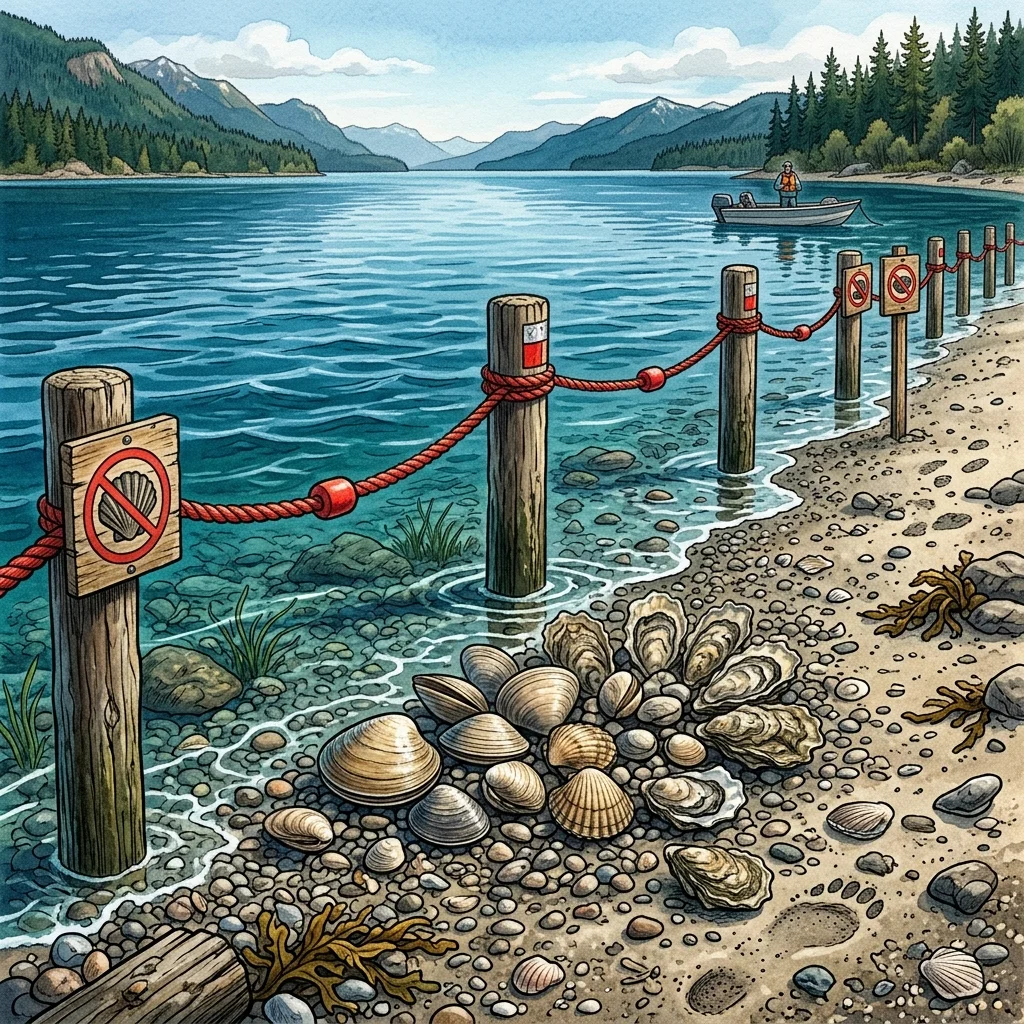
    Belfair State Park has tideland shellfish beds, but biotoxin closures and seasonal restrictions move week to week. Always check the current status on the WDFW shellfish beaches page before harvesting. A quick check costs nothing; a paralytic shellfish poisoning emergency-room visit costs everything.

    Where Belfair Fits in the Larger Trail

    From site 148, the CMT continues north up Hood Canal toward Twanoh, Potlatch, and Hoodsport, with additional sites threading toward Quilcene and Port Townsend before connecting to the Salish Sea network. Belfair is where the southern leg of a much larger Washington water trail begins. For Mason County paddlers, that’s a meaningful piece of geography: a National Recreation Trail with its southern doorstep here.

    Frequently Asked Questions

    How much does it cost to camp at Cascadia Marine Trail site 148?

    $12 per night for up to eight people, paid via the park’s self-registration system. The site is for human-powered or wind-powered watercraft only — you must arrive by water. There are no reservations; sites are first-come, first-served.

    Do I need a Discover Pass to launch from Belfair State Park?

    Yes — a Washington State Discover Pass is required for day-use vehicle parking. Day passes cost $10 and annual passes cost $30. Buy online at discoverpass.wa.gov or at park self-pay stations. Overnight campers’ fees include the pass for the duration of the stay.

    Is Hood Canal safe for beginner kayakers?

    The Great Bend’s protected geometry makes the south end of Hood Canal one of the more forgiving paddling environments in Washington — but afternoon winds build quickly, and the canal’s depth means cold-water immersion risk year-round. Beginners should launch early, stay close to shore, wear a properly fitted PFD, and bring extra layers. Always check the marine forecast for South Hood Canal before going.

    What is the saltmarsh restoration at Belfair State Park?

    Washington State Parks and the Hood Canal Salmon Enhancement Group have been restoring approximately 8.1 acres of estuarine wetlands at the park, removing 2,700 feet of rip-rap and roughly 67,000 cubic yards of fill that were placed between 1952 and 1960. The work is reopening Big and Little Mission Creek mouths to natural tidal flow and rebuilding juvenile salmon habitat.

    Can I rent a kayak in Belfair?

    Yes. North Shore Hood Canal Kayaks operates by appointment at 3959 NE North Shore Road in Belfair — call ahead, as they do not accept walk-ins. Several Hood Canal vacation rentals also include kayaks and stand-up paddleboards as part of the property package; ask your host before booking.

    Where does the Cascadia Marine Trail go from Belfair?

    From site 148, the trail continues north up Hood Canal toward Twanoh State Park, Potlatch, and Hoodsport, eventually connecting to the wider Salish Sea network of more than 55 paddler-only campsites stretching toward the San Juan Islands. Belfair is the trail’s southernmost campsite on the canal.

    What should I bring on a first paddle from Belfair State Park?

    At minimum: PFD, paddle leash, dry bag for keys and phone, layered clothing (fleece + windbreaker), water, snacks, marine forecast checked within the last hour, tide chart, and a float plan filed with someone on shore. Hood Canal is cold year-round; even on a warm day, immersion is a real risk.

  • North Mason Families: How to Take Kids Kayaking from Belfair State Park This Spring

    North Mason Families: How to Take Kids Kayaking from Belfair State Park This Spring


    For North Mason families wondering whether their kids are ready to kayak Hood Canal: the south end of the canal — your end — is where Washington’s beginner paddlers learn. Belfair State Park’s protected shoreline at the Great Bend is genuinely forgiving, the day-use beach is ADA-accessible, and the launch is twenty minutes from most Belfair driveways. Here’s how to plan a first family paddle this spring without making the rookie mistakes that ruin the trip.

    Why the Great Bend Is the Right Training Water

    Hood Canal is technically a fjord, and the southern reach where Belfair State Park sits is its sharpest curve — the Great Bend. The geometry breaks up Pacific swells before they reach you and gives the south end a dependably calmer surface than the open canal further north. For families with kids who have never been in a sit-on-top or tandem before, that matters more than any other factor.

    You still need to plan around afternoon wind. South-southwesterlies build through the day. Launch early, plan a short loop, and be back on land before lunch on your first outing. If your kids ask “can we keep going?” — perfect. End on a high note, not a wet exhausted note.

    The Family Day-Use Plan

    The simplest first trip looks like this:

    1. Buy a Washington Discover Pass ahead of time ($10 day, $30 annual) so you are not fumbling at the park entrance with kids in the car.
    2. Arrive at Belfair State Park before 9 a.m. Tide and wind both behave best in the morning.
    3. Set up a base camp in the day-use area. The park has 65 acres, restrooms, and a swimming-friendly tidal pool kids love when paddling is done.
    4. Launch from the beach. Stay within easy sight of your beach blanket. Paddle west toward the saltmarsh restoration zone — that’s where the water is calmest.
    5. Be off the water before any sustained breeze starts ruffling whitecaps. If you see whitecaps from the beach, you’re already late.

    The $12 paddler-only Cascadia Marine Trail campsite — site 148 — is not the right move for a first family outing. Save it for when your kids have a few day paddles under them and want the real experience.

    What to Bring (The Honest List)

    Hood Canal water is cold year-round. Even in July, immersion is a hypothermia risk. The non-negotiables for paddling with kids:

    • Properly fitted PFDs for every person, including parents. A child’s PFD must be sized for their weight; an adult PFD on a kid is a drowning hazard. Most PFDs have weight ranges printed on the inside.
    • A change of warm clothes per person, in a dry bag, on shore. If anyone goes in, you want fleece and a jacket waiting.
    • Sunscreen and hats. Glare off Hood Canal multiplies sun exposure.
    • Water, snacks, a whistle on each PFD.
    • The marine forecast checked within the hour — the South Hood Canal area on the National Weather Service site.

    Renting vs. Buying

    For a family’s first outing, renting makes sense. North Shore Hood Canal Kayaks at 3959 NE North Shore Road in Belfair operates by appointment — call ahead, no walk-ins. Tandem sit-on-top kayaks are the most family-forgiving option. Skip closed-cockpit sea kayaks until your kids have practiced wet exits.

    Some Hood Canal vacation rentals along North Shore Road include kayaks as part of the property package, which can simplify logistics if you have visitors staying with you.

    Pair the Paddle with a Tahuya Forest Day

    One of the underrated North Mason family weekends is paddling Belfair State Park in the morning and exploring Tahuya State Forest in the afternoon. The forest is 3.5 miles from Belfair and offers family-friendly trails plus picnic areas. Two kinds of nature in one day, both within the same county, both free or near-free with the Discover Pass you already bought.

    Frequently Asked Questions

    How young can a child go kayaking on Hood Canal?

    There is no legal minimum, but practically, kids should be able to follow safety instructions, sit still in a tandem for 20–30 minutes, and tolerate a properly fitted child PFD. Most outfitters will rent to families with children as young as 4 or 5 in tandem boats with an adult — but the call belongs to the parent. If a child is afraid of water or unable to sit still, wait a year.

    Do kids need their own Discover Pass?

    No. The Discover Pass is per vehicle, not per person. One $10 day pass covers everyone arriving in the same car. If you visit Washington state parks more than three times a year, the $30 annual pass pays for itself.

    Is the water at Belfair State Park warm enough to swim in?

    The park’s tidal swimming hole — created by the historic tidal gate — does warm up in summer afternoons and is a popular spot for families. The open canal stays cold (50s to low 60s°F) year-round. If your kids end up in the open water unexpectedly, treat it as a cold-water situation and get them dry and warm immediately.

    What’s the closest restroom to the launch beach?

    Belfair State Park has ADA-accessible restrooms and coin-operated showers in the main day-use area, a short walk from the launch beach. There are no facilities on the saltmarsh side.

    What if the wind picks up while we’re on the water?

    Turn back immediately and stay close to shore. Hood Canal wind builds fast and the southerly fetch from the Great Bend can push small craft surprisingly far. If you cannot make headway, paddle to the nearest beach and walk back to your launch point along the shore. The park’s 3,720 feet of saltwater shoreline gives you a long landing zone.

    This is a family-focused companion to our Cascadia Marine Trail / Belfair State Park spring 2026 guide. For Tahuya Forest plans, see our family trail access guide.

  • Walter E. Hall Park: Everett’s 137-Acre South-End Recreation Complex With a Public Golf Course, a Skate Park, and the Quiet Best Soccer Fields in Town

    Walter E. Hall Park: Everett’s 137-Acre South-End Recreation Complex With a Public Golf Course, a Skate Park, and the Quiet Best Soccer Fields in Town

    Walter E. Hall Park: Everett’s 137-Acre South-End Recreation Complex With a Public Golf Course, a Skate Park, and the Quiet Best Soccer Fields in Town

    **What is Walter E. Hall Park in Everett?** Walter E. Hall Park is a 137-acre City of Everett park at 1226 W. Casino Road, anchoring south Everett with a full 18-hole public golf course, a multi-field soccer and baseball complex, a skate park, a playground, and the Olympic View Banquet Room overlooking the 18th hole. It is open from 6 a.m. to dusk daily and serves as the main recreation hub for the Westmont, Holly, and Casino Road area.

    If Forest Park is the neighborhood park Everett brags about and Grand Avenue Park is the neighborhood park Everett forgets to brag about, Walter E. Hall Park is the south-end park Everett uses. Quietly, constantly, weekday and weekend. The youth soccer brackets that fill it on a Saturday morning are reason enough. The 18-hole public golf course is another. The skate park has its own following. The fact that all three of those things sit on the same 137-acre footprint at 1226 W. Casino Road is one of the most underrated facts about south Everett.

    The Footprint

    Walter E. Hall Park is 137 acres — making it the second-largest city park in Everett behind only Forest Park’s 197. The park is shaped roughly like a wide rectangle, with the soccer and baseball fields occupying the north edge along Casino Road and the Walter E. Hall Golf Course filling the southern majority of the park. The skate park, playground, and central restrooms sit roughly between the two halves.

    The park’s address is 1226 W. Casino Road, Everett, WA 98204 — meaning if you have ever driven west on Casino Road from Evergreen Way, you have driven directly past the soccer fields. Most people who do not have a kid playing youth soccer or a regular tee time do not realize how big it is.

    The park is open from 6 a.m. to dusk every day of the year. There is no parking fee. The golf course operates on its own schedule and pricing.

    The Golf Course Most South Everett Doesn’t Know Is Public

    Walter E. Hall Golf Course is an 18-hole, par-71 public course operated by the City of Everett. It is one of three publicly accessible Everett-area courses (the others being Legion Memorial in north Everett and Harbour Pointe in Mukilteo) and has long been the most affordable of the three.

    At the north edge of the golf course, you’ll find the clubhouse complex — pro shop, café, driving mat, and a long-chip-and-putt area that is free to use. The Olympic View Banquet Room sits inside the same building, looking out over the 18th hole and, on a clear day, the Olympic Mountains beyond Port Gardner. The room is one of Everett’s most underbooked event spaces — it gets weddings, golf tournament dinners, and the occasional retirement party, but it is usually wide open in the middle of the week.

    The course’s pace and profile fit south Everett: it is friendly, walkable, and priced for the neighborhood that surrounds it. It is also the rare Everett park amenity where the surrounding Westmont-Holly and Casino Road residents have a quietly proprietary relationship — many regulars have been playing the course for decades.

    The Soccer Complex Casino Road Built Its Saturdays Around

    The northern half of the park is, on most spring and fall Saturdays, the busiest single piece of grass in Everett. The fields host overlapping youth soccer matches throughout the season, alongside baseball and softball games on the dedicated diamonds. League play overlaps with pickup play overlaps with practice — and on a sunny Saturday in April, the parking lot fills before 9 a.m.

    The fields are large enough to host multiple soccer matches simultaneously, which is why Walter E. Hall has become the de facto home for youth soccer leagues in south Everett. For a neighborhood like Casino Road — where many families do not have backyards big enough to kick a ball in — Walter E. Hall has functioned as the shared backyard for decades.

    The fields are paired with restrooms, a playground, and shaded picnic areas, which is what separates a park families actually use from one that just looks like it on the map. Walter E. Hall is firmly in the first category.

    The Skate Park

    The Walter E. Hall skate park is the kind of in-park amenity that Everett quietly does well. It is open to all skill levels, it is concrete (not the cheaper wood ramps that don’t survive Pacific Northwest winters), and on a typical afternoon it pulls a mix of preschool-age scooter kids, middle schoolers learning their first ollies, and adults relearning skills they had at sixteen.

    It is not the fanciest skate park in Snohomish County — that title still belongs to a few of the newer purpose-built facilities elsewhere — but it is one of the most consistently used. For families on Casino Road and in Westmont-Holly, it functions as one of the most accessible public skating venues in south Everett, period.

    What’s Within Walking Distance

    Walter E. Hall Park sits at the geographic and recreational center of south Everett. Casino Road runs along the north edge. Westmont-Holly is immediately to the south. Holly Drive borders the park on the west. The Boys & Girls Club of Snohomish County, profiled in our 80th-anniversary guide, is a short drive east. The Mukilteo School District serves the elementary and middle schools whose families use the park most.

    For most south Everett families, Walter E. Hall is the closest substantial park — closer than Forest Park, closer than Kasch Park, and easier to reach on foot than either. That accessibility is part of why the park’s parking lots and fields stay so busy.

    The Practical Stuff

    Address: 1226 W. Casino Road, Everett, WA 98204

    Hours: 6 a.m. to dusk, daily, year-round

    Park entrance: free

    Golf course: paid (City of Everett rates)

    Field reservations: through Everett Parks and Recreation

    Olympic View Banquet Room: bookable through the city’s facility reservation system

    Restrooms: yes

    ADA-accessible parking and paved paths: yes

    The park does not have a dedicated dog area, so leashes are required throughout the grounds. The skate park does not require a permit — first come, first served. The golf course recommends advance tee times during peak season; walk-ons depend on the day.

    A South-End Park That Earns Its Keep

    It is fair to say Walter E. Hall Park does not get the marketing love that Howarth Park or Grand Avenue Park gets in this city. The waterfront parks photograph better. The downtown overlooks photograph better. Walter E. Hall is a working-class south Everett park, and it photographs like one.

    But on a Saturday morning, when the parking lot is full at 8:55 a.m. and three parallel youth soccer games are kicking off and the skate park is already humming and a foursome is teeing off on the first hole — Walter E. Hall is doing more for more Everett families per acre than almost any park in the city. That is the test for a park, and Walter E. Hall passes it.

    If you live anywhere south of Mukilteo Boulevard and you have a kid in cleats, a friend who golfs, or a teenager with a board — you have probably already been there. If you have not been yet, drive west on Casino Road and turn in.

    Frequently Asked Questions

    Where is Walter E. Hall Park in Everett? Walter E. Hall Park is at 1226 W. Casino Road, Everett, WA 98204, anchoring south Everett between Casino Road on the north and the Westmont-Holly neighborhood on the south.

    How big is Walter E. Hall Park? The park is 137 acres, making it the second-largest city park in Everett after Forest Park (197 acres).

    Does Walter E. Hall Park have a public golf course? Yes. Walter E. Hall Golf Course is an 18-hole public course operated by the City of Everett, located on the southern half of the park footprint.

    What are the hours at Walter E. Hall Park? The park is open daily from 6 a.m. to dusk, year-round. The golf course operates on its own posted hours.

    Is the Walter E. Hall skate park free to use? Yes. The skate park is open to the public during park hours on a first-come, first-served basis. No permit is required.

    Can you reserve fields or rooms at Walter E. Hall Park? Yes. Soccer and baseball fields can be reserved through Everett Parks and Recreation. The Olympic View Banquet Room overlooking the 18th hole is bookable through the city’s facility reservation system.

    Is Walter E. Hall Park dog-friendly? Leashed dogs are welcome on park grounds. There is no dedicated off-leash area at this park.

    Why is it called Walter E. Hall Park? The park is named for Walter E. Hall, a longtime Everett civic figure for whom both the park and adjacent golf course were named.

  • Know Before You Go: Spring Trail Closures at Tahuya State Forest

    Know Before You Go: Spring Trail Closures at Tahuya State Forest

    Every spring, Belfair and North Mason families load up the truck — ATVs, mountain bikes, hiking boots — and head out Belfair-Tahuya Road toward one of our closest and most-used backyards: Tahuya State Forest. The DNR gates opened April 15 to kick off the 2026 season, running through October 31, and the bulk of those 84 miles of trail are accessible.

    But not all of them. Several trail sections are currently closed or disrupted — one because of a washed-out bridge, others because of active timber harvesting — and knowing the picture before you drive out could save a frustrating Saturday morning.

    The Howell Lake Bridge Is Out

    The biggest closure right now is the Howell Lake Loop Trail, which is shut down due to a washed-out bridge. DNR has not announced a repair timeline as of this writing. If you’re heading to Howell Lake for the fishing, a swim, or a family day-use outing, the lake and the day-use area remain accessible for non-motorized use year-round — but the loop trail itself is impassable until bridge repairs are completed. Worth a call before you commit to that detour.

    Three Timber Sales Are Affecting Multiple Trails

    Active logging operations across three DNR timber sales — known as Trail Mix, Little Wrangler, and School — are also causing temporary closures and access disruptions across a wider section of the trail network. Affected trails currently include Randy’s H2O Stop, Mission Creek, the 1.9 Mile trail, Hoof & Tail, and the Tahuya River Trail.

    Timber harvesting is core to how Tahuya State Forest functions. DNR manages 23,000 acres here as working forest to generate trust land revenue for Washington public schools, and sales rotate through different areas over time. That means the closure footprint shifts week to week as operations move. A trail blocked today may be clear in a few weeks — but new sections can open to logging as well.

    What’s Still Open: Elfendahl Pass

    Even with the active closures, the majority of Tahuya’s trail network — which draws around 200,000 visitors a year — is still open and accessible. The Elfendahl Pass Staging Area, the forest’s main trailhead hub at NE Elfendahl Pass Road, is open for the season and can handle about 50 vehicles, with trailer pull-through for rigs up to 35 feet.

    From Belfair: take SR-300 west 3.5 miles → right on Belfair-Tahuya Road 1.9 miles → right on Elfendahl Pass Road 2.3 miles.

    Before You Head Out

    Trail conditions in Tahuya can shift quickly as logging operations relocate, so check current status before you go:

    • Official DNR page: dnr.wa.gov/GreenMountainTahuya — current closure alerts and the updated March 2025 trail map
    • Phone: (360) 825-1631 — DNR South Puget Sound Region office

    Spring is the best time to be out there. Just know the lay of the land before you leave Belfair.

  • Grand Avenue Park: Everett’s Most Overlooked Viewpoint Has a Paved Trail, Port Gardner Views, and a Bridge to the Waterfront

    Grand Avenue Park: Everett’s Most Overlooked Viewpoint Has a Paved Trail, Port Gardner Views, and a Bridge to the Waterfront

    Q: What can you see from Grand Avenue Park in Everett?
    A: Grand Avenue Park offers sweeping views of Port Gardner Bay, the Olympic Mountains, Whidbey Island, and Naval Station Everett’s marina. The 5-acre City of Everett park sits on a bluff at 1800 Grand Ave, features a paved ADA-accessible trail, and connects to the waterfront via a pedestrian bridge. Open 6 a.m. to dusk, free.

    There is a five-acre park in Everett where you can stand on a paved trail, look west, and see Port Gardner Bay, Whidbey Island, the Olympic Mountain range, and Naval Station Everett’s marina all at once. In May, when the mountains are still snow-covered and the water runs that particular deep gray-blue, it’s one of the better views in the city.

    Most Everett residents haven’t been there.

    Grand Avenue Park at 1800 Grand Ave sits on the bluff above Marine View Drive in the Port Gardner neighborhood — one of Everett’s most historic corridors. The park is listed as a Viewpoint facility by Everett Parks & Recreation, open 6 a.m. to dusk, and free to visit. It’s five acres of landscaped, paved walking trail with benches, grass, and one of the most genuinely satisfying overlook experiences in the city.

    The reason most people haven’t been: the turn off Grand Avenue isn’t obvious, the park doesn’t have large signage from the main routes, and it sits in a neighborhood that most drivers pass through rather than stop in. That’s worth correcting.

    What You’ll Find at the Park

    Walk into the park from the Grand Avenue entrance and you’re immediately on a paved, landscaped trail. The trail curves along the bluff edge, with several overlook points where benches face west toward the Sound. The views open up as you walk north: Port Gardner Bay, the marina below, the Port of Everett’s working waterfront, Whidbey Island in the middle distance, and on clear days the full ridge of the Olympic Mountains across the water.

    Below you, Marine View Drive runs along the base of the bluff. The Port of Everett’s waterfront complex — Waterfront Place, the marina, the working piers — is visible directly below. It’s the kind of vantage point that makes the scale of Everett’s waterfront make sense in a way that walking along Marine View Drive doesn’t quite capture.

    The park is 5 acres. It doesn’t have a sports complex — it’s a viewpoint park, designed around the overlook experience. There are grassy areas for sitting, benches at the overlook points, and a paved surface that’s ADA accessible and open to cyclists.

    At the north end of the park, a pedestrian bridge crosses Marine View Drive and connects directly to the waterfront on foot or by bike. This is one of the practical reasons the park deserves more attention: it makes the bluff and the waterfront part of the same trip, rather than two separate destinations requiring a car move.

    A Park Since 1906

    Grand Avenue Park has been part of Everett’s parks system since 1906 — one of the city’s oldest park properties. Port Gardner, the neighborhood it sits in, is the original center of Everett — the landing point where the city began in the early 1890s. The bluff the park occupies looks out over the same bay that Vancouver charted in 1792 and that early Everett settlers considered the defining geographic feature of the place they were building.

    The park was established as a viewpoint during the period when Grand Avenue was first built out as a residential street for Everett’s founding families. The overlook function has been consistent throughout: this has always been the spot where people come to look at the water. Northwest Everett’s historic core sits just a few blocks east, and the visual connection from the park down to the waterfront the early settlers built is as clear today as it was 120 years ago.

    When to Visit

    May and early June are the best months for the view. The mountains are still carrying their winter snowpack, the air is clear between rain systems, and the late afternoon light turns the bay silver. It’s not warm enough to stay all day, but absolutely worth a morning or afternoon stop.

    Weekday mornings are the park at its liveliest — ferry traffic on the Sound, marina activity below, Port of Everett operations visible in the working waterfront. If you want the park with a backdrop of actual Everett activity, early morning on a weekday delivers that.

    Weekday midday is quiet. The benches are open. The trail is uncrowded. You can have the overlook largely to yourself, which is either a feature or a bug depending on what you’re after.

    Getting There

    The park address is 1800 Grand Ave, Everett, WA 98201. From downtown, head north on Rucker Avenue and turn west onto Grand Avenue — follow Grand all the way to where the bluff begins. Street parking is available along Grand Avenue.

    The park is classified as a Viewpoint facility on the City of Everett’s parks system. Hours are 6 a.m. to dusk, year-round. No admission fee.

    The Pedestrian Bridge

    The Grand Avenue pedestrian bridge at the north end of the park crosses Marine View Drive and connects to the waterfront level below. It’s ADA accessible and open to cyclists. This is the practical detail that makes Grand Avenue Park a genuine starting point for a longer outing rather than just a viewpoint stop.

    From the park, you can cross the bridge, walk the waterfront complex, and return via the pedestrian access — a loop that’s probably two to three miles depending on how far you extend it along Marine View Drive or into the marina area. It’s almost entirely paved and connects to one of the more active sections of Everett’s waterfront.

    How It Fits With Everett’s Other Parks

    For families exploring Everett’s outdoor spaces, Grand Avenue Park sits comfortably in the same conversation as Howarth Park (south Everett, beach and forest trails), Thornton A. Sullivan Park at Silver Lake (east, disc golf and lake access), and Langus Riverfront Park (north, wildlife estuary trail). Each is a different experience — Grand Avenue is the one with the panoramic bay view and the bridge to the waterfront.

    It’s also the most central. For anyone based downtown, in Port Gardner, or in northwest Everett, this park is close in a way that the others aren’t. You don’t need to drive to a trailhead. You walk to the end of Grand Avenue and you’re there.

    A Simple Case

    Open 6 a.m. to dusk, 365 days a year. Free. ADA accessible. Five acres of paved trail on a bluff above the water, with views that most cities would charge admission for. A pedestrian bridge to the waterfront. Benches. A grassy area. Established in 1906.

    If you’ve lived in Everett for years and somehow missed this park, May is a good time to go find it.

    Frequently Asked Questions

    Where is Grand Avenue Park in Everett?
    Grand Avenue Park is located at 1800 Grand Ave, Everett, WA 98201, on the bluff above Marine View Drive in the Port Gardner neighborhood. Open 6 a.m. to dusk daily.

    What can you see from Grand Avenue Park?
    The park offers panoramic views of Port Gardner Bay, the Olympic Mountains, Whidbey Island, Naval Station Everett’s marina, and the Port of Everett waterfront complex below the bluff.

    Is Grand Avenue Park ADA accessible?
    Yes. The park features a paved, ADA-accessible trail throughout. The Grand Avenue pedestrian bridge — which connects the park to Marine View Drive and the waterfront — is also ADA accessible and open to cyclists.

    Is there parking at Grand Avenue Park?
    Street parking is available along Grand Avenue. The park does not have a dedicated parking lot.

    How do I get from Grand Avenue Park to the Everett waterfront?
    The Grand Avenue pedestrian bridge at the north end of the park crosses Marine View Drive and connects directly to the waterfront level. It’s open to pedestrians and cyclists and is ADA accessible.

    How old is Grand Avenue Park?
    Grand Avenue Park was established in 1906, making it one of Everett’s oldest park properties.

    How big is Grand Avenue Park in Everett?
    Grand Avenue Park is 5 acres, featuring a paved walking trail, overlook benches facing Port Gardner Bay, grassy areas, and a pedestrian bridge to the waterfront at the north end.

    Is Grand Avenue Park free?
    Yes. Grand Avenue Park is a City of Everett public park with no admission fee. Hours are 6 a.m. to dusk year-round.

  • Hood Canal North in May: What’s Biting, What’s Blooming, and Where to Go

    Hood Canal North in May: What’s Biting, What’s Blooming, and Where to Go

    May on Hood Canal’s north shore has its own particular rhythm. The water is still cold enough to see your breath off the kayak in the morning, the rhododendrons are peaking in the forest clearings, and everyone with a shrimp pot has one question on their mind: is the season open? This week I’ve got answers on all of it — plus one of the most underrated state parks on the entire Olympic Peninsula that deserves a lot more foot traffic than it gets.

    Let’s start with the news every Hood Canal angler is watching, then I’ll walk you through a spring park visit that’ll remind you why you moved to (or keep driving back to) this corner of Washington.

    Hood Canal Spot Shrimp 2026: What You Need to Know Before You Launch

    Here’s the hard truth first: Hood Canal is closed for spot shrimp harvest in 2026 due to low abundance. WDFW made the call based on population surveys, and while it’s disappointing for the many anglers who make this an annual tradition, it’s the right move for the long-term health of one of the Pacific Northwest’s most beloved shellfish species.

    Spot shrimp are a Hood Canal icon. They’re larger, sweeter, and more delicate than anything you’ll find at a grocery store counter, and the Hood Canal fishery draws pot-setters from across the region every spring. When WDFW closes an area, it’s because the stock genuinely needs the rest. The same conservation ethic that makes the Quilcene Bay oyster harvest sustainable year after year applies here — restraint now means abundance later.

    So what are your options for 2026? The broader Puget Sound shrimp season opens May 24 in several marine areas (check wdfw.wa.gov/fishing/shellfishing-regulations/shrimp/areas for area-by-area status). Rules across Puget Sound management areas include a daily limit of 10 pounds of all shrimp species combined, a maximum of 80 spot shrimp per person if open for spot shrimp, daylight-hours-only harvesting, and no more than two shrimp pots per person (four per boat). Before you trailer the boat anywhere, verify the current status for your specific target area on the WDFW site — additional dates can be added or removed as quota situations change through the season.

    For Hood Canal North regulars, this is a good year to explore the non-shrimping highlights of the canal — of which there are plenty. The Brinnon ShrimpFest on Memorial Day weekend (May 23–25) is still happening and still celebrates the culture and community around Hood Canal spot shrimp even in a conservation year. Mark your calendar.

    Scenic Beach State Park, Seabeck — May Is the Sweet Spot

    If you’ve never made the turn off Newberry Hill Road toward Seabeck, add it to your list right now. Scenic Beach State Park sits on a quiet cove on Hood Canal’s west shore, and in May, it’s genuinely one of the most beautiful spots on the peninsula.

    The park’s signature view is what draws people back: stand on the pebble beach at low tide and you’re looking straight across Hood Canal at the full Olympic Mountain ridgeline. On a clear May morning — and we get more of those than people expect — that panorama is jaw-dropping. The peaks are still carrying significant snow at elevation, which makes the contrast with the blooming rhododendrons in the park’s forest trails particularly dramatic this time of year.

    The trail network here is well-groomed and manageable for most fitness levels. You’ll move through second-growth forest with a mix of Douglas fir, big-leaf maple, and those native rhododendrons that are in full flush right now. The trails eventually loop back to the beach, where the rocky shoreline rewards anyone who takes their time — look for sea stars, anemones, and the occasional harbor seal cruising the shallows.

    One detail I always point out to first-timers: the historic Emel House sits right on the beach. It’s a beautifully preserved early-20th-century home that’s become a popular wedding venue, and even if there’s no event happening, it adds a real sense of place and history to a walk along the waterline. The park address is 9596 Scenic Beach Rd NW, Seabeck, WA 98380.

    One practical note: clamming and oyster harvesting at Scenic Beach is currently closed due to a decline in shellfish populations in this specific area. Come for the views, the trails, and the forest — not the harvest.

    Plan Your Visit

    Scenic Beach State Park is open year-round. To reach it from Bremerton, head northwest on WY-3, turn left onto Newberry Hill Road, then follow Seabeck Highway NW until it transitions to Scenic Beach Road. The drive takes about 30 minutes from Bremerton and 90 minutes from Tacoma via the Narrows Bridge. Parking is available in the main day-use lot. Bring layers — even on a sunny May afternoon the breeze off Hood Canal can be brisk. Reservations for camping can be made through Washington State Parks at parks.wa.gov.

    If you’re combining this with a shrimp research trip, WDFW’s area-by-area shrimp status page is the authoritative source: wdfw.wa.gov/fishing/shellfishing-regulations/shrimp/areas. Check it the morning you plan to go — conditions and quota statuses can change mid-season.

    Hood Canal North rewards the curious traveler who takes the less-obvious road. Seabeck is that road. Go find it.

  • Two South Coast Gems Worth the Drive This May: Quinault Rain Forest and Grays Harbor Lighthouse

    Two South Coast Gems Worth the Drive This May: Quinault Rain Forest and Grays Harbor Lighthouse

    The South Coast of the Olympic Peninsula doesn’t always get top billing — that usually goes to Hurricane Ridge or the Hoh. But if you point your rig southwest this May, you’ll find two destinations that deliver everything the peninsula is famous for, without the weekend crowds. I’m talking about the Quinault Rain Forest and the Grays Harbor Lighthouse at Westport. Both are open now. Both are spectacular in spring. And they make a natural pair for a full South Coast day trip.

    Quinault Rain Forest: The Quiet Corner of Olympic National Park

    Most people driving to the Olympic Peninsula from the south pass right by the Quinault Valley turnoff without realizing what they’re missing. That’s a mistake worth correcting.

    The Quinault Valley sits in the southwestern corner of Olympic National Park, roughly an hour west of Forks and about three hours from Port Angeles. It’s a wilderness gateway in the truest sense — alpine meadows and ice-carved peaks at the high end, and at the valley floor, one of the finest stretches of temperate old-growth rainforest on the continent. Bigleaf maples draped in club moss, the Quinault River running clear and cold, Roosevelt elk moving through the undergrowth at dawn.

    The best starting point for a day visit is the Quinault Rain Forest Ranger Station, where the NPS staff can orient you to current trail and road conditions. From there, the Kestner Homestead Loop is the move: a 1.3-mile flat walk through groves of bigleaf maples to the remains of the Kestner family homestead, one of the first pioneer families to settle the valley. It’s short enough for anyone to manage and beautiful enough to slow even the most restless hiker down. In May, the maples are leafing out in that electric spring-green that photographers chase all season.

    If you want to stay overnight — and you should — the valley has two campgrounds inside the national park. North Fork Campground (9 sites) and Graves Creek Campground (approximately 30 sites) are both first-come, first-served and sit in the kind of quiet that city people don’t entirely believe exists anymore. No reservations, no generators humming, just rain on old-growth canopy.

    For those wanting more ambitious hiking, the East Fork Quinault River Trail pushes deep into the Olympic Wilderness toward the historic Enchanted Chalet, and the North Fork Quinault River Trail climbs toward the Low Divide. Both are multi-day wilderness routes for fit, prepared hikers — bring a permit and solid navigation skills.

    Before you head out, note that Kalaloch Beach is approximately 35 miles west of Quinault — easily added to the itinerary for a sunset finish on the open Pacific. For current road and trail conditions, call the NPS at 360-565-3130.

    Grays Harbor Lighthouse: Washington’s Oldest Standing Lighthouse

    Drive another hour north and west from Quinault and you’ll reach Westport, the fishing town that anchors the southern end of the South Coast. Most visitors come for the marina, the charter fishing, or the razor clam beaches. But the destination that deserves more attention is hiding right at the edge of town: the Grays Harbor Lighthouse inside Westport Light State Park.

    Built in 1898, the Grays Harbor Lighthouse stands 107 feet tall — making it the tallest lighthouse still standing on the Washington coast. It’s an imposing structure, white against the gray Pacific sky, positioned right where the Grays Harbor jetty meets the open ocean. The lighthouse has been guiding ships into Grays Harbor for over 125 years, and it remains an active aid to navigation today.

    Access is easy and free. Park at the Westport Light State Park lot off W Ocean Ave and pick up the Dunes Trail, a 1.3-mile loop that winds through a forest of shore pines and coastal scrub before delivering you to the lighthouse tower. The trail is paved in stretches and suitable for most visitors. Along the way, keep your eyes on the water — May is the tail end of gray whale northward migration, and the jetty area is a reliable shorebird corridor.

    The lighthouse itself is managed by the Westport-South Beach Historical Society, which typically runs public tours on weekends during the spring and summer season. Check their schedule before you go if climbing the tower is your goal — but even without a tour, the walk and the views make the trip worthwhile.

    Plan Your Visit

    A full South Coast day combining Quinault and Westport requires an early start from the north end of the peninsula, but it’s very doable from Aberdeen or Olympia as a day trip. From Quinault Rain Forest Ranger Station, head west on US-101 to Kalaloch if time allows, then north on 101 to Westport — roughly 1.5 hours between the two stops. Gas up in Aberdeen; services are limited along the route.

    For Quinault, there’s no fee to hike the Kestner Homestead Loop if you’re walking in from the Ranger Station area, though the standard America the Beautiful / National Parks Pass covers any applicable entry fees. Camping at North Fork and Graves Creek is first-come, first-served with standard NPS camping fees. Bring rain gear regardless of the forecast — this is the rainiest corner of the rainiest national park in the continental United States, and that’s part of what makes it so alive in May.

    For Westport Light State Park, parking and trail access are free. The lighthouse tour schedule varies — contact the Westport-South Beach Historical Society for current weekend hours before making the drive specifically for the tower climb.

    NPS Olympic road and trail info: 360-565-3130

  • Visiting Hood Canal This Summer? Here’s What’s Confirmed for Belfair State Park and Marine Area 12

    Visiting Hood Canal This Summer? Here’s What’s Confirmed for Belfair State Park and Marine Area 12

    Belfair, WA — If you’re planning a Hood Canal trip to Belfair this summer — whether it’s a Seattle weekend, a Tacoma family run, or a longer Pacific Northwest itinerary — here’s the cleanest read on what’s confirmed and what’s still pending as of May 3, 2026. The headline: lock in crab and camping now; treat the Belfair State Park shellfish opener as “watch the WDFW page” until officially posted.

    What’s Confirmed

    Marine Area 12 Dungeness crab opens 6 a.m. June 16, 2026, runs through September 5, harvest Thursdays through Mondays. Daily limit: five male, hard-shell, 6¼-inch minimum carapace, recorded on your Puget Sound catch record card. You’ll need a Washington Department of Fish and Wildlife (WDFW) shellfish/seaweed license and the Puget Sound crab catch record card. Visitor licenses are sold online at wdfw.wa.gov.

    Belfair State Park camping reservations are open for all three loops — Main, Beach, and Tree — through washington.goingtocamp.com or (888) 226-7688. The park has 90 standard sites, 41 full-hookup sites, two primitive sites, and one marine trail site on 3,720 feet of Hood Canal shoreline at 1002 NE Beck Road. Beach Loop is the closest to the water and accommodates RVs up to 60 feet. Tree Loop (May-Sept only) is the cheapest but limited to vehicles 18 feet and under. Memorial Day, July 4, and Labor Day are essentially gone; book August now if it’s on your list.

    Theler Wetlands is open today. Mary E. Theler Wetlands Nature Preserve at 600 NE Roessel Road in Belfair offers more than three miles of accessible trails through 139 acres of salt marsh and Union River estuary. Free, dawn to dusk, ADA-accessible boardwalk. May is peak shorebird migration on Hood Canal — if your visit is May or early June, this is the highest-value low-effort stop.

    What’s Pending

    The 2026 Belfair State Park clam, mussel, and oyster opener has not yet been published to the official WDFW Belfair beach page (wdfw.wa.gov/places-to-go/shellfish-beaches/270470). The page still shows Aug 1 – Sept 30, 2025 as the most recent posted season. If you’re booking a trip specifically for shellfish, build a flexible window (late July through September is the historical pattern at Belfair) and watch the WDFW page in May and June for the official 2026 announcement.

    The Visitor Rule You Must Know: WDFW + DOH

    Two parallel approvals govern every Hood Canal harvest. The WDFW season must be open, and the Washington Department of Health (DOH) health approval for the beach must be active. Either can be closed with little notice for biotoxin, vibrio, or water-quality reasons. The DOH Shellfish Safety hotline is 1-800-562-5632 and the DOH interactive map updates in real time. Run both checks within 24 hours of any planned harvest. Visitors who skip this step get tickets — or worse, get sick.

    Practical Logistics for the Belfair Trip

    Belfair sits at the south end of Hood Canal, roughly two hours from Seattle via SR-3 through Gorst, or about 75 minutes from Tacoma via SR-16 and SR-3. The town center has gas, groceries, and a handful of restaurants; expect basic services, not a tourism strip. The Belfair State Park beach is mostly soft mud at the tideline — waterproof boots are non-negotiable for any harvest trip. Standard Puget Sound daily shellfish limits when the beach is open are 18 oysters, 10 clams, and 10 mussels per harvester, with kids 15 and under harvesting free without a license.

    Frequently Asked Questions

    Do I need a Washington fishing license to crab on Hood Canal?

    Yes. You need a WDFW shellfish/seaweed license plus the Puget Sound crab catch record card. Both are sold online at wdfw.wa.gov. Daily limit in Marine Area 12 is five male Dungeness, hard-shell, 6¼-inch minimum carapace.

    How do I book a Belfair State Park campsite?

    Reserve at washington.goingtocamp.com or call (888) 226-7688. Three loops: Main (year-round, mix of hookup and standard), Beach (year-round, full hookups, up to 60 ft RVs), Tree (May-Sept, vehicles 18 ft and under, no hookups).

    Is Belfair State Park shellfish season definitely open in summer 2026?

    The 2026 opener has not yet been posted to the official WDFW Belfair beach page as of May 3, 2026. Build a flexible visit window (late July through September is the historical pattern) and check wdfw.wa.gov/places-to-go/shellfish-beaches/270470 weekly through May and June for the official date.

    How far is Belfair State Park from Seattle?

    Roughly two hours via I-5 south, SR-16 across the Tacoma Narrows Bridge, then SR-3 through Gorst to Belfair. The park is at 1002 NE Beck Road, about three miles west of the Belfair town center.

    Related coverage: Tahuya River Preserve Reaches 190 Acres · Original Hood Canal summer planner

  • Hood Canal Summer 2026 in Belfair: What’s Verified, What’s Pending, and How to Plan Smart

    Hood Canal Summer 2026 in Belfair: What’s Verified, What’s Pending, and How to Plan Smart

    Belfair, WA — Summer 2026 is taking shape on Hood Canal, and the picture for North Mason families and Hood Canal property owners is sharper in some places than others. As of May 3, 2026, the Washington Department of Fish and Wildlife (WDFW) has formally announced the Marine Area 12 Dungeness crab opener, but the Belfair State Park clam, mussel, and oyster opener has not yet been published to the WDFW Belfair beach page. Here’s what you can put on your calendar today — and what to keep watching.

    Marine Area 12 Crab: Confirmed for June 16 – Sept 5, 2026

    The verified anchor of the summer is crab. WDFW has confirmed the Hood Canal recreational Dungeness season for Marine Area 12 (which covers the Hood Canal stretch our community fishes most) opens at 6 a.m. on Tuesday, June 16, 2026, and runs through Saturday, September 5, 2026. As in prior years, harvest is allowed Thursdays through Mondays each week — closed Tuesdays and Wednesdays. The daily limit remains five male Dungeness in hard-shell condition, with a minimum carapace width of 6¼ inches, recorded immediately on your Puget Sound catch record card.

    One important nuance specific to Hood Canal: the area north of Ayock Point follows a different schedule, and the area south of Ayock Point has had abundance issues that have driven recent winter closures. The summer recreational opener applies to Marine Area 12 broadly, but check the WDFW Hood Canal crab page before you set pots near Belfair, Union, or Tahuya so you’re fishing the right stretch under the right rule.

    Belfair State Park Shellfish: 2026 Dates Not Yet Posted

    Belfair State Park’s clam, mussel, and oyster harvest is the centerpiece of the south Hood Canal shellfish year for most North Mason families — 3,720 feet of shoreline at 1002 NE Beck Road, mostly known for oysters, with some of the most productive south-end mud flats on the Canal. As of this morning, however, the WDFW Belfair State Park beach page (wdfw.wa.gov/places-to-go/shellfish-beaches/270470) still shows the most recent published season as Aug 1 – Sept 30, 2025 only. The 2026 opener date has not yet been posted to that official page.

    If you’ve seen earlier dates circulating, treat them as preliminary until WDFW updates the Belfair beach page or issues a press release. The honest framing for now: the 2026 Belfair State Park shellfish opener is expected this summer, exact date pending. Add the WDFW “Find a Beach” tool to your bookmarks and check it the week you plan to harvest. Standard Puget Sound daily limits when the beach does open are 18 oysters, 10 clams, and 10 mussels per harvester, with kids 15 and under harvesting free without a license.

    The WDFW + DOH Dual-Check Rule (This One Is Non-Negotiable)

    Hood Canal’s shellfish year runs on two parallel approvals: the WDFW season must be open, AND the Washington Department of Health (DOH) health approval for that beach must be active. Either one can close a beach with little notice. Biotoxin closures, vibrio advisories, and seasonal water-quality flags can shut harvest down even when the WDFW calendar says open. The DOH Shellfish Safety hotline is 1-800-562-5632, and the DOH interactive map shows real-time beach health status for every approved beach on Hood Canal. Check both sources within 24 hours of any harvest trip — this is the rule every Belfair-area harvester learns once and never forgets.

    Belfair State Park Camping: All Three Loops in Play This Summer

    For families combining a beach day with a weekend on the water, Belfair State Park’s campground is the closest in. The park runs three loops totaling 90 standard sites, 41 full-hookup sites, two primitive sites, and one marine trail site:

    • Main Loop — year-round reservable: 15 full-hookup sites, 34 standard sites, three primitive sites.
    • Beach Loop — year-round reservable, full hookups, fits RVs/trailers up to 60 feet, immediate beach access.
    • Tree Loop — May through September only, vehicles 18 feet and under, no hookups.

    Reservations through washington.goingtocamp.com or (888) 226-7688. Summer weekends — especially Memorial Day, July 4, and Labor Day — fill months out. If your trip is August or later, book this week.

    The Free Option Right Now: Theler Wetlands

    You don’t have to wait for shellfish dates to use Hood Canal in May. The Mary E. Theler Wetlands Nature Preserve at 600 NE Roessel Road off SR-3 in Belfair offers more than three miles of accessible trails through 139 acres of salt marsh and Union River estuary. May is peak migration on the Canal — shorebirds, herons, songbirds, and the start of summer waterfowl. Trails are free, open dawn to dusk, and the main boardwalk is ADA accessible. The Hood Canal Salmon Enhancement Group (HCSEG), which manages the Theler Nature Center, is in the middle of a longer restoration of the facility — check pnwsalmoncenter.org for community program announcements.

    Why This Matters for North Mason

    Hood Canal’s summer recreation calendar isn’t a tourism brochure for North Mason — it’s the working schedule that families plan dinners around, that grandparents drive in for, that property owners build their summer guest list against. When the WDFW page hasn’t posted the Belfair opener yet, the right move isn’t to guess; it’s to lock down what’s confirmed (crab June 16, camping reservations now, Theler today) and stay ready for the rest. We’ll update this page the moment WDFW publishes the Belfair State Park 2026 dates.

    Frequently Asked Questions

    When does Marine Area 12 Dungeness crab open in summer 2026?

    Marine Area 12 (Hood Canal) recreational Dungeness opens at 6 a.m. on June 16, 2026, and runs through September 5, 2026, with harvest allowed Thursdays through Mondays each week. Daily limit: five male, hard-shell, 6¼-inch minimum carapace.

    When does Belfair State Park shellfish season open in 2026?

    The 2026 opener has not yet been published to the official WDFW Belfair State Park beach page as of May 3, 2026. The 2025 season ran August 1 through September 30. Check the WDFW “Find a Beach” tool and the WDFW Belfair page (wdfw.wa.gov/places-to-go/shellfish-beaches/270470) for the official 2026 announcement.

    Do I need both a WDFW license and a DOH health approval to harvest at Belfair State Park?

    Yes. The WDFW shellfish/seaweed season must be open AND the DOH health status must be approved for the beach you’re harvesting. Either can close a beach with little notice. The DOH Shellfish Safety hotline is 1-800-562-5632 and the DOH interactive map updates in real time.

    How do I reserve a campsite at Belfair State Park?

    Reserve at washington.goingtocamp.com or call (888) 226-7688. Belfair State Park has three loops (Main, Beach, Tree) totaling 90 standard sites, 41 full-hookup sites, two primitive sites, and one marine trail site. Tree Loop is May-September only and limited to vehicles 18 feet and under.

    Where is Belfair State Park?

    Belfair State Park sits on 3,720 feet of Hood Canal shoreline at 1002 NE Beck Road, Belfair, WA 98528, at the south end of the Canal. The park is roughly three miles west of the Belfair town center off SR-300.

    Is the Theler Wetlands open right now?

    Yes. Mary E. Theler Wetlands Nature Preserve at 600 NE Roessel Road in Belfair is open dawn to dusk year-round. Trails are free, more than three miles total, and the main boardwalk is ADA accessible. May is peak spring migration on Hood Canal.

    Related coverage: Tahuya River Preserve Reaches 190 Acres · Hood Canal Property Owners: Tahuya River Preserve and Water Quality · Original Belfair Bugle Hood Canal summer planner

  • A Mason County Family’s Guide to Theler Wetlands: What Kids Will See This Spring (and Why the Boardwalk Coming This Summer Matters)

    A Mason County Family’s Guide to Theler Wetlands: What Kids Will See This Spring (and Why the Boardwalk Coming This Summer Matters)


    Theler Wetlands is the closest thing Mason County has to a free outdoor classroom. The Mary E. Theler Wetlands Nature Preserve in Belfair is open every day during daylight hours, costs nothing, and is engineered — quite literally — to teach. For a family with kids, especially kids interested in animals, water, or how the natural world actually works, a spring afternoon at Theler holds up against any paid attraction in the region.

    And the trip is going to get better. This summer, a 1,200-foot elevated boardwalk is going in through a freshly restored salt marsh — the final phase of a multi-year project that has been quietly remaking the south end of Hood Canal. Here is what a family should know about going now and going later.

    What Kids Will See at Theler Right Now

    Even mid-restoration, the preserve is full of activity in spring. The mudflats and tidal channels are nursery habitat for juvenile salmon. The grasses and shallow pools attract great blue herons, kingfishers, ospreys, bald eagles, and dozens of smaller songbirds passing through on migration. The Union River, which feeds the wetlands, is one of the few healthy spawning runs left for Hood Canal summer chum salmon — a federally threatened species.

    Kids who like to spot things will have plenty to count: bird species, salmon if you visit at the right time, otter and beaver sign in the channels, and seasonal flowers across the wet meadows.

    What the Construction Means for a Family Visit Now

    Honest version: parts of the trail loop are currently fragmented because of the restoration work. The earthwork phase finished in fall 2025 — that included removing a failing levee, replacing a small culvert with a much larger 15-foot-wide concrete one, and digging a new winding tidal channel. You can still walk most of the preserve, but you cannot complete the full loop yet.

    What that means in practice: short walks with younger kids work well right now. Bring binoculars. Plan to spend 30 to 60 minutes rather than building the day around a long hike. The Hood Canal Salmon Enhancement Group (HCSEG) posts current trail access at pnwsalmoncenter.org.

    Why the Summer 2026 Boardwalk Changes the Trip

    The big change is the boardwalk. WDFW and HCSEG plan to install a 1,200-foot piling-supported elevated walkway through the restored estuary this summer, built on the footprint of the levee that was removed. When it is finished, the entire Theler loop reconnects — and it does so by walking visitors directly through restored salt marsh.

    For a family, that means three things. First, the loop becomes friendly for kids who get tired on out-and-back trails. Second, the boardwalk gives small children eye-level views of marsh life — channels, fish, herons hunting — without anyone having to walk through mud. Third, it turns Theler into a year-round destination that holds up in every season.

    How to Make It a Real Outdoor Lesson

    A few angles that work especially well with kids:

    • Salmon and the Endangered Species Act. Hood Canal summer chum are federally listed as threatened. The Theler restoration exists because juvenile chum need shallow, low-salinity, food-rich estuary water to grow before they head out into the canal. Kids respond to the idea that an entire engineering project — culvert replacements, levee removal, a road raised — is being done on behalf of fish.
    • How a wetland actually works. Tidal channels fill and empty twice a day. The salt marsh filters water, slows storm waves, and stores carbon. A wetland is a machine, and Theler is a working one.
    • Birding 101. A pocket bird guide and a pair of binoculars turns Theler into a guided experience. Spring is migration season — there are species at Theler in May that aren’t there in July.

    The Practical Details

    The preserve is at 22871 NE SR-3 in Belfair, on the east side of Highway 3 before the town center. Parking is free. Open during daylight hours. Restrooms are typically available at the nature center; bring your own water for the trail. There is no entry fee. Dogs are subject to posted rules, so check the trailhead sign before bringing one.

    The drive from Shelton is about 25 minutes. From Belfair town center, two minutes.

    Frequently Asked Questions

    Is Theler Wetlands open to families this spring?

    Yes. The preserve is open during daylight hours every day. Parts of the trail loop are fragmented because of restoration work, so plan a 30 to 60 minute visit rather than a long hike. Current trail status is posted at pnwsalmoncenter.org.

    How much does it cost to visit Theler Wetlands?

    Free. There is no entry fee, and parking is free. The preserve is supported by WDFW and the Hood Canal Salmon Enhancement Group.

    What will kids actually see at Theler in spring?

    Migrating songbirds, great blue herons, ospreys, bald eagles, kingfishers, otter and beaver sign in the tidal channels, juvenile salmon (depending on the run timing), and seasonal wildflowers across the wet meadow.

    When will the new Theler boardwalk be finished?

    Construction is planned for summer 2026. The 1,200-foot elevated boardwalk runs through the restored salt marsh on the footprint of the removed levee, and once completed it reconnects the full Theler trail loop.

    Is Theler Wetlands stroller- or wheelchair-accessible?

    Currently, accessibility varies by trail section because of construction. Once the elevated boardwalk is completed in summer 2026, the loop will be substantially more accessible — the boardwalk is piling-supported, flat, and built for visitor traffic.

    Where is Theler Wetlands located?

    22871 NE SR-3 in Belfair, on Highway 3 just before the town center. About 25 minutes from Shelton, two minutes from Belfair town center.

    Related family coverage on tygartmedia.com: Things to Do in Mason County: The Definitive Guide, Tahuya River Preserve Reaches 190 Acres: What North Mason Needs to Know.