Tag: Local Guide

  • Hood Canal Tidelands Owner’s Alert: What the WDFW Enforcement Closures Mean for Your Beach in 2026

    Hood Canal Tidelands Owner’s Alert: What the WDFW Enforcement Closures Mean for Your Beach in 2026

    If you own tidelands on Mason County’s stretch of Hood Canal, the WDFW enforcement closures at Shine Tidelands and Wolfe Property on May 3, 2026 aren’t just news about beaches in Jefferson County. They’re a displacement notice aimed at your shoreline.

    When public recreational shellfish beaches close — whether from enforcement action, season compression, or restoration construction — harvesters don’t stop harvesting. They move. The most common direction is south along SR-101 and SR-3, toward Mason County’s Hood Canal coastline. And in 2026, the public options in Mason County are themselves narrower than usual.

    What public options are left — and why they’re compressed

    Twanoh State Park, the primary public shellfish beach for Mason County, is operating on a six-week clam window this year: May 15 through June 15. After that, Washington State Parks begins shoreline restoration construction and beach access closes through spring 2027. Oysters remain open through September 30, but the clam harvest — the primary draw for most visiting harvesters — ends June 15.

    Potlatch State Park and Belfair State Park are the other public options. Both have season dates and limits set by WDFW that can differ from Twanoh’s — check the current beach pages at wdfw.wa.gov/places-to-go/shellfish-beaches before assuming they’re open. Our Potlatch beginner guide and tidelands property owner guide have the current baseline.

    Private tidelands: your rights and your responsibilities

    Washington tidelands law is not intuitive. In most of Mason County’s Hood Canal shoreline, tidelands are privately owned — meaning the land below the ordinary high water mark may belong to you, not the state. That private ownership gives you the right to harvest shellfish on your own tidelands, but it does not exempt you from WDFW season rules or DOH biotoxin closures. Both apply equally to private and public tidelands.

    What private ownership does mean: you can post your tidelands to prevent public access. Washington law does not grant the public a right to cross private tidelands even to reach navigable water, unless a public access easement exists. If you have displacement pressure from overcrowded public beaches pushing visitors onto your shoreline, you have legal standing to exclude them — and posting your tidelands with signage is the practical mechanism.

    If you’re uncertain whether your tidelands are privately owned, the Mason County Assessor’s parcel records and your deed description (which typically references the “ordinary high water mark” or “mean high tide line”) are the starting point. The Hood Canal Property Owner’s Guide to Shellfish Access, Tribal Boundaries, and the 2026 Season at Potlatch covers the tribal co-management dimension as well — Skokomish Tribal shellfish harvest rights on Hood Canal are a separate regulatory layer that affects what happens at the water’s edge.

    The two checks every harvest day requires

    Whether you’re harvesting on your own tidelands or at a public beach, the check protocol is the same. WDFW controls season dates and daily limits. The Washington State Department of Health controls biotoxin closures independently — a beach that’s open under WDFW can be closed under DOH for paralytic shellfish poison. The DOH Biotoxin Hotline is 1-800-562-5632. Check both on the morning of harvest, not the day before.

    Frequently Asked Questions

    Can visiting harvesters legally access my private tidelands on Hood Canal?

    Generally no. Washington state law does not grant the public a right to cross privately owned tidelands. If your tidelands are posted with no-trespassing signage, visiting harvesters are not permitted on them. Check your deed and Mason County Assessor records to confirm your tidelands ownership boundary. If you have an existing public access easement, that would be noted in your title documents.

    Do WDFW season rules apply to shellfish I harvest on my own tidelands?

    Yes. WDFW season dates, daily limits, and species rules apply to all recreational shellfish harvest in Washington, including on private tidelands. DOH biotoxin closures also apply. Private ownership determines access rights — it does not create an exemption from harvest regulations.

    Why are Mason County beaches likely to see more harvester pressure in 2026?

    WDFW closed Shine Tidelands and Wolfe Property in Jefferson County on May 3, 2026, for the remainder of the season. Twanoh State Park’s clam window is only May 15–June 15 before restoration construction closes the beach. Both conditions displace harvesters southward toward Mason County’s remaining public and private tidelands during the peak spring harvest period.

    How does tribal co-management affect Hood Canal shellfish on Mason County tidelands?

    The Skokomish Tribe holds treaty-reserved shellfish harvest rights on Hood Canal under the U.S. v. Washington (Boldt Decision) framework. Tribal harvest occurs on state and private tidelands throughout the canal. This does not affect your recreational harvest rights, but it is part of the regulatory context for why WDFW manages Mason County’s Hood Canal stocks conservatively. See our full guide for details on how tribal boundaries and co-management work in the Mason County context.

  • Twanoh’s Window Is Closing: What the WDFW Hood Canal Shellfish Enforcement Action Means for Mason County Harvesters

    Twanoh’s Window Is Closing: What the WDFW Hood Canal Shellfish Enforcement Action Means for Mason County Harvesters

    When the Washington Department of Fish and Wildlife closed Shine Tidelands State Park and Wolfe Property State Park on May 3, 2026, the action was directed at two beaches an hour north of Mason County — but the consequence lands squarely on Hood Canal’s Great Bend.

    WDFW cited unsustainable harvest pressure and widespread rule violations: harvesters exceeding daily limits, abandoning open dig holes, parking illegally, and misidentifying clam species. The closures ended recreational clam, mussel, and oyster gathering at both Jefferson County sites for the remainder of 2026. Combined with a season already shortened from January 1–May 15 down to January 15–April 15, the north end of the canal is now effectively closed to recreational shellfish harvest for the season.

    Displaced harvesters don’t disappear. They drive south on SR-101 and SR-3 to Mason County’s beaches — and they’re arriving in a year when Twanoh State Park, the most heavily-used Hood Canal shellfish site in Mason County, is already operating under a compressed window and a scheduled restoration closure.

    What closed, and what the 2026 regulation picture looks like

    The 2026 clam, mussel, and oyster season on Hood Canal entered the year with WDFW already having tightened rules across ten Puget Sound beaches showing harvest stress. At Shine Tidelands and Wolfe Property, the season was shortened by six weeks — opening January 15 instead of January 1, closing April 15 instead of May 15. The May 3 enforcement action was an additional layer: WDFW Fish and Wildlife Police observed compliance breakdowns at scale, with social-media-organized gathering groups drawing hundreds of harvesters simultaneously and rules failing at volume.

    WDFW’s post-closure statement was pointed: the agency said early-season closure authority is a conservation tool it intends to use whenever harvest pressure outruns sustainability. That’s a policy signal, not just a one-time enforcement moment.

    Other 2026 rule changes affecting Hood Canal harvesters: the geoduck daily limit has dropped from three per person per day to one. WDFW’s 2026 public beach season guide, available at wdfw.wa.gov/places-to-go/shellfish-beaches, is the authoritative current reference — season dates and limits can shift mid-year, and the bar chart PDF linked there shows the full picture by beach.

    Twanoh’s compressed window: May 15–June 15, then restoration closes the beach

    Twanoh State Park on SR-106 between Belfair and Union is the default Mason County shellfish beach for most North Mason households — easy SR-3 access, reliable stocks, and a well-known layout. In 2026, that familiarity requires an update.

    WDFW’s 2026 season shift moved Twanoh’s clam harvest dates to May 15 through June 15. Oysters are open through September 30. Harvesters who show up outside those windows — or who rely on memory of prior years’ dates — will find the beach legally closed.

    After the clam season closes June 15, Washington State Parks begins a shoreline restoration project at Twanoh that will shut beach access for construction. Campsite reservations are already closed from June 1, 2026 through spring 2027. The restoration timeline means Twanoh’s clam season and public beach access are effectively done for 2026 once June 15 passes.

    Stack the two developments: north Hood Canal closures driving displaced harvesters south, and Twanoh operating on a narrow six-week window before construction closes the beach. Belfair State Park, Potlatch State Park, and private tidelands on Mason County’s stretch of the canal will absorb what Twanoh cannot hold after June 15.

    The check you have to make every time

    Two state agencies share authority over Hood Canal shellfish, and both have to be checked on the day of harvest — not the night before.

    WDFW controls season dates, daily limits, and species rules. A beach can be within season and still have specific restrictions you’d only catch by checking the beach’s page directly at wdfw.wa.gov.

    Washington State Department of Health (WA DOH) controls biotoxin and pollution closures independently of WDFW. A beach that is open under WDFW can be simultaneously closed under DOH for paralytic shellfish poison (PSP) or vibrio risk. The DOH Biotoxin Hotline is 1-800-562-5632. The DOH Shellfish Safety Map at fortress.wa.gov/doh/biotoxin shows current closure status in real time.

    Both checks are required. Neither substitutes for the other.

    What Mason County harvesters should do now

    If Twanoh is your regular destination, May 15–June 15 is your window. Arrive prepared: Discover Pass for parking ($10 day-use, $30 annual), a container for shells (oyster shells stay on the beach — do not remove them), and equipment for filling dig holes. WDFW’s enforcement note on the Shine/Wolfe closures was explicit that hole-filling failures are a documented compliance problem statewide — it’s both a regulation and a courtesy to harvesters who come after you.

    After June 15, the realistic Mason County alternatives are Potlatch State Park (check current WDFW season dates — see our Hood Canal property owner shellfish guide and Potlatch beginner guide) and private tidelands where you have access rights. Belfair State Park’s shellfish access is tied to the Union River estuary seasons — check the WDFW beach page for current status before driving.

    For the full 2026 shellfish and crab calendar for Hood Canal property owners, see our earlier guide: Hood Canal Property Owners: What the 2026 Shellfish and Crab Calendar Means for Your Beach.

    Frequently Asked Questions

    Why did WDFW close Shine Tidelands and Wolfe Property in May 2026?

    WDFW cited unsustainable harvest pressure and widespread rule violations: harvesters exceeding daily limits, abandoning open dig holes, parking illegally, and misidentifying species. Social-media-organized gathering groups drew hundreds of harvesters simultaneously, and compliance collapsed at that volume. WDFW stated it will use early closure authority as a conservation tool going forward whenever harvest pressure exceeds sustainability.

    What are Twanoh State Park’s shellfish season dates in 2026?

    Twanoh’s 2026 clam season runs May 15 through June 15. Oysters are open through September 30. After the clam season closes, Washington State Parks begins a shoreline restoration project that will shut beach access through spring 2027. Campsite reservations are already closed from June 1, 2026 onward for the restoration.

    Do I need to check both WDFW and DOH before harvesting shellfish on Hood Canal?

    Yes, both are required. WDFW controls season dates and daily limits. The Washington State Department of Health controls biotoxin and pollution closures independently — a beach can be open under WDFW and simultaneously closed under DOH for paralytic shellfish poison or vibrio risk. Call the DOH Biotoxin Hotline at 1-800-562-5632 or check the DOH Shellfish Safety Map on the morning of harvest.

    How does the north Hood Canal closure affect Mason County beaches?

    Hood Canal harvesters are mobile. Closures at Shine Tidelands and Wolfe Property displace effort southward toward Mason County’s beaches — Twanoh, Potlatch, Belfair State Park, and private tidelands. In 2026, Twanoh is already operating under a compressed window (May 15–June 15) before restoration construction closes beach access. The combination increases pressure on the remaining open Mason County beaches during the peak spring harvest period.

    What changed about the geoduck daily limit in 2026?

    WDFW reduced the geoduck daily limit from three per person per day to one per person per day in 2026. The change was made to support shellfish conservation, as geoduck beds are slow to recover, particularly in vulnerable intertidal zone populations.

    Where can I find current Hood Canal shellfish season information?

    The authoritative source is WDFW’s shellfish beaches page at wdfw.wa.gov/places-to-go/shellfish-beaches. Each beach has its own page with current season dates and rules. The 2026 annual beach seasons bar chart PDF (linked from the WDFW page) shows all beaches side by side. For biotoxin status, use the DOH Shellfish Safety Map or call 1-800-562-5632.


  • LETI’s New Telehealth Hub in South Everett: 25 Free Computers for Snohomish County Latino Families

    LETI’s New Telehealth Hub in South Everett: 25 Free Computers for Snohomish County Latino Families

    Quick answer: The Latino Educational Training Institute (LETI) in Everett has launched a new telehealth space stocked with 25 Wi-Fi-enabled computers, blood pressure monitors, and infrared thermometers — all donated by UnitedHealthcare Community Plan of Washington. The hub is free for anyone in Snohomish County who needs to take a doctor’s video visit but doesn’t have the device, the connection, or the private space to do it from home.

    If you have ever tried to take a video appointment from a kitchen table while two kids did homework on either side of you, you already know why this matters.

    Latino Educational Training Institute — most people just call it LETI — has spent twenty-seven years building the kind of community center that does more than fit one purpose. Computer classes. GED prep. Microentrepreneurship training for landscapers and house cleaners who want to formalize their businesses. Vocational coursework. A space where families could come, in Spanish, in English, and ask the question that had been worrying them all week. The roof above all of that, since 2026, now also covers a telehealth hub — and that hub is one of the cleanest pieces of community-organization infrastructure to land in south Everett in a long time.

    Here is what is inside, who built it, and why families in the Casino Road corridor and across Snohomish County should know it exists.

    What the Telehealth Hub Actually Is

    The space is exactly what the name suggests: a room at LETI’s Everett training center stocked with everything you need to take a telehealth appointment.

    UnitedHealthcare Community Plan of Washington donated 25 Wi-Fi-enabled computers to the room. They also donated the kind of medical equipment that makes a video visit useful instead of theatrical — blood pressure monitors, infrared thermometers, and the basic tools a clinician on the other side of the screen can actually ask you to use during the appointment so they have a real reading to work with.

    The point is that residents can use the donated equipment for both physical and behavioral health telehealth appointments. The computers are free for everyone — not means-tested, not credentialed, not gated by membership.

    That last detail is the one that matters most. Free for everyone is a different rule than free for clients. It means a grandmother who walked over from her apartment can come in. It means a working mom on her lunch break can come in. It means a teenager who needs a behavioral health visit and doesn’t want to take it in the room they share with two siblings can come in.

    Why LETI Is the Right Place For This

    LETI was founded in 1998 to provide general educational enrichment, skills development, and community service to the growing Hispanic community of Snohomish County. Twenty-seven years later, that mission has stretched into roughly every direction a community center can stretch.

    Founder and CEO Rosario Reyes framed the telehealth space this way: “This new telehealth space helps remove barriers that too often stand between people and the care they need.” That is a CEO talking about her own organization, in her own public role, in a quote distributed to local press — and it lands cleaner than most institutional statements because the barrier she is describing is specific. It is not philosophical. It is the wall that goes up when your phone is old, your internet is unreliable, and the appointment your insurance offers you is by video.

    LETI has been a trusted community partner in Snohomish County for years. The organization runs vocational classes — office assistance, bookkeeping, professional licensing — that have helped families turn informal work into licensed independent businesses. A landscaper who has been taking cash work for a decade can use the classes to formalize, get an EIN, and put a real business name on the side of a truck. That is the same population for whom a free telehealth room is not a luxury but a missing piece of infrastructure.

    The New 15,000-Square-Foot Facility — Context for Why This Matters Right Now

    The telehealth hub didn’t appear in isolation. LETI received a $3.8 million state allocation in 2024 to build out a new 15,000-square-foot facility in south Everett — a project that has been progressing toward a fully operational building with a commercial kitchen, several classrooms, a child care center, and a large multipurpose space for events like quinceañeras.

    The 2026 facility plan reads like a long list of needs the Casino Road and Pinehurst-Beverly Park families had been telling the city for years. A commercial kitchen so the food-truck entrepreneurs in the area have a licensed prep space. Classrooms for adult education that runs in the evening when shifts end. A child care center for parents in those classes. An event space large enough for the celebrations that hold the community together — quinceañeras, weddings, graduations — without forcing families to rent at hotel-banquet prices.

    The telehealth room slotted into that build as one more piece of the puzzle. The 2026 State of the City address by Mayor Cassie Franklin specifically called out LETI as one of the immigrant-community-serving organizations the city plans to strengthen ties with over the next year. Read that one way, and it is standard mayoral-speech language. Read it another way, and it is the city signaling that LETI is now part of how south Everett delivers services that the city itself cannot run alone.

    What This Means For The Latino Community On Casino Road

    Casino Road is the spine of the most diverse part of Everett. Latino families, Cambodian families, Filipino families, families from across East Africa, and longtime English-speaking families share this corridor — and the health-equity gap that runs through it is the kind of gap that telehealth was specifically designed to close, if anybody actually made the technology accessible.

    The catch is that telehealth was sold to America as a 2020 innovation that would democratize care, and then it quietly stratified along the same lines as every other piece of digital infrastructure. If you had broadband, a recent laptop, and a quiet room, telehealth was a gift. If you didn’t have one of those three, telehealth was just another appointment your insurance had moved farther out of reach.

    LETI’s hub is the answer to that stratification. Twenty-five computers. Donated, working, available, free. Equipment to make the visit clinically meaningful. A space that already feels familiar to the families who would benefit most from it. The combination is what makes it real instead of symbolic.

    How To Use The Hub

    If you live in south Everett and want to use LETI’s telehealth space, here is what you need to know.

    LETI’s Everett training center is reachable at 425-775-2688. The organization’s website is letiwa.org, where the about page lays out the founding history, the program list, and current locations. Walk-in availability for the telehealth space is being managed at the center itself — call ahead if you want to confirm a specific computer slot for an appointment you already have scheduled, particularly if you need the blood pressure cuff or thermometer during your visit.

    If you do not yet have a telehealth appointment but want to set one up, UnitedHealthcare Community Plan of Washington members can call their plan’s member services line to get started; other insurance plans have their own telehealth scheduling rules.

    Frequently Asked Questions

    Is LETI’s telehealth hub only for UnitedHealthcare members?
    No. UnitedHealthcare Community Plan of Washington donated the equipment, but the computers are free for everyone to use. The hub is not means-tested or restricted to specific insurance plans.

    Can I use the hub for behavioral health visits?
    Yes. The space is set up for both physical and behavioral health telehealth appointments. A private computer station can be used for therapy or counseling visits.

    Where is LETI located in Everett?
    LETI operates training programs in Everett with a connected presence in Lynnwood. The main Everett contact number is 425-775-2688. The 2026 new facility build-out in south Everett is the larger 15,000-square-foot space the organization is moving toward operating fully.

    Do I need to speak Spanish to use LETI’s services?
    No. LETI serves the Latino community as its founding mission, but services are open to anyone. Bilingual staff support is available.

    What other services does LETI offer beyond telehealth?
    Vocational training (office assistance, bookkeeping, microentrepreneurship), GED preparation, professional licensing pathways, and microloan information for small business owners.

    Is there a cost for using the computers or equipment?
    No. The 25 computers and the donated medical equipment are free to use.

    Related Reading From Exploring Everett

    LETI’s telehealth hub sits inside a much larger story about how south Everett’s institutions are being rebuilt around the families who actually live there. The Casino Road neighborhood guide on Exploring Everett lays out the full corridor; the Stations Unidos profile covers the anti-displacement community development corporation working in the same geography; and the Volunteers of America Western Washington guide covers the wraparound services many LETI clients also rely on.

    This is the part of Everett where the community organizations are the institutions. LETI is one of them, and the telehealth hub is one of the reasons why.

  • Glacier Peak Books State, Jackson and Lake Stevens Fight at Funko Field: Wesco 4A Baseball Comes Home

    Glacier Peak Books State, Jackson and Lake Stevens Fight at Funko Field: Wesco 4A Baseball Comes Home

    **The quick read:** Wesco 4A baseball regular-season champion Glacier Peak punched its WIAA State Tournament ticket Saturday at Bannerwood Park with an 8-2 quarterfinal win over Bothell. Jackson and Lake Stevens dropped their quarterfinals and head to the Consolation Bracket — both of which are being played at Funko Field in Everett on Thursday, May 14. Then on May 29-30, the WIAA 3A and 4A State Baseball Championships return to Funko Field for the third straight year. This is a great time to be a local high-school baseball fan.

    If you grew up around Everett, you already know: high school spring sports get every bit of the love that the pro and junior teams in this town do. And right now, the Wesco postseason is putting all of it within a five-mile drive of downtown Everett.

    Here’s where Wesco baseball stands heading into the back half of May — and why all roads lead to Funko Field.

    Glacier Peak Locks the State Bid

    Glacier Peak entered the District 1/2 4A Baseball Tournament as the No. 2 seed on the back of the Wesco 4A regular-season league title. Saturday at Bannerwood Park in Bellevue, the Grizzlies took care of business in their quarterfinal, beating No. 10 Bothell 8-2 to clinch a state berth.

    In a District tournament where five of the 12 teams advance to State, a quarterfinal win is the magic number. Glacier Peak is in. From here it’s playing for seeding and a potential District 1/2 championship.

    Their next game is the semifinal Thursday, May 14, at 4:00 p.m. at Bannerwood Park against No. 3 Eastlake (out of KingCo 4A). That game will be streamed on the Eli Sports Network. If Glacier Peak wins, they’re in the District championship Saturday, May 16 at 6:00 p.m., also at Bannerwood Park.

    Jackson and Lake Stevens Aren’t Done — and They’re Playing in Our Backyard

    This is the part that matters for an Everett high-school baseball fan with no easy way to get to Bellevue on a school night: the Consolation Bracket is being played at Funko Field.

    Two Wesco programs are still alive in that bracket:

    • **No. 8 Jackson** (which beat No. 9 Issaquah 3-0 in the first round before falling 3-2 to top-seeded Woodinville in the quarterfinal Saturday)
    • **No. 4 Lake Stevens** (which dropped a 5-1 quarterfinal to No. 12 Skyline)

    Both teams play their Consolation games at Funko Field on Thursday, May 14:

    • **Bothell vs. Lake Washington — 4:00 p.m. at Funko Field**
    • **Jackson vs. Lake Stevens — 7:00 p.m. at Funko Field**

    That’s a Wesco-vs-Wesco showdown between Jackson and Lake Stevens in a loser-out game on AquaSox dirt. The winner survives to play on Saturday May 16 for the final State Tournament bid out of this District. It’s exactly the kind of high-school baseball game that makes a Thursday night worth showing up for.

    Kamiak’s Run Ended Early

    The other Wesco team in the field, Kamiak (No. 11 seed), drew No. 6 Lake Washington in the first round Thursday May 7 and dropped that game 6-0. Tough draw, tough result, but the Knights’ regular season — and the fact that they made the District field at all — speaks to the depth of Wesco 4A baseball in 2026.

    And Then State Returns to Everett

    Once the District 1/2 dust settles, the bigger picture: the 2026 WIAA 3A and 4A State Baseball Championships return to Funko Field on Friday and Saturday, May 29-30, for the third consecutive year. Four 3A teams and four 4A teams will play for state titles on the same field where the AquaSox host Northwest League games all summer.

    This is one of the cooler quirks of the Everett sports calendar. The same outfield grass where Felnin Celesten will be standing in June was, three weekends earlier, where a Washington high-school senior took an at-bat for a state championship. That’s a sneaky-great asset for the city, and the Snohomish County Sports Commission has done well to bring it back year after year.

    What About the Wesco South 2A-3A Race?

    In the Wesco South 2A-3A baseball league, Edmonds-Woodway won its fourth straight league title with a clincher against Shorewood on May 1. That’s a remarkable run of program-level dominance — four-peat at the league level is the kind of thing that puts a coaching staff in the local baseball hall of memory.

    Edmonds-Woodway will represent Wesco South in its respective District 1 3A tournament. Specific bracket information for that race is still developing on the WIAA schedule page; we’ll track it as the playoffs unfold.

    Things to Watch This Week

    Wesco 4A loyalty test: Both Jackson and Lake Stevens are alive at Funko Field Thursday night. If Wesco fans want a clear preference, it’s “let one of ours grab the last State bid.” Showing up in person is the easiest way to be loud about that.

    Glacier Peak’s semifinal: Eastlake is a serious draw on Thursday at 4 p.m. The Wolves were a state semifinalist a year ago out of this same tournament. If Glacier Peak gets through, the Grizzlies are in the District championship Saturday with a real shot at the No. 1 District 1/2 4A seed at State.

    The state weekend: Mark May 29-30. Two days of high-school state-championship baseball at Funko Field, before the AquaSox come back home for their summer push. If you’ve never gone to a state championship game in person, this is a good year to start.

    Fan-Voice Take

    There’s a thing this town does well that doesn’t always get praised the way it deserves: we show up for the kids. The Silvertips and AquaSox get the headlines, but the Wesco 4A district tournament has been a real local event for as long as the four-school Everett School District plus Glacier Peak, Jackson, Lake Stevens, and Kamiak have all been playing in the same league pyramid.

    A Thursday-night doubleheader at Funko Field where one Wesco team has to send another Wesco team home with one swing? That’s why we love it. Bring a hat. Bring some money for the concession line. Bring your kid. Sit behind the dugout and pay attention, because two years from now one of those guys might be in pro spring training and you’ll get to say you saw the first big swing.

    Frequently Asked Questions

    Who won the Wesco 4A baseball regular-season title in 2026?

    Glacier Peak. The Grizzlies entered the District 1/2 4A Tournament as the No. 2 seed.

    Where is the District 1/2 4A Baseball Tournament being played?

    The main bracket games are at Bannerwood Park in Bellevue. The Consolation Bracket games are being played at Funko Field in Everett.

    When is the Wesco vs Wesco Consolation game at Funko Field?

    Thursday, May 14, 2026, at 7:00 p.m., when No. 8 Jackson plays No. 4 Lake Stevens in a loser-out game.

    How many teams from the District 1/2 4A Tournament advance to State?

    Five teams. Quarterfinal winners are guaranteed State bids; Consolation Bracket survivors play for the remaining spots.

    When and where is the WIAA State Baseball Tournament?

    The 2026 WIAA 3A and 4A State Baseball Championships are at Funko Field in Everett on Friday and Saturday, May 29-30. Four 3A and four 4A teams will compete.

    Who won the Wesco South 2A-3A baseball title in 2026?

    Edmonds-Woodway, defeating Shorewood on May 1 for the Warriors’ fourth straight league title.

    Where can I watch the District 1/2 games online?

    Eli Sports Network is streaming all seven games at Bannerwood Park. The Consolation games at Funko Field have been historically streamed by local outlets — check the WIAA and Wesco Athletics schedule pages.

  • Armed Forces Day Is May 16 — The Bremerton Parade Is the Puget Sound’s Flagship Tribute, and Here’s What NAVSTA Everett Families Should Know

    Armed Forces Day Is May 16 — The Bremerton Parade Is the Puget Sound’s Flagship Tribute, and Here’s What NAVSTA Everett Families Should Know

    What is Armed Forces Day 2026 and where is the Puget Sound’s flagship event? Armed Forces Day 2026 falls on Saturday, May 16. Established by Defense Secretary Louis Johnson in 1949 to honor all U.S. military branches under one banner after the Department of Defense unified the services, it lands annually on the third Saturday in May. In the Puget Sound region, the Bremerton Armed Forces Day Parade — the longest-running such parade in the country — steps off at 10 a.m. along Pacific Avenue in Downtown Bremerton, followed by a Heroes’ BBQ free to anyone with a military ID at Quincy Square. For NAVSTA Everett’s Navy families, it’s an hour’s drive (or a ferry ride) to the regional center of the day.

    For the roughly 6,000 sailors who call Naval Station Everett their duty station and the families who PCS in alongside them, Armed Forces Day is the one calendar day each year that recognizes active service across all branches at the same time. It is distinct from Memorial Day — May 25 in 2026, honoring those who died in service — and from Veterans Day in November, which honors those who have served honorably. Armed Forces Day, as the Department of Defense puts it, is the day for the people currently wearing the uniform.

    A Holiday Built for Uniformed Service

    On August 31, 1949, Defense Secretary Louis Johnson announced the creation of Armed Forces Day to replace the separate Army Day, Navy Day, and Air Force Day observances. The unified holiday followed the 1947 National Security Act, which had folded the services under a single Secretary of Defense. The first Armed Forces Day was celebrated on May 20, 1950, with a parade in Washington, D.C. that drew 10,000 troops from all branches past the president and his party. The inaugural theme — “Teamed for Defense” — survives as the holiday’s core idea seventy-six years later.

    The Puget Sound’s Flagship Event: The Bremerton Parade

    Across the water from Everett, Bremerton has run an Armed Forces Day Parade every year since 1948 — the local procession predates the federal holiday itself. The first march was organized by the Bremerton Chamber of Commerce to honor Master Sergeant John “Bud” Hawk, a Bremertonian who received the Medal of Honor from President Truman for his actions in the Falaise pocket during World War II. The parade absorbed the Armed Forces Day designation when the holiday formalized in 1950 and has run continuously since.

    By scale, the Bremerton parade is now the longest-running and largest Armed Forces Day parade in the nation, per the City of Bremerton and the Greater Kitsap Chamber, which organizes it. It draws 20,000+ from across Western Washington, with entries from Oregon and Spokane.

    Parade Specifics for 2026

    • Date: Saturday, May 16, 2026
    • Step-off: 10:00 a.m.
    • Route: Pacific Avenue, Downtown Bremerton
    • Reviewing stand: Pacific & 5th Street (units perform a one-minute slot in front of the stand)
    • Cost to spectate: Free
    • Runtime: About two hours

    Expect military marching units, color guards, classic vehicles, school bands, civic groups, and floats. The U.S. Navy Brass Band, Naval Base Kitsap’s resident ensemble, typically anchors the parade’s music slot.

    The Festival, the BBQ, and the Resource Fair

    After the parade clears Pacific Avenue, festivities continue at Quincy Square in downtown Bremerton. The Heroes’ BBQ is free to active-duty, reserve, retired, and veteran service members with a valid military ID — a nontrivial perk for NAVSTA Everett sailors and their families willing to make the trip across Puget Sound. The day also includes a Resource Fair, where veteran service organizations, family-support providers, and benefit administrators staff tables and field questions.

    For a Navy family new to the region — the May-through-August window is the peak Permanent Change of Station arrival period — the Bremerton resource fair functions as a one-day overview of what’s available across Puget Sound for service members and their dependents.

    How NAVSTA Everett Families Get There

    NAVSTA Everett to Downtown Bremerton is roughly an hour by car (I-5 south to WA-16 west to WA-3) or, often faster on a Saturday, the Edmonds-Kingston ferry plus a 30-minute drive south down the Kitsap Peninsula. Vehicle wait times on Washington State Ferries grow on Armed Forces Day weekend; check the morning sailing schedule before leaving.

    Closer-to-Everett options exist on a smaller scale. USO Northwest serves NAVSTA Everett and other regional installations with Armed Forces Day recognition activities. The American Legion Post 6 in Everett and the Snohomish County Veterans Assistance Program at the Drewel Building (425-388-7255) historically mark the day locally.

    For confirming whether NAVSTA Everett itself runs a base-specific Armed Forces Day program in any given year, the Fleet & Family Support Center at 425-304-3735 is the right clearing-house.

    What Civilian Everett Neighbors Can Do

    Armed Forces Day is one of the few non-controversial holidays on the American calendar specifically asking civilians to show up for the people in uniform. Practical, low-key ways to do that this year, ranked by effort:

    • Lowest effort: Pick up a check at a local restaurant for a uniformed sailor sitting two tables over, without making a scene. That one gesture lands.
    • Modest effort: Drive south, or take the ferry. Bremerton’s parade was built by a chamber of commerce in 1948 because a small Navy town wanted to thank one of its own.
    • Higher effort: Plug into the resource fair as a civilian volunteer. The Greater Kitsap Chamber takes parade-entry and volunteer applications through Eventeny each spring.

    Why the Day Still Matters for Everett

    Naval Station Everett is the destroyer pier for the U.S. Pacific Fleet’s Northwest grouping, with Arleigh Burke-class ships homeported here per the most recent Navy Region Northwest public listing. The community footprint of those crews — the families in Mukilteo, Marysville, north Everett, Lake Stevens, and Mill Creek schools — is the part of “Navy in Everett” that is visible 364 days a year, in classrooms and grocery aisles and youth-soccer sidelines. Armed Forces Day is the one day that makes that footprint visible to everyone else, all branches at once, under one roof.

    It also sits at the center of the longest stretch of military observances on the U.S. calendar — Military Spouse Appreciation Day (May 8), then Armed Forces Day, then Memorial Day (May 25), with Navy Gold Star Remembrance Month and Mental Health Awareness Month running underneath. Armed Forces Day is the active-duty thank-you in the middle.

    Frequently Asked Questions

    When exactly is Armed Forces Day 2026?

    Saturday, May 16, 2026. By federal designation since 1949, Armed Forces Day always falls on the third Saturday in May (afd.defense.gov).

    Is Armed Forces Day a federal holiday?

    No. It is a federally recognized observance but not a federal holiday. Federal offices, banks, and post offices remain open. Active-duty personnel are typically scheduled normally, though units often participate in parades, ceremonies, and community events.

    What’s the difference between Armed Forces Day, Memorial Day, and Veterans Day?

    Armed Forces Day (third Saturday in May) honors currently serving active-duty, Reserve, and National Guard personnel across all branches. Memorial Day (last Monday in May, falling on May 25 in 2026) honors those who died in service. Veterans Day (November 11) honors all who have served honorably, living or deceased.

    Will NAVSTA Everett be open to the public on Armed Forces Day?

    Naval Station Everett does not run an annual public open-house tied to Armed Forces Day. The base hosts its separate public-access events on different dates each year, and operational tempo influences which years feature broader community access. Call the NAVSTA Everett Fleet & Family Support Center at 425-304-3735 for current-year guidance.

    What’s free for military ID holders on May 16, 2026?

    At the Bremerton festival at Quincy Square, the Heroes’ BBQ is free to active-duty, reserve, retired, and veteran service members with a valid military ID. Many Snohomish County restaurants and businesses also run independent discount or free-meal programs for Armed Forces Day; those vary year to year and are not centrally listed.

    How long has the Bremerton parade been running?

    Since 1948. It started a year before Armed Forces Day was federally established, originally as a hometown tribute to Master Sergeant John “Bud” Hawk, the Bremertonian Medal of Honor recipient. The parade absorbed the federal designation in 1950 and has run continuously every year since.

    Can civilians march in the Bremerton parade?

    Yes. The Greater Kitsap Chamber accepts parade-entry applications from civic groups, school bands, businesses, and veterans organizations through its annual Eventeny portal. There is also a “Veterans Walk with Pride” participant track for individual veterans.

    What’s the fastest way for an Everett family to get to the Bremerton parade?

    The Edmonds-Kingston ferry plus a 30-minute drive south is often the faster door-to-door option than I-5 to WA-16 on a Saturday morning, and it’s the more pleasant trip. Check the Washington State Ferries schedule and vehicle wait times before leaving — wait times grow on Armed Forces Day weekend.

  • First Time Spot Shrimping on Hood Canal? A Mason County Resident’s Guide to the May 10 Opener

    First Time Spot Shrimping on Hood Canal? A Mason County Resident’s Guide to the May 10 Opener


    You don’t need to be a lifelong shrimper to fish the May 10 opener on Hood Canal. You do need a Washington recreational fishing license, the right gear in the boat the night before, and a clear understanding of one rule that catches first-timers every year: nothing in the water before 9 a.m.

    This is the practical, household-level guide for Mason County residents who want to take part in the 2026 spot shrimp season for the first time.

    Step 1: Get Your License

    Every adult on the boat who plans to keep shrimp needs a valid Washington recreational fishing license with a shellfish/seaweed endorsement. They are sold online at WDFW, at sporting goods stores, and at many gas stations and bait shops in Mason County. Buy it before May 10 — the morning-of license rush at local vendors is real.

    Children 15 and under do not need a license, but their shrimp count toward your boat’s totals and they have to follow the same daily limits.

    Step 2: Know the May 10 Window

    Marine Area 12 — Hood Canal — opens for spot shrimp from 9 a.m. to 1 p.m. on Saturday, May 10, 2026. That is the entire window. You cannot set traps before 9 a.m. and you cannot leave them in the water past 1 p.m. WDFW enforcement does run patrols during the opener, and tickets are common for traps set early.

    The full 2026 Marine Area 12 schedule: May 10, May 24, May 26, June 7, and June 21. Same 9 a.m. to 1 p.m. window each day. Additional dates may be announced based on how the fishery is performing.

    Step 3: Know the Limits

    Each licensed fisher gets 80 spot shrimp per day. The combined daily weight limit for all shrimp species (spot, pink, coonstripe, etc.) is 10 pounds, whole shrimp. Most shrimpers max out on spot well before they hit the weight cap.

    If your day’s catch is spot shrimp only, you can remove and discard the heads on the water — many veterans do, because shrimp keep better and pack tighter when iced down without heads. If you retain any other shrimp species, all heads stay attached until you’re back on shore so officers can verify the weight limit.

    Step 4: Gear and Bait

    You need shrimp pots rated for the depth — Hood Canal spot shrimp typically sit at 200 to 300 feet, so plan for at least 350 feet of line per pot, weighted enough to sink fast against any current. Spot shrimp are scavengers; canned cat food (especially fish-based varieties), fish frames, and prepared shrimp bait pucks all work. Most shrimpers bring two to four pots per boat.

    Mark your buoy clearly with your WDFW number. Unmarked or poorly marked gear gets confiscated.

    Step 5: Where to Launch

    From the Mason County side, the most-used Marine Area 12 launches are around Hoodsport, Union, and the south end near Belfair. Hood Canal narrows considerably at the south end, so most boats fishing from Belfair-area ramps will run north toward deeper water before setting pots. Plan launch time accordingly — 6 a.m. is not too early to be at the ramp on opening day.

    Step 6: After You Catch

    Get the shrimp on ice immediately. Spot shrimp are delicate and degrade fast in warm conditions. Freshly caught spot shrimp poached for two minutes in salted water with a squeeze of lemon is one of the best meals Hood Canal produces, and it is the reason Mason County families plan their May Saturdays around these openers.

    Frequently Asked Questions

    What time does Hood Canal spot shrimp season open on May 10?

    9 a.m. exactly. The fishing window runs from 9 a.m. to 1 p.m. Pots cannot be set in the water before 9 a.m. and must be out of the water by 1 p.m. Marine Area 12 enforcement does ticket early-set gear.

    Do I need a special license for spot shrimp in Washington?

    You need a Washington recreational fishing license with a shellfish/seaweed endorsement. They are available online from WDFW, at sporting goods stores, and at many local vendors throughout Mason County.

    What is the daily limit for spot shrimp on Hood Canal?

    80 spot shrimp per licensed fisher, with a combined 10-pound daily weight limit for all shrimp species. If you keep only spot shrimp, you may remove the heads on the water.

    Can I take my kids spot shrimping?

    Yes. Children 15 and under do not need a license. They are still subject to the same daily limits, and any shrimp they catch count toward the boat’s total.

    What gear do I need for first-time spot shrimping?

    Shrimp pots rated for 200-300 foot depth, at least 350 feet of weighted line per pot, a clearly marked buoy with your WDFW number, and bait — canned fish-based cat food, fish frames, or prepared shrimp pucks all work. Most boats run two to four pots.

    More from tygartmedia.com Mason County coverage: First Time Shellfish Harvesting at Potlatch? A Beginner’s Guide, Hood Canal Shellfish Season Open Through May 31: Potlatch Beach Guide.

  • Westmont-Holly: The South Everett Neighborhood the City Counts as One — and Why That Quietly Makes Sense

    Westmont-Holly: The South Everett Neighborhood the City Counts as One — and Why That Quietly Makes Sense

    Quick answer: Westmont and Holly are two adjacent south Everett neighborhoods that share one neighborhood association, the Westmont-Holly Neighborhood Association (WHNA). The City of Everett’s official neighborhood association directory lists them jointly because that’s how residents organized themselves — meeting together since the early 2000s on the first Monday of each month at Horizon Elementary at 222 W Casino Road. Westmont skews younger, denser, and more apartment-heavy. Holly skews older, more single-family, and slightly higher-income. Together they form one of the most diverse, most multilingual, and most under-the-radar parts of Everett.

    There are 21 neighborhoods on this desk’s rotation list, but if you ask the City of Everett, there are really 19 — because Westmont and Holly meet together, organize together, and run a single neighborhood association. The city’s official directory at everettwa.gov/334 lists “Westmont-Holly” as one entry, not two. Both everettwa.gov/571/Westmont and everettwa.gov/429/Holly redirect to the same Westmont-Holly page. That’s not a bureaucratic accident — that’s how the people who actually live there decided to do it.

    If you’ve driven Casino Road, Evergreen Way, or 100th Street SW lately, you’ve been in Westmont-Holly. The two neighborhoods together form the densest, most diverse part of south Everett — the corridor where the city’s apartment complexes, immigrant-owned restaurants, and oldest 1960s ramblers all sit side by side. This is where a real chunk of Everett actually lives, and it almost never gets profiled.

    Here’s what’s worth knowing about the joint neighborhood the city counts as one.

    The neighborhood association is the core of the story

    The Westmont-Holly Neighborhood Association meets the first Monday of every month at 6 p.m. at Horizon Elementary School (222 W. Casino Road), with occasional schedule shifts noted on the city’s calendar at everettwa.gov/Calendar.aspx. The association maintains its own site at westmont-holly.com, where bylaws, meeting minutes, emergency preparedness resources, and a links/resources page are published.

    This is one of the longer-running joint neighborhood associations in Everett. The city’s Council of Neighborhoods at everettwa.gov/338 — the body that coordinates between the 19 official neighborhood associations and city government — has carried Westmont-Holly as a single representative for years. The association is volunteer-led and currently looking for residents to help with newsletter posting, fliers, and event coordination, per their site.

    What that means in practice: if you live in Westmont, Holly, or anywhere in between, the place to plug in is the WHNA. Not two separate associations. One.

    Where exactly are these neighborhoods?

    Westmont sits in south Everett, roughly south of Madison and west of Evergreen Way, with the south-end portion bordering 100th Street SW and Airport Road. Holly sits adjacent — generally just east of Westmont, with much of the neighborhood north of 100th Street SW. The City of Everett maintains a neighborhood map at everettwa.gov/2255/Neighborhood-Maps that shows all 19 official neighborhood boundaries, including the joint Westmont-Holly footprint.

    For driving orientation: if you’re on Casino Road heading west from I-5, you cross into Westmont-Holly territory before you reach Highway 99 / Evergreen Way. Kasch Park (which we covered yesterday) sits right at the south edge of the neighborhood. The Mukilteo School District boundary cuts through here — the western and southern parts of the joint neighborhood are Mukilteo SD, the eastern parts are Everett Public Schools, and Horizon Elementary, where the association meets, is a Mukilteo SD school.

    Westmont: dense, young, multilingual, and renter-majority

    Westmont’s character is shaped by housing stock. The neighborhood is heavy on garden-style apartment complexes, four-plexes, and 1970s and 1980s multifamily buildings, with single-family homes and condos scattered through it. According to Homes.com and NeighborhoodScout data, roughly 80% of the resident population in the broader Westmont area rents.

    Median age is about 33 — younger than the city overall. Westmont is also one of the most ethnically and linguistically diverse parts of Everett, with nearly half of households speaking a language other than English at home. The most commonly identified ancestry in the neighborhood is Mexican, at roughly 21% of residents, with significant Vietnamese, Filipino, and Russian/Ukrainian communities as well.

    Recent housing data from Homes.com puts the median sale price for Westmont homes at roughly $366,450 over the past 12 months — substantially below Everett’s overall median, reflecting the apartment-heavy housing mix. That price point makes Westmont one of the more accessible entry points into Everett homeownership for first-time buyers willing to consider condos and small single-family homes in a denser setting.

    The proximity to Paine Field and Boeing matters here. Westmont is roughly five miles south of downtown Everett and within easy commute distance of both Paine Field (the airport and Boeing’s commercial campus) and the Mukilteo ferry. For workers in aerospace and the trades — and there are a lot of them in this corridor — Westmont’s housing math has historically penciled out.

    Holly: older single-family stock and quietly stable

    Holly tells a different story than Westmont, even though they share the same association. Per Homes.com and Point2Homes data, Holly’s median sale price over the past 12 months is closer to $630,997 — up about 6% year-over-year — and the housing mix tilts more toward 1960s and 1970s single-family ramblers, condos, and townhouses. Detached homes are scattered throughout, and condos and townhouses cluster north of 100th Street SW.

    The income picture in Holly is closer to the regional average than Westmont’s, with average household income around $90,350 according to neighborhood-level estimates. White-collar workers make up roughly 70% of the working population. The renter share is lower than Westmont’s, but still substantial — most of the residential real estate skews renter-occupied, especially in the multifamily portion of the neighborhood north of 100th Street SW.

    Holly is more linguistically diverse than the Everett average but less so than Westmont. English is spoken by about 57% of households, with Spanish, Arabic, Vietnamese, and Tagalog all represented. The most commonly identified ancestry in Holly is Mexican at roughly 15% of residents.

    What it’s like to actually live here

    The everyday experience of Westmont-Holly is shaped by Casino Road and Evergreen Way. The corridor has the highest concentration of immigrant-owned restaurants in Everett — Vietnamese, Mexican, Salvadoran, Filipino, Cambodian, Russian, Ukrainian — and the food scene here is one of the genuine cultural assets of the city. We’ve covered Casino Road corridor work, Tabassum (the Uzbek food truck on Beverly Lane just west of the neighborhood), and the broader Casino Road corridor in earlier desk pieces.

    Kasch Park anchors the south end of the joint neighborhood with synthetic turf fields, a playground, and a popular community-event venue. Lions Park and Forest Park sit just to the north and east. The Interurban Trail runs along the eastern boundary, providing the same paved pedestrian/bike spine that connects Pinehurst-Beverly Park down toward Lynnwood.

    For families, the school question is real and worth understanding. Most of Westmont and parts of Holly are in Mukilteo School District (Horizon, Discovery, Mukilteo Elementary; Olympic View Middle; Mariner High). The eastern portions of Holly are in Everett Public Schools (Cascade High zone). Mukilteo’s 2026 bond — is directly relevant here because it funds capital projects at schools serving south Everett families.

    The transit picture is improving. Community Transit’s recent acquisition of the former Goodwill bins site at 11815 Highway 99 — sits just outside the joint neighborhood’s eastern edge. Casino Road is one of the most-used Community Transit corridors in the system. Sound Transit’s Everett Link extension, scheduled for 2041 service, will eventually bring light rail to the SW Everett station near Airport Road, with a station at I-5 and 112th SW just east of Westmont-Holly.

    Where the joint association fits in Everett’s bigger neighborhood story

    Westmont-Holly is part of a quietly shifting story about how south Everett organizes itself. For decades, the corridor was treated as a single undifferentiated chunk of “Casino Road” — usually framed in shorthand and not always favorably. The reality is that this part of Everett has 21 neighborhoods just like the historic core does, and the joint Westmont-Holly Neighborhood Association is one of the more durable examples of residents organizing themselves around the city’s official Council of Neighborhoods structure.

    The other south-Everett neighborhoods we’ve spotlighted — Twin Creeks, Cascade View, Boulevard Bluffs, Pinehurst-Beverly Park, Glacier View — each have their own associations and their own meeting cadences. Westmont-Holly’s choice to consolidate is itself a model: when two adjacent neighborhoods share schools, parks, transit corridors, and housing markets, doing the work together is more sustainable than splitting volunteer energy in half.

    If you live in either neighborhood and want to plug in, first Monday of the month, 6 p.m., Horizon Elementary, 222 W. Casino Road is the door. Bring a neighbor.

    Frequently Asked Questions

    Why does the City of Everett list Westmont and Holly together as one neighborhood association?
    Westmont and Holly are two distinct neighborhoods, but they share a single neighborhood association — the Westmont-Holly Neighborhood Association (WHNA) — because residents organized themselves jointly. The City of Everett’s Council of Neighborhoods at everettwa.gov/338 recognizes WHNA as one of 19 official neighborhood associations, and both everettwa.gov/571/Westmont and everettwa.gov/429/Holly redirect to the same Westmont-Holly page.

    When does the Westmont-Holly Neighborhood Association meet?
    The Westmont-Holly Neighborhood Association meets on the first Monday of each month at 6 p.m. at Horizon Elementary School, 222 W. Casino Road, Everett, WA 98204. Schedule changes are posted on the city’s calendar at everettwa.gov/Calendar.aspx and on the WHNA site at westmont-holly.com.

    Where exactly are the boundaries between Westmont and Holly?
    The City of Everett’s official neighborhood map at everettwa.gov/2255/Neighborhood-Maps shows the precise boundaries. In rough terms, Westmont covers the western and southern portion of the joint neighborhood — south of Madison, west of Evergreen Way, and bordering 100th Street SW and Airport Road. Holly sits adjacent, generally to the east, with much of the neighborhood north of 100th Street SW.

    What school district serves Westmont-Holly?
    Both districts. The western and southern portions are served by Mukilteo School District (Horizon Elementary, Discovery Elementary, Olympic View Middle, Mariner High). The eastern portions of Holly are served by Everett Public Schools (Cascade High zone). Families considering a move should verify the specific school assignment for their address through the district lookup tools at mukilteoschools.org and everettsd.org.

    How does Westmont compare to Holly on housing prices?
    Westmont’s housing stock is heavily multifamily — apartments, condos, and four-plexes — and the median sale price over the past 12 months is roughly $366,450 per Homes.com. Holly has more single-family ramblers from the 1960s–1970s and a higher median sale price closer to $630,997, up about 6% year-over-year. The neighborhoods share a single association but have meaningfully different housing markets.

    What’s the cultural and linguistic profile of Westmont-Holly?
    Both neighborhoods are among the most ethnically and linguistically diverse parts of Everett. In Westmont, nearly half of households speak a language other than English at home; the most commonly identified ancestry is Mexican (about 21%), with significant Vietnamese, Filipino, and Russian/Ukrainian communities. In Holly, English is spoken by about 57% of households, with Spanish, Arabic, Vietnamese, and Tagalog all represented; the most commonly identified ancestry is Mexican (about 15%).

    What parks and community spaces serve the neighborhood?
    Kasch Park, Everett’s largest athletic complex, sits at the south edge of the joint neighborhood at 8811 Airport Road. Lions Park and Forest Park sit just to the north and east. The Interurban Trail runs along the eastern boundary. We’ve covered Kasch Park in detail at the Kasch Park local’s guide.

    How do I get involved in the Westmont-Holly Neighborhood Association?
    The easiest way is to attend a monthly meeting (first Monday, 6 p.m., Horizon Elementary). The association’s website at westmont-holly.com has the bylaws, meeting minutes, and a contact page. WHNA is currently looking for volunteers to help with newsletter posting and event coordination.

  • Das Bratmobile: Everett’s German Food Truck Is Making Uli’s Brats and Schnitzel From Scratch — And Most People Don’t Know It Exists

    Das Bratmobile: Everett’s German Food Truck Is Making Uli’s Brats and Schnitzel From Scratch — And Most People Don’t Know It Exists

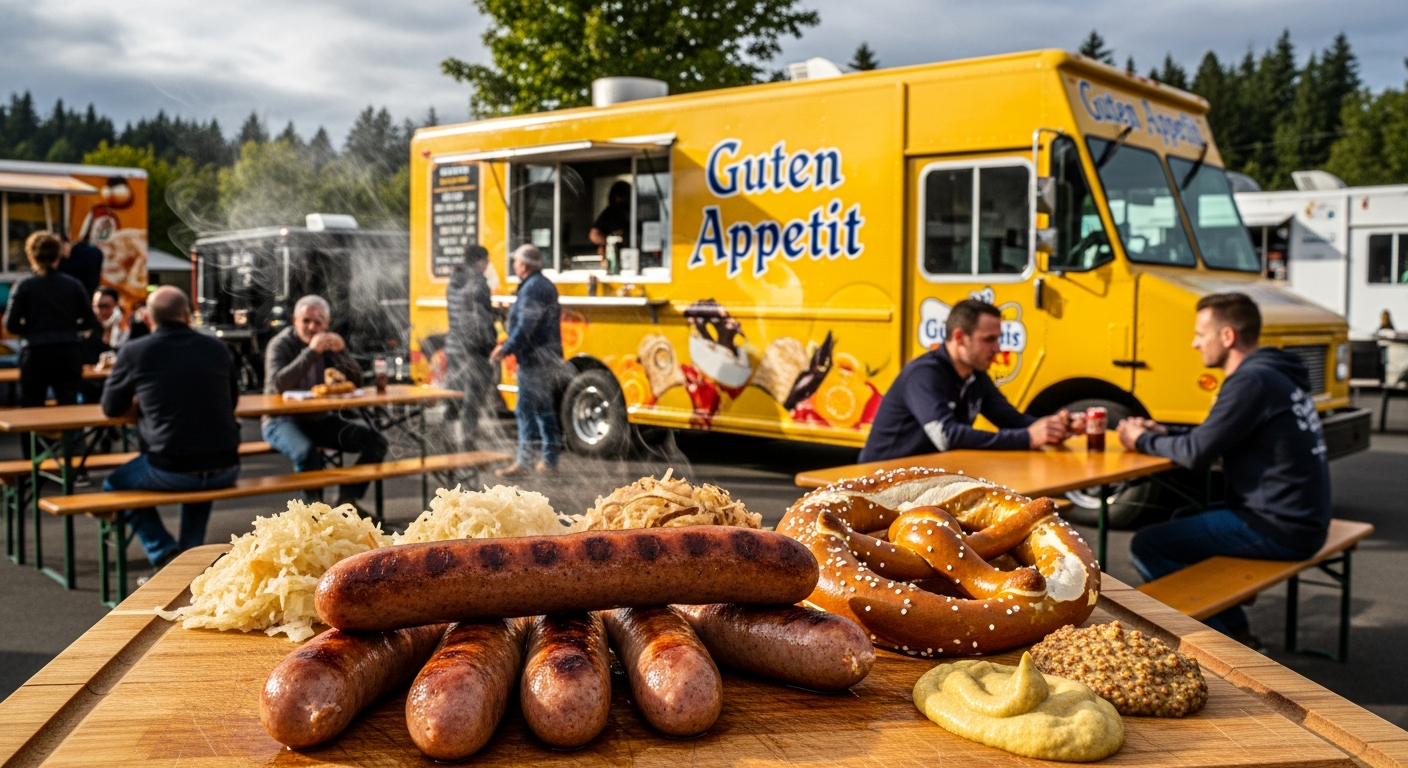
    Das Bratmobile has been feeding Everett the real thing for years, and most of the city still hasn’t found it. A German food truck run by a brother and sister from Rheinland-Pfalz, Germany, Das Bratmobile is the kind of operation that food-obsessed locals discover and immediately tell everyone they know. It’s authentic, it’s handcrafted, and it shows up at the Beverly Food Truck Park with the kind of menu that makes you realize how many years you’ve been settling for inferior sausages.

    If you haven’t been, here’s everything you need to know.

    Who’s Behind the Truck

    Ferdi and Uschi moved to the United States from Pirmasens, a town in Rheinland-Pfalz in western Germany, in the early 1990s. They built Das Bratmobile themselves — not because it was the trendy thing to do, but because buying a pre-built food service trailer was too expensive and building their own was the only realistic path. That’s the origin story of a truck built with genuine stakes, not a lifestyle pivot. When you taste the food, that history makes sense. This isn’t a German-themed food truck. It’s a truck run by Germans cooking the food they grew up eating.

    The Menu: Uli’s Sausages, Schnitzel, and Frikadelle

    Das Bratmobile sources its sausages from Uli’s Famous Sausage, the Seattle institution that has been making old-world European sausages since 1982. If you know Uli’s, you know what that means: these aren’t grocery-store brats. These are serious sausages made with care from a supplier that takes the craft seriously. The lineup includes smoked, jalapeño cheddar, currywurst, and polish — mild to spicy, with something for every heat tolerance.

    The Jaegerschnitzel is a bestseller — a German classic done right: breaded and fried pork cutlet with mushroom gravy. When it’s made well, schnitzel is one of the most satisfying foods in existence. Ferdi and Uschi make it well.

    Then there’s the Frikadelle — a homemade German burger. Not an American burger with a German twist. A proper German pan-fried meatball patty, seasoned the way it should be, served with German-style potato salad. If you’ve only ever had American versions of this concept, the real thing will recalibrate your expectations.

    German-style potato salad rounds out the sides — vinegar-based, not the mayo-loaded American picnic version. It’s the right call alongside sausages.

    Where to Find Das Bratmobile

    Das Bratmobile rotates through several Everett-area spots. Your most reliable bet:

    Beverly Food Truck Park — 6731 Beverly Blvd, Everett. The park runs Monday through Saturday, 4–7 PM with a rotating lineup of 2–4 trucks. Das Bratmobile is one of the regulars here, alongside other standouts we’ve covered. Check StreetFoodFinder before you go to confirm they’re on the schedule that day.

    They’ve also appeared at Scuttlebutt Brewing’s Cedar Street taproom, the Everett Food Truck Festival, and at various events around Snohomish County. Scuttlebutt + Das Bratmobile is one of those pairings that doesn’t need a lot of explaining — a cold craft beer and a proper Uli’s brat is a complete evening.

    What to Order

    First visit: Get the Jaegerschnitzel. It’s the benchmark — if they can do schnitzel right, they can do everything right. Spoiler: they can. Add a brat on the side and get the potato salad. This is a two-hands meal.

    Second visit: Try the Frikadelle. It’s different from what you expect a “burger” to be, and that difference is entirely the point.

    For heat seekers: the jalapeño cheddar brat from Uli’s brings real spice without gimmick. Most vegetarian and vegan customers will find options with the potato salad and some of the sides — but this is fundamentally a meat-forward menu.

    Price Range and Parking

    Food truck pricing — typically $10–$16 per item. Cash and cards accepted. The Beverly Food Truck Park has surface parking on-site, free. When Das Bratmobile is at Scuttlebutt, street parking on Cedar Street or the nearby lots applies.

    Why This Truck Matters

    Everett’s food truck scene has real range: Uzbek street food at Tabassum, Indian chaat at The Food Atlas, Mexican-Cuban fusion at Mexicuban, Central Asian flavors at Beverly Food Truck Park regulars. Das Bratmobile adds German to that list — and it’s not a novelty version of German food. It’s the real thing, from people who know exactly what the real thing tastes like because they grew up eating it.

    We’ve covered food trucks in Everett before, and one pattern holds: the trucks worth returning to are the ones where the operators have a personal stake in the food being right. Das Bratmobile is exactly that. Ferdi and Uschi built this truck with their own hands. The food shows it.

    Frequently Asked Questions

    Where is Das Bratmobile food truck in Everett?

    Das Bratmobile regularly appears at Beverly Food Truck Park (6731 Beverly Blvd, Mon–Sat 4–7 PM), Scuttlebutt Brewing taproom, and various Snohomish County events. Check StreetFoodFinder at streetfoodfinder.com/DasBratmobile for the current schedule.

    What sausages does Das Bratmobile use?

    They source from Uli’s Famous Sausage in Seattle — one of the best European-style sausage makers in the Pacific Northwest. Varieties include smoked, jalapeño cheddar, currywurst, and polish.

    What is Frikadelle?

    Frikadelle is a traditional German pan-fried meatball patty — similar to a burger but seasoned and prepared in the German style. Das Bratmobile makes it homemade.

    Is Das Bratmobile vegetarian-friendly?

    This is primarily a meat-focused menu (sausages, schnitzel, meatball patties). The German potato salad and some sides are vegetarian. Not the best choice for fully plant-based eaters.

    Who owns Das Bratmobile?

    Brother and sister Ferdi and Uschi, who immigrated from Pirmasens, Rheinland-Pfalz, Germany in the early 1990s and built the trailer themselves.

    What’s the best thing to order at Das Bratmobile?

    Start with the Jaegerschnitzel — breaded pork cutlet with mushroom gravy. It’s their benchmark dish and consistently excellent. Add a brat and German potato salad to round out the meal.

  • First Time Shellfish Harvesting at Potlatch? Mason County’s Beginner Guide to Hood Canal Clams and Oysters

    First Time Shellfish Harvesting at Potlatch? Mason County’s Beginner Guide to Hood Canal Clams and Oysters

    Potlatch State Park on Hood Canal is one of the most accessible places in Mason County to harvest shellfish — no boat required, easy parking, and a beach that produces oysters, Manila clams, mussels, cockles, and (with a separate license) geoduck. The spring season runs through May 31, 2026. If you’ve been meaning to try it, you have roughly five weeks left — and this is what you need to know before you go.

    Where Is Potlatch and How Do You Get There?

    Potlatch State Park is on U.S. Highway 101 approximately 12 miles north of Shelton, just past Hoodsport on the western shore of Hood Canal. From Shelton, take Highway 101 north through Hoodsport — the park entrance appears on the left (water side) after you pass through town. From Belfair or Allyn, take Highway 3 to 101 and head south toward Hoodsport.

    Important parking note: shoulder parking along Highway 101 mileposts 335.07 to 335.72 is actively enforced. Use the designated parking areas at the state park and the adjacent Potlatch DNR beach access, not the highway shoulder. Rangers do ticket here, especially on weekend mornings during harvest season.

    What License Do You Need?

    For clams, oysters, mussels, and cockles: you need a standard Washington fishing license with a shellfish-seaweed catch record. These are available from WDFW’s licensing website, from license dealers (sporting goods stores, some grocery stores), or via the WDFW mobile app. Licenses are valid for the calendar year.

    For geoduck specifically: geoduck require a separate license in addition to the standard shellfish license. Geoduck limits and regulations can also change by area year to year — in 2026, the Hood Canal daily geoduck limit dropped to 1 per person per day (down from 3). If geoduck isn’t your primary goal on a first trip, skip the separate license for now and focus on clams and oysters.

    What You’ll Find on the Beach

    Potlatch has over a mile of tidelands. The stretch closest to the highway is regularly harvested and is where you’ll find the highest concentrations of Manila clams in the middle and upper intertidal zones, with the greatest abundance on the large tide flat at the southern end. Oysters tend to cluster in the lower intertidal area — closer to the water line and accessible mainly on big minus tides.

    For a first trip with family, Manila clams are the most beginner-friendly target. They’re small (1–2 inches), buried just 2–4 inches in the sand and gravel, and found in densities that make digging feel productive quickly. A small garden trowel or clam gun works well. Check current limits before you go — WDFW updates them, and Hood Canal limits can differ from Puget Sound limits even for the same species.

    The 2026 Rule Changes You Must Know

    Two Hood Canal-specific regulations changed for 2026 and apply at Potlatch:

    • Cockle minimum size: 2.5 inches. The minimum legal harvest size for cockles increased from the prior standard to 2.5 inches shell diameter. If you’re not sure what a cockle looks like, they are round, ribbed clams — rounder and more dome-shaped than a Manila or littleneck. Bring a small ruler or measuring gauge.
    • Geoduck daily limit: 1 per person per day. The geoduck limit on Hood Canal dropped to 1 per day (formerly 3). Geoduck are the giant clams — their siphons protrude from the sand and they require real digging. A first-timer is unlikely to encounter geoduck casually, but if you spot one, know the new limit.

    Tribal Boundaries and What They Mean for Harvesters

    The Skokomish Tribal Nation holds treaty rights over tidelands in parts of Hood Canal, including areas adjacent to Potlatch State Park. State-licensed recreational harvesters must remain on state or DNR-managed tidelands — not tribally-held tidelands. At Potlatch, the state park and adjacent DNR beach are the appropriate harvest areas. If you are uncertain about boundaries, harvest near the clearly marked state park beach rather than wandering south toward the tribal boundary areas.

    Always Check for Biotoxin Closures Before You Go

    This is non-negotiable: before any shellfish outing, check the Washington State Department of Health’s Shellfish Safety Map at doh.wa.gov or call WDFW’s shellfish safety hotline. Biotoxin (paralytic shellfish poisoning) closures happen without warning on Hood Canal beaches, including Potlatch. Biotoxins are odorless and tasteless — you cannot detect them in the shellfish. A closure means the shellfish are not safe to eat, period. No exceptions. Check before every trip, even if you were there last weekend.

    If Potlatch Is Crowded — Two Nearby Alternatives

    Weekend afternoons in May can get busy at Potlatch. Two nearby alternatives on the same highway corridor:

    • WDFW Hoodsport Hatchery beach is open for shellfish harvest through July 31, 2026. It’s in Hoodsport on Highway 101 — shorter drive from Shelton, slightly less well-known, and open a full month past Potlatch’s May 31 close.
    • Eagle Creek shellfish area is open for oyster harvest year-round. Smaller and quieter than Potlatch. Good if you want oysters specifically and don’t need to stay in the May-season window.

    Frequently Asked Questions — Potlatch Shellfish for First-Timers

    Do I need a license to harvest shellfish at Potlatch State Park?

    Yes. You need a Washington fishing license with a shellfish-seaweed catch record. Available from WDFW’s website, the WDFW mobile app, or licensed dealers. Geoduck require an additional separate license. Children under 15 are typically exempt from licensing requirements — check WDFW’s current exemption rules for your child’s age.

    When is the Potlatch shellfish season in 2026?

    The clam, mussel, and oyster season at Potlatch State Park runs April 1 through May 31, 2026. After May 31, Potlatch closes for the summer. The WDFW Hoodsport Hatchery beach (also on Hood Canal near Highway 101) remains open through July 31, 2026.

    What is the cockle minimum size at Potlatch in 2026?

    The minimum legal harvest size for cockles on Hood Canal, including Potlatch, is 2.5 inches shell diameter in 2026. This increased from the prior standard. Bring a measuring gauge — it’s a $125+ infraction to keep undersized shellfish.

    Can I park on the highway shoulder at Potlatch?

    No. Highway 101 shoulder parking from mileposts 335.07 to 335.72 is actively enforced at Potlatch. Use designated parking at the state park or DNR beach access. Violations are ticketed, especially on weekend mornings during peak season.

    How do I know if Potlatch is closed for biotoxins?

    Check the Washington State Department of Health’s Shellfish Safety Map at doh.wa.gov or call WDFW’s shellfish safety hotline before every trip. Biotoxin closures can be issued at any time and are not predictable — the shellfish look and smell normal during a closure. Never harvest without confirming the beach is open.

    For the full 2026 Potlatch season guide including alternate beaches and detailed regulation updates, see Hood Canal Shellfish Season Open Through May 31: Potlatch Beach Guide for Mason County Harvesters. For more things to do in Mason County, see Things to Do in Mason County: The Definitive Guide.