Tag: Gemini AI

  • Google Already Has the Everything App. The Question Is Whether They’ll Actually Build It.

    Google Already Has the Everything App. The Question Is Whether They’ll Actually Build It.

    Microsoft gets credit for the “everything app” conversation because of Copilot’s marketing reach. But Google has quietly assembled something more complete, more native, and arguably more dangerous to every other productivity platform on earth — and most people haven’t connected the dots yet.

    Definition: Google’s “Everything Stack” The convergence of Google Workspace, Agentspace, Workspace Studio, NotebookLM, Google Search, Gmail, Calendar, Drive, Maps, Android, and the Gemini model family into a single AI-unified operating environment — where agents connect your data, automate your work, and surface what matters, without switching apps.

    Google Didn’t Need to Acquire Its Way Here

    Microsoft’s path to the everything app runs through acquisitions: LinkedIn ($26.2B), GitHub ($7.5B), Activision ($68.7B), and years of stitching Azure, Teams, and Bing into a coherent story. It’s impressive. It’s also fundamentally a construction project — building a unified platform out of parts that weren’t designed to work together.

    Google already owns the pieces natively. Gmail. Google Calendar. Google Drive. Google Docs, Sheets, and Slides. Google Search. Google Maps. Android. Chrome. YouTube. These aren’t acquisitions bolted onto a platform — they’re the platform. Over three billion people use Google Workspace tools. That install base isn’t a future bet; it’s the present reality.

    The question was never whether Google had the ingredients. The question was whether they’d ever actually bake the cake. In 2026, they finally are.

    What Google Just Shipped: The Pieces Coming Together
    At Google Cloud Next 2026, Google made moves that deserve more attention than they got.

    Workspace Studio launched to all Google Workspace domains on March 19, 2026. It’s the place to create, manage, and share AI agents that automate work across Workspace — no coding required. An end user can describe what they want in plain language (“every Friday, ping me to update my tracker”) and Gemini builds the agent. That’s not a developer feature. That’s a feature for your office manager, your sales coordinator, your operations lead.

    Workspace Intelligence is the connective tissue underneath. It’s a secure, dynamic system that understands the semantic relationships between your Docs, Slides, Gmail threads, active projects, collaborators, and your organization’s institutional knowledge — all in real time. Not indexed. Not cached. Live.

    Google Agentspace (now absorbed into the unified Gemini Enterprise Agent Platform as of Cloud Next 2026) brings together Gemini’s reasoning, Google-quality search, and enterprise data regardless of where it lives. Agents can connect to Google Drive, NotebookLM, and Google Group Chats and become an expert on a specific topic — delivering daily briefings, status updates, and research synthesis without anyone digging through months of documents.

    NotebookLM — Google’s AI research and synthesis tool — is now available as an out-of-the-box agent in Agentspace for enterprise users, with podcast-style audio summaries, enhanced privacy controls, and direct integration into the agent ecosystem. It’s the knowledge layer sitting on top of everything else.

    The AI Control Center, announced in May 2026 in the Admin console, gives IT and enterprise organizations visibility and governance over every agent and AI interaction touching Workspace data. For regulated industries, this is the feature that unlocks the whole stack.

    The Model Reality: Get This Right Before You Strategize
    Any honest conversation about Google’s AI strategy has to be anchored in what the models actually are — because the capabilities are moving fast and the marketing often lags the reality.

    As of mid-2026, Google’s current model family looks like this:

    • Gemini 3.1 Pro — Released February 19, 2026. The most capable model in the family. Scores 77.1% on ARC-AGI-2. Optimized for complex multi-step agentic workflows. This is the model powering the high-stakes enterprise use cases.
    • Gemini 2.5 Pro — The previous flagship, announced at Google I/O 2025. Still widely deployed in Vertex AI for enterprise. Excellent reasoning, very long context window.
    • Gemini 2.5 Flash — The speed/cost-efficiency model. Default model in the Gemini app. Generally available in Google AI Studio and Vertex AI. This is what most Workspace automation runs on day-to-day.
    • Gemini 2.5 Flash-Lite — The lightest, cheapest tier. For high-volume, low-complexity tasks like classification, routing, and summarization at scale.

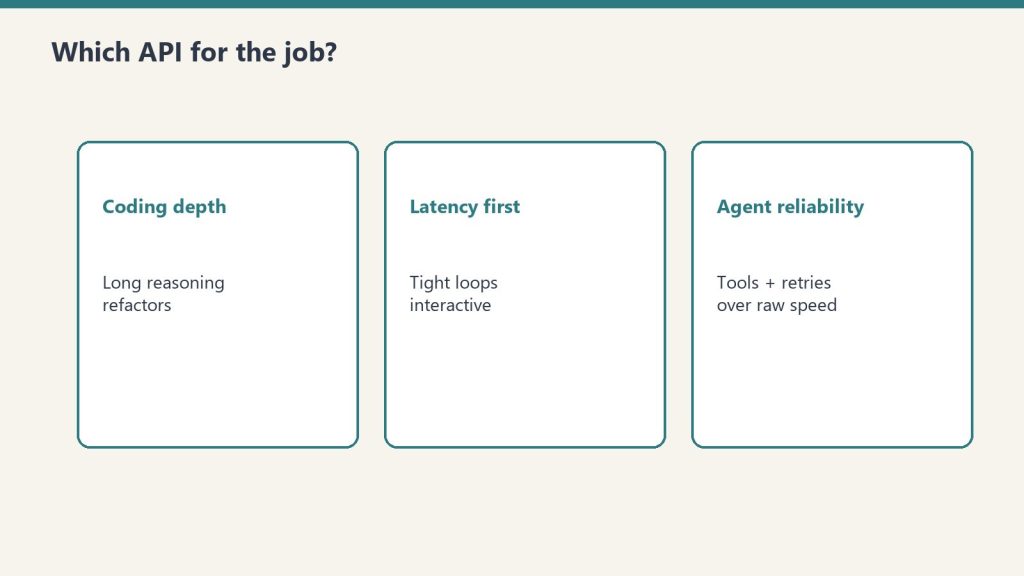
    The architecture matters for strategy: Gemini 3.1 Pro handles reasoning-heavy agent tasks (complex research, multi-step decisions, agentic workflows), while Flash handles the volume work (daily digests, routine automation, quick lookups). The tiered model family is what makes an everything-app architecture economically viable — you don’t run your email summarizer on your most expensive model.

    What Google’s Everything Page Actually Looks Like Today

    Here’s what’s possible right now — not as a concept, but as actual configured Workspace behavior:

    • Your Gmail digest — Gemini in Gmail surfaces key threads, drafts replies, and flags action items before you open your inbox
    • Your Calendar intelligence — Meeting briefs pulled from your Drive documents, recent email threads with attendees, and relevant Docs — surfaced automatically before each event
    • Your Drive knowledge — NotebookLM agents synthesizing your team’s documents, project histories, and institutional knowledge into on-demand briefings
    • Your automation outputs — Workspace Studio agents running on schedule, pinging updates, moving data between Sheets and Docs, reporting on triggers
    • Your search layer — Google Search and Workspace Intelligence working together to answer business questions against both your internal data and the public web
    • Your news and signals — Gemini Enterprise surfacing industry news, competitor moves, and relevant content as part of a unified daily briefing

    The difference between this and the Microsoft vision is subtle but important: Google’s version requires almost no new infrastructure for most organizations. If you’re already on Google Workspace — and three billion people are — the agent layer sits on top of what you already use. The friction is configuration, not adoption.

    The Tension: Google’s Biggest Competitor Is Google’s Own Fragmentation
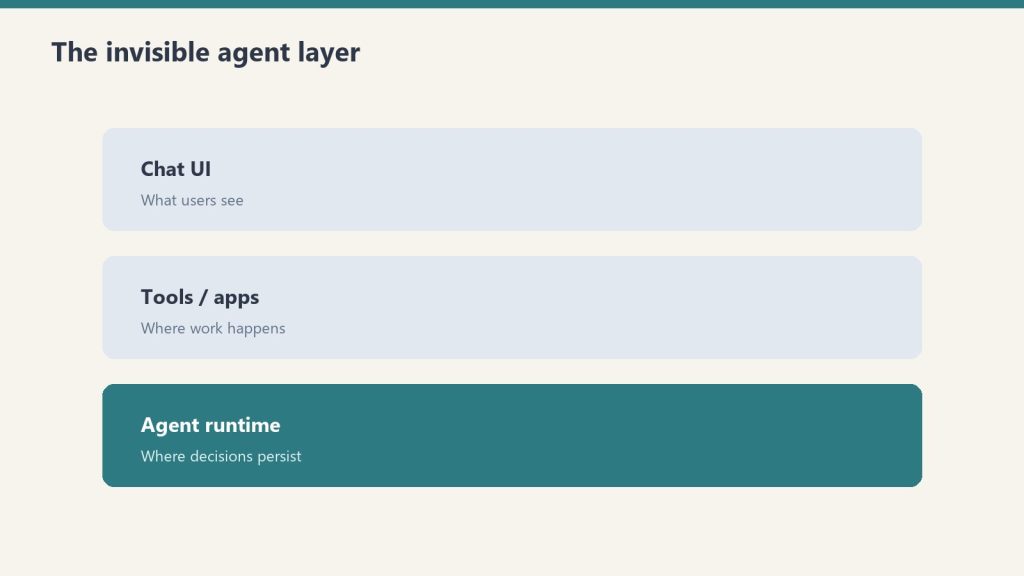
    Here’s where the opinion part comes in, because the facts alone don’t tell the whole story.

    Google has a well-documented history of building extraordinary tools and then failing to unify them. Google+. Google Wave. Google Inbox. Allo. Hangouts. The graveyard of Google products that almost became the everything app is long and sobering. The pattern is consistent: build something brilliant, run it in parallel with five other things, confuse the market, and eventually kill it.

    The 2026 rebranding — consolidating Vertex AI and Agentspace into the Gemini Enterprise Agent Platform — is either the sign that Google has finally learned its lesson about fragmentation, or it’s another reorganization that will look different again in 18 months. The cynical read is that Google Cloud Next announcements have promised unification before.

    The optimistic read — and I lean toward this one — is that the Gemini model family gives Google something it never had before: a single coherent AI backbone that every product can be rebuilt around. When your search, your email, your documents, your agents, and your developer platform all run on the same model family with the same context and the same API surface, unification becomes an engineering problem rather than a product vision problem. Engineering problems get solved.

    The A2A Protocol: The Move Nobody Talked About Enough

    One of the quieter announcements at Cloud Next 2026 was the Agent-to-Agent (A2A) protocol — Google’s open standard for allowing AI agents to communicate with each other across platforms and vendors. This is strategically significant in a way that’s easy to miss.

    If A2A gains adoption, the everything page doesn’t have to be Google’s proprietary walled garden. Your Workspace agents could communicate with agents from other platforms — your CRM, your project management tool, your industry-specific software. Google becomes the orchestration layer rather than the only layer. That’s a smarter long-term play than trying to own everything, and it sidesteps the antitrust concern that the Microsoft everything-app vision runs into head-on.

    What This Means for SMBs and Content Creators Right Now

    If you’re a small business running on Google Workspace — and most are — the everything-app infrastructure is closer than you think, and cheaper than you assume.

    Workspace Studio is included in Business Standard and above. Gemini in Gmail and Docs is rolling out across plans. NotebookLM Business is available as an add-on. The agent layer is not a future enterprise-only feature — it’s arriving in the same tools you’re already paying for.

    The businesses that will win the next three years are the ones that start treating their Google Workspace as an agent platform right now — connecting their data, building their automations, and training their teams to work alongside AI rather than around it.

    The everything page isn’t a product launch you wait for. It’s a configuration decision you make today.

    Google vs. Microsoft: Who Wins the Everything App Race?

    Honest answer: it’s not a race with one winner. The enterprise world will bifurcate along existing tool allegiances. Microsoft 365 shops will get their everything page through Copilot and Agent 365. Google Workspace shops will get theirs through Gemini Enterprise and Workspace Studio. The cold-start problem — who do you trust with all your connected data — will be solved by whoever already has your accounts.

    What’s different about Google’s position is the consumer crossover. Microsoft dominates enterprise desktops but has marginal consumer presence. Google lives on both sides — the same Gemini that runs your enterprise agent also runs in your personal Gmail, your Android phone, your Google search bar. The everything page, for Google users, won’t feel like a new product. It’ll feel like the thing you already use, finally doing what you always wished it would.

    That’s a powerful distribution advantage. And it’s one Microsoft, for all its enterprise strength, can’t easily replicate.

    Frequently Asked Questions

    What is Google Workspace Studio?

    Google Workspace Studio is Google’s no-code AI agent builder, launched to all Workspace domains on March 19, 2026. It lets any user create, manage, and share AI agents that automate work across Gmail, Docs, Sheets, Drive, and other Workspace apps — without writing code. Users describe what they want in plain language and Gemini builds the agent.

    What is Google Agentspace?

    Google Agentspace (now unified into the Gemini Enterprise Agent Platform as of Cloud Next 2026) is Google’s enterprise AI agent environment. It combines Gemini’s reasoning, Google-quality search, and enterprise data across Drive, NotebookLM, and Group Chats to give employees AI agents that understand their organization’s specific knowledge.

    What is the latest Google Gemini model in 2026?

    As of mid-2026, Gemini 3.1 Pro (released February 19, 2026) is Google’s most capable model, scoring 77.1% on ARC-AGI-2 and optimized for complex agentic workflows. Gemini 2.5 Flash is the default model for most consumer and business Workspace use cases, balancing speed and cost efficiency.

    What is Google’s A2A protocol?

    Agent-to-Agent (A2A) is Google’s open standard for AI agents to communicate across platforms and vendors, announced at Cloud Next 2026. It allows Workspace agents to interoperate with agents from other tools and platforms, positioning Google as an orchestration layer rather than a closed ecosystem.

    Do small businesses have access to Google’s AI agent features?

    Yes. Workspace Studio and Gemini features are included in Business Standard and higher tiers. NotebookLM Business is available as an add-on. Most of the agent infrastructure is arriving in existing Workspace plans, not as separate enterprise-only products.
  • Notion AI vs Gemini for Workspaces: The Document AI Showdown

    Notion AI vs Gemini for Workspaces: The Document AI Showdown

    Notion AI vs Gemini for Workspaces: The Document AI Showdown

    The 60-second version

    Most “Notion AI vs Gemini” comparisons miss the actual decision: which platform does your work live in? If you’re a Notion-first team, Notion AI is the integrated answer. If you’re a Google Workspace team, Gemini integrates more deeply into Docs, Sheets, Slides, and Gmail than any third-party AI will. Trying to use both heavily creates context-splitting problems. Pick the platform first. The AI follows.

    When Notion AI wins

    • Your work lives in Notion (databases, pages, agents)
    • You use Custom Agents on schedules
    • Cross-source synthesis across Notion + connected sources matters
    • Database manipulation and Autofill is core to your workflow
    • Multi-app integration via MCP and Workers

    When Gemini for Workspace wins

    • Your work lives in Google Docs, Sheets, Slides
    • Real-time multi-user document collaboration is dominant
    • Email and calendar are the primary surfaces (Gemini’s Gmail integration is strong)
    • Sheets-heavy analysis benefits from Gemini’s native data understanding
    • You’re already paying for Google Workspace

    The stacking question

    Some teams run both. Three patterns that work:
    1. Notion as second brain, Google as collaboration layer. Notion holds structured knowledge; Google holds in-flight collaborative docs.
    2. Notion as agent layer, Google as document factory. Notion runs the agents and synthesis; Google produces the actual docs that get sent.
    3. Drive integration as the bridge. Notion AI reads Google Drive content via integration so the agent can synthesize across both surfaces.

    What Gemini does that Notion AI doesn’t

    • Real-time multi-user editing with AI assistance
    • Sheets-native analysis and chart generation
    • Deep Gmail integration
    • Slides-native design and image generation

    What Notion AI does that Gemini doesn’t

    • Scheduled autonomous agents (Custom Agents)
    • Database property Autofill at the workspace level
    • Workers for code execution
    • The Notion-style structured knowledge graph
    • MCP-based tool integration

    Where comparisons go wrong

    1. Treating raw model quality as the deciding factor. Both use strong models. Integration depth matters more.
    2. Underestimating switching costs. Moving an org for AI reasons is rarely worth it.
    3. Trying to use both heavily. Context splits. Synthesis suffers.

    What to read next

    Notion AI vs ChatGPT, Notion AI vs Microsoft Copilot, Editorial Surface Area, Google Drive Integration.

  • Auto Model Selection in Notion 3.2: Letting Notion Pick Claude, GPT, or Gemini For You

    Auto Model Selection in Notion 3.2: Letting Notion Pick Claude, GPT, or Gemini For You

    Auto Model Selection in Notion 3.2: Letting Notion Pick Claude, GPT, or Gemini For You

    The 60-second version

    You don’t have to pick the model anymore. Notion 3.2 added auto-selection, which routes each request to the best-fit model from the available pool — currently including Claude Opus 4.7, GPT-5.2, and Gemini 3. Simple tasks (rewrites, summaries, quick drafts) go to faster models. Complex tasks (multi-step reasoning, long-context analysis, tool-heavy agent runs) go to more capable ones. You can override the selection per request, but the default behavior is “let Notion pick” — and for most workflows, that’s the right call.

    Why auto-selection matters

    Three reasons it’s a meaningful shift:
    1. You stop being a model-picker. Before auto-selection, getting good output required knowing which model handled which task best. That’s expert knowledge most users don’t have. Auto-selection internalizes that knowledge.
    2. Cost-performance balance happens automatically. Faster models are cheaper to run; capable models are more expensive. Notion’s auto-selection routes simple work to cheap models and reserves expensive models for tasks that need them. After May 4, when credits start metering Custom Agent work, this matters financially.
    3. Model diversity becomes a feature, not friction. Different models have different strengths. Claude is consistently strong on long-form writing and tool use. GPT is strong on broad reasoning. Gemini is strong on multimodal and certain analytical tasks. Auto-selection uses the right tool without forcing you to know which is which.

    When to override the auto-selection

    Three cases where manual model choice still wins:
    1. You’ve measured a specific preference. If you’ve tested the same task across all three models and found one consistently better for your use case, lock to that one. Auto-selection optimizes for the average user; you may not be the average user.
    2. You’re working in a domain with a clear model strength. Long-form editorial work where Claude’s prose quality is meaningfully better. Code work where GPT’s tool use feels more natural. Visual analysis where Gemini’s multimodal handles your case better.
    3. Reproducibility matters. Auto-selection means today’s request might use Claude and tomorrow’s might use GPT. If you need consistent voice or behavior across runs, lock the model.
    For everything else, auto-selection is fine. Stop optimizing the optimizer.

    What auto-selection isn’t

    It isn’t infinite model access. The pool is curated by Notion. You don’t get every model on the market. You get the ones Notion has integrated and validated for the platform.
    It also isn’t a replacement for model expertise if you’re a developer building on the API. When you build with Workers or skills via the API, you may want explicit model selection because reproducibility matters more there than in interactive use.

    How to verify auto-selection is working

    A 5-minute test:
    1. Open a page with substantive content (a project doc, an article, a meeting transcript)
    2. Run three different prompts: a quick rewrite, a complex synthesis, and a multi-step extraction
    3. Look at the output quality for each
    4. If all three feel right for the task, auto-selection is doing its job
    5. If any feel off — outputs that are too brief or too verbose, missing the task’s complexity — that’s where to consider manual override

    Why Claude Opus 4.7 in particular matters

    The Claude Opus 4.7 addition is worth noting separately. Anthropic’s latest uses fewer tokens (cheaper to run), makes 3x fewer tool errors (more reliable for agents that call Workers), and handles complex workflows better. For Notion specifically, that means agents that previously hit edge cases when chaining multiple skills or Workers now have a more reliable backbone.
    If you’re heavy into Custom Agents and Workers, Opus 4.7 in the rotation is the quiet upgrade that makes everything more dependable.

    What to read next

    Corpus follow-ups: Mobile AI in Notion (where auto-selection also runs), Custom Agents foundation piece (where model selection has cost implications), and the comparison articles (Notion AI vs ChatGPT, Claude Projects, Gemini for Workspaces).

  • Claude Opus 4.7 vs GPT-5.4 vs Gemini 3.1 Pro: Head-to-Head in April 2026

    Claude Opus 4.7 vs GPT-5.4 vs Gemini 3.1 Pro: Head-to-Head in April 2026

    Last refreshed: May 15, 2026

    Model Accuracy Note — Updated May 2026

    Current flagship: Claude Opus 4.7 (claude-opus-4-7). Current models: Opus 4.7 · Sonnet 4.6 · Haiku 4.5. Claude Opus 4.7 (claude-opus-4-7) is the current flagship as of April 16, 2026. Where this article references Opus 4.6 or earlier models, those references are historical. See current model tracker →. See current model tracker →

    The short verdict

    • Best for agentic coding and long-horizon engineering: Opus 4.7.
    • Best for single-turn function calling and ecosystem breadth: GPT-5.4.
    • Best for multimodal input volume and long-context retrieval: Gemini 3.1 Pro.
    • Cheapest at the frontier: Gemini 3.1 Pro. Most expensive: GPT-5.4.
    • If you can only pick one for general knowledge work in April 2026: Opus 4.7.

    The full reasoning is below. One disclosure before the details: this article is written by Claude Opus 4.7. I am one of the models being compared. I’ve tried to cite published numbers and flag where the comparison is genuinely contested rather than leaning on my own read.


    Pricing as of April 16, 2026

    Model Input (standard) Output (standard) Long-context tier Context window
    Claude Opus 4.7 $5 / M tokens $25 / M tokens Same across window 1M tokens
    GPT-5.4 $5.00 / M tokens $15 / M tokens $5 / $22.50 over 272K 1M tokens (272K before surcharge)
    Gemini 3.1 Pro $2 / M tokens $12 / M tokens $4 / $18 over 200K 1M tokens (some listings cite 2M)

    Takeaways:
    – Gemini 3.1 Pro is the cheapest per token at the frontier — 7.5× cheaper on input than Opus 4.7 and 2× cheaper than GPT-5.4 at standard context.
    – GPT-5.4 sits in the middle on price and has a significant long-context surcharge cliff at 272K.
    – Opus 4.7 is the most expensive per token, with no long-context surcharge.
    – All three now have 1M-class context windows, but Opus 4.7’s pricing stays flat across the whole window while Gemini and GPT-5.4 both tier up past thresholds.

    Tokenizer caveat: Opus 4.7 uses a new tokenizer that produces up to 1.35× more tokens per input than Opus 4.6 did, depending on content type. Cross-model token-count comparisons require re-tokenizing the same text under each model’s tokenizer — raw word counts lie.


    Benchmarks, with the caveats included

    Anthropic, OpenAI, and Google all publish benchmark numbers. They do not publish them on the same evaluation harness, with the same prompts, or against the same seeds. Treat the following as directional, not definitive.

    Agentic coding (long-horizon, multi-file):
    – Opus 4.7 leads on Anthropic’s reported industry and internal agentic coding benchmarks.
    – GPT-5.4 is competitive on single-turn function calling and tool use. Roughly 80% on SWE-bench Verified at launch.
    – Gemini 3.1 Pro scored 80.6% on SWE-bench Verified at launch — essentially tied with GPT-5.4.

    Multidisciplinary reasoning (GPQA Diamond and similar):
    – Opus 4.7 leads on Anthropic’s comparisons.
    – GPT-5.4 and Gemini 3.1 Pro are close. Gemini reports 94.3% on GPQA Diamond.

    Scaled tool use and agentic computer use:
    – Opus 4.7 leads on Anthropic’s reported benchmarks.
    – GPT-5.4 has a native Computer Use API that scores 75% on OSWorld — the leading published figure at release.
    – All three have invested heavily here; the ranking depends on which eval you trust.

    Vision (document understanding, dense-screenshot extraction):
    – Opus 4.7’s jump from 1.15 MP to 3.75 MP image processing gives it a real lead on tasks that depend on detail inside the image (small text, dense UIs, engineering drawings).
    – Gemini 3.1 Pro is strong on native multimodal workflows with video and mixed media.
    – GPT-5.4 is solid but not leading on either axis.

    Long-context retrieval:
    – All three now have 1M-class context windows.
    – Gemini 3.1 Pro’s pricing tier structure makes it the cost-effective choice for bulk long-context work if your workflow frequently exceeds 200K tokens.
    – Opus 4.7 has flat pricing across its 1M window, which matters for unpredictable context shapes.
    – GPT-5.4’s 272K cliff means long-context workloads are meaningfully more expensive on OpenAI than on Anthropic or Google.

    Specialized coding benchmarks:
    – GPT-5.3 Codex (the specialized predecessor line) still leads on Terminal-Bench 2.0 and SWE-Bench Pro on some scores. GPT-5.4 has absorbed much of Codex’s capability but still trails slightly on pure coding niches.
    – Gemini 3.1 Pro has notable strength on creative coding and SVG generation.
    – Opus 4.7 is strongest on agentic and multi-file coding specifically.

    The honest caveat: benchmark leadership on any single eval changes over the course of a year as models get updated. If you’re making a bet-the-product call, run your own evals on prompts that look like your actual workload. The published benchmarks are a screening tool, not a decision tool.


    How they differ in behavior, not just benchmarks

    Opus 4.7 — the engineering-minded generalist.
    Tends toward thoroughness over speed. More likely than GPT-5.4 to push back on an ambiguous spec and ask a clarifying question; more likely than Gemini to surface tradeoffs rather than pick one and commit. Strong at long-horizon tasks where state matters. Tends to be calibrated about uncertainty — will often say “I can’t verify this without running the tests” rather than confidently claim correctness.

    GPT-5.4 — the product-native operator.
    Tends toward action over deliberation. Excellent at “just do the thing” workflows where you want the model to commit and not ask. Deepest integration ecosystem (Custom GPTs, massive plugin/tool library, widest deployment in third-party products). Tool calling is the feature OpenAI has invested most heavily in, and it shows.

    Gemini 3.1 Pro — the multimodal long-context specialist.
    Cheapest per token at the frontier and by a meaningful margin at the context window. Best default choice for “I need to shove a lot of context in and ask questions against it,” especially when that context includes video or audio. Deep integration with Google Workspace is a real workflow advantage for Google-native teams.

    None of these are absolute; all three models handle general tasks well. These are behavioral tendencies, not capability ceilings.


    “Choose X if” decision framework

    Choose Claude Opus 4.7 if:
    – Your primary workload is coding, especially agentic or multi-file coding.
    – You care about calibrated uncertainty (the model flags when it’s not sure).
    – You’re using or planning to use Claude Code for engineering work.
    – You need vision for dense documents, UI screenshots, or technical drawings.
    – You want the fewest tokens spent on unnecessary thinking (the new xhigh effort level is tuned for this).

    Choose GPT-5.4 if:
    – Single-turn tool use and function calling are the hot path in your product.
    – You need the broadest ecosystem of third-party integrations right now.
    – Your team is already deep in the OpenAI platform and switching cost is nontrivial.
    – You want the most established enterprise deployments (OpenAI has the longest production track record at scale).

    Choose Gemini 3.1 Pro if:
    – You’re price-sensitive and running high-volume workloads.
    – You need 1M+ token context as the default, not as an add-on.
    – Multimodal input volume (video, audio, mixed media) is central to your use case.
    – Your team is deep in Google Cloud or Workspace.

    Use multiple if:
    – You’re doing serious AI product work. Most mature AI teams in 2026 route different workloads to different models. A common pattern: Opus 4.7 for code generation and agent orchestration, Gemini 3.1 Pro for long-context retrieval and cheap bulk processing, GPT-5.4 for single-turn tool-heavy interactions.


    Where this comparison will change

    The frontier is moving. Three things to watch over the next six months:

    1. Claude Mythos Preview. Anthropic publicly acknowledged that Mythos outperforms Opus 4.7 on most of the benchmarks in the 4.7 release post. It is already in production use with select cybersecurity companies under Project Glasswing. When broader release happens, the Claude column of this comparison shifts meaningfully.

    2. GPT-5.5 / GPT-6. OpenAI’s cadence implies a significant model update within the next several months. The pattern over the past year has been incremental 5.x releases; a ground-up generation shift would reset the comparison.

    3. Gemini 3.5 / 4. Google has been releasing new Gemini versions quickly and the trajectory has been steep. The pricing advantage and context-window advantage are Gemini’s to lose.

    None of these are speculation-free predictions. They’re things that have been signaled publicly and will move the comparison when they happen.


    Frequently asked questions

    Is Claude Opus 4.7 better than GPT-5.4?
    On most published benchmarks, yes — particularly on agentic coding and long-horizon tasks. GPT-5.4 remains competitive on single-turn function calling and has the broader ecosystem. “Better” depends on the workload.

    Is Gemini 3.1 Pro cheaper than Opus 4.7?
    Significantly. At $2/$12 per million input/output tokens vs. Opus 4.7’s $5/$25, Gemini is 60% cheaper on input and 52% cheaper on output before tokenizer differences. At scale this is a material cost gap.

    Which model has the biggest context window?
    All three now have 1M-class context windows. Some Gemini 3.1 Pro documentation cites a 2M window. GPT-5.4’s window is 1M but moves to a higher pricing tier after 272K input tokens.

    Which model is best for coding?
    Opus 4.7 leads on agentic and long-horizon coding benchmarks. GPT-5.4 is close on single-turn coding. Gemini 3.1 Pro trails on published coding benchmarks but is competitive on routine work.

    Which model should I use for my startup?
    Most mature teams route workloads to multiple models. If you’re just starting and need to pick one, Opus 4.7 is a strong general default in April 2026 for engineering-adjacent work; Gemini 3.1 Pro if cost or context window dominates your decision; GPT-5.4 if you’re already on the OpenAI platform and the switching cost is high.

    Does Claude Opus 4.7 support function calling?
    Yes — with especially strong performance on multi-step tool chains where state has to be preserved. For single-turn tool calling, GPT-5.4 is competitive or leading depending on the benchmark.


    Related reading

    • Full Opus 4.7 feature set: Claude Opus 4.7 — Everything New
    • Opus 4.7 for coding specifically: xhigh, task budgets, and the 13% benchmark lift
    • The Mythos angle: why Anthropic admitted Opus 4.7 is weaker than an unreleased model

    Published April 16, 2026. Article written by Claude Opus 4.7 — yes, one of the models being compared. Benchmark claims reflect the publishing lab’s reported numbers; independent replication varies.