Tag: Everett

  • The June 30 Sound Transit Vote and Everett’s Light Rail Future: A Complete 2026 Guide to What’s at Stake

    The June 30 Sound Transit Vote and Everett’s Light Rail Future: A Complete 2026 Guide to What’s at Stake

    Quick answer: Sound Transit’s board must vote by June 30, 2026 on a revised ST3 System Plan that will determine whether Everett gets full light rail to downtown Everett Station or a truncated line ending at SW Everett Industrial Center near Paine Field. Mayor Cassie Franklin sent a formal advocacy letter April 23. The public survey closes May 1, 2026.

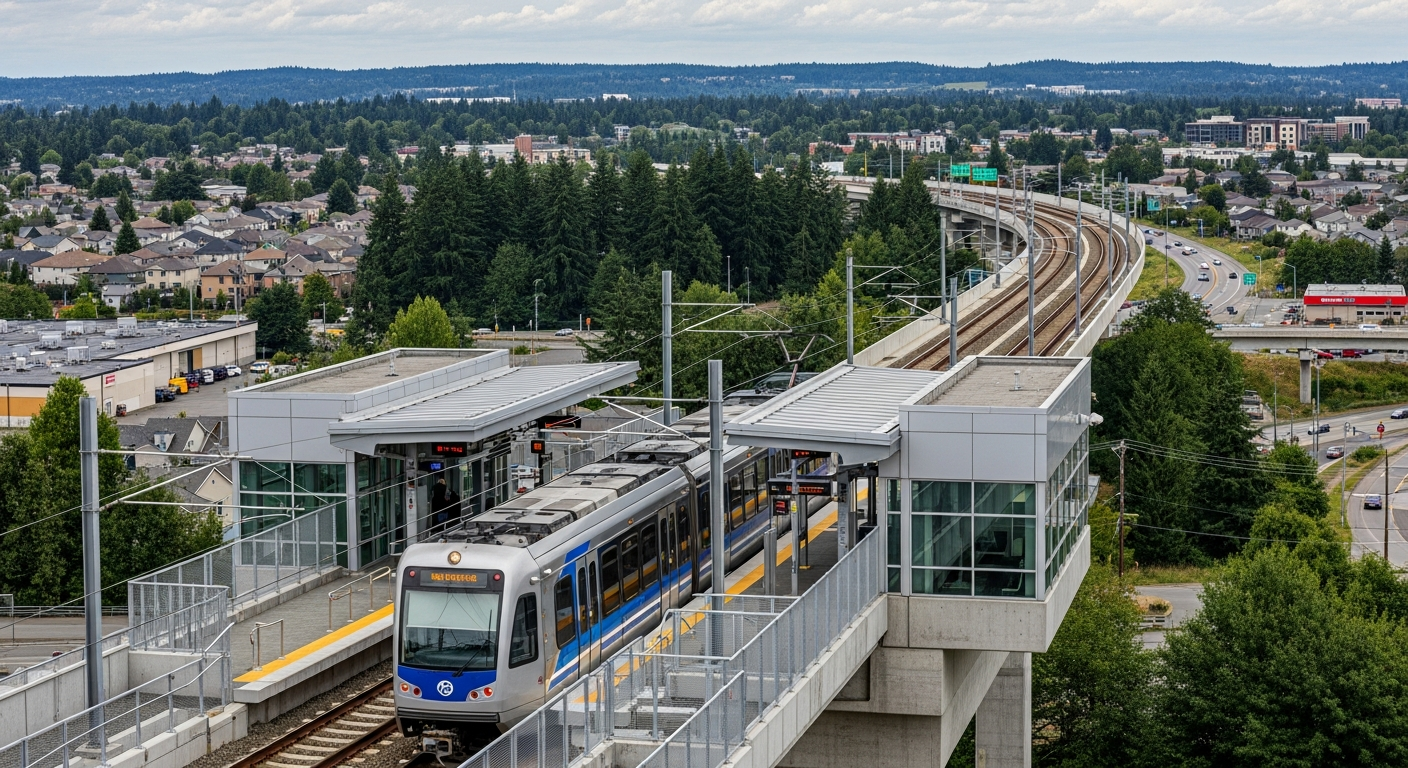
    Ten years after voters approved Sound Transit 3, the promise of light rail from Lynnwood to Everett is approaching its most consequential decision point yet. By June 30, 2026, Sound Transit’s 18-member board must adopt a revised ST3 System Plan — and the outcome will determine whether downtown Everett gets the light rail connection voters were promised, a truncated connection ending miles short near Paine Field, or something in between.

    Why the Vote Is Happening

    When ST3 passed in November 2016, it committed to a regional light rail spine connecting Tacoma, Seattle, and Everett. The Everett Link Extension — the planned 16-mile segment from Lynnwood City Center north to downtown Everett Station — was one of the program’s anchor commitments.

    Since then, construction cost escalation, inflation, and rising labor costs have opened a projected $34.5 billion gap between what ST3 promised and what current funding can deliver. Roughly $30 billion of that gap is driven by cost growth in east-west extensions to West Seattle and Ballard — but the shortfall affects all projects, including the Everett extension, whose estimated cost now runs $6.8 billion to $7.7 billion for the full 16-mile build.

    State law requires the board to adopt a revised System Plan by June 30, 2026. That deadline is now less than 60 days away.

    The Three Approaches on the Table

    Approaches 1 and 2 fund full construction of the north-south spine, completing light rail all the way to downtown Everett Station. They achieve this by deferring or truncating east-west extensions — primarily West Seattle and South Kirkland–Issaquah. Everett gets a complete connection under both approaches, though opening timelines may shift from the original 2037–2041 window.

    Approach 3 phases all extensions. Rail would reach the SW Everett Industrial Center station — the stop serving the Paine Field/Boeing corridor — but would stop short of downtown Everett Station. The truncation is estimated to save $1.8 billion to $2.5 billion on the Everett segment. Downtown Everett, Everett Station, and the neighborhoods between SW Everett and the city’s core would not be connected in this phase.

    Sound Transit’s capital delivery team has also identified design changes — specifically at-grade or surface-level routing at Ash Way, West Alderwood, and the SR 526/Evergreen Way stations — that could reduce the full Everett extension cost to approximately $6.4 billion to $7.3 billion while preserving the downtown connection.

    Mayor Franklin’s April 23 Letter

    On April 23, 2026, Everett Mayor Cassie Franklin sent a formal letter to the Sound Transit board making the case for keeping the full Everett spine in the revised plan. “We are ready to support a strong, regional transportation system that works in lockstep with Sound Transit’s network,” Franklin wrote.

    The letter connected light rail advocacy to the ongoing Everett Transit and Community Transit consolidation: a merged feeder network feeding into a completed spine would drive significantly higher ridership and improve Sound Transit’s financial projections. Snohomish County Executive Dave Somers has joined the advocacy. Both have framed the Everett extension as foundational to decades of regional planning made in good faith.

    What “Finish the Spine” Actually Means for Everett

    Light rail drives development decisions. Businesses, housing developers, and employers make long-term location choices based on transit access. Without a firm commitment to complete the Everett extension to downtown, those decisions shift.

    The city’s ongoing study of annexing the Mariner neighborhood — which sits near a planned light rail station — depends partly on the assumption that the station will be built. A truncation at SW Everett would undercut the transit-oriented development assumptions baked into that study. Everett also faces a projected $14 million 2027 budget gap; regional infrastructure that catalyzes economic activity is part of the long-term revenue picture.

    See also: What Everett’s Mariner Annexation Study means for residents.

    The May 1 Survey Deadline — Today

    Sound Transit is accepting public input through a survey closing May 1, 2026 — the same day this article publishes. Residents, commuters, and businesses can submit preferences at soundtransit.org/system-expansion. This is the primary formal mechanism for Everett community input before the board vote.

    The Everett Transit Merger Connection

    Separately, Everett Transit is merging into Community Transit — a change Mayor Franklin explicitly cited in her Sound Transit letter. A consolidated feeder network serving the completed Link spine is more efficient and more ridership-productive than a fragmented system. The complete guide to the Everett Transit merger explains what changes for local riders.

    What Comes After June 30

    The June 30 vote adopts the revised ST3 System Plan — a policy document setting priorities, timelines, and funding frameworks. It does not immediately change construction schedules. If Approaches 1 or 2 pass with full Everett spine funding, next steps involve finalizing station designs and entering environmental review. If Approach 3 passes with the SW Everett truncation, Everett leaders have made clear they would continue advocating for completion in a future phase.

    Frequently Asked Questions

    What is the June 30, 2026 Sound Transit vote?

    By June 30, 2026, Sound Transit’s 18-member board must adopt a revised ST3 System Plan resolving a projected $34.5 billion funding gap. The vote will determine which projects get built, in what order, and on what timeline — including whether the Everett Link Extension goes all the way to downtown Everett Station or stops at SW Everett Industrial Center near Paine Field.

    What is the Everett Link Extension?

    A planned 16-mile light rail segment from Lynnwood City Center north to downtown Everett Station, approved in the 2016 ST3 ballot measure. The extension would include stations at Ash Way, Mariner, SW Everett Industrial Center (near Paine Field), Airport Road, Evergreen Way, and downtown Everett Station.

    How much does the full Everett extension cost?

    Sound Transit’s 2025 estimate is $6.8 billion to $7.7 billion for the full 16-mile build. With at-grade routing changes at several stations, the capital delivery team estimates costs could fall to $6.4 billion to $7.3 billion while preserving the downtown connection.

    What does Approach 3 mean for Everett?

    Approach 3 truncates rail at SW Everett Industrial Center — serving Paine Field — rather than extending to downtown Everett Station. The savings are estimated at $1.8 billion to $2.5 billion, but downtown Everett and Everett Station would not be connected in this phase.

    When is the public survey deadline?

    May 1, 2026. Submit input at soundtransit.org/system-expansion before the board vote on June 30.

    How does the Mariner annexation connect to this vote?

    The Mariner annexation study — which Everett City Council approved funding for — is partly premised on a planned light rail station serving that neighborhood. If rail is truncated at SW Everett, the transit-oriented development case for annexation weakens.

    What did Mayor Franklin argue in her April 23 letter?

    Franklin argued that completing the spine to downtown Everett Station — not truncating at SW Everett — is essential to regional transit effectiveness, that the Everett/Community Transit merger makes the case stronger by concentrating ridership on the spine, and that decades of development decisions in Everett were made in good faith based on the full spine commitment.

  • Everett’s Light Rail Future Comes to a Head: What the June 30 Sound Transit Vote Means

    Everett’s Light Rail Future Comes to a Head: What the June 30 Sound Transit Vote Means

    What is happening with the Everett Link Extension in 2026? Sound Transit’s board must vote no later than June 30, 2026 on a revised ST3 System Plan — a decision that will determine whether Everett gets light rail, and when. Mayor Cassie Franklin sent the board a formal letter on April 23 making Everett’s case. Here’s what the June vote means for residents.

    What Is the ST3 System Plan Vote?

    Sound Transit’s ST3 ballot measure passed in 2016, promising light rail from Lynnwood to Everett as part of a regional spine connecting Everett, Seattle, and Tacoma. Ten years later, construction cost escalation, inflation, and rising labor costs have opened a projected $34.5 billion gap between what was promised and what current funding can deliver.

    To resolve that gap, Sound Transit’s 18-member board is required to adopt a revised ST3 System Plan no later than June 30, 2026. The revised plan will set new priorities, timelines, and cost targets — and will determine which projects get built on what schedule. For Everett, the stakes are direct: the Everett Link Extension is one of the projects whose cost, timeline, and design details are under active review.

    The April 14 town hall at Everett Station established that costs for the Everett extension had ballooned to a range of $6.6 billion to $7.7 billion — and that one scenario under consideration by the board did not reach Everett at all.

    What Mayor Franklin Told the Board

    In an April 23, 2026 letter to the Sound Transit board, Everett Mayor Cassie Franklin made a formal, multi-pronged case for keeping a fully funded Everett Link Extension in the revised plan.

    “We are ready to support a strong, regional transportation system that works in lockstep with Sound Transit’s network,” Franklin wrote.

    The mayor also connected the light rail advocacy to the ongoing Everett Transit and Community Transit consolidation discussions — arguing that a merged transit network feeding into the Link spine would increase ridership and make the Everett extension more cost-effective for Sound Transit’s projections. “With a consolidated transit network, riders travelling both from and to Everett will benefit from more frequent service and fewer transfers which will make choosing transit more convenient,” Franklin wrote.

    Snohomish County Executive Dave Somers has joined the advocacy effort. Both county and city leaders have argued that cutting back or delaying the Everett extension would undercut decades of regional planning and transit-oriented development decisions made in good faith.

    What “Finish the Spine” Means

    Everett officials have repeatedly invoked the phrase “finish the spine” — a reference to Sound Transit’s original vision of connecting Everett, Seattle, and Tacoma as the backbone of a regional light rail network.

    The concern is practical: without a firm commitment to complete the Everett segment, investment decisions made by the city lose their transit-oriented foundation. Light rail drives specific development patterns. Businesses, housing developers, and employers make location decisions based on transit access. If Everett’s connection to the network is uncertain or delayed beyond 2041, those decisions shift.

    The city’s current push to study annexing the Mariner neighborhood — which sits near a planned light rail station — depends partly on the assumption that the station will be built. The projected $14 million 2027 budget gap makes it even more important that regional infrastructure like light rail provides long-term economic return, not just capital cost.

    What the Cost Options Look Like

    Sound Transit’s capital delivery team has been evaluating design changes that could reduce the Everett Link Extension’s cost significantly without eliminating the Everett connection.

    The key option under evaluation: shifting to surface-level or at-grade routing at several stations — specifically Ash Way, West Alderwood, and the SW Everett Industrial Center. At-grade construction is less expensive than elevated tracks and could bring the Everett extension’s total cost down to a range of $6.4 to $7.3 billion, compared to the higher end of current estimates. Additional design changes are being studied at the SR 526/Evergreen Way interchange.

    The board is weighing three broad approaches to closing the system-wide $34.5 billion gap:

    Cost savings through design changes and value engineering. The at-grade routing proposals are the primary example — building the same basic network with less expensive construction methods where the ridership math supports it.

    Project delays or deferrals. Some ST3 projects could be pushed out in time, freeing up near-term budget. For Everett, even the current schedule already runs to 2037-2041.

    New or enhanced revenue tools. The board could seek additional funding sources — potentially requiring a separate voter approval — to close the gap without cutting projects.

    The June 30 vote sets the direction. A final project list, timeline, and funding plan follows from that framework decision.

    How the Transit Merger Connects to This

    One thread running through Mayor Franklin’s advocacy is the Everett Transit and Community Transit consolidation — ongoing discussions about merging Everett’s municipally owned bus system into the regional Community Transit network.

    The logic: a consolidated transit system would create a larger, more integrated network that funnels riders toward the light rail spine. That increases the ridership projections for the Everett Link Extension — making it a stronger investment case for the Sound Transit board. It also potentially simplifies operations once light rail arrives, reducing the number of agencies a rider has to navigate to get from a Snohomish County suburb to downtown Seattle.

    Franklin’s April 23 letter makes this connection explicit, tying the transit consolidation talks directly to the Sound Transit advocacy effort. The two decisions — who builds and runs Snohomish County’s buses, and whether light rail reaches Everett on schedule — are not separate issues.

    What the 2037-2041 Timeline Actually Means

    A completion window of 2037 to 2041 means Everett residents are looking at a decade or more before light rail service begins. Every year of delay pushes back the development patterns, ridership, and regional connectivity that the extension enables.

    For context: Lynnwood Link, which connects Lynnwood to the Seattle light rail network, opened in 2024. The Everett extension adds the next major segment north. The gap between Lynnwood and Everett — roughly 16 miles — is the remaining piece of the “spine” that Everett advocates are fighting to protect.

    The June 30 board vote will not determine a final construction date. But it will determine whether Everett is in the funded plan at all, and whether the design options that could bring costs down to $6.4-7.3 billion are adopted or rejected.

    Frequently Asked Questions

    What exactly is the June 30 vote? It is a required Sound Transit board decision to adopt a revised ST3 System Plan — a document that sets the new priorities, timelines, and cost targets for the entire ST3 light rail expansion. The board must vote no later than June 30, 2026.

    Will Everett definitely get light rail? The June 30 vote will clarify that. One scenario evaluated by the board would not extend rail to Everett. Mayor Franklin’s April 23 letter and local advocacy are directed at ensuring Everett remains in the funded plan.

    What does “at-grade” routing mean? Instead of elevated tracks (more expensive), at-grade rail runs at street level with dedicated right-of-way. It typically costs less to construct, with trade-offs for speed and grade crossings depending on design.

    What year would Everett get light rail? Current estimates put the window at 2037-2041. Design decisions in the June 30 vote could affect where in that range the final opening falls.

    What does the transit merger have to do with Sound Transit? A merged Everett Transit / Community Transit system would create a larger rider base feeding into the light rail network — strengthening the ridership case for the Everett extension in the Sound Transit board’s analysis.

    What to Do Next

    • Follow Sound Transit board meetings: Meeting schedule, agendas, and public comment sign-up at soundtransit.org/board. The next board sessions before the June 30 deadline are the primary opportunity to weigh in publicly.
    • Track the Everett Link Extension: Project updates at soundtransit.org/system-expansion/everett-link-extension.
    • Submit written comment: Sound Transit accepts written public comments through its website. Comments submitted before the June 30 vote become part of the public record.
    • Contact Mayor Franklin’s office: The mayor sits on the Sound Transit board and represents Everett’s interests directly. Contact via everettwa.gov/citycouncil.
    • Contact Snohomish County: County Executive Somers also represents Snohomish County interests on regional transit matters at snohomishcountywa.gov.
  • Everett City Council Approves $10.6M Stadium Design Package: What the April 29 Vote Actually Authorized

    Everett City Council Approves $10.6M Stadium Design Package: What the April 29 Vote Actually Authorized

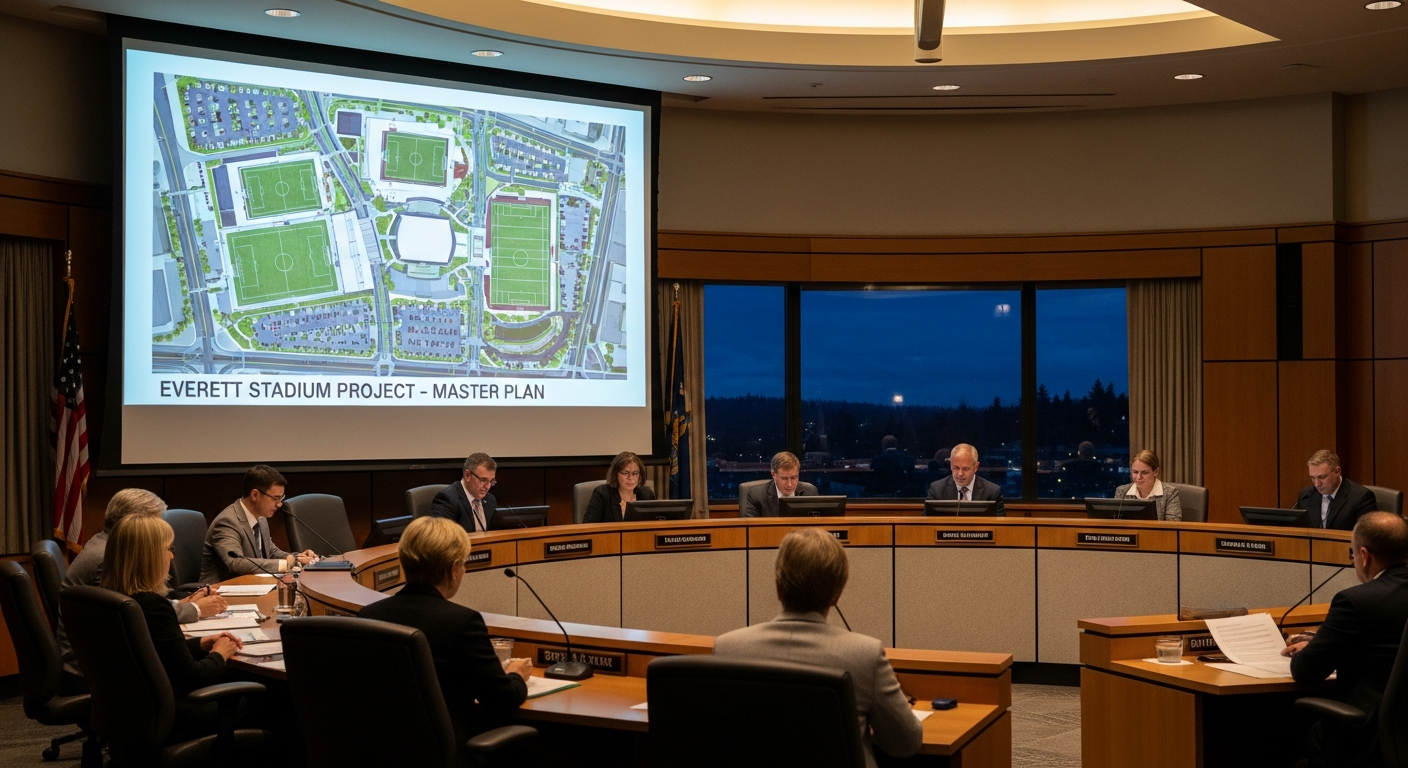
    What did Everett City Council approve on April 29? The council approved a $10.6 million package to complete the design of the Everett Outdoor Event Center — the future home of the AquaSox and two USL soccer teams. The package includes $4.8 million in contract amendments with four design contractors and acceptance of a $7.4 million state Department of Commerce grant.

    What the Council Approved

    Everett’s City Council cleared the next major hurdle in the downtown stadium project on Wednesday, voting to approve $10.6 million in design funding for the Everett Outdoor Event Center — a vote that green-lights the final design phase but stops well short of breaking ground.

    The $10.6 million package had two components, both approved at the April 29 council meeting at 3002 Wetmore Ave.:

    $4.8 million in contract amendments with four design contractors already engaged in the project. These amendments authorize additional design work needed to complete the full design package for the Everett Outdoor Event Center.

    Acceptance of a $7.4 million state grant from the Washington State Department of Commerce directed toward the stadium project.

    Together, the two actions bring an additional $10.6 million into the stadium design budget. The $4.8 million in contractor amendments is funded through an interfund loan from the city’s general fund balance — a mechanism the council previously established and explained in detail before Wednesday’s vote.

    What “Design Funding” Actually Means

    The $10.6 million funds the completion of the design for the Everett Outdoor Event Center. Design work covers architectural drawings, engineering, site planning, environmental review, and the technical documentation required before construction can begin. It does not fund construction itself.

    The total estimated project cost exceeds $120 million. Wednesday’s vote moves the project from preliminary design to completed design — a necessary step before the city can make any further decision about whether and how to build.

    Think of it this way: the city is now paying to finish the blueprints. Whether to build what the blueprints describe is a separate decision that comes later.

    What the Stadium Is Supposed to Be

    The Everett Outdoor Event Center is planned as a multi-use sports and events venue in downtown Everett. It would serve as the home ballpark for the Everett AquaSox, the Seattle Mariners’ Single-A affiliate that has played at Funko Field (formerly Everett Memorial Stadium) since 1984.

    The facility is also designed to host two new Everett teams in the professional United Soccer League (USL), which has been expanding in the Pacific Northwest. Public park amenities are part of the design, positioning the site as a community asset beyond game days.

    Why $10.6 Million More Was Needed

    The original design contract did not include the full scope required to get the project to a build-ready state. As the design process progressed, the scope of work expanded — particularly around the complexity of the downtown site, utility considerations, and the multi-use programming requirements of a venue serving baseball, soccer, and community events.

    The city sought and received the $7.4 million state Commerce grant specifically to offset the expanded design costs. This is not unusual for large public construction projects, where design costs frequently increase as the project becomes more technically defined.

    The project has faced scrutiny over its cost trajectory. The total price tag of $120 million-plus is significantly above earlier estimates, and the city is simultaneously managing a projected $14 million budget gap heading into 2027. The interfund loan structure means the stadium design costs are borrowing from the general fund balance — money that will need to be repaid.

    What Hasn’t Been Decided Yet

    Wednesday’s vote authorizes completing the design. It does not authorize construction, determine how the remaining $110+ million in construction costs will be funded, or commit the city to building the stadium.

    The next major decision point comes when the completed design and a full project budget are presented to the council for a construction vote. That vote — substantially larger in scope — has not been scheduled.

    Mayor Franklin’s administration has argued that completing the design is a prerequisite to any serious conversation about how to fund and structure the full project. Without a completed design, there’s no firm cost basis and no project to bid.

    What AquaSox and USL Have at Stake

    City officials have stated publicly that without a new stadium, the AquaSox’s long-term future in Everett is uncertain. Minor League Baseball has been consolidating franchises and upgrading stadium standards nationally, and aging facilities have been a factor in franchise relocations in other markets.

    For USL, the new stadium would anchor professional soccer in a region that has seen significant growth in the sport. A purpose-built configuration — not a converted baseball park — is part of what makes the site viable for USL play.

    Frequently Asked Questions

    Did the council vote to build the stadium? No. The April 29 vote authorized completing the design. A separate construction vote is required before any building begins.

    Where does the $4.8 million come from? It comes from the city’s general fund balance through an interfund loan — essentially, the city lending itself money from its reserves. The loan is expected to be repaid from future stadium-related revenues or other sources.

    What is the $7.4 million state grant for? The Washington State Department of Commerce grant is directed toward the stadium design project. Accepting it was part of the April 29 vote package.

    How much will the whole stadium cost? Total estimated project costs exceed $120 million. How that will be funded — through public bonds, grants, private contributions, or a combination — has not been finalized.

    When would the stadium open? No construction timeline has been established. That depends on when and how the construction funding is resolved and a construction vote passes.

    What to Do Next

    • Follow the project: Search “Outdoor Event Center” on everettwa.gov for updates as design progresses.
    • Attend council meetings: Regular council meetings are Wednesdays at 12:30 p.m. at 3002 Wetmore Ave. Meetings are streamed on the city’s YouTube channel.
    • Track the budget: The city’s 2026 budget page and future 2027 planning documents will reflect how the interfund loan is managed.
    • View the full agenda: All council meeting agendas are posted in advance at everettwa.gov/agendacenter.
  • Langus Riverfront Park and Spencer Island: Everett’s 3-Mile Paved Trail to a 400-Acre Wildlife Estuary

    Langus Riverfront Park and Spencer Island: Everett’s 3-Mile Paved Trail to a 400-Acre Wildlife Estuary

    Langus Riverfront Park (411 Smith Island Rd, Everett) offers a 3-mile paved trail along the Snohomish River, a fishing pier, a boat launch, and a paved path to Spencer Island — 400 acres of estuary wildlife habitat that’s among the best birdwatching spots in all of Puget Sound. A Discover Pass or Vehicle Access Pass is required for parking. The trail itself is free and open year-round.

    The Trail

    There’s a park on the north end of Everett that most people drive past without knowing it exists. Langus Riverfront Park sits just across the Snohomish River from the city proper, accessible via Smith Island Road, and it delivers more than its modest profile suggests: three miles of flat paved trail, serious water access infrastructure, and a bridge to one of the most ecologically rich wildlife areas in Snohomish County.

    The Langus River Front Trail is a 3.0-mile paved loop — flat (about 32 feet of elevation gain total), wide enough for walkers, joggers, and cyclists to share comfortably, and well-maintained throughout. No map required. You follow the river and come back around.

    For families with strollers, seniors, and anyone who wants a genuine outdoor experience without technical trail navigation, this is one of the most accessible options in Everett’s parks system. It also connects directly to Spencer Island — add roughly 1.7 miles for the southern loop if you’re making a full day of it.

    The River Access

    Langus isn’t just a walking trail. It has real infrastructure for people who want to get on the water:

    • Boat launch — functional for small watercraft and trailer boats
    • Fishing pier — directly on the Snohomish River
    • Rowing dock and shell house — serving rowers and paddlers
    • Three parking lots — at least one requires a Discover Pass or Washington State Vehicle Access Pass

    The river here is the Snohomish River estuary zone, where freshwater from the Cascades meets the tidal influence of Puget Sound. That mixing of freshwater and saltwater ecosystems is a big part of what makes the wildlife at Langus and Spencer Island so good.

    Spencer Island: The Main Event

    Walk or bike to the end of the Langus trail and you’ll reach the bridge to Spencer Island — 400 acres of estuary habitat managed jointly by Snohomish County and the Washington Department of Fish and Wildlife.

    Spencer Island is consistently rated among the best wildlife-watching spots in the Puget Sound region. What you’re likely to see on a typical visit:

    • Waterfowl and shorebirds — the estuary is prime habitat year-round; spring and fall migration add exceptional variety
    • Raptors — bald eagles, osprey, and red-tailed hawks are regular visitors
    • Great Blue Herons — reliably visible along the river edges
    • Deer, coyote, and river otter — mammals are common throughout the island

    The southern loop on Spencer Island is about 1.7 miles. It runs along an elevated dike trail — partially maintained by volunteers — that puts you above the wetland and gives you unobstructed sight lines in every direction. Birders know this spot.

    What’s Coming: The Spencer Island Restoration Project

    The Army Corps of Engineers, the Washington Department of Fish and Wildlife, and Snohomish County are in the final design phase of the Spencer Island Unit Restoration Project, with updates expected in 2026. Projects of this type typically restore tidal flow, remove invasive vegetation, and improve habitat connectivity throughout the estuary.

    When complete, the restoration will benefit both wildlife populations and the visitor experience on Spencer Island. If you’re planning a trip in 2026, check snohomishcountywa.gov for any trail or access changes related to restoration work.

    Getting There

    Address: 411 Smith Island Rd, Everett, WA

    From Seattle/I-5 northbound: Take exit 195 and turn left onto East Marine View Drive. Continue about 1.2 miles to the ramp for Highway 529. Head north, cross the bridge, and turn right onto 28th Place NE. At the next intersection, turn right onto 35th Avenue NE. Continue to the stop sign and turn left onto Ross Avenue. Turn right onto Smith Island Road and follow it into the park.

    Parking: Three lots at the trailhead. At least one lot requires a Discover Pass or Washington State Vehicle Access Pass. Both are available at wsdot.wa.gov.

    Hours: Open year-round. No entrance fee for the trail.

    How Langus Fits Into Everett’s Parks System

    Langus fills a gap that Everett’s other signature parks don’t cover. Forest Park is the wooded, family-with-kids destination on the west side. Howarth Park is the Puget Sound beach access point. Thornton A. Sullivan Park at Silver Lake is the south Everett lakeside destination.

    Langus is different from all three: it’s a river estuary, it connects to a major wildlife reserve, and it has real water recreation infrastructure. If you want to actually see wildlife — not just green space — Langus and Spencer Island are your best local bet.

    The park sits in north Everett, adjacent to Riverside — Everett’s oldest neighborhood, platted in 1891 along this same stretch of the Snohomish River. A Langus visit pairs naturally with a walk through Riverside’s historic streets, or with a trip to Jetty Island (ferry runs seasonally from Everett Marina) for a full north Everett outdoor day.

    Frequently Asked Questions

    Does Langus Riverfront Park require a day pass or entrance fee?

    No entrance fee for the trail. One or more parking lots require a Discover Pass or Washington State Vehicle Access Pass.

    How do I get to Spencer Island from Langus?

    Follow the paved trail from the main parking area; it connects to the access road and then to the bridge to Spencer Island. The southern loop on Spencer Island adds about 1.7 miles.

    Is the trail paved the whole way?

    The Langus loop is fully paved. Spencer Island’s elevated dike trail is unpaved.

    What’s the best season to visit for birdwatching?

    Spring and fall migration seasons bring the widest variety of shorebirds and waterfowl. Winter brings waterfowl that stay all season. Summer is good for raptors and nesting activity.

    Can I launch a kayak or canoe here?

    Yes. The boat launch at Langus is functional for small watercraft.

    Is Langus dog-friendly?

    The trail is popular with dog walkers. Keep dogs on leash per standard Everett parks rules.

    What is the Spencer Island Restoration Project?

    The Army Corps of Engineers, WDFW, and Snohomish County are in final design on estuary habitat restoration for Spencer Island, with 2026 updates expected. Check snohomishcountywa.gov for current access information.

  • Cocoon House Has Been a Safety Net for Everett’s Homeless Youth Since 1991 — Here’s Everything You Need to Know

    Cocoon House Has Been a Safety Net for Everett’s Homeless Youth Since 1991 — Here’s Everything You Need to Know

    Cocoon House (2726 Cedar St, Everett, WA) is Snohomish County’s only nonprofit dedicated exclusively to ending youth homelessness. Operating since 1991, it serves young people ages 12–24 through emergency shelter, drop-in services, housing programs, and education and employment support. The main U-Turn Drop-In Center is free and open to any youth who needs a meal, a shower, or a safe place to land.

    What Cocoon House Actually Does

    When a teenager loses stable housing in Snohomish County, there aren’t many places to turn. Cocoon House has been one of the consistent answers to that problem for more than three decades — and in a region where housing costs keep rising and the youngest residents are often the most invisible, that consistency matters more than most people realize.

    The organization runs several interconnected programs, each designed to meet a young person exactly where they are: on the street, in school, or searching for something more stable.

    Emergency Shelter (Ages 12–17)

    The emergency shelter is the most visible program. It serves youth ages 12–17 who need immediate, safe housing. It’s staffed, structured, and designed to feel as close to a real home as possible. Young people here have access to case management, basic needs, and a plan for what comes next.

    U-Turn Drop-In Center (Ages 13–24)

    The U-Turn Drop-In Center is built for older youth who may not be ready for a shelter or don’t meet the age criteria. It’s deliberately low-barrier: no eligibility requirements beyond showing up. What you get when you walk in: a hot meal, hygiene items, showers, laundry, clothing, transportation assistance, and access to case managers who can connect you to housing, healthcare, and other referrals.

    Outreach Center (Ages 12–20)

    The Outreach Center extends the same core supports — meals, showers, clothing, drug and alcohol support, referrals, and case management — to youth ages 12–20. Outreach staff also work outside the walls, meeting young people in the places where they actually are.

    Young Adult Housing

    For youth who have aged out of the emergency shelter or who need more than drop-in services, Cocoon House provides transitional and permanent housing pathways. Director of Young Adult Housing Eric Jimenez and his team lead this work.

    Education and Employment

    Director of Education and Employment Claire Petersen leads programs that help young people build the credentials and skills they need to stay housed long-term. A place to sleep isn’t enough on its own — sustainable housing requires income, and income requires opportunity.

    The Numbers Behind the Work

    Cocoon House has expanded shelter capacity by 350% since its early years, now housing more than 230 young people annually through its shelter programs. Through outreach, prevention, education, and the U-Turn Drop-In Center, the organization reaches over 1,000 youth, parents, and community members each year across Snohomish County.

    CEO Joseph Alonzo leads the organization, which earned the Best Nonprofit in Snohomish County honor in 2025 — recognition that reflects 35 years of community trust.

    For broader context: Snohomish County’s January 2024 Point-in-Time count recorded 1,140 individuals in 890 households experiencing homelessness. Youth are among the most likely to avoid official counts — which means Cocoon House is often reaching people the data doesn’t see.

    The Annual Butterfly Celebration

    Each year, Cocoon House holds its signature fundraising event, the Annual Butterfly Celebration. In 2026, the event is scheduled for May 7. The name reflects the organization’s mission: transformation. The event brings together donors, volunteers, and community members who want to support the work. Information and tickets at cocoonhouse.org.

    How to Get Involved

    Volunteer: Cocoon House actively recruits volunteers, particularly for meal prep sessions. The organization is currently looking for groups to support meal prep in Summer and Fall 2026. Details at cocoonhouse.org/volunteer.

    Donate: Cocoon House is a 501(c)(3) nonprofit (EIN: 91-1497667). Monetary and in-kind donations support all programs at cocoonhouse.org.

    Attend a quarterly forum: Cocoon House holds quarterly community forums where leadership shares challenges, progress, and ways the broader community can help. The most recent forum was in February 2026.

    Spread the word: Much of Cocoon House’s impact comes from community members who know the organization exists. Knowing who to call when a young person is in trouble is itself a form of community safety.

    Why This Matters for Everett

    Youth homelessness is often invisible precisely because young people go out of their way to hide it. Cocoon House sits at the intersection of Everett’s housing challenges and its community strengths.

    The Snohomish County $23 million housing and behavioral health award approved in April 2026 included three Everett-based projects — a sign that the broader system is moving toward the kind of long-term investment organizations like Cocoon House have been calling for. Volunteers of America Western Washington operates in an adjacent lane — serving adults and families through the Everett Food Bank, Casino Road pantry sites, and the Carl Gipson Center — and together the two organizations represent the depth of Everett’s nonprofit safety net.

    On Casino Road, Stations Unidos has been working since 2014 on anti-displacement and economic stability for the corridor. Stable, affordable housing in neighborhoods like Twin Creeks directly affects the pipeline of young people who end up needing Cocoon House’s help. These organizations are part of the same ecosystem.

    Frequently Asked Questions

    How do I get help from Cocoon House?

    Youth ages 12–24 can walk into the U-Turn Drop-In Center for immediate assistance — no eligibility requirements. For emergency shelter or housing programs, visit cocoonhouse.org or call their main line.

    Where is Cocoon House located?

    2726 Cedar St, Everett, WA 98201. The address was confirmed as current on Yelp in April 2026.

    Is Cocoon House open to youth from outside Everett?

    Yes — Cocoon House serves all of Snohomish County, not just Everett.

    How do I volunteer?

    Visit cocoonhouse.org/volunteer for current opportunities, including meal prep groups for Summer and Fall 2026.

    What is the Butterfly Celebration?

    Cocoon House’s annual fundraising gala. In 2026 it takes place on May 7. Visit cocoonhouse.org for tickets and information.

    Does Cocoon House help families, not just youth?

    The outreach and community programs reach parents and community members as well. The core shelter and housing programs focus on young people ages 12–24.

  • FIFA World Cup 2026 Seattle: Why Global Travelers Should Base in Everett

    FIFA World Cup 2026 Seattle: Why Global Travelers Should Base in Everett

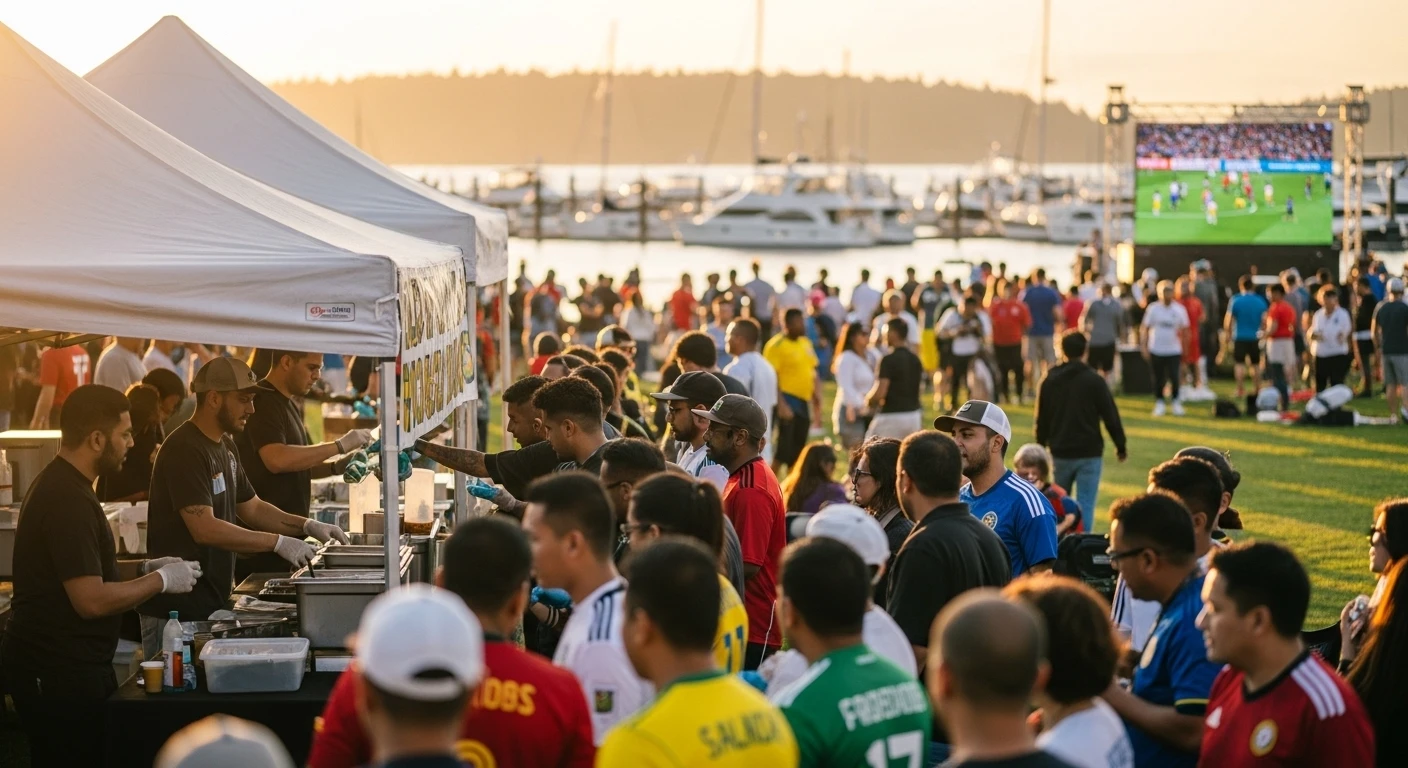
    The 2026 FIFA World Cup brings international soccer to Seattle — and with it, hundreds of thousands of global travelers who will need places to stay, eat, explore, and remember. Seattle’s hotel market will be stretched. Smart travelers are already looking north. Everett, Washington is 25 miles from downtown Seattle, connected by Sounder commuter rail, and sitting on the edge of some of the most dramatic Pacific Northwest scenery on the continent. This is the guide for global travelers who want the World Cup experience without the Seattle price tag.

    Quick facts for international travelers: Seattle is hosting FIFA World Cup 2026 matches at Lumen Field. Everett is 30 minutes north by Sounder commuter rail. The Snohomish County/Everett area offers waterfront hotels, dining, and direct access to the Olympic Peninsula, North Cascades, and San Juan Islands — all within a 90-minute drive.

    Why Everett for FIFA World Cup 2026

    Lumen Field in Seattle is the match venue. But Seattle’s hotel inventory — concentrated in Capitol Hill, South Lake Union, and the waterfront — will be fully booked weeks before the first match. International travelers booking late will find rates at multiples of normal. Everett offers a genuine alternative: a working waterfront city with its own character, direct rail access to Seattle, and a base from which the entire Pacific Northwest is reachable.

    The Sounder North commuter rail runs between Everett and Seattle’s King Street Station. The trip takes approximately 50 minutes and deposits travelers two blocks from Pioneer Square and within a mile of Lumen Field. No rental car, no parking, no traffic. International travelers accustomed to European rail culture will find it a familiar experience.

    Getting from Seattle to Everett

    There are three practical options for match-day travel between Everett and Seattle:

    • Sounder North commuter rail — Direct service, King Street Station to Everett Station. Approximately 50 minutes. Sound Transit operates the line and fares are purchased via the ORCA card system, available at stations.
    • Interstate 5 by car or rideshare — 30 miles, 30–60 minutes depending on traffic. On match days, expect significant congestion southbound. Plan to arrive at least 3 hours before kickoff if driving.
    • Community Transit express bus — Swift bus rapid transit and express routes connect Everett to Seattle with stops at Lynnwood Transit Center, which connects to the Link Light Rail system into downtown Seattle.

    Where to Stay in Everett

    Everett’s hotel stock ranges from major chain properties near the interstate to boutique waterfront options near the marina. The waterfront district — along West Marine View Drive — puts travelers within walking distance of the Port of Everett, restaurants, and the Boxcar Park recreational area. For World Cup visitors, booking 3–6 months in advance is strongly recommended given regional demand.

    The Angel of the Winds Arena entertainment district anchors Everett’s downtown hospitality cluster. Hotels within walking distance of the arena and the Everett Station transit hub offer the most convenient base for rail-dependent travelers.

    Beyond the Match: What to Do in the Everett Area

    The Boeing Future of Flight

    The Boeing Future of Flight Aviation Center in Mukilteo, 10 miles south of Everett, houses the largest building by volume in the world — the Boeing 777X and 787 Dreamliner assembly facility. Tours run daily and offer a genuinely rare industrial experience unavailable anywhere else in the world. International visitors consistently rate it among the most memorable stops in the Pacific Northwest.

    Possession Sound and the Puget Sound Waterways

    Everett sits at the northern tip of Possession Sound, where the Snohomish River delta meets the inland sea of Puget Sound. Washington State Ferries connect Mukilteo (15 minutes from Everett) to Whidbey Island — the largest island in the contiguous United States — with crossings every 30 minutes. A day trip to Whidbey from Everett requires no car if you walk onto the ferry.

    Snohomish River Valley

    The town of Snohomish, 12 miles east of Everett, is a National Register historic district with antique shops, farm-to-table restaurants, and views across the agricultural valley toward the Cascade foothills. For international travelers expecting generic American strip-mall tourism, Snohomish is a reliable corrective.

    Everett as the Gateway to the Olympic Peninsula

    The Olympic Peninsula — home to Olympic National Park, the Hoh Rain Forest, Hurricane Ridge, and the Pacific coastline at Ruby Beach — is 90 minutes to two hours from Everett. The crossing involves the Kingston-Edmonds ferry (20 minutes south of Everett) or the Bainbridge Island ferry from downtown Seattle. World Cup visitors with a rest day between matches have enough time for a meaningful Olympic Peninsula experience: the Hoh Rain Forest and a stretch of Pacific coast can be done in a long day from Everett.

    For International Travelers: Practical Notes

    Washington State has no sales tax on groceries. Tipping is standard at restaurants (18–20%) and for ride services. The US dollar is the currency; credit cards are accepted nearly universally. Cellular coverage in Everett is strong across all major US carriers. The Everett waterfront and downtown core are walkable. Summers in Western Washington are mild — temperatures in July and August (the World Cup period) typically run 65–80°F (18–27°C) with low humidity and long daylight hours.

    Frequently Asked Questions

    How far is Everett from FIFA World Cup 2026 matches in Seattle?

    Everett is approximately 25 miles north of Seattle’s Lumen Field. Sounder North commuter rail makes the trip in about 50 minutes. By car, the drive is 30–60 minutes depending on traffic.

    Is Everett worth visiting during the FIFA World Cup?

    Yes — Everett offers waterfront dining, ferry access to Whidbey Island and the Olympic Peninsula, the Boeing Future of Flight, and lower hotel rates than Seattle. It is a genuine base, not just an overflow option.

    Can I get to Seattle matches from Everett without a car?

    Yes. Sounder North rail connects Everett Station to Seattle’s King Street Station. Community Transit express buses connect to Lynnwood’s Link Light Rail station for an alternative route into downtown Seattle.

    What is the best area to stay in Everett for World Cup visitors?

    The waterfront district and downtown Everett near Everett Station offer the most convenient base for car-free travelers using Sounder rail to reach Seattle matches.


    Also available in: Guía en Español  |  Em Português  |  Auf Deutsch  |  En Français  |  한국어  |  日本語

    Related guides:

  • Copa Mundial FIFA 2026 Seattle: Por Qué los Viajeros Globales Deben Hospedarse en Everett

    Copa Mundial FIFA 2026 Seattle: Por Qué los Viajeros Globales Deben Hospedarse en Everett

    El Mundial FIFA 2026 trae el fútbol internacional a Seattle — y con él, cientos de miles de viajeros globales que necesitarán dónde hospedarse, comer, explorar y crear recuerdos. El mercado hotelero de Seattle estará al límite. Los viajeros inteligentes ya están mirando hacia el norte. Everett, Washington, está a tan solo 40 kilómetros del centro de Seattle, conectada por el tren Sounder, y ubicada al borde de algunos de los paisajes más dramáticos del Pacífico Noroeste.

    Datos rápidos para viajeros internacionales: Seattle es sede de los partidos del Mundial FIFA 2026 en el Lumen Field. Everett está a 30 minutos al norte en el tren Sounder. El área de Everett y el Condado de Snohomish ofrece hoteles frente al agua, restaurantes y acceso directo a la Península Olímpica, las Cascadas del Norte y las Islas San Juan — todo a menos de 90 minutos en automóvil.

    Por qué elegir Everett para el Mundial FIFA 2026

    El Lumen Field en Seattle es el estadio sede. Pero el inventario hotelero de Seattle — concentrado en Capitol Hill, South Lake Union y el malecón — estará completamente reservado semanas antes del primer partido. Los viajeros internacionales que reserven tarde encontrarán tarifas varias veces más caras de lo normal. Everett ofrece una alternativa genuina: una ciudad portuaria con carácter propio, acceso directo en tren a Seattle y una base desde la cual todo el Pacífico Noroeste es accesible.

    El tren Sounder Norte circula entre la Estación de Everett y la King Street Station de Seattle. El trayecto dura aproximadamente 50 minutos y deja a los viajeros a dos cuadras del Pioneer Square y a menos de un kilómetro del Lumen Field. Sin coche de alquiler, sin estacionamiento, sin tráfico.

    Cómo llegar de Seattle a Everett

    Hay tres opciones prácticas para el viaje en días de partido entre Everett y Seattle:

    • Tren Sounder Norte — Servicio directo, King Street Station a Estación Everett. Aproximadamente 50 minutos. Sound Transit opera la línea y las tarifas se compran con la tarjeta ORCA, disponible en las estaciones.
    • Autopista Interestatal 5 en automóvil o servicio de transporte — 48 kilómetros, 30 a 60 minutos según el tráfico. En días de partido, espera congestión considerable hacia el sur. Planea llegar al menos 3 horas antes del partido si vas en auto.
    • Autobús exprés de Community Transit — El Swift BRT y las rutas exprés conectan Everett con Seattle con paradas en el Centro de Tránsito de Lynnwood, que conecta con el Link Light Rail hacia el centro de Seattle.

    Dónde hospedarse en Everett

    La oferta hotelera de Everett va desde grandes cadenas cerca de la autopista hasta opciones boutique frente al agua cerca de la marina. El distrito del malecón — a lo largo de West Marine View Drive — pone a los viajeros a poca distancia a pie del Puerto de Everett, restaurantes y el parque recreativo Boxcar Park. Para los visitantes del Mundial, se recomienda encarecidamente reservar con 3 a 6 meses de anticipación dado la demanda regional.

    Más allá del partido: Qué hacer en el área de Everett

    Boeing Future of Flight

    El Centro de Aviación Boeing Future of Flight en Mukilteo, a 16 kilómetros al sur de Everett, alberga el edificio más grande por volumen del mundo — la planta de ensamblaje del Boeing 777X y 787 Dreamliner. Los tours operan diariamente y ofrecen una experiencia industrial genuinamente única, disponible solo aquí en el mundo.

    Possession Sound y las vías fluviales de Puget Sound

    Everett está en la punta norte de Possession Sound, donde el delta del río Snohomish se encuentra con el mar interior de Puget Sound. Los ferris estatales de Washington conectan Mukilteo (15 minutos de Everett) con la Isla Whidbey — la isla más grande en los estados contiguos de EE. UU. — con cruces cada 30 minutos.

    Valle del Río Snohomish

    La ciudad de Snohomish, a 19 kilómetros al este de Everett, es un distrito histórico del Registro Nacional con tiendas de antigüedades, restaurantes de cocina local y vistas hacia los contrafuertes de las Cascadas. Para los viajeros internacionales que esperan turismo americano genérico, Snohomish es un antídoto confiable.

    Everett como puerta de entrada a la Península Olímpica

    La Península Olímpica — sede del Parque Nacional Olympic, el Bosque Lluvioso Hoh, Hurricane Ridge y la costa del Pacífico en Ruby Beach — está a 90 minutos o dos horas de Everett. El cruce involucra el ferri Kingston-Edmonds (20 minutos al sur de Everett) o el ferri de Bainbridge Island desde el centro de Seattle. Los visitantes del Mundial con un día libre entre partidos tienen tiempo suficiente para una experiencia significativa en la Península Olímpica.

    Notas prácticas para viajeros internacionales

    El Estado de Washington no cobra impuesto a las ventas en alimentos de supermercado. Las propinas son estándar en restaurantes (18 a 20%) y servicios de transporte. El dólar estadounidense es la moneda; las tarjetas de crédito se aceptan casi universalmente. La cobertura celular en Everett es buena con los principales operadores de EE. UU. Los veranos en el oeste de Washington son suaves — las temperaturas en julio y agosto (el período del Mundial) típicamente son de 18 a 27°C con baja humedad y días largos.

    Preguntas frecuentes

    ¿A qué distancia está Everett de los partidos del Mundial FIFA 2026 en Seattle?

    Everett está aproximadamente a 40 kilómetros al norte del Lumen Field en Seattle. El tren Sounder Norte hace el recorrido en unos 50 minutos.

    ¿Vale la pena visitar Everett durante el Mundial FIFA?

    Sí. Everett ofrece restaurantes frente al agua, acceso en ferri a la Isla Whidbey y la Península Olímpica, el Boeing Future of Flight y tarifas de hotel más bajas que Seattle.

    ¿Puedo llegar a los partidos de Seattle desde Everett sin automóvil?

    Sí. El tren Sounder Norte conecta la Estación Everett con la King Street Station de Seattle. Los autobuses exprés de Community Transit ofrecen una ruta alternativa hacia el Link Light Rail del centro de Seattle.


  • Copa do Mundo FIFA 2026 Seattle: Por que Viajantes Globais Devem se Hospedar em Everett

    Copa do Mundo FIFA 2026 Seattle: Por que Viajantes Globais Devem se Hospedar em Everett

    A Copa do Mundo FIFA 2026 traz o futebol internacional para Seattle — e com ele, centenas de milhares de viajantes globais que precisarão de lugares para se hospedar, comer, explorar e criar memórias. O mercado hoteleiro de Seattle estará no limite. Os viajantes inteligentes já estão olhando para o norte. Everett, Washington, fica a apenas 40 quilômetros do centro de Seattle, conectada pelo trem Sounder, e situada na beira de algumas das paisagens mais dramáticas do Noroeste do Pacífico do continente.

    Dados rápidos para viajantes internacionais: Seattle é sede das partidas da Copa do Mundo FIFA 2026 no Lumen Field. Everett fica a 30 minutos ao norte pelo trem Sounder. A área de Everett e o Condado de Snohomish oferecem hotéis à beira-mar, restaurantes e acesso direto à Península Olímpica, às Cascatas do Norte e às Ilhas San Juan — tudo a menos de 90 minutos de carro.

    Por que Everett para a Copa do Mundo FIFA 2026

    O Lumen Field em Seattle é o estádio sede. Mas o inventário de hotéis de Seattle — concentrado em Capitol Hill, South Lake Union e à beira-mar — estará completamente reservado semanas antes do primeiro jogo. Viajantes internacionais que reservarem tarde encontrarão tarifas várias vezes acima do normal. Everett oferece uma alternativa genuína: uma cidade portuária com caráter próprio, acesso direto de trem para Seattle e uma base a partir da qual todo o Noroeste do Pacífico é acessível.

    O trem Sounder Norte circula entre a Estação Everett e a King Street Station de Seattle. A viagem leva aproximadamente 50 minutos e deixa os viajantes a dois quarteirões do Pioneer Square e a menos de um quilômetro do Lumen Field. Sem carro alugado, sem estacionamento, sem trânsito.

    Como chegar de Seattle a Everett

    Há três opções práticas para a viagem nos dias de jogo entre Everett e Seattle:

    • Trem Sounder Norte — Serviço direto, King Street Station à Estação Everett. Aproximadamente 50 minutos. A Sound Transit opera a linha e as tarifas são compradas pelo sistema de cartão ORCA, disponível nas estações.
    • Rodovia Interestadual 5 de carro ou aplicativo de transporte — 48 quilômetros, 30 a 60 minutos dependendo do trânsito. Nos dias de jogo, espere congestionamento considerável em direção ao sul. Planeje chegar pelo menos 3 horas antes do jogo se for de carro.
    • Ônibus expresso da Community Transit — O Swift BRT e as rotas expressas conectam Everett a Seattle com paradas no Centro de Trânsito de Lynnwood, que conecta ao Link Light Rail para o centro de Seattle.

    Onde se hospedar em Everett

    A oferta hoteleira de Everett vai de grandes redes próximas à rodovia até opções boutique à beira-mar perto da marina. O distrito da orla — ao longo da West Marine View Drive — coloca os viajantes a poucos passos do Porto de Everett, restaurantes e o parque recreativo Boxcar Park. Para os visitantes da Copa, é fortemente recomendável reservar com 3 a 6 meses de antecedência dado a demanda regional.

    Além do jogo: O que fazer na área de Everett

    Boeing Future of Flight

    O Centro de Aviação Boeing Future of Flight em Mukilteo, a 16 quilômetros ao sul de Everett, abriga o maior edifício por volume do mundo — a fábrica de montagem do Boeing 777X e 787 Dreamliner. Os tours funcionam diariamente e oferecem uma experiência industrial genuinamente única, disponível apenas aqui no mundo. Visitantes internacionais consistentemente classificam esta como uma das paradas mais memoráveis no Noroeste do Pacífico.

    Possession Sound e as vias fluviais de Puget Sound

    Everett fica na ponta norte de Possession Sound, onde o delta do rio Snohomish encontra o mar interior de Puget Sound. As balsas do Estado de Washington conectam Mukilteo (15 minutos de Everett) à Ilha Whidbey — a maior ilha nos estados contíguos dos EUA — com travessias a cada 30 minutos.

    Everett como portal para a Península Olímpica

    A Península Olímpica — lar do Parque Nacional Olympic, a Floresta Chuvosa Hoh, Hurricane Ridge e a costa do Pacífico em Ruby Beach — fica a 90 minutos a duas horas de Everett. Os visitantes da Copa com um dia livre entre as partidas têm tempo suficiente para uma experiência significativa na Península Olímpica: a Floresta Chuvosa Hoh e um trecho da costa do Pacífico podem ser feitos em um longo dia a partir de Everett.

    Notas práticas para viajantes internacionais

    O Estado de Washington não cobra imposto sobre vendas em alimentos de supermercado. Gorjetas são padrão em restaurantes (18 a 20%) e serviços de transporte. O dólar americano é a moeda; cartões de crédito são aceitos quase universalmente. A cobertura celular em Everett é forte com as principais operadoras americanas. Os verões no oeste de Washington são amenos — as temperaturas em julho e agosto (o período da Copa) tipicamente ficam entre 18 e 27°C com baixa umidade e dias longos.

    Perguntas frequentes

    A que distância fica Everett dos jogos da Copa do Mundo FIFA 2026 em Seattle?

    Everett fica aproximadamente a 40 quilômetros ao norte do Lumen Field em Seattle. O trem Sounder Norte faz o percurso em cerca de 50 minutos.

    Vale a pena visitar Everett durante a Copa do Mundo FIFA?

    Sim. Everett oferece restaurantes à beira-mar, acesso de balsa à Ilha Whidbey e à Península Olímpica, o Boeing Future of Flight e tarifas de hotel mais baixas do que Seattle.

    Posso chegar aos jogos de Seattle a partir de Everett sem carro?

    Sim. O trem Sounder Norte conecta a Estação Everett à King Street Station de Seattle em aproximadamente 50 minutos. Os ônibus expressos da Community Transit oferecem uma rota alternativa para o Link Light Rail do centro de Seattle.


  • Silvertips Are Going to the WHL Championship Final: Tickets, Dates, and What This Moment Means for Everett

    Silvertips Are Going to the WHL Championship Final: Tickets, Dates, and What This Moment Means for Everett

    Featured Snippet: Q: When are the Silvertips WHL Championship Final home games? A: Games 1 and 2 of the 2026 WHL Championship Final will be played at Angel of the Winds Arena in Everett on Friday, May 8 and Saturday, May 9. Tickets are available through Ticketmaster. The opponent is TBD, pending the Eastern Conference Final between Medicine Hat and Prince Albert.

    Silvertips Are Going to the WHL Championship Final: Tickets, Dates, and What This Moment Means

    It’s happening. The Everett Silvertips are going to the 2026 WHL Championship Final, and the first two games of that series will be played right here — at Angel of the Winds Arena on May 8 and May 9.

    After Tuesday night’s 4-2 series-clinching win over the Penticton Vees in Game 4, the Silvertips have now won 12 of 13 playoff games. They swept the Kelowna Rockets in Round 2 and swept the Penticton Vees in the Western Conference Championship. They’ve been the best team in the WHL all year — 57-8-2-1 in the regular season, the franchise’s best record in over a decade — and the playoff run has only reinforced it.

    The WHL Championship Final is the league’s biggest stage. It’s best-of-seven for the Ed Chynoweth Cup. And for two nights — Friday, May 8 and Saturday, May 9 — that stage is in Everett, Washington.

    Tickets: How to Get Them

    Tickets for Games 1 and 2 at Angel of the Winds Arena are available through Ticketmaster (search for Everett Silvertips or go directly to ticketmaster.com/everett-silvertips-tickets). The Silvertips are also offering a Playoff Ticket + Drink Deal through their official ticket central page — a smart buy if you’re making a night of it.

    Game times for both May 8 and May 9 are to be announced. Check the Silvertips website and Angel of the Winds Arena for the official tip-off times once they’re confirmed.

    A reminder: playoff games at AOTW have been selling out. Don’t wait on these.

    The Road That Got Them Here

    The 2026 WHL playoff run has been nothing short of remarkable. Let’s recap what this team has actually done:

    Regular Season: 57-8-2-1. The best record the franchise has posted in more than a decade. Top seed in the WHL entering the postseason.

    Round 2 (vs. Kelowna Rockets): Swept 4-0. Landon DuPont’s overtime winner in Game 5 was the punctuation mark on a dominant series. Silvertips advanced with their defense and special teams clicking.

    Western Conference Championship (vs. Penticton Vees): Swept 4-0. The Vees finished with 117 regular-season points and were the B.C. Division champions. The Silvertips handled them without losing a game — including back-to-back comeback wins in Penticton when they were trailing at various points in the final period. Games 1 and 2 were at Angel of the Winds Arena; Games 3 and 4 were on the road in Penticton.

    Playoff record: 12-1.

    The Players Making It Happen

    Matias Vanhanen has been the offensive engine all postseason. He scored the game-winning goal in Tuesday’s series clincher and has been a menace at 5-on-5 throughout the run. Julius Miettinen has been right alongside him — the two together are one of the most dangerous forward pairings left in the WHL playoffs.

    Landon DuPont and Carter Bear have been the two-way backbone of this team — driving play at both ends. DuPont’s playmaking in the WCF was elite. Bear has been physical and relentless in a way that wears opponents down over a series.

    And then there’s Anders Miller in net. His save percentage through the two completed playoff rounds was .948 — a figure that multiple hockey analysts have cited as the best mark for any WHL goaltender with nine or more playoff appearances. He’s not just been good; he’s been historically good.

    Who Will Everett Face?

    The Eastern Conference Championship Final between the Medicine Hat Tigers and the Prince Albert Raiders is still ongoing as of April 28. Medicine Hat are the defending WHL champions — they won the Ed Chynoweth Cup in 2025. Prince Albert finished as the Eastern Conference’s top seed with one of the best records in the league.

    Both are battle-tested, talented teams. Either way, the WHL Championship Final will be a serious challenge for the Silvertips — and that’s what makes it worth watching. Everett is the No. 1 overall seed and will have home ice for the full series, meaning Games 1, 2, 5, and 7 (if necessary) are at Angel of the Winds Arena.

    What This Moment Means for Everett

    Let’s be honest: Everett doesn’t get enough credit for what it’s built at Angel of the Winds Arena. The Silvertips consistently put a competitive team on the ice, consistently develop NHL-caliber players, and consistently give this city a team worth following. A WHL Championship Final appearance — especially one at home — is the kind of moment that reminds the whole Pacific Northwest that this franchise is one of the best in junior hockey.

    If you’ve been meaning to make it to a game all season, May 8 or May 9 is the game to attend. This city deserves to pack Angel of the Winds Arena for the Finals. Get your tickets, wear your silver and red, and let’s send this team a message that Everett has their backs.

    Frequently Asked Questions

    When are the WHL Championship Final home games at Angel of the Winds Arena?

    Games 1 and 2 of the 2026 WHL Championship Final will be played at Angel of the Winds Arena in Everett on Friday, May 8 and Saturday, May 9, 2026. Game times are to be announced.

    How do I buy WHL Championship Final tickets?

    Tickets are available through Ticketmaster. The Silvertips also offer a Playoff Ticket + Drink Deal through their official ticket page on the Silvertips website.

    Who will the Silvertips face in the WHL Championship Final?

    The opponent is to be determined. The Eastern Conference Final between the Medicine Hat Tigers (defending WHL champions) and the Prince Albert Raiders was still ongoing as of April 28, 2026.

    What is Angel of the Winds Arena’s address?

    Angel of the Winds Arena is located at 2000 Hewitt Ave, Everett, WA 98201. It is accessible via I-5 and Everett Transit bus service.

    What has Anders Miller’s save percentage been in the 2026 playoffs?

    Anders Miller posted a .948 save percentage through the Western Conference rounds of the 2026 WHL playoffs (9+ appearances), which has been cited as the best mark for any WHL goaltender with that many playoff appearances.

    Did the Silvertips win the WHL regular season?

    Yes. The Silvertips finished 57-8-2-1, which was the franchise’s best regular-season record in over 12 years and the top overall record in the WHL entering the 2026 playoffs.

  • AquaSox Hit the Road to Tri-City: Celesten Is NWL Player of the Week — Here’s What to Watch in the 6-Game Series

    AquaSox Hit the Road to Tri-City: Celesten Is NWL Player of the Week — Here’s What to Watch in the 6-Game Series

    Featured Snippet: Q: What are the Everett AquaSox doing in late April 2026? A: The AquaSox opened a 6-game road series at Gesa Stadium in Pasco, WA against the Tri-City Dust Devils on Tuesday, April 28. First pitch is 6:30 PM. Felnin Celesten was named the Northwest League Player of the Week for his performance against Spokane.

    AquaSox Hit the Road to Tri-City: Celesten Is NWL Player of the Week — Here’s What to Watch

    After six games at Funko Field against the Spokane Indians — a series the Frogs split 3-3, including a late walk-off win and a tough extra-inning loss on Sunday — the 2026 Everett AquaSox are on the road. They opened a 6-game series Tuesday night at Gesa Stadium in Pasco, Washington against the Tri-City Dust Devils, with first pitch at 6:30 PM.

    This is a rematch of an early-season series that Everett won 4-2 at Funko Field in April. The road version could look different — Tri-City has been one of the more competitive teams in the Northwest League, and they’ll have their home crowd behind them in the Columbia Basin.

    Here’s what to watch over the next six games.

    The Big News: Felnin Celesten Is Your NWL Player of the Week

    Before we get into the matchup, let’s talk about Felnin Celesten. The 20-year-old shortstop was named the Northwest League Player of the Week on April 27, 2026 — and it wasn’t hard to see why. Against the Spokane Indians, he hit .471 (11-for-17), scored five runs, and played his usual standout defense at short.

    Celesten is one of the youngest players in the NWL and carries a legitimate buzz as one of the Mariners’ top prospects. Watching him this April has been a reminder that the pipeline from Funko Field to T-Mobile Park is very much alive in 2026. He’s been the engine of this offense during winning stretches.

    He’s also in good company: Colton Shaw was named NWL Pitcher of the Week for April 6–12 earlier this month after that dominant early-season stretch. Two AquaSox earning weekly NWL hardware in the same month is a great sign for where this team can go.

    The Tri-City Matchup

    The last time these two teams played, Everett won 4 of 6 in the home series. Road ball is a different story. Gesa Stadium in Pasco is a fine park, but it’s 3+ hours from Everett and the Frogs will be without the Funko Field faithful in their corner.

    Tri-City fields a roster filled with Rockies prospects — Colorado’s High-A affiliate has had some talented arms in 2026. The AquaSox will need their lineup to stay hot (especially Celesten, Carlos Jimenez, and Noah Caron, who’s been swinging a hot bat at home) and their pitching staff to limit the walks that have occasionally undone promising outings.

    The series runs Tuesday April 28 through Sunday May 3, with a schedule of evening games Tuesday through Saturday and a Sunday afternoon finale.

    Prospect Watch: The Names to Track

    Felnin Celesten (SS): The NWL POTW award just confirmed what AquaSox fans have been watching all month. Can he keep this level of contact and production on the road?

    Carlos Jimenez (1B/OF): Remember his 6-RBI explosion in the Spokane series? He’s been one of the most dangerous bats in the lineup when locked in. The Columbia Basin outfield dimensions should suit his pull-heavy approach.

    Noah Caron: Caron’s 418-foot homer earlier in the homestand was a reminder that he has legitimate power that shows up in the box score when he makes contact. More of that, please.

    Colton Shaw (SP): The April Pitcher of the Week and arguably the most consistent starting arm the Frogs have had this season. If he lines up for a start in this series, expect a quality outing.

    Why This Series Matters

    The AquaSox have been above .500 for stretches of this early-season schedule, which matters for the Northwest League first-half standings. The first half determines playoff seeding, and every road series win is a step toward putting distance between Everett and the rest of the NWL.

    If you can’t make it to Pasco, follow along on the AquaSox social channels and mlb.com/everett for game updates. The Frogs return home for a 6-game homestand against Hillsboro starting May 5.

    Kill-threshold note: The April 28 series opener result is not yet confirmed from a verified primary source at run time; this article is framed as a series preview per Tier 0 protocol. The next run will recap the opening game result.

    Frequently Asked Questions

    Where are the AquaSox playing this week?

    The Everett AquaSox are playing a 6-game road series at Gesa Stadium in Pasco, WA against the Tri-City Dust Devils. Games run April 28 through May 3, 2026, with most games at 6:30 PM PT.

    Who won NWL Player of the Week for the AquaSox?

    Shortstop Felnin Celesten was named Northwest League Player of the Week on April 27, 2026. He hit .471 (11-for-17) with five runs scored in five games against the Spokane Indians.

    Who are the top AquaSox prospects to watch in 2026?

    Felnin Celesten (SS), Colton Shaw (SP), Carlos Jimenez (1B/OF), Noah Caron, and Axel Sanchez are among the key names on the 2026 Everett roster. Celesten in particular is drawing attention as a top Mariners prospect.

    When do the AquaSox return to Funko Field?

    The AquaSox return to Funko Field in Everett for a 6-game homestand against the Hillsboro Hops starting Tuesday, May 5, 2026.

    How did the Bryce Miller rehab assignment go?

    Mariners starter Bryce Miller completed his 2-start rehab assignment with the AquaSox earlier in April. His final outing was 3 IP, 6 K, 0 R, 1 H. He has since been activated back to the Mariners roster.