Tag: Everett

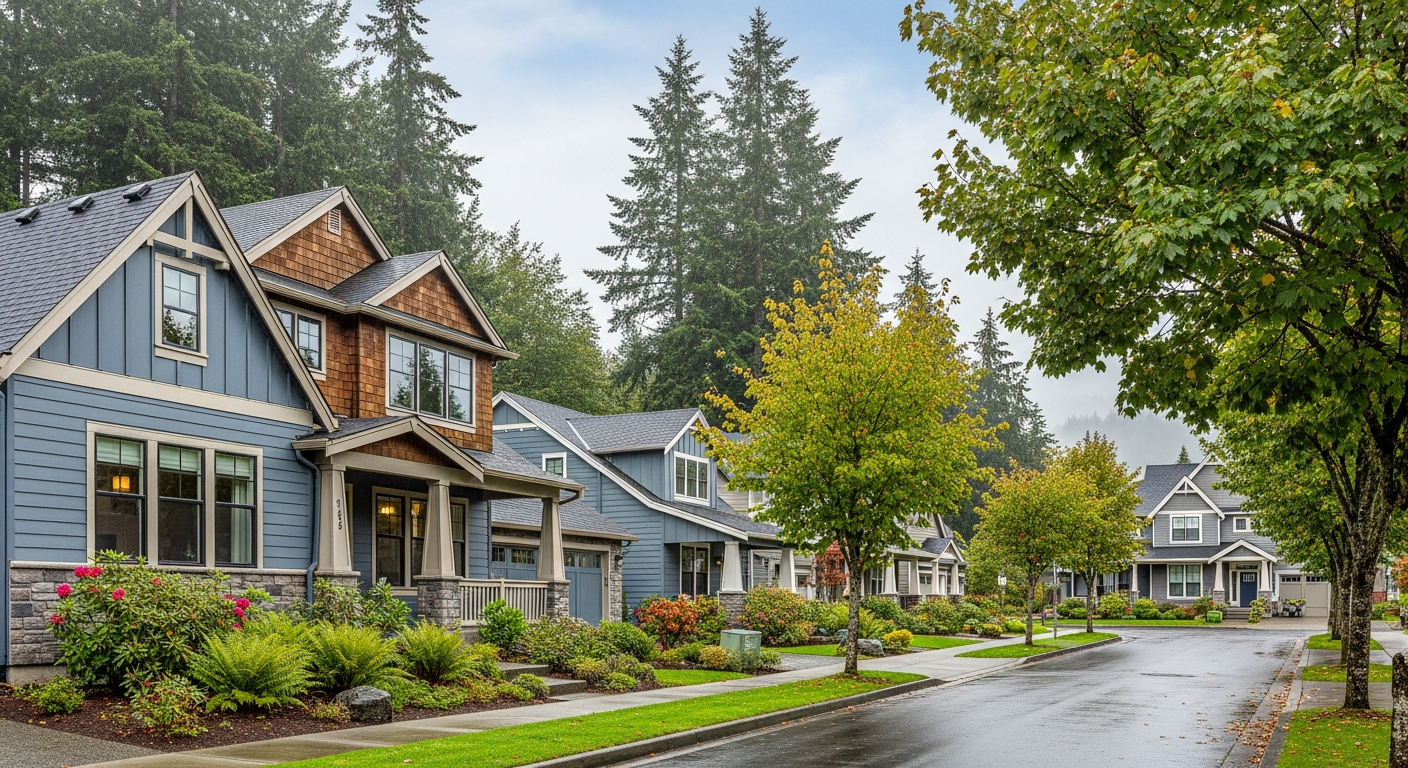
  • Snohomish County Housing Inventory Jumped 51.8% in 2026: The Complete Everett Buyer and Seller Guide

    Snohomish County Housing Inventory Jumped 51.8% in 2026: The Complete Everett Buyer and Seller Guide

    Quick Answer: Snohomish County active home listings surged 51.8% year-over-year in March 2026 — one of the five largest inventory increases in the entire NWMLS territory. Despite the supply jump, the median home price held at $738,000 and homes are still selling at 99.9% of asking in an average of 35 days. Rising mortgage rates (6.38% by late March) are stalling buyer momentum without collapsing prices. For Everett buyers and sellers, the window has shifted — but it has not swung fully to buyers yet.

    The March 2026 Numbers: What Changed

    The Northwest Multiple Listing Service’s March 2026 market snapshot showed 1,900 active residential listings across Snohomish County — a 51.8% year-over-year increase and one of the sharpest single-year inventory jumps in recent county history. That works out to approximately 2.8 months of supply, up sharply from the sub-1.5-month lows that defined the pandemic-era seller’s market.

    For context: real estate economists generally describe 4–6 months of supply as a balanced market. At 2.8 months, Snohomish County is still clearly a seller’s market — but the trajectory is meaningful. Buyers who spent 2022–2024 losing bidding wars on every offer now have more listings to choose from, more time to make decisions, and occasionally — not always — some negotiating room on price.

    The median home price held at $738,000 in March 2026. Homes are still selling at 99.9% of asking price in an average of 35 days. Those metrics do not reflect a market in distress — they reflect a market that has paused rather than reversed. The buyers who have stepped back are rate-sensitive; the sellers who remain active are not discounting.

    Why Inventory Jumped — and Why Prices Haven’t

    The inventory increase is being driven by two converging forces. First, sellers who held off listing during 2023–2024 (reluctant to give up historically low mortgage rates on their existing homes) are gradually re-entering the market as life events — job changes, family transitions, retirement — force the decision. Second, new construction deliveries — particularly multifamily and attached-housing units — are adding to active supply in south Everett and the Everett fringe suburbs.

    Prices are not collapsing because demand has not collapsed. Snohomish County’s employment base — Boeing’s expanding 737 North Line, NAVSTA Everett, Providence Regional Medical Center, and a dense cluster of aerospace and logistics employers — creates persistent housing demand from workers who need to live close to their job sites. That employment anchor is Snohomish County’s buffer against the kind of inventory-driven price correction that markets without a major employment base would experience.

    What This Means for Everett Buyers

    More listings mean more options — and for the first time in several years, buyers can take a breath before making an offer. The days of waiving all contingencies on sight-unseen properties are largely over in the current rate environment. Buyers who can qualify at 6.38% and are not competing for the same handful of best-in-class properties in the most desirable neighborhoods will find the market more navigable than it was in 2022.

    The Everett-specific buyer dynamic in 2026 involves several overlapping pools: Boeing 737 North Line workers relocating from Renton, Navy families PCSing to NAVSTA Everett, and Seattle-area renters making the rent-versus-buy calculation for the first time. All three groups are making decisions based on Snohomish County’s relative affordability versus King County — a spread that has narrowed but not closed.

    The motel-to-apartment conversion pipeline in south Everett — including the Sage Investment Econo Lodge project at 9602 19th Street SE opening August 2026 — adds rental supply that may absorb some demand that would otherwise convert to buyer activity. Workers who can rent a studio near their job site for a year while they watch the market are more likely to do so when inventory is rising and rate direction is uncertain.

    What This Means for Everett Sellers

    The 51.8% inventory jump does not mean sellers are in trouble — it means sellers need to price correctly. Properties at 99.9% of asking in 35 days are properties that were priced to the market. Properties that are not are sitting longer. The days of pricing 10% above comparables and relying on the frenzy to cover it are over. Sellers who price accurately, prepare the property well, and list with strong marketing are still transacting in a historically fast timeframe.

    The June 30 Sound Transit board vote on the Everett Link Extension is a latent catalyst for the seller side. If full delivery is confirmed, demand for properties in station-area neighborhoods — particularly downtown Everett and the Mariner corridor — could accelerate. If the extension is truncated, demand in those specific neighborhoods may soften relative to south Everett, where the SW Everett Industrial Center station coverage is less in dispute.

    Frequently Asked Questions

    What is the Snohomish County housing market doing in 2026?

    Active listings surged 51.8% year-over-year in March 2026 to approximately 1,900 listings (2.8 months of supply). The median home price held at $738,000. Homes sell at 99.9% of asking in an average of 35 days. Mortgage rates are 6.38%. Still a seller’s market, but meaningfully more inventory than 2022–2024.

    Is it a good time to buy a home in Everett in 2026?

    More inventory and slower frenzy pace mean buyers have more options and more time than they did in 2022–2024. Prices remain high ($738K median) and rates at 6.38% are a significant monthly payment factor. For buyers who can qualify and plan to hold for 5+ years, Everett’s employment base provides demand support.

    Why did Snohomish County housing inventory jump 51.8%?

    Sellers who held off during 2023–2024 (to preserve low locked-in mortgage rates) are re-entering the market as life events force decisions. New construction deliveries — particularly attached housing and multifamily in south Everett — are also adding to active supply.

    What is the median home price in Snohomish County in 2026?

    $738,000 as of March 2026, according to NWMLS data. Homes are selling at 99.9% of asking price in an average of 35 days. Current mortgage rates are approximately 6.38%.

    How does Everett’s housing market compare to Seattle?

    Snohomish County’s $738,000 median is significantly below King County’s comparable. The spread between Snohomish and King County has narrowed from its historical range but remains meaningful for buyers who can work remotely or commute to south Snohomish County employment rather than central Seattle.

    Related Exploring Everett coverage: Snohomish County Housing Inventory Jumped 51.8% | Everett Housing Market Three Submarkets Guide | Sage Silver Lake Apartments Complete Guide

  • Moving to Everett? The June 30 Sound Transit Vote Is the Question You Need to Answer First

    Moving to Everett? The June 30 Sound Transit Vote Is the Question You Need to Answer First

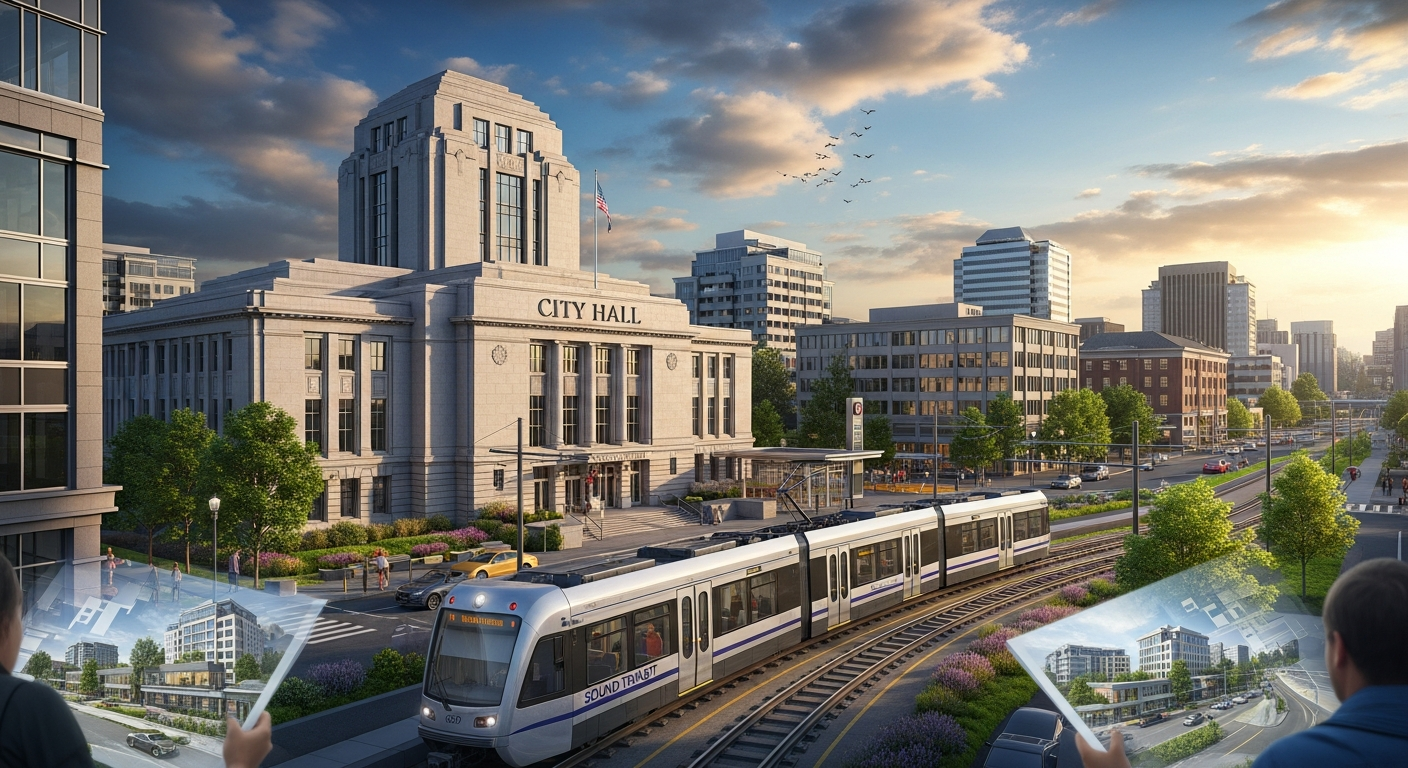
    If you are considering moving to Everett: The June 30, 2026 Sound Transit board vote is the single most consequential near-term decision for Everett’s long-term livability and property values. The Everett City Council voted unanimously April 29 to demand Sound Transit deliver the full 16-mile Everett Link Extension to downtown Everett Station. Here is what you need to understand about that vote before you decide where in greater Seattle to put down roots.

    Why the Sound Transit Vote Matters If You Are Moving to Everett

    People choosing between Everett, Bothell, Kirkland, Lynnwood, and other north Sound commuter cities in 2026 are making a 5–10 year bet on where each of those cities will be in 2030–2035. Transit infrastructure is one of the biggest inputs to that calculation. Lynnwood already has light rail. Bothell is on a Sound Transit express bus spine. Everett’s light rail future hinges on what Sound Transit’s board votes on June 30.

    If full delivery of the Everett Link Extension is confirmed, downtown Everett and the north Everett corridor will have direct light rail to Seattle, Bellevue, SeaTac, and the broader regional spine by 2037. That connectivity transforms Everett from a commuter city into a node on the regional network — with corresponding effects on housing demand, walkable development, and neighborhood investment along the station corridor.

    If the extension is truncated — stopping at SW Everett Industrial Center rather than downtown Everett Station — downtown Everett does not get light rail access on the current timeline. The economic development investment predicated on that connectivity ($7.7 billion, per Mayor Franklin’s April 23 letter) becomes uncertain. The calculus for buying or renting in downtown Everett versus Silver Lake or the suburbs changes meaningfully.

    Everett’s Position Heading Into June 30

    Everett has mounted a strong, unified advocacy campaign. The City Council voted unanimously April 29 to formally demand full delivery. Mayor Cassie Franklin sent her own letter April 23. Snohomish County Executive Dave Somers chairs the Sound Transit board — meaning the county’s own elected leader is the person responsible for managing the vote that determines the county’s light rail future. The politics are complex, but Everett’s case is substantively strong: the Everett Link Extension’s cost overruns are among the smallest in the ST3 package (approximately 5–10%), and the case for protecting Snohomish County from cost cuts driven by King County project overruns is documented and public.

    What This Means for Different Parts of Everett

    Downtown Everett and north Everett neighborhoods (Rucker Hill, Port Gardner, Broadway District): Directly served by the full extension. If light rail comes, these neighborhoods will be within walking distance of regional rail. If it is truncated, they remain bus-dependent for regional connectivity. For buyers or renters making a decision in 2026, this is the highest-stakes geography in Everett relative to the June 30 vote.

    South Everett neighborhoods (Silver Lake, Casino Road, Cascade View): The SW Everett Industrial Center station — which serves Paine Field and the southern employment cluster — is in the corridor that even a truncated extension would serve. South Everett commuters have somewhat more insulation from a truncation scenario than downtown Everett residents.

    Mariner neighborhood: Explicitly slated for its own station under the full extension. The Mariner annexation study (City Council approved the study in April 2026) adds another political dimension — Mariner residents would have stronger standing to demand transit service if they are incorporated into the city of Everett.

    What to Watch Before Deciding to Move to Everett

    June 30 is the key date. Watch the Sound Transit board meeting and vote. If the revised ST3 System Plan confirms full delivery of the Everett Link Extension to downtown Everett Station on the existing timeline, the case for buying or renting in downtown Everett and the north city is significantly strengthened. If the extension is truncated or delayed, reassess the downtown premium.

    Separately from light rail, Everett’s fundamentals in 2026 are strong: $1B+ waterfront redevelopment underway at the Port of Everett, the Boeing 737 North Line opening midsummer 2026 with 1,200+ orders, Naval Station Everett securing a new FF(X) frigate homeport bid, and the Snohomish County housing market offering meaningfully lower prices than King County at the same commute radius to Seattle. The light rail question is significant but not the only variable in the decision.

    Frequently Asked Questions for People Considering Moving to Everett

    Will Everett get light rail?

    The full Everett Link Extension — running 16 miles to downtown Everett Station — is in Sound Transit’s ST3 plan, approved by voters in 2016 and targeted for completion by 2037. Whether it is built in full depends on the June 30, 2026 Sound Transit board vote on the revised ST3 System Plan. Everett City Council and Mayor Franklin have both formally demanded full delivery.

    When would light rail reach downtown Everett?

    Under the current schedule, the Everett Link Extension opens in phases through 2037. The downtown Everett Station terminus is the final phase of that buildout.

    Is Everett a good place to live if I work in Seattle?

    Everett offers significantly lower housing costs than Seattle or Bellevue at a roughly 35-mile commute radius. Community Transit and Sound Transit express buses connect Everett to Seattle. If full Everett Link Extension is confirmed, light rail will provide a faster, more reliable connection by 2037. Snohomish County’s March 2026 median home price was $738,000 versus King County’s significantly higher comparable.

    What neighborhoods in Everett are closest to the planned light rail stations?

    The Everett Link Extension includes stations at Mariner, SW Everett Industrial Center (Paine Field area), and multiple downtown Everett stops including Everett Station. The corridor runs along the I-5 spine through south and central Everett before entering downtown.

    What else is happening in Everett that makes it worth considering?

    Everett has over $1 billion in active waterfront redevelopment at the Port, the Boeing 737 North Line opening in summer 2026 with 1,200+ airline orders, Naval Station Everett securing a new Navy frigate homeport bid, and a housing market priced significantly below King County. The city’s Imagine Everett comprehensive plan is built around transit-oriented density.

    Related: Complete Guide to the Council Letter and June 30 Vote | Moving to Everett: Sound Transit Vote Guide | Everett Housing Market 2026
  • Everett City Council Sends Sound Transit a Unanimous Demand: Deliver the Full 16-Mile Everett Link Extension

    Everett City Council Sends Sound Transit a Unanimous Demand: Deliver the Full 16-Mile Everett Link Extension

    Quick Answer: The Everett City Council voted unanimously on April 29, 2026 to send Sound Transit a formal letter demanding full delivery of the 16-mile Everett Link Extension to downtown Everett Station. The letter arrives as Sound Transit prepares to vote by June 30 on a revised ST3 System Plan that will determine whether Snohomish County gets the light rail it funded in 2016 — or a scaled-back version that stops short of downtown. Snohomish County’s public comment window closed May 1.

    What the Council Did — and Why It Matters

    On April 29, the Everett City Council voted unanimously to sign a formal letter to the Sound Transit Board of Directors. The letter, brought forward by Vice President Paula Rhyne, makes a documented public demand: complete the Everett Link Extension in full, on schedule, terminating at downtown Everett Station — not at the SW Everett Industrial Center or any other intermediate point.

    The letter is both a political signal and a public record. By taking a unanimous vote, the Council puts every member on record as demanding full delivery. That unanimity matters because Sound Transit board members are elected officials accountable to their jurisdictions. Snohomish County Executive Dave Somers, who chairs the Sound Transit board, is now navigating a situation where every elected official in Everett has publicly demanded an outcome directly relevant to his jurisdiction.

    Mayor Cassie Franklin sent her own letter to the Sound Transit board on April 23, laying out the economic case for full delivery. The Council’s April 29 letter follows and amplifies Franklin’s position, creating a unified municipal front heading into the June 30 board vote.

    The $34.5 Billion Problem Sound Transit Is Trying to Solve

    Sound Transit’s ST3 package — approved by voters across King, Pierce, and Snohomish counties in 2016 — faces a $34.5 billion budget shortfall driven by construction cost inflation, right-of-way complications, and delayed revenue projections. The agency is preparing a revised ST3 System Plan to go before the board by June 30, 2026. That plan will prioritize which projects get built, which get delayed, and which get descoped.

    The Everett Link Extension’s cost increased approximately 5–10% relative to original projections — a relatively modest overrun compared to the West Seattle and Ballard Link extensions, which have seen far larger cost increases. That asymmetry is central to Everett’s argument: the Everett segment is not where Sound Transit’s cost problem lives, and cutting or shortening Everett Link to solve a problem caused elsewhere would penalize Snohomish County voters for cost overruns in King County projects.

    What “Full Delivery” Means for Everett

    The full Everett Link Extension runs 16 miles from Lynnwood City Center (where it connects to the existing spine) to downtown Everett Station. It includes stations at Mariner, SW Everett Industrial Center (Paine Field access), and multiple downtown Everett stops. The project is currently scheduled to open in phases through 2037 under the original timeline.

    A truncated version — stopping at SW Everett Industrial Center rather than continuing to downtown Everett Station — would serve Paine Field workers but leave downtown Everett and the north city without light rail access. For a city whose comprehensive plan is built around transit-oriented development along the light rail spine, a truncated terminus is not a minor adjustment: it changes where density can reasonably be built, where businesses locate, and where housing investment concentrates.

    Mayor Franklin’s letter quantifies the stakes: $7.7 billion in economic development investment is anticipated in the Everett light rail corridor. That figure includes the Millwright District, waterfront redevelopment, downtown housing, and commercial development that has been underwritten — in part — by the expectation that light rail is coming.

    What Happens Next

    The Sound Transit board votes on the revised ST3 System Plan by June 30, 2026. The public comment period for Snohomish County residents closed May 1 — the day after the Council’s unanimous letter. Between now and June 30, Snohomish County’s regional elected officials, including Somers as board chair, will be under sustained advocacy pressure from Everett, Marysville, and other Snohomish County cities to protect the full extension.

    Everett has also been navigating the parallel Everett Transit consolidation into Community Transit — a process that reduces the city’s independent transit capacity and increases dependence on Sound Transit’s light rail spine for long-haul regional connectivity. If the spine gets shortened, the consolidated transit system loses its primary high-capacity connection to the regional rail network. These two decisions — the Everett Transit consolidation and the Sound Transit revision — are structurally linked even though they are being processed on separate tracks.

    Frequently Asked Questions

    What did Everett City Council vote to do regarding Sound Transit?

    On April 29, 2026, the Everett City Council voted unanimously to send Sound Transit a formal letter demanding full delivery of the 16-mile Everett Link Extension to downtown Everett Station, ahead of the Sound Transit board’s June 30 vote on a revised ST3 System Plan.

    When is the Sound Transit board voting on the ST3 plan?

    The Sound Transit board is expected to vote on its revised ST3 System Plan by June 30, 2026. Snohomish County Executive Dave Somers chairs the board.

    Could the Everett Link Extension be shortened or cut?

    Yes. Sound Transit is addressing a $34.5 billion budget shortfall across its ST3 projects. The revised plan could stop the Everett extension at the SW Everett Industrial Center rather than continuing to downtown Everett Station. That is the specific outcome Everett’s unanimous Council letter is demanding be avoided.

    What is the economic value of the Everett Link Extension?

    Mayor Cassie Franklin’s April 23 letter to the Sound Transit board cited $7.7 billion in anticipated economic development investment in the Everett light rail corridor, including waterfront redevelopment, downtown housing, and commercial development that has been underwritten on the assumption that light rail is coming.

    How does the Everett Transit consolidation connect to this Sound Transit vote?

    Everett is consolidating its transit system into Community Transit under SB 5801, reducing the city’s independent transit capacity. That consolidation increases Everett’s dependence on Sound Transit’s light rail spine for regional connectivity — which makes the June 30 vote on full delivery of the Everett Link Extension even more consequential for south Snohomish County commuters.

    Can Everett residents still comment on the Sound Transit plan?

    The formal Snohomish County public comment window closed May 1, 2026. Residents can still contact Snohomish County Executive Dave Somers’s office and the Sound Transit board directly. The June 30 board meeting will include a public comment period.

    Related Exploring Everett coverage: Everett Council Sends Sound Transit Letter | Everett Transit Consolidation Complete Guide | Everett 2027 Budget Deficit Guide

  • Moving to South Everett in 2026: What the Sage Silver Lake Studio Apartments Mean for New Residents and Renters

    Moving to South Everett in 2026: What the Sage Silver Lake Studio Apartments Mean for New Residents and Renters

    If you are moving to Everett or looking for a first apartment: 124 new studio apartments are opening in Silver Lake in August 2026 — market-rate, no income restrictions, no waitlist. The former Econo Lodge at 9602 19th Street SE is being converted by Sage Investment Group into the kind of workforce studio housing that has been in short supply across south Everett. Here is what you need to know before you apply.

    What Is Opening and When

    Sage Investment Group purchased the Econo Lodge near Silver Lake in 2025 for $9.5 million and is investing $7 million to convert all 124 motel rooms into fully equipped studio apartments with complete bathrooms and kitchens. Phase 1 leasing opens August 2026. The address is 9602 19th Street SE, Everett, WA 98204 — in the Silver Lake area of south Everett, along the Highway 99 corridor.

    These are market-rate units. No income verification, no application waitlist, no public subsidy program to navigate. Sage’s target market is the “Missing Middle” — people who need decent housing near jobs and transit, earn a moderate income, and don’t qualify for income-restricted housing but also can’t afford new luxury apartment stock. If that describes you, this project was built for your situation.

    Silver Lake as a Place to Live: What You’re Getting Into

    Silver Lake is south Everett’s working-neighborhood corridor. It sits along Highway 99 between downtown Everett to the north and the Everett Mall / Casino Road zone to the south. The neighborhood is defined by its access to employment rather than by a walkable amenity cluster — there is no downtown square, no concentrated restaurant row, no arts district. What Silver Lake has is proximity: 15–20 minutes to Paine Field, 10–15 minutes to downtown Everett, reasonable bus access on Community Transit’s south Everett routes.

    For new residents comparing Everett to Seattle: Silver Lake offers significantly lower housing costs on a per-square-foot basis, shorter commutes to south Snohomish County employment, and none of the density pressure that characterizes Seattle neighborhoods near light rail. It is a practical choice, not a lifestyle choice — which is exactly what a lot of people moving to Everett for a job at Boeing, Providence Regional Medical Center, or an Everett-area logistics employer are looking for.

    The Everett Housing Market Context for 2026

    Snohomish County saw a 51.8% year-over-year surge in active home listings in March 2026 — but that inventory is concentrated in for-sale product above $600,000. The March 2026 median home price held at $738,000, with homes still selling at 99.9% of asking in an average of 35 days. For renters, the supply expansion at the ownership level has not translated into dramatically lower rents on the apartment side.

    The Sage Silver Lake project adds 124 rental units to Everett’s inventory without displacing existing residents — the land was previously a motel with zero long-term residential occupancy. That net-new-unit character matters in a market where most new apartment supply has come from luxury developments with $1,800–$2,400 one-bedroom asking rents. Studio units in a motel conversion should price meaningfully below that range.

    How to Track This Opening

    Sage has not announced a pre-leasing timeline as of May 2026. Based on standard practice for projects of this type, expect listings to appear on Apartments.com, Zillow, and similar platforms 60–90 days ahead of the August 2026 Phase 1 opening — meaning June or July. Check Sage Investment Group’s portfolio page (sageinvestment.com/portfolio) directly for any pre-leasing announcements.

    For people actively apartment hunting in south Everett right now: the Cascade View and Silver Lake neighborhoods have seen new neighborhood guide coverage on this site that maps the full residential and amenity picture. The motel conversion at 19th Street SE is the first major new rental addition to Silver Lake in several years — and it arrives just as the south Everett housing corridor is seeing increased attention from investors tracking the Community Transit expansion and the Everett Link Extension light rail planning.

    Frequently Asked Questions for People Moving to Everett

    How do I apply for the Sage Silver Lake apartments in Everett?

    Pre-leasing has not opened as of May 2026. Phase 1 leasing opens August 2026. Watch sageinvestment.com/portfolio, Apartments.com, and Zillow for listings. Expect availability to appear 60–90 days before the August opening.

    Do I need to meet income requirements for the Silver Lake studios?

    No. These are market-rate units with no income restrictions and no subsidized housing program requirements. Standard rental application criteria (income verification, credit, rental history) will apply, but there are no maximum income limits or program eligibility requirements.

    What is Silver Lake like as a neighborhood in Everett?

    Silver Lake is a south Everett working neighborhood along the Highway 99 corridor. It has strong access to south Snohomish County employment (Paine Field 15–20 min, downtown Everett 10–15 min), Community Transit bus service, and the practical infrastructure of a mid-density residential area. It is a commuter-practical neighborhood rather than an amenity-rich one.

    How does Everett compare to Seattle for renting?

    Everett typically offers lower per-square-foot rents than Seattle, with shorter commutes to Snohomish County employment and less density pressure. The March 2026 median home price in Snohomish County was $738,000 — lower than King County. New luxury apartments in downtown Everett have listed at $1,800–$2,400 for one-bedrooms; workforce studio conversions like the Sage project should price below that range.

    What transit is available near 9602 19th Street SE?

    The Silver Lake area is served by Community Transit bus routes along Highway 99 and Casino Road. The planned Everett Transit consolidation into Community Transit will expand route coverage. Sound Transit’s Everett Link Extension, pending the June 30, 2026 board vote, includes stations that will eventually connect south Everett to the regional light rail spine.

    Related: Complete Guide to the Sage Econo Lodge Conversion | Cascade View Neighborhood Guide | Snohomish County Housing Market 2026

  • Everett’s Econo Lodge Is Becoming 124 Studio Apartments: The Complete Guide to Sage Investment’s Silver Lake Conversion

    Everett’s Econo Lodge Is Becoming 124 Studio Apartments: The Complete Guide to Sage Investment’s Silver Lake Conversion

    Quick Answer: Sage Investment Group is converting the former Econo Lodge at 9602 19th Street SE in Everett into 124 studio apartments, with Phase 1 leasing opening August 2026. The $16.5 million project — $9.5M acquisition plus $7M buildout — is one of the most straightforward housing additions Silver Lake has seen in recent memory: no new construction permits, no public subsidy, no wait list. Just 124 units of “Missing Middle” market-rate housing arriving in a neighborhood that needs them.

    The Silver Lake Conversion: What Sage Is Building

    The Econo Lodge at 9602 19th Street SE has been operating as a budget motel along the Highway 99 corridor through Silver Lake in south Everett. Sage Investment Group, a Seattle-area real estate firm that has been active in the Puget Sound motel-to-apartment conversion market, purchased the property in 2025 for $9.5 million and is investing an additional $7 million in the buildout — converting each of the 124 motel rooms into a fully equipped studio apartment with a complete bathroom and kitchen.

    The project is part of Sage’s established playbook of acquiring underperforming hospitality properties and converting them to permanent residential use. The model works because the bones of a motel — individual lockable units with separate plumbing — translate directly to studio apartment units with minimal structural modification. The cost per unit is dramatically lower than ground-up construction, and the timeline is measured in months rather than years.

    “Missing Middle” Housing: Who This Is For

    Sage is explicitly targeting what housing economists call the “Missing Middle” — moderate-income earners who need housing near jobs and transit but earn too much to qualify for subsidized or income-restricted housing, and not enough to afford Everett’s new luxury apartment stock. In a market where Snohomish County’s median home price held at $738,000 in March 2026 even as inventory rose 51.8% year-over-year, the Missing Middle gap is acute.

    The 124 studios at 19th Street SE will lease at market rates — specific pricing has not been announced ahead of the August 2026 Phase 1 opening, but motel conversion projects of this type in the Puget Sound market typically come in well below newly constructed apartment stock on a per-square-foot basis. For single-income workers, recent graduates, and individuals transitioning from shared housing or unstable situations, this type of unit is often the only viable path to a private, independently leased home near employment centers.

    Why Silver Lake — and What It Signals About South Everett

    Silver Lake is not Everett’s headline neighborhood. It sits south of downtown along the Highway 99 corridor, defined more by its proximity to employment — Paine Field to the north, the Everett Mall area to the south — than by any particular amenity cluster. But that employment proximity is exactly why a 124-unit housing addition matters here.

    South Everett’s workforce housing gap has been documented repeatedly. The 5,200-worker aerospace labor shortage in Snohomish County is partly a housing accessibility problem: workers who could fill jobs at Paine Field and the North Line can’t find affordable housing close enough to make the commute work. The Silver Lake location — near Community Transit’s Casino Road campus, adjacent to Highway 99, with access to multiple bus routes — positions these units for workforce housing demand from the aerospace, healthcare, and logistics employers concentrated in south Everett.

    Sage’s acquisition also signals that the motel-to-apartment conversion model, which has been active in Seattle and Tacoma for several years, is now reaching south Everett’s Highway 99 corridor. There are multiple underutilized hospitality properties along this stretch. If the Sage conversion performs well at lease-up, expect similar projects to follow.

    The August 2026 Timeline

    Phase 1 leasing opens August 2026. Sage has not announced a specific marketing timeline or pre-leasing availability, but the company’s standard practice is to list units through major apartment platforms (Apartments.com, Zillow, etc.) ahead of a Phase 1 opening. Prospective tenants interested in the Silver Lake location should watch Sage’s website and major listing platforms beginning in June or July 2026.

    The conversion involves upgrading each of the 124 rooms with a full kitchen — the primary modification required to meet residential habitability standards — along with bathroom upgrades, code compliance work, and common-area improvements. Sage’s $7 million buildout budget works out to roughly $56,500 per unit, consistent with motel conversion projects of similar scale in the region.

    What It Means for Everett’s Housing Supply

    Snohomish County’s active home listings surged 51.8% year-over-year in March 2026 — but that inventory increase is concentrated in for-sale product at price points above $600,000. The rental supply side of the Missing Middle has not seen a comparable expansion. The 124 Sage units represent a meaningful, immediate addition to Everett’s rental inventory without requiring a rezoning, a public subsidy, or a multi-year permitting process.

    Everett’s Imagine Everett comprehensive plan envisions densification along transit corridors — and the Highway 99 / Silver Lake corridor is explicitly identified as a growth area. Motel conversions are a form of adaptive reuse that delivers density without displacement: the land was already developed, the units are net-new housing on a footprint that was previously providing zero long-term residential units, and the conversion brings underutilized commercial property into productive residential use.

    Frequently Asked Questions

    What is the Sage Investment Econo Lodge conversion in Everett?

    Sage Investment Group purchased the former Econo Lodge at 9602 19th Street SE in Silver Lake, Everett for $9.5 million and is investing $7 million to convert all 124 motel rooms into studio apartments. Phase 1 leasing opens August 2026. Total project cost is $16.5 million.

    When do the Sage Silver Lake apartments open?

    Phase 1 leasing is expected to begin in August 2026. Specific unit availability and pricing will be announced closer to the opening. Watch Sage’s website and major listing platforms starting June–July 2026.

    How much will the Silver Lake studio apartments cost?

    Sage has not announced specific rental pricing. The project targets “Missing Middle” market-rate renters — moderate-income workers who need housing near jobs but don’t qualify for subsidized housing. Motel conversion projects typically lease below newly constructed apartment stock in the same market.

    Where exactly is the Econo Lodge conversion in Everett?

    9602 19th Street SE, Everett, WA 98204. The property is along the Highway 99 corridor in the Silver Lake area of south Everett, near Community Transit bus routes and approximately 15–20 minutes from Paine Field by car or transit.

    What is “Missing Middle” housing?

    Missing Middle housing serves moderate-income earners who earn too much to qualify for subsidized housing but not enough to afford new luxury apartment stock. In Snohomish County, where the March 2026 median home price was $738,000, the Missing Middle gap is significant for single-income workers, recent graduates, and workforce housing candidates in aerospace, healthcare, and logistics sectors.

    Is this subsidized affordable housing?

    No. The Sage project is market-rate housing with no public subsidy or income restrictions. It targets moderate-income renters at market rates, but below the price point of newly constructed luxury apartments. Tenants do not need to meet income qualification requirements.

    Related Exploring Everett coverage: Everett Econo Lodge Becoming 124 Studio Apartments | Snohomish County Housing Inventory Up 51.8% | Everett Housing Market Three Submarkets Guide

  • For Boeing and Paine Field Workers: What Community Transit’s Casino Road Acquisition Means for Your Commute

    For Boeing and Paine Field Workers: What Community Transit’s Casino Road Acquisition Means for Your Commute

    For Boeing and Paine Field workers: Community Transit just bought 7.55 acres on Casino Road for $25.35 million — the largest land acquisition in the agency’s history. Paired with the Everett Transit consolidation underway and two planned light rail stations on Casino Road, this deal reshapes the transit infrastructure you’ll use to get to and from the 737 North Line and Paine Field campuses. Here’s what it means for your commute over the next decade.

    Why This Casino Road Land Deal Matters for Paine Field Workers

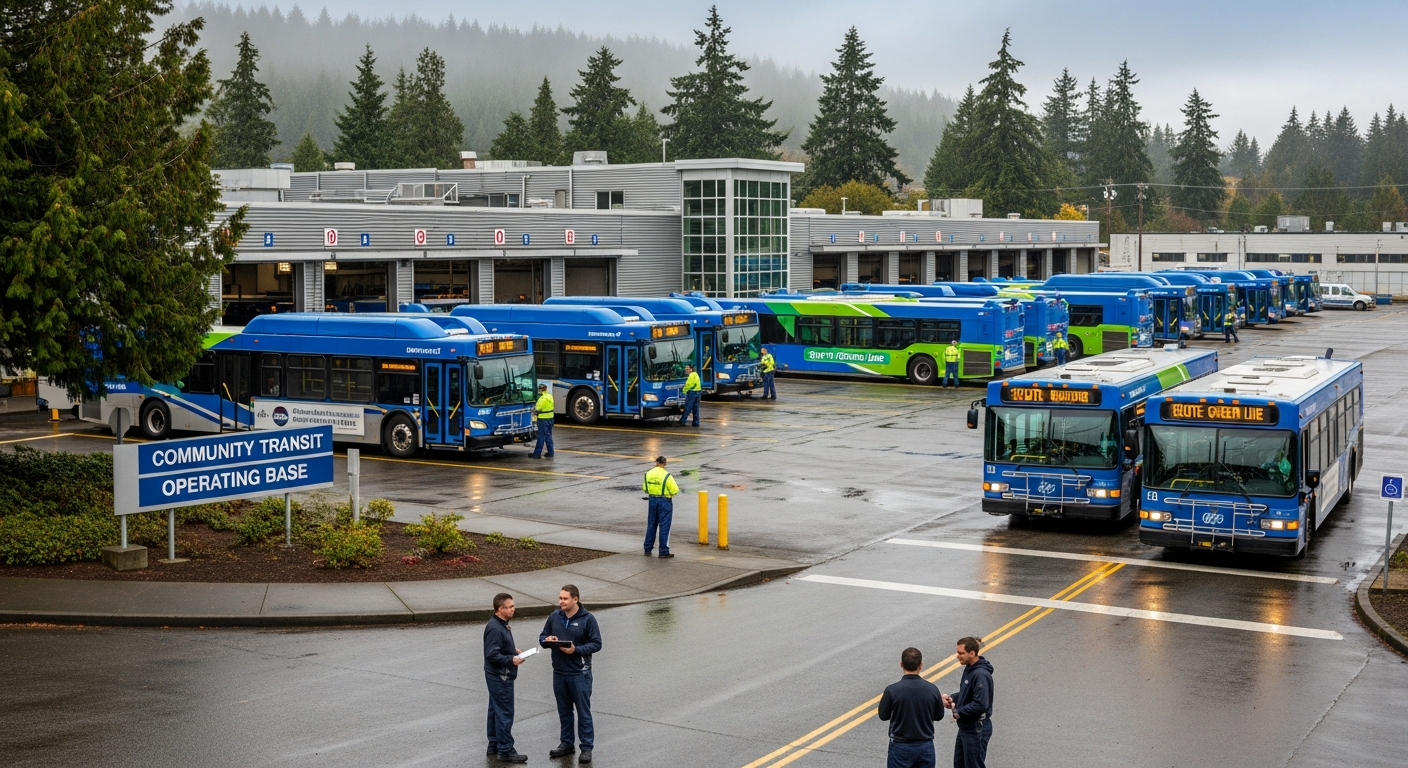
    The Community Transit acquisition at 2208 W. Casino Road is an operational campus expansion — the agency needs more space to store and maintain vehicles as it absorbs Everett Transit’s routes and grows toward its 30-million-rider-per-year Journey 2050 target. For Boeing and Paine Field workers, the relevance is direct: Casino Road is a key corridor connecting south Everett residential neighborhoods to the industrial employment zone around Paine Field, and the transit infrastructure on that corridor is being rebuilt from the ground up.

    Community Transit’s Route 7 serves the Casino Road and SW Everett Industrial Center corridor — the same zone where Sound Transit is planning a light rail station as part of the Everett Link Extension. Boeing workers who live on or near Casino Road, or who park and ride from south Everett, will see direct effects as Community Transit expands its capacity out of the new campus.

    The Everett Transit Consolidation and Your Bus Routes

    Everett Transit is consolidating into Community Transit under SB 5801. The merger transfers 22 routes and 115,000 daily riders. For workers on the 737 North Line at Paine Field, several Everett Transit routes that currently serve the Paine Field gate area will transition to Community Transit operations. The Casino Road campus expansion gives Community Transit the physical infrastructure to run a larger, more integrated network — which is the precondition for better direct-service options between residential Everett and Paine Field’s industrial employment zone.

    The consolidation is also expected to address one of the biggest frustrations for Paine Field workers who use transit: the seam between Everett Transit and Community Transit where routes currently don’t connect cleanly. A unified system under Community Transit removes that operational seam and opens the possibility of through-routes that don’t require a transfer.

    Light Rail at the SW Everett Industrial Center: The Long Game

    The Sound Transit Everett Link Extension includes a planned station at the SW Everett Industrial Center — one of only a handful of light rail stations in the entire ST3 network explicitly designed to serve a major industrial employment cluster rather than a residential neighborhood or downtown. For the roughly 30,000+ workers employed in the Paine Field / SW Everett Industrial Center corridor, this station represents a potential game-changer in commute options, particularly for workers coming from Seattle, Lynnwood, Mountlake Terrace, and other points south on the spine.

    The June 30, 2026 Sound Transit board vote on the revised ST3 System Plan is the decision point that determines whether that station gets built on the original timeline. Everett City Council voted unanimously April 29 to formally demand full delivery of the Everett Link Extension. Community Transit’s Casino Road campus investment reflects the agency’s own bet that light rail comes — an agency doesn’t expand its operational footprint on a light-rail-adjacent corridor unless it expects to be running feeder bus service to light rail stations within the decade.

    What Boeing Workers Should Watch

    The near-term watch item is the Everett Transit consolidation public hearing process. Route 7 and the Paine Field area routes will be redesigned as part of the merged network. Boeing workers who depend on those routes should engage in the public comment process to ensure the new network maintains — or improves — coverage of the Paine Field gate area. Community Transit has historically been responsive to major employer input on route design, and Boeing represents tens of thousands of commuters in its service area.

    The longer-term watch item is the June 30 Sound Transit vote. If the SW Everett Industrial Center station is preserved in the revised plan, the commute calculus for Paine Field workers changes significantly post-2030. If the station is cut or delayed, workers will be relying on the bus network — which is exactly why the Community Transit campus expansion and the Everett Transit consolidation matter so much right now.

    Frequently Asked Questions for Boeing and Paine Field Workers

    How does the Community Transit Casino Road acquisition affect my Paine Field commute?

    The Campus expansion positions Community Transit to run more service on the Casino Road and SW Everett Industrial Center corridor as it absorbs Everett Transit routes. Near-term effect is minimal; the consolidation process will determine route-level changes. The longer-term effect is a more unified bus network feeding a planned light rail station at the SW Everett Industrial Center.

    Will there be light rail to Paine Field?

    The Sound Transit Everett Link Extension includes a station at the SW Everett Industrial Center, which serves the Paine Field employment cluster. The June 30, 2026 Sound Transit board vote on the revised ST3 plan will determine whether that station proceeds on the original timeline or is cut or delayed as part of the agency’s $34.5 billion budget shortfall response.

    What happens to Route 7 when Everett Transit merges with Community Transit?

    Route 7 serves the Casino Road and Paine Field corridor. Under the Everett Transit / Community Transit consolidation, routes will be redesigned as part of a unified network. Community Transit has committed to preserving service levels, but specific route alignments will be determined through the public planning process under SB 5801.

    When does the Everett Transit consolidation take effect?

    The SB 5801 framework is active. The consolidation is a multi-year process. Everett City Council is engaged in the planning and the Boeing and Paine Field worker communities will have opportunities to provide input on route design before the transition finalizes.

    Where is the Community Transit Casino Road campus?

    Community Transit’s Cascade Administration Building is on W. Casino Road in south Everett. The newly acquired Goodwill property at 2208 W. Casino Road is directly adjacent, expanding the campus footprint to include the former Goodwill outlet warehouse complex and its 7.55-acre parcel.

    Related: Complete Guide to the $25.35M Acquisition | Everett Transit Consolidation: Boeing Worker Guide | Everett Council Sound Transit Letter

  • For Casino Road Residents: What Community Transit’s .35M Goodwill Purchase Means for Your Neighborhood

    For Casino Road Residents: What Community Transit’s .35M Goodwill Purchase Means for Your Neighborhood

    For you as a Casino Road resident: Community Transit’s $25.35 million purchase of the Goodwill outlet at 2208 W. Casino Road means a major public agency has locked in a 7.55-acre anchor in your neighborhood — before the light rail redevelopment pressure arrives. Here is what that means for your daily life, your housing stability, and your community’s future.

    Your Neighborhood Just Got a New Public Anchor

    For residents of Casino Road, Community Transit’s February 2026 acquisition is the most significant land transaction on the corridor in years. The 7.55 acres at 2208 W. Casino Road — the Goodwill Bins site — is now owned by a public agency, not a private developer. That distinction matters more than it might appear.

    Casino Road has two Sound Transit light rail stations planned as part of the Everett Link Extension. When light rail comes to a corridor, land values rise. In Seattle’s Rainier Valley and along the First Hill corridor, the combination of light rail investment and speculative land buying displaced thousands of residents and longtime businesses before communities could respond. Casino Road is watching those dynamics develop in slow motion — and Community Transit just placed 7.55 acres of the corridor in public hands before the speculative wave crests.

    The Goodwill Bins Stay Open — For Now

    The practical answer most Casino Road residents want first: the Bins are staying. Evergreen Goodwill signed a three-year leaseback with Community Transit, meaning the bulk-pricing outlet store at 2208 W. Casino Road continues operating through approximately early 2029. If you shop there regularly — or know someone who depends on it for affordable goods — no immediate change is required.

    After the leaseback ends, Community Transit will use the site for operational purposes: vehicle storage, maintenance, and administrative functions to support its growing bus network. What that means for foot traffic on that block will depend on how the agency designs its buildout. Residents near the site should watch for Community Transit public planning meetings as the leaseback end date approaches.

    How This Connects to the Everett Transit Merger

    Casino Road residents who rely on bus service should know that Everett Transit is being consolidated into Community Transit. The state legislature’s SB 5801 sets the framework; Everett City Council voted April 29 to approve a formal letter to Sound Transit demanding full delivery of the Everett Link Extension as a paired commitment. The merged transit system — combining Everett Transit’s 22 routes and 115,000 daily riders with Community Transit’s regional network — will use the expanded Casino Road campus as part of its operational foundation.

    For residents who depend on the Route 7 (Paine Field / Casino Road corridor) and other routes serving south Everett, the consolidation is designed to improve frequency and extend coverage. Community Transit’s Journey 2050 plan targets 30 million annual riders — more than triple current ridership — which requires both the Casino Road land and a fully funded light rail extension to work.

    What to Watch as a Casino Road Resident

    The three-year leaseback window (through roughly 2029) is the community engagement window. This is when Community Transit will be planning how it uses the property long-term. If community organizations, including Connect Casino Road, push for a mixed-use development that includes affordable housing or community space, that conversation needs to happen before the agency finalizes its operational buildout plans. Public agencies can — and sometimes do — include community benefit components in transit-adjacent development when community pressure is organized and early.

    The NR-MHC zoning effort — Everett’s proposal to protect seven mobile home parks in the Casino Road area from conversion to market-rate housing — is a parallel protection mechanism. The Community Transit acquisition and the NR-MHC zone together represent two distinct forms of displacement protection arriving in the corridor at the same time. Neither is sufficient alone; together they create meaningful stability in a neighborhood under significant long-term pressure.

    Frequently Asked Questions for Casino Road Residents

    Is the Goodwill Bins closing on Casino Road?

    No — not yet. Community Transit signed a three-year leaseback with Evergreen Goodwill, keeping the Bins open at 2208 W. Casino Road through approximately early 2029. After that, Community Transit will use the site for bus operations.

    Will my bus routes change because of this?

    Not immediately. The Casino Road campus acquisition is an operational expansion to support long-term ridership growth and the Everett Transit consolidation. Route changes will come through the consolidation planning process, not directly from this land purchase.

    Does this protect Casino Road from gentrification?

    It provides one form of protection: 7.55 acres of the corridor is now in public ownership and cannot be sold to a private developer without a public process. It does not, by itself, prevent rising rents or displacement pressure on the surrounding blocks. The NR-MHC zone and Connect Casino Road coalition are the primary community-led mechanisms addressing those pressures.

    How does this relate to the light rail stations planned for Casino Road?

    Two Sound Transit light rail stations are planned for the Casino Road corridor under the Everett Link Extension. Light rail typically accelerates land value increases and displacement pressure in station areas. Community Transit’s acquisition puts a large public parcel in the corridor before those dynamics peak — a meaningful protection even if it is not explicitly framed that way.

    Can I get involved in planning how Community Transit uses this site?

    Yes. Community Transit holds public board meetings and planning processes for major facility projects. Connect Casino Road and the associated neighborhood organizations are the most direct channel for organized community input. The three-year leaseback gives residents roughly a 2029 window before the site transitions to full operational use.

    Related Exploring Everett coverage: Community Transit Just Bought the Goodwill Bins on Casino Road | The Complete Guide to the .35M Acquisition | Everett Transit Consolidation Complete Guide

  • Community Transit Just Bought the Goodwill Bins on Casino Road: A Complete Guide to What the $25.35M Acquisition Means for Everett

    Community Transit Just Bought the Goodwill Bins on Casino Road: A Complete Guide to What the $25.35M Acquisition Means for Everett

    Quick Answer: Community Transit’s board unanimously approved the $25.35 million purchase of the 7.55-acre Goodwill outlet property at 2208 W. Casino Road in February 2026 — the largest single land acquisition in the agency’s 40-year history. The “Bins” stay open under a three-year leaseback. For Casino Road, a corridor already under pressure from two planned Sound Transit light rail stations and rising displacement risk, this deal is more than bus storage: it locks a major public agency into the neighborhood just as the redevelopment clock starts ticking.

    What Just Happened on Casino Road

    In February 2026, Community Transit’s board of directors voted unanimously to purchase the 108,000-square-foot Goodwill outlet complex at 2208 W. Casino Road — the one locals call “the Bins,” where goods are priced by the pound — for $25.35 million. The seller was Evergreen Goodwill of Northwest Washington. A three-year leaseback means the Bins stay open while Community Transit prepares the site for long-term operational use.

    The property sits directly adjacent to Community Transit’s existing Cascade administration building, making it a contiguous expansion of the agency’s south Everett operational campus. Community Transit’s Journey 2050 Long-Range Plan projects the agency will serve 30 million annual riders by 2050. Current vehicle storage and maintenance capacity will be exhausted well before that target. The Casino Road acquisition addresses the near-term capacity crunch.

    Why Casino Road — and Why Now

    The timing matters. Casino Road is one of the most consequential corridors in Everett’s near-future. Two Sound Transit light rail stations are planned along the corridor as part of the Everett Link Extension — a 16-mile project connecting downtown Everett Station to the regional light rail spine that Snohomish County voters approved in 2016. The planned stations at SW Everett Industrial Center and a second Casino Road-area station will bring transformative transit access to a corridor that today runs largely on surface streets and Community Transit bus routes.

    Light rail station areas historically trigger rapid land value appreciation and displacement pressure on existing residents and businesses. Casino Road’s demographics — a dense, multiethnic, working-class corridor with a high concentration of renters, small businesses, and community organizations — make it especially vulnerable to the kind of transit-driven displacement that has reshaped Rainier Valley and the Beacon Hill corridor in Seattle.

    Community Transit’s acquisition puts 7.55 acres of the corridor in public hands before the displacement dynamics fully accelerate. That’s not stated as the purchase rationale in agency documents — the stated rationale is operational capacity — but the community development implications are real and significant.

    The Property: What Community Transit Actually Bought

    The 108,000-square-foot complex at 2208 W. Casino Road includes a large-format warehouse retail footprint and associated operational space. The Goodwill outlet — distinct from standard Goodwill retail stores — operates as a bulk-pricing clearance operation where items are sorted onto tables and priced by weight. It draws a regional customer base and has operated at this Casino Road location for years.

    Under the three-year leaseback, Evergreen Goodwill continues operating the Bins. Community Transit takes legal ownership but receives lease income while planning its operational buildout. The $25.35 million purchase price reflects the property’s scale and its location in a corridor that is already beginning to command higher land values in anticipation of light rail.

    What This Means for the Casino Road Corridor

    Casino Road is home to roughly 13,000 residents, a dense network of immigrant-owned small businesses, and over two dozen community-serving organizations. The Connect Casino Road initiative — a community-led planning effort — has been working for years to ensure that the transit investment coming to the corridor lifts residents rather than displacing them.

    Community Transit’s land purchase adds a significant public anchor to the corridor. Public agency ownership is among the strongest protections against speculative displacement, since the land cannot be sold to a private developer without a public process. Whether Community Transit eventually co-develops the site with affordable housing, a transit-oriented community hub, or strictly operational facilities will depend on community engagement and agency planning decisions over the next several years.

    The acquisition also reinforces Community Transit’s long-term commitment to south Everett as its operational base — important context for residents and business owners watching the Everett Transit consolidation process unfold. As Everett Transit phases toward integration with Community Transit under SB 5801, the Casino Road campus becomes an even more critical node in the merged system’s service geography.

    The Everett Transit Consolidation Connection

    The Goodwill acquisition lands in the middle of a broader transit restructuring. Everett City Council is moving toward consolidating Everett Transit into Community Transit under state legislation, a process that would dissolve the city’s 100-year-old transit system and transfer 22 routes, 161 workers, and 115,000 riders to Community Transit. That consolidation was the subject of a major Everett Council action in April 2026.

    The Casino Road campus expansion positions Community Transit to absorb that additional operational footprint. More vehicles, more routes, and more maintenance capacity will require more land — and Community Transit just acquired it in the most strategically positioned location it could find: right next to what it already owns, in a corridor that will be transformed by light rail within the decade.

    What Residents and Businesses Should Watch

    The three-year Goodwill leaseback runs through approximately early 2029. That’s the window in which Community Transit will be finalizing plans for the site. Residents and community organizations invested in the future of Casino Road should engage with Community Transit’s public planning process as it develops. The Connect Casino Road coalition and associated organizations are the most direct channel for community voice on how this land ultimately gets used.

    For small businesses along Casino Road, the acquisition signals stability in one sense — a major public employer is investing heavily in the corridor — and uncertainty in another. If the site transitions from retail (the Bins) to operational bus storage and maintenance, the commercial traffic those retail operations generate will shift. Business owners near 2208 W. Casino Road should monitor the leaseback timeline.

    Frequently Asked Questions

    What did Community Transit buy on Casino Road in Everett?

    Community Transit purchased the 7.55-acre Goodwill outlet property at 2208 W. Casino Road for $25.35 million in February 2026. The 108,000-square-foot complex is the largest single acquisition in the agency’s 40-year history. The Goodwill “Bins” store stays open under a three-year leaseback agreement.

    Will the Goodwill Bins on Casino Road close?

    Not immediately. Evergreen Goodwill signed a three-year leaseback with Community Transit, meaning the Bins will continue operating at 2208 W. Casino Road through approximately early 2029. After the leaseback ends, Community Transit will use the site for operational purposes.

    Why did Community Transit buy land on Casino Road?

    Community Transit’s Journey 2050 plan projects the agency will serve 30 million annual riders by 2050 — up sharply from current ridership. Vehicle storage, maintenance, and administrative capacity at the existing Cascade campus will be exhausted before that target. The adjacent Goodwill property expands the campus and positions Community Transit for the Everett Transit consolidation.

    How does this relate to light rail on Casino Road?

    Two Sound Transit light rail stations are planned for the Casino Road corridor as part of the Everett Link Extension. Light rail station areas typically trigger land value increases and displacement pressure. Community Transit’s acquisition puts 7.55 acres in public ownership before those dynamics fully accelerate, providing a stable public anchor in the corridor.

    What is Connect Casino Road and what does this mean for them?

    Connect Casino Road is a community-led planning initiative working to ensure that light rail investment benefits existing Casino Road residents rather than displacing them. Community Transit’s land acquisition creates an opportunity for community engagement around how the site is ultimately developed, particularly if the agency ever considers mixed-use or affordable housing components on the parcel.

    How does the Goodwill acquisition relate to the Everett Transit merger?

    Everett is consolidating its transit system into Community Transit under SB 5801. That merger adds 22 routes, 161 workers, and 115,000 riders to Community Transit’s network. The Casino Road campus expansion gives Community Transit the physical space to absorb that additional operational footprint — more vehicles, more routes, and more maintenance demand.

  • Glacier View: The Mid-Century Everett Neighborhood That Rewards the People Who Actually Know It

    Glacier View: The Mid-Century Everett Neighborhood That Rewards the People Who Actually Know It

    Quick take: Glacier View is a mid-century neighborhood anchored by Lowell Elementary, the Everett Golf and Country Club, and easy access to Forest Park — with one of the most active neighborhood associations in the city and housing prices that have climbed significantly in 2025–2026. It’s a neighborhood that rewards locals who already know it and puzzles visitors who drive through without stopping.

    Glacier View: The Mid-Century Everett Neighborhood That Rewards the People Who Actually Know It

    Ask most Everett residents about Glacier View and you’ll get a vague wave southward. Ask someone who actually lives there and you’ll get a 20-minute conversation about block parties, the trail system behind their house, the view of the Cascades from their backyard, and the neighbors who’ve been around since before the kids were born.

    That gap — between how the neighborhood looks from the outside and what it actually is — is Glacier View in a nutshell. It’s one of Everett’s more established residential pockets, filled with mid-century brick ramblers and craftsman bungalows, bounded by Interstate 5 to the east, Evergreen Way to the west, roughly 41st Street to the north, and 62nd Street SE to the south. It sits between the more frequently profiled south Everett neighborhoods and downtown, close enough to both to be convenient, quiet enough to feel like neither.

    The Housing Stock That Defines the Neighborhood

    Glacier View’s character is shaped heavily by its housing stock. Mid-century brick ramblers dominate — one-story homes with clean lines, good bones, and the kind of lot sizes that feel generous compared to newer infill construction. Craftsman cottages fill in the gaps. Most of the neighborhood was built out decades ago, which means the streets have mature trees and the lots have settled into something that feels lived-in rather than speculative.

    The market has moved. The median sale price in Glacier View reached approximately $785,000 in early 2026, up significantly year-over-year — reflecting broader Snohomish County market dynamics as buyers pushed into south Everett in search of space and value relative to Seattle and the Eastside. The neighborhood scores 82 out of 100 on Redfin’s competitive market index, with homes averaging around 15 days on market as of early 2026.

    For context: mid-century ramblers and cottages in Glacier View have ranged from roughly $415,000 to $850,000 depending on condition and lot, while craftsman-style homes have started around $500,000 and run into the $930,000 range at the high end. The 7,454 residents recorded by US Census data represent a homeownership-heavy community — approximately 70% owner-occupied, which contributes to the neighborhood’s stability and the active civic engagement its association is known for.

    The Everett Golf and Country Club — Anchor and Anomaly

    The single most distinctive feature of the Glacier View neighborhood’s geography is the Everett Golf and Country Club, which occupies a substantial portion of the neighborhood’s southwest side. Founded in 1910, the private club features an 18-hole course, a fitness center, a swimming pool, and seasonal dining and social events.

    The club is members-only, which means the majority of the green space it sits on is not publicly accessible. But it shapes the neighborhood in other ways: it keeps a large area in the heart of the neighborhood at low density, it contributes to the neighborhood’s sense of green space and views, and it creates a geographic logic to Glacier View’s street layout that makes it feel more residential and less through-traveled than other Everett neighborhoods on the arterial grid.

    Forest Park and the Trail System

    Glacier View residents enjoy proximity to two significant green space assets. Forest Park — Everett’s largest and oldest park — is accessible from the neighborhood’s western edge. The park offers a splash pad, picnic areas, a large playground, sports courts, tennis courts, meeting halls, and trail access. It’s the kind of anchor amenity that makes a neighborhood feel self-contained.

    The Interurban Trail also runs through the area, providing 12 miles of paved paths for biking, jogging, and walking. For residents who want outdoor recreation without driving, Glacier View is well-positioned relative to most of south Everett.

    Schools

    Glacier View students move through an Everett School District pathway: Lowell Elementary (Pre-K–5, located in the neighborhood at approximately 5010 View Drive), then Evergreen Middle School, and on to Everett High School. Lowell Elementary has a total enrollment of approximately 543 students and a 16:1 student-teacher ratio.

    The Everett School District recorded a 96.3% graduation rate in 2025 — a district record — and Everett High was part of that picture. Parents in Glacier View looking at the school pathway are working with a district that has been putting up real numbers on student outcomes.

    Families in the neighborhood’s southern portion may also fall within proximity of Mukilteo School District boundaries — the district’s service area runs through parts of south Everett, including Cascade View and corridor areas near Casino Road.

    The Neighborhood Association

    By most accounts — including the City of Everett’s own neighborhood documentation — the Glacier View Neighborhood Association is one of the more active in the city. Meetings are held in-person at the Lowell Elementary library at 6:30 PM, on a roughly bi-monthly schedule (typical dates: January, March, May, and November). Co-chairs Katie Shaffer and Crystal Cameron lead the association, which can be reached at GlacierViewNeighbor@hotmail.com.

    In February 2026, Glacier View residents were part of a broad south Everett neighborhood meeting at the Cascade Boys and Girls Club at 7600 Cascade Drive, which brought together multiple neighborhood associations alongside Mayor Franklin and Police Chief Robert Goetz. The multi-neighborhood meeting format is one the city has been piloting for district-wide conversations — Glacier View participated as part of that broader civic engagement effort.

    Getting Around

    Glacier View sits west of Interstate 5, making highway access straightforward for commuters heading north toward Boeing’s Paine Field facilities, south toward Bellevue and Seattle, or east. The neighborhood is roughly 26 miles from downtown Seattle by car — a commute that, depending on the time of day, runs anywhere from 40 minutes to well over an hour.

    Everett Transit runs bus routes along Evergreen Way, Colby Street, and Broadway — the major arterials that border or bisect the neighborhood — providing transit access for residents who prefer not to drive. This connectivity to south Everett’s main transit corridors will take on added relevance as Sound Transit’s light rail extension to Everett moves toward completion in the coming years.

    Why People Stay

    Neighbors who live in Glacier View tend to describe the same constellation of reasons for staying: quiet streets, homes with real yards, walkable access to Forest Park and the trail system, friendly block-level community, and proximity to south Everett amenities without the traffic intensity of Evergreen Way itself. The neighborhood scores high on family-friendliness and dog-friendliness on resident review platforms, and the 70% homeownership rate means most of the people on the block have chosen to be there long-term.

    The housing prices that felt like a deal a few years ago have moved. But the neighborhood’s character — mid-century, stable, community-engaged, green-space-adjacent — is what it is because the people who lived there made it that way over decades. That doesn’t change when the comp prices move up.

    Frequently Asked Questions

    Where exactly is Glacier View in Everett?

    Glacier View is bounded roughly by 41st Street to the north, Interstate 5 to the east, 62nd Street SE to the south, and Evergreen Way to the west. It sits in the southeast portion of central Everett, between downtown and the south Everett corridor.

    What schools serve Glacier View?

    Glacier View is primarily served by Everett School District. The pathway is Lowell Elementary → Evergreen Middle School → Everett High School.

    Is the Everett Golf and Country Club open to the public?

    No. The Everett Golf and Country Club (founded 1910) is a members-only private club featuring an 18-hole course, fitness center, and swimming pool. It is not open to the general public.

    How do I get involved with the Glacier View Neighborhood Association?

    Meetings are held at Lowell Elementary’s library at 6:30 PM on a bi-monthly schedule. Contact the association at GlacierViewNeighbor@hotmail.com. The City of Everett’s Neighborhood Associations page at everettwa.gov/334 has current meeting dates and neighborhood contacts.

    What parks are closest to Glacier View?

    Forest Park — Everett’s largest park — is accessible from the neighborhood’s western edge. The Interurban Trail runs through the area with 12 miles of paved paths. Lowell Park and Emma Yule Park are also within or adjacent to the neighborhood’s boundaries.

  • Community Transit Just Bought the Goodwill Bins on Casino Road — Here’s What It Means for the Neighborhood

    Community Transit Just Bought the Goodwill Bins on Casino Road — Here’s What It Means for the Neighborhood

    What’s happening: Community Transit’s board voted unanimously in February 2026 to purchase the 7.55-acre Goodwill outlet property at 2208 W. Casino Road for $25.35 million — the largest single land acquisition in the agency’s history. The “Bins” will stay open under a three-year leaseback. But for the Casino Road corridor, where two Sound Transit light rail stations are planned and displacement pressure is already climbing, this deal is about more than bus storage.

    Community Transit Just Bought the Goodwill Bins on Casino Road — Here’s What It Means for the Neighborhood

    If you’ve ever dug through the bins at the Everett Goodwill outlet on Casino Road — the one where clothes and housewares are priced by the pound — you’ve stood in the middle of one of south Everett’s most consequential pieces of real estate. In February 2026, Community Transit’s board of directors voted unanimously to purchase that 7.55-acre property at 2208 W. Casino Road for $25.35 million, acquiring a 108,000-square-foot warehouse complex right next door to the agency’s existing Cascade administration building.

    For transit watchers, it’s a smart infrastructure play. For Casino Road residents, it’s one more piece of a much bigger puzzle about what this corridor is becoming — and who gets to stay in it.

    Why Community Transit Bought the Property

    The short answer: they’re running out of room. Community Transit’s internal analysis found that anticipated service growth will “consume” the agency’s current capacity for vehicle storage, maintenance, and administrative functions within the next few years. The Goodwill property sits directly adjacent to the agency’s existing Cascade administration building, making it the obvious acquisition for expansion.

    “Identifying and securing nearby land and facilities is a key strategy to sustaining operational growth, supporting service expansion, and maintaining flexibility for future development,” the agency’s memo to its board stated.

    The property itself is substantial: roughly 107,999 square feet of warehouse footprint, around 20,000 square feet of retail space, and a recycling center. Evergreen Goodwill, which purchased the site in 2011 for $10.9 million, will continue operating the outlet store and recycling center there under a three-year leaseback — paying Community Transit $120,000 per month in rent. So for at least the next three years, the bins stay open.

    There’s another factor in the long-term calculus: Sound Transit’s Link light rail extension to Everett includes a station close to the Paine Field area, not far from the Casino Road corridor. The agency flagged proximity to that infrastructure as part of the property’s strategic value.

    What This Means for Casino Road

    Casino Road is one of Everett’s most culturally dense corridors — home to a large Latino community, significant Cambodian, East African, and Pacific Islander populations, dozens of small immigrant-owned businesses, and community anchors like the Stations Unidos community development corporation, which was established specifically to fight displacement on this corridor.

    The Community Transit property acquisition isn’t a displacement threat in the direct sense — the transit agency isn’t building housing or retail that prices people out. But the deal is another signal of how much institutional attention and investment is concentrating along this corridor. Two planned light rail stations. A $25 million transit land grab. A new Boys and Girls Club facility at nearby Walter E. Hall Park, announced by Mayor Cassie Franklin in her 2026 State of the City address. Snohomish County housing funding flowing to the area. The $23 million housing award Everett received in 2027 that included Casino Road in its service area.

    When investment and infrastructure converge in a neighborhood, property values tend to follow. That’s exactly the dynamic Stations Unidos has been working to get ahead of since 2014, when Casino Road stakeholders first organized around the light rail threat. The CDC’s goal: ensure that the people who built this community get to remain part of it as it changes.

    The Boys and Girls Club Piece

    The existing Boys and Girls Clubs of Snohomish County location serving south Everett sits at 525 W. Casino Road — about a mile west of the Goodwill site. That club, which opened in 2000 after renovating a former bus barn, serves children and youth ages 5–18 with before and after-school childcare, summer camp, and teen programs.

    In her March 2026 State of the City address, Mayor Franklin announced that the City of Everett is collaborating with Boys and Girls Clubs of Snohomish County to support construction of a brand-new club location at Walter E. Hall Park, a flexible grass athletic complex at 1226 W. Casino Road. That park already serves as a hub for youth sports and hosts a skate park. Adding a Boys and Girls Club building there would be a significant community facility investment at the corridor’s geographic heart.

    Details on the new club’s timeline and design were not publicly available at press time, but the announcement signals city commitment to youth-serving infrastructure on Casino Road — not just transit infrastructure.

    What to Watch

    The three-year Goodwill leaseback runs out sometime around 2029. At that point, Community Transit will need to decide how to use the acquired warehouse space — whether for bus storage, maintenance bays, administrative expansion, or some combination. That decision will shape the Casino Road corridor at exactly the moment the light rail timeline is approaching.

    For residents of Cascade View and Twin Creeks — the two neighborhoods that flank Casino Road on its east side — the changes on this corridor are worth tracking. The road that most people think of as a thoroughfare rather than a destination has been quietly transforming for years. The institutions investing there in 2026 will set the shape of what comes next.

    Community Transit’s purchase doesn’t change daily life on Casino Road today. The bins are still open. The taquerias, the pho shops, the halal markets, the beauty supply stores — still there, still doing business. But the long arc of what this corridor becomes is being decided, piece by piece, in board rooms and city halls. Organizations like Stations Unidos exist precisely to make sure the community’s voice is part of that process, not added as an afterthought.

    Frequently Asked Questions

    Is the Goodwill outlet on Casino Road closing?

    No. Evergreen Goodwill signed a three-year leaseback agreement with Community Transit, so the outlet store and recycling center will continue operating at 2208 W. Casino Road at least through approximately 2029.

    Why did Community Transit pay $25.35 million for the Goodwill property?

    The property is adjacent to Community Transit’s existing Cascade administration building at 2312 W. Casino Road, and the agency projects its current facilities will be overwhelmed by service growth within a few years. The acquisition gives the agency land for vehicle storage, maintenance, and operational expansion.

    Will the Community Transit purchase displace Casino Road residents?

    The property at 2208 W. Casino Road is a commercial warehouse, not housing. The direct displacement risk is low. The broader concern is that concentrated investment on the corridor — transit, light rail, new facilities — can raise property values over time, creating indirect displacement pressure. That’s the issue Stations Unidos has been working on since 2014.

    What is the Boys and Girls Club building planned at Walter E. Hall Park?

    Mayor Cassie Franklin announced in her March 2026 State of the City address that the City of Everett is collaborating with Boys and Girls Clubs of Snohomish County to support construction of a new club location at Walter E. Hall Park, 1226 W. Casino Road. Specific construction timelines were not released publicly.

    Where is the existing Boys and Girls Club on Casino Road?

    The South Everett/Mukilteo Boys and Girls Club is located at 525 W. Casino Road, Everett, WA 98204, and serves children ages 5–18. Contact: (425) 355-6899 or bgcsc.org.