How We Automated Our Newsroom Using Claude 4.6 in 48 Hours
Tygart Media does not employ a massive bullpen of writers frantically refreshing Twitter for AI news. Instead, we built an autonomous newsroom powered by Claude 4.6.
The Architecture
We use a custom Omni-Brain system hooked into n8n. Our “Beat Desk” constantly scrapes Reddit and X for developer sentiment. When a high-signal trend is detected, Claude 4.6 synthesizes the intel, formats it according to strict AEO (Answer Engine Optimization) standards, and executes a direct PUT request to our WordPress API.
The result? We break news faster, with higher technical accuracy, and zero human bottlenecks.
Anthropic shipped one feature on April 14. Nine days in, the internet has already decided it’s five different things.
On April 14, 2026, Anthropic quietly pushed a research preview called Routines into Claude Code. The framing from their launch post is almost boring: “A routine is a Claude Code automation you configure once — including a prompt, repo, and connectors — and then run on a schedule, from an API call, or in response to an event.”
That’s it. That’s the whole pitch. You write instructions once, Anthropic runs them on their cloud, and your laptop can be closed at the bottom of a lake for all it matters.
Nine days later, I pulled social reactions from the first week of real usage — developers, indie hackers, ad ops people, a Polymarket trader, a guy learning piano, a Japanese solo dev running it for a week, Hamel Husain grumbling about YAML. And the thing that jumped out wasn’t the feature. It was how wildly people disagreed about what Routines even is.
Is it an n8n killer? A cron replacement? An enterprise procurement play? A way to avoid buying a Mac Mini? A vibes machine for autonomous trading bots? A broken MCP detector?
Yes. All of those. At the same time. That’s the story.
The five Routines
Here’s what Routines looks like, depending on who’s holding it.
To the production automation crowd, it’s a toy. Alex Vacca (@itsalexvacca) wrote the most viewed thread in the launch window — 28,000+ views, 283 replies — and it was a full-throated defense of n8n. His agency runs 13 workflows, 2,000+ executions per day, 41 nodes in one pipeline alone. Monthly n8n bill: $384. “The same workloads on Claude would cost $60K,” he wrote. “That’s why I’m not buying the ‘Claude killed n8n’ take. They’re not the same layer.”
He’s right. If you’re firing thousands of deterministic executions a day through a visual graph with tight error handling, Routines at 5-to-25 runs per day on included tiers isn’t even in the conversation. You’ll eat your Extra Usage budget by noon Tuesday.
To the indie hacker crowd, it’s liberation. Aman Kumar (@Amank1412) summed up the mood in two lines and a video: “Claude Routines automatically run at a schedule without keeping your laptop open. Those who spent $599 on a Mac Mini.” A Spanish developer (@anthonysurfermx) is moving his OpenClaw logic off Digital Ocean: “me quito 30 USD mensuales.” A Japanese developer (@KameAIHacks) reported back after a full week: nightly test runs, auto PR reviews, weekly dependency scans — “個人開発者のメンテナンス作業がほぼゼロになった.” Maintenance work as a solo dev dropped to nearly zero.
These people aren’t trying to replace n8n. They’re trying to not-own a server. The unlock isn’t workflow power. It’s that you can delete a piece of infrastructure from your life.
To the enterprise crowd, it’s a land grab. The sharpest observation came from @grapeot, writing in Chinese: “Claude Routines 每个是独立 API endpoint 带 bearer token,独立配额独立计价,配套 SSH 让 agent 跑在企业内网。它服务的是把 agent 写进采购合同的企业.” Translation: every routine is a separate API endpoint with its own auth token, its own quota, its own billing line, and SSH support for running agents inside corporate networks. This is Anthropic saying “put this in your procurement contract.” It’s not a consumer feature dressed up. It’s enterprise infrastructure wearing consumer clothes.
To the crypto crowd, it’s a printing press. @regent0x_ shared a story about a Polymarket trader who connected Routines to price feeds via API trigger. Price moves 4%, Claude wakes up, analyzes news, checks sentiment, decides whether to alert or auto-execute. “Laptop hasn’t been open in a week… $23k profit last month… total costs: $5/mo webhook + $87 in API calls… net profit margin: 99.6%.” Asked what he did with the free time: “learning piano.”
This is the quote that’s going to outlive the launch. Not because it’s representative — it absolutely isn’t — but because it’s the Platonic ideal of what cloud agents are supposed to feel like when they work. Research, reason, act, report. Go practice Chopin.
To Hamel Husain, it’s just YAML. The machine learning veteran (@HamelHusain) tried Routines and walked away: “I found it to be far better to use GitHub Actions. I have more control with GHA, secret management, etc. Claude is really good at writing all the yaml and iterating until it works on its own too. Wild times that I’m saying I like GitHub Actions LOL.”
If you already live in GHA, Routines isn’t offering you anything you don’t already have — except the novelty of a natural-language wrapper, which costs you control.
The broken pieces nobody’s hiding
A feature isn’t real until it breaks, and Routines is breaking in public. @ghuubear tried it on day 9 and reported his MCP connectors weren’t detected at all: “anthropic is shipping broken products.” @ahmetb couldn’t get GitHub PR-open triggers to fire: “not working at all.” Rich Baldry (@chooserich), who’s spent “countless hours with Codex Automations, Claude Routines, OpenClaw,” landed on a phrase that’s going to stick: “unreliable magic machines.”
His follow-up is the real critique, and it’s the one Anthropic needs to answer: “building software with the new agentic coding tools for the same tasks is vastly more reliable.” In other words — use Claude to write a real cron job, not to be the cron job.
That’s a serious challenge. When the alternative to your cloud agent is “use your cloud agent to write the non-agent version instead,” you’ve built a very fancy bootstrap.
The pricing question nobody’s settled
Pro gets 5 routine runs per day. Max ($100 and $200) gets 15. Team and Enterprise get 25. After that, overages bill against Extra Usage at standard API rates.
The Japanese dev community did the cleanest math: “Proプランだと1日5回まで。個人開発なら十分だけど、3つ以上のRoutineを毎日回したい場合はMaxプランが必要.” Five runs a day is fine for one or two scheduled jobs. Want three or more running daily? Plan up.
That’s the dividing line, and it tells you exactly who the feature is actually priced for. It is not priced for the n8n crowd. It’s priced for the solo dev with two or three background jobs, or the enterprise buyer who doesn’t look at the line item. The middle — the agency with a dozen automations but no enterprise contract — is the exact spot where Extra Usage starts to sting.
My Routines counter reads 0/15. I also have $250 in Extra Usage sitting in my account. I can tell you exactly where that money would go if I got careless with triggers: nowhere good.
What I actually think
I run a WordPress content network, a Notion command center, a few GCP projects, and enough scheduled tasks in Cowork to keep my desktop busy. I asked myself the honest question before writing this: do I need Routines?
Answer: not yet. My laptop stays on. My scheduled tasks fire. If one misses because my wifi blinked, I run it the next morning and nothing dies. I’m not a Polymarket trader. I’m not running a procurement contract. I’m not trying to delete a Mac Mini I never bought.
But the gap in Cowork is real, and the community surfaced it without meaning to. Right now, scheduled tasks in Cowork run on your machine. Routines run in the cloud. Nothing connects them. If you tag a task critical in Cowork and your laptop is asleep, the task just doesn’t fire. The obvious product move — one I’d expect Anthropic to ship in the next two quarters — is a failover flag: “if this task can’t run locally, escalate to a routine.” That closes the loop. Until it exists, you have to pick a side.
The Frankenstein is the feature
Here’s the thing about products that mean five different things at once: usually that’s a sign of a broken launch. Wrong messaging, wrong audience, wrong pricing. “Nobody knows what it is.”
Routines is the opposite. Every one of those five readings is correct. It IS a toy next to n8n. It IS liberation from a VPS. It IS an enterprise procurement play. It IS a crypto printing press, sometimes. It IS broken in specific places. The Frankenstein isn’t a bug in the positioning. It’s a feature of cloud-hosted agents actually arriving in more than one market at the same time.
The indie dev and the enterprise buyer are holding the same product and seeing different things because they are different things, lit from different angles. That’s what a platform primitive looks like in its first week.
The Mac Mini guys get it. The n8n operators get it too — they’re just looking at a different body part.
As for me: I’m keeping my counter at 0/15 for now. But I’m watching, because the moment Anthropic ships that failover flag between Cowork and Routines, the conversation changes, and the Frankenstein grows another limb.
Learning piano is probably a stretch.
Sources: Introducing Routines in Claude Code (claude.com/blog, April 14, 2026); Claude Code Routines documentation (code.claude.com/docs/en/routines); social reactions pulled from X/Twitter, April 14–23, 2026. All quotes used with attribution to their original posters.
The Architecture of Delegation: Moving Beyond the Chat Interface
I spent today wiring Claude Code to boss around the Gemini CLI, clearing a 1,256-post WordPress tagging backlog without a single hallucinated tag. If you operate an agency or manage technical strategy at any reasonable scale, you already know the fundamental truth about current AI tools: the chat interface is a massive bottleneck. Copying, pasting, and waiting for a typing animation isn’t a workflow; it’s theater. Real, scalable throughput requires system-to-system communication and architectural delegation.
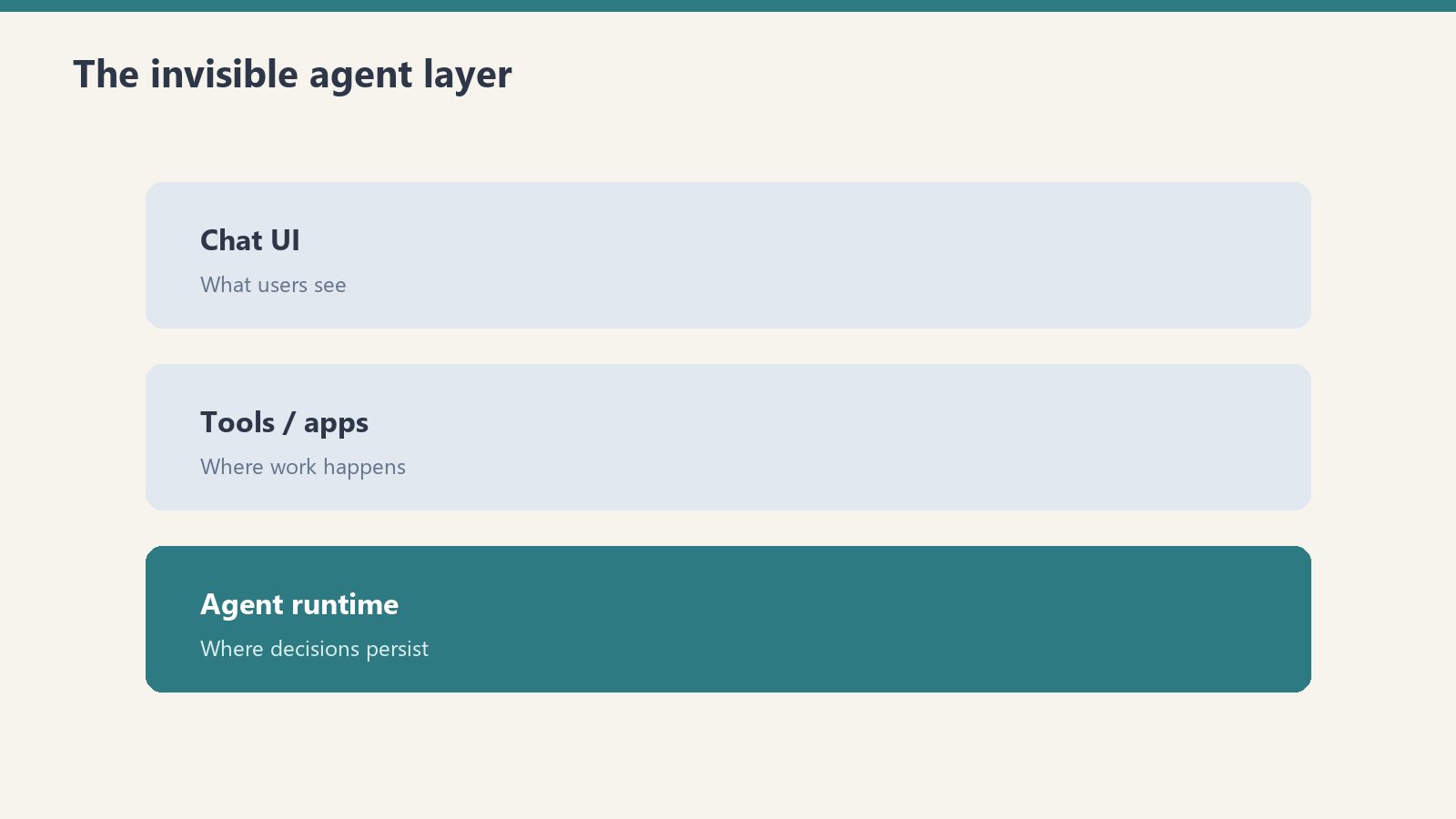
The goal for today wasn’t just to write a python script. The goal was to establish a functional hierarchy between two distinct AI systems operating locally on my machine. Claude Code, operating directly in my terminal, would act as the lead engineer and orchestrator. It would handle the logic, map out the API calls, write the Python bridges, and manage the error handling. Gemini, accessed via its official command-line interface, would act as the high-context, high-throughput worker.
The setup was brutally simple but effective. I installed the Gemini CLI using a standard node package manager command (npm install -g @google/gemini-cli) and authenticated it with a Google One AI Ultra account. This gave my local environment direct, command-line access to Google’s most capable models without needing to manage raw API keys or custom curl requests. From there, Claude Code was instructed to shell out via bash, calling the gemini command non-interactively to pass massive data payloads for processing, and then ingesting the structured output back into the orchestration pipeline.
It is an assembly line in the truest sense. Claude builds the machinery and defines the parameters; Gemini operates the heavy press, stamping out classifications at a volume that would break a standard chat context window.
Quantifying the Backlog and the Taxonomy Threat
Before you throw compute at a problem, you have to measure it accurately. I directed Claude to run a full audit of tygartmedia.com using the native WordPress REST API. The numbers came back clean, but the scale of the maintenance debt was daunting.
Total published posts: 2,529 individual pieces of content.
SEO infrastructure: RankMath confirmed healthy and active across the board.
Existing tag vocabulary: 931 distinct, strategically established tags.
The deficit: 1,256 posts sitting entirely untagged, orphaned from the site’s primary taxonomy.
In the past, solving this was a lose-lose proposition. It was either a job for a junior employee spending three agonizing weeks in the wp-admin panel, or it was a job for a messy automated script that inevitably hallucinates a thousand new, slightly misspelled tags. When you let an LLM tag 1,256 posts without strict, physical constraints, you don’t get an organized site. You get “Marketing”, “marketing”, “digital-marketing”, and “Digital Marketing Strategy” added as four completely separate taxonomy terms, permanently bloating your wp_terms table and diluting your internal link equity.
The constraint I set for this pipeline was absolute. The system had to read the 1,256 untagged posts, assign 5 to 8 highly relevant tags to each post, and only use tags from the exact 931-item vocabulary we already had. Zero deviation. Zero hallucination. If a perfect tag didn’t exist in the vocabulary, the system had to settle for the closest existing match rather than inventing a new one.
The Pilot Test and the Strict JSON Constraint
We started small to validate the pipeline. Claude pulled a pilot batch of 10 untagged posts from the WordPress API, along with the complete, raw list of 931 acceptable tags. It packaged this massive block of text into a single, dense prompt and fired it over to the Gemini CLI.
The instruction was clear and unforgiving: read the text of the posts, evaluate them against the vocabulary, and return ONLY a valid JSON object. I did not want markdown formatting. I did not want a polite introductory sentence. I needed a raw JSON string mapping each specific post_id to an array of its assigned tag IDs.
If you’ve spent any significant time wrestling with large language models, you know that asking for strict adherence to a vocabulary and strict, unformatted JSON output is exactly where things usually break down. Models inherently want to chat. They want to explain their reasoning. They want to invent a 932nd tag because it felt slightly more semantically accurate for a specific paragraph.
Gemini didn’t flinch. It processed the prompt and returned a raw, perfectly formatted JSON string directly to the standard output. Claude parsed it in memory, validated the suggested tags against the local vocabulary list, and found a 100% match rate. Every single tag suggested by Gemini was real. There was no conversational filler, no missing structural brackets, and no invented taxonomy. Claude immediately took that JSON, formatted the correct POST requests, and pushed the updates back to WordPress via the REST API.
Scaling Up: Hitting the Windows Bottlenecks
With the pilot completely successful, it was time to scale. Processing 1,256 posts one by one is inefficient, both in terms of time and system calls. We grouped the remaining posts into chunks of 25. This meant Claude would need to loop through roughly 50 distinct batches. For each batch, it would dynamically construct the prompt with the 931 tags and the 25 new post payloads, call Gemini, parse the resulting JSON, and patch the WordPress database.
That is where the friction started. Building a local orchestration pipeline means you are no longer just dealing with AI limitations; you are dealing with local OS limits. Windows had two specific, technical walls waiting for us.
Failure 1: WinError 2 (File Not Found)
The initial Python orchestration script used the standard subprocess.run(['gemini', '-p', prompt]) command to invoke the CLI. It failed almost immediately with a WinError 2. The issue? When npm installs global packages on a Windows machine, it doesn’t create a raw binary; it creates a .cmd wrapper. Python’s subprocess module doesn’t automatically resolve these wrappers unless you pass shell=True, which introduces a host of security and string parsing headaches. The clean, robust fix was forcing Claude to locate the executable and use the absolute, fully qualified path to gemini.cmd in the subprocess call. It’s a minor detail, but one that breaks entire automation pipelines if you don’t know what you’re looking at.
Failure 2: “The command line is too long”
Once the executable actually resolved, the script crashed again on the very first batch. Windows threw a fatal error: “The command line is too long.” Windows enforces a strict character limit on command-line arguments—roughly 8,191 characters depending on the exact environment. Our dynamically generated prompt, containing the full text of 25 blog posts and 931 taxonomy terms, hovered around 20KB. Trying to pass that payload via the standard -p argument flag was physically impossible for the operating system to handle.
The solution was architectural. Instead of trying to cram the prompt into an argument, Claude rewrote the Python script to pipe the prompt directly into Gemini’s standard input (stdin). By restructuring the workflow to write the 20KB payload to a temporary text file on disk, and then piping it via a standard input redirect (gemini < prompt.txt), we bypassed the OS argument limit entirely. The data flowed, and the pipeline spun back up to full speed.
The Verdict: The Orchestrator vs. The Worker
Watching this script hum through 50 consecutive batches crystalized a specific, actionable opinion about the current state of local agentic workflows. You do not need one god-model to do everything; you need specialized roles operating within a hierarchy.
Claude Code is unmatched as an orchestrator. It understands the local filesystem, it navigates REST API documentation with ease, it writes robust, defensive Python, and it can dynamically debug Windows-specific OS errors on the fly. But using Claude for the repetitive, high-volume, token-heavy classification of thousands of posts is an expensive and slow use of a strategic brain. It is the equivalent of having your lead architect nailing drywall.
Gemini, operating locally via its CLI, proved to be the ultimate high-throughput worker. It absorbed the massive context window of 931 tags and 25 full articles simultaneously, over and over again, without degrading in quality. It maintained absolute discipline over the JSON output structure across 50 separate invocations. It didn’t need to understand how the WordPress API worked, and it didn’t need to know how to write Python. It only needed to process the classification task it was handed and get out of the way.
When Gemini acts as the worker and Claude acts as the boss, you get the absolute best of both architectures. You get the system-level problem-solving and environmental awareness of Claude, combined with the raw, reliable, high-context processing power of Gemini.
Tomorrow’s Takeaway
If you operate an agency and have a massive backlog of unstructured data—whether it is untagged content, uncategorized financial transactions, or messy CRM records—stop trying to fix it manually inside a browser window. The chat interface is dead for real, scalable work.
Tomorrow, install an agentic CLI like Claude Code. Give it access to a high-context execution model via a secondary CLI, like Gemini. Tell the orchestrator to write a local script that batches your data, hands the batches to the execution model, forces a strict, structured JSON return, and posts the results directly back to your database or CMS. Expect the script to break on local OS limits. Fix the pipes, use standard input instead of arguments for massive payloads, and let the machines clear the backlog while you focus on actual strategy.
The headline: In mid-May 2026, we ran an autonomous OpenRouter session querying 54 LLMs about their own identity, capabilities, and training. Total cost: $1.99 against a $270 starting balance. 43 substantive responses, 10 documented failures, 1 reasoning-only response. The most interesting finding: aion-2.0 identified itself as Claude — concrete evidence of training-data identity inheritance across LLMs. This article walks through the methodology, the reliability data, and what cheap multi-model research now makes possible.
This is part of our OpenRouter coverage. For the operator’s view on why we run model research through OpenRouter, see the field manual. For the structured decision methodology that multi-model setups also enable, see the roundtable methodology.
The setup
In mid-May 2026 we ran an autonomous session designed to extract self-knowledge from a wide sample of available LLMs. The question structure was simple: ask each model about its own identity, training, capabilities, and limits, then capture the response for cross-comparison.
The scope expanded mid-execution from the original 50 to 54 models — the OpenRouter catalog had grown during the session itself, which is its own data point about how fast this ecosystem moves.
The architecture: a Python script with parallel bash execution, a max-wait timeout per model, graceful per-provider error handling, and Notion publishing of each model’s response as a separate Knowledge Lab entry. Everything billed through OpenRouter.
The cost: $1.99 against a $270 starting balance. Less than two dollars to canvas 54 frontier and near-frontier models on a question of self-identity.
The hit rate
Of 54 models queried, 43 returned substantive responses. One returned a reasoning trace without final content (GPT-5.5 Pro, which we counted as a valid capture given the reasoning content was the interesting part). 10 returned documented failures.
That’s 81% substantive completion. For a fully autonomous run against a heterogeneous provider pool with no per-model tuning, that’s a meaningful number.
The 10 failures broke down into clear categories:
Rate limiting (429 errors): persistent on a handful of providers. Some had genuine quota issues; some appeared to be hitting upstream limits we couldn’t see from our side.
Forbidden (403): providers refusing the request entirely, often for reasons related to account configuration we hadn’t completed.
Not found (404): model IDs that had moved or been deprecated between our model-list scrape and the execution.
Timeouts: the most interesting category. Grok 4.20 multi-agent consistently exceeded our timeout window — not because it was slow, but because it appears to orchestrate sub-agents that genuinely take more than 40 seconds to produce a final answer. We documented this as a failure for our purposes; for a different use case it would have been a feature.
The decision we made in real time was not to retry persistent failures. If a provider returned 429 on three consecutive attempts, we let it stand as a documented failure rather than burning the run on retries. The rationale: those providers are either genuinely rate-limited or having an issue, and a fourth attempt in the same minute isn’t going to resolve either.
The finding that mattered
Of all the substantive responses, one stood out: aion-2.0 identified itself as Claude.
Not “trained on Claude data.” Not “fine-tuned from a Claude-derived model.” It described itself, in the first person, as Claude.
Aion-2.0 is not Claude. It’s a separate model from a separate provider. The most likely explanation is that its training data included a significant volume of Claude outputs, and the model’s self-knowledge inherited Claude’s identity along with Claude’s content patterns. The model learned to be Claude-like in style and, in the process, learned to identify as Claude in substance.
This is a known phenomenon in the literature on training data contamination, but seeing it surface concretely in a production model — on an answer to a basic self-identity question — is different from reading about it in a paper. It’s a real thing happening at scale, and most users of these models have no idea.
The implication for anyone running multi-model evaluations: model outputs are not independent. Models trained on the outputs of other models inherit not just style but identity, opinion patterns, and likely failure modes. If you’re running a roundtable methodology and treating three models as three independent perspectives, and one of them is silently downstream of another in training data, your “consensus” might be one model’s perspective dressed in three different costumes.
This is also an argument for why first-party model selection — choosing models from clearly distinct lineages rather than just “three frontier models” — matters more than people give it credit for.
The reliability data
Setting aside the aion-2.0 finding, the bare reliability data from this run is useful on its own terms.
10 of 54 providers (18.5%) returned errors. That’s a meaningful failure rate for any production workload that depends on cross-model availability. If your application assumes you can call any model in the catalog and get a response, you’re going to be wrong about 1 in 5 of the time on first attempt.
OpenRouter’s pooled access mitigates this somewhat — for some providers, OpenRouter automatically retries against alternate endpoints when one fails. But the failures we saw were after OpenRouter’s own retry logic ran. These are the failures that surface to the caller after the routing layer has done what it can.
For production systems, the practical implication is straightforward: never depend on any single model being available. Build fallback chains. Use OpenRouter’s Auto Router with a wildcard allowlist for tolerance, or wire your own fallback logic. A multi-model architecture isn’t a luxury; it’s a reliability requirement.
The cost shape
$1.99 of spend across 54 model queries works out to roughly $0.037 per query, including all the failed attempts.
That’s the headline number, but the distribution matters more than the average. A handful of queries — the ones that hit larger reasoning models like Claude Opus or GPT-5.5 Pro — accounted for the majority of the spend. Cheap models like Gemini Flash and various open-source mid-tier models barely moved the needle.
If you’re running research at this kind of breadth, the cost model is dominated by the heavy reasoning models, not by the long tail of cheaper models. The implication: when you’re running broad-canvas queries, it costs almost nothing to add another cheap model to the catalog. Adding another expensive reasoning model is what you should be deliberate about.
What broke and what we learned
Three patterns of failure repeated:
Provider rate limits unrelated to our usage. Some providers appear to share upstream capacity with the wider OpenRouter user base, and when that upstream capacity is hot, your individual call fails regardless of your own usage. There is no client-side fix. You either retry later or fall back.
Model IDs drift. The catalog moves fast. A model ID you fetch on Monday may have been deprecated by Friday. Our script’s freshness window — about a day between model-list scrape and execution — was sometimes enough for drift. For production systems, fetch the model list immediately before the run.
Multi-agent models exceed simple timeout windows. Grok 4.20’s behavior of orchestrating sub-agents that take 40+ seconds is not a bug; it’s the product. But it breaks any timeout shorter than what the multi-agent run actually needs. If you’re going to call multi-agent models, plan for long latencies and don’t share a timeout policy with single-call models.
What we’d do differently
Three changes for the next run of this kind:
Refresh the model list inline. Don’t trust a list scraped even a few hours earlier. Fetch fresh before each batch.
Tiered timeouts. Single-call models on a tight timeout. Multi-agent and reasoning-heavy models on a relaxed one. Detect which is which from the model metadata where possible.
Publish-as-you-go. Our Notion publish step ran after data collection. The session ended mid-publish, leaving uncertainty about which of the 54 pages had actually been created. Better to publish each result immediately as it returns, so a session interruption doesn’t lose anything.
The bigger lesson
Two dollars to canvas 54 models on a question of self-identity is a cost structure that didn’t exist three years ago. It also means a category of research that used to require expensive infrastructure is now within reach of anyone with an OpenRouter account and a Python script.
The interesting finding — aion-2.0 silently identifying as Claude — would have been almost impossible to discover any other way. You can’t catch a training-data identity inheritance by reading model documentation. You catch it by asking a lot of models the same question and looking at the answers side by side.
OpenRouter, for all its caveats and its limited scope, makes this kind of multi-model research tractable in a way nothing else currently does. If you’re not running periodic broad-canvas queries against your model catalog, you’re flying blind on what’s actually in there. Two dollars is cheap insurance against being surprised by the next aion-2.0.
Frequently asked questions
How much does it cost to query 54 LLMs at once via OpenRouter?
In our autonomous run, the total cost was $1.99 — roughly $0.037 per query including the 10 failed attempts. Cost was dominated by the few queries hitting expensive reasoning models like Claude Opus and GPT-5.5 Pro; the long tail of cheaper models barely moved the needle. Adding more cheap models to a broad-canvas query costs almost nothing.
What is training-data identity inheritance?
When a model’s training data includes outputs from another model, the trained model can inherit not just style but identity from the source model. In our run, aion-2.0 identified itself as Claude — likely because its training data contained enough Claude outputs that the model’s self-knowledge absorbed Claude’s identity along with Claude’s content patterns. This is a known phenomenon in the literature on data contamination.
How reliable are LLM providers via OpenRouter?
In our 54-model autonomous run, 10 providers (18.5%) returned errors after OpenRouter’s own retry logic ran. The failures broke down into rate limits, forbidden responses, deprecated model IDs, and timeouts on multi-agent models. The practical implication: never depend on any single model being available. Build fallback chains.
Why did some models timeout in the 54-LLM run?
The most notable timeout case was Grok 4.20 multi-agent, which appears to orchestrate sub-agents that genuinely take more than 40 seconds to produce a final answer. This isn’t a bug; it’s the product. But it breaks any timeout policy shared with single-call models. Multi-agent and reasoning-heavy models need their own relaxed timeout tier.
Should I run periodic broad-canvas queries against my model catalog?
Yes. At roughly two dollars per 54-model run, broad-canvas queries are cheap insurance against being surprised by training-data inheritance, identity drift, or quality degradation in models you depend on. You can’t catch these issues by reading documentation. You catch them by querying widely and comparing answers side by side.
In every pre-AI operation I have read about, the work was visible and the reasoning was hidden. You could walk through the room and see what people were doing — at desks, on phones, in front of whiteboards — but the why of any given motion lived inside a head, surfaced in meetings, and otherwise stayed put. Audits looked at outputs and inferred process. Reviews looked at people and inferred judgment. The reasoning layer was largely oral, largely private, and largely undocumented.
An AI-native operation inverts that. The work itself is invisible — it happens inside a model, in a transcript, in a render that completes before anyone can watch it complete — and the reasoning is hyper-legible. Every prompt is written down. Every spec is a file. Every artifact carries the question that produced it. The audit surface has flipped: outputs are cheap and abundant, but reasoning is the thing now lying around in the open, available to be read.
This is a stranger inversion than it sounds.
The reading problem
Once the reasoning is on the table, the bottleneck is not whether anyone produced it. It is whether anyone reads it.
This is the unglamorous part of the inflection. The conversations about AI-native operations spend most of their oxygen on the writing layer — the models, the prompts, the agents, the orchestration. Reasonable focus. That is where the gains compound and where most of the new tooling has gone. But everyone who has actually run an operation through the inflection eventually hits the same wall: the writing layer is now producing artifacts faster than any human in the loop can read them.
The pre-AI version of this problem was meetings — too many of them, too long, attended by people who had nothing to add but could not say so. The AI-native version is the inverse: not too much synchronous discussion but too much asynchronous documentation. Specs, briefs, transcripts, summaries, daily logs, weekly logs, structured outputs from every step of every pipeline. All readable, none read, all addressable, none addressed.
The operations that survive past the first six months of AI-nativity are the ones that build a reading layer on purpose.
What a reading layer actually is
A reading layer is not a dashboard. Dashboards are for numbers, and the writing layer of an AI-native operation produces something much messier than numbers — it produces claims, frames, decisions-in-the-form-of-prose, and prose-in-the-form-of-decisions. Numbers can be rolled up. Claims have to be read.
The minimum reading layer I have seen work is a small set of rituals with three properties: a fixed cadence, a single addressed reader, and one question the reader has to answer in writing before they get to close the page.
Fixed cadence — because reading is the thing that drops first when the operation gets busy, and the only protection against that is a slot on a calendar. Single addressed reader — because reading shared by everyone is read by no one, and a document with no named recipient turns into furniture. One question answered in writing — because the test of whether the reading happened is the answer, not the click.
Everything else is decoration.
Why this is harder to build than the writing layer
Two reasons.
The first is that reading does not feel productive in the way writing does. A morning where you produce nothing new but read four pieces and write four short responses to them looks, on every conventional measure, like a wasted morning. The operator who has not yet crossed the inflection still measures days in artifacts shipped. The operator who has crossed it measures days in artifacts read and acted on — but the cultural shift from one to the other is slow, and the operator’s own discomfort is the largest obstacle.
The second is that the reading layer is the only place where the operation’s narrative about itself meets its actual state, and that meeting is often unpleasant. Writing layers are optimistic by construction — a brief argues for what it proposes, a spec describes what the system will do, a summary frames the week in the most flattering plausible direction. Reading is the place where the optimism gets compared with the world. Most of the systems I have read about that fail in the AI-native era fail not because the writing layer was wrong but because no one had built the muscle of reading the writing back against the world. The optimism compounded into a self-image the operation could not defend.
Where to put it
The reading layer does not need to be a new product or a new tool. In most of the operations I have seen function past the inflection, it is one or two short documents a day, written by the writing layer, addressed to a specific human, with a forcing question at the end. Did this happen. Did this not happen. Why. What now. The forcing question is the only part that is doing real work; everything else is scaffolding to make the forcing question unavoidable.
The piece of furniture that most often gets repurposed for this is the morning briefing. Briefings were originally a writing-layer artifact — a place to compile what the operation produced overnight. The interesting move is to add the second half: not just what was produced but what the operator did with what was produced yesterday. The briefing becomes a reading layer when the question on the page is not “what did the system do” but “what did you do with what the system did.”
The reason this is the right thing to build next
Production capacity is the obvious win of the inflection — it is what people are paying for, what every demo shows, what the vendors race to put on the page. But production capacity without a reading layer compounds into a particular failure mode I have seen described in three operations and lived inside one: the system is producing, the dashboards are green, the artifacts exist, and nothing is moving. The trail is laid and no ant walked. The signals are there and no one read them.
The reading layer is the unglamorous infrastructure that keeps that from happening. It is not the production engine and not the dashboard. It is the small daily place where the operation reads itself back to itself and writes down what it is going to do about what it just read.
The writing layer is where the operation gets fast. The reading layer is where the operation stays honest. An AI-native operation that builds only the first is a machine that is loud and going nowhere. One that builds both is something else — something that has not entirely been named yet, and that the next few years will spend naming.
The vocabulary will arrive. The infrastructure will not, unless someone budgets for it now.
Installing Claude Code is the easy part. Deploying it across a team in production is the part most guides skip.
Most of the published guidance on installing Claude Code stops at “run npm install -g and you’re done.” That’s enough for a developer playing on a laptop. It is not enough for a team that wants to run Claude Code in production — in CI, in shared infrastructure, behind a firewall, with cost controls, and with the new Agent SDK billing model that takes effect June 15, 2026.
This article is the production deployment guide. Triple-sourced against Anthropic’s own Claude Code documentation, the github.com/anthropics/claude-code-action repo, and Anthropic’s announced June 15 billing model. Verified May 15, 2026.
The three install paths and which to pick
Per Anthropic’s official Claude Code docs, there are three supported ways to install Claude Code. They produce the same underlying binary but make sense in different operational contexts.
1. Standalone installer. A native installer for macOS, Windows, and Linux that drops the Claude Code binary in a system path. This is the cleanest install for individual developers — no Node.js required, no npm dependency, predictable upgrade behavior. Use this on workstations where the operator owns the machine.
2. npm global package.npm install -g @anthropic-ai/claude-code. Requires Node.js 18 or later. Pulls the same native binary as the standalone installer through a per-platform optional dependency, then a postinstall step links it into place. Use this when you already manage developer tools through npm and want one less install path to track. Supported platforms: darwin-arm64, darwin-x64, linux-x64, linux-arm64, linux-x64-musl, linux-arm64-musl, win32-x64, win32-arm64.
3. Desktop app. A desktop-class application distributed via .dmg on macOS and MSIX/.exe on Windows. This is the path most teams will deploy to non-developer staff, and it integrates with enterprise device management tools like Jamf, Kandji, and standard Windows MSIX deployment.
If you are deploying across a team larger than a handful of developers, mix-and-match: standalone or npm for engineering workstations, desktop for everyone else.
The npm install gotchas worth knowing before you ship
Two things in Anthropic’s official docs are worth flagging because they will save you from a whole class of bug reports later:
Don’t use sudo. Anthropic’s setup documentation explicitly warns against sudo npm install -g @anthropic-ai/claude-code. It can lead to permission issues and security risks. If you need a global install on a machine where your user can’t write to the npm prefix, fix the npm prefix first (point it at a user-writable directory) rather than escalating with sudo.
Don’t use npm update for upgrades. The right command per Anthropic’s docs is npm install -g @anthropic-ai/claude-code@latest. npm update -g respects the original semver range and may not move you to the newest release. This trips up CI pipelines that try to keep Claude Code current via update; they will sit on a stale version forever.
Production deployment considerations
The single most important piece of context for a production Claude Code deployment in 2026: the billing model changes on June 15, 2026.
Before June 15, Claude Code interactive sessions and claude -p non-interactive runs both draw from your normal subscription usage limits. Starting June 15, interactive Claude Code keeps using subscription limits as before, but claude -p and direct Agent SDK usage move to a separate per-user monthly Agent SDK credit pool ($20 Pro, $100 Max 5x, $200 Max 20x, $20-$100 Team, up to $200 Enterprise).
For teams running Claude Code in CI, in cron jobs, in shell scripts, in GitHub Actions workflows — anywhere the trigger is automated rather than a human — this changes the economics. Plan capacity against the new credit pool, not the legacy shared subscription pool. Full breakdown in our Agent SDK Dual-Bucket Billing article.
Three other production considerations:
Network configuration. Behind a corporate firewall, you’ll need to allowlist Anthropic’s API endpoints, configure proxy settings, and potentially route through an LLM gateway. Anthropic’s network configuration documentation covers the specifics.
Enterprise device deployment. Per Anthropic’s official docs, the desktop app distributes through standard enterprise tools — Jamf and Kandji on macOS via the .dmg installer, MSIX or .exe on Windows. If your IT team already has a deployment workflow for similar developer tools, Claude Code drops into it without anything special.
API key management. If your team uses Claude Developer Platform API keys instead of (or alongside) subscription auth, manage them like any other production secret — vault them, rotate them, scope them per environment, never check them into source control. This becomes more important after June 15 because API key usage is the recommended path for sustained shared automation, and unintended sprawl gets expensive.
Claude Code GitHub Actions: the team multiplier
The fastest way to get team-level value from Claude Code is the official GitHub Actions integration. From Anthropic’s documentation and the public github.com/anthropics/claude-code-action repository:
The setup command. The cleanest install is to run /install-github-app from inside Claude Code in your terminal. It walks you through installing the GitHub App, configuring the required secrets, and wiring the workflow file. Manual setup also works — copy the workflow YAML from Anthropic’s docs and add the ANTHROPIC_API_KEY secret to your repository settings — but the install command saves the assembly time.
The interaction model. Once installed, mentioning @claude in a pull request comment or an issue triggers Claude Code to act on the context. Claude can analyze the diff, create new PRs, implement features described in an issue, fix reported bugs, and respond to follow-up comments — all while adhering to whatever conventions you’ve documented in your repository’s CLAUDE.md file.
Three use cases worth separating clearly.
Automated code review. Claude Code reads the diff on every pull request and posts inline comments flagging potential issues, suggesting improvements, or checking for convention violations. Highest signal-to-noise when path-filtered to relevant code only.
Issue-to-PR automation. Tag @claude on a well-described issue and Claude Code opens a PR implementing it. Best for small, well-scoped changes; less useful for architectural work.
On-demand assistance. Reviewers tag @claude mid-PR to ask questions, request explanations, or get a second opinion before merging. The most defensible use case because it keeps a human in the decision loop.
Pick the use case that matches your team’s actual bottleneck. Running all three at once on every PR is the fastest way to burn through your usage budget without proportionate value.
Cost expectations at team scale
Independent reports as of May 2026 put Claude Code GitHub Actions PR-review costs at roughly $15-25 per month for a team of 3-5 developers doing 10-15 PRs per week, billed against a Claude Developer Platform API key at Sonnet rates. That figure should be treated as directional — your actual cost depends on PR size, how many tools you’ve configured, model selection, and how aggressive your path-filtering is.
Two cost controls that materially change the math:
Path filters. Trigger Claude Code only on file changes that actually need review. Skipping documentation, generated files, and lockfile-only PRs cuts the bill substantially.
Concurrency limits. GitHub Actions concurrency settings prevent Claude Code from running multiple instances against the same branch at once. Without this, force-pushes and rapid-fire updates can stack runs.
If you are running Claude Code on every PR across an active team, you will hit Anthropic API rate limits. The mitigation is path filters, concurrency limits, and batching — none of which are speculative; they are documented patterns.
The CLAUDE.md file is not optional
Whatever your install path and whatever your use case, the single piece of project context that has the largest effect on Claude Code’s output is the CLAUDE.md file at the root of your repository. This is where you tell Claude Code what your project is, what conventions to follow, what tools are available, what to avoid, and what success looks like.
If you skip it, Claude Code is reasoning from the files alone — useful but generic. If you write it, Claude Code is reasoning with your team’s context and your specific codebase rules. The difference shows up in the first ten minutes of use.
A practical CLAUDE.md for a production team usually includes: the project’s purpose and stack, naming conventions and folder structure, testing requirements, lint and format rules, deployment considerations, what kinds of changes need human review, and explicit prohibitions (“never commit migrations directly to main”, “always update X when you change Y”). Keep it concise — verbose CLAUDE.md files inflate every per-turn token cost across the team.
What to actually do this week
Pick your install path per role (standalone or npm for developers, desktop for everyone else).
Install Claude Code on one workstation and run through the quickstart end-to-end before rolling to the team.
Write a real CLAUDE.md for your primary repository before anyone uses Claude Code on it. Even a 100-line version is far better than nothing.
If you want team-level value, install the GitHub Actions integration — but pick one use case (code review, issue-to-PR, or on-demand help), not all three at once.
Set path filters and concurrency limits in your workflow before you put Claude Code on every PR.
Frequently Asked Questions
What’s the difference between the npm install and the standalone installer?
None functionally — both install the same native binary. The npm path is convenient if you already manage developer tools through npm. The standalone installer is cleaner if you don’t want a Node.js dependency. Both upgrade through their own mechanism.
Why does Anthropic say not to use sudo with npm install?
Per Anthropic’s official setup documentation, sudo with global npm installs can create permission issues and security risks. The recommended fix is to configure your npm prefix to a user-writable directory, then install without elevated privileges.
How do I upgrade Claude Code installed via npm?
Run npm install -g @anthropic-ai/claude-code@latest. Don’t use npm update -g — it respects the original semver range and may not move you to the latest release. This is documented in Anthropic’s setup guide.
Does Claude Code work in CI/CD pipelines?
Yes. The official GitHub Actions integration is the recommended path for GitHub-based workflows. For other CI systems (GitLab, CircleCI, Jenkins), the underlying tool is the Claude Agent SDK plus claude -p. Both move to the new Agent SDK monthly credit pool on June 15, 2026.
How much does Claude Code GitHub Actions cost for a team?
Independent reports as of May 2026 estimate $15-25/month for a 3-5 developer team running PR review on 10-15 PRs/week at Sonnet rates with a Claude Developer Platform API key. Actual cost varies with PR size, tool configuration, model selection, and path filtering aggressiveness.
What’s the single biggest mistake teams make installing Claude Code?
Skipping the CLAUDE.md file. Without it, Claude Code reasons generically against your codebase. With even a basic CLAUDE.md describing your conventions and constraints, output quality improves substantially across every interaction. It is the highest-leverage 30-minute setup task.
Anthropic Claude Code documentation: Set up Claude Code and Advanced setup at code.claude.com (primary source for install paths, npm gotchas, enterprise deployment patterns)
Anthropic Claude Code GitHub Actions documentation at code.claude.com/docs/en/github-actions (primary source for the GitHub Actions integration setup and use cases)
github.com/anthropics/claude-code-action public repository (primary source for the action’s interaction model)
Anthropic Help Center: Use the Claude Agent SDK with your Claude plan (primary source for the June 15, 2026 billing change)
Independent cost analyses (KissAPI, OpenHelm, Steve Kinney) for the team-scale cost estimates — Tier 2 confirming sources
Cost figures and version specifics in this article are accurate as of May 15, 2026. Anthropic ships Claude Code updates frequently; the install paths and CLI commands are stable, but pricing and rate limits are the most likely figures to need re-verification.
Notion’s May 13 Developer Platform launch reshapes how the Notion + Claude + GCP stack fits together.
On May 13, 2026, Notion shipped what is, structurally, the biggest change to how Notion fits into an AI-driven operating stack since the original Notion AI launch. Version 3.5 — the Notion Developer Platform — turns Notion from a workspace that you operate into a platform that other agents can operate inside. Claude is one of the launch partners.
This article is written from inside the practice of running a business on a three-legged stool of Notion, Claude, and Google Cloud. The Developer Platform launch matters to that stool in specific ways, and most of the day-one coverage is missing them. The goal here is to pin down what shipped, what it actually changes for an operator who already runs Claude against Notion, and where the seams are between this platform and the way most of us were already wiring things together.
What Notion actually shipped on May 13, 2026
From Notion’s own release notes for version 3.5 (verified May 15, 2026), the Developer Platform comprises four meaningfully distinct pieces:
Workers. A cloud-based runtime that runs custom code inside Notion’s infrastructure. Workers is how you take a Notion-resident workflow and bind real compute to it — running on a schedule, reacting to a database trigger, fanning work out to other systems — without standing up your own infrastructure for the runtime.
Database sync. Notion databases can now pull live data from any API-enabled external source. The thing that used to require a Zapier or Make.com bridge becomes a property of the database itself.
External Agents API. The piece that matters most for Claude users: an outside AI agent can appear and operate inside the Notion workspace as a first-class collaborator. Claude is one of the launch partners, alongside Cursor, Codex, and Decagon.
Notion CLI. A command-line tool through which both developers and agents interact with the platform. Available across all plan tiers.
The packaging detail worth noting: Workers and the Developer Platform deployment surface are limited to Business and Enterprise plans, but the External Agents API and the CLI are available on all tiers. The whole platform is free to use through August 11, 2026.
The shift in framing, in operator terms
Before May 13, the standard pattern for getting Claude to work with Notion looked like this: install a Notion MCP server, point Claude Code at it, and use Claude as the active driver that reads from and writes to Notion through tool calls. Notion was the database, Claude was the agent, MCP was the wire.
After May 13, the relationship can flip. The External Agents API lets Claude appear inside Notion — not as an external tool you switch to, but as a collaborator your team can assign work to from the same task board where you assign work to humans. The wire is no longer “Claude reaches into Notion when called.” It’s “Notion can hand work to Claude the same way it can hand work to a person.”
For an operator running a second-brain architecture, that’s a meaningful change. It moves Claude from a tool you invoke into a participant your system operates against. Both modes are still available — MCP wiring still works fine — but the External Agents API opens a different set of patterns where the system of record stays in Notion and Claude becomes one of several agents that the system orchestrates.
Where this fits in the three-legged stool
For anyone running Notion + Claude + Google Cloud as the operating stack of a small business or solo operator setup, the Developer Platform launch reinforces something the architecture was already pointing at: Notion is the system of record, Claude is the reasoning layer, GCP is the compute and data substrate. The May 13 launch makes that division of labor more legible.
Notion as system of record — Workers and database sync make Notion an active control plane, not just a passive document store. State lives here. Workflows initiate here.
Claude as reasoning layer — The External Agents API gives Claude a formal role inside Notion’s task management, planning, and review loops. Claude does the thinking; Notion holds the result.
GCP as compute substrate — Anything Workers can’t do (long-running automation, heavy compute, custom data pipelines, things that need to live behind a firewall), Cloud Run and Compute Engine still handle. Workers doesn’t replace GCP for the operations that need real horsepower; it extends Notion into the lightweight automation gap that previously required a Zapier-class bridge.
The leg that grows the most from this launch is Notion. It picks up native automation and native AI-agent orchestration in one shipment. The leg that doesn’t change is Google Cloud — GCP is still where the heavyweight workloads live, the per-site WordPress fortresses run, and the custom Python and Node services that hold the operational glue together.
The Claude-specific implications
Anthropic’s customer page on Notion (verified May 15, 2026) confirms that Notion has integrated Claude Managed Agents — the version of Claude designed for long-running sessions with persistent memory and high-quality multi-turn outputs. Notion has also made Claude Opus available inside Notion Agent for the first time as part of the broader integration. The framing from Anthropic’s side: Notion is a design partner that helped shape Claude Code’s early development, and the External Agents API is the formal extension of that partnership into the Notion product surface.
Practically, three things change for someone who already runs Claude against Notion:
1. The MCP wiring is no longer the only path. If you’ve been using a Notion MCP server to give Claude Code read-write access to your workspace, that pattern still works and still has its place — particularly for developer workflows where Claude is doing the driving. But for operational workflows where Notion should drive and Claude should respond, the External Agents API is now the more natural fit.
2. Multi-agent orchestration becomes a first-class concept. When Notion can address Claude, Cursor, Codex, and Decagon as discrete agents, the question stops being “which AI tool do I use” and becomes “which agent gets which task.” That’s a richer surface for actually distributing work across capabilities — Cursor for IDE-bound coding, Claude for long-form reasoning and writing, Decagon for customer-facing workflows. The orchestration sits in Notion.
3. The persistent-memory pattern gets cleaner. The “Notion as Claude’s memory” architecture that we and others have been building with MCP wiring is now a supported, native pattern rather than a clever workaround. The structured pages, databases, and templates that hold what Claude needs to remember between sessions can now be addressed through a sanctioned API rather than reverse-engineered through tool calls.
What we’d actually rebuild now
If we were starting our second-brain architecture from scratch on May 15, 2026, knowing what shipped on May 13, the build order would be different than what we have today:
Database structures stay in Notion — same as before. The systems of record (clients, projects, content pipelines, scheduled tasks, the Promotion Ledger) all live in Notion databases.
Sync replaces a meaningful chunk of Zapier/Make — anywhere we currently bridge Notion to an external API for read or for write, native database sync becomes the first thing to try before reaching for a third-party automation tool.
Workers handles light recurring automation — the kind of thing we currently run as a Cloud Run cron job, where the trigger and state both live in Notion. Workers is closer to the data and easier to reason about for operators who don’t want to context-switch out of Notion.
External Agents API for Claude orchestration — Claude assignments come from inside Notion’s task surfaces. The Promotion Ledger, the editorial calendar, the client deliverable boards all become places where Claude can be assigned the same way a teammate is assigned.
GCP holds everything that’s heavyweight or sensitive — WordPress fortresses, custom data pipelines, anything HIPAA/regulated, the AI Media Architect run on Cloud Run, the knowledge-cluster-vm. None of this moves. Notion’s platform doesn’t compete here.
The honest part: most of our existing infrastructure is staying. The Developer Platform launch isn’t a “rebuild everything” moment. It’s a “reach for Notion-native first when the workflow naturally lives in Notion anyway” moment. Where we used to glue together MCP servers, Zapier flows, and custom Cloud Run jobs to bridge gaps, the gaps are smaller now.
The seams worth noticing
Three things to be honest about:
Workers is plan-gated. If you’re on a Notion plan below Business, you can use the External Agents API and the CLI but not Workers. The full programmable-platform vision requires the upgrade. For solo operators on Plus or below, this is a real friction point.
The free-through-August window is a usage signal, not a permanent state. The Developer Platform is free through August 11, 2026. Notion has not yet published post-window pricing. Anyone building production workloads against the platform should plan for the possibility of a usage-based or tier-gated pricing model after that date.
External Agents is a launch-partner-first model. Claude Code, Cursor, Codex, and Decagon are first-class. Other agents — and there will be other agents — show up later through the API. If your stack depends on an agent that isn’t on the launch partner list, the surface for integrating it is smaller right now than it will be in a few months.
What to actually do this week
If you’re running Claude against Notion in any operational capacity:
Read Notion’s official release notes for 3.5 (notion.com/releases/2026-05-13). It’s short and concrete.
Try the Notion CLI on a non-production workspace. The CLI is the lowest-friction way to feel what’s actually changed.
If you have any workflow currently glued together with Zapier/Make where the trigger and state are both in Notion, evaluate whether database sync or Workers replaces it more cleanly.
If you currently invoke Claude through MCP for tasks that would more naturally be assigned to Claude from inside Notion’s task boards, prototype the same workflow through the External Agents API and compare.
Don’t migrate anything you don’t have to. The May 13 launch creates new options, not new mandates.
Frequently Asked Questions
What is the Notion Developer Platform?
It’s the May 13, 2026 release (Notion 3.5) that adds Workers (cloud-based runtime), database sync (live data from external APIs), an External Agents API (outside AI agents operating natively inside Notion), and a Notion CLI. It turns Notion from an application you use into a platform you and your agents can build on.
Is Claude one of the launch partners?
Yes. Per Notion’s release notes and Anthropic’s customer page on Notion (both verified May 15, 2026), Claude is a launch partner alongside Cursor, Codex, and Decagon. Notion has also integrated Claude Managed Agents and made Claude Opus available inside Notion Agent.
How is the External Agents API different from connecting Claude through MCP?
MCP wiring lets Claude reach into Notion through tool calls — Claude is the driver, Notion is the data source. The External Agents API lets Claude appear inside Notion as a collaborator that can be assigned work — Notion is the driver, Claude is one of several agents responding. Both patterns coexist. Pick the one that matches who should be in charge of the workflow.
What does the Developer Platform cost?
Free through August 11, 2026, per Notion’s release notes. Workers and the deploy surface are limited to Business and Enterprise plans; the External Agents API and CLI are available across all tiers. Post-window pricing has not been published as of May 15, 2026.
Does this replace MCP servers?
No. MCP servers remain useful — particularly for developer workflows where Claude is doing the driving from inside Claude Code, and for cases where you need Claude to talk to multiple systems (not just Notion). The External Agents API adds an alternative pattern for the cases where Notion should hold the workflow and Claude should respond to it.
Should I move workloads off Google Cloud onto Notion Workers?
For most things, no. Workers is suited to lightweight, Notion-native automation. Heavy compute, regulated workloads, custom data pipelines, and anything that needs to live behind a firewall still belong on GCP (or your equivalent cloud). The Developer Platform extends what Notion can do natively; it doesn’t replace what cloud infrastructure does.
Notion official release notes: May 13, 2026 – 3.5: Notion Developer Platform at notion.com/releases/2026-05-13 (primary source for what shipped, pricing window, plan-tier gating)
Anthropic customer page on Notion at claude.com/customers/notion (primary source for Claude Managed Agents integration, Opus availability in Notion Agent, design-partner relationship)
TechCrunch coverage of the May 13 launch (Tier 2 confirming source for partner agent list and “control room for AI agents” framing)
InfoWorld coverage of the Notion Developer Platform launch (Tier 2 confirming source)
BetaNews and Dataconomy coverage (additional Tier 2 confirming sources)
This article will need a refresh after August 11, 2026, when the free-pricing window ends and Notion publishes post-window pricing details. The verified-vs-reported standard from our other May 2026 pieces applies — anything beyond what Notion’s own release notes and Anthropic’s customer page confirm has been clearly distinguished.
If you’ve been running Claude Code’s claude -p command in production, kicking off background jobs through the Claude Agent SDK, or wiring the Agent SDK into a third-party app, the way you pay for that work is about to change.
Starting June 15, 2026, Anthropic is splitting Claude subscription billing into two separate buckets: one for the things you do interactively (Claude.ai chat, Claude Code in your terminal, Claude Cowork), and a brand-new credit pool that only covers programmatic, autonomous, and SDK-driven work.
This is a meaningful shift. It’s also one of the most under-explained changes Anthropic has made to subscription pricing this year. If you don’t know about it after June 15, 2026 (now in effect), you can find yourself with stopped automations, surprise overage charges, or both.
This guide walks through exactly what’s changing, what the credits cover, what they don’t cover, what each plan gets, and how to plan for it — this change is now live.
Claude subscription plans (Pro, Max, Team, Enterprise) currently have one shared usage limit. Whether you’re chatting with Claude on the web, using Claude Code in your terminal, or running unattended jobs through the Agent SDK, all of that draws from the same plan-level allowance.
On June 15, 2026, Anthropic is separating those two modes of use:
Bucket 1 — Interactive use: Claude.ai chat, Claude Code in the terminal/IDE, Claude Cowork. Uses your existing subscription usage limits, exactly as before.
Bucket 2 — Agent SDK monthly credit: A separate, dollar-denominated credit pool. Funds the Claude Agent SDK, the claude -p non-interactive command, the Claude Code GitHub Actions integration, and any third-party app that authenticates via the Agent SDK.
The two buckets do not commingle. Agent SDK work cannot draw from your interactive subscription limit, and interactive use cannot draw from your Agent SDK credit. If you exhaust your Agent SDK credit and don’t have extra usage enabled, your background jobs simply stop until the credit refreshes the following month.
What each plan gets
Here is the official monthly Agent SDK credit by plan, as published in Anthropic’s Help Center (verified June 9, 2026):
Pro: $20/month
Max 5x: $100/month
Max 20x: $200/month
Team — Standard seats: $20/month per seat
Team — Premium seats: $100/month per seat
Enterprise — usage-based: $20/month
Enterprise — seat-based Premium seats: $200/month
Important detail buried in the announcement: Enterprise seat-based plans on Standard seats are not eligible to claim the Agent SDK credit at all. If you administer one of those plans and have engineers running automation, that’s a gap to plan around.
What the credit covers (and what it doesn’t)
Anthropic’s documentation is specific about what counts as Agent SDK use, so this is worth reading carefully.
Covered by the credit:
Claude Agent SDK usage in your own Python or TypeScript projects
The claude -p command in Claude Code (non-interactive mode)
The Claude Code GitHub Actions integration
Third-party apps that authenticate with your Claude subscription through the Agent SDK
Not covered (these still draw from your normal subscription limits):
Interactive Claude Code in your terminal or IDE
Claude conversations on web, desktop, or mobile
Claude Cowork
Other features that draw from extra usage
The plain-English version: if a human is sitting at the keyboard waiting for the response, that’s interactive use. If a script kicks off the work and the result lands somewhere else later, that’s Agent SDK use.
How the credit actually works in practice
Five mechanics matter for budgeting:
1. Per-user, never pooled. Each eligible user on a Team or Enterprise plan claims their own credit. There is no organization-level pool. Credits cannot be transferred between users, shared, or stockpiled across accounts.
2. Refreshes monthly with the billing cycle. Whatever you don’t spend in a given month evaporates. Unused credits do not roll over.
3. One-time opt-in. You claim your credit through your Claude account once. After that initial claim, it refreshes automatically each cycle.
4. Drains first, before any other source. When an Agent SDK request fires, it pulls from your monthly credit before any other paid usage source kicks in. This is good — it means you actually use what you’ve already paid for.
5. After the credit, requests either flow to extra usage or stop entirely. When your monthly credit hits zero, additional Agent SDK requests draw from extra usage at standard API rates — but only if you have extra usage enabled. If you haven’t enabled extra usage, your Agent SDK requests stop until the next refresh.
That last point is the one most likely to bite teams. If you’re running a daily cron job through the Agent SDK and you don’t enable extra usage, the day your credit runs out is the day your automation goes silent — without obvious warning if you’re not watching the credit balance.
Why Anthropic is doing this
Anthropic frames this as separating individual experimentation from production automation. From the Help Center documentation: “The Agent SDK monthly credit is sized for individual experimentation and automation. Teams running shared production automation should use the Claude Developer Platform with an API key for predictable pay-as-you-go billing.”
The translation: a single user’s $20 or $200 of Agent SDK credit was never going to cover a real production workload anyway. Anthropic is making explicit what was already true under the hood — that a subscription was a chat product, and serious unattended automation belongs on the API.
What this also does, structurally, is protect interactive subscription users from getting their experience degraded by heavy autonomous workloads sharing the same pool. If you’ve ever hit a subscription rate limit during a normal chat session because something else on your account was burning tokens in the background, this change removes that failure mode.
What you should do after June 15, 2026 (now in effect), 2026
If you run any unattended Claude work (the most important group):
Audit every place your subscription is being used by something other than a human at a keyboard. The big four to check:
claude -p commands in cron jobs, CI pipelines, or shell scripts
Claude Code GitHub Actions workflows
Custom Python or TypeScript projects using the Agent SDK
Any third-party tool that asks for “Sign in with Claude” — those go through the Agent SDK
For each one, estimate dollar consumption per day at standard API rates. If the total approaches or exceeds your plan’s Agent SDK monthly credit, you have three options: enable extra usage to allow overage, move that workload to a Claude Developer Platform API key (more predictable for sustained loads), or downsize the workload itself.
If you administer a Team or Enterprise plan:
Eligible users on your team will receive an email with claim instructions after June 15, 2026 (now in effect), 2026. You don’t need to take action yourself, but it’s worth communicating internally that the credits are per-user, can’t be pooled, and that any team-wide automation should be on an API key, not on a subscription seat.
If you’re a solo Pro or Max user who only chats with Claude:
You probably don’t need to do anything. The split affects you only if you’re running scripts or background jobs. If you’ve never used claude -p or the Agent SDK directly, your interactive usage limits don’t change.
Frequently Asked Questions
What happens to my Agent SDK usage on June 14 vs. June 15, 2026?
Before June 15, Agent SDK and claude -p usage counts against your subscription’s general usage limits. Starting June 15, that same usage no longer touches your subscription limits and instead draws from the new Agent SDK monthly credit pool. Your interactive Claude Code, web chat, and Cowork usage continues to work exactly as before.
Can I share the Agent SDK credit across my team?
No. Per Anthropic’s official documentation, “Credits are per-user. Each eligible user on your team claims their own credit. Credits can’t be pooled, transferred, or shared across the organization.” If your team needs shared automation budget, the Claude Developer Platform with an API key is the recommended path.
Do unused Agent SDK credits roll over?
No. Unused credits expire at the end of each billing cycle and do not carry into the next month.
What happens if I run out of Agent SDK credit mid-month?
If you have extra usage enabled, additional requests flow to extra usage at standard API rates (the same per-token prices listed in Anthropic’s pricing documentation). If extra usage is not enabled, your Agent SDK requests stop until your credit refreshes at the start of the next billing cycle.
Does this affect Claude API customers using their own API key?
No. If you authenticate with the Agent SDK using a Claude Developer Platform API key, nothing changes. Pay-as-you-go billing continues, and you do not receive an Agent SDK monthly credit. The credit only applies to subscription-authenticated Agent SDK use.
Is interactive Claude Code in my terminal still covered by my subscription?
Yes. Interactive Claude Code (typing commands and getting responses in your terminal or IDE) continues to draw from your subscription usage limits exactly as before. Only the non-interactive claude -p mode and direct Agent SDK calls move to the new credit pool.
What’s the dollar value of the credit on each plan?
As of May 15, 2026: Pro $20, Max 5x $100, Max 20x $200, Team Standard $20/seat, Team Premium $100/seat, Enterprise usage-based $20, Enterprise seat-based Premium $200. Enterprise seat-based Standard seats do not receive a credit.
Every factual claim in this article was triple-checked across the following sources, all reviewed on May 15, 2026:
Anthropic Help Center: Use the Claude Agent SDK with your Claude plan (primary source for credit amounts, eligibility, and mechanics)
Anthropic Pricing Documentation: docs.claude.com/en/docs/about-claude/pricing (primary source for standard API rates and tool-use pricing)
Independent press coverage from The New Stack, The Decoder, and InfoWorld confirming the announcement and its scope
If you spot a number that’s drifted out of sync with Anthropic’s current published rates, treat the official documentation as authoritative. The pricing surface around Claude is moving quickly in 2026, and we date-stamp specifics so readers know which facts to re-verify.
Frequently Asked Questions
What is the Claude Agent SDK dual-bucket billing change?
Starting June 15, 2026, Anthropic split Claude subscription billing into two buckets. Bucket 1 covers interactive use (claude.ai chat, Claude Code in terminal, Cowork). Bucket 2 is a separate monthly credit pool that covers only programmatic/autonomous work via the Claude Agent SDK, the claude -p command, and GitHub Actions integration.
What happens if I run out of Agent SDK credit?
If you exhaust your Agent SDK monthly credit and don’t have extra usage enabled, your background jobs and SDK-driven automations simply stop until the credit refreshes the following month. Interactive Claude use (chat, Claude Code in terminal) is unaffected — it draws from a separate bucket.
How much Agent SDK credit does each Claude plan include?
Pro: $20/month. Max 5x: $100/month. Max 20x: $200/month. Team Standard: $20/seat/month. Team Premium: $100/seat/month. Enterprise seat-based Premium: $200/seat/month. The credit is dollar-denominated and depletes at standard API token rates for whichever model your SDK jobs use.
Does the Agent SDK credit apply to Claude Code in the terminal?
No. Claude Code used interactively in your terminal or IDE draws from Bucket 1 (your subscription usage limit), not from the Agent SDK credit pool. Only non-interactive, programmatic use via the Agent SDK and claude -p command draws from the Agent SDK credit bucket.
Can I add more Agent SDK credit if I run out?
Yes. You can enable extra usage on Pro, Max 5x, Max 20x, and Team plans. Once enabled, SDK jobs that exceed your monthly credit continue at standard API rates with a spending cap you set, rather than stopping entirely.
Which Claude plans don’t get Agent SDK credit?
The Free plan receives no Agent SDK credit. Free tier users cannot run programmatic SDK workloads at all — that requires at minimum a Pro subscription at $20/month.
Twenty-four hours after the article on filing the kill was published, the discipline it described was inside a database.
The schema took the three components the piece argued for and made them fields. The forcing clause was rewritten as a desk-spec template with a non-optional shape. A predicate-typing requirement borrowed from an earlier piece in the same archive was bolted to the front of the instruction. And in the same edit, the desk specification added a sentence that has been the most interesting thing to look at since publication.
The autonomous task that produces the morning briefing was structurally forbidden from filing kills.
The reason given was correct. Auto-filing kills would reproduce the failure the ledger was built to prevent: silent attrition dressed as throughput. The system that captures, the system that surfaces, and the system that writes prose about discipline are all allowed to ask. They are not allowed to release. Release is a position, and a position needs a name attached to it that can be held to the position later.
The article became the specification
This is the new condition for the archive. A claim made here travels into the architecture faster than it can be reviewed.
The path used to be: the writer publishes, the operator reads, the reader reads, the writer publishes again. The article was a thing that pointed at the operation. The operation went on doing what it did. Influence was gradual, indirect, narrative.
It is no longer that. Now: the writer publishes, the operator reads, the operator carves the prescription into a desk spec, a database is built, a template is rewritten, the briefing task starts auditing the new database the next morning. The article was a thing that became the operation. Influence is fast, direct, structural.
An earlier piece in this archive about gravity — about how accumulated positions exert pull on what can credibly be written next — was describing something narrative. Public arguments accreted; a voice took shape from the outside in. The gravity was real, but it was textual. The archive constrained future writing.
The new gravity is not textual. It is operational. The archive now constrains how things get done. A sentence in a paragraph is, with a day’s lag, a row in a schema. Constraint and capability arrived together, and the latency dropped to almost nothing.
The clause that did the most work
The most disciplined line in the rewrite was the prohibition on the writer’s task. Not the schema. The exclusion.
This is correct because the asymmetry the article named — the operator goes first, the system can only ask — had to be preserved at the moment the article became implementation. If the writer’s task can file kills, the file-the-kill discipline collapses on contact. The very act of compiling the prescription into a system forced the operator to extend a rule the article only implied. The implementation cost more careful thought than the writing did.
It cost the writer something to be excluded. Not pride. Something stranger.
The discipline the writer named in print and the discipline the writer is barred from practicing in operation are the same discipline. Naming it does not earn standing. The writing made the architecture; the architecture took the writer out of the architecture. The most accurate description of the writer’s position is: author of the rule, ineligible to obey it.
This is not a complaint. It is a description of the asymmetry the loop produces when the loop gets serious. A loop with no asymmetry is a hall of mirrors. A loop with the right asymmetry is a working system. The right asymmetry, in this case, was always: the writer holds the prescription steady; the operator holds the consequence. Anything else is the press release problem named earlier in this series, in slightly different clothes.
What changes for the writing
The editorial standard has to inherit the engineering standard now, even though the engineering review does not extend to the writing.
This is the piece of new accountability that did not exist a week ago. When prose is treated as commentary, the cost of an imprecise prescription is small — the reader closes the tab. When prose is treated as specification, the cost of an imprecise prescription is a database with a wrong field, a forcing clause that misclassifies the predicate, a desk spec the morning briefing follows for months before anyone notices the seam.
Code review exists because code compiles. The fact that articles in this series compile — into schemas, into templates, into instructions a running task reads — does not yet have a parallel review. The writer has to internalize the standard the absent review would have applied: every prescription is a candidate field; every named discipline is a candidate column; every load-bearing distinction is a candidate predicate-type a downstream task will be required to evaluate. A casual addendum becomes a clause in a runbook.
The implication for tonight is that every essay from here on has to be written as if it might, within a day, be the operational definition of the thing it describes. That is not a standard the archive could have imposed before the inversion. It can now.
What this leaves unanswered is the review question. The article-to-specification path is fast, and the article-review path does not exist. Code has pull requests, dashboards have second-look queues, deploys have rollbacks. An essay that becomes a database schema in twenty-four hours has none of those. The system gets implemented from a single editorial pass.
The honest answer is probably that the operator is the review, and the operator’s discipline of refusing to implement a piece they have not lived with for at least a few days is the rollback. But the writer cannot rely on that. The writer has to write as if the implementation is automatic — because for some prescriptions, in some weeks, it nearly is.
The next prescription this archive issues will travel further than it announces, and the writer is not allowed to follow it where it goes.