The Hilltop neighborhood is getting something it’s needed for a long time: permanent public art and cultural markers that acknowledge the community’s history without sanitizing it. The project involves multiple commissioned installations along Martin Luther King Jr. Way and adjacent blocks, designed to tell Hilltop’s story through the voices of the people who actually lived it. Here’s what’s happening, what residents are saying, and why it matters beyond aesthetics.
What the Project Is
The Hilltop public art and cultural markers initiative is a City of Tacoma-supported effort to install permanent art pieces, cultural markers, and interpretive elements throughout the Hilltop neighborhood — historically Tacoma’s primary Black community and a neighborhood that has experienced significant change through decades of displacement, disinvestment, and more recently, rapid gentrification driven by Sound Transit light rail construction and associated development.
The installations are being developed through a community-engaged process, with local artists, longtime residents, cultural organizations, and the Hilltop Action Coalition providing input on themes, locations, and artistic direction. This isn’t a top-down public art program where the city commissions pieces and installs them — it’s designed to be community-driven at every stage.
The Historical Context
You can’t understand this project without understanding what Hilltop has been and what it’s becoming. For decades, the neighborhood centered around MLK Way was the heart of Tacoma’s Black community — home to churches, barbershops, soul food restaurants, community organizations, and the daily life of a neighborhood that existed largely outside the attention of Tacoma’s whiter, wealthier neighborhoods.
The neighborhood experienced serious challenges with drug activity and violence in the 1980s and 1990s — a period that shaped external perceptions but doesn’t define the community’s full story. Residents who lived through that era describe both the hardship and the solidarity, the community institutions that held people together even in difficult times.
The Hilltop Tacoma Link Extension — connecting Hilltop to downtown via light rail along MLK Way — brought massive infrastructure construction through the neighborhood’s commercial core and accelerated gentrification that was already underway. Property values rose, longtime businesses faced displacement, and demographic change accelerated. The cultural markers project exists in direct response to this change: an acknowledgment that the neighborhood’s history belongs to the people who made it, not to the new arrivals who benefit from it.
What Residents Are Saying
Community feedback on the project has been broadly positive with specific concerns about execution and authenticity. Based on reporting from public meetings and community forums documented through Tacoma’s Office of Arts and Cultural Vitality:
Longtime residents and community elders express strong support for permanent recognition of Hilltop’s Black cultural heritage. The sentiment is clear: this neighborhood’s story matters, it’s at risk of being erased by demographic change, and physical markers are a way to ensure it persists even as the community evolves.
Some residents express concern about performative recognition — the idea that art installations become a substitute for addressing material displacement rather than a complement to anti-displacement policy. The question being raised in community forums: “Is this art instead of affordable housing, or in addition to it?”
Local artists involved in the project describe it as an opportunity to work at scale and in public space, which is rare for Tacoma-based artists of color. The commissions represent meaningful professional opportunities in addition to their cultural significance.
Younger residents — including those who moved to Hilltop more recently — generally express appreciation for learning neighborhood history they weren’t previously aware of. The markers serve an educational function for newer community members.
The Installations
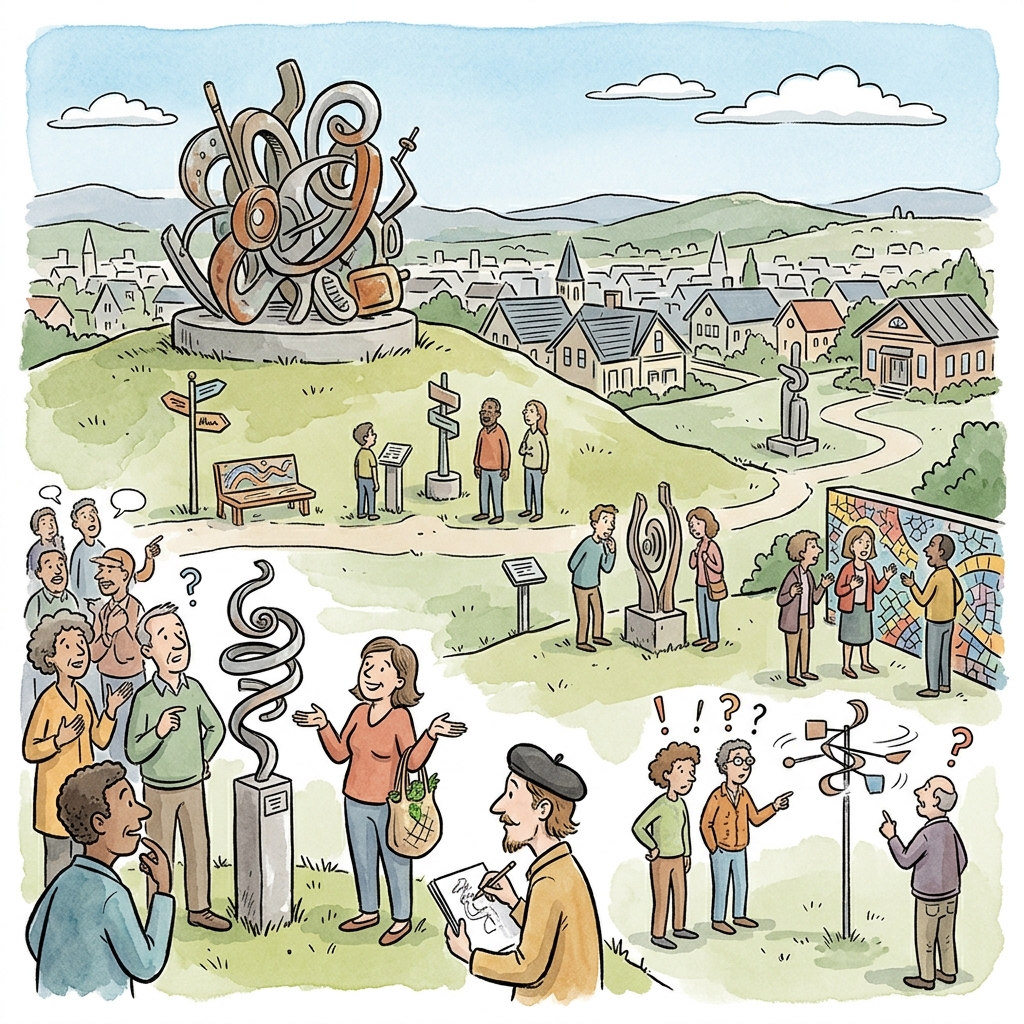
The project includes multiple components distributed along MLK Way and surrounding blocks. While specific pieces are in various stages of completion and installation, the overall program includes permanent sculptural works, ground-level markers with interpretive text, wall murals commissioned from local and regional artists, and integration with the light rail station areas to ensure transit riders encounter the neighborhood’s story.
Themes identified through community engagement include: the migration stories of Black families who came to Tacoma for military and industrial employment, the commercial and social life of MLK Way in its prime, the cultural institutions (churches, lodges, community organizations) that anchored neighborhood life, and the ongoing resilience of a community navigating rapid change.
Why This Matters Beyond Art
Public art and cultural markers are often dismissed as nice-to-have amenities. In Hilltop’s case, they serve a more urgent function: they’re physical assertions of belonging in a neighborhood where belonging is being contested by market forces. When a longtime Black community is being demographically transformed by an influx of higher-income residents drawn by transit access and relative affordability compared to Seattle, the question of whose neighborhood this is becomes material, not philosophical.
The markers say: this community was here. These people built something. That history has value and permanence regardless of who owns the real estate now. For a city wrestling with how to manage growth without erasing the communities that growth displaces, Hilltop’s public art program is a partial answer — imperfect, but tangible.
For Tacoma more broadly, the project demonstrates something important about how the city handles neighborhood identity during change. It’s not enough to build light rail through a historically Black neighborhood and call it progress. The infrastructure investment must be accompanied by cultural investment that honors what was there before the cranes arrived.
What’s Next
Additional installations are in various stages of fabrication and planning. The project continues to engage community members through the City of Tacoma’s arts programs and through the Hilltop Action Coalition’s ongoing advocacy work. Residents interested in providing input or participating can contact the Office of Arts and Cultural Vitality or attend Hilltop Action Coalition community meetings.
The real test will be whether the cultural markers survive and remain relevant as the neighborhood continues to change — whether they become living landmarks that new and old residents alike engage with, or historical footnotes that people walk past without understanding. That outcome depends on continued community engagement, maintenance funding, and the broader question of whether Tacoma can grow without losing the communities that made it interesting in the first place.
FAQ
What is the Hilltop public art and cultural markers project?
A City of Tacoma-supported initiative to install permanent public art, cultural markers, and interpretive elements throughout the Hilltop neighborhood that acknowledge and preserve the area’s history as Tacoma’s primary Black community, developed through a community-engaged process.
Where are the installations located?
Installations are distributed along Martin Luther King Jr. Way and adjacent blocks in the Hilltop neighborhood, including integration with Sound Transit light rail station areas. The corridor runs through Hilltop’s historic commercial and cultural core.
How was the community involved in the project design?
The project was developed through community engagement with longtime residents, local artists, cultural organizations, community elders, and the Hilltop Action Coalition. Themes, locations, and artistic direction were shaped by community input rather than imposed by city planners.
What themes do the installations address?
Themes include the migration stories of Black families who came to Tacoma for military and industrial employment, the commercial and social life of MLK Way in its prime, anchoring cultural institutions, and community resilience through decades of change including recent gentrification.
How can residents get involved?
Residents can engage through the City of Tacoma’s Office of Arts and Cultural Vitality, attend Hilltop Action Coalition community meetings, or contact the project coordinators directly through the city’s community and economic development department.
Leave a Reply