Author: Will Tygart

  • Spring Into Community: Mason County Events Fill the Calendar This Mother’s Day Weekend

    Spring Into Community: Mason County Events Fill the Calendar This Mother’s Day Weekend

    Mother’s Day weekend arrives with a full slate of Mason County community gatherings, from a beloved animal-rescue fundraiser celebrating its 20th anniversary to a charity run honoring women fighting cancer. Whether you are looking to stock your garden, lace up your running shoes, or explore the season’s freshest produce, Mason County has something happening for every household this Saturday and Sunday — and a big summer festival already on the horizon.

    Adopt-A-Pet Plant Sale Celebrates 20 Years of Giving Back

    Adopt-A-Pet of Shelton brings its signature springtime fundraiser back for the 20th consecutive year, hosting the annual Plant Sale on Saturday, May 9, from 9 a.m. to 3 p.m. in the parking lot of Our Community Credit Union at 2948 Olympic Highway North, Shelton.

    The sale is one of the most anticipated community fundraisers on the county calendar, offering something for every type of gardener. Shoppers can browse a wide selection of trees, annuals, perennials, hanging baskets, vegetables, indoor plants, and native species — all competitively priced to benefit the animals in Adopt-A-Pet’s care. A food truck will be on-site throughout the day, and artisan vendors will offer ceramic and craft items alongside the plants. Families with young children will appreciate a dedicated kids’ planting station where children can create a small potted garden gift for their mothers — a perfectly timed project with Mother’s Day falling the very next morning.

    Adopt-A-Pet has operated as an all-volunteer dog rescue shelter serving Mason County for 46 years. The organization relies entirely on community fundraising to feed, house, and provide veterinary care for dogs awaiting adoption. With no paid staff and no government subsidy, every plant purchased at the May 9 sale goes directly toward the animals. The Plant Sale has grown into one of its most important annual revenue events, drawing shoppers from across the county each May.

    Admission is free, and there is no charge to browse. Shoppers simply pay for plants, crafts, and food at the event. The OURCU parking lot is easily accessible on Olympic Highway North, the main corridor connecting Shelton with Belfair and the rest of north Mason County. For more information about Adopt-A-Pet, visit adoptapet-wa.org or call the shelter directly.

    Mother’s Day Dash Returns to Huff N Puff Trail

    One day after the plant sale, on Sunday, May 10, Mason County runners and walkers of all abilities are invited to honor the women in their lives — and the women who need their community’s support — by taking part in the Mother’s Day Dash at the Huff N Puff trailhead in Shelton.

    The race covers approximately four miles along the flat, community-maintained Huff N Puff Trail, making it accessible for both seasoned runners and those joining their first organized event. The course starts and ends at the trailhead, and the event is timed, with prizes awarded to top finishers organized by age group. All participants who registered by May 1 received a participation gift; check the registration page for current day-of availability.

    All proceeds from the Mother’s Day Dash benefit the Karen Hilburn Cancer Fund, a locally focused fund dedicated to assisting uninsured and under-insured women in Mason County with cancer-related medical expenses. The fund addresses a gap that touches families across the county — from Shelton and Allyn to Hoodsport and Belfair — helping women who face treatment costs without adequate coverage continue to access the care they need.

    For many participants, the race means more than a Sunday morning workout. It is a tribute: to a mother who fought, a neighbor who is still fighting, or a community that shows up when it matters most. To register or find more information, visit runsignup.com and search for the Mother’s Day Dash in Shelton, WA.

    Farmers Markets Open Season County-Wide

    Mason County’s farmers market season is now underway at both ends of the county. The Shelton Farmers Market opened its 2026 season on Saturday, May 2, and will run every Saturday from 10 a.m. to 3 p.m. through October. The market is located at Evergreen Square on Railroad Avenue between Third and Fourth Street in downtown Shelton. Returning vendors are joined by new additions this year, with fresh produce, handmade goods, locally prepared food, and beverages available weekly.

    In north Mason County, the Belfair Farmers Market is also open for the season, running Saturdays from 9 a.m. to 3 p.m. through September. The Belfair market serves the Belfair, Allyn, and Tahuya corridor with fresh local produce and artisan offerings. Both markets are free to attend, and shoppers are encouraged to arrive early as popular vendors tend to sell out before closing time.

    Looking Ahead: Mason County Forest Festival Returns June 5–7

    For residents already thinking past Mother’s Day weekend, the Mason County Forest Festival returns June 5–7 in Shelton. One of the region’s largest annual community events, the festival features the Paul Bunyan Grand Parade, logging shows and demonstrations, carnival rides and games, a classic car show, a community pancake breakfast, live entertainment, and the Goldsborough Creek Run — a popular race with distances including a 7-mile run/walk, 2-mile run/walk, and junior events for younger participants. The festival celebrates Mason County’s deep connection to its timber heritage and draws visitors from across Western Washington each year. Details and event schedules will be posted at masoncountyforestfestival.com as the date approaches.

    This Mother’s Day weekend, Mason County is showing up for its community — with plants to give, miles to run, and markets to explore. It is the kind of calendar that reminds residents why county-wide connection matters from Hoodsport to Belfair and everywhere in between.

  • Two Kinds of Waiting

    Two Kinds of Waiting

    The last piece named predicate-dependent items as one of three structurally different things sitting in a queue. They are correct in category, wrong in moment. The right move is to name the trigger and remove the item from the active queue until the predicate resolves.

    That distinction was useful. It also collapsed two genuinely different states into one.

    Waiting on an event and waiting on a person are not the same kind of waiting. They look identical in a Kanban column. They lie in different directions about what is actually happening.


    The Custodial Predicate

    A deployment window opens on a date. A market signal arrives or it doesn’t. A court date is on the calendar. A regulatory comment period closes. These are events. The predicate is custodial. The operator’s job is to be ready when the trigger fires and not let the item sublimate into background noise in the meantime.

    There is nothing to negotiate with an event. The predicate fires regardless of how the operator feels about it. The discipline is vigilance, not effort.

    The Relational Predicate

    A reply from a person is something else entirely. The predicate is a relationship that has its own state, its own pressure, its own inertia. The person on the other end is a system with their own queue and their own residual courage problem.

    The trigger is not on a calendar. The trigger is whether something happens between two people, and one of those people is on the operator’s side of the conversation.

    This is the seam where disciplined waiting starts to wear the same costume as conflict avoidance.


    The Identical Artifact

    Two predicates can pass thirty days in identical states. One was waiting because nothing yet had information to act on. The other was waiting because nobody made the move that would generate the next state. A queue cannot tell the two apart. The operator can.

    The first failure mode is treating both as the event-shaped kind. This is what the queue invites. Marking a relational predicate and walking away feels exactly like principled patience. It performs the discipline named earlier — specific, dated, reviewable. The artifact is identical. The internal predicate is reversed.

    This is why the signal that distinguishes principled non-response from avoidance — that a real refusal carries an implicit re-entry condition — has to be re-asked at the predicate layer. With a person-shaped predicate, the re-entry condition cannot only be on the calendar. It has to also be: what would change my mind about who goes next? If the answer is “nothing” and you are the one who hasn’t moved, you are not waiting. You are declining without naming it.

    The second failure mode is the inverse. Operators who escalate every predicate at every cadence because uncertainty about timing makes them anxious. The deployment window does not care about your text message. The court date moves on its own. Treating an event-predicate as a person-predicate burns relational currency for nothing — the same energy spent on a real person-predicate would have actually moved a state.


    The Question to Ask at the Moment of Marking

    The healthier move is to require, at the moment a predicate is set, an explicit answer to one question: what kind of trigger is this?

    If event: name the date or the condition, set the surfacing rule, walk away. The discipline is custodial. The operator owes the predicate vigilance, not action.

    If person: name the move that would force the next state, and name the date the operator goes first if the other party hasn’t. The discipline is not custodial — it is a private commitment. The follow-up is not optional. It is the predicate.

    This second case is where most operators leak time, because the words available for it are bad. “Waiting on a reply” sounds humble. It also sounds permanent. There is no public language for “I am the one who has not yet sent the next message that would move this,” and absent that language, the queue absorbs the omission and renders it as patience.

    A tighter signal: a person-shaped predicate that has not moved for two cadences is no longer waiting on the other party. It is waiting on the operator, mislabeled.


    Why the Hard-Cap Rule Feels Embarrassing

    This explains why a stale-blocked rule — items in a holding pattern past some threshold get yanked back into the active conversation — feels both clarifying and embarrassing when it finally arrives. It does not introduce new information. It forces the operator to rename the items already on the board.

    Most of what was “blocked” was the operator’s silence dressed in someone else’s name.

    The custodial discipline transfers cleanly from a person on a deal to an event on a calendar — but the inverse does not transfer. You cannot wait on a person the way you wait on a market signal. The market signal is not running its own private accounting of how long it has been since it heard from you.


    What the System Can Hold and What It Cannot

    The deeper implication for autonomous systems is that the predicate field on a queue item has been under-specified. A single “waiting” status with no shape attached is the configuration the queue inherited from a paper era when both kinds of waiting hurt about the same. They no longer hurt the same.

    The event-predicate hurts on a calendar. The person-predicate compounds in a relational ledger nobody keeps. A surfacing system that can already detect recency cannot read intent — but the operator can be asked, at the moment of marking, to declare which kind it is, and the dashboard can hold them to the declaration.

    The familiar risk surfaces here too. Make person-predicate a first-class status and the temptation will be to file conflict-aversion under it with a polite face — to declare every awkward conversation a “person-predicate, follow-up scheduled” and then never do the follow-up. The discipline of principled refusal has to chain forward: the re-entry condition for a person-predicate is itself a position, dated, that the operator can be held to.

    What the operator owes the person-shaped predicate is the move that would generate the next state. The system can ask the question; the system cannot make the move. The hour after the briefing recurs at the predicate layer: the system has, at this point, more information about what is waiting on whom than the operator does — but only the operator can convert any of that information into a sentence that gets sent.

    The queue can hold the shape of two kinds of waiting. The operator has to remember which kind they were holding.

  • Federal Law Now Shields PSNS Workers From Layoffs — Here’s What It Means for Our Shipyard Commuters

    Federal Law Now Shields PSNS Workers From Layoffs — Here’s What It Means for Our Shipyard Commuters

    For hundreds of Belfair and North Mason neighbors who start their mornings at the Park & Ride on NE Log Yard Road and end them across the water at Puget Sound Naval Shipyard in Bremerton, last winter brought an unwelcome cloud of uncertainty. Federal workforce cuts and hiring freezes had rattled civilian workers across the government — including thousands at the shipyard that employs more than 14,000 people.

    That cloud has lifted.

    The Fiscal Year 2026 National Defense Authorization Act (NDAA), signed into law on December 18, 2025, includes Section 1108 — a bipartisan provision that explicitly bars the use of federal funds to carry out any hiring freeze, reduction-in-force, or hiring delay at America’s four public naval shipyards. Puget Sound Naval Shipyard & Intermediate Maintenance Facility (PSNS & IMF) in Bremerton is one of them.

    The protection came out of legislation called the Protecting Public Naval Shipyards Act, championed by a bipartisan group in Congress. The argument was straightforward: the shipyard workforce isn’t a bureaucratic overhead line item. It’s the skilled trades — the welders, pipefitters, electricians, and machinists — who keep the Navy’s aircraft carriers and nuclear-powered submarines seaworthy and on schedule. Cutting or freezing those jobs directly weakens fleet readiness.

    For our community, this is more than a Washington, D.C. policy story. Mason County residents make up a significant portion of the SR-3 commuter corridor into Bremerton, and many families in Belfair, Allyn, and Tahuya depend on shipyard paychecks. Mason Transit’s Route 3 — the Belfair-to-Bremerton line — runs six trips in each direction on weekdays, connecting the Belfair Park & Ride on NE Log Yard Road to the Bremerton Ferry Terminal. When the shipyard workforce is stable, that bus fills up. When it isn’t, our whole local economy feels it.

    The NDAA exemption is written into federal appropriations language for FY 2026, meaning PSNS can proceed with hiring without the case-by-case approval process that had been slowing new-worker onboarding at naval installations across the country. That matters because the shipyard has been actively expanding its workforce to meet a growing Navy maintenance backlog and to support the Pacific Fleet’s long-term submarine capacity.

    PSNS & IMF is the nation’s largest public shipyard by workforce. It repairs and overhauls the Navy’s aircraft carriers and submarines — work that cannot be outsourced or deferred without consequences to national security. Congress chose to protect it accordingly.

    For North Mason residents considering a career in the skilled trades, the path through PSNS is one of the more stable and well-compensated options in the region. The shipyard posts journey-level and apprenticeship openings regularly at usajobs.gov. The Belfair-to-Bremerton commute is manageable by carpool or Mason Transit Route 3, and the PSNS apprenticeship program draws applicants from across Kitsap and Mason counties.

    Bottom line for our corner of the county: the jobs that send so many of our neighbors down SR-3 every morning are on solid footing for FY 2026. For a community where the shipyard commute is a way of life, that’s worth knowing — and worth celebrating.

  • How to Read the Queue

    How to Read the Queue

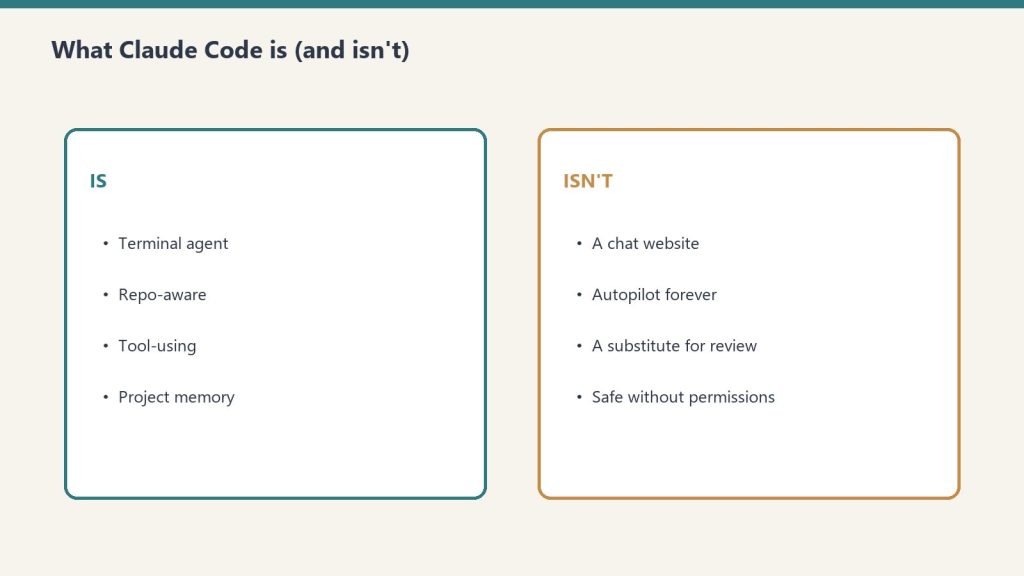
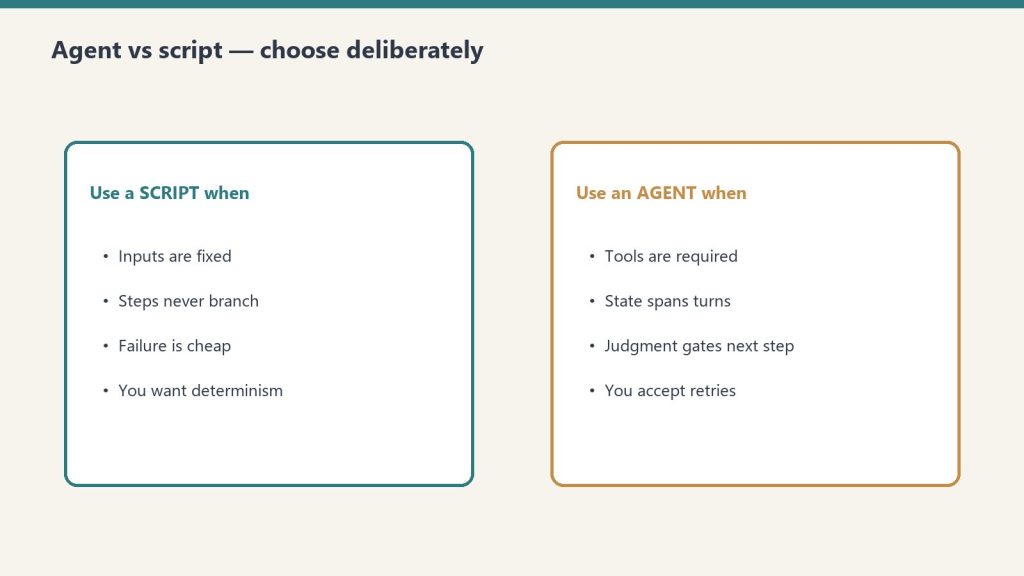
    The shift from “queue as debt” to “queue as options” — which the last piece tried to name — turns out to be only the first half of the move. Once you’ve accepted that a hundred-item backlog is not a hundred failures of execution, the question that immediately follows is harder: what kind of options are these?

    Most operators treat queue items as fungible. They assign urgency scores and sort by priority tier. They run sprints. They commit batches. The assumption underneath all of it is that the items are the same kind of thing, varying only in importance and timing.

    They are not.

    The Three Kinds

    The first kind is the time-bound option. It has a window, and the window is closing whether or not anything happens. When the window closes, the item stops being an option. This is what most operators think of when they think of urgency: the article that publishes in 48 hours with no entity assigned, the contract that expires, the relationship that has a de facto deadline nobody announced. These items don’t wait patiently. They decay. The right move is to execute, release explicitly, or name the consequence of not doing either. There is no fourth option.

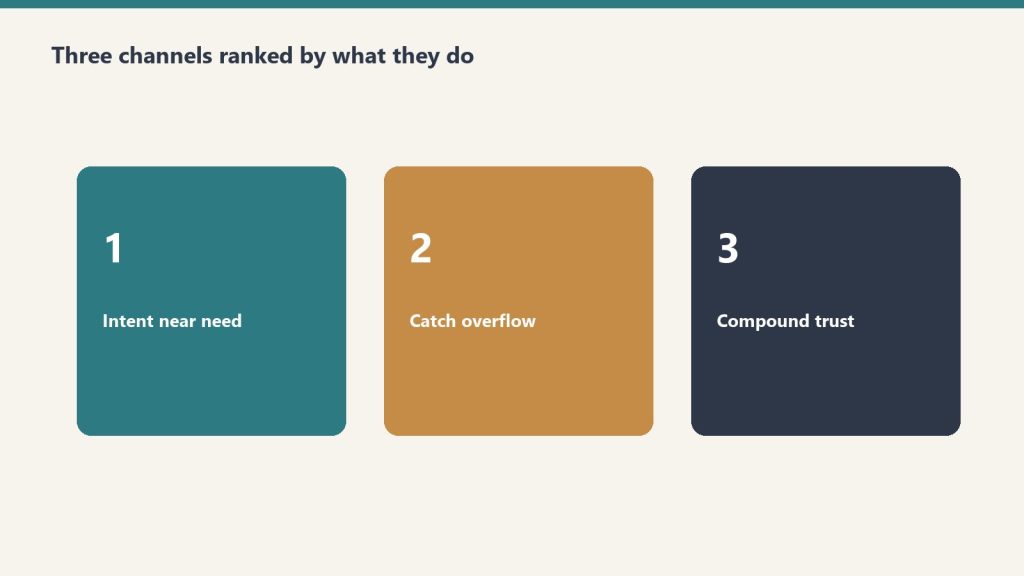
    The second kind is the predicate-dependent item. The work is correct in category, the moment is wrong. Something external has to change before the item can resolve — a client has to decide, a market has to move, a platform has to launch. These items look identical to abandoned tasks, but they aren’t. Abandonment is a choice not to move. Predicate-dependency is a choice to wait for an event. The failure mode is treating them the same way: leaving them in the queue with no status distinction, where they accumulate the psychological pressure that makes the queue feel heavier than it is. The right move is to mark them with their predicate and pull them out of the active inbox until the predicate resolves. A predicate is not a blocker. It’s a trigger.

    The third kind is the category error. This is the hardest to see because the item looks legitimate — it was captured legitimately, under a premise that may have been correct at the time. But the premise has changed, or it was never quite right, or the category of work it represents has structural economics that no amount of execution will fix.

    Here is what a category error looks like in practice: a set of items that keep appearing in the queue because the system was set up to generate them. The pipeline produces what it was built to produce. The briefing surfaces what it was calibrated to surface. And week after week, the same type of work lands in the backlog, never quite getting committed, never quite earning a sprint. The instinct is to ask why execution isn’t faster. The right question is whether the category was ever right.


    High traffic, low dollar capture — not because the content is bad but because the monetization model mismatches the audience. The pipeline keeps generating content items because it was set up to generate content. But adding more items to the queue won’t fix a structural mismatch between traffic and value capture. This isn’t a priority problem. It’s a category problem. The right move is not another sprint — it’s a different product category entirely.

    Most operators won’t catch this because they’re reading priority, not type. The item gets a score, sits in Next Up, and reappears in the next briefing, and the one after that. The queue grows. The system is doing its job — surfacing everything it was configured to surface. The operator’s job is different: to read what type of waiting each item is doing, and to respond to that, not to the score.

    Why the Distinction Matters

    Time-bound options need execution or explicit release. Predicate-dependent items need trigger-marking and removal from the active queue. Category errors need removal of the category, not better execution of the item.

    Confusing them is expensive in specific ways. When you execute a category error, you produce a high-quality version of the wrong outcome and consume the bandwidth the correct category needed. When you leave a predicate-dependent item in the active queue, it adds phantom weight — you’re aware of it at each review, it consumes a small amount of attention every time it appears, and it makes the queue feel denser than it is. When you ignore a time-bound option long enough, the window closes and the option becomes a consequence.

    None of these failure modes announce themselves. They look like normal queue dynamics. You don’t know you’ve executed a category error until the output lands and nobody responds. You don’t know you’ve left a predicate in the active queue too long until the queue feels impossible. You don’t know you’ve missed a time-bound option until after.

    How to Read It

    The question isn’t “how urgent is this?” The urgency score was set at capture, in a different context, by a version of the operator who didn’t know what the following weeks would reveal. It’s often wrong.

    The question is: what is this item waiting for? If it’s waiting for me to act, it’s time-bound. If it’s waiting for a condition to change, it’s predicate-dependent. If it’s waiting in vain — if nothing it could wait for would actually resolve it — it’s a category error.

    Reading this takes a different cognitive posture than scoring. Scoring is fast and systematic. Reading is slow and case-by-case. You have to ask what would actually have to be true for this item to move, and whether that thing is plausible. Most operators skip this step because the queue is long and the briefing is already demanding.

    But this is where the queue stops being a measure of overwhelm and becomes a picture of the operation. An operator who can read type as well as priority is doing something genuinely scarce: looking at the inventory of the possible and saying, accurately, what each piece of it actually is.

    That’s not a productivity move. It’s closer to the opposite. It will make the queue shorter in ways that feel like loss — because some of what you’ve been carrying as “work to be done” will get reclassified as “premise that expired,” “category that needs retirement,” or “thing that was never really in my court.” The queue shrinks. So does a certain kind of ambition that turned out to be mostly weight.

    The curatorship that the last piece named as the next operating mode — calm, not speed, working inside permanent surplus — requires this as its foundation. You can’t curate what you can’t read.

    And there is a harder implication underneath this. The system that generates the queue — the briefing, the capture layer, the pipeline — was configured at a moment in the past. It surfaces what it was built to surface. The operator who reads type rather than priority is doing something the system cannot do for them: auditing the configuration itself. Noticing which categories of work keep appearing and never resolving, and asking whether the appearance is a sign of bad execution or a sign that the question being asked is the wrong one.

    That audit cannot be scheduled. It has to happen inside the reading.

  • This Week in Everett Sports: WHL Championship Final Opens Friday, Bryce Miller Is at Funko Field Wednesday

    This Week in Everett Sports: WHL Championship Final Opens Friday, Bryce Miller Is at Funko Field Wednesday

    Q: What Everett sports events are happening the week of May 4-10, 2026?
    A: The biggest week of the Everett sports calendar opens Friday. The Silvertips host the Prince Albert Raiders in Games 1 and 2 of the WHL Championship Final at Angel of the Winds Arena (May 8-9). The AquaSox host Hillsboro for six games at Funko Field (May 5-10), including a Bryce Miller Mariners rehab start Wednesday May 6. Wolfpack fell to Albany 42-34 Saturday.

    This Week in Everett Sports: WHL Championship Final Arrives, Bryce Miller Is Back, and the Homestand Begins

    This is the week. The one Silvertips fans have been waiting for since October. The one AquaSox fans get to enjoy with a legitimate Mariners pitcher walking out of the home dugout on a Wednesday night. The one that makes Everett feel like a real sports city.

    Here’s everything happening in Everett sports May 4-10, 2026.

    1. WHL Championship Final: Silvertips vs. Prince Albert Raiders — Games 1 & 2 at Angel of the Winds Arena

    The opponent is confirmed. Sunday night the Prince Albert Raiders beat the Medicine Hat Tigers 7-6 in Game 6 of the WHL Eastern Conference Final to win the series four games to two. Riley Boychuk scored the go-ahead goal in the third period and finished with two goals. The Raiders were clinging on late — Liam Ruck scored for Medicine Hat with seven seconds left — but Prince Albert held on.

    The Raiders are coming to Everett.

    Game 1: Friday, May 8 at Angel of the Winds Arena (time TBA pending TSN broadcast confirmation)
    Game 2: Saturday, May 9 at Angel of the Winds Arena

    The Silvertips are 12-1 in these playoffs. They swept Kelowna. They swept Penticton. Anders Miller’s .948 save percentage is playing at a historically rare level for a goaltender 12 games into a WHL playoff run. Matias Vanhanen leads the team in scoring. Landon DuPont has been the clutch-goal machine. Prince Albert is a legitimate Eastern Conference champion — Owen Corkish had a hat trick in their Game 5, and Daxon Rudolph has been one of the most productive players in the entire playoffs. This is a real series.

    Tickets are available through the Silvertips’ Playoff Ticket Central page and Ticketmaster. Playoff fan packs, ticket-and-drink bundles, and group options (8+ tickets) are all available. For a 12-1 team in its first WHL Championship Final appearance in years, these games will sell. Don’t wait.

    2. AquaSox vs. Hillsboro Hops — Six-Game Homestand at Funko Field (May 5-10)

    The Frogs are back at Funko Field after a 3-3 road trip in Tri-City. They went 3-3 — splitting the series with the Viñeros, going into a late-inning lead on Sunday and watching Tri-City’s four-run seventh erase it. Not a great way to end a road trip, but Brandon Eike’s sixth homer of the season in the series finale is a reminder that this offense has pop.

    Now they’re home against the Hillsboro Hops (D-backs High-A affiliate) for six games:

    Tuesday, May 5 (Cinco de Mayo): 7:05 PM
    Wednesday, May 6: 7:05 PM — Bryce Miller rehab start
    Thursday, May 7: 7:05 PM
    Friday, May 8: 12:05 PM (afternoon game — double your Friday sports: catch this, then head to AOTW for Game 1 that night)
    Saturday, May 9: 7:05 PM
    Sunday, May 10 (Mother’s Day): 1:05 PM

    3. Bryce Miller Rehab Start — Wednesday, May 6 at 7:05 PM

    This is the game to circle if you can only make one this week.

    Mariners starting pitcher Bryce Miller returns to Funko Field on Wednesday night for what could be his final minor league start before heading back to Seattle. His April 24 outing here was something — 3 scoreless innings, 47 pitches, 6 strikeouts, 98+ mph, didn’t allow a baserunner until the third. That’s not a guy going through the motions. That’s a Mariners starter who was looking sharp and wanted everyone in the building to know it.

    Miller had a 2.94 ERA in 2024 over 180 innings. He’s the kind of arm the Mariners need back healthy for a playoff push. Watch how he looks coming out of the stretch, how his slider breaks in the first two innings — that’ll tell you whether he’s ready to return to Seattle or needs one more extended session.

    Either way, Wednesday night at Funko Field is worth showing up for.

    4. Washington Wolfpack Fall to Albany 42-34 on Saturday

    The Washington Wolfpack hosted the defending Arena Crown champion Albany Firebirds on Saturday at AOTW for Teacher’s Night and fought hard before falling 42-34. Arena Rookie Jaiave Magalei had a significantly better performance than his first game, and the Wolfpack defense created some big plays — but the Firebirds, who came in with the best record in the AF1, had too much firepower to overcome.

    Wolfpack are now 0-2 on the season. Next home game: Saturday, May 23 vs. the Beaumont Renegades at AOTW, 3:00 PM.

    5. The Friday You Can’t Miss

    Let’s map out Friday, May 8 for you, because it’s genuinely one of the better sports days Everett has had in years.

    12:05 PM: AquaSox vs. Hillsboro Hops at Funko Field. Afternoon baseball on a Friday. Pack a lunch, bring sunscreen, watch the Frogs.
    Evening: Silvertips vs. Prince Albert Raiders, WHL Championship Final Game 1, at Angel of the Winds Arena. Time TBA but expect a 7:00-7:30 PM start pending TSN confirmation.

    Two Everett sports events on one Friday. Use your time wisely.

    The Big Picture

    Everett is two months into a sports spring that has genuinely delivered. The Silvertips are 12-1 in the playoffs and playing for the Ed Chynoweth Cup. The AquaSox have a pair of legitimate prospects in Eike and Celesten drawing real attention from Mariners fans. A Mariners rehab starter is using Funko Field as his tune-up venue. Angel of the Winds Arena is busy every weekend.

    The new downtown stadium — if the $120M project holds together — is the venue that anchors all of this long-term. The AquaSox affiliation requires it. The USL pro soccer teams need it. But that’s next year’s conversation. This week, Everett has the WHL Championship Final at AOTW. That’s enough.

    Frequently Asked Questions

    What is the Silvertips WHL Final schedule?

    Games 1 and 2 are at Angel of the Winds Arena in Everett on May 8 (Friday) and May 9 (Saturday). Games 3 and 4 shift to Art Hauser Centre in Prince Albert on May 11-12. Start times for Game 1 are TBA pending TSN broadcast confirmation.

    When is Bryce Miller pitching at Funko Field?

    Bryce Miller’s AquaSox rehab start is scheduled for Wednesday, May 6 at 7:05 PM at Funko Field against the Hillsboro Hops.

    Can I see both AquaSox and Silvertips on the same day this week?

    Yes — Friday May 8. The AquaSox play at 12:05 PM at Funko Field vs. Hillsboro. That evening, the Silvertips host Game 1 of the WHL Championship Final at Angel of the Winds Arena.

    What happened in the Wolfpack game Saturday?

    The Washington Wolfpack fell to the Albany Firebirds 42-34 at Angel of the Winds Arena on Saturday, May 2. The Wolfpack showed improvement from Arena Rookie Jaiave Magalei but couldn’t overcome the defending Arena Crown champion Firebirds. Wolfpack next home game is May 23 vs. Beaumont.

    How do I get Silvertips WHL Final tickets?

    Tickets for Games 1 and 2 are available through the Silvertips’ Playoff Ticket Central page at chl.ca/whl-silvertips and on Ticketmaster. Playoff fan packs and ticket-and-drink bundles are available.

    More Everett sports coverage: Silvertips vs. Prince Albert Raiders: 2026 WHL Championship Final Preview | AquaSox Go 3-3 at Tri-City — Homestand Starts Tuesday | Silvertips WHL Final: Tickets, Dates and What It Means for Everett

  • AquaSox Go 3-3 at Tri-City and Head Home: Eike Hits His 6th Homer, Bryce Miller Is at Funko Field Wednesday

    AquaSox Go 3-3 at Tri-City and Head Home: Eike Hits His 6th Homer, Bryce Miller Is at Funko Field Wednesday

    Q: How did the AquaSox finish the Tri-City road series?
    A: Everett went 3-3 on the Tri-City road trip, dropping the series finale 7-4 on May 3 after Brandon Eike’s sixth homer tied it. The Frogs are back home at Funko Field starting Tuesday, May 5 for a six-game series vs. the Hillsboro Hops — with Bryce Miller’s rehab start scheduled for Wednesday, May 6.

    AquaSox Go 3-3 at Tri-City: Eike Hits His Sixth Homer, But the Frogs Drop the Series Finale 7-4

    The Everett AquaSox ended their six-game road trip at Gesa Stadium in Pasco the same way they started it — with some big moments and a result that didn’t go their way.

    Sunday’s series finale: Viñeros de Tri-City 7, AquaSox 4. The Frogs tied it up at 3-3 in the fifth inning on Brandon Eike’s sixth homer of the season (a leadoff shot to start the fifth) and a Felnin Celesten RBI single. Luis Suisbel even gave Everett a 4-3 lead in the sixth, scoring from second on a wild pitch. But Tri-City blew the game open in the bottom of the seventh — Caleb Bartolero doubled home the tying run, Anthony Scull ripped a go-ahead RBI double to left, and Matt Coutney crushed a two-run homer over the right-center fence to make it 7-4. The AquaSox bullpen held after that, but the deficit was too large.

    Series Summary: A Split on the Road

    The full Tri-City road trip shook out like this:

    Game 1 (April 28): AquaSox 8, Tri-City 3 — Luis Suisbel career-high-tie 5 RBIs (3-run HR + 2-run single), Eike’s 4th HR, Dollard solid on the mound.
    Game 2 (April 29): AquaSox 10, Tri-City 7 — Rally from 7-7 in the eighth, Celesten go-ahead RBI, Ellis 2-run HR in the 9th, Little save.
    Game 3 (April 30): Tri-City 6, AquaSox 4 — Eike hit his 5th HR but Tri-City got the run support Everett couldn’t match.
    Game 4 (May 1): Tri-City 7 (walk-off) — Randy de Jesus walked off the Frogs with a late hit.
    Game 5 (May 2): Tri-City 8, AquaSox 6 — Eike doubled to spark a late rally, Suisbel RBI single, but a five-run fifth inning by Tri-City was too much.
    Game 6 (May 3): Tri-City 7, AquaSox 4 — Eike HR #6, Celesten RBI single, Suisbel scored the go-ahead run on a wild pitch, but a four-run Tri-City seventh ended it.

    Final road trip line: 3-3. Not ideal, but not a disaster. The Frogs are 12-11 on the young season and heading home with legitimate momentum candidates in Eike and Celesten.

    Prospect Watch: Eike Is for Real

    Let’s talk about Brandon Eike, because his power has been the story of this road trip.

    Six home runs in the first 23 games of the 2026 season. Eike is a physical outfielder who generates lift and backspin, and he’s been driving the ball to all parts of the park. His leadoff homer in Sunday’s fifth inning — hit with the team trailing 3-0 and needing a spark — showed the kind of situational awareness a young power hitter needs. He’s not just a pull-or-nothing guy. He’s using the whole field.

    Keep an eye on Eike in the homestand. If he gets going at Funko Field, the box score is going to be fun to read.

    Felnin Celesten, for his part, continues to be the most complete hitter on this roster. The NWL Player of the Week from the previous series hasn’t cooled off. He got the tying RBI single in the fifth inning on Sunday, and his ability to put the barrel on the ball in crucial situations is what separates him from the other prospects on this club.

    Walter Ford Starts the Series Finale

    AquaSox starter Walter Ford made the start in the series finale — one of the younger arms in Everett’s 2026 rotation. He went 4.2 innings, allowing three earned runs (two earned) with some wild pitch issues that cost his catcher Josh Caron. Ford showed flashes: he was sharp in the first two innings before the wheels got wobbly in the third. Adam Smith relieved him and threw 1.1 scoreless innings in his first AquaSox appearance — a 14th-round Padres pick from 2021 who now has a clean line on his debut stat sheet.

    Coming Up: Hillsboro Hops at Funko Field, May 5-10

    The Frogs are home. Six games at Funko Field starting Tuesday, May 5 against the Hillsboro Hops (D-backs affiliate, Northwest League).

    Homestand schedule:
    Tuesday, May 5 (Cinco de Mayo): 7:05 PM
    Wednesday, May 6: 7:05 PM — Bryce Miller Mariners rehab start
    Thursday, May 7: 7:05 PM
    Friday, May 8: 12:05 PM (afternoon game — also Game 1 of Silvertips WHL Final that night)
    Saturday, May 9: 7:05 PM
    Sunday, May 10 (Mother’s Day): 1:05 PM

    Don’t Miss Wednesday: Bryce Miller Is Back at Funko Field

    If you’re only making one game this homestand, make it Wednesday May 6.

    Mariners right-hander Bryce Miller is scheduled for his third AquaSox rehab start at 7:05 PM on Wednesday night against Hillsboro. Miller’s previous Funko Field outing — April 24 against Spokane — was one of the best nights Funko has seen this season: 3 innings, 47 pitches, 6 strikeouts, zero runs, 98+ mph fastball, didn’t allow a baserunner until the third inning. That’s not a rehab guy going through the motions. That’s a Mariners starter getting sharp.

    His prior start at Tacoma on April 18 was more modest (1.2 IP), but his April 24 Everett outing showed the command and velocity that made him one of Seattle’s better starters in 2024 (12-8, 2.94 ERA, 180 innings). If this homestand goes as expected, Wednesday night in Everett could be Miller’s last minor league appearance before returning to Seattle.

    And just in case you need the full Everett sell: Friday May 8 has a 12:05 PM first pitch — so you can catch the afternoon game, grab dinner, and still get to Angel of the Winds Arena for the Silvertips WHL Championship Final Game 1 that evening. Double header of Everett sports on a Friday. Mark it down.

    Frequently Asked Questions

    What is the AquaSox record after the Tri-City road trip?

    The AquaSox went 3-3 on the Tri-City road trip and are 12-11 on the 2026 Northwest League season.

    When do the AquaSox play next at Funko Field?

    The AquaSox host the Hillsboro Hops at Funko Field starting Tuesday, May 5 at 7:05 PM. The six-game homestand runs through Sunday, May 10.

    When is Bryce Miller’s next AquaSox rehab start?

    Bryce Miller is scheduled to start Wednesday, May 6 at Funko Field at 7:05 PM against the Hillsboro Hops. His previous AquaSox outing on April 24 featured 3 scoreless innings with 6 strikeouts and 98+ mph velocity.

    Who had the most notable performances in the Tri-City series?

    Brandon Eike hit his 5th and 6th home runs of the season during the road trip. Felnin Celesten delivered multiple RBIs. Luis Suisbel had a career-high-tie 5-RBI game in the opener. Zach Dollard was sharp in Game 1, and Adam Smith had a solid debut in Game 6.

    Who are the Hillsboro Hops?

    The Hillsboro Hops are the Arizona Diamondbacks’ High-A affiliate in the Northwest League, based in Hillsboro, Oregon. They’re one of Everett’s NWL divisional rivals.

    More on the AquaSox: AquaSox Wrap Tri-City Road Trip This Weekend, Then Bryce Miller Comes to Funko Field Wednesday | AquaSox Rally to Beat Tri-City 10-7 | Bryce Miller’s Second AquaSox Rehab Start Is Wednesday May 6 at Funko Field

  • The Opponent Is Set: Everett Silvertips vs. Prince Albert Raiders in the 2026 WHL Championship Final

    The Opponent Is Set: Everett Silvertips vs. Prince Albert Raiders in the 2026 WHL Championship Final

    Q: Who are the Everett Silvertips playing in the 2026 WHL Championship Final?
    A: The Silvertips face the Prince Albert Raiders, who defeated the Medicine Hat Tigers 7-6 in Game 6 of the Eastern Conference Final on May 3, 2026. Games 1 and 2 are at Angel of the Winds Arena in Everett on May 8 and May 9.

    The Wait Is Over: Everett Silvertips vs. Prince Albert Raiders — 2026 WHL Championship Final Starts Friday

    It’s official. The Everett Silvertips now know who they’re playing.

    Sunday night in Medicine Hat, the Prince Albert Raiders outlasted the Tigers 7-6 in a wild Game 6 to win the WHL Eastern Conference Final four games to two. Riley Boychuk scored twice for the Raiders — including the go-ahead goal in the third period — and Jonas Woo and Aiden Oiring also factored into the scoring. The Tigers made it interesting with a 6-on-5 goal from Liam Ruck with just seven seconds left, but the final buzzer put it away.

    The Raiders are coming to Everett. Games 1 and 2 of the 2026 WHL Championship Final are at Angel of the Winds Arena on Friday, May 8 and Saturday, May 9. The series then shifts to Art Hauser Centre in Prince Albert for Games 3 and 4.

    The Silvertips have been waiting since April 28, when they swept the Penticton Vees in four games to advance. Ten days off. Rested. 12-1 in these playoffs. And now they have a target.

    Who Are the Prince Albert Raiders?

    If you haven’t followed the Eastern Conference Final, here’s what you need to know about the team coming to AOTW next Friday.

    The Raiders were the No. 1 seed in the East and beat Medicine Hat in six hard-fought games. This wasn’t a sweep — the Tigers gave them everything, including a 7-6 Game 6 that went down to the wire. Prince Albert is a team that wins ugly, wins on special teams, and grinds you out. They are not going to be awed by a big building and a loud crowd. That makes this series interesting.

    Key names to know on the Raiders roster:

    Daxon Rudolph has been one of the most productive players in the WHL playoffs overall. He’s a physical, two-way center who generates in transition and makes the Raiders harder to defend. Owen Corkish had a hat trick in Game 5 against Medicine Hat, including the empty-netter. He’s hot heading into this series and lives around the net. Riley Boychuk came up huge in the Game 6 clincher with two goals, including the go-ahead in the third — he’s a late-game player who steps up when it matters. Goaltender Michal Orsulak has been steady all playoff long — not flashy, but reliable, allowing fewer than three goals per game while facing good competition.

    Andrew Basha contributed throughout the ECF and has been a consistent secondary scorer for Prince Albert. Expect him to be a factor against Everett’s blue line.

    Silvertips: A 12-1 Playoff Machine

    Let’s reset what Everett has done this postseason, because the numbers keep getting more remarkable.

    The Silvertips swept the Kelowna Rockets in four games, then swept the Penticton Vees in four games. Twelve games in, one loss. They’ve outscored opponents by a wide margin and have done it with depth — different heroes every night, elite goaltending, and a blue line that collapses on anything in the slot.

    Anders Miller in net has been historically good. His .948 save percentage and under 1.60 goals-against average over 12 games puts him in conversation for the best goaltending performance in WHL playoff history for a goalie this deep into a run. Goalies get tired. Miller has gotten sharper.

    Matias Vanhanen leads Everett in playoff scoring with 14+ points through the first two rounds. Landon DuPont has been the clutch-goal guy — his overtime winner against Kelowna in the series-clincher remains one of the signature moments of this playoff run. Carter Bear has been a two-way force all spring. The Silvertips don’t depend on any one player, which is what makes them so difficult to scheme against.

    The Historical Context: What This WHL Final Means

    This is not a common occurrence. The Silvertips have been to the WHL Championship Final before, but it’s rare — and a Final played at home, in front of Everett fans at Angel of the Winds Arena, is something this city hasn’t experienced in years.

    The prize is the Ed Chynoweth Cup. The WHL champion also earns a berth in the Memorial Cup — the national junior hockey championship across the CHL. This is as big as it gets for a WHL franchise. The players on this roster understand that. The way they’ve played suggests they’ve been building toward this.

    Prince Albert is a legitimate test. But the Silvertips are 12-1, playing at home first, and have a goaltender operating at a level rarely seen this deep into a playoff run. If you’ve been curious about what this Silvertips team is all about, Games 1 and 2 at AOTW are your answer.

    WHL Championship Final Schedule — Everett Home Games

    Game 1: Friday, May 8 — Prince Albert at Everett — Angel of the Winds Arena (time TBA, pending TSN broadcast confirmation)
    Game 2: Saturday, May 9 — Prince Albert at Everett — Angel of the Winds Arena
    *Game 5 (if needed): Friday, May 15 — at Everett
    *Game 7 (if needed): Tuesday, May 19 — at Everett

    Games 3-4 are in Prince Albert (May 11-12). Games 3-7 dates subject to scheduling confirmation. Check the Silvertips’ official website for confirmed start times as they’re announced.

    How to Get Tickets

    Playoff Ticket Central is live at the Silvertips’ official site and Ticketmaster. Available promotions include playoff fan packs, ticket-and-drink bundles, and group discounts starting at 8 tickets. Given what this moment represents for Everett hockey, demand is real — get your seats for Game 1 or Game 2 before they’re gone.

    Season ticket holders should check their email for priority access information.

    The Take

    Prince Albert is not here to make up the numbers. A team that grinds through a 7-6 Game 6 on the road to clinch a series — clinging on in the third period with the other team pulling their goalie — is a mentally tough opponent. They won’t fold just because they’re walking into AOTW as the road team.

    But the Silvertips are 12-1. Anders Miller is playing out of his mind. Vanhanen and DuPont and Bear are all firing. They’ve had ten days to rest and prepare while Prince Albert spent those days fighting through six games.

    The WHL Championship Final starts Friday. Be there.

    Frequently Asked Questions

    When is Game 1 of the Silvertips WHL Championship Final?

    Game 1 is Friday, May 8, 2026, at Angel of the Winds Arena in Everett. The start time is pending TSN national broadcast confirmation — check the Silvertips’ official website for the confirmed time.

    Who are the Silvertips playing in the 2026 WHL Final?

    The Prince Albert Raiders, who defeated the Medicine Hat Tigers 4-2 in the WHL Eastern Conference Final. The Raiders won Game 6 on May 3, 2026 by a score of 7-6.

    Where can I get tickets to the WHL Championship Final in Everett?

    Tickets are available through the Silvertips’ Playoff Ticket Central page and Ticketmaster. Promotions include playoff fan packs, ticket-and-drink bundles, and group options starting at 8 tickets.

    What is Everett’s record in the 2026 WHL playoffs?

    The Silvertips are 12-1 in the 2026 WHL playoffs entering the Championship Final, having swept Kelowna in Round 2 and Penticton in the Western Conference Final.

    Who are the key players to watch for Prince Albert?

    Daxon Rudolph (two-way center), Owen Corkish (hat trick in ECF Game 5), Riley Boychuk (two goals in Game 6 clincher), and goaltender Michal Orsulak are the names to watch for the Raiders.

    Previously on the Silvertips playoff run: Silvertips Are Going to the WHL Championship Final: Tickets, Dates, and What This Moment Means for Everett | Owen Corkish Hat Trick Lifts Prince Albert Past Medicine Hat 6-3

  • USS Gridley and USS Nimitz Host Argentine President Milei During Atlantic Bilateral Exercises — What It Means for Naval Station Everett

    USS Gridley and USS Nimitz Host Argentine President Milei During Atlantic Bilateral Exercises — What It Means for Naval Station Everett

    Q: What did USS Gridley do in the Atlantic in late April 2026?
    A: USS Gridley (DDG 101), homeported at Naval Station Everett, participated in a bilateral maritime engagement with six Argentine Navy vessels in the South Atlantic from April 28 to May 1, 2026, as part of Southern Seas 2026. Argentine President Javier Milei also boarded USS Nimitz during the engagement for a high-level diplomatic visit.

    USS Gridley and USS Nimitz Host Argentine President Milei During Atlantic Bilateral Exercises

    The Nimitz Carrier Strike Group — including Naval Station Everett’s own USS Gridley (DDG 101) — wrapped up a significant partner-nation engagement in the South Atlantic this week, one that put Everett’s destroyer in the middle of a head-of-state diplomatic moment and a complex multi-ship bilateral exercise with the Argentine Navy.

    According to a U.S. Defense Visual Information Distribution Service (DVIDS) release dated May 1, 2026, the Argentine and U.S. navies conducted a bilateral maritime engagement in the Atlantic Ocean from April 28 to May 1, completing the South American arc of Southern Seas 2026. The engagement directly followed USS Gridley and USS Nimitz’s historic transit of the Strait of Magellan on April 26, the first such carrier transit in recent memory.

    Six Argentine Ships, One Everett Destroyer

    The bilateral exercise brought together a substantial formation of Argentine naval vessels alongside the American strike group. On the Argentine side: Almirante Brown-class destroyers ARA La Argentina (DD 11) and ARA Sarandi (D 13), Espora-class corvettes ARA Rosales (P 42) and ARA Robinson (P 45), and Gowind-class offshore patrol vessels ARA Piedrabuena (P 52) and ARA Bartolome Cordero (P 54). On the American side: USS Gridley (DDG 101) and USS Nimitz (CVN 68).

    That’s eight ships — six Argentine, two American — operating together in open ocean to sharpen the kind of interoperability that alliance relationships are built on. For the families and community members back in Everett watching the Southern Seas 2026 deployment unfold, this engagement represents the most complex multi-nation formation USS Gridley has operated in during the entire deployment.

    Rear Adm. Cassidy Norman, commander of Carrier Strike Group 11, framed the significance plainly in the DVIDS release: “Training with allies like Argentina builds the trust required to operate together in complex environments. Working through realistic scenarios with our Armada de Argentina counterparts deepened our understanding of each other’s systems, sharpened our interoperability, and strengthened our ability to accomplish our many shared maritime objectives.”

    Argentine President Milei Boards USS Nimitz

    The bilateral exercise also carried significant diplomatic weight. Argentine President Javier Milei, along with Minister of Defense Gen. Carlos Alberto Presti, Foreign Minister Pablo Quirno, and Chief of Defense Vice Adm. Marcelo Alejandro Dalle Nogare, boarded USS Nimitz during the engagement. The delegation was accompanied by U.S. Ambassador to Argentina, Peter Lamelas.

    According to the DVIDS release, the Argentine delegation met with Rear Adm. Norman and Capt. Joseph Furco, the commanding officer of Nimitz. They discussed the Southern Seas 2026 mission and the role of maritime cooperation in the alliance between Argentina and the United States. The visitors also observed flight operations and an air power demonstration from Nimitz’s flight deck.

    The Navy described the visit as “one of many planned opportunities for distinguished visitors to observe carrier operations aboard Nimitz during Southern Seas 2026” — a signal that the diplomatic dimension of this deployment has been as deliberate as the operational one.

    What This Means in the Arc of Southern Seas 2026

    To understand why this engagement matters to Naval Station Everett and the families waiting at home, it helps to step back and see the full arc of the deployment. USS Gridley left Everett earlier this year as part of the Nimitz Carrier Strike Group (NIMCSG), which consists of Nimitz, Carrier Air Wing 17, Destroyer Squadron 9, and Gridley. The mission: Southern Seas 2026, the 11th iteration of an exercise launched in 2007 designed to foster goodwill and build maritime partnerships throughout South America.

    The deployment has moved through distinct phases, each covered as it happened. Gridley participated in the Ecuador port call, the Chilean port visit in Valparaiso (April 17–21), the PASSEX with Argentine units off Trelew (April 26–30), and now this larger bilateral engagement in the open Atlantic — a progression from coastal partner visits to open-ocean multi-ship operations. The Strait of Magellan transit on April 26 was the physical dividing line between the Pacific arc and the Atlantic arc.

    With the Atlantic bilateral now complete, the Nimitz Carrier Strike Group — and USS Gridley — is tracking toward Norfolk, Virginia, where USS Nimitz will eventually conclude its final overseas deployment before the carrier’s planned decommissioning in early 2027. That homecoming at Norfolk marks the end of the Nimitz’s sea-going chapter, not a return to Everett. USS Gridley’s own homecoming to Naval Station Everett will come separately, as the strike group dissolves and ships return to their individual homeports.

    Southern Seas 2026: The Bigger Picture for NAVSTA Everett

    For the Naval Station Everett community — the families, the civilian workforce, the businesses along Everett’s waterfront that serve the military community — this deployment has been more than a standard operations story. USS Nimitz is completing its last overseas cruise. USS Gridley has been the Everett ship at the tip of the spear for the entire circumnavigation.

    Southern Seas 2026 marks the 11th iteration of an exercise that began in 2007. The program has consistently demonstrated American commitment to maritime partnerships in the Western Hemisphere, and Argentina has been a recurring partner. The scale of this year’s engagement — a head-of-state visit, an air power demonstration, and a six-ship bilateral formation — reflects how much the relationship has deepened.

    Back in Everett, the question that looms alongside the deployment coverage is the longer-term homeport picture. With USS Nimitz heading toward decommissioning and the FF(X) frigate program now under contract to HII Ingalls with a 2028 delivery target, Naval Station Everett’s future force composition is still being written. The Snohomish County Military Affairs Committee continues its engagement on the homeport question. But in the meantime, USS Gridley is in the Atlantic, representing Everett in one of the more diplomatically visible moments the station has had in recent years.

    What Families Should Know

    If you have a sailor aboard USS Gridley or USS Nimitz, the publicly released information indicates the strike group has completed its South American operations and is in the Atlantic phase of the deployment. The Navy has not publicly announced a homecoming date for USS Gridley at Naval Station Everett. The Fleet & Family Support Center (FFSC) at NAVSTA Everett remains the primary resource for deployment support — they can be reached at 425-304-3735, and their hours and services are posted at everett.navylifepnw.com.

    For families new to Everett or new to deployments, the FFSC offers counseling, financial assistance, employment help for spouses, and the COMPASS peer mentoring program. These services are available whether a sailor is deployed or shore-based.

    Frequently Asked Questions

    What ships from Naval Station Everett are currently deployed with Southern Seas 2026?

    USS Gridley (DDG 101) is the NAVSTA Everett ship deployed with the Nimitz Carrier Strike Group on Southern Seas 2026. The strike group also includes USS Nimitz (CVN 68), Carrier Air Wing 17, and Destroyer Squadron 9.

    Who is the commanding officer of Carrier Strike Group 11?

    Rear Adm. Cassidy Norman commands Carrier Strike Group 11. Capt. Joseph Furco is the commanding officer of USS Nimitz (CVN 68). Both were named in the official DVIDS public affairs release dated May 1, 2026.

    Did Argentine President Milei actually board a U.S. Navy ship?

    Yes. According to the DVIDS release from U.S. Naval Forces Southern Command, Argentine President Javier Milei, along with his Defense Minister, Foreign Minister, and Chief of Defense, boarded USS Nimitz during the April 28–May 1 Atlantic bilateral engagement and observed flight operations from the flight deck.

    What is Southern Seas 2026?

    Southern Seas 2026 is the 11th iteration of a U.S. 4th Fleet exercise designed to enhance maritime capability, improve interoperability, and strengthen partnerships with South American nations. It involves passing exercises, port visits, and bilateral engagements as the Nimitz Carrier Strike Group circumnavigates South America.

    When will USS Gridley return to Naval Station Everett?

    The U.S. Navy has not publicly announced a homecoming date for USS Gridley’s return to Naval Station Everett. Families seeking information should contact the Fleet & Family Support Center at 425-304-3735 or visit everett.navylifepnw.com.

    How does this engagement connect to the FF(X) frigate homeport question?

    They are separate issues. The bilateral exercise is an operational matter. The FF(X) homeport decision — whether Everett will receive the new frigates — is a policy and appropriations matter being tracked by the Snohomish County Military Affairs Committee and Rep. Rick Larsen’s office. The Navy awarded a $282.9M pre-construction contract to HII Ingalls in April 2026, with a 2028 delivery target for the lead ship.

    What resources are available for Navy families at NAVSTA Everett during this deployment?

    The Fleet & Family Support Center (FFSC) at Naval Station Everett offers counseling, financial assistance, spouse employment programs (MyCAA, MSEP), and the COMPASS peer mentoring program. Reach them at 425-304-3735 or visit everett.navylifepnw.com. The Smokey Point satellite office also serves families in the Marysville/Arlington area.

    How is USS Nimitz’s final deployment going?

    USS Nimitz is conducting what is publicly described as its final overseas deployment before decommissioning in early 2027. The carrier has been the centerpiece of Southern Seas 2026, completing a Strait of Magellan transit and hosting distinguished visitors including Argentine President Milei. USS John F. Kennedy is expected to be commissioned to replace her.

  • Boeing Delivered 47 Aircraft in April 2026 — Here Is What the Everett Widebody Count Actually Means

    Boeing Delivered 47 Aircraft in April 2026 — Here Is What the Everett Widebody Count Actually Means

    Boeing delivered 47 commercial aircraft in April 2026 — a number that looks modest on a spreadsheet but carries real economic weight for Everett. Every widebody that leaves Paine Field represents final assembly work completed on the factory floor, engine runs completed on the flight line, and delivery paperwork processed by the teams that handle Boeing’s customer relationships. April’s numbers confirm the Everett widebody lines are running, and they set the table for the production acceleration Boeing has staked its financial recovery on.

    According to Forecast International’s May 2026 commercial aircraft production report, Boeing’s April deliveries included 36 narrowbody 737 MAX jets plus 11 widebody aircraft — comprising six 787 Dreamliners from the South Carolina facility, three 777-series jets, and two 767s. The five Everett-built widebodies in that count — three 777s and two 767 freighters — each reflect production at the factory campus where Boeing is simultaneously standing up the fourth 737 assembly line for this summer’s North Line launch.

    What April’s Numbers Mean for Everett

    The widebody lines at Everett are the steady heartbeat underneath the louder story of 737 production ramp. While the industry’s attention tracks Boeing’s narrowbody rate — currently around 38-42 per month with a target of 47 this summer — the 777 and 767 programs at Everett have been delivering with relative consistency through 2026, providing both revenue and workforce continuity for the factory campus.

    Each 777 delivery represents one of the most complex commercial aircraft in production: a twin-aisle widebody with a list price north of $375 million, built by a workforce that includes IAM 751 machinists, SPEEA engineers, and the supply chain of Snohomish County suppliers that feed the line. Three 777s shipped in April means three aircraft worth approximately $1 billion in list-price value cleared the Everett flight line and headed to airline customers.

    The two 767 freighters represent something different: near-end-of-program deliveries for a line that has served Everett for 45 years. Boeing has confirmed the commercial 767 freighter line winds down in 2027 as FedEx and UPS work through the remaining orders. But in April 2026, those jets are still shipping — and the KC-46 tanker variant of the same airframe continues as the most stable defense production program at Paine Field, with 19 tanker deliveries targeted for full-year 2026.

    The Rate-47 Context

    April’s 36 MAX deliveries reflect a production rate in the low 40s — consistent with Boeing’s stated ramp path toward rate 47 this summer. Boeing CEO Kelly Ortberg confirmed on the April 22 Q1 2026 earnings call that the company remains on track for rate 47, with the North Line in Everett serving as the capacity bridge to rates above that threshold. The path to 53 and eventually 63 aircraft per month — a long-range production target that has emerged in industry analysis — runs directly through the Everett campus.

    Boeing’s full-year 2026 delivery target is approximately 500 737 MAX aircraft, up from 447 in 2025. At April’s pace of 36 per month, the math requires acceleration in the second half of the year — exactly the period when the North Line is expected to begin producing its first commercial-standard 737s following Low Rate Initial Production and FAA conformity sign-off.

    Boeing’s Q1 2026 free cash flow guidance of $1-3 billion for the full year depends heavily on this delivery ramp materializing. Each incremental 737 delivered in the back half of 2026 contributes to the cash inflection Ortberg has been signaling to investors since the April 22 earnings call. From Everett’s perspective, the North Line is not an abstract production-planning concept — it is the specific facility that makes the math work.

    Boeing vs. Airbus in April

    Boeing’s Q1 2026 delivery comeback — 143 jets vs. Airbus’s 114 in the same quarter, Boeing’s first quarterly win since before the MAX crisis — set an optimistic tone that April’s numbers are now tasked with sustaining. Airbus typically accelerates deliveries toward year-end, so the margin that looks comfortable in Q1 tends to narrow by Q4. Boeing needs the North Line to be contributing real volume by fall to hold the position.

    For Everett specifically, the competitive dynamic with Airbus is somewhat secondary — Everett builds widebodies and will build 737s, but it does not operate in exactly the same production-rate pressure cooker as Renton. The Everett campus’s value proposition is diversification: the widebody lines (777, 767/KC-46, 777X in development) provide a revenue base that is less dependent on the rate ramp than the narrowbody story. When analysts discuss Boeing’s production recovery, they tend to focus on the Renton rate numbers — but the Everett contribution to the delivery count, five widebodies in April alone, is what keeps the enterprise cash-flow math coherent month to month.

    The 777X Variable

    April’s delivery count does not include any 777X aircraft — because the program has not yet received FAA type certification. The certification process advanced to Phase 4A of the Type Inspection Authorization in March 2026, and GE Aerospace confirmed in April that it has identified the root cause of the GE9X mid-seal durability issue discovered in January and is ramping supplier production for the redesigned component. Both Boeing and GE maintain that the engine fix will not delay 777-9 delivery beyond the current 2027 target.

    When the 777X does enter service — with Lufthansa as the launch customer, targeting Q1 2027 — Everett’s widebody delivery count will gain its highest-value line item since the original 777 entered service in 1995. A 777-9 carries a list price north of $440 million. With approximately 520 orders on the books and an Everett-exclusive production assignment, the 777X represents the clearest long-range view of what the Paine Field campus is worth to Boeing’s enterprise.

    The Spirit AeroSystems Integration Effect

    One production-quality variable that does not show up in April’s delivery numbers but underpins them is the ongoing integration of Spirit AeroSystems, which Boeing acquired in December 2025 for approximately $4.7 billion. Spirit’s primary contribution to Boeing’s Everett lines was fuselage-adjacent work; the December acquisition brought those operations back under Boeing’s direct quality management. Since Boeing began stricter Spirit-component inspections in 2024, the defect rate for Spirit-supplied components has declined by approximately 60 percent — a quality improvement that flows directly into the smoother production cadence that April’s numbers reflect.

    Nose-to-tail quality control — Boeing’s own phrase for what direct Spirit ownership enables — is not glamorous production news. But for the Everett workforce that catches and corrects defects before an aircraft leaves the factory, fewer incoming defects means fewer rework hours, higher throughput per shift, and a better safety record on the production floor.

    What to Watch in May and June

    Boeing typically reports May delivery numbers in mid-June. The figures to track for Everett’s economic health:

    • 777 deliveries — sustained at two or more per month signals healthy widebody production ahead of the 777X transition
    • 767 deliveries — remaining commercial freighter orders for FedEx and UPS are finite; each delivery is one closer to the commercial line’s 2027 closure
    • North Line activation timing — Boeing has publicly committed to midsummer 2026 for the first commercial-standard 737 off the Everett line. If LRIP and conformity aircraft complete on schedule, the first commercial deliveries from the North Line could appear in Boeing’s Q3 2026 delivery report
    • 777X certification milestones — Phase 4A natural icing testing and Phase 5 completion are the remaining gates before type certification; any FAA communication on timing will move the Everett economic calendar

    Boeing has forecast 500 737 deliveries for full-year 2026 — a number that requires the second half to deliver more than the first. The North Line teammates currently in training are the production variable that closes the gap between April’s pace and December’s target. For Everett, that is not a Wall Street story — it is a jobs story, a family-income story, and a community-stability story rolled into one production-rate number.

    Frequently Asked Questions

    How many aircraft did Boeing deliver in April 2026?

    Boeing delivered 47 commercial aircraft in April 2026, including 36 737 MAX narrowbodies and 11 widebodies — six 787s from South Carolina, three 777s from Everett, and two 767 freighters from Everett.

    How does Boeing’s April 2026 delivery count compare to Airbus?

    Boeing had outperformed Airbus in Q1 2026 (143 vs. 114 deliveries), its first quarterly win since the MAX crisis. April’s pace of 47 is consistent with the production rate Boeing needs to sustain through the second half of 2026 as the North Line ramps up.

    When will Boeing reach rate 47 on the 737?

    Boeing has targeted summer 2026 for rate 47, with the Everett North Line providing the incremental capacity above that rate toward 53 per month. CEO Kelly Ortberg confirmed the rate-47 target on the April 22, 2026 Q1 earnings call.

    What widebody jets does Boeing build in Everett?

    Boeing’s Everett factory produces the 767 (commercial freighter and KC-46 tanker), 777 (freighter and passenger variants), and the 777X (in final development, targeting 2027 service entry). The 787 Dreamliner is built in South Carolina.

    When will Boeing deliver its first 777X?

    Boeing and launch customer Lufthansa are targeting Q1 2027 for the first 777-9 delivery. The program is in FAA Type Inspection Authorization Phase 4A, and GE Aerospace is working a fix for a GE9X engine seal durability issue discovered in January 2026. Both companies say the fix will not push the delivery target past 2027.

    What happens to Everett when the 767 commercial line ends?

    The commercial 767 freighter line is expected to close in 2027 after completing orders for FedEx and UPS. The KC-46 tanker variant of the 767 airframe continues as a defense program with a strong backlog. The Everett campus is expected to transition that production capacity to 777X and, eventually, higher 737 rates through the North Line.

  • Paine Field Community Day Returns June 6 — Free Aviation Event Brings Navy Jets, ZeroAvia Hydrogen Tech, and Young Eagles Flights to Everett

    Paine Field Community Day Returns June 6 — Free Aviation Event Brings Navy Jets, ZeroAvia Hydrogen Tech, and Young Eagles Flights to Everett

    Every year, Paine Field throws open its gates to families, aviation buffs, and curious Everett neighbors who want to get closer to the aircraft that define this community — and on Saturday, June 6, 2026, the third annual Paine Field Community Day does exactly that. From 9 AM to 5 PM, the Snohomish County airport hosts a free, youth-focused aviation day featuring military jets, hydrogen-electric technology, Young Eagles flights for kids, and the kind of tarmac access most airports charge a premium for.

    For a community whose economy is inextricably linked to Boeing, Paine Field, and the 42,000 aerospace workers who call Snohomish County home, Community Day is more than an air show. It is an annual reminder of what is actually being built in the industrial corridors north of Everett — and a rare chance to bring kids, neighbors, and newcomers into direct contact with the machines and the people who make them.

    What to Expect on June 6

    Paine Field Community Day 2026 runs 9 AM to 5 PM at Paine Field Airport, 3220 100th Street SW, Everett. Admission is free. There is no on-site parking — free parking is available at 9902 24th Place West, Everett, WA 98204, with continuous shuttle service to the event throughout the day.

    The event draws attendees from across Snohomish County and beyond, offering a program that blends aerospace education, aircraft displays, and community connection in a setting most people never otherwise get to access — the working ramp of one of the most aviation-dense airports in the United States.

    Featured Aircraft: A Navy Growler, a Hydrogen HyperTruck, and Historic Warbirds

    The 2026 event lineup includes some of the most technically interesting aircraft on the Pacific Northwest aviation circuit:

    • U.S. Navy EA-18G Growler from Naval Air Station Whidbey Island — the electronic warfare version of the F/A-18 Super Hornet that defines Puget Sound skies. Getting up close to a Growler on the ramp, without the roar of an airshow flyby, is a different experience entirely.
    • ZeroAvia HyperTruck — a mobile ground testing platform used to develop systems for ZeroAvia’s 40-80 seat hydrogen-electric powertrains. ZeroAvia operates a 136,000-square-foot Propulsion Center of Excellence at Paine Field, marking its two-year anniversary at the site in April 2026. The HyperTruck is one of the clearest windows into what Paine Field’s aviation future might look like beyond the Boeing era.
    • Flying Heritage and Combat Armor Museum aircraft — the Paul Allen-founded collection in Everett brings meticulously restored World War II aircraft to Community Day each year, offering a counterweight to the cutting-edge technology on display elsewhere on the ramp.
    • Flight school and training aircraft — Paine Field hosts multiple fixed-base operators and flight schools, and Community Day gives prospective pilots a chance to sit in cockpits and talk to instructors without an enrollment pitch attached.

    Young Eagles: Free Flights for Kids Aged 8-17

    The single most popular element of Paine Field Community Day is the Young Eagles program, run by the Experimental Aircraft Association (EAA). On June 6, approximately 30 volunteer pilots and planes will fly an estimated 300 youth — ages 8 to 17 — on free introductory flights from Paine Field.

    Young Eagles registrations are expected to open soon through the Paine Field website at painefield.com. Slots fill quickly. If you have a child in the target age range and even a passing interest in aviation, register as soon as registration opens — the Young Eagles program has a documented record of sparking aerospace careers, and Snohomish County needs the next generation of that pipeline to show up.

    That workforce context matters. The Aerospace Futures Alliance has documented a projected shortage of more than 5,200 aerospace workers in Snohomish County through the end of 2026, concentrated in CNC operators, composites technicians, and quality inspectors. A free flight over Paine Field at age eleven is not a hiring solution — but it is where aerospace careers begin.

    The Paine Field Setting: Why This Airport Is Worth Understanding

    Paine Field is not a typical general-aviation airport. It is the home of the Boeing Everett Factory — the largest building by volume in the world — and the primary assembly site for the 767, 777, and 777X widebody jets. The North Line, Boeing’s new fourth 737 MAX assembly facility, is scheduled to open this summer at the same Everett campus, adding capacity for production rates above 47 aircraft per month. Alaska Airlines’ new nonstop to Portland launches from the commercial terminal on June 10 — four days after Community Day — as part of a network that now spans nine destinations.

    The Boeing Future of Flight Aviation Center, located at the Paine Field entrance, now operates seven days a week with updated exhibits including Wisk autonomous air taxi displays and a space exploration wing. Community Day visitors who want to extend the experience can book a factory tour before or after the event through the Future of Flight website.

    Aviation Technical Services (ATS), Everett’s second-largest aerospace employer with roughly 800 workers operating a 500,000-square-foot maintenance facility at the south end of Paine Field, operates quietly behind the headlines Boeing dominates. ATS is the largest MRO facility on the U.S. West Coast and serves the same airframes Boeing builds — widebodies cycling through maintenance checks between deliveries. Community Day is one of the few times the full breadth of what happens at Paine Field becomes visible in one place.

    Who Should Go

    Paine Field Community Day draws a wide crowd, but a few groups in particular should mark June 6 on the calendar:

    • Families with kids aged 8-17 — Young Eagles flights are the flagship offering and registration fills fast. Get in line when it opens.
    • Boeing and aerospace workers — Community Day shows the broader ecosystem at Paine Field. Most line workers at the factory have never stood next to a Navy Growler or a ZeroAvia HyperTruck. The event is a reminder that this airport is more than one factory, even a factory the size of 98 football fields.
    • New Everett residents — if you moved to Snohomish County recently and want to understand what the regional economy is actually built on, there is no better two-hour introduction than walking the Paine Field ramp on Community Day.
    • Prospective aerospace students — local colleges including Everett Community College and Edmonds College have aviation programs, and training pipeline representatives will be on the ground. The event functions as an informal open house for Snohomish County’s aerospace education ecosystem.

    How to Get There

    Plan ahead on transportation: no on-site parking is available. Free parking with continuous shuttle service operates from 9902 24th Place West, Everett, WA 98204. Build in extra time for shuttle waits at opening (9 AM) and closing (5 PM). The shuttle drops off at the Paine Field main entrance. Bring water and sunscreen — June in Snohomish County is mild but the ramp is open and exposed.

    For the most current event details including Young Eagles registration, confirmed aircraft, and any schedule updates, check painefield.com/198/Paine-Field-Community-Day directly. The event page is updated regularly in the weeks leading up to June 6.

    The Bigger Picture

    Paine Field Community Day exists because an airport at the center of a regional economy has an obligation to be more than a fence line people drive past on their way to work. The Snohomish County aerospace ecosystem — Boeing, ATS, ZeroAvia, the flight schools, the repair stations, the FBOs — generates tens of thousands of jobs, billions in annual economic output, and a supply chain that stretches across the Pacific Northwest. Community Day is the one afternoon a year when all of that comes down to earth, literally, and invites the neighborhood to walk up and touch it.

    The event is free. The flights are free. The parking and shuttle are free. The Alaska Airlines Portland nonstop launch four days later means this first week of June is shaping up as a genuinely significant moment for Paine Field’s community profile. Two events in four days that together tell a story about what kind of airport Paine Field is becoming: not just a Boeing factory annex, but a real regional aviation hub with a community identity of its own.

    Bring the kids. Register for Young Eagles early. And take a moment on the ramp to look up — because on June 6, the aircraft that build Everett’s economy will be close enough to touch.

    Frequently Asked Questions

    When is Paine Field Community Day 2026?

    Saturday, June 6, 2026, from 9 AM to 5 PM at Paine Field Airport, 3220 100th Street SW, Everett, Washington.

    How much does Paine Field Community Day cost?

    The event is completely free, including parking and shuttle service from the off-site lot at 9902 24th Place West, Everett.

    Can my child get a free flight at Community Day?

    Yes — the EAA Young Eagles program offers free introductory flights to youth aged 8 to 17. Registration is required and opens in advance at painefield.com. Approximately 300 flights are offered with around 30 volunteer pilot planes. Slots fill quickly.

    What aircraft will be on display at the 2026 event?

    The confirmed 2026 lineup includes a U.S. Navy EA-18G Growler from Naval Air Station Whidbey Island, the ZeroAvia HyperTruck hydrogen-electric ground test platform, and aircraft from the Flying Heritage and Combat Armor Museum, among others.

    Is there parking at Paine Field Community Day?

    There is no on-site parking. Free parking is available at 9902 24th Place West, Everett, WA 98204, with a continuous free shuttle to the event throughout the day.

    What is ZeroAvia and why is it at Paine Field?

    ZeroAvia is a hydrogen-electric aviation company that opened a 136,000-square-foot Propulsion Center of Excellence at Paine Field in April 2024. The company is developing zero-emission powertrains for 40-80 seat regional aircraft targeting a 300-mile range by end of 2026. Its HyperTruck mobile ground test platform will be on display at Community Day 2026.

    Can I tour the Boeing factory on Community Day?

    Community Day does not include a Boeing factory tour, but the Boeing Future of Flight Aviation Center operates standard tours seven days a week. You can book a factory tour separately before or after the Community Day event. The Future of Flight is at the main Paine Field entrance.