Author: Will Tygart

  • Claude Prompt Generator and Improver: Templates That Actually Work

    Claude Prompt Generator and Improver: Templates That Actually Work

    Last refreshed: May 15, 2026

    Claude AI · Fitted Claude

    Getting consistently good output from Claude isn’t about luck — it’s about prompt structure. This page covers two distinct needs: generating effective Claude prompts from scratch when you’re not sure how to start, and improving prompts that are working but producing mediocre results. Both skills are worth building deliberately.

    The core principle: Claude responds to specificity, context, and clear success criteria. The most common prompt failure is being too vague about what a good output looks like. The fixes are consistent once you know the patterns.

    How to Generate a Strong Claude Prompt

    If you’re starting from scratch and don’t know how to phrase your prompt, use this structure:

    [Role] You are [describe the expertise or perspective Claude should bring].

    [Task] I need you to [specific action verb] [specific output].

    [Context] Here’s the relevant background: [what Claude needs to know].

    [Constraints] Requirements: [format, length, tone, things to avoid].

    [Success criteria] A good output will [what done looks like].

    Not every prompt needs all five elements — a simple factual question doesn’t need a role or constraints. But for any substantive task, filling in these slots dramatically improves output quality.

    Claude Prompt Generator: Task-by-Task Templates

    Writing and Content

    Write a [article/email/report] about [topic] for [audience]. Tone: [professional/conversational/technical]. Length: approximately [X] words. Include: [specific sections or elements]. Avoid: [generic AI patterns, filler phrases, passive voice]. A good output will read as if written by a subject matter expert who has strong opinions.

    Analysis and Research

    Analyze [topic/document/data] and tell me [specific question]. Structure your response as: [1. Key finding, 2. Supporting evidence, 3. Implications, 4. What I should do about it]. Flag any areas where you’re uncertain or where I should verify your analysis.

    Coding

    Write a [language] function/script that [does X]. It receives [inputs] and returns [outputs]. Requirements: [error handling, logging, specific libraries]. Don’t use [specific patterns or libraries to avoid]. Include comments explaining non-obvious logic. Show me the complete working code, not pseudocode.

    Strategy and Decision-Making

    I’m deciding between [Option A] and [Option B]. Context: [relevant background]. My priorities are: [ranked list]. Constraints: [time, budget, resources]. Give me your honest assessment — including the risks in each option and what you’d actually recommend, not a balanced “here are both sides” non-answer.

    How to Improve a Prompt That’s Not Working

    If you’re getting mediocre output, diagnose the problem first. Most weak prompts fail for one of these reasons:

    Problem What you got The fix
    Too vague Generic output that could apply to anyone Add your specific context, audience, and use case
    No format specified Wrong structure for your needs Specify exactly how output should be organized
    No success criteria Output is fine but not quite right Describe what “done” looks like explicitly
    No constraints Output violates preferences you didn’t state Add what to avoid, not just what to include
    Wrong framing Claude answered a different question than you meant Restate from the end goal, not the mechanism

    The Prompt Improver: A Meta-Prompt

    If you have a prompt that’s underperforming, paste it to Claude with this wrapper:

    Here’s a prompt I’ve been using that isn’t producing the results I want:

    [PASTE YOUR PROMPT]

    The problem with what I’m getting: [describe what’s wrong].
    What I actually need: [describe the ideal output].

    Rewrite the prompt to fix these issues. Then show me what the improved version produces.

    Claude is good at prompt engineering — asking it to improve its own instructions is a legitimate technique and often produces better results faster than iterating yourself.

    Advanced Techniques

    Chain of thought: For complex reasoning tasks, add “Think through this step by step before giving me your answer.” This consistently improves accuracy on problems that require multi-step logic.

    Negative constraints: Telling Claude what not to do is as important as what to do. “Don’t use bullet points,” “don’t start with ‘certainly’,” “don’t hedge every claim” — these improve output quality significantly for writing tasks.

    Examples: If you have a sample of the output quality or format you want, include it. “Write in the style of this example: [example]” is more precise than any tonal description.

    Iteration permission: End complex prompts with “If you need clarification before proceeding, ask me — don’t guess.” Claude will often ask a clarifying question that improves the output dramatically.

    For a library of pre-built prompts across common professional use cases, see the Claude Prompt Library.

    Frequently Asked Questions

    How do I generate better prompts for Claude?

    Use the five-element structure: role, task, context, constraints, success criteria. The most important element most people skip is success criteria — describing what a good output looks like forces clarity that improves results immediately.

    Can Claude improve its own prompts?

    Yes. Paste your underperforming prompt to Claude, describe what’s wrong with the output, and ask it to rewrite the prompt. This meta-prompt technique is effective and often faster than manual iteration.

    What is the most common prompt mistake?

    Being vague about what a good output looks like. Most prompts tell Claude what to do but don’t describe what done looks like. Adding explicit success criteria — even a sentence — consistently improves output quality.

    Does Claude respond better to longer or shorter prompts?

    Longer prompts with more context consistently outperform shorter ones for complex tasks. Claude uses everything you give it. For simple factual questions, a short prompt is fine. For substantive work, more specific context produces better results — there’s no penalty for giving Claude more to work with.

    Need this set up for your team?
    Talk to Will →

  • Claude vs ChatGPT for Coding: Which Is Actually Better in 2026?

    Claude vs ChatGPT for Coding: Which Is Actually Better in 2026?

    Last refreshed: May 15, 2026

    Claude AI · Fitted Claude

    Coding is one of the highest-stakes comparisons between Claude and ChatGPT — because the wrong choice costs you real time on real work. I’ve used both extensively across content pipelines, GCP infrastructure, WordPress automation, and agentic development workflows. Here’s the honest breakdown of where each model wins for coding tasks in 2026.

    Short answer: Claude wins for complex multi-file work, long-context debugging, following precise coding instructions, and agentic development. ChatGPT wins for interactive data analysis and its code interpreter sandbox. For most professional development work, Claude is the stronger tool — especially if you’re using Claude Code for autonomous operations.

    Head-to-Head: Claude vs ChatGPT for Coding

    Task Claude ChatGPT Notes
    Complex instruction following ✅ Wins Holds all constraints through long outputs
    Large codebase context ✅ Wins Better coherence across long context windows
    Agentic coding ✅ Wins Claude Code operates autonomously in real codebases
    Interactive data analysis ✅ Wins ChatGPT’s code interpreter runs Python in-chat
    Code generation (routine) ✅ Strong ✅ Strong Both excellent for standard patterns
    Debugging unfamiliar code ✅ Stronger ✅ Strong Claude finds non-obvious errors more consistently
    API and infrastructure work ✅ Stronger ✅ Good Claude handles GCP, WP REST API, complex auth well

    Where Claude Wins for Coding

    Multi-Step, Multi-File Work

    When a task involves understanding several files, maintaining state across a long conversation, and producing a coordinated set of changes — Claude holds together more reliably. ChatGPT tends to lose track of earlier constraints as context length grows. For any real development task that spans more than a few exchanges, this matters.

    Precise Instruction Following

    I regularly give Claude detailed coding specs — exact naming conventions, specific file structures, error handling requirements, style preferences — and it holds them consistently through long outputs. ChatGPT is more likely to quietly drift from a constraint partway through. For production code where specifics matter, Claude’s adherence is meaningfully better.

    Claude Code: The Agentic Advantage

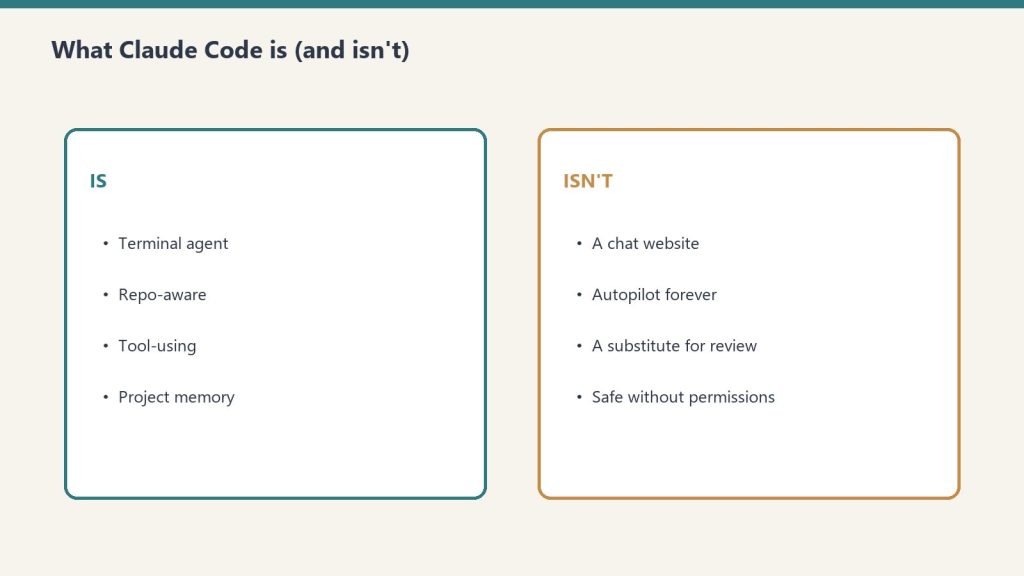
    Claude Code is a terminal-native agent that operates autonomously inside your actual codebase — reading files, writing code, running tests, managing Git. ChatGPT doesn’t have a direct equivalent at this level of system integration. For developers who want AI working inside their development environment rather than in a chat window, Claude Code is a qualitatively different capability. See Claude Code pricing for tier details.

    Debugging Complex Systems

    On non-obvious bugs — the kind where the error message points you somewhere unhelpful — Claude is more likely to trace the actual root cause. It’s more willing to say “this looks like it’s actually caused by X upstream” rather than addressing the symptom. That’s the kind of reasoning that saves hours.

    Where ChatGPT Wins for Coding

    Interactive Data Analysis

    ChatGPT’s code interpreter runs Python directly in the chat interface — you can upload a CSV, ask it to analyze and plot the data, and get a chart back in the same conversation. Claude can reason deeply about data, but doesn’t run code interactively in the web interface by default. For exploratory data analysis and visualization, ChatGPT’s sandbox is more convenient.

    OpenAI Ecosystem Integration

    If you’re building on OpenAI’s stack — using their APIs, their assistants, their function calling — ChatGPT has naturally more fluent knowledge of those specific systems. Claude is excellent at reasoning about OpenAI’s APIs, but it’s not Anthropic’s infrastructure, so edge cases in OpenAI-specific implementation details may hit limits.

    For Most Developers: Claude Is the Stronger Tool

    The cases where ChatGPT wins for coding are specific and bounded — primarily data analysis and OpenAI ecosystem work. For the broader range of professional development: backend logic, API integration, infrastructure, automation, debugging, architecture decisions — Claude’s instruction-following, long-context coherence, and agentic capabilities through Claude Code give it a consistent edge.

    For a broader comparison beyond coding, see Claude vs ChatGPT: The Full 2026 Comparison. For Claude’s agentic coding tool specifically, see Claude Code vs Windsurf.

    Frequently Asked Questions

    Is Claude better than ChatGPT for coding?

    For most professional coding tasks — complex instruction following, large codebase work, debugging, and agentic development — Claude is stronger. ChatGPT’s code interpreter wins for interactive data analysis. Overall, Claude is the better coding tool for most developers.

    What is Claude Code and how does it compare to ChatGPT?

    Claude Code is a terminal-native agentic coding tool that operates autonomously inside your actual codebase — reading files, writing code, running tests. ChatGPT doesn’t have a direct equivalent at this level of system integration. It’s a qualitatively different capability, not just a better chat interface.

    Can ChatGPT run code that Claude can’t?

    ChatGPT’s code interpreter runs Python interactively in the chat interface for data analysis and visualization. Claude doesn’t do this by default in the web interface. However, Claude Code can execute code autonomously inside a real development environment, which is a different and more powerful capability for actual software development.

    Need this set up for your team?
    Talk to Will →

  • Is Claude Better Than ChatGPT? An Honest Answer From Daily Use

    Is Claude Better Than ChatGPT? An Honest Answer From Daily Use

    Last refreshed: May 15, 2026

    Claude AI · Fitted Claude

    I’ve used both Claude and ChatGPT daily for over a year — running content pipelines, building automations, writing strategy documents, debugging code, and doing client work across more than two dozen sites. The honest answer to “is Claude better than ChatGPT?” is: it depends on exactly what you’re doing. But for most professional knowledge work, yes — Claude is better. Here’s why, and where it isn’t.

    Bottom line: Claude wins on writing quality, instruction-following, long-context work, and nuanced reasoning. ChatGPT wins on third-party integrations, image generation, and ecosystem breadth. If you’re a knowledge worker who writes, analyzes, or builds with AI — Claude is the better daily driver. If you need DALL-E, GPT plugins, or deep OpenAI ecosystem integration, ChatGPT holds the advantage there.

    Where Claude Is Better Than ChatGPT

    Writing Quality

    Claude produces more natural, less formulaic prose. ChatGPT has a tell — a certain cadence and structure that shows up in its outputs even when you try to tune it away. Claude is more likely to match your actual voice if you give it examples, and less likely to default to a listicle structure when that’s not what the task calls for. For any serious writing work — articles, client deliverables, strategy documents — Claude is noticeably better out of the box.

    Following Complex Instructions

    This is where Claude separates itself most clearly. Give both models a prompt with eight specific constraints and Claude will hold all eight through a long response. ChatGPT tends to lose track of earlier constraints as the response develops — not always, but often enough to be a real workflow problem. For systems work, content pipelines, or anything with precise formatting requirements, Claude’s instruction adherence is meaningfully better.

    Long-Context Work

    Claude handles large documents better. Load a 50-page PDF, a full codebase, or a lengthy conversation history and Claude maintains coherence across the whole context. It’s less likely to “forget” what was established earlier in the session. For research synthesis, document analysis, or any task requiring sustained attention across long inputs, Claude has a consistent edge.

    Honesty and Calibration

    Claude is more likely to tell you when it’s uncertain, push back on a bad premise, or flag a potential problem with your approach. ChatGPT skews more agreeable — which feels pleasant in the moment but can leave you with confident-sounding wrong answers. For professional work where accurate information matters, Claude’s willingness to express uncertainty is a feature, not a limitation.

    Where ChatGPT Is Better Than Claude

    Image Generation

    ChatGPT includes DALL-E image generation in the standard subscription. Claude doesn’t generate images natively in the web interface (though Anthropic’s models support image generation via the API through Vertex AI). If visual content creation is part of your workflow, this is a real gap.

    Third-Party Integrations

    ChatGPT has a broader plugin and integration ecosystem, particularly for consumer apps and popular productivity tools. If you need Claude to connect to a specific third-party service, Claude’s MCP (Model Context Protocol) integration is expanding rapidly — but the ChatGPT ecosystem currently has more established connections across more platforms.

    Code Interpreter

    ChatGPT’s code execution environment is more developed for data analysis use cases — running Python, generating charts, analyzing spreadsheets interactively. Claude can reason about code and data at a high level, and Claude Code handles real agentic development work, but ChatGPT’s in-chat data analysis sandbox has been more polished for that specific use case.

    The Tasks Where It’s Essentially a Tie

    Both models are excellent at: answering factual questions, explaining concepts, brainstorming, summarizing content, generating structured data formats, and basic coding assistance. For simple, well-defined tasks, the difference between Claude and ChatGPT in 2026 is marginal. The gap shows up on harder, more nuanced work.

    Price Comparison

    Tier Claude ChatGPT
    Free ✓ (limited) ✓ (limited)
    Standard paid Pro $20/mo Plus $20/mo
    Power user Max $100/mo No direct equivalent
    Team $30/user/mo $30/user/mo
    Image generation Not included DALL-E included

    For a full breakdown of Claude’s plans, see the complete Claude pricing guide. For a detailed side-by-side, see Claude vs ChatGPT: The Full 2026 Comparison.

    My Actual Setup

    I use Claude as my primary AI — it’s where I do all serious writing, strategy work, and multi-step operations. I occasionally use ChatGPT when a specific integration requires it or when I need image generation for a quick prototype. That’s the honest answer from someone who has both subscriptions and uses them daily.

    Frequently Asked Questions

    Is Claude better than ChatGPT for writing?

    Yes, for most professional writing tasks. Claude produces more natural prose, follows formatting and style instructions more precisely, and is less likely to default to generic AI-sounding patterns. For knowledge workers whose output is primarily written, Claude is the stronger tool.

    Is Claude better than ChatGPT for coding?

    Claude is stronger on complex instruction-following and long-context code tasks. ChatGPT’s in-chat code interpreter is better for interactive data analysis. For agentic coding — running autonomously inside a codebase — Claude Code has a distinct advantage. For most code generation and debugging, they’re closely matched with Claude edging ahead on nuanced problems.

    Should I switch from ChatGPT to Claude?

    If your primary work is writing, analysis, research, or building with AI, yes — Claude is the better daily driver for those tasks. If you rely heavily on DALL-E image generation, ChatGPT’s plugin ecosystem, or specific OpenAI integrations, switching entirely would cost you those capabilities. Many professionals use both.

    Can I use Claude for free?

    Yes. Claude has a free tier with daily usage limits. For details on what the free tier includes and when it makes sense to upgrade, see Is Claude Free? What You Actually Get.

    Need this set up for your team?
    Talk to Will →

  • Claude Opus vs Sonnet: Which Model Should You Actually Use?

    Claude Opus vs Sonnet: Which Model Should You Actually Use?

    Last refreshed: May 15, 2026

    Claude AI · Fitted Claude

    Claude Opus 4.7 and Claude Sonnet 4.6 are both powerful — but they’re built for different jobs. Picking the wrong one either wastes money or leaves capability on the table. Here’s the practical breakdown of when each model wins, what the actual performance differences look like, and which one belongs in your default workflow.

    Quick answer: Sonnet is the right default for most people. It handles the vast majority of real-world tasks — writing, analysis, coding, research — with excellent output at a fraction of Opus’s cost. Opus is for the tasks where you need the absolute ceiling of Claude’s reasoning capability: complex multi-step problems, nuanced judgment calls, or work where quality is genuinely the only variable that matters.

    Claude Opus 4.7 vs Sonnet: Head-to-Head

    Category Sonnet Opus Notes
    Speed ✅ Faster Noticeably quicker on long outputs
    API cost ✅ Much cheaper Opus input tokens cost ~5× more than Sonnet
    Complex reasoning ✅ Wins Multi-step logic, edge cases, ambiguous problems
    Long-form writing ✅ Strong ✅ Stronger Opus has more nuance; Sonnet covers most needs
    Coding ✅ Strong ✅ Stronger Opus catches edge cases Sonnet misses
    Instruction following ✅ Excellent ✅ Excellent Both handle complex instructions well
    Daily use value ✅ Better ratio Cost-per-task is dramatically lower

    Where Sonnet Wins

    Sonnet is not a compromise — it’s the right tool for the majority of professional tasks. Writing, research, summarization, drafting, analysis, code generation, SEO work, email, strategy — Sonnet handles all of it at a level that’s indistinguishable from Opus for most outputs. The difference shows up at the edges: highly ambiguous problems, tasks requiring multiple competing constraints to be held simultaneously, or situations where the consequences of a slightly wrong answer are significant.

    For production API workloads, Sonnet’s cost advantage is substantial. Running high-volume content or data pipelines on Opus instead of Sonnet multiplies costs without proportional quality gains on most tasks.

    Where Opus Wins

    Opus earns its premium on genuinely hard problems. Complex multi-step reasoning where the chain of logic matters. Legal or technical documents where precision at every sentence is required. Strategic analysis where you need the model to hold and weigh competing frameworks simultaneously. Code debugging on complex, unfamiliar systems where Sonnet gives you the obvious answer and Opus finds the non-obvious one.

    I use Opus specifically for: client strategy documents where I’m synthesizing months of context, complex GCP architecture decisions, and any task where I’ve tried Sonnet and felt the output was a notch below what the problem deserved. That’s a smaller subset of work than most people assume.

    What About Haiku?

    Haiku is the third model in the family — faster and cheaper than Sonnet, designed for high-volume tasks where speed and cost dominate. Classification, extraction, routing logic, metadata generation, short-form responses. If Sonnet is your default, Haiku is the model you reach for when you need to run the same operation across hundreds or thousands of inputs cost-effectively.

    For a full model comparison including Haiku, see Claude Models Explained: Haiku vs Sonnet vs Opus.

    The Practical Routing Rule

    Use Sonnet when: the task is well-defined, the output type is familiar, and quality at the 90th percentile is sufficient. That’s most professional work.

    Use Opus when: the task is genuinely novel, involves high-stakes judgment, requires deep multi-step reasoning, or you’ve already run it on Sonnet and the output wasn’t quite right.

    Use Haiku when: you need the same operation at scale, latency matters more than depth, or cost is the primary constraint.

    Frequently Asked Questions

    Is Claude Opus 4.7 better than Sonnet?

    Opus is more capable on complex reasoning tasks, but Sonnet delivers excellent results on the vast majority of professional work. For most users, Sonnet is the right default — Opus is worth reaching for when a task is genuinely hard and quality is the only variable that matters.

    How much more expensive is Opus than Sonnet?

    Opus input tokens cost approximately $5 per million compared to Sonnet’s approximately $3.00 per million — approximately 1.7× more expensive on input (Opus is $5/M vs Sonnet’s $3/M). Output tokens follow a similar ratio. For API workloads, this cost difference is significant at scale.

    Which Claude model should I use by default?

    Sonnet is the right default for most people. It handles writing, analysis, coding, research, and strategy work with excellent quality. Upgrade to Opus when you’ve tried Sonnet on a task and the output wasn’t quite at the level the problem required.

    Does Claude Pro give access to both Opus and Sonnet?

    Yes. Claude Pro ($20/month) includes access to Haiku 4.5, Sonnet 4.6, and Opus 4.7. You can switch between models within the web interface. The subscription doesn’t limit which model you use — it limits total usage volume across all models.

    Need this set up for your team?
    Talk to Will →

  • Everett’s Proposed Utility Tax Hike Could Add $10.74 a Month to Water Bills — What Residents Need to Know

    Everett’s Proposed Utility Tax Hike Could Add $10.74 a Month to Water Bills — What Residents Need to Know

    Everett is considering nearly doubling its utility tax on water service — from 6% to 12% — which would add roughly $10.74 per month to the average household water bill for about 670,000 Snohomish County water customers.

    A utility tax is levied on utility services as a general revenue source for the city budget. Doubling it from 6% to 12% effectively doubles the tax component of every water bill. At roughly $128 per year per average household, it’s not trivial — and it would affect a wide geographic area across Snohomish County given the scale of the water district service area.

    Where It Stands

    As of publication, this is a proposal under deliberation — not an adopted change. The council has not taken a final vote. Monitor council agendas at everettwa.gov for the vote schedule and public comment windows.

    How to Comment

    Everett City Council meets at City Hall, 2930 Wetmore Ave. Public comment can be submitted in person at council meetings, in writing through the city clerk, or through the online portal at everettwa.gov. Comment periods are held before votes — that’s the window to be heard.

    Frequently Asked Questions

    Has Everett approved the utility tax increase?

    No — it is a proposal under deliberation. Check everettwa.gov for current agenda status.

    How much would this add to my water bill?

    Approximately $10.74/month for an average household — about $128/year. Individual impact varies by usage and service district.

    How do I comment on the proposal?

    Attend a council meeting at 2930 Wetmore Ave, submit written comment to the city clerk, or use the online portal at everettwa.gov.

  • Everett City Council Passes Fair Labor Ordinance 9-1: What City Contractors Need to Know

    Everett City Council Passes Fair Labor Ordinance 9-1: What City Contractors Need to Know

    Everett City Council passed a fair labor ordinance on March 25, 2026 in a 9-1 vote — and if your business contracts with the city, you need to know what it requires.

    The ordinance establishes new labor standards for companies holding city contracts above a defined threshold. Businesses that receive city contracts must meet baseline labor conditions — typically wage floors above state minimum, paid leave provisions, and worker notification rights — as a condition of that contract. The intent: ensure city spending flows to employers meeting defined standards.

    The Vote

    9-1, March 25, 2026. Strong council consensus. Fair labor ordinances have been adopted by cities across Washington in recent years. Everett’s is consistent with that regional trend.

    Who It Affects

    Businesses holding or bidding on city contracts above the ordinance threshold. If your company does business with the City of Everett, review the ordinance text at everettwa.gov or contact the city’s purchasing department for compliance guidance. This article is context, not legal advice.

    Frequently Asked Questions

    What did Everett Council vote on March 25?

    A fair labor ordinance requiring labor standards compliance for city contractors, passed 9-1.

    Does this affect all Everett businesses?

    No — only businesses with city contracts above the specified threshold. Private employers without city contracts are not directly affected.

    Where is the full ordinance?

    At everettwa.gov. Contact the city’s purchasing or legal department for contract-specific compliance guidance.

  • Forest Park in Everett: The Local’s Complete Spring 2026 Guide (Trails, Animal Farm, What’s Open)

    Forest Park in Everett: The Local’s Complete Spring 2026 Guide (Trails, Animal Farm, What’s Open)

    Forest Park is 197 acres of old-growth forest, free animal farm, hiking trails, and seasonal pool in southwest Everett — and most Everett residents have never walked its trails.

    Located at 802 Mukilteo Blvd, Forest Park packs more into those acres than most parks three times its size. Here’s the local’s guide to actually using it this spring.

    The Trails

    Unpaved forest trails through mixed old-growth and second-growth Douglas fir and cedar. The trail network is not heavily signed — photograph the entrance map or download offline. Trails stay muddy through April; waterproof footwear is not optional. Trilliums and native spring wildflowers are appearing now in the forested sections.

    The Animal Farm

    Free admission. Goats, deer, rabbits, peacocks, and domestic farm animals in a small petting zoo format. One of those things Everett has that most comparable cities don’t. Call Everett Parks (everettwa.gov/parks) to confirm current hours and which animals are out before a specific visit.

    Spring Hours and What’s Open

    The park itself is open during daylight hours year-round. Animal Farm opens seasonally in spring — verify status before visiting. The spray park and outdoor pool are not yet open; they typically run June through August. Picnic shelters can be reserved through Everett Parks for spring gatherings.

    Practical Info

    802 Mukilteo Blvd, Everett WA 98203. Free to enter. Parking lot off Mukilteo Blvd. Check everettwa.gov/parks for current Animal Farm status and pool season schedule.

    Frequently Asked Questions

    Is Forest Park free?

    Yes — free entry, free Animal Farm. Pool and some facilities have seasonal fees.

    Where is Forest Park in Everett?

    802 Mukilteo Blvd, Everett WA 98203. In southwest Everett off Mukilteo Boulevard.

    Are trails good in spring?

    Yes but muddy. Waterproof footwear recommended April–May. Native wildflowers are appearing now. Trails are not heavily signed — map before you go.

  • Living in Bayside: Everett’s Waterfront Neighborhood Most People Drive Past

    Living in Bayside: Everett’s Waterfront Neighborhood Most People Drive Past

    Bayside might be the most underestimated neighborhood in Everett — water access, proximity to the port, genuine community identity, and most people drive past it without stopping.

    Bayside sits along Port Gardner Bay in northwest Everett, bordered by the Port of Everett to the south and Naval Station Everett to the north. One of Everett’s oldest residential neighborhoods — three-generation families, streets that still reflect the maritime industrial roots, and Olympic Mountain views on clear days that are genuinely stunning.

    The Housing

    Mixed mid-20th century single-family stock. More affordable than comparable waterfront-adjacent areas in King County. Older homes that need updating — which is exactly the trade buyers seeking value in Everett’s 2026 market are making deliberately. For buyers who want character, history, and water proximity without the waterfront premium, Bayside deserves serious attention.

    The Community

    Military families from NAVSTA Everett contribute to Bayside’s civic character — young families on rotation who engage schools, community organizations, and local businesses. The neighborhood association connects residents with city services. The marina promenade and waterfront trail system are accessible from Bayside’s residential streets for walking, kayaking, and fishing access.

    What’s Changing

    Port of Everett’s Waterfront Place is the adjacent story. Restaurant Row, the marina promenade, and the coming Millwright District are within walking or biking distance of Bayside’s streets. That new amenity access is making the neighborhood more attractive to buyers who want urban convenience with a quieter residential base.

    Frequently Asked Questions

    Where is the Bayside neighborhood in Everett?

    Northwest Everett, along Port Gardner Bay, between the Port of Everett (south) and Naval Station Everett (north).

    Is Bayside a good place to buy a home in Everett?

    It’s genuinely underrated — water-adjacent location, lower median prices than comparable areas, strong community identity. Housing stock skews older; expect renovation needs.

  • Funko HQ in Everett: What to Expect, HQ Exclusives, and Why Spring Is a Great Time to Visit

    Funko HQ in Everett: What to Expect, HQ Exclusives, and Why Spring Is a Great Time to Visit

    Funko HQ in Everett isn’t just the world’s largest Funko store — it’s one of the most distinctly Everett cultural experiences you can have, and spring is a good time to visit.

    Funko’s world headquarters at 2802 Wetmore Ave is where the company makes, designs, and ships the Pop figures that have become one of the most recognizable collectibles on earth. The public retail experience there is the flagship — bigger than any other Funko store anywhere — and it’s paired with periodic HQ-exclusive releases not available through general retail channels.

    What to Expect Inside

    The store is organized by franchise: Star Wars, Marvel, DC, anime, gaming, music, sports, horror, and dozens of niche properties all have dedicated sections. If you’re a collector, you know exactly what that means. If you’re bringing someone who isn’t, the sheer density is its own spectacle. Figure displays are arranged creatively throughout the space — some are simple shelf displays, others are full set pieces that function as photo backdrops.

    HQ Exclusives

    Funko releases Everett HQ-exclusive figures seasonally — items only available at this location and not through general retail. These change regularly and are the primary reason frequent visitors keep coming back. Spring exclusives are typically released ahead of major pop culture events. Follow @originalfunko on Instagram and check funko.com for current exclusive availability before making a trip specifically for one.

    Events

    Funko HQ periodically hosts signings and launch events tied to major releases. These are announced through Funko’s channels with variable lead times — some sell out within hours. Worth following if you’re passionate about a specific property.

    Practical Details

    2802 Wetmore Ave, Everett WA. On-site parking. Open seven days a week — check funko.com for current hours. Easy to pair with a waterfront lunch or dinner at Restaurant Row (short drive).

    Frequently Asked Questions

    Where is Funko HQ?

    2802 Wetmore Ave, Everett WA. Check funko.com for current hours.

    What are HQ-exclusive Funko figures?

    Figures only available at the Everett HQ location, not through general retail. They change seasonally. Follow @originalfunko or check funko.com for current exclusives before visiting.

    Is Funko HQ good for families?

    Yes — particularly for kids who know pop culture. The franchise organization makes it easy to find what they’re into. Legitimate Everett field trip destination.

  • What’s Happening at the Schack Art Center This Spring — And Why You Should Go

    What’s Happening at the Schack Art Center This Spring — And Why You Should Go

    The Schack Art Center is one of Everett’s best free cultural resources — a working ceramics studio, public gallery, community classroom, and anchor of the monthly Art Walk — and most people in the city have never walked through the door.

    Located at 2921 Hoyt Ave, the Schack is not a museum you observe passively. It’s a working arts center where kilns are firing, printmakers are at the press, and fiber arts looms are in use. The public gallery is free. The classes and studio memberships are affordable. And the Schack anchors Everett’s third-Thursday Art Walk, which runs through downtown galleries monthly on the third Thursday — the next one is April 16.

    The Gallery

    Rotating exhibitions in the main gallery space, free and open to the public. The Schack shows regional and local artists across mediums. Check schack.org for the current exhibition and opening events — the Schack publishes their calendar regularly and it’s the authoritative source.

    Classes and Workshops

    The Schack runs ceramics, printmaking, fiber arts, painting, drawing, and mixed-media classes year-round at multiple skill levels. Drop-in workshops require no prior experience. Multi-week sessions are available for deeper development. The ceramics program is the most serious in Snohomish County — if you’ve ever wanted to learn to throw on a wheel, this is your place. Register at schack.org.

    Sorticulture 2026

    The Schack’s signature annual event — Sorticulture, a garden arts festival at the Everett waterfront drawing thousands of visitors — is the summer highlight. 2026 dates not yet officially announced; watch schack.org. It’s worth planning around.

    April Art Walk — April 16

    Third Thursdays monthly. Next one: April 16. Free. Start at the Schack at 2921 Hoyt Ave and walk the downtown gallery circuit from there. Most galleries stay open until 8 or 9 PM on Art Walk nights.

    Frequently Asked Questions

    Is the Schack Art Center free?

    The gallery is free and open to the public. Classes and studio memberships have fees. Check schack.org for current hours and registration.

    Where is the Schack?

    2921 Hoyt Ave, Everett WA 98201.

    When is the next Everett Art Walk?

    April 16, 2026 — the third Thursday of the month. Free, walkable through downtown galleries. Start at the Schack.