Author: Will Tygart

  • AquaSox Survive the Opener From Hell to Go 4-2 Against Tri-City: What We Learned

    AquaSox Survive the Opener From Hell to Go 4-2 Against Tri-City: What We Learned

    Q: How did the Everett AquaSox do in their first home series of 2026?
    A: The Everett AquaSox went 4-2 against the Tri-City Dust Devils in their first home series of 2026, bouncing back from a brutal 17-2 opening night loss to take four of the six games at Everett Memorial Stadium.

    It was the worst home opener in recent memory. On April 7, the Everett AquaSox walked out in front of their home fans for the first time in 2026 and proceeded to lose 17-2 to the Tri-City Dust Devils. In baseball terms, it’s the kind of result that makes fans cringe, beat writers reach for extra coffee, and front offices quietly remind themselves that it’s a long season.

    But here’s the thing: the AquaSox didn’t fold. They didn’t let one historically ugly night define their week. Over the next five games, they went 4-1 and finished their first home series at 4-2 — a genuinely solid result when you consider how badly they started it.

    Here’s what we learned from the first homestand of the 2026 AquaSox campaign.

    The Opener Was That Bad — and That’s Okay

    Let’s just acknowledge it. A 17-2 loss is rough. The Tri-City Dust Devils scored 16 runs in the first four innings, including multiple extra-base hits and a home run from Jake Munroe — who crushed a three-run blast to left for his first professional home run. Capri Ortiz added multiple RBIs, and the Dust Devils took a sledgehammer to Everett’s pitching early.

    For fans who showed up expecting a classic home opener, it was a rough welcome back. But Minor League Baseball is full of blowout games. High-A ball is where prospects are actively developing — and development means inconsistency. Pitchers walk through bad stretches. Lineups have nights where nothing clicks. The AquaSox have enough talent on this roster that one 17-2 loss tells us almost nothing about the arc of their season.

    Colton Shaw Was the Star of the Week

    If you’re looking for a reason to get excited about this AquaSox rotation, start with Colton Shaw. The right-hander and Yale alum turned in the standout pitching performance of the home series in the April 10 blowout win: six innings pitched, zero runs allowed, three hits, seven strikeouts, and zero walks.

    That’s a masterclass in efficiency. Seven strikeouts with no walks in six innings is a line that would look good in Triple-A, let alone High-A. The AquaSox offense backed him up with a 14-5 victory — a thorough dismantling of the Dust Devils that flipped the momentum of the series entirely.

    Shaw is going to be a prospect worth following all season. The pedigree (Ivy League arm), the stuff (strikeout rate), and the command (zero BBs on six innings) all point to someone capable of moving quickly through the system. Write the name down.

    Luke Stevenson and Jonny Farmelo: Names to Remember

    Going into the season, two position players from the Mariners’ system that deserve your attention in Everett are Luke Stevenson and Jonny Farmelo.

    Stevenson has been in the middle of multiple wins during the early season — contributing in the 14-5 blowout and highlighted alongside Colton Shaw in the HeraldNet writeup about back-to-back wins. He has a patient, disciplined approach at the plate that tends to translate at every level of the game. The Mariners value this kind of hitter in their development pipeline.

    Farmelo is one of the more exciting athletes on this roster. If you’ve been to an AquaSox game and someone made a play that made you forget it was a Tuesday night in April, Farmelo may have been involved. He’s a name that Mariners fans at the major league level are already tracking in the farm system.

    Felnin Celesten and the Supporting Cast

    Beyond the marquee names, this AquaSox roster has depth throughout the lineup. The April 10 blowout featured contributions from Felnin Celesten, Anthony Donofrio, Josh Caron, Brandon Eike, Carter Dorighi, Carlos Jimenez, and Axel Sanchez. That’s not a team leaning on two or three players — that’s a lineup with contributors across the order.

    For Mariners fans tracking organizational depth, this matters. The front office has invested in building out the High-A affiliate with prospects at multiple positions. The early returns on who’s going to break out are just starting to come in. The first two weeks of April gave us a handful of names to remember.

    The Series Finale Stings — But Only a Little

    Losing 5-2 to Tri-City in the April 12 series finale doesn’t erase the good work that came before it. The AquaSox had already won four games at that point. They’d shown they could compete with and beat a Tri-City team that will be in the Northwest League playoff picture come summer.

    A series-finale loss is a chapter, not the whole story. By any reasonable measure, the AquaSox responded well after the nightmare opener. That’s the resilience you want to see from a young roster.

    What’s Next for the AquaSox

    The team is currently on a road stretch before returning to Everett Memorial Stadium for a six-game homestand against the Spokane Indians, beginning Tuesday, April 21. That series will be another opportunity for fans to see what this roster can do — and to see if Colton Shaw, Luke Stevenson, and the rest of the crew can build momentum heading into the heart of the season.

    Overall, the AquaSox are a .500 club finding their footing — exactly what you’d expect from a High-A team integrating new prospects, developing pitching arms, and working through the early-season growing pains that come with every minor league campaign.

    The home opener from hell has been answered. The bounce-back was real. Now let’s see what the rest of April brings at Everett Memorial Stadium.

    Frequently Asked Questions

    What is the Everett AquaSox record in 2026?

    After their first homestand, the AquaSox went 4-2 against the Tri-City Dust Devils, bringing them to a competitive position in the early Northwest League standings. Their full season record includes opening road games in Spokane as well.

    Who is Colton Shaw on the AquaSox?

    Colton Shaw is a right-handed starting pitcher and Yale alum in the Mariners’ system. He made a strong impression during the first home series, throwing six shutout innings against Tri-City with seven strikeouts and zero walks.

    What Mariners prospects are on the 2026 AquaSox?

    Notable names include Luke Stevenson, Jonny Farmelo, Felnin Celesten, Anthony Donofrio, Josh Caron, and Colton Shaw among others. The AquaSox serve as the Seattle Mariners’ High-A affiliate in the Northwest League.

    When is the next AquaSox home series?

    The next home series at Everett Memorial Stadium runs April 21-26, 2026 against the Spokane Indians.

    Where do the AquaSox play their home games?

    The AquaSox play at Everett Memorial Stadium in Everett, Washington. It’s one of the best Minor League Baseball experiences in the Pacific Northwest.

    Are the AquaSox affiliated with the Seattle Mariners?

    Yes. The Everett AquaSox are the official High-A affiliate of the Seattle Mariners in Major League Baseball’s Northwest League.

  • Silvertips Win Game 3 in Kelowna — One Win Away From a Second-Round Sweep

    Silvertips Win Game 3 in Kelowna — One Win Away From a Second-Round Sweep

    Q: What is the Everett Silvertips series score in the 2026 WHL playoffs second round?
    A: The Everett Silvertips lead the Kelowna Rockets 3-0 in the second round of the 2026 WHL playoffs. Game 4 is Wednesday, April 15 at 7:05 PM PT at Prospera Place in Kelowna.

    The Everett Silvertips have done something in the Okanagan that very few visiting teams ever accomplish: they walked into Prospera Place and left as convincing winners.

    Tuesday night’s 4-1 victory over the Kelowna Rockets in Game 3 of the Western Conference Semifinal puts the Silvertips one win away from completing a second-round sweep — and from setting up a potential showdown against whoever survives the rest of the bracket. More than that, it sends a statement to every team still alive in the 2026 WHL postseason: the Tips don’t just win at home. They win everywhere.

    The Series So Far: Everett Has Been Dominant

    Let’s back up and look at how we got here. When the bracket set up Everett — the Western Conference’s top regular season seed — against the #4 Kelowna Rockets (who happen to be hosting the 2026 Memorial Cup), everyone expected a competitive series. The Rockets are a proud organization playing in front of their home fans in what is supposed to be their championship year.

    The Silvertips have not been interested in playing to script.

    Game 1 at Angel of the Winds Arena on April 10 set the tone immediately. Everett won 4-1, dictating pace and exposing gaps in the Rockets’ defensive structure from the opening puck drop. Game 2, also at the Arena on April 11, was tougher — Kelowna threw 39 shots at Silvertips goaltender Anders Miller — but Everett’s special teams told the story.

    The Tips went 2-for-3 on the power play in Game 2, converting with Carter Bear (his first playoff goal) and Julius Miettinen. More impressive: the penalty kill went a perfect 6-for-6, suffocating every Rockets man-advantage opportunity. Miller finished with 37 saves on 39 shots — exactly the kind of goaltending performance that changes a series.

    Into the Rockets’ Den — And It Didn’t Matter

    Games 3 and 4 shifted to Prospera Place in Kelowna, and home ice was supposed to matter. The Rockets are playing for their city, for the Memorial Cup crowd energy that will fill this building in May — this was supposed to be a turning point.

    Instead, Everett walked in on Tuesday night and won again, 4-1, in front of 3,562 fans who went home quiet. The Tips are now 3-0 in the series — one win from sweeping the Memorial Cup host on their own ice.

    The pattern is clear: disciplined structure, efficient special teams, and a goalie who won’t give up soft goals. That combination travels. Everett has shown that this isn’t a team that wins because of home crowd energy — they win because of how they play.

    Game 4 Is Wednesday Night — Sweep Is on the Table

    This is the moment. Game 4 is Wednesday, April 15 at 7:05 PM PT, also at Prospera Place in Kelowna. Win, and the Silvertips advance to the WHL Western Conference Final. They’d also have the distinction of sweeping the Memorial Cup host in its own building — which would be one of the more memorable playoff storylines in recent Everett hockey history.

    Kelowna will be desperate. A crowd that came to watch their team host a championship and instead watches them get swept out in the second round is not a scenario they’ll accept without a fight. The Rockets will throw everything at the Silvertips on Wednesday night.

    But this Everett team has shown no signs of taking their foot off the gas. They’ve been businesslike since the first puck of the postseason — and right now, they have the look of a team that knows it’s playing well.

    Why the Silvertips Are Built for This

    A few things stand out about how the Silvertips have dominated this series:

    The special teams edge has been decisive. That 6-for-6 penalty kill in Game 2 wasn’t a fluke — it reflects disciplined defensive structure and goaltending you can count on. When you kill every penalty your opponent gets, you eliminate one of the biggest momentum swings in playoff hockey.

    Anders Miller has stepped up when it counted. Playoff goaltending is a different animal than the regular season. The shots get harder, the lanes tighter, and the mental side demands more. Miller’s 37-save performance in Game 2 — absorbing a high-volume Rockets attack without letting it crack the lead — is exactly the kind of game that builds team-wide confidence through a long playoff run.

    The lineup depth is real. Goal scorers across Games 1 and 2 included Zackary Shantz, Jaxsin Vaughan, Carter Bear, and Julius Miettinen. That’s not a team living and dying on one or two players. When the top of the lineup gets some attention from the defense, someone else steps up.

    The Injury Backdrop

    One element that hangs over this series is the Game 2 incident involving Kelowna’s Ty Halaburda, who was injured and required hospitalization following a collision during the April 11 game. While playoff hockey is a physical sport and the focus remains on competition, the human element matters. Both fan bases will be monitoring Halaburda’s recovery. The Rockets are already facing a steep deficit — losing a player adds another layer of adversity to their situation.

    What a Sweep Would Mean

    If the Silvertips close out Game 4 on Wednesday, they will have gone a combined 8-0 through the first two rounds of the 2026 WHL Playoffs — sweeping the Memorial Cup host on their own ice, advancing with maximum rest while other teams grind out long series, and firmly establishing themselves as the team to beat in the Western Conference Final.

    For Everett fans, this is the time to be paying close attention. The Silvertips are playing some of the most complete hockey this organization has produced in years — and Wednesday night in Kelowna is a chance to make history.

    Game 4 is Wednesday, April 15 at 7:05 PM PT at Prospera Place in Kelowna. The sweep is on the table. Let’s go, Tips.

    Frequently Asked Questions

    What is the current Silvertips-Rockets series score?

    The Everett Silvertips lead the series 3-0 following Tuesday’s 4-1 win in Game 3 at Prospera Place in Kelowna.

    When is Game 4?

    Wednesday, April 15, 2026, at 7:05 PM PT at Prospera Place in Kelowna, BC.

    Who is the Silvertips’ goalie for the 2026 playoffs?

    Anders Miller has been in goal for Everett. He made 37 saves in Game 2, a key performance in the Tips’ 4-2 win.

    Why is the Kelowna series especially meaningful?

    The Kelowna Rockets are the host team of the 2026 WHL Memorial Cup, set for May 2026 at Prospera Place. That makes their potential playoff exit on home ice — and at the hands of the Silvertips — a significant story.

    Who scored for the Silvertips in Game 2?

    Carter Bear (power play, first playoff goal), Julius Miettinen (power play), Jaxsin Vaughan, and Zackary Shantz scored for Everett in the 4-2 Game 2 win at Angel of the Winds Arena.

    Are there Silvertips tickets for a potential Game 5 in Everett?

    If the series extends, Game 5 would return to Angel of the Winds Arena on Friday, April 17 at 7:05 PM PT. Check the Everett Silvertips’ official site for ticket availability.

  • Everett’s USS Gridley Joins USS Nimitz for Southern Seas 2026: What Military Families Need to Know

    Everett’s USS Gridley Joins USS Nimitz for Southern Seas 2026: What Military Families Need to Know

    Q: Is an Everett Navy ship currently deployed on Southern Seas 2026?
    A: Yes. USS Gridley (DDG-101), homeported at Naval Station Everett since 2016, departed as part of Carrier Strike Group 11 alongside USS Nimitz for Southern Seas 2026 — a circumnavigation of South America announced by U.S. Southern Command on March 23, 2026.

    When USS Nimitz (CVN-68) headed south for the Southern Seas 2026 deployment in late March, it didn’t travel alone. Alongside the legendary aircraft carrier sailed USS Gridley (DDG-101), an Arleigh Burke-class guided-missile destroyer homeported right here at Naval Station Everett. For the families of Gridley’s crew — the spouses, children, and partners watching the Puget Sound waterfront — this deployment carries real weight. Southern Seas 2026 is no routine exercise. It’s a circumnavigation of South America, a deployment that takes Everett sailors through some of the most strategically significant and geographically dramatic waters in the world.

    What Is Southern Seas 2026?

    Southern Seas is a long-running series of U.S. 4th Fleet partnership deployments, now in its 11th iteration since the program launched in 2007. Designed to strengthen maritime relationships between the United States and South American partner nations, Southern Seas deployments blend military-to-military training with high-level diplomatic engagement along the continent’s coastlines.

    This year’s deployment — officially announced March 23 by U.S. Southern Command — sends USS Nimitz and USS Gridley south as the core of Carrier Strike Group 11, accompanied by Carrier Air Wing 17. The ships are scheduled to conduct passing exercises, maritime operations, and subject matter expert exchanges with naval forces from Argentina, Brazil, Chile, Colombia, Ecuador, Peru, Mexico, El Salvador, Guatemala, and Uruguay.

    Port visits are planned for Brazil, Chile, Panama, and Jamaica — brief windows for sailors to call home, recharge, and experience ports most Americans will never see.

    “The Southern Seas 2026 deployment provides a unique opportunity to enhance interoperability and increase proficiency with our partner-nation forces across the maritime domain,” said Rear Adm. Carlos Sardiello, Commander, U.S. 4th Fleet.

    USS Gridley: Everett’s Ship in the Southern Seas

    USS Gridley (DDG-101) arrived at Naval Station Everett as her permanent homeport in July 2016, and has been woven into this community ever since. Named for Captain Charles Gridley — the officer who received Admiral Dewey’s famous “You may fire when you are ready, Gridley” command at the Battle of Manila Bay in 1898 — the ship has a distinguished history stretching back to her commissioning on February 10, 2007.

    Gridley is an Arleigh Burke-class Flight IIA destroyer, the workhorses of the surface Navy. Capable of anti-air warfare, anti-submarine warfare, and surface strike missions, destroyers like Gridley provide the multi-mission escort capability that makes a carrier strike group lethal across all domains.

    For Southern Seas 2026, Gridley’s crew will operate in close coordination with USS Nimitz and Carrier Air Wing 17 as they transit through South American waters, executing the kind of complex, multi-domain operations that define modern carrier strike group operations. And while those sailors focus on the mission ahead, their families back in Everett face months of daily life without them home.

    What Military Families Experience During a Major Deployment

    Deployment is never easy, and a circumnavigation of South America represents an extended absence. Communication opportunities depend on operational schedules and port call windows. Some weeks bring frequent contact; others bring silence. Military families in the Everett area know this rhythm intimately — and the organizations that serve them have built their programs around it.

    For the spouses, children, and partners left behind, the months ahead call for community, practical resources, and the knowledge that help is close by. Naval Station Everett’s support network is one of the most robust in the Pacific Fleet. Here’s where to turn.

    Where NAVSTA Everett Families Can Turn for Support

    Fleet & Family Support Center (FFSC)

    The Fleet & Family Support Center at NAVSTA Everett is the first stop for any military family navigating deployment. The center provides individual counseling, marriage and family therapy, financial counseling, deployment support services, and relocation assistance — all at no cost to active duty personnel and their families.

    To schedule an appointment, call the Centralized Scheduling Center at 425-304-3735. For urgent counseling support, the counseling line at 866-854-0638 is available. Every FFSC counselor holds a master’s or doctoral degree in social work, marriage and family therapy, or psychology.

    MWR Everett

    Navy Morale, Welfare, and Recreation (MWR) at Naval Station Everett keeps military families connected and engaged when sailors are at sea. From fitness facilities and child and youth programs to the newly revived Mountaineering Program launching in 2026, MWR offers the activities and community events that make a meaningful difference during long separations. Programs are regularly posted at everett.navylifepnw.com.

    Military OneSource

    Available 24/7 at 800-342-9647, Military OneSource connects service members and families to financial counselors, non-medical counseling, tax preparation assistance, and a comprehensive database of local and national resources. For Everett families, it’s a powerful supplement to in-person services at the base.

    Ship Ombudsman Network

    Each homeported ship maintains an ombudsman — typically a spouse trained to serve as the communication link between the command and families on shore. During Southern Seas 2026, USS Gridley’s ombudsman will be the primary point of contact for deployment updates, port call news, and family events. Families who aren’t yet connected with their ship’s ombudsman should reach out through the FFSC at 425-304-3735.

    Snohomish County Veterans Services

    Active duty families often don’t know that Snohomish County’s Veterans Assistance Program at 3000 Rockefeller Ave., Everett, serves not just veterans but military families facing hardship. Services include emergency financial assistance, food assistance, and referrals to community resources. The office can be reached through the county’s main line at snohomishcountywa.gov.

    The Bigger Picture: What Southern Seas Means for U.S. Partnership in the Western Hemisphere

    Southern Seas 2026 arrives at a moment of heightened focus on hemispheric maritime security. The deployment’s sweeping itinerary — touching every major coastal nation on the continent — reflects the strategic importance Washington places on its relationships with South American naval partners. Engagements planned with Argentina, Brazil, Chile, Colombia, Ecuador, Peru, Mexico, El Salvador, Guatemala, and Uruguay represent a rare opportunity for American and partner-nation sailors to train alongside one another in real operating environments.

    For the sailors of USS Gridley, Southern Seas is an opportunity to represent the Pacific Northwest on an international stage. These are the at-sea experiences — operating with a carrier strike group, executing exercises with foreign navies, navigating unfamiliar waters — that no training base can fully replicate. For Everett, the significance runs deeper. When USS Gridley sails, the city’s name sails with her.

    How to Follow the Deployment

    Official unclassified updates and photography from Southern Seas 2026 are posted on DVIDS (Defense Visual Information Distribution Service) at dvidshub.net and through U.S. Southern Command’s public affairs channels at southcom.mil. Families can also follow USS Gridley’s official social media presence for unclassified updates and port visit photos.

    A reminder from the desk: operational security (OPSEC) matters to every sailor’s family. Please refrain from posting specific ship locations, movement schedules, or operational details on social media — even information that seems innocuous can be harmful in aggregate.

    Frequently Asked Questions

    Where is USS Gridley homeported?

    USS Gridley (DDG-101) is homeported at Naval Station Everett, Washington, where she has been based since July 2016.

    What is Southern Seas 2026?

    Southern Seas 2026 is the 11th iteration of a U.S. 4th Fleet deployment series focused on building maritime partnerships and interoperability with South American and Western Hemisphere partner navies. The 2026 mission includes USS Nimitz and USS Gridley circumnavigating South America with port visits planned for Brazil, Chile, Panama, and Jamaica.

    Which countries are part of Southern Seas 2026?

    Planned engagements include Argentina, Brazil, Chile, Colombia, Ecuador, Peru, Mexico, El Salvador, Guatemala, and Uruguay.

    How long is the Southern Seas 2026 deployment?

    The Navy has not publicly specified the exact duration. Southern Seas deployments typically run several months and include an extended transit through South American waters.

    What support is available for military families during deployment?

    Naval Station Everett’s Fleet & Family Support Center (425-304-3735) offers free counseling, financial services, and deployment support. Military OneSource (800-342-9647) is available 24/7 for additional resources.

    How can families follow the deployment?

    Official unclassified updates are published on DVIDS at dvidshub.net and through U.S. Southern Command’s public affairs channels. Families should be careful not to share operational details on social media.

    → For the complete family deployment guide, see: USS Gridley’s Southern Seas 2026 Deployment: The Complete Guide for Naval Station Everett Families

  • Beyond Boeing: How 600 Snohomish County Companies Keep the World’s Aerospace Industry Flying

    Beyond Boeing: How 600 Snohomish County Companies Keep the World’s Aerospace Industry Flying

    Q: How many aerospace companies are in Snohomish County?
    A: More than 600 aerospace companies operate in Snohomish County, making it one of the most concentrated aerospace supply chain ecosystems in the United States. These companies collectively account for 46% of all aerospace workers in Washington state and support a regional economic ecosystem worth approximately $60 billion annually.

    Beyond Boeing: How 600 Snohomish County Companies Keep the World’s Aerospace Industry Flying

    When you think about aerospace in Snohomish County, Boeing dominates the mental map. The Everett factory is the world’s largest building. Paine Field generates approximately $60 billion in annual economic impact for the Washington economy and supports roughly 158,000 jobs. Boeing’s name is on road signs, community partnerships, and the economic identity of this region going back generations.

    But Boeing doesn’t build a single airplane on its own.

    Behind every 737 that rolls off the line in Renton, every 777X taking shape in Everett, and every 767 tanker heading to the Air Force, there’s a web of suppliers, manufacturers, precision parts makers, electronics companies, materials providers, and service firms that make it possible. And a remarkable share of them are right here in Snohomish County.

    More than 600 aerospace companies call Snohomish County home. Together, they represent 46% of all aerospace workers in Washington state — a concentration of specialized talent and manufacturing capability that took decades to build and would be nearly impossible to replicate anywhere else.

    Who Are Snohomish County’s Aerospace Suppliers?

    The aerospace supply chain in Snohomish County isn’t one kind of company. It’s hundreds of different kinds, each contributing something specific to the finished aircraft.

    There are structural component manufacturers making fuselage sections, brackets, frames, and fasteners. There are electronics companies — including aerospace electronics firms that have relocated to Paine Field specifically to be close to Boeing operations — producing the systems that control everything from cabin lighting to flight management. There are composite materials specialists working with the same carbon fiber technology that defines the 787 Dreamliner. There are precision machining shops holding tolerances measured in thousandths of an inch. There are surface treatment and coating operations. There are tooling and fixtures manufacturers. There are maintenance, repair, and overhaul (MRO) shops.

    Many of these aren’t Boeing subsidiaries — they’re independent businesses, some family-owned, some employee-owned, serving not just Boeing but Airbus, Bombardier, Comac, Embraer, and other aerospace manufacturers worldwide.

    Why Snohomish County? The Geography of Aerospace Concentration

    Industrial clustering is a well-documented economic phenomenon: when enough companies in the same industry locate in the same place, everyone benefits. Talent pools deepen. Specialized suppliers emerge. Universities and community colleges build programs that feed the industry. Infrastructure gets built to serve it.

    Snohomish County’s aerospace cluster follows exactly this pattern. Boeing chose Everett for its first widebody assembly facility in 1967 because of available land and proximity to its existing Renton and Seattle operations. Over the following decades, the suppliers followed. By the time the 747, 767, 777, and eventually the 787 were in full production, hundreds of companies had established operations near the factory — close enough to respond quickly to Boeing’s needs but independent enough to serve other customers.

    Today, the Port of Everett — just a few miles from Paine Field — functions as an integral link in Boeing’s supply chain, handling the movement of large aircraft components and materials that can’t travel by truck or rail. The port’s industrial waterfront provides the kind of heavy-lift logistics capability that aerospace manufacturing requires.

    The Washington Aerospace Training and Research (WATR) Center at Edmonds College provides technical training for workers serving both Boeing and the broader supplier community. The center recently hosted Boeing’s community leaders meeting focused on workforce development pathways — a signal of how deeply the company and the supply chain are invested in maintaining the region’s talent pipeline.

    The Multiplier Effect: What Boeing’s Hiring Wave Means for Suppliers

    When Boeing announced it was hiring approximately 800 people per month in the Puget Sound region — and opening the North Line in Everett as a new 737 MAX assembly facility — the impact wasn’t limited to Boeing’s own workforce.

    Every Boeing mechanic who joins the North Line needs tooling, consumables, and training equipment. Every new 737 built in Everett requires parts from dozens of suppliers. The ripple effect of Boeing’s hiring wave and production ramp moves through the supply chain in predictable ways: supplier firms increase their own hiring, their purchasing expands, their shipping volumes grow.

    Economic Alliance Snohomish County tracks aerospace as one of the region’s primary target industries precisely because of this multiplier effect. When Boeing is healthy and expanding, the 600-plus supplier companies in the county tend to grow with it.

    The current trajectory — 737 North Line opening this summer, 777X production-standard testing underway at Paine Field, 777 and 767 programs continuing — represents a meaningful positive signal for the supply chain after the difficult years of strikes, the 737 MAX production freeze, and post-pandemic production disruptions.

    Diversification: The Smartest Thing Snohomish County’s Suppliers Ever Did

    Here’s something that doesn’t get said enough in Boeing coverage: Snohomish County’s aerospace economy is bigger than Boeing.

    Yes, Boeing is the anchor. Boeing is the reason the cluster exists, the reason Paine Field has the infrastructure it has, the reason Edmonds College built the WATR Center. But the 600-plus companies in the supply chain have built their own capabilities, their own customer relationships, their own expertise.

    Some of those companies supply Airbus components. Some supply business jet manufacturers. Some supply defense contractors who have nothing to do with Boeing. The precision machining, composite fabrication, avionics integration, and quality systems expertise that built up around Boeing turns out to be valuable to many customers.

    That diversification is resilience. During the 737 MAX grounding and the pandemic production collapse, companies with diversified customer bases survived while purely Boeing-dependent suppliers struggled. The lesson was learned: the healthiest part of Snohomish County’s aerospace supply chain can serve multiple masters.

    What North Line Activation Means for the Supply Chain

    The 737 North Line’s summer 2026 activation carries specific implications for suppliers that haven’t gotten enough attention: it means a new assembly line, which means new tooling requirements, new supply volumes, and new opportunities for established suppliers to expand their Boeing relationships.

    Boeing’s approach to the North Line is to replicate the Renton production process — same build sequence, same quality standards, same supplier network. That’s intentional: it reduces complexity, protects quality, and lets existing suppliers serve both lines. But it also means significantly more volume flowing through existing supply relationships.

    For Snohomish County suppliers who serve the 737 program, the North Line means more business — longer production runs, more stable order forecasts, and potentially the ability to justify capital investments in additional manufacturing capacity.

    A Workforce Built Over Generations

    One aspect of Snohomish County’s aerospace supply chain that doesn’t appear in economic impact reports: the human depth.

    The 600-plus companies in the county employ people who grew up here, went to school here, and built careers in aerospace here. Many are second-generation aerospace workers — their parents worked at Boeing or a supplier, they followed. Some are third-generation.

    That accumulated expertise doesn’t get built in a few years. The precision machinist who’s been holding Boeing tolerances for 25 years carries knowledge that isn’t in any textbook. The composite layup technician who’s worked on seven different aircraft programs understands failure modes that only come from experience. The quality systems engineer who’s navigated a dozen FAA audits knows how to thread the needle between production pressure and regulatory compliance.

    This is what $60 billion in annual economic impact really represents. It’s hundreds of thousands of people who built their lives around aerospace — and who are watching Boeing’s North Line activation, the 777X’s first production flight, and the incoming production ramp with more than casual interest. Their livelihoods are connected to those jets. Their mortgages. Their kids’ schools. Their neighborhood restaurants. Their whole economy.

    That’s the supply chain story in Snohomish County. It’s not just an economic cluster. It’s a community built on precision, patience, and the ability to build things that fly.

    Frequently Asked Questions

    How many aerospace companies are in Snohomish County?

    More than 600 aerospace companies operate in Snohomish County, according to the Economic Alliance Snohomish County. This makes it one of the most concentrated aerospace supply chain ecosystems in the United States.

    What percentage of Washington’s aerospace workers are in Snohomish County?

    Approximately 46% of all aerospace workers in Washington state are employed in Snohomish County, according to data from the Economic Alliance Snohomish County.

    What is the economic impact of aerospace in Snohomish County?

    The Paine Field and Boeing Everett complex generates approximately $60 billion in annual economic impact for the Washington economy and supports approximately 158,000 jobs.

    Do Snohomish County aerospace suppliers only serve Boeing?

    No. While Boeing is the anchor customer, many suppliers also serve Airbus, Bombardier, Comac, Embraer, and defense contractors. This diversification provides resilience during Boeing production cycles.

    What is the WATR Center?

    The Washington Aerospace Training and Research (WATR) Center at Edmonds College provides technical training for aerospace manufacturing workers serving both Boeing and the regional supplier community.

    How does Boeing’s North Line affect the supply chain?

    The North Line’s summer 2026 activation is expected to increase order volumes for 737 program suppliers, enabling them to invest in additional capacity and hire more workers to serve the expanded production rate.


  • Boeing’s 777X Is About to Make Its Most Important Flight Ever — Right Here at Paine Field

    Boeing’s 777X Is About to Make Its Most Important Flight Ever — Right Here at Paine Field

    Q: What is Boeing’s production-standard 777X and why does it matter?
    A: The production-standard 777X is the first 777X built in the exact same configuration that will actually be delivered to airlines — no experimental test equipment, no temporary modifications. Boeing’s production-standard aircraft for launch customer Lufthansa has completed fuel testing at Paine Field and is targeted for its first flight in April 2026, a key requirement for FAA certification.

    Boeing’s 777X Is About to Make Its Most Important Flight Ever — Right Here at Paine Field

    Seven years ago, Boeing promised the world a new kind of widebody jet. The 777X — with its folding wingtips, carbon-fiber composite wings, and GE9X engines — was going to be the most fuel-efficient twin-aisle aircraft ever built. Airlines lined up. Lufthansa, Emirates, Qatar Airways, and Singapore Airlines all put their names on contracts. Orders piled in.

    Then the delays started. The FAA tightened its scrutiny of Boeing after the 737 MAX crises. The pandemic gutted widebody demand. Engineers found structural challenges. Certification slipped from 2020 to 2021, then 2022, then beyond. By early 2026, the 777X program had generated more than $15 billion in development charges — one of the costliest commercial aircraft programs in history.

    But right now, at Paine Field in Everett, something significant is happening. Boeing’s first production-standard 777X has completed fuel testing at Seattle Paine Field International Airport. Engine tests are finished. The massive jet is being prepared for what the entire aerospace world is watching: its first flight as a production-standard aircraft, targeted for April 2026.

    This isn’t just another test flight. It might be the most important flight in the program’s history.

    What “Production-Standard” Actually Means — And Why It’s Different

    Every Boeing 777X ever built before this one was a test aircraft. That might seem like a technicality, but it’s a meaningful distinction.

    Test aircraft are loaded with experimental instrumentation, temporary sensors, and monitoring equipment that would never appear in a commercial jet. They fly modified profiles. They carry special data-gathering systems. When something breaks or behaves unexpectedly, the test equipment captures it and engineers learn from it.

    A production-standard aircraft is different. It’s built exactly the way the aircraft that Lufthansa will actually operate is built. Same systems architecture. Same cabin configuration. Same software. Same maintenance procedures. No experimental modifications. No special monitoring equipment. It’s the real thing.

    Why does the FAA require a production-standard aircraft for certification? Because regulators need to confirm that the design can perform reliably without the training wheels of specialized monitoring equipment. It’s the final proof that what Boeing designed can actually be built the same way, repeatedly, at scale — and that it works.

    According to analysis from aviation publication Simple Flying, reaching this milestone “signals that the design has matured to the point where it can be built in its final configuration without relying on experimental modifications.” For a program as complex as the 777X, that statement carries significant weight.

    The Specific Aircraft at Paine Field

    The aircraft undergoing final preparations at Paine Field isn’t just any 777X. It’s the specific 777-9 configured for Lufthansa, Boeing’s launch customer for the type. Lufthansa — Germany’s flag carrier and one of the largest airline groups in the world — has 20 777X aircraft on order.

    For the FAA’s certification Phase 4A testing, having the production-standard Lufthansa aircraft fly is critical. Phase 4A validates system performance under realistic operational conditions — real software, real hardware, real loads, no safety nets that wouldn’t exist on a revenue flight. Once Phase 4A testing is complete and the FAA issues a type certificate, Boeing can begin deliveries.

    Boeing expects to complete certification of the 777X later in 2026, with first delivery to Lufthansa in early 2027. Lufthansa’s CEO has previously expressed confidence in that 2027 timeline.

    Thirty Airframes Waiting on the Runway

    Here’s a fact that doesn’t get enough attention in 777X coverage: Boeing has approximately 30 completed 777X airframes sitting in storage on unused runways at the Everett complex — some of them parked for as long as six years. These are fully assembled jets. Built, tested to various degrees, then waiting while certification stretched on.

    Now, with production-standard testing underway and certification in sight, the path to delivering those planes is finally coming into view. Each 777-9 carries a list price of approximately $440 million. With 30 airframes in storage and a full backlog of customer orders, the economic stakes of getting this program certified are enormous — not just for Boeing’s balance sheet, but for the thousands of Everett workers who built those planes.

    The GE9X Situation

    There is one issue worth addressing honestly. GE Aerospace — maker of the GE9X engines that power the 777X — is currently analyzing a potential durability concern involving a seal in the engine. According to Reuters reporting, the matter could require redesign or retrofit work during maintenance operations.

    Boeing leadership has maintained that this issue will not prevent deliveries from beginning in 2027. The concern appears to be a maintenance-phase consideration rather than a safety-critical airworthiness issue that would block certification. GE Aerospace continues its analysis, and updates are expected as the program moves through Phase 4A testing.

    What This Moment Means for Everett

    The 777X has been a source of both pride and frustration for Everett workers in roughly equal measure. The program employs thousands of people at the Everett factory — mechanics, engineers, quality inspectors, and manufacturing specialists who have built widebody aircraft in this building for nearly half a century. The program’s repeated delays have meant uncertainty about production rates and workforce levels throughout Snohomish County.

    An April production-standard first flight — and the certification trajectory it establishes — is genuinely good news for Everett. When those 30 stored airframes start getting delivered, Boeing will need to ramp up final completion and delivery work at the Everett site. When the production line builds 777Xs at sustainable rates, it means sustained work for the entire supply chain ecosystem of 600-plus Snohomish County aerospace suppliers that feeds the widebody program.

    The 777X, at its full production tempo, represents a significant portion of economic activity at the Paine Field complex. Getting it certified, delivered, and flying for airlines is the economic event horizon that Everett’s aerospace community has been building toward for years.

    The Numbers Behind the Wait

    Just to put this in perspective: the 777X program originally targeted entry into service in 2020. The aircraft at Paine Field right now represents a program approximately six years behind its original timeline. In that time, Boeing absorbed more than $15 billion in development charges. Airlines adjusted and re-adjusted their fleet plans. Customers who ordered widebodies expecting 2020 deliveries filled capacity gaps with other aircraft.

    But here we are. April 2026. Fuel tests done. Engines tested. Production-standard aircraft at Paine Field.

    The flight is coming. And for Everett, it can’t come soon enough.

    Frequently Asked Questions

    What is the Boeing 777X?

    The Boeing 777X is Boeing’s newest widebody aircraft family, featuring folding wingtips, composite wings, and GE9X engines. It comes in two variants — the 777-9 and 777-8 — and is the largest twin-engine commercial aircraft ever built.

    Why has the 777X been delayed?

    The 777X has faced structural testing issues, heightened FAA regulatory scrutiny following the 737 MAX crises, COVID-19 pandemic impacts on widebody demand, and technical challenges with the GE9X engine certification process.

    What does “production-standard” mean for the 777X?

    A production-standard aircraft is built to the exact same specification as the aircraft that will be delivered to airline customers — no experimental instrumentation or test modifications. The FAA requires this configuration for final certification testing.

    When will Boeing deliver the first 777X?

    Boeing is targeting first delivery to Lufthansa in early 2027, pending FAA certification expected later in 2026.

    Where is the 777X built?

    The 777X is built at Boeing’s Everett, Washington facility — the world’s largest building by volume — located adjacent to Paine Field in Snohomish County.

    How many 777X aircraft are in storage at Everett?

    Approximately 30 completed 777X airframes are currently in storage at the Everett complex, awaiting certification and delivery.

    What is the GE9X engine issue?

    GE Aerospace is analyzing a potential seal durability concern in the GE9X engine. Boeing leadership has stated the issue will not prevent 2027 deliveries, and it appears to be a maintenance-phase consideration rather than an immediate airworthiness issue.


    → For the complete knowledge hub on the 777X program at Paine Field, see: Boeing’s 777X Production First Flight at Paine Field: The Complete Everett Guide

  • Everett Farmers Market 2026: Get Ready Market April 19, Full Season Opens May 10

    Everett Farmers Market 2026: Get Ready Market April 19, Full Season Opens May 10

    The Everett Farmers Market Is Back This Sunday — And the Full Season Is Five Weeks Away

    This Sunday — April 19 — is your next chance to get into the Everett Farmers Market before the full season kicks off. The second and final “Get Ready Market” of 2026 runs this weekend at 2930 Wetmore Avenue in downtown Everett, giving locals a monthly taste of what’s coming when the full market opens on May 10.

    If you missed the March 22 Get Ready Market, this is your last chance to catch the early preview energy before the full Everett Farmers Market season launches on Mother’s Day weekend. Consider it your warm-up lap.

    What Is a Get Ready Market?

    The Everett Farmers Market runs its official season from May through fall, but in 2026 the organizers added two pre-season “Get Ready Markets” — monthly preview markets on March 22 and April 19 — to give vendors a soft-open runway and give shoppers something to look forward to in the early spring shoulder season.

    Think of it as the market at partial capacity: not every vendor will be set up, the produce selection is more limited than peak season, but the core experience is there. You can meet vendors, pick up early-season offerings, and remember why you love the Everett Farmers Market in the first place. The April 19 market will have spring produce (hello, asparagus and radishes), artisan vendors, food, and the communal downtown-on-a-Sunday energy that Everett’s midweek suburban character usually suppresses.

    The Full 2026 Season: May 10 Kicks It Off on Mother’s Day Weekend

    The full Everett Farmers Market season officially begins on May 10, 2026 — and yes, that’s Mother’s Day Sunday. This is an intentional choice and a smart one: there’s no better way to spend Mother’s Day in Everett than a morning at the farmers market followed by a waterfront brunch. Consider this your early planning advice.

    From May 10 forward, the market runs every Sunday at 2930 Wetmore Avenue in downtown Everett. Hours for the full season are 10:30 AM to 3:00 PM — a window that works well before or after a late breakfast, and pairs nicely with afternoon plans at the waterfront or in the Bayside neighborhood.

    2026 is the Everett Farmers Market’s 33rd season. That’s 33 consecutive years of locally grown produce, artisan food, handmade goods, and community gathering on Wetmore Avenue — which is no small thing for a mid-sized city that often punches above its weight in community character.

    Why the Everett Farmers Market Matters

    We’re going to be direct about this: the Everett Farmers Market is one of the most functional community institutions in this city, and it consistently doesn’t get the credit it deserves. Here’s what it actually does:

    It Connects You to Actual Local Food

    The difference between a farmers market tomato in August and a grocery store tomato in August is not a small thing — it’s a fundamental quality-of-life difference. The Everett Farmers Market is where local growers sell directly to local eaters. The supply chain is short, the produce is fresher, and the people selling it can tell you exactly how it was grown. That matters.

    The market partners with Tilth Alliance and Eat Local First, two Pacific Northwest organizations that support sustainable local agriculture. Shopping here isn’t just about fresh vegetables — it’s about keeping the small-scale farming economy around Everett and Snohomish County viable.

    It Has Real Food Access Infrastructure

    The Everett Farmers Market runs a robust food access program that makes it genuinely equitable, not just aspirationally inclusive. The specifics:

    • SNAP matching: EBT cards are accepted, and the market doubles SNAP dollars spent on eligible items — so a $10 SNAP purchase buys $20 worth of market produce. This is a real subsidy that makes fresh local food accessible to lower-income Everett households.
    • WIC/FMNP (Farmers Market Nutrition Program): WIC participants can use FMNP vouchers at the market to purchase fresh produce.
    • Senior FMNP: Seniors on fixed incomes can access additional produce vouchers through the federal Senior Farmers Market Nutrition Program.
    • Sun Bucks: Summer nutrition support for eligible families.

    A farmers market that takes SNAP, doubles it, and participates in senior and WIC nutrition programs is not a farmers market for wealthy people with tote bags. It’s a community food system. More Everett residents should know this infrastructure exists.

    The Community Side of It

    Beyond the produce and the food access programs, the Everett Farmers Market on a regular Sunday is one of the best spontaneous community experiences the city offers. You run into neighbors. Kids chase each other between vendor stalls. Someone’s dog is being extremely friendly. There’s usually a line at the bakery stand that tells you exactly which items to prioritize.

    Dogs are welcome at the Everett Farmers Market (with appropriate behavior). The market maintains a smoke-free environment. Vendor applications for 2026 are closed, meaning the vendor lineup is set — so whatever mix of produce, artisan food, and handmade goods you find there this season is the real season lineup.

    The Market Location: 2930 Wetmore Ave, Downtown Everett

    The Everett Farmers Market is located at 2930 Wetmore Avenue in downtown Everett. This is a central downtown location with street parking and proximity to downtown businesses. The Wetmore Avenue corridor is an underutilized piece of downtown Everett that the Sunday market genuinely activates — the combination of foot traffic, vendor energy, and community gathering gives this stretch of downtown the vibe it’s been lacking the other six days of the week.

    If you’re coming from North Everett, the drive is under 10 minutes. From Silver Lake or south Everett, expect 15–20 minutes on a Sunday morning. Free street parking is generally available on Sunday mornings before 11 AM. After that, you’ll hunt a bit — which is actually a good sign because it means the market is busy.

    Mark These Dates

    • April 19, 2026 — Get Ready Market #2 (final preview market before full season)
    • May 10, 2026 — Full Season Opening, Mother’s Day Sunday, 10:30 AM – 3:00 PM
    • Every Sunday thereafter — Full season through fall

    For exact vendor lists, the interactive vendor map is updated by Saturday noon before each Sunday market at everettfarmersmarket.com. For questions, reach the market at everettfarmersmarket@gmail.com or 425-422-5656.

    See you Sunday.

    Frequently Asked Questions: Everett Farmers Market 2026

    When does the Everett Farmers Market open for the 2026 season?

    The full 2026 Everett Farmers Market season opens on Sunday, May 10, 2026 — Mother’s Day. The final pre-season Get Ready Market is Sunday, April 19, 2026.

    Where is the Everett Farmers Market located?

    The Everett Farmers Market is at 2930 Wetmore Avenue in downtown Everett, Washington. It runs every Sunday during the season, 10:30 AM to 3:00 PM.

    Does the Everett Farmers Market accept EBT/SNAP?

    Yes. The Everett Farmers Market accepts EBT cards and doubles SNAP dollars spent on eligible items through a matching program. WIC FMNP vouchers and Senior FMNP vouchers are also accepted.

    Are dogs allowed at the Everett Farmers Market?

    Yes, dogs are welcome at the Everett Farmers Market with appropriate behavior. The market is smoke-free.

    How long has the Everett Farmers Market been running?

    2026 is the Everett Farmers Market’s 33rd consecutive season. The market has been operating every summer and fall in downtown Everett since the early 1990s.

  • At Large Brewing: Everett’s Waterfront Taproom Is Better Than You Think

    At Large Brewing: Everett’s Waterfront Taproom Is Better Than You Think

    At Large Brewing Has Been Right There on the Waterfront and You’ve Been Sleeping On It

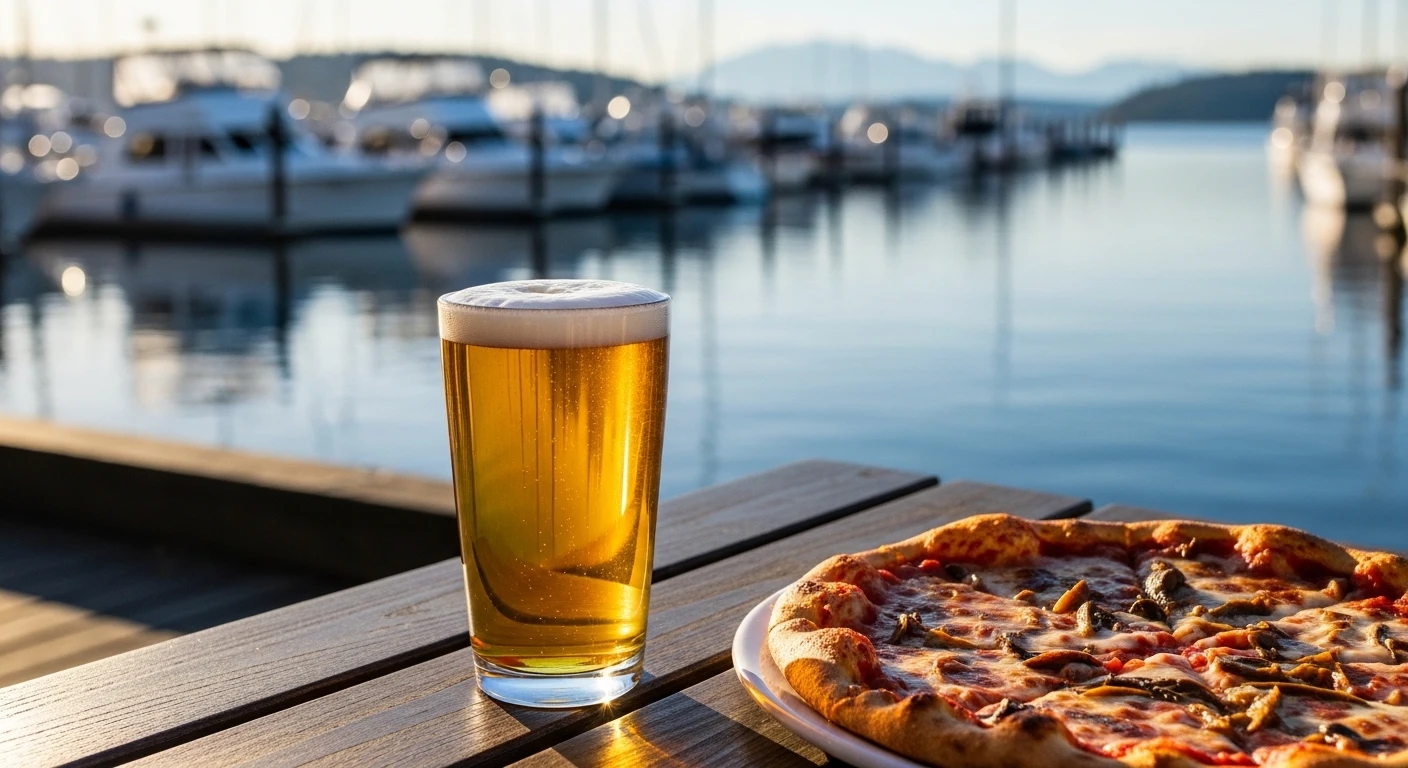
    We’re going to say something that might sting a little: if you’ve lived in Everett for more than a year and haven’t been to At Large Brewing, you’ve been wasting a perfectly good waterfront city. This taproom is sitting right on Marine View Drive, directly on the working waterfront, with a patio view of the marina — and somehow it remains one of Everett’s best-kept secrets.

    That ends now. Here’s everything you need to know about why At Large Brewing should be in your regular rotation.

    The Location: Actually On the Water

    At Large Brewing is at 2730 W. Marine View Drive, Everett, WA 98201. That address matters. Marine View Drive is the artery that runs along Everett’s western waterfront, connecting the Port of Everett marina to the industrial working port. At Large sits right in the middle of that stretch — close enough to the water that you can smell the salt air from the patio.

    This is not a “waterfront-adjacent” situation. This is a 17-tap craft brewery with a patio where you can watch boats come in and out of the marina while drinking something the brewer made on-site. For a city that sells itself as a waterfront destination, the fact that At Large doesn’t have a line out the door every Friday evening is frankly baffling.

    Parking is available on-site. Dogs are allowed in the outdoor patio area. The vibe is casual, knowledgeable, and unpretentious — exactly what a good taproom should be.

    The Beer: 17 Taps, Always Rotating

    At Large Brewing knows no boundaries when it comes to hops — that’s not us talking, that’s their stated philosophy, and they mean it. The 17-tap rotation covers the full spectrum of craft beer styles, from well-crafted blondes and easy-drinking pilsners to aggressive IPAs and sessionable ales. They also pour a variety of canned ciders from local cideries for the non-beer-obsessed in your group.

    The right approach at At Large is to order a flight first. Five or six small pours let you map the current tap list before committing. When you find the one — and you will find the one — order the pint and sit on the patio. This is the move. This has always been the move.

    Because the tap list rotates continuously, the best way to know what’s currently pouring is to check their Instagram (@atlargebrewing) before you go, or just call ahead: 425.324.0039. They’re good about posting what’s on tap.

    The Food Situation: Food Trucks Done Right

    At Large doesn’t run their own kitchen, and honestly, we think this is the correct call. Instead of trying to do mediocre bar food in-house, they bring in a rotating cast of food trucks that partner with the taproom regularly. The result is genuinely good food — real cooking, not bar nachos — paired with properly made craft beer.

    Check their social media before you go to find out which truck is parked out front. The lineup changes, which means repeat visits don’t get boring. Waterfront beer with different excellent food each time is a feature, not a bug.

    If you show up on a night without a food truck, the solution is simple: eat before you come, or grab something from one of the nearby spots on Marine View and bring it over. At Large is not precious about outside food — this is a real neighborhood taproom, not a hospitality experience designed to extract maximum per-head spend.

    When to Go: Hours That Actually Make Sense

    At Large Brewing is closed Monday and Tuesday — they’re a microbrewery that needs brewing days. The rest of the week, here’s the schedule:

    • Wednesday–Thursday: 3:00 PM – 9:00 PM
    • Friday–Saturday: 2:00 PM – 10:00 PM
    • Sunday: 2:00 PM – 8:00 PM

    Our recommendation: Friday evening, arrive around 3 or 4 PM before it gets busy. You get the waterfront patio in the late afternoon light, the full tap list before anything kicks, and the unhurried early-evening energy that makes a neighborhood taproom feel like exactly what it is. By 6 PM on a Friday this place has the exact right kind of buzz — lively but not chaotic.

    Sunday afternoons are also excellent. There’s something deeply satisfying about sitting on a marina patio with a well-made local beer on a Pacific Northwest Sunday — even if it’s overcast, and especially if it’s not.

    Private Events and Group Visits

    At Large has a group seating area near the front bar and offers private event and reservation services. If you’re planning a birthday, work event, or neighborhood gathering and want something more interesting than a chain restaurant private room, At Large is worth a call. A craft brewery on the Everett waterfront is a genuinely distinctive venue for a private event.

    They can also do crowlers and growlers to go — a 32oz crowler of whatever’s best on tap is an excellent gift for a homebrewer friend or an impossible-to-argue-with contribution to a potluck.

    The Verdict: Go This Week

    At Large Brewing is the kind of place that makes you feel good about living in Everett. A real microbrewery making real beer, right on the waterfront, with a patio that costs nothing but gives you a view that would run you $30 a seat at a restaurant. It’s not fancy. It’s better than fancy. It’s genuinely, unapologetically local.

    Go this week. Try the flight. Find your pint. Sit outside if the weather cooperates. Tell your friends.

    At Large Brewing & Taproom

    Address: 2730 W. Marine View Drive, Everett, WA 98201
    Phone: 425.324.0039
    Hours: Wed–Thu 3–9 PM | Fri–Sat 2–10 PM | Sun 2–8 PM | Mon–Tue Closed
    Parking: On-site
    Dog-Friendly: Yes (patio)
    What to Order: Start with a flight; ask what’s freshest on tap
    Price Range: $7–$9 per pint | Flights available
    Instagram: @atlargebrewing
    Website: atlargebrewing.com

    Frequently Asked Questions About At Large Brewing in Everett

    Where is At Large Brewing located?

    At Large Brewing is located at 2730 W. Marine View Drive, Everett, WA 98201 — on the working waterfront along Everett’s marina. The taproom has an outdoor patio with water views.

    What are At Large Brewing’s hours?

    At Large Brewing is open Wednesday–Thursday 3–9 PM, Friday–Saturday 2–10 PM, and Sunday 2–8 PM. They are closed Monday and Tuesday.

    Does At Large Brewing have food?

    At Large Brewing uses a rotating food truck model — different trucks park outside the taproom regularly. Check their Instagram (@atlargebrewing) or call 425.324.0039 before visiting to see what food is available.

    Is At Large Brewing dog-friendly?

    Yes, well-behaved dogs are welcome on the outdoor patio at At Large Brewing.

    How many beers does At Large Brewing have on tap?

    At Large Brewing maintains 17 rotating taps featuring their own house-brewed craft beers across multiple styles, plus a selection of canned ciders from local cideries. The tap list rotates continuously.

  • Crucible Is Now U-Neek Brewing — And Everett’s Craft Beer Scene Is Better for It

    Crucible Is Now U-Neek Brewing — And Everett’s Craft Beer Scene Is Better for It

    Crucible Brewing Had a Great Run. U-Neek Is Going to Have a Better One.

    We’re going to be honest with you: when we heard Crucible Brewing was changing hands and rebranding, our first reaction was protectiveness. Crucible had been part of Everett’s craft beer landscape for over a decade. The Arc Furnace Pilsner alone has fueled more post-run Friday afternoons than we can count.

    But then we met Erik and Johanna, and we relaxed. These two aren’t carpetbaggers swooping in to flip a taproom. They’re Everett people who used to end their runs by walking to Crucible for to-go beers. Their first “date” was at Crucible. This brewery is part of their story — and now they’re writing the next chapter of its story for the whole community.

    U-Neek Brewing Company opened in January 2025 at the same address — 909 SE Everett Mall Way, Suite D440 — with a Grand Reopening celebration on February 1–2. The name isn’t just a clever spelling: it reflects an intentional commitment to building something original, something that belongs entirely to this moment and this ownership team.

    Who Are Erik Andresen and Johanna Watson?

    Erik and Johanna represent something genuinely exciting in the local craft beer scene: Native American and women-owned brewery ownership. The Pacific Northwest has a thriving craft beer culture, but truly diverse ownership at the brewery level is still rarer than it should be. U-Neek changes that conversation in Everett.

    What we love most about this ownership story is how organic it is. They didn’t buy Crucible as a business investment — they bought it because it mattered to them personally. When the previous owners announced closure in 2023, Erik and Johanna stepped up. Head Brewer Spencer stayed on. Operations Manager Lance stayed on. Sales Manager Carson stayed on. The institutional knowledge didn’t walk out the door; it stayed and evolved.

    Their stated goal: “While we deeply respect the legacy of Crucible, it has always been Erik and Johanna’s dream to craft a brand of their own.” That’s exactly the kind of stewardship a beloved local spot deserves.

    What’s on Tap: The Beers You Know + the Beers You Need to Try

    Here’s the thing about the beer program at U-Neek: they didn’t nuke the menu. Smart move. The classics that made Crucible a destination are still flowing, and new U-Neek originals are being added alongside them.

    From the Crucible vault, you can still get:

    • Arc Furnace Pilsner — The flagship. Clean, crisp, crushable. The gold standard for an Everett Friday afternoon.
    • Kome As You Are Japanese Rice Lager — Light, smooth, and sneakily sessionable. One of the most approachable beers in any taproom in Snohomish County.
    • Smith and Weizen Blood Orange Hefeweizen — The citrus pop in this one is real. Great gateway beer for people who think they don’t like craft beer.
    • Pink Drink Raspberry Sour — Yes, it’s pink. Yes, it’s delicious. Order it without irony.
    • Putin Out Russian Imperial Stout — Big, dark, complex. The beer for Everett’s six weeks of actual winter.

    And now the new U-Neek originals joining the rotation:

    • Cold Quench Kölsch — The new house easy-drinker. German-style, crisp, and utterly drinkable. Get this on a warm waterfront day.
    • Peach Tree Thiolized IPA — This is the beer that signals U-Neek is playing at a higher level. Thiolized IPAs use a specific yeast strain to unlock tropical fruit compounds in the hops — the result is a peachy, juicy, aromatic IPA that doesn’t punch you in the face with bitterness. We love it.

    On the non-alcoholic front: seltzers, hop water, and Soundbite Cider are all available, plus draft wine from a local winery. This is a genuinely inclusive taproom — you don’t have to drink beer to have a good time here.

    The Owner’s Series: Small Batch, Taproom-Only Releases

    Here’s the program we’re most excited about: the U-Neek Owner’s Series. These are limited 15-gallon batches brewed exclusively for the taproom — you cannot get them anywhere else. The concept is simple and brilliant: new beers get tested at small scale, and the ones that hit get scaled up for wider production.

    Beyond just the owners, staff members get to develop their own beer styles using the pilot system. That means your next favorite beer might come from a taproom employee who had a wild idea on a Wednesday afternoon. We love that energy.

    If you want to be in on the best stuff before it scales — or before it sells out and disappears forever — make U-Neek a regular stop. Ask what’s on the pilot tap when you walk in.

    The Taproom Vibe: Family-Friendly, Dog-Friendly, Community-Forward

    One of the things that set Crucible apart was its unpretentious, welcoming atmosphere — and U-Neek is leaning into that even harder. All ages welcome. Dogs welcome. If you’ve got a 6-year-old and a golden retriever and you want a proper IPA while both of them run around, this is your spot.

    The taproom has a banquet room available for private events and meetings. Weekly programming includes Taproom Trivia and Game Night. On food truck rotation days (most Wednesdays, Fridays, and Saturdays), you can pair your pint with serious street food — the Poke Me truck has been a hit, and Avery’s Chicken and Waffles is exactly as good as it sounds.

    Growlers, crowlers, and kegs to go mean you can bring U-Neek to your next backyard situation. A 64oz crowler of the Cold Quench Kölsch is genuinely one of the better things you can bring to a summer barbecue in this area.

    The Verdict

    Crucible Brewing left Everett a 10-year legacy worth protecting. U-Neek Brewing is protecting it — and adding to it. New ownership, new beers, a more intentional community identity, and the same taproom you already knew how to get to. What more do you want?

    Go in. Try the Peach Tree Thiolized IPA. Ask about the Owner’s Series. Welcome Erik, Johanna, and the whole crew to their next chapter. Everett’s brewery scene is better for them being in it.

    U-Neek and Crucible Brewing

    Address: 909 SE Everett Mall Way, Suite D440, Everett, WA 98208
    Hours: Monday–Saturday 12:00 PM–10:00 PM | Sunday 12:00 PM–8:00 PM
    Parking: Strip mall parking lot — free and plentiful
    What to Order: Peach Tree Thiolized IPA for something new; Arc Furnace Pilsner if you’re not ready to change
    Price Range: $6–$9 per pint | $5–$7 per half-pint
    Dog-Friendly: Yes
    All Ages: Yes
    Instagram: @uneekandcruciblebrewing

    Frequently Asked Questions About U-Neek Brewing in Everett, WA

    Is Crucible Brewing still open?

    Yes — Crucible Brewing reopened under new ownership as U-Neek and Crucible Brewing in January 2025. The taproom is located at the same address: 909 SE Everett Mall Way, Suite D440, Everett, WA. The beloved beer recipes are still being brewed, and new beers are being added regularly.

    Who owns U-Neek Brewing?

    U-Neek Brewing is owned by Erik Andresen and Johanna Watson. The brewery is Native American and women-owned — a significant milestone for Everett’s craft beer scene. The couple are longtime Everett community members who were regular Crucible patrons before taking ownership.

    What beers does U-Neek Brewing serve?

    U-Neek serves both classic Crucible recipes (Arc Furnace Pilsner, Kome As You Are Japanese Rice Lager, Pink Drink Raspberry Sour, Putin Out Russian Imperial Stout) and new original beers like the Cold Quench Kölsch and Peach Tree Thiolized IPA. Limited-batch Owner’s Series beers are available taproom-only.

    Is U-Neek Brewing family-friendly?

    Yes. U-Neek Brewing is explicitly all-ages and dog-friendly. The taproom has space for kids and pets, and non-alcoholic options including seltzers and hop water are available.

    Does U-Neek Brewing have food?

    U-Neek operates a food truck rotation on most Wednesdays, Fridays, and Saturdays. Basil Vietnamese restaurant is located next door for a full sit-down dining option. Growlers and crowlers to go are available for taking beer home.

  • Marina Azul Is Almost Here — And Here’s Everything Else Still Coming to Waterfront Place in 2026

    Marina Azul Is Almost Here — And Here’s Everything Else Still Coming to Waterfront Place in 2026

    Quick Summary: As of April 2026, Waterfront Place has four restaurants open at Fisherman’s Harbor Restaurant Row, with Marina Azul Cocina & Cantina expected this spring. One breakfast/brunch space remains available. The Port of Everett is also actively seeking a boutique grocer, pet store, and retail-tainment concept for the development’s gateway parcels.

    If you’ve been following the Waterfront Place buildout, you’ve watched Restaurant Row go from empty concrete shells to a genuinely active stretch of food, drink, and views. We’ve covered individual openings as they’ve happened. But let’s zoom out and take stock of what’s actually open, what’s coming this spring, and what spaces are still waiting for tenants. This is the April 2026 status report on everything still in the pipeline at Waterfront Place.

    Restaurant Row: The April 2026 Scorecard

    The Fisherman’s Harbor Restaurant Row was designed for six dining establishments. Here’s the current status of all six spaces:

    Open and Operating

    Tapped Public House — Opened March 2, 2026. Claims the largest open-air rooftop deck in Snohomish County, with panoramic views of the Olympic Mountains and marina. Beer, cocktails, and pub food. Over 100 people showed up for the ribbon cutting — the waterfront was ready for this one.

    Rustic Cork Wine Bar — Opened December 2, 2025. Wine-focused with a curated bottle selection and small plates. A quieter alternative to the larger concepts on the row.

    The Net Shed Fish Market & Kitchen — Opened December 16, 2025. Fresh seafood market with prepared food service. One of the more distinctive concepts at Fisherman’s Harbor — you can buy fish to take home or eat right there, which is exactly what a marina district should have.

    Menchie’s — Opened March 13, 2026. Self-serve frozen yogurt. The lightest footprint on the row, but it fills a real gap — a casual dessert stop for families walking the marina and boaters grabbing something after a day on the water.

    Coming Soon: Marina Azul Cocina & Cantina

    The most anticipated opening still remaining in the Restaurant Row lineup is Marina Azul Cocina & Cantina, a Mexican restaurant concept the Port has indicated is expected to open spring 2026. Spring is already underway, which means this one is close. No official opening date has been announced, but we’re watching the permits and the signage. When the door opens, we’ll be among the first through it.

    Still Available: One Breakfast and Brunch Space

    One of the six Restaurant Row spaces remains earmarked specifically for a breakfast and brunch concept, and no tenant has been announced. This is actually a meaningful gap in the current lineup — there’s no morning option at Fisherman’s Harbor right now. The right concept here (think waterfront eggs Benedict, coffee with marina views, weekend brunch crowds) would do well. The Port is still looking.

    Beyond Restaurant Row: The Gateway Parcels

    Here’s the part of the Waterfront Place story that hasn’t gotten as much coverage: the Port moved into active tenant search for its gateway parcels in late 2025, and they were specific about what they want.

    The Port issued a Request for Statement of Qualifications for the gateway parcels — the entry-point retail spaces that greet visitors as they arrive at the development. Three concepts are being sought:

    • Boutique grocer — A neighborhood-scale grocery or specialty food store
    • Pet store — Matching the marina lifestyle demographic (boaters, outdoor enthusiasts, the waterfront dog-walking crowd)
    • Retail-tainment — An experiential retail concept, interactive rather than passive

    The boutique grocer is the one that would do the most for the district’s day-to-day liveability. Right now, someone living in the Waterfront Place Apartments — or in the incoming Millwright District residential buildings — doesn’t have a walkable grocery option. Adding one completes a fundamental piece of the live-work-eat-play equation that a genuine mixed-use district requires.

    We don’t have tenant announcements for the gateway parcels yet, but an active RFQ means the Port is evaluating applicants now. This is worth watching in the coming months.

    The Weyerhaeuser Building and The Muse

    One piece of Waterfront Place history easy to overlook amid all the new construction: the Port restored the 1930s-era Weyerhaeuser Building on the waterfront and reopened it in 2023 as The Muse Whiskey & Coffee. On a clear April evening with the Olympics lit up across the sound, it’s one of the better places to sit in Everett.

    The Muse anchors the development’s existing character while everything new gets built around it. Worth noting when the conversation is all about what’s coming: some of what’s already here is genuinely good.

    By the Numbers: What Waterfront Place Is in April 2026

    Let’s put the whole picture together:

    • 1.6 million annual site visits in 2025 — pulling from across Snohomish County, King County, and beyond
    • 4 restaurants and bars open at Fisherman’s Harbor Restaurant Row
    • 1 more (Marina Azul) expected to open this spring
    • 1 remaining space earmarked for breakfast/brunch, no tenant yet
    • Gateway parcels in active tenant search for boutique grocer, pet store, retail-tainment
    • $2.6 million in 2026 public infrastructure investment budgeted by the Port
    • 120,000 sq ft of Class-A office space in active pre-leasing at Millwright District
    • 300+ apartments in Millwright District residential phase, now under construction

    This is not a development that’s waiting to happen. Five of six Restaurant Row spaces committed, a major mixed-use residential and commercial buildout underway, more than one and a half million annual visitors already. The question now is which tenants fill the remaining blank spaces — the grocer slot, the brunch spot, the gateway parcels — and how quickly the Millwright District commercial phase pre-leases to its opening threshold.

    We’ll keep covering it as it develops.

    Frequently Asked Questions

    What restaurants are currently open at Waterfront Place Everett?
    As of April 2026: Tapped Public House (opened March 2026), Rustic Cork Wine Bar (opened December 2025), The Net Shed Fish Market & Kitchen (opened December 2025), and Menchie’s (opened March 2026). The Muse Whiskey & Coffee in the historic Weyerhaeuser Building is also open.

    When will Marina Azul open at Waterfront Place?
    Marina Azul Cocina & Cantina is expected to open spring 2026. No official opening date has been announced as of April 2026.

    Is there a grocery store at Waterfront Place Everett?
    Not yet. The Port of Everett issued an RFQ for a boutique grocer as one of the gateway parcel tenants. That selection process is ongoing.

    How many restaurants are at Waterfront Place Restaurant Row?
    The Fisherman’s Harbor Restaurant Row has six spaces. Four are open, one (Marina Azul) is opening soon, and one breakfast/brunch space remains available.

    What is Waterfront Place?
    The Port of Everett’s $1 billion mixed-use waterfront redevelopment on Puget Sound, at the largest public marina on the West Coast. It includes Restaurant Row, The Muse Whiskey & Coffee, Waterfront Place Apartments, and the Millwright District commercial and residential campus.

    How many visitors does Waterfront Place attract?
    The Port of Everett reported more than 1.6 million annual site visits to Waterfront Place in 2025.

  • Millwright District Pre-Leasing: What 120,000 Square Feet of Waterfront Office Space Means for Everett

    Millwright District Pre-Leasing: What 120,000 Square Feet of Waterfront Office Space Means for Everett

    Quick Definition: The Millwright District is a 10-acre mixed-use campus within the Port of Everett’s $1 billion Waterfront Place development. Pre-leasing is now open for up to 120,000 sq ft of Class-A office space across three interconnected buildings, developed by Lincoln Property Company. Openings are anticipated as early as 2028.

    We’ve written a lot about the residential side of the Millwright District buildout — the 300-plus apartments breaking ground, the restaurant row filling in, the waterfront esplanade taking shape. But there’s a commercial story happening here that deserves its own spotlight, because it changes what the Millwright District actually becomes as a place to work, not just a place to live and eat.

    The Port of Everett and its development partner Lincoln Property Company (operating commercially as LPC West) have launched pre-leasing for up to 120,000 square feet of Class-A office space at Waterfront Place. Pre-leasing is open now, with occupancy targeted as early as 2028.

    What “Class-A Waterfront” Actually Means Here

    “Class-A office space” gets used loosely in commercial real estate, so let’s break down what it actually looks like in this specific context — and why it’s meaningfully different from a generic Snohomish County office park.

    The Millwright District offices sit within Waterfront Place at the largest public marina on the West Coast. The planned complex features:

    • Rooftop terraces with Olympic Mountain and Puget Sound views
    • Structured on-site parking (a dedicated garage, not a surface lot)
    • Community conference rooms shared across the building complex
    • A fitness center within the office complex
    • Immediate walkable access to Restaurant Row dining, marina recreation, retail, and the waterfront esplanade

    Suite sizes range from 5,000 to 120,000 square feet across up to three interconnected buildings. A 5,000 sq ft tenant and a 120,000 sq ft campus tenant can both be accommodated — the three-building configuration allows Lincoln Property Company to serve single large anchors or multiple smaller tenants co-locating in the same complex.

    Who Is Lincoln Property Company?

    LPC West is not a local developer — they’re one of the largest commercial real estate companies in the country, with a national portfolio spanning office, industrial, and multifamily assets. The Port of Everett selected LPC West through a competitive process to develop the Millwright District’s 10-acre commercial footprint.

    The significance of that choice: Lincoln Property Company typically develops in markets where they project long-term rent growth and durable tenant demand. Their presence in the Millwright District reflects how outside institutional investors are reading Everett’s commercial trajectory — and it’s not a minor endorsement.

    The Timeline: When Does This Open?

    Lincoln Property Company is projecting a 24-month construction period, with openings targeted as early as 2028. The construction clock starts when pre-leasing reaches its threshold — a standard commercial real estate structure where the developer needs committed leases before a construction lender funds the project.

    The faster pre-leasing fills, the faster the 24-month clock starts — and the sooner the doors open. If pre-leasing proceeds slowly, the 2028 target shifts.

    The infrastructure foundation is already in place: the Millwright Loop Roads (a $13 million construction contract completed in 2023) gave the site road access. The residential apartment phase is already under construction. Restaurant Row is open and drawing foot traffic. The office buildings are the next vertical layer on a site that’s already functional.

    What This Does for Everett’s Commercial Real Estate Market

    Everett has historically been a manufacturing and bedroom community — a place where people live for affordability and commute to Seattle or work at Boeing or Naval Station Everett. The transformation we’re tracking on this desk is Everett becoming a destination city in its own right: a place with its own employment base, its own amenities, and its own identity beyond its two largest employers.

    Class-A office space on the waterfront is a direct play on that transition. If a firm can put 50 employees in a Millwright District suite with Olympic Mountain views and a rooftop terrace, walking distance from waterfront restaurants and marina recreation, that’s a meaningful differentiator in Puget Sound commercial real estate. It’s the kind of space that helps Snohomish County employers retain talent that might otherwise commute to Seattle offices.

    It also creates a self-reinforcing cycle for the district itself. Office workers become lunch customers at Restaurant Row. They become boat owners at the marina. They become apartment tenants in the Millwright District residential buildings. That’s the mixed-use model working as designed — and it’s why the Port structured the entire development this way rather than just building more boat slips.

    How to Learn More About Pre-Leasing

    If you’re a business owner, real estate broker, or facilities director evaluating Snohomish County office options, pre-leasing information is available through the Port of Everett and Lincoln Property Company. The Port’s website at portofeverett.com has the Millwright District office pre-leasing page with contact information and suite specifications.

    The range of suite sizes — 5,000 sq ft to 120,000 sq ft — means this isn’t exclusively for large enterprises. Professional service firms, engineering consultancies, tech companies, and architecture firms all fall within the tenant profile the project is designed to serve.

    Frequently Asked Questions

    What is the Millwright District at Waterfront Place?
    A 10-acre mixed-use campus at the heart of the Port of Everett’s $1 billion Waterfront Place development. It includes up to 120,000 sq ft of Class-A office space, 200+ multifamily housing units, and up to 60,000 sq ft of destination retail on the Everett waterfront.

    Who is developing the Millwright District office buildings?
    Lincoln Property Company (LPC West), one of the largest commercial real estate firms in the country, is the development partner. Selected by the Port of Everett through a competitive process.

    What size office suites are available at Millwright District?
    Suites range from 5,000 to 120,000 square feet across up to three interconnected buildings. The configuration accommodates both small professional firms and large campus tenants.

    When will the Millwright District office buildings open?
    Construction is estimated at 24 months, with openings targeted as early as 2028. The start of construction depends on pre-leasing activity.

    What amenities will Millwright District office tenants have?
    Rooftop terraces with Olympic Mountain and marina views, structured parking, community conference rooms, a fitness center, and walkable access to the Waterfront Place restaurant row, retail, and marina.

    Is Millwright District office space currently available?
    Pre-leasing is open now through Lincoln Property Company and the Port of Everett. Contact information is available at portofeverett.com.