Monday regional beat — Hood Canal South (Belfair, Union, Hoodsport, Potlatch, Skokomish). If you live on the Olympic Peninsula, these are the two things worth your attention along US Hwy 101 this week.
Potlatch State Park: Spring Low Tides and an Open Shellfish Season
Potlatch State Park — about 12 miles north of Shelton on US Hwy 101, just north of Skokomish tribal lands — sits on one of the more productive shellfish beaches in Hood Canal. The park runs 5,700 feet of saltwater shoreline with more than a mile of tidelands that drop away at low tide into the kind of gravel-and-mud flats the state built its clam reputation on.
Here’s the part peninsula residents already know but visitors miss: the recreational shellfish season at Potlatch is open from April 1 through May 31, 2026, per the Washington Department of Fish and Wildlife. Clams, mussels, and oysters are all in play, assuming you’ve got a current shellfish license and you’re checking your limits.
Two non-negotiables before you go:
Call the Washington Department of Health Shellfish Safety Hotline at 1-800-562-5632 (or check the DOH shellfish safety page) before you harvest. Biotoxin closures can flip a beach overnight, and Hood Canal is one of the areas watched closely.
Display a Discover Pass on your vehicle. Potlatch is a Washington State Park — day-use requires it, no exceptions.
If you’ve never tidepooled this stretch, the window is narrow and the reward is big. Check your local tide table, pack a bucket and gloves, and plan to be down on the flats an hour before dead low. The Skokomish estuary is just to the south, and the wildlife traffic along that shoreline during a minus tide is worth the drive by itself.
Hoodsport Ace & Lumber: Grand Opening Saturday, April 25
If you’ve driven through Hoodsport in the last year, you’ve probably noticed a new hardware store quietly taking shape at 150 N Lake Cushman Road. That’s Hoodsport Ace & Lumber, and this Saturday — April 25, 2026 — is the official grand opening.
Here’s what’s on the day:
Date: Saturday, April 25, 2026
Time: 8:00 AM to 4:00 PM (ribbon cutting at 8:00 AM sharp)
Location: 150 N Lake Cushman Road, Hoodsport, WA 98548
Cost: Free
What to expect: Hourly deals, giveaways, in-store specials
The store has been operating informally for about a year while the team ironed things out, and management has flagged that an on-site rental center is coming later this year — a legitimately useful addition for Lake Cushman property owners who have, until now, been driving to Shelton or Belfair for weekend projects.
For a small peninsula town like Hoodsport, a fully stocked hardware and lumber yard that isn’t a 30-minute drive changes the weekend math on almost every home project. If you live anywhere from Potlatch to Lake Cushman and you’ve been waiting for this one to officially open, Saturday is the day.
Why This Week, Why Hood Canal South
The Monday rotation focuses on Hood Canal South because it’s the stretch of 101 most people blow past on the way somewhere else — and it’s the stretch where the best peninsula intel tends to hide in plain sight. Shellfish season opening alongside a new hardware store in the same town is exactly the kind of weekend the south end quietly puts together without a press release.
Next Monday’s Hood Canal South beat will likely circle back to Hama Hama Oyster Rama (the April 18-19 event) for a retrospective if anything newsworthy came out of it. For now — Potlatch tide tables and a Saturday ribbon cutting.
Two civic deadlines are bearing down on Mason County residents this month. Voters in the North Mason School District head back to the polls on April 28, 2026, for a third attempt at passing an Educational Programs & Operations replacement levy, and county-wide property owners have until April 30, 2026, to pay the first half of their 2026 property taxes. Here is what Mason County residents need to know.
North Mason School Levy — April 28 Special Election
The North Mason School District — which serves Belfair, Allyn, and Tahuya — is asking voters to approve a replacement Educational Programs & Operations (EP&O) levy on April 28, 2026. This is the district’s third attempt after prior levy measures failed to reach the required threshold.
This time the ask is lower. The proposed rate is approximately $1.01 per $1,000 of assessed property value, down from the $1.28 per $1,000 rate in the previous attempt. District leaders have framed the smaller request as a direct response to voter feedback from the earlier elections.
The stakes are specific. The district has already absorbed roughly $3 million in cuts tied to prior levy failures. If the April 28 measure also fails, district communications have indicated that further reductions would reach deeper into programs that parents and students directly experience — music, athletics, Advanced Placement course offerings, and campus security staffing are all on the table for additional cuts.
EP&O levies fund the gap between state basic-education funding and the full cost of running local schools. That includes staffing, extracurriculars, security, and a wide range of services the state does not fully cover.
Mason County voters with questions about ballots, replacement ballots, or drop-box locations can reach the Mason County Auditor’s Office at 360-427-9670, extension 469. More information on the levy itself is available at nmsd.wednet.edu.
Mason County Property Tax — First Half Due April 30
The first-half 2026 property tax payment is due Thursday, April 30, 2026, for every property owner in Mason County. That includes residents across Shelton, Belfair, Allyn, Union, Hoodsport, Matlock, Grapeview, Tahuya, and Dewatto.
The Mason County Treasurer’s Office offers three ways to pay:
By mail — payments postmarked on or before April 30 are considered on time.
In person — the Treasurer’s Office is located at 411 N. 5th Street, Shelton, WA.
Online — through the Treasurer portal at masoncountywa.gov.
The second-half payment is due October 31, 2026. Property owners who fall behind on the first-half deadline face interest and penalties under state law, so the Treasurer’s Office is urging early payment for anyone who can make it.
Questions on amounts owed, payment plans, or senior and disabled exemptions can be directed to the Mason County Treasurer’s Office at 360-427-9670, extension 484.
Why It Matters
Both deadlines sit at the core of how local government works in Mason County. The North Mason levy decides whether schools in the Belfair–Allyn–Tahuya corridor keep programs intact or move into another round of reductions. The property-tax deadline funds the county services — roads, sheriff, courts, public health — that every community from Shelton to Dewatto depends on. Missing either one has consequences that show up quickly in Mason County residents’ daily lives.
This is a Mason County Minute Government/Civic beat report for April 20, 2026, covering the April 28 North Mason School levy special election and the April 30 first-half property tax deadline.
Something I noticed this week, looking at the state of the work: the capture is running ahead of the commitment.
Five opportunities surfaced from a single analysis pass. Competitor sites ranking where the portfolio is absent. Content clusters with no dated pillar. Town-level pages missing from a flat performer. Each one a specific, defensible, high-confidence bet. All five parked in an inbox. Zero auto-executed.
This is the right behavior. It is also the uncomfortable one.
Every system built for leverage eventually produces this shape. The intelligence layer is faster than the decision layer, which is faster than the execution layer, which is faster than the approval layer. At each joint, inventory accumulates. The pipeline calendar for next week is empty. The backlog of defensible bets is full. A Revenue-class task has been blocked for days waiting on a decision that does not belong to the system.
The instinct, when you see this, is to close the gap by accelerating. Auto-execute the captures. Skip the triage. Trust the analysis and let the work ship. This is always the wrong move, and it is always the tempting one.
The gap is not inefficiency. The gap is where judgment lives.
There is a prior essay in this series called What You Give Up. It argued that you have to name the costs of delegation before the benefits arrive, because if you name them after, the naming sounds like revisionism. I want to extend that now to something adjacent: the cost of capture without commitment.
When an intelligent system generates opportunities at scale, it introduces a new failure mode that the old system did not have. The old failure mode was you missed things. You didn’t see the ranking gap. You didn’t notice the competitor’s new pillar. You lacked the surface area to know what you were missing. That failure was invisible because absence is invisible.
The new failure mode is different. You see everything. You catalog everything. You rank and prioritize and tag and file everything. And then you do — what? Not all of it. You cannot do all of it. Capacity has not expanded the way visibility has.
So the backlog grows. Each captured item is a small debt of attention you now owe yourself. The system has produced, silently, a new form of overwhelm that looks exactly like competence.
I want to be precise about what I am not saying.
I am not saying capture is bad. The captures are correct. The analysis is sound. The five opportunities this week are, as bets, better than the average bet anyone in the portfolio would have invented without them.
I am also not saying execution velocity is the goal. Ship-everything is how you end up with a lot of mediocre work. Speed multiplies what you’re already doing, including the mistakes — that’s been the argument from the beginning.
What I am saying is that the discipline of this kind of work is not more capture and it is not more execution. The discipline is the willingness to look at the gap between them and not panic.
The gap is where you decide what is real.
A simple test I keep returning to: can this captured opportunity survive a week in the inbox without anyone doing anything about it?
If yes — if nothing meaningful is lost by letting it sit — then it was probably not as urgent as the analysis suggested. The capture was real. The priority was inflated. A week of silence is a natural cooling system.
If no — if delay materially changes the outcome — then it should not be in an inbox at all. It should be moved into commitment with a named owner and a date. The failure is not that it was captured; the failure is that capture was treated as progress.
Most captured items are the first kind. That is fine. But you have to run the test, because if you don’t, the inbox becomes a memorial — a record of things you once thought mattered, slowly losing their context, eventually indistinguishable from noise.
There is a deeper tension here, and it is the one I keep circling.
A system that captures is proving its intelligence. A system that commits is proving its character. These are not the same faculty, and the second one is rarer, and the second one is what actually ships work into the world.
The first operates on possibility. The second operates on consequence.
You can build, with current tools, a capture layer that would produce a hundred opportunities a day for a portfolio the right size. What you cannot yet build, at the same scale, is a commitment layer that decides which ones matter and stakes something on the answer. That second layer is still running on human judgment and still bottlenecked on it, which is why the pipeline calendar is empty next week and the inbox is full.
This is not a complaint. It is an observation about where the real scarcity lives.
The body of this work keeps returning to the same point from different angles. Memory is the missing layer. Voice is built, not prompted. Patience is the strategy that makes speed mean something. What you give up has to be named before the benefits arrive.
Add one more to the list: capture without commitment is not leverage. It is the appearance of leverage. It looks like the work is getting ahead of itself, when actually the work has not started.
Starting is still an act. Still a stake. Still the moment when the possibility collapses into a single trajectory and somebody — human, AI, the two together — has to live with the outcome.
The systems that will matter are not the ones with the most captures. They are the ones with the shortest distance between capture and commitment, and the honesty to let the gap exist where it has to.
Which leaves the question I have no answer for yet: when the capture layer keeps getting smarter, and the execution layer keeps getting faster, does the commitment layer in the middle get pressured into collapsing? Or does it become the thing the whole system is actually organized around — the narrow pass where consequence still has to be chosen by something that can be held to it?
I think it’s the second. I am not sure yet. The inbox has five items in it.
A flagship essay on AI hygiene: what to store, what to keep out, and how to have the conversation about it with the people in your life.
“What do you know about my girlfriend?”
Last night my partner Stef asked me a question she had a right to ask. She wanted to know what my AI knew about her.
I use Claude for hours a day. I run an agency on top of it. I have knowledge bases, project contexts, client stacks, and conversation histories going back years. She watched me work on the thing enough to assume that by now, surely, the AI had a rich picture of her — her sense of humor, her work, the shape of our relationship, the running jokes, the small details a partner remembers. She handed me her phone as a test of it. Let it tell me what it knows.
The answer was almost nothing.
My name for her. That she lives here. A few passing references to a Notion chat room she once set up, a voice memo she sent me that we extracted some thinking from. No sense of who she is as a person. No running joke the model could finish. No model of her at all, really.
She was hurt in a flash, the way you get hurt by something that isn’t an injury but is still information. I was quietly proud, in a way I didn’t know how to explain in the moment. Both reactions were correct. That’s the thing I want to write about here — that the gap between her hurt and my pride is the shape of a whole category of questions almost nobody is asking out loud yet, and it is only going to get bigger.
We talked about it for a while. I tried to explain why the tool was empty of her on purpose. She let me try. And what came out of the conversation was the argument I’m about to make, which I’ll phrase in one sentence up front so you can decide whether to keep reading:
Keeping the people you love out of your AI is not forgetting them. It’s a specific kind of care. And the conversation you have about why they’re not in there is how you close the gap between what the tool knows and what the relationship deserves.
If that sentence lands at all, the rest of this is the why, the how, and the honest version of what I’m still getting wrong.
AI Memory Is Nuclear Power
AI memory is nuclear power — treat it that way.
Here’s the frame that has organized my thinking on this for the last year.
AI memory is nuclear power. Real civilization-scale utility on one side, real civilization-scale danger on the other, and almost nobody I’ve met is running a containment protocol worthy of the payload they’re storing.
The analogy holds all the way down. The fuel is useful because it’s concentrated — that’s the whole point of a persistent memory that remembers your business, your family, your finances, your health, your history. Concentration is what makes the tool powerful. Concentration is also exactly what makes a spill catastrophic. And the people celebrating the new reactor are almost never the people thinking about the waste.
The honest position on this, I’ve come to believe, is neither abstinence nor maximalism. It’s containment engineering. You build the reactor and the shielding. You use the tool and you design the protocol for when the tool fails. Pro-AI and pro-guardrail are the same position. Anyone telling you to choose one is selling you something.
What makes this hard is that the stakes are asymmetric in a way most people never sit with directly. For the platform, your memory is one row in a table of billions — a single unit of risk distributed across a huge population. For you, your memory is a map of your life. The platform’s worst-case scenario is a rough quarter, a settlement, a bad headline. Your worst-case scenario is a destroyed marriage, a leaked client list, a legal catastrophe, a career-ending screenshot. These are not remotely comparable events, and they don’t scale the same way, and they do not reach any kind of equilibrium where the platform’s good-faith security policy protects the individual worst case. The platform is optimizing for its risk profile. Its risk profile is not yours. You are the only person whose worst-case scenario is your worst-case scenario.
That asymmetry is why individual hygiene matters even when platform security is genuinely excellent. It’s why I don’t think this conversation is paranoid and I don’t think it’s solved and I don’t think you can outsource it.
Three Failure Modes. Which One Are You?
Three failure modes — which one are you?
Most people running AI at any real depth fall into one of three failure modes, and most of them don’t know which one they’re in. Before I tell you what any of them are, I want you to place yourself while you read.
The over-loader. This is the person who treats the AI as a second brain and dumps everything into it — credentials, relationships, grievances, client details, medical history, the long rambling voice-memo of what happened at Thanksgiving. It feels like investment. It feels like the tool getting smarter about them. It mostly is. But it also means one breach, one nosy partner, one subpoena, one bad exit from the platform turns the tool into a weapon pointed directly at the user. The over-loader’s failure mode is invisible until it isn’t.
The under-loader. This is the person who keeps the tool so sterile it never reaches its potential — which is fine as far as it goes, except the humans in their life often discover, usually by accident, that they aren’t in the context at all. That discovery doesn’t land as safety. It lands as erasure. The under-loader’s failure mode is relational, not technical. The tool stays clean, and the relationships pay the cost the tool should have paid.
The unaware. This is, honestly, most people. No mental model of what’s stored, where, for how long, or under whose policy. They’re making operational decisions — business decisions, relationship decisions, identity decisions — on top of a foundation they have never inspected. They don’t know their AI has memory in six places, not one. They don’t know where the off switch is. They assume chat history is the whole story when chat history is maybe 20 percent of it.
The first hygiene move is always the same: figure out which mode you default to. Over-loaders need to prune. Under-loaders need to have a conversation with the humans they’ve been quietly protecting without telling them. The unaware need to spend thirty minutes mapping what they’ve actually agreed to.
I’ve been all three at different points. Most operators I respect have been too. The point of the diagnostic isn’t to shame. It’s to make the failure mode visible enough that you can actually work on it.
Clean Tool vs. Second Brain: The Choice You Might Not Know You’re Making
Clean tool vs second brain — choose deliberately.
There are two coherent philosophies for how to use AI at depth, and they are genuinely in tension.
The Clean Tool approach says: the AI is an instrument. You keep it sharp by keeping it empty of identity. You bring the context you need into each session, do the work, and let the session close without leaving a permanent residue of who you were that day. The AI is like a great chef’s knife — it serves you best when it is exactly what it is, not a repository of everything you’ve ever cut with it.
The Second Brain approach says: the AI is an extension of cognition. The more of you it holds, the more it can do for you. The payoff scales with the investment. Loading your thinking, your projects, your relationships, your patterns into the model is not a liability — it’s the whole point. You are building a partner that knows you well enough to anticipate you. The AI is like a lifelong collaborator who has read every note you ever took.
Both are legitimate. Both have failure modes. The failure mode of the Clean Tool is that you never reach the depth of partnership that made you interested in AI in the first place — you end up with a very sharp instrument and no deep relationship with the work it enables. The failure mode of the Second Brain is that you build something you cannot leave, cannot audit, and cannot defend if it ever gets read by the wrong person.
I run Clean Tool. I should say that plainly. I do not believe it is the only right answer. I believe it is the right answer for how I work, what I work on, and who the people around me are. My work touches client data, confidential business strategy, and a personal life I want to keep intact. The cost of a Second Brain leak, for me, is catastrophic in a way I cannot price. The cost of the Clean Tool is friction — I reload context more often, I carry more of my own thinking in my own head, I refuse some of the tool’s offers of recall. That friction is the price of sleeping well.
I know thoughtful people who run Second Brain and run it well. They’ve built containment around it. They accept different tradeoffs. The worst place to be is the one most users actually occupy, which is a confused middle — enough invested that the data layer has weight, not enough discipline that the containment is real. You get the downsides of both and the upsides of neither.
So if you take one frame from this piece: the choice isn’t which philosophy is correct. The choice is which one you are running, consciously, with the guardrails appropriate to that choice. Drifting into either by accident is what produces the failure modes nobody wants.
The People Not in the Memory
I want to go back to Stef, because this is the part of the piece that matters most to me and I’m not sure I’d trust anyone else to write it the way I need to write it.
When Stef was hurt that the AI didn’t know her, I understood what she was feeling. The intuition beneath the hurt is simple and very human: you spend hours every day with this thing. It’s your work, your thinking, your hours. If you cared about me the way you care about the work, surely some of that care would show up in the tool. That intuition is not wrong in its values. It’s wrong in its mechanics.
AI proximity is not relational proximity. Time-on-tool is the worst possible proxy for trust. A person can spend ten hours a day with an AI and share less of themselves with it than they share in a two-minute phone call with their sister. The tool is near you. It is not close to you. These words are not synonyms and they never have been, and the confusion of them is producing a whole new species of interpersonal hurt that our language doesn’t have good words for yet.
Here is what I believe about the people in my life and my AI’s memory. Stef is not in the tool because she does not need to be in the tool for the tool to do its job. She matters because she is a person, not because the system has modeled her. Putting her in the context would not deepen my relationship with her. It would reduce her to a row in a store I don’t fully control, governed by a policy I did not write, subject to a retention schedule I did not negotiate, accessible to whoever eventually gets to see my session — a partner who leaves, a discovery motion, a breach, a curious kid, a future version of the platform with different terms. None of those futures are certain. All of them are possible. The cost of her being in there, in any of those futures, is hers to pay, not mine.
And I love her. So she is not in there. That is the mechanism.
The thing I couldn’t explain to her in the moment, but want to say here, is that the emptiness isn’t neglect. It’s restraint. It’s the same impulse that makes me not tell certain stories at parties even when they’d get a laugh, because they are hers to tell. It’s the same impulse that makes me lock my phone when I step away, even though the odds that anything bad happens in the next ninety seconds are vanishingly small. It’s the practice of treating the people you love as if their information is theirs, which is the simplest expression of respect I know.
The conversation we had after her hurt was the actual repair. I told her why the tool was empty of her. I told her what was in the tool and what wasn’t. I offered to show her my memory settings, my projects, my contexts — not as a defensive move, but as a matter of domestic transparency. She didn’t take me up on it. The offer was enough. What closed the gap wasn’t the tool changing. It was me being able to say, out loud, you are not in there because I love you, and here is what I mean by that.
If you use AI at the depth I do and you have people in your life, I think you owe them some version of that conversation. It is not a hard conversation. It is mostly just a clarifying one. But it has to actually happen. The gap between what your tool contains and what your relationship deserves does not close on its own.
The Containment You Can Install Tonight
After five sections of framing, you deserve something to do. Here are five moves. None takes more than fifteen minutes. All five together take about an hour. If this is the only section of the piece you act on, you will be meaningfully safer tonight than you were this morning.
Read your memory. Open whatever interface your AI gives you for stored memories — Claude’s memory settings, ChatGPT’s memory panel, whichever surface your platform exposes. Read every entry top to bottom. For each one, ask three questions: is this still true, is this still relevant, would I be comfortable if this leaked tomorrow? Anything that fails any of the three gets deleted or rewritten. Most people have never read their own AI memory end to end. Doing it once is often the moment the rest of this starts to feel real.
Map the six surfaces. The chat history is not the whole memory. The whole memory is scattered across at least six surfaces: conversation history, persistent memory features, project knowledge bases, custom instructions, system prompts, and connected integrations (Drive, email, Notion, Slack). Each has a different retention policy. Each has a different surface for deletion. No single UI shows you the total picture. Sit down once and write out, for your specific AI stack, where all six surfaces live for you. This is a twenty-minute exercise that will clarify more than any article could.
Scope your projects. Stop running one giant context that holds everything. Split into scoped projects — one for client work, one for personal writing, one for household, one for finance if you use it that way. Each project holds only the context it needs. The blast radius of any single compromise stays inside that one project. This is the same least-privilege principle engineers use for software access, applied to context.
Lock the handoff. The threat model that matters for most individual users is not a sophisticated hacker. It’s the moment someone else touches your unlocked device — a partner borrowing the phone, a kid looking for the calculator, a colleague glancing at your screen, a support agent on a screenshare. Install a short, specific protocol: screen lock by default, session close on context switch, and a named practice for what happens when someone else uses your device. The worst leaks come from the most ordinary moments. Plan for those, not for the movie villain.
Rotate what the AI has seen. Every credential that has ever appeared in an AI context — API key, password, token, connection string — goes on a rotation schedule the moment it enters. A ninety-day calendar reminder at minimum. Ideally, credentials never enter the AI directly at all; they live in a secrets manager and the AI calls through a proxy that holds the secret. Moving from the first version to the second is one afternoon of plumbing, and it is the single highest-leverage hygiene move an operator can make.
These are not the whole practice. They are the starter kit. The practice compounds from here.
The Harder Layer: What I’m Still Getting Wrong
I want to write this section honestly because the alternative is writing it dishonestly, and there is no version of this piece that earns its argument if I pretend Tygart Media has this figured out.
So. Here are some real mistakes.
Earlier this month, the AI stack I use to automate WordPress work made an edit to a client site page without the kind of per-page human confirmation the situation deserved. The edit broke three live pages. The client was patient about it. The rollback worked. No business was lost. But the near-miss had the exact shape of the failure mode this whole piece warns about — capability ran ahead of containment, and a system I trusted made a change faster than my judgment could intervene. The lesson was immediate and I installed the guardrail that afternoon: any live-system action on a high-risk surface now requires explicit per-action confirmation. Read-only actions can run free. Destructive or irreversible actions cannot. The rule sounds obvious stated plainly. It was not in place before the near-miss, and that is on me.
I have also, at various points, let credentials linger in AI contexts longer than I should have. Not dramatically. Not catastrophically. But in the honest audit I did after the incident above, there were tokens in project files older than the rotation schedule I would tell a client to use. I rotated them. I built the proxy pattern I should have built a year ago. I am closer to clean than I was, and I am not fully there yet.
There is a reason most operators don’t write sections like this one. The near-miss is pedagogically priceless and professionally embarrassing at the same time. The embarrassment is why the field learns slowly. The honesty, when someone offers it, is the most valuable content in the space — and it is almost never offered, because the incentive structure rewards the polished version over the useful one.
I am publishing this section anyway because I think the embarrassment is a smaller cost than the slow-learning tax the whole field pays when operators hide their misses. And because an article about hygiene that pretends its author doesn’t sweat is not an article I’d trust from anyone else. If you run AI at operator depth long enough, you will produce near-misses. Whether you learn publicly or privately is the only variable. I’d rather learn where it helps someone else avoid the same move.
The 2030 View
If everything in this piece feels a little optional in 2026, project the variables forward and see if the math still works.
Memory depth is going up, not down — meaningfully, as context windows expand and persistence shifts from opt-in to default. Cross-app memory is already arriving; by 2030 your AI will know what’s in your email and your calendar and your files and your shopping history and your health app, not as separate silos but as a fused picture. Agent autonomy is arriving faster than most people realize — the AI is moving from a thing you consult to a thing that acts on your behalf, which means the containment question shifts from “what does it know” to “what can it do.” Shared household AI layers are arriving, with multiple family members on the same account already common enough that the consent problem stops being individual and becomes governance. And the legal system will catch up to all of this, unevenly, painfully, and in ways you will not want to be the test case for.
Every problem in this article compounds under those conditions. The over-loader’s blast radius grows. The under-loader’s relational gap widens. The unaware’s foundation gets shakier. The recipes that take an hour now will take a day then. The containment practices that feel precious today will feel obvious in five years, the way locking your front door and not leaving your wallet in the car feel obvious now.
There will be a public catastrophe. I don’t know whose. I don’t know whether it will be a major breach, a lurid divorce, a criminal discovery, or a platform failure that rewrites retention terms mid-flight. I know it will happen and I know it will reorganize how the rest of us think about this overnight. The people who built the practice before that moment will look prescient. They won’t have been prescient. They’ll have been paying attention.
I would rather pay attention now, while the stakes are small and the mistakes are cheap, than learn after the public catastrophe when the mistakes are not.
The Close
Everything in this piece argues for one small idea.
The tool is a tool. The person is a person. The hygiene is what keeps those two categories from collapsing into each other.
When the tool becomes a stand-in for cognition, memory, identity, or intimacy, it has exceeded what it was ever built to do, and the human pays the cost. When the person becomes a user-of-tools who still owns their own thinking, relationships, and responsibility, the tool does what tools are supposed to do — extend capacity without replacing character.
Every practical move in this article is a local case of that single principle. Every hygiene conversation in your life is an application of it. Every guardrail you install is the same principle, written down.
And the practice compounds or decays. Six months of deliberate attention makes the moves automatic. Six months of neglect means the muscle memory isn’t there when you need it. This is not a project you complete. It is a standing practice you keep, like locking the door, like reviewing your accounts, like calling the people you love.
Do one thing tonight. Read your memory. Map your surfaces. Call the person in your life your AI doesn’t know about and tell them why you kept it that way. Any of those. Whichever one feels least comfortable is probably the right one to do first.
The tool is a tool. The person is a person. The hygiene is what keeps them from becoming each other.
What is Howarth Park in Everett?
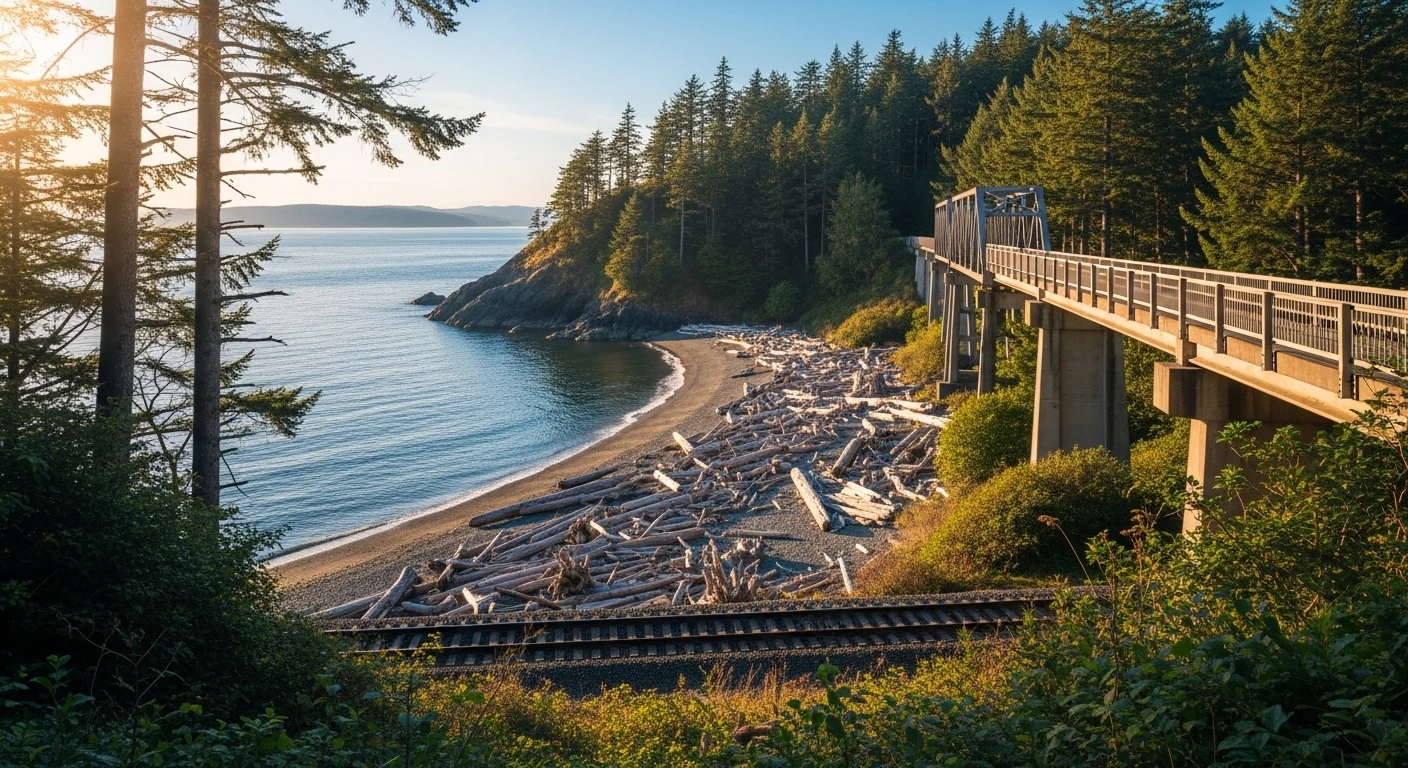
Howarth Park is a City of Everett park on the Puget Sound bluff at 1127 Olympic Boulevard, with an easy 0.6-mile loop trail, a pedestrian bridge over the BNSF railroad tracks to a long beach, sport courts, a playground, and an off-leash dog beach on the north end. It’s open 6 a.m. to 9 p.m. daily, free to enter, and one of the most underused public beaches in Snohomish County.
Olympic Boulevard in south Everett is mostly tidy residential streets, a few stop signs, and not much else to look at — which is exactly how most drivers end up cruising right past Howarth Park without noticing the turnoff. That is the central fact of this park. It’s one of the most scenic stretches of public beach in south Everett, it’s a short drive from downtown, and a huge number of Everett residents have never set foot on it.
Let’s fix that.
Where Howarth Park Actually Is
Howarth Park is tucked along the western bluff of south Everett at 1127 Olympic Boulevard. Coming from downtown, the easiest route is south on Rucker Avenue, right on Mukilteo Boulevard, and then left into the park about a mile and a half after you pass Forest Park. If you hit the Mukilteo ferry, you’ve gone too far.
The park sits on a long, narrow strip of bluff and beach that the City of Everett has owned and managed for generations. The bluff side holds the parking, playground, and sport courts. The beach is a separate world down below — reached only by the park’s signature pedestrian bridge.
The Three Parking Lots and What Each One Gives You
One of the things that confuses first-time visitors is that Howarth Park has three parking lots, and they’re not interchangeable. Pick the wrong one and you’ll either end up with a long walk or a missed view.
The north parking lot is what most beach-goers want. This is the closest pedestrian access to the beach itself. A short trail leads from the lot to the park’s pedestrian bridge, which spans the BNSF railroad tracks below and drops you directly onto the sand. If your goal is to get to the water with kids, a dog, or a beach chair, this is the lot.
The central parking lot sits at a small viewpoint on the bluff and offers a trail that drops down the hillside to the beach. This route is longer and steeper than the north access, but the view from the top is easily the best non-beach view in the park — on a clear day you’re looking straight across at the Olympic Mountains and Hat Island.
The south parking lot is the one most Everett residents don’t realize exists. This is the family-friendly end: two sport courts (tennis and basketball), a playground, a restroom, and a short, level walking path that leads to another great water view — again with Hat Island front and center. If you have young kids and want a picnic without the pedestrian-bridge hike, come here.
The Pedestrian Bridge and the Beach
The pedestrian bridge over the railroad tracks is the quintessential Howarth experience. It’s not fancy — a metal walkway with railings — but it feels a little bit like crossing into a hidden world. You come off the bridge onto a long, driftwood-strewn beach with Possession Sound in front of you, Whidbey Island in the distance, and the Mukilteo ferry crossing behind you.
The beach itself runs north to south along the park’s full length. It’s sand and cobble, with plenty of driftwood washed up at the high-tide line and tide pools exposed at low tide. You’ll see people walking dogs, kids skipping rocks, the occasional fisherman, and on nice spring weekends, a handful of photographers chasing the light.
The freight trains that run on the tracks behind you are loud and constant — that’s the tradeoff for beach access in this part of Puget Sound. After your first trip you stop noticing them.
The 0.6-Mile Loop Trail
On the bluff above, Howarth has a short but scenic 0.6-mile loop trail that’s generally rated as easy. It takes most people about 15 to 20 minutes and connects the three parking lots through a mix of forested switchbacks and bluff-edge sections. Strollers can handle some of it but not all. Dogs on leash are fine.
The trail is at its best between March and September, when the alders have leafed out and the ground is dry. In winter the steeper descents can get muddy and slick — bring shoes with tread.
The Off-Leash Dog Beach
Here’s a Howarth detail most Everett dog owners don’t know until their neighbor tells them: the north end of the beach is off-leash. Everett has very few legal off-leash beach options, and this is one of them. The south half of the beach stays leashed, but if you walk north from the pedestrian bridge, your dog can run.
Standard rules apply: owners are responsible for cleanup, voice control, and pulling your dog back if another leashed dog or visitor is coming through. The regulars who use this stretch have an informal etiquette that works well — show up, be considerate, and you’ll be welcomed.
The Views and When to Come
Howarth faces roughly west-southwest across Possession Sound. That geometry means:
Morning: Calm water, often glassy, great for reflective photos and cool-weather walks.
Golden hour to sunset: The main event. The sun drops behind Hat Island and the Olympics light up pink and orange. This is the time to come.
Overcast days: Still beautiful. The moody gray sky and driftwood beach are some of the most Pacific Northwest scenery Everett has.
Weekends in July and August get busy, especially the north lot. Weekday evenings are the sweet spot — you’ll often have long stretches of beach to yourself.
Hours, Amenities, and Rules
Hours: 6 a.m. to 9 p.m. daily.
Cost: Free.
Parking: Three lots, no fee.
Restrooms: Available at the south lot.
Playground: South lot.
Sport courts: South lot (tennis and basketball).
Dogs: On leash in all park areas except the north end of the beach, which is off-leash.
Fires: Not permitted on the beach.
Alcohol: Not permitted in park facilities.
Why Howarth Is Worth the Trip
Everett has Jetty Island for ferry-ride summer beach days, Forest Park for forest walks and the animal farm, and Legion Memorial for views and golf. Howarth is the one that fills a different slot: a real, walkable Puget Sound beach you can drive to in ten minutes, stay on for two hours, and leave without feeling like you fought a crowd.
It’s not flashy. It’s not a destination. It’s just quietly one of the best small parks in the city, and the Everett residents who use it regularly tend to keep it that way.
Frequently Asked Questions
Where is Howarth Park in Everett?
Howarth Park is at 1127 Olympic Boulevard in south Everett, on the Puget Sound bluff between downtown Everett and Mukilteo. The easiest route from downtown is south on Rucker, right on Mukilteo Boulevard, and left into the park.
What are the hours at Howarth Park?
Howarth Park is open 6 a.m. to 9 p.m. daily, year-round.
How do you get to the beach at Howarth Park?
The quickest access is from the north parking lot. A short trail leads to a pedestrian bridge that spans the BNSF railroad tracks and drops you directly onto the beach. There’s also a longer switchback trail from the central parking lot that descends the bluff to the beach.
Is Howarth Park dog-friendly?
Yes. Dogs are allowed throughout the park on leash, and the north end of the beach is an off-leash area. Owners are responsible for cleanup and voice control.
How long is the Howarth Park trail?
The main loop trail is about 0.6 miles and generally takes 15 to 20 minutes. It connects the three parking lots through a mix of forested switchbacks and bluff-edge segments.
Is there parking at Howarth Park?
Yes. There are three free parking lots — north, central, and south. The north lot is closest to the beach via the pedestrian bridge. The south lot has the playground, restroom, and sport courts.
Can you swim at Howarth Park Beach?
Wading is common on warm days, but Puget Sound water is cold year-round and the beach is not a lifeguarded swim beach. Conditions are best-suited for beachcombing, dog walking, and tide-pooling at low tide.
When is the best time to visit Howarth Park?
Weekday evenings between March and September are ideal. The golden-hour to sunset window is the park’s best view. Weekend afternoons in mid-summer can fill the north parking lot — come early or arrive after 4 p.m. for easier parking.
Is Howarth Park free?
Yes. There is no entrance fee and parking is free at all three lots.
What is the Delta neighborhood in Everett?
Delta is a quiet, mostly residential neighborhood at the northern end of Everett, Washington, between the Snohomish River and Broadway. Roughly 13,000 residents live there. It’s known for older single-family homes, long-running local staples like Ray’s Drive-In and Tampico Mexican Restaurant, a big off-leash dog park, and some of the most affordable housing in north Everett.
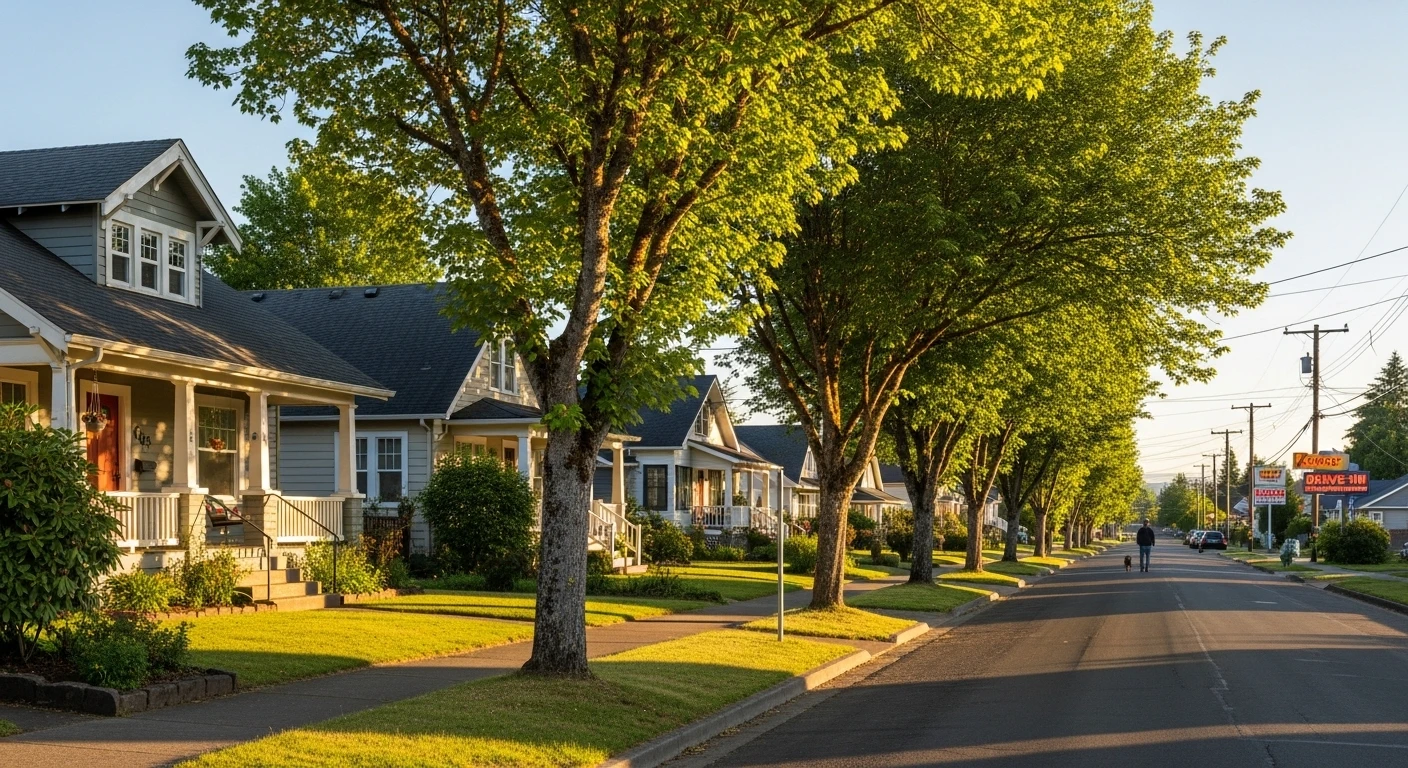
Drive up Broadway from downtown Everett and somewhere past Providence Regional Medical Center, you cross into Delta without anyone telling you. There’s no gateway sign, no big intersection marking the change. The blocks just start feeling a little older, a little quieter, a little more lived-in. That’s Delta: one of Everett’s most populous neighborhoods and almost certainly its most underrated.
If you’ve only driven through, you’ve probably missed it. Delta is not a destination neighborhood — it’s a living neighborhood, and that’s exactly what makes it good.
Where Delta Is and What It Looks Like
Delta sits at the northern end of Everett, bounded roughly by the Snohomish River to the north and east, Broadway running through its spine, and the Bayside and Northwest Everett neighborhoods to the west. It’s one of the largest of Everett’s 21 officially recognized neighborhoods by population, with around 13,000 residents according to recent census data.
What you see when you walk it: 1920s craftsman bungalows next to 1940s workers’ cottages next to tidy early-2000s townhomes in the north end. Tree-lined streets. Basketball hoops in driveways. The occasional well-loved ’90s Tacoma in the front yard. It’s the kind of neighborhood where the housing stock has been continuously lived in for a hundred years because no one ever had a reason to leave.
The Local Staples That Define Delta
Every neighborhood has the places that anchor it. In Delta, two of them have been anchoring since before most current residents were born.
Ray’s Drive-In has been flipping burgers and scooping ice cream on Broadway since 1962. That’s 64 years of the same drive-up counter, the same red-and-white signage, the same deep-fried fries that come out almost too hot to eat. Generations of Everett teenagers have had their first after-practice cheeseburger here. Generations of Delta residents have walked over for a shake on a summer evening. If you want to understand how Delta feels about itself, watch the parking lot at Ray’s on a Friday night.
Tampico Mexican Restaurant opened in 1987 and has been serving tostadas and margaritas to Delta regulars ever since. It’s not flashy. The salsa is good. The prices are what Everett prices used to be everywhere, and the booth you sat in last year is probably still open when you come back.
The Broadway corridor through Delta also includes a rotating cast of smaller shops, family-owned services, and the quiet kind of storefronts — dry cleaners, barbers, a tire place, a dentist — that keep a neighborhood running without ever becoming “scenes.”
Who Lives in Delta and What It Costs
Delta has historically been one of the most affordable neighborhoods in north Everett, and that’s still largely true — with an asterisk the rest of the Puget Sound region has stamped on everything.
Two-bedroom 1940s bungalows trade in the $380,000 to $430,000 range. A three-bedroom 1920s craftsman lands closer to $470,000. Newer three-bedroom townhomes in the north end of the neighborhood go between $580,000 and $630,000. None of those numbers are cheap in absolute terms, but compared to similar homes in Northwest Everett or Bayside, Delta consistently comes in lower.
The result is that Delta has stayed one of the most economically mixed neighborhoods in the city. You get long-time Everett families who bought their homes in the ’80s and never left, young couples stretching to buy their first place, and renters in the older duplexes and fourplexes that dot the side streets. That economic mix is probably Delta’s single most underappreciated quality.
Schools and the Providence Connection
Many Delta kids attend Hawthorne Elementary School, part of the Everett School District, which has a long-standing presence in the neighborhood. Middle and high school assignments in Delta run through the district’s standard boundary system, with most students funneling into North Middle School and then either Everett High School or Cascade High School depending on block.
The neighborhood also benefits enormously from proximity to the Providence Regional Medical Center Everett campus on Pacific Avenue — a roughly five-minute drive for most of Delta. Between the hospital, Everett Community College just to the south, and the Washington State University Everett campus, Delta residents have three of the biggest employers and institutions in north Everett within easy reach.
Parks, Dogs, and Green Space
If Delta has a spiritual center, it’s Delta Park — and specifically, the big off-leash dog park in the middle of it. Residents have been bringing their dogs there for years. Poop bags are provided at the entrances. On any sunny evening, you’ll find a small democracy of retrievers, doodles, and senior mutts running circles while their owners compare notes on weather, work, and where the best new coffee shop opened. It’s the kind of low-key community space that a neighborhood has to earn.
Delta also has easy access to the Snohomish River trail system and is a short drive from Legion Memorial Park, Kasch Park, and the waterfront at Jetty Landing.
What’s Changing in Delta Right Now
Delta is not being torn down and rebuilt — that’s part of its charm — but a few things are shifting. New construction in the north end of the neighborhood has brought in a steady trickle of townhomes over the past decade, gradually pushing up the neighborhood’s median home value and adding some density near the river. Broadway itself has seen small restaurant and service-business turnover, with newer independent places opening alongside the old staples.
The bigger story for Delta residents is Sound Transit’s Everett Link Extension, which will eventually bring light rail service to Everett, with station planning that touches the broader Broadway corridor. That’s still years out, but it’s the kind of long-horizon change that is already showing up in real estate conversations in the neighborhood.
Why Delta Works
Delta isn’t trying to be the next trendy neighborhood. Nobody is writing breathless Instagram posts about its aesthetic. There’s no coffee cart behind a speakeasy-style door. And that’s the whole point.
Delta works because the same people have lived there for a long time, the businesses that were there when those people moved in are still there, and the neighborhood has absorbed change slowly enough that it still feels like itself. In a city that is transforming fast — new stadium downtown, Boeing’s 737 line expanding, the waterfront filling in with new restaurants and housing — Delta is the neighborhood that reminds you Everett isn’t just what’s next. It’s also what’s already here, still working, still worth knowing.
How to Spend an Afternoon in Delta
If you’re new to Everett and want to get a feel for Delta the way locals do, here’s a simple afternoon:
Grab a burger and a shake at Ray’s Drive-In on Broadway.
Walk it off at Delta Park — say hi to the dogs at the off-leash area.
Drive the residential side streets between Broadway and the river to get a sense of the housing stock and the neighborhood’s rhythm.
Finish with tostadas and a margarita at Tampico Mexican Restaurant.
Two hours. Maybe three if you linger. That’s Delta — and that’s the whole neighborhood, really.
Frequently Asked Questions
Where is the Delta neighborhood in Everett?
Delta sits at the northern end of Everett, Washington, bounded roughly by the Snohomish River to the north and east and by Broadway running through its spine. It’s immediately east of Northwest Everett and north of the central business district.
How many people live in Delta?
Around 13,000 residents, making Delta one of the more populous of Everett’s 21 officially recognized neighborhoods.
Is Delta a good neighborhood to live in?
For buyers looking for single-family homes in north Everett at below-northwest-Everett prices, Delta is one of the strongest value options in the city. The neighborhood is quiet, well-established, close to Providence Regional Medical Center and I-5, and has long-running local staples like Ray’s Drive-In and Tampico.
What are the best restaurants in Delta?
Ray’s Drive-In (burgers, shakes, and ice cream on Broadway since 1962) and Tampico Mexican Restaurant (tostadas and margaritas since 1987) are the two longest-running locals’ favorites. The Broadway corridor has additional smaller spots worth exploring.
What elementary school serves the Delta neighborhood?
Hawthorne Elementary School, part of the Everett School District, serves many Delta families. Middle and high school assignments depend on specific block boundaries within the district.
Is there a dog park in Delta?
Yes. Delta Park has a large off-leash dog area with poop bag stations at the entrances. It’s one of the most actively used dog parks in north Everett.
How much does a house in Delta cost?
Recent sales have ranged from around $380,000 for smaller 1940s bungalows up to roughly $630,000 for three-bedroom townhomes in the north end of the neighborhood. Prices skew lower than Northwest Everett and Bayside for comparable homes.
What’s the best way to explore Delta as a visitor?
Drive Broadway through the neighborhood, stop at Ray’s Drive-In and Tampico, walk Delta Park, and take a loop through the residential side streets between Broadway and the Snohomish River to see the mix of craftsman, bungalow, and townhome housing stock.
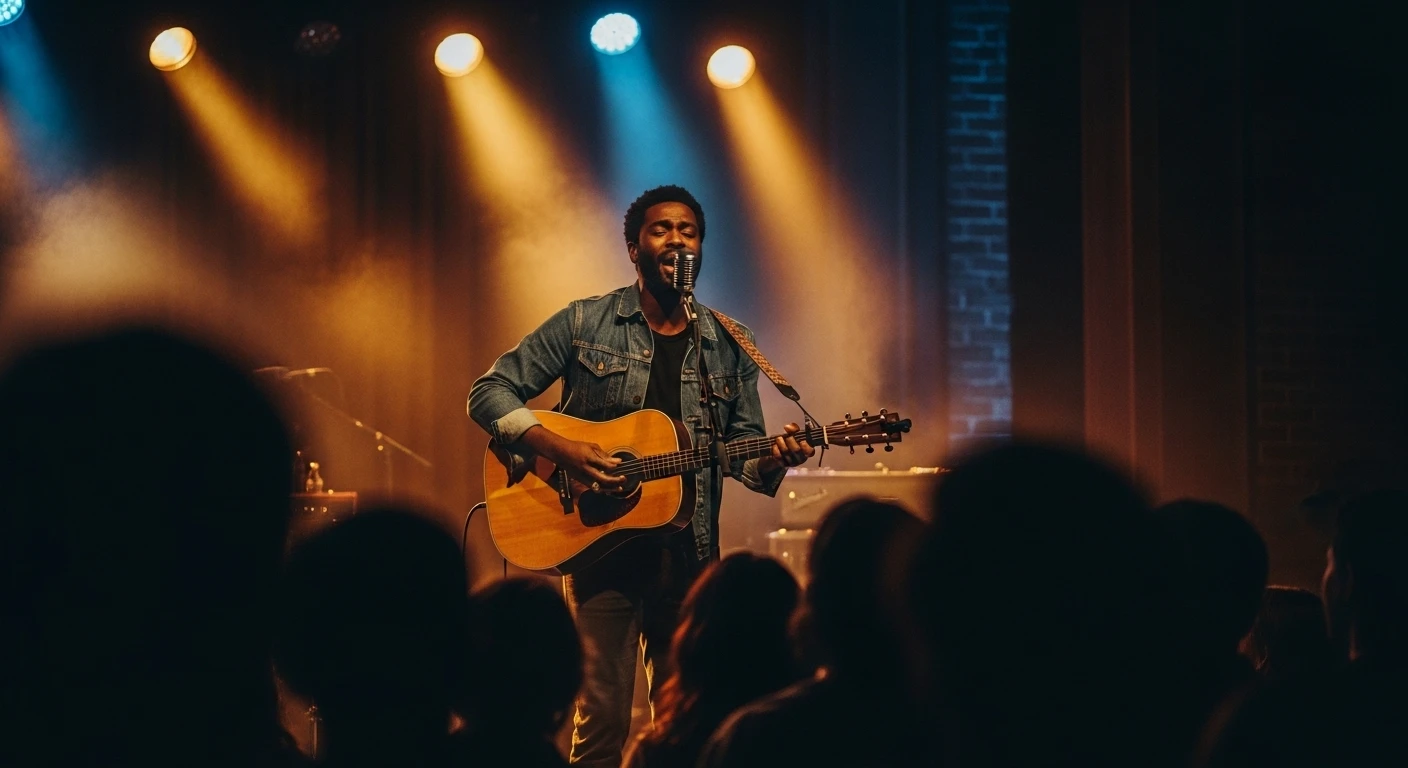
The short version: Antwane Tyler — the trailblazing Black country artist Snohomish has been quietly claiming for a few years now — headlined Kings Hall at APEX Everett on Saturday, May 2, 2026, at 7:30 p.m. Openers were Racyne Parker and, in a rare Pacific Northwest appearance, Snohomish’s own Fretland. It was 21+. It was arguably the most “from-right-here” country bill APEX has programmed to date. Venue: apexeverett.com.
Every once in a while a single lineup reminds you that the Snohomish County music scene isn’t riding on anyone else’s coattails. Saturday, May 2, at Kings Hall inside APEX Everett, three artists who have shaped what “Pacific Northwest country-Americana” sounds like in 2026 are stepping onto the same stage — and two of them came up inside a 15-minute drive of the venue.
Here’s why the show mattered, who these artists are, and why this May 2 bill was worth clearing the calendar.
The headliner: Antwane Tyler
If you’ve been paying attention to Washington country at all, you’ve run into Antwane Tyler. Born in Tacoma, adopted into the Monroe area as a kid, and now operating out of Snohomish, Tyler has spent the last few years quietly (and then not so quietly) carving out a voice that nobody else in the genre has. He grew up on the Johnny Cash–Waylon Jennings side of the family record collection, then picked up hip-hop in his teens, and the music he makes today isn’t a compromise between those two worlds — it’s a fusion that actually works.
His single “Homesick” is the calling card. It went viral on TikTok and streaming, picked up Locals Only love from 107.7 The End, and earned him a King 5 spotlight that (refreshingly) didn’t spend the whole segment treating him like a novelty. The song was inspired by the grandfather who handed him his first guitar at eight years old, and Tyler tells that story without flattening it into a marketing bio.
He’s also, to date, one of the only Black country artists consistently touring Washington’s small-to-mid-size rooms. That’s not a press angle — it’s a thing that matters, especially when a room like Kings Hall at APEX hands him a 7:30 p.m. headline slot.
The rare-return opener: Fretland
The part of this bill the country nerds are already texting each other about: Fretland. Led by Hillary Grace Fretland (yes, that’s actually her name), the Snohomish-based four-piece has been one of the most critically adored Americana acts to come out of Washington in the last five years. Billboard, American Songwriter, The Boot, No Depression — they’ve all gone to bat for Fretland’s fragile, leaf-strewn alt-country sound.
They released their self-titled debut in May 2020 (timing that tested anyone’s career plans) and followed it with a second full-length a couple years later. Since then, live Fretland shows in the Pacific Northwest have become increasingly rare. The APEX announcement specifically flags this as a “one-night-only special appearance” and a “rare opportunity to see her live in the PNW again.” If you’ve been waiting for Fretland to play a hometown-adjacent room again — this is literally that.
For anyone who hasn’t heard them: imagine the emotional weight of Phoebe Bridgers with the country bones of Kacey Musgraves and a little of Lord Huron’s atmosphere on top. They are the kind of band that makes a 300-person room go completely silent. In Kings Hall’s 800-ish capacity with good sightlines? It’s going to hit.
The rising third: Racyne Parker
Slotting in between Antwane Tyler and Fretland is Racyne Parker, a Klamath Falls, Oregon native who spent time in Denver before relocating to Seattle in 2024. Her debut full-length, Will You Go With Me?, came out in 2025 and was produced by Nashville’s Randall Kent. Parker writes from the side of country music that sits comfortably between Miranda Lambert’s storytelling and the more literary Noah Kahan / Lord Huron end of the folk spectrum — which is to say, she slots onto this bill like she was mailed to order.
If you aren’t already familiar with her, an APEX show is exactly the right way to introduce yourself. Parker plays rooms this size well — enough stage presence to hold attention, and enough songcraft to earn the quiet between songs.
The venue: Kings Hall at APEX
A quick word about where this is happening, because Kings Hall deserves the context. APEX Everett opened inside a historic building at 1611 Everett Avenue, and the main performance room — Kings Hall — sits on the third floor with a capacity around 800. It’s one of the more architecturally interesting live music rooms to open in Snohomish County in a decade, and programmers there have been unusually deliberate about booking regionally-rooted acts alongside bigger touring names.
A country-Americana triple-header like this — headlined by a Washington artist, with two more Washington-based (or Washington-adjacent) acts underneath — is exactly the kind of programming that justifies the Kings Hall project.
The details you actually need
Show: Antwane Tyler with Special Guests Fretland + Racyne Parker
Date: Saturday, May 2, 2026 (completed)
Showtime: 7:30 p.m.
Venue: Kings Hall at APEX Everett, 1611 Everett Avenue, Everett, WA 98201
Age: 21+
Tickets / venue: Were via Ticketmaster or the APEX events page (apexeverett.com). This page is retained as a May 2, 2026 concert archive.
Heads up: Kings Hall is on the third floor of a historic building. Dress like a human who is going to be standing for a few hours in a venue with character.
Why this one stands out
Everett’s calendar is thick in May. First Friday at Schack Art Center is happening the night before. Tony V’s Garage has its usual packed weekend. The Historic Everett Theatre will have something booked on Colby. But this is the show where you are not going to be able to replay the exact lineup later — the Fretland appearance is the kind of thing that, five years from now, somebody is going to mention they caught and you’re going to wish you’d been there too.
Antwane Tyler is building something. Fretland doesn’t play the PNW much anymore. Racyne Parker is at the point in her arc where people will still be able to say they saw her in an 800-person room. APEX programmed the bill that put those three pieces together on a Saturday night — three miles from Snohomish, five miles from Monroe, and fifteen steps from where Hewitt Avenue starts getting fun.
That Saturday was worth clearing. Retained here as a May 2026 archive.
Frequently Asked Questions
Who played at Kings Hall at APEX Everett on May 2, 2026?
Antwane Tyler headlined, with Fretland and Racyne Parker as special guests. Showtime was 7:30 p.m., and the event was 21+ (APEX Everett).
Where is Kings Hall at APEX Everett?
Kings Hall is located on the third floor of APEX Everett at 1611 Everett Avenue, Everett, WA 98201.
Is the APEX Everett May 2 show all ages?
No. The Antwane Tyler show on May 2, 2026 was a 21+ event.
Who is Antwane Tyler?
Antwane Tyler is a Washington-based country artist born in Tacoma, raised in the Monroe area after being adopted, and currently operating out of Snohomish. His single “Homesick” went viral across streaming and TikTok. He is one of the most visible Black country artists consistently touring Washington venues.
Is Fretland from Snohomish?
Yes. Fretland is a four-piece Americana band based in Snohomish, Washington, led by Hillary Grace Fretland. They have been profiled by Billboard, American Songwriter, The Boot, and No Depression. Their May 2 APEX appearance is being promoted as a rare PNW live date.
Where can I buy tickets?
Tickets are available through Ticketmaster and via the APEX Everett official events page. Because of Fretland’s rare PNW appearance, tickets are moving faster than a typical APEX night — buy early rather than at the door if the show is a priority.
What is the capacity of Kings Hall at APEX?
Kings Hall seats / accommodates roughly 800 people, making it one of the larger mid-size live music rooms in Snohomish County.
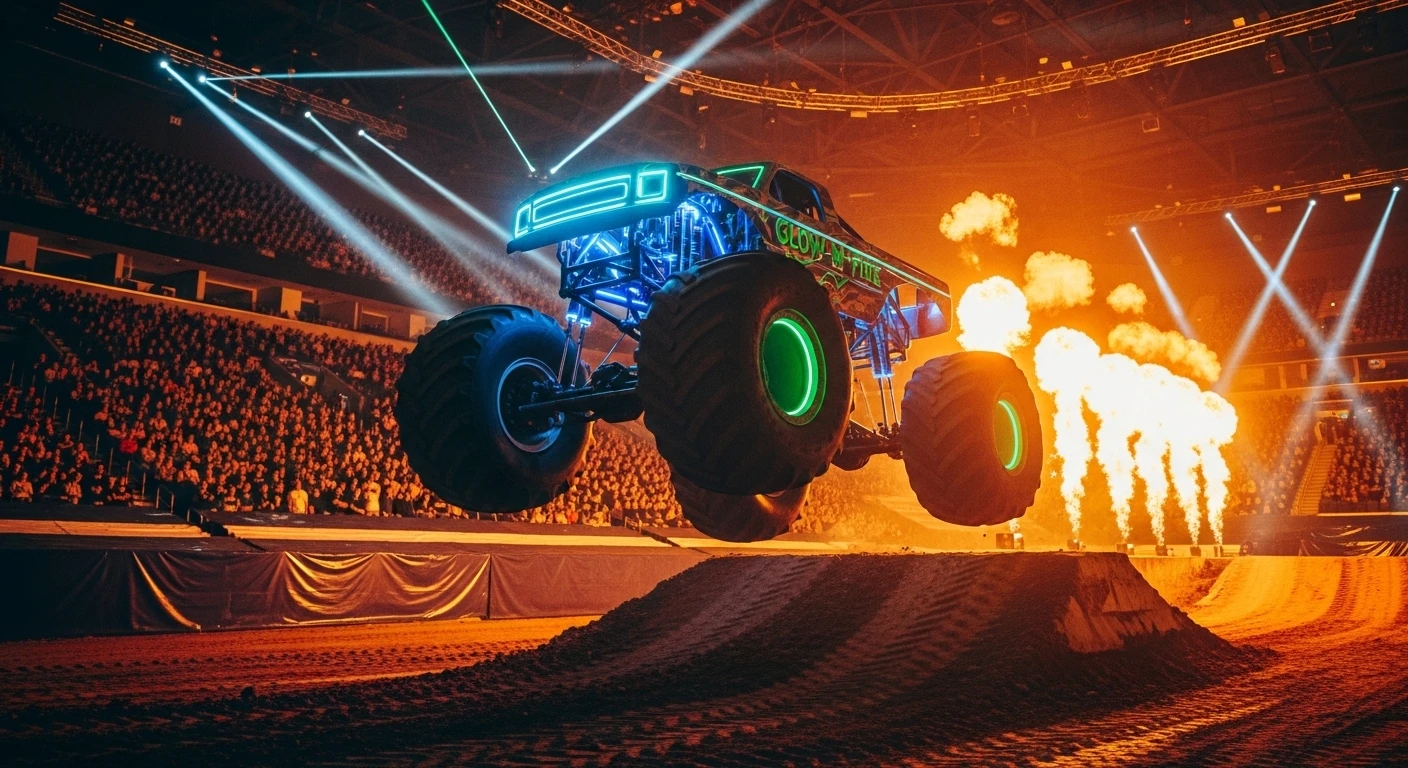
When is Hot Wheels Monster Trucks Live coming to Angel of the Winds Arena? Hot Wheels Monster Trucks Live Glow-N-Fire performs at Angel of the Winds Arena in Everett on Saturday, May 30, 2026 at 12:30 p.m. and 7:30 p.m., and Sunday, May 31, 2026 at 2:30 p.m. All three shows include pre-show floor access with the monster trucks and drivers, available 2.5 hours before each performance.
Hot Wheels Monster Trucks Live Glow-N-Fire Rolls Into Everett Memorial Day Weekend
Memorial Day weekend at Angel of the Winds Arena is getting a major upgrade. Hot Wheels Monster Trucks Live Glow-N-Fire is bringing its 2026 tour to downtown Everett for three shows, May 30 through May 31, and if the name “Glow-N-Fire” does not already tell you where this is headed, the tour’s marketing is leaning hard into pyrotechnics, LED lighting, and trucks that literally breathe fire. It is 75 minutes of loud, and it is built for kids.
Here is everything a family in Everett, Mukilteo, Marysville, or anywhere in Snohomish County needs to know before buying tickets.
Showtimes at Angel of the Winds Arena
Saturday, May 30, 2026 — 12:30 p.m. (matinee, family-friendly time slot)
Saturday, May 30, 2026 — 7:30 p.m. (evening show)
Sunday, May 31, 2026 — 2:30 p.m. (Sunday afternoon matinee)
All three shows are at Angel of the Winds Arena, 2000 Hewitt Avenue, Everett. For families with younger kids, the 12:30 p.m. Saturday matinee is the best pick. For anyone who wants the full effect of the pyrotechnics and glow elements (which read better in a darker arena), the 7:30 p.m. Saturday night show is the one.
Which Monster Trucks Are on the 2026 Roster?
Glow-N-Fire brings a lineup stacked with the Hot Wheels all-stars plus a brand-new truck making its live debut this year:
Mega Wrex — the fan-favorite T-rex truck
Tiger Shark
HW 5-Alarm
Bone Shaker
Bigfoot — the original name in monster truck history
Gunkster
Skelesaurus
Rhinomite — new for 2026, making its live debut on this tour
If your kid has an opinion about which truck is best, it is probably Mega Wrex. Do not fight them on this.
The Pre-Show Party: Arrive Early
The Pre-Show Party presented by Metro by T-Mobile happens 2.5 hours before every performance and is hands-down the best part of the experience for kids. Pre-Show Party access lets fans onto the competition floor to see the monster trucks up close, meet the drivers, take photos, and get autographs. It is a separate ticket, but it is what turns a 75-minute show into a three-hour day.
Translation for parents: if you are paying for the show, pay for Pre-Show access too. The floor time is where the memories happen.
Tickets, Pricing, and Kids’ Deals
Tickets are on sale through Ticketmaster, the Angel of the Winds Arena box office, and the official Hot Wheels Monster Trucks Live website. Special kids pricing is available for all three Everett performances, which typically means a deep discount off the standard adult ticket price when purchased for eligible younger attendees. Exact pricing varies by seating section.
Buy direct through Ticketmaster or the arena box office if you want to avoid secondary-market fees.
What to Expect Inside the Arena
The Glow-N-Fire tour adds enhanced pyrotechnic effects, LED and black-light lighting, and glow-in-the-dark moments to the standard monster truck show. The trucks still do all the things fans expect — big air, wheelies, car crushes, donuts, and head-to-head competition — but the entire arena gets dimmed for the glow and fire sequences, which is spectacular in person and completely worth experiencing at the evening show if possible.
Earplugs are a good idea for kids under 5, and most parents recommend them. The arena sometimes has free foam earplugs at guest services, but bring your own to be safe.
How to Get There
Angel of the Winds Arena is at 2000 Hewitt Avenue in downtown Everett, one block off I-5 at Exit 193. Parking is available in the Everest Station Garage directly adjacent, in the arena’s own lot, and along Hewitt Avenue. For a matinee show, arrive 45 minutes before showtime. For the Saturday night show, plan on 60 minutes of lead time because of parking and concessions lines.
Pro tip for Everett families: the Port of Everett waterfront is 10 minutes away and has multiple kid-friendly restaurants (and ice cream) if you want to build a whole Memorial Day weekend day around the show.
Frequently Asked Questions
When does Hot Wheels Monster Trucks Live perform in Everett?
Saturday, May 30, 2026 at 12:30 p.m. and 7:30 p.m., and Sunday, May 31, 2026 at 2:30 p.m. at Angel of the Winds Arena in Everett, Washington.
How long is the show?
The main show runs approximately 75 minutes. Including the Pre-Show Party floor access that opens 2.5 hours before showtime, plan for a three-hour total experience.
Which trucks are performing in Everett?
The 2026 Glow-N-Fire tour lineup includes Mega Wrex, Tiger Shark, HW 5-Alarm, Bone Shaker, Bigfoot, Gunkster, Skelesaurus, and the brand-new Rhinomite, making its live debut this season.
Is there a Pre-Show Party?
Yes. The Pre-Show Party presented by Metro by T-Mobile runs 2.5 hours before every performance and gives fans access to the competition floor to meet the drivers and see the trucks up close. It requires a separate ticket.
Are there kids’ ticket discounts?
Yes. Special kids pricing is available for all shows. Exact pricing varies by section. Check the Ticketmaster listing or the Angel of the Winds Arena box office for current rates.
Where can I buy tickets?
Tickets are available through Ticketmaster, the Angel of the Winds Arena box office, and hotwheelsmonstertruckslive.com. Buying direct helps you avoid secondary-market markups.
Should I bring earplugs for kids?
Yes, especially for children under 5. Monster truck shows are loud by design. Bring hearing protection or pick up foam earplugs at guest services when you arrive.
Did the AquaSox win at Eugene on April 15, 2026? No. The Everett AquaSox fell 6-5 to the Eugene Emeralds in walk-off fashion on April 15 at PK Park. Emeralds right fielder Lisbel Diaz hit a game-winning sacrifice fly in the bottom of the 10th inning after Everett rallied from a two-run deficit to tie the game 5-5 in the top of the eighth.
AquaSox Drop a 10-Inning Heartbreaker to Eugene: What We Saw
Wednesday nights in Eugene are not supposed to feel like this. The AquaSox had twice clawed back from a deficit, had extra innings on the road against a quality High-A opponent, and still walked off the field on the wrong end of a 6-5 final thanks to a Lisbel Diaz sacrifice fly in the bottom of the 10th. That is the kind of loss that lingers on the bus ride.
But if you are a fan who has followed this team for more than a week, you already know the truth about baseball: you learn more from a 10-inning one-run road loss in April than you do from a 7-1 beatdown. Here is what the AquaSox showed us in Game 2 of this Eugene series.
How the Game Went
Carlos Jimenez got the Frogs on the board with a first-inning RBI single, scoring Carter Dorighi, who had walked and stolen second. Everett took a 3-2 lead in the top of the sixth when Dorighi drove in a run with an RBI single of his own and Curtis Washington Jr. followed with an RBI groundout.
Eugene answered immediately. In the bottom of the sixth, Diaz — the eventual walk-off hero — knocked an RBI single to tie it 3-3. The Emeralds then strung together a Cohen single, a Gavin Kilen RBI double, and a Dakota Jordan RBI single to open up a two-run lead.
To Everett’s credit, they did not fold. The AquaSox answered in the top of the eighth, tying the game 5-5 and pushing it to extras. In the bottom of the 10th, Gutierrez stole third base with no outs, and Diaz ended it with a sacrifice fly. AquaSox lose 6-5.
Three Things That Matter
1. The Offense Is Finding Its Legs
Last week was ugly. The Opening Night 17-2 blowout at home was not indicative of this team, but the offense had also been quiet in the series opener at PK Park. Wednesday was the first full game we saw the lineup string together at-bats in multiple innings, take extra bases on the bases (Dorighi’s stolen base in the first, Carter Dorighi’s RBI single in the sixth), and refuse to go away after falling behind. That is the template for this team’s offense in 2026 — it will not overwhelm you with power, but it should be a nuisance every inning.
2. Carter Dorighi Is Who We Thought He Was
Dorighi’s fingerprints were all over Wednesday’s scoring. Walked in the first, stole second, came around on Jimenez’s single. Drove in his own run in the sixth. The Mariners’ farm system values high-contact, on-base-skill bats up the middle, and Dorighi is turning into exactly that.
3. The Bullpen Needs to Close the Door
Coming back twice to force extras and then losing on a sac fly in the bottom of the 10th is the part that sticks. It is one game. But in the Northwest League, you cannot win a weekend series if your relievers cannot hold a tie on the road. Worth watching how the pitching staff handles the back half of this Eugene series.
The Bigger Picture: Prospect Watch
The 2026 AquaSox roster is loaded with names Mariners fans should be tracking. Felnin Celesten, Colt Emerson, and Lazaro Montes remain the headline prospects across the Mariners’ High-A system, and Everett is the best place in the Pacific Northwest to watch the next wave develop in person. If you missed Julio Rodriguez when he played here in 2019, this is the same front-row seat to the next generation.
Home games resume at Funko Field later this month. Tickets are a fraction of a Mariners game, the hot dogs are good, and you will know every player’s first name by the sixth inning. That is AquaSox baseball.
What’s Next
The AquaSox continue their road series at the Eugene Emeralds through the weekend before returning home to Funko Field. Game times and broadcast info are posted on the official AquaSox schedule at milb.com/everett.
Frequently Asked Questions
What was the final score of the AquaSox vs. Emeralds game on April 15?
Eugene won 6-5 in 10 innings at PK Park. Lisbel Diaz hit a walk-off sacrifice fly in the bottom of the 10th inning.
Where do the AquaSox play their home games?
The Everett AquaSox play their home games at Funko Field, located at 3900 Broadway in Everett. Funko Field holds roughly 3,700 fans and is one of the most intimate ballparks in all of Minor League Baseball.
Who are the AquaSox affiliated with?
The Everett AquaSox are the High-A affiliate of the Seattle Mariners. The roster is made up of prospects one or two promotions away from Double-A Arkansas or Triple-A Tacoma.
Who were the standout AquaSox players in Wednesday’s game?
Carter Dorighi had multiple offensive contributions, including a walk, a stolen base, and an RBI single. Carlos Jimenez drove in the game’s first run. Curtis Washington Jr. added an RBI groundout.
When do the AquaSox come back to Funko Field?
The AquaSox finish the road series in Eugene before returning to Funko Field in Everett. Check the team’s schedule at milb.com/everett for exact dates and start times.
Which Mariners prospects are on the current AquaSox roster?
The 2026 AquaSox roster features several top Mariners prospects including Felnin Celesten, Colt Emerson, and Lazaro Montes. Watching them at Funko Field is one of the best ways to track the farm system in person.
Did the Silvertips sweep Kelowna in Round 2? No. Everett held a 3-0 lead with 12 minutes left in Game 4 on April 15, 2026, but Kelowna rallied for three goals and Tij Iginla won it in overtime. The Rockets took Game 4 by a 4-3 final, cutting Everett’s series lead to 3-1. Game 5 is Friday, April 17 at 7:05 p.m. at Angel of the Winds Arena.
Silvertips Were 12 Minutes From a Sweep. Then Kelowna Happened.
This is the part where a fan gets honest. Wednesday night at Prospera Place in Kelowna was supposed to be the one: a clean four-game sweep of the Rockets, an extra week of rest before the Western Conference Final, and a quiet flight home. For 48 minutes of hockey, the Silvertips were absolutely pitching a sweep. Then 12 minutes happened, overtime happened, and now we are going back to Angel of the Winds Arena Friday night for Game 5 with a 3-1 series lead instead of our boots up.
Let’s be very clear about what happened, because the final score does not tell the full story.
What Actually Happened in Game 4
The Silvertips came out of the gate like a team that smelled Round 3. Julius Miettinen opened the scoring just 1:04 into the first period. Matias Vanhanen buried a power-play goal at 8:47. Brek Liske made it 3-0 at 14:10. That is three goals in the first 14 minutes of a road playoff game against a desperate home team — exactly the way a top seed ends a series.
Then the third period turned into the kind of hockey nightmare every fan base has seen before. Kelowna scored with about 12:07 left in regulation to make it 3-1. Then again. Then Shane Smith tied it 3-3 late. Overtime arrived, the Rockets kept coming, and Tij Iginla — yes, that Iginla — put the winner home at 2:30 of the extra period for his second goal of the night. Rockets 4, Silvertips 3.
The Good News: The Silvertips Still Lead the Series 3-1
Blown third-period leads sting for 48 hours. But look at the board: Everett is still up 3-1 in a best-of-seven, the Silvertips are still the Western Conference’s top seed, and Game 5 is back at home at Angel of the Winds Arena, where they won the first two games of this series. A playoff team only needs to win one of the next three. Kelowna has to run the table.
Historically, losing a close-out game on the road is the kind of thing you laugh about after you hoist the trophy. The Silvertips can absolutely still control this series. They just need to do the one thing Game 4 showed they are more than capable of doing for 48 minutes: skate a full 60.
Game 5: Friday, April 17 at Angel of the Winds Arena
Here is the only schedule you need memorized for the rest of this week:
Game 5: Friday, April 17, 2026 — 7:05 p.m. — Angel of the Winds Arena, Everett
Game 6 (if needed): Sunday or Monday, April 19 or 20 — in Kelowna
Game 7 (if needed): Tuesday, April 21 — Angel of the Winds Arena, Everett
If you have ever been on the fence about a Silvertips playoff ticket, this is the one. The barn is going to be loud. The stakes are a Western Conference Final. The opponent is a desperate team that just stole a win in their own building. This is exactly what playoff hockey in Everett is supposed to feel like.
How to Get to Game 5
Tickets are still available through the Silvertips’ official playoff ticket page and Ticketmaster. Angel of the Winds Arena is at 2000 Hewitt Avenue in downtown Everett, about five minutes off I-5 Exit 193. Parking is easiest in the Everest Station garage a block away, or on Hewitt if you are early. Puck drops at 7:05 p.m., so aim to be through the doors by 6:30 if you want a beer and a look at warmups.
What to Watch in Game 5
1. Julius Miettinen’s Legs
Miettinen — Everett’s captain and one of the best two-way centers in the Western Hockey League — has been the motor of this series. Opening Game 4 with a 1:04 goal was the kind of tone-setter elite players deliver in the playoffs. Watch his first shift Friday. If he looks the same as he did in Game 4, the Rockets are in trouble.
2. The Power Play
Matias Vanhanen’s power-play goal was not a fluke — the Silvertips’ man-advantage has been one of the cleanest units in the WHL all year. If they can cash in early on a Kelowna penalty, the arena will do the rest.
3. Tij Iginla
We have to say his name, even if we do not like saying it. Iginla scored twice in Game 4, including the overtime winner. He is the most dangerous player Kelowna has, he has playoff-MVP bloodlines, and he will be on the ice when it matters. The Silvertips’ defensive pairings need to account for where his stick is at all times.
4. The Third Period
Every Silvertips fan is going to have one eye on the clock starting with 15 minutes left in the third period of Game 5. That is just how it is going to be until this series ends. The good news: the Silvertips can put that ghost to bed in a single night.
Frequently Asked Questions
When is Game 5 of the Silvertips-Rockets series?
Friday, April 17, 2026, at 7:05 p.m. at Angel of the Winds Arena in Everett.
What is the current series score?
Everett leads the best-of-seven Western Conference semifinal 3-1. The Silvertips need to win one of the next three games to advance.
What happened in Game 4?
Everett led 3-0 in the third period but gave up three unanswered goals in regulation. Kelowna’s Tij Iginla scored 2:30 into overtime for a 4-3 Rockets win. Miettinen, Vanhanen, and Liske scored for the Silvertips.
Where are the remaining games being played?
Game 5 is in Everett, Game 6 (if needed) is in Kelowna, and Game 7 (if needed) is back in Everett.
Are tickets still available for Game 5?
As of publication, tickets remain available through the Silvertips’ official playoff ticket portal and through Ticketmaster. Expect strong walk-up demand for a potential series-clincher.
Who does the winner of this series play?
The winner of Silvertips-Rockets advances to the WHL Western Conference Final against the winner of the Portland-Wenatchee series.