Related on Tygart Media: AI orchestration tools · first Notion skill.
The 60-second version
Single mega-agents are tempting and bad. Specialized agents in a sequence with clear handoffs are harder to design but much more reliable. The principle: each agent does one thing well and hands a structured result to the next. Three handoffs is about the practical limit before debugging becomes painful. Beyond three, refactor.
Three orchestration patterns that work
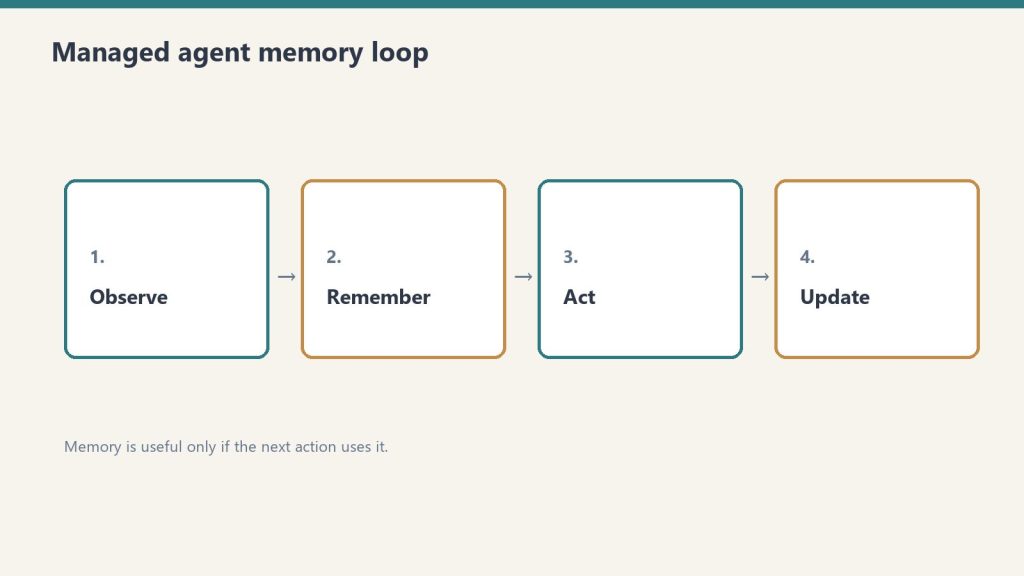
1. The pipeline pattern.
Agent A produces structured output → Agent B consumes and produces → Agent C consumes and produces final result. Each agent’s output schema matches the next agent’s input schema. Clear linear flow.
2. The router pattern.
A routing agent decides which specialist agent should handle the request, then dispatches. Specialists are scoped tightly to their domain. The router doesn’t do work itself; it just routes.
3. The reviewer pattern.
A producer agent generates output. A reviewer agent checks against criteria and either approves or returns specific feedback. Iterates until approved or max-attempts hit.
Three patterns that fail
1. Recursive agent chains. Agent A calls Agent B which calls Agent A again. Debugging is awful. Don’t.
2. Shared mutable state. Two agents writing to the same database row simultaneously. Race conditions and overwrites. Don’t.
3. Implicit handoffs. Agent A produces unstructured text; Agent B parses it. The first format change breaks everything. Use structured handoffs.
Designing the handoff contract

The handoff between agents is the highest-risk surface. Three rules:
– Define the schema explicitly. The output of Agent A is JSON-schema-validated input to Agent B.
– Version the schema. Schema changes are breaking changes. Version like APIs.
– Test the handoff in isolation. Mock Agent A’s output; test Agent B’s handling. Mock Agent B’s expected input; test Agent A’s production.
Where orchestration goes wrong in production
1. Cost compounds with depth. Each agent call consumes credits. A three-handoff workflow costs roughly 3x a single-agent workflow. Budget accordingly.
2. Latency compounds too. A 5-second agent x 3 handoffs is 15 seconds end-to-end.
3. Failure modes multiply. Agent A succeeds, Agent B fails, what happens? Define the failure handling explicitly.
What to read next
Workers for Agents in TypeScript, Building Your First Skill, Error Handling in Notion AI Workflows, Custom Agents vs Basic.
Leave a Reply