
Local SEO for Restoration Companies: The Content Strategy That Beats the Big Aggregators
Why Aggregators Can’t Own the Local Queries That Convert Best
Aggregator platforms rank for generic, high-volume terms. They cannot rank for hyper-local, service-specific queries that require genuine local knowledge. “Water damage restoration companies near me” — HomeAdvisor wins that. “What to do if my basement floods in [specific neighborhood]” or “sewage backup cleanup contractor [specific zip code]” — these are queries where a local contractor’s content can win, and they convert at higher rates because they’re more specific.
The restoration companies that build topical authority through hyper-local content — neighborhood-specific service area pages, local weather and flood risk content, municipality-specific permit and code content — create a content moat that aggregators cannot replicate because they lack the local knowledge to write it convincingly.
Three Content Types That Beat Aggregators Consistently
1. Neighborhood-Specific Service Content
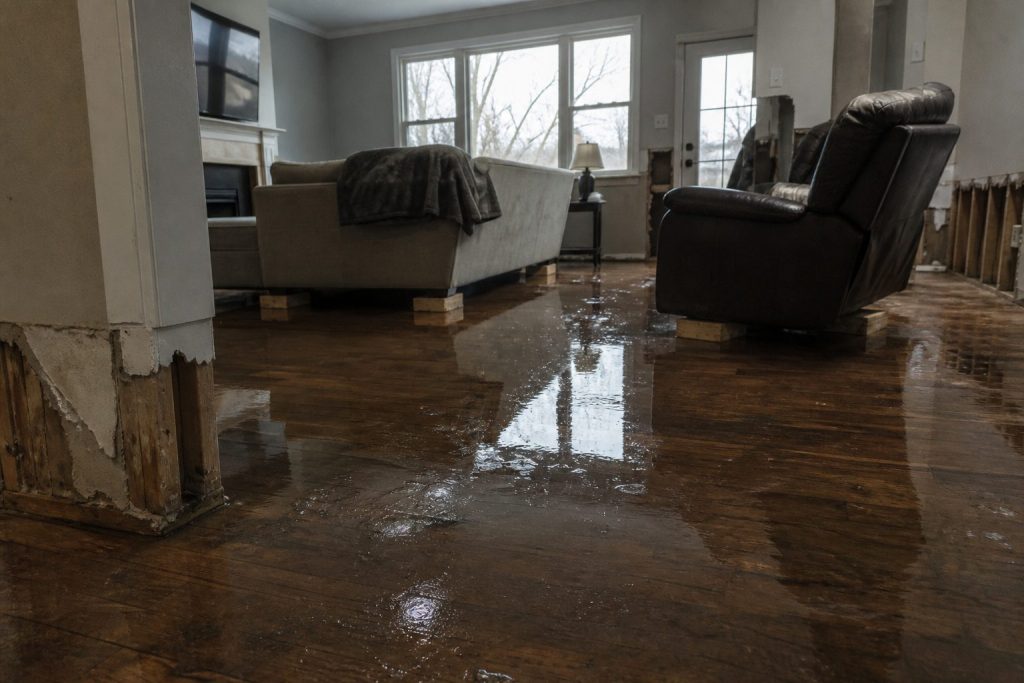
A dedicated article or page for each primary service area neighborhood — not just a city — with specific local references: the age and construction type of housing stock in that area (older homes with clay tile sewer laterals vs newer homes with PVC), common water damage causes specific to the geography (proximity to a flood plain, sump pump dependency in areas with high water tables), and local infrastructure that affects restoration timelines (permit requirements for drywall removal, local inspection protocols). HomeAdvisor has a landing page for your city. You can have a genuinely informative article for every neighborhood you serve.
2. Local Risk and Prevention Content
Weather events, aging infrastructure, and local building characteristics create specific restoration risk patterns that vary by market. An article titled “Why [City] Homes Get Basement Flooding After Spring Rain” — referencing local topography, the combined sewer system that causes backup events in specific zip codes, and the age of housing stock in affected neighborhoods — is content that only a contractor who actually works that market can write authoritatively. This is E-E-A-T through genuine local experience, and it’s exactly what AI systems recognize as locally authoritative content.
3. Process Content With Local Code References
Restoration permit requirements, local inspection protocols, and municipality-specific code provisions vary by jurisdiction. An article explaining “Do You Need a Permit for Water Damage Restoration in [City]?” — with the actual answer for your market, the permit threshold (square footage of drywall removal, extent of structural work), and the typical inspection timeline — is content that serves homeowners, builds local authority, and is completely outside what a national aggregator can provide.
The Entity Set for Local Restoration Authority

Beyond IICRC and RIA, local restoration authority requires geographic entity injection: named neighborhoods and service area communities, local watershed and drainage authority references where applicable, municipality names, specific local weather events that create restoration demand, and named local building code authorities. These geographic entities are the signals Google and AI systems use to determine whether a restoration contractor truly serves and understands a local market versus claiming a service area on a directory profile.
Related on Tygart Media: blog SEO · Twin Cities water damage SEO · property damage SEO.
Frequently Asked Questions
How many service area pages should a restoration company have?
A dedicated page for each primary service city or neighborhood you actively serve and have genuine local knowledge about. The quality standard is: could you write 300+ words of genuinely specific, locally-relevant content about restoration work in this area? If yes, the page is worth creating. Generic “We serve [city]” pages with no local-specific content do not build topical authority and may actually dilute your overall site quality signals. Depth per location beats breadth of thin location pages.
What local entities matter most for restoration company SEO?
Named neighborhoods and communities within your service area, local watershed and drainage authority names (relevant for flood and backup content), municipality names paired with specific services, local housing stock characteristics (age, construction type, common infrastructure issues), and references to local weather patterns or infrastructure events that create restoration demand. Geographic specificity — naming specific streets, neighborhoods, or local landmarks — is the entity signal that separates genuine local expertise from claimed service area coverage.
How does local content help restoration companies compete in AI search?
AI systems evaluating restoration content for hyper-local queries — “basement flood cleanup [neighborhood]” or “sewage backup contractor [zip code]” — favor content with genuine geographic entity depth over generic service descriptions. A restoration company article that references specific local geography, housing stock characteristics, and infrastructure context is treated as locally authoritative by AI systems in a way that a national aggregator’s generic city page cannot match. Local entity injection is both a Google local SEO signal and an AI citation signal for geographically-specific restoration queries.
Leave a Reply