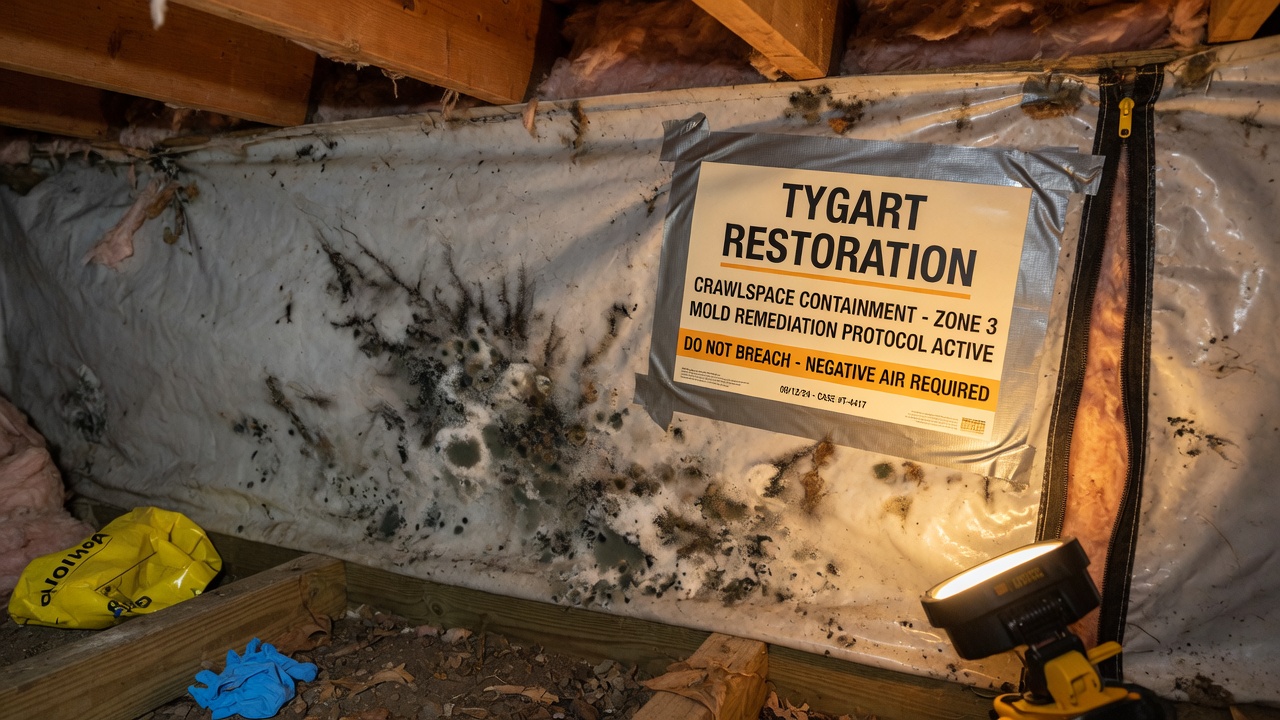
Mold in a crawl space is one of the most alarming things a homeowner can discover — and one of the most frequently misunderstood. The sight of dark growth on floor joists triggers fear of toxic mold, expensive remediation, and compromised home value. In reality, crawl space mold is common, the risk level varies significantly by species and extent, and the correct remediation approach depends on accurately characterizing what you have. This guide covers identification, causes, remediation, and prevention — in that order, because diagnosis determines everything else.
Is It Mold? Distinguishing Mold from Common Lookalikes
Efflorescence
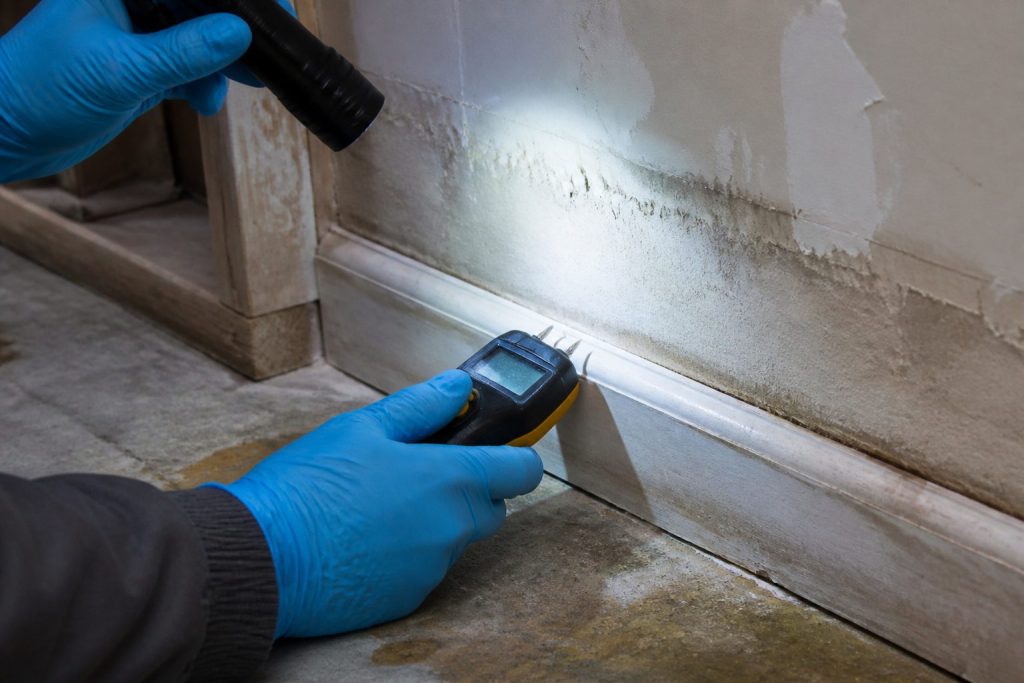
Efflorescence is a white, powdery or crystalline deposit that forms on concrete, masonry, and block foundation walls when water moves through the material and evaporates at the surface, depositing dissolved mineral salts. It is completely non-biological, not a health hazard, and not mold. Efflorescence indicates water movement through foundation materials — a moisture problem — but the white deposits themselves are minerals. If what you see on your foundation walls is white, powdery, and crystalline (not fuzzy or growing), it is almost certainly efflorescence, not mold.
Wood Staining
Wood staining — blue-gray or black discoloration of wood without surface growth — is caused by a group of fungi called sapstain or bluestain fungi. These fungi penetrate the wood fibers and produce pigmented compounds, causing discoloration. Bluestain fungi do not degrade structural wood fibers (they consume sugars in sapwood but not the cellulose that provides strength) and are not generally considered a health hazard. However, their presence indicates past or present elevated wood moisture content — the same conditions that enable structural wood rot and health-relevant mold species.
Surface Mold
True surface mold on crawl space wood appears as fuzzy or powdery growth — white, gray, green, black, or multi-colored depending on the species — that sits on the wood surface rather than penetrating it. The most common crawl space mold species are Penicillium, Aspergillus, Cladosporium, and Trichoderma — which appear white, green-gray, or black. Surface mold can often be wiped off the wood surface (unlike bluestain staining, which penetrates the fibers). The presence of surface mold indicates current or recent elevated humidity conditions.
Wood Rot
Wood rot (brown rot or white rot fungi) is a structural fungal attack that actually degrades wood fibers, weakening the structural capacity of joists, beams, and sill plates. Brown rot crumbles wood into cube-shaped pieces that crack along the grain; white rot attacks both lignin and cellulose, leaving a white, stringy, spongy residue. Wood rot requires sustained wood moisture content above 19–28% to become active — it indicates a chronic, severe moisture problem. This is not a cosmetic issue — rotted structural wood requires replacement.
What Causes Crawl Space Mold
Mold requires three conditions to grow: a food source (organic material — wood, paper, insulation), water (specifically, relative humidity above approximately 70% or wood moisture content above 18–19%), and temperatures above approximately 40°F. All three are present in most vented crawl spaces during warm, humid months.
The specific mechanism in most crawl spaces: warm, humid outdoor air enters through foundation vents in summer and contacts the cooler underside of the subfloor and floor joists. The air cools to its dew point, depositing liquid moisture on wood surfaces. This elevated wood surface moisture — not standing water, just the condensed humidity from the air — is sufficient to enable mold growth on the wood surfaces within days to weeks of sustained exposure.
Secondary causes include: plumbing leaks from pipes in the crawl space that have gone undetected, HVAC condensate lines that drip into the crawl space, inadequate grading that directs surface runoff toward the foundation, and dryer vents that exhaust into the crawl space (prohibited by code but found in older homes).
Health Risk Assessment: Is Crawl Space Mold Dangerous?
The health relevance of crawl space mold depends on what is growing, how much, and how effectively the stack effect carries crawl space air into living spaces. Key points:
- Research documents that 40–60% of first-floor air in a home with a vented crawl space comes from that crawl space. Mold spores in the crawl space air are entering the living space continuously.
- The most common crawl space mold species (Penicillium, Aspergillus, Cladosporium) are widespread environmental molds that healthy adults tolerate at typical background concentrations. They become problematic at high indoor concentrations, particularly for individuals with mold allergies, asthma, or compromised immune systems.
- Stachybotrys chartarum (“black mold”) is relatively rare in crawl spaces — it requires chronically wet cellulose materials and grows slowly. When it does appear, it is more concerning due to its mycotoxin production at high concentrations.
- The practical health risk from crawl space mold in an occupied home is real but often overstated. It is highest for individuals who spend time in the crawl space directly, those with mold sensitivity, and children and immunocompromised individuals who live in the home long-term with elevated crawl space mold loading.
Crawl Space Mold Removal: The Process
Scope Assessment First
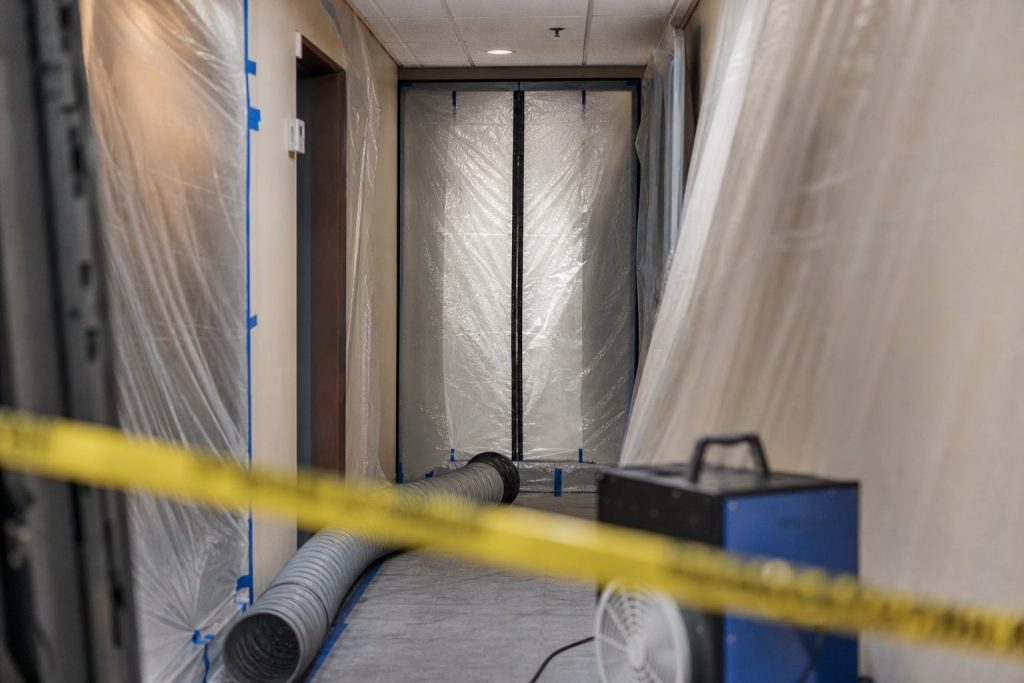
Before removing mold, establish the scope. A crawl space inspection with a moisture meter and flashlight should answer: what percentage of the crawl space joist surfaces are affected? Is the mold surface-only or has wood degradation occurred? Are structural wood members affected or primarily insulation, sheathing, and blocking?
EPA guidance considers mold remediation above 10 square feet to warrant professional involvement. In a crawl space context, 10 sq ft of mold growth on joists is relatively minor. Extensive mold coverage — 50%+ of the joist surfaces in a 1,500 sq ft crawl space — is substantial remediation work.
Safety Equipment
For any crawl space mold work — DIY or professional:
- N95 or P100 respirator (not a dust mask — a rated respirator)
- Disposable Tyvek coveralls or clothing that will be washed immediately after
- Nitrile gloves
- Eye protection
- Temporary lighting — a bright, portable LED work light is essential in a dark crawl space
The Remediation Steps
- Address the moisture source first: Remediating mold without fixing what caused it is pointless — mold returns within 1–3 months of re-exposure to the same conditions. Fix the drainage, seal the crawl space, or install the dehumidifier before or simultaneously with mold remediation.
- HEPA vacuum the affected surfaces: Before any wet treatment, HEPA-vacuum the mold to remove bulk spores without dispersing them into the air. A standard vacuum will spread spores; a HEPA-filtered vacuum captures them.
- Apply a biocide or antimicrobial treatment: A registered EPA antimicrobial product labeled for mold remediation is applied to affected surfaces. Sodium hypochlorite (bleach) is effective on non-porous surfaces but less effective on porous wood — it kills surface mold but does not penetrate to kill embedded hyphae. Professional-grade products like Foster 40-80 or BioSide are more appropriate for wood surfaces. Borate-based treatments (Tim-bor, Boracare) kill mold and provide residual protection against future growth.
- Allow surfaces to dry completely: Treated surfaces must dry before being enclosed by vapor barrier or spray foam.
- Apply an encapsulant: A mold-resistant coating or encapsulant applied over remediated wood surfaces seals residual spores and provides a physical barrier against future moisture intrusion at the wood surface. This is distinct from the crawl space vapor barrier — it is applied directly to the wood surfaces.
When to Hire a Professional
Professional crawl space mold remediation is appropriate when: mold coverage exceeds 25–30% of the crawl space surface area; structural wood rot is present and lumber replacement is needed; the mold type is unknown and testing is warranted; or an occupant of the home has documented mold sensitivity, asthma, or compromised immune function. Professional remediation cost: $1,500–$6,000 for moderate crawl space mold; $5,000–$15,000 for extensive mold with structural wood damage.
Related on Tygart Media: crawl space inspection checklist · encapsulation process · IICRC S500 in the van.
Frequently Asked Questions
Is mold in a crawl space dangerous?
It depends on the species, extent, and the home’s occupants. Common crawl space mold species (Penicillium, Aspergillus, Cladosporium) are significant at high concentrations, particularly for individuals with mold allergies, asthma, or compromised immunity. The stack effect carries crawl space air into living spaces — making crawl space mold a real indoor air quality concern. Extensive mold growth in a home with sensitive occupants warrants prompt professional remediation.
What kills mold in a crawl space?
For wood surfaces: borate-based treatments (Tim-bor, Boracare) are most effective — they penetrate wood fibers, kill embedded mold, and provide residual protection. Bleach kills surface mold on non-porous surfaces but is less effective on porous wood. Professional-grade antimicrobial products (Foster 40-80, BioSide) are the industry standard for professional remediation. In all cases, addressing the moisture source is essential — without fixing the underlying humidity problem, mold returns within months.
How much does crawl space mold remediation cost?
DIY remediation of limited mold (under 25% surface coverage, no structural wood damage): $100–$400 in materials — HEPA vacuum, respirator, biocide treatment, encapsulant. Professional remediation: $1,500–$6,000 for moderate mold; $5,000–$15,000 for extensive mold with structural damage. Encapsulation to prevent recurrence adds $5,000–$15,000 to the project total but eliminates the conditions that enable future mold growth.
Will encapsulation fix my crawl space mold problem?
Encapsulation prevents future mold growth by eliminating the moisture conditions that enable it. But existing mold must be remediated before encapsulation — sealing living mold beneath a vapor barrier traps it and allows it to continue growing in the sealed, dark environment. The correct sequence: remediate existing mold, verify the wood is dry, then encapsulate to prevent recurrence.
📖 Recommended Reading in Restoration Intelligence
- 🎯 Pillar Guide: Does Homeowners Insurance Cover Radon Mitigation?
- 🔗 Next Topic: Crawl Space Repair Cost: What Every Fix Actually Costs in 2026
Leave a Reply