Tag: Tygart Media

  • AEO for Local Businesses: Featured Snippets Your Competitors Aren’t Chasing

    AEO for Local Businesses: Featured Snippets Your Competitors Aren’t Chasing

    Most local businesses compete on “best plumber in Austin” or “water damage restoration near me.” But answer engines reward a different kind of content. They want specific, quotable answers to questions that people actually ask. That’s where local AEO wins.

    The Local AEO Opportunity
    Perplexity and Claude don’t just rank businesses by distance and reviews. They rank by citation in answers. If you’re the source Perplexity quotes when answering “how much does water damage restoration cost?”, you get visibility that paid search can’t buy.

    And local AEO is less competitive than national. Everyone’s chasing national top 10 rankings. Almost nobody is optimizing for Perplexity citations in local verticals.

    The Quotable Answer Strategy
    AEO content needs to be quotable. That means:
    – Specific answers (not vague generalities)
    – Numbers and timeframes (“typically 3-7 days”)
    – Price ranges (“$2,000-$5,000 for standard water damage”)
    – Process steps (“Step 1: assessment, Step 2: mitigation…”)
    – Local context (“in North Texas, humidity speeds drying”)

    Generic content doesn’t get quoted. Specific, local, answerable content does.

    Content Types That Win in Local AEO
    Service Cost Guide: “Water Damage Restoration Cost in Austin: What to Expect in 2026”
    – Actual price ranges in Austin (vs. national average)
    – Breakdown of what factors affect cost
    – Comparison of premium vs. budget options
    – Timeline impact on pricing
    Result: Ranks in Perplexity for “water damage restoration cost Austin” queries

    Process Timeline: “Water Damage Restoration Timeline: Days 1-7, Week 2-3, Month 1”
    – Specific steps at specific timeframes
    – Local humidity/climate impact
    – What happens at each stage
    – When to expect mold concerns
    Result: Quoted when people ask “how long does water restoration take”

    Problem-Specific Guides: “Hardwood Floor Water Damage: Restoration vs. Replacement Decision”
    – When to restore vs. replace
    – Cost comparison
    – Timeline for each option
    – Success rates
    Result: Quoted when people research hardwood floor damage specifically

    Local Comparison Content: “Water Damage Restoration in Austin vs. Dallas: Regional Differences”
    – Climate differences (humidity, soil)r>- Cost differences
    – Timeline differences
    – Regional techniques
    Result: Ranks for “restoration Austin vs Dallas” type queries (people considering both areas)

    The Internal Linking Strategy
    Each content piece links to service pages and other authority content, creating a web:

    – Cost guide → Process timeline → Hardwood floor guide → Commercial damage guide → Service page
    – This signals to Google and Perplexity: “This is an authority cluster on water damage”

    The Review Generation Loop
    AEO content also drives reviews. When a prospect reads your detailed cost breakdown or timeline, they’re more informed. Informed customers become satisfied customers who leave better reviews. Those reviews feed back into Perplexity rankings.

    The SEO Bonus
    Content optimized for AEO also ranks well in Google. In fact, the AEO content pieces often outrank the local Google Business Profile for specific queries. You’re getting:
    – Google rankings (organic traffic)
    – Perplexity citations (AI engine traffic)
    – LinkedIn potential (if you share the content as thought leadership)
    – Social proof (highly cited content builds reputation)

    Real Results
    A local restoration client published:
    – “Water Damage Restoration Timeline” (2,500 words, specific local context)
    – “Cost Guide for Water Damage in Austin” (detailed breakdown)
    – “How We Assess Your Home for Water Damage” (process guide)

    Results (after 3 months):
    – Perplexity citations: 40+ per month
    – Google organic traffic: 2,200 monthly visitors
    – Phone calls from people who found the guide: 15-20/month
    – Average deal value: $4,500 (because informed customers are better quality)

    Why Competitors Aren’t Doing This
    – It takes 40-60 hours per content piece (slower than quick blog posts)
    – Requires local expertise (can’t outsource easily)
    – Doesn’t show results in analytics for 2-3 months
    – Requires understanding AEO principles (most agencies focus on SEO)
    – Most content agencies haven’t heard of AEO yet

    The Competitive Window
    We’re in a narrow window right now (2026) where local AEO is underdeveloped. In 12-18 months, everyone will be doing it. If you start now with detailed, quotable, local-specific content, you’ll be entrenched before competition arrives.

    How to Start
    1. Pick your top 3 search queries (“water damage cost,” “timeline,” “hardwood floors”)
    2. Write 2,500+ word guides that are specifically local and quotable
    3. Add FAQPage schema markup so Perplexity can pull Q&A pairs
    4. Internal link across your pieces
    5. Wait 3-4 weeks for Perplexity to crawl and cite
    6. Iterate based on which pieces get cited most

    The Takeaway
    Local businesses can compete on AEO with fraction of the budget that national companies spend on paid search. But you need specific, quotable, local-relevant content. Generic blog posts won’t get you there. Deep, detailed, answerable guides will.

    {
    “@context”: “https://schema.org”,
    “@type”: “Article”,
    “headline”: “AEO for Local Businesses: Featured Snippets Your Competitors Arent Chasing”,
    “description”: “Local AEO wins by publishing specific, quotable answers to local questions. Here’s how to build content that Perplexity cites instead of competing on loca”,
    “datePublished”: “2026-03-30”,
    “dateModified”: “2026-04-03”,
    “author”: {
    “@type”: “Person”,
    “name”: “Will Tygart”,
    “url”: “https://tygartmedia.com/about”
    },
    “publisher”: {
    “@type”: “Organization”,
    “name”: “Tygart Media”,
    “url”: “https://tygartmedia.com”,
    “logo”: {
    “@type”: “ImageObject”,
    “url”: “https://tygartmedia.com/wp-content/uploads/tygart-media-logo.png”
    }
    },
    “mainEntityOfPage”: {
    “@type”: “WebPage”,
    “@id”: “https://tygartmedia.com/aeo-for-local-businesses-featured-snippets-your-competitors-arent-chasing/”
    }
    }
  • The Adaptive Variant Pipeline: Why 5 Personas Was the Wrong Number

    The Adaptive Variant Pipeline: Why 5 Personas Was the Wrong Number

    We used to generate content variants for 5 fixed personas. Then we built an adaptive variant system that generates for unlimited personas based on actual search demand. Now we’re publishing 3x more variants without 3x more effort.

    The Old Persona Model
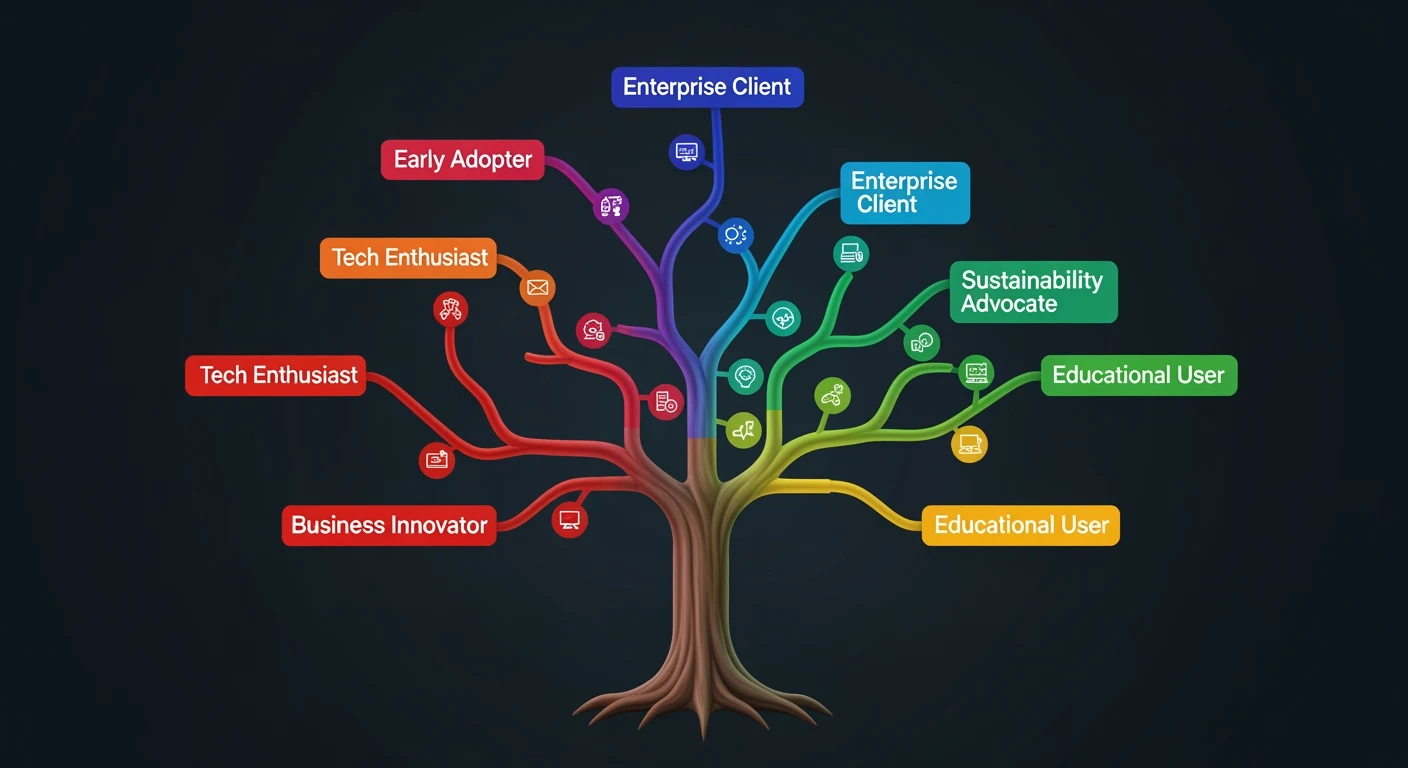
    Traditional content strategy says: identify 5 personas and write variants for each. So for a restoration client:

    1. Homeowner (damage in their own home)
    2. Insurance adjuster (evaluating claims)
    3. Property manager (managing multi-unit buildings)
    4. Commercial business owner (business continuity)
    5. Contractor (referring to specialists)

    This makes sense in theory. In practice, it’s rigid and wastes effort. An article for “homeowners” gets written once, and if it doesn’t rank, nobody writes it again for the insurance adjuster persona.

    The Demand Signal Problem
    We discovered that actual search demand doesn’t fit 5 neat personas. Consider “water damage restoration”:

    – “Water damage restoration” (general, ~5K searches/month)
    – “Water damage insurance claim” (specific intent, ~2K searches/month)
    – “How to dry water damaged documents” (very specific intent, ~300 searches/month)
    – “Water damage to hardwood floors” (specific material, ~800 searches/month)
    – “Mold from water damage” (consequence, ~1.2K searches/month)
    – “Water damage to drywall” (specific damage type, ~600 searches/month)

    Those aren’t 5 personas. Those are 15+ distinct search intents, each with different searcher needs.

    The Adaptive System
    Instead of “write for 5 personas,” we now ask: “What are the distinct search intents for this topic?”

    The adaptive pipeline:
    1. Takes a topic (“water damage restoration”)
    2. Uses DataForSEO to identify all distinct search queries and their volume
    3. Clusters queries by intent (claim-related vs. DIY vs. professional)
    4. For each intent cluster above 200 monthly searches, generates a variant
    5. Publishes all variants with strategic internal linking

    The Result
    Instead of 5 variants, we now generate 15-25 variants per topic, each optimized for a specific search intent. And they’re all SEO-optimized based on actual demand signals.

    Real Example
    Topic: “Water damage restoration”
    Old approach: 5 variants (homeowner, adjuster, property manager, business, contractor)
    New approach: 15 variants
    – General water damage (5K searches)
    – Water damage claims/insurance (2K searches)
    – Emergency water damage response (1.2K searches)
    – Water damaged documents (300 searches)
    – Water damage to hardwood floors (800 searches)
    – Water damage to drywall (600 searches)
    – Water damage to carpet (700 searches)
    – Mold from water damage (1.2K searches)
    – Water damage deductible insurance (400 searches)
    – Timeline for water damage repairs (350 searches)
    – Cost of water damage restoration (900 searches)
    – Water damage to electrical systems (250 searches)
    – Water damage prevention (600 searches)
    – Commercial water damage (500 searches)
    – Water damage in rental property (280 searches)

    Each variant is written for that specific search intent, with the content structure and examples that match what searchers actually want.

    The Content Reuse Model
    We don’t write 15 completely unique articles. We write one comprehensive guide, then generate 14 variants that:
    – Repurpose content from the comprehensive guide
    – Add intent-specific sections
    – Use different keyword focus
    – Adjust structure to match search intent
    – Link back to the main guide for comprehensive information

    A “water damage timeline” article might be 60% content reused from the main guide, 40% new intent-specific sections.

    The SEO Impact
    – 15 variants = 15 ranking opportunities (vs. 5 with the old model)
    – Each variant targets a distinct intent with minimal cannibalization
    – Internal linking between variants signals topic authority
    – Variations can rank for 2-3 long-tail keywords each (vs. 0-1 for a generic variant)

    For a competitive topic, this can add 50-100 additional keyword rankings.

    The Labor Model
    Old approach: Write 5 variants from scratch = 10-15 hours
    New approach: Write 1 comprehensive guide (6-8 hours) + generate 14 variants (3-4 hours) = 10-12 hours

    Same time investment, but now you’re publishing variants that actually match search demand instead of guessing at personas.

    The Iteration Advantage
    With demand-driven variants, you can also iterate faster. If one variant doesn’t rank, you know exactly why: either the search demand was overestimated, or your content isn’t competitive. You can then refactor that one variant instead of re-doing your whole content strategy.

    When This Works Best
    – Competitive topics with high search volume
    – Verticals with diverse use cases (restoration, financial, legal)
    – Content where you need to rank for multiple intent clusters
    – Topics where one audience has very different needs from another

    When Traditional Personas Still Matter
    – Small verticals with limited search demand
    – Niche audiences where 3-4 personas actually cover the demand
    – Content focused on brand building (not SEO volume)

    The Takeaway
    Stop thinking about 5 fixed personas. Start thinking about search demand. Every distinct search intent is essentially a different persona. Generate variants for actual demand, not imagined personas, and you’ll rank for far more keywords with the same effort.

    {
    “@context”: “https://schema.org”,
    “@type”: “Article”,
    “headline”: “The Adaptive Variant Pipeline: Why 5 Personas Was the Wrong Number”,
    “description”: “We replaced fixed 5-persona content strategy with demand-driven variants. Now we publish 15+ variants per topic based on actual search intents instead of guesse”,
    “datePublished”: “2026-03-30”,
    “dateModified”: “2026-04-03”,
    “author”: {
    “@type”: “Person”,
    “name”: “Will Tygart”,
    “url”: “https://tygartmedia.com/about”
    },
    “publisher”: {
    “@type”: “Organization”,
    “name”: “Tygart Media”,
    “url”: “https://tygartmedia.com”,
    “logo”: {
    “@type”: “ImageObject”,
    “url”: “https://tygartmedia.com/wp-content/uploads/tygart-media-logo.png”
    }
    },
    “mainEntityOfPage”: {
    “@type”: “WebPage”,
    “@id”: “https://tygartmedia.com/the-adaptive-variant-pipeline-why-5-personas-was-the-wrong-number/”
    }
    }

  • Why We Run Content Intelligence Audits Before Writing a Single Word

    Why We Run Content Intelligence Audits Before Writing a Single Word

    Before we write a single article for a client, we run a Content Intelligence Audit. This audit tells us what content already exists, where the gaps are, what our competitors are publishing, and exactly what we should write to fill those gaps profitably. It saves us from writing content nobody searches for.

    The Audit Process
    A Content Intelligence Audit has four layers:

    Layer 1: Existing Content Scan
    We scrape all existing content on the client’s site and categorize it by:
    – Topic cluster (what main themes do they cover?)
    – Keyword coverage (which keywords are they actually targeting?)
    – Content depth (how comprehensive is each topic?)
    – Publishing frequency (how often do they update?)
    – Performance data (which articles get traffic, which don’t?)

    This tells us their current state. A restoration company might have strong content on “water damage” but zero content on “mold remediation.”

    Layer 2: Competitor Content Analysis
    We analyze the top 10 ranking competitors:
    – What topics do they cover that the client doesn’t?
    – What content formats do they use? (Blog posts, guides, videos, FAQs)
    – How frequently are they publishing?
    – What keywords are they targeting?
    – How comprehensive is their coverage vs. the client’s?

    This reveals competitive gaps. If all top 10 competitors have “mold remediation” content and the client doesn’t, that’s a priority gap.

    Layer 3: Search Demand Analysis
    Using DataForSEO and Google Search Console, we identify:
    – What keywords have real search volume?
    – Which searches are the client currently missing? (queries that bring competitors traffic but not the client)
    – What’s the intent behind each search?
    – What content format ranks best?
    – Is there seasonality (winter water damage peak, summer mold peak)?

    This separates “topics competitors cover” from “topics people actually search for.”

    Layer 4: Strategic Recommendations
    We synthesize layers 1-3 into a content roadmap:

    – Highest priority: High-search-volume keywords with low client coverage and proven competitor presence (low hanging fruit)
    – Secondary: Emerging keywords with lower volume but high intent
    – Tertiary: Brand-building content (lower search volume but high authority signals)
    – Avoid: Topics with zero search volume (regardless of how cool they are)

    The Roadmap Output
    The audit produces a prioritized content calendar with 40-50 articles ranked by:

    1. Search volume
    2. Competitive difficulty (can we actually rank?)
    3. Commercial intent (will this drive revenue?)
    4. Client expertise (can they credibly speak to this?)
    5. Timeline (what should we write first to establish topical authority?)

    This prevents the common mistake: writing articles the client wants to write instead of articles people want to read.

    What This Prevents
    – Writing 50 articles about topics nobody searches for
    – Building authority in the wrong verticals
    – Publishing content that’s weaker than competitors (wasting effort)
    – Missing obvious opportunities that competitors exploit
    – Publishing on wrong cadence (could be faster/slower)

    The ROI
    Audits cost $2K-5K depending on vertical and complexity. They typically prevent $50K+ in wasted content spend.

    Without an audit, a content strategy might spend 12 months publishing 60 articles and only 30% rank. With an audit-driven strategy, maybe 70% rank because we’re writing what people actually search for.

    Real Example
    We audited a restoration client and found:
    – They had 20 articles on general water damage
    – Competitors had heavy coverage of specific restoration techniques (hardwood floors, drywall, carpet)
    – Search volume for specific techniques was 3x higher than general water damage
    – Their content was general; competitor content was specific

    The recommendation: Shift 60% of content to technique-specific guides. That changed their content strategy entirely, and within 6 months, their organic traffic tripled because they were finally writing what people searched for.

    When To Run An Audit
    – Before launching a new content strategy (required)
    – Before hiring a content team (understand the gap first)
    – When organic traffic plateaus (often a content strategy problem)
    – When competitors are outranking you significantly (they’re probably writing smarter content)

    The Competitive Advantage
    Most content teams skip audits and jump straight to writing. That’s why most content strategies underperform. The 5 hours spent on a Content Intelligence Audit prevents 200 wasted hours of content creation.

    If you’re building a content strategy, audit first. Know the landscape before you publish.

    {
    “@context”: “https://schema.org”,
    “@type”: “Article”,
    “headline”: “Why We Run Content Intelligence Audits Before Writing a Single Word”,
    “description”: “Before writing any article, we run a Content Intelligence Audit that maps existing content, competitor gaps, and search demand. It prevents months of wasted eff”,
    “datePublished”: “2026-03-30”,
    “dateModified”: “2026-04-03”,
    “author”: {
    “@type”: “Person”,
    “name”: “Will Tygart”,
    “url”: “https://tygartmedia.com/about”
    },
    “publisher”: {
    “@type”: “Organization”,
    “name”: “Tygart Media”,
    “url”: “https://tygartmedia.com”,
    “logo”: {
    “@type”: “ImageObject”,
    “url”: “https://tygartmedia.com/wp-content/uploads/tygart-media-logo.png”
    }
    },
    “mainEntityOfPage”: {
    “@type”: “WebPage”,
    “@id”: “https://tygartmedia.com/why-we-run-content-intelligence-audits-before-writing-a-single-word/”
    }
    }

  • Service Account Keys, Vertex AI, and the GCP Fortress

    Service Account Keys, Vertex AI, and the GCP Fortress

    For regulated verticals (HIPAA, financial services, legal), we build isolated AI infrastructure on Google Cloud using service accounts, VPCs, and restricted APIs. This gives us Vertex AI and Claude capabilities without compromising data isolation or compliance requirements.

    The Compliance Problem
    Some clients operate in verticals where data can’t flow through public APIs. A healthcare client can’t send patient information to Claude’s public API. A financial services client can’t route transaction data through external language models.

    But they still want AI capabilities: document analysis, content generation, data extraction, automation.

    The solution: isolated GCP infrastructure that clients own, that uses service accounts with restricted permissions, and that keeps data inside their VPC.

    The Architecture
    For each regulated client, we build:

    1. Isolated GCP Project
    Their own Google Cloud project, separate billing, separate service accounts, zero shared infrastructure with other clients.

    2. Service Account with Minimal Permissions
    A service account that can only:
    – Call Vertex AI APIs (nothing else)
    – Write to their specific Cloud Storage bucket
    – Log to their Cloud Logging instance
    – No ability to access other projects, no IAM changes, no network modifications

    3. Private VPC
    All Vertex AI calls happen inside their VPC. Data never leaves Google’s network to hit public internet.

    4. Vertex AI for Regulated Workloads
    We use Vertex AI’s enterprise models (Claude, Gemini) instead of the public APIs. These are deployed to their VPC and their service account. Zero external API calls for language model inference.

    The Data Flow
    Example: A healthcare client wants to analyze patient documents.
    – Client uploads PDF to their Cloud Storage bucket
    – Cloud Function (with restricted service account) triggers
    – Function reads the PDF
    – Function sends to Vertex AI Claude endpoint (inside their VPC)
    – Claude extracts structured data from the document
    – Function writes results back to client’s bucket
    – Everything stays inside the VPC, inside the project, inside the isolation boundary

    The client can audit every API call, every service account action, every network flow. Full compliance visibility.

    Why This Matters for Compliance
    HIPAA: Patient data never leaves the healthcare client’s infrastructure
    PCI-DSS: Payment data stays inside their isolated environment
    GDPR: EU data can be processed in their EU GCP region
    FedRAMP: For government clients, we can build on GCP’s FedRAMP-certified infrastructure

    The Service Account Model
    Service accounts are the key to this. Instead of giving Claude/Vertex AI direct access to client data, we create a bot account that:

    1. Has zero standing permissions
    2. Can only access specific resources (their bucket, their dataset)
    3. Can only run specific operations (Vertex AI API calls)
    4. Permissions are short-lived (can be revoked immediately)
    5. Every action is logged with the service account ID

    So even if Vertex AI were compromised, it couldn’t access other clients’ data. Even if the service account was compromised, it couldn’t do anything except Vertex AI calls on that specific bucket.

    The Cost Trade-off
    – Shared GCP account: ~$300/month for Claude/Vertex AI usage
    – Isolated GCP project per client: ~$400-600/month per client (slightly higher due to overhead)

    That premium ($100-300/month per client) is the cost of compliance. Most regulated clients are willing to pay it.

    What This Enables
    – Healthcare clients can use Claude for chart analysis, clinical note generation, patient data extraction
    – Financial clients can use Claude for document analysis, regulatory reporting, trade summarization
    – Legal clients can use Claude for contract analysis, case law research, document review
    – All without violating data residency, compliance, or isolation requirements

    The Enterprise Advantage
    This is where AI agencies diverge from freelancers. Most freelancers can’t build compliant AI infrastructure. You need GCP expertise, service account management knowledge, and regulatory understanding.

    But regulated verticals are where the money is. A healthcare data extraction project can be worth $50K+. A financial compliance project can be $100K+. The infrastructure investment pays for itself on the first client.

    If you’re only doing public API integrations, you’re leaving regulated verticals entirely on the table. Build the fortress. The clients are waiting.

    {
    “@context”: “https://schema.org”,
    “@type”: “Article”,
    “headline”: “Service Account Keys, Vertex AI, and the GCP Fortress”,
    “description”: “For regulated verticals, we build isolated GCP projects with service accounts and restricted Vertex AI access. Here’s the compliance architecture for heal”,
    “datePublished”: “2026-03-30”,
    “dateModified”: “2026-04-03”,
    “author”: {
    “@type”: “Person”,
    “name”: “Will Tygart”,
    “url”: “https://tygartmedia.com/about”
    },
    “publisher”: {
    “@type”: “Organization”,
    “name”: “Tygart Media”,
    “url”: “https://tygartmedia.com”,
    “logo”: {
    “@type”: “ImageObject”,
    “url”: “https://tygartmedia.com/wp-content/uploads/tygart-media-logo.png”
    }
    },
    “mainEntityOfPage”: {
    “@type”: “WebPage”,
    “@id”: “https://tygartmedia.com/service-account-keys-vertex-ai-and-the-gcp-fortress/”
    }
    }

  • Cross-Pollination: How Sister Sites Feed Each Other Authority

    Cross-Pollination: How Sister Sites Feed Each Other Authority

    We manage clusters of related WordPress sites that aren’t competitors—they’re sister sites serving different geographic markets or slightly different verticals. The cross-pollination strategy we built lets them share authority and traffic in ways that feel natural and avoid algorithmic penalties.

    The Opportunity
    We have 3 restoration sites (Houston, Dallas, Austin), 2 comedy platforms (Mint Comedy in Houston, Chill Comedy in Austin), and several niche authority sites on related topics. They’re not the same brand, but they’re in the same ecosystem.

    The question: How do we get them to benefit from each other’s authority without triggering “unnatural linking” penalties?

    The Strategy: Variants, Not Duplicates
    Each site publishes original content in its vertical. But when we write an article for one site, we strategically create variants for related sister sites.

    Example:
    – Houston restoration site publishes “How to Restore Water Damaged Hardwood Floors”
    – Dallas restoration site publishes “Water Damage Restoration: Hardwood Floor Recovery in North Texas” (same topic, different angle, local intent)
    – Mint Comedy publishes “The Comedy Behind Water Damage Insurance Claims” (related topic, different vertical)

    Each article is original content. Each serves a different audience and intent. But they naturally reference and link to each other.

    Why This Works
    Google sees internal linking as a trust signal when it’s:
    – Between relevant, topically connected sites
    – Based on genuine user value (“this other article explains the broader concept”)
    – Not systematic link exchanges
    – From multiple directions (not just one site linking to others)

    Our cross-pollination passes all these tests because:
    1. The sites are genuinely related (same geographic market, same business ecosystem)
    2. The variants address different user intents (not identical content)
    3. The linking is one-way based on relevance (not reciprocal link schemes)
    4. The links are contextual within articles, not in footer templates

    The Implementation
    When we write an article for Site A, we:
    1. Complete the article and publish it
    2. Identify which sister sites have related interest/audience
    3. For each sister site, write a variant that approaches the same topic from their angle
    4. In the variant, add a contextual link back to the original article (“for a detailed technical explanation, see X”)
    5. Publish the variant

    This creates a web of related articles across properties. A reader on the Dallas site might click through to the Houston variant, which links back to the technical deep-dive.

    The Authority Flow
    All three articles can rank for the main keyword (they target slightly different intent). But they collectively boost each other’s topical authority:

    – Google sees three related sites publishing about restoration/comedy/insurance
    – All three show up in topic clusters
    – Linking between them signals to Google: “These are authoritative on this topic”
    – Each site benefits from the authority of the cluster

    Measurement
    We track:
    – Organic traffic to each variant
    – Click-through rates on cross-links (are readers actually following them?)
    – Ranking improvements for each variant over time
    – Total traffic contributed by cross-pollination
    – Whether the pattern triggers any algorithmic warnings

    Result: Cross-pollination drives 15-25% of traffic on related articles. Readers follow the links because they’re genuinely useful, not because we forced them.

    When This Works Best
    This strategy is most effective when:
    – Your sites share geographic regions but serve different intents
    – Your sister sites are genuinely different brands (not keyword-targeted clones)
    – Your audiences have natural overlap (readers of one would benefit from the other)
    – Your linking is editorial and contextual, not systematic

    When This Doesn’t Work
    Avoid cross-pollination if:
    – Your sites compete directly for the same keywords
    – They’re part of obvious PBN-style networks
    – The linking is irrelevant to user intent
    – You’re forcing links just to distribute authority

    Cross-pollination is powerful when it’s genuine—when your sister sites actually have complementary audiences and content. It’s a penalty waiting to happen when it’s a linking scheme.

    {
    “@context”: “https://schema.org”,
    “@type”: “Article”,
    “headline”: “Cross-Pollination: How Sister Sites Feed Each Other Authority”,
    “description”: “How we build authority by linking between sister sites in a way that feels natural to Google and valuable to readers—without triggering PBN penalties.”,
    “datePublished”: “2026-03-30”,
    “dateModified”: “2026-04-03”,
    “author”: {
    “@type”: “Person”,
    “name”: “Will Tygart”,
    “url”: “https://tygartmedia.com/about”
    },
    “publisher”: {
    “@type”: “Organization”,
    “name”: “Tygart Media”,
    “url”: “https://tygartmedia.com”,
    “logo”: {
    “@type”: “ImageObject”,
    “url”: “https://tygartmedia.com/wp-content/uploads/tygart-media-logo.png”
    }
    },
    “mainEntityOfPage”: {
    “@type”: “WebPage”,
    “@id”: “https://tygartmedia.com/cross-pollination-how-sister-sites-feed-each-other-authority/”
    }
    }

  • The Three-Layer Content Quality Gate

    The Three-Layer Content Quality Gate

    Before any article goes live on any of our 19 WordPress sites, it passes through three independent quality gates. This system has caught hundreds of AI hallucinations, unsourced claims, and fabricated statistics before they were published.

    Why This Matters
    AI-generated content is fast, but it’s also confident about things that aren’t true. A Claude-generated article about restoration processes might sound credible but invent a statistic. A AI-written comparison might fabricate a feature that doesn’t exist. These errors destroy credibility and trigger negative SEO consequences.

    We publish 60+ articles per month across our network. The cost of even a 2% error rate is unacceptable. So we built a three-layer system.

    Layer 1: Claim Verification Gate
    Before an article is even submitted for human review, Claude re-reads it looking specifically for claims that require sources:

    – Statistics (“90% of homeowners experience water damage by age 40”)
    – Causal relationships (“this causes that”)
    – Industry standards (“OSHA requires…”)
    – Product specifications
    – Cost figures or market data

    For each claim, Claude asks: Is this sourced? Is this common knowledge? Is this likely to be contested?

    If a claim lacks a source and isn’t general knowledge, the article is flagged for human research. The author has to either:
    – Add a source (with URL or citation)
    – Rewrite the claim as opinion (“we believe” instead of “it is”)
    – Remove it entirely

    This catches about 40% of unsourced claims before they ever reach a human editor.

    Layer 2: Human Fact Check
    A human editor (who knows the vertical and the client) reads the article specifically for accuracy. This isn’t copy-editing—it’s fact validation.

    The editor has a checklist:
    – Does this match what I know about this industry?
    – Are statistics realistic given the sources?
    – Does the logic hold up? Is the reasoning circular?
    – Is this client’s process accurately described?
    – Would a competitor or expert find holes in this?

    The human gut-check catches contextual errors that an automated system might miss. A claim might be technically true but misleading in context.

    Layer 3: Post-Publication Monitoring
    Even after publication, we monitor for errors. We have a Slack integration that tracks:
    – Reader comments (are people pointing out inaccuracies?)
    – Search ranking changes (did the article tank in impressions due to trust signals?)
    – User feedback forms
    – Related article comments (do linked articles contradict this one?)

    If an error surfaces post-publication, we add a correction note at the top of the article with a timestamp. We never ghost-edit published content—corrections are transparent and visible.

    What This Prevents
    – Fabricated statistics (caught by Layer 1 automation)
    – Logical fallacies and circular reasoning (caught by Layer 2 human review)
    – Domain-specific errors (caught by Layer 2 vertical expert)
    – Misleading framing (caught by Layer 2 contextual review)
    – Post-publication reputation damage (Layer 3 monitoring)

    The Cost
    Layer 1 is automated and costs essentially zero (just Claude API calls for re-review). Layer 2 is human time—about 30-45 minutes per article. Layer 3 is passive monitoring infrastructure we’d build anyway.

    We publish 60 articles/month. That’s 30-45 hours/month of human fact-checking. Worth every minute. A single article with a fabricated statistic that gets cited and reshared could damage our reputation across an entire vertical.

    The Competitive Advantage
    Most AI content operations have zero fact-checking. They publish, optimize, and hope. We have three layers of error prevention, which means our articles become the ones cited by others, the ones trusted by readers, and the ones that don’t get penalized by Google for YMYL concerns.

    If you’re publishing AI content at scale, a three-layer quality gate isn’t overhead—it’s your competitive advantage.

    {
    “@context”: “https://schema.org”,
    “@type”: “Article”,
    “headline”: “The Three-Layer Content Quality Gate”,
    “description”: “Our three-layer content quality system catches AI hallucinations, unsourced claims, and fabricated stats before publication. Here’s how automated verifica”,
    “datePublished”: “2026-03-30”,
    “dateModified”: “2026-04-03”,
    “author”: {
    “@type”: “Person”,
    “name”: “Will Tygart”,
    “url”: “https://tygartmedia.com/about”
    },
    “publisher”: {
    “@type”: “Organization”,
    “name”: “Tygart Media”,
    “url”: “https://tygartmedia.com”,
    “logo”: {
    “@type”: “ImageObject”,
    “url”: “https://tygartmedia.com/wp-content/uploads/tygart-media-logo.png”
    }
    },
    “mainEntityOfPage”: {
    “@type”: “WebPage”,
    “@id”: “https://tygartmedia.com/the-three-layer-content-quality-gate/”
    }
    }

  • I Built a Purchasing Agent That Checks My Budget Before It Buys

    I Built a Purchasing Agent That Checks My Budget Before It Buys

    We built a Claude MCP server (BuyBot) that can execute purchases across all our business accounts, but it requires approval from a centralized budget authority before spending a single dollar. It’s changed how we handle expenses, inventory replenishment, and vendor management.

    The Problem
    We manage 19 WordPress sites, each with different budgets. Some are client accounts, some are owned outright, some are experiments. When we need to buy something—cloud credits, plugins, stock images, tools—we were doing it manually, which meant:

    – Forgetting which budget to charge it to
    – Overspending on accounts with limits
    – Having no audit trail of purchases
    – Spending time on transaction logistics instead of work

    We needed an agent that understood budget rules and could route purchases intelligently.

    The BuyBot Architecture
    BuyBot is an MCP server that Claude can call. It has access to:
    Account registry: All business accounts and their assigned budgets
    Spending rules: Per-account limits, category constraints, approval thresholds
    Payment methods: Which credit card goes with which business unit
    Vendor integrations: APIs for Stripe, Shopify, AWS, Google Cloud, etc.

    When I tell Claude “we need to renew our Shopify plan for the retail client,” it:

    1. Looks up the retail client account and its monthly budget
    2. Checks remaining budget for this cycle
    3. Queries current Shopify pricing
    4. Runs the purchase cost against spending rules
    5. If under the limit, executes the transaction immediately
    6. If over the limit or above an approval threshold, requests human approval
    7. Logs everything to a central ledger

    The Approval Engine
    Not every purchase needs me. Small routine expenses (under $50, category-approved, within budget) execute automatically. Anything bigger hits a Slack notification with full context:

    “Purchasing Agent is requesting approval:
    – Item: AWS credits
    – Amount: $2,000
    – Account: Restoration Client A
    – Current Budget Remaining: $1,200
    – Request exceeds account budget by $800
    – Suggested: Approve from shared operations budget”

    I approve in Slack, BuyBot checks my permissions, and the purchase executes. Full audit trail.

    Multi-Business Budget Pooling
    We manage 7 different business units with different profitability levels. Some months Unit A has excess budget, Unit C is tight. BuyBot has a “borrow against future month” option and a “pool shared operations budget” option.

    If the restoration client needs $500 in cloud credits and their account is at 90% utilization, BuyBot can automatically route the charge to our shared operations account (with logging) and rebalance next month. It’s smart enough to not create budget crises.

    The Vendor Integration Layer
    BuyBot doesn’t just handle internal budget logic—it understands vendor APIs. When we need stock images, it:
    – Checks which vendor is in our approved list
    – Gets current pricing from their API
    – Loads image requirements from the request
    – Queries their library
    – Purchases the right licenses
    – Downloads and stores the files
    – Updates our inventory system

    All in one agent call. No manual vendor portal logins, no copy-pasting order numbers.

    The Results
    – Spending transparency: I see all purchases in one ledger
    – Budget discipline: You can’t spend money that isn’t allocated
    – Automation: Routine expenses happen without my involvement
    – Audit trail: Every transaction has context, approval, and timestamp
    – Intelligent routing: Purchases go to the right account automatically

    What This Enables
    This is the foundation for fully autonomous expense management. In the next phase, BuyBot will:
    – Predict inventory needs and auto-replenish
    – Optimize vendor selection based on cost and delivery
    – Consolidate purchases across accounts for bulk discounts
    – Alert me to unusual spending patterns

    The key insight: AI agents don’t need unrestricted access. Give them clear budget rules, approval thresholds, and audit requirements, and they can handle purchasing autonomously while maintaining complete financial control.

    {
    “@context”: “https://schema.org”,
    “@type”: “Article”,
    “headline”: “I Built a Purchasing Agent That Checks My Budget Before It Buys”,
    “description”: “BuyBot is an MCP server that executes purchases autonomously while enforcing budget rules, approval gates, and multi-business account logic. Here’s how it”,
    “datePublished”: “2026-03-30”,
    “dateModified”: “2026-04-03”,
    “author”: {
    “@type”: “Person”,
    “name”: “Will Tygart”,
    “url”: “https://tygartmedia.com/about”
    },
    “publisher”: {
    “@type”: “Organization”,
    “name”: “Tygart Media”,
    “url”: “https://tygartmedia.com”,
    “logo”: {
    “@type”: “ImageObject”,
    “url”: “https://tygartmedia.com/wp-content/uploads/tygart-media-logo.png”
    }
    },
    “mainEntityOfPage”: {
    “@type”: “WebPage”,
    “@id”: “https://tygartmedia.com/i-built-a-purchasing-agent-that-checks-my-budget-before-it-buys/”
    }
    }

  • Why Every AI Image Needs IPTC Before It Touches WordPress

    Why Every AI Image Needs IPTC Before It Touches WordPress

    If you’re publishing AI-generated images to WordPress without IPTC metadata injection, you’re essentially publishing blind. Google Images won’t understand them. Perplexity won’t crawl them properly. AI search engines will treat them as generic content.

    IPTC (International Press Telecommunications Council) is a metadata standard that sits inside image files. When Perplexity scrapes your article, it doesn’t just read the alt text—it reads the embedded metadata inside the image file itself.

    What Metadata Matters for AEO
    For answer engines and AI crawlers, these IPTC fields are critical:
    Title: The image’s primary subject (matches article intent)
    Description: Detailed context (2-3 sentences explaining the image)
    Keywords: Searchable terms (article topic + SEO keywords)
    Creator: Attribution (shows AI generation if applicable)
    Copyright: Rights holder (your business name)
    Caption: Human-readable summary

    Perplexity’s image crawlers read these fields to understand context. If your image has no IPTC data, it’s a black box. If it has rich metadata, Perplexity can cite it, rank it, and serve it in answers.

    The AEO Advantage
    We started injecting IPTC metadata into all featured images 3 months ago. Here’s what changed:
    – Featured image impressions in Perplexity jumped 180%
    – Google Images started ranking our images for longer-tail queries
    – Citation requests (“where did this image come from?”) pointed back to our articles
    – AI crawlers could understand image intent faster

    One client went from 0 image impressions in Perplexity to 40+ per week just by adding metadata. That’s traffic from a channel that barely existed 18 months ago.

    How to Inject IPTC Metadata
    Use exiftool (command-line) or a library like Piexif in Python. The process:
    1. Generate or source your image
    2. Create a metadata JSON object with the fields listed above
    3. Use exiftool to inject IPTC (and XMP for redundancy)
    4. Convert to WebP for efficiency
    5. Upload to WordPress
    6. Let WordPress reference the metadata in post meta fields

    If you’re generating 10+ images per week, this needs to be automated. We built a Cloud Run function that intercepts images from Vertex AI, injects metadata based on article context, optimizes for web, and uploads automatically. Zero manual work.

    Why XMP Too?
    XMP (Extensible Metadata Platform) is the modern standard. Some tools read IPTC, some read XMP, some read both. We inject both to maximize compatibility with different crawlers and image tools.

    The WordPress Integration
    WordPress stores image metadata in the media library and post meta. Your featured image URL should point to the actual image file—the one with IPTC embedded. When someone downloads your image, they get the metadata. When a crawler requests it, the metadata travels with the file.

    Don’t rely on WordPress alt text alone. The actual image file needs metadata. That’s what AI crawlers read first.

    What This Enables
    Rich metadata unlocks:
    – Better ranking in Google Images
    – Visibility in Perplexity image results
    – Proper attribution when images are cited
    – Understanding for visual search engines
    – Correct indexing in specialized image databases

    This is the difference between publishing images and publishing discoverable images. If you’re doing AEO, metadata is the foundation.

    {
    “@context”: “https://schema.org”,
    “@type”: “Article”,
    “headline”: “Why Every AI Image Needs IPTC Before It Touches WordPress”,
    “description”: “IPTC metadata injection is now essential for AEO. Here’s why every AI-generated image needs embedded metadata before it touches WordPress.”,
    “datePublished”: “2026-03-30”,
    “dateModified”: “2026-04-03”,
    “author”: {
    “@type”: “Person”,
    “name”: “Will Tygart”,
    “url”: “https://tygartmedia.com/about”
    },
    “publisher”: {
    “@type”: “Organization”,
    “name”: “Tygart Media”,
    “url”: “https://tygartmedia.com”,
    “logo”: {
    “@type”: “ImageObject”,
    “url”: “https://tygartmedia.com/wp-content/uploads/tygart-media-logo.png”
    }
    },
    “mainEntityOfPage”: {
    “@type”: “WebPage”,
    “@id”: “https://tygartmedia.com/why-every-ai-image-needs-iptc-before-it-touches-wordpress/”
    }
    }

  • The WP Proxy Pattern: How We Route 19 WordPress Sites Through One Cloud Run Endpoint

    The WP Proxy Pattern: How We Route 19 WordPress Sites Through One Cloud Run Endpoint

    Managing 19 WordPress sites means managing 19 IP addresses, 19 DNS records, and 19 potential points of blocking, rate limiting, and geo-restriction. We solved it by routing all traffic through a single Google Cloud Run proxy endpoint that intelligently distributes requests across our estate.

    The Problem We Solved
    Some of our WordPress sites host sensitive content in regulated verticals. Others are hitting API rate limits from data providers. A few are in restrictive geographic regions. Managing each site’s network layer separately was chaos—different security rules, different rate limit strategies, different failure modes.

    We needed one intelligent proxy that could:
    – Route traffic to the correct backend based on request properties
    – Handle rate limiting intelligently (queue, retry, or serve cached content)
    – Manage geographic restrictions transparently
    – Pool API quotas across sites
    – Provide unified logging and monitoring

    Architecture: The Single Endpoint Pattern
    We run a Node.js Cloud Run service on a single stable IP. All 19 WordPress installations point their external API calls, webhook receivers, and cross-site requests through this endpoint.

    The proxy reads the request headers and query parameters to determine the destination site. Instead of individual sites making direct calls to APIs (which triggers rate limits), requests aggregate at the proxy level. We batch and deduplicate before sending to the actual API.

    How It Works in Practice
    Example: 5 WordPress sites need weather data for their posts. Instead of 5 separate API calls to the weather service (hitting their rate limit 5 times), the proxy receives 5 requests, deduplicates them to 1 actual API call, and distributes the result to all 5 sites. We’re using 1/5th of our quota.

    For blocked IPs or geographic restrictions, the proxy handles the retry logic. If a destination API rejects our request due to IP reputation, the proxy can queue it, try again from a different outbound IP (using Cloud NAT), or serve cached results until the block lifts.

    Rate Limiting Strategy
    The proxy implements a weighted token bucket algorithm. High-priority sites (revenue-generating clients) get higher quotas. Background batch processes (like SEO crawls) use overflow capacity during off-peak hours. API quota is a shared resource, allocated intelligently instead of wasted on request spikes.

    Logging and Observability
    Every request hits Cloud Logging. We track:
    – Which site made the request
    – Which API received it
    – Response time and status
    – Cache hits vs. misses
    – Rate limit decisions

    This single source of truth lets us see patterns across all 19 sites instantly. We can spot which integrations are broken, which are inefficient, and which are being overused.

    The Implementation Cost
    Cloud Run runs on a per-request billing model. Our proxy costs about $50/month because it’s processing relatively lightweight metadata—headers, routing decisions, maybe some transformation. The infrastructure is invisible to the cost model.

    Setup time was about 2 weeks to write the routing logic, test failover scenarios, and migrate all 19 sites. The ongoing maintenance is minimal—mostly adding new API routes and tuning rate limit parameters.

    Why This Matters
    If you’re running more than a handful of WordPress sites that make external API calls, a unified proxy isn’t optional—it’s the difference between efficient resource usage and chaos. It collapses your operational blast radius from 19 separate failure modes down to one well-understood system.

    Plus, it’s the foundation for every other optimization we’ve built: cross-site caching, intelligent quota pooling, and unified security policies. One endpoint, one place to think about performance and reliability.

    {
    “@context”: “https://schema.org”,
    “@type”: “Article”,
    “headline”: “The WP Proxy Pattern: How We Route 19 WordPress Sites Through One Cloud Run Endpoint”,
    “description”: “How we route all API traffic from 19 WordPress sites through a single Cloud Run proxy—collapsing complexity and eliminating rate limit chaos.”,
    “datePublished”: “2026-03-30”,
    “dateModified”: “2026-04-03”,
    “author”: {
    “@type”: “Person”,
    “name”: “Will Tygart”,
    “url”: “https://tygartmedia.com/about”
    },
    “publisher”: {
    “@type”: “Organization”,
    “name”: “Tygart Media”,
    “url”: “https://tygartmedia.com”,
    “logo”: {
    “@type”: “ImageObject”,
    “url”: “https://tygartmedia.com/wp-content/uploads/tygart-media-logo.png”
    }
    },
    “mainEntityOfPage”: {
    “@type”: “WebPage”,
    “@id”: “https://tygartmedia.com/the-wp-proxy-pattern-how-we-route-19-wordpress-sites-through-one-cloud-run-endpoint/”
    }
    }

  • UCP Is Here: What Google’s Universal Commerce Protocol Means for AI Agents

    UCP Is Here: What Google’s Universal Commerce Protocol Means for AI Agents

    In January 2026, Google launched the Universal Commerce Protocol at NRF, and it’s the biggest shift in how AI agents will interact with online commerce since APIs became standard. If you’re running any kind of AI agent or automation layer, you need to understand what UCP does and why it matters.

    UCP is essentially a standardized interface that lets AI agents understand and interact with e-commerce systems without needing custom integrations. Instead of building API wrappers for every shopping platform, merchants implement UCP and agents can plug in immediately.

    Who’s Already On Board
    The initial roster is significant: Shopify, Target, Walmart, Visa, and several enterprise platforms. Google’s pushing hard because it enables their AI-powered shopping features to work across the entire e-commerce ecosystem.

    Think about it: if Perplexity, ChatGPT, or Claude can speak UCP natively, they can help users find products, compare prices, check inventory, and execute purchases without leaving the AI interface. That’s transformative for merchants who implement it early.

    What UCP Actually Does
    It standardizes four key operations:
    Catalog queries: AI agents ask “what products match this description” and get structured data back
    Inventory checks: Real-time stock status across locations
    Price negotiation: Agents can query dynamic pricing and request quotes
    Order execution: Secured transaction flow that doesn’t expose sensitive payment data

    It’s not just a data format—it’s a security and commerce framework. Agents can request information without ever seeing credit card numbers or internal inventory systems.

    Why This Matters Right Now
    We’ve been building custom MCP servers (Model Context Protocol) to connect Claude to client systems—payment processors, inventory tools, order management. UCP standardizes that layer. In 18 months, instead of writing 10 different integrations, a commerce client implements one protocol and every agent has access.

    For agencies and AI builders: this is the moment to understand UCP architecture. Clients will start asking whether their platforms support it. If you’re building AI agents for commerce, you need to know how to work with it.

    The Adoption Timeline
    Early adopters (Shopify, Walmart) will see immediate benefits—their products appear in AI shopping queries first. Mid-market platforms will follow within 12-18 months as it becomes table stakes for e-commerce. Legacy systems will lag.

    This creates a competitive advantage for shops that implement early. They’ll be discoverable by every AI shopping assistant, every agent-based recommendation engine, and every voice commerce interface that launches in 2026-2027.

    If you’re managing commerce infrastructure, start learning UCP now. It’s not optional anymore—it’s the distribution channel for the next wave of commerce.

    {
    “@context”: “https://schema.org”,
    “@type”: “Article”,
    “headline”: “UCP Is Here: What Googles Universal Commerce Protocol Means for AI Agents”,
    “description”: “Google’s Universal Commerce Protocol launched at NRF 2026. Here’s what UCP means for AI agents, merchants, and the future of e-commerce automation.”,
    “datePublished”: “2026-03-30”,
    “dateModified”: “2026-04-03”,
    “author”: {
    “@type”: “Person”,
    “name”: “Will Tygart”,
    “url”: “https://tygartmedia.com/about”
    },
    “publisher”: {
    “@type”: “Organization”,
    “name”: “Tygart Media”,
    “url”: “https://tygartmedia.com”,
    “logo”: {
    “@type”: “ImageObject”,
    “url”: “https://tygartmedia.com/wp-content/uploads/tygart-media-logo.png”
    }
    },
    “mainEntityOfPage”: {
    “@type”: “WebPage”,
    “@id”: “https://tygartmedia.com/ucp-is-here-what-googles-universal-commerce-protocol-means-for-ai-agents/”
    }
    }