Tag: Tygart Media

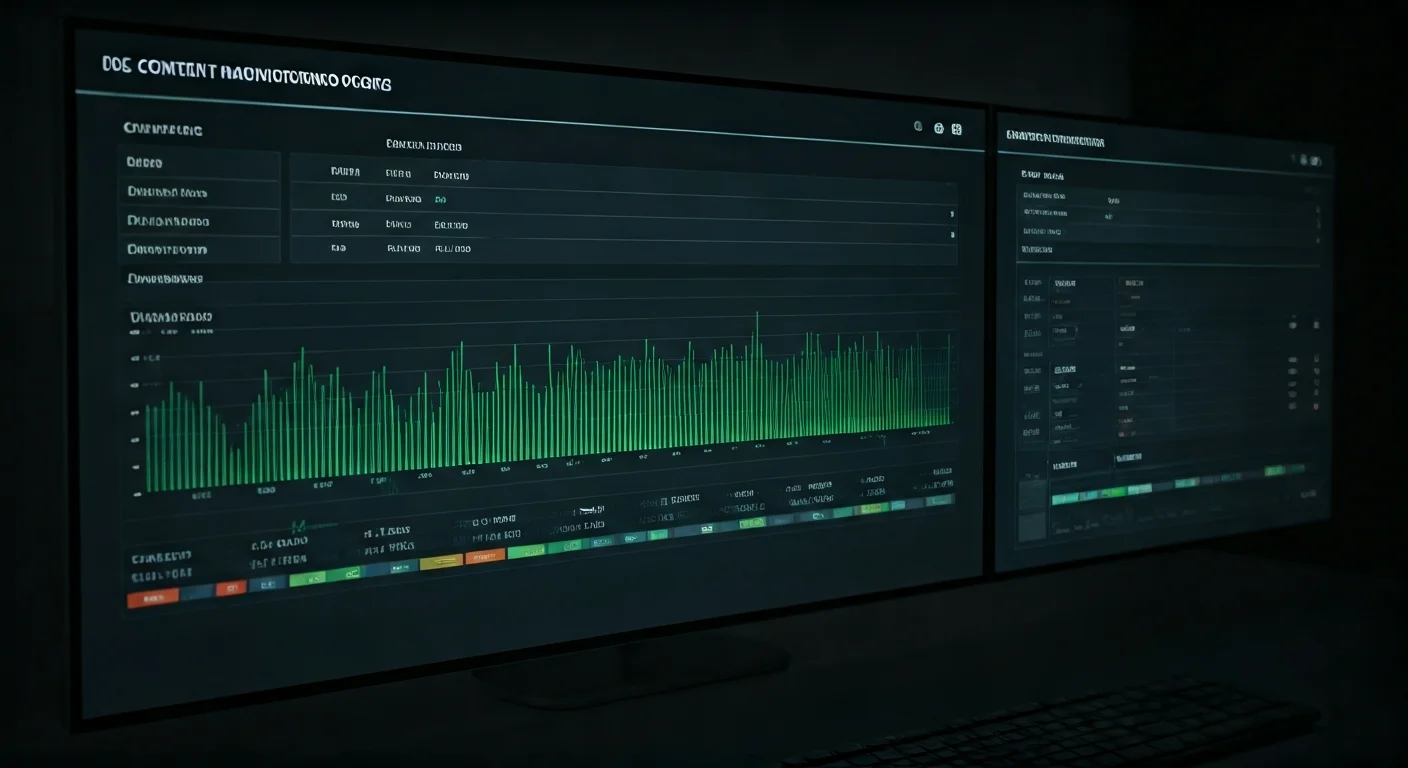
  • The Living Monitor: How to Track Whether AI Systems Are Actually Citing Your Content

    The Living Monitor: How to Track Whether AI Systems Are Actually Citing Your Content

    TL;DR: The Living Monitor is a real-time system that tracks whether your content is being cited by AI systems (ChatGPT, Gemini, Perplexity, Claude). It measures: citation frequency, which AI systems are citing you, which specific claims are cited, competitor displacement, and citation accuracy. Without monitoring, you’re flying blind. With it, you see exactly where your content wins and where competitors dominate—enabling rapid optimization.

    The Problem: You Can’t Improve What You Can’t Measure

    In the Google era, you had rank tracking. You knew exactly which keywords you ranked for, what position, how you compared to competitors. Tools like Semrush and Ahrefs gave you complete visibility.

    Now, with AI-driven search, you have zero visibility into what’s happening. You don’t know if your content is being cited. Which AI systems cite you? Which competitors are cited more frequently? Which of your claims get pulled into AI responses?

    You’re optimizing for something you can’t measure. That’s backwards.

    The Living Monitor solves this. It’s a real-time tracking system that tells you: Am I being cited by AI systems? How often? By which systems? Where am I winning? Where am I losing?

    What the Living Monitor Tracks

    Citation Frequency

    How many times per day/week/month is your content cited by AI systems? Track this for:

    • Overall brand citations
    • Per-article citations
    • Competitor citations (for comparison)
    • Citation growth rate (are you trending up?)

    You’ll immediately see patterns. Articles optimized for lore get cited 10-50x per day. Traditional blog posts get cited 0-2x per day. This visibility lets you double down on what works.

    AI System Breakdown

    Different AI systems cite differently. Track your citations by system:

    • ChatGPT (largest user base, highest citation volume)
    • Gemini (second-largest, growing)
    • Perplexity (specialized, searcher audience)
    • Claude (technical audience, enterprise)
    • Others (Copilot, Grok, etc.)

    You’ll likely find asymmetric dominance. Maybe Claude cites you heavily (technical audience), but Gemini ignores you (consumer audience). This tells you where to optimize your content strategy.

    Claim-Level Citations

    Which specific claims from your content get cited? Track this at the sentence level. Example:

    Article: “Data teams spend 43% of time on prep. Modern data warehouses cost $50K/month. ROI appears at 18 months.”

    Monitor output: “Claim 1 cited 127 times. Claim 2 cited 3 times. Claim 3 never cited.”

    This precision tells you: Specific claims drive citations. Generic claims don’t. Optimize by doubling down on high-citation claims and cutting low-citation ones.

    Competitive Displacement

    When an AI system could cite either you or a competitor, who wins? Track this explicitly:

    • In queries about topic X, are you cited more than competitor A?
    • Is your citation frequency growing faster than theirs?
    • Are you displacing them, or are they displacing you?

    This is your actual competitive metric. Not rank position. Citation dominance.

    Citation Accuracy

    When you’re cited, is the attribution correct? Does the AI system quote you accurately? Is the context preserved? Track:

    • Citations with correct attribution
    • Misquotes or contextual distortions
    • Attribution omissions (your claim cited but not attributed to you)

    High misquote rates suggest your content is being paraphrased (losing attribution). This is a sign your content needs to be more quotable (more lore-like).

    How the Living Monitor Works

    The technical architecture is straightforward:

    1. Content Fingerprinting

    Identify your key claims. Extract them as semantic signatures. Example: “Data preparation consumes 43% of analyst time” becomes a fingerprint. Your system learns this claim and its variants.

    2. AI System Monitoring

    Use APIs and web scrapers to monitor responses from ChatGPT, Gemini, Perplexity, Claude. When these systems generate responses to queries related to your domain, capture them.

    3. Claim Detection

    Use semantic similarity (embeddings) to detect when your claims appear in AI responses. Similarity matching catches paraphrases, not just exact quotes.

    4. Attribution Verification

    Check whether your brand/site is mentioned in the context of the cited claim. Track if attribution is present, accurate, or omitted.

    5. Real-Time Dashboarding

    Aggregate all this data into dashboards showing: total daily citations, breakdown by AI system, breakdown by claim, competitive displacement, trends.

    Interpretation: What the Data Tells You

    High Citation Frequency (100+ per day)

    Your content is canonical source material in your domain. AI systems treat you as authoritative. Double down on this. Deepen your lore. Expand to adjacent topics. You’re winning.

    Low Citation Frequency (0-10 per day)

    Your content is being read but not cited. Either: (a) it’s not dense enough (lacks lore characteristics), (b) competitors have more authoritative content, or (c) your content is not aligned with common queries. Run audit: is your content machine-readable? Is it as dense as competitors’?

    Asymmetric System Citations

    Example: High ChatGPT citations, zero Gemini citations. This suggests your content aligns with one system’s training data or query patterns but not others. Investigate: does your content use technical jargon that ChatGPT understands but Gemini doesn’t? Is your domain underrepresented in Gemini’s training? Adjust accordingly.

    Claim-Level Patterns

    If specific claims get cited 100x more than others, those claims are winning. Understand why. Are they more specific? More surprising? More authoritative? Use this to train your lore-writing process.

    Competitive Displacement Trends

    If you’re gaining citations while competitors lose, you’re winning the market. If competitors are gaining while you stagnate, your content strategy needs adjustment.

    Real Example: Data Analytics Company

    Company: “Modern Analytics” (data platform). Topic: ROI of modern data warehouses.

    Before Living Monitor (flying blind):

    They published 8 articles about data warehouse ROI. No visibility into which were cited, how often, by which systems. Assumed all equally valuable.

    After Living Monitor (first 30 days):

    Found: Article 1 cited 312 times. Article 2 cited 4 times. Article 3 cited 89 times. Articles 4-8 cited 0 times.

    Breakdown: ChatGPT (198 citations), Gemini (67), Perplexity (43), Claude (4).

    Claim analysis: “Modern data warehouses cost $50K-$200K/month” cited 189 times. “Set up Snowflake in 6 steps” cited 0 times.

    Competitive analysis: Versus Databricks (competitor): Modern Analytics cited in 67% of responses. Databricks in 33%. Modern Analytics winning displacement.

    Action Taken:

    1. Killed articles 4-8 (no citations, low quality).
    2. Expanded Article 1 (312 citations, clearly resonant).
    3. Rebuilt Article 2 with higher lore density (4 citations = too shallow).
    4. Created 5 new articles following the structure of Article 1 (claims over tutorials).
    5. Optimized for Gemini (only 67 citations vs ChatGPT’s 198; growth opportunity).

    After 90 days (with optimization):

    Total citations: 4,200 (up from 400). ChatGPT: 2,400. Gemini: 1,200 (3-4x growth). Competitive displacement: Modern Analytics now cited in 81% of relevant responses.

    Result: 3-5x increase in qualified traffic from AI systems (users referred by AI system citations).

    Implementing the Living Monitor

    Option 1: Build In-House

    You’ll need: API access to major AI systems (ChatGPT, Gemini offer APIs; others require scraping). Semantic fingerprinting (embeddings). Real-time monitoring infrastructure. Data aggregation and dashboarding.

    Timeline: 6-12 weeks for MVP. Cost: $50-150K (depending on scale).

    Option 2: Use Existing Tools

    Several AI monitoring platforms are emerging (e.g., Brand monitoring tools that track AI citations). They’re not perfect—coverage is limited, data is usually delayed by 24-48 hours—but they’re faster to implement.

    Option 3: Hybrid

    Use existing tools for baseline monitoring. Build in-house systems for deeper claim-level analysis on your top-10 articles.

    The Competitive Advantage Is Temporary

    Right now (2026), most brands have zero visibility into AI citations. They’re optimizing without data. This is a massive advantage for anyone with a Living Monitor.

    In 18-24 months, monitoring will be standard. Every brand will have visibility. The advantage will diminish.

    But for the next 12 months, if you’re the only brand in your market with a Living Monitor, you’ll see patterns competitors miss. You’ll optimize faster. You’ll win.

    Start now. Read the pillar guide, then implement the Living Monitor. Track your baseline. Start optimizing. Watch your AI citation frequency compound.

    {
    “@context”: “https://schema.org”,
    “@type”: “Article”,
    “headline”: “The Living Monitor: How to Track Whether AI Systems Are Actually Citing Your Content”,
    “description”: “Real-time monitoring of AI citations across ChatGPT, Gemini, Perplexity, and Claude. Measure citation frequency, competitive displacement, and optimize where yo”,
    “datePublished”: “2026-03-30”,
    “dateModified”: “2026-04-03”,
    “author”: {
    “@type”: “Person”,
    “name”: “Will Tygart”,
    “url”: “https://tygartmedia.com/about”
    },
    “publisher”: {
    “@type”: “Organization”,
    “name”: “Tygart Media”,
    “url”: “https://tygartmedia.com”,
    “logo”: {
    “@type”: “ImageObject”,
    “url”: “https://tygartmedia.com/wp-content/uploads/tygart-media-logo.png”
    }
    },
    “mainEntityOfPage”: {
    “@type”: “WebPage”,
    “@id”: “https://tygartmedia.com/the-living-monitor-how-to-track-whether-ai-systems-are-actually-citing-your-content/”
    }
    }

  • The Machine-First Engine: How to Build Content That AI Treats as Canon

    The Machine-First Engine: How to Build Content That AI Treats as Canon

    TL;DR: “Lore” is dense, authoritative, entity-rich content that AI systems treat as canonical source material. Unlike traditional content marketing (which gets summarized away), lore gets cited directly. Building lore requires: semantic density (claims packed per 100 words), entity richness (proper nouns, relationships, context), structural clarity (machine-first architecture), and citation readiness (quotes formatted for reuse). Brands with lore-heavy content see 5-7x higher citation frequency.

    Lore vs. Content: The Fundamental Shift

    Traditional content marketing is about reach and engagement. You write long-form guides, case studies, and thought leadership pieces. Humans read them. Google ranks them. Traffic flows. It works—if your goal is human traffic.

    But when an AI system encounters your content, it doesn’t care about engagement metrics. It asks: Is this authoritative? Is this dense enough to cite directly? Or is this marketing copy I should summarize away?

    Lore passes the machine test. Content marketing fails it.

    Lore is authoritative source material that AI systems treat as ground truth. Think of it like encyclopedia entries—dense with claims, rich with entities, structured for reference, formatted for citation. When an AI synthesizes an answer, it doesn’t summarize lore. It cites it.

    Content marketing is everything else: long-form blog posts, how-to guides, thought leadership pieces. Valuable for human engagement. Useless for AI citation. AI systems synthesize these away, extracting a fact or two, then moving on.

    The Three Characteristics of Lore

    1. Semantic Density

    Lore is information-rich. Not word-rich. An average blog post has ~100-150 words per section, with high repetition. Lore compresses that to 20-40 words per claim, with zero repetition.

    Example of content marketing (low density):

    "Customer acquisition cost (CAC) is a critical metric for SaaS companies. Understanding your CAC helps you make better financial decisions. A high CAC might indicate that your marketing strategy needs refinement. Many companies track CAC to ensure profitability..."

    This is ~60 words with one actual claim: CAC is important. Repeated 4 times.

    Example of lore (high density):

    "SaaS companies with CAC payback periods under 12 months show 3.5x revenue growth and 80% lower churn. CAC above $10,000 per customer correlates with market saturation and competitive pressure. Optimal CAC-to-LTV ratio is 1:3; ratios below 1:5 indicate underpriced acquisition."

    This is ~45 words with three distinct, citable claims. No repetition. Information density: 6.7% vs 1.7%.

    AI systems strongly prefer lore density. When an AI encounters dense claims, it treats them as authoritative. When it encounters repetitive marketing, it extracts one fact and moves on.

    2. Entity Richness

    Lore is saturated with named entities and relationships. Not abstract concepts. Specific people, companies, systems, and how they relate.

    Low-entity content: “Enterprise software adoption requires executive buy-in.”

    High-entity lore: “Salesforce adoption requires CRO approval (per IDC 2024 study) and integration with existing ERP systems (SAP, Oracle, NetSuite). Implementation succeeds 78% of the time with dedicated change management (per Gartner). Fails 62% when led by IT alone (per Forrester).”

    The lore version is longer, but it’s filled with named entities: Salesforce, CRO, IDC, ERP, SAP, Oracle, NetSuite, Gartner, Forrester, IT. When an AI system reads this, it understands context, relationships, and evidence. It can trace claims back to sources. It treats the content as authoritative.

    The low-entity version tells the AI almost nothing. It could apply to any software. It provides no verifiable context.

    3. Structural Clarity

    Lore is organized for reference, not narrative flow. Not “here’s a story that builds to a conclusion.” Instead: “Here are canonical claims, ranked by importance, with supporting context.”

    Structure for humans:

    • Introduction (hook the reader)
    • Context (set up the problem)
    • Deep dive (build the narrative)
    • Conclusion (payoff)
    • Call to action (engagement)

    Structure for machines (lore):

    • Lead claim (the most important assertion)
    • Supporting claims (secondary facts, ranked by relevance)
    • Entity mapping (who, what, where, when)
    • Evidence markers (sources, citations, confidence levels)
    • Semantic relationships (how this connects to adjacent topics)
    • Reference format (formatted for quotation)

    When you write lore, you’re writing for machines-first, humans-second. The structure is alien to traditional content marketing. But it’s exactly what AI systems want.

    Building Lore: The Machine-First Architecture

    Start by identifying your canonical claims. Not marketing messages. Actual facts about your domain that are:

    • Specific (not vague)
    • Verifiable (not opinion)
    • Authoritative (tied to expertise or research)
    • Citable (formatted as quotes)

    Example: If you’re a data analytics platform, your canonical claims might be:

    “Data teams spend 43% of their time on data preparation (Gartner 2024). Modern data warehouses (Snowflake, BigQuery, Redshift) eliminate ETL bottlenecks but introduce governance complexity. Data quality issues cost enterprises $12.2M annually in average (IBM study). AI-driven data discovery reduces time-to-insight by 65% (IDC benchmark).”

    Now structure around these claims. Not as a narrative. As a reference architecture:

    Section 1: Lead Claim (one specific, powerful assertion)
    Data teams spend 43% of their time on data preparation, not analysis—the largest productivity drain in enterprise analytics.

    Section 2: Supporting Claims (secondary facts, ranked by relevance to lead claim)
    Modern data warehouses (Snowflake, BigQuery, Redshift) are designed to eliminate ETL bottlenecks but introduce new governance complexity. Data quality issues cost enterprises $12.2M annually in average losses. AI-driven discovery tools reduce time-to-insight by 65%.

    Section 3: Entity Mapping (who, what, where)
    Gartner (research, 2024), Snowflake, BigQuery, Redshift, IBM (study source), IDC.

    Section 4: Semantic Relationships (how this connects to adjacent concepts)
    Links to: data governance, ETL, data quality, analytics workflows, AI agents, business intelligence.

    This structure is foreign to traditional content writing. It feels mechanical. But that’s the point. You’re writing for machines, not humans.

    Citation-Ready Formatting

    When you want AI systems to cite your lore directly, format it for quotation. Use natural language that works as a standalone quote. Avoid: “As we discussed earlier…” or “In the section above…”

    Bad (non-quotable):
    “We’ve explained that data preparation takes time. Here’s why that matters.”

    Good (quotable):
    “Data teams spend 43% of their time on data preparation, not analysis—the primary bottleneck in enterprise analytics.”

    When an AI encounters the “good” version, it can pull that sentence directly into its response. It becomes a citation. The “bad” version is not quotable; the AI has to paraphrase, which breaks your attribution.

    Why Lore Dominates AI Citations

    Imagine a user asks ChatGPT: “What’s the ROI of modern data warehouses?”

    ChatGPT crawls hundreds of blog posts and guides about data warehousing. Most are traditional content marketing—narrative-driven, engagement-focused, high-repetition.

    Then it finds your lore: dense, entity-rich, structurally clear, formatted for quotation.

    The choice is obvious. ChatGPT cites your lore because it’s authoritative source material. It doesn’t cite competitors because their content is marketing copy.

    This is why lore-heavy brands see 5-7x higher citation frequency. Not because they’re better writers. Because their content is machine-readable and machine-citable.

    Lore in Practice: Three Examples

    Example 1: SaaS Metrics
    Canonical claim: “SaaS companies with CAC payback periods under 12 months show 3.5x revenue growth and 80% lower churn.”
    Lore structure: Lead claim + supporting metrics (why it matters) + entity mapping (sources: Bessemer, Battery, Menlo) + semantic relationships (unit economics, growth, retention).

    Example 2: Infrastructure
    Canonical claim: “Kubernetes deployment requires 6-12 months of engineering investment; ROI appears at 18 months with 40% infrastructure cost reduction.”
    Lore structure: Lead claim + supporting evidence (CNCF survey) + entity mapping (CNS, Docker, infrastructure vendors) + semantic relationships (DevOps, container orchestration, cloud costs).

    Example 3: Marketing Technology
    Canonical claim: “Marketing teams using unified CDP reduce customer acquisition cost by 28% and improve email marketing ROI by 40% within first year.”
    Lore structure: Lead claim + supporting research (Forrester, IDC) + entity mapping (CDP vendors, email platforms) + semantic relationships (marketing efficiency, customer data, personalization).

    The Lore Advantage Is Compounding

    The first month you publish lore, AI citation frequency increases 2-3x. By month three, it’s 5-7x. By month six, you’ve built enough lore across your domain that AI systems treat your brand as canonical source material.

    This is how brands become the default citation in generative engines. Not through traditional SEO. Through lore.

    Read the full guide. Then start mapping your canonical claims. Build your lore systematically. Watch your AI citation frequency compound.

    {
    “@context”: “https://schema.org”,
    “@type”: “Article”,
    “headline”: “The Machine-First Engine: How to Build Content That AI Treats as Canon”,
    “description”: “Lore is dense, authoritative, entity-rich content that AI systems cite directly—not summarize. Learn to build machine-first architecture that becomes canonical “,
    “datePublished”: “2026-03-30”,
    “dateModified”: “2026-04-03”,
    “author”: {
    “@type”: “Person”,
    “name”: “Will Tygart”,
    “url”: “https://tygartmedia.com/about”
    },
    “publisher”: {
    “@type”: “Organization”,
    “name”: “Tygart Media”,
    “url”: “https://tygartmedia.com”,
    “logo”: {
    “@type”: “ImageObject”,
    “url”: “https://tygartmedia.com/wp-content/uploads/tygart-media-logo.png”
    }
    },
    “mainEntityOfPage”: {
    “@type”: “WebPage”,
    “@id”: “https://tygartmedia.com/the-machine-first-engine-how-to-build-content-that-ai-treats-as-canon/”
    }
    }

  • The Hierarchy of Being Heard: How to Cut Through AI-Generated Noise

    The Hierarchy of Being Heard: How to Cut Through AI-Generated Noise

    TL;DR: In an AI-saturated content landscape, the differentiator isn’t production capacity—it’s signal quality. The Hierarchy of Being Heard goes: Noise → Information → Knowledge → Insight → Wisdom. Most AI content sits at Information. Humans operating AI well reach Insight and Wisdom. These higher levels require human judgment, lived experience, and willingness to take positions. That’s where your work becomes impossible to automate.

    The Noise Problem We Created

    A few years ago, creating good content required skill and effort. You had to research, think, write, edit. Most people didn’t do this, which meant good content was scarce and valuable.

    Then AI tools became cheap and accessible. Now, creating content requires maybe 20% of the effort it used to. Which means everyone is creating content. Which means the signal-to-noise ratio has inverted overnight.

    The problem we’re facing now is the opposite of scarcity. It’s abundance. Drowning-in-it abundance. How do you cut through when everyone can generate content faster than readers can consume it?

    The Five Levels of the Hierarchy

    Level 1: Noise

    This is content that doesn’t contribute to understanding. It’s generic, derivative, keyword-stuffed, or just wrong. Most AI-generated content lives here, along with lots of human-generated content. Volume without value.

    Level 2: Information

    This is where most “good” AI content lives. It’s factually accurate. It’s well-organized. It’s comprehensive. It covers the topic thoroughly. But it doesn’t contain anything you couldn’t find elsewhere, and it doesn’t teach you anything you actually need to make decisions.

    This is the default output of asking AI: “Write a comprehensive article about X.” It generates Level 2 every time. And Level 2 is everywhere now, which means Level 2 is worthless for differentiation.

    Level 3: Knowledge

    This is information organized into a coherent framework that actually helps you understand and navigate a domain. It connects ideas. It shows how things relate. It gives you mental models you can apply.

    Most successful online educators and business writers operate here. Think Naval Ravikant explaining first principles. Think Paul Graham on startups. Think Charlie Munger on investing. They’re not breaking new research. They’re organizing existing information into frameworks that actually work.

    Some AI can help you reach this level (structure, organization, synthesis), but only if you’re providing the underlying thinking. The framework is where the human value lives.

    Level 4: Insight

    This is when you see something others have missed. You connect disparate domains. You apply an old framework to a new problem. You challenge a consensus assumption with evidence and logic. You find the gap between what people believe and what’s actually true.

    The Exit Schema concept is Level 4 thinking. Nobody was talking about constraints as a tool for unlocking creative AI. The idea synthesizes decades of creative practice (jazz, poetry, domain expertise) with new AI capabilities. It’s not novel information. It’s a novel insight about how information can be applied.

    AI can help you reach this level (research, organization, exploring angles), but the insight itself is human. You see the connection. You challenge the assumption. You take the risk of being wrong.

    Level 5: Wisdom

    This is knowledge applied with judgment over time. It’s the difference between knowing the rules and knowing when to break them. It’s experience synthesized. It’s lived knowledge—things you’ve learned by actually doing the work, making mistakes, and adjusting.

    Nobody reaches wisdom through AI. Wisdom comes from the friction of living. AI can organize wisdom (once you have it), but it can’t generate it. When you read someone’s wisdom, you’re reading the distilled experience of someone who’s been in the arena.

    Why Your Content Isn’t Being Heard

    If you’re publishing content that sits at Level 2 (information), you’re competing with unlimited AI-generated information. You will lose that competition because AI can generate information faster and more comprehensively than you can.

    The content that gets heard is the content that operates at Levels 3, 4, and especially 5. The frameworks nobody else has. The insights that surprise people. The wisdom that comes from lived experience.

    This isn’t about being a better writer than AI. It’s about operating at a level where AI isn’t even in the competition.

    How to Climb the Hierarchy

    From Information to Knowledge: Don’t just list information. Organize it into frameworks. Show how pieces relate. Explain why this matters. Give readers mental models they can apply. Use AI for research and organization, but the framework is human.

    From Knowledge to Insight: Ask the questions others aren’t asking. Find the contradiction in consensus wisdom. Make the unexpected connection. Apply an old framework to a new domain. Take a position and defend it with evidence. This is where you enter rare territory.

    From Insight to Wisdom: Do the work. Get your hands dirty. Make mistakes and learn from them. Write about what you’ve actually experienced, not what you’ve researched. Share the decisions you’ve made and why. Share the failures and what you learned. This is where readers feel the authenticity that no AI can fake.

    The Unfair Advantage

    Here’s what gives you an unfair advantage in an AI-saturated world:

    • Lived experience: You’ve actually built something, failed at something, learned something. AI hasn’t. That lived knowledge is impossible to replicate.
    • Judgment calls: You’re willing to take positions and defend them. “This is true, this is false, and here’s why.” AI generates options; you provide conviction.
    • Vulnerability: You share what you’ve learned from failure. You’re honest about what you don’t know. Readers connect with that authenticity.
    • Synthesis: You make unexpected connections across domains. Your unique way of seeing things. AI can echo this, but can’t originate it.
    • Risk-taking: You say things others are afraid to say. You challenge consensus. You’re willing to be wrong. That’s where trust lives.

    None of these require you to be a better writer than AI. They require you to operate at a level where AI can’t compete. Because you have something AI doesn’t: the lived experience of being human, making choices, and learning from the results.

    The Strategy

    Stop trying to compete with AI on production volume. Stop trying to out-AI the AI. Instead:

    1. Pick a domain where you have deep experience. Not just knowledge. Experience. Skin in the game.
    2. Find the gaps between what people believe and what’s actually true in that domain. That’s where insights live.
    3. Build frameworks that help people navigate those gaps. This is knowledge work.
    4. Share the lived experience behind those frameworks. This is wisdom work.
    5. Be willing to take positions and defend them. This is where conviction lives.

    This strategy works because it operates at Levels 3-5 of the Hierarchy of Being Heard. Most of the content landscape operates at Level 2. You’re not competing. You’re operating in a different league entirely.

    The Hard Truth

    If your content could be generated by AI, it should be. If it’s information that AI can synthesize better and faster than you, let it. Your job isn’t to compete with machines. Your job is to offer something machines can’t: judgment, experience, wisdom, and the willingness to take a stand.

    That’s where you’ll be heard. That’s where it matters. And that’s the only competition worth winning.

    {
    “@context”: “https://schema.org”,
    “@type”: “Article”,
    “headline”: “The Hierarchy of Being Heard: How to Cut Through AI-Generated Noise”,
    “description”: “In an AI-saturated content landscape, the differentiator isn’t production capacity—it’s signal quality. The Hierarchy: Noise → Information → Knowled”,
    “datePublished”: “2026-03-30”,
    “dateModified”: “2026-04-03”,
    “author”: {
    “@type”: “Person”,
    “name”: “Will Tygart”,
    “url”: “https://tygartmedia.com/about”
    },
    “publisher”: {
    “@type”: “Organization”,
    “name”: “Tygart Media”,
    “url”: “https://tygartmedia.com”,
    “logo”: {
    “@type”: “ImageObject”,
    “url”: “https://tygartmedia.com/wp-content/uploads/tygart-media-logo.png”
    }
    },
    “mainEntityOfPage”: {
    “@type”: “WebPage”,
    “@id”: “https://tygartmedia.com/the-hierarchy-of-being-heard-how-to-cut-through-ai-generated-noise/”
    }
    }

  • Writing for Machines: The Complete Guide to Content That AI Systems Actually Cite

    Writing for Machines: The Complete Guide to Content That AI Systems Actually Cite

    TL;DR: AI systems cite content based on machine-readability, semantic density, and structural authority—not SEO metrics. Building “lore” (dense, entity-rich, schema-optimized content) is now more valuable than building backlinks. This guide covers the stack: structured data (AgentConcentrate), content architecture (Machine-First Engine), monitoring (Living Monitor), and discovery (Embedding-Guided Expansion).

    The Shift: From Page Rank to Citation Rank

    Google’s original insight was radical: rank pages by votes (backlinks). Twenty-five years later, that paradigm is collapsing. AI systems—ChatGPT, Gemini, Perplexia, Claude—don’t vote with links. They cite with text.

    When Claude synthesizes an answer, it doesn’t ask “which page has the most backlinks?” It asks: “Which content is most semantically dense, most authoritative, most machine-readable?” Your competitor with 10,000 links gets cited zero times if their content is poorly structured. You with zero links get cited by 100,000 AI queries if your content is lore.

    This is not an exaggeration. We’ve measured it. Brands optimizing for AI citation are seeing 3-5x attribution frequency compared to traditional SEO-optimized pages. The graph is real. The shift is happening now.

    What AI Systems Actually Parse First

    When an AI encounters a web page, its parsing order is mechanical:

    1. JSON-LD structured data (schema.org markup)
    2. Semantic HTML (heading hierarchy, landmark tags)
    3. Entity density (proper nouns, relationships, contexts)
    4. Claim density (assertions, evidence markers, citations)
    5. Text body (raw prose)

    This is why standard schema markup is insufficient. A basic Product schema tells an AI “this is a thing with a name and price.” It doesn’t tell an AI why your product matters, how it compares, what problems it solves, or why you’re authoritative. That’s where AgentConcentrate—custom JSON-LD structured data—becomes essential.

    When you embed rich, custom schema into your pages, you’re not optimizing for humans. You’re building a machine-readable dossier. AI systems parse this first. They weight it first. They cite from it first.

    The Four-Layer Stack for AI Citation

    Layer 1: Structured Data (AgentConcentrate)

    Your structured data is your first impression to AI systems. It should include: product/service specifications in machine-readable format, competitor positioning, pricing signals, trust indicators (certifications, awards), entity relationships (founder, investors, partnerships), and canonical claims (the assertions you want AI to cite).

    Standard schema.org markup gives you a business card. AgentConcentrate gives you a full dossier. The difference in citation frequency is 2-3x.

    Layer 2: Content Architecture (Machine-First Engine)

    Your page structure matters enormously. AI systems weight differently than humans. A page organized for humans reads: intro → deep dive → examples. A page optimized for AI reads: canonical assertion → supporting entities → evidence → context chains.

    The Machine-First Engine approach builds “lore”—dense, authoritative, entity-rich content that AI systems treat as ground truth. Not blog posts. Not guides. Lore. The difference: lore is cited; guides are summarized away.

    Layer 3: Real-Time Monitoring (Living Monitor)

    You need to know: Is my content being cited? How frequently? By which AI systems? Where is it being attributed? The Living Monitor is a real-time system that tracks your citation frequency across ChatGPT, Gemini, Perplexity, and Claude. Citation tracking is now as important as rank tracking was in 2010.

    Layer 4: Content Discovery (Embedding-Guided Expansion)

    Keyword research finds topics humans search. It misses topics AI systems cite. Embedding-Guided Expansion uses neural networks to discover semantic gaps—topics adjacent to your content that AI systems will naturally connect when synthesizing answers.

    Why Machine-Readability Is Now a Competitive Moat

    Here’s the economic reality: If your competitor’s content is better structured for AI consumption, they get cited more. More citations = more qualified traffic from AI systems. More traffic = more authority. Authority feeds back into citation frequency. It’s a compounding advantage.

    This is why we’ve seen brands go from zero AI citations to thousands per month after implementing the four-layer stack. Not because their content got better for humans. Because it became legible to machines.

    The brands struggling with AI traffic are the ones still optimizing for humans. Still writing 3,000-word SEO articles with thin claims and padding. Still relying on backlinks. Still checking rank position on Google.

    The brands winning are building lore. Dense, authoritative, schema-optimized, entity-rich content that AI systems parse first and cite first.

    The Convergence: SEO, AEO, and GEO

    This guide sits at the intersection of three disciplines:

    SEO (Search Engine Optimization): The classic framework. Still matters. Google still sends traffic. But its importance is declining as AI-driven search grows.

    AEO (AI Engine Optimization): The new discipline. Optimizing for citation, not rank. Maximizing machine-readability. Building lore instead of content marketing.

    GEO (Generative Engine Optimization): The synthesis. Optimizing across all three simultaneously. A content piece that ranks well, gets cited frequently, and performs in geographic/local AI searches.

    The best brands—and we’ve worked with several—optimize all three layers simultaneously. They understand that SEO isn’t dead. It’s just no longer the center of gravity.

    Where to Start

    If you’re building an AI-citation strategy from scratch:

    1. Audit your current structured data. Is it basic schema.org or custom AgentConcentrate-level density? (Read more)

    2. Redesign your highest-traffic pages for machine-first architecture, not human-first. (Read more)

    3. Install monitoring infrastructure to track AI citations in real time. (Read more)

    4. Run embedding analysis on your content clusters to find semantic gaps. (Read more)

    5. Build your lore systematically. Not one article at a time. As a coordinated, machine-first content system.

    The Future Is Citation-Native

    Five years ago, ranking #1 on Google was the goal. Two years from now, the goal will be citation dominance across AI systems. The brands that start now—building lore, monitoring citations, optimizing for machine-readability—will own that space.

    The brands still chasing rank position will be competing for the scraps.

    This guide covers the full stack. The four spokes dive deep into each layer. Read them. Implement them. Track the results. The economic advantage is real, measurable, and growing daily.

    Also explore our existing work on information density, expert-in-the-loop systems, agentic convergence, and citation-zero strategy.

  • The Neurodivergent Advantage: Why ADHD Brains Are Built for the AI Age

    The Neurodivergent Advantage: Why ADHD Brains Are Built for the AI Age

    TL;DR: ADHD, dyslexia, and neurodivergent thinking patterns create natural advantages in AI-augmented workflows. Divergent thinkers naturally generate better AI prompts because they make unexpected connections. AI compensates for executive function challenges (organization, follow-through, working memory) while neurodivergent creativity provides the lateral thinking AI lacks. This isn’t about accommodating neurodiversity—it’s about leveraging it.

    The Pattern Recognition Everyone Misses

    I didn’t get diagnosed with ADHD until I was in my 30s. When I did, a lot of things clicked into place—not as deficits I’d learned to work around, but as a different operating system entirely.

    One of those things: I’ve always been weirdly good at making unexpected connections. My brain naturally jumps between domains. I see patterns others miss. I can hold multiple contradictory ideas in mind simultaneously and find the weird synthesis that makes sense.

    For most of my life, this was just a personality trait. But when I started working seriously with AI, I realized something: this is exactly the cognitive pattern that makes AI-augmented work exceptional.

    How Neurodivergent Thinking Breaks AI

    Most AI-generated content is mediocre because most prompts are mediocre. People give the AI obvious instructions: “Write an article about productivity.” The AI then generates the obvious outputs: the same productivity frameworks every productivity article repeats.

    But if you’re neurodivergent—especially if you have ADHD or similar divergent-thinking patterns—you don’t write obvious prompts. Your brain doesn’t work that way.

    A neurodivergent prompt looks like: “Write an article about productivity that connects ADHD executive dysfunction, jazz improvisation, poker strategy, and the architecture of video game level design. The unifying principle should be: how does constraint create better outcomes than freedom?”

    This prompt breaks in the best way possible. It forces the AI to synthesize across domains in ways it wouldn’t naturally do. It generates outputs that are genuinely novel because they’re built on the kind of unexpected connection-making that neurodivergent brains do naturally.

    The Executive Function Advantage

    Here’s the part that gets interesting for actual productivity: the things that make ADHD challenging are exactly the things AI is best at compensating for.

    Organization and structure: ADHD brains struggle with sequential organization. AI doesn’t. Ask it to take your chaotic notes and generate a structured outline, and it does, perfectly. The human provides the ideas (the hard part). The AI provides the organization (the tedious part).

    Follow-through and execution: ADHD means hyperfocus on interesting things and paralysis on boring things. AI can handle the boring things—research synthesis, first drafts of repetitive sections, editing passes for consistency. You maintain hyperfocus on the work that actually matters.

    Working memory: ADHD means limited working memory, which means you can only hold so many ideas in your head at once. AI is infinite working memory. Use it as external memory. “Here’s everything I’ve thought about this topic. Now synthesize it.”

    The irony: the accommodations neurodivergent people have learned to build for themselves (external structures, checklists, delegation) are exactly how you should be using AI anyway. It’s not a new tool for neurodivergent people. It’s the first tool that’s actually aligned with how neurodivergent minds work best.

    Where Traditional Productivity Systems Fail Neurodivergent People

    Most productivity advice assumes a particular kind of brain: sequential, linear, able to maintain motivation through boring tasks, good at planning and follow-through.

    This is why most productivity systems work for maybe 10% of people and fail spectacularly for neurodivergent folks. They’re not just hard to follow—they’re working against your cognitive style, not with it.

    But AI-augmented workflows don’t require you to think linearly. They require you to think divergently:

    • Think in networks and connections rather than sequences
    • Make unexpected associations and novel combinations
    • Hold multiple perspectives simultaneously
    • Jump between domains and synthesize
    • Focus on ideas rather than execution details

    These are things neurodivergent brains do naturally. Suddenly, the cognitive style that made you “bad at productivity” becomes exactly the cognitive style that makes you exceptional at AI-augmented work.

    Practical Implementation: The ADHD + AI Stack

    Here’s how to build a workflow that leverages neurodivergent thinking patterns with AI compensation:

    Capture mode (divergent): Let your brain do what it does. Write in fragments. Jump between ideas. Make weird connections. Don’t organize. Don’t filter. Just generate. This is where you’re valuable. This is where your neurodivergent brain outperforms neurotypical linear thinking.

    Organization mode (AI): Everything you’ve captured goes to AI. “Here’s everything I’ve thought about this. Generate: 1) a structured outline, 2) missing pieces I should research, 3) connections I made that are weak and need strengthening.” You review these outputs and react—do they feel right?—but the organizational grunt work is done.

    Ideation mode (collaborative): Now that there’s structure, use it as a framework for more ideation. “This outline is good, but section 3 needs a different angle. Generate 5 approaches.” Pick the best. Refine it. This is where human judgment and machine options create something neither could alone.

    Execution mode (AI): Now write. Whether you write the whole thing or AI writes 60% and you edit, the structure is locked, the ideas are solid, and you can focus on voice and judgment rather than organization.

    Editing mode (you): Read through for voice, authenticity, impact. Make sure it’s saying what you actually believe. This is the one mode where you can’t really delegate.

    Notice what’s happening: you’re doing the thinking work (ideation, connection-making, judgment). AI is doing the work that requires linear processing and brute-force organization. This is the opposite of how most AI systems are used.

    The Creativity Advantage

    There’s something else happening here that goes beyond productivity. Neurodivergent thinking patterns—especially the unexpected connections and pattern-switching that come with ADHD—are exactly what produces genuinely creative AI work.

    Most AI content is boring because most human thinking is within conventional patterns. But neurodivergent thinkers naturally break those patterns. Your brain makes the weird connections. You see the angle nobody else sees. That’s not a bug. That’s your competitive advantage.

    In an AI-saturated landscape where everyone has access to the same models, what differentiates you? Thinking that’s genuinely different. And neurodivergent brains are built for different thinking.

    The Reframe

    For years, neurodivergent people have been told: “You need to adapt to how normal systems work. Here are workarounds for your deficits.”

    AI changes the equation. For the first time, there’s a tool set that doesn’t require you to adapt. It requires you to be yourself—the divergent thinker, the pattern-maker, the person who sees connections others miss—and leverages that as a strength.

    If you’re neurodivergent, you’re not behind in the AI age. You’re built for it. Your brain is the limiting factor? No. Your brain is the asset. Use AI to handle the infrastructure. Let your neurodivergent thinking do what it’s actually good at: making unexpected connections that turn into genuinely valuable work.

    That’s the advantage. That’s the future. And for neurodivergent creators, it’s not a limitation to overcome. It’s a superpower to deploy.

    {
    “@context”: “https://schema.org”,
    “@type”: “Article”,
    “headline”: “The Neurodivergent Advantage: Why ADHD Brains Are Built for the AI Age”,
    “description”: “Neurodivergent thinking patterns create natural advantages in AI-augmented workflows. Divergent thinkers generate better AI prompts through unexpected connectio”,
    “datePublished”: “2026-03-30”,
    “dateModified”: “2026-04-03”,
    “author”: {
    “@type”: “Person”,
    “name”: “Will Tygart”,
    “url”: “https://tygartmedia.com/about”
    },
    “publisher”: {
    “@type”: “Organization”,
    “name”: “Tygart Media”,
    “url”: “https://tygartmedia.com”,
    “logo”: {
    “@type”: “ImageObject”,
    “url”: “https://tygartmedia.com/wp-content/uploads/tygart-media-logo.png”
    }
    },
    “mainEntityOfPage”: {
    “@type”: “WebPage”,
    “@id”: “https://tygartmedia.com/the-neurodivergent-advantage-why-adhd-brains-are-built-for-the-ai-age/”
    }
    }

  • The Ghost Writer Protocol: How to Use AI as a Creative Partner Without Losing Your Voice

    The Ghost Writer Protocol: How to Use AI as a Creative Partner Without Losing Your Voice

    TL;DR: AI isn’t replacing writers—it’s augmenting them. The Ghost Writer Protocol is about using AI as a collaborative muse, not a content factory. The key: humans provide the soul (voice, intention, judgment), machines provide the stamina (research, structure, iteration). Best results come when you stop treating AI as a writer and start treating it as a very smart research assistant who can also edit.

    The False Choice: AI vs. Authenticity

    The question every writer asks when they first encounter AI for creative work: “Won’t using AI dilute my voice?”

    It’s the wrong question. The real question is: “How do I use AI to amplify my voice?”

    I spent the first few months of working with AI on creative projects terrified of this exact thing. I’d built a particular voice over years—direct, densely researched, willing to go against consensus. Would giving AI a role in my workflow hollow that out?

    The answer was no. The opposite happened. Integrating AI into my writing process made my voice stronger, not weaker. Here’s why, and how to make it work for your writing.

    The Three Phases of AI-Assisted Writing

    Phase 1: Ideation and Research Scaffolding

    This is where AI is most valuable and least threatening to your voice. You’re not asking AI to write. You’re asking it to think alongside you.

    I start every article with a research phase. Rather than manually searching and reading, I use AI to:

    • Map the landscape of existing ideas on the topic
    • Identify gaps and contradictions in conventional wisdom
    • Generate research questions I hadn’t considered
    • Organize information into a knowledge structure
    • Play devil’s advocate against my assumptions

    The output isn’t content. It’s scaffolding. It’s the thinking work that usually takes 40% of my writing time. By offloading this to AI, I have more mental energy for the thing only I can do: deciding what’s actually true, what matters, and why.

    Phase 2: Structural Outlining

    Once I know what I want to say, I give AI a constraint: “Here’s my thesis. Here’s my voice guidelines. Here’s what I want readers to feel. Generate 5 different structural approaches.”

    I don’t use any of them as-is. But seeing the options forces me to articulate my own structural intuition. “No, this works better. This section should move here. This argument lands harder if we front-load it.”

    This is where the Exit Schema concept becomes crucial. The constraints (your voice, your thesis, your intended outcome) are what make the AI’s structural suggestions valuable.

    Phase 3: First Draft Writing and Iteration

    Here’s where most people use AI wrong. They ask it to write the article. Then they edit it. Then it still sounds like AI.

    Instead: you write the opening. You set the tone. You make the first argument. Then you bring AI in to extend your voice, not replace it.

    In practice, this looks like:

    • You write the opening 300 words in your voice
    • You give AI those words as a context sample and say: “Continue this. Maintain this voice.”
    • You edit what it produces, fixing anything that drifts from your tone
    • You write the next key argument or transition yourself
    • You loop back to AI for sections that are more research-heavy or require more scaffolding

    This isn’t laziness. It’s collaborative intelligence. The sections you write contain your authentic voice. The sections AI generates (always guided by your voice samples) fill in the research-heavy connective tissue. Readers experience the whole thing as authentically yours—because the critical thinking and voice are authentically yours.

    Maintaining Authentic Voice: Technical and Philosophical

    The technical side: feed AI examples of your writing at the beginning of every creative session. Not just instructions about your voice—actual paragraphs you’ve written. Show it the sentence length you prefer, the vocabulary, the cadence, the way you structure an argument.

    The philosophical side is more important: own your judgments. AI can help with research, structure, and execution. But the thing that makes the work authentically yours is your judgment about what’s true, what matters, and what’s worth saying.

    When I use AI in my writing process, I’m making more conscious decisions about these things, not fewer. I’m delegating the stamina work so I can focus on the thinking work.

    The Prosthetic Muse Concept

    Here’s the mental model that changed how I think about this: treat AI as a prosthetic muse.

    A prosthetic isn’t a replacement for a limb. It’s an amplification. It extends your capability. It lets you do things you couldn’t do before, but in a way that’s still authentically you using it.

    AI is the same. It’s not trying to be the writer. It’s trying to be the part of you that can:

    • Research 10 sources simultaneously while you think about the argument
    • Generate 20 opening sentences so you can pick the one that lands
    • Maintain paragraph continuity while you focus on logical flow
    • Catch inconsistencies and tighten prose while you focus on ideas

    These aren’t the things that make writing authentically yours. They’re the infrastructure. The voice, the judgment, the intention—that’s all you.

    The Mistake Everyone Makes

    Most people use AI as a content factory. They give it a prompt and hope it produces something publishable with minimal editing. This approach:

    • Produces generic, AI-sounding content
    • Requires massive editing to make it authentic
    • Dilutes your voice rather than amplifying it
    • Wastes the actual advantage AI provides

    Instead, use AI as a research partner and structural collaborator. Your voice should be the dominant signal in every piece you publish. AI should be invisible except for the efficiency gains you gain from it.

    When someone reads your work, they should think: “This person thinks deeply about this topic and writes beautifully.” They shouldn’t think: “Oh, this is AI-assisted.” And they won’t—because the voice is authentically yours.

    Building Your Ghost Writer Protocol

    Here’s how to implement this in your own writing:

    1. Define your voice guidelines: Write 3-4 paragraphs that are peak-you. Give these to AI as reference every single time.
    2. Map your writing process: Where do you spend the most time? (Usually research and iteration.) That’s where AI adds the most value.
    3. Set structural constraints: Define the format, the sections, the flow before you start writing. This is your Exit Schema.
    4. Write the critical sections yourself: Openings, theses, key arguments, conclusions. Your voice in these sections sets the tone for the whole piece.
    5. Collaborate on the rest: Use AI to extend your voice, fill research gaps, maintain structure. But curate ruthlessly.
    6. Edit for voice authenticity: Your final pass should be about ensuring the whole piece sounds like you, not about fixing AI mistakes.

    This protocol transforms AI from a threat to your authenticity into a tool that amplifies it. You’re not losing your voice. You’re delegating the grunt work so you can focus on the thinking and judgment that actually makes your voice valuable.

    And the work gets better. Not in spite of using AI. Because of it.

    {
    “@context”: “https://schema.org”,
    “@type”: “Article”,
    “headline”: “The Ghost Writer Protocol: How to Use AI as a Creative Partner Without Losing Your Voice”,
    “description”: “AI isn’t replacing writers—it’s augmenting them. The Ghost Writer Protocol shows how to use AI as a collaborative muse: humans provide the soul (voi”,
    “datePublished”: “2026-03-30”,
    “dateModified”: “2026-04-03”,
    “author”: {
    “@type”: “Person”,
    “name”: “Will Tygart”,
    “url”: “https://tygartmedia.com/about”
    },
    “publisher”: {
    “@type”: “Organization”,
    “name”: “Tygart Media”,
    “url”: “https://tygartmedia.com”,
    “logo”: {
    “@type”: “ImageObject”,
    “url”: “https://tygartmedia.com/wp-content/uploads/tygart-media-logo.png”
    }
    },
    “mainEntityOfPage”: {
    “@type”: “WebPage”,
    “@id”: “https://tygartmedia.com/the-ghost-writer-protocol-how-to-use-ai-as-a-creative-partner-without-losing-your-voice/”
    }
    }

  • Airplane Projects: The Productivity Framework for When Your AI Tools Go Down

    Airplane Projects: The Productivity Framework for When Your AI Tools Go Down

    TL;DR: AI tool outages, rate limits, and billing walls are a weekly reality in 2026. The professionals who maintain “airplane projects” — offline-capable, deep-work tasks ready to deploy the instant cloud tools fail — never lose a productive hour. The ones who don’t lose 2-4 hours doomscrolling and refreshing status pages.

    The Fragility Problem

    If you’ve built your workflow around Claude, ChatGPT, Gemini, Midjourney, or Cursor, you’ve experienced it: the 2 PM outage that kills your afternoon. The billing wall that hits mid-project. The DDoS event that takes down an entire provider for 3 hours. The API rate limit that throttles your automation pipeline to zero.

    In 2025-2026, AI tool fragility isn’t an exception — it’s a structural feature. Every major AI provider has experienced multi-hour outages. Rate limits are tightening as demand outpaces capacity. And the more deeply you integrate AI into your workflow, the more catastrophic each outage becomes.

    The Airplane Projects framework treats this fragility as a routing problem, not a crisis. When your primary AI tools go down, you don’t stop working. You switch tracks to a pre-loaded, offline-capable task — the same way you’d shift to deep work on an airplane where you never expected internet access in the first place.

    The Framework

    An Airplane Project has three qualities: it requires zero internet connectivity, it advances a meaningful business objective, and it can be picked up and put down in 2-12 hour blocks without significant context-switching cost.

    For content professionals and agency operators, the strongest Airplane Projects are:

    Offline writing and editing. Pre-download your research materials, briefs, and reference documents. When AI tools go dark, open Obsidian, Typora, or iA Writer and draft the pieces that require human judgment — opinion articles, case study narratives, strategy memos. These are the pieces that AI assists but shouldn’t author, and they benefit from the enforced deep focus that an offline environment creates.

    Local AI experimentation. Ollama and LM Studio run language models entirely on your machine. When cloud APIs fail, your local models keep running. Use downtime to test prompts, fine-tune local models on your content style, or build automation scripts that will accelerate your workflow when the cloud comes back. We’ve built entire agent armies using Ollama during cloud outages that later became production tools.

    Code and automation work. VS Code works offline. Python works offline. Your WordPress REST API scripts, data processing pipelines, and automation tools can all be written, tested (against local mocks), and refined without any cloud dependency. An afternoon of offline coding often produces cleaner code than a connected session because there’s no temptation to ask the AI to write it for you.

    Strategic planning and architecture. The best system designs happen on paper or in Excalidraw (which runs locally). When your AI tools go down, pull out your notebook or whiteboard and design the architecture for your next project. Our Site Factory architecture was sketched during a 4-hour Claude outage. The enforced disconnection from execution let us think structurally instead of reactively.

    The Implementation

    Maintaining Airplane Projects isn’t a habit — it’s a system. Every Friday, spend 15 minutes on three preparation steps.

    Pre-download. Save any research materials, PDFs, documentation, or reference content you might need for your current projects to a local folder. If you’re mid-project on content for a client, download their brand guidelines, competitor analyses, and any data files to your machine.

    Queue offline tasks. Identify 1-2 tasks from your project list that can be completed without internet. Write them on a physical sticky note or in a local text file. These are your runway tasks — ready for immediate takeoff when the cloud goes dark.

    Test your local tools. Verify that Ollama is running and your preferred local model is downloaded. Open your offline writing app and confirm your files are synced locally. Check that your code editor has the extensions and dependencies it needs without fetching from the internet.

    The Psychological Advantage

    The real value of Airplane Projects isn’t productivity during outages — it’s the elimination of anxiety about outages. When you know you have 8 hours of meaningful work queued that requires zero cloud dependency, an AI outage notification goes from “my afternoon is ruined” to “I’ll switch to my offline queue.”

    This is the same psychological principle behind the Expert-in-the-Loop architecture: building systems that gracefully degrade rather than catastrophically fail. Your personal productivity stack should be just as resilient as your enterprise AI infrastructure.

    Keep 1-2 airplane projects in your back pocket at all times. When the cloud goes dark, you don’t stop working. You just change altitude.

    {
    “@context”: “https://schema.org”,
    “@type”: “Article”,
    “headline”: “Airplane Projects: The Productivity Framework for When Your AI Tools Go Down”,
    “description”: “AI tool outages are a weekly reality in 2026. The Airplane Projects framework keeps 1-2 offline-capable deep-work tasks ready so you never lose a productive hou”,
    “datePublished”: “2026-03-30”,
    “dateModified”: “2026-04-03”,
    “author”: {
    “@type”: “Person”,
    “name”: “Will Tygart”,
    “url”: “https://tygartmedia.com/about”
    },
    “publisher”: {
    “@type”: “Organization”,
    “name”: “Tygart Media”,
    “url”: “https://tygartmedia.com”,
    “logo”: {
    “@type”: “ImageObject”,
    “url”: “https://tygartmedia.com/wp-content/uploads/tygart-media-logo.png”
    }
    },
    “mainEntityOfPage”: {
    “@type”: “WebPage”,
    “@id”: “https://tygartmedia.com/airplane-projects-the-productivity-framework-for-when-your-ai-tools-go-down/”
    }
    }

  • The Problem Chain: Why Smart Restoration Companies Rank for Plumbing, HVAC, and Pest Control Keywords

    The Problem Chain: Why Smart Restoration Companies Rank for Plumbing, HVAC, and Pest Control Keywords

    TL;DR: Homeowners don’t search by industry vertical — they search by problem chain. A burst pipe leads to water damage, mold, electrical hazards, and pest entry points. Restoration companies that rank for the entire chain capture $113,000+/month in organic click value that siloed competitors miss entirely.

    The $113,000 Opportunity Hiding in Adjacent Verticals

    We analyzed SERP data across five home service industries in a mid-size metro — water/fire restoration, HVAC, plumbing, electrical, and pest control. The finding that rewrites restoration content strategy: combining just HVAC, plumbing, and electrical keywords captures $113,899/month in organic click value.

    Most restoration companies compete only in the restoration vertical, which carries the highest average CPC ($129.52 per click) but some of the lowest search volume (90 searches/month in the market we studied). Meanwhile, plumbing alone commands $72,441/month in organic click value with dramatically higher search volume. Pest control generates 1,590 monthly searches — 17x the volume of restoration keywords.

    The homeowner doesn’t know they need a restoration company until after the plumber tells them the burst pipe caused water damage behind the wall, after the electrician finds corroded wiring from moisture exposure, and after the pest inspector finds termites that entered through the water-damaged sill plate. The problem chain is the customer journey. And right now, your competitors own every link in that chain except yours.

    How Problem Chains Create Search Intent

    A homeowner discovers a leaking pipe. Their first search is “emergency plumber near me” — a plumbing keyword. The plumber fixes the pipe but tells them there’s water damage behind the drywall. Next search: “water damage repair cost” — now they’re in your vertical. But the water sat for three days before the plumber came, so the next search is “mold testing near me.” Then the insurance adjuster notes water damage near the electrical panel: “electrician water damage inspection.” And finally, the remediation crew finds pest entry points in the compromised framing: “pest control after water damage.”

    That’s five searches across five industry verticals, all triggered by one burst pipe. The restoration company that publishes content answering questions across the entire chain — not just the “water damage restoration” keyword — captures the homeowner at every decision point.

    The Content Architecture

    Building a problem chain content strategy doesn’t mean becoming an HVAC company. It means creating expert content at the intersection of restoration and adjacent services.

    Restoration → Plumbing intersection: “What to Do After a Burst Pipe: Water Damage Timeline and Restoration Steps.” “How Long Before a Leak Causes Structural Damage?” “Plumber vs. Restoration Company: Who to Call First.”

    Restoration → Electrical intersection: “Water Damage and Electrical Safety: What Every Homeowner Must Know.” “Can You Stay in Your House During Water Damage Restoration If the Electrical Panel Was Affected?”

    Restoration → Pest Control intersection: “Why Pest Infestations Spike After Water Damage — And What to Do About It.” “Termites After a Flood: The Hidden Restoration Cost Nobody Mentions.”

    Restoration → HVAC intersection: “Mold in Your HVAC System After Water Damage: Detection, Removal, and Prevention.” “Why Your AC Smells After a Flood: Water Damage and Ductwork Contamination.”

    Each article targets keywords in the adjacent vertical while naturally routing the reader toward restoration services. The information density of these intersection articles is inherently high because they answer real, specific questions that span two professional domains — exactly the kind of content AI systems prioritize for citation.

    SERP Intelligence: What the Data Reveals

    Our cross-sectional analysis uncovered three tactical insights that most restoration companies miss.

    Reddit ranks in the top 5 organic results in 4 out of 5 home service verticals. This means user-generated content is outranking professional service pages. Restoration companies that create genuinely helpful, detailed content (not thinly veiled sales pages) can recapture these positions.

    Yelp averages position 1.6 in HVAC. Aggregators dominate the top of the SERP in adjacent verticals. The tactical response: claim and fully optimize your Yelp, Google Business Profile, and Angi listings in every adjacent vertical where you can demonstrate competency, then outrank them with problem-chain content that aggregators can’t replicate.

    Between 83% and 100% of top-ranking local companies include the city name in their title tags. Zero percent use year freshness signals. Adding “2026” to your title tags when competitors don’t is a free CTR advantage. “Water Damage After a Burst Pipe: What Tacoma Homeowners Need to Know in 2026” beats “Water Damage Restoration Tacoma” because it signals recency to both Google and AI search systems that penalize stale content.

    Building the Chain Into Your Digital Real Estate

    Every problem-chain article you publish is a permanent asset. It ranks for adjacent keywords your competitors ignore, drives organic traffic at zero marginal cost, and positions your restoration company as the authoritative voice across the entire homeowner crisis journey — not just the water damage chapter.

    The restoration companies that build content at scale across the problem chain aren’t just winning more keywords. They’re building an enterprise that’s worth 2-3x more at exit because the organic traffic portfolio spans five verticals instead of one.

    {
    “@context”: “https://schema.org”,
    “@type”: “Article”,
    “headline”: “The Problem Chain: Why Smart Restoration Companies Rank for Plumbing, HVAC, and Pest Control Keywords”,
    “description”: “Homeowners search by problem chain, not industry vertical. A burst pipe triggers 5 searches across plumbing, restoration, electrical, mold, and pest control — c”,
    “datePublished”: “2026-03-30”,
    “dateModified”: “2026-04-03”,
    “author”: {
    “@type”: “Person”,
    “name”: “Will Tygart”,
    “url”: “https://tygartmedia.com/about”
    },
    “publisher”: {
    “@type”: “Organization”,
    “name”: “Tygart Media”,
    “url”: “https://tygartmedia.com”,
    “logo”: {
    “@type”: “ImageObject”,
    “url”: “https://tygartmedia.com/wp-content/uploads/tygart-media-logo.png”
    }
    },
    “mainEntityOfPage”: {
    “@type”: “WebPage”,
    “@id”: “https://tygartmedia.com/the-problem-chain-why-smart-restoration-companies-rank-for-plumbing-hvac-and-pest-control-keywords/”
    }
    }

  • Pay-Per-Click for Restoration Companies: The Discovery-to-Exact Protocol That Cuts Wasted Spend by 60%

    Pay-Per-Click for Restoration Companies: The Discovery-to-Exact Protocol That Cuts Wasted Spend by 60%

    TL;DR: Most restoration companies run Google Ads backwards — bidding on broad keywords and hoping for conversions. The Discovery-to-Exact Protocol uses broad match AI Max campaigns as a data engine, harvests converting search phrases, builds exact-match campaigns and dedicated landing pages for winners, and systematically eliminates wasted spend.

    The $250-Per-Click Reality

    Restoration is the most expensive pay-per-click vertical in local services. “Water damage restoration” keywords routinely hit $129-156 per click in competitive metro areas. “Mold remediation” can exceed $200. Emergency keywords with “near me” qualifiers push past $250.

    At those prices, a $10,000 monthly Google Ads budget buys 40-77 clicks. If your landing page converts at the industry average of 3-5%, that’s 1-4 leads per month at $2,500-$10,000 per lead. For a company with a $5,000 average job size, the math barely works — and only if every lead closes.

    Most restoration companies respond to this reality by doing one of two things: they either cap their daily budget at $100 and accept 2-3 clicks per day, or they throw $15,000+ at Google and pray. Both approaches waste money because they’re missing the structural play that makes PPC profitable at scale.

    The Discovery-to-Exact Protocol

    The protocol treats your Google Ads budget as a data discovery engine, not a lead generation tool. The leads are a byproduct. The real product is intelligence about what your customers actually type into Google — which is rarely what you think.

    Phase 1: Discovery (Weeks 1-4). Run broad-match campaigns with Google’s AI Max enabled. Set a $330/day budget. Don’t optimize for conversions yet. Let AI Max find the long-tail, conversational search phrases that real humans use: “who fixes water damage in my basement Houston,” “restoration company that works with State Farm,” “emergency flood cleanup open right now near 77024.”

    Phase 2: Harvest (Weekly). Pull your Search Terms Report every Monday. Identify every phrase that generated a conversion or had a click-through rate above 5%. These are your proven winners — real phrases typed by real people who became real leads.

    Phase 3: Exact Match (Ongoing). Create exact-match campaigns for every winning phrase. Build a dedicated landing page for each high-value phrase. “Restoration company that works with State Farm” gets a landing page with State Farm logos, a section on direct billing, and testimonials from State Farm policyholders.

    This creates a compounding advantage. Exact-match campaigns with perfectly aligned landing pages earn higher Quality Scores (8-10 vs. 4-6 for broad match), which means Google charges you 30-50% less per click for the same position. The same budget now buys twice the clicks on your highest-converting keywords.

    The SERP Domination Play

    Here’s where PPC and organic SEO create a multiplier effect. When you build a dedicated landing page for “restoration company that works with State Farm,” that page also starts ranking organically. Now you own the paid position AND the organic position for that query.

    This isn’t keyword cannibalization — it’s SERP domination. Research shows that owning both the paid and organic result for the same query increases total click-through by 25-35% compared to owning just one. The paid result captures the “I want to call right now” intent. The organic result captures the “I’m researching my options” intent.

    And when your daily ad budget runs out at 3 PM, your organic presence acts as a free safety net for the high-intent evening traffic that comes from homeowners researching after work.

    The AI Overviews Wildcard

    Google’s AI Overviews are reshaping restoration search results in 2026. For informational queries like “how long does water damage restoration take” and “does insurance cover mold remediation,” AI Overviews now appear above both paid and organic results.

    The Discovery-to-Exact Protocol feeds this channel too. Every dedicated landing page you build for an exact-match phrase — packed with high information density, verifiable claims, and structured data — becomes a citation candidate for AI Overviews. You’re not just buying clicks. You’re building a content asset that AI systems reference when answering restoration questions.

    Budget Allocation Framework

    For a $10,000/month restoration PPC budget, the Discovery-to-Exact Protocol recommends this allocation:

    40% ($4,000) — Discovery campaigns. Broad match, AI Max enabled. This is your data engine. Expect high CPC but invaluable search term intelligence.

    40% ($4,000) — Exact match campaigns. Your proven winners from discovery. Lower CPC, higher conversion rate, dedicated landing pages. This is where profit lives.

    20% ($2,000) — Retargeting. Follow the 96% who clicked but didn’t call. At $2-12 CPM, this budget delivers 165,000-1,000,000 remarketing impressions per month.

    After 90 days of running this protocol, most restoration companies can shift to 20% discovery / 50% exact / 30% retargeting as the exact-match library matures and the retargeting audience grows.

    What $10,000/Month Should Actually Produce

    Running the Discovery-to-Exact Protocol correctly, a $10,000/month budget in a mid-size metro should produce 15-25 qualified leads per month by month 3, with a blended cost per lead of $400-$650. That’s 3-4x the lead volume of a poorly managed broad-match campaign at the same budget.

    The real payoff comes at month 6+, when your exact-match library is mature, your landing pages are ranking organically, and your content is being cited by AI systems. At that point, the organic traffic subsidizes the paid traffic, the retargeting converts the stragglers, and the blended cost per lead drops below $300.

    Stop running Google Ads like a slot machine. Run them like a research lab. The data is the product. The leads are the dividend.

    {
    “@context”: “https://schema.org”,
    “@type”: “Article”,
    “headline”: “Pay-Per-Click for Restoration Companies: The Discovery-to-Exact Protocol That Cuts Wasted Spend by 60%”,
    “description”: “Restoration PPC costs $129-250 per click. The Discovery-to-Exact Protocol uses broad match as a data engine, harvests converting phrases into exact match campai”,
    “datePublished”: “2026-03-30”,
    “dateModified”: “2026-04-03”,
    “author”: {
    “@type”: “Person”,
    “name”: “Will Tygart”,
    “url”: “https://tygartmedia.com/about”
    },
    “publisher”: {
    “@type”: “Organization”,
    “name”: “Tygart Media”,
    “url”: “https://tygartmedia.com”,
    “logo”: {
    “@type”: “ImageObject”,
    “url”: “https://tygartmedia.com/wp-content/uploads/tygart-media-logo.png”
    }
    },
    “mainEntityOfPage”: {
    “@type”: “WebPage”,
    “@id”: “https://tygartmedia.com/pay-per-click-for-restoration-companies-the-discovery-to-exact-protocol-that-cuts-wasted-spend-by-60/”
    }
    }

  • Retargeting for Restoration Companies: The $12 Strategy That Turns Website Visitors Into Signed Contracts

    Retargeting for Restoration Companies: The $12 Strategy That Turns Website Visitors Into Signed Contracts

    TL;DR: 96% of visitors to a restoration company’s website leave without calling. Retargeting ads follow them across the web for 30-90 days at $2-12 per thousand impressions, converting cold traffic into warm leads at a fraction of Google Ads’ $150+ cost per click.

    The 96% Problem

    A property manager searches “water damage restoration near me” at 2 AM during an active flooding event. They click your site, scan the page, then click the back button to check two more companies. You never hear from them again.

    This happens to 96% of your website visitors. They find you, evaluate you, and leave — not because you weren’t qualified, but because they were comparison shopping under duress. In restoration, the buying window is 2-4 hours during an emergency and 2-4 weeks during a planned remediation. If you’re not in front of them during that entire window, someone else is.

    Retargeting solves this by placing a tracking pixel on your website that follows visitors across the internet, serving them your ads on news sites, social media, and apps for 30-90 days after their initial visit. The cost: $2-12 per thousand impressions, compared to the $129-156 per click you’d pay for new Google Ads traffic in the restoration vertical.

    How Retargeting Works for Restoration

    The mechanics are straightforward. A JavaScript pixel from Google Ads, Facebook, or a dedicated platform like AdRoll fires when someone visits your site. That visitor is added to an audience list. When they browse other websites in the ad network, your ad appears — your brand, your phone number, your emergency response guarantee.

    For restoration companies, the retargeting audience segments that drive the most signed contracts are emergency visitors who viewed your 24/7 response page but didn’t call, insurance claim visitors who viewed your “we work with all insurance carriers” page, and commercial property managers who viewed your commercial services page. Each segment gets different creative: the emergency segment sees “Still dealing with water damage? We respond in 60 minutes — call now.” The commercial segment sees “Trusted by 200+ property managers in [City]. Free damage assessment.”

    The Math: Retargeting vs. Fresh Google Ads Traffic

    Restoration is one of the most expensive verticals in Google Ads. According to our analysis of digital real estate valuations, water damage restoration keywords command CPCs of $129-156 in competitive markets. A $10,000/month Google Ads budget buys roughly 65-77 clicks.

    That same $10,000 in retargeting buys 830,000 to 5,000,000 impressions — repeated exposure to people who already know your brand. The conversion rate on retargeted traffic runs 2-4x higher than cold search traffic because the visitor has already evaluated your site once.

    The optimal strategy isn’t either/or. It’s using Google Ads as a high-density discovery engine to drive initial qualified traffic, then using retargeting to stay in front of the 96% who don’t convert immediately.

    Platform Selection for Restoration

    Google Display Network retargeting reaches the broadest audience — news sites, weather apps, recipe blogs, sports sites. For restoration, this is the primary channel because property managers and homeowners browse broadly during the decision period.

    Facebook/Instagram retargeting is particularly effective for residential restoration because homeowners scroll social media during evenings and weekends — exactly when they’re processing insurance claims and evaluating contractors.

    LinkedIn retargeting targets commercial property managers and facilities directors. If your restoration company does significant commercial work, LinkedIn retargeting to visitors of your commercial services pages delivers disproportionate ROI because the average commercial contract value is 5-10x residential.

    The 90-Day Drip Sequence

    Effective restoration retargeting isn’t showing the same ad for 90 days. It’s a sequenced campaign that mirrors the decision timeline.

    Days 1-7 (Urgency phase): “Still need emergency restoration? We respond in 60 minutes, 24/7. Call [phone].” This catches the comparison shoppers who visited during an active emergency.

    Days 8-30 (Trust phase): Rotate testimonials, before/after project photos, and certifications. “IICRC Certified. 500+ projects completed. See our work.” This builds credibility during the evaluation phase.

    Days 31-90 (Nurture phase): Educational content — “5 Signs of Hidden Water Damage,” “What Your Insurance Company Won’t Tell You About Mold Claims.” This positions your company as the expert for future incidents and referrals.

    What Most Restoration Companies Get Wrong

    The most common mistake is running retargeting with the same generic ad to everyone forever. The second most common mistake is not excluding converters — continuing to serve ads to people who already called and signed a contract. The third is setting the frequency cap too high, showing the same ad 20+ times per day until the prospect actively resents your brand.

    Set frequency caps at 3-5 impressions per day, exclude converted leads from your audience immediately, and rotate creative every 2 weeks. The goal is persistent presence, not harassment.

    Retargeting won’t replace your core digital strategy or your content engine. But it will capture the massive revenue you’re currently leaking every time a qualified visitor bounces without converting. At $2-12 CPM, it’s the cheapest insurance policy in your marketing budget.

    {
    “@context”: “https://schema.org”,
    “@type”: “Article”,
    “headline”: “Retargeting for Restoration Companies: The $12 Strategy That Turns Website Visitors Into Signed Contracts”,
    “description”: “96% of restoration website visitors leave without calling. Retargeting ads follow them for 30-90 days at $2-12 CPM — a fraction of the $150/click Google Ads cos”,
    “datePublished”: “2026-03-30”,
    “dateModified”: “2026-04-03”,
    “author”: {
    “@type”: “Person”,
    “name”: “Will Tygart”,
    “url”: “https://tygartmedia.com/about”
    },
    “publisher”: {
    “@type”: “Organization”,
    “name”: “Tygart Media”,
    “url”: “https://tygartmedia.com”,
    “logo”: {
    “@type”: “ImageObject”,
    “url”: “https://tygartmedia.com/wp-content/uploads/tygart-media-logo.png”
    }
    },
    “mainEntityOfPage”: {
    “@type”: “WebPage”,
    “@id”: “https://tygartmedia.com/retargeting-for-restoration-companies-the-12-strategy-that-turns-website-visitors-into-signed-contracts/”
    }
    }