Tag: India AI

  • The Claude Cold Start Problem: How a Second Brain Eliminates Your Most Expensive Tokens

    The Claude Cold Start Problem: How a Second Brain Eliminates Your Most Expensive Tokens

    Every Claude session has a cold start cost. Before Claude can do useful work, it needs to know who you are, what you’re building, what decisions you’ve already made, what your brand voice sounds like, and what context is relevant to the task at hand. If that context doesn’t exist in the session, you spend tokens building it — through back-and-forth clarification, through pasting in background, through re-explaining things Claude knew perfectly well last Tuesday.

    For a power user running multiple Claude sessions daily, cold start costs are not trivial. A 2,000-token orientation exchange at the start of each session, five sessions a day, 20 working days a month = 200,000 tokens of pure overhead. At Opus prices, that’s $5/month in tokens that produced zero output. At scale, with teams, it compounds fast.

    The solution is a persistent knowledge architecture that eliminates cold starts entirely. Back to the Claude on a Budget pillar

    The Three Layers of Cold Start Elimination
    Layer 1: CLAUDE.md — The Global Instruction File

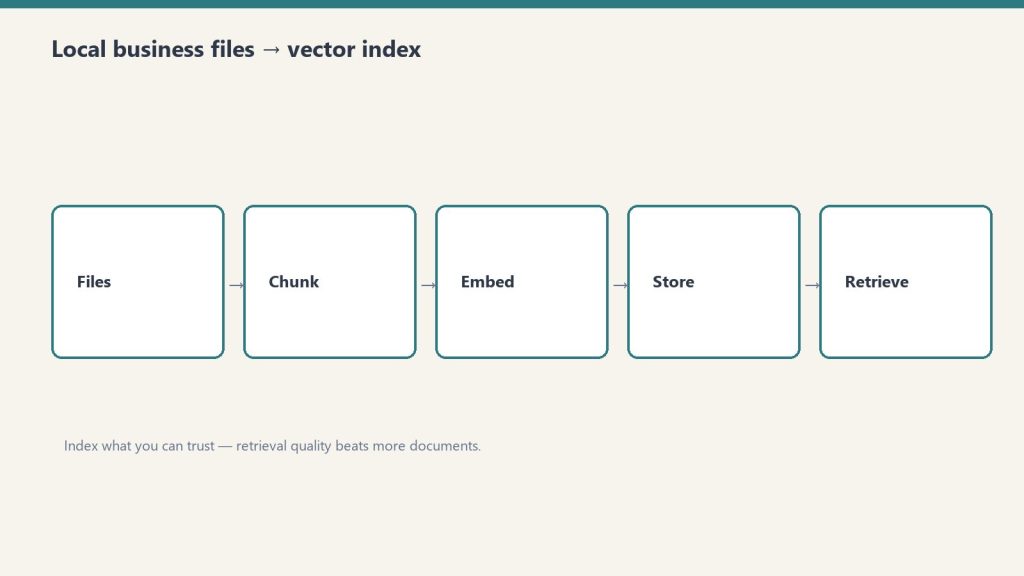
    Claude Code and Claude’s desktop tools support a CLAUDE.md file in your working directory. This file loads automatically at the start of every session — no input required, no tokens spent on orientation. It is your persistent instruction set: who you are, how you work, what conventions to follow, what tools are available, what Notion databases contain what, how to route decisions.

    A well-built CLAUDE.md replaces 500–2,000 tokens of orientation with zero tokens — the file is read, not typed. The cost of writing it once is recovered in the first week of use. Every instruction you find yourself repeating across sessions belongs in CLAUDE.md.

    What to put in CLAUDE.md: your name and operating context; your active projects and their current status; your tool stack (which MCP servers are running, which Notion databases hold what); your output preferences (format, length, tone); your recurring workflows and the skills or commands that drive them; any decisions already made that Claude should not re-litigate.

    Layer 2: Notion as Second Brain — The Knowledge That Doesn’t Repeat

    A Notion second brain functions as Claude’s long-term memory between sessions. When Claude finishes a task, it logs the outcome, the decisions made, and the context that future sessions will need. When Claude starts a new session, it fetches that context rather than reconstructing it from scratch.

    The Tygart Media implementation uses a Second Brain database in Notion with structured entries per project, per client, and per system. The notion-deep-extractor skill runs every 8 hours, crawling recently edited Notion pages and injecting new knowledge into the Second Brain database automatically. Claude never starts a session unaware of what happened in the last session — that context is fetched on demand through the Notion MCP.

    The token math: fetching a 500-token Notion page costs 500 input tokens. Re-explaining the same context through conversation costs 500+ tokens of input plus 200+ tokens of Claude’s clarifying questions plus your typing time. The fetch is always cheaper, and it is more accurate — your Notion page says exactly what you intended, not a conversational approximation of it.

    Layer 3: Project Knowledge Files — Session-Specific Pre-Loading

    For recurring project work, a project knowledge file is a curated document that contains everything Claude needs to be immediately productive on that project: the brief, the audience, the tone guidelines, the existing content structure, the decisions already made, the open questions. Loaded at the start of a project session, it replaces 10–15 minutes of orientation with 30 seconds of file loading.

    The project-knowledge-builder skill generates these files automatically for WordPress sites — pulling existing posts, categories, brand voice, SEO context, and site history into a structured document. The same pattern applies to any recurring project: client accounts, content series, product builds, research projects.

    The Concentrated Output Connection
    Cold start elimination and output compression work together. When Claude starts a session already knowing the context, it can skip the exploratory phase and go straight to the task. When you’ve defined in CLAUDE.md that you want structured outputs — briefings, scored lists, run logs — Claude produces them without the verbose preamble that precedes them in orientation-heavy sessions.

    The Tygart Media daily briefing is the clearest example: the desk spec in Notion defines the output format, the sources, the beat structure, and the run log format. Claude fetches the spec, executes, and produces a structured briefing page. No orientation. No format negotiation. No verbose preamble. Every token is productive output.

    Implementation Steps

    1. Audit your last 10 Claude sessions. For each one, identify the first message where Claude produced genuinely useful output. Everything before that is cold start cost. Measure it.
    2. Write your CLAUDE.md. Start with the context you typed most often in those 10 sessions. One hour of writing recovers itself within days.
    3. Create one project knowledge file for your highest-frequency project. Use it for one week and compare session start times and output quality against the prior week.
    4. Set up Notion logging. At the end of each session, have Claude write a 3–5 sentence log entry: what was done, what decisions were made, what the next session needs to know. Store in a Notion database. Fetch at the start of the next session.

    The cold start problem is the most invisible Claude cost because it feels like normal conversation. Once you measure it, it becomes obvious. Once you eliminate it, you cannot go back.

    Part of the Claude on a Budget series.

  • Claude on a Budget: The Complete Guide to Maximum Output at Minimum Token Cost

    Claude on a Budget: The Complete Guide to Maximum Output at Minimum Token Cost

    The price of a Claude Opus token is $25 per million output tokens. In India, that translates to roughly ₹16,800 per month for a Pro subscription — priced at US dollar rates with no regional adjustment. You cannot change that number. What you can change is how many tokens you spend to get the same result, how often you reach for the expensive model when a cheaper one would do, and how much context you burn re-warming Claude on things it already knows.

    This guide is the pillar for the Claude on a Budget cluster on Tygart Media. Every tactic below has a dedicated deep-dive article linked from here. The core insight running through all of it: the biggest Claude cost savings are not about using Claude less — they are about using Claude smarter. The goal is the same output quality at a fraction of the token spend.

    The 7 Levers That Actually Move the Number

    1. Eliminate the Cold Start — Build a Second Brain

    Every time you start a Claude session without pre-loaded context, you pay tokens to re-warm it: who you are, what you’re building, what decisions you’ve already made, what your brand voice sounds like. A well-architected second brain — Notion pages, CLAUDE.md files, project knowledge files — eliminates that cost entirely. Claude starts knowing what matters. The first token of every session is productive, not orientation. Full guide: The Cold Start Problem →

    2. Route by Task — Don’t Default to Opus

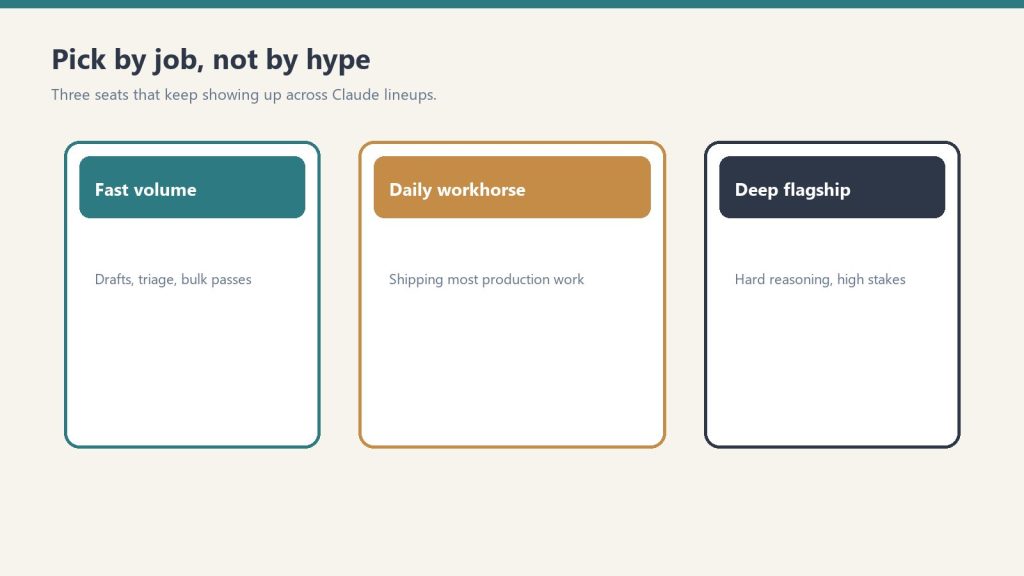
    Claude Haiku 4.5 is roughly 30× cheaper per token than Claude Opus 4.7. For sorting, classification, summarization, first-pass triage, and simple Q&A, Haiku delivers quality that is indistinguishable from Opus at the task level. The decision tree: Haiku for speed and volume, Sonnet 4.6 for mid-tier reasoning and writing, Opus 4.7 only when the task genuinely requires maximum capability. Most workflows over-use Opus by a factor of 3–5×. Full guide: Model Routing 101 →

    3. Use OpenRouter as the Budget Orchestration Layer

    OpenRouter gives you a single API that routes to Claude, GPT-4o, Gemini Flash, Llama, Mistral, and dozens of free-tier models through one endpoint. The practical workflow: use a free or near-free model for first-pass sorting and filtering, route only the items that pass the filter to Claude for reasoning and synthesis. You pay Opus prices for 20% of the work and get Opus-quality output on the parts that matter. Full guide: OpenRouter as the Budget Layer →

    4. Run Non-Urgent Work Through the Batch API

    Anthropic’s Batch API processes requests asynchronously and costs 50% less than the standard API at every model tier. Any work that does not need an immediate response — content generation, classification runs, analysis jobs, report generation — should run through the Batch API. The only cost is latency: batches complete within 24 hours. For most content and automation workflows, that trade is straightforwardly worth it. Full guide: The Batch API →

    5. Cache Your Repeated Context

    Anthropic’s prompt caching reduces the cost of repeated context by up to 90% on cached tokens. If you send the same system prompt, knowledge base, or skill file at the start of every session, caching means you pay full price once and a fraction on every subsequent call. The math compounds quickly: a 10,000-token system prompt sent 100 times costs 10× less with caching than without. Most people running Claude at scale are not using this. Full guide: Prompt Caching →

    6. Write Concentrated Outputs — Not Full Meals

    The single biggest controllable output cost is verbosity. A Claude response that delivers the same information in 200 tokens costs one-fifth as much as one that delivers it in 1,000. Structured output formats — scored lists, run logs, briefings, decision tables — deliver more actionable signal per token than open-ended prose. The discipline of asking for concentrated slices instead of full meals is the fastest zero-cost saving available to any Claude user. Full guide: Output Compression →

    7. Shape Content for the Model That Will Cite It

    Claude, ChatGPT, and Perplexity cite completely different types of pages. Claude concentrates on factual, access-related, answer-first content. ChatGPT spreads across comparison and geographic content. Perplexity favors research-flavored deep dives. If you are creating content that you want AI assistants to surface, writing for all three models equally is inefficient — you spend more words getting cited less. Shaping content to match the citation pattern of your target model gets more traction at lower content cost. Full guide: Per-Model Content Shaping →

    The Numbers Behind These Levers

    ModelInput (per 1M tokens)Output (per 1M tokens)Best for
    Claude Haiku 4.5$1.00$5.00Triage, classification, simple Q&A
    Claude Sonnet 4.6$3.00$15.00Writing, mid-tier reasoning, content
    Claude Opus 4.7$5.00$25.00Complex reasoning, architecture, security
    Batch API (any tier)50% off50% offAny non-urgent async work
    Prompt cache hit~90% offn/aRepeated system prompts / knowledge bases

    A workflow that currently runs Opus on every call, sends the same system prompt uncached, and generates verbose prose responses could realistically cut its token spend by 70–85% by applying all seven levers — without any reduction in output quality on the tasks that matter.

    Who This Is For

    This cluster was built with three audiences in mind: Indian developers and teams facing US-dollar Claude pricing on local-currency budgets; independent creators and small teams who cannot justify enterprise-tier spend; and anyone running Claude at scale in production who wants to stop leaving money on the table. The tactics work regardless of where you are — but they matter most where the price-to-income ratio is highest.

    Every article in this cluster is self-contained and actionable. Start with whichever lever applies to your situation, or read them in order if you are building a Claude stack from scratch.

  • Anthropic’s APAC Expansion: Tokyo, Bengaluru, Sydney, Seoul — What the Full Map Reveals

    Anthropic’s APAC Expansion: Tokyo, Bengaluru, Sydney, Seoul — What the Full Map Reveals

    Anthropic now has a four-market Asia-Pacific presence: Tokyo (established), Bengaluru (opened February 16, 2026), Sydney (opened April 27, 2026), and Seoul (announced, date TBD). Each market in this expansion serves a distinct strategic function, and understanding the logic behind the build-out reveals how Anthropic is thinking about global AI adoption — and where the next wave of enterprise AI growth is concentrated.

    Tokyo: The Japan Enterprise Anchor

    Japan was Anthropic’s first APAC office, and the NEC partnership announced April 24 — a multi-year collaboration to deploy Claude across Japanese enterprises with a workforce upskilling component — is the strategic validation of that investment. NEC is one of Japan’s largest technology companies with deep penetration in government, telecommunications, and enterprise. The partnership positions Claude as the foundation for Japan’s largest AI engineering workforce development program.

    Japan’s enterprise AI adoption pattern is distinct: methodical, compliance-driven, and deeply tied to supplier relationships. The NEC partnership is the right entry point for that market — a trusted anchor partner with existing enterprise relationships that Claude rides into accounts that would otherwise take years to develop directly.

    Bengaluru: The Volume and Developer Market

    India is Anthropic’s #2 global market by claude.ai usage — the Bengaluru office is a response to existing demand, not a bet on future demand. The market is there. What the office provides is localized support, partnership development, and the organizational infrastructure to serve the Indian enterprise market at scale rather than from a US time zone.

    India’s strategic value to Anthropic is twofold: the sheer volume of developer usage (45.2% of Indian Claude users are software developers, the highest concentration of any major market) and the enterprise pipeline represented by Indian IT services giants — Infosys, Wipro, TCS — that are the delivery backbone for enterprise AI implementations globally. Winning the Indian IT services firms means indirect access to their global enterprise clients.

    Sydney: The ANZ and Pacific Enterprise Hub

    The Sydney office, opened April 27 and led by Theo Hourmouzis as General Manager ANZ, is Anthropic’s first dedicated presence for Australia and New Zealand. Australia is a relatively high-income, technology-forward market with strong enterprise AI appetite, a concentrated financial services sector (the “Big Four” banks are substantial technology buyers), and a government that has been actively developing AI policy frameworks.

    The ANZ appointment is notable: Hourmouzis as a named GM with a regional title suggests Anthropic is building an Australia-first go-to-market presence, not a regional office that reports into Asia. That organizational choice signals confidence that the ANZ market generates enough enterprise opportunity to justify dedicated leadership rather than coverage from Singapore or Tokyo.

    Seoul: The Next APAC Enterprise Market

    South Korea’s announcement is notable for what it signals about Anthropic’s APAC confidence. Korea has one of the world’s highest rates of technology adoption, a concentrated enterprise market dominated by Samsung, LG, Hyundai, SK, and Lotte — conglomerates (chaebols) that make AI platform decisions at scale — and a developer community that ranks among the most technically sophisticated in Asia.

    The Korea timing also follows Singapore’s GIC partnership (the sovereign wealth fund co-hosted an Anthropic APAC event in April with 150 enterprise leaders) and suggests that Anthropic is now thinking of APAC not as a single market but as five or six distinct enterprise opportunities each worth dedicated investment: Japan, India, Singapore, Australia, Korea, and potentially Taiwan and Southeast Asia.

    The Pattern: Infrastructure Before Revenue

    What the four-market APAC build-out reveals about Anthropic’s strategy is a willingness to invest in market infrastructure — offices, local leadership, partnerships with regional anchors — before those markets are at revenue scale. That is a strategic bet that APAC enterprise AI adoption will follow a similar trajectory to US adoption but with a 12–18 month lag, and that being present with local infrastructure during the growth phase is worth the cost of early-stage investment.

    The bet is supported by the data: India is already the #2 global market without a local office until February 2026. Singapore has the highest per-capita Claude usage globally. Japan has a multi-year enterprise partnership with NEC. The markets are real. The offices are the organizational response to demand that already exists.

    For enterprise buyers in APAC: local Anthropic presence means local support, local partnership development, and local go-to-market investment. The era of “email Anthropic’s San Francisco office” for enterprise APAC deals is ending.

  • Anthropic Opens Bengaluru Office: India Is Now Its Second-Largest Market Globally

    Anthropic Opens Bengaluru Office: India Is Now Its Second-Largest Market Globally

    On February 16, 2026, Anthropic officially opened its Bengaluru office — the company’s second office in Asia-Pacific after Tokyo, and the first dedicated India presence in Anthropic’s history. The headline behind the office opening is the market stat that drove it: India is now the #2 global market for claude.ai, behind only the United States.

    That is not a projection or a growth target. That is the current state of Claude usage globally. Understanding what is driving it — and what Anthropic is doing to serve it — matters if you are an Indian developer, an enterprise evaluating Claude for India-based teams, or anyone tracking how AI adoption is unfolding outside Silicon Valley.

    What India’s Claude Usage Actually Looks Like

    The usage pattern in India is distinct from global averages. A disproportionately large share of Claude usage in India is technical and programming-related — mobile UI development, web application debugging, API integration, and software architecture. India’s software development community has adopted Claude at a rate that reflects the country’s 45.2% software developer composition among Claude users, the highest of any major market.

    CRED, one of India’s highest-profile fintech companies, is a named enterprise customer using Claude for critical coding work. That is a meaningful signal: enterprise adoption in India is not pilot-stage experimentation. It is production-grade deployment in regulated financial services.

    Anthropic’s own data shows India’s revenue in the market doubled since October 2025 on an annualized basis. That is the growth rate that justifies a permanent office, not a sales visit.

    The 10-Language Indian Language Launch

    With the Bengaluru office opening, Anthropic announced enhanced Claude performance launching in Hindi and nine additional Indian languages: Bengali, Marathi, Telugu, Tamil, Punjabi, Gujarati, Kannada, Malayalam, and Urdu. This is not translation — it is native-language reasoning capability, meaning Claude can understand nuanced queries, respond with contextually appropriate language, and handle code-switching between English and regional languages the way Indian professionals naturally communicate.

    For enterprise buyers deploying Claude to India-based teams: the language support expansion means Claude can serve frontline employees who are more productive in their regional language while maintaining full technical capability. The enterprise use case extends beyond English-first developer teams for the first time.

    The INR Pricing Tension

    Here is the gap that needs to be named directly: Claude for Indian developers currently costs approximately ₹16,800 per month for a Pro subscription — priced at US dollar rates with no regional adjustment. That is the equivalent of roughly $200 USD per month at current exchange rates, in a market where average software developer compensation is 3–4× lower than the US.

    GitHub issue #17432 — requesting India-specific INR pricing — has no official Anthropic response as of today. The Infosys partnership and the Bengaluru office demonstrate Anthropic’s commitment to the India market at the enterprise level. The individual developer pricing gap remains the primary friction point for India’s independent developer and startup community.

    This matters because India’s developer community is not homogeneous. Enterprise developers at CRED or Infosys have employer-subsidized access. Independent developers, startup founders, and students face pricing that is structurally inaccessible relative to local income levels. Anthropic’s competitors have either addressed this gap or are actively working on it. The Bengaluru office makes a regional pricing response more likely — but until it happens, it remains the most significant unresolved issue in Anthropic’s India strategy.

    Leadership and Strategic Focus

    The Bengaluru office is led by Irina Ghose, Managing Director of India. The stated strategic priorities for the India office are: deploying AI for social impact in education, healthcare, and agriculture; supporting enterprise customers and startups through partnerships; and hiring local talent across technical and commercial roles.

    Anthropic’s APAC expansion is now a four-market story: Tokyo (established), Bengaluru (opened February 2026), Sydney (opened April 27, led by Theo Hourmouzis as GM ANZ), and Seoul (announced, no date confirmed). The India office is the strategic anchor — second-largest market, fastest revenue growth, largest developer community.

    What Indian Developers Should Do Right Now

    If you are an Indian developer or team evaluating Claude: the regional language support makes Claude meaningfully more useful for India-specific product development targeting non-English-speaking users. The API is available globally at US pricing — for individual use, Claude Pro at current INR rates is a premium spend. For teams and enterprises, the ROI calculation is different and the Infosys/CRED adoption signals suggest it closes positively for high-value technical workflows.

    Watch the INR pricing announcement. When it comes, the India market will move quickly.