Tag: Everett Infrastructure

  • Downtown Everett’s Bank of America Corner Is Now Vacant — And It’s the First Time in 60 Years

    Downtown Everett’s Bank of America Corner Is Now Vacant — And It’s the First Time in 60 Years

    What happened to the Bank of America in downtown Everett?
    Bank of America closed its branch at 1602 Hewitt Avenue in April 2026, ending more than 60 years at the same corner location. The 62,000-square-foot building — owned by Skotdal Real Estate — is now available for lease for the first time since 1965, with availability starting mid-May 2026.

    Downtown Everett’s Most Iconic Corner Is Open for Business — For the First Time in 60 Years

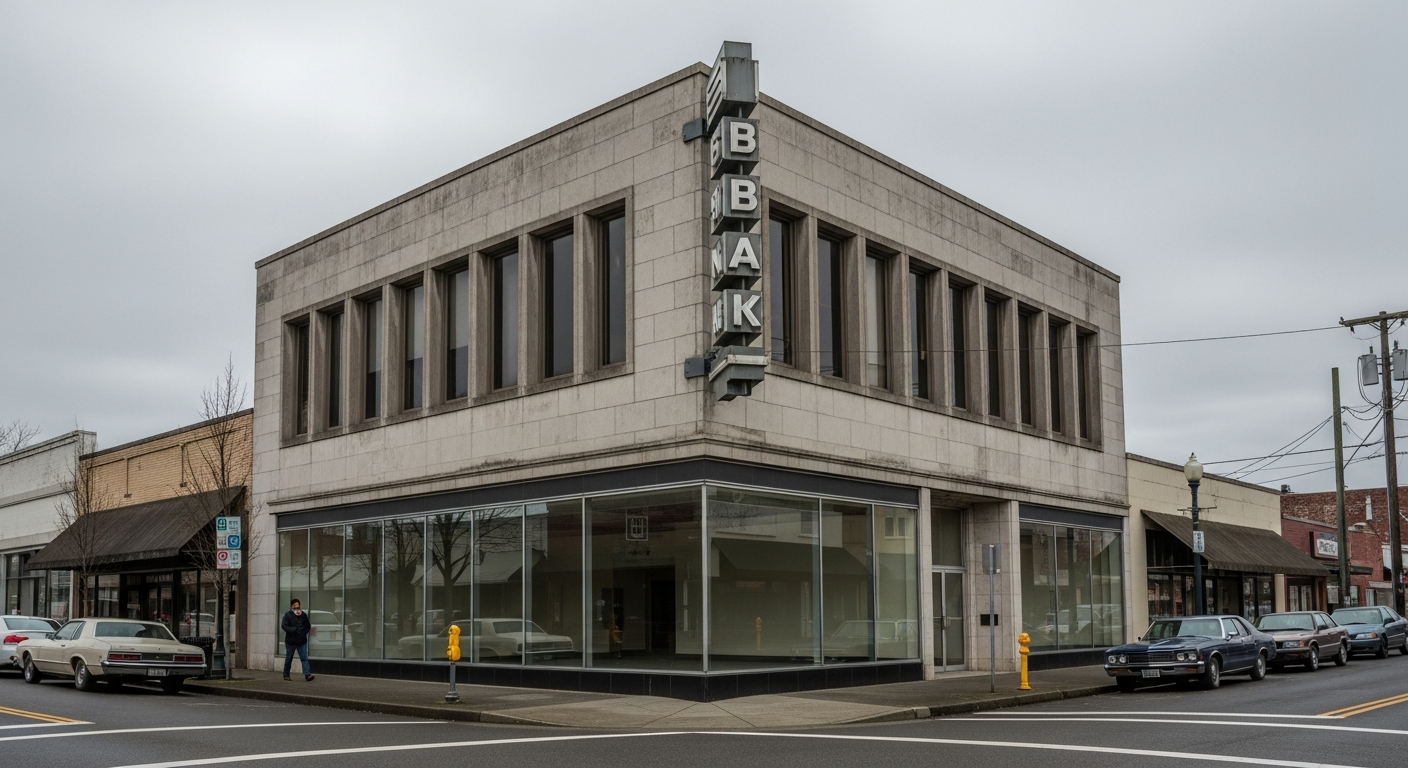
    If you’ve driven down Hewitt Avenue lately, you’ve noticed something different at the corner of Hewitt and Colby. The Bank of America signs are gone. The drive-through lanes sit empty. And for the first time since 1965, the building at 1602–1604 Hewitt Avenue is looking for a new tenant.

    We’ve been watching this space for a while. The closure was quiet — no press release, no farewell event, no real announcement beyond a letter to longtime customers. One week it was open, the next week the signs came down and the LoopNet listing went up. But what happens next in that building matters for downtown Everett in a way that’s hard to overstate.

    What the Building Actually Is

    The property at 1602–1604 Hewitt Ave is a 62,000-square-foot building on one of the most visible corners in downtown Everett — Hewitt and Colby, at the heart of the Hewitt Avenue commercial corridor. Skotdal Real Estate, the Everett-based commercial property firm that has been one of downtown’s most active investors for decades, owns and is now actively marketing the building.

    The space coming available is approximately 12,000 square feet of the ground floor — the former bank branch and lobby. That footprint includes two things that are genuinely rare in downtown Everett: a three-lane drive-through and 92 covered parking spots. For any retail or service business that depends on vehicle access or parking, those features are nearly impossible to find this close to the core of downtown.

    The space features full-corner frontage with dual street exposure on both Hewitt and Colby, large windows, a sweeping interior staircase, a private elevator, and what Skotdal describes as abundant natural light. It’s a landmark-grade build-out that doesn’t require a tenant to start from scratch.

    Availability is listed as mid-May 2026.

    Why Bank of America Left — and Why It Matters

    Bank of America notified customers in writing beginning in November 2025 that the Hewitt location would close. The official company statement: “The financial center at 1602 Hewitt Avenue was one of the oldest and largest financial centers in our local network, and we have several other locations nearby that are more modern and aligned with how our clients bank today.”

    It’s the same story playing out in downtowns across the country. More than 6,000 commercial bank branches nationally have closed over the past five years as mobile banking erodes the foot-traffic case for urban branches. The lobby at Hewitt and Colby had been shrinking for years — from a full teller line to one or two staff, serving mostly customers who needed cashier’s checks, in-person account services, or one of the few downtown locations where you could cash a check without an account.

    But the closure stings a little more here because of what that corner has meant to Everett.

    The building’s history on that block goes back to 1892, when the First National Bank of Everett opened at or near that address. The current structure dates to 1965 — built for what eventually became Seafirst Bank, which was acquired by Bank of America in 1983 and rebranded in 1999. That means Bank of America, or its direct predecessors, occupied this corner for over 60 consecutive years.

    What Could Come Next

    Skotdal Real Estate has been one of the most consequential forces in downtown Everett’s commercial real estate story. Their portfolio includes marquee buildings along the Hewitt and Colby corridors, and they’ve been central to attracting the office and retail tenants that have given downtown its current momentum.

    The pitch for this space is straightforward: you get a flagship corner in a downtown that is actively transforming. The $10.6 million stadium design package approved by City Council in late April puts a 5,000-seat outdoor event center on track for a September 2026 construction start a few blocks away. The Everett Art Walk returns May 21. New restaurants on Hewitt — including R Harn Thai, which just opened — are drawing people back to the corridor.

    The drive-through and parking are the X factor. Most retail or service concepts that need both would not normally be able to place themselves at Hewitt and Colby. A credit union, a pharmacy, a coffee-and-banking hybrid, a medical or dental clinic with patient parking, a high-volume quick-service restaurant — all of these would normally rule out a downtown corner and look for a suburban pad site instead. Here, the existing infrastructure changes that calculus.

    The bigger-picture question is what this vacancy signals. Downtown Everett has been building momentum for several years, but it has also been honest about the challenges. Earlier this year the city documented a vacancy count along the commercial corridors that showed real gaps. The BofA closure adds to that count in one of the most visible spots possible. The answer to what comes next matters not just for Skotdal and the building’s future tenant — it matters for whether Hewitt Avenue’s commercial rebound stays on track.

    What’s Already in the Neighborhood

    The space doesn’t exist in isolation. Within a short walk:

    • The Everett Art Walk’s gallery circuit runs along this stretch of downtown, including multiple galleries that have opened or expanded in recent years
    • Narrative Coffee, STRGZR Coffee & Kitchen, and The Loft Coffee Bar anchor the coffee-and-remote-work scene on adjacent blocks
    • New restaurant openings on Hewitt (R Harn Thai, Luca Italian, The New Mexicans) have added foot traffic
    • The historic Everett Theatre at 2911 Colby is booking major acts through the summer

    For a retailer or service business evaluating downtown Everett, the current moment is both encouraging and uncertain. The direction is clearly positive — but the pace of infill matters, and a vacant flagship corner is not a neutral signal.

    The Practical Picture

    Nearest Bank of America branches for former customers: Evergreen Way (5019 Evergreen Way), Greentree Plaza (305 SE Everett Mall Way, Suite 31), Silver Lake (1803 112th St SE), and Marysville (415 State Ave). Each is roughly 10–16 minutes by car.

    The Skotdal listing for 1602–1604 Hewitt is active on LoopNet and directly at skotdal.com. The available footprint is described as ground-floor retail or office use, with the drive-through lanes and parking as potential differentiators for the right tenant.

    We’ll be watching. When Skotdal secures a tenant for this space, it will be one of the bigger commercial announcements downtown Everett has seen in years.

    Frequently Asked Questions

    When did Bank of America close its downtown Everett branch?
    Bank of America officially closed its branch at 1602 Hewitt Avenue in Everett in mid-April 2026. Customers were notified in writing beginning in November 2025.

    Who owns the Bank of America building in downtown Everett?
    Skotdal Real Estate, an Everett-based commercial property company, owns the building at 1602–1604 Hewitt Ave and is managing the lease-up of the vacated space.

    How big is the former Bank of America space available for lease?
    Approximately 12,000 square feet of ground-floor space is available, within a larger 62,000-square-foot building. The space includes a 3-lane drive-through and 92 covered parking spots.

    When is the downtown Everett Bank of America space available?
    Skotdal is listing availability as mid-May 2026. The building is actively being marketed on LoopNet and skotdal.com.

    What was at that corner before Bank of America?
    The current building dates to 1965 and was built for Seafirst Bank. Before that, the First National Bank of Everett — established in 1892 — operated at or near that address. Bank of America acquired Seafirst in 1983 and rebranded in 1999.

    What other Bank of America locations serve downtown Everett customers?
    The nearest locations are on Evergreen Way (~10 min), Greentree Plaza SE (~14 min), Silver Lake (~16 min), and Marysville (~14 min).
  • The Hub @ Everett Just Got a Course Correction: A Complete 2026 Guide to Brixton Capital’s Self-Storage and Office Pivot Where Topgolf Was Going

    The Hub @ Everett Just Got a Course Correction: A Complete 2026 Guide to Brixton Capital’s Self-Storage and Office Pivot Where Topgolf Was Going

    Quick answer: Brixton Capital — the property owner of the former Everett Mall, now branded as The Hub @ Everett — filed a May 19, 2026 pre-application meeting request with the City of Everett for a project that consists of “the interior demolition of the existing enclosed mall structure and the conversion of a portion of the building into a self-storage facility,” with a 60,000-square-foot proposed office shown in the same site plan sitting where the long-promised Topgolf venue was going to be built. The pre-application is not a permit and not a final design, but it is the clearest signal yet that the original Hub @ Everett vision has shifted materially.

    The headline change, in plain language

    The original redevelopment vision for the old Everett Mall, marketed as The Hub @ Everett, called for an entertainment-led mix anchored by Topgolf and Chicken N Pickle, with the existing enclosed mall corridors being repurposed around those big-format draws. The Brixton pre-application now on file with the City of Everett describes a different mix: a self-storage conversion of part of the existing enclosed structure and a 60,000-square-foot office building sitting in the footprint that was being held for Topgolf.

    The change does not officially cancel Topgolf. Brixton has not issued a public statement walking the program back. The pre-application is a planning conversation with the city, not a final entitlement. But site plans submitted to a pre-application meeting do represent the property owner’s working intent at the time of filing, and the working intent has shifted away from the venue that was treated as the anchor for years.

    How we got here

    The Topgolf-at-Everett-Mall story has run on a long timeline. The mayor publicly confirmed Topgolf and Chicken N Pickle were coming to the redevelopment in 2024. Permit applications for the golf facility followed later that year. Topgolf solidified plans in late 2024. The Hub @ Everett rebranded the property and began phased opening of partial tenant spaces during 2025. Twin Creeks — the surrounding neighborhood that took its name from the buried creeks beneath the site — became part of the city’s broader narrative about reactivating South Everett.

    Two corporate developments quietly changed the calculus. Topgolf’s CEO Artie Starrs left for Harley-Davidson in 2025. On January 1, 2026, private equity firm Leonard Green & Partners closed on a 60% stake in Topgolf, acquired from Topgolf Callaway Brands for approximately $1.1 billion. New ownership and a CEO transition tend to trigger a portfolio review of pipeline locations. The Everett pre-application now on file is consistent with a portfolio decision that the Everett site is no longer in Topgolf’s near-term build pipeline — though neither company has confirmed that publicly.

    What the pre-application actually says

    From the city permitting portal, the Brixton Capital May 19, 2026 pre-application meeting is scheduled for a project described as the interior demolition of the existing enclosed mall structure and the conversion of a portion of the building into a self-storage facility. A 60,000-square-foot proposed office sits in the site plan where the Topgolf venue was being permitted. The pre-application format is a planning conversation between the developer and city staff to identify code, environmental, and infrastructure issues before a formal entitlement application is submitted. It does not approve anything; it scopes the conversation.

    What this means for the Hub @ Everett vision

    The Hub @ Everett was always two narratives stacked on top of each other. One was the entertainment-led reactivation — Topgolf, Chicken N Pickle, plus retail and restaurant follow-on. The other was the practical math of the mall building itself: a very large enclosed structure with declining traditional retail demand, sitting on a parcel with strong vehicle access from I-5 and the Everett Mall Way corridor. Self-storage is one of the most reliable uses for an oversized enclosed building when the entertainment math doesn’t work. Office at 60,000 square feet is meaningfully smaller than a Topgolf facility and works in a different revenue model entirely.

    The half-open Hub @ Everett that has been operating in 2026 — partial tenants, public corridors, the mall structure still standing — has been waiting on the entertainment anchor to define the rest of the program. The pre-application is the first signal that the program may now be defined by a different mix entirely.

    What hasn’t changed

    • Mall Station, the rebuilt and relocated transit station at the property, opened on the original schedule and continues to function regardless of the Hub redevelopment program.
    • The Twin Creeks neighborhood — the surrounding mall-adjacent area that renamed itself in 2026 — is unaffected by the program shift.
    • The half-open portions of The Hub @ Everett that have been operating during 2026 remain operating.
    • The pre-application is not a Topgolf cancellation. Either party could still revive the venue plan in a different form or location.

    What to watch next

    • The May 19 pre-application meeting outcome. Pre-application notes from the city often surface in public records and indicate which design and code issues are most material before a formal application is filed.
    • A formal entitlement application. Pre-applications typically lead to a formal land use application within months when the project is moving forward — or sit dormant when the developer is testing options.
    • Any Topgolf or Brixton public statement. Either party walking through their respective sides of this story would clarify what is now off the table and what is still possible.
    • The half-open mall corridors. Whether tenants continue to come into the existing partially-open Hub @ Everett, or whether the structure shifts toward a self-storage and office program, will be visible to anyone driving past the property over the next year.

    Frequently asked questions

    Is Topgolf no longer coming to Everett?

    Neither Brixton Capital nor Topgolf has issued a public cancellation. The May 19, 2026 pre-application Brixton filed with the City of Everett shows a 60,000-square-foot proposed office sitting where Topgolf was going to be built, alongside a self-storage conversion of part of the existing mall structure. That is a strong signal of a program change but not a formal cancellation.

    What is The Hub @ Everett?

    The Hub @ Everett is the rebranded redevelopment of the old Everett Mall by property owner Brixton Capital. Originally marketed as an entertainment-led mixed-use project anchored by Topgolf and Chicken N Pickle, with phased reuse of the existing enclosed mall structure.

    Who is Brixton Capital?

    Brixton Capital is the property owner and developer driving the Hub @ Everett redevelopment. The company is a private real estate investment firm.

    When is the Brixton pre-application meeting with the city?

    May 19, 2026.

    What is a pre-application meeting?

    A pre-application meeting is a planning conversation between a property owner and city staff to identify code, environmental, and infrastructure issues before a formal entitlement application is submitted. It does not approve anything — it scopes the conversation.

    Will Mall Station be affected?

    No. Mall Station, the rebuilt and relocated transit station at the property, opened on the original schedule and continues to function independently of the Hub redevelopment program.

    What does this mean for South Everett?

    The Hub @ Everett was a meaningful part of the South Everett reactivation narrative. A program shift from entertainment-led to self-storage-and-office is a different kind of reactivation — one that delivers some economic activity without the foot traffic that an entertainment anchor would have generated.

    Related Exploring Everett coverage

  • Everett Mall’s Hub Vision Just Got Smaller: Brixton Capital Files for Self-Storage and Office Where Topgolf Was Going

    Everett Mall’s Hub Vision Just Got Smaller: Brixton Capital Files for Self-Storage and Office Where Topgolf Was Going

    What just changed at Everett Mall? Brixton Capital — the mall’s owner — has scheduled a May 19, 2026 pre-application meeting with the City of Everett to convert a portion of the existing enclosed mall into a self-storage facility, with a 60,000-square-foot proposed office sitting where Topgolf’s hitting bays were going to go. Topgolf was supposed to be the Hub @ Everett’s anchor tenant. Now it may not happen at all.

    For two years the story we got told about Everett Mall was the Hub. Brixton Capital — the San Diego-based real estate group that bought the property — and the City of Everett came out together in 2024 with renderings of an outdoor walkable destination, retail recolored from the inside out, and a 68,000-square-foot, three-level Topgolf as the anchor pulling everyone in. The permits were filed. The 11-acre site was mapped. The narrative held.

    That narrative is now bending.

    On the City of Everett’s permitting portal this week, Brixton Capital has scheduled a May 19, 2026 pre-application meeting for a project described as “the interior demolition of the existing enclosed mall structure and the conversion of a portion of the building into a self-storage facility. The scope also includes subdivision actions to place the proposed storage use on a separate legal parcel.”

    That alone would just be news that the demolition we’ve all been waiting for is finally getting paperwork moving. But the latest site plan that came in with the application tells a different story.

    What the new site plan shows

    Two things sit on the new Brixton site plan that were not on the Hub renderings.

    The first is a single-story building labeled “Everett Mall Self Storage.” It sits where a parking lot was going to be in the Hub vision — so it is not directly displacing Topgolf. But it is also not what anyone signed up for when this redevelopment started. There are already a dozen self-storage facilities within five miles of the mall. None of them are destinations. None of them generate the foot traffic that a mall reinvention needs to work.

    The second is more telling: a 60,000-square-foot building labeled “Proposed Office” that sits squarely on the footprint where the Topgolf hitting bays and outfield were going to go. The old LA Fitness building, which was supposed to come down to make room for Topgolf, now appears in the plan as something that will either be salvaged or replaced to provide that office space.

    Topgolf needs the area marked for the office. The office is in the area Topgolf needed.

    The two plans cannot both be true.

    Why this might be happening

    Topgolf’s parent company has been in restructuring mode since the same window the Everett permits were getting approved. Topgolf Callaway Brands announced a corporate split, then Topgolf CEO Artie Starrs left for Harley-Davidson in 2025. On January 1, 2026, private equity firm Leonard Green & Partners completed an acquisition of a 60 percent stake in Topgolf from Topgolf Callaway Brands for approximately $1.1 billion. Industry coverage has framed the entertainment chain’s recent decline as a problem of over-expansion — too many venues opened too fast, with the new ones cannibalizing the older ones.

    In other words: Topgolf is in pullback mode, not expansion mode. New venues that were promised but never officially confirmed by Topgolf corporate — like Everett — are exactly the kind of project that quietly disappears in a private-equity restructuring.

    Neither Brixton Capital nor Topgolf has officially said the Everett venue is dead. The City of Everett has not announced a change. But the new site plan does the talking.

    What we covered before — and what’s different now

    We wrote about The Hub @ Everett a week ago, on April 25, when the story was that Topgolf was stuck — permitted in January 2025, but on hold pending corporate restructuring. The construction never started. The 11-acre footprint sat untouched. At that point the question was whether Topgolf would eventually break ground or whether Brixton would have to find a new anchor.

    The May 19 pre-application meeting is the answer to that question. Brixton is not waiting on Topgolf anymore. Brixton is moving forward with a different building program for that footprint. Even if Brixton hopes Topgolf eventually shows up, the site plan being submitted to the City does not assume Topgolf shows up. That is the meaningful change.

    It is also a quiet downgrade of what The Hub was supposed to be. A self-storage building and a 60,000-square-foot office building are not the kind of tenants that bring people to a mall on a Saturday. Alderwood Mall down in Lynnwood is full on Saturdays. People circle the parking lot waiting for spots. That is what a working mall in 2026 looks like. A storage facility and a cubicle building is not in that category.

    What this means for the larger Everett Mall picture

    The Hub @ Everett sits on 11 acres in the Twin Creeks neighborhood and is the largest single retail-redevelopment project in South Everett. The mall as a whole is roughly 800,000 square feet of building on a much larger campus. Brixton’s original sales pitch for The Hub assumed Topgolf would draw the foot traffic, which would justify upgrades to the rest of the campus — Ulta Beauty and At Home are already moving into the former Sears box, and the relocated Mall Station opened in December 2025. The walkable outdoor reorientation only works if the anchor pulls.

    If the anchor turns out to be a storage building and an office, the rest of the upgrade math gets harder. Tenants pay rent based on the foot traffic they expect. Foot traffic projections that assumed a Topgolf are not the projections you get with self-storage.

    There is still room for another pivot. Brixton could find another entertainment anchor — a movie theater, a family entertainment center, a fitness destination — and the storage and office plans become the backup. The May 19 meeting is a pre-application discussion, not a building permit. Things can still change between now and the actual permit filing.

    But for right now, what the City of Everett’s permitting portal shows is a mall that planned to be a destination and is being re-planned around uses that nobody drives across town to visit.

    The May 19 pre-application meeting: what it is and what it isn’t

    A pre-application meeting in Everett is the very first formal step a developer takes with the city before submitting actual building permits. It’s a planning-staff conversation — the developer brings their concept, the city tells them what regulations will apply, what studies they’ll need, what review process the project will go through. It is not a public hearing. There is no vote. There is no decision.

    But it does signal seriousness. Pre-application meetings cost money to schedule and prepare for. Developers don’t book them for ideas they’re not pursuing. When a project shows up on the pre-app calendar, it means the developer has internal alignment to keep moving forward with that specific concept.

    So the May 19 meeting is the equivalent of Brixton telling the city: this is what we’re actually planning to build now. The Hub @ Everett brochure is no longer the operative document. The new site plan is.

    What we’ll be watching

    A few things to track in the coming weeks:

    • The actual building permit application. A pre-application meeting usually produces a building permit application within three to nine months. Whatever Brixton submits formally will tell us whether the storage-and-office concept holds or whether they pivot again.
    • Any official Topgolf statement. Leonard Green & Partners has been making public moves since taking control on January 1. A formal cancellation of Pacific Northwest expansion would clarify a lot.
    • Brixton’s leasing posture for the rest of The Hub. If self-storage and office are now in the program, the retail pitch to other tenants changes. Watch for tenant announcements that downshift from the original Hub vision.
    • City of Everett response. The original Hub deal involved zoning and permitting cooperation from the city. A meaningful program change at the site may trigger new city review — especially if the storage building requires the subdivision Brixton is also proposing.

    Frequently Asked Questions

    Is Topgolf coming to Everett Mall?

    As of May 2026, no construction has started, no Topgolf representative has confirmed the Everett location publicly, and Brixton Capital — the mall owner — has filed a pre-application with the City of Everett showing a 60,000-square-foot office building in the exact footprint Topgolf was going to occupy. The official permits from January 2025 are still on the books, but the new site plan does not assume Topgolf is happening.

    Who owns Everett Mall?

    Brixton Capital, a San Diego-based real estate firm, owns Everett Mall. Brixton acquired the property and announced The Hub @ Everett redevelopment plan in 2024.

    What is the Hub @ Everett?

    The Hub @ Everett is the marketing name Brixton Capital and the City of Everett gave to the planned redevelopment of the existing enclosed Everett Mall into a more walkable, outdoor-oriented retail and entertainment destination. The original anchor was supposed to be a 68,000-square-foot Topgolf venue.

    When is the Brixton pre-application meeting?

    May 19, 2026, with the City of Everett’s planning staff. This is a pre-application discussion, not a public hearing — there is no public comment period and no vote.

    What did Brixton apply to build?

    According to the City of Everett’s permitting portal, the May 19 application covers the interior demolition of the existing enclosed mall, conversion of a portion of the building into a self-storage facility, and subdivision of the storage use onto its own legal parcel. The accompanying site plan shows a 60,000-square-foot proposed office building in the area where Topgolf was going to be built.

    Is the rest of The Hub redevelopment still happening?

    Yes — Ulta Beauty and At Home are still moving into the former Sears box, the relocated Mall Station opened in December 2025, and other tenant work continues. The pre-application change appears specific to the Topgolf footprint and the previously-planned parking lot area where the storage facility would now sit.

    When would construction actually start?

    A pre-application meeting is the first step. A formal building permit application typically follows three to nine months later, and construction starts after the permit is issued. So even if the storage-and-office concept holds, ground-breaking is at minimum late 2026 and more likely 2027.

    Deeper coverage in the Hub @ Everett Pivot Cluster:

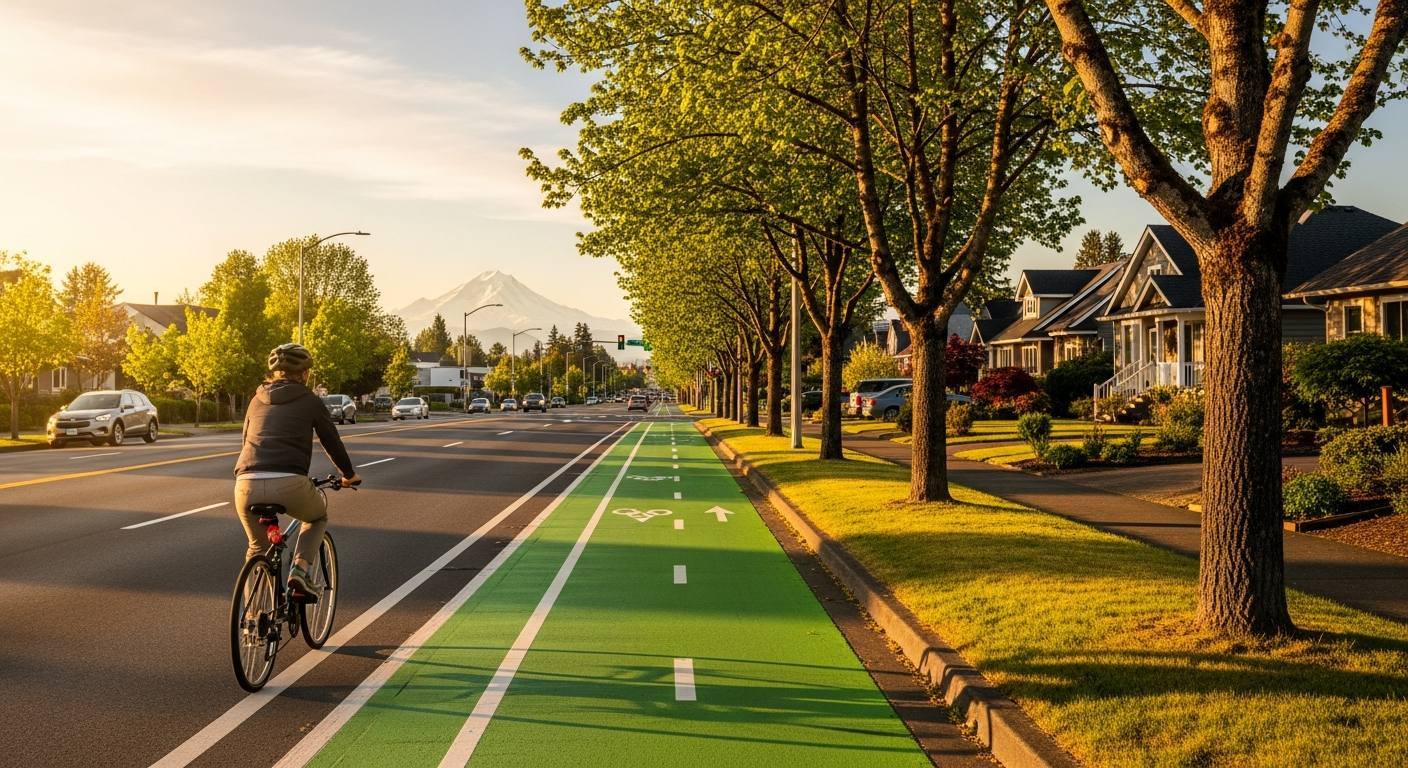
  • Everett’s Bicycle Master Plan Is Getting Its First Major Update in 15 Years — Here’s What 41 Miles of Bike Infrastructure Has Bought So Far

    Everett’s Bicycle Master Plan Is Getting Its First Major Update in 15 Years — Here’s What 41 Miles of Bike Infrastructure Has Bought So Far

    Fifteen years into a thirty-year Bicycle Master Plan, Everett is somewhere near the halfway mark. The city has built about 41 miles of on-street bike infrastructure and 23 miles of off-street trails since the plan was adopted in 2011, and a 2026 update — funded by a federal Safe Streets for All grant — will redraw the priorities for the next half of the build-out and merge bicycle planning with pedestrian planning for the first time.

    May is the month the city is using to put a public face on it. Mayor Cassie Franklin has issued a National Bike Month proclamation, Everett Transit is hosting two events at Everett Station (a Wednesday-morning Bike to Work coffee on May 13 and the Bike Everett Festival on Friday, May 15 from 3 to 7 p.m.), and the League of American Bicyclists has again recognized Everett as a bronze-level Bicycle Friendly Community — the same designation the city first earned in 2021.

    Underneath the festival programming is a more consequential conversation: how the next decade of bike and pedestrian infrastructure investment gets prioritized, where it lands, and which neighborhoods see the next protected lanes, bicycle boulevards, and trail connections.

    What Has Actually Been Built

    The 2011 Bicycle Master Plan committed Everett to a specific build-out of bike lanes, sharrows, off-street trails, and bicycle boulevards over thirty years. As of an April 2026 review presented to the city’s transportation advisory committee, about 41 miles of on-street bike infrastructure are in place, plus roughly 23 miles of off-street projects like trails. That is on the order of half the work the original plan envisioned.

    What that has meant on the ground over the past few years includes the buffered bike lanes on Rucker Avenue, the bicycle boulevard work in residential neighborhoods, the city’s Bicycle Friendly Driver education program, and the widely-used Interurban Trail and Lowell Riverfront Trail connections. None of that happened by accident — each piece traces back to a specific line item in the master plan that staff and elected officials worked through over multiple budget cycles.

    That is the case the city makes for keeping the plan as a living document. A long-horizon plan that residents can read tells the next planning director and the next council which projects are next in line, and it makes the case to outside funders — like the federal Safe Streets for All program — that the city has done the homework to deserve the grant.

    What the 2026 Update Changes

    Two things make this update meaningfully different from a routine refresh.

    The first is the scope. The current plan covers bicycle infrastructure. The 2026 update will incorporate pedestrian infrastructure and what the city calls supportive facilities — the bike racks, repair stations, secure parking, signage, and crossings that determine whether a bike lane actually gets used. By 2027, when the updated plan is expected to be adopted, Everett will have a single integrated active-transportation plan covering people who walk, bike, and roll.

    The second is the funding source. The update is being paid for through a Safe Streets for All grant — a federal program created under the 2021 infrastructure law and run through the U.S. Department of Transportation. Safe Streets for All explicitly requires applicants to build a Vision Zero–style safety action plan that ties infrastructure decisions to fatality and serious-injury reduction targets. That requirement is already pulling Everett’s planning toward a more data-driven framework: which corridors have the most crashes, where the high-injury network is, and which interventions show the strongest evidence of reducing serious injuries.

    Cities that complete Safe Streets for All planning grants become eligible for substantially larger implementation grants in subsequent funding rounds. That is the strategic bet behind doing this update now: the planning work is the on-ramp to the construction money.

    What This Means for Residents

    For most Everett residents, the practical question is not how the master plan is structured — it is whether their street is going to get a bike lane, whether their kid’s walk to school is going to get a safer crossing, and whether the trail they use to commute is going to get connected to the next neighborhood over.

    Those decisions get made through the priority list inside the master plan. When the update comes back to the City Council for adoption, it will include a ranked project list. Projects high on the list get built sooner. Projects lower on the list get built when funding shows up. Public input during the planning process is the period when residents have real influence over where their neighborhood sits on that list.

    The city is also pointing residents toward existing tools. A map of Everett’s trails, bike lanes, and other infrastructure is posted online at everettwa.gov/bikes, and paper copies will be available at the May 15 festival. Following @EverettTransit on Facebook and Instagram is the city’s recommended channel for catching the smaller, quieter input opportunities — neighborhood-scale meetings, online surveys, and pop-ups — between now and the plan’s adoption.

    The May Events

    Two events anchor National Bike Month locally:

    Bike to Work Coffee — Wednesday, May 13, 6 to 8 a.m. at Everett Station (3201 Smith Avenue). Free coffee, Bike Everett t-shirts, and an e-bike raffle. Everett Transit is hosting.

    Bike Everett Festival — Friday, May 15, 3 to 7 p.m. at Everett Station (3201 Smith Avenue). Family-friendly. Free games, t-shirts, food trucks, entertainment, an e-bike raffle, and an Everett Transit bus staged for people to practice loading and unloading bikes from the front-mounted bike rack. The festival is the city’s biggest public-facing bike event of the year and the easiest entry point for residents who have not engaged with city transportation planning before.

    Where the Bicycle Friendly Community Designation Comes From

    The bronze-level Bicycle Friendly Community recognition comes from the League of American Bicyclists, a national advocacy organization that runs the BFC program as a benchmarking tool for cities. Communities apply, the League scores them across five categories — engineering, education, encouragement, enforcement, and evaluation — and assigns one of five ranks: bronze, silver, gold, platinum, or diamond.

    Everett first earned bronze in 2021. The 2026 renewal at the same level reflects the continued work on infrastructure, the Bicycle Friendly Driver program, and ongoing community programming. Moving up to silver — the next tier — typically requires a measurable jump in bike commute mode share, a more developed protected-lane network, and a deeper safety-data culture. The 2026 master plan update is the kind of work that, done well, can underwrite a future application at the next level.

    What to Do Next

    • Show up to the Bike Everett Festival Friday, May 15 from 3 to 7 p.m. at Everett Station, 3201 Smith Avenue. It is the easiest way to talk to city transportation staff face-to-face about where you ride and what is missing.
    • Catch the Wednesday coffee May 13 from 6 to 8 a.m. if you commute through downtown.
    • Read the existing bicycle map and master plan at everettwa.gov/bikes. The current map shows what is on the ground today; the plan shows what is supposed to come next.
    • Follow @EverettTransit on Facebook and Instagram for the smaller input opportunities between now and adoption — surveys, neighborhood meetings, and pop-ups.
    • Track the Safe Streets for All work at everettwa.gov/1802/Public-Safety-Safe-Streets-Program. The Safety Action Plan is the document that will shape which corridors the master plan update prioritizes.

    Frequently Asked Questions

    When was Everett’s Bicycle Master Plan first adopted? 2011. The current update is the first major revision in that thirty-year planning horizon.

    How much bike infrastructure has been built so far? About 41 miles of on-street bike infrastructure and roughly 23 miles of off-street trails, as of an April 2026 review.

    What is changing in the 2026 update? Two things. The plan is expanding to cover pedestrian infrastructure and supportive facilities (bike parking, repair stations, signage, crossings) in addition to bike lanes. And the planning framework is being aligned with Vision Zero / Safe Streets for All requirements, which means safety data — crashes, fatalities, serious injuries — drives more of the prioritization.

    Who funded the master plan update? A federal Safe Streets for All grant administered by the U.S. Department of Transportation. The program was created under the 2021 infrastructure law.

    When will the updated plan be adopted? The city expects to bring an integrated bicycle and pedestrian plan forward by 2027.

    What is the bronze Bicycle Friendly Community designation? A recognition from the League of American Bicyclists. It is one of five tiers (bronze, silver, gold, platinum, diamond) and reflects evaluation across engineering, education, encouragement, enforcement, and evaluation. Everett first earned bronze in 2021 and has been re-recognized in 2026.

    When and where is the Bike Everett Festival? Friday, May 15, 3 to 7 p.m. at Everett Station, 3201 Smith Avenue. Free, family-friendly.

    Is there a Bike to Work Day event? Yes. Wednesday, May 13 from 6 to 8 a.m. at Everett Station. Coffee, t-shirts, and an e-bike raffle.

  • For Casino Road Residents: What Community Transit’s .35M Goodwill Purchase Means for Your Neighborhood

    For Casino Road Residents: What Community Transit’s .35M Goodwill Purchase Means for Your Neighborhood

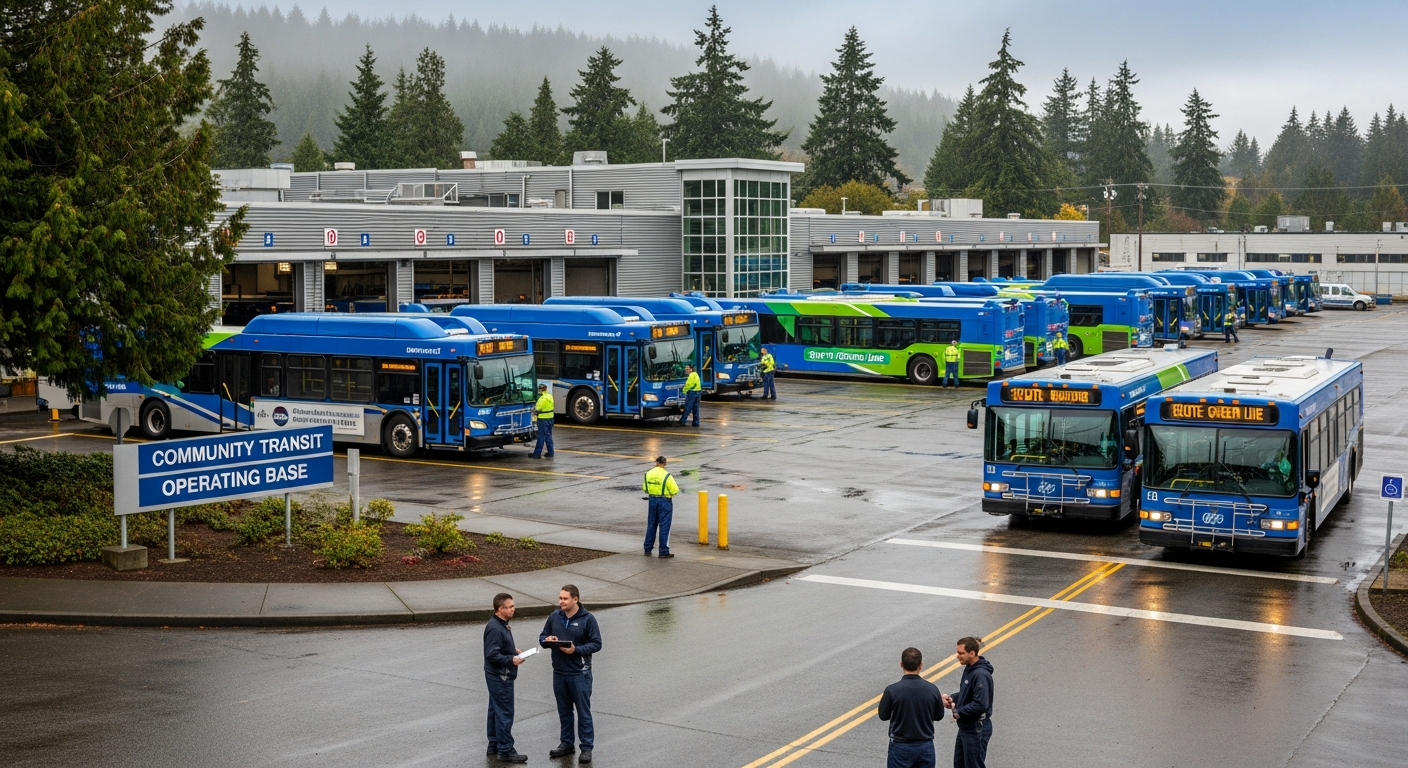
    For you as a Casino Road resident: Community Transit’s $25.35 million purchase of the Goodwill outlet at 2208 W. Casino Road means a major public agency has locked in a 7.55-acre anchor in your neighborhood — before the light rail redevelopment pressure arrives. Here is what that means for your daily life, your housing stability, and your community’s future.

    Your Neighborhood Just Got a New Public Anchor

    For residents of Casino Road, Community Transit’s February 2026 acquisition is the most significant land transaction on the corridor in years. The 7.55 acres at 2208 W. Casino Road — the Goodwill Bins site — is now owned by a public agency, not a private developer. That distinction matters more than it might appear.

    Casino Road has two Sound Transit light rail stations planned as part of the Everett Link Extension. When light rail comes to a corridor, land values rise. In Seattle’s Rainier Valley and along the First Hill corridor, the combination of light rail investment and speculative land buying displaced thousands of residents and longtime businesses before communities could respond. Casino Road is watching those dynamics develop in slow motion — and Community Transit just placed 7.55 acres of the corridor in public hands before the speculative wave crests.

    The Goodwill Bins Stay Open — For Now

    The practical answer most Casino Road residents want first: the Bins are staying. Evergreen Goodwill signed a three-year leaseback with Community Transit, meaning the bulk-pricing outlet store at 2208 W. Casino Road continues operating through approximately early 2029. If you shop there regularly — or know someone who depends on it for affordable goods — no immediate change is required.

    After the leaseback ends, Community Transit will use the site for operational purposes: vehicle storage, maintenance, and administrative functions to support its growing bus network. What that means for foot traffic on that block will depend on how the agency designs its buildout. Residents near the site should watch for Community Transit public planning meetings as the leaseback end date approaches.

    How This Connects to the Everett Transit Merger

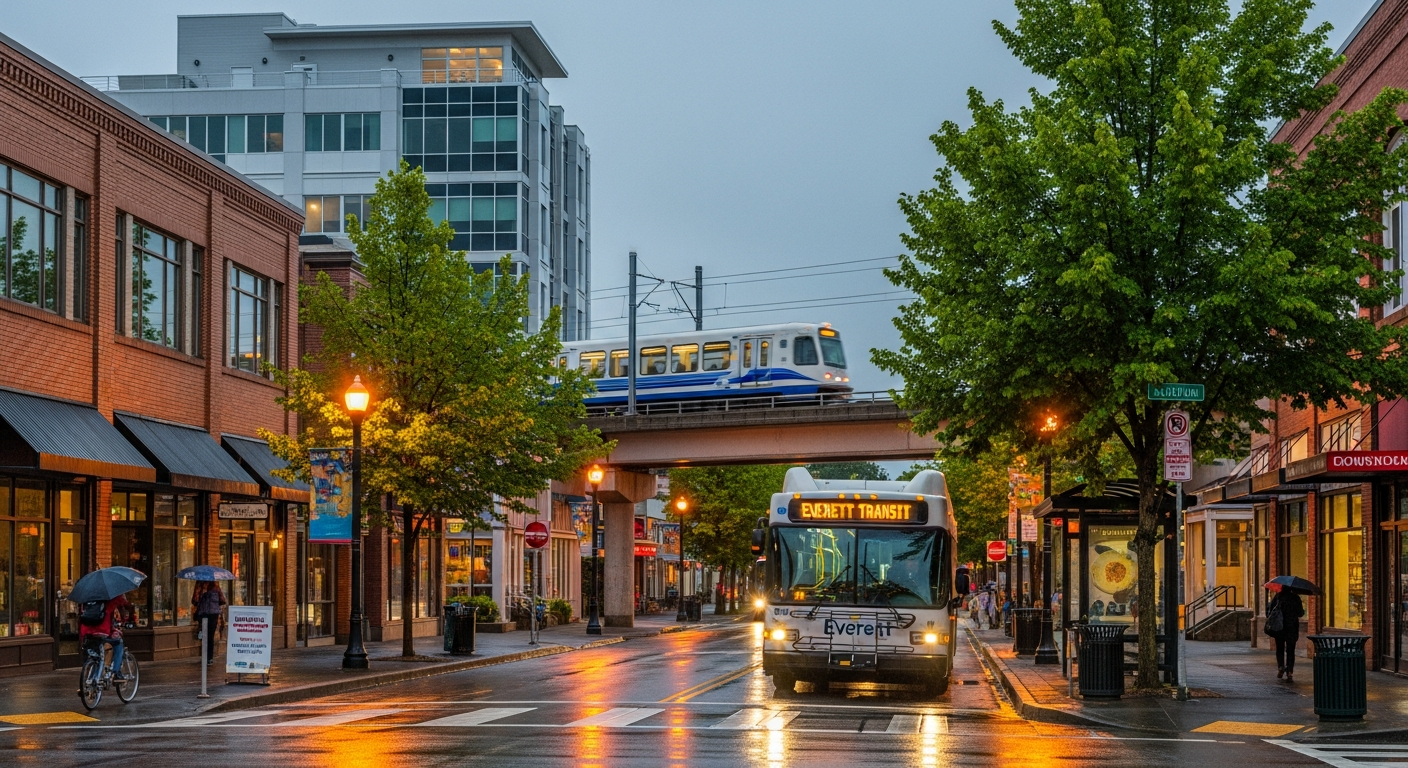
    Casino Road residents who rely on bus service should know that Everett Transit is being consolidated into Community Transit. The state legislature’s SB 5801 sets the framework; Everett City Council voted April 29 to approve a formal letter to Sound Transit demanding full delivery of the Everett Link Extension as a paired commitment. The merged transit system — combining Everett Transit’s 22 routes and 115,000 daily riders with Community Transit’s regional network — will use the expanded Casino Road campus as part of its operational foundation.

    For residents who depend on the Route 7 (Paine Field / Casino Road corridor) and other routes serving south Everett, the consolidation is designed to improve frequency and extend coverage. Community Transit’s Journey 2050 plan targets 30 million annual riders — more than triple current ridership — which requires both the Casino Road land and a fully funded light rail extension to work.

    What to Watch as a Casino Road Resident

    The three-year leaseback window (through roughly 2029) is the community engagement window. This is when Community Transit will be planning how it uses the property long-term. If community organizations, including Connect Casino Road, push for a mixed-use development that includes affordable housing or community space, that conversation needs to happen before the agency finalizes its operational buildout plans. Public agencies can — and sometimes do — include community benefit components in transit-adjacent development when community pressure is organized and early.

    The NR-MHC zoning effort — Everett’s proposal to protect seven mobile home parks in the Casino Road area from conversion to market-rate housing — is a parallel protection mechanism. The Community Transit acquisition and the NR-MHC zone together represent two distinct forms of displacement protection arriving in the corridor at the same time. Neither is sufficient alone; together they create meaningful stability in a neighborhood under significant long-term pressure.

    Frequently Asked Questions for Casino Road Residents

    Is the Goodwill Bins closing on Casino Road?

    No — not yet. Community Transit signed a three-year leaseback with Evergreen Goodwill, keeping the Bins open at 2208 W. Casino Road through approximately early 2029. After that, Community Transit will use the site for bus operations.

    Will my bus routes change because of this?

    Not immediately. The Casino Road campus acquisition is an operational expansion to support long-term ridership growth and the Everett Transit consolidation. Route changes will come through the consolidation planning process, not directly from this land purchase.

    Does this protect Casino Road from gentrification?

    It provides one form of protection: 7.55 acres of the corridor is now in public ownership and cannot be sold to a private developer without a public process. It does not, by itself, prevent rising rents or displacement pressure on the surrounding blocks. The NR-MHC zone and Connect Casino Road coalition are the primary community-led mechanisms addressing those pressures.

    How does this relate to the light rail stations planned for Casino Road?

    Two Sound Transit light rail stations are planned for the Casino Road corridor under the Everett Link Extension. Light rail typically accelerates land value increases and displacement pressure in station areas. Community Transit’s acquisition puts a large public parcel in the corridor before those dynamics peak — a meaningful protection even if it is not explicitly framed that way.

    Can I get involved in planning how Community Transit uses this site?

    Yes. Community Transit holds public board meetings and planning processes for major facility projects. Connect Casino Road and the associated neighborhood organizations are the most direct channel for organized community input. The three-year leaseback gives residents roughly a 2029 window before the site transitions to full operational use.

    Related Exploring Everett coverage: Community Transit Just Bought the Goodwill Bins on Casino Road | The Complete Guide to the .35M Acquisition | Everett Transit Consolidation Complete Guide

  • Community Transit Just Bought the Goodwill Bins on Casino Road: A Complete Guide to What the $25.35M Acquisition Means for Everett

    Community Transit Just Bought the Goodwill Bins on Casino Road: A Complete Guide to What the $25.35M Acquisition Means for Everett

    Quick Answer: Community Transit’s board unanimously approved the $25.35 million purchase of the 7.55-acre Goodwill outlet property at 2208 W. Casino Road in February 2026 — the largest single land acquisition in the agency’s 40-year history. The “Bins” stay open under a three-year leaseback. For Casino Road, a corridor already under pressure from two planned Sound Transit light rail stations and rising displacement risk, this deal is more than bus storage: it locks a major public agency into the neighborhood just as the redevelopment clock starts ticking.

    What Just Happened on Casino Road

    In February 2026, Community Transit’s board of directors voted unanimously to purchase the 108,000-square-foot Goodwill outlet complex at 2208 W. Casino Road — the one locals call “the Bins,” where goods are priced by the pound — for $25.35 million. The seller was Evergreen Goodwill of Northwest Washington. A three-year leaseback means the Bins stay open while Community Transit prepares the site for long-term operational use.

    The property sits directly adjacent to Community Transit’s existing Cascade administration building, making it a contiguous expansion of the agency’s south Everett operational campus. Community Transit’s Journey 2050 Long-Range Plan projects the agency will serve 30 million annual riders by 2050. Current vehicle storage and maintenance capacity will be exhausted well before that target. The Casino Road acquisition addresses the near-term capacity crunch.

    Why Casino Road — and Why Now

    The timing matters. Casino Road is one of the most consequential corridors in Everett’s near-future. Two Sound Transit light rail stations are planned along the corridor as part of the Everett Link Extension — a 16-mile project connecting downtown Everett Station to the regional light rail spine that Snohomish County voters approved in 2016. The planned stations at SW Everett Industrial Center and a second Casino Road-area station will bring transformative transit access to a corridor that today runs largely on surface streets and Community Transit bus routes.

    Light rail station areas historically trigger rapid land value appreciation and displacement pressure on existing residents and businesses. Casino Road’s demographics — a dense, multiethnic, working-class corridor with a high concentration of renters, small businesses, and community organizations — make it especially vulnerable to the kind of transit-driven displacement that has reshaped Rainier Valley and the Beacon Hill corridor in Seattle.

    Community Transit’s acquisition puts 7.55 acres of the corridor in public hands before the displacement dynamics fully accelerate. That’s not stated as the purchase rationale in agency documents — the stated rationale is operational capacity — but the community development implications are real and significant.

    The Property: What Community Transit Actually Bought

    The 108,000-square-foot complex at 2208 W. Casino Road includes a large-format warehouse retail footprint and associated operational space. The Goodwill outlet — distinct from standard Goodwill retail stores — operates as a bulk-pricing clearance operation where items are sorted onto tables and priced by weight. It draws a regional customer base and has operated at this Casino Road location for years.

    Under the three-year leaseback, Evergreen Goodwill continues operating the Bins. Community Transit takes legal ownership but receives lease income while planning its operational buildout. The $25.35 million purchase price reflects the property’s scale and its location in a corridor that is already beginning to command higher land values in anticipation of light rail.

    What This Means for the Casino Road Corridor

    Casino Road is home to roughly 13,000 residents, a dense network of immigrant-owned small businesses, and over two dozen community-serving organizations. The Connect Casino Road initiative — a community-led planning effort — has been working for years to ensure that the transit investment coming to the corridor lifts residents rather than displacing them.

    Community Transit’s land purchase adds a significant public anchor to the corridor. Public agency ownership is among the strongest protections against speculative displacement, since the land cannot be sold to a private developer without a public process. Whether Community Transit eventually co-develops the site with affordable housing, a transit-oriented community hub, or strictly operational facilities will depend on community engagement and agency planning decisions over the next several years.

    The acquisition also reinforces Community Transit’s long-term commitment to south Everett as its operational base — important context for residents and business owners watching the Everett Transit consolidation process unfold. As Everett Transit phases toward integration with Community Transit under SB 5801, the Casino Road campus becomes an even more critical node in the merged system’s service geography.

    The Everett Transit Consolidation Connection

    The Goodwill acquisition lands in the middle of a broader transit restructuring. Everett City Council is moving toward consolidating Everett Transit into Community Transit under state legislation, a process that would dissolve the city’s 100-year-old transit system and transfer 22 routes, 161 workers, and 115,000 riders to Community Transit. That consolidation was the subject of a major Everett Council action in April 2026.

    The Casino Road campus expansion positions Community Transit to absorb that additional operational footprint. More vehicles, more routes, and more maintenance capacity will require more land — and Community Transit just acquired it in the most strategically positioned location it could find: right next to what it already owns, in a corridor that will be transformed by light rail within the decade.

    What Residents and Businesses Should Watch

    The three-year Goodwill leaseback runs through approximately early 2029. That’s the window in which Community Transit will be finalizing plans for the site. Residents and community organizations invested in the future of Casino Road should engage with Community Transit’s public planning process as it develops. The Connect Casino Road coalition and associated organizations are the most direct channel for community voice on how this land ultimately gets used.

    For small businesses along Casino Road, the acquisition signals stability in one sense — a major public employer is investing heavily in the corridor — and uncertainty in another. If the site transitions from retail (the Bins) to operational bus storage and maintenance, the commercial traffic those retail operations generate will shift. Business owners near 2208 W. Casino Road should monitor the leaseback timeline.

    Frequently Asked Questions

    What did Community Transit buy on Casino Road in Everett?

    Community Transit purchased the 7.55-acre Goodwill outlet property at 2208 W. Casino Road for $25.35 million in February 2026. The 108,000-square-foot complex is the largest single acquisition in the agency’s 40-year history. The Goodwill “Bins” store stays open under a three-year leaseback agreement.

    Will the Goodwill Bins on Casino Road close?

    Not immediately. Evergreen Goodwill signed a three-year leaseback with Community Transit, meaning the Bins will continue operating at 2208 W. Casino Road through approximately early 2029. After the leaseback ends, Community Transit will use the site for operational purposes.

    Why did Community Transit buy land on Casino Road?

    Community Transit’s Journey 2050 plan projects the agency will serve 30 million annual riders by 2050 — up sharply from current ridership. Vehicle storage, maintenance, and administrative capacity at the existing Cascade campus will be exhausted before that target. The adjacent Goodwill property expands the campus and positions Community Transit for the Everett Transit consolidation.

    How does this relate to light rail on Casino Road?

    Two Sound Transit light rail stations are planned for the Casino Road corridor as part of the Everett Link Extension. Light rail station areas typically trigger land value increases and displacement pressure. Community Transit’s acquisition puts 7.55 acres in public ownership before those dynamics fully accelerate, providing a stable public anchor in the corridor.

    What is Connect Casino Road and what does this mean for them?

    Connect Casino Road is a community-led planning initiative working to ensure that light rail investment benefits existing Casino Road residents rather than displacing them. Community Transit’s land acquisition creates an opportunity for community engagement around how the site is ultimately developed, particularly if the agency ever considers mixed-use or affordable housing components on the parcel.

    How does the Goodwill acquisition relate to the Everett Transit merger?

    Everett is consolidating its transit system into Community Transit under SB 5801. That merger adds 22 routes, 161 workers, and 115,000 riders to Community Transit’s network. The Casino Road campus expansion gives Community Transit the physical space to absorb that additional operational footprint — more vehicles, more routes, and more maintenance demand.

  • Community Transit Just Bought the Goodwill Bins on Casino Road — Here’s What It Means for the Neighborhood

    Community Transit Just Bought the Goodwill Bins on Casino Road — Here’s What It Means for the Neighborhood

    What’s happening: Community Transit’s board voted unanimously in February 2026 to purchase the 7.55-acre Goodwill outlet property at 2208 W. Casino Road for $25.35 million — the largest single land acquisition in the agency’s history. The “Bins” will stay open under a three-year leaseback. But for the Casino Road corridor, where two Sound Transit light rail stations are planned and displacement pressure is already climbing, this deal is about more than bus storage.

    Community Transit Just Bought the Goodwill Bins on Casino Road — Here’s What It Means for the Neighborhood

    If you’ve ever dug through the bins at the Everett Goodwill outlet on Casino Road — the one where clothes and housewares are priced by the pound — you’ve stood in the middle of one of south Everett’s most consequential pieces of real estate. In February 2026, Community Transit’s board of directors voted unanimously to purchase that 7.55-acre property at 2208 W. Casino Road for $25.35 million, acquiring a 108,000-square-foot warehouse complex right next door to the agency’s existing Cascade administration building.

    For transit watchers, it’s a smart infrastructure play. For Casino Road residents, it’s one more piece of a much bigger puzzle about what this corridor is becoming — and who gets to stay in it.

    Why Community Transit Bought the Property

    The short answer: they’re running out of room. Community Transit’s internal analysis found that anticipated service growth will “consume” the agency’s current capacity for vehicle storage, maintenance, and administrative functions within the next few years. The Goodwill property sits directly adjacent to the agency’s existing Cascade administration building, making it the obvious acquisition for expansion.

    “Identifying and securing nearby land and facilities is a key strategy to sustaining operational growth, supporting service expansion, and maintaining flexibility for future development,” the agency’s memo to its board stated.

    The property itself is substantial: roughly 107,999 square feet of warehouse footprint, around 20,000 square feet of retail space, and a recycling center. Evergreen Goodwill, which purchased the site in 2011 for $10.9 million, will continue operating the outlet store and recycling center there under a three-year leaseback — paying Community Transit $120,000 per month in rent. So for at least the next three years, the bins stay open.

    There’s another factor in the long-term calculus: Sound Transit’s Link light rail extension to Everett includes a station close to the Paine Field area, not far from the Casino Road corridor. The agency flagged proximity to that infrastructure as part of the property’s strategic value.

    What This Means for Casino Road

    Casino Road is one of Everett’s most culturally dense corridors — home to a large Latino community, significant Cambodian, East African, and Pacific Islander populations, dozens of small immigrant-owned businesses, and community anchors like the Stations Unidos community development corporation, which was established specifically to fight displacement on this corridor.

    The Community Transit property acquisition isn’t a displacement threat in the direct sense — the transit agency isn’t building housing or retail that prices people out. But the deal is another signal of how much institutional attention and investment is concentrating along this corridor. Two planned light rail stations. A $25 million transit land grab. A new Boys and Girls Club facility at nearby Walter E. Hall Park, announced by Mayor Cassie Franklin in her 2026 State of the City address. Snohomish County housing funding flowing to the area. The $23 million housing award Everett received in 2027 that included Casino Road in its service area.

    When investment and infrastructure converge in a neighborhood, property values tend to follow. That’s exactly the dynamic Stations Unidos has been working to get ahead of since 2014, when Casino Road stakeholders first organized around the light rail threat. The CDC’s goal: ensure that the people who built this community get to remain part of it as it changes.

    The Boys and Girls Club Piece

    The existing Boys and Girls Clubs of Snohomish County location serving south Everett sits at 525 W. Casino Road — about a mile west of the Goodwill site. That club, which opened in 2000 after renovating a former bus barn, serves children and youth ages 5–18 with before and after-school childcare, summer camp, and teen programs.

    In her March 2026 State of the City address, Mayor Franklin announced that the City of Everett is collaborating with Boys and Girls Clubs of Snohomish County to support construction of a brand-new club location at Walter E. Hall Park, a flexible grass athletic complex at 1226 W. Casino Road. That park already serves as a hub for youth sports and hosts a skate park. Adding a Boys and Girls Club building there would be a significant community facility investment at the corridor’s geographic heart.

    Details on the new club’s timeline and design were not publicly available at press time, but the announcement signals city commitment to youth-serving infrastructure on Casino Road — not just transit infrastructure.

    What to Watch

    The three-year Goodwill leaseback runs out sometime around 2029. At that point, Community Transit will need to decide how to use the acquired warehouse space — whether for bus storage, maintenance bays, administrative expansion, or some combination. That decision will shape the Casino Road corridor at exactly the moment the light rail timeline is approaching.

    For residents of Cascade View and Twin Creeks — the two neighborhoods that flank Casino Road on its east side — the changes on this corridor are worth tracking. The road that most people think of as a thoroughfare rather than a destination has been quietly transforming for years. The institutions investing there in 2026 will set the shape of what comes next.

    Community Transit’s purchase doesn’t change daily life on Casino Road today. The bins are still open. The taquerias, the pho shops, the halal markets, the beauty supply stores — still there, still doing business. But the long arc of what this corridor becomes is being decided, piece by piece, in board rooms and city halls. Organizations like Stations Unidos exist precisely to make sure the community’s voice is part of that process, not added as an afterthought.

    Frequently Asked Questions

    Is the Goodwill outlet on Casino Road closing?

    No. Evergreen Goodwill signed a three-year leaseback agreement with Community Transit, so the outlet store and recycling center will continue operating at 2208 W. Casino Road at least through approximately 2029.

    Why did Community Transit pay $25.35 million for the Goodwill property?

    The property is adjacent to Community Transit’s existing Cascade administration building at 2312 W. Casino Road, and the agency projects its current facilities will be overwhelmed by service growth within a few years. The acquisition gives the agency land for vehicle storage, maintenance, and operational expansion.

    Will the Community Transit purchase displace Casino Road residents?

    The property at 2208 W. Casino Road is a commercial warehouse, not housing. The direct displacement risk is low. The broader concern is that concentrated investment on the corridor — transit, light rail, new facilities — can raise property values over time, creating indirect displacement pressure. That’s the issue Stations Unidos has been working on since 2014.

    What is the Boys and Girls Club building planned at Walter E. Hall Park?

    Mayor Cassie Franklin announced in her March 2026 State of the City address that the City of Everett is collaborating with Boys and Girls Clubs of Snohomish County to support construction of a new club location at Walter E. Hall Park, 1226 W. Casino Road. Specific construction timelines were not released publicly.

    Where is the existing Boys and Girls Club on Casino Road?

    The South Everett/Mukilteo Boys and Girls Club is located at 525 W. Casino Road, Everett, WA 98204, and serves children ages 5–18. Contact: (425) 355-6899 or bgcsc.org.

  • For Everett-Area Businesses and Shippers: What the Port of Everett’s $11.25M Pier 3 Rebuild Means for Your Operations

    For Everett-Area Businesses and Shippers: What the Port of Everett’s $11.25M Pier 3 Rebuild Means for Your Operations

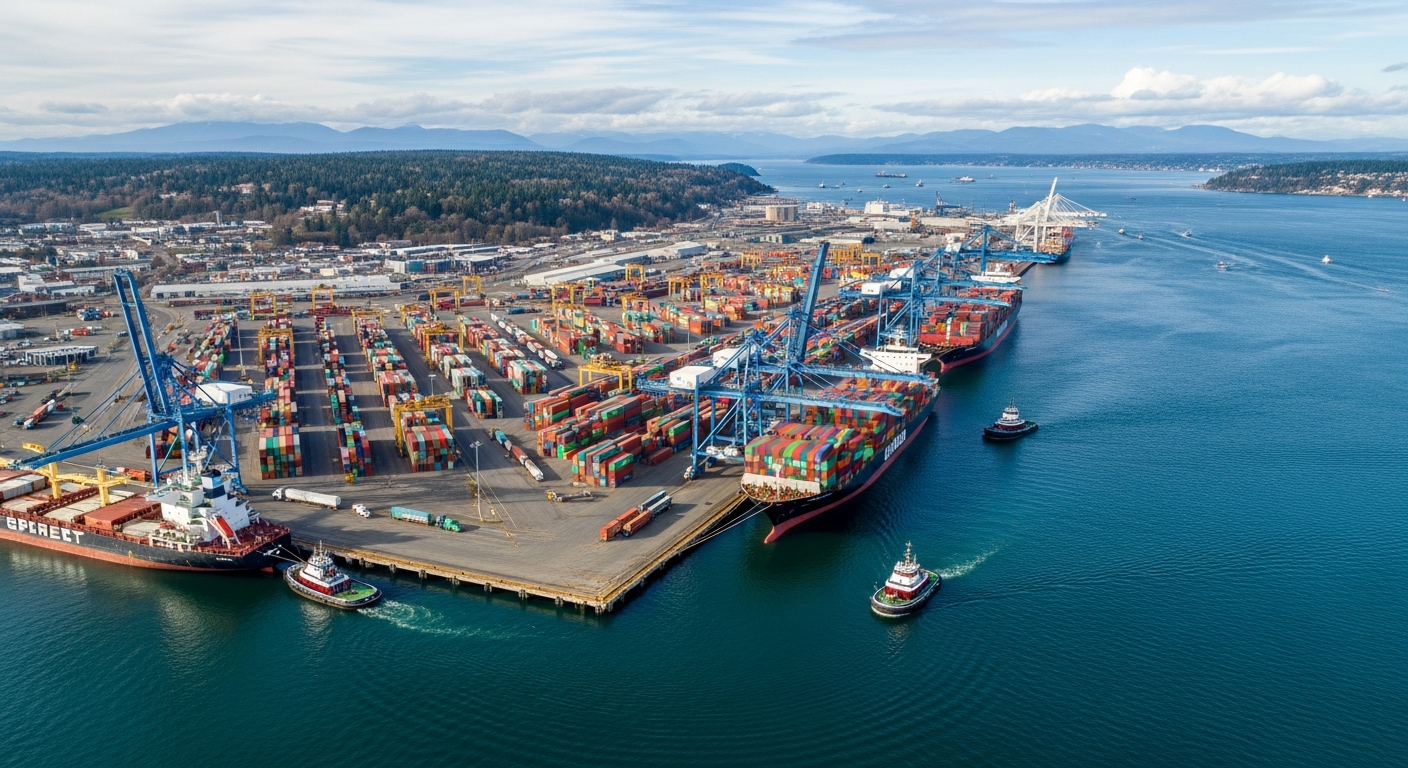
    For Everett-area businesses, importers, shippers, and logistics operators, the Port of Everett’s $11.25 million federal grant to rebuild Pier 3 is a supply chain story. Pier 3 — the port’s longest berth at 730 feet — has been operating well below its original structural capacity for years, limiting which cargo-handling equipment can run on it and therefore limiting what kinds of freight can move through it. The rebuild changes that. Here is what businesses need to know about what the project restores and why it matters for Snohomish County’s logistics position.

    The Problem the Grant Solves

    Pier 3 was built in 1973 with a design live load of 800 pounds per square foot — the rating that allows standard cargo-handling equipment to operate on it. Structural degradation over five decades has forced successive deratings. Today, the south side of the pier is rated at 600 lbs/sqft. The north side is 400 lbs/sqft. Some sections are lower.

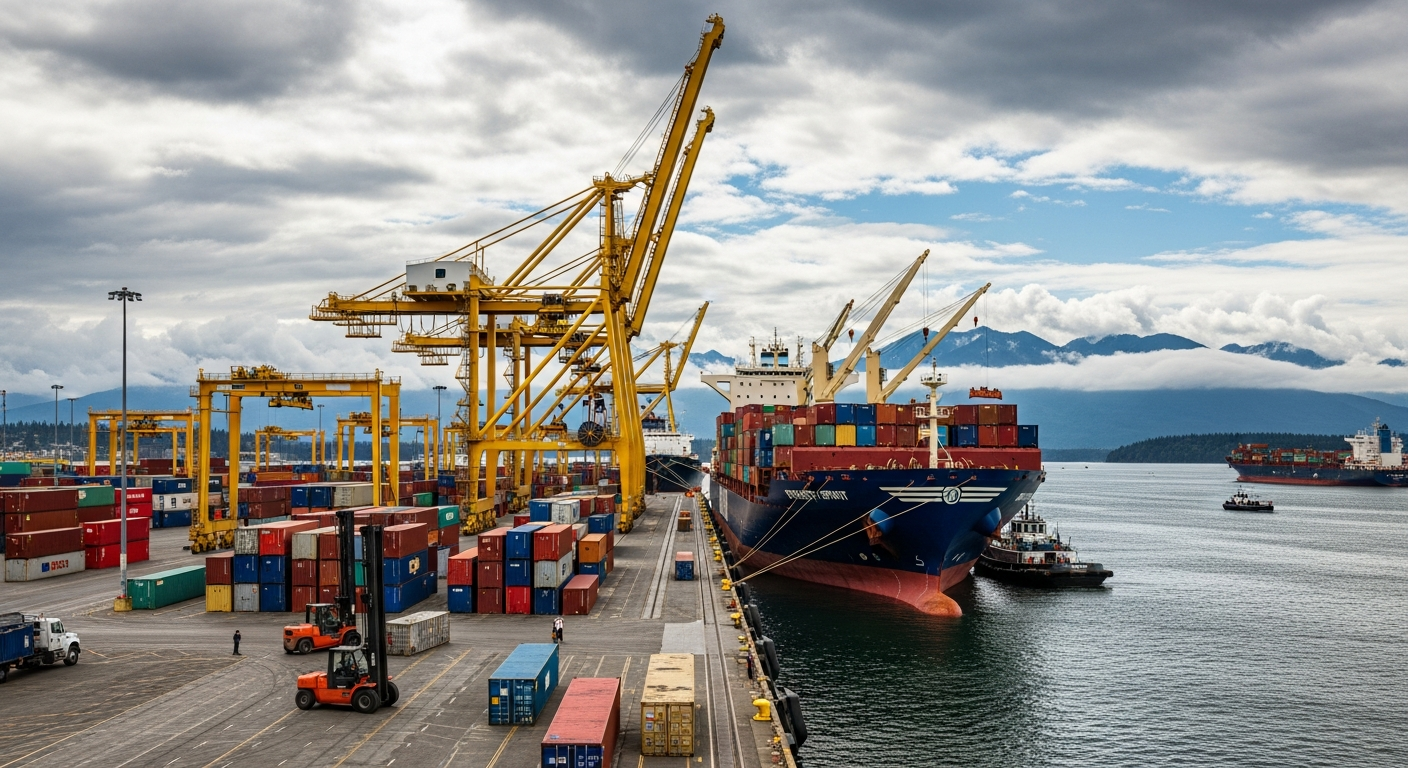
    In practice, that means the heavier cranes, forklifts, and handling equipment that would otherwise run on a full-capacity pier cannot be permitted. Cargo that requires that equipment has to be handled differently — or routed elsewhere. The rebuild installs new vertical piles and restores damaged structural elements, returning the pier to its full capacity and allowing normal heavy-equipment operations to resume.

    What It Means for the Port’s Cargo Mix

    The Port of Everett Seaport handles bulk commodities (alumina ore, cement), forest products, and general cargo. A fully restored Pier 3 expands the port’s ability to handle a more diverse mix of freight — particularly cargo requiring heavy handling equipment that the derated pier currently cannot support.

    For businesses that import or export through Puget Sound, a stronger Port of Everett means more optionality. The port is already designated by MARAD as a Strategic Commercial Seaport — one of only 18 nationwide — based on its importance to Department of Defense logistics. The rebuild reinforces that designation and the port’s position as a viable alternative to Port of Seattle or Tacoma for certain cargo categories.

    The Industrial Market Context

    Snohomish County is currently the most affordable industrial and warehouse market in the Puget Sound region. Q1 2026 data from Kidder Mathews shows asking rents running $0.70 to $1.00 per square foot monthly on a triple-net basis — the value end of a market where Seattle-side King County runs up to $1.60/sqft. With 10.39% industrial vacancy across the Seattle metro, Snohomish County is in a tenant-favorable window that is unlikely to last.

    A higher-capacity Pier 3 makes the Port of Everett a more competitive import/export hub for businesses already operating in those Snohomish County industrial parks. The supply chain logic is straightforward: affordable warehouse space plus a functioning deepwater port with full cargo-handling capacity is a logistics combination that the county’s industrial corridor — running along Highway 9, SR 9, and the I-5 corridor north of Everett — is well positioned to promote. The full Snohomish County industrial market analysis is at this site’s warehouse market guide for Q1 2026.

    Defense Logistics: The DOD Connection

    As a MARAD Strategic Commercial Seaport, the Port of Everett supports Department of Defense cargo movements — military equipment, supplies, and materiel that move through commercial ports during exercises, deployments, and mobilizations. The Navy’s presence at Naval Station Everett, combined with the Port’s Strategic Seaport designation, makes Everett a node in the military logistics network that extends from Puget Sound to the Pacific.

    The Pier 3 rebuild strengthens that node. For contractors and businesses that support the defense supply chain — from aerospace suppliers in the Paine Field corridor to logistics companies that handle defense cargo — a fully operational Pier 3 is relevant infrastructure.

    How to Engage With the Port

    The Port of Everett’s seaport operations team handles cargo inquiries directly. The project covers planning, engineering, environmental review, permitting, and construction — a multi-year timeline. Businesses with active or planned cargo operations at Pier 3 should contact the Port directly at portofeverett.com for scheduling and operational impact information as the project progresses.

    The complete guide to the Pier 3 grant — including the full structural history and MARAD designation background — is at the Port of Everett Pier 3 complete 2026 guide.

    Frequently Asked Questions

    What types of cargo will Pier 3 handle after the rebuild?
    A more diverse cargo mix than the derated pier currently allows. Historically: bulk alumina ore, cement, general cargo, forest products. Full 800 lbs/sqft restoration allows heavier cargo-handling equipment to operate.

    Does the Pier 3 rebuild affect current shipping operations?
    Construction phasing and operational impacts have not been announced. Contact the Port of Everett directly at portofeverett.com for scheduling questions.

    What is the Port of Everett’s overall capacity?
    Washington’s third largest container port and a MARAD Strategic Commercial Seaport, supporting 40,000+ local jobs. Handles bulk, breakbulk, and general cargo.

    How does the Pier 3 rebuild connect to Snohomish County’s industrial market?
    Snohomish County is the most affordable Puget Sound industrial market at $0.70–$1.00/sqft NNN. A stronger Pier 3 adds import/export capability that supports businesses in county industrial parks.

    How does a business inquire about Port of Everett shipping services?
    Contact portofeverett.com directly. The Port handles bulk, breakbulk, and general cargo inquiries through its seaport operations team.

  • Port of Everett Pier 3: The Complete 2026 Guide to the $11.25M Federal Grant, What It Rebuilds, and Why It Matters for Everett’s Supply Chain

    Port of Everett Pier 3: The Complete 2026 Guide to the $11.25M Federal Grant, What It Rebuilds, and Why It Matters for Everett’s Supply Chain

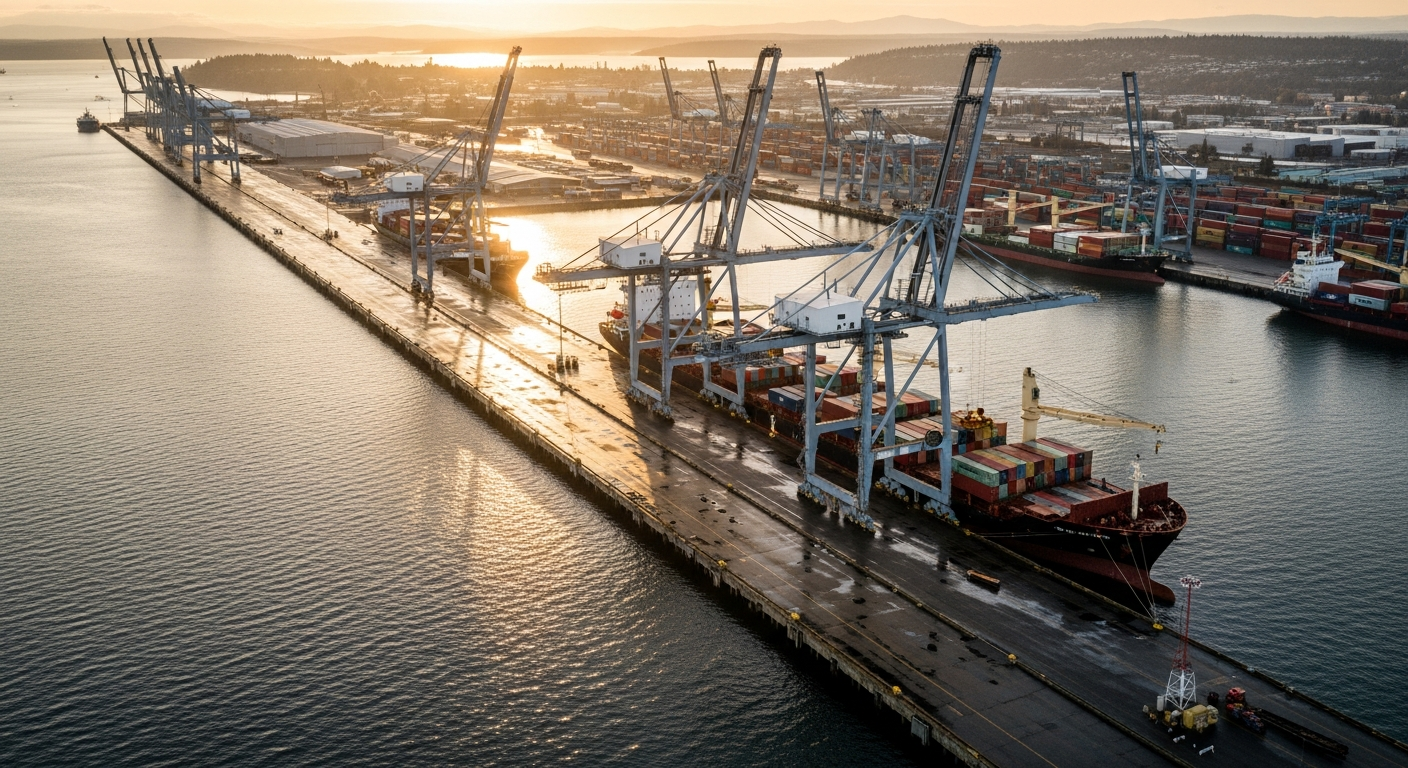
    On April 27, 2026, MARAD announced the Port of Everett had won an $11.25 million competitive federal grant to rebuild Pier 3 — the port’s longest berth, built in 1973, and now operating at a fraction of its original structural capacity. The grant comes from MARAD’s Port Infrastructure Development Program, awarded nationally on a competitive basis to ports that can demonstrate clear benefits to freight movement and national defense. Here is the complete guide to what Pier 3 is, why it needs this work, and what the rebuild means for Everett’s supply chain.

    What Pier 3 Is and What’s Wrong With It

    Pier 3 is the longest berth at the Port of Everett Seaport — 730 feet long with a 120-foot-wide concrete deck, constructed in 1973. For over five decades it has been the backbone of the Port’s cargo operations, handling bulk alumina ore, cement, general cargo, and forest products moving through Puget Sound.

    The problem is structural. Pier 3 was originally engineered for a uniform live load of 800 pounds per square foot. Over the years, degradation has required the pier to be derated. The south side now carries a maximum of 600 lbs/sqft. The north side is rated at 400 lbs/sqft. Some sections are derated further. In practical terms, this means the heavy cargo-handling equipment that would otherwise run on the pier cannot be permitted on the structure — limiting the Port’s operational flexibility and the types of cargo it can process.

    “The Port is grateful to the U.S. Department of Transportation for this critical maritime infrastructure investment that will ensure the Port of Everett Seaport continues to safely support 40,000-plus local jobs, regional economic development, and the Washington state economy,” said Port CEO and Executive Director Lisa Lefeber at the time of the announcement.

    What the $11.25 Million Grant Funds

    The PIDP grant covers the full scope of the Pier 3 Strengthening Safety and Commerce project: planning and engineering, environmental review, permitting, and construction. The core construction work is installing new vertical piles beneath the pier and restoring other damaged structural elements — the work that will return Pier 3 to its full live-load capacity and allow heavy equipment to operate on the deck again.

    The grant was part of a broader $22 million federal investment in Northwest Washington port infrastructure announced by Rep. Rick Larsen. The Swinomish Indian Tribal Community received the remaining funds for a separate project. PIDP grants are awarded nationally on a competitive basis — ports must demonstrate clear benefits to the safety, efficiency, or reliability of freight movement to qualify.

    Why the Port of Everett Is One of 18

    The Port of Everett holds a MARAD Strategic Commercial Seaport designation — one of only 18 ports in the United States to carry that status. The designation is based on the port’s importance to Department of Defense cargo movements. Strategic Commercial Seaports are the civilian maritime infrastructure the military counts on for logistics during mobilizations and sustained operations.

    That designation is part of why the Port of Everett consistently wins federal investment. It’s not just about commerce — it’s about defense supply chain resilience. A degraded Pier 3 is a gap in that chain. Restoring it to full capacity makes Everett’s role in the national maritime network more secure.

    The Broader Waterfront Context

    The Pier 3 grant arrives alongside ongoing investment across Everett’s waterfront. The $6.75 million wharf rebuild on West Marine View is nearing completion. The Millwright District is under construction. Waterfront Place Restaurant Row has new tenants operating. The Edgewater Bridge — which improves access to the waterfront corridor — opened April 29, 2026.

    The Pier 3 rebuild is the seaport side of that same story. While the marina-facing development attracts restaurants and housing, the industrial seaport is quietly receiving federal infrastructure investment that underpins the economic base all that development rests on. The Waterfront Place complete guide covers the marina and restaurant district in detail.

    Frequently Asked Questions

    What is the Port of Everett Pier 3 federal grant?
    An $11.25 million MARAD PIDP grant to rebuild Pier 3 — installing new piles and restoring structural capacity on the port’s 730-foot longest berth, originally built in 1973.

    Why does Pier 3 need to be rebuilt?
    Structural degradation has derated the pier from 800 lbs/sqft original capacity to 600 lbs/sqft (south) and 400 lbs/sqft (north), preventing full-capacity cargo operations and heavy equipment use.

    What cargo does Pier 3 handle?
    Historically: bulk alumina ore, cement, general cargo, and forest products. Full structural restoration would allow a more diverse cargo mix and heavier equipment.

    How many jobs does the Port of Everett support?
    Port CEO Lisa Lefeber cited 40,000-plus local jobs supported by the Port of Everett Seaport’s operations.

    What is the MARAD Strategic Commercial Seaport designation?
    A federal designation held by only 18 U.S. ports, based on importance to Department of Defense cargo movements. The Port of Everett holds this designation.

    Who announced the grant?
    Rep. Rick Larsen announced the $22 million Northwest Washington port infrastructure package. MARAD’s formal announcement came April 27, 2026.

    When will the Pier 3 rebuild be completed?
    No specific date has been announced. The grant covers planning through construction — a multi-year process for marine infrastructure of this scale.

  • The FF(X) Frigate Contract Is Real: What the $282.9M Ingalls Award Means for Naval Station Everett’s Homeport Bid

    The FF(X) Frigate Contract Is Real: What the $282.9M Ingalls Award Means for Naval Station Everett’s Homeport Bid

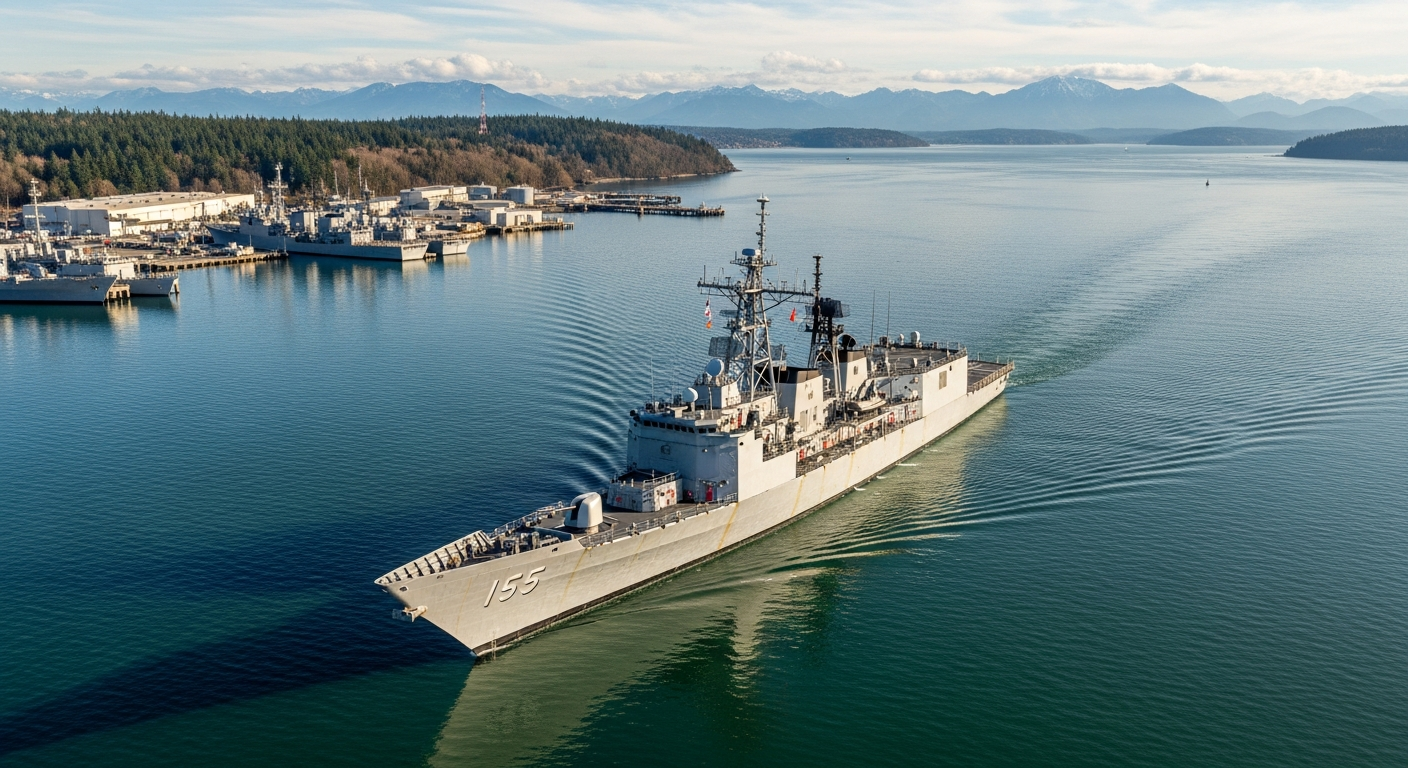
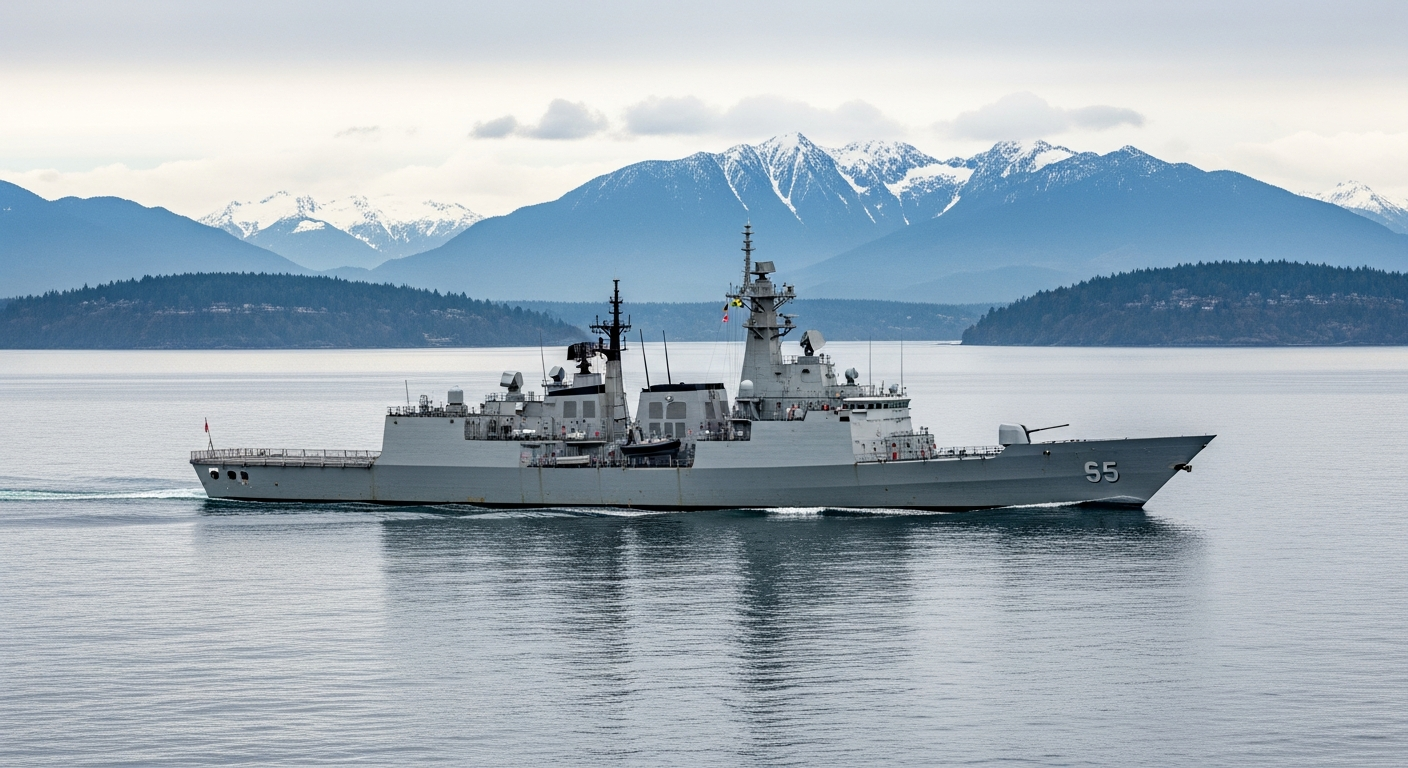
    For five months, the FF(X) frigate existed primarily as an announcement: the Navy’s replacement for the cancelled Constellation-class program, based on Ingalls’ National Security Cutter hull, with Everett still hoping to win the homeport designation. On April 28, 2026, it became a contract. The Navy awarded HII’s Ingalls Shipbuilding a $282.9 million lead yard support contract — and the first $80.6 million activates immediately, authorizing Ingalls to start cutting and shaping steel. Here is what the Everett community needs to understand about what just changed, and what the homeport campaign looks like from here.

    What the Contract Actually Covers

    The April 28 contract is a lead yard support award — the pre-construction phase work that front-loads design refinement and material preparation before formal ship construction begins. Under its terms, Ingalls is authorized to begin cutting and shaping raw materials for the main structural foundation of the first FF(X) frigate, secure key materials, and finalize design details ahead of full construction authorization.

    Of the initial $80.6 million tranche, approximately 73% — roughly $58.8 million — comes from Navy fiscal year 2026 shipbuilding and conversion appropriations. The remaining 27%, about $21.8 million, is funded through Navy research and development accounts. The full contract runs through April 2028.

    “We are excited to partner with the Navy to bring these preproduction steps under contract to accelerate delivery of the frigates that our warfighters need,” said Brian Blanchette, president of Ingalls Shipbuilding, in the company’s April 28 announcement. The contract was not competed — Ingalls built the Legend-class National Security Cutter on which the FF(X) is based, giving them a direct award under the Navy’s stated rationale.

    The FF(X) Program: Where It Came From

    Former Navy Secretary John Phelan cancelled the Constellation-class frigate program in late 2025 after years of cost growth, schedule delays, and design instability at the lead shipbuilder, Fincantieri Marinette Marine. The Constellation program had been planned for up to 20 frigates and was supposed to be the Navy’s primary small surface combatant for the coming decades.

    In December 2025, then-Secretary Phelan announced the Navy would instead pursue a new frigate — the FF(X) — based on Ingalls’ Legend-class National Security Cutter, a ship already in production and with a known cost and schedule baseline. The first FF(X) is targeted to deliver to the Navy by June 2030.

    The April 28 contract is the first major programmatic action since that December announcement. Steel is now being prepared. The FF(X) is no longer a policy decision — it’s a shipbuilding program.

    What This Means for Naval Station Everett’s Homeport Bid

    When the Constellation program was cancelled, NAVSTA Everett lost its 2021 homeport designation. That designation had named Everett as the homeport for the initial 12 Constellation-class frigates — a commitment worth an estimated $340 million in annual economic activity according to the Economic Alliance Snohomish County.

    The cancellation didn’t kill Everett’s claim — it reset the competition. Snohomish County officials, the Everett delegation, and Rep. Rick Larsen’s office have been actively lobbying the Navy to designate NAVSTA Everett as the FF(X) homeport. The arguments for Everett are strong: an existing frigate-capable pier, an established Navy community with schools, housing, and support infrastructure, and a congressional delegation that has consistently funded Pacific Fleet force structure.

    What the April 28 contract does is start the clock in a new way. With steel being cut and a June 2030 delivery target, the Navy will need to make a homeport decision well before the first ship is commissioned. That decision-making process is now accelerating whether or not an official announcement has been made.

    The full background on NAVSTA Everett’s homeport campaign is covered in this site’s earlier reporting: The FF(X) Frigate and Naval Station Everett: The Complete 2026 Guide and The Snohomish County $340M Frigate Fight.

    The Strategic Picture: Why Everett Still Has the Strongest Case

    Naval Station Everett is home to the Navy’s only Pacific Northwest deepwater homeport. It currently homeports USS Carl Vinson (aircraft carrier), USS Abraham Lincoln (aircraft carrier in rotation), surface combatants, and support vessels. The base has existing frigate pier infrastructure, a Fleet and Family Support Center, commissary, schools, and housing — the full military community infrastructure that a frigate crew requires.

    NAVSTA Everett also benefits from its position within the broader Pacific Fleet posture. The Indo-Pacific is the primary strategic theater for the next generation of U.S. naval forces, and Puget Sound is the Pacific Fleet’s primary West Coast hub. A new frigate class based on a ship already operating in Pacific Fleet service fits naturally into that framework.

    None of that guarantees the homeport — the Navy’s internal process will weigh operational requirements, infrastructure costs, and force structure planning. But the April 28 contract means Everett’s advocates now have a specific, contracted program to point to when making their case to the Pentagon.

    Timeline and What to Watch

    • April 28, 2026: $282.9M Ingalls lead yard support contract awarded
    • Through April 2028: Pre-construction activities, material securing, design finalization
    • June 2030 target: First FF(X) delivery to the Navy
    • Before 2030: Homeport decision expected — no official date announced

    Frequently Asked Questions

    What is the FF(X) frigate?
    The FF(X) is the U.S. Navy’s new small surface combatant, replacing the cancelled Constellation-class. It is based on the Ingalls-built Legend-class National Security Cutter. The lead ship is targeted for delivery by June 2030.

    What did the April 28, 2026 contract authorize?
    A $282.9 million lead yard support contract. The first $80.6 million activates immediately, authorizing Ingalls to begin cutting and shaping steel for the main structural foundation and finalizing design details. The contract runs through April 2028.

    Was Naval Station Everett designated as the FF(X) homeport?
    Not yet. NAVSTA Everett was the designated homeport for the cancelled Constellation-class. The FF(X) homeport has not been decided. Snohomish County and NAVSTA Everett are actively lobbying for that designation.

    What is the economic value of the homeport bid?
    Snohomish County officials have cited approximately $340 million in annual economic impact from NAVSTA Everett’s current operations. A frigate homeport designation would add to that baseline.

    When will the Navy decide where to homeport the FF(X)?
    No official timeline. The first ship delivers in June 2030, so a decision will likely come before that date.

    How many FF(X) frigates will be built?
    No final production number has been announced. The program’s size will be determined through the shipbuilding budget process.

    Who is building the FF(X)?
    HII’s Ingalls Shipbuilding in Pascagoula, Mississippi. The contract was a direct award, not competed, because Ingalls built the National Security Cutter on which the FF(X) is based.