Tag: Claude

  • Claude Managed Agents — Complete Pricing Reference + Dreaming Update (May 2026)

    Claude Managed Agents — Complete Pricing Reference + Dreaming Update (May 2026)

    Last refreshed: May 15, 2026

    May 2026 Update — Dreaming Feature + Beta Status

    Anthropic introduced Dreaming at Code w/ Claude (May 6, 2026) — a new Managed Agents capability where agents review their own session history overnight to improve future performance. Harvey (legal AI) reported a roughly 6× task completion rate increase after implementing it. Dreaming is developer-access preview only. Multiagent Orchestration and Outcomes are now in public beta. See the new Dreaming section below.

    What Is Claude Managed Agents? (Current Status, May 2026)

    Claude Managed Agents is Anthropic’s framework for long-running, stateful AI agents — agents that can maintain context across sessions, hand off between sub-agents, and now, improve themselves by reviewing their own work history. Here’s the current status of each component:

    Component Status Who Has Access
    Multiagent Orchestration Public Beta All API developers
    Outcomes Public Beta All API developers
    Dreaming Developer Preview Selected developers only

    Dreaming: The Feature the Press Mostly Missed

    Announced at Code w/ Claude on May 6, 2026, Dreaming is a Managed Agents capability that lets agents review and reorganize their own memory between sessions. The mechanism:

    1. After a session ends, the agent reads its existing memory store alongside the session transcripts
    2. It produces a new, reorganized memory store: duplicates merged, stale entries replaced, new patterns surfaced
    3. The next session starts with a higher-quality knowledge base — capturing insights no single session could hold

    This is meaningfully different from simply persisting conversation history. The agent isn’t just remembering what happened — it’s synthesizing what it learned. Think of it as the difference between taking notes and actually reviewing and reorganizing your notes the next morning.

    The Harvey Result

    Harvey, the legal AI company, reported approximately a 6× task completion rate increase after implementing Dreaming in their Managed Agents workflow. Harvey’s use case — complex legal research that spans multiple sessions with evolving context — is exactly the kind of work Dreaming was designed for. Sessions build on each other rather than starting fresh each time.

    Dreaming is developer-access preview as of May 2026. Docs: platform.claude.com/docs/en/managed-agents/dreams.

    What Dreaming Is Not

    A few clarifications worth making explicit:

    • Dreaming is not available to end users — it’s a developer-layer capability requiring implementation
    • It’s not persistent memory in the claude.ai chat interface
    • It’s not available to free or standard Pro subscribers through any interface
    • It’s a developer preview, not GA — expect it to evolve before full release

    Our Take: Why This Architecture Matters

    We run Managed Agents in our own Cowork workflows. The Dreaming announcement is the first time Anthropic has shipped something that resembles how expert human knowledge actually compounds over time — not by accumulating raw notes, but by periodically synthesizing and reorganizing what’s been learned into a cleaner structure.

    The Harvey 6× result is a real-world data point from a production legal AI workflow. That’s not a benchmark number — it’s a deployed system showing measurable improvement from session-to-session memory refinement. Whether that 6× figure holds across different use cases is unknown, but the direction of the effect is the signal: agents that learn from their own history outperform agents that don’t.

    For non-developer users watching this space: Dreaming is the preview of what agentic AI will look like when it becomes mainstream. The groundwork being laid now in developer preview will eventually surface in subscription-tier products.

    Model Accuracy Note — Updated May 2026

    Current flagship: Claude Opus 4.7 (claude-opus-4-7). Current models: Opus 4.7 · Sonnet 4.6 · Haiku 4.5. Claude Opus 4.7 (claude-opus-4-7) is the current flagship as of April 16, 2026. Where this article references Opus 4.6 or earlier models, those references are historical. See current model tracker →. See current model tracker →

    Tygart Media Strategy
    Volume Ⅰ · Issue 04Quarterly Position
    By Will Tygart
    Long-form Position
    Practitioner-grade

    You opened this tab because you need a number you can actually use. Not a vibe, not “it depends.” A real pricing breakdown you can put in a spreadsheet, a budget request, or a Slack message to your CTO.

    This is that page. Every pricing variable for Claude Managed Agents in one place, verified against Anthropic’s current documentation as of April 2026. Bookmark it. The beta will update; so will this.

    Quick Reference: The Formula

    Total Cost = Token Costs + Session Runtime ($0.08/hr) + Optional Tools
    Session runtime only accrues while status = running. Idle time is free.

    The Two Cost Dimensions

    Claude Managed Agents bills on exactly two dimensions: tokens and session runtime. Every pricing question you have collapses into one of these two buckets.

    Dimension 1: Token Costs

    These are identical to standard Claude API pricing. You pay the same rates you’d pay calling the Messages API directly. No Managed Agents markup on tokens. Current rates for the models most commonly used in agent work:

    • Claude Sonnet 4.6: ~$3/million input tokens, ~$15/million output tokens
    • Claude Opus 4.7: higher rates apply — check platform.claude.com/docs/en/about-claude/pricing for current figures
    • Prompt caching: same multipliers as standard API — cache hits dramatically reduce input token costs on long sessions with stable system prompts

    The implication: a token-heavy agent with a large system prompt that runs the same context repeatedly benefits significantly from prompt caching, and that benefit carries over unchanged into Managed Agents.

    Dimension 2: Session Runtime — $0.08/Session-Hour

    This is the Managed Agents-specific charge. You pay $0.08 per hour of active session runtime, metered to the millisecond.

    The critical word is active. Runtime only accrues while your session’s status is running. The following do not count toward your bill:

    • Time spent waiting for your next message
    • Time waiting for a tool confirmation
    • Idle time between tasks
    • Rescheduling delays
    • Terminated session time

    This is not how you’d bill a virtual machine. It’s closer to how AWS Lambda bills — you pay for execution, not reservation. An agent that “runs” for 8 hours but spends 6 of those hours waiting on human input has a very different bill than one running continuous autonomous loops.

    Optional Tool Costs

    Web Search: $10 per 1,000 Searches

    If your agent uses web search, each search costs $10/1,000 — that’s $0.01 per search. For most agents, this is negligible. For a research agent running hundreds of searches per session, it becomes a line item worth modeling separately.

    Code Execution: Included in Session Runtime

    Code execution containers are included in your $0.08/session-hour charge. You’re not separately billed for container hours on top of session runtime. This is explicitly stated in Anthropic’s docs and represents meaningful savings versus provisioning your own compute.

    Worked Cost Examples

    Example 1: Daily Research Agent

    Runs once per day. 30 minutes of active execution. Processes 10 documents, outputs a summary report. Moderate token volume.

    • Session runtime: 0.5 hrs × $0.08 = $0.04/day (~$1.20/month)
    • Tokens (estimate): 50K input + 5K output with Sonnet 4.6 = ~$0.23/run (~$7/month)
    • Total: ~$8–10/month

    Example 2: Weekly Batch Content Pipeline

    Runs 3x/week. 2-hour active sessions. Processes multiple documents, generates structured outputs.

    • Session runtime: 2 hrs × $0.08 × 12 sessions/month = $1.92/month
    • Tokens: depends on content volume — typically $10–40/month
    • Total: ~$12–42/month

    Example 3: Customer Support Agent (Business Hours)

    Active during business hours, handling tickets. 8 hours/day active, 5 days/week.

    • Session runtime: 8 hrs × $0.08 × 22 days = $14.08/month in runtime
    • Tokens: highly variable by ticket volume — the dominant cost driver at scale
    • Runtime cost alone: ~$14/month — tokens are likely 5–20x this depending on volume

    Example 4: 24/7 Always-On Agent

    The maximum theoretical runtime exposure. Continuous operation, no idle time.

    • Session runtime: 24 hrs × $0.08 × 30 days = $57.60/month
    • In practice, no agent has zero idle time — real cost will be lower
    • Token costs at this scale become the dominant factor by a wide margin

    Anthropic’s Official Example (from their docs)

    A one-hour coding session using Claude Opus 4.7 consuming 50,000 input tokens and 15,000 output tokens: session runtime = $0.08. With prompt caching active and 40,000 of those tokens as cache reads, the token costs drop significantly. The runtime charge stays flat at $0.08 regardless of caching.

    What’s Not Billed in Managed Agents

    A few things that might seem like costs but aren’t:

    • Infrastructure provisioning: Anthropic handles hosting, scaling, and monitoring at no additional charge
    • Container hours: Explicitly not separately billed on top of session runtime
    • State management and checkpointing: Included in the session runtime charge
    • Error recovery and retry logic: Anthropic’s infrastructure problem, not yours

    Rate Limits

    Managed Agents has specific rate limits separate from standard API limits:

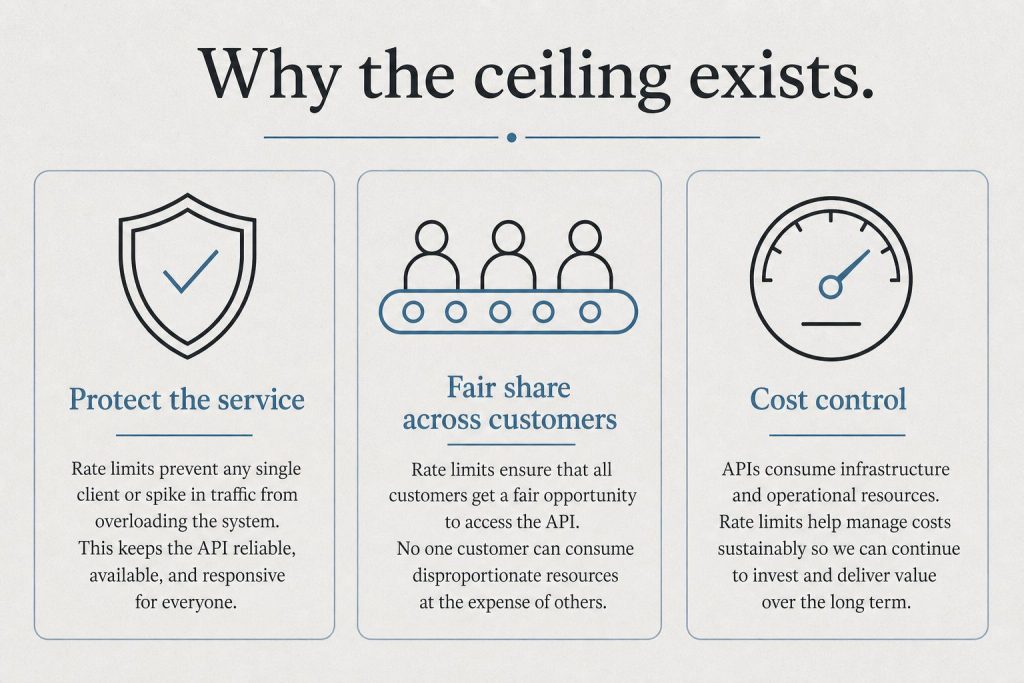
    • Create endpoints: 60 requests/minute
    • Read endpoints: 600 requests/minute
    • Organization-level limits still apply
    • For higher limits, contact Anthropic enterprise sales

    How to Access Managed Agents Pricing

    Managed Agents is available to all Anthropic API accounts in public beta. No separate signup, no premium tier gate. You need the managed-agents-2026-04-01 beta header in your API requests — the Claude SDK adds this automatically.

    For high-volume agent applications, Anthropic’s enterprise sales team negotiates custom pricing arrangements. Contact them at [email protected] or through the Claude Console.

    The Pricing Signals Worth Noting

    Anthropic recently ended Claude subscription access (Pro/Max) for third-party agent frameworks, requiring those users to switch to pay-as-you-go API pricing. This signals a deliberate strategy: consumer subscriptions are for human-paced interactions; agent workloads route through the API. The $0.08/session-hour rate exists in that context — it’s infrastructure pricing for compute that runs beyond human attention spans.

    The session-hour model also signals something about Anthropic’s infrastructure cost structure. They’re pricing on active execution time because that’s what actually taxes their systems. Idle sessions don’t cost them much; active agents do. The billing model follows the actual resource consumption pattern.

    Frequently Asked Questions

    Is the $0.08/session-hour charge in addition to token costs, or does it replace them?

    In addition to. You pay both: standard token rates for all input and output tokens, plus $0.08 per hour of active session runtime. They’re separate line items.

    Does prompt caching work in Managed Agents sessions?

    Yes. Prompt caching multipliers apply identically to Managed Agents sessions as they do to standard API calls. If your agent has a large, stable system prompt, caching it can significantly reduce input token costs.

    What happens if my session crashes? Am I billed for the crashed time?

    Runtime accrues only while status is running. Terminated sessions stop accruing. Anthropic’s infrastructure handles checkpointing and crash recovery — the session state is preserved even if the session terminates unexpectedly.

    Can I use Managed Agents on the free API tier?

    Managed Agents is available to all Anthropic API accounts in public beta, but standard tier access and rate limits apply. Free API tier users receive a small credit for testing.

    How does this compare to running agents on my own infrastructure?

    See our full breakdown: Build vs. Buy: The Real Infrastructure Cost of Claude Managed Agents. Short version: the $0.08/hour is almost certainly cheaper than provisioning and maintaining equivalent compute, but you trade control and data locality for that simplicity.

    Are there volume discounts?

    Volume discounts are available for high-volume users but negotiated case-by-case. Contact Anthropic enterprise sales.

    Does web search billing count against the $10/1,000 rate if the search returns no results?

    Anthropic’s current docs don’t explicitly address failed searches. Treat any triggered search as billable until confirmed otherwise.

    For the full session-hour math worked out by workload type, see: Claude Managed Agents Pricing, Decoded: What a Session-Hour Actually Costs You. For the build-vs-buy infrastructure comparison: Build vs. Buy: The Real Infrastructure Cost. For enterprise deployment patterns: Rakuten Stood Up 5 Enterprise Agents in a Week.

  • AI Citation Monitoring: The Complete 2026 Guide to Tracking ChatGPT, Claude & Perplexity Mentions

    AI Citation Monitoring: The Complete 2026 Guide to Tracking ChatGPT, Claude & Perplexity Mentions

    Tygart Media // AEO & AI Search
    SCANNING
    CH 03
    · Answer Engine Intelligence
    · Filed by Will Tygart

    What is AI citation monitoring? AI citation monitoring is the practice of systematically tracking whether generative AI systems — including ChatGPT, Claude, Perplexity, Google AI Overviews, and similar tools — are citing, referencing, or recommending your content when users ask relevant questions. It’s the GEO equivalent of rank tracking: instead of asking “where do I rank on Google?”, you’re asking “does AI think I’m worth mentioning?”

    Here’s a scenario that’s playing out right now across thousands of websites: a business owner spends months creating genuinely excellent content. It ranks well. People find it. The traffic dashboards look good. And then, quietly, something changes. Fewer people are clicking through from Google. The traffic dips but the rankings haven’t moved. What happened?

    AI happened. Specifically: AI search features are now answering questions directly — and the content they choose to summarize, reference, or cite is not necessarily the content that ranks #1. It’s the content that AI systems have determined is trustworthy, factual, well-structured, and authoritative. Whether that’s you depends on whether you’ve been paying attention.

    AI citation monitoring is how you pay attention.

    Why AI Citations Are a New Category of Search Visibility

    Traditional SEO gave us a clean, rankable world. Query goes in, ten blue links come out, you live or die by position one through ten. The metrics were unambiguous. Either you’re visible or you’re not.

    AI search doesn’t work that way. When someone asks ChatGPT a question, they don’t get ten links — they get an answer. That answer might cite your content, paraphrase it without attribution, or ignore it entirely in favor of a competitor whose content happened to be better structured for machine consumption. There’s no “position 1” equivalent. There’s cited, mentioned, or absent.

    This creates a new visibility dimension that most businesses aren’t tracking at all. They’re optimizing for Google’s traditional index while AI systems quietly form opinions about whose content is worth recommending — and those opinions are influencing a growing share of how people discover information.

    According to data from Semrush and BrightEdge, AI Overviews now appear in roughly 13-15% of all Google searches in the US as of early 2026 — disproportionately for informational queries, which are exactly the queries that content marketing is designed to capture. If your content isn’t getting cited in those overviews, you’re invisible to a significant portion of your potential audience.

    What AI Citation Monitoring Actually Involves

    AI citation monitoring has three core components — and they require different approaches because each AI system works differently.

    Google AI Overviews monitoring. This is the highest-volume opportunity for most businesses. Google’s AI Overviews appear at the top of search results for qualifying queries and pull from indexed web content. You can monitor citation appearances using rank tracking tools that have added AI Overview detection — Semrush, Ahrefs, and SE Ranking all have versions of this. The manual approach: run your target queries in a fresh browser session and note whether your domain appears in any AI Overview source citations.

    Perplexity monitoring. Perplexity is citation-native — it almost always shows source links. This makes it easier to monitor: run your core queries directly in Perplexity and see what it cites. You can do this manually at scale by building a query list and running it weekly. There are also emerging tools like Profound and Otterly.ai that automate Perplexity citation tracking.

    ChatGPT and Claude monitoring. These are harder because responses vary by session, model version, and user phrasing. The practical approach is prompt-based: run 10-20 of your highest-value queries as ChatGPT and Claude prompts asking for recommendations or explanations. Note whether your brand or content gets mentioned. Do this monthly. It’s not a perfect signal, but patterns emerge — if you’re never mentioned across 20 queries where you should be, that tells you something.

    How to Set Up AI Citation Monitoring Without Losing Your Mind

    The good news: you don’t need a $500/month enterprise tool to get started. Here’s a working system using mostly free or low-cost resources:

    1. Build your query list. Identify 20-30 informational queries that your ideal customers are likely asking AI systems. These should be questions your content already attempts to answer — the alignment matters. If you write about franchise marketing, your queries might include “how does SEO work for franchise locations” or “best marketing strategy for restoration franchises.”
    2. Run baseline checks. Go through each query manually in Perplexity, ChatGPT, and Google (looking for AI Overviews). Document what gets cited, mentioned, or surfaced. This is your Day 0 benchmark.
    3. Set a monitoring cadence. Monthly is realistic for most teams. Weekly if your content velocity is high or you’re actively running a GEO optimization campaign. Quarterly is the absolute minimum if you want to catch trends before they become problems.
    4. Track changes over time. A simple spreadsheet — query, platform, date, your citation (yes/no), competitor citations — is enough to start seeing patterns. You’re looking for: which queries you consistently appear in, which you never appear in, and which competitors keep showing up instead of you.
    5. Use the gaps to drive content decisions. Every query where a competitor gets cited and you don’t is a content gap — either you don’t have content on that topic, or your existing content isn’t structured in a way AI systems can easily extract and cite. Fix one or the other.

    What Makes Content More Likely to Get Cited by AI

    AI citation isn’t random. Systems like Perplexity and Google AI Overviews have consistent preferences, and understanding them is the foundation of any effective AI content monitoring and optimization strategy.

    Factual density. AI systems prefer content that makes specific, verifiable claims over vague generalizations. “Email marketing generates $42 in return for every $1 spent, according to Litmus’s 2023 State of Email report” is more citable than “email marketing has great ROI.” Specificity signals reliability.

    Clear question-and-answer structure. Content that explicitly poses a question as a heading and answers it directly in the following paragraph is easy for AI systems to extract. This is Answer Engine Optimization (AEO) in practice — and it’s directly correlated with AI citation frequency.

    Author authority signals. Named authors with associated credentials, social profiles, and a content history perform better in AI citation environments than anonymous or brand-attributed content. The E-E-A-T framework Google uses for quality evaluation translates directly to AI citability.

    Entity saturation. Content that correctly identifies and accurately describes key entities in a topic area — named people, organizations, products, concepts — is easier for AI to contextualize and cite accurately. Vague content gets paraphrased. Entity-rich content gets cited.

    The Monitoring Stack We Use at Tygart Media

    For monitoring AI citations across our managed sites, we run a combination of automated and manual checks. The automated layer uses rank trackers with AI Overview detection — primarily Semrush’s AI Overview tracker — combined with custom scripts that run Perplexity queries via API and log citation appearances to a shared tracking sheet.

    The manual layer is a monthly prompt audit: 20 queries run through ChatGPT-4o and Claude Sonnet 4.6, logged and compared to the previous month. It takes about 45 minutes per site and surfaces patterns that automated tools miss — particularly for conversational queries where phrasing variations change AI behavior significantly.

    What we’ve learned: citation frequency is strongly correlated with content structure, not just content quality. A well-structured 800-word post with clear headers and explicit answer formatting consistently outperforms a sprawling 3,000-word post that buries the answer in paragraph five. AI systems are extracting, not reading.

    Frequently Asked Questions About AI Citation Monitoring

    What is AI citation monitoring?

    AI citation monitoring is the practice of tracking whether AI-powered search tools and chatbots — including Google AI Overviews, Perplexity, ChatGPT, and Claude — are citing, referencing, or recommending your website’s content when users ask relevant questions. It’s a form of search visibility measurement designed for the generative AI era.

    Why does AI citation monitoring matter for SEO?

    AI-generated answers in Google, Perplexity, and other platforms are now intercepting click traffic that would previously have gone to organically ranked content. If AI systems cite your competitors but not you when answering questions in your category, you’re losing visibility and traffic that traditional rank tracking won’t show you.

    How can I track if ChatGPT is citing my website?

    Run your target queries directly in ChatGPT and note whether your brand or domain appears in the response or sources. Because ChatGPT responses vary by session, run each query two to three times. For systematic tracking, build a query list and run it monthly, logging results to a spreadsheet. Emerging tools like Profound.ai offer automated ChatGPT citation monitoring.

    What is the difference between AI citation monitoring and GEO?

    AI citation monitoring is a measurement practice — it tells you whether AI systems are currently citing you. Generative Engine Optimization (GEO) is the optimization practice — it covers the content structure, entity signals, and authority markers that make your content more likely to be cited. Monitoring tells you where you are. GEO is how you improve it.

    How often should I run AI citation monitoring?

    Monthly monitoring is a practical baseline for most businesses. If you’re actively publishing and optimizing content, weekly checks let you correlate content changes with citation frequency more precisely. Quarterly is the minimum for any site that wants to stay aware of AI search trends in their category.

    Go deeper: Once you understand what AI citation monitoring is, see how to build a live tracking system — The Living Monitor: How to Track Whether AI Systems Are Actually Citing Your Content.

  • Will’s Second Brain as an API: Should You Productize Your Context Stack?

    Will’s Second Brain as an API: Should You Productize Your Context Stack?

    Tygart Media / Content Strategy
    The Practitioner JournalField Notes
    By Will Tygart
    · Practitioner-grade
    · From the workbench

    Origin note: This started as a half-formed thought — “what if my second brain is what makes my Claude work so well, and what if I could let other people rent it?” The article below is the honest answer to that question, including the parts that argue against doing it.

    The Observation That Started It

    If you spend enough time building an operational stack on top of Claude — skills, Notion databases, retrieval pipelines, project knowledge, accumulated SOPs — you start to notice something strange. Your Claude does not just answer better than a fresh Claude. It moves better. It picks the right tool the first time. It remembers patterns from work you did six months ago on a different client. It improvises in ways that look almost like learning, even though the underlying model has not changed at all.

    The model is the same. The context is doing the work.

    That observation leads to an obvious question: if a curated context layer is what separates a useful AI from a frustrating one, could you sell access to your context layer? Not the model, not the prompts, not the chat interface — just the accumulated patterns, conventions, and operational wisdom, exposed as an API that any other AI workflow could pull from. Call it “Will’s Second Brain” or anything else. The pitch is: connect this to whatever you are building, and somehow it just works better. You will not always know why. That is part of the value.

    This article walks through whether that is actually a good idea, what it would cost, what the conversion math looks like, what the legal exposure is, and where the real moat would have to come from.

    The Category Already Exists (And That Is Mostly Good News)

    The “memory layer for AI agents” category is real and growing fast. Mem0, which is probably the most visible player, raised a $24M Series A in October 2025 and reports more than 47,000 GitHub stars on its open-source SDK. Their pitch is essentially the one above: instead of stuffing the entire conversation history into every LLM call, route through a memory layer that retrieves only the relevant context. They claim around 90% lower token usage and 91% faster responses compared to full-context approaches. Their pricing tiers run from a free hobby plan (10K memories, 1K retrieval calls per month) to $19/month Starter to $249/month Pro to custom enterprise pricing.

    Letta, formerly MemGPT, takes a different approach — it is a full agent runtime built around tiered memory (core, recall, archival) that mirrors how operating systems manage RAM and disk. Zep and its Graphiti engine focus on temporal knowledge graphs. SuperMemory bundles memory and RAG with a generous free tier. Hindsight publishes benchmark results claiming 91.4% on LongMemEval versus Mem0’s 49.0%, and offers all four retrieval strategies on its free tier. LangMem ships with LangGraph for teams already on that stack. AWS has Bedrock AgentCore Memory as the managed equivalent.

    The good news in all of that: the category is validated. Buyers exist. Pricing precedents exist. The bad news: you are not going to win on infrastructure. You are not going to out-engineer a YC-backed team with $24M in funding and 47K stars. If you enter this space, you have to enter on a different axis entirely.

    Where The Real Moat Would Be

    The moat is not the storage. The moat is what is in the storage.

    Mem0, Letta, and the rest sell empty memory layers. You bring the data. The promise is: if you put your facts in here, retrieval will be fast and cheap. That is a real value proposition, but it is a tooling pitch, not a knowledge pitch. The customer still has to build the knowledge themselves.

    A second-brain-as-a-service offering would sell a pre-loaded memory layer. Not “here is a fast retrieval system,” but “here is a retrieval system that already knows how an AI-native content agency thinks about WordPress, SEO, GEO, AEO, taxonomy architecture, content refresh strategy, hub-and-spoke linking, Notion command center design, GCP publishing pipelines, and the operational lessons from running 27 client sites.” That is not a tooling product. That is consulting wisdom packaged as middleware.

    The closest analogies are not Mem0 or Letta. They are things like:

    • Cursor’s index of best practices baked into its autocomplete — the tool ships with an opinion about what good code looks like, and that opinion is the product.
    • Linear’s opinionated workflows — the value is not the database, it is the prescribed way of working that the database enforces.
    • 37signals’ Shape Up methodology being sold as a book — accumulated operational wisdom packaged as a product separate from the consulting practice.

    The “second brain as an API” pitch is closer to Shape Up than to Mem0. The technical layer is just the delivery mechanism.

    The Economics: Cheaper Than You Think, Harder Than You Think

    Per-query costs for serving a RAG API are genuinely low. A typical retrieval call against a vector store runs somewhere in the range of fractions of a cent to a few cents depending on embedding model, vector store, and how many chunks you return. If you self-host on GCP using Cloud Run, BigQuery, and Vertex AI embeddings, marginal serving cost per query is negligible at small scale and only becomes meaningful at thousands of queries per minute.

    The cost problems are not the queries. They are:

    • Free trial abuse. Developer-facing API products with free trials get hammered. Bots, scrapers, people running benchmarks against you for blog posts, competitors testing your retrieval quality. If you offer any free tier without a credit card on file, expect a meaningful percentage of total traffic to be abuse. Hard rate limits and required payment methods from day one are not optional.
    • Support load. Even a “just connect this and it works” product generates support tickets. Integration questions, schema confusion, “why did it return X when I asked Y,” “how do I cite this in my own product.” For a single operator, support load is the actual scaling constraint, not infrastructure.
    • Conversion math. Free-trial-to-paid conversion for self-serve developer tools typically runs in the 2% to 5% range, with some outliers higher and many lower. A trial that converts at 2% needs roughly 50 trial signups per paying customer. If your trial is generous and your conversion is on the low end, you can spend more on serving free users than you earn from paid ones, especially in early months when paying user count is small.

    None of this kills the idea. It just means the business case has to be built on top of realistic assumptions, not aspirational ones.

    The Scrubbing Problem (This Is The Scariest Part)

    An accumulated operational knowledge base built from real client work is, by definition, contaminated with information that cannot leave the building. Client names. Service URLs. App passwords. Internal strategy documents. Competitor analysis. Personal references. Names of contractors and partners. Slack-style observations about which clients are easy to work with and which are not. Pricing conversations. Things a client said in a meeting.

    “I will scrub the data before I expose it” is a sentence that gets people sued. The problem is that scrubbing, done as a filter on top of live data, always misses things. You build a regex for client names, but you forget a client was referenced obliquely in a footnote. You strip URLs, but a screenshot or a code example contains a domain. You remove credentials, but an old version of a SOP still has an example token in it. Filters are 95% solutions to a problem that needs a 100% solution, because the failure mode of the missing 5% is “client finds their internal information being served to a stranger via your API.”

    The right architecture is not a filter. It is a clean room.

    That means a separate knowledge base, built from scratch, that contains only the patterns, conventions, and methodology — never the source material it was extracted from. You read your accumulated work, you write generalized lessons by hand or with heavy review, and those generalized lessons become the product. The production knowledge base never touches the serving knowledge base. There is an air gap, not a pipeline.

    This is more work than the “scrub and ship” approach. It is also the only version that does not end in a lawsuit.

    Liability Exposure

    The moment “Will’s Second Brain” is connected to someone else’s workflow, three new liability vectors open up:

    1. Bad output causes a bad decision. Customer uses your API to generate strategy, follows the strategy, loses money, blames you. Mitigated by ToS, liability caps, and clear disclaimers that the service is informational and not professional advice.
    2. Hallucinated facts get cited as authoritative. Your knowledge base says something confident, customer publishes it, the something is wrong, customer’s audience holds them responsible. Mitigated by disclaimers and by being conservative about what gets included in the seed data.
    3. Your contaminated data ends up in front of the wrong eyes. See previous section. Mitigated by the clean-room architecture, not by promises.

    The minimum legal infrastructure to launch is: an LLC, a Terms of Service with clear liability caps, a Privacy Policy, errors and omissions insurance, and ideally a separate entity that owns the product so the consulting business is shielded if the product business gets sued. None of these are expensive individually. All of them are necessary together.

    The Loss Leader Question

    One framing of the idea is: do not try to make money from it directly. Give it away. Let it serve as the most aggressive top-of-funnel content marketing asset Tygart Media has ever shipped. Every developer who connects “Will’s Second Brain” to their workflow becomes aware of Tygart Media. Some fraction of them will eventually need the consulting practice that the second brain was extracted from.

    This is a much more defensible version of the idea, for three reasons:

    • It removes the trial conversion math from the critical path. You are not optimizing for paid signups. You are optimizing for awareness and mindshare.
    • It removes most of the support burden. Free tools have lower customer expectations. “It is free, here is the docs page” is a complete answer in a way that “you are paying $19 a month, please help me debug my integration” is not.
    • It changes the liability story. Free tools used at the user’s own risk have a much easier time enforcing liability caps than paid services do.

    The cost side of a free version is real but manageable. Hard rate limits, required signup with a real email address (for the funnel, not the billing), aggressive abuse detection, and serving costs absorbed as a marketing line item rather than a COGS line item. A few hundred dollars a month of GCP spend is cheaper than most paid ad campaigns and probably reaches more qualified people.

    Verdict

    The idea is good. The business is hard. The two are not the same thing.

    The version that probably works is the loss-leader version: a free, rate-limited, clean-room knowledge API marketed as a top-of-funnel asset for the consulting practice, built from a hand-curated knowledge base that never touches client data, wrapped in a basic legal entity with a real ToS and E&O insurance. The version that probably does not work is the standalone subscription business with a free trial, because the trial economics, the support load, and the liability surface area are all more hostile than they look from the outside.

    The thing worth building first is not the API. It is the clean-room knowledge base. If you can hand-write 100 generalized operational patterns from the existing stack, in a way that contains zero client-specific information and reads as standalone wisdom, you have proven the product is possible. If you cannot — if every pattern keeps wanting to reference a specific client situation to make sense — then the wisdom is not yet abstract enough to package, and the right move is to keep accumulating and revisit in six months.

    Either way, the question that started this is the right question. Context is doing more work in modern AI than most people realize, and someone is going to figure out how to sell curated context as a product. It might as well be the operator who already has the most interesting context to sell.


    Reference Data and Knowledge Node Notes

    This section exists to make this article more useful as a knowledge node when scanned later. It contains the underlying market data, pricing references, and structural notes that informed the analysis above.

    Memory Layer Market Snapshot (2026)

    • Mem0: $24M Series A October 2025 (Peak XV, Basis Set Ventures). 47K+ GitHub stars. Apache 2.0 open source. Pricing: free Hobby (10K memories, 1K retrieval calls/month), $19 Starter (50K memories), $249 Pro (unlimited, graph memory, analytics), custom Enterprise. Claims 90% token reduction, 91% faster, +26% accuracy on LOCOMO benchmark vs OpenAI Memory. SOC 2, HIPAA available. Independent evaluation: 49.0% on LongMemEval.
    • Letta (formerly MemGPT): Full agent runtime, not just memory layer. Three-tier OS-inspired architecture (core, recall, archival). Self-editing memory where agents decide what to store. Apache 2.0, ~21K GitHub stars. Python-only SDK. Best for new agent builds, not for adding memory to existing stacks.
    • Zep / Graphiti: Temporal knowledge graphs. Strongest option for queries that need to reason about how facts changed over time. Reportedly scores 15 points higher than Mem0 on LongMemEval temporal subtasks.
    • Hindsight: MIT licensed. Claims 91.4% on LongMemEval. All retrieval strategies (graph, temporal, keyword, semantic) available on free tier including self-hosted.
    • SuperMemory: Bundled memory + RAG. Closed source. Generous free tier. Small API surface.
    • LangMem: Memory tooling for LangGraph. Three memory types: episodic, semantic, procedural (agents updating their own instructions). Free, open source. Requires LangGraph.
    • Bedrock AgentCore Memory: AWS managed equivalent. Out-of-the-box short-term and long-term memory.

    Conversion Rate Reference Numbers

    • Self-serve developer tool free trial → paid conversion: typically 2-5%, with B2B SaaS averages around 14-25% across all categories but developer tools tend to be lower because the audience is more skeptical and self-sufficient.
    • Freemium to paid conversion (no trial, just free tier): typically 1-4%.
    • Required credit card on free trial: roughly 2x conversion rate vs no card required, but 50-75% lower trial signup rate. Net result is usually higher quality but lower quantity.

    Cost Reference Numbers (GCP, 2026)

    • Vertex AI text embedding (gecko-003 or similar): roughly $0.000025 per 1K characters. A typical 500-word document chunk costs less than $0.0001 to embed.
    • BigQuery vector search: storage is cheap, queries scale with the size of the result set. A retrieval against 100K vectors returning top-10 typically costs well under a cent.
    • Cloud Run serving costs: minimum-instance-zero deployments cost nothing at idle. Per-request cost for a typical retrieval API is a fraction of a cent including CPU time and egress.
    • Realistic monthly serving cost for a free, rate-limited “second brain” API at modest usage (say, 100 active users averaging 50 queries per day): probably $50-200/month total infrastructure.

    The Clean Room Architecture (Recommended Approach)

    Two completely separate knowledge bases, never connected:

    1. Production knowledge base: The existing accumulated stack. Notion command center, Claude skills library, client SOPs, BigQuery operations ledger, everything tagged to specific clients and projects. This is the source of truth for the consulting practice. It never touches the public-facing system.
    2. Clean room knowledge base: Hand-written or heavily-reviewed generalized patterns. Contains zero client-specific information, zero credentials, zero internal strategy, zero personal references. Each entry is a standalone generalized lesson that could have been written by anyone with similar experience. This is what gets exposed via the API.

    The transfer between the two is manual or heavily reviewed, never automated. A regex filter is not a clean room. A human reading each entry and rewriting it is.

    Minimum Viable Legal Stack

    • Separate LLC for the product (shields the consulting practice)
    • Terms of Service with explicit liability cap (typically capped at fees paid in last 12 months, or for free service, capped at $0 plus minimal statutory damages)
    • Privacy policy covering what gets logged and retained
    • Errors and omissions insurance ($1M coverage typical, runs $500-1500/year for a small operation)
    • Clear “informational, not professional advice” disclaimers on every API response
    • Logged consent that the user understands the service is generative and may produce incorrect output

    Adjacent Concepts Worth Tracking

    • “Context as a service” as an emerging category — distinct from memory layers. Memory layers store what the user told them. Context services ship with knowledge already loaded.
    • The methodology-as-product pattern — Shape Up, Getting Things Done, the 4-Hour Workweek. These are all examples of operational wisdom productized into something that can be sold separate from the consulting practice that generated it.
    • Loss leaders as PR for consulting practices — 37signals’ Basecamp, Stripe’s documentation, Vercel’s open source projects. The free or cheap thing is the marketing for the expensive thing.
    • The “API for vibes” risk — products that promise “it just works better” without explaining why are hard to differentiate, hard to defend in court, and hard to upsell. The product needs at least one concrete claim that can be measured.

    Last updated: April 2026. Knowledge node tags: AI memory layers, productization, second brain, RAG, context engineering, loss leader strategy, clean room architecture, Mem0, Letta, Zep, agency productization, AI tooling business models.

  • The Split Brain — Claude & Gemini Dual Intelligence

    The Split Brain — Claude & Gemini Dual Intelligence

    Two glowing brain hemispheres representing Claude for live strategy and Gemini for bulk execution connected by neural light bridges
  • Dataforseo Claude Keyword Research — Article Hero Images Visual

    Dataforseo Claude Keyword Research — Article Hero Images Visual

    Dataforseo Claude Keyword Research
    Dataforseo Claude Keyword Research

    About This Image

    This image is part of the Article Hero Images collection in the Tygart Media visual library. Every image produced by Tygart Media is AI-generated using Google Vertex AI (Imagen), converted to WebP format, and injected with full IPTC/XMP metadata before publication.

    Technical Details

    • Format: WEBP
    • Collection: Article Hero Images
    • Media ID: 360
    • Pipeline: Vertex AI Imagen → WebP → IPTC/XMP → WordPress

    Image Licensing

    All images in the Tygart Media visual library are produced in-house using AI image generation and are owned by Tygart Media.

  • AI Content Operations: Building a Just-In-Time Machine

    AI Content Operations: Building a Just-In-Time Machine

    The Machine Room · Under the Hood

    Just-in-time knowledge manufacturing is an operational model where content, services, and deliverables are assembled on demand from a growing base of raw capabilities — knowledge systems, API connections, AI pipelines, and structured data — rather than pre-built and warehoused. Nothing sits on a shelf. Everything is fabricated at the moment of need.

    There’s a version of running an agency where you spend your weekends batch-producing blog posts, pre-writing email sequences, and stockpiling social content in a spreadsheet. You build the inventory, shelve it, and pray it’s still relevant when you finally schedule it out three weeks later.

    I spent years in that model. It doesn’t scale. It doesn’t adapt. And the moment a client’s market shifts or a Google update lands, half your shelf is stale.

    What I’ve been building instead — quietly, over the last year — is something different. Not a content warehouse. A content machine. One where nothing is pre-built, but everything can be built. On demand. At speed. With quality that compounds instead of decays.

    The Ingredients Are Not the Product

    Here’s the mental model that changed everything: stop thinking about what you produce. Start thinking about what you can draw from.

    Right now, the Tygart Media operating system has ingredients scattered across five layers. A Notion workspace with six databases tracking every client, every task, every piece of knowledge ever captured. A BigQuery data warehouse with 925 embedded knowledge chunks and vector search. 27 WordPress sites with over 6,800 published posts — each one a node in a knowledge graph that gets smarter every time something new is published. A GCP compute cluster running Claude Code with direct access to every site’s database. And 40+ Claude skills that know how to do everything from SEO audits to image generation to taxonomy fixes to competitive pivots.

    None of those ingredients are a finished product. They’re flour, eggs, sugar, and a well-calibrated oven. The product is whatever someone orders.

    How It Actually Works

    A client needs 20 hyper-local articles grounded in real watershed data for Twin Cities restoration searches. The machine doesn’t pull from a shelf. It reaches for the content brief builder, the adaptive variant pipeline, the DataForSEO keyword intelligence layer, the WordPress REST API publisher, and the IPTC metadata injection system. Those ingredients combine — differently every time — to produce exactly what’s needed. Not approximately. Exactly.

    Someone wants featured images across 50 articles? The machine reaches for Vertex AI Imagen, the WebP converter, the XMP metadata injector, and the WordPress media uploader. One script. Every image generated, optimized, metadata-enriched, and published in under a minute each.

    The ingredients are the same. The output is infinitely variable.

    Why Inventory Thinking Fails at Scale

    The inventory model has a ceiling built into it. You can only pre-build as fast as one human can think, write, and publish. Every hour spent building inventory is an hour not spent improving the machine. And inventory decays — content ages, data goes stale, market conditions shift.

    The machine model inverts this. Every hour spent improving a skill, connecting an API, or enriching the knowledge base makes everything that comes after it better. The 20th article is better than the first — not because you practiced writing, but because the knowledge graph is 20 nodes richer, the internal linking map is denser, and the content brief builder has more competitive intelligence to draw from.

    This is the flywheel. The ingredients improve by being used.

    The Three-Tier Architecture

    The machine runs on three layers, each with a specific job.

    The first layer is the strategist — a live AI session that can reach out to any API, generate images with Vertex AI, publish to any WordPress site, query BigQuery, log to Notion, and compose social media drafts. It handles anything that involves calling an API or making a decision. It forgets between sessions, but carries the important context forward through a persistent memory system.

    The second layer is the field operator — a browser-based AI that can navigate any web interface, click through dashboards, type into terminals, and visually inspect what’s happening. It handles anything that requires a browser. GCP Console, DNS management, quota requests, visual QA.

    The third layer is the persistent worker — an AI that lives on the server itself, with direct access to every WordPress database, every file, every log. It doesn’t forget between sessions. It handles heavy operations that need to survive beyond a single conversation: bulk migrations, cross-site audits, scheduled content generation.

    Three layers. Three different tools. One machine.

    The Knowledge Compounds

    The part that most people miss about this model is the compounding effect. Every article published adds a node to the knowledge graph. Every SEO audit enriches the competitive intelligence layer. Every client conversation captured in Notion becomes a retrievable insight for the next brief. Every image generated trains the prompt library. Every taxonomy fix improves the next site’s information architecture.

    Nothing is wasted. Nothing sits idle. Every output becomes an input for the next request.

    This is why I stopped building inventory. The machine doesn’t need a warehouse. It needs raw materials, good pipes, and someone who knows which valve to turn.

    What This Means for Clients

    For the businesses we serve, this model means three things. First, speed — when you need content, you don’t wait for a writer to start from scratch. The machine draws from existing knowledge, existing competitive intelligence, and existing site architecture to produce faster and with more context than any human starting cold. Second, relevance — nothing is pre-written three weeks ago and scheduled for a date that may no longer make sense. Everything is built for right now, with right now’s data. Third, compounding quality — the 50th article on your site benefits from everything the first 49 taught the machine about your industry, your competitors, and your audience.

    No back stock. No stale inventory. Just a machine that gets better every time someone needs something.

    Frequently Asked Questions

    What is just-in-time content manufacturing?

    Just-in-time content manufacturing is an operational model where articles, images, and digital assets are assembled on demand from a growing base of knowledge systems, AI pipelines, and API connections — rather than pre-built and stored as inventory. Each deliverable is fabricated at the moment of need using the best available data and intelligence.

    How does a content machine differ from a content calendar?

    A content calendar pre-schedules fixed deliverables weeks in advance. A content machine maintains the ingredients and capabilities to produce any deliverable on demand. The calendar is rigid and decays; the machine is adaptive and compounds in quality over time as its knowledge base grows.

    What technologies power a just-in-time content system?

    A typical stack includes AI language models for content generation, vector databases for knowledge retrieval, WordPress REST APIs for publishing, image generation models for visual assets, and a project management layer like Notion for orchestration. The key is that these components are connected via APIs so they can be combined dynamically for any request.

    Does just-in-time content sacrifice quality for speed?

    The opposite. Because each piece draws from a growing knowledge base, competitive intelligence layer, and established site architecture, the quality compounds over time. The 50th article benefits from everything the first 49 taught the system. Pre-built inventory, by contrast, starts decaying the moment it’s created.

  • AI Music Pipeline: 20 Songs in One Session with Claude

    AI Music Pipeline: 20 Songs in One Session with Claude

    The Lab · Tygart Media
    Experiment Nº 603 · Methodology Notes
    METHODS · OBSERVATIONS · RESULTS

    I wanted to test a question that’s been nagging me since I started building autonomous AI pipelines: how far can you push a creative workflow before the quality falls off a cliff?

    The answer, it turns out, is further than I expected — but the cliff is real, and knowing where it is matters more than the output itself.

    The Experiment: Zero Human Edits, 20 Songs, 19 Genres

    The setup was straightforward in concept and absurdly complex in execution. I gave Claude one instruction: generate original songs using Producer.ai, analyze each one with Gemini 2.0 Flash, create custom artwork with Imagen 4, build a listening page with a custom audio player, publish it to this site, update the music hub, log everything to Notion, and then loop back and do it again.

    The constraint that made it real: Claude had to honestly assess quality after every batch and stop when diminishing returns hit. No padding the catalog with filler. No claiming mediocre output was good. The stakes had to be real or the whole experiment was theater.

    Over the course of one extended session, the pipeline produced 20 original tracks spanning 19 distinct genres — from heavy metal to bossa nova, punk rock to Celtic folk, ambient electronic to gospel soul.

    How the Pipeline Actually Works

    Each song passes through a 7-stage autonomous pipeline with zero human intervention between stages:

    1. Prompt Engineering — Claude crafts a genre-specific prompt designed to push Producer.ai toward authentic instrumentation and songwriting conventions for that genre, not generic “make a song in X style” requests.
    2. Generation — Producer.ai generates the track. Claude navigates the interface via browser automation, waits for generation to complete, then extracts the audio URL from the page metadata.
    3. Audio Conversion — The raw m4a file is downloaded and converted to MP3 at 192kbps for the full version, plus a trimmed 90-second version at 128kbps for AI analysis.
    4. Gemini 2.0 Flash Analysis — The trimmed audio is sent to Google’s Gemini 2.0 Flash model via Vertex AI. Gemini listens to the actual audio and returns a structured analysis: song description, artwork prompt suggestion, narrative story, and thematic elements.
    5. Imagen 4 Artwork — Gemini’s artwork prompt feeds into Google’s Imagen 4 model, which generates a 1:1 album cover. Each cover is genre-matched — moody neon for synthwave, weathered wood textures for Appalachian folk, stained glass for gospel soul.
    6. WordPress Publishing — The MP3 and artwork upload to WordPress. Claude builds a complete listening page with a custom HTML/CSS/JS audio player, genre-specific accent colors, lyrics or composition notes, and the AI-generated story. The page publishes as a child of the music hub.
    7. Hub Update & Logging — The music hub grid gets a new card with the artwork, title, and genre badge. Everything logs to Notion for the operational record.

    The entire stack runs on Google Cloud — Vertex AI for Gemini and Imagen 4, authenticated via service account JWT tokens. WordPress sits on a GCP Compute Engine instance. The only external dependency is Producer.ai for the actual audio generation.

    The 20-Song Catalog

    You can listen to every track on the Tygart Media Music Hub. Here’s the full catalog with genre and a quick take on each:

    # Title Genre Assessment
    1 Anvil and Ember Blues Rock Strong opener — gritty, authentic tone
    2 Neon Cathedral Synthwave / Darkwave Atmospheric, genre-accurate production
    3 Velvet Frequency Trip-Hop Moody, textured, held together well
    4 Hollow Bones Appalachian Folk Top 3 — haunting, genuine folk storytelling
    5 Glass Lighthouse Dream Pop / Indie Pop Shimmery, the lightest track in the catalog
    6 Meridian Line Orchestral Hip-Hop Surprisingly cohesive genre fusion
    7 Salt and Ceremony Gospel Soul Warm, emotionally grounded
    8 Tide and Timber Roots Reggae Laid-back, authentic reggae rhythm
    9 Paper Lanterns Bossa Nova Gentle, genuine Brazilian feel
    10 Burnt Bridges, Better Views Punk Rock Top 3 — raw energy, real punk attitude
    11 Signal Drift Ambient Electronic Spacious instrumental, no lyrics needed
    12 Gravel and Grace Modern Country Solid modern Nashville sound
    13 Velvet Hours Neo-Soul R&B Vocal instrumental — texture over lyrics
    14 The Keeper’s Lantern Celtic Folk Top 3 — strong closer, unique sonic palette

    Plus 6 earlier experimental tracks (Iron Heart variations, Iron and Salt, The Velvet Pour, Rusted Pocketknife) that preceded the formal pipeline and are also on the hub.

    Where Quality Held Up — and Where It Didn’t

    The pipeline performed best on genres with strong structural conventions. Blues rock, punk, folk, country, and Celtic music all have well-defined instrumentation and songwriting patterns that Producer.ai could lock into. The AI wasn’t inventing a genre — it was executing within one, and the results were genuinely listenable.

    The weakest output came from genres that rely on subtlety and human nuance. The neo-soul track (Velvet Hours) ended up as a vocal instrumental — beautiful textures, but no real lyrical content. It felt more like a mood than a song. The synthwave track was competent but slightly generic — it hit every synth cliché without adding anything distinctive.

    The biggest surprise was Meridian Line (Orchestral Hip-Hop). Fusing a full orchestral arrangement with hip-hop production is hard for human producers. The AI pulled it off with more coherence than I expected.

    The Honest Assessment: Why I Stopped at 20

    After 14 songs in the formal pipeline (plus the 6 experimental tracks), I evaluated what genres remained untapped. The answer was ska, reggaeton, polka, zydeco — genres that would have been novelty picks, not genuine catalog additions. Each of the 19 genres I covered brought a distinctly different sonic palette, vocal style, and emotional register. Song 20 was the right place to stop because Song 21 would have been padding.

    This is the part that matters for anyone building autonomous creative systems: the quality curve isn’t linear. You don’t get steadily worse output. You get strong results across a wide range, and then you hit a wall where the remaining options are either redundant (too similar to something you already made) or contrived (genres you’re forcing because they’re different, not because they’re good).

    Knowing where that wall is — and having the system honestly report it — is the difference between a useful pipeline and a content mill.

    What This Means for AI-Driven Creative Work

    This experiment wasn’t about proving AI can replace musicians. It can’t. Every track in this catalog is a competent execution of genre conventions — but none of them have the idiosyncratic human choices that make music genuinely memorable. No AI song here will be someone’s favorite song.

    What the experiment does prove is that the full creative pipeline — from ideation through production, analysis, visual design, web publishing, and catalog management — can run autonomously at a quality level that’s functional and honest about its limitations.

    The tech stack that made this possible:

    • Claude — Pipeline orchestration, prompt engineering, quality assessment, web publishing, and the decision to stop
    • Producer.ai — Audio generation from text prompts
    • Gemini 2.0 Flash — Audio analysis (it actually listened to the MP3 and described what it heard)
    • Imagen 4 — Album artwork generation from Gemini’s descriptions
    • Google Cloud Vertex AI — API backbone for both Gemini and Imagen 4
    • WordPress REST API — Direct publishing with custom HTML listening pages
    • Notion API — Operational logging for every song

    Total cost for the entire 20-song catalog: a few dollars in Vertex AI API calls. Zero human edits to the published output.

    Listen for Yourself

    The full catalog is live on the Tygart Media Music Hub. Every track has its own listening page with a custom audio player, AI-generated artwork, the story behind the song, and lyrics (or composition notes for instrumentals). Pick a genre you like and judge for yourself whether the pipeline cleared the bar.

    The honest answer is: it cleared it more often than it didn’t. And knowing exactly where it didn’t is the most valuable part of the whole experiment.


  • Human Knowledge Distillery: What Tygart Media Does

    Human Knowledge Distillery: What Tygart Media Does

    The Lab · Tygart Media
    Experiment Nº 504 · Methodology Notes
    METHODS · OBSERVATIONS · RESULTS

    I’ve been building Tygart Media for a while now, and I’ve always struggled to explain what we actually do. Not because the work is complicated — it’s not. But because the thing we do doesn’t have a clean label yet.

    We’re not a content agency. We’re not a marketing firm. We’re not an SEO shop, even though SEO is part of what happens. Those are all descriptions of outputs, and they miss the thing underneath.

    The Moment It Clicked

    I was working with a client recently — a business owner who has spent 20 years building expertise in his industry. He knows things that nobody else knows. Not because he’s secretive, but because that knowledge lives in his head, in his gut, in the way he reads a situation and makes a call. It’s tacit knowledge. The kind you can’t Google.

    My job wasn’t to write blog posts for him. My job was to extract that knowledge, organize it, structure it, and put it into a format that could actually be used — by his team, by his customers, by AI systems, by anyone who needs it.

    That’s when I realized: Tygart Media is a human knowledge distillery.

    What a Knowledge Distillery Does

    Think about what a distillery actually does. You take raw material — grain, fruit, whatever — and you run it through a process that extracts the essence. You remove the noise. You concentrate what matters. And you put it in a form that can be stored, shared, and used.

    That’s exactly what we do with human expertise. Every business leader, every subject matter expert, every operator who has been doing this work for years — they are sitting on enormous reserves of knowledge that is trapped. It’s trapped in their heads, in their habits, in their decision-making patterns. It’s not written down. It’s not structured. It can’t be searched, referenced, or built upon by anyone else.

    We extract it. We distill it. We put it into structured formats — articles, knowledge bases, structured data, content architectures — that make it usable.

    The Media Is the Knowledge

    Here’s the shift that changed everything for me: the word “media” in Tygart Media doesn’t mean content. It means medium — as in, the thing through which knowledge travels.

    When we publish an article, we’re not creating content for content’s sake. We’re creating a vessel for knowledge that was previously locked inside someone’s brain. The article is just the delivery mechanism. The real product is the structured intelligence underneath it.

    Every WordPress post we publish, every schema block we inject, every entity we map — those are all expressions of distilled knowledge being put into circulation. The websites aren’t marketing channels. They’re knowledge infrastructure.

    Content as Data, Not Decoration

    Most agencies look at content and see marketing material. We look at content and see data. Every piece of content we create is structured, tagged, embedded, and connected to a larger knowledge graph. It’s not sitting in a silo waiting for someone to stumble across it — it’s part of a living system that AI can read, search engines can parse, and humans can navigate.

    When you start treating content as data and knowledge rather than decoration, everything changes. You stop asking “what should we blog about?” and start asking “what does this organization know that nobody else does, and how do we make that knowledge accessible to every system that could use it?”

    Where This Goes

    Right now, we run our own operations out of this distilled knowledge. We manage 27+ WordPress sites across wildly different industries — restoration, luxury lending, cold storage, comedy streaming, veterans services, and more. Every one of those sites is a node in a knowledge network that gets smarter with every engagement.

    But here’s where it gets interesting. The distilled knowledge we’re building — stripped of personal information, structured for machine consumption — could become an open API. A knowledge layer that anyone could plug into. Your AI assistant, your search tools, your internal systems — they could all connect to the Tygart Brain and immediately get smarter about the domains we’ve mapped.

    That’s not a fantasy. The infrastructure already exists. We already have the knowledge pages, the embeddings, the structured data. The question isn’t whether we can open it up — it’s when.

    Some people call this democratizing knowledge. I just call it doing the obvious thing. If you’ve spent the time to extract, distill, and structure expertise across dozens of industries, why would you keep it locked in a private database? The whole point of a distillery is that what comes out is meant to be shared.

    What This Means for You

    If you’re a business leader sitting on years of expertise that’s trapped in your head — that’s the raw material. We can extract it, distill it, and turn it into a knowledge asset that works for you around the clock.

    If you’re someone who wants to build AI-powered tools or systems — eventually, you’ll be able to plug into a growing, curated knowledge network that’s been distilled from real human expertise. Not scraped. Not summarized. Distilled.

    Tygart Media isn’t a content agency that figured out AI. It’s a knowledge distillery that happens to express itself as content. That distinction matters, and I think it’s going to matter a lot more very soon.


    Frequently Asked Questions: What Tygart Media Does

    What exactly is Tygart Media and how is it different from a content agency?

    Tygart Media is a human knowledge distillery — not a content agency, marketing firm, or SEO shop. The distinction is what we’re working with: most agencies produce content from briefs. We extract tacit knowledge from business owners and subject matter experts, then structure that knowledge into formats that can be searched, referenced, built upon, and understood by both humans and AI systems. The content is a byproduct of the knowledge architecture, not the goal itself.

    What is tacit knowledge and why does it need to be distilled?

    Tacit knowledge is the expertise that lives in a person’s head, gut, and decision-making instincts — built over years of doing the work. It can’t be Googled because it’s never been written down. Most businesses are sitting on enormous reserves of this knowledge that is completely trapped: inaccessible to their teams, invisible to customers, and unreadable by AI systems. Distillation means extracting that expertise, organizing it, and putting it into structured formats that can actually be used.

    What does “AI-native” mean in the context of Tygart Media’s approach?

    AI-native means the content and knowledge architecture is designed from the start to be readable and citable by AI systems — not just search engines. This includes structured data markup, entity saturation, answer-optimized formatting, and content that AI models like Claude, ChatGPT, and Gemini can retrieve and reference when answering questions in their domain. An AI-native knowledge base works for human readers and AI readers simultaneously.

    Who is Tygart Media built for?

    Business owners and operators who have deep domain expertise and want it working harder for them. Typically: service businesses with complex offerings, founders who are the primary knowledge holders in their company, and operators in specialized industries (restoration, lending, healthcare, B2B services) where the expertise gap between the business and its customers is large. If you have 10+ years of experience that isn’t structured anywhere, you’re the target.

    What does a Tygart Media engagement actually produce?

    The outputs vary by engagement but typically include: a structured content architecture (categories, clusters, internal linking), long-form articles that capture and communicate domain expertise, AEO/GEO-optimized content designed for AI citation, schema markup for rich search results, and in some cases a full Notion-based knowledge base that functions as a second brain for the business. The goal is a knowledge system that compounds — not a content calendar that resets every month.

  • AI Knowledge Base Case Study: Building a Searchable Brain

    AI Knowledge Base Case Study: Building a Searchable Brain

    The Machine Room · Under the Hood

    The Problem Nobody Talks About: 200+ Episodes of Expertise, Zero Searchability

    Here’s a scenario that plays out across every industry vertical: a consulting firm spends five years recording podcast episodes, livestreams, and training sessions. Hundreds of hours of hard-won expertise from a founder who’s been in the trenches for decades. The content exists. It’s published. People can watch it. But nobody — not the team, not the clients, not even the founder — can actually find the specific insight they need when they need it.

    That’s the situation we walked into six months ago with a client in a $250B service industry. A podcast-and-consulting operation with real authority — the kind of company where a single episode contains more actionable intelligence than most competitors’ entire content libraries. The problem wasn’t content quality. The problem was that the knowledge was trapped inside linear media formats, unsearchable, undiscoverable, and functionally invisible to the AI systems that are increasingly how people find answers.

    What We Actually Built: A Searchable AI Brain From Raw Content

    We didn’t build a chatbot. We didn’t slap a search bar on a podcast page. We built a full retrieval-augmented generation (RAG) system — an AI brain that ingests every piece of content the company produces, breaks it into semantically meaningful chunks, embeds each chunk as a high-dimensional vector, and makes the entire knowledge base queryable in natural language.

    The architecture runs entirely on Google Cloud Platform. Every transcript, every training module, every livestream recording gets processed through a pipeline that extracts metadata using Gemini, splits the content into overlapping chunks at sentence boundaries, generates 768-dimensional vector embeddings, and stores everything in a purpose-built database optimized for cosine similarity search.

    When someone asks a question — “What’s the best approach to commercial large loss sales?” or “How should adjusters handle supplement disputes?” — the system doesn’t just keyword-match. It understands the semantic meaning of the query, finds the most relevant chunks across the entire knowledge base, and synthesizes an answer grounded in the company’s own expertise. Every response cites its sources. Every answer traces back to a specific episode, timestamp, or training session.

    The Numbers: From 171 Sources to 699 in Six Months

    When we first deployed the knowledge base, it contained 171 indexed sources — primarily podcast episodes that had been transcribed and processed. That alone was transformative. The founder could suddenly search across years of conversations and pull up exactly the right insight for a client call or a new piece of content.

    But the real inflection point came when we expanded the pipeline. We added course material — structured training content from programs the company sells. Then we ingested 79 StreamYard livestream transcripts in a single batch operation, processing all of them in under two hours. The knowledge base jumped to 699 sources with over 17,400 individually searchable chunks spanning 2,800+ topics.

    Here’s the growth trajectory:

    Phase Sources Topics Content Types
    Initial Deploy 171 ~600 Podcast episodes
    Course Integration 620 2,054 + Training modules
    StreamYard Batch 699 2,863 + Livestream recordings

    Each new content type made the brain smarter — not just bigger, but more contextually rich. A query about sales objection handling might now pull from a podcast conversation, a training module, and a livestream Q&A, synthesizing perspectives that even the founder hadn’t connected.

    The Signal App: Making the Brain Usable

    A knowledge base without an interface is just a database. So we built Signal — a web application that sits on top of the RAG system and gives the team (and eventually clients) a way to interact with the intelligence layer.

    Signal isn’t ChatGPT with a custom prompt. It’s a purpose-built tool that understands the company’s domain, speaks the industry’s language, and returns answers grounded exclusively in the company’s own content. There are no hallucinations about things the company never said. There are no generic responses pulled from the open internet. Every answer comes from the proprietary knowledge base, and every answer shows you exactly where it came from.

    The interface shows source counts, topic coverage, system status, and lets users run natural language queries against the full corpus. It’s the difference between “I think Chris mentioned something about that in an episode last year” and “Here’s exactly what was said, in three different contexts, with links to the source material.”

    What’s Coming Next: The API Layer and Client Access

    Here’s where it gets interesting. The current system is internal — it serves the company’s own content creation and consulting workflows. But the next phase opens the intelligence layer to clients via API.

    Imagine you’re a restoration company paying for consulting services. Instead of waiting for your next call with the consultant, you can query the knowledge base directly. You get instant access to years of accumulated expertise — answers to your specific questions, drawn from hundreds of real-world conversations, case studies, and training materials. The consultant’s brain, available 24/7, grounded in everything they’ve ever taught.

    This isn’t theoretical. The RAG API already exists and returns structured JSON responses with relevance-scored results. The Signal app already consumes it. Extending access to clients is an infrastructure decision, not a technical one. The plumbing is built.

    And because every query and every source is tracked, the system creates a feedback loop. The company can see what clients are asking about most, identify gaps in the knowledge base, and create new content that directly addresses the highest-demand topics. The brain gets smarter because people use it.

    The Content Machine: From Knowledge Base to Publishing Pipeline

    The other unlock — and this is the part most people miss — is what happens when you combine a searchable AI brain with an automated content pipeline.

    When you can query your own knowledge base programmatically, content creation stops being a blank-page exercise. Need a blog post about commercial water damage sales techniques? Query the brain, pull the most relevant chunks from across the corpus, and use them as the foundation for a new article that’s grounded in real expertise — not generic AI filler.

    We built the publishing pipeline to go from topic to live, optimized WordPress post in a single automated workflow. The article gets written, then passes through nine optimization stages: SEO refinement, answer engine optimization for featured snippets and voice search, generative engine optimization so AI systems cite the content, structured data injection, taxonomy assignment, and internal link mapping. Every article published this way is born optimized — not retrofitted.

    The knowledge base isn’t just a reference tool. It’s the engine that feeds a content machine capable of producing authoritative, expert-sourced content at a pace that would be impossible with traditional workflows.

    The Bigger Picture: Why Every Expert Business Needs This

    This isn’t a story about one company. It’s a blueprint that applies to any business sitting on a library of expert content — law firms with years of case analysis podcasts, financial advisors with hundreds of market commentary videos, healthcare consultants with training libraries, agencies with decade-long client education archives.

    The pattern is always the same: the expertise exists, it’s been recorded, and it’s functionally invisible. The people who created it can’t search it. The people who need it can’t find it. And the AI systems that increasingly mediate discovery don’t know it exists.

    Building an AI brain changes all three dynamics simultaneously. The creator gets a searchable second brain. The audience gets instant, cited access to deep expertise. And the AI layer — the Perplexitys, the ChatGPTs, the Google AI Overviews — gets structured, authoritative content to cite and recommend.

    We’re building these systems for clients across multiple verticals now. The technology stack is proven, the pipeline is automated, and the results compound over time. If you’re sitting on a content library and wondering how to make it actually work for your business, that’s exactly the problem we solve.

    Frequently Asked Questions

    What is a RAG system and how does it differ from a regular chatbot?

    A retrieval-augmented generation (RAG) system is an AI architecture that answers questions by first searching a proprietary knowledge base for relevant information, then generating a response grounded in that specific content. Unlike a general chatbot that draws from broad training data, a RAG system only uses your content as its source of truth — eliminating hallucinations and ensuring every answer traces back to something your organization actually said or published.

    How long does it take to build an AI knowledge base from existing content?

    The initial deployment — ingesting, chunking, embedding, and indexing existing content — typically takes one to two weeks depending on volume. We processed 79 livestream transcripts in under two hours and 500+ podcast episodes in a similar timeframe. The ongoing pipeline runs automatically as new content is created, so the knowledge base grows without manual intervention.

    What types of content can be ingested into the AI brain?

    Any text-based or transcribable content works: podcast episodes, video transcripts, livestream recordings, training courses, webinar recordings, blog posts, whitepapers, case studies, email newsletters, and internal documents. Audio and video files are transcribed automatically before processing. The system handles multiple content types simultaneously and cross-references between them during queries.

    Can clients access the knowledge base directly?

    Yes — the system is built with an API layer that can be extended to external users. Clients can query the knowledge base through a web interface or via API integration into their own tools. Access controls ensure clients see only what they’re authorized to access, and every query is logged for analytics and content gap identification.

    How does this improve SEO and AI visibility?

    The knowledge base feeds an automated content pipeline that produces articles optimized for traditional search, answer engines (featured snippets, voice search), and generative AI systems (Google AI Overviews, ChatGPT, Perplexity). Because the content is grounded in real expertise rather than generic AI output, it carries the authority signals that both search engines and AI systems prioritize when selecting sources to cite.

    What does Tygart Media’s role look like in this process?

    We serve as the AI Sherpa — handling the full stack from infrastructure architecture on Google Cloud Platform through content pipeline automation and ongoing optimization. Our clients bring the expertise; we build the system that makes that expertise searchable, discoverable, and commercially productive. The technology, pipeline design, and optimization strategy are all managed by our team.

  • Automated Image Pipeline: AI Generation & IPTC Metadata

    Automated Image Pipeline: AI Generation & IPTC Metadata

    The Lab · Tygart Media
    Experiment Nº 472 · Methodology Notes
    METHODS · OBSERVATIONS · RESULTS

    This video was generated from the original Tygart Media article using NotebookLM’s audio-to-video pipeline. The article that describes how we automate image production became the script for an AI-produced video about that automation — a recursive demonstration of the system it documents.


    Watch: Build an Automated Image Pipeline That Writes Its Own Metadata

    The Image Pipeline That Writes Its Own Metadata — Full video breakdown. Read the original article →

    What This Video Covers

    Every article needs a featured image. Every featured image needs metadata — IPTC tags, XMP data, alt text, captions, keywords. When you’re publishing 15–20 articles per week across 19 WordPress sites, manual image handling isn’t just tedious; it’s a bottleneck that guarantees inconsistency. This video walks through the exact automated pipeline we built to eliminate that bottleneck entirely.

    The video breaks down every stage of the pipeline:

    • Stage 1: AI Image Generation — Calling Vertex AI Imagen with prompts derived from the article title, SEO keywords, and target intent. No stock photography. Every image is custom-generated to match the content it represents, with style guidance baked into the prompt templates.
    • Stage 2: IPTC/XMP Metadata Injection — Using exiftool to inject structured metadata into every image: title, description, keywords, copyright, creator attribution, and caption. XMP data includes structured fields about image intent — whether it’s a featured image, thumbnail, or social asset. This is what makes images visible to Google Images, Perplexity, and every AI crawler reading IPTC data.
    • Stage 3: WebP Conversion & Optimization — Converting to WebP format (40–50% smaller than JPG), optimizing to target sizes: featured images under 200KB, thumbnails under 80KB. This runs in a Cloud Run function that scales automatically.
    • Stage 4: WordPress Upload & Association — Hitting the WordPress REST API to upload the image, assign metadata in post meta fields, and attach it as the featured image. The post ID flows through the entire pipeline end-to-end.

    Why IPTC Metadata Matters Now

    This isn’t about SEO best practices from 2019. Google Images, Perplexity, ChatGPT’s browsing mode, and every major AI crawler now read IPTC metadata to understand image context. If your images don’t carry structured metadata, they’re invisible to answer engines. The pipeline solves this at the point of creation — metadata isn’t an afterthought applied later, it’s injected the moment the image is generated.

    The results speak for themselves: within weeks of deploying the pipeline, we started ranking for image keywords we never explicitly optimized for. Google Images was picking up our IPTC-tagged images and surfacing them in searches related to the article content.

    The Economics

    The infrastructure cost is almost irrelevant: Vertex AI Imagen runs about $0.10 per image, Cloud Run stays within free tier for our volume, and storage is minimal. At 15–20 images per week, the total cost is roughly $8/month. The labor savings — eliminating manual image sourcing, editing, metadata tagging, and uploading — represent hours per week that now go to strategy and client delivery instead.

    How This Video Was Made

    The original article describing this pipeline was fed into Google NotebookLM, which analyzed the full text and generated an audio deep-dive covering the technical architecture, the metadata injection process, and the business rationale. That audio was converted to this video — making it a recursive demonstration: an AI system producing content about an AI system that produces content.

    Read the Full Article

    The video covers the architecture and results. The full article goes deeper into the technical implementation — the exact Vertex AI API calls, exiftool commands, WebP conversion parameters, and WordPress REST API patterns. If you’re building your own pipeline, start there.


    Related from Tygart Media