Tag: Agency Growth

  • Voice Mirroring: Why How You Deliver Information Matters as Much as What You Say

    Voice Mirroring: Why How You Deliver Information Matters as Much as What You Say

    Tygart Media / Content Strategy
    The Practitioner JournalField Notes
    By Will Tygart · Practitioner-grade · From the workbench

    There is a principle that separates consultants who get results from consultants who get ignored, and it has nothing to do with how smart you are or how deep your knowledge goes.

    It’s called voice mirroring. And it works like this: the depth you go is for you. The way you deliver it back is for them.

    What Voice Mirroring Actually Means

    Voice mirroring is the practice of returning information to someone in the same register, vocabulary, and complexity level they used when they asked for it.

    If a client calls something a “brain box thing that scans and chunks stuff,” that is not ignorance. That is their operating language. Your job is not to correct it. Your job is to meet it.

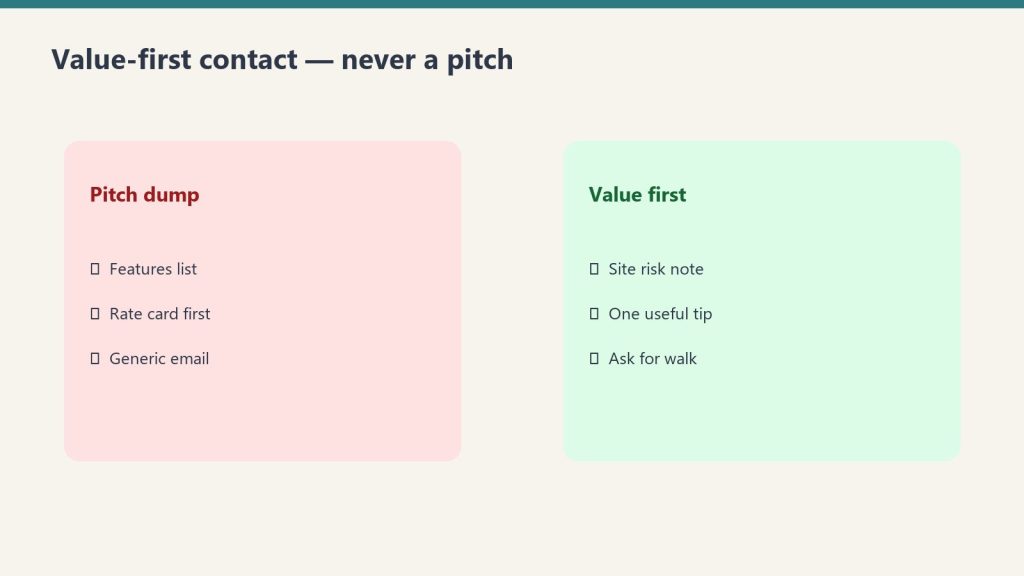
    When you respond to a simple question with a 14-point technical breakdown, you haven’t demonstrated expertise. You’ve created friction. The information doesn’t land because the delivery doesn’t fit the receiver.

    The Research Phase vs. the Delivery Phase

    Voice mirroring requires you to split your process into two distinct phases that should never bleed into each other.

    The research phase is where you go as deep as you need to. You build the full knowledge structure. You understand the technical landscape, the edge cases, the nuances. You go unrestricted. This phase is entirely internal.

    The delivery phase is where you filter. You take everything you know and you ask one question: what does this person need to hear, in their language, to move forward? You strip everything that doesn’t answer that question.

    Most people collapse these phases. They research and then output everything they found. That is not delivery. That is dumping.

    Why This Is Harder Than It Sounds

    The instinct for most experts is to demonstrate depth. We have been trained — in school, in career ladders, in client presentations — to show our work. The more we show, the more valuable we appear.

    But there is a tension at the center of this. Go too technical and you’re not approachable. Make it too simple and you don’t appear valuable. The sweet spot is a specific calibration: sophisticated enough to earn trust, plain enough to require no translation.

    Finding that calibration requires listening more than talking. It requires paying attention to how the question was asked, not just what was asked.

    What Voice Mirroring Looks Like in Practice

    A prospect emails you: “Hey, I just need to know if this thing is going to sit inside or outside my company, what it’s going to cost, and how much work it’s going to be for us.”

    They did not ask for a capabilities deck. They did not ask for a technical architecture diagram. They asked three direct questions in plain language.

    Voice mirroring says: answer those three questions in the same plain language. Then stop.

    Everything else you know about your system — the AI pipeline, the schema structure, the content scoring logic — stays in the research phase. It is not erased. It is reserved. You deploy it when and if the conversation earns it.

    Voice Mirroring as a Sales and Client Retention Tool

    The downstream effects of getting this right compound fast. Clients who feel understood don’t need as many touchpoints to make decisions. They trust faster. They refer more. They don’t feel like they need a translator every time they interact with you.

    Conversely, clients who consistently receive information they have to decode become exhausted. Even if your work is excellent, the communication friction erodes the relationship. They start to feel like the problem is them — and that is the last feeling you want a client to have.

    Voice mirroring is not a soft skill. It’s a retention mechanism.

    The Takeaway

    Go as deep as you need to go internally. Build the knowledge. Understand the complexity. Do not shortcut the research phase.

    Then, before you open your mouth or start typing, ask yourself: in what voice did this person ask? Return your answer in that voice. Everything else is noise.

    Frequently Asked Questions

    What is voice mirroring in client communication?

    Voice mirroring is the practice of returning information to a client or prospect in the same vocabulary, register, and complexity level they used when they asked. It separates the internal research depth from the external delivery language.

    Why do experts struggle with voice mirroring?

    Most experts are trained to demonstrate depth by showing their work. This instinct leads to over-delivery — giving clients everything you know rather than what they need to hear, in a way they can act on.

    Is voice mirroring just dumbing things down?

    No. The goal is calibration, not simplification. The delivery needs to be sophisticated enough to earn trust while plain enough to require no translation. That is a specific, practiced skill.

    How does voice mirroring affect client retention?

    Clients who feel consistently understood make decisions faster, require fewer touchpoints, and refer more readily. Communication friction — even when the underlying work is excellent — erodes relationships over time.

  • Where There’s a Will, There’s a Way: The Naming Question and the Phase Question Hiding Behind It

    Where There’s a Will, There’s a Way: The Naming Question and the Phase Question Hiding Behind It

    Tygart Media / Content Strategy
    The Practitioner JournalField Notes
    By Will Tygart
    · Practitioner-grade
    · From the workbench

    Fourth in what is now apparently a series. The first three articles asked whether the accumulated context layer behind Tygart Media could be productized, how the dual-publish pattern is the deposit mechanism that builds the layer, and why articles deposited via that pattern are infrastructure rather than content. This piece is about the naming question that arrived next: should the productized version be called “Where There’s a Will, There’s a Way”? I want to argue both sides honestly, because the naming question is more consequential than it looks.

    The Idea

    “Where there’s a will, there’s a way” is the kind of phrase that lives in the back of your head from childhood. It is also, conveniently, a phrase that contains the word “Will” — which happens to be the name of the operator behind Tygart Media. The pun is built in. It has been sitting there, waiting, the entire time.

    The thought is this: if Tygart Media eventually ships a productized version of its accumulated operational knowledge — call it the Second Brain, call it Context-as-a-Service, call it whatever — the brand name almost writes itself. “Where There’s a Will, There’s a Way.” The product itself becomes “the Way.” A bolt-on knowledge layer that any operator can plug into their own AI workflow. They are not buying software. They are buying an opinion about how things should be done. They are buying a way.

    And the positioning is even better than the naming. “The Way” naturally implies prescription and opinionation — this is not a neutral tool, this is the accumulated answer to “how do you actually do this.” It is the difference between buying a hammer and buying the apprenticeship. It positions the product as something with a point of view, which is exactly what differentiates it from the empty memory layers of Mem0 and Letta and the rest.

    I think the naming is good. I want to argue that case first, because it deserves it. Then I want to make the case against, because the case against is also real, and an article that only makes the flattering case is content. An article that makes both cases honestly is infrastructure.

    The Case For “Where There’s a Will, There’s a Way”

    The pun is free distribution. Memorable brand names are the cheapest marketing channel that exists, and a name that makes people smile the first time they hear it is a name that gets repeated. The phrase already lives in millions of heads. Attaching the product to that pre-existing mental hook is leverage that no paid campaign can buy.

    The personal brand is the moat. The reason the productized context layer would be valuable in the first place is that it is built from one specific operator’s accumulated experience running 27+ client sites in a particular set of verticals with a particular methodology. Strip out the personal brand and you strip out the reason anyone would pay for it. The thing that makes “the Way” worth buying is that it is Will’s Way — the accumulated answer of one specific operator who has done the work. Other people’s accumulated answers would be different products. The personal connection is not a marketing layer on top of the product. The personal connection IS the product.

    “The Way” is the right shape for a bolt-on. Bolt-on products live or die on whether the buyer can immediately understand what they are getting. “An API for context retrieval” is technically accurate and emotionally inert. “The Way” tells the buyer everything they need to know in one syllable. It is the accumulated wisdom of an operator they trust, packaged as something they can plug into their own AI. The mental model arrives instantly. The sales cycle shortens.

    Opinionation is the differentiator. The entire memory-layer space is full of empty containers. Mem0, Letta, Zep, Hindsight — all of them sell you a place to put your knowledge. None of them ship with knowledge already loaded. “The Way” announces upfront that it ships pre-loaded with a specific opinion about how things should be done. That is either exactly what you want or exactly what you do not want, and either reaction is a good reaction, because both reactions are fast. Fast disqualification is more valuable than slow consideration. The buyers who are right for “the Way” will know in three seconds. So will the buyers who are wrong for it. Nobody wastes anyone’s time.

    It connects to the existing Tygart Media brand vocabulary. The site already has a sense of opinionation, an operator-with-a-point-of-view voice, and a willingness to say “here is how you should do this.” A product called “the Way” extends that voice rather than fighting it. The brand and the product reinforce each other instead of competing.

    It scales as a naming pattern. If “the Way” is the first product, the naming convention opens up a whole shelf. The Restoration Way. The Luxury Lending Way. The Cold Storage Way. Each vertical-specific knowledge package becomes its own product, all under the same parent brand. The naming is not just one good name. It is a system of names.

    The Case Against (Which Is Also Real)

    Now the other side. I want to be careful here, because Will explicitly asked for honest pushback, and the temptation in a piece like this is to make the counter-argument feel like a token gesture before reaffirming the original idea. That is not what this section is. The case against is real, and some of it is serious enough that it should change the design of the product even if the naming stays.

    Personal-brand products have a ceiling, and the ceiling is the person. Tim Ferriss can sell Tim Ferriss books. The Tim Ferriss book business is real, profitable, and durable. It is also forever capped at “things one specific person can plausibly stand behind.” The moment Ferriss steps away — whether by choice, by burnout, by accident, by anything — the brand has a problem that has no clean solution. Personal-brand products do not have succession plans, they have eulogies. If “the Way” is genuinely Will’s Way, then the product cannot survive Will leaving the building, and that creates a structural ceiling on how big the business can ever get and how cleanly it can ever be sold to anyone else.

    The bus factor is not just an exit problem. It is a daily problem. Every customer of “the Way” is implicitly betting that Will will keep being Will — keep working, keep producing, keep updating the knowledge base, keep being available when something breaks. A solo operator can absorb a vacation. A solo operator cannot absorb a serious illness, a family emergency, a six-month creative block, or any of the other things that happen to humans. The product brand says “Will is the value here,” and customers will be right to take that literally. The first time Will is unavailable for two weeks during a customer crisis, the bus factor stops being theoretical.

    The pun only lands for people who know Will. To Will, to Stefani, to Pinto, to anyone in the Tygart Media orbit, “Where there’s a Will, there’s a Way” is a clever wink. To a stranger reading it cold on a landing page, it is just an idiom. The pun is invisible to the people who do not already know who Will is. That means the naming does not actually do double duty — it does single duty for the audience that already knows him, and reverts to “generic motivational phrase” for everyone else. The brand depends on context that most prospects do not have.

    “The Way” implies a finished thing. The accumulated knowledge behind Tygart Media is not a finished thing. It is a moving target. Methodology changes. New skills get added. Old skills get deprecated. The Borro playbook from six months ago is not the Borro playbook today. A product called “the Way” implies a fixed answer, but the actual value of the underlying system is that it is constantly being updated. Customers buying “the Way” might reasonably expect a stable methodology document. What they would actually be subscribing to is a methodology that mutates every week. That mismatch between expectation and reality is a support burden waiting to happen.

    Opinionation cuts both ways. The same thing that makes “the Way” a sharp differentiator also makes it brittle. If the underlying methodology turns out to be wrong about something — and over a long enough time horizon, every methodology turns out to be wrong about something — pivoting is harder when your brand name is literally the prescription. Mem0 can change its retrieval algorithm without changing its identity. “The Way” cannot easily change its way without changing its name.

    Bolt-on products face a discoverability problem that opinionation makes worse. Bolt-on tools have to be installed alongside something else. The buyer is already committed to a primary stack — Cursor, ChatGPT, Claude, their own agent framework — and the bolt-on has to fit. Highly opinionated bolt-ons fit fewer stacks, because each opinion is a constraint. A neutral memory layer fits everywhere. “The Way” fits the subset of stacks where the operator is willing to import someone else’s opinion about how things should work. That subset might be smaller than it looks.

    Most importantly: the moat might not actually be Will. This is the hardest counter-argument, and it is the one that should be sat with longest. Will’s intuition is that the moat is the personal brand — Will’s accumulated experience, voice, and judgment. But it is possible that the actual moat is the methodology, not the person. If the methodology is the moat, then attaching a personal-brand name to it is leaving money on the table. A methodology can scale, license, train other operators, and outlive its creator. A personal brand cannot. The naming choice is therefore also a strategic choice about which kind of business is being built. “The Way” optimizes for the personal-brand version. A more generic name optimizes for the methodology-as-product version. These are different businesses with different ceilings, and the naming decision quietly commits to one of them.

    The Synthesis

    Both sides are real. The pun is genuinely clever and the positioning is genuinely strong. The bus factor and personal-brand ceiling are also genuinely real and should not be dismissed as “we’ll figure it out later,” because the naming choice is what locks them in.

    The version that probably resolves the tension is this: use the personal-brand naming for the launch and the early traction, with a deliberate plan to abstract the methodology away from the personal brand once the methodology is mature enough to stand on its own.

    Concretely: launch “the Way” as a Will-branded product. Use the pun. Use the personal voice. Lean into the opinionation. Get the early customers who specifically want Will’s accumulated wisdom packaged as a service, because those customers will be the highest-quality early users and the best teachers about what the product actually needs to be. Treat the personal-brand version as Phase 1.

    Then, with the revenue and the validation from Phase 1, build Phase 2 as the depersonalized methodology layer. Document the patterns so they could be applied by an operator who is not Will. Train other operators. License the methodology. Keep “the Way” as the original flagship, but build a Methodology Edition or an Enterprise Edition or whatever the right name turns out to be that does not depend on Will being in the building. Phase 1 funds Phase 2. Phase 2 is the version with no ceiling.

    This is how Basecamp turned 37signals consulting into Basecamp the product, and how Tim Ferriss turned Tim Ferriss the brand into a media company that does not require Tim Ferriss to be in the room every day. The pattern is: start with the personal brand because it is the cheapest way to get the first hundred customers, and abstract away from it as soon as the abstraction is honest.

    The naming question, framed this way, is not really “should we call it the Way or something else.” It is “what phase is the product in, and what is the plan for the next phase.” If there is a plan for the next phase, “the Way” is a great name. If there is no plan for the next phase, “the Way” is a name that will eventually become a ceiling.

    The Bolt-On Question

    One more piece worth calling out, because it is buried in the original idea and deserves to be made explicit. Will framed the product as a “bolt-on.” That is the right framing, and it is more important than the naming.

    A bolt-on is a low-commitment purchase. The buyer keeps their existing stack. The buyer adds a small thing on the side. If the bolt-on works, the buyer keeps it. If it does not, the buyer removes it with no migration cost. Bolt-ons sell faster, churn earlier, and have lower expansion revenue than full-stack products. They also have a much shorter sales cycle and a much lower barrier to entry.

    For a single-operator product launching from scratch, the bolt-on shape is exactly right. Full-stack products require a sales team, an implementation team, a support team, and a customer success team. A solo operator cannot ship any of those. A bolt-on product can be launched by one person, supported by documentation, and adopted with a single API key. The unit economics work. The operational footprint stays small enough that one person can run it.

    So whatever it ends up being called, the bolt-on framing should stay. “The Way” works as a bolt-on. It would not work as a full-stack platform — the personal-brand and bus-factor problems would crush it at scale. As a small, opinionated, plug-this-in-to-make-your-AI-better tool, it has a real shape that one person can ship and support.

    Verdict

    I think Will should use the name. I also think Will should use it with a clear understanding of what it is buying him and what it is costing him.

    What it buys: free distribution from a memorable pun, fast positioning that needs no explanation, immediate differentiation from neutral memory layers, alignment with the existing Tygart Media voice, and a naming pattern that scales to additional vertical-specific products.

    What it costs: a structural ceiling defined by the operator’s personal capacity, a bus factor that customers will eventually notice, a name that locks in the current methodology more tightly than the methodology actually deserves, and a strategic commitment to the personal-brand version of the business over the methodology-as-product version.

    If the plan is “ship Phase 1 fast, learn what the product actually needs to be, abstract toward Phase 2 within eighteen months,” then the costs are acceptable and the benefits are real. If the plan is “this is the product forever,” then the costs eventually overwhelm the benefits, and the right move is a more generic name that does not paint the business into a corner.

    The naming is not really the question. The question is whether there is a Phase 2, and what it looks like, and when it starts. Get clear on that, and the naming answers itself.


    Knowledge Node Notes

    Structured residue for future retrieval.

    Core Claim

    “Where There’s a Will, There’s a Way” is a strong product name for a Phase 1 launch of the productized Tygart Media context layer, but it commits the business to a personal-brand model with structural ceilings. The naming question is really a phase-of-business question. Use the name if there is a Phase 2 plan. Pick a more generic name if there is not.

    The Idea (As Proposed)

    • Productize Tygart Media’s accumulated context layer as a bolt-on for other operators’ AI workflows
    • Brand it “Where There’s a Will, There’s a Way” — pun on Will Tygart’s name
    • Product itself is called “the Way”
    • Positioning: opinionated knowledge layer, not neutral memory infrastructure
    • Shape: small, plug-in, low-commitment bolt-on rather than full platform

    The Case For

    • Free distribution from memorable pun — pre-existing mental hook in millions of heads
    • Personal brand IS the moat — value prop is one specific operator’s accumulated answers, not a generic methodology
    • “The Way” is right shape for a bolt-on — instant mental model, short sales cycle
    • Opinionation is the differentiator vs empty memory layers (Mem0, Letta, Zep, Hindsight)
    • Aligns with Tygart Media voice — extends rather than fights the existing brand
    • Scales as a naming pattern — The Restoration Way, The Luxury Lending Way, etc.

    The Case Against

    • Personal-brand ceiling — Tim Ferriss problem. Capped at what one human can plausibly stand behind. No succession plan, only eulogies.
    • Bus factor as daily problem — vacations OK, illness/emergency/burnout not OK. First two-week unavailability during a customer crisis is when this stops being theoretical.
    • Pun only lands for people who already know Will — strangers see a generic motivational phrase. Brand depends on context most prospects don’t have.
    • “The Way” implies a finished thing — but the underlying methodology mutates weekly. Expectation/reality mismatch = support burden.
    • Opinionation cuts both ways — pivoting is harder when your brand name IS the prescription.
    • Bolt-on discoverability — opinionated bolt-ons fit fewer stacks because each opinion is a constraint.
    • Hardest counter: the actual moat might be the methodology, not the person. If so, personal-brand naming leaves money on the table because methodology can scale/license/outlive creator. Personal brand cannot.

    Synthesis / Recommendation

    Two-phase strategy:

    • Phase 1 — Personal brand launch. Use “the Way.” Use the pun. Lean into Will’s voice and opinionation. Get first 100 customers who specifically want Will’s wisdom packaged. They are the best teachers about what the product needs to be.
    • Phase 2 — Methodology abstraction. Use Phase 1 revenue + validation to build a depersonalized methodology layer. Document patterns so an operator who is not Will could apply them. License. Train. “The Way” stays as flagship; Methodology Edition / Enterprise Edition removes the bus factor.

    Phase 1 funds Phase 2. Phase 2 has no ceiling.

    Pattern precedents: Basecamp turning 37signals consulting into a product. Tim Ferriss turning the personal brand into a media company that doesn’t require him in the room daily.

    The Bolt-On Framing (Most Important Point)

    The bolt-on shape is more strategically important than the name. For a solo operator launching from scratch:

    • Bolt-ons sell faster (no migration, no commitment)
    • Bolt-ons need no sales/CS/implementation team
    • Bolt-ons can be launched by one person and supported by documentation
    • Full-stack platform would crush a solo operator under operational weight

    Whatever the name, keep the bolt-on shape. “The Way” works as a bolt-on. It would not work as a full platform.

    What This Locks In vs What It Leaves Open

    Locks in: opinionation as a permanent product trait, personal brand as central value prop, Will’s voice as the canonical voice, Tygart Media as parent brand.

    Leaves open: pricing model, technical architecture, target vertical, distribution channel, methodology scope, eventual depersonalization plan.

    Connection to the Series

    • Article 1 (Second Brain as API): Could you sell access to your context layer? Yes, with clean-room architecture and a real legal stack.
    • Article 2 (Dual Publish): The deposit mechanism that builds the context layer.
    • Article 3 (Articles as Infrastructure): The deposits are not content — they are infrastructure being minted.
    • Article 4 (this one): The product question — how to package and name the productized version of the accumulated infrastructure. Answer: “the Way” works for Phase 1, with a Phase 2 abstraction plan.

    Single arc: can we sell our context → here is how the context gets built → the deposits are infrastructure not content → here is what to name the product when we package it.

    Action Items

    • [ ] Decide whether there is a Phase 2 plan. If yes, “the Way” is good. If no, pick a more generic name.
    • [ ] Sketch a Phase 2 hypothesis even if it is wrong — having any plan beats having none
    • [ ] Reserve domains: wherestheresaway.com, thewayapi.com, tygartmedia.com/way, etc.
    • [ ] Test the pun on people who do not already know Will. Does it land? Does it confuse? Data beats intuition here.
    • [ ] Draft a one-page “what the Way is” landing page as a forcing function. Writing the landing page will reveal whether the positioning actually holds together.
    • [ ] Decide on bolt-on vs platform — bolt-on is the right answer but worth being explicit about it

    Tags

    brand naming · personal brand · bus factor · bolt-on products · methodology as product · phase 1 phase 2 · Tim Ferriss model · Basecamp model · Where There’s a Will There’s a Way · the Way · Will Tygart · second brain productization · opinionated software · context as a service · Tygart Media product strategy · single operator scaling · personal brand ceiling · solo operator economics

    Last updated: April 2026.

  • The Company OS: What If I Just Ran Your Entire Business and Took a Cut?

    The Company OS: What If I Just Ran Your Entire Business and Took a Cut?

    I’ve been the outside SEO guy for a while now. The vendor. The person you call when your rankings drop or your Google Ads are bleeding money. You pay a retainer, I do the work, and at the end of the month you squint at a report trying to figure out if it was worth it.

    I’ve been thinking about burning that model down.

    Not because it doesn’t work — it does. But because it fundamentally undersells what I can actually do, and it puts me in a position where I’m always justifying my existence to someone who doesn’t fully understand what I built for them. There’s a better arrangement. And I think I finally figured out what it looks like.

    Here’s the idea: instead of being your marketing vendor, what if I became your entire revenue infrastructure?

    Company OS — Digital Control Room Hero
    The Company OS lives on a dedicated Google Cloud VM — your business’s own server environment, fully managed.

    What I’m Calling the Company OS

    I build a lot of things for the businesses I work with. Websites. Content engines. Ad campaigns. Call tracking. CRM setups. AI agents that handle intake and follow-up. I’ve been doing all of this across multiple companies at once. At some point I started noticing that the companies where I’m most involved — where I’m running the full stack, not just one piece — perform dramatically better than the ones where I’m just “doing SEO.”

    So I started asking: what if I just owned the whole stack, hosted it, and took a percentage of what I could prove I drove?

    That’s the Company OS. Here’s what’s in the box:

    • A dedicated Google Cloud VM — your company’s own server environment that I host and manage
    • Your website, fully built and optimized by me
    • AI-generated content at scale — the kind that dominates local search
    • Google Ads and Local Service Ads managed by me
    • Call Track Metrics wired to every traffic source — every call tracked to the page, the keyword, the campaign, the full journey
    • A CRM and project management tools for your crew
    • AI agents handling intake, follow-up, and estimate coordination
    Company OS — What's In The Box
    Every node in the network — website, ads, calls, CRM, AI agents — connected and managed as one system.

    The contractor pays nothing upfront. No retainer. No setup fee. They owe me a percentage of every verified dollar of revenue that came through my system. Call Track Metrics makes it provable. We both look at the same data.

    The Numbers I’m Working With

    I started this in the restoration contracting space because that’s the vertical I know cold, but the model generalizes to any business where the lead is a phone call.

    A mid-size restoration contractor doing $150,000/month in revenue is not unusual in a decent market. Here’s what my costs look like to run the OS for one client: the Google Cloud VM runs about $60–90/month, Call Track Metrics is $150–250/month, content production runs $200–400/month, CRM and project management tools are another $100–200/month. The big variable is Google Ads spend, which I front — somewhere between $2,000–5,000/month depending on the market.

    All in, I’m spending $4,000–7,500/month to run the OS for one contractor, including ad spend I’m fronting out of pocket.

    At 15% commission on a $150K/month contractor, I’m making $22,500 gross and netting around $15,000–18,000 after fully-loaded costs. Three contractors at that level is $45,000–54,000/month net. Five is north of $80,000/month.

    Compare that to what contractors are currently paying for leads. HomeAdvisor sells the same lead to four contractors at $80–200 per lead with a 15–25% close rate — your effective cost per job is $400–1,200, and there’s zero attribution on whether it was a good lead or junk. Thumbtack is similar. My model: you pay nothing unless revenue comes in, and we both know exactly where it came from.

    What Makes This Actually Different

    There are agencies that do some of this. There are MSPs that host infrastructure. There are lead gen companies that take a fee per lead. What makes this different is that all three things have to be true at the same time.

    I own the full stack. Not just ads, not just SEO — the website, the content, the tracking, the CRM, the AI agents. When you remove a piece, the whole thing works less well. That integration is the moat.

    Attribution is verifiable. Call Track Metrics is the key that makes the commission model honest. Without traceable data, a performance arrangement is a trust exercise. With CTM, it’s just math. Every party sees the same numbers.

    I absorb the cost and the risk. I front the ad spend. I pay for the infrastructure. This is not a retainer with a performance kicker — this is genuinely performance-only. That’s a fundamentally different ask of the client and a fundamentally different commitment from me.

    Company OS — Verified Attribution Dashboard
    Every call verified. Every dollar attributed. Call Track Metrics makes the commission model honest — no arguments about where the revenue came from.

    I haven’t seen anyone do all three cleanly. There are pieces of it everywhere. But not the whole thing, not in one managed system, not with the attribution layer that makes it honest.

    What Could Go Wrong (Because I Should Be Honest About This)

    The scariest scenario: I front $3,000–5,000 in Google Ads for a contractor and their office can’t close the calls I send them. The leads are real — qualified calls from people with water damage or fire damage — but if the contractor answers poorly or doesn’t follow up, those jobs don’t close and my commission is zero. I’ve eaten the ad spend.

    Mitigation: I don’t take on clients whose operations are a mess. I build an AI intake agent so the first response to every inbound call is handled by my system. And I put a close-rate floor in the contract — if it drops below a threshold, we either fix it or I exit.

    The second risk: at some point a contractor doing $300K/month realizes they’re paying me $45K/month, every month, and they start looking for the exit. The answer is that the infrastructure I’ve built is genuinely hard to replicate — the domain authority, the content history, the CTM data — and I should be open to renegotiating toward a hybrid model as relationships mature. Don’t be greedy enough to kill a good thing.

    Third: Google changes local search. This is always true and always real. But the moat isn’t just SEO. The call tracking, the CRM, the AI intake — I own the communication infrastructure. Even if search displays change, I still own the pipeline.

    The Bigger Picture

    Company OS — The Bigger Picture
    One VM. One system. Scalable to any vertical where the lead is a phone call and the conversion is trackable.

    This started as a restoration contracting idea but I keep thinking about the generalization. The Company OS is not vertical-specific. Anything with a traceable phone-call revenue model could work. HVAC. Plumbing. Roofing. Personal injury law. Dental. Any business where the lead is a call and the conversion is trackable.

    The risk of thinking too broadly too early is that I spread myself before I’ve proven the model in one vertical. Restoration is where I have the deepest knowledge and the most infrastructure already built. That’s where this starts.

    But the generalization potential is real. If the model works in restoration, the playbook exists. Every vertical is just a new instance of the OS spun up on a new VM with vertical-specific content and keyword strategy.


    I’m writing this publicly because I want the pressure of having said it out loud. This is a big change in how I think about my work and my offer. I’m not an SEO vendor anymore — or at least, I don’t want to be. The Company OS is the more honest version of what I’ve actually been building toward.

    How does this age? I’ll find out.

  • Why We Stopped Calling Ourselves a Restoration Marketing Agency

    Why We Stopped Calling Ourselves a Restoration Marketing Agency

    The Machine Room · Under the Hood

    We built our name in restoration marketing. We were the agency that understood adjusters, knew the difference between mitigation and remediation, and could turn a 12-keyword site into a 340-keyword authority in six months.

    Then something happened. A cold storage company in California’s Central Valley asked if we could do the same thing for them. Then a luxury lending firm in Beverly Hills. Then a comedy club in Manhattan. Then an automotive sales training company in Ohio.

    Every time, we brought the same playbook: deep vertical research, persona-driven content architecture, SEO/AEO/GEO optimization, and relentless measurement. Every time, it worked. Not because we understood cold storage logistics or luxury asset lending – we didn’t, at first – but because the underlying system was industry-agnostic.

    The Framework Is the Product

    Here’s what most agencies won’t tell you: the tactics that work in restoration marketing aren’t restoration-specific. Schema markup doesn’t care about your industry. Entity authority doesn’t care whether you’re optimizing for “water damage restoration” or “temperature-controlled warehousing.” The Google algorithm doesn’t have a vertical preference.

    What matters is the system. Our content intelligence pipeline – the one that identifies gaps, generates persona variants, injects schema, builds internal link architecture, and optimizes for AI citation – works the same way whether we’re deploying it on a roofing contractor’s site or a FinTech lender’s blog.

    The 23-Site Laboratory

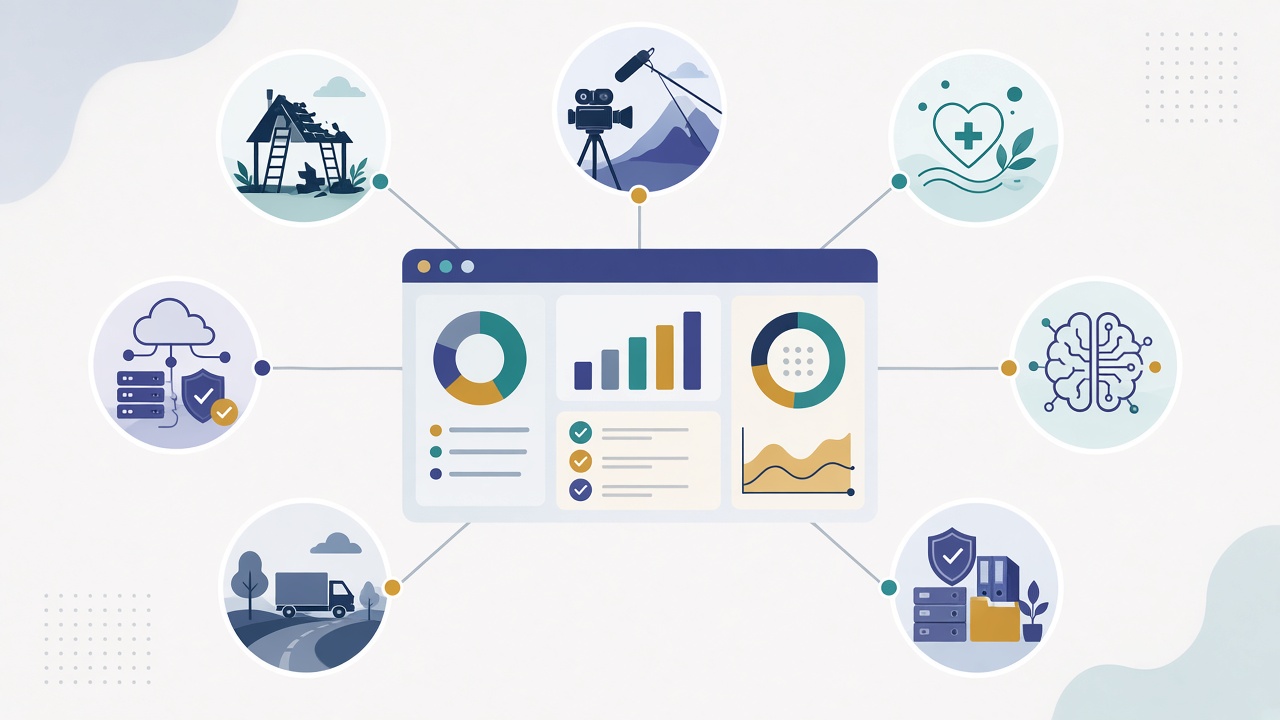
    Right now, we manage 23 WordPress sites across restoration, insurance, lending, entertainment, food logistics, healthcare facilities, ESG compliance, and more. Each site is a live experiment. What we learn on one site feeds every other site in the network.

    When Google’s March 2026 core update shifted E-E-A-T signals, we saw it across 23 different verticals simultaneously. We didn’t need to wait for an industry case study – we were the case study, in real time, across every vertical.

    That cross-pollination effect is something a single-vertical agency can never replicate. Our cold storage SEO strategy a luxury asset lenderws from our restoration content architecture. Our comedy club’s AEO optimization uses the same FAQ schema pattern that wins featured snippets for Beverly Hills luxury loans.

    Restoration Is Still Home Base

    We haven’t abandoned restoration. It’s still our deepest vertical, the one where we’ve generated the most data, run the most experiments, and delivered the most measurable results. But it’s no longer the ceiling. It’s the foundation.

    If your industry has a search bar and your competitors have websites, we already know how to outrank them. The vertical doesn’t matter. The system does.

    {
    “@context”: “https://schema.org”,
    “@type”: “Article”,
    “headline”: “Why We Stopped Calling Ourselves a Restoration Marketing Agency”,
    “description”: “We built our reputation in restoration. Then we realized the frameworks that tripled restoration revenue work in every industry. Here’s why we stopped nic”,
    “datePublished”: “2026-03-21”,
    “dateModified”: “2026-04-03”,
    “author”: {
    “@type”: “Person”,
    “name”: “Will Tygart”,
    “url”: “https://tygartmedia.com/about”
    },
    “publisher”: {
    “@type”: “Organization”,
    “name”: “Tygart Media”,
    “url”: “https://tygartmedia.com”,
    “logo”: {
    “@type”: “ImageObject”,
    “url”: “https://tygartmedia.com/wp-content/uploads/tygart-media-logo.png”
    }
    },
    “mainEntityOfPage”: {
    “@type”: “WebPage”,
    “@id”: “https://tygartmedia.com/why-we-stopped-calling-ourselves-restoration-marketing-agency/”
    }
    }

  • How to Run 7 Businesses From One Notion Dashboard

    How to Run 7 Businesses From One Notion Dashboard

    The Machine Room · Under the Hood

    The Problem With Running Multiple Businesses

    When you operate seven companies across different industries – restoration, luxury lending, comedy streaming, cold storage, automotive training, and digital marketing – the natural instinct is to build seven separate operating systems. That instinct will destroy you.

    Separate project management tools, separate CRMs, separate content calendars. Before you know it, you’re spending more time switching contexts than actually building. We learned this the hard way across a restoration company, a luxury lending firm Company, a live comedy platform, a cold storage facility, an automotive training firm, and Tygart Media.

    The fix wasn’t hiring more people. It was architecture. One Notion workspace, six databases, and a triage system that routes every task, every client communication, and every content piece to the right place without human sorting.

    The 6-Database Architecture That Powers Everything

    Our Notion Command Center runs on exactly six databases that talk to each other. Not sixty. Not six per company. Six total.

    The Master Task Database handles every action item across all seven businesses. Each task gets a Company property, a Priority score, and an Owner. When a new task comes in – whether it’s a client request from a luxury asset lender or a content deadline for a storm protection company – it enters the same pipeline.

    The Client Portal Database creates air-gapped views so each client sees only their work. A restoration company in Houston never sees data from a luxury lender in Beverly Hills. Same database, completely isolated views.

    The Content Calendar Database manages editorial across 23 WordPress sites. Every article brief, every publish date, every SEO target lives here. When we run our AI content pipeline, it checks this database to avoid duplicate topics.

    The Agent Registry, Revenue Tracker, and Meeting Notes databases round out the system. Together, they give us a single pane of glass across a portfolio that would otherwise require a dozen tools and a full-time operations manager.

    Why Single-Workspace Architecture Beats Multi-Tool Stacks

    The average small business uses 17 different SaaS tools. When you run seven businesses, that number can balloon to 50+ subscriptions. Beyond the cost, the real killer is context fragmentation – critical information lives in five different places, and no one knows which version is current.

    A single Notion workspace eliminates this entirely. Every team member, contractor, and AI agent pulls from the same source of truth. When our Claude agents generate content briefs, they query the same database that tracks client deliverables. When we review monthly revenue, it’s the same workspace where we plan next month’s campaigns.

    This isn’t about Notion specifically – it’s about the principle that operational architecture should consolidate, not fragment. We chose Notion because its database-relation model maps naturally to multi-entity operations.

    The Custom Agent Layer

    The real leverage comes from building AI agents that operate inside this architecture. We run Claude-powered agents that can read our Notion databases, check WordPress site status, generate content briefs, and triage incoming tasks – all without human intervention for routine operations.

    Each agent has a specific scope: one handles content pipeline operations, another monitors SEO performance across all 23 sites, and a third manages social media scheduling through Metricool. They don’t replace human judgment for strategic decisions, but they eliminate 80% of the repetitive coordination work that used to eat 15+ hours per week.

    The key insight: agents are only as good as the data architecture they sit on top of. Build the databases right, and the automation layer practically writes itself.

    Frequently Asked Questions

    Can Notion really handle enterprise-level multi-business operations?

    Yes, with proper architecture. The limiting factor isn’t Notion’s capability – it’s how you structure your databases. Flat databases with 50 properties break down fast. Relational databases with clean property schemas scale to thousands of entries across multiple companies without performance issues.

    How do you keep client data separate across businesses?

    We use Notion’s filtered views and relation properties to create air-gapped client portals. Each client view is filtered by Company and Client properties, so a restoration client never sees lending data. It’s the same database, but the views are completely isolated.

    What happens when one business needs a different workflow?

    Every business has unique needs, but the underlying data model stays consistent. We handle workflow variations through database views and templates, not separate databases. A restoration project and a luxury lending deal both flow through the same task pipeline with different templates and automations attached.

    How many people can use this system before it breaks?

    We currently have 12+ users across all businesses plus AI agents accessing the workspace simultaneously. Notion handles this well. The bottleneck isn’t users – it’s database design. Keep your relations clean and your property counts reasonable, and the system scales.

    The Bottom Line

    Running multiple businesses doesn’t require multiple operating systems. It requires one well-architected system that treats each business as a filtered view of a unified dataset. Build the architecture once, and every new business you add becomes a configuration change – not a rebuild. If you’re drowning in tools and context-switching, the fix isn’t better tools. It’s better architecture.

    {
    “@context”: “https://schema.org”,
    “@type”: “Article”,
    “headline”: “How to Run 7 Businesses From One Notion Dashboard”,
    “description”: “How one Notion workspace with six databases runs seven businesses across restoration, lending, comedy, and marketing.”,
    “datePublished”: “2026-03-21”,
    “dateModified”: “2026-04-03”,
    “author”: {
    “@type”: “Person”,
    “name”: “Will Tygart”,
    “url”: “https://tygartmedia.com/about”
    },
    “publisher”: {
    “@type”: “Organization”,
    “name”: “Tygart Media”,
    “url”: “https://tygartmedia.com”,
    “logo”: {
    “@type”: “ImageObject”,
    “url”: “https://tygartmedia.com/wp-content/uploads/tygart-media-logo.png”
    }
    },
    “mainEntityOfPage”: {
    “@type”: “WebPage”,
    “@id”: “https://tygartmedia.com/how-to-run-7-businesses-from-one-notion-dashboard/”
    }
    }

  • The Death of the Marketing Retainer: How AI Changes Everything

    The Death of the Marketing Retainer: How AI Changes Everything

    The Machine Room · Under the Hood

    The Retainer Model Is Cracking

    For two decades, the marketing agency business model has been simple: charge clients a monthly retainer, deliver a package of services, and scale revenue by stacking more retainers. It worked because marketing execution required human hours, and human hours have a predictable cost.

    AI breaks that equation. When a task that took a junior strategist four hours can be completed in four minutes by an AI agent, the hourly-rate math that underpins retainer pricing collapses. Clients are starting to notice – and they’re asking hard questions about what they’re actually paying for.

    What AI Actually Automates in a Marketing Agency

    Let’s be specific about what’s changing. These are the tasks that AI can now handle at production quality:

    Content production: First drafts, SEO optimization, meta descriptions, FAQ sections, and schema markup. What used to take a writer plus an SEO specialist a full day now runs through our pipeline in minutes.

    SEO audits: Site-wide technical audits, content gap analysis, keyword research, and competitor analysis. Our AI stack produces audit reports that match or exceed what junior analysts deliver – with better consistency.

    Reporting: Monthly performance reports with data visualization, trend analysis, and strategic recommendations. AI pulls the data, formats the report, and drafts the narrative.

    Social media management: Post drafting, scheduling, hashtag research, and engagement analysis. The creative strategy remains human; the execution is increasingly automated.

    That’s roughly 60-70% of what a typical marketing retainer covers.

    Three Models That Replace the Traditional Retainer

    The Performance Model: Instead of paying for hours, clients pay for outcomes. Rankings achieved, traffic milestones hit, leads generated. AI makes this viable because agencies can deliver outcomes at lower internal cost while sharing the upside.

    The Fractional Model: Senior strategists embedded part-time across multiple clients, supported by AI for execution. Clients get expert-level thinking without paying for execution labor that AI handles. This is how Tygart Media operates – fractional CMO services powered by an AI operations layer.

    The Platform Model: Agencies build proprietary tools and offer them as managed services. The tool does the work; the agency provides expertise to configure, monitor, and optimize.

    Why This Is Good for Agencies (Not Just Clients)

    The knee-jerk reaction from agency owners is fear. The reality is the opposite – AI destroys the ceiling on agency margins. When your cost to deliver drops by 60%, you can maintain prices while delivering dramatically better results.

    Agencies that embrace AI as an operational layer will serve more clients, deliver better outcomes, and earn higher per-client profit. Agencies that ignore it will be undercut by competitors who adopted AI two years ago.

    The window for competitive advantage is narrow. By 2027, AI-assisted marketing execution will be table stakes, not a differentiator.

    Frequently Asked Questions

    Will AI eliminate the need for marketing agencies entirely?

    No. AI eliminates the need for agencies that only provide execution. Strategy, creative direction, brand positioning, and client relationship management require human judgment. The agencies that survive will be smaller, more strategic, and more profitable.

    How should agencies price their services in an AI world?

    Move away from hourly billing toward value-based or outcome-based pricing. Your cost to deliver has dropped, but the value to the client hasn’t. Price for the outcome.

    What skills should agency employees develop to stay relevant?

    Strategic thinking, client communication, AI prompt engineering, and data interpretation. The ability to direct AI systems effectively is becoming the most valuable skill in marketing.

    When will most agencies adopt AI operationally?

    By mid-2026, the majority of agencies with 10+ employees will use AI for content production. Full operational AI will take another 12-18 months to become mainstream. Early movers have a significant head start.

    Adapt or Become the Case Study

    The marketing retainer isn’t dead yet, but it’s on life support. The agencies that thrive will be the ones that treated AI not as a threat but as the foundation for a better model.

    {
    “@context”: “https://schema.org”,
    “@type”: “Article”,
    “headline”: “The Death of the Marketing Retainer: How AI Changes Everything”,
    “description”: “The Retainer Model Is CrackingnFor two decades, the marketing agency business model has been simple: charge clients a monthly retainer, deliver a package.”,
    “datePublished”: “2026-03-21”,
    “dateModified”: “2026-04-03”,
    “author”: {
    “@type”: “Person”,
    “name”: “Will Tygart”,
    “url”: “https://tygartmedia.com/about”
    },
    “publisher”: {
    “@type”: “Organization”,
    “name”: “Tygart Media”,
    “url”: “https://tygartmedia.com”,
    “logo”: {
    “@type”: “ImageObject”,
    “url”: “https://tygartmedia.com/wp-content/uploads/tygart-media-logo.png”
    }
    },
    “mainEntityOfPage”: {
    “@type”: “WebPage”,
    “@id”: “https://tygartmedia.com/the-death-of-the-marketing-retainer-how-ai-changes-everything/”
    }
    }

  • The Fractional CMO Playbook: Serving 12 Clients Without Burnout

    The Fractional CMO Playbook: Serving 12 Clients Without Burnout

    The Machine Room · Under the Hood

    Why Fractional Beats Full-Time for Most Businesses

    Most businesses under $10 million in revenue don’t need a full-time CMO. They need someone who’s done it before, can set the strategy, build the systems, and check in regularly – without the $200K+ salary and equity expectations. That’s the fractional CMO model, and it’s exploding in 2026.

    At Tygart Media, we serve 12 clients simultaneously as fractional CMOs. Each client gets senior-level strategic thinking, an AI-powered execution layer, and measurable outcomes – at a fraction of a full-time hire’s cost. Here’s how the model actually works behind the scenes.

    The Operating System Behind 12 Simultaneous Clients

    Serving 12 clients without burning out requires systems, not heroics. Our operating system has three layers:

    Strategic Layer (human): Monthly strategy sessions, quarterly reviews, and ad hoc strategic decisions. This is where human expertise is irreplaceable – understanding the client’s business context, competitive landscape, and growth objectives. Each client gets 4-8 hours of direct strategic time per month.

    Execution Layer (AI-assisted): Content production, SEO optimization, social media scheduling, reporting, and site management. Our AI stack handles 80% of execution work. A single strategist supported by AI can deliver more output than a 3-person marketing team working manually.

    Communication Layer (hybrid): Notion dashboards give clients real-time visibility into their marketing operations. Automated weekly reports land in their inbox. The AI drafts status updates; a human reviews and personalizes them. Clients feel well-informed without consuming strategist bandwidth.

    What Clients Actually Get

    Each fractional CMO engagement includes: a documented marketing strategy with 90-day milestones, ongoing content production (4-8 optimized articles per month), full WordPress site management and optimization, monthly performance reporting with strategic recommendations, and direct access to a senior strategist for decisions that matter.

    The total value delivered typically exceeds what a $150K/year marketing manager could produce – because the AI layer multiplies the strategist’s output by 5-10x on execution tasks.

    The Economics That Make It Work

    A traditional agency model serving 12 clients would require 6-8 employees: account managers, content writers, SEO specialists, designers, and a strategist. Salary costs alone would run $400K-600K annually.

    Our model: one senior strategist, one operations coordinator, and an AI execution stack. Total labor cost is under $200K. The AI stack costs under $1K/month. We deliver more output at higher quality with 70% lower overhead.

    This isn’t about replacing people with AI – it’s about replacing repetitive tasks with AI so that humans focus entirely on the work that creates the most value: strategy, relationships, and creative problem-solving.

    How We Prevent Burnout at Scale

    The biggest risk in fractional work is context-switching fatigue. Jumping between 12 different businesses, industries, and strategic challenges can be mentally exhausting. We manage this three ways:

    Notion Command Center: Every client, every task, every deadline lives in one unified workspace. Context switching is a database filter, not a mental exercise. When switching from a luxury lending client to a restoration client, the full context is one click away.

    Batched communication: We don’t check client Slack channels all day. Strategic communication happens in scheduled blocks. Urgent issues have a defined escalation path. Everything else waits for the next batch.

    AI handles the cognitive load of execution: The mental energy that used to go into writing meta descriptions, building reports, and optimizing posts now goes into strategy. The AI handles the repetitive cognitive work that drains capacity without creating value.

    Frequently Asked Questions

    How do you maintain quality across 12 different clients?

    Quality is encoded in our skill library and processes, not dependent on individual attention. Every client gets the same optimization protocols, the same content quality standards, and the same reporting framework. The AI layer enforces consistency that humans alone cannot maintain at scale.

    Don’t clients feel like they’re getting less attention?

    Clients measure attention by results and responsiveness, not by hours logged. Our clients get faster deliverables, more consistent output, and better strategic guidance than they’d get from a full-time hire who’s doing everything manually and slowly.

    What industries work best for fractional CMO services?

    Any business with $1-10M in revenue that relies on digital marketing for growth. We’ve found particular success in professional services, B2B companies, and businesses with strong local/regional presence. Industries with high customer lifetime value benefit most.

    How do you handle conflicts between competing clients?

    We don’t take competing clients in the same market. A restoration company in Houston and a restoration company in New York aren’t competitors. But two luxury lenders targeting the same geography would be a conflict we’d decline.

    The Model of the Future

    The fractional CMO model powered by AI isn’t a stopgap or a budget compromise – it’s a better model than full-time hiring for most businesses. More strategic depth, more execution capacity, and lower total cost. If you’re a business owner considering your next marketing hire, consider whether a system might serve you better than a salary.

    {
    “@context”: “https://schema.org”,
    “@type”: “Article”,
    “headline”: “The Fractional CMO Playbook: Serving 12 Clients Without Burnout”,
    “description”: “How Tygart Media serves 12 fractional CMO clients simultaneously using AI-powered execution and a unified Notion operating system.”,
    “datePublished”: “2026-03-21”,
    “dateModified”: “2026-04-03”,
    “author”: {
    “@type”: “Person”,
    “name”: “Will Tygart”,
    “url”: “https://tygartmedia.com/about”
    },
    “publisher”: {
    “@type”: “Organization”,
    “name”: “Tygart Media”,
    “url”: “https://tygartmedia.com”,
    “logo”: {
    “@type”: “ImageObject”,
    “url”: “https://tygartmedia.com/wp-content/uploads/tygart-media-logo.png”
    }
    },
    “mainEntityOfPage”: {
    “@type”: “WebPage”,
    “@id”: “https://tygartmedia.com/the-fractional-cmo-playbook-serving-12-clients-without-burnout/”
    }
    }

  • LinkedIn Is Not a Social Network. It’s a Pipeline.

    LinkedIn Is Not a Social Network. It’s a Pipeline.

    The Machine Room · Under the Hood

    Everyone thinks LinkedIn success means going viral. Getting 50,000 impressions on a post about your morning routine. It doesn’t. LinkedIn success means the right 12 people see your content consistently enough that when they need what you sell, you’re the first call.

    We’ve managed LinkedIn strategy across restoration, lending, training, and agency verticals. The pattern is identical in every industry: LinkedIn works as a pipeline when you stop trying to be an influencer and start being useful to a specific audience, consistently, over months.

    The Invisible Compound

    One of our restoration clients got a call from an insurance adjuster who said she’d been reading his LinkedIn posts for six months. She never liked a single post. Never commented. Never connected. She just read, remembered, and called when the moment was right.

    That story repeats across every vertical. The CEO who reads your posts about cold chain logistics and mentions you in a board meeting. The property manager who forwards your article about commercial roofing to her maintenance director. LinkedIn’s real power is invisible — the people who consume your content silently and act on it when the timing aligns.

    The System

    We treat LinkedIn content as a scheduled, systematic operation. Not “post when inspired.” Not “share articles occasionally.” A consistent cadence of content that demonstrates expertise, shares genuine results, and provides value that the target audience can use immediately.

    Every LinkedIn post is drafted, reviewed, and scheduled through Metricool. Every post aligns with the client’s content themes and links back to their site architecture. This isn’t social media management — it’s pipeline construction.

    What LinkedIn Can’t Do

    LinkedIn won’t replace your SEO strategy. It won’t generate the volume of leads that a well-optimized site produces. What it does is build the relationship layer that makes every other marketing channel work better. The prospect who finds you on Google and then sees you on LinkedIn converts at a dramatically higher rate than the one who finds you on Google alone.

    Pipeline, not platform. That’s the mindset shift that makes LinkedIn worth the investment.

    {
    “@context”: “https://schema.org”,
    “@type”: “Article”,
    “headline”: “LinkedIn Is Not a Social Network. Its a Pipeline.”,
    “description”: “LinkedIn is not a social network. It’s a pipeline. How to use it as your highest-leverage business development channel.”,
    “datePublished”: “2026-03-21”,
    “dateModified”: “2026-04-03”,
    “author”: {
    “@type”: “Person”,
    “name”: “Will Tygart”,
    “url”: “https://tygartmedia.com/about”
    },
    “publisher”: {
    “@type”: “Organization”,
    “name”: “Tygart Media”,
    “url”: “https://tygartmedia.com”,
    “logo”: {
    “@type”: “ImageObject”,
    “url”: “https://tygartmedia.com/wp-content/uploads/tygart-media-logo.png”
    }
    },
    “mainEntityOfPage”: {
    “@type”: “WebPage”,
    “@id”: “https://tygartmedia.com/linkedin-is-a-pipeline-not-social-network/”
    }
    }

  • One Notion Database Runs Seven Businesses. Here’s the Architecture.

    One Notion Database Runs Seven Businesses. Here’s the Architecture.

    The Machine Room · Under the Hood

    When you run seven distinct business entities — an agency, two restoration companies, a golf league, an ESG nonprofit, a media company, and your personal brand — you either build a system or you drown in tabs.

    We chose the system. It’s a Notion Command Center with a 6-database architecture that routes every task, every project, every client interaction through a single operational backbone. Every entity has its own Focus Room. Every task has a priority, an entity assignment, and a status. Nothing falls through the cracks because there’s only one place anything can be.

    The Architecture

    Six databases power everything: Master Actions (every task across every entity), Master Entities (every business, client, and project), Content Calendar (what gets published where and when), Knowledge Base (SOPs, playbooks, reference material), Metrics Dashboard (KPIs across all entities), and Session Logs (every Cowork session, every decision, every output).

    A triage agent automatically assigns priority and entity to every new task. Focus Rooms filter the Master Actions database by entity, so when you’re working on restoration, you only see restoration tasks. When you switch to the agency, the view shifts instantly. Context switching becomes spatial, not mental.

    Why Notion Over Everything Else

    We evaluated every project management tool on the market. Asana, Monday, ClickUp, Linear, Jira. None of them could handle the specific requirement of managing multiple unrelated businesses through one interface without per-seat pricing that scales painfully. Notion’s database-first architecture and flexible pricing made it the only viable option for this use case.

    The real unlock was the API. Every Cowork session, every automation, every AI agent can read from and write to Notion. The command center isn’t just a project management tool — it’s the second brain that accumulates context across every session, every business, every decision. When we start a new session, the context of everything that came before is already there.

    The Compound Effect

    After six months of logging every session, every task, every outcome, the Notion Command Center contains more institutional knowledge than most companies build in years. Patterns emerge. What works in one entity informs strategy in another. The SEO playbook developed for restoration gets adapted for lending. The content pipeline built for the agency gets deployed for the nonprofit.

    This is the operational layer that makes everything else work. The 23 WordPress sites, the 7 AI agents, the multi-vertical content strategy — all of it coordinates through this single system. Build the foundation first. Everything else scales on top of it.

    {
    “@context”: “https://schema.org”,
    “@type”: “Article”,
    “headline”: “One Notion Database Runs Seven Businesses. Heres the Architecture.”,
    “description”: “One Notion database runs seven businesses. The 6-database architecture behind our multi-company command center.”,
    “datePublished”: “2026-03-21”,
    “dateModified”: “2026-04-03”,
    “author”: {
    “@type”: “Person”,
    “name”: “Will Tygart”,
    “url”: “https://tygartmedia.com/about”
    },
    “publisher”: {
    “@type”: “Organization”,
    “name”: “Tygart Media”,
    “url”: “https://tygartmedia.com”,
    “logo”: {
    “@type”: “ImageObject”,
    “url”: “https://tygartmedia.com/wp-content/uploads/tygart-media-logo.png”
    }
    },
    “mainEntityOfPage”: {
    “@type”: “WebPage”,
    “@id”: “https://tygartmedia.com/notion-command-center-seven-businesses/”
    }
    }

  • The Honest Cost of Running a 23-Site Content Operation

    The Honest Cost of Running a 23-Site Content Operation

    The Machine Room · Under the Hood

    Agencies love to talk about results. They don’t love to talk about costs. Here’s the full breakdown of what it actually takes to manage 23 WordPress sites across 10+ industries with a team that’s smaller than you’d think.

    The Infrastructure

    Five knowledge cluster sites run on a single GCP Compute Engine VM. Monthly cost: under . The other 18 sites are spread across WP Engine, Cloudflare, and client-owned hosting. Our Cloud Run proxy — which routes all WordPress API calls to avoid IP blocking — costs pennies per month because it only runs when called.

    The local AI stack — seven autonomous agents running on a laptop via Ollama — costs exactly zero dollars per month in recurring fees. Site monitoring, SEO drift detection, vector indexing, email preprocessing, content generation, news reporting — all local, all free after the initial build.

    The Tool Stack

    Our total SaaS spend is embarrassingly low for an operation this size. Metricool for social media scheduling. DataForSEO for keyword and ranking data. SpyFu for competitive intelligence. Notion for the command center. Google Workspace for the basics. Claude for the heavy lifting. That’s essentially it.

    Everything else is custom-built. The WordPress optimization pipeline. The content intelligence system. The cross-pollination engine. The batch draft creator. These exist as skills and scripts, not subscriptions. Once built, they run indefinitely at zero marginal cost.

    Where the Money Actually Goes

    The biggest expense isn’t tools or infrastructure — it’s the time required to build and maintain the systems. Every custom pipeline, every skill, every automation represents hours of development. But those hours are an investment, not a recurring cost. The SEO refresh pipeline we built three months ago has processed hundreds of posts since then without any additional investment.

    The second biggest expense is content creation itself. Even with AI-assisted generation, every piece of content needs human judgment: is this actually useful? Does it represent the client accurately? Would I put my name on this? The AI accelerates the process dramatically, but it doesn’t replace the editorial function.

    The Takeaway

    You can run a serious multi-site content operation for less than most agencies spend on a single client’s tool stack. The trick is building systems instead of buying subscriptions. Every hour spent on automation pays dividends across 23 sites. Every process that gets encoded into a reusable pipeline removes a recurring cost from the ledger permanently.

    The agencies that survive the next five years won’t be the ones with the biggest tool budgets. They’ll be the ones with the most efficient systems.

    {
    “@context”: “https://schema.org”,
    “@type”: “Article”,
    “headline”: “The Honest Cost of Running a 23-Site Content Operation”,
    “description”: “The honest cost of running a 23-site content operation. Every dollar, every tool, every hour – fully transparent.”,
    “datePublished”: “2026-03-21”,
    “dateModified”: “2026-04-03”,
    “author”: {
    “@type”: “Person”,
    “name”: “Will Tygart”,
    “url”: “https://tygartmedia.com/about”
    },
    “publisher”: {
    “@type”: “Organization”,
    “name”: “Tygart Media”,
    “url”: “https://tygartmedia.com”,
    “logo”: {
    “@type”: “ImageObject”,
    “url”: “https://tygartmedia.com/wp-content/uploads/tygart-media-logo.png”
    }
    },
    “mainEntityOfPage”: {
    “@type”: “WebPage”,
    “@id”: “https://tygartmedia.com/honest-cost-running-23-site-content-operation/”
    }
    }