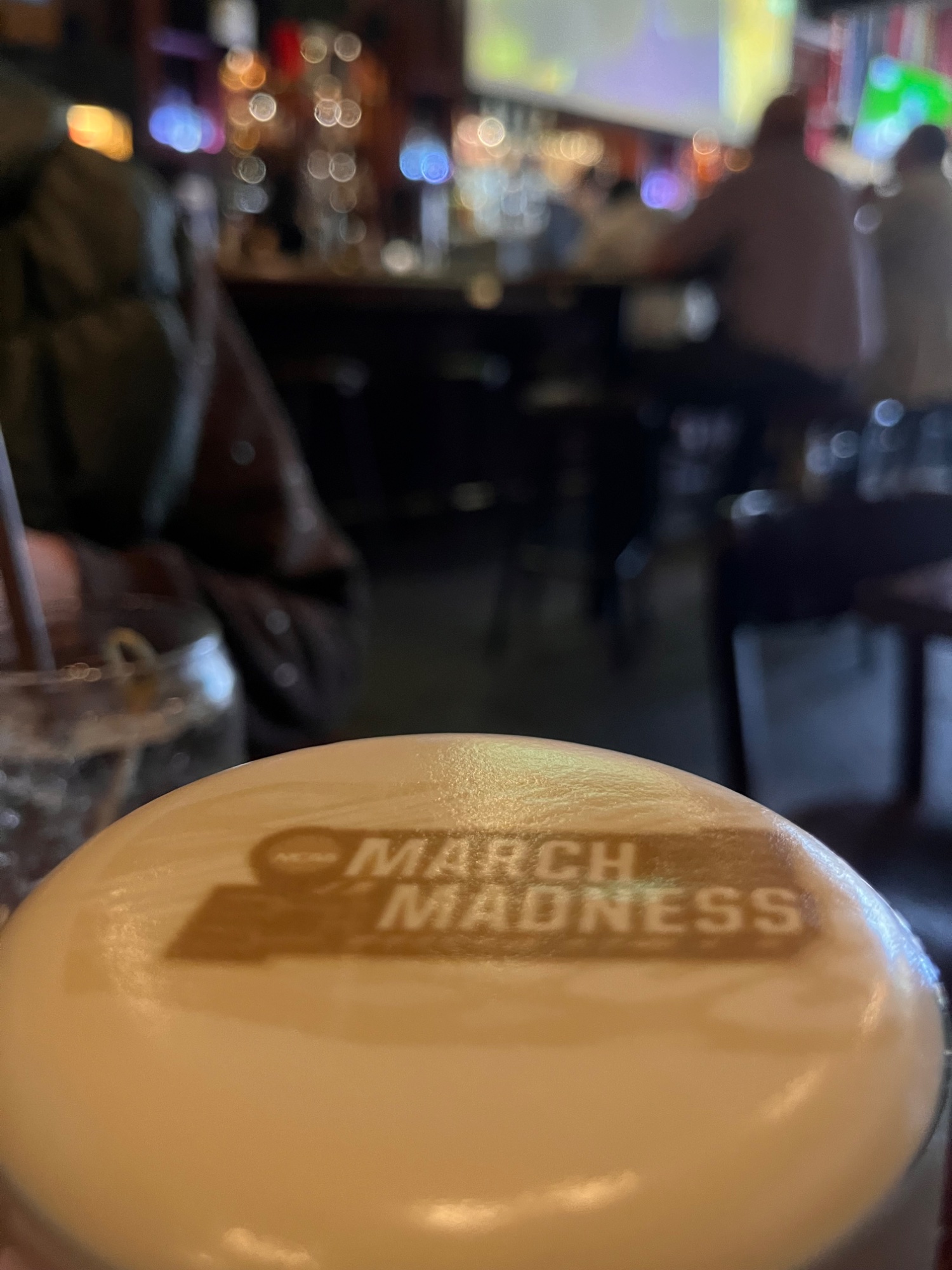
I was at Doyle’s last night for my wife’s birthday when the bartender slid a Guinness in front of me. On the foam head: the NCAA March Madness logo, printed in caramel brown like it belonged there. I forgot they did this. And then I couldn’t stop thinking about what it actually meant.
Let me be clear about what I saw. A neighborhood bar in Tacoma had executed a national brand partnership — NCAA licensing, custom logo printing technology, a real experiential moment — and delivered it to me in a pint glass for maybe twelve bucks. The NCAA didn’t have to run a TV spot to get in front of me. They got in front of me at the exact moment I was already in a good mood, already spending money, already present.
That’s not marketing. That’s infiltration. And it was brilliant.
The Technology Behind the Pour
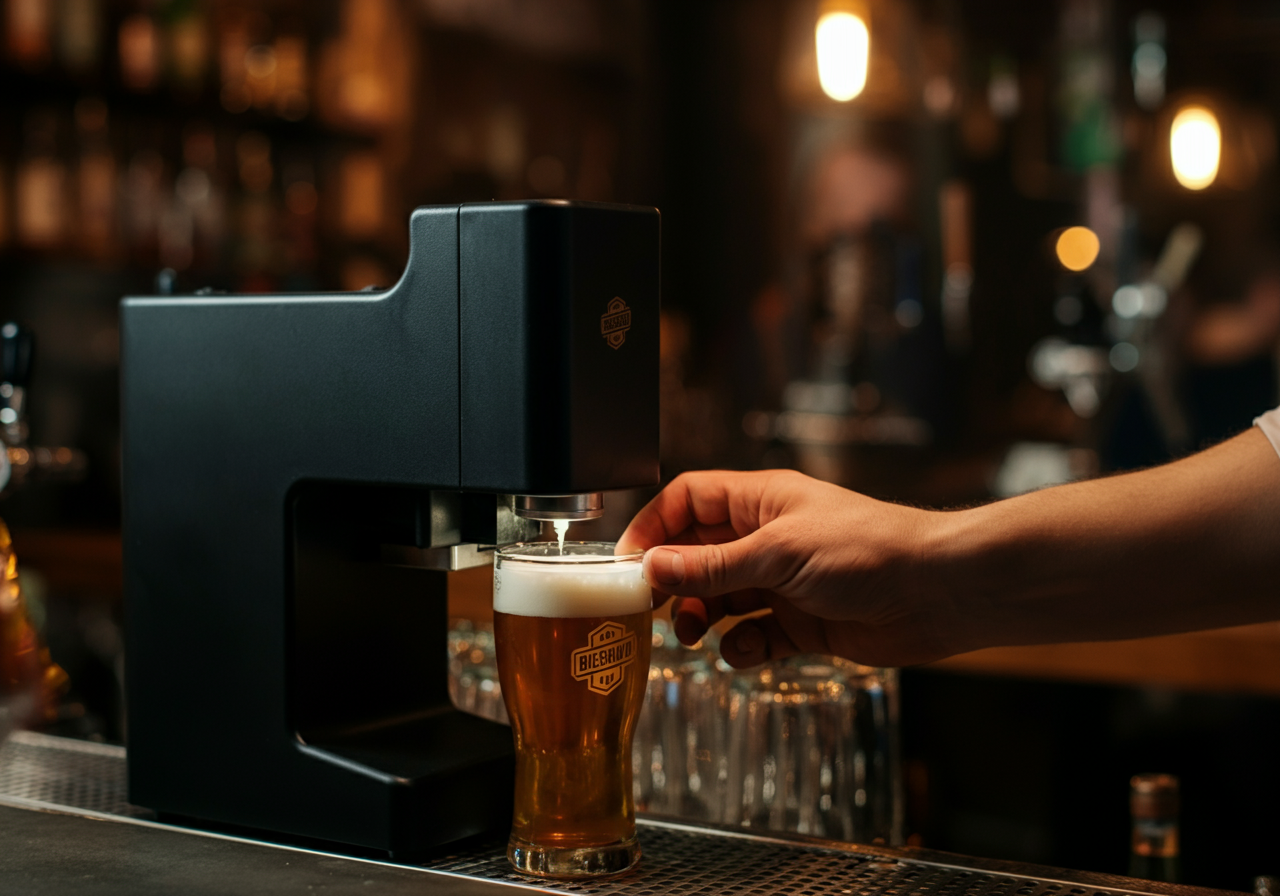
The machine doing the printing is called a Ripple Maker. It’s a countertop device that uses food-safe ink and an inkjet-style system to print images directly onto foam — coffee, cocktails, beer heads. The company behind it, Ripples, has been running since around 2016. You can print anything: a logo, a photo, a QR code, a personalized message.
For a bar like Doyle’s, it’s a few hundred dollars a month to run. For a national brand like the NCAA, it’s a scalable ambient media buy — get into bars running March Madness watch parties across the country, put your brand on every beer ordered during the game, and make it feel organic instead of promotional.
The NCAA didn’t buy an ad. They bought a moment. There’s a meaningful difference between those two things.
The NCAA didn’t buy an ad. They bought a moment. There’s a meaningful difference. An ad interrupts. A moment becomes part of the memory. I’m writing about this the next day. Nobody writes about a banner ad the next day.
What Local Businesses Can Take From This
Here’s where I start thinking about the businesses I work with — restoration contractors, lenders, cold storage operators, B2B service companies. Most of them are buying the same tired channels: Google Ads, Yelp, direct mail. They’re paying to interrupt people.
What Doyle’s pulled off — even if they didn’t frame it this way — was contextual experiential marketing. The right message, delivered through the right medium, at the right moment, in a way that felt native to the environment. That’s the playbook. The technology is almost incidental.
The restoration contractor who sponsors the coffee at a claims adjuster’s office every Monday morning is doing the same thing. The cold storage company that puts their logo on the temperature monitoring printout that goes to the produce buyer every week is doing the same thing. You find the moment your customer is already present and mentally open, and you show up there — without asking anything of them.
Why This Matters for Content Strategy
I run a content agency. We build articles, landing pages, entity clusters — things designed to get found. And I believe in that work. But what Doyle’s reminded me is that not everything distributable is digital.
The Guinness moment became a story I’m telling today. That story will probably become a LinkedIn post. That post might become a case study in a pitch deck. The physical moment seeded a digital content chain — and the NCAA got attribution in all of it without ever asking for it.
Physical moments, done well, generate organic digital content from the people who experience them. Manufacture memorability, not virality.
I don’t know how much Doyle’s pays for the Ripple Maker. I don’t know what the NCAA paid for the partnership. What I know is that it worked on me — a guy who builds content systems for a living and should theoretically be immune to this stuff. That’s the tell. When the marketing works on the skeptic, it’s really working.
Happy birthday to my wife, Stef. Best Guinness I’ve had in a while — even if I spent most of it thinking about marketing instead of the moment. She’s used to it.
Leave a Reply