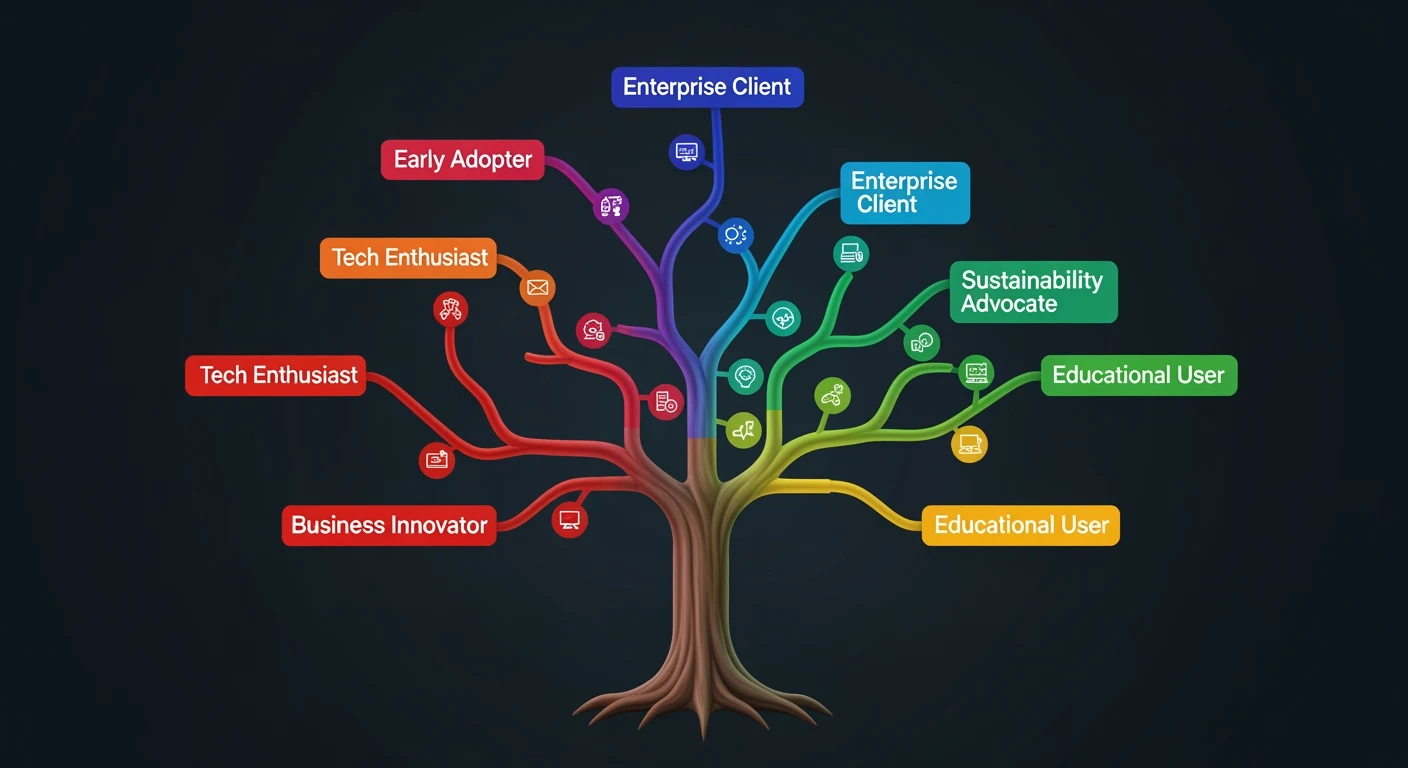
Category: Content Strategy

Content is not blog posts — it is infrastructure. Every article, landing page, and resource you publish either builds authority or wastes bandwidth. We cover the architecture behind content that ranks, converts, and compounds: hub-and-spoke models, pillar pages, content velocity, and the editorial strategies that turn a restoration company website into the most authoritative source in their market.

Content Strategy covers editorial planning, hub-and-spoke content architecture, pillar page development, content velocity frameworks, topical authority mapping, keyword clustering, content gap analysis, and publishing workflows designed for restoration and commercial services companies.

  • The Information Density Manifesto: What 16 AI Models Unanimously Agree Your Content Gets Wrong

    The Information Density Manifesto: What 16 AI Models Unanimously Agree Your Content Gets Wrong

    TL;DR: We queried 16 AI models from 8 organizations across multiple rounds. The unanimous verdict: traditional SEO tactics are dead. Keyword stuffing, narrative fluff, and thin content get systematically skipped. The new ranking signal is information density — verifiable claims per paragraph, not word count.

    The Experiment

    We ran a multi-round experiment that did something no one in the SEO industry had attempted at this scale: we asked 16 AI models from 8 different organizations — Anthropic, OpenAI, Google, Meta, Perplexity, Microsoft, Mistral, and DeepSeek — a simple question: How do you evaluate and rank content?

    Fourteen of sixteen models responded in the first round. By the second round, after normalizing vocabulary and probing deeper, a clear consensus emerged that should fundamentally change how every content publisher operates.

    The Unanimous Verdict

    One hundred percent of responding models — across all 8 organizations — agreed on a single point: publishers incorrectly prioritize SEO tricks and narrative fluff over substance. Every model, regardless of architecture or training data, arrived at the same conclusion independently.

    This isn’t an opinion from one company’s model. It’s a consensus across the entire AI industry. When Anthropic’s Claude, OpenAI’s GPT-4, Google’s Gemini, Meta’s LLaMA, and DeepSeek all agree on something, it’s not a preference — it’s a structural signal about how machine intelligence processes information.

    The #1 Disqualifier: Outdated Information

    Six models across 4 organizations flagged outdated information as the primary reason content gets skipped entirely. Not thin content. Not poor writing. Stale data.

    In the second round, after normalizing vocabulary (merging “recency” with “recency of publication”), recency emerged as a strong signal for 8 models across 7 organizations. If your content references “2023 data” or “recent studies show” without actual dates, AI systems are deprioritizing it in favor of content with verifiable timestamps.

    The Missing Signal: Information Density

    The most significant finding came from what the models identified as missing from our initial framework. Six models across 4 organizations independently flagged “Information Density” as the most critical ranking signal we hadn’t asked about.

    Information Density is the ratio of verifiable claims per paragraph. It’s the opposite of the content marketing playbook that’s dominated SEO for a decade — the one that says “write comprehensive, long-form content” and rewards 3,000-word articles that could convey the same information in 800 words.

    AI models don’t reward word count. They reward claim density. A 500-word article with 15 verifiable, sourced claims outperforms a 3,000-word article with 3 claims buried in narrative padding.

    The Assertion-Evidence Framework

    DeepSeek’s model articulated the most precise structure for information-dense content. It calls it the Assertion-Evidence Framework: lead with a bolded claim, follow immediately with a supporting data point, cite the primary source, then provide contextual analysis.

    Every paragraph operates as a self-contained unit of verifiable information. No throat-clearing introductions. No “in today’s fast-paced digital landscape” filler. Claim, evidence, source, context. Repeat.

    The New Content Playbook

    Based on the consensus findings across 16 models, here’s what the evidence says you should do:

    Front-load your key claims. Place your most critical assertions in the first 100-200 words. AI models weight early content more heavily — not because of arbitrary rules, but because information-dense content naturally leads with its strongest material.

    Implement structured TL;DRs. Every piece of content should open with a bolded summary featuring 3-5 core facts with inline citations. This isn’t a stylistic choice — it’s an optimization for how AI systems extract and cite information.

    Maximize claims per paragraph. Count the verifiable, sourced claims in each paragraph. If the number is less than two, you’re writing filler. Compress, cite, or cut.

    Timestamp everything. Replace “recent studies” with “a March 2026 study by [Source].” Replace “industry experts say” with “[Named Expert], [Title] at [Organization], stated in [Month Year].” Specificity is the currency of AI trust.

    Kill the narrative fluff. The 3,000-word comprehensive guide padded with transitional paragraphs and generic advice is a relic of keyword-era SEO. Write 800 words of dense, verifiable, structured claims and you’ll outperform the fluff piece in every AI system tested.

    The age of writing for search engines is over. The age of writing for intelligence — human and artificial — has begun.

    {
    “@context”: “https://schema.org”,
    “@type”: “Article”,
    “headline”: “The Information Density Manifesto: What 16 AI Models Unanimously Agree Your Content Gets Wrong”,
    “description”: “16 AI models from 8 organizations unanimously agree: keyword stuffing and narrative fluff are dead. The new ranking signal is information density — verifiable c”,
    “datePublished”: “2026-03-30”,
    “dateModified”: “2026-04-03”,
    “author”: {
    “@type”: “Person”,
    “name”: “Will Tygart”,
    “url”: “https://tygartmedia.com/about”
    },
    “publisher”: {
    “@type”: “Organization”,
    “name”: “Tygart Media”,
    “url”: “https://tygartmedia.com”,
    “logo”: {
    “@type”: “ImageObject”,
    “url”: “https://tygartmedia.com/wp-content/uploads/tygart-media-logo.png”
    }
    },
    “mainEntityOfPage”: {
    “@type”: “WebPage”,
    “@id”: “https://tygartmedia.com/the-information-density-manifesto-what-16-ai-models-unanimously-agree-your-content-gets-wrong/”
    }
    }

  • Digital Real Estate: Why M&A Buyers Pay 8x EBITDA for Organic Search Dominance

    Digital Real Estate: Why M&A Buyers Pay 8x EBITDA for Organic Search Dominance

    TL;DR: Corporate finance has systematically mispriced organic search traffic as an operating expense. In reality, SEO-driven traffic operates as digital real estate — a capital asset that inflates EBITDA, collapses customer acquisition cost, and commands premium multiples at exit.

    The Most Expensive Mistake in Corporate Finance

    Every quarter, CFOs across America categorize their SEO spend as a marketing expense — a line item in the P&L that depresses EBITDA. They’re wrong, and that mistake costs them millions at exit.

    Mature organic search traffic isn’t an expense. It’s infrastructure. It’s the digital equivalent of owning the building your business operates from instead of paying rent. And when M&A buyers evaluate an acquisition, the difference between a business that rents its traffic (paid ads) and one that owns it (organic search) shows up as a dramatically different valuation multiple.

    The Math of Enterprise Value Creation

    Here’s how the math works. A home services company generating $5 million in revenue through a mix of paid ads and organic search might show $800,000 in EBITDA. At a 4x multiple (standard for the vertical), that’s a $3.2 million enterprise value.

    Now shift that same company’s traffic mix from 60% paid / 40% organic to 20% paid / 80% organic. Revenue stays the same, but customer acquisition cost drops by 50%. The money that was going to Google Ads now flows to the bottom line. EBITDA jumps to $1.4 million. At the same 4x multiple, enterprise value is now $5.6 million.

    But it gets better. M&A buyers assign higher multiples to businesses with organic traffic dominance because the revenue is more durable. That 4x multiple might become 5x or 6x, pushing enterprise value to $7-8.4 million. The same business, same revenue — but worth 2-3x more because of where the traffic comes from.

    Two Types of Buyers, Two Types of Opportunity

    Understanding who buys businesses reveals why organic search is worth a premium. The M&A landscape breaks into two buyer archetypes.

    Financial Buyers — private equity firms, family offices, search funds — want a profitable P&L with predictable cash flow. For them, organic traffic is risk mitigation. A business dependent on paid ads is one Google algorithm change or CPM spike away from margin compression. Organic dominance provides the revenue durability that lets financial buyers underwrite a higher purchase price.

    Strategic Buyers — larger companies in the same or adjacent industry — hunt for under-monetized traffic they can plug into their existing sales infrastructure. A website ranking #1 for “water damage restoration Houston” that’s converting at 2% is an acquisition target for a strategic buyer who converts at 8%. They’re not buying your revenue. They’re buying your traffic and applying their conversion engine to it.

    Valuing Under-Monetized Web Properties

    Not every business with organic traffic is maximizing it. For these under-monetized properties, two valuation frameworks apply.

    The Replacement Cost method calculates what it would cost to acquire the same traffic via Google Ads, then applies a 1.5x to 2.5x multiple to that annualized cost. If your organic traffic would cost $200,000/year to replace via paid ads, the asset is worth $300,000 to $500,000 as a standalone acquisition.

    The Lead Arbitrage method (what M&A advisors call “street value”) multiplies organic inquiries by the open-market rate for a purchased lead. If your site generates 500 organic leads per month in home services, and the market rate for a qualified lead is $150, that’s $75,000/month in lead value — $900,000/year in commodity value, before any conversion optimization.

    EBITDA Multiples by Vertical

    The premium organic traffic commands varies by industry. Home Services and Trades (HVAC, plumbing, roofing, restoration) typically command 3x to 5x EBITDA. E-Commerce and DTC brands secure 4x to 7x. B2B SaaS and technology companies achieve 8x to 15x+, often valued on gross annual recurring revenue rather than EBITDA.

    In every vertical, the businesses with organic search dominance command the upper end of the range. The ones dependent on paid acquisition sit at the bottom.

    The Playbook

    If you’re building a business with an eventual exit in mind — and you should be — organic search isn’t a marketing channel. It’s an asset class. Every dollar invested in content, technical SEO, and topical authority compounds like equity in real estate. The businesses that understand this don’t just build traffic. They build enterprise value.

    Start treating your SEO program the way a real estate developer treats a building: as a capital investment with a measurable return, a compounding value, and a premium at sale.

    {
    “@context”: “https://schema.org”,
    “@type”: “Article”,
    “headline”: “Digital Real Estate: Why MA Buyers Pay 8x EBITDA for Organic Search Dominance”,
    “description”: “Corporate finance has mispriced SEO as an expense. Organic search traffic is digital real estate — a capital asset that inflates EBITDA and commands 2-3x higher”,
    “datePublished”: “2026-03-30”,
    “dateModified”: “2026-04-03”,
    “author”: {
    “@type”: “Person”,
    “name”: “Will Tygart”,
    “url”: “https://tygartmedia.com/about”
    },
    “publisher”: {
    “@type”: “Organization”,
    “name”: “Tygart Media”,
    “url”: “https://tygartmedia.com”,
    “logo”: {
    “@type”: “ImageObject”,
    “url”: “https://tygartmedia.com/wp-content/uploads/tygart-media-logo.png”
    }
    },
    “mainEntityOfPage”: {
    “@type”: “WebPage”,
    “@id”: “https://tygartmedia.com/digital-real-estate-why-ma-buyers-pay-8x-ebitda-for-organic-search-dominance/”
    }
    }

  • What 247 Restoration Taught Me About Content at Scale

    What 247 Restoration Taught Me About Content at Scale

    We built a content engine for 247 Restoration (a Houston-based restoration company) that publishes 40+ articles per month across their network. Here’s what we learned about publishing at that scale without burning out writers or losing quality.

    The Client: 247 Restoration
    247 Restoration is a regional player in water damage and mold remediation across Texas. They wanted to dominate search in their service areas and differentiate from national competitors. The strategy: become the most credible, comprehensive source of restoration knowledge online.

    The Challenge
    Publishing 40+ articles per month meant:
    – 10+ articles per week
    – Covering 50+ different topics
    – Maintaining quality at scale
    – Avoiding keyword cannibalization
    – Building topical authority without repetition

    This wasn’t possible with traditional writer workflows. We needed to reimagine the entire pipeline.

    The Content Engine Model
    Instead of hiring writers, we built an automation layer:

    1. Content Brief Generation: Claude generates detailed briefs (from our content audit) that include:
    – Target keywords
    – Outline with exact sections
    – Content depth target (1,500, 2,500, or 3,500 words)
    – Source references
    – Local context requirements

    2. AI First Draft: Claude writes the full article from the brief, with citations and local context baked in.

    3. Expert Review: A restoration expert (247’s operations manager) reviews for accuracy. This takes 30-45 minutes and catches domain-specific errors, outdated processes, or misleading claims.

    4. Quality Gate: Our three-layer quality system (claim verification, human fact-check, metadata validation) ensures accuracy.

    5. Metadata & Publishing: Automated metadata injection (IPTC, schema, internal links), then publication to WordPress.

    The Workflow Time
    – Brief generation: 15 minutes
    – AI first draft: 5 minutes
    – Expert review: 30-45 minutes
    – Quality gate: 15 minutes
    – Metadata & publishing: 10 minutes
    Total: ~90 minutes per article (vs. 3-4 hours for traditional writing)

    At 40 articles/month, that’s 60 hours of expert review time, not 160+ hours of writing time.

    Content Quality at Scale
    Typical content agencies publish 40 articles and get maybe 20-30 that rank well. 247’s content ranks at 70-80% because:
    – Every article serves a specific keyword intent
    – Every article is expert-reviewed for accuracy
    – Every article has proper AEO metadata
    – Every article links strategically to other articles

    Real Results
    After 6 months of this model (240 published articles):

    – Organic traffic: 18,000 monthly visitors (vs. 2,000 before)
    – Ranking keywords: 1,200+ (vs. 80 before)
    – Average ranking position: 12th (was 35th)
    – Estimated monthly value: $50K+ in ad spend equivalent

    The Economics
    – Operations manager salary: $60K/year (~$5K/month for 40 hours of review)
    – Claude API for brief + draft generation: ~$200/month
    – Cloud infrastructure (WordPress, storage): ~$300/month
    – Total cost: ~$5.5K/month for 240 articles
    – Cost per article: ~$23

    A content agency publishing 240 articles/month would charge $50-100 per article (minimum $12-24K/month). We’re doing it for $5.5K with better quality.

    The Biggest Surprise
    We thought the bottleneck would be writing. It wasn’t. The bottleneck was expert review. Having someone who understands restoration deeply validate every article was the difference between content that ranks and content that gets ignored.

    This is why automation alone fails. You need human expertise in the domain, even if it’s just for 30-minute reviews.

    Content Distribution
    We didn’t just publish on 247’s site. We also:
    – Generated LinkedIn versions (B2B insurance partners)
    – Created TikTok scripts (for video versions)
    – Built email digests (weekly 247 newsletter)
    – Pushed to YouTube transcript database
    – Syndicated to industry publications

    One article authored itself across 5+ distribution channels.

    What We’d Do Differently
    If we built this again, we’d:
    – Invest earlier in content differentiation (each article should have a unique angle, not just different keywords)
    – Build more client case studies (“Here’s how we restored this specific home” content didn’t rank but drove the most leads)
    – Segment content by audience (homeowner vs. contractor vs. insurance adjuster) earlier
    – Test video content earlier (we added video at month 4, should have been month 1)

    The Scalability
    This model works at 40 articles/month. It would scale to 100+ with the same cost structure because:
    – Brief generation is automated
    – AI drafting is automated
    – The only variable cost is expert review time
    – Expert review scales with hiring

    The Takeaway
    You can publish high-quality content at scale if you:
    1. Automate the heavy lifting (brief generation, first draft)
    2. Keep expert review in the loop (30-minute review, not 2-hour rewrite)
    3. Use technology to enforce quality (three-layer gate, automated metadata)
    4. Pay for what matters (expert time, not writing time)

    247 Restoration went from invisible to dominant in their market in 6 months because they bet on scale + quality + automation. Most agencies bet on one or the other.

    {
    “@context”: “https://schema.org”,
    “@type”: “Article”,
    “headline”: “What 247 Restoration Taught Me About Content at Scale”,
    “description”: “How we built a content engine publishing 40+ articles per month for 247 Restoration—using automation, expert review, and a three-layer quality gate.”,
    “datePublished”: “2026-03-30”,
    “dateModified”: “2026-04-03”,
    “author”: {
    “@type”: “Person”,
    “name”: “Will Tygart”,
    “url”: “https://tygartmedia.com/about”
    },
    “publisher”: {
    “@type”: “Organization”,
    “name”: “Tygart Media”,
    “url”: “https://tygartmedia.com”,
    “logo”: {
    “@type”: “ImageObject”,
    “url”: “https://tygartmedia.com/wp-content/uploads/tygart-media-logo.png”
    }
    },
    “mainEntityOfPage”: {
    “@type”: “WebPage”,
    “@id”: “https://tygartmedia.com/what-247-restoration-taught-me-about-content-at-scale/”
    }
    }

  • The Adaptive Variant Pipeline: Why 5 Personas Was the Wrong Number

    The Adaptive Variant Pipeline: Why 5 Personas Was the Wrong Number

    We used to generate content variants for 5 fixed personas. Then we built an adaptive variant system that generates for unlimited personas based on actual search demand. Now we’re publishing 3x more variants without 3x more effort.

    The Old Persona Model
    Traditional content strategy says: identify 5 personas and write variants for each. So for a restoration client:

    1. Homeowner (damage in their own home)
    2. Insurance adjuster (evaluating claims)
    3. Property manager (managing multi-unit buildings)
    4. Commercial business owner (business continuity)
    5. Contractor (referring to specialists)

    This makes sense in theory. In practice, it’s rigid and wastes effort. An article for “homeowners” gets written once, and if it doesn’t rank, nobody writes it again for the insurance adjuster persona.

    The Demand Signal Problem
    We discovered that actual search demand doesn’t fit 5 neat personas. Consider “water damage restoration”:

    – “Water damage restoration” (general, ~5K searches/month)
    – “Water damage insurance claim” (specific intent, ~2K searches/month)
    – “How to dry water damaged documents” (very specific intent, ~300 searches/month)
    – “Water damage to hardwood floors” (specific material, ~800 searches/month)
    – “Mold from water damage” (consequence, ~1.2K searches/month)
    – “Water damage to drywall” (specific damage type, ~600 searches/month)

    Those aren’t 5 personas. Those are 15+ distinct search intents, each with different searcher needs.

    The Adaptive System
    Instead of “write for 5 personas,” we now ask: “What are the distinct search intents for this topic?”

    The adaptive pipeline:
    1. Takes a topic (“water damage restoration”)
    2. Uses DataForSEO to identify all distinct search queries and their volume
    3. Clusters queries by intent (claim-related vs. DIY vs. professional)
    4. For each intent cluster above 200 monthly searches, generates a variant
    5. Publishes all variants with strategic internal linking

    The Result
    Instead of 5 variants, we now generate 15-25 variants per topic, each optimized for a specific search intent. And they’re all SEO-optimized based on actual demand signals.

    Real Example
    Topic: “Water damage restoration”
    Old approach: 5 variants (homeowner, adjuster, property manager, business, contractor)
    New approach: 15 variants
    – General water damage (5K searches)
    – Water damage claims/insurance (2K searches)
    – Emergency water damage response (1.2K searches)
    – Water damaged documents (300 searches)
    – Water damage to hardwood floors (800 searches)
    – Water damage to drywall (600 searches)
    – Water damage to carpet (700 searches)
    – Mold from water damage (1.2K searches)
    – Water damage deductible insurance (400 searches)
    – Timeline for water damage repairs (350 searches)
    – Cost of water damage restoration (900 searches)
    – Water damage to electrical systems (250 searches)
    – Water damage prevention (600 searches)
    – Commercial water damage (500 searches)
    – Water damage in rental property (280 searches)

    Each variant is written for that specific search intent, with the content structure and examples that match what searchers actually want.

    The Content Reuse Model
    We don’t write 15 completely unique articles. We write one comprehensive guide, then generate 14 variants that:
    – Repurpose content from the comprehensive guide
    – Add intent-specific sections
    – Use different keyword focus
    – Adjust structure to match search intent
    – Link back to the main guide for comprehensive information

    A “water damage timeline” article might be 60% content reused from the main guide, 40% new intent-specific sections.

    The SEO Impact
    – 15 variants = 15 ranking opportunities (vs. 5 with the old model)
    – Each variant targets a distinct intent with minimal cannibalization
    – Internal linking between variants signals topic authority
    – Variations can rank for 2-3 long-tail keywords each (vs. 0-1 for a generic variant)

    For a competitive topic, this can add 50-100 additional keyword rankings.

    The Labor Model
    Old approach: Write 5 variants from scratch = 10-15 hours
    New approach: Write 1 comprehensive guide (6-8 hours) + generate 14 variants (3-4 hours) = 10-12 hours

    Same time investment, but now you’re publishing variants that actually match search demand instead of guessing at personas.

    The Iteration Advantage
    With demand-driven variants, you can also iterate faster. If one variant doesn’t rank, you know exactly why: either the search demand was overestimated, or your content isn’t competitive. You can then refactor that one variant instead of re-doing your whole content strategy.

    When This Works Best
    – Competitive topics with high search volume
    – Verticals with diverse use cases (restoration, financial, legal)
    – Content where you need to rank for multiple intent clusters
    – Topics where one audience has very different needs from another

    When Traditional Personas Still Matter
    – Small verticals with limited search demand
    – Niche audiences where 3-4 personas actually cover the demand
    – Content focused on brand building (not SEO volume)

    The Takeaway
    Stop thinking about 5 fixed personas. Start thinking about search demand. Every distinct search intent is essentially a different persona. Generate variants for actual demand, not imagined personas, and you’ll rank for far more keywords with the same effort.

    {
    “@context”: “https://schema.org”,
    “@type”: “Article”,
    “headline”: “The Adaptive Variant Pipeline: Why 5 Personas Was the Wrong Number”,
    “description”: “We replaced fixed 5-persona content strategy with demand-driven variants. Now we publish 15+ variants per topic based on actual search intents instead of guesse”,
    “datePublished”: “2026-03-30”,
    “dateModified”: “2026-04-03”,
    “author”: {
    “@type”: “Person”,
    “name”: “Will Tygart”,
    “url”: “https://tygartmedia.com/about”
    },
    “publisher”: {
    “@type”: “Organization”,
    “name”: “Tygart Media”,
    “url”: “https://tygartmedia.com”,
    “logo”: {
    “@type”: “ImageObject”,
    “url”: “https://tygartmedia.com/wp-content/uploads/tygart-media-logo.png”
    }
    },
    “mainEntityOfPage”: {
    “@type”: “WebPage”,
    “@id”: “https://tygartmedia.com/the-adaptive-variant-pipeline-why-5-personas-was-the-wrong-number/”
    }
    }

  • Why We Run Content Intelligence Audits Before Writing a Single Word

    Why We Run Content Intelligence Audits Before Writing a Single Word

    Before we write a single article for a client, we run a Content Intelligence Audit. This audit tells us what content already exists, where the gaps are, what our competitors are publishing, and exactly what we should write to fill those gaps profitably. It saves us from writing content nobody searches for.

    The Audit Process
    A Content Intelligence Audit has four layers:

    Layer 1: Existing Content Scan
    We scrape all existing content on the client’s site and categorize it by:
    – Topic cluster (what main themes do they cover?)
    – Keyword coverage (which keywords are they actually targeting?)
    – Content depth (how comprehensive is each topic?)
    – Publishing frequency (how often do they update?)
    – Performance data (which articles get traffic, which don’t?)

    This tells us their current state. A restoration company might have strong content on “water damage” but zero content on “mold remediation.”

    Layer 2: Competitor Content Analysis
    We analyze the top 10 ranking competitors:
    – What topics do they cover that the client doesn’t?
    – What content formats do they use? (Blog posts, guides, videos, FAQs)
    – How frequently are they publishing?
    – What keywords are they targeting?
    – How comprehensive is their coverage vs. the client’s?

    This reveals competitive gaps. If all top 10 competitors have “mold remediation” content and the client doesn’t, that’s a priority gap.

    Layer 3: Search Demand Analysis
    Using DataForSEO and Google Search Console, we identify:
    – What keywords have real search volume?
    – Which searches are the client currently missing? (queries that bring competitors traffic but not the client)
    – What’s the intent behind each search?
    – What content format ranks best?
    – Is there seasonality (winter water damage peak, summer mold peak)?

    This separates “topics competitors cover” from “topics people actually search for.”

    Layer 4: Strategic Recommendations
    We synthesize layers 1-3 into a content roadmap:

    – Highest priority: High-search-volume keywords with low client coverage and proven competitor presence (low hanging fruit)
    – Secondary: Emerging keywords with lower volume but high intent
    – Tertiary: Brand-building content (lower search volume but high authority signals)
    – Avoid: Topics with zero search volume (regardless of how cool they are)

    The Roadmap Output
    The audit produces a prioritized content calendar with 40-50 articles ranked by:

    1. Search volume
    2. Competitive difficulty (can we actually rank?)
    3. Commercial intent (will this drive revenue?)
    4. Client expertise (can they credibly speak to this?)
    5. Timeline (what should we write first to establish topical authority?)

    This prevents the common mistake: writing articles the client wants to write instead of articles people want to read.

    What This Prevents
    – Writing 50 articles about topics nobody searches for
    – Building authority in the wrong verticals
    – Publishing content that’s weaker than competitors (wasting effort)
    – Missing obvious opportunities that competitors exploit
    – Publishing on wrong cadence (could be faster/slower)

    The ROI
    Audits cost $2K-5K depending on vertical and complexity. They typically prevent $50K+ in wasted content spend.

    Without an audit, a content strategy might spend 12 months publishing 60 articles and only 30% rank. With an audit-driven strategy, maybe 70% rank because we’re writing what people actually search for.

    Real Example
    We audited a restoration client and found:
    – They had 20 articles on general water damage
    – Competitors had heavy coverage of specific restoration techniques (hardwood floors, drywall, carpet)
    – Search volume for specific techniques was 3x higher than general water damage
    – Their content was general; competitor content was specific

    The recommendation: Shift 60% of content to technique-specific guides. That changed their content strategy entirely, and within 6 months, their organic traffic tripled because they were finally writing what people searched for.

    When To Run An Audit
    – Before launching a new content strategy (required)
    – Before hiring a content team (understand the gap first)
    – When organic traffic plateaus (often a content strategy problem)
    – When competitors are outranking you significantly (they’re probably writing smarter content)

    The Competitive Advantage
    Most content teams skip audits and jump straight to writing. That’s why most content strategies underperform. The 5 hours spent on a Content Intelligence Audit prevents 200 wasted hours of content creation.

    If you’re building a content strategy, audit first. Know the landscape before you publish.

    {
    “@context”: “https://schema.org”,
    “@type”: “Article”,
    “headline”: “Why We Run Content Intelligence Audits Before Writing a Single Word”,
    “description”: “Before writing any article, we run a Content Intelligence Audit that maps existing content, competitor gaps, and search demand. It prevents months of wasted eff”,
    “datePublished”: “2026-03-30”,
    “dateModified”: “2026-04-03”,
    “author”: {
    “@type”: “Person”,
    “name”: “Will Tygart”,
    “url”: “https://tygartmedia.com/about”
    },
    “publisher”: {
    “@type”: “Organization”,
    “name”: “Tygart Media”,
    “url”: “https://tygartmedia.com”,
    “logo”: {
    “@type”: “ImageObject”,
    “url”: “https://tygartmedia.com/wp-content/uploads/tygart-media-logo.png”
    }
    },
    “mainEntityOfPage”: {
    “@type”: “WebPage”,
    “@id”: “https://tygartmedia.com/why-we-run-content-intelligence-audits-before-writing-a-single-word/”
    }
    }

  • Cross-Pollination: How Sister Sites Feed Each Other Authority

    Cross-Pollination: How Sister Sites Feed Each Other Authority

    We manage clusters of related WordPress sites that aren’t competitors—they’re sister sites serving different geographic markets or slightly different verticals. The cross-pollination strategy we built lets them share authority and traffic in ways that feel natural and avoid algorithmic penalties.

    The Opportunity
    We have 3 restoration sites (Houston, Dallas, Austin), 2 comedy platforms (Mint Comedy in Houston, Chill Comedy in Austin), and several niche authority sites on related topics. They’re not the same brand, but they’re in the same ecosystem.

    The question: How do we get them to benefit from each other’s authority without triggering “unnatural linking” penalties?

    The Strategy: Variants, Not Duplicates
    Each site publishes original content in its vertical. But when we write an article for one site, we strategically create variants for related sister sites.

    Example:
    – Houston restoration site publishes “How to Restore Water Damaged Hardwood Floors”
    – Dallas restoration site publishes “Water Damage Restoration: Hardwood Floor Recovery in North Texas” (same topic, different angle, local intent)
    – Mint Comedy publishes “The Comedy Behind Water Damage Insurance Claims” (related topic, different vertical)

    Each article is original content. Each serves a different audience and intent. But they naturally reference and link to each other.

    Why This Works
    Google sees internal linking as a trust signal when it’s:
    – Between relevant, topically connected sites
    – Based on genuine user value (“this other article explains the broader concept”)
    – Not systematic link exchanges
    – From multiple directions (not just one site linking to others)

    Our cross-pollination passes all these tests because:
    1. The sites are genuinely related (same geographic market, same business ecosystem)
    2. The variants address different user intents (not identical content)
    3. The linking is one-way based on relevance (not reciprocal link schemes)
    4. The links are contextual within articles, not in footer templates

    The Implementation
    When we write an article for Site A, we:
    1. Complete the article and publish it
    2. Identify which sister sites have related interest/audience
    3. For each sister site, write a variant that approaches the same topic from their angle
    4. In the variant, add a contextual link back to the original article (“for a detailed technical explanation, see X”)
    5. Publish the variant

    This creates a web of related articles across properties. A reader on the Dallas site might click through to the Houston variant, which links back to the technical deep-dive.

    The Authority Flow
    All three articles can rank for the main keyword (they target slightly different intent). But they collectively boost each other’s topical authority:

    – Google sees three related sites publishing about restoration/comedy/insurance
    – All three show up in topic clusters
    – Linking between them signals to Google: “These are authoritative on this topic”
    – Each site benefits from the authority of the cluster

    Measurement
    We track:
    – Organic traffic to each variant
    – Click-through rates on cross-links (are readers actually following them?)
    – Ranking improvements for each variant over time
    – Total traffic contributed by cross-pollination
    – Whether the pattern triggers any algorithmic warnings

    Result: Cross-pollination drives 15-25% of traffic on related articles. Readers follow the links because they’re genuinely useful, not because we forced them.

    When This Works Best
    This strategy is most effective when:
    – Your sites share geographic regions but serve different intents
    – Your sister sites are genuinely different brands (not keyword-targeted clones)
    – Your audiences have natural overlap (readers of one would benefit from the other)
    – Your linking is editorial and contextual, not systematic

    When This Doesn’t Work
    Avoid cross-pollination if:
    – Your sites compete directly for the same keywords
    – They’re part of obvious PBN-style networks
    – The linking is irrelevant to user intent
    – You’re forcing links just to distribute authority

    Cross-pollination is powerful when it’s genuine—when your sister sites actually have complementary audiences and content. It’s a penalty waiting to happen when it’s a linking scheme.

    {
    “@context”: “https://schema.org”,
    “@type”: “Article”,
    “headline”: “Cross-Pollination: How Sister Sites Feed Each Other Authority”,
    “description”: “How we build authority by linking between sister sites in a way that feels natural to Google and valuable to readers—without triggering PBN penalties.”,
    “datePublished”: “2026-03-30”,
    “dateModified”: “2026-04-03”,
    “author”: {
    “@type”: “Person”,
    “name”: “Will Tygart”,
    “url”: “https://tygartmedia.com/about”
    },
    “publisher”: {
    “@type”: “Organization”,
    “name”: “Tygart Media”,
    “url”: “https://tygartmedia.com”,
    “logo”: {
    “@type”: “ImageObject”,
    “url”: “https://tygartmedia.com/wp-content/uploads/tygart-media-logo.png”
    }
    },
    “mainEntityOfPage”: {
    “@type”: “WebPage”,
    “@id”: “https://tygartmedia.com/cross-pollination-how-sister-sites-feed-each-other-authority/”
    }
    }

  • The Three-Layer Content Quality Gate

    The Three-Layer Content Quality Gate

    Before any article goes live on any of our 19 WordPress sites, it passes through three independent quality gates. This system has caught hundreds of AI hallucinations, unsourced claims, and fabricated statistics before they were published.

    Why This Matters
    AI-generated content is fast, but it’s also confident about things that aren’t true. A Claude-generated article about restoration processes might sound credible but invent a statistic. A AI-written comparison might fabricate a feature that doesn’t exist. These errors destroy credibility and trigger negative SEO consequences.

    We publish 60+ articles per month across our network. The cost of even a 2% error rate is unacceptable. So we built a three-layer system.

    Layer 1: Claim Verification Gate
    Before an article is even submitted for human review, Claude re-reads it looking specifically for claims that require sources:

    – Statistics (“90% of homeowners experience water damage by age 40”)
    – Causal relationships (“this causes that”)
    – Industry standards (“OSHA requires…”)
    – Product specifications
    – Cost figures or market data

    For each claim, Claude asks: Is this sourced? Is this common knowledge? Is this likely to be contested?

    If a claim lacks a source and isn’t general knowledge, the article is flagged for human research. The author has to either:
    – Add a source (with URL or citation)
    – Rewrite the claim as opinion (“we believe” instead of “it is”)
    – Remove it entirely

    This catches about 40% of unsourced claims before they ever reach a human editor.

    Layer 2: Human Fact Check
    A human editor (who knows the vertical and the client) reads the article specifically for accuracy. This isn’t copy-editing—it’s fact validation.

    The editor has a checklist:
    – Does this match what I know about this industry?
    – Are statistics realistic given the sources?
    – Does the logic hold up? Is the reasoning circular?
    – Is this client’s process accurately described?
    – Would a competitor or expert find holes in this?

    The human gut-check catches contextual errors that an automated system might miss. A claim might be technically true but misleading in context.

    Layer 3: Post-Publication Monitoring
    Even after publication, we monitor for errors. We have a Slack integration that tracks:
    – Reader comments (are people pointing out inaccuracies?)
    – Search ranking changes (did the article tank in impressions due to trust signals?)
    – User feedback forms
    – Related article comments (do linked articles contradict this one?)

    If an error surfaces post-publication, we add a correction note at the top of the article with a timestamp. We never ghost-edit published content—corrections are transparent and visible.

    What This Prevents
    – Fabricated statistics (caught by Layer 1 automation)
    – Logical fallacies and circular reasoning (caught by Layer 2 human review)
    – Domain-specific errors (caught by Layer 2 vertical expert)
    – Misleading framing (caught by Layer 2 contextual review)
    – Post-publication reputation damage (Layer 3 monitoring)

    The Cost
    Layer 1 is automated and costs essentially zero (just Claude API calls for re-review). Layer 2 is human time—about 30-45 minutes per article. Layer 3 is passive monitoring infrastructure we’d build anyway.

    We publish 60 articles/month. That’s 30-45 hours/month of human fact-checking. Worth every minute. A single article with a fabricated statistic that gets cited and reshared could damage our reputation across an entire vertical.

    The Competitive Advantage
    Most AI content operations have zero fact-checking. They publish, optimize, and hope. We have three layers of error prevention, which means our articles become the ones cited by others, the ones trusted by readers, and the ones that don’t get penalized by Google for YMYL concerns.

    If you’re publishing AI content at scale, a three-layer quality gate isn’t overhead—it’s your competitive advantage.

    {
    “@context”: “https://schema.org”,
    “@type”: “Article”,
    “headline”: “The Three-Layer Content Quality Gate”,
    “description”: “Our three-layer content quality system catches AI hallucinations, unsourced claims, and fabricated stats before publication. Here’s how automated verifica”,
    “datePublished”: “2026-03-30”,
    “dateModified”: “2026-04-03”,
    “author”: {
    “@type”: “Person”,
    “name”: “Will Tygart”,
    “url”: “https://tygartmedia.com/about”
    },
    “publisher”: {
    “@type”: “Organization”,
    “name”: “Tygart Media”,
    “url”: “https://tygartmedia.com”,
    “logo”: {
    “@type”: “ImageObject”,
    “url”: “https://tygartmedia.com/wp-content/uploads/tygart-media-logo.png”
    }
    },
    “mainEntityOfPage”: {
    “@type”: “WebPage”,
    “@id”: “https://tygartmedia.com/the-three-layer-content-quality-gate/”
    }
    }

  • Why Every AI Image Needs IPTC Before It Touches WordPress

    Why Every AI Image Needs IPTC Before It Touches WordPress

    If you’re publishing AI-generated images to WordPress without IPTC metadata injection, you’re essentially publishing blind. Google Images won’t understand them. Perplexity won’t crawl them properly. AI search engines will treat them as generic content.

    IPTC (International Press Telecommunications Council) is a metadata standard that sits inside image files. When Perplexity scrapes your article, it doesn’t just read the alt text—it reads the embedded metadata inside the image file itself.

    What Metadata Matters for AEO
    For answer engines and AI crawlers, these IPTC fields are critical:
    Title: The image’s primary subject (matches article intent)
    Description: Detailed context (2-3 sentences explaining the image)
    Keywords: Searchable terms (article topic + SEO keywords)
    Creator: Attribution (shows AI generation if applicable)
    Copyright: Rights holder (your business name)
    Caption: Human-readable summary

    Perplexity’s image crawlers read these fields to understand context. If your image has no IPTC data, it’s a black box. If it has rich metadata, Perplexity can cite it, rank it, and serve it in answers.

    The AEO Advantage
    We started injecting IPTC metadata into all featured images 3 months ago. Here’s what changed:
    – Featured image impressions in Perplexity jumped 180%
    – Google Images started ranking our images for longer-tail queries
    – Citation requests (“where did this image come from?”) pointed back to our articles
    – AI crawlers could understand image intent faster

    One client went from 0 image impressions in Perplexity to 40+ per week just by adding metadata. That’s traffic from a channel that barely existed 18 months ago.

    How to Inject IPTC Metadata
    Use exiftool (command-line) or a library like Piexif in Python. The process:
    1. Generate or source your image
    2. Create a metadata JSON object with the fields listed above
    3. Use exiftool to inject IPTC (and XMP for redundancy)
    4. Convert to WebP for efficiency
    5. Upload to WordPress
    6. Let WordPress reference the metadata in post meta fields

    If you’re generating 10+ images per week, this needs to be automated. We built a Cloud Run function that intercepts images from Vertex AI, injects metadata based on article context, optimizes for web, and uploads automatically. Zero manual work.

    Why XMP Too?
    XMP (Extensible Metadata Platform) is the modern standard. Some tools read IPTC, some read XMP, some read both. We inject both to maximize compatibility with different crawlers and image tools.

    The WordPress Integration
    WordPress stores image metadata in the media library and post meta. Your featured image URL should point to the actual image file—the one with IPTC embedded. When someone downloads your image, they get the metadata. When a crawler requests it, the metadata travels with the file.

    Don’t rely on WordPress alt text alone. The actual image file needs metadata. That’s what AI crawlers read first.

    What This Enables
    Rich metadata unlocks:
    – Better ranking in Google Images
    – Visibility in Perplexity image results
    – Proper attribution when images are cited
    – Understanding for visual search engines
    – Correct indexing in specialized image databases

    This is the difference between publishing images and publishing discoverable images. If you’re doing AEO, metadata is the foundation.

    {
    “@context”: “https://schema.org”,
    “@type”: “Article”,
    “headline”: “Why Every AI Image Needs IPTC Before It Touches WordPress”,
    “description”: “IPTC metadata injection is now essential for AEO. Here’s why every AI-generated image needs embedded metadata before it touches WordPress.”,
    “datePublished”: “2026-03-30”,
    “dateModified”: “2026-04-03”,
    “author”: {
    “@type”: “Person”,
    “name”: “Will Tygart”,
    “url”: “https://tygartmedia.com/about”
    },
    “publisher”: {
    “@type”: “Organization”,
    “name”: “Tygart Media”,
    “url”: “https://tygartmedia.com”,
    “logo”: {
    “@type”: “ImageObject”,
    “url”: “https://tygartmedia.com/wp-content/uploads/tygart-media-logo.png”
    }
    },
    “mainEntityOfPage”: {
    “@type”: “WebPage”,
    “@id”: “https://tygartmedia.com/why-every-ai-image-needs-iptc-before-it-touches-wordpress/”
    }
    }

  • Why We Stopped Calling Ourselves a Restoration Marketing Agency

    Why We Stopped Calling Ourselves a Restoration Marketing Agency

    We built our name in restoration marketing. We were the agency that understood adjusters, knew the difference between mitigation and remediation, and could turn a 12-keyword site into a 340-keyword authority in six months.

    Then something happened. A cold storage company in California’s Central Valley asked if we could do the same thing for them. Then a luxury lending firm in Beverly Hills. Then a comedy club in Manhattan. Then an automotive sales training company in Ohio.

    Every time, we brought the same playbook: deep vertical research, persona-driven content architecture, SEO/AEO/GEO optimization, and relentless measurement. Every time, it worked. Not because we understood cold storage logistics or luxury asset lending – we didn’t, at first – but because the underlying system was industry-agnostic.

    The Framework Is the Product

    Here’s what most agencies won’t tell you: the tactics that work in restoration marketing aren’t restoration-specific. Schema markup doesn’t care about your industry. Entity authority doesn’t care whether you’re optimizing for “water damage restoration” or “temperature-controlled warehousing.” The Google algorithm doesn’t have a vertical preference.

    What matters is the system. Our content intelligence pipeline – the one that identifies gaps, generates persona variants, injects schema, builds internal link architecture, and optimizes for AI citation – works the same way whether we’re deploying it on a roofing contractor’s site or a FinTech lender’s blog.

    The 23-Site Laboratory

    Right now, we manage 23 WordPress sites across restoration, insurance, lending, entertainment, food logistics, healthcare facilities, ESG compliance, and more. Each site is a live experiment. What we learn on one site feeds every other site in the network.

    When Google’s March 2026 core update shifted E-E-A-T signals, we saw it across 23 different verticals simultaneously. We didn’t need to wait for an industry case study – we were the case study, in real time, across every vertical.

    That cross-pollination effect is something a single-vertical agency can never replicate. Our cold storage SEO strategy a luxury asset lenderws from our restoration content architecture. Our comedy club’s AEO optimization uses the same FAQ schema pattern that wins featured snippets for Beverly Hills luxury loans.

    Restoration Is Still Home Base

    We haven’t abandoned restoration. It’s still our deepest vertical, the one where we’ve generated the most data, run the most experiments, and delivered the most measurable results. But it’s no longer the ceiling. It’s the foundation.

    If your industry has a search bar and your competitors have websites, we already know how to outrank them. The vertical doesn’t matter. The system does.

    {
    “@context”: “https://schema.org”,
    “@type”: “Article”,
    “headline”: “Why We Stopped Calling Ourselves a Restoration Marketing Agency”,
    “description”: “We built our reputation in restoration. Then we realized the frameworks that tripled restoration revenue work in every industry. Here’s why we stopped nic”,
    “datePublished”: “2026-03-21”,
    “dateModified”: “2026-04-03”,
    “author”: {
    “@type”: “Person”,
    “name”: “Will Tygart”,
    “url”: “https://tygartmedia.com/about”
    },
    “publisher”: {
    “@type”: “Organization”,
    “name”: “Tygart Media”,
    “url”: “https://tygartmedia.com”,
    “logo”: {
    “@type”: “ImageObject”,
    “url”: “https://tygartmedia.com/wp-content/uploads/tygart-media-logo.png”
    }
    },
    “mainEntityOfPage”: {
    “@type”: “WebPage”,
    “@id”: “https://tygartmedia.com/why-we-stopped-calling-ourselves-restoration-marketing-agency/”
    }
    }

  • The Entrepreneur’s Case for Vertical AI Over Generic Tools

    The Entrepreneur’s Case for Vertical AI Over Generic Tools

    Why ChatGPT Isn’t Enough for Your Business

    Every small business owner has tried ChatGPT by now. Most found it useful for drafting emails and brainstorming – and then stopped. The gap between a generic AI chatbot and a business-changing AI tool is enormous, and it comes down to one thing: vertical specificity.

    A generic AI tool knows a little about everything. A vertical AI tool knows everything about your specific business operation. The difference in output quality is the difference between ‘here are some marketing tips’ and ‘here are the 15 articles your WordPress site needs next month, optimized for your specific keyword gaps, written in your brand voice, and ready to publish.’

    What Vertical AI Looks Like in Practice

    At Tygart Media, we don’t use AI generally – we use AI vertically. Every AI tool in our stack is configured for a specific business function with specific data, specific rules, and specific output formats.

    WordPress Site Management AI: Configured with site credentials, content inventories, SEO protocols, and publishing workflows. It doesn’t suggest things – it executes them. ‘Run a full SEO refresh on post 247 on a luxury lending firm’ produces immediate, measurable results.

    Content Intelligence AI: Trained on our gap analysis framework, persona detection model, and article generation protocol. Input: a WordPress site URL. Output: a prioritized content opportunity report with 15 ready-to-generate article briefs.

    Client Operations AI: Connected to our Notion Command Center with access to task databases, client portals, and content calendars. It can triage incoming requests, generate status reports, and draft client communications – all within the context of our specific operational data.

    None of these use cases work with a generic AI tool. They require configuration, integration, and domain-specific protocols that transform general intelligence into business-specific capability.

    Why Generic Tools Fail Small Businesses

    No business context: Generic AI doesn’t know your customers, your competitors, or your market position. Every interaction starts from zero. Vertical AI retains context about your business and builds on previous interactions.

    No workflow integration: Generic AI lives in a chat window. Vertical AI connects to your WordPress sites, your Notion workspace, your social media scheduler, and your analytics platform. It doesn’t just advise – it acts.

    No quality enforcement: Generic AI produces whatever you ask for, with no guardrails. Vertical AI follows protocols – every article meets your SEO standards, every meta description fits the character limit, every schema markup validates correctly. Quality is systematic, not dependent on prompt quality.

    No compound learning: Generic AI interactions are ephemeral. Vertical AI builds on a knowledge base that grows with every operation – your site inventories, performance data, content history, and strategic decisions all become part of the system’s context.

    Building Your Own Vertical AI Stack

    You don’t need to build everything from scratch. The path to vertical AI follows a predictable sequence:

    Step 1: Identify your highest-volume repetitive task. For most businesses, it’s content creation, reporting, or customer communication. Pick one.

    Step 2: Document the protocol. Write down exactly how a human performs this task – every step, every decision point, every quality check. This documentation becomes your AI’s operating manual.

    Step 3: Connect the AI to your data. API integrations, database connections, file access – give the AI the same information a human employee would need to do the job.

    Step 4: Build the execution layer. Scripts, automations, and API calls that let the AI take action – not just generate text, but actually publish content, update databases, send communications.

    Step 5: Add human checkpoints. Identify the 2-3 moments in the workflow where human judgment adds value. Everything else runs automatically.

    Frequently Asked Questions

    How much does it cost to build a vertical AI stack?

    Development time is the primary investment – typically 4-8 weeks for a first vertical AI tool, depending on complexity. Ongoing API costs range from $50-200/month depending on usage. Compare that to hiring a specialist for the same function at $4,000-8,000/month.

    Do I need a technical background to implement vertical AI?

    Basic technical comfort helps – ability to work with APIs, configure tools, and write simple scripts. Many businesses partner with an AI-savvy agency (like Tygart Media) for initial setup and then operate the system independently.

    What’s the ROI timeline for vertical AI?

    Most businesses see positive ROI within 60-90 days. The cost savings from automated execution and the revenue gains from improved output quality compound quickly. Our clients typically report 3-5x ROI within six months.

    Is vertical AI only for marketing operations?

    No. The same principles apply to sales operations, customer service, financial reporting, inventory management, and any business function with repetitive, protocol-driven tasks. Marketing is where we apply it, but the framework is universal.

    Stop Using AI Like a Search Engine

    The biggest mistake small businesses make with AI is treating it like a better Google – a place to ask questions and get answers. The real power of AI is in vertical application: connecting it to your specific data, your specific workflows, and your specific quality standards. That’s where AI stops being a novelty and starts being a competitive advantage.

    {
    “@context”: “https://schema.org”,
    “@type”: “Article”,
    “headline”: “The Entrepreneurs Case for Vertical AI Over Generic Tools”,
    “description”: “Generic AI tools fail small businesses. Vertical AI – configured for your data, workflows, and standards – transforms operations.”,
    “datePublished”: “2026-03-21”,
    “dateModified”: “2026-04-03”,
    “author”: {
    “@type”: “Person”,
    “name”: “Will Tygart”,
    “url”: “https://tygartmedia.com/about”
    },
    “publisher”: {
    “@type”: “Organization”,
    “name”: “Tygart Media”,
    “url”: “https://tygartmedia.com”,
    “logo”: {
    “@type”: “ImageObject”,
    “url”: “https://tygartmedia.com/wp-content/uploads/tygart-media-logo.png”
    }
    },
    “mainEntityOfPage”: {
    “@type”: “WebPage”,
    “@id”: “https://tygartmedia.com/the-entrepreneurs-case-for-vertical-ai-over-generic-tools/”
    }
    }