Author: Will Tygart

  • Claude Memory: The 4-Layer Context Stack Architecture

    Claude Memory: The 4-Layer Context Stack Architecture

    Last refreshed: August 30, 2026

    The most common question I get from people who read the Split-Brain Architecture piece is some version of: how does Claude actually know what it’s working on? If you are managing 27 sites, 6 businesses, and hundreds of ongoing tasks, how do you avoid spending the first ten minutes of every session re-explaining your entire operation to an AI that has no memory of yesterday?

    The answer is what I call the Context Stack. It is not a single file or a single tool — it is a layered system where each layer handles a different time horizon of memory, and Claude reads exactly what it needs for the task at hand without being overwhelmed by everything else.

    The Problem With AI Memory
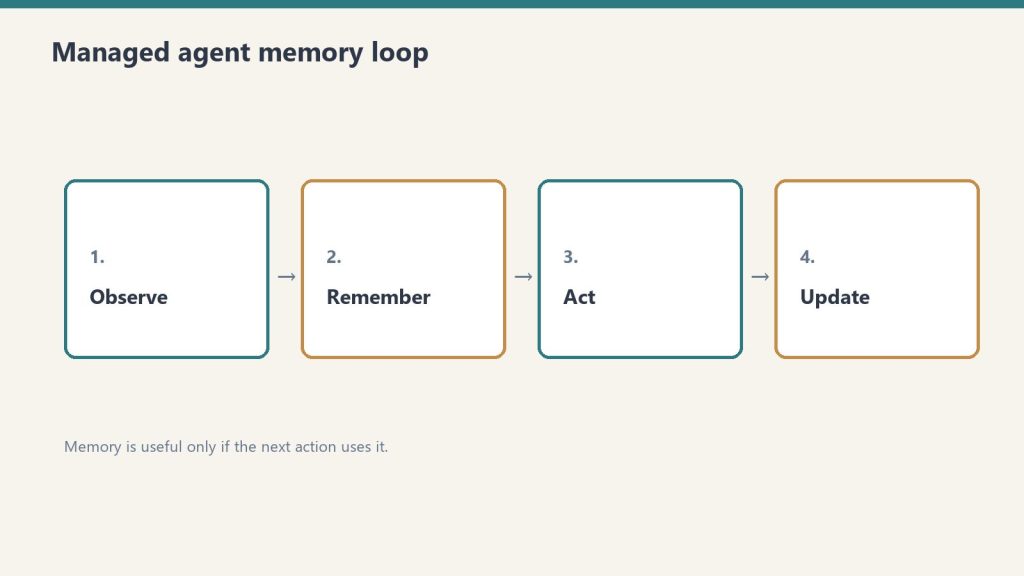
    Four-step loop: observe, remember, act, update for managed agents
    The problem with AI memory.

    Claude does not have persistent memory across sessions by default. Every conversation starts blank. For someone running a simple use case — drafting an email, summarizing a document — this is fine. For someone running a content network across 27 WordPress sites with different brand voices, different SEO strategies, different clients, and different publishing schedules, a blank slate every session is an operational catastrophe.

    The naive solution is to paste a giant context document at the start of every conversation. I tried this. It doesn’t work. Not because Claude can’t read it — it can — but because a 5,000-word context dump at the start of every session is cognitively expensive for the human, slows down the first response, and buries the relevant information under a pile of irrelevant information.

    The right solution is a stack: different layers of context loaded at different times, for different purposes.

    Layer One — The Global Layer (Always Loaded)
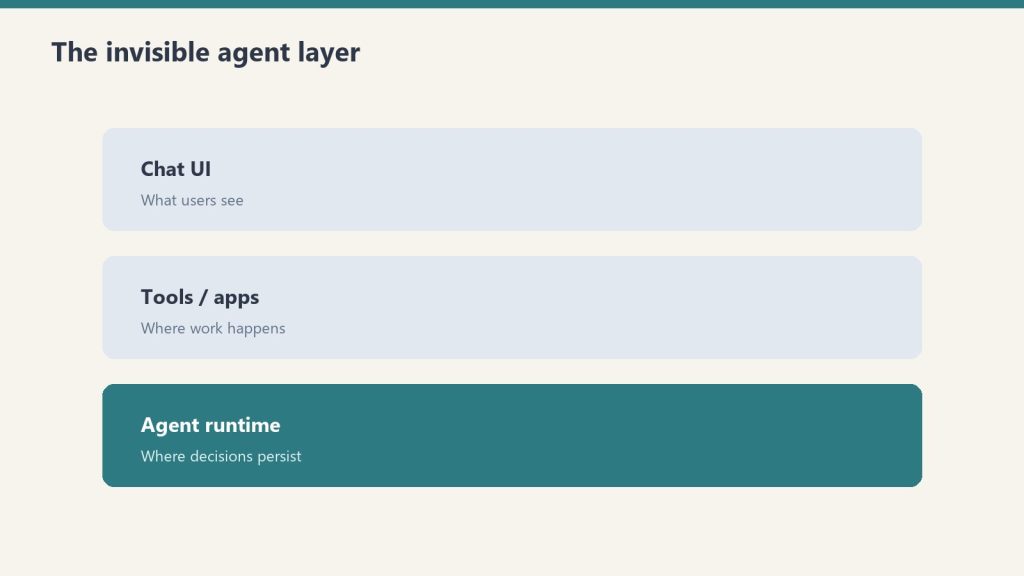
    Three stacked layers: chat UI, tools, agent runtime
    Layer one — the global layer always loaded.

    The global layer is the context that is true across everything I do, all the time. It lives in a CLAUDE.md file at the workspace root and in a persistent system prompt inside Claude’s project settings.

    What goes here: my name, my email, the fact that I manage a network of WordPress sites, the Notion workspace structure, the proxy URL and authentication pattern for WordPress API calls, and a handful of behavioral rules that apply universally — brevity preferences, how I want work logged, what “done” means to me.

    What does not go here: anything site-specific, client-specific, or task-specific. The global layer is 200 lines maximum. Anthropic’s own guidance on CLAUDE.md length is right — longer files reduce adherence. I treat the 200-line limit as a hard constraint, not a guideline.

    Layer Two — The Site Layer (Loaded Per Project)

    Each WordPress site I manage has its own Claude Project, and each project has its own knowledge files. These files contain everything Claude needs to work on that specific site without me having to explain it: the brand voice, the target audience, the top-performing content, the internal linking structure, the credentials, the publishing cadence, and the current content roadmap.

    I generate these files programmatically when I onboard a new site. They pull from the WordPress REST API, the site’s GA4 data, and the Notion database for that client. A site knowledge file for an established site runs about 800–1,200 words. Claude reads it at the start of any session for that project and immediately knows the difference between how to write for a Houston restoration contractor versus a New York luxury lender.

    The site layer is why I can switch from working on a restoration contractor to a luxury lender to a live comedy platform in the same afternoon without losing context. The context travels with the project, not with me.

    Layer Three — The Task Layer (Loaded On Demand)

    The task layer is ephemeral. It is the specific context for the thing I am doing right now: the article brief, the GA data from this session, the list of posts that need refreshing, the client’s feedback on last week’s content.

    This layer lives nowhere permanent. I paste it into the conversation, Claude uses it, and when the session ends it is gone. The task layer is intentionally disposable. If it matters beyond this session, it gets promoted to the site layer or the global layer. If it doesn’t matter beyond this session, it doesn’t need to be stored.

    Most AI users try to make everything permanent. The discipline of the context stack is knowing what deserves permanence and what doesn’t.

    Layer Four — The Second Brain (Asynchronous)

    Desk with laptop, checklist notebook, and billing card ready before creating an Anthropic API key
    Layer four — the second brain asynchronous.

    The second brain layer is Notion. It is not loaded into Claude’s context window directly — it is queried via the Notion MCP when Claude needs specific information.

    What lives here: every session log, every publish log, every piece of competitive intelligence, every client preference that has emerged over time, the Promotion Ledger for autonomous behaviors, the Second Brain database of extracted knowledge from prior sessions.

    The key distinction: Notion is not context I push into Claude. It is context Claude pulls from Notion when it needs it. The MCP connection means Claude can search the Second Brain mid-session, find a relevant prior session log, and use it — without me having to remember that the prior session happened.

    This is the layer that makes the system feel like it has long-term memory even though it doesn’t. Claude doesn’t remember. But it can look things up, and the things worth looking up are stored.

    What This Looks Like In Practice

    A typical session for me starts with a project context already loaded (site layer). Within thirty seconds Claude knows which site it’s working on, what voice to use, and what the current priorities are. I drop in the task layer — a GA report, a list of post IDs, a brief — and we are working within two minutes of starting.

    When something important happens — a new client preference, a site credential change, a strategy decision — I say “log this to Notion” and Claude writes it to the Second Brain. I don’t maintain the second brain manually. Claude maintains it as a byproduct of doing the work.

    When I need to recall something from months ago — what we decided about the internal linking structure for a specific site, what the client said about their brand voice in March — Claude searches Notion and finds it. The retrieval is imperfect but it is dramatically better than my own memory.

    The Honest Constraints

    This system took months to build and it is still not finished. The site knowledge files need updating when strategies change and I don’t always remember to update them. The Second Brain has gaps where sessions weren’t logged properly. The global CLAUDE.md drifts toward bloat and needs periodic pruning.

    The bigger constraint is that this architecture assumes you are operating at a certain scale — multiple sites, multiple clients, recurring workflows. If you are running one site for one business, the overhead of building and maintaining this stack is probably not worth it. A well-written CLAUDE.md and a single Notion page of context will get you most of the way there.

    But if you are scaling past three or four sites, or if you find yourself re-explaining the same context in every session, the stack pays for itself quickly. The ten minutes you spend building a site knowledge file saves you two minutes per session indefinitely.

    The goal is not to give Claude everything. The goal is to give Claude exactly what it needs, when it needs it, at the right layer of permanence.

    Building Your Own Context Stack?

    Email me what you are managing and I will tell you which layers you actually need.

    Most people over-engineer the global layer and under-invest in the site layer. Five minutes of conversation usually fixes it.

    Email Will → will@tygartmedia.com

    Related on Tygart Media: managed agents memory · extended thinking · how to use Claude.

  • Claude API Access in Singapore & China: 2026 Guide

    Claude API Access in Singapore & China: 2026 Guide

    Last refreshed: August 30, 2026

    If you are a developer in Singapore or China trying to use Claude, you have already noticed that the standard instructions don’t quite apply to you. The console.anthropic.com onboarding assumes a US billing address. The latency numbers assume you are pinging from a US data center. And for developers in mainland China, the direct API doesn’t work at all without a workaround.

    This is a practical guide to what actually works in 2026, written for the Asian developer market that is increasingly one of Claude’s most active audiences.

    Singapore: What Works Directly

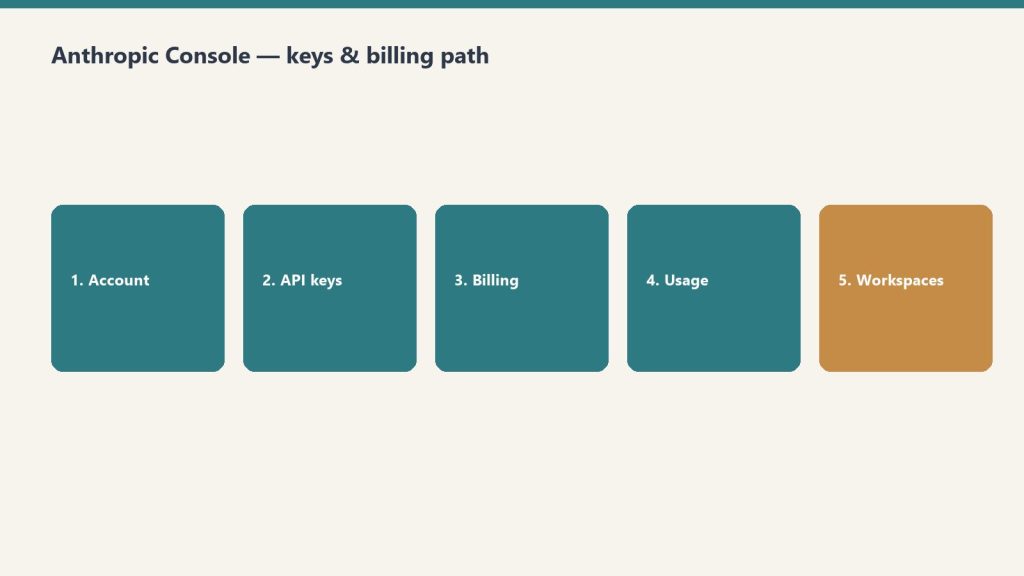
    Five-step path: account, API keys, billing, usage, workspaces
    Singapore — what works directly.

    Singapore is a fully supported country for the Anthropic API. You can create an account at console.anthropic.com, add a payment method, and generate API keys with no restrictions. Most major international credit cards work without issues. If you are at a company with a Singapore entity, Anthropic accepts international wire transfers for enterprise contracts.

    Latency from Singapore to Anthropic’s US API endpoints typically runs 180–250ms round-trip depending on your ISP and the model you are calling. For most application use cases this is acceptable. For latency-sensitive real-time applications — voice interfaces, live coding assistants — you will want to route through a closer compute layer, which is where Vertex AI becomes relevant.

    Vertex AI: The Regional Solution for Both Markets

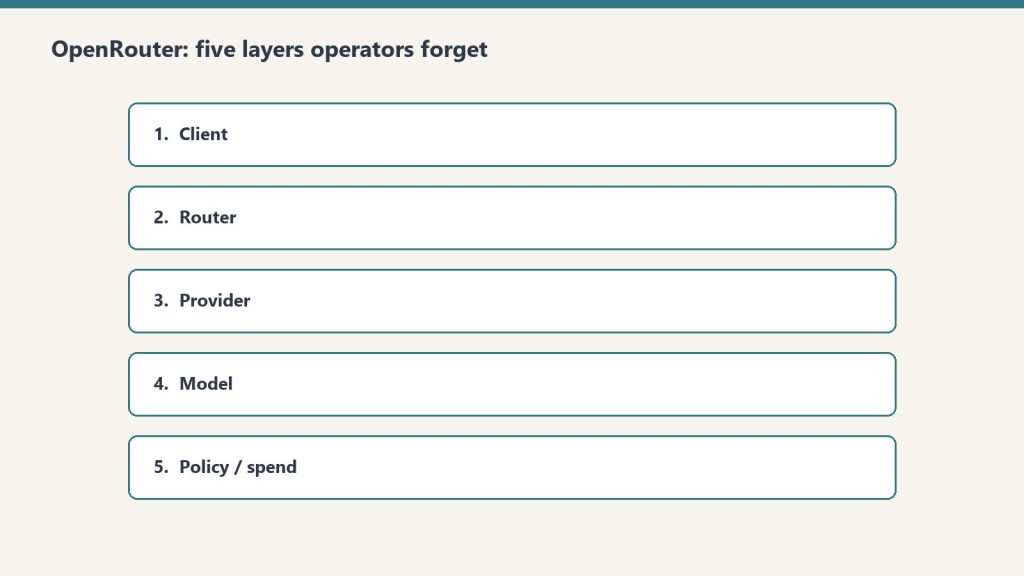
    Five operator layers: client, router, provider, model, policy/spend
    Vertex AI — the regional solution for both markets.

    Google Cloud’s Vertex AI hosts Claude models (Sonnet and Haiku tiers as of mid-2026) and has a data center in Singapore: asia-southeast1. This is the cleanest solution for developers in both Singapore and the broader Asia-Pacific region who want lower latency and enterprise-grade SLAs.

    The practical difference: instead of calling api.anthropic.com, you call a Vertex AI endpoint scoped to asia-southeast1. Your tokens are processed in Singapore, not Virginia. For regulated industries — fintech, healthcare, legal — this also means your data doesn’t leave the region, which is a compliance requirement in several Singapore regulatory frameworks (MAS TRM guidelines being the primary one).

    To get started with Claude on Vertex AI from Singapore:

    1. Create a GCP project and enable the Vertex AI API
    2. Request access to Claude models via the Vertex AI Model Garden (approval is typically same-day for Singapore accounts)
    3. Set your region to asia-southeast1 in all API calls
    4. Authenticate via a GCP service account rather than an Anthropic API key

    The pricing on Vertex AI is comparable to direct Anthropic API pricing, with GCP committed use discounts available at higher volumes.

    AWS Bedrock: The Other Regional Option

    Amazon Bedrock also hosts Claude models and has a Singapore region (ap-southeast-1). If your infrastructure is already on AWS, this is often the simpler path. The setup mirrors Vertex AI: enable Bedrock in your AWS console, request Claude model access, and specify the Singapore region in your SDK calls.

    The practical consideration: as of mid-2026, model availability on Bedrock sometimes lags behind the direct Anthropic API by a few weeks when new versions ship. If being on the latest Claude version immediately matters for your use case, the direct API or Vertex AI are more current.

    China: The Honest Situation

    Desk with laptop, checklist notebook, and billing card ready before creating an Anthropic API key
    China — the honest situation.

    The direct Anthropic API is not accessible from mainland China without a VPN. Console.anthropic.com is not blocked at the DNS level in the same way Google is, but connectivity is unreliable and payment processing from Chinese-issued cards through Stripe (Anthropic’s payment processor) fails for most users.

    The workarounds that Chinese developers are actually using in 2026:

    VPN plus international card. Developers with access to a VPN and an international payment card (Hong Kong or Singapore bank account) use the direct API without issues. This is the most common setup among individual developers and small teams.

    Hong Kong entity. Companies with a Hong Kong subsidiary or registered office use that entity for the Anthropic API account. Hong Kong is a fully supported region with no connectivity issues.

    Third-party API proxies. Several API aggregators operating out of Hong Kong and Singapore re-sell Anthropic API access to mainland China developers. Quality and terms vary significantly — vet carefully before using in production.

    Vertex AI via a non-China GCP account. Some development teams maintain a GCP account registered to a Singapore or Hong Kong entity, then call the Vertex AI Claude endpoint from within China via GCP’s global network. Google Cloud has limited but operational connectivity from within China through its global backbone. This is the most enterprise-appropriate solution for teams that need a compliant path.

    Latency Reality Check by Access Method

    Access MethodFrom SingaporeFrom China (with VPN)
    Direct Anthropic API (us-east)180–250ms300–500ms+
    Vertex AI (asia-southeast1)30–60ms150–300ms via GCP backbone
    AWS Bedrock (ap-southeast-1)25–55msNot directly accessible

    Latency figures are representative ranges based on typical ISP routing. Your numbers will vary.

    Payment and Billing Notes

    For Singapore developers on the direct Anthropic API: Visa, Mastercard, and American Express issued by Singapore banks work reliably. PayNow and local payment rails are not supported — you need an international card.

    For enterprise: Anthropic’s sales team handles invoiced billing for Singapore and other APAC markets. If you are spending meaningfully on the API, contact sales rather than running on a credit card — the invoiced route gives you better cost predictability and eliminates card limit friction.

    The Bottom Line

    If you are in Singapore, the direct API works and Vertex AI’s asia-southeast1 region gives you a lower-latency, compliance-friendly alternative worth evaluating for production workloads.

    If you are in mainland China, the direct API requires a workaround. A Hong Kong entity plus Vertex AI is the cleanest enterprise path. For individual developers, VPN plus an international card is the practical reality.

    The Asian developer market is using Claude at scale. The tooling is there — it just requires knowing which path to take from where you are sitting.

    Based in Singapore or Asia-Pacific?

    I can help you pick the right access path for your stack and region.

    Email me your setup — direct API, Vertex AI, or Bedrock — and I’ll give you a straight answer on what makes sense.

    Email Will → will@tygartmedia.com

    Related on Tygart Media: API quickstart · Message Batches · how to use Claude.

  • 2026 Potlatch Shellfish Season: Hood Canal Harvest Guide

    2026 Potlatch Shellfish Season: Hood Canal Harvest Guide

    Mason County shellfish harvesters have roughly five weeks left in the spring season at Potlatch State Park and the adjacent Potlatch DNR beach — two of the most accessible and productive harvest beaches on Hood Canal. The season runs April 1 through May 31, 2026, and a handful of new regulations took effect this year that harvesters should know before they head to the water.

    Potlatch Beach: What’s Open and What Changed in 2026

    Potlatch State Park sits along U.S. Highway 101 approximately 12 miles north of Shelton, just past Hoodsport on the western shore of Hood Canal. The park’s beach and the adjacent Potlatch DNR tidelands together make up one of the most regularly harvested shellfish areas in Mason County, accessible to anglers and families who don’t need a boat to reach productive oyster, clam, and mussel beds.

    For 2026, the Washington Department of Fish and Wildlife updated two regulations that affect harvest at Potlatch and throughout Hood Canal:

    Cockle minimum size increased to 2.5 inches. The minimum legal size for cockles taken from Hood Canal beaches, including Potlatch, increased from the prior standard to 2.5 inches shell diameter. Harvesters should carry a simple gauge or measuring tool to avoid taking undersized cockles.

    Geoduck daily limit reduced to 1 per person per day. The geoduck limit on Hood Canal dropped to 1 geoduck per person per day. Geoducks require a separate license from standard shellfish-seaweed licenses and are subject to area-specific regulations that can change annually.

    A practical note for those driving out from Shelton, Belfair, or other parts of the county: Highway 101 shoulder parking along the Potlatch segment — mileposts 335.07 to 335.72 — is actively enforced. Use designated parking areas at the state park and DNR beach rather than pulling off on the highway shoulder.

    The Skokomish Tribal Nation holds treaty rights over tidelands in parts of Hood Canal, including areas adjacent to the state park. Harvesters on Potlatch tidelands should be aware of tribal area boundaries and ensure they are on state or DNR-managed beach rather than tribally-held tidelands.

    Alternate Beaches When Potlatch Is Crowded

    The Potlatch beach is popular on weekends, particularly during the last weeks of the season as May 31 approaches. Two nearby alternates are worth knowing:

    WDFW Hoodsport Hatchery beach is open for shellfish harvest through July 31, 2026. The hatchery is located in Hoodsport on U.S. Highway 101, and the associated public tidelands offer an option for harvesters who want to stay in the Hoodsport-Hood Canal corridor. Check WDFW regulations for current limits and open species before visiting.

    Eagle Creek shellfish area is open for oyster harvest year-round. It is a smaller, less trafficked option for Mason County residents who want access outside the May 31 season closure at Potlatch.

    Before any harvest outing, verify current status at WDFW’s shellfish safety hotline or online at wdfw.wa.gov — Hood Canal beaches are subject to emergency closure if water quality tests indicate biotoxin or bacterial contamination. Closures can happen with short notice, especially after rain events flush runoff into the canal.

    Common Ground at the Y: New Outdoor Space Opens in Shelton

    On the south-county end, Shelton’s outdoor recreation scene added something new in mid-April. The Shelton Family YMCA officially opened Common Ground at the Y, a transformation of the organization’s nearly 10-acre campus into a shared outdoor community space. The project was funded through a T-Mobile Hometown Grant and built in partnership with Mason Conservation District, Hope Plaza, Beko’s Tree Service, Mason Matters, Mason County Community Justice (MCCJ), and the Squaxin Island Tribe.

    The campus now includes forest therapy trails, native plant gardens, gathering areas, educational and art installations, and natural play features. The Huff ‘n’ Puff Trail — a 1.8-mile loop on the YMCA property maintained by the Shelton Rotary Club — is open to members and the public. Non-member access is available with a suggested $20 donation, and Mason Transit offers free shuttles to the campus for stewardship and programming events.

    Common Ground at the Y is a different kind of outdoor option than Hood Canal’s beaches — more structured, more accessible for families with young children, and designed to serve as a gathering point for community conservation activity. For Mason County residents who want to connect with local conservation organizations or just get their family into green space without a drive to the canal, the YMCA campus at Shelton is worth a visit. The YMCA is located in Shelton; contact the Shelton Family YMCA directly for current programming hours and shuttle schedules.

    Frequently Asked Questions

    When does the Potlatch shellfish season close in 2026?

    The spring shellfish season at Potlatch State Park and Potlatch DNR beach closes May 31, 2026. The season opened April 1. Harvesters have roughly five weeks remaining as of late April.

    What shellfish can I harvest at Potlatch in 2026?

    Oysters, clams, mussels, and cockles are available at Potlatch. Geoduck harvest is permitted at 1 per person per day with a valid license. The cockle minimum size increased to 2.5 inches in 2026. Always verify current species-specific limits at wdfw.wa.gov before heading out.

    Is there parking at Potlatch State Park for shellfish harvesting?

    Yes, use designated parking inside the state park and at the DNR beach access area. Highway 101 shoulder parking between mileposts 335.07 and 335.72 is actively enforced — do not park on the highway shoulder.

    How do I check if Potlatch beach is open before I go?

    Call the WDFW shellfish safety hotline or check the current status at wdfw.wa.gov. Hood Canal beaches can close on short notice due to biotoxin or bacterial contamination. Checking before a long drive saves a wasted trip.

    Where is Common Ground at the Y in Shelton?

    Common Ground at the Y is on the Shelton Family YMCA campus in Shelton. The site includes forest therapy trails, native gardens, and the 1.8-mile Huff ‘n’ Puff Trail maintained by the Shelton Rotary Club. Mason Transit offers free shuttles for stewardship events. Contact the Shelton Family YMCA for current hours and programming details.

    Related coverage: First time at Potlatch? See Mason County’s Beginner Guide to Hood Canal Shellfish Harvesting. Hood Canal property owners, see Shellfish Access, Tribal Boundaries, and the 2026 Season: A Property Owner’s Guide.

  • Mason County PUD 1: 2026 Rates and Water Project Updates

    Mason County PUD 1: 2026 Rates and Water Project Updates

    Updated September 30, 2026.

    Mason County PUD No. 1 finished major 2026 water work at Manzanita and Arcadia Estates, kept April 1 electric bills at a 3.0% increase instead of the board’s 4.75% authorization, and is pursuing federal dollars for grid and mainline work while FEMA-funded wildfire mitigation trimming starts along Highway 101 in October.

    Through nine months of 2026, Mason County Public Utility District No. 1 has moved from “projects wrapping up” to completed rural water infrastructure in Union, steady post-April electric rates, and a full calendar of grant-backed electric work. Here is what still matters for customers and property owners as of September 30, 2026.

    Manzanita Campus and Arcadia Estates: Completed Water Work

    The Manzanita Water Storage Project and the Arcadia Estates system upgrade were both in close-out status at the April 14, 2026 board meeting. By May, the district held a ribbon-cutting for the new Manzanita Campus in Union: the Manzanita substation (energized October 2025) and more than 200,000 gallons of storage for the Union Regional Water System and Mason County Fire District 6 fire suppression.

    Total Manzanita water construction funding reached $4.6 million. Rognlin’s Inc. of Aberdeen held the storage tank contract at $3,745,725, awarded in June 2025, with construction starting September 2025. PUD materials describe two 100,000-gallon reservoirs, a booster station, backup generation, and a draft hydrant for fire fills—financed through Washington State Public Works Assistance Account grant and low-interest loan support.

    Arcadia Estates work— including Department of Health grant contract actions the board approved in late 2025— moved through the same busy water season. Staff continued water-system planning and additional rural projects (generators, reservoir coating, consolidations) through summer board cycles.

    For Hood Canal and Union-area customers, the practical outcome is added storage and modernized rural water assets rather than deferred tank and main repairs. That matters for service reliability and for how lenders and insurers read rural utility risk—topics that overlap with local insurance and property visibility when you document upgrades accurately online.

    2026 Electric Rates: Still 3.0% After April 1

    Effective April 1, 2026, residential electric rates rose 3.0%. The basic monthly charge went from $45.86 to $47.26, and the energy rate from $0.09670 to $0.09960 per kilowatt-hour. PUD 1’s published 2026 FAQ used an 800 kWh household paying about $4.28 more per month before taxes as a reference point.

    Wholesale pressure came from the Bonneville Power Administration: a 6% power rate increase and an 11.7% transmission increase for 2026. Most Northwest public utility districts pass part of that through.

    PUD 1 held the local increase below its 4.75% cost-of-service authorization for the second straight year. Staff cited budget reductions and a $3.6 million FEMA grant applied to capital and a portion of labor costs. No additional electric rate change was on the district’s 2026 schedule through September; customers still on the April schedule should confirm current class rates at mason-pud1.org or (360) 877-5249.

    Water Rates and Fall Electric Work

    Water rates took a separate path. Effective January 1, 2026, PUD 1 implemented a 3.5% water increase— reduced from a previously authorized 5%— with the average meter basic charge moving from $65.63 to $67.93 across systems, again citing grant offsets in board materials.

    On the electric side, the district’s homepage noted FEMA Hazard Mitigation Grant-funded tree trimming along Highway 101 from Duckabush Road south, with contractor Kemp West starting October 5, 2026, plus danger-tree work on rights-of-way tied to the wildfire mitigation plan. That work supports the same grid resilience story as the district’s capital queue— relevant context in the broader Mason County business and infrastructure picture.

    Federal Funding Still in Play

    General Manager Kristin Masteller reported a $5.6 million Congressionally Directed Spending request to all three Washington congressional offices for mainline rebuilds, with selection tied to federal fiscal year 2027 appropriations. Separately, May 2026 board correspondence referenced a $1.14 million appropriation approved for the Jorstad Substation and Senator Maria Cantwell listing a $4 million FY27 CDS line for Hood Canal grid resilience work. None of that replaces earned revenue yet; it is pipeline funding customers should track through public board packets.

    If you publish local utility updates for clients or your own operation, structured pages that answer rate and project questions plainly still earn citations in 2026—see what holds up in geo case studies and how an AI setup keeps facts tied to primary sources like PUD packets rather than rumor.

    What Mason County Households Should Do Now

    Confirm you are on the rate schedule that matches your service class (electric effective April 1, water effective January 1). If you own rural water-connected property, note completed Manzanita storage and Arcadia work in any insurance or sale packet when those upgrades touch your system.

    Board meetings remain open to the public at 1:00 p.m. on the second and fourth Tuesdays at 21971 N. Highway 101, Shelton (Potlatch). Packets post on the district meetings page. Customer appreciation events were on the 2026 calendar for September 25— check the site for any follow-on announcements.

    Related coverage: For Mason County property owners, see PUD 1 Rate Change: What Property Owners Need to Know. For help reading your bill, see Understanding Your Mason County PUD 1 Electric Bill in 2026.

    Frequently Asked Questions

    What is Mason County PUD No. 1?

    Mason County Public Utility District No. 1 is a customer-owned utility providing electric and water service in Shelton, Hoodsport, Union, and rural southern and western Mason County. It is governed by an elected board of commissioners and headquartered at 21971 N. U.S. Highway 101, Shelton, WA.

    How much did PUD 1 raise electric rates in 2026?

    Residential electric rates increased 3.0% effective April 1, 2026. The basic charge rose from $45.86 to $47.26 per month, and the energy rate from $0.09670 to $0.09960 per kilowatt-hour. That schedule remained in place through September 2026 barring a later board action.

    Did PUD 1 raise water rates in 2026?

    Yes. Water rates increased 3.5% effective January 1, 2026, with the average meter basic charge rising from $65.63 to $67.93. Staff reduced the increase from a previously authorized 5% using grant funding, mirroring the electric side’s below-ceiling approach.

    What is the Manzanita Water Storage Project?

    It is the water storage component of PUD 1’s Manzanita Campus in Union— more than 200,000 gallons of storage, booster facilities, and fire-support infrastructure completed in May 2026 after roughly $4.6 million in construction funding. It serves the Union Regional Water System and supports Mason County Fire District 6.

    What federal funding requests is PUD 1 pursuing?

    As of mid-2026 board reports, the district submitted a $5.6 million Congressionally Directed Spending request for mainline rebuilds to Washington’s congressional delegation and tracked separate appropriations activity, including a $1.14 million Jorstad Substation appropriation and Senator Cantwell’s posted FY27 CDS entries such as Hood Canal grid resilience funding. Awards depend on the federal appropriations process.

    How do Mason County residents contact PUD 1?

    Call (360) 877-5249 or (800) 544-4223, visit mason-pud1.org, or attend a public board meeting at the Potlatch headquarters. Outage reporting uses the same main line.

  • Mason County Businesses: Tollie’s Cafe & Ice Cream Growth

    Mason County Businesses: Tollie’s Cafe & Ice Cream Growth

    Two signs of a growing Mason County business scene emerged this spring: a downtown Shelton café changing hands under a new owner who wants to honor the town’s logging roots, and one of the county’s most beloved local brands preparing a major move to a facility four times the size of its current home. From a coffee counter named for a retired logging locomotive to an ice cream company backed by a state economic revitalization loan, the week’s business news points toward steady, locally rooted growth across the county.

    Tollie’s Café Carries Shelton’s Logging Legacy Forward

    The small café at 118 S. 3rd St. in downtown Shelton has a new name, a new owner, and a familiar heart. On April 1, Tollie’s Café opened its doors under the ownership of Eric Onisko, a Shelton City Council member who purchased the space from Theresa Landsiedel after she operated T’s Café & Espresso there for six years.

    Onisko kept the same three employees and much of the same menu — fresh pastries, handcrafted sandwiches, and Batdorf & Bronson coffee drinks — but he reached back into Shelton’s history for the name. Nearly across the street from the café sits the locomotive nicknamed “Tollie,” a retired engine of the Simpson Logging Company that once hauled timber through the county’s forests. The locomotive has long been one of downtown Shelton’s most photographed landmarks, a piece of industrial history frozen in place on a street that has seen generations of change.

    Tollie’s Café is open Monday through Friday from 7 a.m. to 3 p.m. and Saturday from 9 a.m. to 3 p.m. It joins a cluster of businesses that have recently reinvigorated that stretch of downtown, including Shelton Candy Shoppe, Mestizos Latin Food, and the Wilde Irish Pub — all of which opened on the 400 block of West Railroad Avenue in recent months.

    The transition reflects a pattern worth watching in Mason County’s small-business landscape: established spots changing hands rather than closing, with incoming owners choosing to invest in community character rather than reinvent from scratch. Onisko’s decision to retain staff and menu while rebranding around a piece of Shelton heritage suggests a philosophy that serves the neighborhood well. For residents from Belfair, Hoodsport, Union, and across the county who pass through Shelton for appointments, errands, or events, Tollie’s Café is exactly the kind of stop worth building into the routine.

    For more information, stop by the café at 118 S. 3rd St. in downtown Shelton during open hours.

    Olympic Mountain Ice Cream Eyes Major Growth at Port of Shelton

    One of Mason County’s most recognized local brands is on the verge of a major expansion. Olympic Mountain Ice Cream, which has produced its small-batch artisan flavors in the Skokomish Valley for years, is preparing a move to a new production and retail facility at the Port of Shelton — a building four times the size of its current operation.

    The new home is an 11,500-square-foot Port-owned warehouse at 130 W. Corporate Drive in Shelton, renovated to serve as Olympic Mountain Ice Cream’s expanded base. The project secured a $1.75 million low-interest loan through the Washington State Community Economic Revitalization Board (CERB), approved by the Port of Shelton Commission by formal resolution. Private investment in the project reaches a minimum of $1 million, and the company expects to add 17 permanent jobs over the next five years — a meaningful addition to Mason County’s employment base.

    The business case is clear. The Skokomish Valley location, while scenic, sits in territory prone to flooding and power outages that periodically interrupt production — operational risks that the Port of Shelton site eliminates entirely. The move also opens the door to scaling production, reaching new wholesale accounts, and operating a proper retail storefront for customers who want to buy directly.

    For Mason County residents who know Olympic Mountain Ice Cream from grocery shelves in Shelton, Belfair, and beyond, or from farmers markets and local restaurants that feature its products, the expansion means more of those flavors, produced more reliably, right here at home. The brand uses local dairy and Pacific Northwest ingredients, and its presence on store shelves from Matlock to Grapeview is a point of quiet county pride.

    The Port of Shelton, located off U.S. Highway 101 near Shelton’s industrial corridor, has been an active incubator for Mason County manufacturers and producers seeking room to grow. Olympic Mountain Ice Cream’s expansion adds another anchor to that corridor. The new facility was targeted for completion by spring 2026, with the retail storefront accessible at 130 W. Corporate Drive, Shelton, once fully operational. For product locations and updates, visit olympicmountainicecream.com.

    What to Watch This Spring

    Both of this week’s business stories share an underlying theme: Mason County institutions adapting, not just surviving. Tollie’s Café is a downtown fixture passing through ownership with its community connections intact. Olympic Mountain Ice Cream is a homegrown manufacturer using public-private partnership tools — state CERB funding, Port infrastructure — to break past the physical limitations holding it back.

    The county’s next major business calendar event is the 2026 Expo & Bite of Mason County, scheduled for Friday, July 17 on Railroad Avenue in Shelton — the largest business and restaurant event in Mason County, drawing vendors and visitors from across the region.

    Frequently Asked Questions

    Where is Tollie’s Café located?

    Tollie’s Café is at 118 S. 3rd St. in downtown Shelton. It is open Monday through Friday 7 a.m.–3 p.m. and Saturday 9 a.m.–3 p.m. The café was formerly known as T’s Café & Espresso and changed ownership on April 1, 2026.

    Why is the café named Tollie’s?

    The name honors the “Tollie” locomotive, a retired Simpson Logging Company engine displayed near the café in downtown Shelton. New owner Eric Onisko chose the name to connect the business to Shelton’s timber heritage.

    When will Olympic Mountain Ice Cream open its new Port of Shelton facility?

    The new 11,500-square-foot facility at 130 W. Corporate Drive, Shelton was targeted for completion in spring 2026. The expansion was funded in part by a $1.75 million CERB loan approved by the Port of Shelton Commission.

    How many jobs will the Olympic Mountain Ice Cream expansion create?

    The expansion is projected to add 17 permanent jobs over the next five years, based on CERB application projections submitted to the Port of Shelton Commission.

    What is the CERB loan program?

    The Community Economic Revitalization Board (CERB) is a Washington State program that provides low-interest loans to support economic development projects in communities across the state. The Port of Shelton applied on behalf of Olympic Mountain Ice Cream for the $1.75 million award.

    Related coverage: New to Mason County? See A New Resident’s Guide to Downtown Shelton Businesses. For business owners interested in expansion tools, see How Mason County Businesses Are Using Port of Shelton and CERB Funding.

  • Belfair Business News: Grocery Outlet & April 2026 Updates

    Belfair Business News: Grocery Outlet & April 2026 Updates

    North Mason’s business and development scene is building momentum this spring — a new fire station nearing completion, electrical upgrades unlocking growth potential, and waterfront restoration in Allyn moving forward with renewed state funding. This week we’re spotlighting Grocery Outlet Belfair, the bargain grocery anchor that moved into the former Rite Aid space and has been stocking North Mason pantries since November.

    New Openings

    No confirmed new business ribbon cuttings this week in the North Mason corridor. If you have an opening coming up, connect with the North Mason Chamber of Commerce at northmasonchamber.com to get it on the radar.

    Closings & Changes

    Nothing confirmed this week. Have a tip? Email the Belfair Bugle.

    Permits & Development

    North Mason RFA Fire Station Nearing Completion
    North Mason Regional Fire Authority’s new $9 million headquarters fire station at 490 NE Old Belfair Highway in Belfair is on track for a September 2026 opening. The facility — built right next to the existing station — will house an eight-vehicle bay, a state-of-the-art training center, administrative offices, and living quarters for up to 10 on-call firefighters. TRICO Companies is the general contractor. When complete, it will meaningfully expand emergency response capacity for the entire North Mason area and stand as one of the largest public-safety investments the community has seen in years.

    PUD 3 Electrical Upgrades Set the Stage for Growth
    Mason County PUD No. 3’s Belfair Electrical Capacity Infrastructure Project — backed by $3 million in federal funding secured through U.S. Rep. Derek Kilmer and the House Appropriations Committee — is upgrading the Belfair substation and building a new switching station at the site of the former Belfair Warehouse. This project directly addresses a longstanding constraint: limited electrical capacity in Belfair’s Urban Growth Area previously forced Mason EDC to turn away business recruitment opportunities. More reliable, higher-capacity power along the SR 3 corridor means more room for commercial and light industrial growth in the years ahead.

    Port of Allyn Waterfront Projects Get Fresh Funding
    The Washington State Legislature reappropriated grant funds for two key Port of Allyn projects, giving them more runway before deadlines hit. The remaining pier repair balance of approximately $443,074 and roughly $411,044 for the Sargent Oyster House restoration are now secure following Gov. Bob Ferguson’s budget signature. The pier repair contract has already been awarded to Lakeshore Construction for $142,569.20. The Sargent Oyster House, when fully restored, will serve as a museum honoring the shellfish industry history on North Bay — a visitor draw and a piece of living history for the Allyn waterfront.

    Chamber Notes

    The North Mason Chamber helped organize North Mason High School’s College and Career Fair on April 23 in Belfair, with local employers including Hood Canal Communications connecting face-to-face with students. The Chamber’s Business After Hours series continues — check northmasonchamber.com for upcoming events and member spotlights.

    Business Spotlight: Grocery Outlet Belfair

    It has been about six months since North Mason got its grocery game back. Grocery Outlet Belfair opened at 23960 NE State Route 3 — in the 17,455-square-foot space that sat empty for nearly two years after Rite Aid shuttered in January 2024 — with a ribbon cutting on November 13, 2025.

    If you haven’t been in yet, here’s what to know: Grocery Outlet is an independent operator model, meaning local owners hand-select a rotating inventory of name-brand food, wine, household goods, and health and beauty products at steep discounts — often far below conventional retail pricing. The stock changes regularly, which keeps regulars coming back. For a community that was making the long drive to Shelton or Silverdale for major grocery runs, Grocery Outlet Belfair is more than a store — it’s a reason to keep spending locally and keeping North Mason dollars in North Mason.

    Welcome to the neighborhood, Grocery Outlet Belfair — even if we’re a few months late saying it.

  • North Mason School Levy Trails in Initial Ballot Count

    North Mason School Levy Trails in Initial Ballot Count

    The April 28 special election delivered difficult news for our school community Tuesday evening, with the North Mason School District’s replacement educational levy trailing in initial ballot counts from the Mason County Auditor’s Office.

    If the numbers hold through certification, it would mark the third consecutive levy defeat for the district — following rejections in February 2025 and November 2025.

    District leadership has been explicit about what another failure means. Levy-funded programs that could face cuts in the 2026–27 school year include middle and high school athletics, music, elective and Advanced Placement courses, security officers, and after-school programs — the activities that define daily life at North Mason schools.

    The district entered 2026 already operating without levy funding, following last year’s double defeat. This spring, the district announced $1.3 million in budget reductions, including the elimination of two administrative positions — moves intended to signal fiscal responsibility ahead of the April vote.

    The April measure sought $18.9 million over four years (2027–2030), with an estimated property tax rate of $1.01 per $1,000 of assessed value. That was $3.4 million less than the failed November 2025 proposal — trimmed directly in response to community feedback that the prior ask was too high.

    Results will continue to update as remaining ballots are processed. Certification is expected within weeks of election night. For updates, visit northmasonschools.org or follow the district on Facebook at North Mason School District.

  • Belfair Commute Update: Traffic & Ferries (April 29)

    Belfair Commute Update: Traffic & Ferries (April 29)

    🚗 Belfair Bugle Commuter Update — Wednesday, April 29

    Ferry — Bremerton/Seattle Route

    The Bremerton-Seattle ferry is running on its regular spring schedule this morning with no cancellations reported on that route. Heads up for Friday, May 1: WSF fare increases take effect — passenger and vehicle fares rise an average of 3%, and a 35% peak season surcharge applies to single-ride vehicle and motorcycle fares through September 30. Multi-ride passes are not subject to the surcharge.

    At Colman Dock, Alaskan Way elevators 1 and 2 remain out of service due to a mechanical issue. Elevator 4 (Alaskan Way) and the Pier 50 elevator are both in service for ADA passengers.

    Nearby route disruption (Fauntleroy/Vashon/Southworth): The #2 Cathlamet has three early AM sailings cancelled Wednesday — the 4:05 AM Vashon→Fauntleroy, 4:25 AM Fauntleroy→Vashon, and 5:00 AM Southworth→Vashon. This does not affect the Bremerton-Seattle route but impacts commuters routing through the Fauntleroy terminal. The Fauntleroy vehicle transfer span repair is also ongoing weekdays 9 AM–3 PM through approximately Friday, reducing vehicle loading to one lane with midday delays possible.

    SR-3 and Gorst

    No significant issues on SR-3 for the morning commute. The fish barrier removal project near Sunnyslope Road SW continues nighttime-only construction with no daytime lane closures. The planned 16-day around-the-clock SR-3 closure near Sunnyslope remains on the schedule for late spring/early summer 2026 — WSDOT will issue advance notice before that extended closure begins.

    Hood Canal Bridge

    The two-week daytime inspection closure schedule concluded April 24. No scheduled Hood Canal Bridge closures this week. Normal traffic flow expected on SR-104.

    PSNS / Bangor Gates

    Naval Base Kitsap is at normal operating status with no public security advisories posted. The Trident Gate (at SR-308 near SR-3) is open 24 hours. The Trigger Gate operates weekday hours of 5:00 AM to 7:30 PM.

    Weather

    Expect partly cloudy to overcast skies through the morning commute in Mason and Kitsap counties, with a slight chance of rain developing through the day. Highs in the upper 40s to low 50s. No weather advisories in effect — roads should be dry for the AM rush.

    Fuel Prices

    Belfair and Gorst area regular unleaded remains in the $4.89–$5.59/gallon range. Washington state averages have edged up slightly through April. Safeway in Belfair is competitive around $4.99/gallon.

    Published 5:15 AM PT — Safe travels, North Mason.

  • Cocoon House Everett: How to Access, Volunteer & Donate

    Cocoon House Everett: How to Access, Volunteer & Donate

    For Everett residents: Cocoon House (2726 Cedar St) is Snohomish County’s youth homelessness anchor — and it runs almost entirely on community support. Volunteer, donate supplies, refer a young person, or simply know the address. The U-Turn Drop-In Center is open to any youth ages 13–24 with no eligibility requirements.

    Most Everett residents have a vague awareness that Cocoon House exists. Fewer know specifically what it does, how to connect a young person to it, or how to support it as a community member. This guide covers all three.

    If You Know a Young Person Who Needs Help

    The fastest path to Cocoon House for a young person in Snohomish County is the U-Turn Drop-In Center at 2726 Cedar St, Everett. Ages 13–24, no eligibility requirements, no paperwork required to walk in. A young person in crisis can show up and immediately access a hot meal, hygiene support, showers, laundry, and a case manager who can connect them to housing options, healthcare, and other county resources.

    If the young person is under 18 and needs immediate emergency shelter, the emergency shelter program (ages 12–17) operates separately from the drop-in center with its own intake process. A case manager at the drop-in center can connect to that intake process.

    Referrals are also accepted from schools, community organizations, healthcare providers, and families. If you are a teacher, counselor, coach, or neighbor who is concerned about a young person’s housing situation, Cocoon House’s outreach staff works with community referrals. Visit cocoonhouse.org for contact information.

    How to Volunteer

    Cocoon House actively recruits community volunteers. Volunteer roles include direct service support at the drop-in center, mentorship for young people working through education and employment programs, and event support for fundraisers. The organization has structured volunteer training to ensure community volunteers are prepared to work with young people experiencing homelessness.

    Current volunteer opportunities and requirements are listed at cocoonhouse.org/volunteer. Background checks are required for direct service roles.

    What Donations Are Most Useful

    The U-Turn Drop-In Center and outreach programs have consistent need for practical supplies that community members can provide directly:

    • Hygiene items: shampoo, soap, deodorant, toothbrushes, toothpaste, feminine hygiene products
    • New socks and underwear (all sizes)
    • Gently used or new clothing, particularly outerwear and warm layers for Pacific Northwest conditions
    • Non-perishable food items
    • Gift cards for transit (ORCA cards or Community Transit passes)

    Financial donations support the full program operation. Cocoon House is a 501(c)(3) organization; donations are tax-deductible. Donate at cocoonhouse.org.

    Understanding Why Youth Homelessness Looks Different

    Youth homelessness in Snohomish County is not always visible in the ways adult homelessness is. Young people are more likely to be couch-surfing, sleeping at a friend’s place, or cycling between unstable situations than living on the street. That invisibility makes community awareness especially important — recognizing a young person who needs help, and knowing where to direct them, matters.

    Cocoon House’s outreach model is built around this reality: staff go to where young people are, rather than waiting for them to find a shelter on their own. Community members who know about Cocoon House become part of that outreach network.

    The Broader Everett Safety Net

    Cocoon House operates alongside other Everett-area organizations. The 2026 guide to where to get help in Everett covers Volunteers of America Western Washington’s full program range for adults and families. The complete VOAWW guide covers the full organizational picture. For the county’s broader housing investment: Snohomish County’s $23M housing and behavioral health award.

    Frequently Asked Questions

    How can Everett residents help Cocoon House?

    Volunteer for direct service or mentorship roles at cocoonhouse.org/volunteer; donate hygiene items, clothing, food, and transit passes; make financial donations at cocoonhouse.org; refer young people in need to the U-Turn Drop-In Center at 2726 Cedar St.

    What supplies does Cocoon House need most?

    Hygiene items (shampoo, soap, deodorant, feminine hygiene products), new socks and underwear, warm outerwear and clothing, non-perishable food, and ORCA transit cards or Community Transit passes.

    How do I refer a young person to Cocoon House?

    Direct youth ages 13–24 to the U-Turn Drop-In Center at 2726 Cedar St — no eligibility requirements to walk in. For ages 12–17 needing emergency shelter, contact Cocoon House at cocoonhouse.org for the intake process. Referrals from schools, counselors, healthcare providers, and community organizations are accepted.

    Does Cocoon House need volunteers?

    Yes. Volunteer roles include drop-in center support, mentorship for education and employment programs, and event support. Background checks required for direct service. Sign up at cocoonhouse.org/volunteer.

  • Cocoon House Everett: Guide to Youth Homelessness Programs

    Cocoon House Everett: Guide to Youth Homelessness Programs

    Quick facts: Cocoon House (2726 Cedar St, Everett) is Snohomish County’s only nonprofit dedicated exclusively to ending youth homelessness. Founded in 1991. Serves young people ages 12–24 through emergency shelter, drop-in services, transitional housing, and education and employment support. CEO Joseph Alonzo. The U-Turn Drop-In Center is free and open to any youth ages 13–24 — no eligibility requirements.

    When a teenager loses stable housing in Snohomish County, Cocoon House has been one of the consistent answers to that problem for more than three decades. In a region where housing costs keep rising and the youngest residents are often the most invisible, the organization’s consistency — running since 1991 with an expanding set of programs — matters more than most people realize. Here is the complete 2026 guide to what Cocoon House does, who it serves, and how to connect with it.

    What Cocoon House Is

    Cocoon House is the only nonprofit in Snohomish County focused exclusively on ending youth homelessness. It serves young people ages 12 to 24 through a continuum of programs designed to meet a young person exactly where they are — on the street, in an emergency, or in need of longer-term housing stability.

    The organization has expanded its shelter capacity by 350% since its early years. It now houses more than 230 young people annually through shelter programs and reaches over 1,000 youth, parents, and community members each year across Snohomish County through its full program network.

    The Programs

    Emergency Shelter — Ages 12–17

    The emergency shelter serves youth ages 12 to 17 who need immediate, safe housing. It is staffed, structured, and designed to feel as close to a real home as possible. Young people in the shelter have access to case management, basic needs support, and a plan for what comes next — not just a bed for the night.

    U-Turn Drop-In Center — Ages 13–24

    The U-Turn Drop-In Center is built for older youth who may not be ready for a shelter, don’t meet the age criteria for the emergency shelter, or need a lower-barrier entry point. There are no eligibility requirements beyond showing up. Walk in and you have access to hot meals, hygiene items, showers, laundry, clothing, transportation assistance, and case managers who can connect you to housing, healthcare, and referrals across the county’s service network.

    Outreach Center — Ages 12–20

    The Outreach Center extends the same core supports — meals, showers, clothing, drug and alcohol support, referrals, and case management — to youth ages 12 to 20. Outreach staff also work outside the building, meeting young people in the places where they actually are rather than waiting for them to come through a door.

    Young Adult Housing — Ages 18–24

    For youth who have aged out of the emergency shelter or who need more than drop-in services, Cocoon House provides transitional and permanent housing pathways. Director of Young Adult Housing Eric Jimenez and his team lead this work, connecting young adults to housing options and the support services that make housing sustainable.

    Education and Employment

    Director of Education and Employment Claire Petersen leads programs that help young people build the credentials and skills needed to stay housed long term. A safe place to sleep isn’t enough on its own — sustainable housing requires income, and income requires opportunity. This program works on both sides of that equation.

    The New Colby Avenue Youth Center

    Cocoon House has been developing a new youth center facility on Colby Avenue in Everett, expanding the physical capacity of its programs to serve more young people. The new center adds to the infrastructure available at the main Cedar Street location.

    Why Cocoon House’s Model Works

    The organization’s effectiveness comes from a tiered, no-barrier-to-entry model that serves youth across a wide age range without forcing them into a single pathway. A 14-year-old in an emergency is in a different situation than a 22-year-old who needs stable housing and employment support. Cocoon House’s programs address both ends of that spectrum and the points in between.

    The U-Turn Drop-In Center’s no-eligibility model is particularly important: it serves young people who might not qualify for or seek out formal shelter programs. Getting them through the door — with a meal, a shower, and access to a case manager — is often the first step toward a longer-term stability path.

    How Cocoon House Fits Into Everett’s Safety Net

    Cocoon House operates alongside other Everett-area service organizations as part of the broader safety net for vulnerable residents. Volunteers of America Western Washington provides services across multiple populations including adult housing and food access. The $23M Snohomish County housing and behavioral health award approved April 24 is funding three Everett projects including the Everett Gospel Mission and new affordable housing units on Broadway. Cocoon House is the youth-specific anchor in this network.

    Frequently Asked Questions

    What is Cocoon House in Everett?

    Cocoon House (2726 Cedar St, Everett, WA) is Snohomish County’s only nonprofit dedicated exclusively to ending youth homelessness. Founded in 1991, it serves young people ages 12–24 through emergency shelter, drop-in services, transitional housing, and education and employment programs.

    How does someone get help from Cocoon House?

    Youth ages 13–24 can walk into the U-Turn Drop-In Center at 2726 Cedar St with no eligibility requirements. Hot meals, hygiene, showers, laundry, transportation assistance, and case manager access are available to anyone who comes in. Emergency shelter (ages 12–17) has a separate intake process through case management.

    What age range does Cocoon House serve?

    Cocoon House serves young people ages 12 to 24 across its programs: emergency shelter (12–17), U-Turn Drop-In Center (13–24), Outreach Center (12–20), and Young Adult Housing (18–24).

    How many young people does Cocoon House serve each year?

    Cocoon House houses more than 230 young people annually through its shelter programs and reaches over 1,000 youth, parents, and community members each year through its full program network across Snohomish County.

    Who leads Cocoon House?

    CEO Joseph Alonzo leads the organization. Directors include Eric Jimenez (Young Adult Housing) and Claire Petersen (Education and Employment).

    How can people support Cocoon House?

    Cocoon House accepts donations, volunteers, and in-kind support including hygiene items, clothing, and non-perishable food. The organization also accepts referrals from schools, families, and community organizations. Visit cocoonhouse.org for current needs and volunteer opportunities.

    Is Cocoon House only in Everett?

    Cocoon House is based in Everett and is the county-wide resource for youth homelessness in Snohomish County, reaching communities across the region through its outreach programs. The main facility is at 2726 Cedar St, Everett.