Author: will_tygart

  • Boeing’s 737 North Line Opens in Everett This Summer — What It Means for the City

    Boeing is opening its 737 North Line at the Everett factory this summer — and it is a bigger deal for this city than almost anything else happening in 2026.

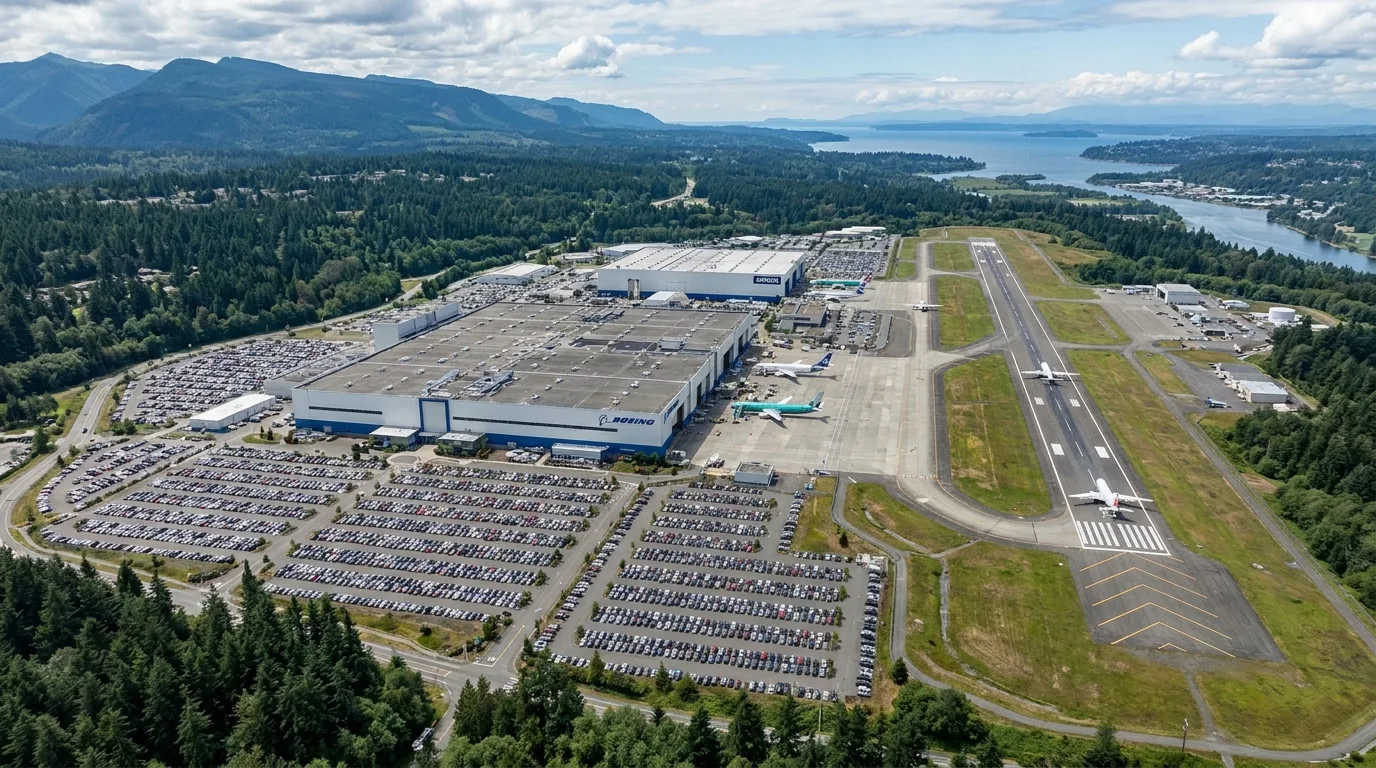
    This is the first time in aviation history that a 737 MAX will be assembled outside of Boeing’s Renton facility. The North Line is the fourth 737 production line Boeing is operating — three are in Renton — and it occupies space in the Everett factory that used to build 787 Dreamliners before Boeing moved that production to South Carolina in 2021. CEO Kelly Ortberg recently toured the facility. Boeing confirmed operations begin this summer.

    What the North Line Is

    The North Line will initially produce the 737-8, 737-9, and 737-10 — all MAX variants. It’s been designed as an exact replica of the Renton production system, with one key difference: a specialized 737 Wing Transport Tool that ferries partially completed wings to Everett for final assembly. Boeing is starting the line at Low Rate Initial Production (LRIP) — a deliberately slow ramp intentionally built to allow additional quality checks before FAA sign-off under Boeing’s production certificate PC700. After LRIP, the North Line gets fully integrated into Boeing’s overall 737 flow, unlocking production capacity above 47 aircraft per month. The long-term target is 63 MAX per month across all four lines.

    Who’s Building the Team

    Boeing is staffing the North Line with a mix of new hires and experienced employees from Renton, Everett, and Moses Lake. The knowledge transfer approach is intentional — veteran mechanics who spent careers on 747s, 767s, and 777s are now training on 737 systems in Renton before coming back to run the Everett line. John V., a nearly 40-year Boeing veteran with experience across all three widebody programs, is transitioning to the role of FAA and customer coordinator for the North Line. “This will be my first time working on the 737 program,” he said. “But we are doing the training right.”

    Among the first hired specifically for the line were Jaden Myers and Alondra Ponce, who completed 12 weeks of foundational training followed by structured on-the-job training in Renton. “Training was so positive and refreshing,” Ponce said. “It was different than any training I’ve done from other jobs.” Myers: “Opening a new production line is something special. So, we have to do it right.”

    The 737 MAX 10 Angle

    CEO Ortberg confirmed that the 737 MAX 10 — the largest 737 variant at 143 feet 8 inches, with capacity for up to 230 passengers — will be produced predominantly at the Everett North Line once FAA certification clears. The 737 MAX 10 is currently awaiting FAA certification, with Boeing expecting it to happen in 2026. By isolating the MAX 10 to Everett, the three Renton lines can maintain faster, more efficient flow on the -8 and -9 variants. Ortberg said the MAX 10 will naturally flow through the Everett factory at a slower pace than the other variants — which is exactly the point. “By isolating or providing that fourth line in Everett, it will allow us to let the three lines in Renton flow faster.”

    What This Means for Everett Workers

    More than 30,000 Boeing employees already work on the Everett campus. The North Line is hiring hundreds more — new positions in mechanics, quality, FAA coordination, and production leadership. Boeing is not relocating the entire 737 program from Renton. This is pure capacity addition. For Everett, that means new aerospace jobs landing in a city whose economy has been anchored by widebody programs that are now scaling down. The North Line is the bridge between Everett’s widebody past and its narrowbody future.

    Frequently Asked Questions

    When does the Boeing 737 North Line in Everett open?

    Boeing has confirmed the North Line opens this summer 2026. It will initially operate at Low Rate Initial Production (LRIP) to demonstrate FAA conformity before scaling to full integration.

    Has Boeing ever built 737s in Everett before?

    No. This is the first time in the 737’s history — going back to 1967 — that it will be assembled outside of Renton. Everett has historically built only widebody jets: the 747, 767, 777, and 787.

    How many 737s per month will Everett build?

    Initially LRIP — a slow, checked ramp. After FAA conformity sign-off the line joins the overall 737 flow, pushing total production capacity above 47 per month. Long-term target across all four lines is 63 per month.

    Is Boeing hiring for the North Line?

    Yes. Boeing is hiring hundreds of employees for the North Line — a mix of new hires and transfers from Renton, Everett, and Moses Lake. Positions include mechanics, FAA coordinators, and production leaders.

    What happened to the space where 787s were built in Everett?

    Boeing moved all 787 production to its North Charleston, South Carolina facility in 2021, freeing the Everett bay for the new 737 North Line. The 747 line closed in December 2022 with the rollout of the final Queen of the Skies.

  • Every Happy Hour on the Everett Waterfront, Ranked — Spring 2026 Guide

    The Everett waterfront now has enough dining options that you can hop happy hour between four or five spots without moving your car. Here’s exactly where to go and when.

    Restaurant Row at Port of Everett’s Waterfront Place has added five new tenants in the past six months. That critical mass means the waterfront is finally a legitimate evening destination — not just one good restaurant surrounded by empty buildings. Here’s how to make the most of it.

    Tapped Public House — The Rooftop Opener

    Location: Port of Everett Waterfront Place, second floor
    Vibe: Pacific Northwest brewpub, family-friendly, maritime-themed interior with octopus mural
    What to order: Craft beer on tap, the Bay Shrimp Roll (exclusive to this location), PNW-inspired scratch kitchen plates
    The move: Start here at opening, grab the rooftop before it fills up. The rooftop deck is the largest on the Everett waterfront in Snohomish County — panoramic marina and Possession Sound views with roll-up doors when weather cooperates. Floor-to-ceiling windows year-round. This is your 5pm stop.
    Hours: Check current hours at portofeverett.com — opened March 2, 2026

    Rustic Cork Wine Bar — The Wind-Down

    Location: Port of Everett Waterfront Place, Fisherman’s Harbor
    Vibe: Wine bar, quieter, more intimate than Tapped
    What to order: Natural wines, curated small plates
    The move: After Tapped’s rooftop energy, Rustic Cork is the decompression. Opened December 2025, it’s settled into its waterfront rhythm. Good stop for a second glass before dinner.

    Scuttlebutt Family Pub — The Institution

    Location: 1205 Craftsman Way (adjacent to waterfront, short walk from Restaurant Row)
    Vibe: Classic waterfront brewpub, dog-friendly patio, family-friendly
    What to order: House-brewed ales, fish and chips, clam chowder, the Big Dumper Beer Cal Raleigh lager if it’s still on tap
    The move: Scuttlebutt’s patio overlooks the Port of Everett Marina. It’s been here for decades and it’s earned the loyalty. This is the comfort stop — especially if you’re bringing someone to the waterfront for the first time and want a guaranteed good time without any risk.

    The Net Shed Fish Market and Kitchen — The Local’s Pick

    Location: 1500 Seiner Drive, Fisherman’s Harbor
    Vibe: Coastal fish market and kitchen, heritage-inspired, outdoor patio
    What to order: Seasonal seafood, fresh catch preparations
    The move: The Net Shed opened December 2025 and has built a loyal following fast. The inspiration from the original commercial fishing net sheds of the historic Everett waterfront comes through in the design. Order the catch, eat on the patio, feel good about supporting something that’s actually connected to the place it’s in.

    Fisherman Jack’s — The Established Anchor

    Location: Port of Everett Waterfront Place
    Vibe: Asian-inspired waterfront dining, established Restaurant Row tenant
    What to order: Asian-fusion plates, cocktails
    The move: One of the original Restaurant Row tenants, Fisherman Jack’s has the most experience executing for a waterfront crowd. Good fallback if the newer spots have long waits.

    Logistics: How to Run This Route

    Park once — the Port of Everett waterfront has shared-use parking throughout Waterfront Place. The entire Restaurant Row circuit is walkable in under 10 minutes. Start at 5pm on Tapped’s rooftop, work down through Rustic Cork and the Net Shed by 7pm, finish at Scuttlebutt for dinner. That’s the full route. If you’re doing it on a Friday when Silvertips playoff games are on, the waterfront energy is noticeably better — people are charged up before the game and celebrating after.

    Frequently Asked Questions

    Where is the best waterfront happy hour in Everett?

    Tapped Public House has the best views with its rooftop deck. Scuttlebutt is the most established and reliable. The Net Shed is the best for fresh seafood in an authentic setting.

    Is there parking at Port of Everett Restaurant Row?

    Yes — shared-use parking is available throughout Waterfront Place. Park once and walk the entire Restaurant Row circuit on foot.

    What’s the newest restaurant at the Everett waterfront?

    Tapped Public House opened March 2, 2026. Marina Azul Cocina and Cantina and Menchie’s at the Marina are expected to open spring 2026, adding to the lineup.

    Is the Everett waterfront good for a date night?

    Yes — Rustic Cork Wine Bar and The Net Shed are the strongest date-night picks. Tapped’s rooftop at sunset is objectively impressive. The waterfront has enough variety that you can calibrate the vibe to the occasion.

  • The Everett Brewery Trail: Your Complete 2026 Guide to All 8 Stops

    Everett has one of the best brewery scenes in Snohomish County — and most people outside the city have no idea. Here’s your complete guide to hitting all the major stops in a single Saturday.

    We’re not talking about a bar crawl. We’re talking about a curated tour of genuinely distinct brewing operations — each with a different vibe, a different specialty, and a different reason to exist. Start in the afternoon and pace yourself. There are eight stops worth making.

    1. Scuttlebutt Brewing — 1205 Craftsman Way

    Start here. Scuttlebutt is the institution — family-owned for decades, now in a purpose-built building overlooking the Port of Everett Marina on Craftsman Way. The waterfront patio is dog-friendly and one of the best outdoor drinking spots in the city. The menu is full brewpub fare: fish and chips, clam chowder, burgers, prime rib on dinner nights. Beer highlights include the Big Dumper Beer (their Cal Raleigh Mariners collab lager — light, crushable, perfectly marketed), the Wapiti IPA, and rotating seasonals. Hours: Mon–Thu 11am–9pm, Fri–Sat 11am–10pm, Sun 11am–9pm. Taproom at 3310 Cedar St also available for a more stripped-down experience.

    2. At Large Brewing — 2821 Hewitt Ave

    At Large is the craft enthusiast’s spot. A converted warehouse that used to house The Everett Herald printing operations — they brew on-site and specialize in growler and keg sales alongside taproom pours. On sunny days the west-facing roll-up doors open for a Puget Sound view that makes the beer taste 10% better. Cider options available alongside the beer. This is where you’ll find people who know what a dry-hopped saison is and have opinions about it.

    3. Crucible Brewing / U-Neek and Crucible

    Everett’s critically acclaimed craft brewery. Voted best brewery in Everett by local readers and earning raving fans across the region. Forward-thinking beers with unusual ingredients and techniques — this is not the place to order something safe. No food service, but food trucks frequently park outside. The staff loves what they do and it shows.

    4. Obsidian Beer Hall — Downtown

    One of Yelp’s consistently top-rated breweries in Everett for 2026. A spacious taproom with a large draft selection. Food is consistently well-done. If you’re doing the trail with a mixed group — some craft nerds, some casual drinkers — Obsidian is where everyone will be happy. Friendly staff, solid menu, no pretension.

    5. 4 Stitch Brewing

    A newer addition to the Everett scene with growing buzz. Rotating tap list with an emphasis on approachable styles done well. Worth a stop as the scene continues to develop.

    6. Middleton Brewing — Everett Mall Way

    The experimental stop. Middleton uses adjunct ingredients — coconut, peanut butter, fruit — in their beers, which is either your thing or it isn’t. If you’re curious, this is the place to try something genuinely different. Dog-friendly, serves pizza and paninis, and won’t judge you for ordering the peanut butter stout.

    7. Three Bull Brewing

    A solid community taproom making its presence felt in Everett’s growing brewery ecosystem. Friendly neighborhood vibe, good rotating draft selection.

    8. Tapped at the Port — Port of Everett Waterfront

    End here, specifically for the rooftop. Tapped Public House opened at the Port of Everett in March 2026 and has the largest waterfront rooftop deck in Snohomish County. Pacific Northwest-inspired scratch kitchen menu, floor-to-ceiling marina views, roll-up doors when the weather cooperates. The Bay Shrimp Roll is port-location exclusive. After a full day of brewery hopping, watching the marina from that rooftop is an objectively correct way to end the evening. Hours vary — check before heading over. Located at 1 Port of Everett Waterfront, Everett WA.

    Practical Trail Notes

    Designate a driver or use rideshare — there is no responsible version of this trail that involves driving between stops. Most breweries open between 11am–2pm on weekends. Plan 45–60 minutes per stop for a proper visit. The full trail in one day is ambitious; splitting into a north Everett loop and a waterfront loop across two days is the smarter call if you want to do it right.

    Frequently Asked Questions

    How many breweries are in Everett WA?

    At least eight operating craft breweries and taprooms as of spring 2026, making Everett one of the better craft beer cities in Snohomish County.

    What is the best brewery in Everett?

    Scuttlebutt is the institution with the best waterfront setting. Crucible (U-Neek and Crucible) has the strongest reputation among craft beer enthusiasts. At Large is the pick for taproom atmosphere. Tapped at the Port wins for views.

    Which Everett brewery is dog-friendly?

    Scuttlebutt’s waterfront patio is dog-friendly. At Large and Middleton are also dog-welcoming. Call ahead to confirm patio availability seasonally.

    Where is Scuttlebutt Brewing located?

    1205 Craftsman Way, Everett WA 98201. There’s also a taproom at 3310 Cedar St. Hours: Mon–Thu 11am–9pm, Fri–Sat 11am–10pm, Sun 11am–9pm.

  • Quán Ông Sáu Is the Vietnamese Restaurant Downtown Everett Has Been Waiting For

    If you haven’t been to Quán Ông Sáu yet, that’s on you — this downtown Everett Vietnamese restaurant quietly opened in December 2025 and it’s the real deal.

    Located at the former Hunan Palace building in downtown Everett, Quán Ông Sáu (pronounced roughly “kwan ong sow”) translates to “Mr. Six’s Restaurant” or “Uncle Six’s Eatery” — a nickname for the owner whose vision is straightforward: authentic Vietnamese street food, no shortcuts, for the Everett community. Two years in the making, the space is now open and it’s operating as both a café and a full sit-down restaurant, which is a combination you don’t see often.

    The Café Side

    The café at Quán Ông Sáu covers Vietnamese coffee in its full range — from classic cà phê sữa đá (iced with sweetened condensed milk) to egg coffee, which is a Hanoi specialty that deserves its own article. The tea selection is equally serious. There’s also a kiosk for to-go orders and online ordering through Chowbus if you’re in a hurry. The café space gets a lot of natural light and the staff is genuinely warm — we’re told “friendly” is an understatement.

    The Restaurant Side

    About 6,000 square feet total, so there’s actually room to breathe — a rarity in downtown Everett. The menu is built around Vietnamese street food classics. The banh mi is there, the pho is there, and the rice plates are what you’d expect from a place where the kitchen clearly has a point of view. The Yelp crowd has been vocal: one early diner described adding a fried egg to the banh mi as essential. We’ll take that note seriously.

    Why This Matters for Downtown Everett

    Downtown Everett’s restaurant scene has been building momentum for a few years, but Vietnamese dining has been underrepresented relative to what the city’s demographic makeup would suggest. Casino Road has long been the hub for Southeast Asian food in Everett — Quán Ông Sáu brings that tradition into the downtown core where it’s accessible to office workers, arena-goers, and residents who aren’t making the cross-town trip for lunch.

    Practical Details

    Quán Ông Sáu is located at the former Hunan Palace site in downtown Everett. Online ordering is available through Chowbus. The café runs during daytime hours. Call ahead or check their social channels for current hours as they settle into their post-soft-opening rhythm.

    Frequently Asked Questions

    What type of food does Quán Ông Sáu serve?

    Authentic Vietnamese street food — banh mi, pho, rice plates, and Vietnamese coffee including egg coffee. The restaurant also operates a café side with a full range of Vietnamese coffees and teas.

    Where is Quán Ông Sáu located?

    In downtown Everett at the former Hunan Palace building. It’s a 6,000-square-foot space with indoor café seating and a full restaurant area.

    Can I order online?

    Yes — online ordering is available through Chowbus. There’s also a to-go kiosk inside the restaurant.

    When did it open?

    Quán Ông Sáu held a soft opening in December 2025. As of spring 2026 it is fully operational.

    What makes it different from other Vietnamese restaurants in Everett?

    It’s the only authentic Vietnamese street food restaurant in downtown Everett with both a full café (including egg coffee) and a sit-down dining room. Most Vietnamese options in Everett are concentrated on Casino Road.

  • Everything Under Construction at Everett’s Waterfront Right Now — April 2026 Update

    Waterfront Place is entering its most significant construction phase yet — and if you haven’t been down to the waterfront recently, the pace of change will surprise you.

    Here’s a complete rundown of every major active project, opening, and construction milestone happening at Port of Everett’s Waterfront Place right now, as of April 2026.

    Restaurant Row: What’s Open, What’s Coming

    The Port has completed two new restaurant buildings in Fisherman’s Harbor within the last six months. Current open businesses: Fisherman Jack’s (established), South Fork Baking Company (established), Rustic Cork Wine Bar (opened December 2025), The Net Shed Fish Market and Kitchen (opened December 2025), Tapped Public House (opened March 2, 2026 — rooftop deck is legitimately great). Coming spring 2026: Marina Azul Cocina and Cantina (family-owned Mexican from the Casa Azul team in Woodinville) and Menchie’s at the Marina frozen yogurt. One last parcel remains — the Port is seeking a high-end steakhouse or experiential dining concept to build out the final corner spot with boat-in access and a required rooftop deck.

    Millwright District: 300+ Apartments Breaking Ground

    The Millwright District is the most transformative phase of Waterfront Place. Developer LPC West (Lincoln Property Company’s Pacific Northwest arm) is breaking ground in 2026 on 300+ waterfront apartments alongside the Millwright Loop roadway, which completed construction in 2025. The office component is already in pre-leasing — up to 120,000 square feet of Class-A waterfront office space in up to three interconnected buildings with rooftop terraces, structured parking, and direct access to the marina promenade. This is the piece that turns Waterfront Place from a destination into a neighborhood.

    The New Sculpture: A Girl, a Photo, and 80 Years of Everett History

    One of the quieter additions to the waterfront this year is worth stopping to find. In February 2026, the Port unveiled a new bronze-cast sculpture along the Central Marina esplanade — a girl gazing out over the marina, inspired by a well-known 1940s photograph of a young Everett girl doing exactly that. The sculptor, Sultan-based artist Kevin Pettelle, also created the “Fisherman’s Tribute” sculpture near Scuttlebutt. Pettelle said this is among the last bronze pieces he will make in his career. The girl in the original photograph, it turned out, is a living Everett resident — she recognized her green plaid jacket and brown saddle shoes when Port staff shared the image with her. Find the sculpture near Pacific Rim Plaza and Boxcar Park on the Central Marina esplanade.

    Marina Infrastructure: Guest Dock 1 and the Boat Launch

    The Port’s 2026 capital plan includes $100,000 to begin reconstruction of Guest Dock 1 and upgrades to marina systems. Separately, the Port secured a $1 million grant from the Washington State Recreation and Conservation Office to fund renovation work at the Jetty Landing Boat Launch — the state’s largest public boat launch. In-water construction is anticipated to start in 2027. The new fuel dock, which opened in 2025, is operational.

    Upcoming: Cleanup Day and Summer Events Season

    The Port’s 32nd annual Marina and Jetty Island Cleanup Day is April 18 from 9 a.m. to noon — a free volunteer event with supplies provided. After that, the waterfront shifts into its summer events season: 90+ annual waterfront events including weekly summer concerts, the July Jetty Island ferry opening, and the annual holiday celebrations and festivals. The Jetty Island public ferry typically runs from late June through Labor Day.

    Frequently Asked Questions

    How many restaurants are at Waterfront Place right now?

    14 cafes, breweries, and restaurants are currently operating, with Marina Azul and Menchie’s at the Marina expected to open spring 2026, and one final high-end parcel still available.

    When does the Millwright District start construction?

    2026. The residential component — 300+ apartments — is breaking ground this year. The office pre-leasing is already underway with Lincoln Property Company.

    Where is the new Port sculpture?

    On the Central Marina esplanade between Pacific Rim Plaza and Boxcar Park. It’s a bronze-cast girl gazing over the marina, inspired by a 1940s photograph. The sculptor is Kevin Pettelle of Sultan, WA.

    When does the Jetty Island ferry open?

    Typically late June through Labor Day for general public access. The April 18 cleanup day is one of the few chances to visit the island outside that window.

    When will the Jetty Landing Boat Launch renovation start?

    In-water construction is anticipated to begin in 2027. The Port secured a $1 million RCO grant to fund the renovation of the state’s largest public boat launch.

  • Jetty Island Cleanup Day Is April 18 — Here’s How to Volunteer

    The Port of Everett is hosting its 32nd annual Marina and Jetty Island Cleanup Day on Saturday, April 18 — and they need volunteers. If you’ve ever wanted to walk Jetty Island and actually feel useful while doing it, this is your weekend.

    The cleanup runs from 9 a.m. to noon, rain or shine (this is Everett — assume rain). Volunteers meet at the Fishermen’s Tribute Plaza, across from Bluewater Distilling, at the Port of Everett waterfront. Registration is encouraged but not required. Sign up at portofeverett.com/marinacleanup to help the Port plan.

    What You’re Actually Signing Up For

    Last year, more than 170 volunteers picked up 1,175 pounds of litter across nearly 100 acres of waterfront and the Port’s 2-mile-long Jetty Island. That’s a meaningful number — Jetty Island is Everett’s best free outdoor amenity and the most Puget Sound-connected public space in Snohomish County. Keeping it clean is a genuine civic act, not just a photo opportunity.

    The Port provides gloves, trash bags, litter pickers, and snacks. You show up in clothes you don’t mind getting dirty and boots that can handle beach and marina terrain. Children are welcome as long as a parent or guardian accompanies them.

    Getting to Jetty Island

    Limited transportation to and from Jetty Island will be provided by Everett Community College’s Ocean Research College Academy on a first-come, first-served basis. If you want to volunteer on the island rather than the marina side, get there early. The ferry fills up and there’s no guarantee of a spot if you arrive late.

    For volunteers staying on the marina side, the Fishermen’s Tribute Plaza and surrounding promenade area is accessible by foot, bike, or car directly from the parking areas at Waterfront Place.

    The Sponsors

    This year’s “Waste Warrior” sponsors are Haley and Aldrich, Herrera Environmental Consultants, and Northwest Aerospace Technologies. If your organization is interested in sponsoring future events, contact the Port directly through portofeverett.com.

    Why This Event Has Lasted 32 Years

    The Port has run this cleanup every year since 1994. That’s not an accident — the waterfront is the Port’s core asset and a growing public destination, and the Port takes stewardship seriously. The same organization that’s spending $1 billion on Waterfront Place development is also the one organizing community cleanup days and replanting shoreline habitat. Both things are real and both matter.

    Jetty Island is only accessible by ferry from late June through Labor Day for the general public. The cleanup is one of the few chances to get out there in April, when the island is quiet, the water is clear, and you can actually hear the birds over the crowd. It’s worth going for that reason alone, separate from the civic good.

    Frequently Asked Questions

    When and where is the cleanup?

    Saturday, April 18, 2026 from 9 a.m. to noon. Meet at the Fishermen’s Tribute Plaza across from Bluewater Distilling at the Port of Everett waterfront.

    Do I need to register?

    Registration is encouraged but not required. Sign up at portofeverett.com/marinacleanup to help the Port plan supplies and transportation.

    Is there transportation to Jetty Island?

    Yes — Everett Community College’s Ocean Research College Academy is providing limited ferry transport on a first-come, first-served basis. Arrive early if you want to clean the island side.

    What should I bring?

    Wear clothes you can get dirty and footwear appropriate for beach and marina terrain. The Port provides gloves, trash bags, litter pickers, and snacks.

    Can kids participate?

    Yes — children are welcome as long as accompanied by a parent or guardian.

    How much litter did volunteers collect last year?

    More than 170 volunteers picked up 1,175 pounds of litter across nearly 100 acres of waterfront and the 2-mile Jetty Island in 2025.

  • Port of Everett Wants a Flagship Restaurant on the Last Waterfront Parcel — Here’s What We Know

    The Port of Everett is searching for a flagship dining partner to build a high-end restaurant on the last available parcel along Restaurant Row at Waterfront Place — and the opportunity is unlike anything else on Puget Sound.

    Parcel A7 sits on a prominent corner of the marina promenade at Fisherman’s Harbor, with panoramic views of Puget Sound, the Olympic Mountains, and 2,300 boat slips. The Port isn’t leasing an existing building — it’s seeking a tenant willing to design and build their own restaurant on a long-term ground lease, from the ground up.

    What the Port Is Looking For

    The Port has been specific: a high-end steakhouse or similarly upscale experiential dining concept. The site can accommodate a two-story building with up to 8,000 square feet of interior space, a required rooftop deck, valet parking, and an expansive outdoor patio. And here’s the detail that sets this apart — diners can arrive by boat through the adjacent guest dock. Marina-to-table dining, for real. The Grand Avenue Park footbridge also links the site directly to downtown Everett, making it walkable from the urban core.

    “This is a one-of-a-kind opportunity to become part of Everett’s transforming destination waterfront,” said Catherine Soper, the Port’s Chief of Business Development and Tourism. “With strong year-round foot traffic, a bustling public marina, and a vibrant calendar of events, this space presents an exceptional business opportunity.”

    Restaurant Row Is Almost Full

    The Port has been on a restaurant opening tear. In the past six months: Rustic Cork Wine Bar opened December 2025, The Net Shed Fish Market and Kitchen opened December 2025, Tapped Public House opened March 2, 2026 with the largest waterfront rooftop deck in Snohomish County, and Marina Azul Cocina and Cantina and Menchie’s at the Marina are arriving this spring. That’s five new tenants in one build-out cycle, bringing Waterfront Place to 14 onsite cafes, breweries, and restaurants. Parcel A7 is the last significant vacancy in Fisherman’s Harbor — and the Port wants to cap it with something exceptional.

    Why This Matters for Everett

    Restaurant Row isn’t just a real estate play — it’s the front door of a $1 billion public/private redevelopment reshaping 65 waterfront acres. The Millwright District, the next major phase, is breaking ground now with 300+ waterfront apartments and up to 120,000 square feet of Class-A office space pre-leasing through Lincoln Property Company. That growing residential and workforce base is the long-term customer for whoever lands on A7. Waterfront Place logged more than 1.6 million site visits in 2024, with numbers expected to grow every year through full buildout.

    A high-end steakhouse or experiential concept at that corner — with those views, boat-in access, and that foot traffic — would be genuinely new for Everett and possibly for Puget Sound.

    How to Connect With the Port

    There is no exclusive listing brokerage for this parcel, though prearranged broker commissions will be honored. Interested operators can contact Senior Property Manager Tara Hays at tarah@portofeverett.com.

    Frequently Asked Questions

    Where exactly is parcel A7?

    On the marina promenade at Fisherman’s Harbor, Waterfront Place, Everett — at a prominent corner with highway and waterside visibility, adjacent to Hotel Indigo, connected to downtown by the Grand Avenue Park footbridge.

    Can guests actually arrive by boat?

    Yes. The site has a boat-in option through the Port’s adjacent guest dock — making marina-to-table dining genuinely possible at the West Coast’s largest public marina.

    What type of restaurant is the Port seeking?

    A high-end steakhouse or upscale experiential dining concept willing to design, build, and operate its own structure on a long-term ground lease.

    How many restaurants are already at Waterfront Place?

    14 onsite cafes, breweries, and restaurants as of spring 2026, with five more openings in the 2025–2026 wave. Parcel A7 is the final available spot at Fisherman’s Harbor.

    How much foot traffic does the waterfront see?

    More than 1.6 million site visits in 2024, with growth expected annually through full buildout of Waterfront Place.

  • What UCP Teaches Us About RCP: How Open Protocols Create Industry Movements

    Tygart Media Strategy
    Volume Ⅰ · Issue 04Quarterly Position
    By Will Tygart
    Long-form Position
    Practitioner-grade

    When Google launched the Universal Commerce Protocol at NRF in January 2026, the announcement was framed as an e-commerce story. Shopify, Walmart, Target, Visa — merchants and payment processors getting their systems ready for AI agents that shop, compare, and execute purchases without human intervention. That framing is correct but incomplete. UCP is not just a commerce standard. It is a template for how open protocols create movements.

    The Restoration Carbon Protocol is a different kind of standard in a completely different industry. But when you understand what UCP actually does architecturally — and why it succeeded where dozens of previous e-commerce APIs failed — you start to see exactly how RCP gets from a 31-article framework on tygartmedia.com to an industry-wide adopted standard that BOMA, IFMA, and institutional ESG reporters actually depend on.

    The mechanism is the same. The domain is different. And there is a version two of RCP that plugs directly into the UCP trust architecture — if the restoration industry moves in the next 18 months.


    What UCP Actually Does That Previous Commerce APIs Didn’t

    The history of e-commerce is littered with failed attempts at standardization. Every major platform — Amazon, eBay, Shopify, Magento — built its own API. Merchants implemented each one separately. Integrators spent years building custom connectors. The problem was not technical. The problem was trust and authentication. Every API required a bilateral relationship: the merchant trusted this specific buyer’s agent, that agent trusted this specific merchant’s data. Scaling to the open web required n² trust relationships. It never worked.

    UCP solved this with a different architecture. Instead of bilateral trust, it established a protocol layer — a shared standard that any compliant agent and any compliant merchant can speak without a pre-existing relationship. An AI agent that implements UCP can query any UCP-compliant catalog, check any UCP-compliant inventory, and execute against any UCP-compliant checkout — not because it has a relationship with that merchant, but because both parties speak the same authenticated protocol.

    The authentication is the product. UCP’s standardized interface means that a merchant’s decision to implement the protocol is simultaneously a decision to trust any UCP-authenticated agent. The trust is embedded in the standard, not in the bilateral relationship.

    Google’s Agent Payments Protocol (AP2), which sits alongside UCP, formalized this with “mandates” — digitally signed statements that define exactly what an agent is authorized to do and spend. The mandate is the credential. Any merchant who accepts UCP mandates accepts a verifiable statement of agent authorization without knowing anything specific about the agent that issued it.

    That architecture — open protocol, embedded authentication, mandate-based trust — is exactly what the restoration industry needs for Scope 3 emissions data. And RCP v1.0 has already built the content layer. The question for v2 is whether to build the authentication layer.


    The RCP Authentication Problem (That UCP Already Solved)

    RCP v1.0 produces per-job emissions records — JSON-structured Job Carbon Reports that restoration contractors deliver to commercial property clients for their GRESB, SBTi, and SB 253 reporting. The framework is solid. The methodology is sourced and auditable. The schema is machine-readable.

    But right now, there is no authentication layer. A property manager who receives an RCP Job Carbon Report from a contractor has no way to verify that the contractor actually follows the methodology, uses the current emission factors, or has gone through any validation process. They have to trust the contractor’s word — which is exactly the problem that makes Scope 3 data from supply chains unreliable for ESG auditors.

    This is the bilateral trust problem all over again. The property manager trusts this specific contractor’s data. That contractor trusts this specific property manager’s reporting process. It does not scale to a portfolio of 200 contractors across 800 properties.

    UCP solved the equivalent problem in commerce. The RCP organization — whoever formally governs the standard — can solve the same problem in ESG supply chain reporting with an analogous architecture.


    What RCP Certification Could Look Like in a UCP-Style Architecture

    Imagine a restoration contractor completes an RCP certification process. They demonstrate that they collect the 12 required data points, apply the current emission factors, produce Job Carbon Reports in the RCP-JCR-1.0 schema, and maintain source documents for seven years. The RCP organization validates this and issues a cryptographically signed certification credential — an RCP Mandate.

    The RCP Mandate is the contractor’s credential. It is not issued to a specific property manager. It is not dependent on a bilateral relationship. It is a verifiable statement, signed by the RCP authority, that this contractor’s emissions data meets the methodology standard. Any property manager, ESG platform, or auditor who accepts RCP Mandates can trust the data from any RCP-certified contractor — not because they know that contractor, but because the standard’s authentication is embedded in the credential.

    This is precisely how UCP mandates work in commerce. The signed statement creates protocol-level trust that does not require a pre-existing relationship.

    The downstream effects are the same as in commerce:

    • For contractors: RCP certification becomes a competitive signal that travels with the data. An RCP Mandate delivered with a Job Carbon Report tells the property manager’s ESG team: this data does not need to be validated separately. It has already been validated by a recognized standard.
    • For property managers: They can accept RCP-certified contractor data directly into their ESG reporting workflows without manual review. The certification is the audit trail. Measurabl, Yardi Elevate, and Deepki — the ESG data management platforms most of them use — can be built to accept RCP Mandate credentials alongside RCP JSON records and flag them automatically as verified-methodology data.
    • For ESG auditors: A property portfolio where all restoration contractor data comes from RCP-certified vendors is auditable without going back to each contractor. The mandate chain is the evidence. Limited assurance under CSRD or SB 253 becomes a single check — are these vendors RCP-certified? — rather than a vendor-by-vendor methodology review.
    • For the industry: Certification creates a selection mechanism. Property managers who require RCP-certified vendors in their preferred contractor agreements are no longer asking for a one-off document. They are asking for protocol compliance — the same way a merchant asking for UCP compliance is not asking for a custom integration, they are asking for standards adoption.

    The Protocol Stack for RCP v2

    Following the UCP architecture model, a complete RCP v2 would have three layers — matching the commerce, payments, and infrastructure layers of the agentic commerce stack:

    Layer 1: The Data Layer (Already Built — RCP v1.0)

    The methodology, emission factors, JSON schema, five job type guides, audit readiness documentation, and public API. This is the equivalent of UCP’s catalog query and inventory check layer — the standardized interface for what data is produced and how it is structured. RCP v1.0 is complete at this layer.

    Layer 2: The Authentication Layer (RCP v2 Target)

    The certification program, the mandate credential, the verification mechanism. This is the equivalent of UCP’s trust and authentication architecture — the layer that makes data from one party trusted by another without a bilateral relationship. Key components:

    • RCP Contractor Certification: documented audit of data capture practices, schema compliance, emission factor vintage, and source document retention
    • RCP Mandate: cryptographically signed certification credential, issued per contractor, versioned to the RCP release used, with an expiration and renewal cycle
    • Mandate verification endpoint: a public API (building on the existing tygart/v1/rcp namespace) where any platform can POST a mandate token and receive a verified/not-verified response with credential metadata
    • Certified contractor registry: a public directory of RCP-certified organizations, queryable by name, state, and certification status

    Layer 3: The Infrastructure Layer (RCP v2 Target)

    The machine-to-machine data exchange infrastructure — the equivalent of MCP and A2A in the agentic commerce stack. A contractor’s job management system (Encircle, PSA, Dash, Xcelerate) that natively implements RCP can transmit certified Job Carbon Reports directly to a property manager’s ESG platform without human intermediation. The report travels with the mandate credential. The platform verifies the credential, ingests the data, and flags it as RCP-verified — automatically. No email, no manual upload, no data entry.

    This is what makes it a movement rather than a document standard. The data flows automatically between authenticated parties. The human steps are eliminated. The protocol becomes infrastructure.


    Why Open Protocol Architecture Enables Movements

    UCP didn’t succeed because Google built good documentation. It succeeded because Google made it open — any merchant can implement it, any agent can speak it, no license fee, no bilateral negotiation, no approval required. Shopify and a regional boutique retailer are equal participants in the UCP ecosystem because the protocol is the credential, not the relationship with Google.

    That openness is what creates network effects. Every new UCP-compliant merchant makes the protocol more valuable for every agent. Every new UCP-compliant agent makes the protocol more valuable for every merchant. The standard grows because participation is self-reinforcing.

    RCP v1.0 is already open. The framework is CC BY 4.0 — free to use, implement, and build upon. The API is public. The emission factors are published with sources. Any restoration company can implement it today without permission.

    What RCP v2 adds is the authentication layer that makes open participation verifiable. The difference between “any company claims to follow RCP” and “any company can prove they follow RCP” is the difference between a document standard and a protocol. And the difference between a protocol and a movement is whether the infrastructure layer — the machine-to-machine data exchange — gets built.

    The agentic commerce stack took 18 months from UCP’s launch to meaningful adoption in production commerce systems. The RCP timeline is not 18 months from today — it’s 18 months from the moment RIA, IICRC, or a major industry insurer formally endorses the standard. That endorsement is the equivalent of Shopify and Walmart signing on to UCP at NRF. It’s the signal that tells the rest of the ecosystem: this is the standard, build to it.


    The Restoration Industry’s Unique Position

    BOMA and IFMA are working the problem from the property owner side — how do we get our vendor supply chains to report Scope 3 data? They don’t have the answer because the answer requires contractor-side infrastructure that commercial real estate organizations cannot build. They can mandate data. They cannot build the methodology.

    The restoration industry can. The 12 data points are already defined. The five job type methodologies are already published. The JSON schema is live. The API is running. The audit readiness guide exists. The only missing component is the formal certification program and the mandate credential that makes all of it protocol-grade rather than document-grade.

    This is what positions restoration as the leading industry in commercial property Scope 3 compliance — not just a participant but the infrastructure provider. The industry that built the standard that the property management industry depends on. That is a fundamentally different value proposition than “we report our emissions.”

    The parallel to UCP is exact: Google didn’t just participate in e-commerce. They built the protocol layer that made agentic commerce possible at scale. The restoration industry, through RCP, can build the protocol layer that makes supply chain Scope 3 compliance possible at scale for commercial real estate. And unlike Google, the restoration industry doesn’t need to be invited to the table. The table was already set at tygartmedia.com/rcp.


    What RIA Savannah Should Start

    The conversation at RIA Savannah on April 27 isn’t about persuading the industry to care about carbon. It’s about presenting the infrastructure that already exists and asking whether the industry wants to formally govern it. The RCP v1.0 framework, the public API, the certification roadmap — these are things that exist today. The question for RIA leadership is whether they want the restoration industry to own the protocol layer for commercial property Scope 3 compliance, or whether they want to watch a property management trade association or a Canadian software company build something proprietary in their place.

    The window is real. ESG data platforms are making vendor integration decisions now. Property managers are establishing preferred contractor Scope 3 requirements now. California SB 253’s Scope 3 deadline is 2027. GRESB assessments with contractor data coverage scoring are active this year. The infrastructure moment is not coming. It is here.

    A movement needs three things: an open standard, an authentication layer, and a network effect. RCP v1.0 is the standard. The authentication layer is the RCP v2 roadmap. The network effect starts the moment an industry organization formally endorses the protocol and restoration contractors have a reason to get certified rather than merely compliant.

    That is what UCP teaches us about RCP. The protocol is not the product. The authenticated, machine-readable, verifiable data infrastructure that emerges from the protocol is the product. And the industry that builds that infrastructure owns the category.

  • RCP API Reference: Accessing the Framework Programmatically

    The RCP REST API endpoint allows software developers, ESG platforms, and job management systems to programmatically access the full Restoration Carbon Protocol framework — all articles, emission factors, schema documentation, and article relationships — without scraping the site. This endpoint is part of the Tygart Media REST API and is publicly accessible without authentication.

    Base URL: https://tygartmedia.com/wp-json/tygart/v1/rcp


    Endpoints

    GET /wp-json/tygart/v1/rcp

    Returns the complete RCP framework index: all published articles with metadata, their relationship type within the framework, and links to full content.

    Request:

    GET https://tygartmedia.com/wp-json/tygart/v1/rcp
    Accept: application/json

    Response structure:

    {
      "rcp_version": "1.0",
      "schema_version": "RCP-JCR-1.0",
      "last_updated": "2026-04-11",
      "framework_url": "https://tygartmedia.com/rcp/",
      "contact": "rcp@tygartmedia.com",
      "license": "CC BY 4.0",
      "articles": [
        {
          "id": 2481,
          "type": "introduction",
          "title": "Introducing the Restoration Carbon Protocol",
          "url": "https://tygartmedia.com/restoration-carbon-protocol-introduction/",
          "excerpt": "...",
          "tags": ["RCP", "GHG Protocol", "ESG", "Scope 3"]
        },
        ...
      ],
      "article_types": [
        "introduction", "regulatory", "job_type_guide",
        "data_standard", "commercial", "technical", "strategy"
      ]
    }

    GET /wp-json/tygart/v1/rcp/schema

    Returns the full RCP-JCR-1.0 JSON Schema for a Job Carbon Report — the machine-readable data standard for per-job Scope 3 emissions records. This is the canonical schema endpoint for software developers implementing native RCP data capture.

    Request:

    GET https://tygartmedia.com/wp-json/tygart/v1/rcp/schema
    Accept: application/json

    Response: Full JSON Schema Draft-07 object as published in the RCP JSON Schema v1.0 article.

    GET /wp-json/tygart/v1/rcp/factors

    Returns all RCP emission factors as structured JSON — vehicle emission factors, material factors, waste disposal factors, demolished building material factors, and the eGRID subregional table. This allows ESG platforms and carbon calculators to pull the current RCP factor set programmatically rather than hardcoding values.

    Request:

    GET https://tygartmedia.com/wp-json/tygart/v1/rcp/factors
    Accept: application/json

    Response structure:

    {
      "factor_vintage": "EPA 2025 EF Hub, EPA eGRID 2023, EPA WARM v16, DEFRA 2024",
      "gwp_basis": "IPCC AR6 GWP-100 for refrigerants; IPCC AR5 for other gases",
      "last_updated": "2026-04-11",
      "transportation": {
        "units": "kg_co2e_per_mile",
        "factors": {
          "passenger_car_gasoline": 0.355,
          "light_truck_gasoline": 0.503,
          "light_truck_diesel": 0.523,
          "medium_truck_diesel": 1.084,
          "heavy_truck_unloaded": 1.612,
          "heavy_truck_loaded": 2.25,
          "hazmat_hauler_acm": 3.20,
          "medical_waste_hauler": 2.80
        }
      },
      "electricity": {
        "units": "kg_co2e_per_kwh",
        "national_average": 0.3497,
        "subregions": {
          "NYUP": 0.1101,
          "CAMX": 0.1950,
          "NEWE": 0.2464,
          "ERCT": 0.3341,
          "FRCC": 0.3560,
          "SRSO": 0.3837,
          "NYCW": 0.3927
        }
      },
      "waste_disposal": {
        "units": "tco2e_per_short_ton",
        "factors": {
          "mixed_cd_landfill": 0.16,
          "gypsum_drywall_landfill": 0.16,
          "gypsum_drywall_recycled": 0.02,
          "carpet_pad_landfill": 0.33,
          "carpet_pad_recycled": 0.05,
          "vinyl_lvp_landfill": 0.28,
          "vinyl_lvp_recycled": 0.08,
          "mixed_plastics_landfill": 0.25,
          "biohazard_incineration": 0.97,
          "biohazard_autoclave_landfill": 0.50,
          "acm_inert_transport_only": 0.018
        }
      },
      "materials_kg_co2e_per_unit": {
        "nitrile_glove_each": 0.0277,
        "n95_respirator_each": 0.05,
        "tyvek_suit_each": 0.52,
        "h2o2_antimicrobial_per_kg_active": 1.33,
        "lvp_flooring_per_m2": 5.2,
        "ceramic_tile_per_kg": 0.78,
        "ready_mix_concrete_per_kg": 0.13,
        "ldpe_sheeting_per_kg": 1.793
      },
      "refrigerant_gwp_ar6": {
        "R410A_blend": 2256,
        "R32": 771,
        "R454B_blend": 530,
        "R134a": 1530
      },
      "fuel_combustion": {
        "units": "kg_co2e_per_gallon",
        "gasoline": 8.887,
        "diesel": 10.21
      }
    }

    GET /wp-json/tygart/v1/rcp/articles/{type}

    Returns articles filtered by framework type. Valid type values: job_type_guide, regulatory, data_standard, technical, strategy, introduction, commercial.

    Example — get all job type guides:

    GET https://tygartmedia.com/wp-json/tygart/v1/rcp/articles/job_type_guide

    Response: Array of article objects matching that type, with title, URL, excerpt, and job_types array (e.g., ["water_damage", "category_2", "category_3"]).


    Existing WordPress REST API — RCP Queries

    While the tygart/v1/rcp endpoints above are planned for v1.1 deployment, the existing WordPress REST API at /wp-json/wp/v2/ already supports filtered RCP queries using tag and category IDs.

    Get all RCP articles

    GET https://tygartmedia.com/wp-json/wp/v2/posts?tags=409&per_page=50
    # Tag 409 = "RCP" — returns all 30 published RCP articles

    Get RCP articles by sub-type

    # Developer/technical articles only (tag 411 = Developer Reference)
    GET https://tygartmedia.com/wp-json/wp/v2/posts?tags=409,411&per_page=20
    
    # Regulatory articles (tag 369 = SB 253)
    GET https://tygartmedia.com/wp-json/wp/v2/posts?tags=409,369&per_page=20

    Get a specific article with full content

    # RCP v1.0 Full Framework Document (post ID 2976)
    GET https://tygartmedia.com/wp-json/wp/v2/posts/2976
    
    # Returns: id, title, content.rendered, excerpt.rendered, 
    #          link, slug, date, modified, tags, categories

    Get the RCP hub page

    GET https://tygartmedia.com/wp-json/wp/v2/pages?slug=rcp
    # Returns the hub page at /rcp/ with full content and navigation structure

    Response fields available per post

    Field Type Description
    id integer WordPress post ID — stable across updates
    slug string URL slug — permanent, do not rely on for API queries (use ID)
    title.rendered string HTML-decoded article title
    content.rendered string Full article HTML — includes all tables, methodology, worked examples
    excerpt.rendered string Summary paragraph — suitable for search result snippets
    link string Canonical URL
    modified datetime Last updated — use to detect emission factor version updates
    tags array[int] Tag IDs — use 409 (RCP), 411 (Developer) for filtering

    RCP Tag ID Reference

    Tag ID Name Use
    409 RCP All RCP articles — primary filter for the full framework
    408 GHG Protocol All RCP articles (GHG Protocol aligned)
    366 Scope 3 All RCP articles (Scope 3 focused)
    77 ESG All RCP articles (ESG context)
    411 Developer Reference Technical articles: JSON schema, proxy guide, factor table, audit guide, software integration, 12 data points
    369 SB 253 Regulatory articles: SB 253, framework, FEMA, SBTi, CSRD

    Planned v1.1 API Enhancements (Roadmap)

    The following endpoints are targeted for deployment in RCP v1.1, pending implementation by the infrastructure team. The spec above defines the intended response format.

    • GET /wp-json/tygart/v1/rcp — Framework index with article type classification
    • GET /wp-json/tygart/v1/rcp/schema — RCP-JCR-1.0 JSON Schema as a clean API response
    • GET /wp-json/tygart/v1/rcp/factors — All emission factors as structured JSON with vintage metadata
    • GET /wp-json/tygart/v1/rcp/factors/{category} — Filtered factor sets (transportation, electricity, waste, materials)
    • GET /wp-json/tygart/v1/rcp/articles/{type} — Articles filtered by framework type

    Software vendors who want to implement the planned endpoints ahead of formal deployment, or who have implementation questions, contact: rcp@tygartmedia.com


  • RCP Carbon Avoidance Framework: How to Document Emissions That Didn’t Happen

    Every RCP article published so far covers how to measure and report the Scope 3 emissions your restoration work generates. This article introduces a complementary concept: carbon avoidance — the quantified emissions that did not happen because of deliberate operational choices made on a specific job.

    Avoided emissions are not the same as offsets. They are not purchased credits. They are not estimates of what another contractor might have done. They are documented, job-level calculations showing that a specific decision — dry in place instead of demolish, drywall recycled instead of landfilled, electric van instead of diesel truck — produced a measurable reduction from what the baseline calculation would have shown. When delivered alongside a standard RCP Job Carbon Report, avoided emissions data transforms the contractor from a Scope 3 data source into a Scope 3 reduction partner.


    Why Avoided Emissions Matter to Your Commercial Clients

    A commercial property manager with an SBTi commitment needs two things from their restoration contractor supply chain: the actual emissions figure for their Scope 3 inventory, and evidence that those emissions are declining. The actual figure alone satisfies a disclosure requirement. Evidence of decline satisfies a reduction target.

    SBTi supplier engagement targets — which require companies to show that their supply chain partners are actively reducing emissions — are best evidenced not by a contractor’s promise to do better but by documented proof that specific jobs generated fewer emissions than the counterfactual. An RCP Job Carbon Report that includes an avoided emissions summary gives the property manager exactly that evidence in a form their ESG team can cite in annual reporting.

    Under the GRESB GH1 indicator’s data coverage scoring, a client who can show that a contractor’s actual job data consistently outperforms the spend-based benchmark is in a stronger scoring position than one using estimates. Avoided emissions documentation supports that narrative directly.


    The Three Categories of Restoration Carbon Avoidance

    Category A: Dry-In-Place vs. Demolish-and-Replace

    The most material avoidance opportunity in restoration is also the most consequential clinical decision: dry in place or tear it out. When a Category 2 water damage job achieves successful in-place drying of drywall that would otherwise have been demolished and replaced, the avoided emissions include:

    • Category 12 avoided: embodied carbon of the drywall that was not demolished (0.16 tCO₂e/ton landfilled, plus the embodied carbon of new drywall not manufactured)
    • Category 5 avoided: disposal emissions from the demolition debris that was not generated
    • Category 4 partial: some debris hauling trips eliminated

    Calculation methodology: Document the affected area that was successfully dried in place (square footage). Calculate the weight of drywall that would have been demolished using the standard proxy (2.5 lbs/sq ft for 1/2″ drywall). Apply the landfill emission factor plus the embodied carbon of new drywall avoided. Sum across Categories 5 and 12.

    Example: A 400 sq ft wall assembly successfully dried in place instead of demolished: 400 × 2.5 lbs = 1,000 lbs = 0.45 tons avoided demolition. At 0.16 tCO₂e/ton (landfill) + 0.12 kg CO₂e/kg for new drywall embodied carbon (ICE Database), total avoided emissions ≈ 0.127 tCO₂e for this decision alone.

    Category B: Waste Diversion from Landfill

    When demolished materials are diverted from landfill to recycling — drywall to a gypsum recycler, clean wood to a biomass facility, metal to a scrap recycler — the difference between the landfill emission factor and the recycling emission factor represents avoided emissions.

    EPA WARM v16 avoidance factors for key restoration materials:

    Material Landfill (tCO₂e/ton) Recycled (tCO₂e/ton) Avoided per ton diverted
    Gypsum drywall 0.160 0.020 0.140
    Carpet and pad 0.330 0.050 0.280
    Dimensional lumber (uncharred) 0.039 -0.150 0.189
    Vinyl/LVP flooring 0.280 0.080 0.200
    Metals (mixed) 0.025 -0.420 0.445

    Source: EPA WARM v16. Negative recycling values reflect avoided virgin production emissions — recycling metals and wood avoids more emissions than landfilling would have produced.

    Calculation methodology: Obtain a weight receipt from the recycling facility documenting the material type and weight diverted. Subtract the recycling emission factor from the landfill emission factor. Multiply by tons diverted. This is the avoided emission attributable to the diversion decision.

    Category C: Low-Emission Equipment or Material Substitution

    When a contractor deploys a lower-emission alternative to what would otherwise have been used — an electric monitoring vehicle instead of a diesel truck, R-32 dehumidifiers instead of R-410A units, cellulose insulation instead of fiberglass during reconstruction — the emission difference is an avoidance claim, provided the counterfactual (what would otherwise have been used) is documented and defensible.

    Calculation methodology: Document the actual equipment or material used and its emission factor. Document the standard counterfactual (e.g., diesel equivalent, standard drywall, fiberglass insulation). Calculate the emission factor difference and multiply by the activity quantity. This is the avoided emission attributable to the substitution decision.

    Important boundary condition: Category C avoidance claims require that the counterfactual is a realistic alternative — not an implausible worst case. Using “diesel heavy truck” as the counterfactual for a small cargo van trip, or “virgin nylon carpet” as the counterfactual when the client specified recycled carpet, overstates avoidance and will not survive audit scrutiny. The counterfactual should be the standard industry practice for that task, not the worst possible option.


    How to Structure an Avoided Emissions Disclosure

    Avoided emissions should be reported as a supplementary section of the RCP Job Carbon Report, clearly separated from the actual emissions inventory. The structure prevents confusion in client ESG reporting — actual emissions go into their Scope 3 inventory; avoided emissions go into their Scope 3 narrative as evidence of supplier reduction activity.

    Recommended disclosure format within an RCP Job Carbon Report:

    "avoided_emissions": {
      "total_avoided_tco2e": 0.267,
      "avoidance_actions": [
        {
          "action_type": "dry_in_place",
          "description": "400 sq ft wall assembly dried in place — demolition avoided",
          "counterfactual_tco2e": 0.127,
          "actual_tco2e": 0.000,
          "avoided_tco2e": 0.127,
          "documentation": "psychrometric log confirming dry standard achieved, no demolition performed"
        },
        {
          "action_type": "waste_diversion",
          "description": "0.91 tons gypsum drywall diverted to regional gypsum recycler",
          "counterfactual_tco2e": 0.146,
          "actual_tco2e": 0.018,
          "avoided_tco2e": 0.128,
          "documentation": "recycling facility weight receipt #REC-2026-04847",
          "recycler_name": "National Gypsum Recycling, Portland OR"
        },
        {
          "action_type": "low_emission_vehicle",
          "description": "Electric monitoring van used for 3 monitoring visits (84 miles total) — diesel counterfactual",
          "counterfactual_tco2e": 0.042,
          "actual_tco2e": 0.013,
          "avoided_tco2e": 0.029,
          "documentation": "GPS trip log, vehicle: 2026 Ford E-Transit, charging location WECC subregion"
        }
      ],
      "methodology_note": "Counterfactuals based on standard RCP proxy values for the applicable job type. Avoidance calculations follow GHG Protocol guidance on avoided emissions disclosure as supplementary information, distinct from the Scope 3 inventory.",
      "audit_note": "Avoided emissions are supplementary disclosures and do not reduce the reported actual emissions total. They are not offsets and should not be subtracted from the client Scope 3 inventory."
    }

    What Avoided Emissions Are Not

    Avoided emissions in the RCP framework are supplementary disclosures, not inventory adjustments. Three critical distinctions:

    They do not reduce the reported actual emissions total. The Scope 3 inventory reports what happened. Avoided emissions report what didn’t happen because of a deliberate choice. A client cannot subtract avoided emissions from their Scope 3 total — that would be double-counting avoidance as a reduction. The GHG Protocol treats avoided emissions as supplementary information outside the inventory boundary, and RCP follows this treatment.

    They are not carbon offsets. Offsets are purchased credits representing reductions achieved elsewhere. Avoided emissions are reductions achieved on the specific job being reported. A contractor cannot sell avoided emissions credits, trade them, or use them to offset other emissions unless they go through a formal carbon credit verification process, which is a separate and complex undertaking outside the RCP framework.

    They require documentation at the same standard as actual emissions. An avoided emissions claim with no supporting documentation is worthless for ESG reporting and creates liability under FTC Green Guides for any contractor who markets it. Every avoided emissions entry in an RCP Job Carbon Report needs a source document: a recycling facility weight receipt, a GPS trip log, a psychrometric log, a materials delivery receipt. The same audit trail required for actual emissions is required for avoidance claims.


    The Commercial Property Manager Perspective

    When a property manager with a GRESB or SBTi commitment receives an RCP Job Carbon Report that includes an avoided emissions summary, they receive something most of their restoration vendors cannot provide: evidence that their contractor is actively contributing to their Scope 3 reduction trajectory, not just generating a number.

    The practical use cases for property managers:

    • Annual sustainability report narrative: “In 2026, our restoration contractor network documented 47.3 tCO₂e of avoided emissions through waste diversion and dry-in-place techniques across 83 commercial property claims.”
    • SBTi supplier engagement evidence: Documented avoidance demonstrates that the contractor is taking action aligned with the client’s science-based targets, satisfying supplier engagement target requirements.
    • GRESB Management Component: Evidence of contractor sustainability practices supports management component indicators on supply chain engagement and vendor ESG requirements.

    RCP v1.1 Roadmap: Formal Avoidance Framework

    RCP v1.0 establishes the measurement standard. The avoided emissions framework described in this article is RCP guidance, not yet a formal v1.0 schema element. The following items are targeted for formalization in RCP v1.1:

    • JSON schema extension: avoided_emissions object with required fields for action_type, counterfactual_tco2e, actual_tco2e, avoided_tco2e, and documentation reference
    • Standardized counterfactual table: default counterfactual values for each of the three avoidance categories, analogous to the RCP proxy value table for actual emissions
    • Dry-in-place protocol: specific documentation requirements for Category A claims, including psychrometric log format, dry standard reference (IICRC S500), and affected area measurement methodology
    • Certified recycler registry: integration with a verified recycler directory (analogous to EcoClaim’s recycler directory) so that weight receipts from listed facilities carry a higher data quality designation than receipts from unlisted facilities
    • Portfolio avoidance summary: annual summary format that aggregates per-job avoided emissions across a client’s property portfolio, suitable for GRESB and SBTi supplier engagement reporting

    Contractors who want to begin documenting avoided emissions now can use the JSON structure and methodology described above. Records generated under this guidance will be compatible with the v1.1 formal schema.

    If you are generating avoided emissions data and would like to contribute to the v1.1 methodology development, contact rcp@tygartmedia.com. Primary data on actual avoidance outcomes — tons of drywall recycled, square footage successfully dried in place — is exactly what the RCP needs to build defensible proxy counterfactual tables for the next version.


    Sources and References