Author: Will Tygart

  • The Orchestrator — AI Content Command Center

    The Orchestrator — AI Content Command Center

  • Cloudflare EmDash: Why We’re Not Leaving WordPress Yet

    Cloudflare EmDash: Why We’re Not Leaving WordPress Yet

    Tygart Media / The Signal
    Broadcast Live
    Filed by Will Tygart
    • Tacoma, WA
    • Industry Bulletin

    Cloudflare dropped EmDash on April 1, 2026 — and no, it’s not an April Fools joke. It’s a fully open-source CMS written in TypeScript, running on serverless infrastructure, with every plugin sandboxed in its own isolated environment. They’re calling it the “spiritual successor to WordPress.”

    We manage 27+ WordPress sites across a dozen verticals. We’ve built an entire AI-native operating system on top of WordPress REST APIs. So when someone announces a WordPress replacement with a built-in MCP server, we pay attention.

    Here’s our honest take.

    What EmDash Gets Right

    Plugin isolation is overdue. Patchstack reported that 96% of WordPress vulnerabilities come from plugins. That’s because WordPress plugins run in the same execution context as core — they get unrestricted access to the database and filesystem. EmDash puts each plugin in its own sandbox using Cloudflare’s Dynamic Workers, and plugins must declare exactly what capabilities they need. This is how it should have always worked.

    Scale-to-zero economics make sense. EmDash only bills for CPU time when it’s actually processing requests. For agencies managing dozens of sites where many receive intermittent traffic, this could dramatically reduce hosting costs. No more paying for idle servers.

    Native MCP server is forward-thinking. Every EmDash instance ships with a Model Context Protocol server built in. That means AI agents can create content, manage schemas, and operate the CMS without custom integrations. They also include Agent Skills — structured documentation that tells an AI exactly how to work with the platform.

    x402 payment support is smart. EmDash supports HTTP-native payments via the x402 standard. An AI agent hits a page, gets a 402 response, pays, and accesses the content. No checkout flow, no subscription — just protocol-level monetization. This is the right direction for an agent-driven web.

    MIT licensing opens the door. Unlike WordPress’s GPL, EmDash uses MIT licensing. Plugin developers can choose any license they want. This eliminates one of the biggest friction points in the WordPress ecosystem — the licensing debates that have fueled years of conflict, most recently the WP Engine-Automattic dispute.

    Why We’re Staying on WordPress

    We already solved the plugin security problem. Our architecture doesn’t depend on WordPress plugins for critical functions. We connect to WordPress from inside a GCP VPC via REST API — Claude orchestrates, GCP executes, and WordPress serves as the database and rendering layer. Plugins don’t touch our operational pipeline. EmDash’s sandboxed plugin model solves a problem we’ve already engineered around.

    27+ sites don’t migrate overnight. We have thousands of published posts, established taxonomies, internal linking architectures, and SEO equity across every site. EmDash offers WXR import and an exporter plugin, but migration at our scale isn’t a file import — it’s a months-long project involving URL redirects, schema validation, taxonomy mapping, and traffic monitoring. The ROI doesn’t exist today.

    WordPress REST API is our operating layer. Every content pipeline, taxonomy fix, SEO refresh, schema injection, and interlinking pass runs through the WordPress REST API. We’ve built 40+ Claude skills that talk directly to WordPress endpoints. EmDash would require rebuilding every one of those integrations from scratch.

    v0.1.0 isn’t production-ready. EmDash has zero ecosystem — no plugin marketplace, no theme library, no community of developers stress-testing edge cases. WordPress has 23 years of battle-tested infrastructure and the largest CMS community on earth. We don’t run client sites on preview software.

    The MCP advantage isn’t exclusive. WordPress already has REST API endpoints that our agents use. We’ve built our own MCP-style orchestration layer using Claude + GCP. A built-in MCP server is convenient, but it’s not a switching cost — it’s a feature we can replicate.

    When EmDash Becomes Interesting

    EmDash becomes a real consideration when three things happen: a stable 1.0 release with production guarantees, a meaningful plugin ecosystem that covers essential functionality (forms, analytics, caching, SEO), and proven migration tooling that handles large multi-site operations without breaking URL structures or losing SEO equity.

    Until then, it’s a research signal. A very good one — Cloudflare clearly understands where the web is going and built the right primitives. But architecture doesn’t ship client sites. Ecosystem does.

    The Takeaway for Other Agencies

    If you’re an agency considering your CMS strategy, EmDash is worth watching but not worth chasing. The lesson from EmDash isn’t “leave WordPress” — it’s “stop depending on WordPress plugins for critical infrastructure.” Build your operations layer outside WordPress. Connect via API. Treat WordPress as a database and rendering engine, not as your application platform.

    That’s what we’ve done, and it’s why a new CMS launch — no matter how architecturally sound — doesn’t threaten our stack. It validates our approach.

    Frequently Asked Questions

    What is Cloudflare EmDash?

    EmDash is a new open-source CMS from Cloudflare, built in TypeScript and designed to run on serverless infrastructure. It isolates plugins in sandboxed environments, supports AI agent interaction via a built-in MCP server, and includes native HTTP-native payment support through the x402 standard.

    Is EmDash better than WordPress?

    Architecturally, EmDash addresses real WordPress weaknesses — particularly plugin security and serverless scaling. But WordPress has 23 years of ecosystem, tens of thousands of plugins, and the largest CMS community in the world. EmDash is at v0.1.0 with no production track record. Architecture alone doesn’t make a platform better; ecosystem maturity matters.

    Should my agency switch from WordPress to EmDash?

    Not today. If you’re running production sites with established SEO equity, taxonomies, and content pipelines, migration risk outweighs any current EmDash advantage. Revisit when EmDash reaches a stable 1.0 release with proven migration tooling and a meaningful plugin ecosystem.

    How does EmDash handle plugin security differently?

    WordPress plugins run in the same execution context as core code with full database and filesystem access. EmDash isolates each plugin in its own sandbox and requires plugins to declare exactly which capabilities they need upfront — similar to OAuth scoped permissions. A plugin can only perform the actions it explicitly declares.

    What should agencies do about WordPress security instead?

    Minimize plugin dependency. Connect to WordPress via REST API from external infrastructure rather than running critical operations through plugins. Treat WordPress as a content database and rendering engine, not as your application platform. This approach neutralizes the plugin vulnerability surface that EmDash was designed to solve.


    Visual summary

    AI-generated featured image for: Cloudflare Just Launched a WordPress Killer. Here’s Why We’re Not Moving.

    About this image. This image was AI-generated as the featured visual for the article: Cloudflare Just Launched a WordPress Killer. Here’s Why We’re Not Moving.. Generated using Google Imagen 4 Standard via Vertex AI, converted to WebP with full IPTC/XMP metadata injection.

    • Model: Imagen 4.0 Standard (Vertex AI)
    • Format: WebP (quality 90)
    • Aspect Ratio: 16:9
    • Metadata: IPTC/XMP injected
    • Creator: Tygart Media

    Part of The Studio collection — AI-generated visuals powering the Tygart Media content engine.

  • You Don’t Need to Change How You Do SEO. You Need a Layer Underneath It.

    You Don’t Need to Change How You Do SEO. You Need a Layer Underneath It.


  • I’m the Plugin: What It Means When One Person Brings the Entire AI Search Stack

    I’m the Plugin: What It Means When One Person Brings the Entire AI Search Stack


  • Your Client’s Entity Doesn’t Exist Yet: What AI Systems See When They Look at Most Small Business Websites

    Your Client’s Entity Doesn’t Exist Yet: What AI Systems See When They Look at Most Small Business Websites

    Visual summary

    Editorial illustration for Your Clients Entity Doesnt Exist Yet: What AI Systems See When They Look at Most Small Business Websites - Tygart Media AI-generated visual

    About this image. This image is part of the AI & Technology Concepts collection in the Tygart Media visual library. Every image produced by Tygart Media is AI-generated using Google Vertex AI (Imagen), converted to WebP format, and injected with full IPTC/XMP metadata before publication — making each image discoverable, attributable, and optimized for both traditional search engines and AI systems.

    • Format: WEBP
    • Collection: AI & Technology Concepts
    • Pipeline: Vertex AI Imagen → WebP Conversion → IPTC/XMP Metadata Injection → WordPress Media Library
  • The Platform Connector Advantage: What Happens When Your SEO Consultant Can Actually Talk to Your Tech Stack

    The Platform Connector Advantage: What Happens When Your SEO Consultant Can Actually Talk to Your Tech Stack

    Visual summary

    Editorial illustration for The Platform Connector Advantage: What Happens When Your SEO Consultant Can Actually Talk to Your Tech Stack - Tygart Media AI-generated visual

    About this image. This image is part of the SEO & Industry Analysis collection in the Tygart Media visual library. Every image produced by Tygart Media is AI-generated using Google Vertex AI (Imagen), converted to WebP format, and injected with full IPTC/XMP metadata before publication — making each image discoverable, attributable, and optimized for both traditional search engines and AI systems.

    • Format: WEBP
    • Collection: SEO & Industry Analysis
    • Pipeline: Vertex AI Imagen → WebP Conversion → IPTC/XMP Metadata Injection → WordPress Media Library
  • The Data Layer Most SEO Consultants Don’t Touch — And Why Your Clients Need Someone Who Does

    The Data Layer Most SEO Consultants Don’t Touch — And Why Your Clients Need Someone Who Does

    Visual summary

    Editorial illustration for The Data Layer Most SEO Consultants Dont Touch and Why Your Clients Need Someone Who Does - Tygart Media AI-generated visual

    About this image. This image is part of the SEO & Industry Analysis collection in the Tygart Media visual library. Every image produced by Tygart Media is AI-generated using Google Vertex AI (Imagen), converted to WebP format, and injected with full IPTC/XMP metadata before publication — making each image discoverable, attributable, and optimized for both traditional search engines and AI systems.

    • Format: WEBP
    • Collection: SEO & Industry Analysis
    • Pipeline: Vertex AI Imagen → WebP Conversion → IPTC/XMP Metadata Injection → WordPress Media Library
  • AI Content Operations: Building a Just-In-Time Machine

    AI Content Operations: Building a Just-In-Time Machine

    The Machine Room · Under the Hood

    Just-in-time knowledge manufacturing is an operational model where content, services, and deliverables are assembled on demand from a growing base of raw capabilities — knowledge systems, API connections, AI pipelines, and structured data — rather than pre-built and warehoused. Nothing sits on a shelf. Everything is fabricated at the moment of need.

    There’s a version of running an agency where you spend your weekends batch-producing blog posts, pre-writing email sequences, and stockpiling social content in a spreadsheet. You build the inventory, shelve it, and pray it’s still relevant when you finally schedule it out three weeks later.

    I spent years in that model. It doesn’t scale. It doesn’t adapt. And the moment a client’s market shifts or a Google update lands, half your shelf is stale.

    What I’ve been building instead — quietly, over the last year — is something different. Not a content warehouse. A content machine. One where nothing is pre-built, but everything can be built. On demand. At speed. With quality that compounds instead of decays.

    The Ingredients Are Not the Product

    Here’s the mental model that changed everything: stop thinking about what you produce. Start thinking about what you can draw from.

    Right now, the Tygart Media operating system has ingredients scattered across five layers. A Notion workspace with six databases tracking every client, every task, every piece of knowledge ever captured. A BigQuery data warehouse with 925 embedded knowledge chunks and vector search. 27 WordPress sites with over 6,800 published posts — each one a node in a knowledge graph that gets smarter every time something new is published. A GCP compute cluster running Claude Code with direct access to every site’s database. And 40+ Claude skills that know how to do everything from SEO audits to image generation to taxonomy fixes to competitive pivots.

    None of those ingredients are a finished product. They’re flour, eggs, sugar, and a well-calibrated oven. The product is whatever someone orders.

    How It Actually Works

    A client needs 20 hyper-local articles grounded in real watershed data for Twin Cities restoration searches. The machine doesn’t pull from a shelf. It reaches for the content brief builder, the adaptive variant pipeline, the DataForSEO keyword intelligence layer, the WordPress REST API publisher, and the IPTC metadata injection system. Those ingredients combine — differently every time — to produce exactly what’s needed. Not approximately. Exactly.

    Someone wants featured images across 50 articles? The machine reaches for Vertex AI Imagen, the WebP converter, the XMP metadata injector, and the WordPress media uploader. One script. Every image generated, optimized, metadata-enriched, and published in under a minute each.

    The ingredients are the same. The output is infinitely variable.

    Why Inventory Thinking Fails at Scale

    The inventory model has a ceiling built into it. You can only pre-build as fast as one human can think, write, and publish. Every hour spent building inventory is an hour not spent improving the machine. And inventory decays — content ages, data goes stale, market conditions shift.

    The machine model inverts this. Every hour spent improving a skill, connecting an API, or enriching the knowledge base makes everything that comes after it better. The 20th article is better than the first — not because you practiced writing, but because the knowledge graph is 20 nodes richer, the internal linking map is denser, and the content brief builder has more competitive intelligence to draw from.

    This is the flywheel. The ingredients improve by being used.

    The Three-Tier Architecture

    The machine runs on three layers, each with a specific job.

    The first layer is the strategist — a live AI session that can reach out to any API, generate images with Vertex AI, publish to any WordPress site, query BigQuery, log to Notion, and compose social media drafts. It handles anything that involves calling an API or making a decision. It forgets between sessions, but carries the important context forward through a persistent memory system.

    The second layer is the field operator — a browser-based AI that can navigate any web interface, click through dashboards, type into terminals, and visually inspect what’s happening. It handles anything that requires a browser. GCP Console, DNS management, quota requests, visual QA.

    The third layer is the persistent worker — an AI that lives on the server itself, with direct access to every WordPress database, every file, every log. It doesn’t forget between sessions. It handles heavy operations that need to survive beyond a single conversation: bulk migrations, cross-site audits, scheduled content generation.

    Three layers. Three different tools. One machine.

    The Knowledge Compounds

    The part that most people miss about this model is the compounding effect. Every article published adds a node to the knowledge graph. Every SEO audit enriches the competitive intelligence layer. Every client conversation captured in Notion becomes a retrievable insight for the next brief. Every image generated trains the prompt library. Every taxonomy fix improves the next site’s information architecture.

    Nothing is wasted. Nothing sits idle. Every output becomes an input for the next request.

    This is why I stopped building inventory. The machine doesn’t need a warehouse. It needs raw materials, good pipes, and someone who knows which valve to turn.

    What This Means for Clients

    For the businesses we serve, this model means three things. First, speed — when you need content, you don’t wait for a writer to start from scratch. The machine draws from existing knowledge, existing competitive intelligence, and existing site architecture to produce faster and with more context than any human starting cold. Second, relevance — nothing is pre-written three weeks ago and scheduled for a date that may no longer make sense. Everything is built for right now, with right now’s data. Third, compounding quality — the 50th article on your site benefits from everything the first 49 taught the machine about your industry, your competitors, and your audience.

    No back stock. No stale inventory. Just a machine that gets better every time someone needs something.

    Frequently Asked Questions

    What is just-in-time content manufacturing?

    Just-in-time content manufacturing is an operational model where articles, images, and digital assets are assembled on demand from a growing base of knowledge systems, AI pipelines, and API connections — rather than pre-built and stored as inventory. Each deliverable is fabricated at the moment of need using the best available data and intelligence.

    How does a content machine differ from a content calendar?

    A content calendar pre-schedules fixed deliverables weeks in advance. A content machine maintains the ingredients and capabilities to produce any deliverable on demand. The calendar is rigid and decays; the machine is adaptive and compounds in quality over time as its knowledge base grows.

    What technologies power a just-in-time content system?

    A typical stack includes AI language models for content generation, vector databases for knowledge retrieval, WordPress REST APIs for publishing, image generation models for visual assets, and a project management layer like Notion for orchestration. The key is that these components are connected via APIs so they can be combined dynamically for any request.

    Does just-in-time content sacrifice quality for speed?

    The opposite. Because each piece draws from a growing knowledge base, competitive intelligence layer, and established site architecture, the quality compounds over time. The 50th article benefits from everything the first 49 taught the system. Pre-built inventory, by contrast, starts decaying the moment it’s created.


    Visual summary

    AI-native content operations workspace with WordPress dashboard, SEO strategy notes, and editorial tools - Tygart Media

    About this image. This image is part of the AI & Technology Concepts collection in the Tygart Media visual library. Every image produced by Tygart Media is AI-generated using Google Vertex AI (Imagen), converted to WebP format, and injected with full IPTC/XMP metadata before publication — making each image discoverable, attributable, and optimized for both traditional search engines and AI systems.

    • Format: WEBP
    • Collection: AI & Technology Concepts
    • Pipeline: Vertex AI Imagen → WebP Conversion → IPTC/XMP Metadata Injection → WordPress Media Library
  • Human Prompting: When the Audience Writes the Live Show

    Human Prompting: When the Audience Writes the Live Show

    The Lab · Tygart Media
    Experiment Nº 267 · Methodology Notes
    METHODS · OBSERVATIONS · RESULTS

    The Prompt Show: What Happens When the Audience Writes the Set

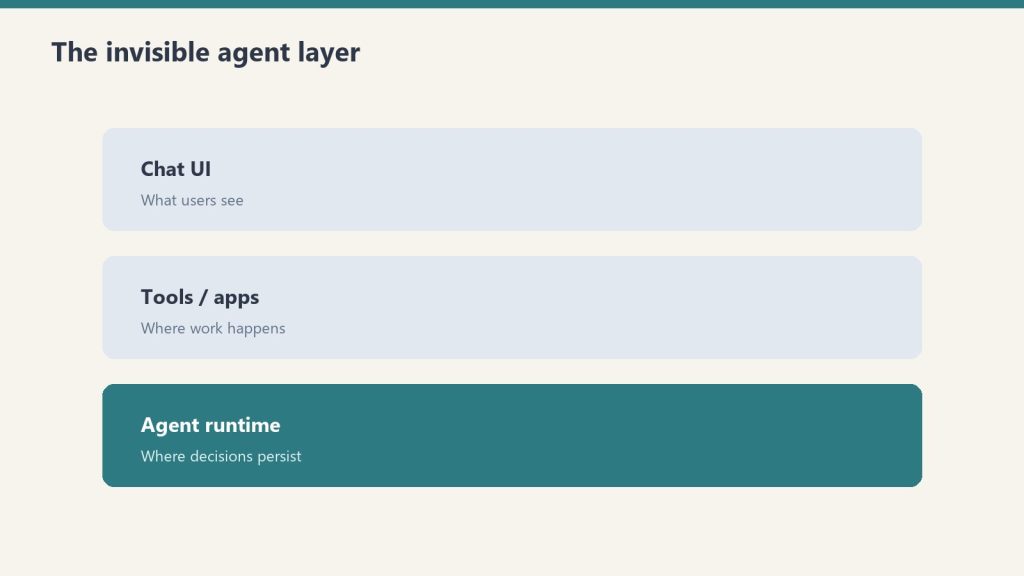
    Three stacked layers: chat UI, tools, agent runtime
    The Prompt Show — when the audience writes the set.

    Stand-up comedy has always been a broadcast. One person walks on stage with a set they’ve rehearsed in the mirror, in the car, in smaller rooms, and they deliver it to a crowd that showed up to receive. The audience laughs or they don’t. The comedian adjusts. But the fundamental architecture hasn’t changed since vaudeville: one person talks, everyone else listens.

    I want to break that.

    A Format Without a Set List

    Picture this. A comedian — or maybe we stop calling them that — signs up for a show. They have no material prepared. No bits. No callbacks. Nothing rehearsed. They walk out to a mic and a stool, and the only thing they bring is themselves.

    The audience brings everything else.

    Think Phil Donahue, not open mic night. The room is full of people who came with questions. Real questions. Some researched. Some spontaneous. Some designed to get a laugh, sure. But the best ones — the ones that make this format transcend — are the ones where somebody in the audience actually did their homework.

    Human Prompting

    Desk with laptop, checklist notebook, and billing card ready before creating an Anthropic API key
    Human prompting.

    Here’s where it gets interesting. Before the show, the audience gets access to information about the person behind the mic. Their hometown. Their college. Their favorite team. The job they had before comedy. The thing they lost. The thing they built. Whatever the performer is willing to put on the table.

    And the audience uses that information to craft questions.

    This is human prompting. The same principle that makes a great AI query — specificity, context, emotional intelligence, knowing what to ask and how to ask it — applied to a live human being standing under a spotlight. The audience becomes the prompt engineer. The performer becomes the model. And what comes back isn’t a rehearsed bit. It’s a story that has never been told on stage before, delivered raw, in real time, with the kind of energy you only get when someone is genuinely surprised by what they’re being asked.

    Three Modes, One Show

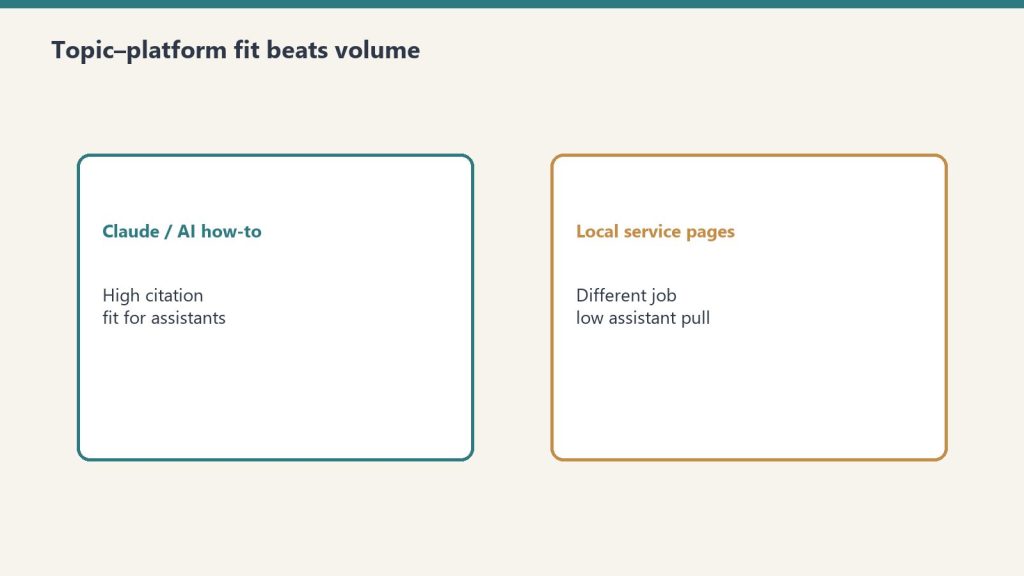
    Comparison of Claude how-to fit versus local service page fit for assistants
    Three modes, one show.

    The format has natural variation built in. You can run all three modes in a single evening, like acts in a play:

    Mode 1: Curated. Questions are submitted ahead of time and the best ones are selected by a producer or host. This gives the show a high floor — every question has been vetted for depth, creativity, or emotional potential. The performer still doesn’t know what’s coming, but the audience has been filtered for quality.

    Mode 2: Host-Selected. The host reads the room, sees hands go up, and picks. There’s a middle layer of curation happening in real time. The host becomes a DJ of human curiosity — reading energy, sequencing moments, knowing when to go deep and when to go light.

    Mode 3: Completely Random. Names drawn from a hat. Seat numbers called. No filter. This is the highest-risk, highest-reward mode. You might get someone who asks where the performer went to high school. You might get someone who asks about the worst night of their life. The unpredictability is the product.

    Why This Works Now

    We live in an era where everyone understands prompting, even if they don’t use that word. Every person who has typed a question into ChatGPT, refined a search query, or figured out how to ask Siri something useful has been training the muscle that this format requires. The audience already knows, instinctively, that the quality of the answer depends on the quality of the question.

    And we’re starving for unscripted humanity. Podcasts exploded because people wanted real conversation. Reality TV keeps mutating because people want to watch humans be human. But both of those formats have editing, production, post-processing. The Prompt Show has none of that. It’s one person, responding to a stranger’s curiosity, with nowhere to hide.

    The Performer Isn’t a Comedian Anymore

    This is the part that matters most. The person on stage doesn’t need to be funny. They need to be honest. They need to be present. They need to have lived a life worth asking about and be willing to talk about it without a script.

    Comedians are naturals for this because they already know how to hold a room. But this format is bigger than comedy. It’s a storyteller on a stool. It’s a retired firefighter. It’s a first-generation immigrant. It’s anyone whose life contains stories that only come out when the right question is asked by someone who cared enough to think about it.

    The magic isn’t in the answer. The magic is in the space between the question and the answer — that half-second where the performer realizes nobody has ever asked them that before, and they have to figure out, live, in front of a room full of strangers, what the truth actually is.

    What Makes a Good Prompter

    Not every question lands. The person who tries to stump the performer, who wants a gotcha moment, who treats this like a roast — they’ll get a laugh, maybe, but they won’t get a story. The audience will learn quickly that the best moments come from the person who spent fifteen minutes reading the performer’s bio and thought: I wonder what it was like to leave that town. I wonder if they ever went back.

    The best prompters are the ones who ask the question the performer didn’t know they needed to answer.

    This Is Live Poetry

    Call it what you want. A prompt show. A story pull. A human query. Whatever the name, the format is the same: give people a reason to be curious about another human being, give that human being a microphone and no script, and get out of the way.

    The best comedy has always been the truth told at the right speed. This format just lets the audience decide which truth, and when.

    Visual summary

    Spotlight on empty microphone in dark comedy club with silhouetted audience member raising hand to ask a question - The Prompt Show concept

    About this image. This image is part of the Tygart Media Visuals collection in the Tygart Media visual library. Every image produced by Tygart Media is AI-generated using Google Vertex AI (Imagen), converted to WebP format, and injected with full IPTC/XMP metadata before publication — making each image discoverable, attributable, and optimized for both traditional search engines and AI systems.

    • Format: WEBP
    • Collection: Tygart Media Visuals
    • Pipeline: Vertex AI Imagen → WebP Conversion → IPTC/XMP Metadata Injection → WordPress Media Library