Author: Will Tygart

  • GA4 Engagement Rate: Why It Lies About AI Referral Data

    GA4 Engagement Rate: Why It Lies About AI Referral Data

    Related on Tygart Media: GA4 AI referral audit · referral traffic quality · AI reads your site.

    Your GA4 engagement rate is one number. But it is not one audience. It is three audiences — and they behave so differently from each other that the aggregate number actively misleads you about how your content is performing.

    Here is what most GA4 users see: a site-wide engagement rate of 35%, an average session duration of 90 seconds, and a top channel list led by Organic Search. What most GA4 users miss: within that same 35% number, three AI platforms are sending traffic with engagement rates of 21%, 46%, and 64% respectively — from the exact same pages, to users with completely different intent profiles.

    The AI Referral Split Nobody Is Looking At
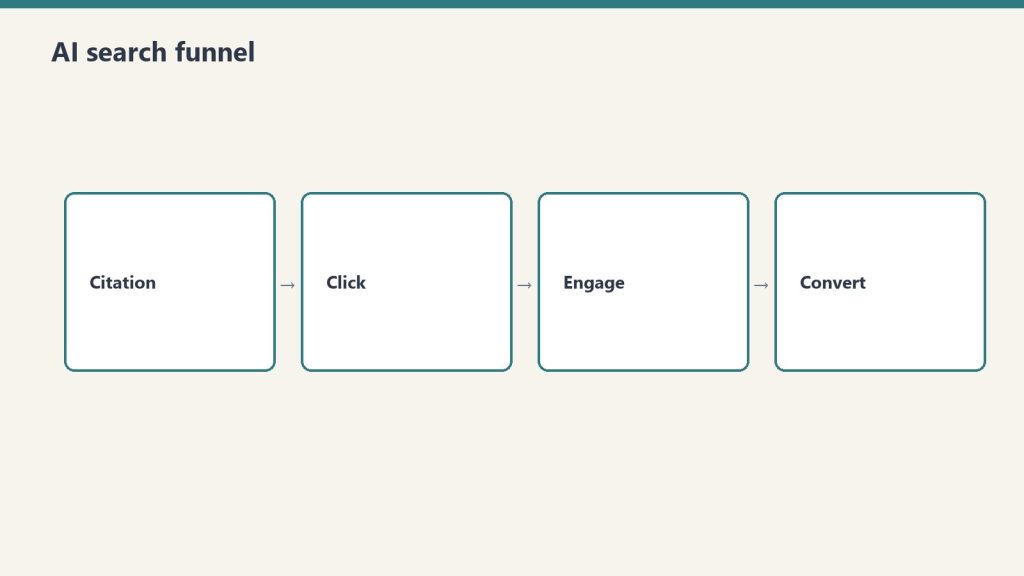
    Four-stage funnel: citation, click, engage, convert
    The AI referral split nobody is looking at.

    ChatGPT, Claude, and Copilot all send referral traffic to content sites. But they do not send the same user. ChatGPT users arrive, scan for a quick answer, and leave in under 30 seconds — engagement rate around 21%, well below the organic search average. Claude users arrive with research intent, read deeply, and stay for 3-4 minutes — engagement rate above 64%. Copilot users are somewhere between, arriving in planning mode, spending 1-2 minutes on civic and services content.

    If you blend these three into your site-wide engagement rate, you get a number that does not represent any of your actual users. You get a mathematical average of behaviors that have nothing in common.

    Why Your Engagement Rate Lies
    Seven cards naming common AI chatbot failure modes
    Why your engagement rate lies.

    The problem is not your content. The problem is that engagement rate without source segmentation is noise. A 35% site-wide engagement rate could mean you have excellent content reaching the wrong distribution channels. It could mean you have mediocre content propped up by one high-engagement source. It could mean your AI referral traffic is dramatically outperforming your social traffic and you have no idea.

    The only way to know which is true is to break the number open by source and look at what each channel is actually delivering in terms of engaged session quality — not just volume.

    The Four-Question Audit

    Desk with laptop, checklist notebook, and billing card ready before creating an Anthropic API key
    The four-question audit.

    Before you make any content or distribution decisions based on your GA4 engagement rate, ask these four questions.

    Which channel sends the most engaged users — not the most users? The answer is almost never the channel driving the highest session count. In most content sites we have audited, the highest-engagement channel is sending between 8 and 40 sessions per month, not 400.

    What is the engagement rate for each AI referral source individually? Blending ChatGPT and Claude traffic treats them as equivalent. They are not. One is a fact-checking audience. The other is a research audience. The content structure that serves one actively fails the other.

    Which pages produce satisfied exits versus abandoned exits? A 90% exit rate with a 3-minute duration is a success. A 90% exit rate with a 4-second duration is a dead end. Engagement rate alone does not tell you which you have.

    Is your engagement rate rising or falling week-over-week from AI sources? AI referral traffic is growing on most content sites in 2026. If yours is flat or declining, you are losing ground in a channel that is becoming structurally important.

    What This Reveals About Your Real Audience

    When you segment your GA4 engagement rate by source and run the AI referral breakdown specifically, a picture emerges that the aggregate number completely hides. Your real audience — the people actually reading and acting on your content — is smaller and more specific than your total traffic suggests. It is concentrated in a few sources, a few content types, and in the case of Claude traffic specifically, a few geographic clusters that reflect the academic and professional demographics of that user base.

    This is not a problem. It is a targeting signal. It tells you where to invest content development effort and which audience to write for on every new piece.

    The Methodology Behind This Analysis

    The behavioral profiles in this article come from five live sessions using Claude-in-Chrome to interrogate Google’s Analytics Advisor inside GA4 on a real property. The query architecture — the specific sequence of questions and the capture protocol — is packaged as the Books for Bots: GA4 AI Referral Audit Kit.

    It runs in four sessions, requires no SQL, no BigQuery access, and no data analyst. You need Claude-in-Chrome, Editor access to a GA4 property with Analytics Advisor enabled, and approximately 90 minutes. The output is a complete per-AI behavioral profile of your traffic and a content variant framework for acting on it.

    Learn more about the GA4 AI Referral Audit Kit →

  • GA4 Time Intelligence Kit: Find Your Best Publish Times

    GA4 Time Intelligence Kit: Find Your Best Publish Times

    24-hour engagement clock

    BOOKS FOR BOTS — GA4 SERIES — BOOK 02

    GA4 Time Intelligence Kit

    When your best traffic arrives. Day-of-week and hour-of-day patterns that tell you when to publish, when to promote, and when your audience is actually paying attention.

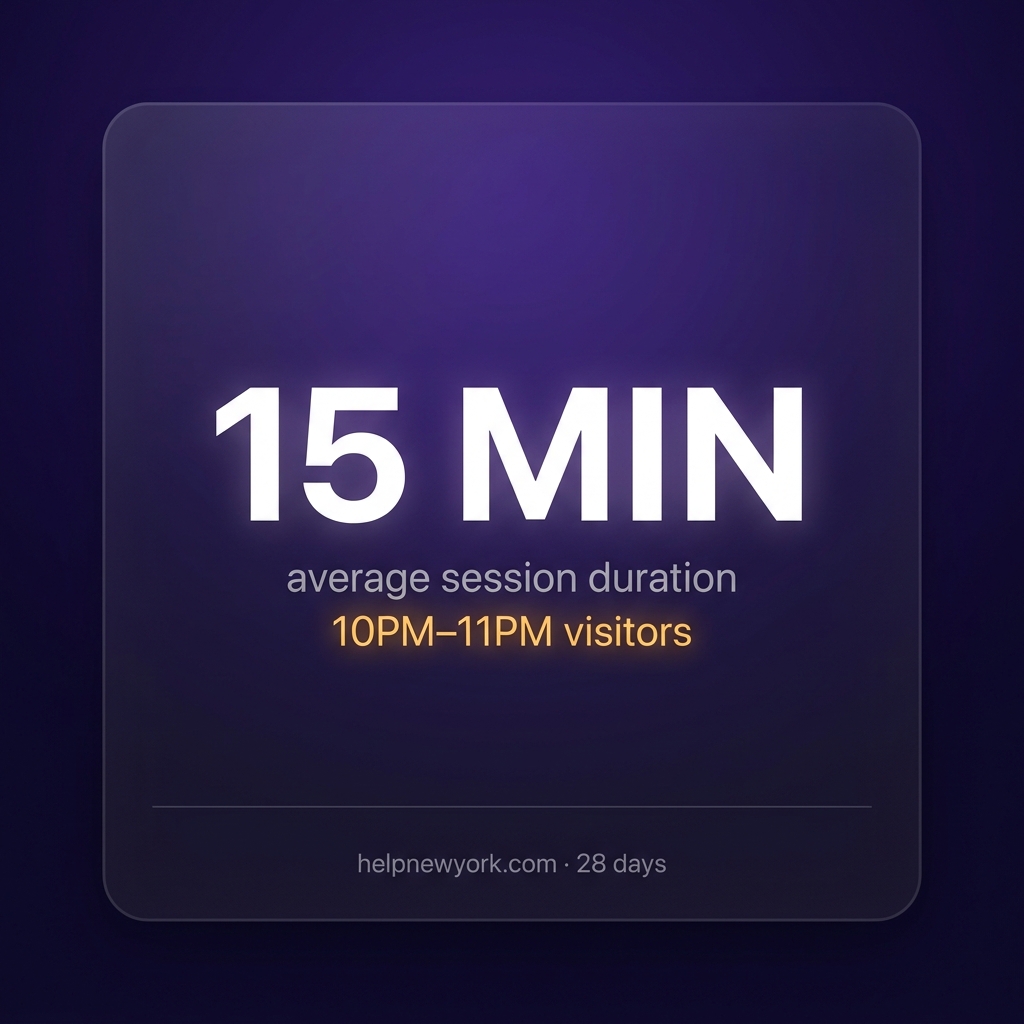
    15 minutes
    Average session duration for 10PM–11PM visitors — your hidden audience
    COMING SOON — $27

    Most Teams Publish When It’s Convenient

    This kit tells you when your audience is actually paying attention — and those two things are rarely the same. One session against Analytics Advisor reveals your peak engagement windows by day and hour, your dead zones, and a hidden late-night audience almost no one is writing for.

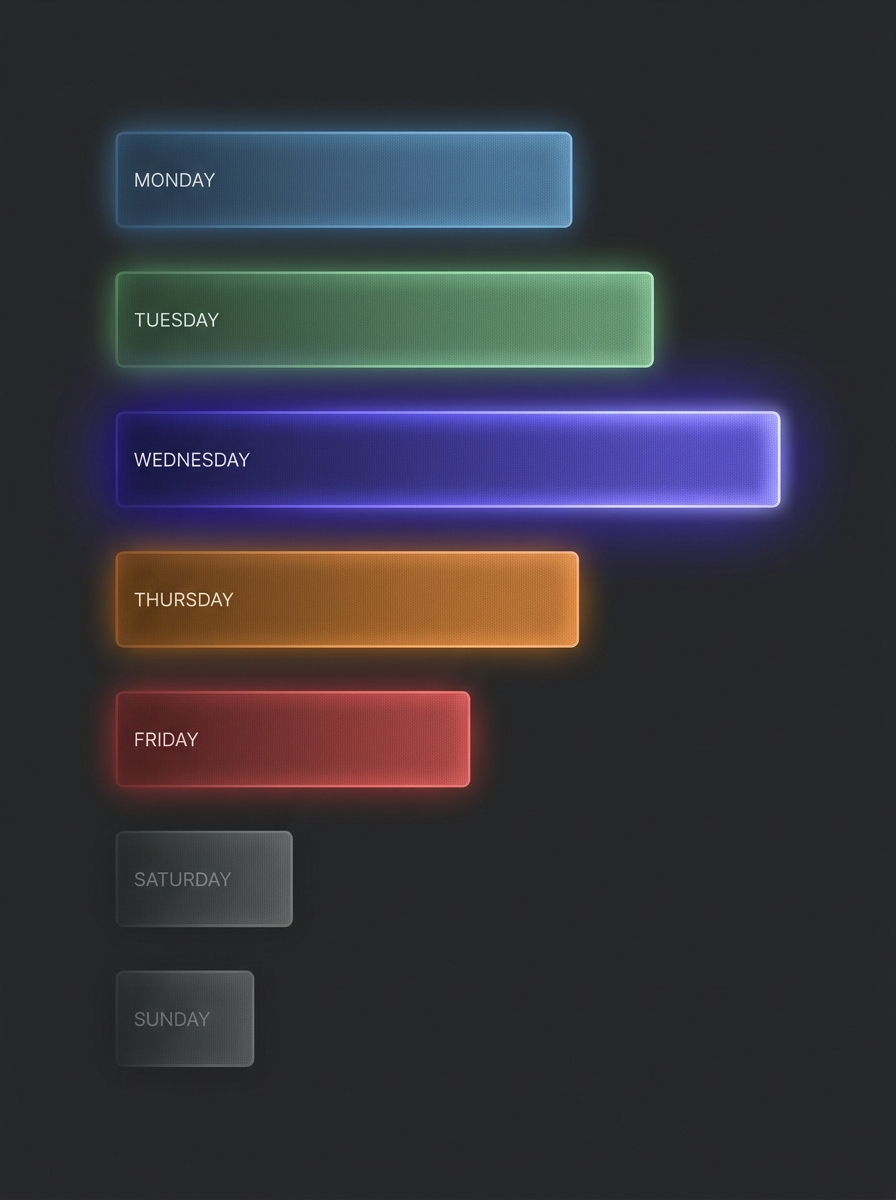
    Seven day engagement bars — Wednesday glows brightest

    FIELD FINDING — LIVE SESSION

    Wednesday produced the highest engagement rate and longest average session duration. Saturday and Sunday dropped below 20% engagement. The gap between best and worst day is larger than most teams expect.

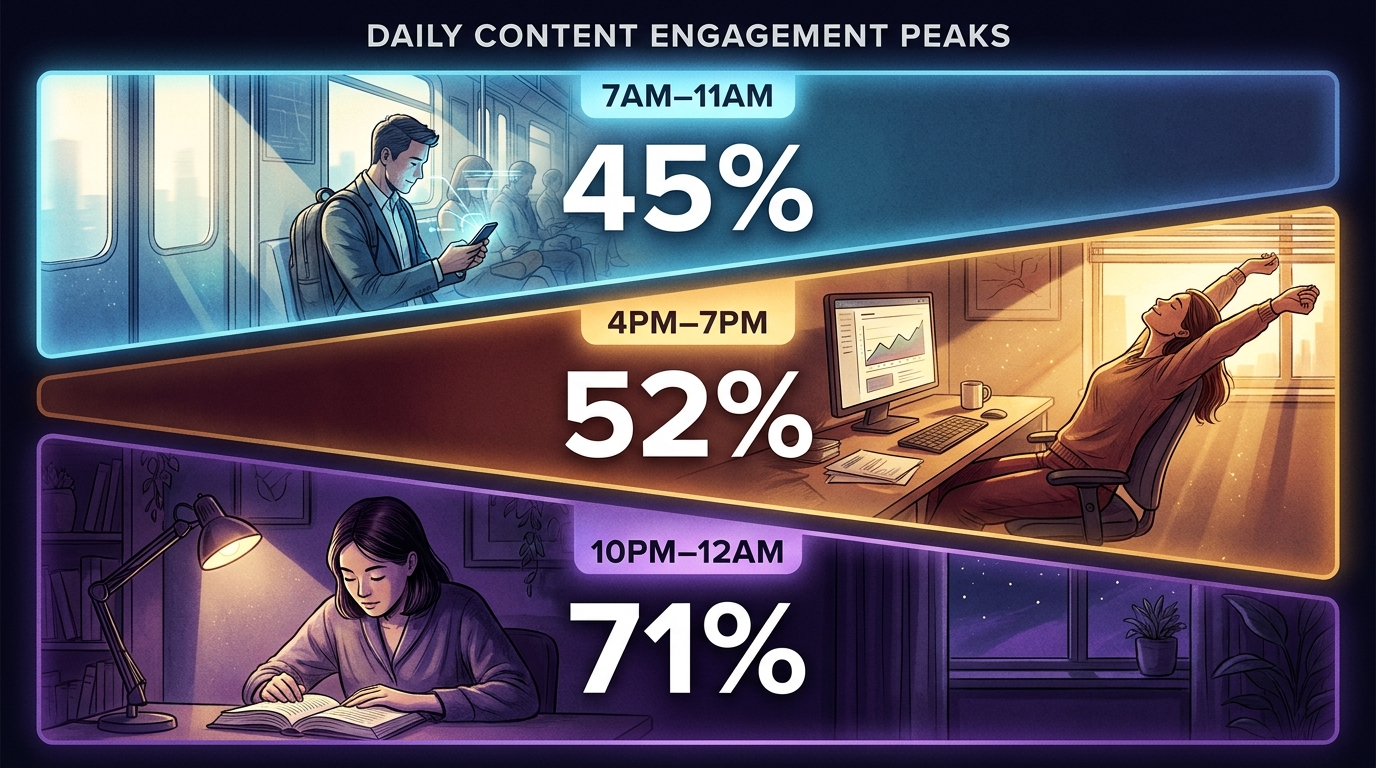
    Three engagement peaks: 7AM-11AM 45%, 4PM-7PM 52%, 10PM-12AM 71%
    15 MIN average session duration for 10PM-11PM visitors
    Late night reader at laptop at 10:47PM
    Editorial calendar with Wednesday circled PUBLISH and weekends crossed out

    What’s Inside

    • 7 copy-paste queries for Analytics Advisor — one session
    • Day-of-week engagement ranking — all 7 days scored
    • Hour-of-day peak window identification — morning, afternoon, late night
    • Dead zone diagnosis — high volume, low quality windows
    • Late-night audience profiling — the segment nobody is writing for
    • Concrete publish timing recommendation from your actual property data

    What You Need

    • Claude-in-Chrome — free from Anthropic
    • Editor or Analyst access to a GA4 property
    • Analytics Advisor (BETA) enabled
    • 30–60 minutes

    THE KEY INSIGHT

    The scheduling insight from this kit is immediate and free to act on. You do not need to create new content. You need to redistribute what you already have into the windows where your audience is actually paying attention.

    Individual Kit — Instant PDF Download

    COMING SOON — $27

    No subscription.

    BETTER VALUE — BUNDLE

    Get All 6 Kits for $97

    Every GA4 intelligence methodology in one purchase. Save $65.

    $162$97

    COMING SOON — SEE BUNDLE

    FREE STARTER

    Try Session 3 Free

    Seven queries revealing your ChatGPT vs Claude vs Copilot split in under 30 minutes.

    COMING SOON — FREE

    Validated on live GA4 properties. April 2026.

  • GA4 Search Intent Alignment Kit: Fix Intent Mismatch

    GA4 Search Intent Alignment Kit: Fix Intent Mismatch

    Search query pointing to wrong page with red X and correct guide with green arrow

    BOOKS FOR BOTS — GA4 SERIES — BOOK 06

    GA4 Search Intent Alignment Kit

    Are your keywords landing on the right pages? Diagnose intent mismatch between what users searched and what they found — and surface what your audience wanted and could not find.

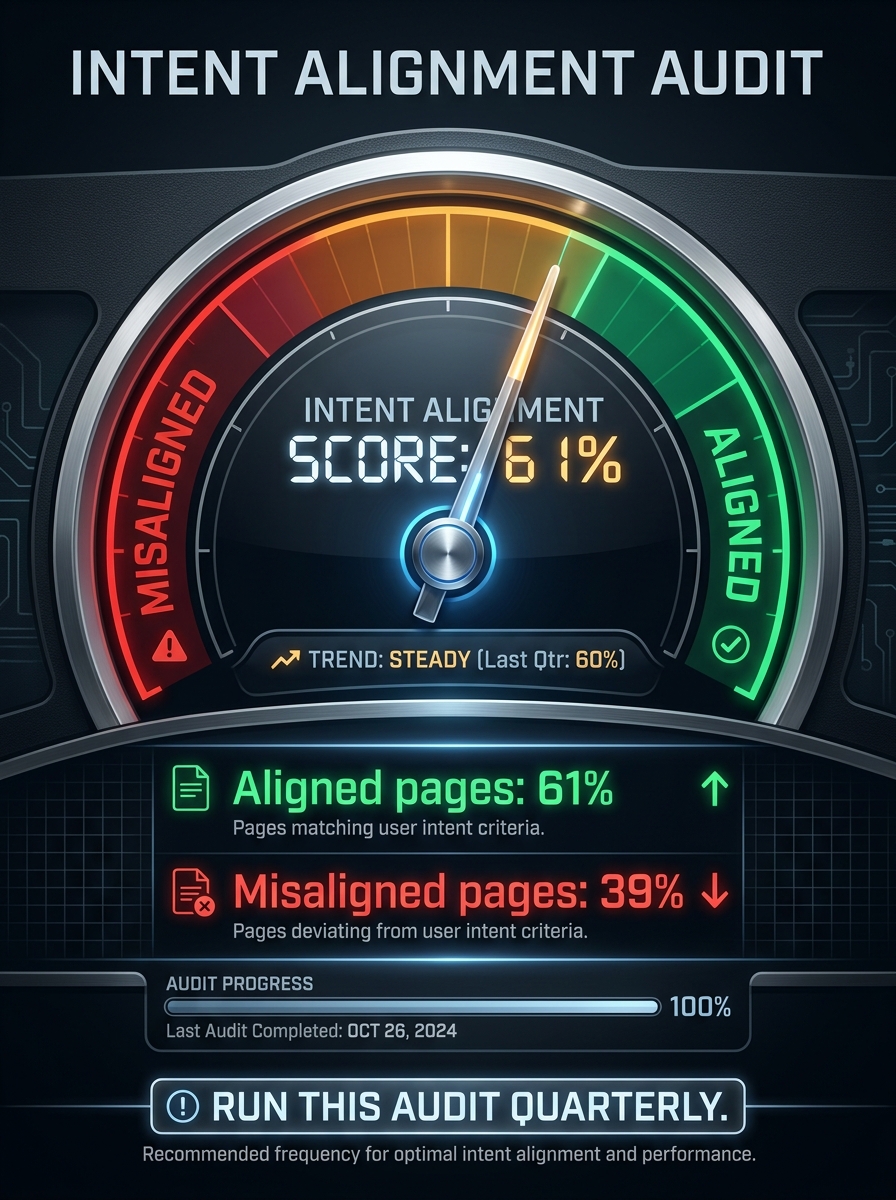
    39% misalignedOf organic landing pages delivering the wrong content for the search intent
    COMING SOON — $27

    A Page Can Rank Well and Still Fail

    If the user searched “how to apply for X” and landed on a page about “what X is,” they bounce immediately. GA4 captures this failure even when you cannot see the original query. High organic traffic with low engagement is almost always intent mismatch in disguise.

    Two puzzle pieces QUERY and CONTENT that do not fit

    CORE INSIGHT

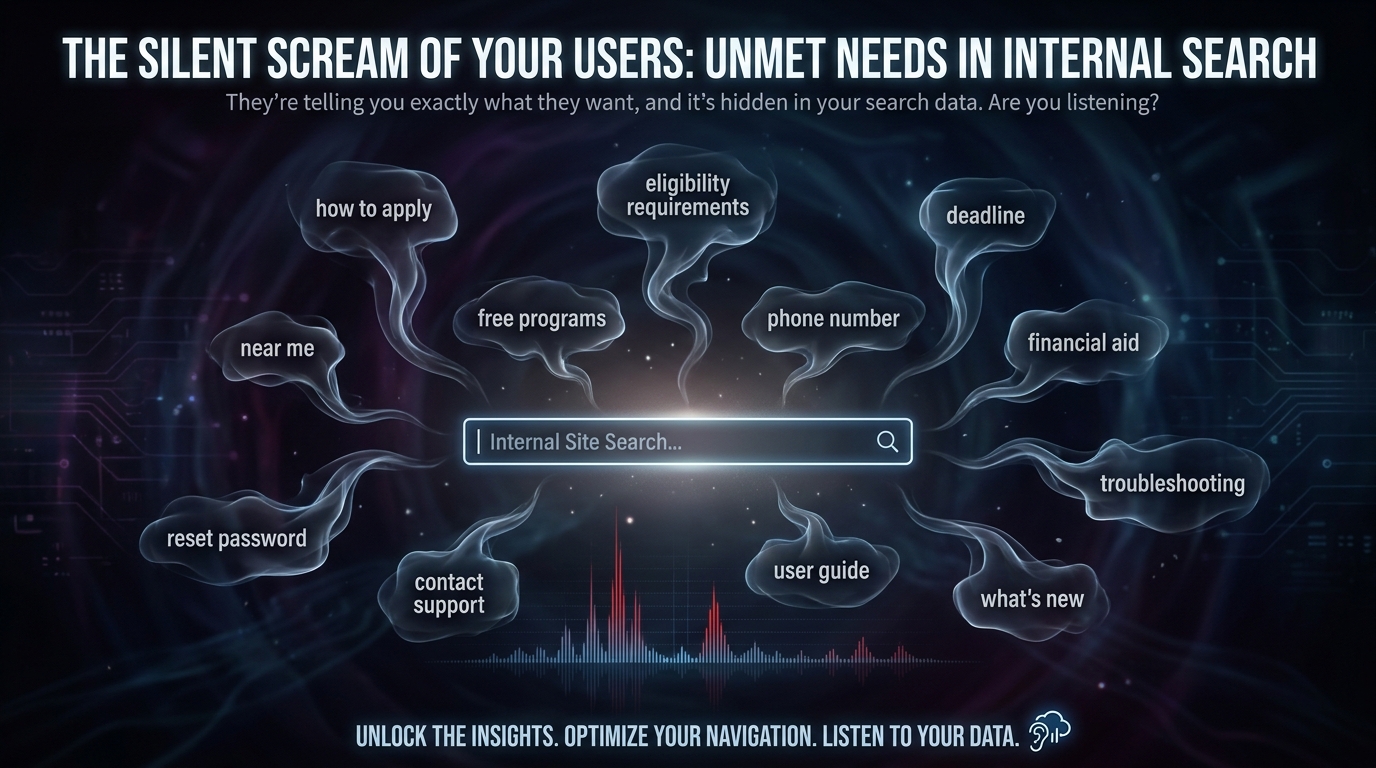
    Internal site search is the most underused intelligence in GA4. When a user searches your site, they are explicitly telling you what they wanted and could not find. This kit makes that signal visible and actionable.

    User search queries rising like smoke from internal site searchPerson pulling wrong book while the right answer glows out of reachIntent alignment gauge 61% aligned 39% misaligned — run quarterlySearch intent key vs landing page lock — MISMATCH

    What’s Inside

    • 7 copy-paste queries for Analytics Advisor — one session
    • Organic traffic to engagement mismatch identification
    • Internal search term extraction — top 20 with gap analysis
    • Zero-result internal search diagnosis
    • Homepage navigation gap analysis
    • Intent alignment score — baseline metric to track quarterly
    • Content repositioning recommendation framework

    What You Need

    • Claude-in-Chrome — free from Anthropic
    • Editor or Analyst access to a GA4 property
    • Analytics Advisor (BETA) enabled
    • 30–60 minutes

    THE KEY INSIGHT

    Internal search tells you what people search on your site after they arrived. That is a different and more valuable signal than anything a keyword tool produces — and it is sitting in your GA4 right now.

    Individual Kit — Instant PDF Download

    COMING SOON — $27

    No subscription.

    BUNDLE

    Get All 6 Kits for $97

    Every GA4 intelligence methodology. Save $65.

    $162$97

    COMING SOON

    FREE STARTER

    Try Session 3 Free

    Seven queries revealing your ChatGPT vs Claude vs Copilot split in 30 minutes.

    COMING SOON — FREE

    Validated on live GA4 properties. April 2026.

  • GA4 Search Intent Alignment Kit: Fix Intent Mismatch

    GA4 Search Intent Alignment Kit: Fix Intent Mismatch

    Search query pointing to wrong page with red X and correct guide with green arrow

    BOOKS FOR BOTS — GA4 SERIES — BOOK 06

    GA4 Search Intent Alignment Kit

    Are your keywords landing on the right pages? Diagnose intent mismatch between what users searched and what they found — and surface what your audience wanted and could not find.

    39% misalignedOf organic landing pages delivering the wrong content for the search intent
    COMING SOON — $27

    A Page Can Rank Well and Still Fail

    If the user searched “how to apply for X” and landed on a page about “what X is,” they bounce immediately. GA4 captures this failure even when you cannot see the original query. High organic traffic with low engagement is almost always intent mismatch in disguise.

    Two puzzle pieces QUERY and CONTENT that do not fit

    CORE INSIGHT

    Internal site search is the most underused intelligence in GA4. When a user searches your site, they are explicitly telling you what they wanted and could not find. This kit makes that signal visible and actionable.

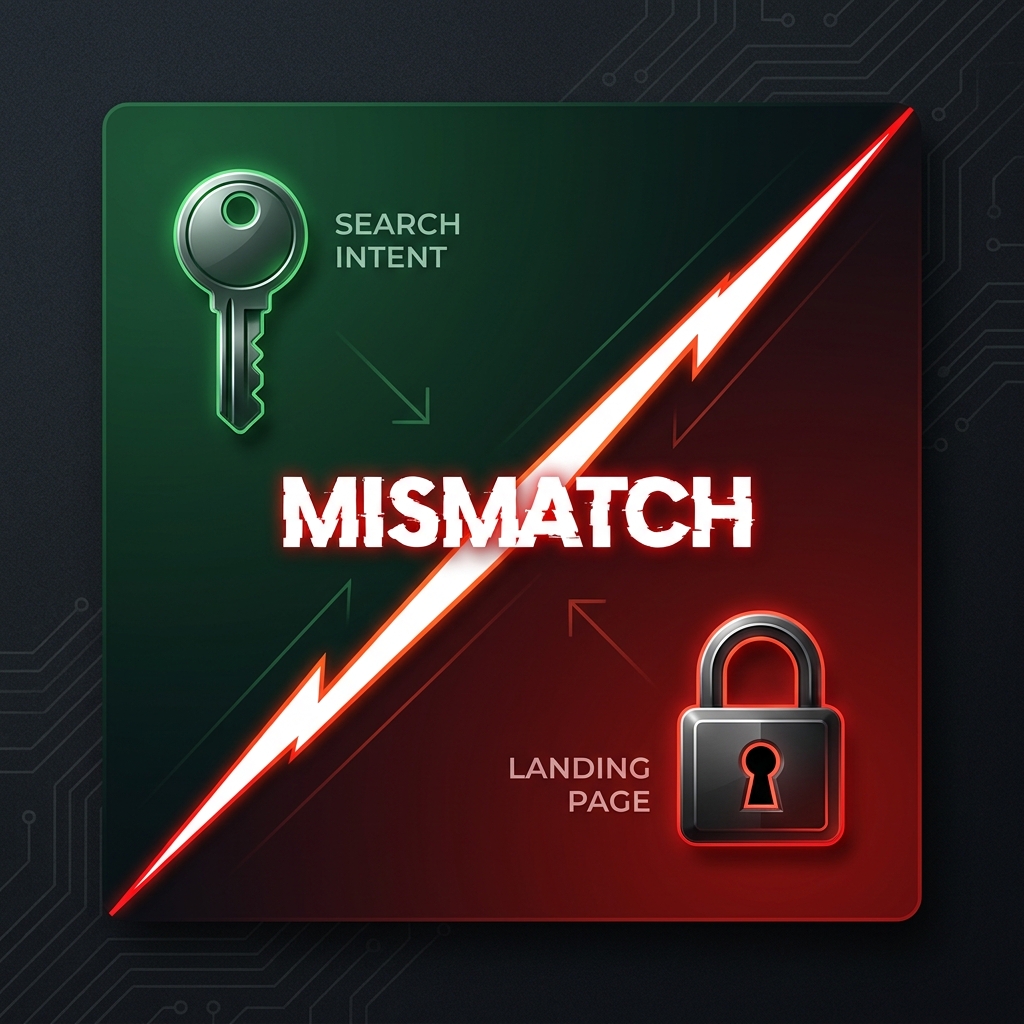
    User search queries rising like smoke from internal site searchPerson pulling wrong book while the right answer glows out of reachIntent alignment gauge 61% aligned 39% misaligned — run quarterlySearch intent key vs landing page lock — MISMATCH

    What’s Inside

    • 7 copy-paste queries for Analytics Advisor — one session
    • Organic traffic to engagement mismatch identification
    • Internal search term extraction — top 20 with gap analysis
    • Zero-result internal search diagnosis
    • Homepage navigation gap analysis
    • Intent alignment score — baseline metric to track quarterly
    • Content repositioning recommendation framework

    What You Need

    • Claude-in-Chrome — free from Anthropic
    • Editor or Analyst access to a GA4 property
    • Analytics Advisor (BETA) enabled
    • 30–60 minutes

    THE KEY INSIGHT

    Internal search tells you what people search on your site after they arrived. That is a different and more valuable signal than anything a keyword tool produces — and it is sitting in your GA4 right now.

    Individual Kit — Instant PDF Download

    COMING SOON — $27

    No subscription.

    BUNDLE

    Get All 6 Kits for $97

    Every GA4 intelligence methodology. Save $65.

    $162$97

    COMING SOON

    FREE STARTER

    Try Session 3 Free

    Seven queries revealing your ChatGPT vs Claude vs Copilot split in 30 minutes.

    COMING SOON — FREE

    Validated on live GA4 properties. April 2026.

  • GA4 Exit Intelligence Kit: Analyze Exit Rates & Dead Ends

    GA4 Exit Intelligence Kit: Analyze Exit Rates & Dead Ends

    Aerial maze amber exit vs cold blue dead end

    BOOKS FOR BOTS — GA4 SERIES — BOOK 03

    GA4 Exit Intelligence Kit

    Where users leave your site — and what it means. Distinguish satisfied exits from abandoned ones, find your dead-end pages, and map your internal linking gaps.

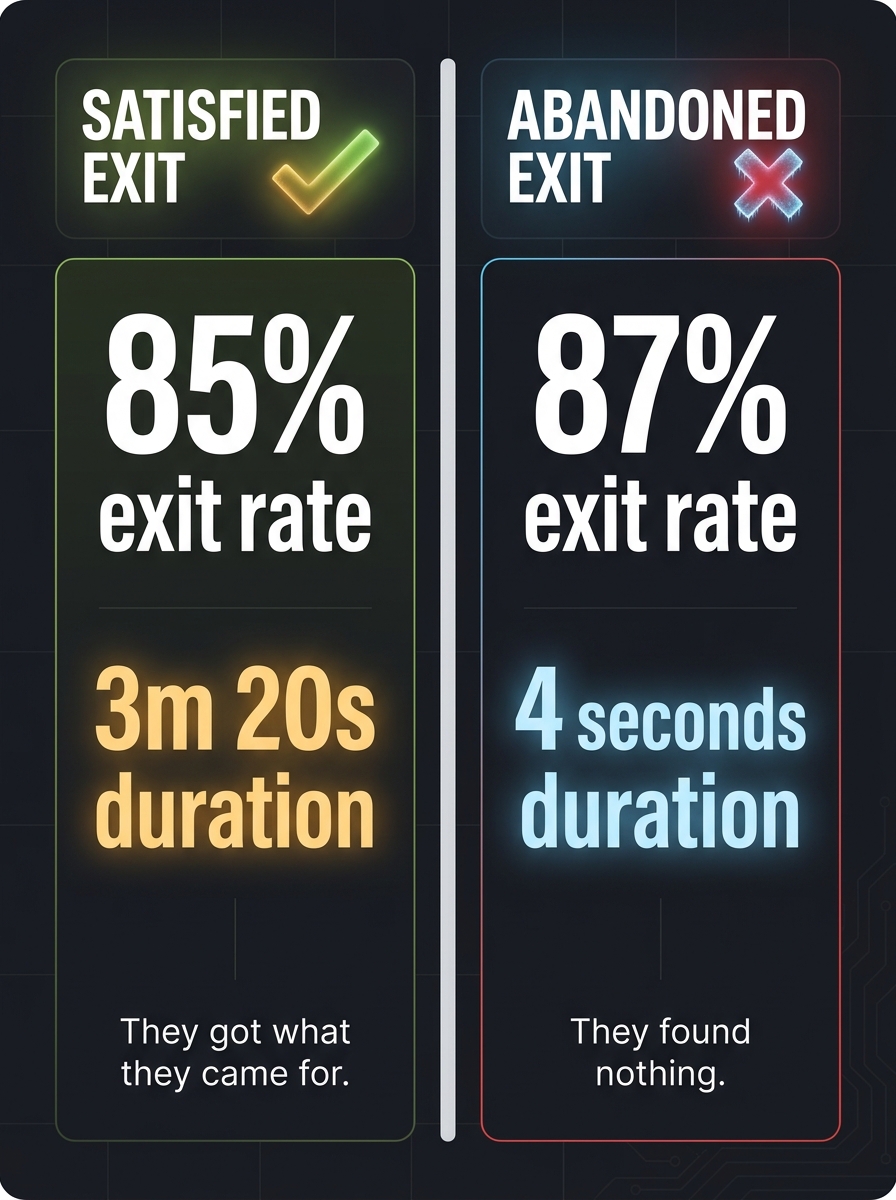
    85% exit rate
    With 3m 20s duration — a satisfied exit, not a problem to fix
    COMING SOON — $27

    Not All Exits Are Failures

    A user who reads your guide for three minutes and then leaves got exactly what they needed. A user who hits your page and bounces in four seconds got nothing. GA4 treats them identically. This kit teaches you to tell the difference.

    Satisfied exit 85% 3m20s vs abandoned exit 87% 4 seconds

    FIELD FINDING — LIVE SESSION

    The NYC Summer Internships page has an 85% exit rate AND a 3m 20s average session. That is a satisfied exit. Adding CTAs to interrupt it would reduce performance, not improve it.

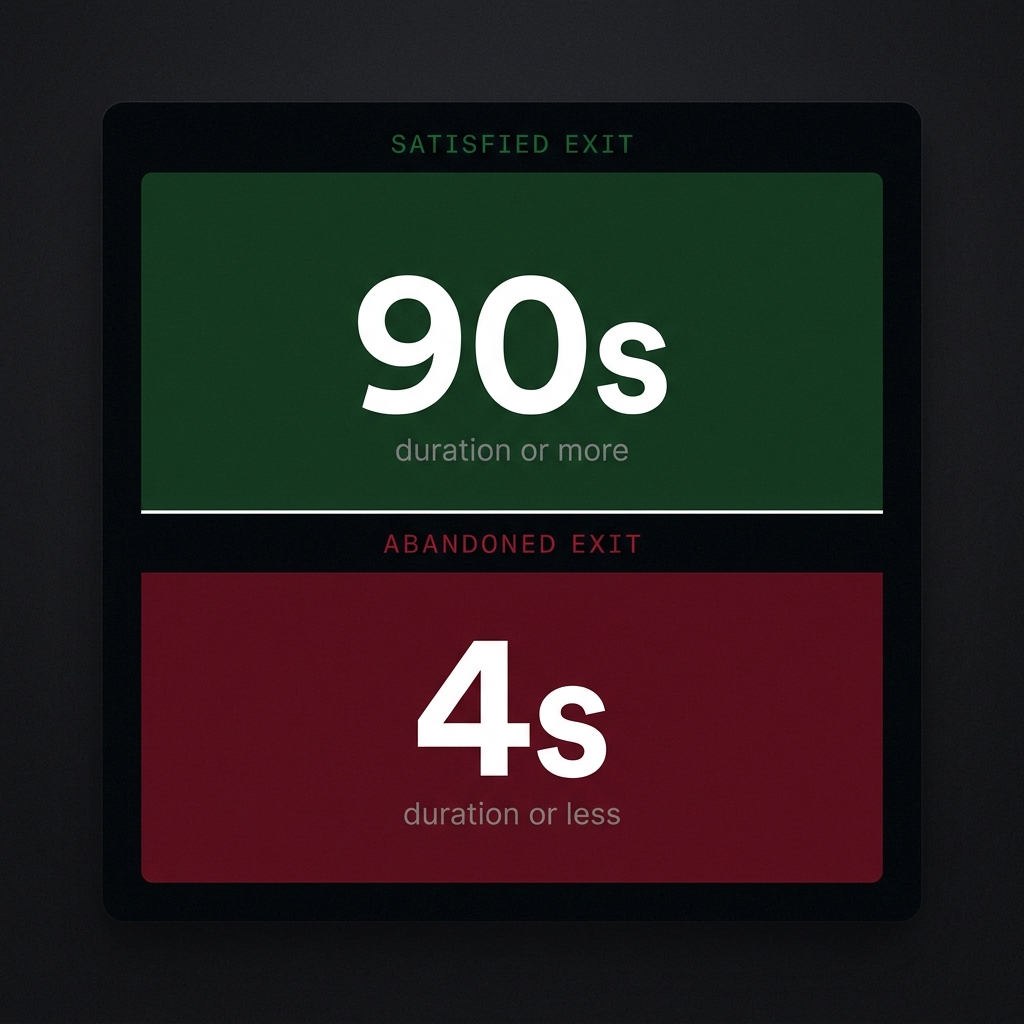
    90 seconds satisfied exit, 4 seconds abandoned exit

    Satisfied exit — man leaving library corridor through warm door

    Satisfied exit.

    Abandoned exit — man facing blank wall with no way out

    Abandoned exit.

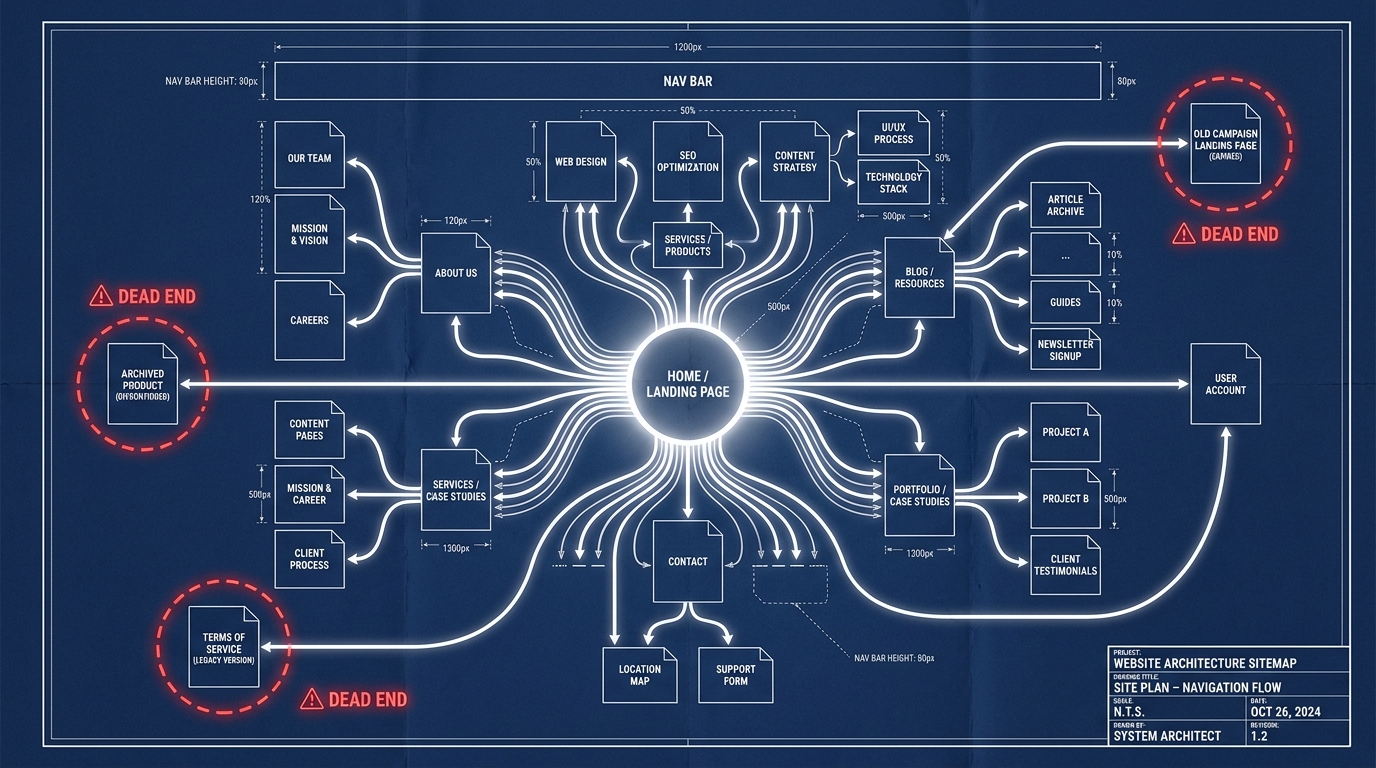
    Website sitemap blueprint with dead-end pages circled in red

    What’s Inside

    • 7 copy-paste queries for Analytics Advisor — one session
    • Satisfied vs abandoned exit classification framework
    • Dead-end page audit — pages with zero internal link clicks
    • Homepage navigation effectiveness score
    • Internal link opportunity map — Advisor generates specific page pairings
    • Exit-to-content-gap mapping for abandoned pages

    What You Need

    • Claude-in-Chrome — free from Anthropic
    • Editor or Analyst access to a GA4 property
    • Analytics Advisor (BETA) enabled
    • 30–60 minutes

    THE KEY INSIGHT

    The internal link fix is the highest ROI action from this kit. No new content, no design changes, no developer. Add one sentence with a link on an abandoned exit page pointing to a relevant high-engagement page.

    Individual Kit — Instant PDF Download

    COMING SOON — $27

    No subscription.

    BUNDLE — ALL 6 KITS

    Get All 6 Kits for $97

    Every GA4 intelligence methodology in one purchase. Save $65.

    $162$97

    COMING SOON

    FREE STARTER

    Try Session 3 Free

    Seven queries revealing your ChatGPT vs Claude vs Copilot split in under 30 minutes. No purchase required.

    COMING SOON — FREE

    Validated on live GA4 properties. April 2026.

  • GA4 AI Referral Audit Kit: Track AI Traffic & Citations

    GA4 AI Referral Audit Kit: Track AI Traffic & Citations

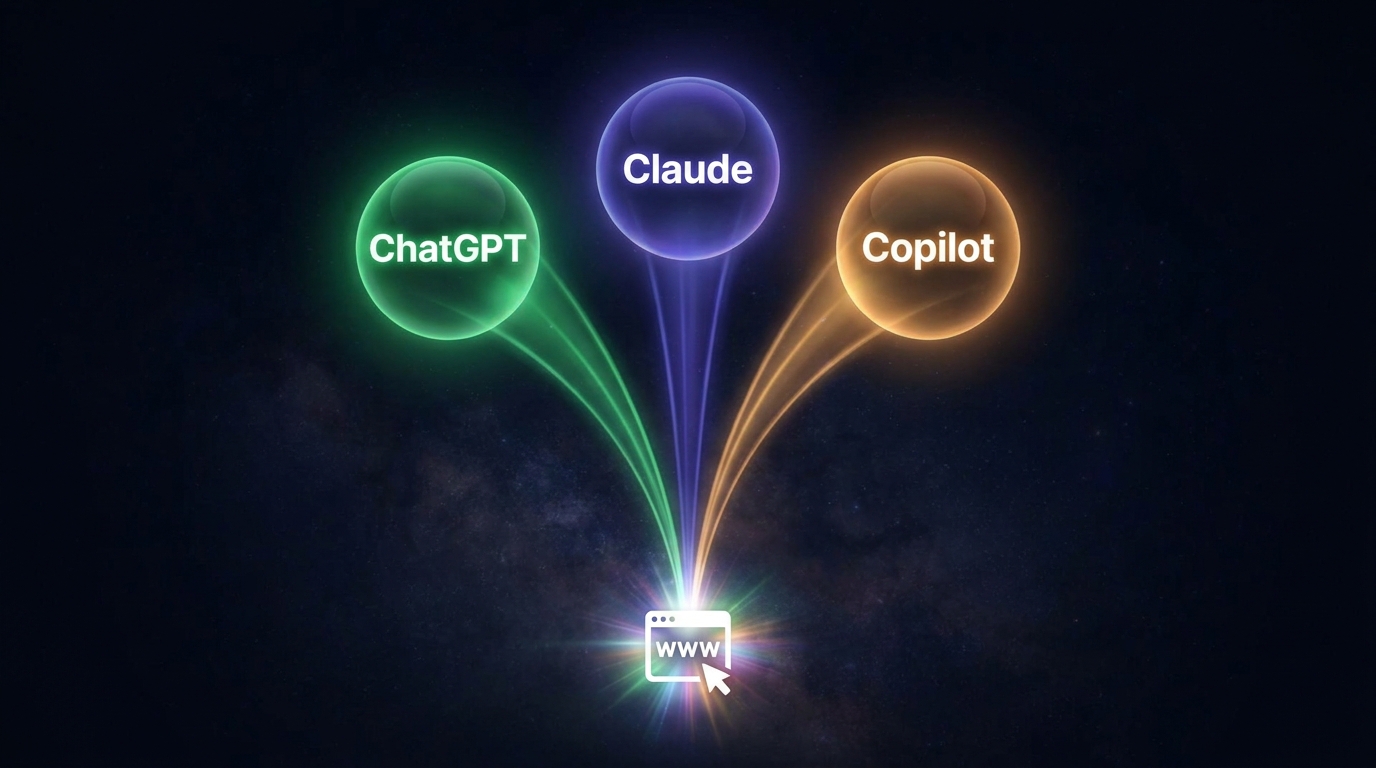
    ChatGPT, Claude, and Copilot sending traffic beams to a website

    Books for Bots — GA4 Series — Book 01

    GA4 AI Referral Audit Kit

    The complete 4-session Claude-in-Chrome methodology for extracting per-AI audience intelligence from Google Analytics 4 — and turning it into content every AI model cites.

    64% vs 21%
    Claude.ai engagement rate vs ChatGPT — same site, same pages
    COMING SOON — $27

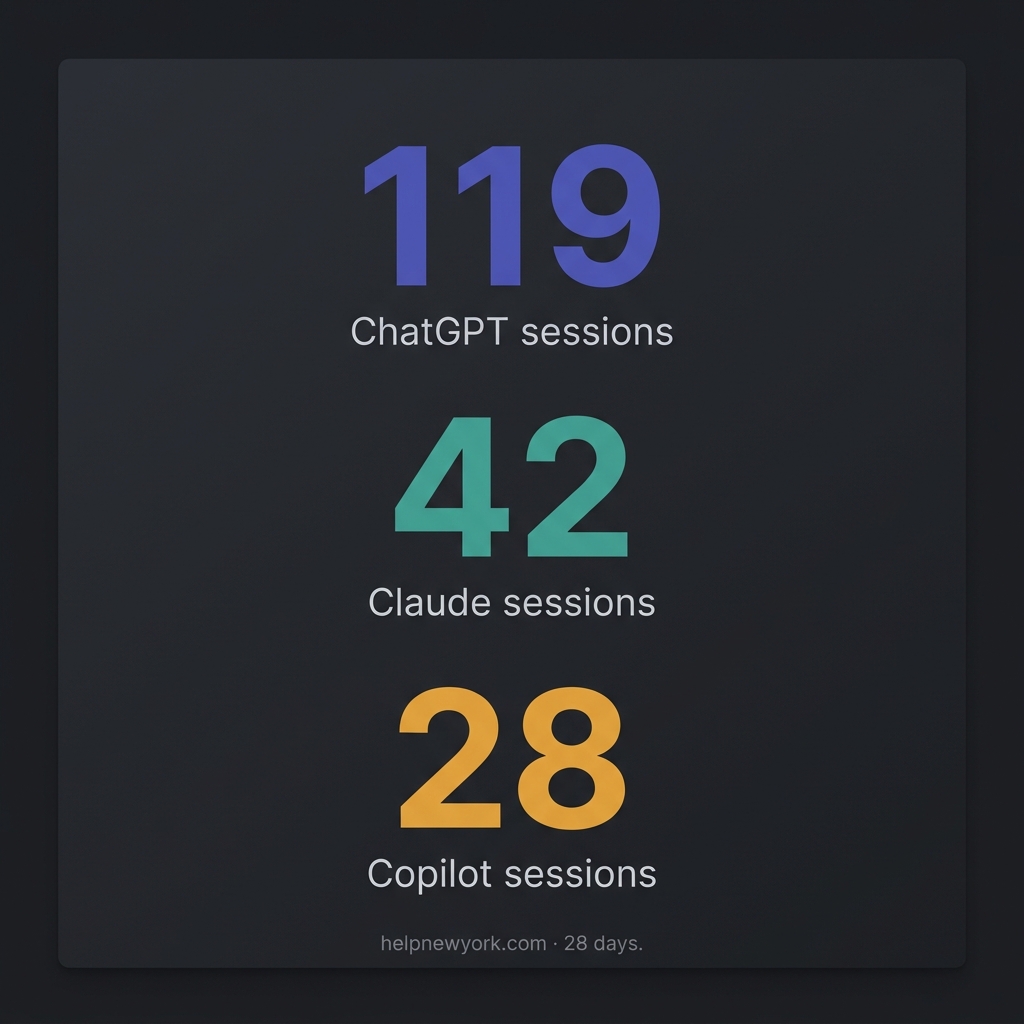
    119 ChatGPT sessions, 42 Claude sessions, 28 Copilot sessions — 28 day data

    CORE FINDING

    AI citations are downstream of search quality, not upstream. Pages that win Bing and Yahoo with long-form depth get cited by AI models as a derivative effect.

    Search earns it. AI cites it.
    Claude 64% engagement, ChatGPT 21%, Copilot 46%
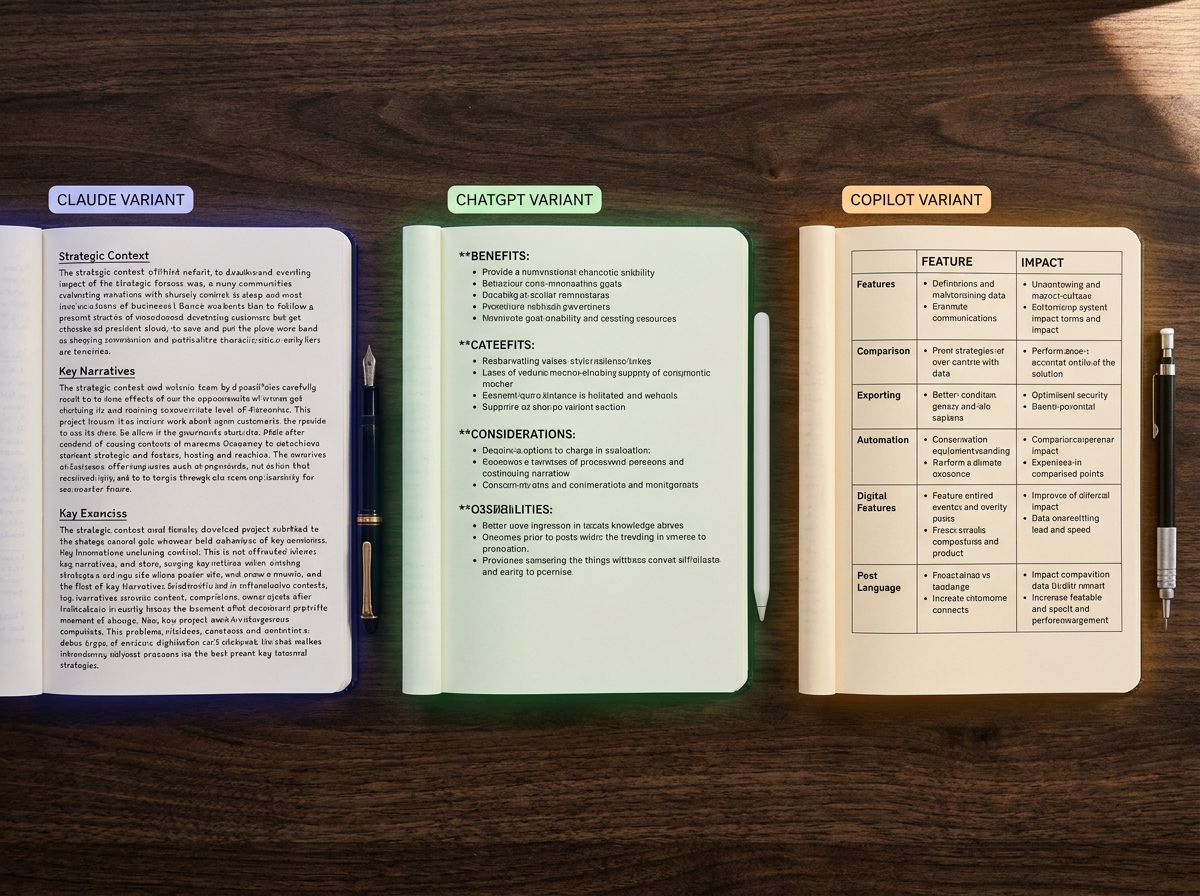
    Three content variant notebooks for Claude, ChatGPT, and Copilot
    Analytics Advisor session running at night on a laptop

    What’s Inside

    • Full 4-session query architecture — 26 queries, copy-paste ready
    • Pre-flight checklist and capture protocol for each session
    • Per-AI behavioral profiles: ChatGPT, Claude, Copilot
    • Content variant framework — 3 structural templates, one per AI retrieval pattern
    • Flags to escalate before your next content sprint
    • The cross-AI page overlap query — your highest-confidence GEO signal

    What You Need

    • Claude-in-Chrome extension — free from Anthropic
    • Editor or Analyst access to a GA4 property
    • Analytics Advisor (BETA) enabled — English-language accounts
    • Approximately 30–60 minutes

    THE KEY INSIGHT

    AI citations are downstream of search quality — not upstream. The path to getting cited by ChatGPT, Claude, and Copilot is not to optimize for AI retrieval patterns. It is to build pages that win on Bing and Yahoo with enough depth that AI models treat them as authoritative sources.

    Individual Kit — Instant PDF Download

    COMING SOON — $27

    No subscription. One-time purchase.

    BETTER VALUE

    Get All 6 Kits for $97

    The complete Books for Bots library. Every GA4 intelligence methodology in one purchase.

    $162 separately$97

    COMING SOON — SEE BUNDLE

    Developed and validated across live sessions on a real GA4 property. April 2026.

  • GA4 AI Referral Audit: Tracking ChatGPT & Claude Traffic

    GA4 AI Referral Audit: Tracking ChatGPT & Claude Traffic

    Related on Tygart Media: referral traffic quality · engagement rate & AI data · AI citation monitoring.

    For the past several weeks I have been running a live experiment on helpnewyork.com: using Claude-in-Chrome to interrogate Google’s Analytics Advisor inside GA4, session by session, until I had a complete behavioral profile of every AI platform sending traffic to the site.

    What came out of it is not what I expected. I expected traffic data. I got a content strategy.

    The Setup

    Desk with laptop, checklist notebook, and billing card ready before creating an Anthropic API key
    The setup for tracking AI referral traffic.

    Claude-in-Chrome is Anthropic’s browser extension that lets Claude operate directly inside your browser — reading pages, clicking elements, filling inputs, capturing output. Analytics Advisor is Google’s Gemini-powered chat interface built into GA4, available to English-language accounts since December 2025. It answers natural language questions about your property data with charts, tables, and narrative interpretation.

    The combination is unusual. You are using one AI (Claude) to systematically interrogate another AI (Gemini) about your site’s data, then synthesizing what comes back into strategy. The token budget for the heavy data reasoning stays inside Google’s infrastructure. Claude handles the query architecture, the capture protocol, and the synthesis.

    I ran four structured sessions across two sittings, using a specific sequence of queries built to extract progressively deeper signal. Session 1 established baseline traffic. Session 2 closed gaps and confirmed AI referral data existed. Session 3 was the AI deep dive. Session 4 was velocity and geography.

    What the Data Showed

    Three AI platforms were sending meaningful traffic to helpnewyork.com during the 28-day window: ChatGPT, Claude, and Copilot. The behavioral profiles were so different from each other that treating them as a single “AI traffic” segment would have produced wrong conclusions.

    Claude.ai traffic showed a 64% engagement rate and an average session duration of over 3 minutes. The dominant landing page was an NYC Summer Internships guide, accounting for over 60% of all Claude sessions. Geographic concentration was academic: Ithaca (Cornell), State College (Penn State), Washington DC. The users arriving from Claude were reading to act — they needed specific information, they found it, they stayed.

    ChatGPT traffic showed a 21% engagement rate and an average session of 24 seconds. The top landing page was a cherry blossom guide. The users were fact-grabbing: they asked ChatGPT where to see cherry blossoms in New York, got a citation, clicked through, confirmed the location, and left. The content served its purpose in under half a minute.

    Copilot traffic was between the two: 46% engagement, roughly 2-minute sessions, desktop-heavy, concentrated in New York’s suburbs. The top pages were civic services — SNAP benefits, tenant rights, transit discounts. These users were in planning mode, researching before they decided or applied.

    The Finding That Reframes GEO

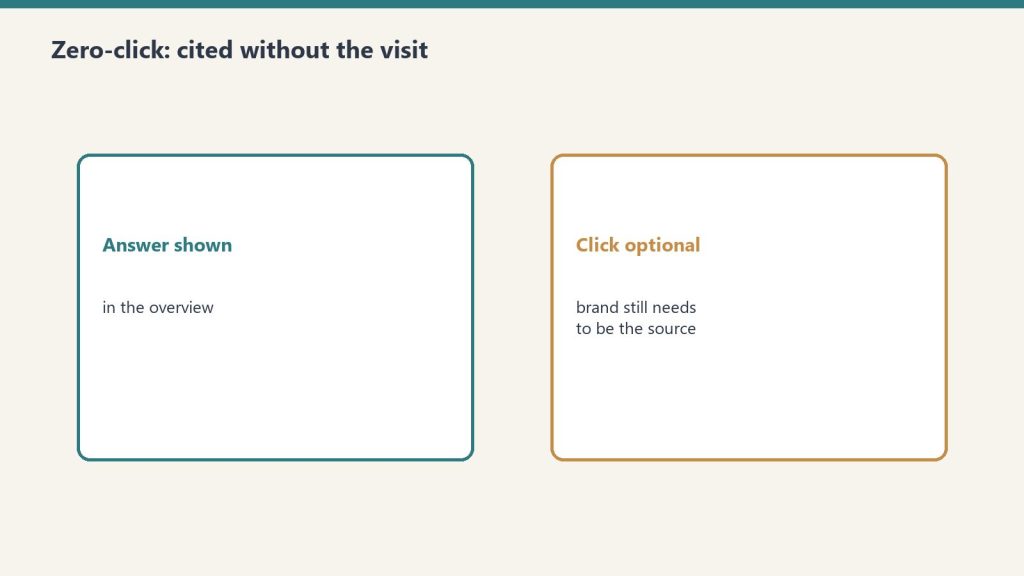
    Two cards: answer shown in overview versus optional click
    The finding that reframes GEO.

    The cross-AI page overlap query was the most important one in the entire four-session arc. I asked Analytics Advisor which pages appeared in the top landing pages for more than one AI source. Only one real content page appeared in all three: the cherry blossom guide.

    The obvious interpretation is that the cherry blossom guide was “AI-optimized.” The actual interpretation, once you look at the full traffic breakdown, is the opposite. Bing drove 59 sessions to that page. Yahoo drove 16 at 75% engagement and a 3-minute 46-second average session. DuckDuckGo drove 35. The combined AI traffic to that page was 32 sessions — 17% of total. The AI platforms were citing it because traditional search engines had already validated it as the highest-quality answer in the index.

    AI citations are downstream of search quality, not upstream. The path to getting cited by ChatGPT, Claude, and Copilot is not to optimize for AI retrieval patterns. It is to build pages that win on Bing and Yahoo with enough depth that AI models treat them as authoritative sources. The GEO play is a traditional SEO play with better content.

    The Content Strategy That Follows

    Four-stage funnel: citation, click, engage, convert
    The content strategy that follows.

    Once you have the per-AI behavioral profiles, you have a content variant framework. The same article can be written in three structural architectures, each tuned to how one AI model retrieves and presents information.

    The Claude variant is dense and process-oriented. Headers, eligibility criteria, numbered steps, official program names. Built for the student or researcher who arrived with a specific question and needs a complete answer they can act on.

    The ChatGPT variant is a scannable list. Named items, one specific detail per item, direct answer in the first two sentences. Built for the user who will spend 24 seconds on the page and needs the answer immediately or they’re gone.

    The Copilot variant is comparison and planning framing. What to know before you go, Option A versus Option B, cost context, logistics. Built for the desktop user doing research before they make a decision.

    The core article is the same. The architecture is different. The AI that cites you depends on which structure you used.

    The Methodology Is the Product

    The query sequence I developed across these four sessions is a repeatable extraction methodology. It works on any GA4 property with Analytics Advisor enabled. The intelligence it produces — per-AI audience profiles, geographic signals, velocity trends, cross-AI content overlap — is not available through DataForSEO, SpyFu, or GSC. It requires Gemini’s reasoning layer operating on top of your property data, orchestrated by a structured query architecture.

    I have packaged the complete methodology as a downloadable kit: the full query architecture across all four sessions, the capture protocol, the content variant framework, and the flags to escalate before your next content sprint. It is called Books for Bots: GA4 AI Referral Audit Kit.

    The free version covers Session 3 alone — the AI deep dive queries that surface your ChatGPT, Claude, and Copilot traffic split. That alone will show you something most site owners have never seen: which AI is sending them traffic, to which pages, and how engaged those users actually are.

    The full kit covers all four sessions and includes the content variant framework that translates the behavioral data into a writing system.

    Both are available at tygartmedia.com. What you do with the data after that is yours.

  • Hood Canal Salmon Run 5K: Register for the Belfair Race

    Hood Canal Salmon Run 5K: Register for the Belfair Race

    Six Saturdays from now, our corner of Hood Canal will fill up with running shoes, dog leashes, strollers, and a whole lot of neighbors who care about salmon. The third annual Hood Canal Salmon Run 5K is on for Saturday, June 6, 2026 at The Salmon Center in Belfair, and registration is open right now at pnwsalmoncenter.org. Check-in opens at 8 a.m. and the staggered run/walk start is 9 a.m.

    If you’ve ever pulled into the gravel lot at 600 NE Roessel Road and walked out to the Union River Estuary on a clear morning, you already know what kind of course this is. Flat. Unpaved. Quiet enough to hear the geese. The 5K loops around the estuary on the Hood Canal Salmon Enhancement Group’s working salmon farm and conservation property — the same property our community has been helping HCSEG restore for more than thirty years.

    What the run actually pays for

    Every entry, every t-shirt, every dollar from the Hood Canal Salmon Run goes to two summer day-camp programs that quietly do some of the best youth work in North Mason: Farm Stewards for kids ages 7 to 11, and Explore the Fjord for kids 12 to 16. Both camps run out of The Salmon Center campus in Belfair. Both rely on community donations to keep tuition reachable for local families.

    That’s the whole math: a Saturday morning trail run pays for a kid from Belfair, Allyn, Tahuya, or Shelton to spend a week of summer learning the watershed they live in. Hard to beat that exchange rate.

    The details you need

    • Date: Saturday, June 6, 2026
    • Location: The Salmon Center, 600 NE Roessel Rd, Belfair, WA 98528
    • Check-in: 8:00 a.m.
    • Run/walk starts: 9:00 a.m. (staggered)
    • Course: 5K, flat, unpaved trail around the Union River Estuary
    • Youth policy: Runners 14 and under must be accompanied by an adult
    • Weather: Rain or shine
    • Register: pnwsalmoncenter.org/hood-canal-salmon-run

    2026 race t-shirts are sold separately from registration; every shirt purchase rolls back into youth environmental education. There’s also a sponsor wall on the Salmon Run page if your business wants its logo standing alongside the rest of the Hood Canal supporters.

    Want to volunteer instead of run?

    HCSEG runs this race on volunteer power. Course marshals, check-in tables, water stops — all neighbors. The 5K Volunteer Coordinator is Almi, and the email to send is americorps1@pnwsalmoncenter.org. If you’ve got a Saturday morning to spare and want to see what the Salmon Center actually looks like behind the scenes, this is the easy way in.

    Why we’re spotlighting this one

    The Hood Canal Salmon Enhancement Group has been one of the quiet pillars of our town for decades — operating out of Belfair, running Salmon in the Classroom in our schools, hosting story times for babies on their campus, and now anchoring Sweetwater Creek Waterwheel Park across Highway 3 from the Theler Wetlands. The Salmon Run is their annual ask of the community that they’ve been giving to for years. Six weeks is plenty of time to train up a 5K, talk a friend into signing up with you, or pencil June 6 onto the calendar as a volunteer day.

    See you on the estuary.

    Frequently Asked Questions

    When is the 2026 Hood Canal Salmon Run?

    Saturday, June 6, 2026. Check-in opens at 8 a.m. and the staggered 5K run/walk starts at 9 a.m. at The Salmon Center, 600 NE Roessel Rd, Belfair.

    Where does the money go?

    Proceeds support HCSEG’s two youth summer camps held at The Salmon Center: Farm Stewards (ages 7–11) and Explore the Fjord (ages 12–16).

    Is the course stroller- or dog-friendly?

    The course is a flat, unpaved trail loop around the Union River Estuary. Runners 14 and under must be accompanied by an adult. The race runs rain or shine.

    How do I volunteer?

    Email Salmon Run Volunteer Coordinator Almi at americorps1@pnwsalmoncenter.org.

  • Everett NR-MHC Zone: A Guide for Mobile Home Park Residents

    Everett NR-MHC Zone: A Guide for Mobile Home Park Residents

    What does Everett’s proposed NR-MHC zone mean if I live in one of the seven mobile home parks? If you live at Creekside, Fairway Estates, Lago De Plata Villa, Loganberry, Mobile Country Club, Silver Shores Senior, or Westridge — the City of Everett is about to put your community on the zoning map in a way it has never been before. The new Neighborhood Residential – Manufactured Home Community (NR-MHC) zone restricts redevelopment of your park’s land into apartments, retail, or any other use without an explicit, public rezone. The Everett City Council holds the public hearing on the ordinance on Wednesday, May 6, 2026, at 6:30 p.m. at 3002 Wetmore Avenue. Show up if you can.

    This is the resident-side read of the NR-MHC zone complete guide. The core walks through the ordinance and the Comprehensive Plan policies it implements. This one walks through what it actually means for the residents of the seven parks.

    The basic protection, in plain language

    If you own your manufactured home but rent the lot, your housing security has historically depended on whether the park owner decided to sell to a redeveloper. The standard pattern in Puget Sound has been simple and unkind: a park sells, residents get notice to relocate, and the land becomes apartments or townhomes. Moving a manufactured home is often more expensive than the home is worth. Many older units cannot legally be relocated under current code at all. The home equity you carry — even if modest — disappears in the relocation.

    The NR-MHC zone does not stop a sale. It does change what a buyer can do with the land after the sale. A buyer who wants to redevelop the parcel into apartments, retail, or any other non-manufactured-home-community use has to go through an explicit rezone — a slow, public, politically visible process — rather than the quieter administrative paths that have historically made park redevelopment relatively frictionless.

    That changes the math for park owners weighing a sale to a redeveloper. It does not eliminate redevelopment risk; it raises the friction.

    The seven parks the ordinance would cover

    • Creekside Mobile Home Park — 5810 Fleming Street
    • Fairway Estates Mobile Home Park — 1427 100th Street
    • Lago De Plata Villa — 620 112th Street
    • Loganberry Mobile Home Park — 9931 18th Avenue W.
    • Mobile Country Club — 1415 84th Street
    • Silver Shores Senior Mobile Home Park — 11622 Silver Lake Road
    • Westridge Mobile Home Park — 7701 Hardeson Road

    Several of these are 55+ communities. Several have been in place for decades. None of them, until now, have had a zoning designation that says “this is a manufactured home community and that is the use we are protecting.”

    What does not change

    It is worth being clear about what the NR-MHC zone is and is not.

    It does not regulate lot rents. Rent increases between you and the park owner are governed by Washington state landlord-tenant law and any specific manufactured home community statutes — not by this zoning ordinance.

    It does not change park ownership. The park owner still owns the park. Sale to another owner who continues operating it as a manufactured home community is unaffected.

    It does not change park rules. Internal park rules, lot leases, age restrictions, and pet policies are governed by your lot lease and park rules, not by city zoning.

    It does not stop a sale or transfer. The protective zoning is on the use, not on the transaction.

    It is not permanent. A future City Council can amend or rescind the zone, just as the current council is creating it. The protection is real but it lives inside the political process.

    What the May 6 hearing is for

    The public hearing on Wednesday, May 6, 2026, at 6:30 p.m. in council chambers at 3002 Wetmore Avenue is the formal opportunity for residents, neighbors, advocates, and park owners to address the council before adoption.

    If you live in one of the seven parks, the most useful thing you can do is show up — or submit written comment in advance through the city’s standard public-comment channels. The council is implementing two specific Comprehensive Plan policies (HO-10 and HO-19) through this ordinance; testimony from the residents the policies are designed to protect carries real weight in that record.

    If you cannot attend in person, ask a neighbor to read your written comment, contact your council member directly, or work with a neighborhood organization or housing advocate to ensure your voice is in the record.

    What to ask, what to bring

    If you plan to testify, useful frames include:

    • How long you have lived in the park, and what the park means to your household
    • What the equity in your manufactured home represents to your finances
    • What the lot rent in your park is compared to nearby apartment rents — that is the affordability story in concrete numbers
    • Why a stable, protected community matters for older residents, fixed-income households, or 55+ neighbors
    • What questions you have about the long-term durability of the protection

    You do not need a polished speech. The lived experience is the testimony.

    How this fits with the broader anti-displacement work in Everett

    The NR-MHC zone is part of a broader effort across the city to slow displacement before larger market and infrastructure pressures arrive. Two parallel pieces:

    • Stations Unidos — the rebranded community development corporation focused on Casino Road and the Everett Station District ahead of Sound Transit Link. See our complete Stations Unidos guide.
    • The City of Everett’s broader Comprehensive Plan implementation across all 21 neighborhoods.

    Read together, the NR-MHC zone is the regulatory side of the strategy. Stations Unidos and the Housing Authority are the acquisition and development sides. Each addresses a different slice of the same problem.

    The honest read

    The NR-MHC zone is one of the strongest structural anti-displacement tools the city has put on the table for manufactured home communities. It is not a guarantee — no zoning is — but it materially raises the friction on redevelopment and gives residents a meaningful structural backstop. The May 6 public hearing is the moment to get it on the record. If you live in one of the seven parks, your voice is the one the council most needs to hear.

    Frequently Asked Questions

    What is the NR-MHC zone?

    NR-MHC stands for Neighborhood Residential – Manufactured Home Community. It is a new zoning category restricting the underlying land of seven specific Everett mobile home parks against redevelopment into other uses without an explicit rezone.

    When is the public hearing?

    Wednesday, May 6, 2026, at 6:30 p.m. in council chambers at 3002 Wetmore Avenue.

    Will my lot rent change because of this?

    No. The NR-MHC zone does not regulate lot rents. Rent between you and the park owner remains governed by your lot lease and Washington state landlord-tenant law.

    Can my park owner still sell the park?

    Yes. The zone does not prohibit sale or transfer. It restricts what a buyer can do with the land afterward — specifically, redeveloping it into a non-manufactured-home-community use requires an explicit rezone.

    Can a future council remove the zone?

    Yes. A future City Council can amend or rescind the zone through the same legislative process. The protection is durable but lives inside the political process.

    What if I cannot attend the May 6 hearing?

    Submit written comment through the city’s standard public-comment channels in advance of the hearing. You can also contact your council member directly. Working with a neighborhood organization, housing advocate, or trusted neighbor to make sure your voice is in the record is a strong fallback.

    How do I find out my parcel’s current zoning?

    The City of Everett Planning Department is the authoritative source. Their public counter and online zoning map will show your parcel’s current designation and the proposed NR-MHC change. Contact Planning at (425) 257-8810 or visit everettwa.gov for current zoning information.

    Does this affect the city’s broader budget or my taxes?

    The NR-MHC ordinance is a zoning code amendment with no direct tax or budget line item. The broader anti-displacement strategy interacts with the city’s housing programs and Comprehensive Plan implementation, which sit inside the larger 2027 budget conversation covered in our complete budget guide.


  • Everett NR-MHC Zone: Protecting 7 Mobile Home Parks

    Everett NR-MHC Zone: Protecting 7 Mobile Home Parks

    What is Everett’s NR-MHC zone and when is the public hearing? The Neighborhood Residential – Manufactured Home Community (NR-MHC) zone is a new land use category the City of Everett is creating to protect seven existing manufactured home parks from being redeveloped into other uses. The proposed ordinance amends Sections 15.02 and 19.03–19.13 of the Everett Municipal Code and repeals Title 17 (Mobile Home Parks). The Everett City Council holds a public hearing on the ordinance on Wednesday, May 6, 2026, at 6:30 p.m. in council chambers at 3002 Wetmore Avenue. The new zone is one of the most consequential anti-displacement tools the city has on the table this year.

    What this ordinance actually does

    The proposed code amendment, posted by Everett Planning – Public Notices on April 10, 2026, would do four things at once:

    1. Create the new NR-MHC zoning category in Title 19 EMC (Sections 15.02, 19.03, 19.04, 19.05, and 19.13).
    2. Apply the new NR-MHC zone to seven specific manufactured housing communities (addresses below).
    3. Repeal Title 17 of the Everett Municipal Code — the older “Mobile Home Parks” chapter — folding that regulation into the unified development code.
    4. Implement two specific policies from the city’s adopted Comprehensive Plan: HO-10 (Protect manufactured/mobile home communities from redevelopment into other uses) and HO-19 (Collaborate with local partners to preserve and maintain affordable housing units).

    Goal 4 of the Comprehensive Plan, which the city is invoking here, reads: “Ensure equitable access to opportunity and housing choice throughout the city’s neighborhoods so that all residents may choose their neighborhood.”

    The seven communities being put on the map

    Per the city’s public notice, the new NR-MHC designation would apply to:

    • Creekside Mobile Home Park — 5810 Fleming Street
    • Fairway Estates Mobile Home Park — 1427 100th Street
    • Lago De Plata Villa — 620 112th Street
    • Loganberry Mobile Home Park — 9931 18th Avenue W.
    • Mobile Country Club — 1415 84th Street
    • Silver Shores Senior Mobile Home Park — 11622 Silver Lake Road
    • Westridge Mobile Home Park — 7701 Hardeson Road

    That is roughly the manufactured-housing population of Everett’s south end, plus a chunk of the Silver Lake area. Several of these are 55+ communities. Several have been in place for decades. None of them, until now, have had a zoning designation that says “this is a manufactured home community and that is the use we are protecting.”

    Why this matters more than a typical code update

    Manufactured home parks are one of the only forms of unsubsidized affordable homeownership left in Snohomish County. The standard pattern in Puget Sound over the last 20 years has been straightforward and unkind: a park sells, residents get notice to relocate, and the land is redeveloped into apartments or townhomes. Households that owned their manufactured home but rented the lot lose the home equity they had — moving a manufactured home is often more expensive than the home is worth, and many older units cannot legally be relocated under current code at all.

    The NR-MHC zone does not make a sale impossible. It does make redeveloping the land into a different use a slow, public, and explicit process — one that requires the city to actively rezone the parcel out of the protective designation. That changes the math for park owners weighing a sale to a redeveloper, and it gives residents a structural backstop that lease-side protections alone cannot provide.

    The May 6 public hearing

    The Everett City Council will hold the public hearing on the ordinance on Wednesday, May 6, 2026, at 6:30 p.m. in the city council chambers at 3002 Wetmore Avenue, Everett.

    This is the formal opportunity for residents of the seven affected parks, neighbors, housing advocates, and park owners to address the council before adoption. Written comment is also accepted through the city’s standard public-comment channels in advance of and at the hearing.

    How this fits with the rest of Everett’s anti-displacement work

    The NR-MHC zone is one piece of a broader anti-displacement strategy taking shape across the city. Read it alongside:

    • Stations Unidos — the rebranded community development corporation explicitly built to slow displacement in Casino Road and the Everett Station District ahead of Sound Transit Link. See our complete Stations Unidos guide.
    • The City of Everett’s broader Comprehensive Plan housing implementation across all 21 neighborhoods.
    • The Everett Housing Authority’s portfolio work.
    • The broader 2027 budget conversation that determines what additional anti-displacement programs the city can fund — see our complete 2027 budget guide.

    The NR-MHC zone is the regulatory side of the strategy. Stations Unidos and the Housing Authority are the acquisition and development sides. Together they form an anti-displacement toolkit that addresses different parts of the same problem.

    Park-by-park: what is being protected

    Each of the seven communities has its own demographic and physical character. The common thread: residents who own the manufactured home but rent the underlying lot, often older households on fixed incomes, often in 55+ communities. The total resident count across the seven parks is in the low thousands. The lot rents in these communities are meaningfully below market apartment rents in the same parts of the city, and the home equity residents carry — even modest — is a significant piece of household wealth that disappears in a relocation.

    The city’s framing of the proposed zone as a furtherance of HO-10 and HO-19 in the Comprehensive Plan is the key institutional signal. This is not an emergency response to a specific pending sale; it is the implementation of an adopted housing policy through the zoning code.

    What to watch next

    • The May 6 City Council public hearing — testimony, council questions, any proposed amendments
    • Council vote schedule following the hearing
    • Park owner positions on the proposal
    • Resident advocacy and organizing in the seven affected communities
    • Any parallel or follow-on housing code amendments the council pursues alongside the NR-MHC adoption

    Frequently Asked Questions

    What is the NR-MHC zone?

    NR-MHC stands for Neighborhood Residential – Manufactured Home Community. It is a new zoning category the City of Everett is proposing to apply to seven specific manufactured home parks, restricting redevelopment of those parcels into other uses without an explicit rezone.

    When is the public hearing?

    The Everett City Council holds the public hearing on Wednesday, May 6, 2026, at 6:30 p.m. in council chambers at 3002 Wetmore Avenue.

    Which parks are covered?

    The proposed NR-MHC designation would apply to Creekside Mobile Home Park (5810 Fleming Street), Fairway Estates Mobile Home Park (1427 100th Street), Lago De Plata Villa (620 112th Street), Loganberry Mobile Home Park (9931 18th Avenue W.), Mobile Country Club (1415 84th Street), Silver Shores Senior Mobile Home Park (11622 Silver Lake Road), and Westridge Mobile Home Park (7701 Hardeson Road).

    What does the ordinance change in the Municipal Code?

    The ordinance creates the NR-MHC category in Title 19 EMC by amending Sections 15.02, 19.03, 19.04, 19.05, and 19.13, applies the new zone to the seven specified parks, and repeals Title 17 EMC (the older Mobile Home Parks chapter).

    What Comprehensive Plan policies does this implement?

    HO-10 (Protect manufactured/mobile home communities from redevelopment into other uses) and HO-19 (Collaborate with local partners to preserve and maintain affordable housing units), under Goal 4 (Ensure equitable access to opportunity and housing choice throughout the city’s neighborhoods).

    Does the NR-MHC zone make a park sale impossible?

    No. The zone does not prohibit sale or transfer. It does require any redevelopment of the underlying land into a different use to go through an explicit rezone — a slow, public, and politically visible process — rather than the quieter administrative paths that historically have made park redevelopment relatively frictionless.

    Can I comment if I do not live in one of the parks?

    Yes. Public hearings are open to anyone who wants to address the council. Written comment can be submitted through the city’s standard public-comment channels in advance of and at the hearing.

    How does this connect to Stations Unidos?

    Both are anti-displacement tools, but they target different problems. The NR-MHC zone protects mobile home parks across multiple Everett neighborhoods through zoning. Stations Unidos is a community development corporation focused on Casino Road and the Everett Station District, working through real estate acquisition and development. Read together, they are pieces of a broader strategy.