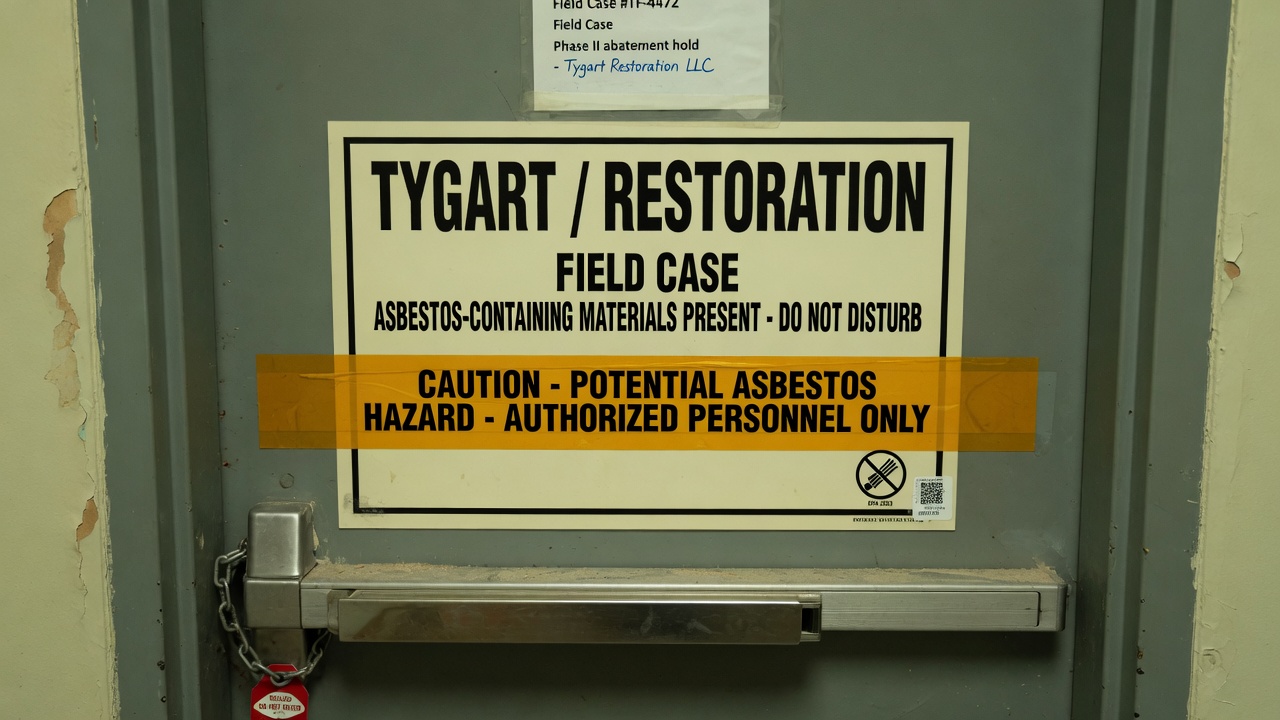
If you manage facilities for a corporate occupier and you have been trying to figure out how to get Scope 3 emissions data from your restoration contractors, the Restoration Carbon Protocol (RCP) exists to answer that question. This article explains what the RCP is, how it works, and what IFMA members specifically need to know about using it as a procurement and compliance tool.
What the Restoration Carbon Protocol Is
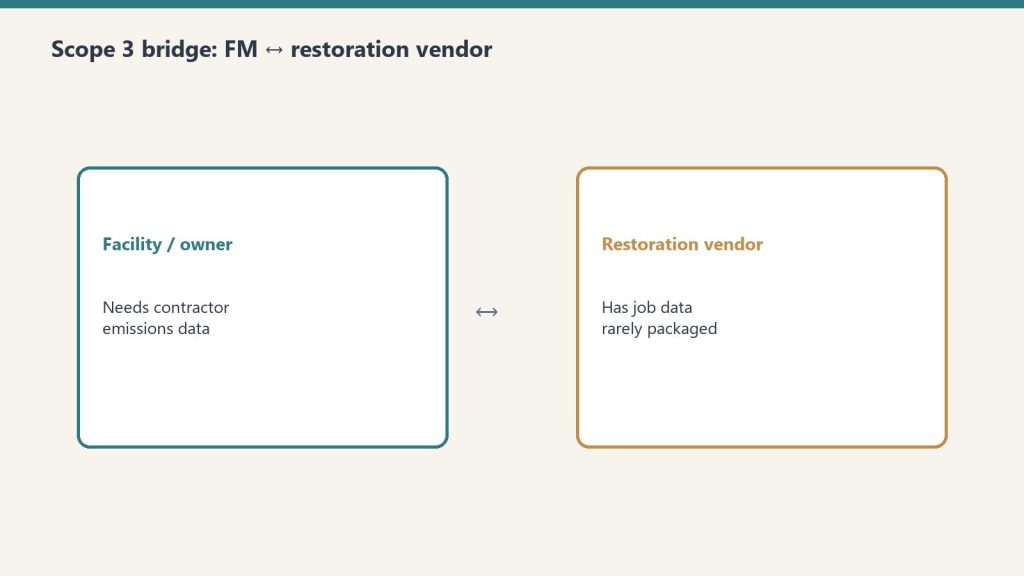
The RCP is an industry self-standard published by Tygart Media that defines how restoration contractors should calculate, document, and report the greenhouse gas emissions associated with each project they complete. It is built on the GHG Protocol’s Corporate Value Chain (Scope 3) Standard — the same framework used by most corporate ESG reporting programs and required by SB 253 and CSRD.
The RCP fills a specific void: no restoration industry body — not IICRC, not RIA, not any trade association — had previously published a Scope 3 reporting methodology for restoration work. Commercial property managers and corporate FM teams asking their restoration vendors for emissions data were getting blank stares. The RCP gives contractors the methodology and gives FM procurement teams the standard to reference.
The Five Core Restoration Job Types and Their Scope 3 Mapping
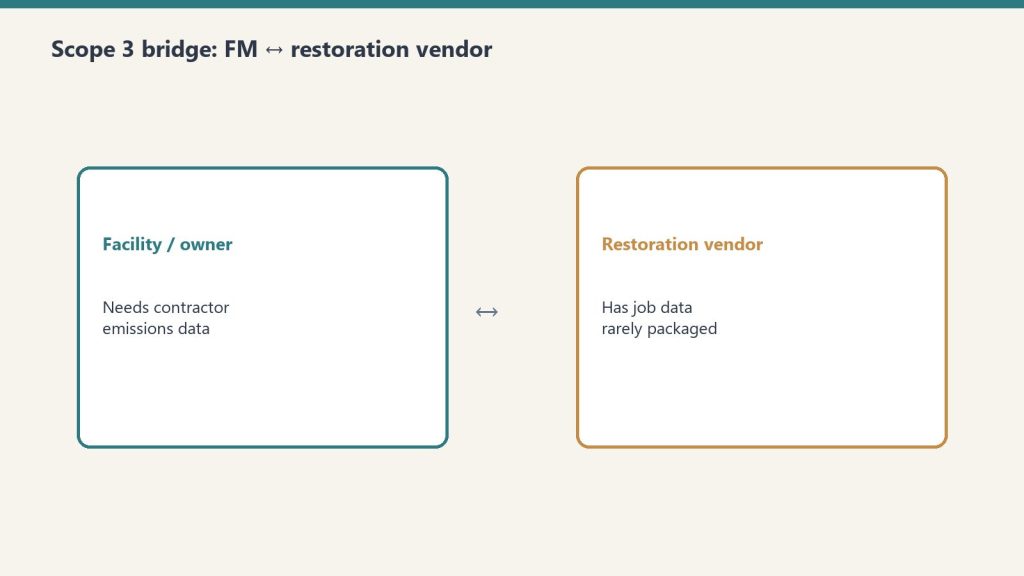
The RCP maps each of the five primary restoration job types to the relevant GHG Protocol Scope 3 categories:
- Water damage restoration: Category 1 (services purchased), Category 5 (waste from extracted water and contaminated materials)
- Fire and smoke restoration: Category 1 (services), Category 5 (soot, char, and demolition debris waste streams)
- Mold remediation: Category 1 (services), Category 5 (contaminated building materials removed)
- Asbestos and hazmat abatement: Category 1 (services), Category 5 (regulated waste disposal), Category 4 (specialized transport)
- Biohazard cleanup: Category 1 (services), Category 5 (medical and biological waste streams)
In all five cases, the primary Scope 3 category for the FM client is Category 1 — Purchased Goods and Services. The emissions are generated by the contractor performing work on your behalf at your facility.
The 12 Data Points: What to Ask Your Contractor to Track
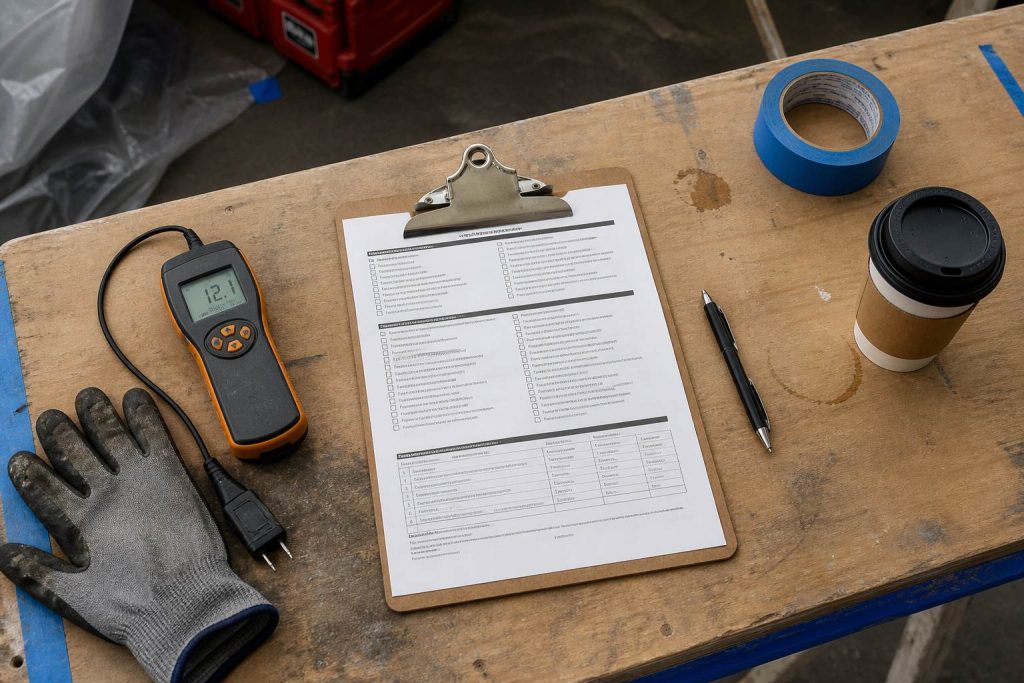
The RCP defines 12 data points that a restoration contractor should capture on each job to enable a complete Scope 3 calculation. As an FM procurement professional, these are the data fields you should be requiring in your vendor agreements:
- Total diesel consumed by drying and dehumidification equipment (gallons)
- Total propane or natural gas consumed by heat drying equipment (cubic feet or gallons)
- Total vehicle miles traveled to and from the site by all crew vehicles
- Number of crew vehicle trips and vehicle types (van, pickup, box truck)
- Total equipment operating hours (by equipment category)
- Weight of water extracted and removed from the site (gallons or pounds)
- Weight and type of contaminated materials removed (drywall, insulation, flooring, etc.)
- Disposal method for each waste stream (landfill, recycling, hazardous waste facility)
- Refrigerants used, recovered, or vented (for HVAC-adjacent work)
- Materials installed by type and weight (for reconstruction phases)
- Cleaning agents and chemical products used by product category
- Total project duration in days
Not every data point is relevant to every job type. The RCP provides job-type-specific templates that pre-populate the relevant fields for water, fire, mold, hazmat, and biohazard jobs respectively.
How FM Teams Can Use the RCP Framework
There are three practical ways IFMA members can incorporate the RCP into their FM operations:
1. Vendor Qualification
Add RCP awareness to your restoration vendor qualification checklist. Ask prospective vendors whether they have adopted the RCP framework. Vendors who can demonstrate RCP familiarity are already capturing the data you need; vendors who cannot are a data gap risk for every job they complete.
2. Contract Language
Include a Scope 3 data provision clause in restoration vendor agreements referencing the RCP as the accepted methodology standard. This gives vendors a concrete deliverable (the RCP Job Carbon Report) rather than an open-ended “emissions data” request they have no idea how to fulfill.
3. Scope 3 Inventory Integration
Route the per-job RCP carbon reports from your restoration vendors into your Scope 3 Category 1 data collection system. Most ESG reporting platforms (Watershed, Persefoni, Salesforce Net Zero Cloud, etc.) accept Category 1 supplier data in standardized formats. The RCP report is designed to map directly to these platforms’ input requirements.
The RCP Is Free to Use
The Restoration Carbon Protocol is published as an open industry standard. There is no licensing fee, no certification requirement, and no vendor lock-in. FM teams can share the RCP framework directly with their restoration vendors at no cost. Contractors can adopt the RCP’s data capture templates and calculation methodology without purchasing anything.
The goal is adoption — the more restoration contractors who begin tracking RCP-compliant data, the more complete FM Scope 3 inventories become across the industry.
Frequently Asked Questions
Is the RCP recognized by IICRC or RIA?
The RCP is an independent industry self-standard published by Tygart Media. It is not currently endorsed by IICRC or RIA, as neither body has published a competing ESG standard. The RCP fills the void those bodies have not addressed. FM teams and restoration contractors can adopt it independently without waiting for official industry body endorsement.
How does a restoration contractor become RCP-certified?
The RCP v1.0 includes a self-certification checklist. Contractors complete the checklist to demonstrate they have implemented the required data capture processes and calculation methodology. Third-party verification is available for organizations that require audited certification. Details are published at tygartmedia.com/category/esg-restoration/.
Part of the IFMA Scope 3 series. The full RCP framework is available at tygartmedia.com.
Leave a Reply