
A crawl space inspection is the foundation of every crawl space repair decision. Without knowing what is actually in the crawl space — the moisture levels, the wood condition, the mold extent, the drainage situation — any contractor proposal or DIY plan is a guess. This guide walks through a complete DIY crawl space inspection: how to prepare, what to bring, what to look for in each area, and how to document findings so you can get accurate contractor quotes and make informed decisions about what needs to be addressed.
Before You Enter: Safety and Equipment
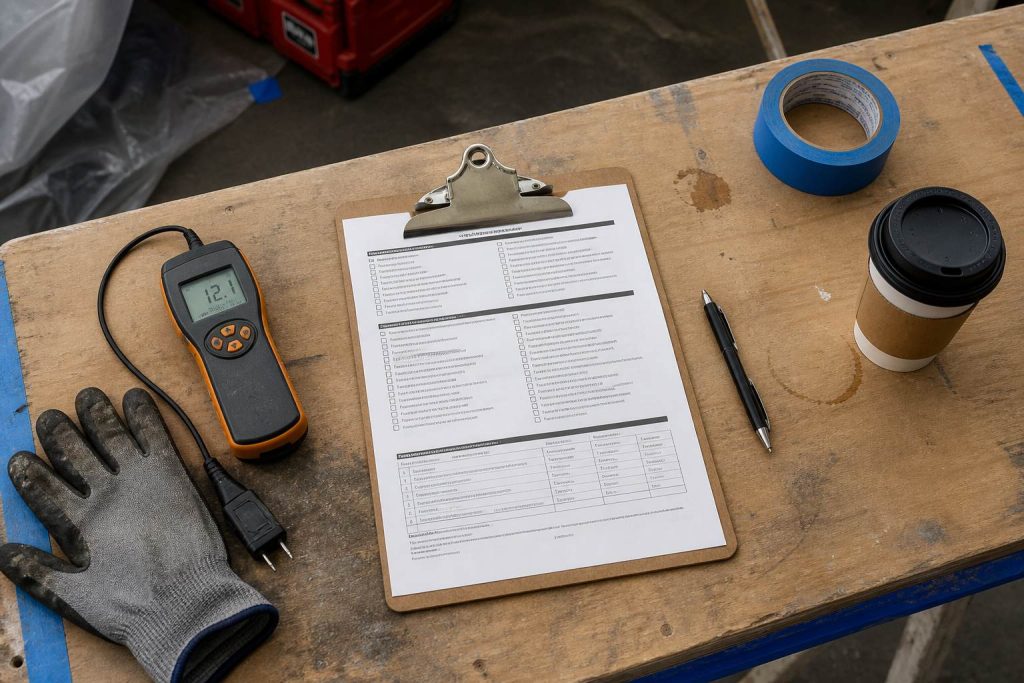
A crawl space inspection requires minimal equipment but non-negotiable safety preparation:
- N95 or P100 respirator: Crawl spaces contain mold spores, fiberglass insulation particles, rodent droppings (which can carry hantavirus), and general dust. A dust mask is insufficient — a rated respirator is essential.
- Tyvek coveralls or dedicated clothing: Whatever you wear in the crawl space should not be worn back into the living space.
- Nitrile gloves
- Eye protection (safety glasses or goggles)
- Bright work light or headlamp: A single flashlight is insufficient for a thorough inspection. A rechargeable LED work light that can be set down provides hands-free illumination.
- Knee pads
- Pin-type moisture meter ($20–$60 from hardware stores or Amazon): The single most important diagnostic tool for wood condition assessment.
- Digital hygrometer ($15–$30): Measures relative humidity and temperature in the crawl space air.
- Sharp awl or large screwdriver: For the probe test of wood condition.
- Smartphone or camera: Document everything with photographs and video.
The Inspection Sequence
Step 1: Before Entering — Exterior Check
Before entering the crawl space, inspect the exterior foundation from grade level:
- Is the soil grading away from the foundation (should slope away at least 6″ over 10 feet)?
- Where do downspouts discharge? Are they directed away from the foundation or do they dump at the foundation wall?
- Are foundation vents present? Are they open or blocked?
- Is there any visible evidence of water staining or efflorescence on the exterior foundation face?
- Are there any visible cracks in the foundation wall?
Step 2: Initial Entry — Air Quality Assessment
When you first enter the crawl space, note the air quality before your senses adjust:
- Musty odor: Indicates mold or high moisture. Severity of odor correlates (imperfectly) with extent of mold growth.
- Earthy/wet soil smell: Indicates high soil moisture or recent water presence.
- Rodent odor: Ammonia-like smell indicates active rodent activity.
- Place the digital hygrometer and allow it to stabilize for 15–20 minutes before recording the reading.
Step 3: Floor and Soil Assessment
- Standing water: Any pooled water after rain is a drainage problem.
- Saturated soil: Soil that holds an indentation when pressed, or that releases water when stepped on, indicates high moisture content from water intrusion or very high water table.
- Existing vapor barrier: Is one present? What condition is it in — intact, torn, punctured, pushed aside? Is it taped at seams?
- Drain tile: Is there an existing perimeter drainage system? Visible gravel channel at the foundation perimeter indicates drainage infrastructure.
- Sump pit: Is one present? Is the pump operational (turn it on manually if there is a test button, or pour water in to activate the float)? Is the pit covered and sealed?
- Watermarks: High-water marks on piers, columns, or the foundation wall face indicate past water level — measure the height from the floor to establish how deep water has been.
Step 4: Structural Wood Assessment (Most Critical)
Test structural wood at minimum 10–15 locations across the crawl space, focusing on the highest-risk areas:
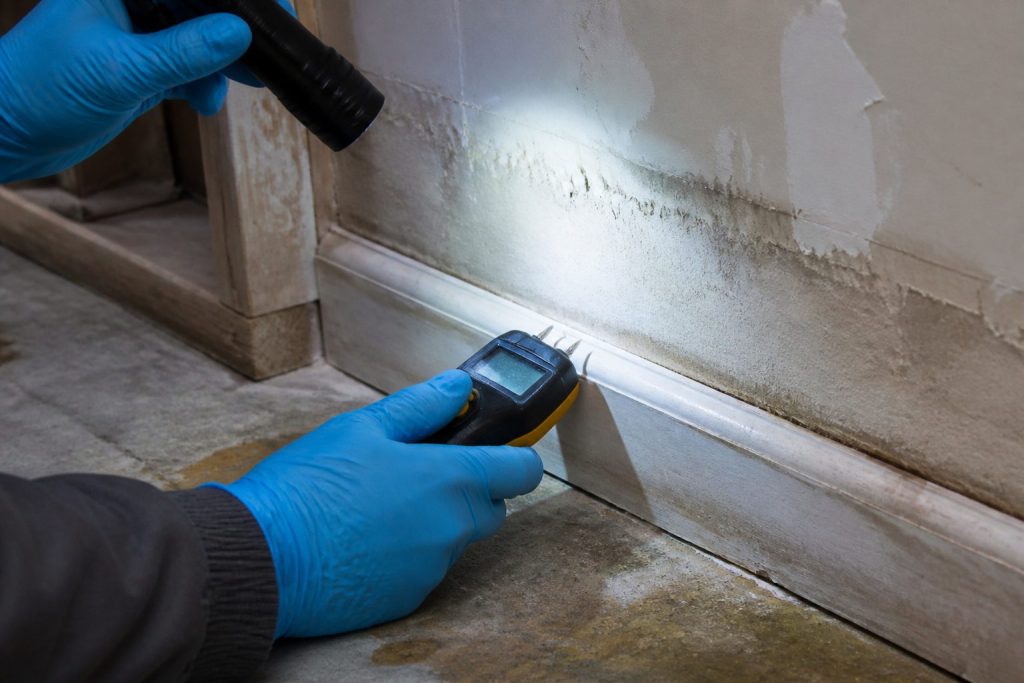
- Sill plate (priority): Use the moisture meter on the sill plate at each accessible location around the perimeter. This is the highest-moisture wood member in most crawl spaces — it sits on concrete, which wicks moisture from both directions.
- Rim joist: The band joist atop the foundation wall. Test at multiple locations — particularly corners and any areas showing discoloration.
- Floor joists: Test the bottom face of joists at midspan and at the bearing ends (where they rest on the sill plate or beam). The bearing ends are where rot typically initiates.
- Support posts and columns: Test the base of each post where it contacts the pier footing.
- Beams: Test at bearing points and at any visible discoloration.
Interpreting moisture meter readings:
- Below 15% MC: Dry. No active moisture problem in this member.
- 15–19% MC: Elevated but not yet problematic. Monitor; address moisture source.
- 19–28% MC: Wood rot fungi can be active. Remediation appropriate.
- Above 28% MC: High. Wood rot is likely active. Urgent action needed.
The probe test: Push a sharp awl or large screwdriver firmly into any wood showing discoloration, staining, or high moisture meter readings. Sound wood resists penetration — it requires significant force to penetrate more than 1/8″. Rotted wood allows easy penetration, and the wood around the probe entry may crumble or separate. If the probe penetrates easily to 1/4″ or more, that section of wood has significant decay.
Step 5: Mold Assessment
- Identify all visible mold growth: Look for fuzzy or powdery growth on joists, blocking, and the underside of the subfloor. White, green, black, and gray growth are all possible mold colors.
- Estimate extent: Roughly estimate the percentage of joist surfaces with visible growth. Under 10% is limited; 10–30% is moderate; over 30% is extensive.
- Distinguish from bluestain: Blue-gray staining that penetrates the wood surface without surface fuzziness is bluestain (sapstain) — not the same as surface mold, though it indicates past or present elevated moisture.
- Photograph all visible mold: Multiple photos from different distances. Contractors and mold remediation professionals will want to see the extent and location.
Step 6: Insulation Assessment
- Is insulation present between the floor joists?
- Is it intact and in contact with the subfloor, or is it sagging, falling, or hanging?
- Does it show signs of moisture (discoloration, compression, or black spotting indicating mold)?
- Deteriorated, wet, or rodent-damaged fiberglass batt insulation must be removed before encapsulation — note the extent for contractor quotes.
Step 7: Pest Evidence
- Termite mud tubes: Pencil-width earthen tubes running up foundation walls or pier surfaces indicate active subterranean termite activity. This is a significant find requiring immediate pest control treatment.
- Wood damage: Galleries or channels in wood surfaces, powder post beetle exit holes (small round holes 1/16″–1/8″ diameter with fine powder beneath), or structural wood that sounds hollow when tapped.
- Rodent signs: Droppings, nesting material (insulation pulled into clumps, paper, fabric), gnaw marks on insulation, wiring, or wood.
- Entry points: Gaps in the foundation or between the sill plate and foundation where pests could enter.
Step 8: HVAC and Plumbing Equipment
- Is there HVAC equipment (air handler, furnace, or ductwork) in the crawl space? Note the condition of ductwork — sweating ducts or disconnected duct sections are common moisture sources.
- Are there any plumbing leaks, drips, or condensation on pipes?
- Is a dryer vent routed through the crawl space? Dryer vents that exhaust into the crawl space (prohibited by code) are a major moisture source. Note if present.
- Are there any open floor drains that could allow gas or pest entry from the drain system?
Documenting and Using Your Inspection
After the inspection, compile your findings into a summary:
- Highest wood moisture content reading and location
- Relative humidity reading and temperature
- Any probe test failures and their locations
- Mold extent estimate (percentage of joist surfaces affected)
- Water intrusion evidence (standing water, watermarks, efflorescence)
- Pest evidence summary
- Existing drainage and vapor barrier condition
- Photographs organized by category
Share this documentation with every contractor who provides a quote. A contractor who receives specific data (wood MC: 24% at northeast corner sill plate, RH: 82%, visible mold on approximately 20% of joist surfaces, no standing water) can provide a more accurate scope than one who is basing the quote on a quick visual walk-through. Contractors who conduct their own thorough inspection should be arriving at similar conclusions — significant discrepancies between contractor findings and your own assessment warrant investigation.
Related on Tygart Media: crawl space mold removal · vapor barrier installation · IICRC S500 pocket flow.
Frequently Asked Questions
Can I inspect my own crawl space?
Yes, with appropriate safety equipment: N95 or P100 respirator, Tyvek coveralls, gloves, and eye protection. The inspection tools — moisture meter, digital hygrometer, sharp awl, and a bright work light — are inexpensive and available at hardware stores. A thorough DIY inspection before contractor meetings gives you independent data to compare against contractor findings.
What is the most important thing to check in a crawl space inspection?
Wood moisture content at the sill plate and floor joist bearing ends — measured with a pin-type moisture meter. This is the single most diagnostic measurement in a crawl space inspection. A sill plate reading above 19% means active or past moisture problem; above 28% means wood rot is likely active. Everything else in the inspection informs the cause and the solution; the moisture meter tells you whether structural damage is occurring or imminent.
How do I know if I have termites in my crawl space?
Look for mud tubes — pencil-width earthen tunnels running up foundation walls, pier surfaces, or structural wood. Termites build these tubes to travel between soil and wood while maintaining the humid environment they need. Mud tubes are the most reliable visual indicator of subterranean termite activity. Also look for wood that sounds hollow when tapped or crumbles when probed, and for small wings near foundation vents (shed during swarming season). Any suspected termite evidence warrants immediate professional pest control inspection.
Leave a Reply