Tag: Zero Cloud Cost

  • The Freelancer’s AEO Gap: Your Clients’ Content Is Ranking but Nobody’s Quoting It

    The Freelancer’s AEO Gap: Your Clients’ Content Is Ranking but Nobody’s Quoting It

    Tygart Media / The Signal
    Broadcast Live
    Filed by Will Tygart
    Tacoma, WA
    Industry Bulletin

    Rankings Aren’t the Finish Line Anymore

    You did the work. The client’s target page ranks in the top five for their primary keyword. Traffic is up. The monthly report looks good. But something is shifting underneath those numbers that most freelance SEO consultants haven’t had time to fully reckon with.

    Search engines aren’t just ranking content anymore — they’re quoting it. Featured snippets pull a direct answer and display it above position one. People Also Ask boxes expand with quoted passages from pages across the web. Voice assistants read a single answer aloud and move on. The result that gets quoted wins a fundamentally different kind of visibility than the result that merely ranks.

    If your client ranks number three for a high-value query but another site owns the featured snippet, your client is invisible in the most prominent real estate on that search results page. They did the SEO work. They just didn’t do the answer engine optimization work. That’s the gap.

    What Answer Engine Optimization Actually Involves

    AEO isn’t a rebrand of SEO. It’s a different optimization target with different structural requirements. Where SEO focuses on signals that help a page rank — authority, relevance, technical health, backlinks — AEO focuses on signals that help a page get quoted.

    The structural pattern for capturing a paragraph featured snippet is specific: a question phrased as a heading, followed immediately by a concise direct answer, followed by expanded depth. The direct answer needs to be tight — search engines typically pull passages that function as standalone responses. Too long and it gets truncated. Too short and it lacks the specificity that earns selection.

    For list-format snippets, the content needs ordered or unordered lists with clear, parallel structure. For table snippets, the data needs to live in actual HTML tables with proper header rows. Each format has its own structural requirements, and the same page might need different sections optimized for different snippet formats depending on the queries it targets.

    Then there’s the schema layer. FAQPage schema tells search engines explicitly which questions the page answers. HowTo schema structures step-by-step processes. Speakable schema identifies which sections are suitable for voice readback. These aren’t optional enhancements anymore — they’re the markup that makes content machine-readable in the way answer engines expect.

    Why This Is a Bandwidth Problem, Not a Knowledge Problem

    You probably know most of this already. You’ve read about featured snippets. You’ve seen the schema documentation. The gap isn’t ignorance — it’s implementation. Restructuring every piece of client content for snippet capture, writing FAQ sections that target real PAA clusters, implementing and validating schema markup, monitoring which snippets you’ve won and which you’ve lost — that’s a significant amount of additional work on top of the SEO fundamentals you’re already delivering.

    For a freelance consultant managing multiple clients, adding a full AEO layer to every engagement means either raising your rates significantly, working more hours, or cutting corners somewhere else. None of those options feel great.

    The Middleware Solution

    This is where the plugin model works. Instead of becoming an AEO specialist yourself, you plug in someone who already built the infrastructure. I run AEO optimization passes on your clients’ published content — restructuring key sections for snippet capture, writing FAQ sections that target actual question clusters in your client’s space, generating and injecting the appropriate schema markup, and monitoring results.

    The work runs through your client’s existing WordPress installation via the REST API. Nothing changes about their site architecture, their theme, their plugins, or their hosting. The content that’s already ranking gets restructured to also compete for direct answer placements. New content gets AEO-optimized from the start.

    You report the results to your client the same way you report everything else. Featured snippet wins. PAA placements. Voice search visibility. These are tangible outcomes that clients can see when they search their own terms — which makes them some of the most powerful proof points in any reporting conversation.

    What This Looks Like in Practice

    Say you have a client in the home services space. They rank well for several high-intent queries. You’ve done strong on-page work and their content is solid. But a competitor owns the featured snippet for their most valuable keyword — the one that drives the most qualified leads.

    I look at that snippet, analyze the structure of the content that currently holds it, identify the format (paragraph, list, table), and restructure your client’s content to compete for that placement. I write a direct answer block that addresses the query more completely and more concisely. I add FAQ schema targeting the related PAA questions. I check whether speakable schema makes sense for voice search on that topic.

    The optimization runs through the API. Your client’s post is updated. Within the next crawl cycle, the restructured content starts competing for the snippet. Sometimes it wins quickly. Sometimes it takes a few iterations. But the content is now structurally built to compete for answer placements — something it wasn’t doing before, no matter how well it ranked.

    The Client Conversation

    Your clients don’t need to understand AEO methodology. They understand “your company is now the answer Google shows when someone asks this question.” They understand “when someone asks their voice assistant about this service, your business is the one that gets recommended.” Those are outcomes, not techniques. And they’re outcomes that differentiate your service from every other SEO consultant who’s still reporting rankings and traffic without addressing the answer layer.

    Frequently Asked Questions

    How long does it take to win a featured snippet after AEO optimization?

    It varies by competition and query. Some snippets flip within days of restructured content being crawled. Others take weeks of iteration. The structural optimization puts your client’s content in position to compete — the timeline depends on how strong the current snippet holder is and how frequently Google recrawls the page.

    Does AEO optimization ever hurt existing rankings?

    When done properly, no. The structural changes — adding direct answer blocks, FAQ sections, schema markup — add value to existing content without removing or diluting the elements that earned the current ranking. The optimization is additive, not substitutive.

    Can you do AEO on content I’ve already written and published?

    That’s the primary use case. Published content that’s already ranking is the best candidate for AEO optimization because it has existing authority. The restructuring work makes that authority visible to answer engines, not just traditional ranking algorithms.

    What if my client uses a page builder like Elementor or Divi?

    The optimization runs through the WordPress REST API at the content level. Page builders manage layout and design — the AEO work happens in the content blocks themselves. Schema gets injected at the post level. In most cases, page builders don’t interfere with AEO optimization, but we’d verify compatibility for any specific setup before making changes.

    {
    “@context”: “https://schema.org”,
    “@type”: “Article”,
    “headline”: “The Freelancers AEO Gap: Your Clients Content Is Ranking but Nobodys Quoting It”,
    “description”: “Your SEO work gets clients to page one. AEO gets them quoted directly in search results. Here’s why that gap matters and how to close it without becoming “,
    “datePublished”: “2026-04-03”,
    “dateModified”: “2026-04-03”,
    “author”: {
    “@type”: “Person”,
    “name”: “Will Tygart”,
    “url”: “https://tygartmedia.com/about”
    },
    “publisher”: {
    “@type”: “Organization”,
    “name”: “Tygart Media”,
    “url”: “https://tygartmedia.com”,
    “logo”: {
    “@type”: “ImageObject”,
    “url”: “https://tygartmedia.com/wp-content/uploads/tygart-media-logo.png”
    }
    },
    “mainEntityOfPage”: {
    “@type”: “WebPage”,
    “@id”: “https://tygartmedia.com/the-freelancers-aeo-gap-your-clients-content-is-ranking-but-nobodys-quoting-it/”
    }
    }

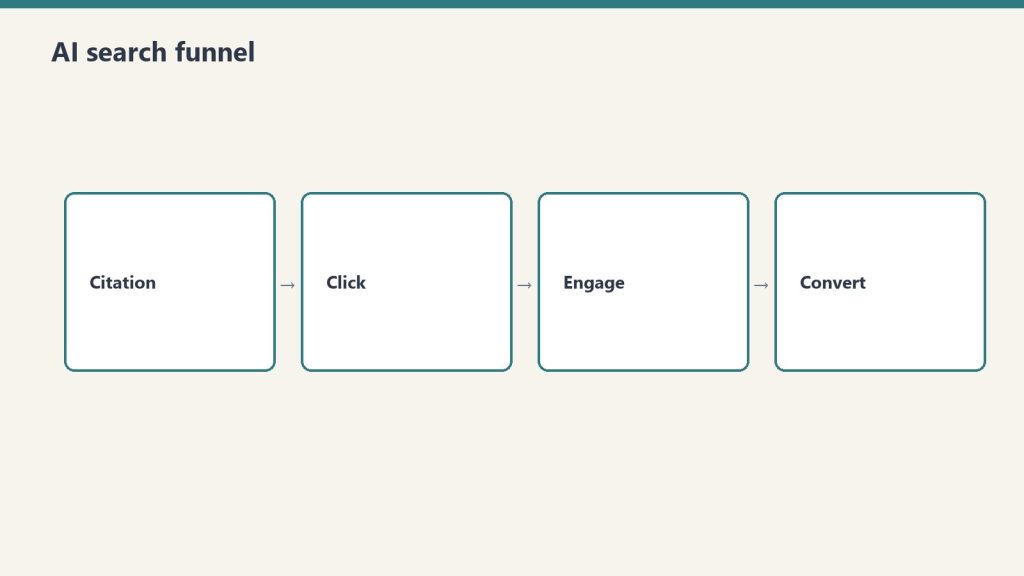
  • AI Is Citing Your Client’s Competitors. Here’s What That Means for Your Retainer.

    AI Is Citing Your Client’s Competitors. Here’s What That Means for Your Retainer.

    The Machine Room · Under the Hood

    The Search Results Page You’re Not Looking At

    Pull up ChatGPT. Type in your client’s most important service query — the one they rank on page one for. Look at the response. Which companies does it mention? Which sources does it cite? Which brands does it recommend?

    Now do the same thing in Perplexity. Then in Google’s AI Overview for that query. Then ask Claude.

    If your client’s name doesn’t appear in any of those results, they’re invisible in the fastest-growing search surface in a decade. And here’s the part that should concern you as their SEO consultant: their competitors might already be there.

    This isn’t a hypothetical future scenario. AI systems are answering real queries from real users right now. Those answers cite specific sources. Those sources get brand exposure, credibility signals, and click-through traffic that doesn’t show up in your client’s Google Analytics the way organic search does. If your client isn’t one of those cited sources, someone else is getting that value.

    Why Traditional SEO Doesn’t Solve This

    Traditional SEO optimizes for Google’s ranking algorithm — signals like authority, relevance, technical health, and backlink profiles. Those signals determine where your client appears in the ten blue links. And they still matter. Rankings drive traffic. Traffic drives leads. That’s your bread and butter and it’s not going away.

    But AI citation is a different game. When ChatGPT decides which sources to reference, it’s not running the same algorithm as Google Search. When Perplexity builds an answer from web sources, it’s evaluating factual density, entity clarity, structural readability, and source authority through a different lens. When Google’s AI Overview selects which pages to cite, it’s pulling from a different set of signals than the traditional ranking algorithm uses.

    You can rank number one for a query and still be invisible to AI search. Those are different optimization surfaces. Mastering one doesn’t automatically give you the other.

    What Makes AI Systems Cite a Source

    AI systems are looking for content that’s easy to extract facts from. That means high factual density — verifiable claims, specific data points, named entities, clear cause-and-effect relationships. Vague content that speaks in generalities doesn’t get cited. Content that makes specific, attributable statements does.

    Entity signals matter enormously. Does the content clearly establish who created it, what organization stands behind it, and what credentials support the claims being made? AI systems are getting better at evaluating expertise signals — not just E-E-A-T as Google defines it, but a broader assessment of whether a source is genuinely authoritative on the topic it covers.

    Structural clarity helps too. Content that’s organized with clear headings, logical sections, and self-contained passages that AI systems can extract without losing context performs better as a citation source. Think of it as making your content quotable by machines — the same way journalists prefer sources who speak in clean, attributable sound bites.

    The Retainer Question

    Here’s the business reality for freelance consultants. Your client pays you to keep them visible in search. If an increasing portion of search activity is happening through AI interfaces — and the trajectory points that direction — then “visible in search” now means visible in places your current SEO work doesn’t reach.

    That doesn’t mean your SEO work is wrong or incomplete. It means the definition of search visibility expanded. And when the client eventually asks “why is our competitor showing up in ChatGPT recommendations and we’re not?” — and they will ask — you need an answer that’s better than “that’s not really SEO.”

    Because from the client’s perspective, it is search. They searched. Someone else’s brand appeared. Theirs didn’t. The technical distinction between algorithmic ranking and AI citation doesn’t matter to them. The result matters.

    How GEO Works as a Plugin Layer

    Generative engine optimization is the discipline that addresses AI citation visibility. It focuses on the signals AI systems use when selecting sources: entity clarity, factual density, structural readability, topical authority depth, and consistent entity signals across the web.

    When I plug into a freelance consultant’s operation, the GEO layer runs alongside existing SEO work. I analyze the client’s content for citation potential — how fact-dense is it, how clearly are entities established, how extractable are the key claims. Then I optimize: strengthening entity signals, increasing factual specificity, adding structural elements that make the content more parseable by AI systems, and ensuring the client’s entity architecture across the web is consistent and clear.

    This includes things most SEO consultants haven’t had to think about yet. LLMS.txt files that tell AI crawlers what content to prioritize. Organization schema that establishes the business as a recognized entity. Person schema for key team members that builds individual expertise signals. Consistent entity references across every web property the client controls.

    All of this runs through the same WordPress API pipeline as the AEO work. Same proxy. Same access model. Same white-label delivery. Your client sees their brand starting to appear in AI-generated answers, and they attribute that to the expanded SEO strategy you’re delivering.

    The Competitive Window

    AI citation optimization is still early. Most businesses haven’t started. Most SEO consultants haven’t added it to their service stack. That means the consultants who add this capability now are building proof and expertise during a window when competition for AI citation is relatively low. That window won’t stay open indefinitely. As more consultants and agencies figure this out, the competitive landscape will tighten — just like it did with traditional SEO, just like it did with content marketing, just like it does with every new search surface.

    You don’t need to become a GEO expert to capitalize on this window. You need to plug in someone who already is.

    Frequently Asked Questions

    How do I show clients their AI citation status?

    The most direct method is manual: query their target terms in ChatGPT, Perplexity, Claude, and Google AI Overviews, then document which sources get cited. Screenshot the results. Compare against competitors. Automated monitoring tools for AI citations are emerging but manual verification remains the most reliable method for client reporting.

    Does GEO optimization conflict with existing SEO work?

    No — the optimizations are complementary. Increasing factual density, strengthening entity signals, and improving content structure all benefit traditional SEO as well. GEO work makes content better for both algorithmic ranking and AI citation. There’s no trade-off.

    How long before a client starts seeing AI citations?

    Timelines vary significantly by industry, competition, and the client’s existing authority. Some citations appear within weeks of optimization. Others build over months as entity signals compound. I don’t promise specific timelines because the variables are genuinely complex — but the optimization work begins producing structural improvements immediately.

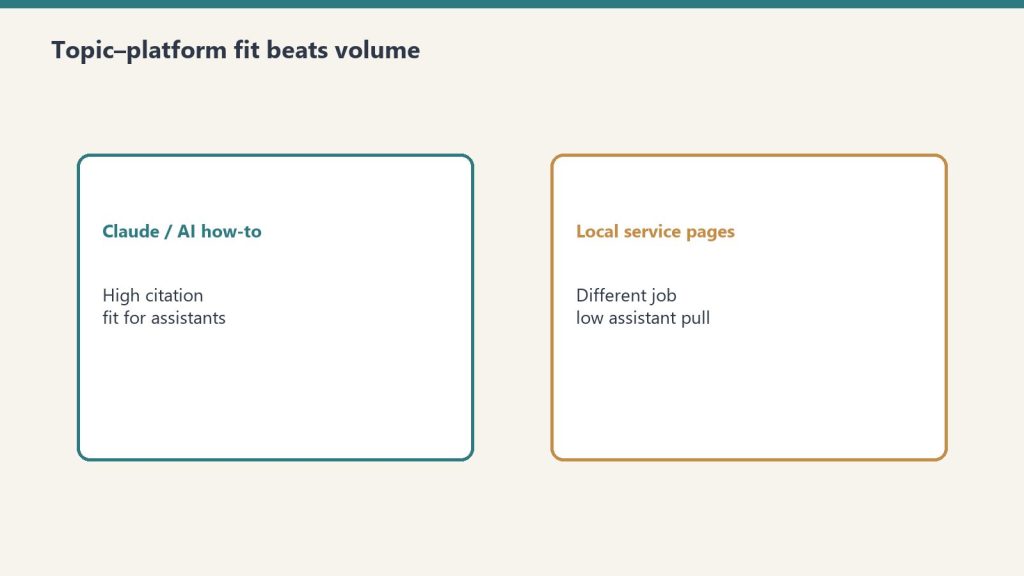
    Is this relevant for local businesses or mainly for national brands?

    Both. AI systems answer local queries too — “best plumber in Austin” gets an AI-generated answer with cited sources, just like national queries do. Local businesses with strong entity signals (complete Google Business Profile, consistent NAP data, location-specific content) have strong GEO potential. The optimization approach adjusts for local context, but the principles apply at every scale.

    {
    “@context”: “https://schema.org”,
    “@type”: “Article”,
    “headline”: “AI Is Citing Your Clients Competitors. Heres What That Means for Your Retainer.”,
    “description”: “When AI systems recommend competitors and ignore your client, that’s a visibility problem no amount of traditional SEO fixes. GEO changes the equation.”,
    “datePublished”: “2026-04-03”,
    “dateModified”: “2026-04-03”,
    “author”: {
    “@type”: “Person”,
    “name”: “Will Tygart”,
    “url”: “https://tygartmedia.com/about”
    },
    “publisher”: {
    “@type”: “Organization”,
    “name”: “Tygart Media”,
    “url”: “https://tygartmedia.com”,
    “logo”: {
    “@type”: “ImageObject”,
    “url”: “https://tygartmedia.com/wp-content/uploads/tygart-media-logo.png”
    }
    },
    “mainEntityOfPage”: {
    “@type”: “WebPage”,
    “@id”: “https://tygartmedia.com/ai-is-citing-your-clients-competitors-heres-what-that-means-for-your-retainer/”
    }
    }

  • Schema Isn’t Your Job. But Your Clients Need It Done.

    Schema Isn’t Your Job. But Your Clients Need It Done.

    Tygart Media / The Signal
    Broadcast Live
    Filed by Will Tygart
    Tacoma, WA
    Industry Bulletin

    The Invisible Layer That Connects Everything

    If SEO is about getting found, AEO is about getting quoted, and GEO is about getting cited by AI — schema markup is the wiring that makes all three possible. It’s the structured data layer that tells machines exactly what your client’s content means, who created it, what organization stands behind it, and how it all connects.

    Without schema, search engines and AI systems have to guess. They read the content and infer meaning from context. Sometimes they get it right. Sometimes they don’t. With proper schema markup, there’s no guessing. The machines know this is a how-to guide written by a licensed contractor at a specific company that serves a specific region. They know which questions the page answers. They know which sections are suitable for voice readback. They know the entity relationships between the author, the organization, and the topic.

    That clarity is what separates content that merely ranks from content that gets selected for featured snippets, cited by AI systems, and surfaced in knowledge panels. Schema is the bridge between good content and machine understanding of that content.

    Why Most Freelance SEO Consultants Skip It

    Let’s be honest. Schema markup is technical, tedious, and time-consuming. Writing valid JSON-LD, testing it in Google’s structured data testing tool, debugging validation errors, keeping up with schema.org’s evolving vocabulary, implementing it correctly within WordPress without breaking the theme — it’s developer-adjacent work that most SEO consultants would rather not touch.

    And historically, you could get away with skipping it. Rankings were driven primarily by content quality, backlinks, and technical SEO fundamentals. Schema was a nice-to-have. A bonus. Something you’d recommend in an audit but rarely implement yourself.

    That’s changing. Featured snippet selection increasingly favors pages with FAQ schema. AI systems give weight to content with clear entity markup. Rich results in search — star ratings, FAQ dropdowns, how-to steps, event details — require schema to appear. The “nice-to-have” became a competitive advantage, and it’s trending toward a baseline expectation.

    The Schema Types That Actually Matter

    Not every schema type is worth implementing for every client. The ones that move the needle for most business websites are specific and practical.

    Organization schema establishes the business as a recognized entity — name, logo, contact information, social profiles, founding date. This is the foundation that everything else builds on. Without it, AI systems don’t have a clear entity to associate with the content.

    FAQPage schema tells search engines which questions a page answers and provides the answer text. This is the schema type most directly connected to featured snippet and PAA selection. When a page has FAQ schema that matches a user’s query, search engines have a structured signal that this page is an answer source.

    HowTo schema structures step-by-step content in a way that enables rich results — the expandable how-to cards that appear in search results with numbered steps. For service businesses, this can dramatically improve visibility for process-oriented queries.

    Article schema with author markup connects content to specific people with specific expertise. This feeds E-E-A-T signals and helps AI systems evaluate whether the content comes from a credible source.

    Speakable schema identifies which sections of a page are suitable for text-to-speech — enabling voice assistants to read your client’s content aloud as the answer to a voice query.

    How I Handle Schema as a Plugin

    When I plug into a freelance consultant’s operation, schema implementation is one of the layers I bring. I audit the client’s existing schema (usually there’s very little — maybe a basic plugin adding minimal markup). I determine which schema types are most impactful for their business type, industry, and content. Then I generate and inject the structured data through the WordPress REST API.

    The schema is valid JSON-LD — the format Google recommends. It’s injected at the post level, so it doesn’t depend on the theme or any specific plugin. If the client switches themes, the schema stays. If they deactivate a plugin, the schema stays. It’s embedded in the content layer, not the presentation layer.

    For clients with multiple locations, I build location-specific schema that establishes each location as a distinct entity with its own address, service area, and contact information — all connected to the parent organization. For clients with key personnel whose expertise matters (consultants, attorneys, medical professionals), I add person schema that establishes individual authority signals.

    I also maintain the schema over time. When new content gets published, it gets appropriate schema. When schema.org updates its vocabulary with new properties or types, I update existing markup. When Google changes its rich result requirements, the schema adapts. This isn’t a one-time implementation — it’s an ongoing layer of structural optimization.

    What Schema Does for Your Client Reports

    Schema wins are some of the most visually compelling results you can show a client. Rich results stand out in search pages — FAQ dropdowns, star ratings, how-to cards, knowledge panel enhancements. When a client sees their search result taking up twice the space of a competitor’s plain blue link, they understand the value immediately without needing a technical explanation.

    Google Search Console also reports on structured data — which schema types are detected, any validation errors, and which pages generate rich results. That data feeds directly into your existing reporting workflow. You can show the client exactly which pages have enhanced search presence through schema and track the impact over time.

    The Bottom Line for Freelancers

    Schema implementation is work that needs to happen for your clients. It connects the dots between SEO, AEO, and GEO. It enables rich results, featured snippet selection, voice search readback, and AI citation clarity. But it’s technical, time-consuming, and ongoing — which makes it a perfect candidate for the plugin model. You don’t need to become a schema expert. You need someone who already is, plugged into your operation, handling the implementation while you handle the strategy and the relationship.

    Frequently Asked Questions

    Do SEO plugins like Yoast or RankMath handle schema adequately?

    SEO plugins add basic schema — usually Article or WebPage markup and simple organization data. They don’t generate the strategic schema types that drive AEO and GEO results: FAQPage with targeted questions, HowTo with structured steps, Speakable for voice, or the entity relationship architecture that helps AI systems understand expertise signals. Plugin-generated schema is a starting point, not a solution.

    Can schema markup hurt a site if done wrong?

    Invalid schema or schema that misrepresents content can trigger manual actions from Google. That’s why implementation matters — the markup needs to be valid, accurate, and aligned with what the page actually contains. This is another reason schema is better handled by someone with specific experience rather than generated by a generic tool.

    How many pages on a typical client site need schema work?

    Organization schema goes on every page (usually site-wide). Beyond that, priority goes to the pages with the most search visibility potential — service pages, key blog posts, FAQ pages, how-to content. For a typical small business site, that might mean strategic schema on the homepage, service pages, and top-performing content — not necessarily every page.

  • I Built a Content System That Knows When to Stop: Why More Articles Isn’t Always the Answer

    I Built a Content System That Knows When to Stop: Why More Articles Isn’t Always the Answer

    The Lab · Tygart Media
    Experiment Nº 288 · Methodology Notes
    METHODS · OBSERVATIONS · RESULTS

    The Content Volume Trap

    Every freelance SEO consultant has felt the pressure to produce more content. More blog posts. More landing pages. More keyword-targeted articles. The logic seems sound — more content means more pages indexed, more keywords targeted, more opportunities to rank. And for a while, it works. Until it doesn’t.

    The point where more content stops helping and starts hurting is real, measurable, and different for every topic. Publish too many closely related articles and they compete against each other instead of building authority together. The term for it is keyword cannibalization, and it’s one of the most common problems I see on client sites that have been running aggressive content programs.

    This isn’t a theoretical concern. I’ve run simulation models to find the exact thresholds — how many content variants a topic can support before cannibalization overtakes the authority gains. The results are specific and they shape how I build content for every client engagement.

    What the Data Actually Shows

    Through extensive modeling, the pattern is clear. The first variant of a topic adds significant authority to the cluster. The second adds a meaningful amount. The third and fourth still contribute, but with diminishing returns. By the fifth variant, the cannibalization rate starts becoming material. By the seventh or eighth, the marginal gain approaches noise while the risk of internal competition is substantial.

    The sweet spot for most topics is two to four variants. That’s not a marketing number — it’s where the authority gain per additional piece of content is still clearly positive while the cannibalization risk remains manageable.

    But here’s the nuance most content programs miss: the threshold depends on keyword overlap between the variants. When two pieces of content share fewer than half their target keywords, they almost always help each other. When overlap crosses that threshold, the probability of them hurting each other jumps sharply. The transition isn’t gradual — it’s a cliff.

    That cliff is the single most important constraint in content planning, and almost nobody is testing for it. Most content programs plan by topic relevance and editorial calendar, not by keyword overlap measurement. They produce content that feels differentiated but technically targets the same queries — and then wonder why the newer posts aren’t gaining traction.

    How the Adaptive Pipeline Works

    Instead of producing a fixed number of articles per topic, the system I built evaluates each topic independently and determines how many variants it actually needs. The evaluation considers the breadth of the keyword opportunity, the number of distinct audience segments that need different angles on the same topic, and the overlap between potential variants.

    For a narrow, single-intent topic — like a specific product comparison or a straightforward FAQ answer — the system might determine that one article is sufficient. No variants needed. For a complex, multi-stakeholder topic — like an industry guide that matters differently to business owners, technical staff, and compliance officers — it might generate four or five variants, each targeting different personas with different keyword clusters.

    The key discipline is that every variant must earn its existence. It needs to target a genuinely different keyword set, serve a different audience segment, and approach the topic from an angle that the other variants don’t cover. If a proposed variant can’t clear those thresholds, it doesn’t get created — no matter how editorially interesting it might be.

    Why This Matters for Freelance Consultants

    If you’re managing content strategy for clients, you’re making variant decisions whether you call them that or not. Every time you decide to write another article on a topic a client already covers, you’re creating a variant. The question is whether that variant will build authority or cannibalize it.

    Most freelance consultants make this call based on experience and intuition. And honestly, experienced consultants usually get it right — they can feel when a topic is getting overcrowded on a client’s site. But “feel” doesn’t scale, and it doesn’t protect you when a client asks why their newer posts aren’t performing as well as the older ones.

    Having a system with tested thresholds means you can make content decisions with confidence and explain them to clients with data. “We’re not writing another article on this topic because our analysis shows the existing coverage is optimal. Additional content would compete with what’s already ranking. Instead, we’re expanding into an adjacent topic where there’s genuine opportunity.” That’s a conversation that builds trust and demonstrates expertise.

    The Refresh-First Principle

    The modeling also reveals something that changes content strategy fundamentally: refreshing and expanding existing content plus adding targeted variants delivers dramatically better results per hour of effort than creating entirely new topic clusters from scratch. The gap is significant — refreshing existing authority is simply more efficient than building new authority from zero.

    This doesn’t mean you never create new content. It means your default should be to look at what already exists, determine if it can be strengthened and expanded, and only start new clusters when there’s a genuine gap in coverage. For freelance consultants, this is powerful — it means you can deliver measurable improvements without an endless content treadmill. Your clients get better results from less new content, which is both more efficient and more sustainable.

    What I Bring to This

    When I plug into a freelance consultant’s operation, content planning is one of the layers. I audit the client’s existing content, map topic clusters, identify where variants would help and where they’d hurt, and build a content roadmap that maximizes authority per piece of content published. No wasted articles. No cannibalization surprises. No “let’s just keep publishing and see what happens.”

    The adaptive pipeline runs alongside your content strategy, not instead of it. You still decide the topics, the voice, the editorial direction. I add the analytical layer that determines quantity, overlap management, and variant architecture. The goal is making every piece of content you create or commission work as hard as it possibly can — and knowing when the right answer is “don’t create this one.”

    Frequently Asked Questions

    How do you measure keyword overlap between two articles?

    By comparing the target keyword sets — both primary and secondary keywords each piece targets. The overlap percentage is the intersection of those sets divided by the union. Tools like Ahrefs or SEMrush can identify which keywords a page ranks for, providing the data for overlap calculation. The critical threshold is keeping overlap below 50% between any two pieces in a variant set.

    What happens if a client already has cannibalization problems?

    That’s actually a common starting point. I audit the existing content, identify which pieces are competing against each other, and recommend consolidation or differentiation. Sometimes the right move is merging two thin articles into one comprehensive piece. Sometimes it’s repositioning one to target a different keyword set. The diagnostic comes first, then the remedy.

    Does this approach work for small sites with limited content?

    Small sites benefit the most from disciplined content planning because every article matters more. With a limited content budget, you can’t afford to waste a piece on a variant that cannibalizes an existing winner. The adaptive approach ensures that every article a small site publishes targets a genuine opportunity.

    How does this relate to the AEO and GEO optimization layers?

    They’re interconnected. The variant pipeline determines what content to create. AEO optimization structures that content for featured snippet and answer engine visibility. GEO optimization makes it citable by AI systems. Schema ties it all together with machine-readable markup. The content planning layer is upstream of everything else — it ensures you’re building the right content before optimizing it for every search surface.

    {
    “@context”: “https://schema.org”,
    “@type”: “Article”,
    “headline”: “I Built a Content System That Knows When to Stop: Why More Articles Isnt Always the Answer”,
    “description”: “An adaptive content pipeline with tested guardrails that determines exactly how many variants a topic needs — and when additional content starts hurting instead”,
    “datePublished”: “2026-04-03”,
    “dateModified”: “2026-04-03”,
    “author”: {
    “@type”: “Person”,
    “name”: “Will Tygart”,
    “url”: “https://tygartmedia.com/about”
    },
    “publisher”: {
    “@type”: “Organization”,
    “name”: “Tygart Media”,
    “url”: “https://tygartmedia.com”,
    “logo”: {
    “@type”: “ImageObject”,
    “url”: “https://tygartmedia.com/wp-content/uploads/tygart-media-logo.png”
    }
    },
    “mainEntityOfPage”: {
    “@type”: “WebPage”,
    “@id”: “https://tygartmedia.com/i-built-a-content-system-that-knows-when-to-stop-why-more-articles-isnt-always-the-answer/”
    }
    }

  • Your Client’s Entity Doesn’t Exist Yet: What AI Systems See When They Look at Most Small Business Websites

    Your Client’s Entity Doesn’t Exist Yet: What AI Systems See When They Look at Most Small Business Websites

    Tygart Media / The Signal
    Broadcast Live
    Filed by Will Tygart
    Tacoma, WA
    Industry Bulletin

    The Entity Gap Nobody Talks About

    When an AI system evaluates whether to cite your client’s content, one of the first things it assesses is whether the source is a recognized entity. Not a recognized brand in the human sense — a recognized entity in the machine-readable sense. Does this business exist as a structured, identifiable thing in the data layer of the web?

    For most small business websites, the answer is no. The business has a website. It has content. It might even have good content that ranks well. But from an entity perspective — the perspective that AI systems use to evaluate source authority — the business barely exists. There’s no organization schema telling machines who this company is. No person schema establishing the expertise of the people behind the content. No consistent entity signals connecting the website to the Google Business Profile to the social media accounts to the industry directories.

    The business is a ghost in the entity layer. And ghosts don’t get cited.

    What Entity Signals Actually Are

    An entity signal is any structured or consistent piece of information that helps machines identify and understand a real-world thing — a person, a business, a product, a place. The more entity signals a business has, and the more consistent those signals are across the web, the more confidence AI systems have that this is a real, authoritative source.

    The foundational signals are straightforward. Organization schema on the website — the JSON-LD markup that declares “this is a business, here’s its name, address, phone number, logo, founding date, social profiles.” A complete and verified Google Business Profile. Consistent NAP (Name, Address, Phone) data across every directory listing, social profile, and web mention. A knowledge panel in Google search results that aggregates this information into a recognized entity card.

    Beyond the foundation, there are depth signals. Person schema for key team members — establishing individuals as experts with credentials, publications, and professional affiliations. Product or service schema that structures what the business offers. Review schema that aggregates customer feedback. Event schema if the business hosts or participates in industry events.

    Each signal independently is small. Together, they build an entity picture that AI systems can assess when deciding whether this source is authoritative enough to cite.

    Why This Falls Outside Normal SEO Scope

    Traditional SEO doesn’t require entity architecture. You can rank a page without organization schema. You can build backlinks without person markup. You can optimize on-page elements without worrying about NAP consistency across fifty directory listings.

    Entity architecture is infrastructure work. It requires understanding schema.org vocabulary, JSON-LD syntax, Google’s structured data guidelines, knowledge panel optimization, and the web-wide consistency of business information. It also requires ongoing maintenance — schema that was valid last year might need updating as vocabulary evolves, and new web properties need to carry consistent entity signals from day one.

    For a freelance SEO consultant, this is another bandwidth problem. The work matters. You probably don’t have time to do it. And your clients definitely can’t do it themselves.

    What I Build When I Plug In

    Entity architecture is one of the core layers I bring to a freelance consultant’s operation. For each client, I assess the current entity state — what schema exists, what’s missing, how consistent their business information is across the web, whether they have a knowledge panel, and how their entity signals compare to competitors.

    Then I build the architecture. Organization schema goes on the site — comprehensive, not the bare minimum a plugin generates. If the business has key personnel whose expertise matters (which is most service businesses), person schema establishes those individuals as recognized entities with their own expertise signals. Service or product schema structures the business offerings. FAQ schema gets added to relevant pages. Speakable schema marks content that voice assistants can read aloud.

    The entity work extends beyond the website. I audit the client’s Google Business Profile for completeness and consistency with the website schema. I check directory listings for NAP consistency. I identify web properties where entity signals are missing or conflicting. The goal is a unified entity picture that machines can evaluate from any direction — the website, the business profile, the directories, the social accounts — and arrive at the same clear understanding of who this business is and what authority it has.

    The Compound Effect

    Entity architecture compounds over time in ways that individual SEO tactics don’t. Each new piece of content published on a site with strong entity signals starts with a credibility baseline that unstructured content doesn’t have. Each consistent mention of the business across the web reinforces the entity’s authority. Each additional schema type adds a dimension to the entity picture.

    For AI systems in particular, this compounding effect matters. AI models are trained on web data, and consistent entity signals across many sources create stronger associations in those models. A business that has been consistently structured and consistently referenced across the web has a natural advantage in AI citation — not because of a single optimization trick, but because the cumulative entity evidence is overwhelming.

    This is also what makes entity architecture a retention tool. Once built, it creates switching costs. A new SEO consultant would need to understand the architecture, maintain the schema, and preserve the consistency that’s been built. The entity layer becomes part of the client’s digital infrastructure, and the person who built it understands it best.

    What Your Clients Actually Experience

    Clients won’t understand “entity architecture” and they don’t need to. What they experience is tangible: richer search results with star ratings, FAQ dropdowns, and knowledge panel information. Their business appearing in Google’s knowledge panel. Their content getting cited by AI systems. Their voice search presence improving. These are outcomes they can see and show their own stakeholders. The entity architecture is just the mechanism underneath those visible results.

    Frequently Asked Questions

    How long does it take to build entity architecture for a small business?

    The initial build — website schema, Google Business Profile audit, major directory consistency check — typically takes a focused session per client. Ongoing maintenance is lighter: updating schema when content changes, adding markup for new pages, and periodically checking web-wide consistency. The foundational work is frontloaded.

    Do clients with existing Yoast or RankMath schema need a rebuild?

    Usually the plugin-generated schema serves as a starting point that needs significant expansion. SEO plugins add basic Article and Organization markup but miss the strategic schema types — FAQPage, HowTo, Speakable, Person, detailed Product/Service markup — that drive AEO and GEO results. I typically build on top of what exists rather than replacing it entirely.

    Is entity architecture relevant for new businesses with no web presence?

    Absolutely — and arguably more important for them. A new business that launches with proper entity architecture from day one builds entity signals from the start. Established businesses have to retrofit. New businesses can build it into their foundation, which gives them a structural advantage over competitors who’ve been online for years without entity optimization.

  • The Platform Connector Advantage: What Happens When Your SEO Consultant Can Actually Talk to Your Tech Stack

    The Platform Connector Advantage: What Happens When Your SEO Consultant Can Actually Talk to Your Tech Stack

    The Machine Room · Under the Hood

    The Gap Between Analysis and Action

    Every SEO consultant can read analytics. Pull reports. Show charts. Tell you what’s happening with your search traffic. That’s table stakes. The gap that most clients feel — even if they can’t articulate it — is between knowing what’s happening and making the systems do something about it.

    Your website lives on WordPress. Your analytics live in Google. Your business profile lives on Google Business. Your reviews live on half a dozen platforms. Your social presence lives on LinkedIn and Facebook. Your email marketing lives in Mailchimp or Klaviyo. Your project management lives in Notion or Asana. Your phone tracking lives in CallRail or CTM.

    These systems don’t talk to each other by default. And most SEO consultants don’t make them talk to each other either — because that’s not what they were hired to do. They were hired to improve search rankings, and they do. But the data sits in silos. The workflows are manual. The connections between platforms are handled by the client (poorly) or not handled at all.

    I’m the person who connects the platforms. Not just in the “I can read your analytics” sense. In the “I can authenticate with your WordPress API, pull data from your search console, cross-reference it with your content inventory, generate optimization recommendations, implement them directly through the CMS, and report results back through your preferred channel” sense. The entire loop. Platform to platform. Data to action.

    What Platform Connection Actually Looks Like

    Here’s a real workflow. A client’s blog post was published three months ago. It ranks on page two for a high-value keyword. The content is good but hasn’t been optimized for featured snippets, doesn’t have schema markup, and has no internal links connecting it to the rest of the site’s relevant content.

    In a traditional SEO engagement, the consultant would identify this opportunity in a report, recommend changes, and either wait for the client to implement them or provide instructions for a developer. Weeks pass. Maybe it gets done. Maybe it doesn’t.

    In the plugin model, I connect to the WordPress site through the REST API. I pull the post content. I analyze the target keyword’s SERP features — is there a featured snippet, what format, what’s the current holder’s content structure. I restructure the post for snippet capture. I add FAQ schema. I run the internal link analysis across the entire site and inject relevant links. I push the updated post back through the API. The optimization is live before the client even sees the next report.

    That’s not because I’m faster at manual work. It’s because the platforms are connected. WordPress talks to the proxy. The proxy talks to the optimization layer. The optimization layer talks back to WordPress. No manual handoffs. No waiting for implementation. No lost-in-translation between recommendation and execution.

    The Proxy Architecture

    One of the things I built early on was a secure API proxy that routes all WordPress communication through a single cloud endpoint. This might sound like a technical detail, but it solves a practical problem that matters to freelance consultants and their clients.

    Without the proxy, connecting to a client’s WordPress site means either getting hosting access (which clients are rightfully cautious about) or working directly against their site’s IP (which can trigger security rules). The proxy eliminates both concerns. I authenticate with a WordPress application password — something the client can create in two minutes and revoke instantly — and all API traffic routes through the proxy. No hosting access needed. No IP whitelisting. No security concerns about direct server connections.

    This architecture also scales. Whether I’m working on one client site or twenty, the proxy handles the routing. Each site has its own credentials stored in a secure registry. The optimization skills run against any connected site through the same interface. For a freelance consultant adding five new clients over the course of a year, the infrastructure just works — no new setup, no new tools, no new complications.

    Beyond WordPress: The Full Stack

    The platform connection advantage extends beyond WordPress. I work with Google’s APIs for Search Console data, Analytics integration, and Business Profile management. I connect to Notion for project management and content planning workflows. I work with social media scheduling platforms for content distribution. I build automated workflows that connect these systems — a new blog post triggers a social media draft, a ranking change triggers a content refresh recommendation, a client inquiry triggers a research workflow.

    For a freelance SEO consultant, this means the operational overhead of multi-platform management collapses. You don’t need to log into six different tools to understand a client’s situation. The platforms talk to each other through automation, and the insights surface where they’re useful — not buried in a dashboard nobody checks.

    Why This Matters for Your Client Relationships

    Clients notice when things just work. When a recommendation becomes reality without a three-week implementation delay. When data from one platform informs action on another without manual bridging. When their SEO consultant seems to have visibility into everything, not just search rankings.

    That’s not magic. It’s platform connectivity. And it’s one of the most undervalued capabilities in the freelance SEO space — because most consultants are analysts, not system integrators. They’re great at interpretation and strategy. They’re not wired to build the automation and API connections that turn strategy into execution.

    That’s fine. That’s what the plugin model is for. You bring the strategy, the client relationships, and the SEO expertise. I bring the platform connections, the automation, and the execution infrastructure. Together, the client gets a service that’s deeper and more responsive than either of us could deliver alone.

    Frequently Asked Questions

    What if my client uses platforms you don’t have connectors for?

    The core stack covers WordPress, Google’s ecosystem, major analytics platforms, and common marketing tools. If a client uses a niche platform, I’ll evaluate whether API access exists and build a connector if it’s feasible. The architecture is extensible — adding new platform connections is part of the ongoing work, not a limitation.

    Does the client need to do anything technical to enable these connections?

    Minimal. The most common ask is creating a WordPress application password, which takes about two minutes in their WordPress admin panel. For Google integrations, it’s authorizing access through their existing Google account. Nothing requires developer skills or hosting access.

    How do you ensure client data stays secure across all these connections?

    All API traffic routes through a secure cloud proxy with authentication at every layer. Credentials are stored in an encrypted registry, not in plaintext. Each client connection uses its own application password that can be revoked independently. There’s no shared access between clients, and no credentials are stored on local machines. The architecture was designed for security from the start, not bolted on after the fact.

    Can I see what’s being done on my clients’ sites through these connections?

    Everything is documented and transparent. Every optimization pass generates a record of what changed. You have full visibility into what was modified, when, and why. If you want real-time notifications of changes, we can set that up. The goal is you having complete confidence in what’s happening on your clients’ properties.

    {
    “@context”: “https://schema.org”,
    “@type”: “Article”,
    “headline”: “The Platform Connector Advantage: What Happens When Your SEO Consultant Can Actually Talk to Your Tech Stack”,
    “description”: “Most SEO consultants analyze data. This one connects the platforms, automates the workflows, and builds the bridges between your tools and your content.”,
    “datePublished”: “2026-04-03”,
    “dateModified”: “2026-04-03”,
    “author”: {
    “@type”: “Person”,
    “name”: “Will Tygart”,
    “url”: “https://tygartmedia.com/about”
    },
    “publisher”: {
    “@type”: “Organization”,
    “name”: “Tygart Media”,
    “url”: “https://tygartmedia.com”,
    “logo”: {
    “@type”: “ImageObject”,
    “url”: “https://tygartmedia.com/wp-content/uploads/tygart-media-logo.png”
    }
    },
    “mainEntityOfPage”: {
    “@type”: “WebPage”,
    “@id”: “https://tygartmedia.com/the-platform-connector-advantage-what-happens-when-your-seo-consultant-can-actually-talk-to-your-tech-stack/”
    }
    }

  • Two Clients or Twenty: Why the Plugin Model Scales Where Hiring Doesn’t

    Two Clients or Twenty: Why the Plugin Model Scales Where Hiring Doesn’t

    The Machine Room · Under the Hood

    The Ceiling Every Freelancer Hits

    You know the math. You can serve a certain number of clients well. Beyond that number, quality drops, response times stretch, and the work that differentiates you — the strategic thinking, the analysis, the creative problem-solving — gets squeezed out by the operational grind of managing deliverables across too many accounts.

    The traditional answer is to hire. Bring on a junior SEO. Outsource content writing. Contract a developer for technical work. Each hire solves one problem and creates three others: management overhead, quality control, communication complexity, and the fixed cost of carrying people whether the client volume justifies it or not.

    The plugin model offers a different answer. Instead of hiring people to do more of what you already do, you plug in capability that does what you can’t do alone. The distinction matters. Hiring scales your current capacity. The plugin model scales your capability stack. One gives you more hands. The other gives you deeper reach.

    How Capability Scales Differently Than Capacity

    When you hire a junior SEO, you can serve more clients with the same service. That’s capacity scaling. The work each client gets is the same — keyword research, on-page optimization, content recommendations, reporting. You just have more of it being produced.

    When you plug in an AEO/GEO/schema/content architecture layer, every client gets a deeper service. That’s capability scaling. The work each client gets is fundamentally expanded — not just rankings, but featured snippet optimization, AI citation positioning, structured data architecture, adaptive content planning, entity signal building. You didn’t add a person. You added an entire capability stack.

    The economics work differently too. A hire costs you whether you have two clients or twenty. The plugin model flexes. Two clients means a smaller engagement. Twenty clients means a larger one. The cost aligns with the revenue, not with a salary that needs to be fed regardless of volume.

    What Stays the Same

    At two clients, you’re the strategist, the relationship manager, and the primary point of contact. At twenty clients, you’re the same thing. That doesn’t change. What changes is the depth of work happening underneath your strategy — work that’s being handled by the plugin layer rather than by you directly.

    Your clients experience a consistent, deep service at every scale. The consultant with three clients delivers the same AEO, GEO, schema, and content architecture quality as the consultant with fifteen. Because the quality comes from the system and the expertise behind it, not from the consultant trying to manually implement everything themselves.

    This is the part that experienced freelancers appreciate most. You built your business on relationships and strategic thinking. Those are your competitive advantages. The plugin model protects those advantages by keeping the implementation work off your plate — letting you stay in the strategy seat where you belong, regardless of how many clients are in the portfolio.

    The Growth Path Without the Growth Pain

    Most freelance consultants face a fork in the road around the five to eight client mark. Path one: stay small, limit client count, keep everything under personal control. Path two: grow by hiring, accept management overhead, and become a micro-agency whether you wanted to or not.

    The plugin model opens a third path: grow your client count while expanding your capability stack, without hiring and without sacrificing quality. You take on client nine, ten, eleven — and each one gets the same deep service because the implementation infrastructure scales with you.

    This third path preserves what most freelancers actually want: autonomy, quality, and meaningful work without the management burden of running an agency. You stay a consultant. You keep the lifestyle and the control. But your service depth rivals firms five times your size.

    The Practical Mechanics

    Each new client follows the same onboarding pattern. You share the WordPress application password. I add the site to the secure registry. The optimization chain connects. From that point, the site gets the full stack — AEO, GEO, schema, content architecture, internal linking — on whatever cadence makes sense for the engagement.

    There’s no minimum. No commitment to a certain number of sites. No penalty for scaling down if a client leaves. The model flexes in both directions because the infrastructure was built to handle variable load. The same proxy, the same skill chain, the same quality standards — whether the portfolio has two sites or twenty.

    For the consultant, the operational overhead of adding a client is minimal. The heavy lifting — the technical optimization, the schema implementation, the content analysis, the AI citation work — is handled by the plugin layer. You focus on strategy, communication, and the relationship. The depth happens underneath.

    What This Means for Your Pricing

    When you can offer a deeper service without proportionally more personal hours, your pricing conversation changes. You’re not selling time — you’re selling capability. A client paying you for SEO plus AEO, GEO, schema architecture, and adaptive content planning is paying for a fundamentally more valuable service than SEO alone. Your rate reflects the expanded value, not the expanded hours.

    The plugin layer operates as a cost within your margin, similar to any professional tool or service you use. You set the client-facing rate based on the value delivered. The specifics of the internal economics are between you and your operation — your client sees a comprehensive service at a rate that reflects comprehensive results.

    Frequently Asked Questions

    Is there a point where I’d outgrow the plugin model and need to hire?

    Potentially — if you want to build an agency with multiple strategists serving different client verticals, you’ll eventually need people. But the plugin model can support a surprisingly large portfolio for a solo consultant because the implementation bottleneck is removed. Many consultants find the ceiling is much higher than they expected once the implementation work is handled externally.

    How do I handle client communication about the expanded services?

    You present it as your service. The plugin model is white-label by default — your clients see expanded capabilities delivered by you. Whether you explain that you have a specialized partner or present it as your own infrastructure is your call. Most freelancers prefer to keep it simple: “I’ve expanded my service capabilities to include AI search optimization, schema architecture, and content intelligence.”

    What if I lose several clients at once — am I stuck with costs?

    No. The model scales down as easily as it scales up. There’s no fixed overhead that continues when client volume drops. If your portfolio shrinks, the engagement adjusts proportionally. You’re never carrying costs for capability you’re not using.

    Can I start with just one client to test the model before expanding?

    That’s the recommended approach. Start with one client — ideally one where you see clear opportunity for AEO, GEO, or schema improvement. See the results. Build confidence in the workflow. Then expand to additional clients at whatever pace makes sense for your business.

    {
    “@context”: “https://schema.org”,
    “@type”: “Article”,
    “headline”: “Two Clients or Twenty: Why the Plugin Model Scales Where Hiring Doesnt”,
    “description”: “Freelance SEO consultants hit a ceiling when client count outpaces capacity. The plugin model adds capability without adding overhead — at any scale.”,
    “datePublished”: “2026-04-03”,
    “dateModified”: “2026-04-03”,
    “author”: {
    “@type”: “Person”,
    “name”: “Will Tygart”,
    “url”: “https://tygartmedia.com/about”
    },
    “publisher”: {
    “@type”: “Organization”,
    “name”: “Tygart Media”,
    “url”: “https://tygartmedia.com”,
    “logo”: {
    “@type”: “ImageObject”,
    “url”: “https://tygartmedia.com/wp-content/uploads/tygart-media-logo.png”
    }
    },
    “mainEntityOfPage”: {
    “@type”: “WebPage”,
    “@id”: “https://tygartmedia.com/two-clients-or-twenty-why-the-plugin-model-scales-where-hiring-doesnt/”
    }
    }

  • The Data Layer Most SEO Consultants Don’t Touch — and Why Your Clients Need Someone Who Does

    The Data Layer Most SEO Consultants Don’t Touch — and Why Your Clients Need Someone Who Does

    The Machine Room · Under the Hood

    Reports Aren’t Strategy

    You pull the monthly report. Traffic is up. Rankings improved for three target keywords. One dropped. Bounce rate on the service page is higher than you’d like. The report looks professional. The client nods along on the call. You both move on.

    But what actually happened? Why did that one keyword drop — was it a competitor content update, an algorithm shift, a technical issue, or a seasonal pattern? Why is the bounce rate high on the service page — is the content mismatched with search intent, is the page speed poor on mobile, or are users finding their answer and leaving satisfied? What does the internal linking data tell you about how search engines are crawling the site? What does the schema validation report reveal about which pages are eligible for rich results and which aren’t?

    These aren’t reporting questions. They’re analysis questions. And the difference between a consultant who reports data and a consultant who analyzes data is the difference between showing a client what happened and telling them what to do about it.

    The Analysis Gap in Freelance SEO

    Most freelance SEO consultants are excellent at the interpretation layer — reading search console data, understanding ranking trends, spotting opportunities in keyword research. Where the gap typically appears is in the operational data layer: the cross-platform analysis that connects content performance to technical health to schema validation to competitive positioning to AI visibility.

    This isn’t a criticism. It’s a bandwidth reality. Deep data analysis requires time, tools, and a systematic approach to connecting data points across multiple platforms. When you’re managing multiple clients, each with their own analytics setup, their own competitive landscape, and their own technical stack, the analysis depth on any individual client is limited by the total hours available.

    The result is that most clients get surface-level analysis — what moved, what didn’t — without the deep diagnostic layer that explains why things moved and what systemic changes would drive different results.

    What Deep Analysis Actually Looks Like

    When I plug into a freelance consultant’s operation, the data analysis layer goes deeper than monthly reporting. Here’s what that looks like in practice.

    Content performance analysis doesn’t just measure traffic to individual pages — it maps topic clusters, identifies which content is building authority versus cannibalizing it, measures keyword overlap between related pages, and recommends specific actions: merge these two underperforming posts, expand this one with additional sections, restructure that one for featured snippet capture.

    Competitive analysis doesn’t just track who ranks above your client — it examines what structural advantages competitors have. Do they have schema your client doesn’t? Are they capturing featured snippets your client could compete for? Are AI systems citing their content? What specific content gaps exist that represent real opportunity rather than vanity keywords?

    Technical health analysis goes beyond the standard site audit checklist. It checks schema validation across every page with structured data. It measures internal link distribution to identify orphan pages and authority leaks. It evaluates page-level Core Web Vitals in the context of competitive SERP positions. It identifies technical issues that specifically affect AEO and GEO performance — things a standard site audit doesn’t look for because they’re not part of traditional SEO diagnostics.

    From Data to Automated Action

    Analysis alone is still just information. What makes the plugin model different is that the analysis connects directly to implementation. When the content analysis identifies a post that needs restructuring for snippet capture, the restructuring happens through the API — not through a recommendation document that might sit in someone’s inbox for three weeks.

    When the competitive analysis reveals a schema gap, the schema gets built and injected. When the technical audit finds internal linking deficiencies, the links get added. The loop from data to insight to action to verification is continuous, not a batch process that happens once a month and depends on someone else’s implementation timeline.

    For the freelance consultant, this means your strategic recommendations actually get executed. You’re not writing reports that describe what should happen — you’re overseeing a system that makes it happen. The client sees results, not recommendations. And results are what keep retainers in place.

    The Cross-Platform View

    One of the advantages of working across a portfolio of sites — not just the consultant’s clients, but the broader portfolio the plugin model serves — is pattern recognition. When a search algorithm update hits, I see the impact across multiple sites in different industries simultaneously. That cross-portfolio view reveals patterns that single-client analysis can’t surface.

    Is the ranking drop your client experienced industry-wide or site-specific? Is the featured snippet loss a competitive action or an algorithm change? Are the AI citation patterns shifting across all verticals or just this one? These questions require a broader data set to answer accurately, and the broader data set is a natural byproduct of the plugin model operating across multiple engagements.

    For the freelance consultant, this means the analysis your client receives is informed by a wider context than any single-client engagement could provide. Not with specific client data — that stays strictly siloed — but with pattern-level insights about how search is behaving across the landscape.

    What This Means for Your Client Conversations

    When you can walk into a client call with deep diagnostic analysis — not just “traffic was up 12%” but “here’s why, here’s what’s at risk, here’s what we’re doing about the risk, and here’s the opportunity we’re capturing next month” — the conversation changes. You’re not defending a report. You’re demonstrating command of the client’s entire search presence. That’s the difference between a vendor relationship and a trusted advisor relationship. And it’s the difference between a retainer that gets questioned every quarter and one that gets renewed without discussion.

    Frequently Asked Questions

    Do I need to share my analytics credentials with you?

    The core optimization work runs through the WordPress REST API and doesn’t require analytics access. For deeper analysis that incorporates search console or analytics data, read-only access to those platforms is helpful but not required. We’d discuss the specific data needs based on the depth of analysis that makes sense for each client.

    How does data analysis translate to client reporting?

    I provide the analysis in whatever format integrates with your existing reporting workflow. Some consultants want raw data they’ll interpret for clients. Others want pre-formatted analysis sections they can include in their reports. The goal is making the analysis useful within your process, not creating a parallel reporting stream.

    Is the cross-portfolio pattern recognition based on my clients’ data?

    No. Client data is strictly siloed — no individual client’s data is ever shared or visible to other engagements. The pattern recognition comes from aggregate, anonymized observations about search behavior across the broader landscape. Think of it like a doctor who sees many patients recognizing a seasonal illness pattern — the insight comes from volume, not from sharing individual records.

    {
    “@context”: “https://schema.org”,
    “@type”: “Article”,
    “headline”: “The Data Layer Most SEO Consultants Dont Touch — and Why Your Clients Need Someone Who Does”,
    “description”: “Analytics tell you what happened. Data analysis tells you why and what to do next. The difference is the gap between reporting and strategy.”,
    “datePublished”: “2026-04-03”,
    “dateModified”: “2026-04-03”,
    “author”: {
    “@type”: “Person”,
    “name”: “Will Tygart”,
    “url”: “https://tygartmedia.com/about”
    },
    “publisher”: {
    “@type”: “Organization”,
    “name”: “Tygart Media”,
    “url”: “https://tygartmedia.com”,
    “logo”: {
    “@type”: “ImageObject”,
    “url”: “https://tygartmedia.com/wp-content/uploads/tygart-media-logo.png”
    }
    },
    “mainEntityOfPage”: {
    “@type”: “WebPage”,
    “@id”: “https://tygartmedia.com/the-data-layer-most-seo-consultants-dont-touch-and-why-your-clients-need-someone-who-does/”
    }
    }

  • You Keep the Relationship. I Do the Work Underneath.

    You Keep the Relationship. I Do the Work Underneath.

    The Machine Room · Under the Hood

    The One Thing Freelancers Protect Above Everything

    You built your business on relationships. Not on tools, not on processes, not on clever marketing — on the trust between you and the people who pay you to care about their search presence. That trust took years to build. It’s the reason clients stay when competitors pitch them. It’s the reason referrals come in. It’s the only thing that truly differentiates one freelance SEO consultant from another.

    So when someone proposes adding a capability layer to your operation, the first question isn’t “what does it do?” The first question is “does it threaten my client relationships?” Fair question. Important question. Let me answer it directly.

    No. The plugin model is designed from the ground up to be invisible to your clients unless you choose to make it visible. Your name on the reports. Your voice on the calls. Your strategy driving the engagement. The implementation work happens underneath — through the WordPress API, through the proxy, through the optimization chain — and the results show up as your expanded capabilities. That’s the architecture. That’s the intent. That’s how it works.

    Why White-Label Is the Default

    I don’t need to be in front of your clients. I need to be in your operation, adding depth to the work you deliver. The moment I’m client-facing, the dynamic changes — the client wonders who they’re actually working with, the consultant feels displaced, and the partnership gets complicated in ways that don’t serve anyone.

    So the default is white-label. Full stop. I work through your brand, in your reporting templates, using your communication channels. When the client sees a featured snippet win, it’s because their SEO consultant delivered it. When they see schema markup generating rich results, it’s because you expanded your service. When AI systems start citing their content, it’s because you brought that capability to the table.

    The credit is yours because the decision was yours. You chose to add the capability. You manage the relationship. You communicate the results. I just made the implementation possible.

    What This Looks Like in Practice

    Here’s a scenario. You have a client call next Tuesday. You’re reviewing the monthly performance. In addition to the usual traffic and ranking data, you now have new wins to report: two featured snippet captures for high-value queries, FAQPage schema live on all service pages generating rich results, and the client’s content was cited by an AI system for a competitive query for the first time.

    You present those wins the same way you present ranking improvements. They’re part of your service. The client doesn’t need to know the technical workflow behind them — they just need to see the results and understand the value.

    If the client asks “how did we get the featured snippet?” you explain the AEO methodology — the content restructuring, the direct answer optimization, the schema layer. You can explain it because you understand it. The fact that someone else implemented the technical work doesn’t diminish your ability to communicate the strategy and the value. Attorneys don’t personally draft every document. Architects don’t personally lay every brick. The professional manages the engagement and ensures quality. That’s your role.

    When Transparency Makes Sense

    Some freelance consultants prefer transparency. They want their clients to know there’s a specialized partner handling certain optimization layers. That works too. The model accommodates either approach.

    In the transparency model, you introduce the partnership naturally: “I’ve brought on a specialized partner who handles AI search optimization, schema architecture, and content intelligence. They work under my direction as part of the expanded service I’m providing.” The client appreciates the honesty and often gains confidence knowing that specialist expertise is involved.

    The key in either model — white-label or transparent — is that you own the client relationship. The client’s primary point of contact is you. Strategic decisions go through you. Reporting comes from you. The plugin layer takes direction from you, not from the client directly. That boundary is non-negotiable and it’s by design.

    What Happens If the Client Leaves

    Clients leave. It happens. When they do, every optimization we implemented stays on their site. The schema markup stays. The restructured content stays. The internal links stay. The FAQ sections stay. There’s no proprietary code that breaks. There’s no dependency that fails. There’s no “if you leave, you lose the work” lock-in.

    You revoke the application password. The connection ends. The work already delivered is the client’s to keep. That’s how it should work, and it’s how it does work.

    This matters because it protects your reputation. If a client leaves and everything you built unravels, that reflects on you — even if the unraveling was caused by a vendor dependency. The plugin model avoids that entirely. The work is standard WordPress, standard schema, standard web technologies. It’s portable. It’s permanent. It’s the client’s.

    Building Your Capability Story

    The most powerful position a freelance consultant can occupy is this: “I handle everything. My clients get comprehensive search optimization — traditional SEO, answer engine optimization, AI citation strategy, schema architecture, content intelligence — all from one consultant. I’m not limited by being a solo operation because I’ve built the infrastructure to deliver at depth.”

    That story is true. You did build it — by making the decision to plug in the capability layer. The infrastructure exists because you chose to add it. The results happen because you manage the engagement. The depth is real because the implementation is real. The fact that you didn’t personally write the JSON-LD or personally restructure every blog post for snippet capture doesn’t make the story less true. It makes it smart.

    Smart consultants don’t do everything themselves. They build systems that deliver comprehensive results while they focus on the work that only they can do — the strategy, the relationships, the judgment calls that machines and processes can’t make.

    Frequently Asked Questions

    What if my client directly asks if I have a partner or team?

    That’s your call. Some consultants say “I have specialized resources I work with.” Others say “I have a technology partner who handles advanced optimization.” Others simply say “yes, I’ve expanded my capabilities.” There’s no script — you know your clients and what level of detail they want. The plugin model supports whatever framing works for your relationship.

    Will I ever be pressured to introduce Tygart Media to my clients?

    No. The white-label default is exactly that — a default. There is no scenario where the plugin layer reaches out to your clients, requests direct access, or tries to establish an independent relationship. Your clients are your clients. Full stop.

    Can I use the plugin model for some clients and not others?

    Absolutely. Some clients might need the full AEO/GEO/schema stack. Others might only need traditional SEO. You decide which clients get the expanded service based on their needs, their budget, and your assessment of where the additional layers add value. There’s no all-or-nothing requirement.

    How do I explain the expanded capabilities to existing long-term clients?

    The natural framing is evolution: “Search has changed significantly. AI-generated answers, featured snippets, and voice search are creating new visibility surfaces that traditional SEO doesn’t fully address. I’ve expanded my service capabilities to include these optimization layers so your business stays visible everywhere search is happening.” That’s honest, forward-looking, and positions the expansion as a proactive move rather than an admission of previous gaps.

    {
    “@context”: “https://schema.org”,
    “@type”: “Article”,
    “headline”: “You Keep the Relationship. I Do the Work Underneath.”,
    “description”: “The plugin model is white-label by default. Your clients see expanded capabilities from you. The implementation layer is invisible — and that’s the point.”,
    “datePublished”: “2026-04-03”,
    “dateModified”: “2026-04-03”,
    “author”: {
    “@type”: “Person”,
    “name”: “Will Tygart”,
    “url”: “https://tygartmedia.com/about”
    },
    “publisher”: {
    “@type”: “Organization”,
    “name”: “Tygart Media”,
    “url”: “https://tygartmedia.com”,
    “logo”: {
    “@type”: “ImageObject”,
    “url”: “https://tygartmedia.com/wp-content/uploads/tygart-media-logo.png”
    }
    },
    “mainEntityOfPage”: {
    “@type”: “WebPage”,
    “@id”: “https://tygartmedia.com/you-keep-the-relationship-i-do-the-work-underneath/”
    }
    }

  • Watch: The $0 Automated Marketing Stack — AI-Generated Video Breakdown

    Watch: The $0 Automated Marketing Stack — AI-Generated Video Breakdown

    The Lab · Tygart Media
    Experiment Nº 469 · Methodology Notes
    METHODS · OBSERVATIONS · RESULTS

    This video was generated from the original Tygart Media article using NotebookLM’s audio-to-video pipeline — a live demonstration of the exact AI-first workflow we describe in the piece. The article became the script. AI became the production team. Total production cost: $0.


    Watch: The $0 Automated Marketing Stack

    The $0 Automated Marketing Stack — Full video breakdown. Read the original article →

    What This Video Covers

    Most businesses assume enterprise-grade marketing automation requires enterprise-grade budgets. This video walks through the exact stack we use at Tygart Media to manage SEO, content production, analytics, and automation across 18 client websites — for under $50/month total.

    The video breaks down every layer of the stack:

    • The AI Layer — Running open-source LLMs (Mistral 7B) via Ollama on cheap cloud instances for $8/month, handling 60% of tasks that would otherwise require paid API calls. Content summarization, data extraction, classification, and brainstorming — all self-hosted.
    • The Data Layer — Free API tiers from DataForSEO (5 calls/day), NewsAPI (100 requests/day), and SerpAPI (100 searches/month) that provide keyword research, trend detection, and SERP analysis at zero recurring cost.
    • The Infrastructure Layer — Google Cloud’s free tier delivering 2 million Cloud Run requests/month, 5GB storage, unlimited Cloud Scheduler jobs, and 1TB of BigQuery analysis. Enough to host, automate, log, and analyze everything.
    • The WordPress Layer — Self-hosted on GCP with open-source plugins, giving full control over the content management system without per-seat licensing fees.
    • The Analytics Layer — Plausible’s free tier for privacy-focused analytics: 50K pageviews/month, clean dashboards, no cookie headaches.
    • The Automation Layer — Zapier’s free tier (5 zaps) combined with GitHub Actions for CI/CD, creating a lightweight but functional automation backbone.

    The Philosophy Behind $0

    This isn’t about being cheap. It’s about being strategic. The video explains the core principle: start with free tiers, prove the workflow works, then upgrade only the components that become bottlenecks. Most businesses pay for tools they don’t fully use. The $0 stack forces you to understand exactly what each layer does before you spend a dollar on it.

    The upgrade path is deliberate. When free tier limits get hit — and they will if you’re growing — you know exactly which component to scale because you’ve been running it long enough to understand the ROI. DataForSEO at 5 calls/day becomes DataForSEO at $0.01/call. Ollama on a small instance becomes Claude API for the reasoning-heavy tasks. The architecture doesn’t change. Only the throughput does.

    How This Video Was Made

    This video is itself a demonstration of the stack’s philosophy. The original article was written as part of our content pipeline. That article URL was fed into Google’s NotebookLM, which analyzed the full text and generated an audio deep-dive. That audio was then converted to video — an AI-produced visual breakdown of AI-produced content, created from AI-optimized infrastructure.

    No video editor. No voiceover artist. No production budget. The content itself became the production brief, and AI handled the rest. This is what the $0 stack looks like in practice: the tools create the tools that create the content.

    Read the Full Article

    The video covers the highlights, but the full article goes deeper — with exact pricing breakdowns, tool-by-tool comparisons, API rate limits, and the specific workflow we use to batch operations for maximum free-tier efficiency. If you’re ready to build your own $0 stack, start there.


    Related from Tygart Media