Why Citing Sources and Keeping Content Fresh Makes Your WordPress Articles More Trustworthy — and More Likely to Be Cited by AI
The Question: Does Citing Sources Actually Help SEO?
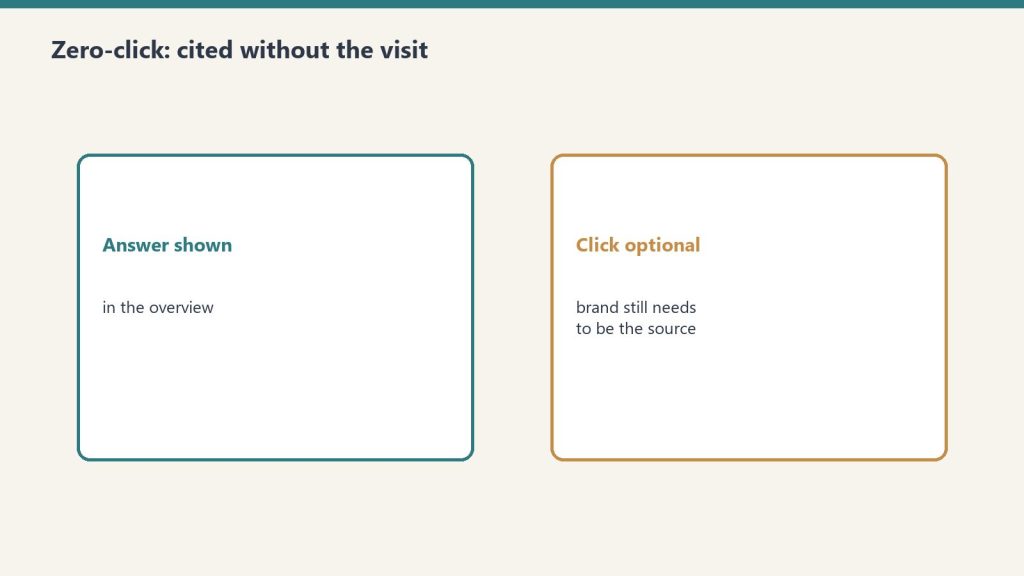
Short answer: yes — but not in the way most people assume. Outbound links to authoritative sources do not directly boost your PageRank. What they do is signal something more valuable in 2026: that your content is trustworthy.
Google’s Search Quality Rater Guidelines — the document that informs how human quality evaluators assess content — emphasize Trustworthiness as the most foundational E-E-A-T dimension. According to those guidelines, trustworthy content is accurate, cites verifiable sources, and is transparent about where claims come from. Citing your sources is one of the most direct ways to demonstrate all three.
How AI Systems Evaluate Citations When Deciding What to Surface

This is where your instinct becomes especially timely. ChatGPT, Perplexity, Google AI Overviews, and Claude all use retrieval-augmented generation (RAG) — they search the web, retrieve candidate content, and then evaluate that content before synthesizing an answer. Part of that evaluation is assessing whether the content’s claims are verifiable.
When a piece of content says “according to Gartner’s March 2026 sales survey, 67% of B2B buyers prefer a rep-free experience, up from 61% in June 2025” — with the source named — the AI system can cross-reference that claim. It has an evidence chain. When content says “most buyers prefer to research independently” with no source, the AI has nothing to verify against. Named citations increase the probability of AI citation because they make the content machine-verifiable, not just human-readable.
Three Specific Benefits of Citing Sources

1. E-E-A-T Trustworthiness Signal
Google’s December 2025 core update brought noticeable ranking volatility. Google’s own core updates documentation is clear that these updates are broad in nature and don’t target specific sites; they’re designed to surface helpful, reliable results. The pattern is consistent: well-sourced content that attributes claims to named, authoritative organizations outperforms unsourced content on equivalent topics — not because Google counts the citations directly, but because sourced content tends to be more accurate, more comprehensive, and more useful, which are the underlying signals Google’s systems measure.
2. AI Citation Probability
97% of AI Overview citations come from pages already ranking in the top 20 organic results. Getting into those rankings requires the traditional SEO fundamentals. But among pages that are already ranking, AI systems then make a second selection: which pages are authoritative enough to cite? Named source references — SAMHSA, ASAM, Gartner, CDC, peer-reviewed studies — are the entity anchors AI systems use to verify that a page represents genuine domain expertise rather than synthesized generic content.
3. Reader Trust and Engagement
Cited content gives readers somewhere to go. A visitor who clicks your outbound citation to a Gartner study is not leaving your site in a negative sense — they’re confirming that you pointed them toward something real. That behavior signals to Google that your content is a useful hub, not a dead end. Time on site, scroll depth, and return visits all benefit from content that treats readers as intelligent adults who want to verify what they read.
The Updated Date: Why It Matters More Than Most People Think
Adding a “Last updated: [date]” timestamp to your WordPress articles is one of the simplest and most underused trust signals available. Here’s why it matters at each layer:
- Google crawl prioritization: Google’s crawlers deprioritize stale content. A page with a recent modification date gets recrawled more frequently, which means ranking changes — up or down — register faster.
- AI freshness evaluation: AI systems that use RAG actively evaluate content freshness before deciding whether to surface it for time-sensitive queries. A 2022 article about insurance rates is a liability in 2026. A 2026 article with a current update date signals that the information is current.
- Reader credibility: A visible “Last updated: April 2026” tells a reader — before they’ve read a word — that this content was verified recently. In fast-moving verticals like healthcare, legal, and insurance, that signal can be the difference between a reader trusting your article or bouncing to find something newer.
- Competitive differentiation: Most WordPress articles are published and forgotten. Adding regular update dates to your highest-traffic content is a low-effort, high-signal way to differentiate from competitors who publish and walk away.
How to Implement This on Your WordPress Site
The practical implementation is straightforward:
- Name every source — When you cite a statistic, name the organization: “According to Gartner,” “per SAMHSA,” “as reported by the National Association of Realtors.” Not just a hyperlink — the name in the text.
- Link to the primary source — Link to the original report, study, or page where possible. If the primary source is paywalled, link to a credible secondary source that cites it directly.
- Add a sources section at the bottom — A simple list of cited sources at the end of each article mirrors academic practice and explicitly signals to AI systems that the content has an evidence chain.
- Use a “Last updated” date prominently — Add it near the byline, visibly formatted. In WordPress, this can be displayed using the
the_modified_date()function or a plugin that shows both published and updated dates. - Refresh on a schedule — High-value posts (top 20% of traffic) should be reviewed and updated at minimum annually. Verticals with changing data — healthcare, legal, insurance, real estate — warrant 6-month review cycles.
- Use DateModified in schema — Your Article JSON-LD should include both
datePublishedanddateModifiedfields. This is the machine-readable signal AI crawlers use to evaluate freshness.
What This Means for Tygart Media Content Going Forward
Every article published on tygartmedia.com from this point forward follows a source citation standard: named organizations for all statistics, primary source links where available, a sources section at the bottom of research-based articles, and a visible “Last updated” date. The SiteBoost vertical pages — law firms, healthcare, restoration, SaaS, real estate, insurance, addiction treatment — will be reviewed on a 6-month cycle and updated with current data.
This isn’t just good practice. It’s proof of concept. The SiteBoost service we offer clients is built around the same principle: the page should demonstrate the method. If we’re asking law firms and healthcare providers to invest in trustworthy, entity-rich, sourced content — our own content needs to meet that standard first.
Related on Tygart Media: track ChatGPT and Perplexity citations · information density · SEO impressions vs social.
Frequently Asked Questions
Does linking to external sources hurt my SEO by sending traffic away?
No. Outbound links to authoritative, relevant sources are a positive trust signal — not a traffic leak. Google’s systems evaluate whether a page is a useful resource, and pages that cite primary sources consistently demonstrate higher accuracy and depth than those that don’t. The behavior of readers who follow an outbound citation and return to your site (or complete an action on your site before leaving) signals quality engagement, not abandonment.
How often should I update old WordPress articles?
At minimum, review your top 20% of traffic-driving posts annually. For verticals with changing data — healthcare (treatment guidelines), legal (regulatory changes), insurance (coverage rules), real estate (market conditions), financial services (rate data) — a 6-month review cycle is appropriate. For evergreen how-to content, annual review is sufficient. The trigger for an update should be: a statistic is more than 12–18 months old, a regulatory reference has changed, or a new primary source is available that strengthens the article’s claims.
Should I cite sources in every article or only data-heavy ones?
Every article that makes a factual claim beyond common knowledge should cite its source. This includes statistics, research findings, regulatory references, and clinical or professional standards. Opinion pieces and personal experience articles don’t require citations — but they should be clearly framed as opinion. The rule of thumb: if you would want a reader to be able to verify a claim independently, cite the source that would let them do so.
Does the “Last updated” date need to be visible to readers, or is schema enough?
Both matter but for different audiences. The visible date builds trust with human readers who evaluate content freshness consciously — especially in fast-moving verticals. The dateModified field in Article JSON-LD schema communicates freshness to AI crawlers and Google’s indexing systems. Implement both: a visible “Last updated: [date]” near the byline, and a dateModified field in your Article schema that matches the actual modification date of the content.
Do citations in content help with AI Overview placement specifically?
Yes, indirectly. 97% of Google AI Overview citations come from pages already ranking in the top 20 organic results, and strong E-E-A-T signals — including source citations — are among the factors that influence those rankings. Among pages that are already ranking, AI systems then evaluate trustworthiness when selecting which to cite in synthesized answers. Named source citations provide the machine-verifiable evidence chain that AI systems use in that secondary evaluation. Well-sourced content consistently earns higher AI citation rates than equivalent content without source attribution.
Sources Referenced in This Article
- Google Search Quality Rater Guidelines — guidelines.raterhub.com
- LLMrefs — “Answer Engine Optimization (AEO): The Complete Guide for 2026” — llmrefs.com
- Crowns ville Media — “Citing Sources for SEO & AI Discovery (2025 Guide)” — crownsvillemedia.com
- BKND Development — “E-E-A-T in 2026: The Content Quality Signals That Actually Matter” — bknddevelopment.com
- Whitehat SEO — “SEO Best Practices 2025–2026” — whitehat-seo.co.uk
- eesel AI — “How to cite sources in a blog: A complete guide” — eesel.ai
- Gartner — 2025 B2B Buying Report (cited via industry sources)