Meta Connect has always been the show where Zuckerberg tells you what the next ten years look like. This year, the message fit in one sentence: the AI doesn’t live in your phone anymore. It lives on your face, your wrist, your keychain — wherever you are.
The keynote ran September 23 from Menlo Park, with the developer stream following on September 24. Here’s everything that matters, with the hardware that backs it up.
The headline: Meta VR Glasses
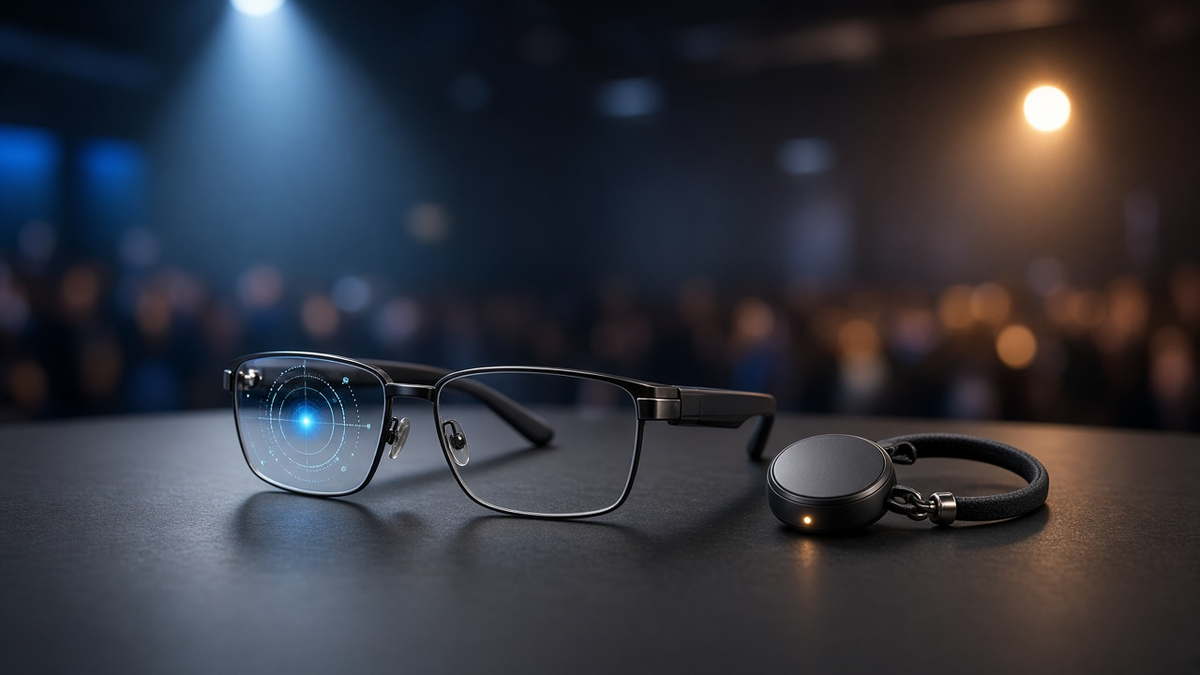
The show opened with the device the rumor mill called Project Phoenix: Meta VR Glasses, an ultralight headset that looks more like glasses than gear. About 100 grams on the face — five times lighter than a Quest 3, by Meta’s own comparison — with a 5K display, full-color passthrough, and a tethered compute puck (Snapdragon Reality Elite) carrying the processor, battery, and storage. Up to three hours of high-res playback. No controllers: you navigate with your eyes and hand gestures. $1,299.99, shipping spring 2027.
No new Quest headset was announced. That absence is the statement: Meta confirmed it is focused on smart glasses as the next-gen computing platform, not headsets.
The glasses lineup goes wide
Meta isn’t betting on one expensive pair. The whole range:
- Ray-Ban Meta Gen 3 — $449, on sale now. Slimmer design, action button, 12MP camera with 3K video, up to nine hours of battery, six mics for call noise reduction. 27 frame-and-lens combos including a limited 90th-anniversary Aviator.
- Ray-Ban Meta Audio — $349, shipping October 13. Meta’s first glasses without a camera: open-ear speakers, calls, music, and AI requests without reaching for your phone. Twelve hours of use, 43 grams.
- Meta Adventurer — Meta’s own-brand budget line, from $249, shipping October 23.
- Meta Ray-Ban Display — the display-in-lens model expands to Canada, the UK, France, Italy, and Germany.
- A hearing-enhancement feature, FDA-cleared, at $149.99 — an accessibility play hiding inside a consumer keynote. It launches in the US later this year, set up at home in minutes with no clinic or prescription, and it’s also available through a Meta One subscription.
Meta says the Ray-Ban, Oakley, and Meta glasses ranges will cross 100 styles by the end of 2026.
“One more thing”: Muse Charm
The closer was pure showmanship. Zuckerberg’s “one more thing” unveiled the Muse Charm — a puck about the size of an Apple Watch, worn on a keychain or in a pocket, with a Tamagotchi-like interactive avatar. It’s the fastest way to talk to Muse without unlocking a phone or putting on glasses: tap the fingerprint sensor, start talking.
His words from the stage:
We packed the whole Muse experience, including the whole real-time voice and avatar stack, into something that fits on a keychain and is always available to talk to. You just go ahead and tap here in the fingerprint sensor in the corner, and you can start talking without having to unlock a phone or open an app. So if you’re not wearing glasses, this is going to be by far the fastest way to talk to your Muse and to show what’s going on around you.
No price yet. Meta is aiming to have it on sale by the holiday season. Worth noting: Bloomberg reported September 22 that Apple has postponed its own AI pendant project — Meta is going all-in on a category its biggest rival just walked away from.
Muse, the agent, is the actual product
The hardware is the delivery mechanism. The product is Muse, Meta’s personal AI agent (launched September 8), now positioned as the center of everything. Connect’s agent news:
- Free for users — though Zuckerberg signaled Meta will eventually take a cut of transactions Muse completes.
- Computer use is coming to Mac: Muse operating your apps, not just chatting at you.
- Muse email addresses are on the way.
- Integrations announced with Walmart, Best Buy, Gap, Sephora, Instacart — plus Box, GitHub, Granola, Notion.
- New personalized voices and a real-time voice/avatar stack, including a digital avatar you can video chat with.
About four minutes into the keynote, Zuckerberg told the room: “We believe Muse will help you make money.” And the business model is showing: 97.6% of Meta’s revenue last quarter was advertising ($59.36B of $60.80B in Q2 2026), and Zuck anticipates a small commission on Muse transactions long-term. The agent that does the shopping takes a cut of the shopping — and Meta isn’t the first to see it. OpenAI has been pushing commerce inside chat on the same track.
The read: AI is becoming ambient
Step back and the strategy is blunt. Meta wants Muse following you through the day — glasses when you’re wearing them, the Charm when you’re not, your computer when you’re working. Every device is another doorway to the same agent. As one recap put it: Meta wants its AI to stay with users throughout the day, and glasses, phones, and small devices each become another way to reach the same AI service.
That’s the “lifestyle agentic” wave the social feeds are buzzing about — not a chatbot you visit, but an always-on companion that’s just there. Google, Apple, and OpenAI are all building toward the same ambient model. Meta just showed the most complete hardware version of it.
The human-first question
The hardware is impressive. The question hanging over all of it — the one people were actually posting about — is the human one: as AI moves onto our faces and keychains and follows us through the day, how do we keep prioritizing human connection and a human-first approach?
The tech answers “how.” Nobody on that stage answered “why it should feel like a friend.” That’s still the open lane — and the one worth watching.
Sources: Meta Connect 2026 opening keynote (Meta Developers, Sep 23); Meta’s official Connect 2026 summary; MacRumors, VR.org, Road to VR, Gadgets360, TechCrunch, Analytics Insight coverage, Sep 23–24, 2026; official keynote.