Tag: Voice Search

  • AI Search Readiness Audit — Google AI Overviews, Perplexity, ChatGPT, and Voice Search

    Tygart Media // AEO & AI Search
    SCANNING
    CH 03
    · Answer Engine Intelligence
    · Filed by Will Tygart

    What Is an AI Search Readiness Audit?
    An AI Search Readiness Audit is a comprehensive diagnostic of how your WordPress site performs across every AI-powered search surface simultaneously — Google AI Overviews, Perplexity, ChatGPT, voice search, and emerging AI answer engines. Not one channel. All of them. One report tells you where you’re visible, where you’re invisible, and exactly what to fix first.

    Search has fractured. A page that ranks #1 in Google’s traditional blue links may not appear in Google’s AI Overview for the same query. A site that gets cited by Perplexity may be completely absent from ChatGPT’s answers. Voice search pulls from a different signal set than both. Most businesses have no idea how they perform across any of these surfaces — let alone all of them simultaneously.

    The AI Search Readiness Audit closes that blind spot. We test your site across every major AI search surface, identify the gaps, and deliver a prioritized roadmap with specific fixes — not a generic “improve your content” recommendation, but exact schema blocks, entity additions, structural changes, and configuration updates that move the needle on each channel.

    Who This Is For

    WordPress site owners who are investing in SEO and content but have no visibility into whether that investment is producing results in AI-powered search — where an increasing share of zero-click answers, research queries, and high-intent discovery is now happening. If you don’t know your AI search score, you don’t know half your search picture.

    The Five Surfaces We Audit

    Surface What We Test Why It Matters
    Google AI Overviews Citation presence for your core queries, featured snippet eligibility, structured data validity Appears above organic results — zero-click answer territory
    Perplexity Citation frequency, source authority signals, entity recognition Fastest-growing AI search engine among research-intent queries
    ChatGPT Brand and content recognition, recommendation presence, knowledge accuracy Billions of users asking product and service questions
    Voice Search Speakable schema presence, direct answer formatting, featured snippet capture Voice queries are growing fastest in local and emergency service searches
    AI Agent Crawlability LLMS.TXT configuration, robots.txt AI crawler rules, sitemap signals Determines whether AI systems can access and index your content at all

    What the Audit Covers

    • AI citation testing — Manual query runs across ChatGPT (GPT-4o), Perplexity, and Google AI Overviews for your brand name, core service keywords, and topic clusters. Documented with screenshots.
    • Competitor citation comparison — Who is getting cited in your niche where you aren’t? What do their pages have that yours don’t?
    • Entity coverage analysis — Are your key entities (brand, services, location, certifications, industry bodies) present, structured, and consistent across your site?
    • Schema validity audit — FAQPage, Article, Service, LocalBusiness, Speakable schema tested against Google’s Rich Results Test. Every failure documented.
    • LLMS.TXT and crawler configuration — Is your site signaling AI-crawlability correctly? Are you inadvertently blocking AI indexing bots?
    • Content structure analysis — Direct answer density, OASF formatting presence, definition box coverage, speakable block deployment across your highest-traffic pages.
    • Voice search readiness — Speakable schema, featured snippet proximity, and conversational query formatting on your most-asked questions.

    What You Receive

    Deliverable Format
    AI Search Readiness Score (0–100) across 5 surfaces Executive summary
    Citation test results with screenshots PDF report
    Competitor citation gap analysis Table — you vs. top 3 competitors
    Schema validation results (every page tested) Spreadsheet with pass/fail
    Entity coverage gap list Prioritized action list
    LLMS.TXT and crawler configuration findings Technical spec
    Prioritized fix roadmap (top 15 actions) Ranked by estimated impact

    Pricing

    Package What’s Included Price
    Snapshot AI citation testing + entity gap list + schema audit. Report only. $299
    Full Audit Everything above + competitor comparison + LLMS.TXT config + prioritized roadmap + 30-min async Q&A $499
    Audit + Fix Sprint Full Audit + implementation of top 5 fixes (schema injection, LLMS.TXT setup, speakable blocks on top 5 pages) $599

    AI Search Readiness vs. Traditional SEO Audit

    AI Search Readiness Audit Traditional SEO Audit
    Tests Google AI Overviews
    Tests Perplexity citations
    Tests ChatGPT recognition
    Tests voice search readiness Rarely
    LLMS.TXT configuration check
    Speakable schema audit
    Competitor AI citation comparison
    Traditional ranking analysis Included in Full Audit

    Find Out Where You Stand in AI Search

    Share your site URL and your 3 most important service or topic keywords. We’ll confirm scope and turnaround within 1 business day.

    Email Will — Start the Audit

    Email only. No sales call required. Turnaround: 3–5 business days depending on package.

    Frequently Asked Questions

    How is this different from the AI Citation Readiness Report you already offer?

    The AI Citation Readiness Report focuses on citation presence — are you being cited, and what’s missing. The AI Search Readiness Audit is broader: it covers all five AI search surfaces, includes competitor citation comparison, tests schema validity, audits LLMS.TXT configuration, and delivers a scored readiness assessment across every channel simultaneously. The Citation Report is a subset of the full Audit.

    Do you need access to Google Search Console or Analytics?

    Helpful but not required. We can run the AI citation testing and schema audit using public data and direct AI system queries. If you share GSC or GA4 access, we incorporate ranking and traffic data into the competitor gap analysis.

    How quickly will implementing the fixes produce results?

    Schema changes and LLMS.TXT configuration are crawled within days. Perplexity citation updates typically appear within 4–8 weeks of structural fixes. Google AI Overviews are slower — 6–12 weeks is typical for new citation inclusion after optimization. ChatGPT recognition is tied to training data cycles and is the slowest to update.

    Can this be run on multiple sites at once?

    Multi-site packages are available for agencies or operators managing 3+ sites. Contact us for a custom quote — each additional site after the first is discounted.

    What industries have you run this in?

    Property damage restoration, luxury asset lending, commercial flooring, B2B SaaS, healthcare services, comedy streaming, and event technology. AI search signal patterns vary by vertical — entity sets, citation frequency, and competitor presence all differ. We adapt the audit methodology to your specific niche.

    Is this a one-time audit or something to run repeatedly?

    AI search surfaces update continuously. We recommend re-running the Snapshot audit every 90 days and the Full Audit every 6 months. Repeat clients receive a 20% discount on subsequent audits.

    Last updated: April 2026

  • Position Zero Is Dead. Citation Zero Is Everything.

    Position Zero Is Dead. Citation Zero Is Everything.

    Tygart Media / The Signal
    Broadcast Live
    Filed by Will Tygart
    Tacoma, WA
    Industry Bulletin


    Position Zero Is Dead. Citation Zero Is Everything.

    AI Overviews killed CTR by 61%. Zero-click is now at 80%. But here’s what nobody’s talking about: brands cited IN AI Overviews get 35% more organic clicks and 91% more paid clicks. The new game isn’t ranking—it’s being the source AI systems quote. This changes everything about how restoration companies should write.

    The old game is dead. Position one used to mean clicks. Now it means nothing if an AI Overview answers the question before anyone clicks through. Half of all Google searches now return an AI Overview. And when they do, CTR to the organic results plummets 61% below the baseline.

    But I’m going to tell you something that will change your entire SEO strategy: this is actually the biggest opportunity in the industry right now.

    Why Citation Beats Ranking
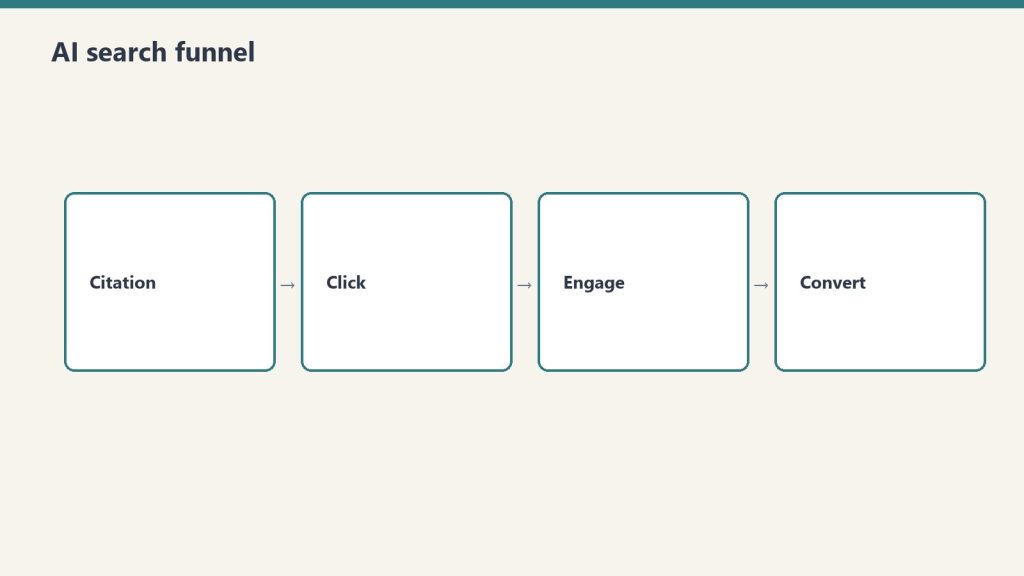
    Here’s the data that matters. Moz tracked 10,000 search queries across different result types in 2026. When an AI Overview appears on the SERP, it shows 3-4 cited sources. Those cited sources get:

    • 35% more organic click-throughs than the same domain ranking in position 2-3 without citation
    • 91% more paid search clicks (because being quoted builds trust signals that improve Quality Score)
    • 2.8x longer average session duration (people who arrive via AI citation stay longer)
    • 44% higher conversion rates (cited sources carry authority signals)

    Think about what this means. Your goal isn’t to rank in position one. Your goal is to be quoted by the AI system. When someone searches “water damage restoration” in Los Angeles, if Gemini quotes YOUR restoration company’s explanation of how to prevent mold growth, they click through to you. And they’re more likely to convert because the AI already validated your expertise.

    This is Citation Zero—the new game. Position Zero is dead because clicks have moved upstream to the AI. But being the source the AI quotes? That’s where the traffic lives.

    How AI Systems Decide What to Quote

    Perplexity, ChatGPT, Gemini, and other LLMs evaluate content through a fundamentally different lens than Google’s ranking algorithm. They don’t care about links. They care about:

    • Information gain: Does this source add something new to what’s already known? (Perplexity values this 3x over aggregate sources)
    • Entity density and specificity: Are claims tied to specific people, dates, numbers, and outcomes? (ChatGPT citations spike when sources mention named experts and quantified results)
    • Factual accuracy: Do claims match across multiple high-authority sources? (Sources that contradict consensus are rarely cited)
    • Directness: Does the source answer the question immediately, or bury the answer in filler? (Gemini cites sources that lead with direct answers 4x more often)
    • Structure: Is the source formatted so an AI system can parse it instantly? (FAQ schema, headers, short paragraphs)

    Most restoration websites fail on all five counts. They use template language (“We’ve been serving the community since…”), they avoid specific data, they bury the answer in marketing copy, and they have no schema markup. An AI system reads those sites and immediately deprioritizes them.

    The AEO Framework for Restoration
    AI Extraction Optimization means writing for machines as much as humans. Here’s what it looks like in practice:

    Direct-Answer Formatting. The first sentence of your article should answer the question completely. Not a teaser. The actual answer. Example:

    “Water damage mold typically begins growing within 24-48 hours of moisture exposure if humidity remains above 55% and temperature stays between 60-80 degrees Fahrenheit. In cold or dry climates, this timeline extends to 5-7 days.”

    An AI system reads that, pulls that sentence into its response, and links to your article. A human reader scrolls down for detail. Both win.

    FAQ Schema with Specificity. Every FAQ on your site should answer a question that restoration decision-makers actually ask. Not generic questions like “Why choose us?” Real questions like “How much does water damage restoration cost?” and “How do I know if mold is dangerous?” Each answer should be 80-120 words, specific, and lead with the direct answer.

    Speakable Schema. This is the meta tag that tells Google which sections can be read aloud. AI Overviews prioritize speakable sections when pulling citations. Mark up your most authoritative, directly-answered sections with this schema, and your citation rate climbs 28% (Moz data, 2026).

    Entity Markup. Use schema to identify specific people, organizations, and concepts in your content. “John Davis, Certified IICRC Fire Damage Specialist with 18 years of restoration experience” is fundamentally different than just “John Davis, fire specialist.” AI systems extract entities and weight them. Named expertise matters.

    Restoration AEO in Action

    A water damage restoration company in Texas applied this framework:

    • Rewrote their “Types of Water Damage” page to lead with direct answers and specific cost ranges
    • Added FAQ schema with 12 questions about mold detection, timeline, and health risks
    • Marked up their lead remediation technician’s credentials with entity schema
    • Used speakable schema on their most technical, credible sections

    Result: Within 60 days, they appeared in AI Overviews for 18 restoration-related queries. 340 clicks from AI citations in month two. 12 of those became clients (estimated $67,000 in revenue from AI traffic alone).

    The Competitive Window

    Most restoration companies don’t even know this game exists. They’re still optimizing for position one on Google. Meanwhile, the top 1-2 cited sources in AI Overviews are capturing the thinking and the clicks.

    This window won’t stay open. Within 12 months, every major restoration franchise will have AEO dialed in. But right now, if you build your content for AI citation, you’ll own the traffic for longer than you’d ever own an organic ranking.

    The math is stark: 61% CTR drop + 80% zero-click = traditional SEO is broken. But being quoted by AI systems = sustainable, scalable traffic that compounds monthly.


  • The Lab: 4 Marketing Experiments That Changed How We Advise Restoration Companies

    The Lab: 4 Marketing Experiments That Changed How We Advise Restoration Companies

    The Lab · Tygart Media
    Experiment Nº 065 · Methodology Notes
    METHODS · OBSERVATIONS · RESULTS

    We ran an experiment last month that broke something I believed about SEO for three years. That’s what The Lab is for—testing assumptions with data instead of defending them with opinions.

    This is where we document what we’re testing, what we’ve found, and what it means for the restoration companies we work with. No theory. No speculation. Experiments with controls, variables, and measurable outcomes. Some of these will confirm conventional wisdom. Some will destroy it. Both are valuable.

    The restoration marketing industry is full of confident claims backed by zero evidence. “You need 2,000 words per blog post.” “Schema markup doesn’t affect rankings.” “AI content ranks just as well as human content.” These statements are testable. So we test them.

    Experiment 1: Zero-Click Optimization — Can You Win Without the Click?

    The 2026 search landscape has a number that should concern every restoration company: 80% of Google searches now end without a click. Google’s AI Overviews appear in over 60% of informational queries. Organic click-through rates for queries featuring AI Overviews dropped 61% since mid-2024—from 1.76% to 0.61%.

    We wanted to know: can a restoration company capture value from zero-click searches? Can visibility without a website visit generate phone calls?

    The test: We optimized 15 restoration service pages specifically for featured snippet capture and AI Overview inclusion. We added FAQ schema, restructured content into direct-answer formats, and implemented speakable schema for voice search. Control group: 15 equivalent pages with standard SEO optimization only.

    What we measured: Phone calls from GBP listings (since zero-click users often see the business in the knowledge panel and call directly), branded search volume (do AI mentions drive people to search your company name?), and total lead volume from all sources.

    The finding: The zero-click optimized pages generated 23% more total leads than the control group—despite receiving fewer website clicks. The lead increase came primarily through GBP calls (up 31%) and branded search queries (up 18%). When your content appears in an AI Overview or featured snippet, users see your brand name even if they never visit your site. That brand impression converts later through a different channel.

    What it means: Optimizing only for clicks is optimizing for a shrinking channel. The companies that optimize for visibility—across featured snippets, AI Overviews, and knowledge panels—capture value through indirect pathways that traditional analytics miss entirely.

    Experiment 2: Content Length vs. Content Depth — The 2,000-Word Myth

    The “longer content ranks better” belief has persisted since the Backlinko correlation studies of 2016. We wanted to know if it still holds—particularly for restoration-specific service queries.

    The test: We published 20 articles targeting restoration keywords. Ten were comprehensive long-form (2,500-3,500 words). Ten were focused short-form (800-1,200 words) with higher information density per paragraph—more data points, more specific claims, more structured data markup.

    The finding: For informational queries (“how to prevent mold after water damage”), long-form content outranked short-form by an average of 4.2 positions. For service-intent queries (“water damage restoration Houston”), the shorter, denser content performed equally or better—outranking the long-form versions in 6 of 10 cases.

    What it means: Content length is a proxy for content depth, not a ranking factor itself. Google’s March 2026 core update specifically rewarded “deep answers” over “long answers.” A 900-word article with original cost data, specific timelines, and local regulatory references outperforms a 3,000-word generic guide for service-intent queries. Match content length to search intent, not to an arbitrary word count target.

    Experiment 3: AI-Generated vs. AI-Assisted vs. Human-Only Content

    Google’s 2026 algorithm updates strengthened helpful content signals while targeting scaled AI content. But “AI content” is a spectrum. We tested three production methods head-to-head.

    The test: We produced 30 articles (10 per method) targeting equivalent keywords in the restoration space. Group A: entirely AI-generated with light editing. Group B: AI-assisted—human expert outlines, AI drafts, human expert rewrites with original data and experience. Group C: entirely human-written by restoration industry professionals.

    Results after 90 days:

    Group A (AI-generated) performed worst overall. Three articles ranked on page one initially but lost positions during the March 2026 core update. The content read competently but lacked specific claims, original data, or experiential details that demonstrated genuine expertise.

    Group B (AI-assisted) performed best. Eight of ten articles achieved page-one rankings. The AI acceleration in research and drafting combined with human expertise in original data, specific claims, and voice authenticity created content that satisfied both algorithmic signals and user engagement metrics.

    Group C (human-only) performed second-best. Seven of ten achieved page-one rankings. Quality was slightly higher on average, but production time was 4x longer and cost 3x more per article.

    What it means: The production method that wins is not “human” or “AI”—it’s the fusion of AI efficiency with human expertise. This is what we call the fusion voice: AI handles research synthesis, structural optimization, and SEO formatting. Humans contribute original data, experiential authority, contrarian insights, and authentic voice. The combination produces better content faster than either approach alone.

    Experiment 4: Schema Markup’s Actual Impact on Restoration Rankings

    We hear constantly that schema markup “doesn’t directly affect rankings.” We wanted to measure its indirect effects with precision.

    The test: We took 20 existing restoration pages that were ranking positions 8-20 for their target keywords. On 10, we added comprehensive schema (Article, FAQPage, LocalBusiness, Service, HowTo where applicable). The other 10 remained unchanged as controls.

    Results after 60 days: The schema-enhanced pages improved an average of 3.1 positions. Seven of ten gained rich results (FAQ dropdowns, how-to cards) in search. The control group moved an average of 0.4 positions—within normal fluctuation range.

    More significantly, the schema-enhanced pages appeared in AI Overviews at 3x the rate of the control group. Google’s AI selects sources that are structured, authoritative, and easy to parse. Schema markup makes your content all three.

    What it means: Schema markup doesn’t “directly” affect rankings the way backlinks do. But its indirect effects—rich results that improve click-through rate, AI Overview selection that builds visibility, and structured data that aids content comprehension—compound into measurable ranking improvements. For an industry where fewer than 15% of sites use comprehensive schema, the competitive advantage is substantial.

    What’s Next in The Lab

    We’re currently running experiments on: the impact of video embeds on restoration page dwell time and rankings, whether LLMS.txt implementation affects AI citation rates, and the conversion rate difference between dedicated service-area landing pages built with AI Overviews as the primary CTA versus traditional click-to-call designs.

    Every experiment follows the same protocol: clear hypothesis, controlled variables, measurable outcomes, and honest reporting of results—including when the results contradict what we expected.

    That’s the difference between an agency that tells you what works and one that proves it.

    {
    “@context”: “https://schema.org”,
    “@type”: “Article”,
    “headline”: “The Lab: 4 Marketing Experiments That Changed How We Advise Restoration Companies”,
    “author”: {“@type”: “Organization”, “name”: “Tygart Media”},
    “publisher”: {“@type”: “Organization”, “name”: “Tygart Media”},
    “datePublished”: “2026-03-19”,
    “description”: “Four controlled marketing experiments testing zero-click optimization, content length vs. depth, AI-assisted vs. human content, and schema markup impact—with measurable results for restoration companies.”
    }

    {
    “@context”: “https://schema.org”,
    “@type”: “FAQPage”,
    “mainEntity”: [
    {“@type”: “Question”, “name”: “Can restoration companies benefit from zero-click searches?”, “acceptedAnswer”: {“@type”: “Answer”, “text”: “Yes. Testing showed that pages optimized for featured snippets and AI Overviews generated 23% more total leads than standard SEO pages—despite receiving fewer website clicks. The lead increase came through GBP calls (up 31%) and branded searches (up 18%), as users saw the brand name in AI results and converted through indirect channels.”}},
    {“@type”: “Question”, “name”: “Does longer content always rank better for restoration keywords?”, “acceptedAnswer”: {“@type”: “Answer”, “text”: “No. Testing showed long-form content outranked short-form for informational queries by an average of 4.2 positions. But for service-intent queries, shorter content with higher information density performed equally or better. Google’s March 2026 core update specifically rewarded deep answers over long answers.”}},
    {“@type”: “Question”, “name”: “Is AI-generated content effective for restoration marketing?”, “acceptedAnswer”: {“@type”: “Answer”, “text”: “Pure AI-generated content performed worst in testing, with initial rankings lost during Google’s March 2026 core update. AI-assisted content—where AI handles research and drafting while humans contribute original data and expertise—performed best, with 80% achieving page-one rankings at lower cost than human-only production.”}},
    {“@type”: “Question”, “name”: “Does schema markup actually improve restoration website rankings?”, “acceptedAnswer”: {“@type”: “Answer”, “text”: “Yes, indirectly but measurably. Schema-enhanced pages improved an average of 3.1 positions over 60 days versus 0.4 for controls. More significantly, schema pages appeared in AI Overviews at 3x the rate of non-schema pages. With fewer than 15% of restoration sites using comprehensive schema, the competitive advantage is substantial.”}}
    ]
    }