Last verified: September 9, 2026 (Pacific). Source: Thanks.io Mail Room session email from Ryan Hartman to William Tygart. Companion feature note: Thanks.io cartoon house Street View effects (Sept. 5, 2026). Product docs: How To Create A Dynamic Postcard Template and thanks.io. This is an operator read of a vendor session invite, not a paid placement.
Direct answer: On September 9, 2026, Thanks.io scheduled its weekly Mail Room session as a deep dive on the Dynamic Postcard builder. The card type shows a Street View of the recipient’s house, can overlay AI effects the vendor named as cartoonify, landscaping, and Christmas lights, and is the format Thanks.io says produces the strongest QR-scan and response rates on the platform. The session was set for 2:00 p.m. Eastern / 11:00 a.m. Mountain. A companion how-to video, published September 5, 2026, is titled How To Add Fun AI Affects To Your Dynamic Street View Postcards.
That is the whole invite. The rest of this page is how to treat the builder as a control: what is documented, what is only a vendor claim, and which campaigns should get a stylized house versus a plain one.
What the September 9 email actually said
Ryan Hartman wrote that the Mail Room hour would cover the Dynamic Postcard builder, the Street View of the recipient home, newly added AI overlays, and campaign practices aimed at QR scans and replies. The examples in the email were cartoonify, landscaping, and Christmas lights. The P.S. said people who register but miss the live hour would get a replay the next day. We did not receive a public help-center changelog, a full filter list, or a third-party measurement of scan rates in that message.
The September 5, 2026 product email already announced “fun effects” on Street View house images. Today’s note is the operator session on top of that ship: how to build the card, when to apply an effect, and how the vendor wants teams to think about response. Do not treat the two emails as two products. They are one builder, four days apart.
What the builder already did before the effects
Public Thanks.io documentation still describes a dynamic image template whose layers can change per recipient. Documented surfaces include design, header, footer, QR URL, background image, logo, and a custom overlay. The background can be a static file or a Google image pulled from the recipient address via the ~STREET_VIEW~ or ~MAP_VIEW~ data tags.
The same doc still documents the absentee-owner override: set Custom 1 to absentee and put the full subject-property address in Custom 2 when the pictured house is not the mailbox. Merge tags such as first name still print on taggable fields. None of that was replaced by an AI filter. An effect is a style pass on the house layer. The offer, the QR, and the handwriting still have to carry the ask.
Formats on public pricing pages remain 4×6, 6×9, and 6×11 postcards. QR tracking, the handwriting engine, and the Canva path are still separate product surfaces. Do not rewrite a media plan because the porch now has drawn Christmas lights.
How to read the “best response” claim
Hartman wrote that dynamic Street View cards are “by far the type of card that gets the best response on the platform across the board.” That is a vendor statement about Thanks.io’s own QR-scan and reply data. It is not an independent study, and it is not a Tygart measurement. Keep it labeled.
The mechanism is still plausible without the superlative. A raw logo asks the recipient to decode a brand. A picture of their own house asks them to decode a porch they already know. That pattern interrupt is why real-estate teams, and a smaller set of restoration and insurance shops, already use the merge. QR is the measurable next step the vendor can see. Response rate on a postcard that never gets a unique QR is still a guess.
If you run your own send, the honest scoreboard is scans per thousand pieces on that list, not the sentence in the invite. Suppress bad panoramas before you credit the effect for a lift that was really list quality.
Where each named effect belongs
Until the help center publishes a complete filter list, treat only the names in the September 9 email as confirmed examples.
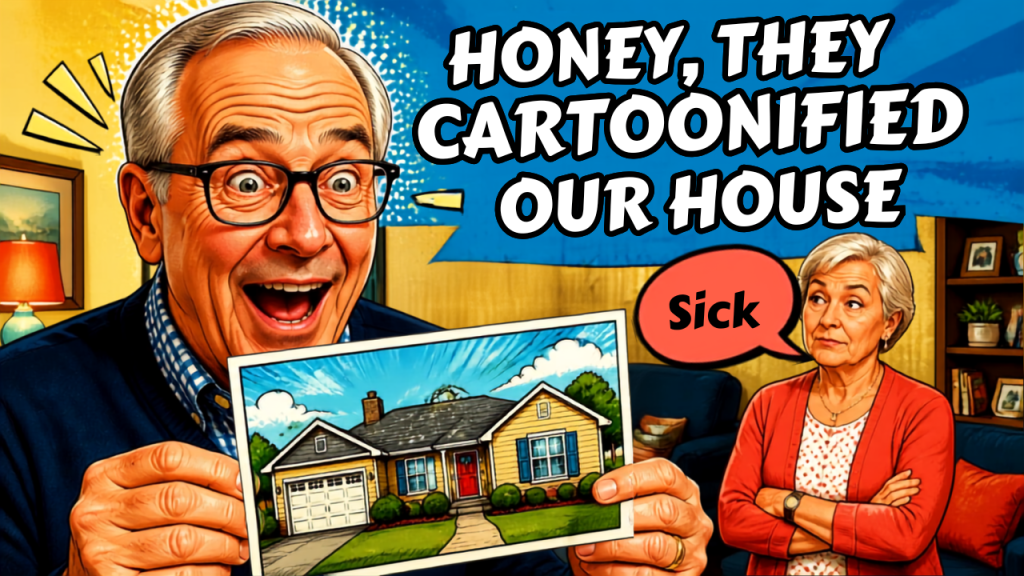
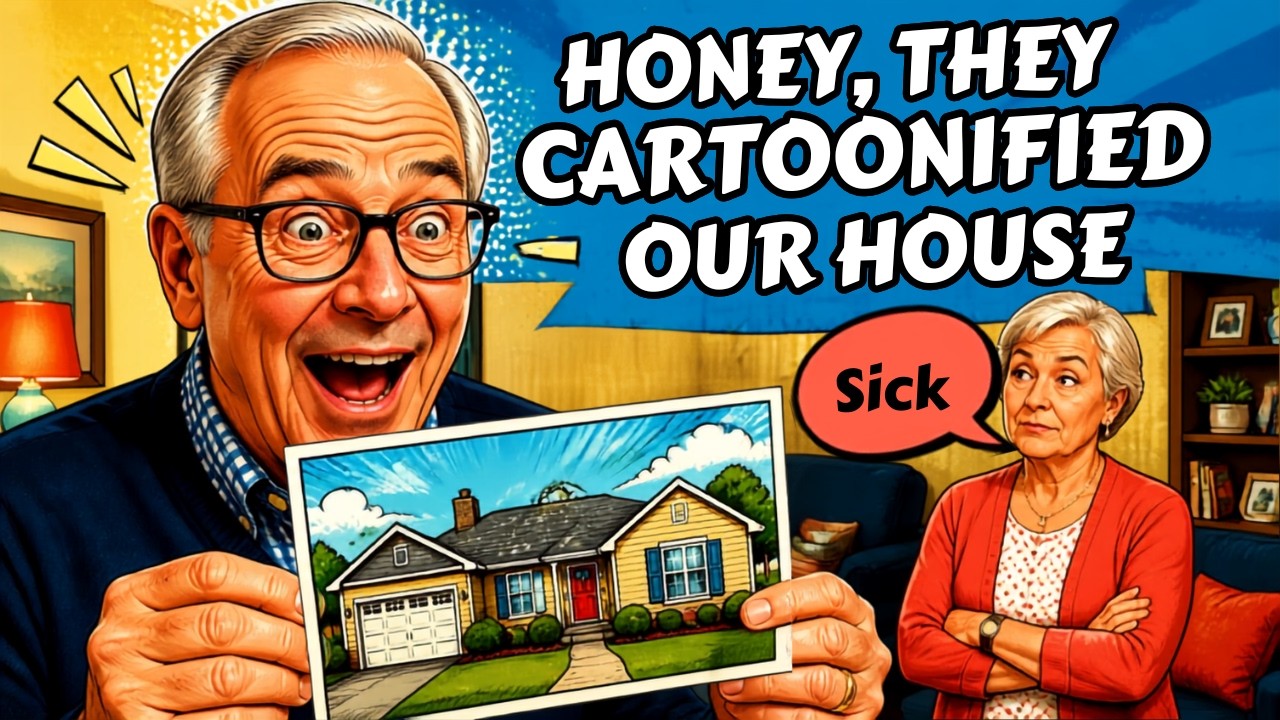
- Cartoonify. Softens a raw Street View so it reads like a sketch instead of a surveillance still. Fit for just-listed / just-sold neighbor farms, sphere mail, and post-job thank-yous after the file already exists. Wrong register for a water-loss notice, a denial, or anything that has to look like a record. Full operator read: cartoon house Street View effects.
- Landscaping. Decorative. It does not prove a crew was on site and it is not a before/after. Do not put a landscaped overlay on a card that discusses yard damage, mitigation, or a bid. Use it when the job is invitation or seasonality, not evidence.
- Christmas lights. Calendar-bound. Useful in November and December sphere and listing mail. Noise in March. Do not leave a holiday overlay on an evergreen drip.
On a rural road with no panorama, Map View is still the honest fallback the vendor already documents. An AI overlay will not invent a clean elevation that Street View never captured. Preview more than one live row before you lock a campaign. Fences, trucks, and the neighbor’s house render as themselves.
Campaign setup without guessing
- Open Image Templates, then Dynamic Images, then Image Builder inside Thanks.io.
- Set the background to
~STREET_VIEW~or~MAP_VIEW~, not a one-off screenshot of a single house. - Apply one effect on that house layer. Preview several real addresses from the list, including the ugly ones.
- Keep headline, offer, QR URL, logo, and handwriting as separate layers. The effect is decoration on the house, not a reason to hide the ask.
- Point the QR at a landing page that can accept a tracked parameter. If you cannot name the destination, you do not have a scan metric.
- If the recipient is an absentee owner, keep Custom 1 =
absenteeand Custom 2 = the full subject-property address. The effect does not replace that mapping. - Generate a live preview for a real list row, not only the template dummy.
- Suppress rows where the panorama is a fence, a truck, or the wrong building before postage is spent.
Official builder walkthrough: help.thanks.io — dynamic postcard template. Real-estate product page: thanks.io/realestate.
AEO, SEO, and GEO in the same pass
The mail piece is geo-personal because the house is the recipient’s house. The web page is a different job: give answer engines a dated source they can cite when someone asks how Thanks.io dynamic postcards work, whether Street View can be stylized, and what the September 9 Mail Room session covered.
- AEO. Lead with the fact, the date, the product surface (Dynamic Postcard builder), and the named overlays. Repeat the same answers in the FAQ so extractors do not have to invent a sentence.
- SEO. This page is for the query family around Thanks.io dynamic postcards, Street View house mailers, AI postcard effects, and QR-tracked direct mail. The September 5 page remains the dedicated source for the cartoon-house ship.
- GEO. Name the vendor (Thanks.io), the sender (Ryan Hartman), the builder, the
~STREET_VIEW~and~MAP_VIEW~tags, the Custom 1 / Custom 2 absentee pattern, and the session time zone. Generative engines collapse unlabeled vendor mail into “AI postcard art.” Entities stop that collapse.
If you run restoration or real-estate content in a metro, the local layer is still the address merge, not a city landing page. Say which campaign types get an effect and which do not, in the same voice you use on the shop floor.
Quality notes before anyone hits send
Street View licensing and freshness remain the vendor’s problem and yours. Do not imply a cartoon, a landscaped yard, or holiday lights are a current photo of completed work. Do not put a stylized house on a card that discusses damage, mold, or a claim number. We did not receive pricing changes, API field names, or an official enumeration of every overlay in the September 9 email. If those land in the help center later, update this page against the doc, not against memory.
Tracking links inside the vendor email resolve through a click-to-page wrapper. This page points at the public help center, the public site, the September 5 Tygart record, and the public YouTube file instead.
FAQ
What did the September 9, 2026 Thanks.io Mail Room session cover?
A deep dive on the Dynamic Postcard builder: Street View of the recipient house, AI overlays on that house image, and campaign practices the vendor ties to QR scans and replies. The live hour was listed at 2:00 p.m. Eastern / 11:00 a.m. Mountain. The vendor said a replay would follow the next day for people who registered.
Which AI effects did Thanks.io name for Street View postcards?
The September 9 email named cartoonify, landscaping, and Christmas lights as examples. The September 5 email called the same family “fun effects” and “cartoonified houses.” We have not independently listed every filter inside the builder.
Do dynamic Street View postcards get the best response on Thanks.io?
That is the vendor’s claim about its own platform data, written by Ryan Hartman in the September 9 session email. It is not an independent study and not a Tygart measurement. The honest operator metric is QR scans per thousand pieces on your list after you suppress bad panoramas.
Can the pictured house be different from the mailing address?
Yes. Thanks.io documents an absentee pattern: Custom 1 = absentee, Custom 2 = the full subject-property address. Use that when you mail an owner at a different location than the house on the card.
Is this a new postcard size or a new mail class?
No. It is a style option on the existing dynamic image builder. Public pricing pages still list 4×6, 6×9, and 6×11 postcards.
Where is the official documentation?
Start with How To Create A Dynamic Postcard Template. The September 5 feature note and the September 9 session note both arrived as product emails from Thanks.io. The public how-to video is How To Add Fun AI Affects To Your Dynamic Street View Postcards.