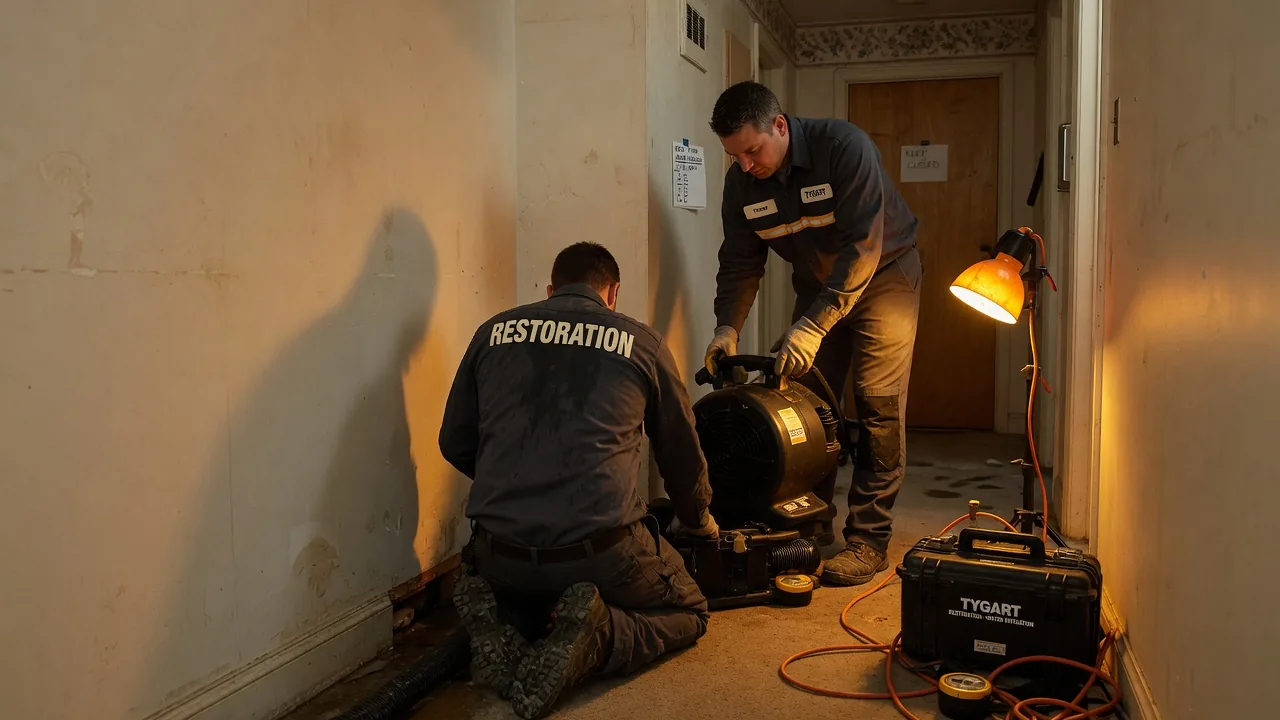
Tag: Staff Training

Articles about using AI and technology for staff training and professional development.

  • Restoration Crew Onboarding & Training Tracker

    Restoration Crew Onboarding & Training Tracker

    Give every new tech a structured path from day one — and never lose track of who is certified.

    Who This Is For

    Built for restoration owners who are growing their crew but onboarding is chaotic, certifications are tracked in someone’s head, and no one is sure who is cleared to run what equipment.

    The Problem

    Restoration technician turnover is real. When you hire someone new, the first 90 days determine whether they stay. Chaotic onboarding — no clear expectations, no structured training, no visibility into their progress — accelerates the exit. Meanwhile, certification lapses create liability. Knowing who holds WRT, who is overdue for renewal, and who is cleared to operate specific equipment should not require asking around.

    What You Get

    • New hire checklist: day 1, week 1, and month 1 milestones with owner sign-off
    • Certification tracker: WRT, ASD, FSRT, AMRT, CCT, and any custom certs you add
    • IICRC course progress log: completion dates and renewal reminders built in
    • Training module library: add your own procedures, videos, and field guides
    • Equipment sign-off tracker: who is cleared to operate what, with sign-off date
    • Performance notes log for structured 30/60/90 day reviews

    Restoration Crew Onboarding & Training Tracker

    $19

    Delivered to your inbox within 24 hours — no shipping, no waiting

    Buy Now →

    Secure checkout via Square — all major cards accepted

    Frequently Asked Questions

    How is this delivered?

    Within 24 hours of purchase via email from will@tygartmedia.com. You will receive a download link for the ZIP file and/or Notion duplicate link immediately.

    Do I need any special software?

    A free Notion account is required. No other software needed.

    Can I customize this for my specific business?

    Yes — that is the point. Everything is built to be edited. Swap in your company name, add your specific workflows, remove anything that does not apply. It is a starting point, not a locked template.

    Is there a refund policy?

    Because this is a digital product, all sales are final. If you have a problem with your purchase, email will@tygartmedia.com and we will sort it out.

  • Building a Restoration Crew That Stays: Retention at the Field Level

    Building a Restoration Crew That Stays: Retention at the Field Level

    This is the second article in the Crew & Subcontractor Systems cluster under The Restoration Operator’s Playbook. It builds on the labor crisis article.

    Field retention is its own discipline

    The retention conversation in restoration usually focuses on senior operators — project managers, estimators, supervisors. The retention article in the Senior Talent cluster of this playbook addressed those conversations in depth. The field-level retention conversation is different in important ways and deserves its own article.

    Field retention — keeping mitigation techs, rebuild crew members, helpers, and other line-level workers in the company across years rather than months — is its own discipline with its own dynamics, its own failure modes, and its own practices that produce results. Owners who apply senior-operator retention thinking to field retention will get partial results because some of the dynamics overlap. Owners who recognize the differences and address field retention on its own terms will get materially better results.

    This article is about what makes field retention different, what the practices that produce it actually look like, and why the companies that have built strong field retention have done it through a specific combination of investments that owners can replicate.

    What field workers are actually evaluating

    The field worker who is deciding whether to stay at a restoration company across years is evaluating a different set of factors than the senior operator who is deciding the same question.

    The first factor is the daily working experience. The field worker spends most of their working time in physical conditions that vary by job — different homes, different damage types, different weather, different customers, different teammates. The aggregate experience of the daily work is the largest determinant of whether the worker is satisfied with the job. A worker whose daily experience is consistently respectful, well-organized, and fairly paced will tolerate occasional bad days. A worker whose daily experience is consistently chaotic, disrespectful, or unfairly paced will leave even when other factors are favorable.

    The second factor is the relationship with the immediate supervisor. The field worker’s supervisor is the person who has the largest direct influence on the worker’s daily experience. A supervisor who treats the worker with respect, communicates clearly, manages the schedule fairly, and addresses problems honestly produces a working relationship that the worker values. A supervisor who is inconsistent, disrespectful, or who plays favorites produces a working relationship that the worker eventually exits, regardless of company-level conditions.

    The third factor is the relationship with peers. The field worker spends meaningful time with the same crew members across many jobs. The crew dynamics matter enormously. A crew that supports each other, communicates well, and handles the inevitable frictions professionally is a crew the worker wants to be part of. A crew that has unresolved conflicts, persistent personality issues, or a culture that the worker does not want to be associated with is a crew the worker will leave.

    The fourth factor is the predictability and fairness of the schedule. Field workers usually have lives outside of work — families, second jobs, school, hobbies — that depend on knowing when they will be working. Schedules that are predictable, communicated in advance, and managed fairly when changes are necessary respect the worker’s life. Schedules that are chaotic, last-minute, or that consistently put the same workers on the worst shifts disrespect the worker’s life and produce attrition.

    The fifth factor is whether the work feels meaningful. Restoration work has a meaningful dimension that some companies bring out and others do not. The worker is helping a homeowner during a difficult time. The worker is contributing to making something whole again. The worker is part of a crew producing something visible and durable. Companies that make this dimension visible to the field worker — through how the work is talked about, how the worker’s contribution is recognized, how customer outcomes are shared back to the team — produce field workers who feel their work matters. Companies that treat the work as transactional production produce field workers who feel like production capacity.

    The sixth factor is the path forward. The field worker who can see a path from where they are to a more senior role, with associated growth in compensation and responsibility, has a reason to stay and develop. The field worker who cannot see a path tends to view the current job as a stepping stone to something else and to leave when the stepping-stone purpose is fulfilled.

    Each of these factors operates differently than the factors that drive senior operator retention. The compensation comparison matters but is rarely the dominant factor. The career path matters but is differently shaped than the senior-operator path. The relationship with leadership matters but is mediated through the supervisor rather than experienced directly with the owner. Owners who design field retention programs around senior-operator logic miss most of what actually matters at the field level.

    What the practices that produce field retention look like

    The companies that have built strong field retention have invested in specific practices that address the factors above directly.

    The first practice is supervisor selection and training. The supervisor is the most important single variable in field retention. Companies with strong field retention have invested heavily in choosing supervisors well — selecting for the interpersonal skills and judgment that produce strong working relationships, not just for the technical competence that produces good work. They have also invested in training supervisors in the specific people-management skills that the role requires, which are often skills that the supervisor did not develop on their way up through the field. The investment in supervisors is one of the highest-leverage investments a company can make in field retention.

    The second practice is schedule discipline. Field schedules are managed with respect for workers’ lives. Schedules are communicated in advance — usually at least one week, sometimes two. Last-minute changes are handled fairly, with the same workers not always being the ones asked to absorb the disruption. Workers’ personal commitments are accommodated when possible. The schedule discipline does not require that the company become inflexible. It requires that the flexibility be applied fairly and that workers feel respected by how the schedule is managed.

    The third practice is consistent and respectful daily operations. Trucks are stocked properly. Equipment is in good working order. Job briefings are clear. Communication during the day is professional. Workers are treated as competent adults who do not need to be micromanaged but who do need to be informed. The aggregate of these small operational details produces a daily working experience that workers value or do not value, and the value compounds across years into retention or attrition.

    The fourth practice is recognition that lands. Workers whose good work is recognized — by name, in front of the team or in a way that the worker values — feel seen. Recognition does not have to be elaborate. It does have to be specific and authentic. Generic praise that feels like a manager going through the motions does not land. Specific recognition of a particular thing the worker did well, communicated in a way that the worker experiences as genuine, lands.

    The fifth practice is honest conversations about pay. Field workers know what they are worth in the local labor market. Companies that pay competitively and that talk about pay openly retain workers. Companies that underpay and that avoid pay conversations lose workers. The conversations do not have to be complicated. They have to happen. Annual reviews that include explicit pay discussions, with reference to market data and to the worker’s specific contribution, produce different retention outcomes than annual reviews that do not address pay directly.

    The sixth practice is visible career paths. Companies with strong field retention have explicit paths from entry-level field roles to more senior field roles, from senior field roles to supervisor or lead positions, and from supervisor positions into roles that intersect with the senior team. The paths are documented. The criteria for moving along them are clear. Workers can see the next step from where they are. The visibility of the path is what allows the worker to invest in their development at the company rather than viewing the job as transitional.

    The seventh practice is investment in the worker’s professional development. Cross-training across job types. Certification support. Skill-building opportunities. Tuition assistance. Each of these investments signals to the worker that the company cares about their long-term development, not just about their current production. Workers who feel invested in tend to invest back, in the form of years of contribution that the investment is otherwise unavailable to capture.

    The eighth practice is benefit structures that meet contemporary expectations. Health insurance that is actually usable. Retirement plans with company matching. Paid time off that workers can actually take. Family leave when life events warrant it. The benefits do not have to be lavish. They have to be real, and they have to communicate that the company treats its workers as people whose lives extend beyond the work.

    The supervisor question is everything

    Among the practices listed above, the supervisor question deserves additional emphasis because it is the single highest-leverage variable in field retention.

    A great supervisor can produce strong retention even in a company with otherwise mediocre field practices. A poor supervisor can destroy retention even in a company with otherwise excellent field practices. The variance produced by supervisor quality is larger than the variance produced by any other single variable in field retention.

    This means that supervisor selection deserves more rigorous attention than most companies give it. The default in restoration is to promote the technically strongest field worker into the supervisor role. This default produces supervisors who can do the work but who often cannot lead the people doing the work. The technical excellence and the leadership capability are different skills, and the second is rarer than the first.

    The companies that have figured this out have developed distinct evaluation criteria for supervisor candidates that include the people-management dimensions explicitly. They look for candidates who communicate well, who handle conflict constructively, who have the judgment to balance competing demands fairly, and who genuinely respect the workers they will be supervising. Technical competence is necessary but is treated as a baseline rather than as the primary criterion.

    These companies have also invested in training new supervisors in the specific people-management skills the role requires. Conflict resolution. Constructive feedback. Schedule management. Difficult conversations. Recognition. The training is not a one-time event. It is an ongoing investment in the development of supervisors throughout their tenure in the role.

    The companies have also developed mechanisms for surfacing supervisor problems early. Anonymous worker feedback channels. Regular supervisor reviews that include input from the workers being supervised. Senior leadership engagement with field workers that creates opportunities for honest feedback about supervisor quality. The mechanisms allow the company to address supervisor problems before the problems produce widespread attrition.

    The companies have also been willing to remove supervisors who are not working out, even when those supervisors are technically competent. The cost of keeping a poor supervisor in place — measured in worker attrition, customer satisfaction problems, and team morale — is higher than the cost of making a difficult personnel decision. The companies that understand this make the decisions. The companies that do not pay the cost in retention.

    The economics of field retention

    The investments described in this article cost money. The economic case for them is similar to the case made in the previous article about labor adaptation more broadly.

    The cost of replacing a field worker who leaves is meaningful. Recruiting time. Onboarding time. Productivity ramp-up time. The cost of mistakes during the ramp-up period. The cost of the supervisor’s attention during the ramp-up. Across all of these, the fully loaded cost of replacing a field worker is typically several months of that worker’s compensation, depending on the role and the company’s training infrastructure.

    The investments that improve retention reduce the frequency of these replacement costs. A company with twenty percent annual field turnover has very different economics than a company with eighty percent annual field turnover, even when both companies are paying similar wages. The lower-turnover company is replacing one in five workers per year and absorbing the cost five times. The higher-turnover company is replacing four in five workers per year and absorbing the cost twenty times. The difference funds significant investment in retention practices and still leaves the lower-turnover company with better economics.

    The investments also improve the productivity of the workers who stay. Experienced workers are more productive than new workers. Crews that have worked together for years are more productive than crews that are constantly being reformed. The productivity gain from retention is not large per worker per day, but compounded across thousands of crew-days per year, it is meaningful.

    The investments also improve quality. Experienced workers make fewer mistakes than new workers. Stable crews produce more consistent work than rotating crews. The quality benefit translates into customer satisfaction, into carrier program standing, into referral flow, and into all of the second-order effects that flow from quality across the rest of the company’s operations.

    The honest economic comparison includes all of these factors, and when included, the case for investing in field retention is clear. The companies that make the investments produce stronger economics than the companies that do not, even after accounting for the cost of the investments themselves.

    What this means for owners

    If you run a restoration company and your field retention is below where you want it, the practical implication of this article is that field retention is a discipline that can be improved deliberately and that the improvement is worth the investment.

    The starting point is to assess where the company actually stands on the practices described above. Are the supervisors selected and trained for the people-management dimensions of the role? Is the schedule managed with respect for workers’ lives? Are the daily operations consistent and respectful? Is recognition specific and authentic? Are the pay conversations honest? Are the career paths visible? Are the benefits competitive and usable?

    The honest assessment will reveal the practices where the company has the most room to improve. The investment in those practices over the following twelve to twenty-four months will produce measurable improvement in retention metrics and in the second-order operational effects that flow from retention.

    The medium-term work is to build the supervisor selection and development discipline that holds field retention together. This is the highest-leverage investment available, and it requires sustained owner attention because the natural defaults in supervisor selection produce mediocre outcomes that the company has to consciously override.

    The long-term result is a field workforce that is stable, productive, and engaged in ways that the chronically high-turnover companies cannot match. The companies that build this kind of workforce have a structural operational advantage that compounds across years. The owners who recognize this and invest in it will, in five years, be operating a company that the chronically high-turnover competitors cannot easily replicate.

    Next in this cluster: the scheduling problem is an operating system problem — why scheduling is harder than it looks, what the best companies do differently, and how scheduling discipline interacts with the other operating system disciplines this playbook describes.

    Related: How Claude Cowork Can Train Every Role on a Restoration Team — estimators, PMs, admins, technicians, and sales managers each learn different project management skills.

  • The Restoration Labor Crisis Is Real and the Companies Adapting to It Look Different

    The Restoration Labor Crisis Is Real and the Companies Adapting to It Look Different

    This is the first article in the Crew & Subcontractor Systems cluster under The Restoration Operator’s Playbook. The previous clusters describe operational discipline, AI deployment, senior talent strategy, the end-in-mind decision frame, and the carrier relationship. This cluster goes deep on the labor execution layer — the crews and subs whose work, in the end, is what the homeowner experiences.

    The labor problem is not a temporary cycle

    For most of the restoration industry’s history, the labor question was straightforward. There were enough people who wanted the work, the work could be learned on the job, and the companies that paid fairly and treated their crews reasonably could maintain the staffing they needed without much strategic effort. Crews came and went, but the underlying labor pool was deep enough that turnover was an operational annoyance rather than a strategic threat.

    That structural condition has changed. The shift has been gradual enough that owners can sometimes still talk themselves into believing it is a temporary cycle that will revert. The honest assessment is that it is not. The labor pool that restoration has historically drawn from has shrunk and is continuing to shrink for reasons that are demographic, cultural, and competitive. The companies operating in 2026 are operating in a labor environment that is structurally different from the one they were operating in five years ago, and that environment will continue to evolve in directions that favor the companies that adapt and disadvantage the ones that do not.

    This article is about what has actually changed in the restoration labor landscape, what the changes mean for how a company has to operate, and why the companies that are adapting deliberately look measurably different from the ones that are still operating from the old assumptions.

    What has actually changed

    Several specific shifts in the restoration labor environment have aggregated into the structural change that operators are now feeling.

    The first shift is generational. The cohort of workers entering trade work today is significantly smaller than the cohort that is exiting through retirement, in absolute numbers and as a share of the working-age population. This shift is well-documented across all skilled trades, and restoration is not insulated from it. The total pool of people who are available for, qualified for, and interested in restoration work is structurally smaller than it was even five years ago.

    The second shift is competitive. The pool of available trade workers is being competed for more aggressively by adjacent industries — new construction, commercial construction, manufacturing, logistics, energy work — that have historically not pulled as heavily from the trade labor pool as they are now. Each of these industries has gotten more sophisticated about recruiting, more willing to pay premiums for reliable workers, and more flexible about how they structure work. Restoration companies that compete with these industries for labor are competing against more capable competitors than they used to.

    The third shift is cultural. The cultural status of trade work in the United States has shifted in ways that are complicated. On one hand, awareness of the financial viability and dignity of trade careers has improved over the last decade and continues to improve. On the other hand, the social pathways that traditionally directed young people into trade work — family connections, vocational training programs, military veterans entering civilian work — have weakened or evolved in ways that produce fewer entrants per year than they used to.

    The fourth shift is in worker expectations. The workers who are entering or remaining in trade work today have higher expectations about working conditions, schedule flexibility, communication, professional development, and culture than the workers who occupied the same roles a decade ago. This is partly generational and partly the result of broader cultural shifts in workplace norms. Restoration companies that operate the way they did ten years ago are a less attractive employer to the current labor pool than they were to the labor pool of a decade ago.

    The fifth shift is in workforce stability. Workers move between jobs more frequently than they used to, across the entire economy. Restoration is not exempt. The expectation that a good worker will stay for a decade, which was reasonable in 2010, is no longer reasonable in 2026. Companies have to either accept higher turnover and design around it or work harder than they used to at retention, which is the subject of the next article in this cluster.

    Each of these shifts is real and is continuing. None of them is reversing. The companies that operate as if the labor environment were the labor environment of 2015 are operating against conditions that no longer exist.

    What the adapting companies look like

    The companies that are adapting deliberately to the new labor environment look different from the companies that are not, in ways that are visible to anyone who knows what to look for.

    The adapting companies have invested in compensation that reflects the current labor market rather than the historical one. This does not always mean dramatically higher base pay. It often means more thoughtfully structured total compensation — better benefits, more predictable schedules, performance-based pay structures, retention bonuses, opportunities for advancement that translate into income growth over time. The point is that the compensation package is competitive against the alternatives the worker actually has, not against the historical norms of the industry.

    The adapting companies have invested in working conditions that match contemporary expectations. Safety equipment that is current and well-maintained. Vehicles that are reliable and properly stocked. Schedules that respect the worker’s life outside of work. Communication systems that keep the worker informed about what is coming. None of these investments is dramatic individually. Together they produce a working environment that the contemporary labor pool experiences as professional rather than tolerable.

    The adapting companies have invested in training that takes new workers from green to competent in less time than the industry default. Documented standards. Structured onboarding. Senior operators whose explicit role includes training new hires. Scenario-based skill development. The training infrastructure is not optional in a labor environment where the company cannot afford to lose new hires to competitors during a long ramp-up period.

    The adapting companies have invested in operational systems that allow each worker to be more productive than workers in less-systematized companies. The documented standards described in the prep standard article. The AI-augmented documentation described in the AI cluster. The integrated workflows that reduce the routine cognitive load on the field crew. These investments mean that each worker can do more with the same effort, which improves the company’s productivity, which allows the company to pay competitively without compromising margin.

    The adapting companies have invested in cultural environments that contemporary workers want to work in. Respect for the worker as a person. Honest communication about company direction. Recognition for good work. Opportunities for input. The cultural environment is not soft. It is part of the value proposition the company offers in exchange for the worker choosing this company over the alternatives.

    None of these investments is exotic. All of them require the owner to recognize that the labor environment has changed and that the company has to change with it. Owners who recognize the shift and invest deliberately produce companies that can staff and grow. Owners who do not produce companies that perpetually struggle to fill positions and that lose ground to competitors who have adapted.

    What the non-adapting companies look like

    The companies that have not adapted to the new labor environment also look distinct, and the pattern is recognizable.

    The non-adapting company has chronic open positions. There is always a hiring need. The need does not get filled in the timelines the company hopes for. The company eventually fills positions with whoever is available, often at compensation that has crept upward without corresponding investment in the rest of the value proposition.

    The non-adapting company has high turnover. New hires arrive with optimism, encounter the gap between current expectations and the company’s working conditions, and leave within months. The departures consume operational bandwidth and sap morale among the workers who stay. The retention metrics are bad and the leadership talks about them as if they were a temporary problem rather than a structural one.

    The non-adapting company has compromised quality. Crews are stretched, training is rushed, supervision is thin, and the work product reflects the strain. Customer satisfaction drifts downward. Carrier complaints increase. The senior team spends increasing amounts of time on quality recovery instead of on the operational improvements that would prevent the quality problems in the first place.

    The non-adapting company has stalled growth. Even when there is demand for more work, the company cannot take it on because it cannot staff it. Revenue plateaus, then declines as the labor problem feeds back into the customer experience problem and the customer experience problem reduces referral flow.

    The non-adapting company has demoralized leadership. Owners and senior operators spend their time on labor problems instead of on the strategic work that would move the company forward. The cumulative effect on the senior team is exhausting. Senior operators leave, which makes the labor problem worse at every level.

    This pattern is recognizable in the restoration industry today. Many companies are in some stage of it. Most of them describe their situation as a temporary problem with the labor market. The honest assessment is that the labor market is unlikely to revert to a state where the non-adapting company can comfortably staff itself again. The adaptation is required.

    The cultural piece is the hardest

    Of all the dimensions of adaptation, the cultural piece is usually the hardest for owners to do well. Compensation can be adjusted by writing checks. Working conditions can be improved by buying equipment. Training can be built by allocating time and budget. Culture is harder.

    The cultural shift required is not the same as the surface-level cultural changes that get discussed in human resources conversations. It is not about adding a ping-pong table to the break room or putting up motivational posters or renaming the foreman role to “team leader.” It is about whether the company genuinely treats its workers as people whose time, contributions, and dignity matter, and whether that treatment is visible in how leadership behaves day to day.

    This is harder than it sounds because most owners genuinely believe they already do this. The honest assessment is more nuanced. A worker can experience an owner who genuinely cares about them as someone who occasionally yells at crews when stress is high, who lets supervisors enforce schedules in ways that disrespect the worker’s life outside of work, who tolerates senior staff who treat the field crews as expendable, who uses language about workers in private that the workers would not appreciate hearing. The owner who does these things while believing they care is producing a culture that the contemporary labor pool reads correctly and rejects.

    The cultural adaptation requires the owner to see the company through the workers’ eyes and to address the gaps honestly. This work is uncomfortable. It is also non-negotiable for a company that wants to staff itself well in the current labor environment.

    The companies that have done this work well have usually done it with deliberate help from outside their own leadership — senior operators who have been on both sides of the field-leadership divide, advisors who have done this kind of cultural work elsewhere, or honest conversations with workers who have left and are willing to share why. The work cannot be done in a single retreat or workshop. It is a multi-year orientation that has to be sustained by ongoing leadership attention.

    The economic case for adaptation

    The investments described in this article cost money. Owners considering them deserve to understand the economic case clearly.

    The cost of the investments is real but is mostly in the form of better compensation, better equipment, better training, and the time of senior leadership. Each of these is meaningful. Together they typically increase the company’s labor cost by ten to twenty percent compared to the non-adapting baseline.

    The benefit of the investments is also real and tends to outweigh the cost over time. Lower turnover reduces the recurring cost of recruiting, onboarding, and bringing new workers up to productivity. Higher retention means the experienced crews who are most productive stay longer. Better culture attracts higher-quality candidates, which improves the average quality of new hires. Better operations produce better customer outcomes, which produce better referrals and higher carrier program standing. The aggregate effect of these benefits typically more than compensates for the cost of the investments within twelve to twenty-four months.

    The companies that have made the investments and that are now realizing the benefits report margin profiles that are at least as good as the non-adapting companies in their markets, often better. The non-adapting companies sometimes have lower per-job labor costs in their reporting, but the per-job number does not capture the cost of turnover, the cost of quality recovery, the cost of customer attrition, and the cost of stalled growth that the adaptation investments prevent.

    The honest economic comparison includes all of these costs, and when included, the adaptation case is clear. The owners who make the investments produce companies that are economically stronger than they would be without them. The owners who do not produce companies that are economically weaker than they appear in any single quarter and that compound the weakness across years.

    What this means for owners deciding now

    If you run a restoration company and you are still operating under the assumption that the labor problem is a temporary market condition, the practical implication of this article is that the assumption is wrong and that the cost of operating from it is increasing every year.

    The starting point is to assess honestly where the company stands on the dimensions described above. Is the compensation competitive against the actual alternatives the workers have? Are the working conditions current with contemporary expectations? Is the training infrastructure producing competent workers in reasonable time? Are the operational systems supporting per-worker productivity? Is the culture one that the contemporary labor pool wants to be part of?

    The honest assessment will reveal the dimensions where the company has work to do. The work is rarely complete in any single dimension. The point of the assessment is to know which dimensions to invest in first.

    The medium-term work is to make the investments deliberately and to track the effects over the following twelve to twenty-four months. Retention metrics. Quality metrics. Productivity metrics. Customer satisfaction metrics. The investments produce measurable effects, and tracking the effects keeps the work funded and the leadership focused.

    The long-term result is a company that can staff itself in a labor environment that will continue to be tight for years to come. The companies that adapt now will be able to grow as opportunities arise. The companies that do not will be increasingly constrained by their inability to staff the work that comes to them.

    The labor environment has changed. The companies that recognize the change and adapt to it deliberately will be visibly stronger in three years than the companies that continue to operate under the assumptions that no longer hold. The cost of the adaptation is meaningful. The cost of not adapting is larger and growing.

    Next in this cluster: building a crew that stays — retention at the field level, the practices that produce it, and why field retention is its own discipline distinct from senior operator retention.

    Related: How Claude Cowork Can Train Every Role on a Restoration Team — estimators, PMs, admins, technicians, and sales managers each learn different project management skills.

  • Building the Senior Restoration Career Path: The New Roles That Are Keeping Senior Talent in the Industry

    Building the Senior Restoration Career Path: The New Roles That Are Keeping Senior Talent in the Industry

    This is the fifth and final article in the Senior Talent as Force Multiplier cluster under The Restoration Operator’s Playbook. It builds on the previous four articles in this cluster: the talent window, the compensation math, strategic recruiting, and retention.

    The career path question is the question owners ask least and operators ask most

    If a senior restoration operator with fifteen or twenty years of experience sits down with the owner of the company they work for and asks, “what does the next ten years of my career look like inside this company?” — most owners cannot answer that question with any specificity. The honest answer in most companies is some version of “you keep doing what you are doing, you make more money over time, eventually you slow down, eventually you retire.” That answer has been acceptable for most of the industry’s history because the operator’s other options were not meaningfully better.

    That answer is no longer acceptable, because the operator’s other options have changed. The same operator can now look at companies that have built explicit senior career paths — operating system architect, training director, regional GM, partner, equity-holding senior operator — and can see a future at one of those companies that is more concrete and more interesting than the future at the company they are currently in. The operator who has options is going to compare them. The company that cannot articulate a future is going to lose to the company that can.

    This article is about what those new senior career paths actually look like in 2026, what they require from both the operator and the company, and why the companies that can credibly offer them are winning the long-term retention battle that the previous article addressed.

    The new senior roles that have emerged

    Over the last twenty-four to thirty-six months, several distinct senior roles have emerged in the restoration companies that have built operating systems of the kind described throughout this playbook. These roles did not exist in any meaningful form a decade ago. They are now the natural destinations for senior operators who have spent fifteen or twenty years doing field work and who are looking for what comes next.

    The first is the operating system architect. This is the role for a senior operator whose judgment has been heavily captured into the company’s substrate and whose continued contribution is principally about evolving and extending that substrate. The architect spends a meaningful portion of their time on documentation refinement, on standard evolution, on AI capability development, on cross-functional integration, on the design of the operating system itself. Direct field work is reduced but not eliminated, because the architect’s continued contact with the work is what keeps their judgment current. The role is essentially senior in the sense of contributing to how the company operates rather than in the sense of how many jobs the operator personally manages.

    The second is the training and development director. This is the role for a senior operator whose principal contribution is to the next generation of operators in the company. The training director owns the curriculum, owns the structured scenario work, owns the onboarding architecture, and owns the relationship with each new senior hire as they ramp toward autonomy. The training director’s success is measured by the quality and speed of new operator development, not by direct file management. This role has always existed informally in restoration. It is now being formalized in companies that recognize the strategic value of getting senior talent up to speed faster.

    The third is the regional or vertical general manager. This is the role for a senior operator whose contribution is to building and running a meaningful portion of the company — a geographic region, a service vertical, a major program relationship. The GM has full operational responsibility for their portion of the business and is supported by the broader company’s operating system. The role is more entrepreneurial than traditional senior operator roles, with significant autonomy and significant accountability for results.

    The fourth is the partner or equity-holding senior operator. This is the role for a senior operator whose contribution is so central to the company’s success that long-term equity participation has been built into their compensation structure. The mechanics vary widely — formal equity, profit interests, long-term incentive plans, partnership structures — but the underlying logic is the same. The operator is a co-owner of the company’s success, with a stake that compounds over time and that aligns the operator’s interests with the company’s long-term performance. This kind of role has historically been rare in restoration outside of family-owned succession situations. It is now appearing more frequently as companies recognize that the senior operators who built the operating system have earned a structural participation in what comes next.

    The fifth is the cross-company executive. This is the role for a senior operator who moves into a corporate or platform role above any single operating company — head of operations for a multi-regional platform, chief operating officer of a roll-up, head of standards for a private equity-backed restoration group. These roles are concentrated at the larger end of the industry but are growing as more capital flows into restoration consolidation.

    None of these roles existed as recognizable categories a decade ago. All of them are being filled, in 2026, by senior operators who started in field work and who built the experience that qualifies them for the role over the course of their career.

    What the senior operator needs to develop to qualify

    The natural progression from senior field operator to one of these roles is not automatic. The operator who is forty-five years old, has twenty years of experience, and has been a strong project manager their whole career does not, by virtue of those facts alone, qualify for the architect role or the training director role or the GM role. Each of these roles requires capabilities beyond what direct field experience produces.

    The architect role requires the ability to articulate operational judgment in writing. This is a learned skill. Many senior operators are extraordinary at making field decisions and not yet capable of explaining the decisions in a form that someone else can apply. The development of this capability happens through structured documentation work, through coaching, and through repeated cycles of writing, getting feedback, and refining. Operators who have done this work can move into architect roles. Operators who have not cannot, regardless of how senior they are.

    The training director role requires the ability to understand how other operators learn. This is also a learned skill. The senior operator who is implicitly competent at the work often does not understand what makes them competent and therefore cannot teach it. Becoming a credible training director requires reflective work on the operator’s own judgment, exposure to learning theory in some form, and practice teaching less experienced operators in structured settings. Operators who do this development become highly effective training directors. Operators who try to take the role without doing the development end up running training programs that produce mediocre results.

    The GM role requires general management capability beyond operational excellence. Financial fluency, customer relationship management, team building, strategic thinking, board or owner communication. Senior operators who have only ever managed jobs need to develop this broader capability before they can credibly take a GM role. The development typically happens through deliberate stretch assignments, through mentoring relationships with experienced GMs, through formal education in relevant areas, and through sustained exposure to the broader business beyond operations.

    The partner or equity-holding role requires the operator to think like an owner. Owner-level thinking involves comfort with risk, comfort with long-time-horizon decisions, comfort with ambiguity, and willingness to make decisions that may be unpopular in the short term but right in the long term. Some senior operators have always thought this way. Others can develop the capability. Some never will. Owners considering equity-bearing roles need to be honest about which of their senior operators is which.

    The cross-company executive role requires comfort operating outside the boundaries of a single operating company. This is a different mental model from running operations inside one company, and not every senior operator is suited to it. The operators who succeed in these roles tend to be ones who have deliberately developed the broader perspective over years, often through industry involvement, through exposure to multiple companies through advisory or consulting work, or through deliberate cross-functional rotations within their own company.

    What the company needs to do to make the paths real

    For these career paths to actually function as retention tools, they have to be more than concepts. The company has to do specific work to make them real.

    The company has to define the roles explicitly. Not as job postings. As articulated career destinations with associated responsibilities, compensation structures, and qualification criteria. A senior operator should be able to read a one-page description of the architect role at the company and understand what the role does, how the role is compensated, and what the path to it looks like. Vague references to “growth opportunities” do not retain anyone. Specific articulated roles do.

    The company has to invest in developing the senior operators who are on the path toward these roles. The architect role requires the development of articulation skills. The company has to provide the structured documentation work, the coaching, and the time for an operator to develop those skills. The training director role requires development of teaching capability. The company has to provide the structured opportunities and the support. The GM role requires development of broader business capability. The company has to provide stretch assignments, mentoring, and education. The partner role requires development of owner-level thinking. The company has to provide the exposure and the structured discussion. None of this development happens by accident. It has to be invested in deliberately.

    The company has to be honest with the senior operator about which path the operator is suited for and which they are not. A senior operator who wants to be a GM but who lacks the financial capability and the willingness to develop it deserves to be told so, with a clear discussion of what would need to change for the path to open. Operators told the truth about their fit can make informed decisions about their development. Operators told polite fictions end up in roles they cannot succeed in or in companies that have not been honest with them.

    The company has to create the actual openings for these roles as it grows. A career path that exists in concept but never produces actual role assignments is a path that the senior team will eventually stop believing in. The company that promises growth opportunities and never delivers them loses credibility with the senior team in ways that are hard to recover. The company has to grow into the roles and to fill them with the operators who have developed into them.

    Why this matters for the industry

    The career path question matters not just for individual companies but for the restoration industry as a whole. The industry has historically lost senior talent to other industries — construction, real estate development, insurance, consulting — partly because the senior career paths inside restoration were limited compared to the alternatives. A senior PM who became excellent at restoration often had to leave restoration to find a role that fully used their capability.

    The new senior roles change that calculus. A senior operator who has built the architect role inside a sophisticated restoration company has a role that uses their full capability and that is at least as interesting as the alternatives outside the industry. The same is true for the training director role, the GM role, the partner role, and the cross-company executive role. The industry’s ability to retain its own senior talent is structurally improving as these roles become more common.

    This is good for the operators, who can now build careers in restoration that go far beyond what was previously available. It is good for the companies, which can now offer senior team members futures that compete with the alternatives. And it is good for the industry, which can now keep more of its accumulated operational wisdom in the industry rather than losing it to adjacent fields.

    The companies that lead this evolution will have first pick of the senior talent that wants to build a career in restoration. The companies that lag will find themselves recruiting from a shrinking pool of operators who have not yet seen what the leading companies are offering.

    The cluster ends here

    The five articles in this cluster describe the senior talent question in restoration as it actually exists in 2026. The macro thesis is that the value of senior operators has been structurally repriced and the market has not yet caught up. The compensation math article makes that thesis concrete. The strategic recruiting article addresses how to win competitive battles for senior hires. The retention article addresses what changes when the operator has been documented. This article addresses what the operators are evaluating when they consider their futures.

    Owners who internalize this body of work will treat senior talent as the strategic capability it now is. They will hire deliberately, retain proactively, develop their senior people into the new roles that have emerged, and build the kind of senior team that the next chapter of the industry requires. Owners who do not will continue to treat senior talent as a tactical question and will be increasingly outcompeted on the dimension that matters most.

    The Senior Talent as Force Multiplier cluster is closed. The next clusters in The Restoration Operator’s Playbook will address end-in-mind operations, carrier and TPA strategy, crew and subcontractor systems, restoration financial operations, and the modern restoration marketing stack. Each cluster compounds with the others. The full body of work, when complete, gives restoration operators a durable mental architecture for an industry that is changing faster than it has in a generation.

    The companies that read it and act will know what to do. The rest will find out later.

  • Retention When the Operator Has Been Documented: Why Traditional Retention Math No Longer Captures the Stakes

    Retention When the Operator Has Been Documented: Why Traditional Retention Math No Longer Captures the Stakes

    This is the fourth article in the Senior Talent as Force Multiplier cluster under The Restoration Operator’s Playbook. It builds on the talent window article, the compensation math article, and the strategic recruiting article.

    The retention problem looks different when the operator has been documented

    The traditional restoration retention conversation is built around a familiar set of levers. Compensation that keeps pace with the market. Benefits that meet or exceed the local norm. A reasonable workload. A boss who is not actively making the operator’s life difficult. Some sense that the company is going somewhere. Treated well, applied consistently, these levers have produced acceptable senior retention outcomes for most of the industry’s history.

    The retention conversation in companies that have built the operating system described throughout this playbook is structurally different. The senior operator whose judgment has been captured into the company’s substrate has a different relationship with the company than the senior operator whose judgment lives only in their head. The retention levers that work in the second case are not the same as the retention levers that work in the first case. Owners who do not understand the difference are about to lose senior operators they thought were retention-safe — and the loss will be more expensive than they realize.

    This article is about what retention actually looks like in companies that have done the documentation work, and what the operators who have been documented are actually evaluating when they consider whether to stay or leave.

    What the documented operator is actually thinking about

    A senior operator whose judgment has been captured into a company’s operating substrate is, in effect, a co-author of that substrate. They have invested significant time over months or years in articulating their thinking, refining their standards, validating outputs, and shaping the way the company operates. The substrate now reflects their professional contribution in a concrete and durable form that previous generations of senior operators did not have access to.

    This investment changes the operator’s psychological relationship with the company. They are no longer just an employee doing a job. They are an architect of something that exists in the company and that bears their fingerprints. Leaving the company means leaving the architecture they built, knowing that it will continue to shape the company’s operations after they are gone, knowing that they cannot take it with them, and knowing that whatever they build at the next company will start from scratch in a way that the work at the current company no longer does.

    This creates a powerful retention force. It is also, for an operator who is unhappy with the current situation, a powerful resentment force. The same investment that keeps the operator in the company when things are going well makes the operator feel trapped when things are going badly. The owner has to understand both directions of this dynamic.

    The operators who stay in companies that have done the documentation work are evaluating whether the company continues to deserve the contribution they are making. Their evaluation is more sophisticated than a simple comp-versus-market calculation. They are asking whether the substrate they built is being maintained and extended. Whether the company is investing in the next generation of standards. Whether their continued contribution is being amplified by what the company does with it. Whether the senior team they helped build is still intact. Whether the owner’s posture toward the senior layer has remained consistent with what was promised when the operator first invested.

    Each of these questions has an answer. The answer determines whether the operator stays.

    The retention levers that actually work

    The traditional retention levers — compensation, benefits, reasonable workload — still matter. They are necessary but no longer sufficient. The companies that have figured out senior retention in the documented-operator era have added several specific practices that target the new dynamics.

    The first practice is recognizing the operator’s authorship publicly and consistently. The standard the operator wrote is referenced as their work, not as the company’s anonymous documentation. The training material the operator contributed to is credited to them. The decisions made on the substrate the operator built are framed as decisions informed by the operator’s thinking. The recognition is not for show. It is for the operator’s own clarity that their contribution is seen and valued. Operators whose contributions are made invisible — even unintentionally, through the natural process of documentation becoming “company material” — start to feel taken for granted in ways that compound over time.

    The second practice is continuing to invest in the substrate the operator built. A standard that was written eighteen months ago and has not been updated since is a signal to the operator that the company has lost interest in the work they did. A standard that is on a quarterly revision cycle, with the operator’s continued involvement protected on the calendar, is a signal that the work is alive. The investment in the substrate is, indirectly, an investment in the operator’s retention.

    The third practice is creating a defined role for the senior operator that is explicitly about the substrate, not just about direct production work. The operator who has done the documentation work has earned the right to spend a defined portion of their time on substrate maintenance, on training the next generation of operators against the standards, on advising the company’s strategic direction. The role is structural, with calendar protection and explicit acknowledgment in the operator’s responsibilities. Operators who are quietly expected to maintain the substrate on top of a full direct-production load will eventually quit, because the implicit expectation produces resentment that no compensation increase can fix.

    The fourth practice is honest and proactive compensation conversations of the kind described in the compensation article. The operator who has invested in the company’s substrate deserves compensation that reflects the contribution. The conversation about that compensation should not require the operator to ask. The owner should be initiating the conversation on a defined cadence, with reference to market data and to the operator’s actual contribution to the operating system, not just to the operator’s direct production numbers.

    The fifth practice is long-term participation in the company’s success. The operator who has built operational substrate that will compound for years has earned a structural participation in the upside of the work. This can take many forms — equity, profit sharing, a long-term bonus tied to the company’s overall performance, partnership of some kind. The form matters less than the existence. Operators who are excluded from the long-term participation in something they helped build are, eventually, going to leave to build it for themselves at companies where the participation is on offer.

    The sixth practice is owner attention. The operator whose judgment is central to the company’s operating substrate has a different relationship with the owner than a more junior employee. The owner needs to invest time in that relationship. Regular conversations about strategic direction, about the operator’s professional development, about how the operating system is evolving and where the operator’s continued contribution would be most valuable. The time investment is not large in hours but is significant in signal. Owners who do not invest the time send a signal that they take the operator for granted. Operators who feel taken for granted start to listen to recruiters more carefully.

    The retention conversations that owners avoid

    Several conversations between owner and senior operator are structurally important to retention and are also structurally uncomfortable, which means they often do not happen. The companies that handle senior retention well are the companies whose owners have learned to have these conversations deliberately rather than avoiding them.

    The first uncomfortable conversation is about market compensation. An owner who knows the market is moving and who knows the operator’s compensation is below market should initiate the adjustment conversation before the operator asks. Waiting for the operator to ask creates a moment of forced negotiation that damages the relationship even when it produces a good outcome. Initiating the conversation proactively signals that the owner is paying attention and values the operator. The two outcomes — same compensation increase, different conversational origin — produce significantly different retention effects.

    The second uncomfortable conversation is about the operator’s career path. An owner who does not know what the operator wants their next five years to look like cannot construct a retention plan that addresses what actually matters to the operator. The conversation about the operator’s professional ambitions, what they want to build, where they see themselves growing, has to happen explicitly. Operators who are not asked these questions assume the company has not thought about them. Operators who are asked are far more likely to stay, even when the answers are inconvenient for the company in the short term.

    The third uncomfortable conversation is about what the operator is unhappy about. Every senior operator has at least one or two things in their current situation they wish were different. Owners who do not know what those things are cannot address them. The conversation that surfaces them is uncomfortable because it gives the operator permission to articulate dissatisfaction, but it also gives the owner the information needed to act. Operators whose dissatisfactions remain unspoken eventually leave to escape them. Operators whose dissatisfactions are surfaced and addressed stay.

    The fourth uncomfortable conversation is about the operator’s own perception of the company’s trajectory. The owner who is privately optimistic about the company’s direction may not have communicated that optimism to the senior team in a way that lands. The operator may be operating on a much less optimistic assessment than the owner is. The conversation about how each is reading the company’s direction surfaces gaps and lets them be addressed. Operators who do not believe the company is going somewhere will leave for companies they believe are going somewhere, even if their own company is in fact better positioned.

    None of these conversations require formal frameworks. They require the owner to schedule them and to actually have them. The companies that retain their senior operators well are the companies whose owners have built the habit of having these conversations on a defined cadence, in private settings, with the operator’s full attention. The companies that lose senior operators are the companies whose owners have avoided the conversations until it was too late.

    The honest cost of losing a documented operator

    When a senior operator who has been documented leaves the company, the cost is structurally larger than the cost of losing a senior operator who has not been documented. Owners who do not understand this dimension are not pricing senior retention correctly.

    The captured judgment survives the departure. The standard the operator wrote is still in the operating system. The training materials they contributed to are still in use. The decisions the AI tools make on the substrate the operator built will still reflect the operator’s thinking. In that sense, the loss of the operator does not erase the contribution.

    What the loss does erase is the operator’s continued evolution of the substrate. The standard will not get sharper after they leave. The next generation of operational refinements will not have their judgment behind them. The edge cases that the standard has not yet addressed will be addressed by someone else, with someone else’s judgment, in ways that may or may not be consistent with what the operator would have done. Over a period of two to three years, the substrate drifts away from the operator’s original architecture, even though it bears their initial fingerprints.

    The replacement cost is also structurally larger. A new senior operator joining the company can absorb the existing standard and contribute to its evolution, but the new operator’s contribution will reflect their judgment, not the departing operator’s. The character of the operating system shifts. Whether this is good or bad depends on the new operator. What is certain is that it is different.

    And the timing cost is significant. The departing operator’s exit creates a gap during which the substrate is being maintained by someone less invested in it than the original author. The new operator takes time to build the kind of authorship relationship with the substrate that the departing operator had. The transition period is months to years, depending on how the handover is handled.

    None of these costs show up in a traditional turnover calculation. All of them are real. The owner who is making retention decisions about a documented senior operator is making decisions about all of them, whether they realize it or not.

    What this means for the owner

    If you have done the documentation work described in the prep standard piece, the documentation acceleration piece, or any of the related operational documentation that the rest of this playbook describes, the senior operators whose judgment is in that documentation are the most strategically important people in your company. Their retention is not a tactical HR question. It is a strategic capability question.

    The retention practices described above are not exotic. They are deliberate, sustained, and require owner attention. The cost of implementing them is modest. The cost of not implementing them is the eventual loss of operators whose contribution is structurally larger than the company’s traditional retention math suggests, with cascading effects on the operating system that depends on their continued involvement.

    Owners who recognize this and act on it will keep their senior teams intact through the next chapter of the industry. Owners who continue to apply traditional retention logic to the documented-operator situation will lose the operators they most need to keep. The difference will not show up in a single quarter. It will show up across years, in the durability of the operating system the company has built.

    Next and final in this cluster: building the career path that keeps senior restoration talent in the industry — what the new senior roles look like, what they require, and why the companies that can articulate them are winning the long game on senior talent.

  • Recruiting as a Strategic Function: Why Restoration Senior Hiring Has Outgrown the HR Setup

    Recruiting as a Strategic Function: Why Restoration Senior Hiring Has Outgrown the HR Setup

    This is the third article in the Senior Talent as Force Multiplier cluster under The Restoration Operator’s Playbook. It builds on the talent window article and the compensation math article.

    Recruiting has been treated as the wrong function for a generation

    In most restoration companies, recruiting lives somewhere between human resources and the operations leader’s spare time. When a senior position needs to be filled, the operations leader posts the role, screens resumes, conducts interviews, and makes the hire. The HR function, if one exists at all, handles the offer paperwork, the background check, and the onboarding logistics. The recruiting itself is a thing the operations leader does on top of running operations.

    This setup has produced acceptable results for most of the industry’s history. The senior labor market has been stable enough, the relationships in any given local market have been thick enough, and the volume of senior hires per year has been low enough that the operations leader could fit recruiting into a busy week without the company suffering visibly for it.

    That setup is now structurally inadequate. Not because the operations leaders have gotten worse at recruiting. Because the strategic stakes of senior hiring have risen to a level where treating recruiting as a side activity is leaving real money on the table — and, in some cases, costing the company access to the talent that determines whether the operating system described in the rest of this playbook can actually be built.

    This article is about what it means to elevate recruiting from a tactical function to a strategic capability, what the actual mechanics of that change look like inside a restoration company, and why the companies that have made the shift are pulling away from the ones that have not.

    Why the strategic stakes have risen

    Three things have changed in the restoration senior labor market over the last thirty-six months that make recruiting a strategic question in a way it was not before.

    The first is the repricing of senior talent described in the compensation article. When the market price of a senior PM was stable for years, the cost of being a slow recruiter was modest. The role would be filled eventually, at a number that did not vary much from the budget. When the market price is shifting upward at five to ten percent per year and the most marketable candidates are entertaining multiple offers, the cost of being slow is significant. A four-month senior search in a rising market means the offer that wins the candidate is meaningfully higher than the offer that would have won them in month two. Speed is now compensation.

    The second is the entry of buyers who treat senior recruiting as a strategic priority. Private equity-backed roll-ups, multi-regional restoration platforms, insurance company-affiliated TPAs, and a handful of well-capitalized independents have begun building dedicated senior recruiting capabilities that the typical local or regional restoration company is not competing against effectively. These buyers move faster, present more sophisticated offers, and access candidate pools that are invisible to companies relying on local job boards and word of mouth. A regional restoration company with a great culture and a fair compensation package can still lose senior candidates to these buyers, not because the candidate prefers the buyer’s company but because the buyer ran a better recruiting process.

    The third is the structural shift in what the senior hire actually contributes, as discussed throughout this cluster and the source code article in the AI cluster. When a senior operator’s contribution is no longer just the work they do directly but also the operating substrate they create for the rest of the company, the cost of getting a senior hire wrong is structurally larger than it used to be. A bad senior hire in 2018 was a frustrating but recoverable mistake. A bad senior hire in 2026, in a company building an AI-augmented operating system, can compromise the substrate the entire system depends on for years.

    These three shifts have raised the operational ceiling and the operational floor on senior recruiting at the same time. The ceiling is higher because the right senior hire enables more than they used to. The floor is more dangerous because the wrong hire damages more than they used to. Both directions push toward treating recruiting as a strategic function rather than a tactical one.

    What strategic recruiting actually looks like

    The phrase “strategic recruiting” is used loosely enough to mean almost anything. To be useful, it has to mean something specific. Inside a restoration company in 2026, strategic recruiting has six characteristics.

    The first characteristic is that recruiting has a dedicated owner whose job is to do recruiting, not to do recruiting on top of operations. In a small company, this owner might spend twenty percent of their time on recruiting and eighty percent on something else. In a larger company, it might be a dedicated role. The variable is not headcount. The variable is whether someone has been explicitly assigned the job and is being held accountable for the recruiting outcomes the company needs.

    The second characteristic is that the company maintains an active list of senior operators in its market who are not currently looking but who would be valuable to know about. This list is the result of relationships, not databases. It is built and maintained through ongoing professional contact — industry events, association activity, deliberate networking, occasional informal conversations with operators who are not in active job-seeking mode. The list is the company’s strategic asset. When a senior role opens up, the company is not starting from scratch. It is reaching into a list of people it already knows.

    The third characteristic is a defined recruiting process for senior roles that is faster than the industry default and more rigorous than the industry default at the same time. The fastest senior search in a competitive market closes in four to six weeks from active engagement to signed offer. The most rigorous senior search includes structured operational interviews, scenario-based decision discussions, and reference work that goes beyond the candidate’s named references. The companies winning senior battles in 2026 are running processes that combine both — speed and rigor — through deliberate process design rather than improvised hustle.

    The fourth characteristic is owner involvement at the right moments. The owner does not do the screening or the initial outreach. The owner does engage with the final two or three candidates personally, in conversations that are explicitly about whether the candidate is the kind of operator who can contribute to the company the owner is building. The owner’s time is used as a strategic input at the moments when it has the highest signal value and not wasted on the moments when it does not.

    The fifth characteristic is a working relationship with at least one external recruiter who specializes in restoration senior placement and who has been treated as a long-term partner rather than a transactional vendor. The companies that have these relationships have access to candidate pools, market intelligence, and candidate context that companies relying on internal recruiting alone cannot match. The relationship is invested in over years and pays off across many hires, not just one.

    The sixth characteristic is a feedback loop on every senior hire — successful and unsuccessful — that informs the next iteration of the recruiting process. Hires that worked out well: what was true about how they were sourced, evaluated, and onboarded? Hires that did not work out: what signals were missed, what questions should have been asked, what should the process do differently next time? The recruiting process gets sharper every quarter, in the same way the operational standards get sharper through the feedback loop described in the feedback loop article.

    The candidate’s perspective

    Strategic recruiting is also a candidate experience question. The senior operators worth recruiting in 2026 are evaluating the companies pursuing them based on signals that include but go beyond the offer.

    The signal of how the recruiting process itself is run is itself diagnostic. A process that is slow, disorganized, inconsistent in its messaging, or that requires the candidate to chase the company for next steps is a signal about how the company is run more broadly. Senior operators with options read these signals correctly. The company that runs a tight process is a company that is more likely to run tight operations. The company that runs a sloppy process is a company that is more likely to be sloppy operationally as well.

    The signal of who the candidate meets during the process matters. A candidate who meets the operations leader, the owner, two senior peers, and a representative of the senior team they would be working with is being treated as a serious candidate by a serious company. A candidate who meets only the recruiter and a hiring manager is being treated as a transactional fill, regardless of how senior the role is.

    The signal of what the company asks the candidate matters. A process that asks operational scenario questions — how would you handle this kind of situation, what is your judgment on this kind of decision, walk me through your thinking on a complex job you have managed — signals that the company values operational judgment and is hiring for it. A process that asks generic interview questions signals that the company is hiring for general competence and does not have a specific framework for evaluating senior operators.

    The signal of how the offer is constructed matters. An offer that includes only a base salary and a generic benefits package signals that the company is buying production capacity. An offer that includes the components described in the compensation article — base, structural role, long-term participation, explicit career path — signals that the company is hiring an architect of its operating system. The candidate reads the difference correctly even if the dollar values are similar.

    The companies running strategic recruiting processes are sending all of these signals consistently. The candidates they want most are receiving the signals and making decisions accordingly. The companies running tactical recruiting processes are sending the wrong signals without intending to and are losing candidates whose decision they will never fully understand.

    The recruiter relationship that compounds

    One specific element of strategic recruiting deserves more attention than it usually gets. The relationship with an external recruiter who specializes in restoration senior placement is, for the companies that have built these relationships well, one of the most valuable competitive assets they have.

    The relationship is built over years. The company brings the recruiter into its strategic conversations, shares its operational direction, discusses upcoming hiring needs before they are urgent, and treats the recruiter as a partner in building the senior team. The recruiter, in return, brings the company the candidates they would not have access to otherwise, the market intelligence they would not otherwise see, and the candidate context that turns a transactional placement into a strategic hire.

    The recruiters worth building this kind of relationship with are themselves operators of the kind described throughout this playbook. They use modern tools, they think about the industry strategically, they understand operational discipline, and they evaluate candidates against the kind of judgment-based criteria that determine whether a senior hire will actually work in the role. They are not posting jobs and forwarding resumes. They are doing strategic placement work that requires them to know both the company and the candidate at depth.

    These recruiters are not common. The ones who exist are in unusual demand from the companies that have figured out how to work with them. Companies that have not yet built a relationship with a recruiter of this caliber should treat finding one as a strategic priority, not a transactional task. The relationship will pay back over a decade of senior hires.

    What this means for owners deciding now

    If you run a restoration company and your recruiting still happens on top of someone’s operations job, the practical implication of this article is that the cost of the current setup is rising every year. Not because the people doing the recruiting are doing it badly. Because the strategic stakes have outgrown the structural setup.

    The starting point is to assign someone explicit ownership of senior recruiting and to build the time for it into their week. The starting point is also to begin the work of building the senior operator list described above — the list of people in the market who are not looking but who would be valuable to know about — and to start having the relationships that make the list real. The starting point is also to find the recruiter relationship described above and to start treating it as a long-term investment.

    None of this requires headcount additions. All of it requires deliberate decisions about where strategic attention goes. The owners who make these decisions now will be hiring against the current talent market with significant advantages over their peers. The owners who do not will be making the same hires later, against a tighter market, at higher numbers, with worse process, and with the cumulative effect of a year or two of suboptimal senior team construction working against them.

    Recruiting has always mattered in restoration. It is now the function that determines whether the company will have access to the senior judgment that the next chapter of the industry requires. Owners who recognize that and act on it have a window to build a senior team that will compound across the next decade. Owners who do not will be hiring in arrears for years.

    Next in this cluster: retention when the operator has been documented — what the source code frame means for keeping senior people in the company, and why the most successful retention programs are explicitly built around the operator’s amplified contribution rather than around traditional retention tactics.

  • From Field Tech to AI Supervisor: The Career Path That Doesn’t Have a Name Yet

    From Field Tech to AI Supervisor: The Career Path That Doesn’t Have a Name Yet

    Tygart Media Strategy
    Volume Ⅰ · Issue 04Quarterly Position
    By Will Tygart
    Long-form Position
    Practitioner-grade

    The job title doesn’t exist yet. In three years it will be one of the most sought-after roles in trades companies that have made the AI transition. Call it AI Operations Supervisor, or Field Intelligence Lead, or Verification Layer Manager — the name will standardize as the role standardizes. What it describes is already emerging.

    It’s the person who runs AI-assisted field teams: who understands what the AI is doing and why, who catches the errors before they become expensive, who provides the context that makes the AI’s output accurate, who trains new technicians on the difference between accepting AI output and verifying it. The person who owns the verification layer between the AI’s intelligence and the physical world.

    That person is not a manager who learned to use AI tools. They’re a field technician who understood the transition early enough to build the skills that make them the most valuable person in an AI-assisted operation.

    The Career Path in Concrete Terms

    The path from field technician to AI supervisor is not a pivot. It’s a development arc within the trades. Each stage builds on the previous one:

    Stage 1: Deep domain technician. Does the work at the level where deviation from documentation is visible and meaningful. Builds the tacit knowledge library that the verification layer requires. This stage cannot be skipped or compressed — it takes the time it takes, and the depth built here is the foundation everything else rests on.

    Stage 2: AI-literate field technician. Understands what the AI tools used by their company are doing, what their common failure modes are in this specific domain, and how to brief them for better output. Can evaluate AI-generated estimates, timelines, scope documents, and communications and identify what’s wrong before it becomes a problem. This stage is learnable in weeks once Stage 1 is in place.

    Stage 3: Verification layer specialist. Becomes the person on the team who catches AI errors, provides the context briefs that improve AI output, and trains others on the difference between accepting and verifying. Starts building the institutional context library — the log of deviations, patterns, and corrections that makes the company’s AI systems more accurate over time.

    Stage 4: AI operations supervisor. Runs AI-assisted teams. Owns the verification layer for a portion of the company’s operations. Responsible for AI output quality, context library maintenance, and the ongoing calibration between what the AI produces and what physical reality requires. Increasingly strategic — participates in decisions about which AI tools to adopt and how to integrate them into field operations.

    Who Gets There First

    The technicians who make this transition fastest share two characteristics. The first is genuine domain depth — they’ve done the work long enough and paid enough attention to have real pattern recognition about their specific field. The second is intellectual curiosity about the AI layer specifically: they want to understand what the tool is doing, not just use it.

    The second characteristic is rarer than it sounds. Many experienced technicians treat AI tools as black boxes — input goes in, output comes out, use it or don’t. The ones who make the transition ask the next question: why did it produce that output, is it right, and what would I need to tell it to make it better? That question, applied consistently, is how the verification-layer expertise builds.

    The window to develop this expertise at the leading edge — before it’s table stakes — is the 18 to 36 months while the AI transition is still early in most trades companies. The workers who get there first build the largest knowledge lead and the most defensible career position. Not because they locked out competitors, but because the tacit knowledge and contextual intelligence they built during that window compounds over time in ways that later arrivals can’t replicate by just learning the tools.

    The tools will be everywhere. The judgment to use them correctly will not.


    Wire and Fire: The AI Transition Career Cluster

    Related: The Human Distillery — the methodology for capturing the tacit knowledge this cluster describes.

  • Your Jobs Are a Knowledge Base. You’re Just Not Using Them That Way.

    Your Jobs Are a Knowledge Base. You’re Just Not Using Them That Way.

    Tygart Media / Content Strategy
    The Practitioner JournalField Notes
    By Will Tygart
    · Practitioner-grade
    · From the workbench

    Every restoration job teaches something. Almost none of it ever gets written down.

    A crew shows up to a flooded basement at 2am. They make decisions — where to set the equipment, how to read the moisture map, which walls are worth opening and which aren’t, how to sequence the dry-down so the structure doesn’t get worse before it gets better. They’ve made these calls before. They know things that took years to learn. They finish the job, submit a field report, and move on.

    Then the experienced tech takes another job across town. Or retires. Or just gets too busy to train anyone. And that knowledge disappears.

    I want to talk about a different approach. One that captures that knowledge systematically — and turns it into something that works in two directions at once.

    The Double-Purpose Content System

    The idea is straightforward: document your jobs as content. Scrub the client-specific details — no names, no addresses, no identifying information. But tell the real story. What was the scope? What made this job complicated? What decisions were made and why? What was the outcome?

    Published on your website, this does something conventional marketing content can’t: it demonstrates expertise through specificity. Not “we handle all types of water damage” — but a documented account of how your team handled a Category 3 intrusion in a commercial kitchen with active mold growth and a compressed timeline. That’s a different signal entirely.

    The reader — whether that’s a property manager searching for a qualified contractor or an insurance adjuster evaluating whether to refer you — isn’t reading a brochure. They’re reading a case record. They can see how your team thinks.

    But here’s the second direction, and it’s the one I find more interesting: that same documentation feeds back into the company as a knowledge base.

    The Internal Payoff

    Restoration companies have a training problem that nobody talks about directly. The knowledge of how to do the job well is distributed unevenly across the team. The senior technicians have it. The new hires don’t. And the transfer mechanism is usually informal — ride-alongs, tribal knowledge, institutional memory held by people who may not stay forever.

    When you document jobs as structured content, you start to build something that actually scales. A new technician can search the knowledge base for jobs similar to what they’re walking into. They can see how a comparable loss was scoped, how the equipment was deployed, what complications arose and how they were handled. Before they’ve seen thirty jobs themselves, they can read about thirty jobs your company has already worked.

    An operations manager making a scheduling or resource decision can pull up historical jobs of a similar size and see what the typical crew requirements were. A project manager prepping a scope of work can see how similar scopes were structured and what line items were typically included.

    And when AI tools enter the workflow — which they will, if they haven’t already — that documented job history becomes training data your AI actually understands. Not generic restoration industry knowledge pulled from the web. Your company’s specific approach, your specific decisions, your specific standards. An AI assistant working from that foundation gives answers that sound like your company, because they’re drawn from your company’s real work.

    What Makes This Different From a Blog

    Most restoration company blogs are essentially SEO performance. Keywords stuffed into generic articles about what causes mold or how long drying takes. Useful, maybe. Differentiating, no.

    What I’m describing is a content system built on documented operational reality. The subject matter isn’t manufactured — it’s the actual work. Which means it has a quality that manufactured content can never replicate: it happened. The specificity is real because the job was real. The decisions were real. The outcome was real.

    Readers feel this, even when they can’t articulate why. They’re not evaluating whether your content sounds authoritative. They’re reading something that is authoritative, because it comes from direct experience rather than borrowed knowledge.

    And unlike a blog that requires a content team to invent topics every week, this system has an inventory problem that only gets easier over time. Every job adds to it. The longer you run the system, the richer the knowledge base becomes — for your website visitors and for your own team.

    The Setup

    The practical structure is simpler than it sounds. Each job entry captures a handful of consistent fields: loss type, scope classification, environmental conditions, key decision points, equipment deployed, timeline, outcome. The sensitive details — client, location, anything identifying — never make it into the published version.

    What gets published is the pattern. The structure of the problem and the response. Categorized, searchable, and useful to anyone trying to understand how your company operates — including your own people.

    This isn’t a new concept in medicine or law, where case documentation has always served both public communication and internal learning simultaneously. It’s just new in restoration, where the work is equally complex and the knowledge equally worth preserving.

    The companies that start building this now will have a meaningful advantage in three years. Not because their marketing was cleverer — because their institutional knowledge actually compounded instead of walking out the door every time someone left.


    Tygart Media builds content and knowledge systems for property damage restoration companies. If you’re interested in implementing a job documentation system for your operation, start here.