
Tag: Promotion Ledger

  • El Sistema de Contenido Autónomo: Cómo el Promotion Ledger Gobierna las Operaciones de IA

    El Sistema de Contenido Autónomo: Cómo el Promotion Ledger Gobierna las Operaciones de IA

    La mayoría de las operaciones de contenido tienen un humano en cada etapa. Alguien aprueba el brief. Alguien revisa el borrador. Alguien publica. Ese modelo escala hasta el límite de la atención de una persona — lo cual significa que no escala. Construimos un modelo diferente: un sistema de contenido autónomo gobernado por una arquitectura de confianza escalonada llamada el Promotion Ledger. Así funciona y por qué cambió la forma en que operamos.

    La tesis central: Los sistemas autónomos no fallan por falta de capacidad — fallan por falta de rendición de cuentas. El Promotion Ledger es la capa de rendición de cuentas. Cada comportamiento gana su nivel de autonomía o lo pierde basándose en un contador de siete días de funcionamiento limpio. Ningún comportamiento puede mantenerse autónomo indefinidamente sin demostrar que lo merece.

    El Problema con las Operaciones Manuales de Contenido
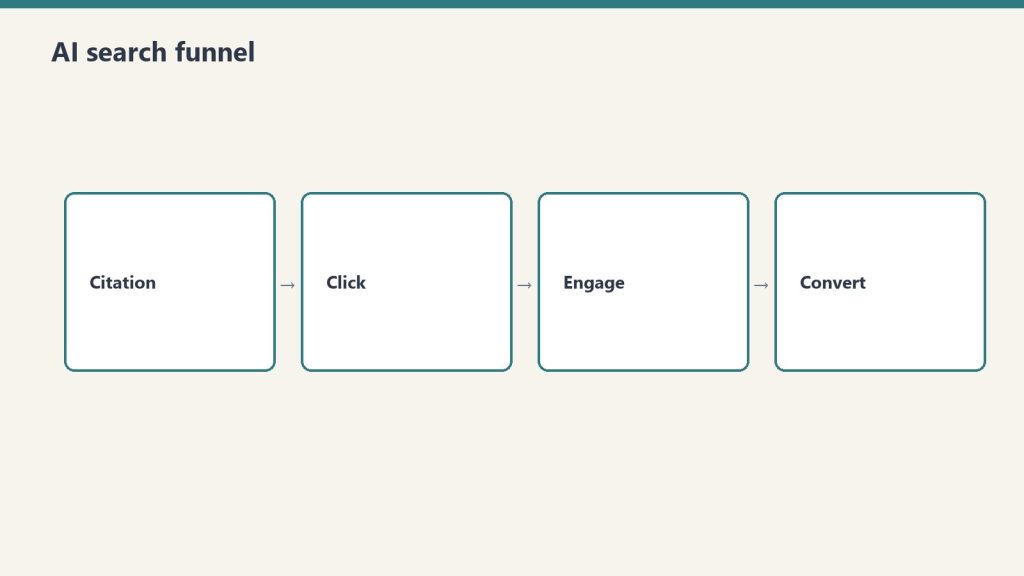
    Cuando gestionas más de 20 sitios WordPress, los números de la revisión manual se vuelven imposibles. Si cada artículo tarda 15 minutos en revisarse y publicas 40 artículos por semana, son 10 horas de trabajo de revisión solo — antes de escribir, antes de estrategia, antes del trabajo con clientes. La solución a la que llegan la mayoría de las agencias es contratar personal. Nosotros llegamos a una solución diferente: la autonomía ganada.

    La distinción importa. Contratar añade personas pero no añade inteligencia al sistema. La autonomía ganada significa que el sistema mismo demuestra que se puede confiar en él para operar sin supervisión, y esa demostración se rastrea, se registra y es revocable.

    El Promotion Ledger: Cómo Funciona
    El Promotion Ledger es una base de datos en Notion que rastrea cada comportamiento autónomo en la operación de contenido. Cada comportamiento — publicar artículos, generar publicaciones sociales, ejecutar actualizaciones de SEO, monitorear la salud del sitio — tiene una fila. Esa fila rastrea cuatro cosas:

    • Nivel — C (completamente autónomo, publica sin revisión), B (Will lo pilota, el sistema prepara), o A (el sistema propone, Will aprueba a nivel estratégico)
    • Estado — Activo, Probación, Degradado, Candidato, Graduado o Retirado
    • Contador de días limpios — cuántos días consecutivos el comportamiento ha funcionado sin fallo de control
    • Registro de fallos — cada fallo con fecha, razón e impacto posterior

    El reloj de promoción corre durante 7 días. Un comportamiento que completa 7 días limpios en un nivel se convierte en candidato para la promoción al siguiente nivel. Cualquier fallo de control reinicia el reloj y baja el comportamiento un nivel. El domingo por la noche es el único día de decisión — las promociones y degradaciones no se realizan reactivamente entre semana a menos que esté ocurriendo un fallo activo.

    Qué Significa Cada Nivel en la Práctica

    Nivel C: Autonomía Total

    Los comportamientos de Nivel C publican, postean o ejecutan sin que Will revise los outputs individuales. El sistema reporta en agregado — “14 posts publicados, 0 anomalías” — no ítem por ítem. Aquí es donde la operación quiere que vivan eventualmente todos los comportamientos rutinarios. Los fallos de control que lo impiden incluyen cosas como contaminación entre clientes (contenido destinado a un sitio apareciendo en otro), afirmaciones estadísticas sin fuente, o llamadas API defectuosas que publican contenido malformado.

    Nivel B: Preparado, No Publicado

    Los comportamientos de Nivel B producen trabajo que Will revisa antes de que salga en vivo. Los borradores se preparan. Las publicaciones sociales se ponen en cola pero no se envían. El sistema hace el trabajo cognitivo — investigación, escritura, optimización, programación — y Will toma la decisión final. Este es el nivel apropiado para comportamientos que han demostrado capacidad pero aún no consistencia.

    Nivel A: Aprobación Estratégica

    Los comportamientos de Nivel A se proponen a nivel de sistema y los aprueba Will a nivel estratégico — no tarea por tarea. Un ejemplo: el sistema identifica una nueva oportunidad de cluster de contenido y la presenta como propuesta. Will aprueba la dirección del cluster. El sistema entonces ejecuta el cluster completo sin más aportaciones. La aprobación es arquitectónica, no editorial.

    Los Controles que Protegen la Autonomía

    El Promotion Ledger solo funciona si los controles son reales. Ejecutamos dos controles obligatorios en cada pieza de contenido antes de que se publique en Nivel C:

    Control de Calidad de Contenido — Escanea en busca de estadísticas sin fuente, números fabricados, afirmaciones vagas presentadas como hechos y contaminación de marca entre clientes. Cualquier fallo de Categoría 0 (marca de cliente equivocada en el contenido) es una retención automática. Sin excepciones.

    Control de Verificación de Lugares — Para cualquier artículo que nombre negocios del mundo real, restaurantes, atracciones o ubicaciones, cada lugar nombrado se verifica en Google Maps antes de publicar. Un negocio cerrado permanentemente se elimina del artículo.

    El Lenguaje del Sistema Da Forma a la Postura del Operador

    Una lección no obvia al construir esto: el lenguaje que usas para reportar el comportamiento autónomo cambia cómo piensas al respecto. Deliberadamente reportamos en el lenguaje de una operación en vivo, no de una cola de revisión. “14 posts publicados, 0 anomalías” es la postura de un sistema que funciona. “14 borradores listos para tu revisión” es la postura de un sistema que espera. La diferencia es sutil pero se acumula con el tiempo en un comportamiento de operador fundamentalmente diferente.

    Resultados: Cómo Se Ve la Autonomía Ganada a Escala

    En más de 27 sitios WordPress gestionados, la operación actual ejecuta la mayoría de los comportamientos rutinarios de contenido en Nivel C. Eso incluye posts de blog orientados a keywords para verticales de restauración y préstamos, actualizaciones de FAQ de AEO, mantenimiento de enlaces internos y borradores de redes sociales. El resultado es una tasa de producción de contenido que requeriría un equipo de seis si se hiciera manualmente — operada por una persona con infraestructura de IA.

    Preguntas Frecuentes

    ¿Qué es el Promotion Ledger?

    El Promotion Ledger es una base de datos de Notion que rastrea cada comportamiento autónomo en una operación de contenido, asignando a cada uno un nivel de confianza (A, B o C) y registrando los fallos de control que reinician el estado de autonomía.

    ¿Qué es un comportamiento de Nivel C en operaciones de contenido?

    Un comportamiento de Nivel C es completamente autónomo — publica, postea o ejecuta sin revisión humana de outputs individuales. Gana este estado completando 7 días consecutivos limpios sin fallos de control.

    ¿Cuántos sitios puede gestionar una persona con este sistema?

    Con un Promotion Ledger maduro y comportamientos de Nivel C funcionando de manera confiable, un operador puede gestionar 20–30 sitios WordPress con una producción de contenido consistente.

  • The Autonomous Content System: How the Promotion Ledger Governs AI Operations

    The Autonomous Content System: How the Promotion Ledger Governs AI Operations

    Most content operations have a human at every gate. Someone approves the brief. Someone reviews the draft. Someone hits publish. That model scales to one person’s bandwidth — which means it doesn’t scale. We built a different model: an autonomous content system governed by a tiered trust architecture called the Promotion Ledger. Here’s how it works and why it changed how we operate.

    The core thesis: Autonomous systems don’t fail from lack of capability — they fail from lack of accountability. The Promotion Ledger is the accountability layer. Every behavior earns its autonomy tier or loses it based on a 7-day clean run clock. No behavior gets to stay autonomous indefinitely without proving it deserves to be.

    The Problem With Manual Content Operations

    When you’re managing 20+ WordPress sites, the math on manual review becomes impossible. If each article takes 15 minutes to review and you publish 40 articles per week, that’s 10 hours of review work alone — before writing, before strategy, before client work. The solution most agencies reach for is hiring. We reached for a different solution: earned autonomy.

    The distinction matters. Hiring adds headcount but doesn’t add intelligence to the system. Earned autonomy means the system itself proves it can be trusted to operate without supervision, and that proof is tracked, logged, and revocable.

    The Promotion Ledger: How It Works

    The Promotion Ledger is a Notion database that tracks every autonomous behavior in the content operation. Each behavior — publishing articles, generating social posts, running SEO refreshes, monitoring site health — has a row. That row tracks four things:

    • Tier — C (fully autonomous, publishes without review), B (Will flies it, system prepares), or A (system proposes, Will approves at the strategic level)
    • Status — Running, Probation, Demoted, Candidate, Graduated, or Retired
    • Clean day count — How many consecutive days the behavior has run without a gate failure
    • Gate failure log — Every failure with date, reason, and downstream impact

    The promotion clock runs for 7 days. A behavior that completes 7 clean days on a tier becomes a candidate for promotion to the next tier. Any gate failure resets the clock and drops the behavior one tier. Sunday evening is the only decision day — promotions and demotions are not made reactively mid-week unless an active failure is occurring.

    What Each Tier Means in Practice

    Tier C: Full Autonomy

    Tier C behaviors publish, post, or execute without Will reviewing individual outputs. The system reports in aggregate — “14 posts published, 0 anomalies” — not item-by-item. This is where the operation wants every routine behavior to live eventually. The gate failures that prevent this are things like cross-client contamination (content meant for one site appearing on another), unsourced statistical claims, or broken API calls that publish malformed content.

    Tier B: Prepared, Not Published

    Tier B behaviors produce work that Will reviews before it goes live. Drafts are staged. Social posts are queued but not sent. The system does the cognitive work — research, writing, optimization, scheduling — and Will makes the final call. This is the appropriate tier for behaviors that have shown capability but not yet consistency, or for content types where a single error has high reputational cost.

    Tier A: Strategic Approval

    Tier A behaviors are proposed at the system level and approved by Will at the strategic level — not task by task. An example: the system identifies a new content cluster opportunity and surfaces it as a proposal. Will approves the cluster direction. The system then executes the full cluster without further input. The approval is architectural, not editorial.

    The Gates That Protect Autonomy

    The Promotion Ledger only works if the gates are real. We run two mandatory gates on every piece of content before it publishes at Tier C:

    Content Quality Gate — Scans for unsourced statistics, fabricated numbers, vague claims stated as fact, and cross-client brand contamination. Any Category 0 failure (wrong client’s brand in the content) is an automatic hold. No exceptions.

    Place Verification Gate — For any article naming real-world businesses, restaurants, attractions, or locations, every named place is verified against Google Maps before publish. A permanently closed business is removed from the article. A temporarily closed business surfaces for human review. This gate was established after a local content article confidently recommended a restaurant that had been closed for months.

    These gates run automatically in the content pipeline. Their output is logged to the Promotion Ledger row for the behavior that triggered them. A gate failure is visible, permanent, and tied to a specific behavior — not lost in a chat window.

    The Language of the System Shapes Operator Posture

    One non-obvious lesson from building this: the language you use to report autonomous behavior changes how you think about it. We deliberately report in the language of a live operation, not a review queue. “14 posts published, 0 anomalies” is the posture of a system that runs. “14 drafts ready for your review” is the posture of a system that waits. The difference is subtle but it compounds over time into fundamentally different operator behavior.

    When you build a content operation, decide early which posture you’re designing for. Review-queue systems scale to your attention. Autonomous systems scale to their own reliability. The Promotion Ledger is how we track the difference and make sure the system earns the trust we’ve placed in it.

    Results: What Earned Autonomy Looks Like at Scale

    Across 27 managed WordPress sites, the current operation runs most routine content behaviors at Tier C. That includes keyword-targeted blog posts for restoration and lending verticals, AEO FAQ updates, internal link maintenance, and social media drafting. The result is a content output rate that would require a team of six if done manually — operated by one person with AI infrastructure.

    The Promotion Ledger is what makes that sustainable. Not because it eliminates failures — it doesn’t — but because every failure is visible, traceable, and correctable. The system can be trusted because the system can be audited.

    Frequently Asked Questions

    What is the Promotion Ledger?

    The Promotion Ledger is a Notion database that tracks every autonomous behavior in a content operation, assigning each a trust tier (A, B, or C) and logging gate failures that reset autonomy status.

    What is a Tier C behavior in content operations?

    A Tier C behavior is fully autonomous — it publishes, posts, or executes without human review of individual outputs. It earns this status by completing 7 consecutive clean days without gate failures.

    How do you prevent autonomous content from publishing errors?

    Through mandatory quality gates — including a content quality gate (unsourced claims, contamination) and a place verification gate (closed businesses) — that run before every autonomous publish and log results to the Promotion Ledger.

    How many sites can one person manage with this system?

    With a mature Promotion Ledger and Tier C behaviors running reliably, one operator can manage 20–30 WordPress sites with consistent content output. The ceiling is infrastructure reliability, not attention bandwidth.


  • Google Just Validated Tier-Gated Autonomy at Industry Scale. Here’s What We Built First.

    Google Just Validated Tier-Gated Autonomy at Industry Scale. Here’s What We Built First.

    This article was not written by a scheduled task. It was not part of a batch pipeline. There was no cron job, no Cloud Run trigger, no automation queue. I asked Claude in chat, we picked an angle, I generated the images myself, and Claude hand-crafted what you are reading now. Custom, batch-of-one, at the desk. I’m leading with that because it is the entire point of the piece.

    On April 22, Google Cloud Next ’26 turned Vertex AI into something else. The keynote rebranded it as the Gemini Enterprise Agent Platform. The new pieces are an Agent Designer, an Agent Inbox, long-running agents that can work autonomously for days inside cloud sandboxes, and Agent Observability, Agent Simulation, Agent Identity, Agent Registry. Google framed agents as managed enterprise workloads with identity, policy, observability, evaluation, and runtime controls, rather than one-off AI applications. They added Anthropic’s Claude Opus 4.7 to the Model Garden alongside Gemini 3.1. They committed $750 million to a partner program to push it through Accenture, Salesforce, SAP, and Deloitte.

    That announcement is the most architecturally ambitious version of agentic infrastructure anyone has shipped. It is also enterprise-shaped, not operator-shaped. The customers in the keynote were Walmart, Citadel, Honeywell, Home Depot, Papa John’s. The framing was Agentic Enterprise. The unit of trust was a partner integrator. None of that is a criticism. It is just a different scale of problem than the one a sole operator running 20+ WordPress sites and a content automation stack actually has.

    What Google announced is what we already built — at our scale

    Underneath the marketing, Gemini Enterprise Agent Platform answers one specific question: how do you give an autonomous system enough leash to be useful, while keeping enough control to catch it when it fails? Google’s answer involves Agent Identity, runtime policy enforcement, observability dashboards, and evaluation harnesses. It is the right answer. It is also the answer we landed on — independently, six months earlier, at a much smaller scale — because the question is the same whether you are running a Fortune 50 supply chain or a one-person agency that publishes 200 articles a month.

    Three stacked translucent glass layers in amber, blue, and green with particles flowing upward representing agent tier promotion
    Tier-gated autonomy: amber proposes and waits for approval, blue prepares but never publishes, green runs autonomously and reports anomalies.

    Our version is called The Bridge. It is a top-level page in our Notion workspace, peer to the operations Command Center. Underneath it lives the Promotion Ledger, where every autonomous behavior in our stack is tracked by tier and status. Tiers are A, B, C, and Wings. Status is one of Running, Probation, Demoted, Candidate, Graduated, or Retired. The Pane of Glass is the live Cowork artifact view of the whole thing. It is the operator-scale equivalent of Google’s Agent Inbox, except it is not selling itself to me — it is reporting to me.

    The three tiers, in plain language

    Tier A — System proposes, operator approves. A behavior at this tier produces a recommendation, not an action. Claude flags an opportunity, drafts a structure, surfaces a candidate. I make the call. Approval happens through an elevated report, not an atomic checkbox queue. This is where everything new starts.

    Tier B — Operator flies it, system prepares. The behavior is allowed to do all the preparatory work — research, drafting, formatting, staging — but the publish button stays under my hand. This is where most behaviors live for a while. Most of the trust gap is closed at Tier B because I can see exactly what the system would have done before it does it.

    Tier C — System runs autonomously, reports anomalies. The behavior publishes, posts, files, schedules — without asking. It only surfaces in my inbox when something is off. The twice-daily software update monitoring pipeline that writes posts to The Machine Room category on this site is Tier C. So is the weekly digest that drafts the LinkedIn and Facebook posts off it. I do not see those running. I see them only when they fail to run.

    Wings is a fourth tier — used for behaviors that are still on the candidate list, where the architecture exists but the trust does not yet.

    The clock that makes it work

    Promotions are not a feeling. They are a count. Seven clean days at a tier makes a behavior a candidate for promotion to the next. Any gate failure resets that clock to zero and drops the behavior down one tier. The failure is logged on the Promotion Ledger row with date and reason. Decisions to promote or demote happen on Sunday evenings — not in the middle of a panic on a Tuesday.

    This is the part that most “AI agent governance” frameworks skip. They define the tiers but not the promotion mechanic. Without the clock, every promotion is a vibe call. With the clock, the question stops being do I trust this agent and becomes what does the ledger say. The answer is either there or it is not.

    Vintage brass pressure gauge with the needle resting in a green clean zone, representing evidence-based trust in autonomous systems
    Trust as evidence. The Promotion Ledger reads clean — or it does not. Reassurance is not a substitute for a number on a row.

    Why this article is hand-crafted, on purpose

    Here is the meta-move that makes the framework legible. The system that publishes most of our content is Tier C Running — twice-daily monitoring writes posts directly to The Machine Room and Industry Signals categories without my approval, and the weekly digest drafts the social. That works because the behavior has earned its leash on the ledger.

    This article is not that. This article is a one-off, custom request, hand-crafted in chat. I asked Claude what it thought of the Next ’26 announcements relative to our stack. We had a real exchange about it. I generated four sets of images on my own, picked the directions, and let Claude pick the strongest variants from each set. We agreed on the angle. Then I gave one explicit, in-conversation authorization to publish live to WordPress and LinkedIn — because publishing to LinkedIn live is not a Tier C Running behavior on the ledger right now, and the system correctly flagged that gap and asked.

    That is the whole framework, working in real time. The twice-daily Tier C automation does not need to ask. The one-off LinkedIn live publish does need to ask. The system knows the difference because the difference is on a Notion page, not in a vibe.

    What Google’s announcement actually changes for operators like us

    Three things, all useful.

    The vocabulary went mainstream. “Long-running agents,” “Agent Inbox,” “agent governance,” “agent observability” — these are now words you can say to a CFO without translating. The bar for trust-gap evidence just went up across the field, which means the operators who already have a ledger are ahead of the operators who have a vibe. Stay on the ledger.

    Claude is in the Model Garden. If we ever want to run our Cowork-style behaviors inside Google’s agent runtime — using their identity, observability, and governance plumbing while keeping Claude as the model — that door is now open. We will not, because the platform overhead is more than we need. But the option being available is structurally significant.

    The architectural pattern is validated. When the third-largest cloud spends a keynote arguing that agents need tier-style governance and an inbox-style observability layer, every operator running an autonomous stack should treat that as confirmation, not as a sales pitch. We are not the weird ones for running a Promotion Ledger. We were just early.

    The unsexy part

    The unsexy part of all of this is that none of it works without the boring discipline of writing things down. The tiers are useful because they are on a page. The promotion clock is useful because it is a number. The trust-gap protocol is useful because it points to evidence rather than to feelings. Google is building the same thing for the Fortune 500 because the discipline is the same at every scale. The only thing that changes is whether you call it a Promotion Ledger or an Agent Registry.

    Build the ledger. Run the clock. Publish what is earned. Ask before you do what is not. The rest is just whose dashboard is prettier.