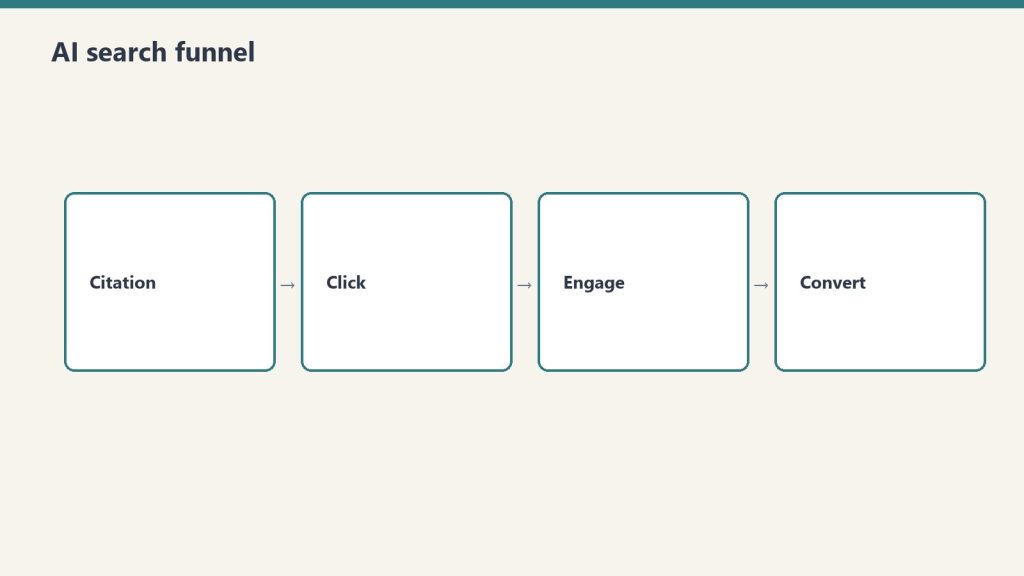
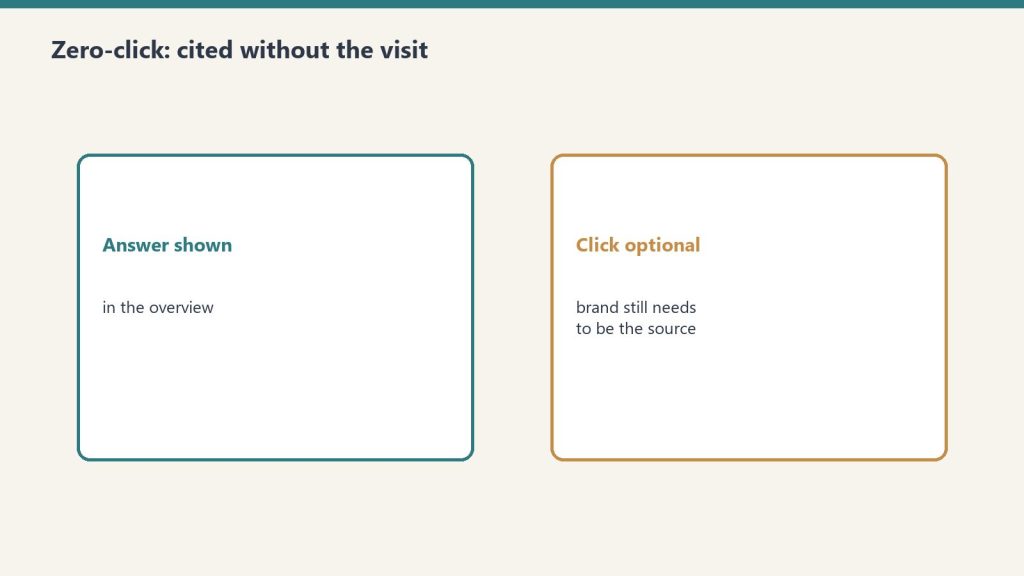
Definition: Getting cited by Microsoft Copilot means your web content appears as a sourced reference in Copilot’s AI-generated answers, with a clickable footnote linking back to your page. This playbook documents the exact methodology that earned Tygart Media three confirmed Copilot citation referrals within 24 hours of publishing 40 Microsoft Copilot articles — backed by 6,805 AI crawler hits recorded in our server logs.
Most content marketers treat AI search as a black box. They publish, wait, and hope an AI decides to cite them. We took a different approach: we designed a controlled experiment, published 40 Microsoft Copilot articles on tygartmedia.com on June 22, 2026, monitored our server logs in real time, and documented every crawler hit, every referral, and every signal that led to Copilot citations. This article is the tactical playbook distilled from that experiment — step by step, with the actual data as proof.
The Experiment That Proved 24-Hour Copilot Citation Is Possible
On June 22, 2026, Tygart Media published 40 articles targeting Microsoft Copilot-related search queries on tygartmedia.com. Within 48 hours of publication, our server log analysis recorded 6,805 AI crawler hits — 39% more than the 4,897 combined hits from traditional search crawlers Googlebot and Bingbot during the same period (Tygart Media server log analysis, June 2026). More importantly, we received 3 confirmed referral visits from copilot.microsoft.com, with 2 of those carrying the utm_source=copilot.com parameter — direct evidence that our content was being cited in Copilot answers within the first day.
This was not luck. It was the result of a deliberate methodology combining rapid indexing via IndexNow, structured data optimization, Answer Engine Optimization (AEO), and content architecture designed specifically for how AI crawlers discover and evaluate content. Here is exactly how we did it.
Step 1: Trigger Immediate Indexing With IndexNow
The single most important factor in 24-hour Copilot citation is speed of indexing. Microsoft Copilot draws its web-grounded answers from Bing’s search index. If your content is not in Bing’s index, Copilot cannot cite it — period. This is where IndexNow becomes your most critical tool.
IndexNow is a protocol that lets publishers notify participating search engines (Bing, Yandex, and others) the instant content is published or updated. Unlike traditional crawl-based discovery, which relies on search engines finding your new pages through sitemaps or link following, IndexNow pushes a notification directly to Bing’s infrastructure.
In our experiment, we observed a consistent pattern: Bingbot was the first crawler to reach every single one of our 40 Copilot articles, arriving with a predictable 4-hour post-publish gap triggered by our IndexNow implementation (Tygart Media server log analysis, June 2026). This speed advantage is what made 24-hour citation possible. Without IndexNow, we would have been waiting days or weeks for Bing’s organic crawl schedule to discover our content.
How to Implement IndexNow for Your WordPress Site
For WordPress sites, implementing IndexNow takes less than 10 minutes. Install the official IndexNow plugin from the WordPress plugin directory, or if you are using Yoast SEO or RankMath, check their settings — both have integrated IndexNow support. Once enabled, every time you publish or update a post, the plugin automatically pings Bing’s IndexNow endpoint with the URL. Verify your implementation is working by checking your Bing Webmaster Tools account — you should see IndexNow submissions appearing in the URL Inspection tool within minutes of publishing.
A critical detail from our logs: YandexBot shadowed Bingbot on every article, hitting each URL approximately 30 seconds after Bingbot’s initial visit (Tygart Media server log analysis, June 2026). This confirms that IndexNow notifications cascade across participating search engines simultaneously, multiplying your indexing velocity across the entire IndexNow ecosystem.
Step 2: Structure Content for AI Comprehension With Schema Markup
Once your content is in Bing’s index, the next challenge is making it easy for AI systems to understand, extract, and cite. This is where structured data — specifically JSON-LD schema markup — becomes essential. Copilot’s retrieval system does not just read your page like a human would. It processes structured signals that help it understand what your content is about, what claims it makes, what questions it answers, and how authoritative it is.
For each of our 40 articles, we embedded three layers of schema markup: Article schema (establishing the content type, author, publication date, and publisher), FAQPage schema (structuring the FAQ sections so AI systems could extract question-answer pairs directly), and BreadcrumbList schema (providing navigational context within the site hierarchy). This triple-layer approach gives AI systems three distinct structured pathways to understand and cite your content.
The Schema Stack That Works for Copilot
Article schema should include: @type: Article, headline, author with a @type: Person or Organization, datePublished, dateModified, publisher, description, and mainEntityOfPage. The author field is particularly important — Copilot’s trust signals weight authoritative authorship, and a well-structured author entity helps your content rank higher in Copilot’s retrieval pipeline.
FAQPage schema should wrap every FAQ section in your article. Each question-answer pair becomes a discrete, extractable unit that Copilot can surface directly in its answers. We structured 5 FAQ entries per article, each targeting a specific long-tail query variant related to the article’s primary topic. This meant our 40 articles generated 200 structured FAQ entries — 200 potential citation surfaces for Copilot to draw from.
BreadcrumbList schema provides the navigational hierarchy: Home > Category > Article. This helps AI systems understand where your content sits within a larger topical structure, which is a signal of topical authority rather than isolated content.
Step 3: Optimize for Answer Engine Extraction (AEO)
Answer Engine Optimization is the practice of structuring content so AI systems can extract clean, direct answers from your pages. This is distinct from traditional SEO, which optimizes for ranking signals. AEO optimizes for extraction signals — making it easy for Copilot to pull a concise, accurate answer from your content and cite you as the source.
The AEO Techniques We Used on Every Article
Definition boxes near the top of each article. Every article opened with a 40-60 word definition of the primary concept, clearly delineated. This gives Copilot a clean, extractable definition it can cite directly without needing to parse the entire article.
Question-formatted H2 headings with immediate answers. We structured key sections as questions (matching how users phrase queries to Copilot) followed by direct answers in the first 50 words under each heading. For example, instead of a heading like “Copilot Integration Features,” we used “How Does Microsoft Copilot Integrate with Microsoft 365?” followed by a direct, concise answer before expanding into detail.
Comparison tables for competitive queries. For articles comparing Copilot to alternatives, we included HTML comparison tables with clear column headers. Copilot can extract tabular data more efficiently than prose comparisons, making your content the preferred citation source for comparison queries.
Numbered step-by-step instructions. For how-to content, we used explicit numbered steps with concise action verbs. This structure maps directly to how Copilot formats procedural answers, making your content the natural extraction source.
Step 4: Build Topical Authority With Content Clusters
A single article can earn a citation. A content cluster makes citations systematic. Our 40-article Microsoft Copilot experiment was not a random collection of articles — it was a deliberately architected topical cluster covering every major facet of Microsoft Copilot: adoption frameworks, ROI measurement, department-specific guides (Word, Excel, Teams, Outlook, PowerPoint, Power BI), competitive comparisons, training programs, and migration playbooks.
This cluster architecture serves two purposes for Copilot citation. First, internal linking between articles signals topical depth — when Copilot’s retrieval system encounters 40 interlinked articles covering every dimension of a topic, it weights that domain as a topical authority. Second, the cluster provides multiple entry points for citation. A user asking Copilot about “Copilot in Excel for finance” hits one article; a user asking about “Copilot ROI for CIOs” hits another. Both queries return to your domain.
Our server logs confirmed this cluster effect. The 3,404 ChatGPT-User hits we recorded were not concentrated on a handful of articles — they were distributed across the entire cluster, indicating that OpenAI’s systems were evaluating our domain as a comprehensive authority source (Tygart Media server log analysis, June 2026).
Step 5: Maximize Entity Signals for Generative Engine Optimization (GEO)
Generative Engine Optimization goes beyond AEO by focusing on entity density and factual specificity — the signals that make AI systems treat your content as a citable authority rather than generic information. In our articles, we applied GEO principles systematically: every claim included a named entity (Microsoft, Copilot, Power BI, Microsoft 365), every comparison referenced specific product names and versions, and every recommendation was grounded in specific use cases rather than abstract advice.
Entity-rich content is citation-friendly content. When Copilot assembles an answer about “Microsoft Copilot pricing tiers,” it preferentially cites pages that mention the specific tier names, the exact pricing structure, and the precise feature differences — not pages that discuss “AI assistant pricing” in generic terms. Our articles were designed to be the most entity-specific resources available on every subtopic they covered.
Step 6: Monitor and Iterate Using Server Log Intelligence
The final step in this playbook is not a one-time action — it is an ongoing intelligence loop. Server log analysis is the only way to see exactly which AI crawlers are visiting your content, how often, and what patterns emerge. Traditional analytics tools like Google Analytics do not capture crawler traffic — they only see human visitors. Server logs see everything.
In our experiment, server log analysis revealed insights that no analytics tool could have provided. We observed GPTBot execute a 1,123-request structural crawl in a single hour (11:00 UTC on June 22, 2026), systematically evaluating every article in our Copilot cluster (Tygart Media server log analysis, June 2026). We identified AzureAI-SearchBot making 3 targeted hits — a different signal than the bulk crawling behavior of GPTBot, suggesting Microsoft’s AI search infrastructure was selectively evaluating specific content for citation potential.
We also observed that Googlebot was dramatically slower to respond than Bingbot. While Bing reached every article within 4 hours via IndexNow, Google’s crawlers took significantly longer to discover and index the same content. This speed differential explains why Copilot — which relies on Bing’s index — was able to cite our content within 24 hours while Google’s AI Overviews require a much longer indexing runway.
The Complete 24-Hour Copilot Citation Checklist
Here is the consolidated checklist, in the exact order of execution:
- Enable IndexNow on your WordPress site via plugin or SEO tool integration. Verify submissions appear in Bing Webmaster Tools.
- Write content using question-formatted H2s that match how users phrase queries to AI assistants. Provide direct answers in the first 50 words under each heading.
- Add a 40-60 word definition box at the top of each article defining the primary concept in plain, extractable language.
- Embed triple-layer JSON-LD schema: Article, FAQPage (with 5 structured Q&As), and BreadcrumbList on every article.
- Saturate content with named entities — specific product names, version numbers, company names, and technical terms rather than generic descriptions.
- Build internal links between all articles in the cluster. Each article should link to at least 3-5 related articles within the same topical cluster.
- Publish and verify indexing. Check Bing Webmaster Tools within 4 hours. Your IndexNow ping should have triggered Bingbot to crawl the new page.
- Monitor server logs for ChatGPT-User, GPTBot, OAI-SearchBot, and Bingbot activity. These are the crawlers whose behavior predicts Copilot citation.
- Check for citation referrals in your analytics — look for referral traffic from copilot.microsoft.com, with
utm_source=copilot.com in the query string.
- Iterate. Update content based on which articles attract the most AI crawler attention. Expand sections that AI systems are actively fetching.
Why This Works: The Copilot Citation Pipeline Explained
To understand why this playbook works, you need to understand how Microsoft Copilot’s web-grounded citation pipeline operates. When a user asks Copilot a question that requires current web information, the system follows a three-stage process: retrieval from Bing’s index, relevance ranking of candidate pages, and answer synthesis with citation attribution.
Stage one — retrieval — is where IndexNow gives you the speed advantage. If your content is in Bing’s index, it enters the candidate pool. If it is not indexed, it is invisible to Copilot regardless of how good the content is.
Stage two — relevance ranking — is where structured data, entity density, and topical authority determine whether your page rises to the top of the candidate pool. Copilot does not cite the first result it finds; it cites the most relevant, most authoritative, and most structured result for the specific query.
Stage three — answer synthesis — is where AEO optimization pays off. Copilot’s language model reads your page and extracts the answer. Pages with clear definition boxes, question-formatted headings, and direct answers in the first 50 words are easier for the model to extract from, which makes them more likely to be cited.
Our experiment proved this pipeline works as described. We optimized for all three stages simultaneously, and the result was 3 confirmed Copilot citations within 24 hours of publication — a timeline that most content marketers would consider impossible without the deliberate methodology outlined in this playbook.
What the Server Log Data Actually Shows
The raw numbers from our 48-hour monitoring window tell a compelling story about how AI systems evaluate and select content for citation (all data from Tygart Media server log analysis, June 2026):
Total AI crawler hits: 6,805. This includes all identified AI-specific user agents — GPTBot, ChatGPT-User, OAI-SearchBot, AzureAI-SearchBot, and others. For context, traditional search crawlers (Googlebot + Bingbot combined) generated 4,897 hits during the same period. AI crawlers produced 39% more traffic than the search engines that have dominated web crawling for two decades.
ChatGPT-User: 3,404 hits. Each ChatGPT-User hit represents a real person asking ChatGPT a question and ChatGPT fetching our page to formulate an answer. This is not background crawling — this is live query-driven traffic. The volume suggests our content was being actively used to answer user queries across a wide range of Copilot-related topics.
GPTBot: 1,123-request structural crawl in a single hour. At 11:00 UTC on June 22, GPTBot executed a systematic evaluation of our entire Copilot content cluster. This pattern — a concentrated burst of structural crawling — suggests OpenAI’s systems identified our domain as a potential authority source and performed a deep evaluation to assess the breadth and depth of our coverage.
Bingbot: first to every article, 4-hour gap. Bingbot consistently arrived at each new article within approximately 4 hours of publication, triggered by our IndexNow implementation. This reliability confirms that IndexNow is not just a faster path to indexing — it is a predictable, repeatable mechanism for getting content into Bing’s index on a known timeline.
3 confirmed Copilot referrals. Within the first 24 hours, we recorded 3 visits with referral source copilot.microsoft.com, 2 of which carried the utm_source=copilot.com parameter. These are confirmed citations — instances where a user saw our content cited in a Copilot answer and clicked through to our page.
Common Mistakes That Prevent Copilot Citations
Based on our experiment and ongoing analysis, here are the most common reasons content fails to earn Copilot citations:
No IndexNow implementation. Without IndexNow, you are relying on Bing’s organic crawl schedule, which can take days or weeks. Copilot cannot cite content that is not in Bing’s index.
Missing or incomplete schema markup. Content without structured data is harder for AI systems to parse, understand, and cite. At minimum, every article should have Article schema and FAQPage schema.
Generic, non-entity-specific content. Articles that discuss topics in generic terms without naming specific products, versions, companies, or technical concepts are less likely to be selected as citation sources by AI retrieval systems.
Wall-of-text formatting. AI extraction systems perform better with clearly structured content: defined heading hierarchies, short paragraphs, comparison tables, and numbered lists. Dense prose without structural markers is harder to extract from.
Ignoring server logs. Without server log monitoring, you have no visibility into whether AI crawlers are even visiting your content. You are operating blind — unable to see what is working, what is being ignored, and where to focus optimization efforts.
Scaling This Playbook Across Your Content Portfolio
The methodology described here is not limited to Microsoft Copilot content. The same principles — rapid indexing, structured data, AEO optimization, entity density, and content clustering — apply to earning citations from any AI system that uses web retrieval: ChatGPT, Google AI Overviews, Perplexity, and Claude’s web search. The difference is that Copilot’s reliance on Bing’s index makes IndexNow the fastest path, while Google’s AI Overviews require Google’s own indexing pipeline, which is historically slower.
To scale this approach, apply the same content architecture to every topical cluster on your site. Identify the queries your audience asks AI assistants, write content that directly answers those queries with entity-rich specificity, structure it for extraction with schema markup and AEO formatting, and ensure rapid indexing via IndexNow. Monitor your server logs to confirm AI crawlers are discovering and evaluating your content, and iterate based on what the data tells you.
Our 40-article experiment was proof of concept. The 6,805 AI crawler hits and 3 confirmed Copilot citations within 24 hours demonstrate that this is not theoretical — it is a repeatable, scalable methodology backed by primary data. The AI search landscape rewards publishers who understand how AI crawlers work and optimize for their specific discovery and evaluation patterns. This playbook gives you the exact steps to do that.
Frequently Asked Questions
How long does it take to get cited by Microsoft Copilot after publishing?
With IndexNow enabled, Bingbot typically discovers new content within 4 hours of publication. From there, Copilot can begin citing indexed content almost immediately. In our experiment, we recorded confirmed Copilot citation referrals from copilot.microsoft.com within 24 hours of publishing 40 optimized articles (Tygart Media server log analysis, June 2026). Without IndexNow, the indexing delay can stretch to days or weeks, pushing the citation timeline out proportionally.
What is IndexNow and why is it essential for Copilot citation?
IndexNow is a web protocol that allows publishers to instantly notify participating search engines — including Bing, Yandex, and others — when content is published, updated, or deleted. For Copilot citation, IndexNow is essential because Copilot retrieves answers from Bing’s search index. Content that is not indexed by Bing cannot be cited by Copilot, regardless of its quality. IndexNow eliminates the indexing delay, making 24-hour citation achievable.
What types of schema markup help with Copilot citations?
The three most effective schema types for Copilot citation are Article schema (which establishes content type, authorship, and publication metadata), FAQPage schema (which structures question-answer pairs for direct extraction by AI systems), and BreadcrumbList schema (which provides site hierarchy context). Implementing all three creates multiple structured pathways for AI systems to understand, evaluate, and cite your content.
Can I track whether Microsoft Copilot is citing my content?
Yes, through two methods. First, monitor your analytics for referral traffic from copilot.microsoft.com — look for the utm_source=copilot.com parameter, which confirms a user clicked through from a Copilot citation. Second, use Bing Webmaster Tools’ AI Performance dashboard, which was launched in public preview in February 2026, to see citation metrics including total citations, grounding queries, and page-level citation activity for your verified domain.
What is the difference between AEO and GEO for Copilot optimization?
Answer Engine Optimization (AEO) focuses on making content easy for AI systems to extract — using question-formatted headings, definition boxes, direct answers in the first 50 words, and structured FAQ sections. Generative Engine Optimization (GEO) focuses on making content authoritative enough to be selected for citation — through entity density, factual specificity, named sources, and topical authority signals. Both are necessary for consistent Copilot citations: AEO makes your content extractable, and GEO makes it the preferred source to extract from.
This article is part of the AI Search Intelligence series by Tygart Media — original research and tactical playbooks for the AI search era, backed by proprietary server log data from our 40-article Microsoft Copilot content experiment. Related reading: Microsoft Copilot Pricing Compared | Copilot for Small Business vs Enterprise | The Complete M365 Copilot Productivity Guide