Tag: irentdumpsters

  • A Perfect 5.0 With 50 Reviews Looks Fake. So Does a Quiet Board After a Full Month.

    A Perfect 5.0 With 50 Reviews Looks Fake. So Does a Quiet Board After a Full Month.

    Two Bodhi posts from other trades belong on the restoration Monday meeting, even though neither says “mitigation.”

    One: a contractor with 170 reviews at 4.8 will outconvert a spotless 5.0 with 50 reviews. Homeowners treat a clean 5.0 as purchased. One cranky note about a driver being ten minutes late makes the other 169 look like real work.
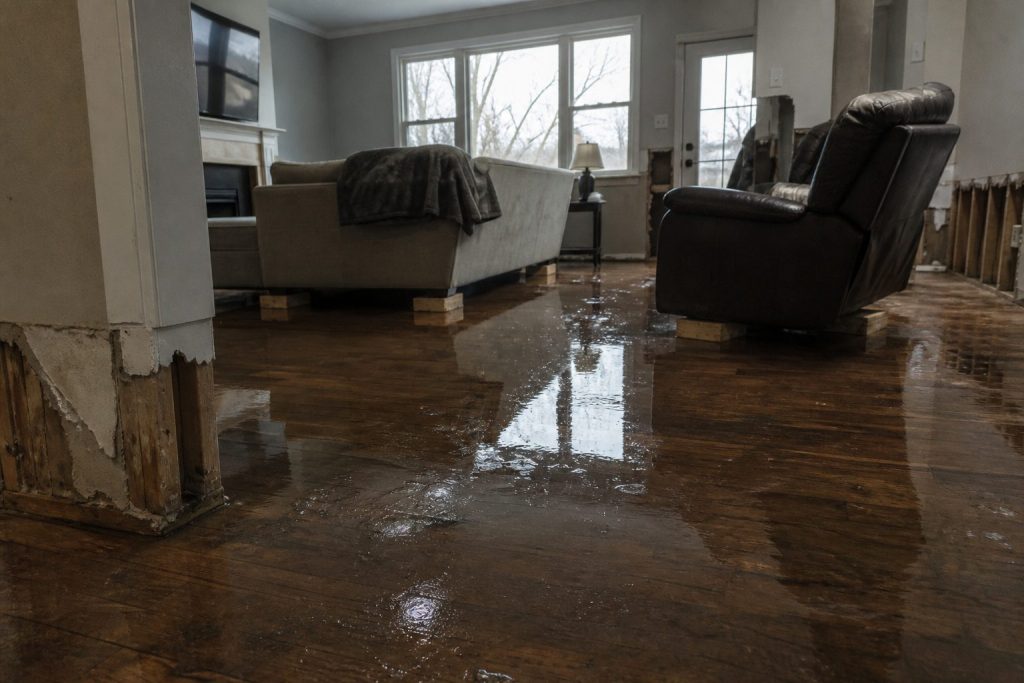
    Flooded living room before water damage drying
    The review should sound like this job happened, not like a template.

    Two: revenue and a full calendar are lagging indicators. They came from marketing, reviews, and pipeline three to six months ago. Stop those because the board is full and the drought shows up next quarter.

    What a restoration review has to do

    A five-star “great job, very professional” is almost useless. Google indexes owner replies. Bodhi’s plumber version is: thank them for the Sunday sewer replacement in Coral Springs. That plants service and geography inside the verified profile.

    Restoration version of the same reply:

    “Grateful we could get extractors running the same night on the burst-pipe loss in [neighborhood]. Crew followed IICRC S500 dry-out, and we will be back for the rebuild walk-through.”

    Neighborhood. Loss type. Standard. Next step. No keyword stuffing. No “thanks for choosing us.”

    Velocity beats the weekend dump

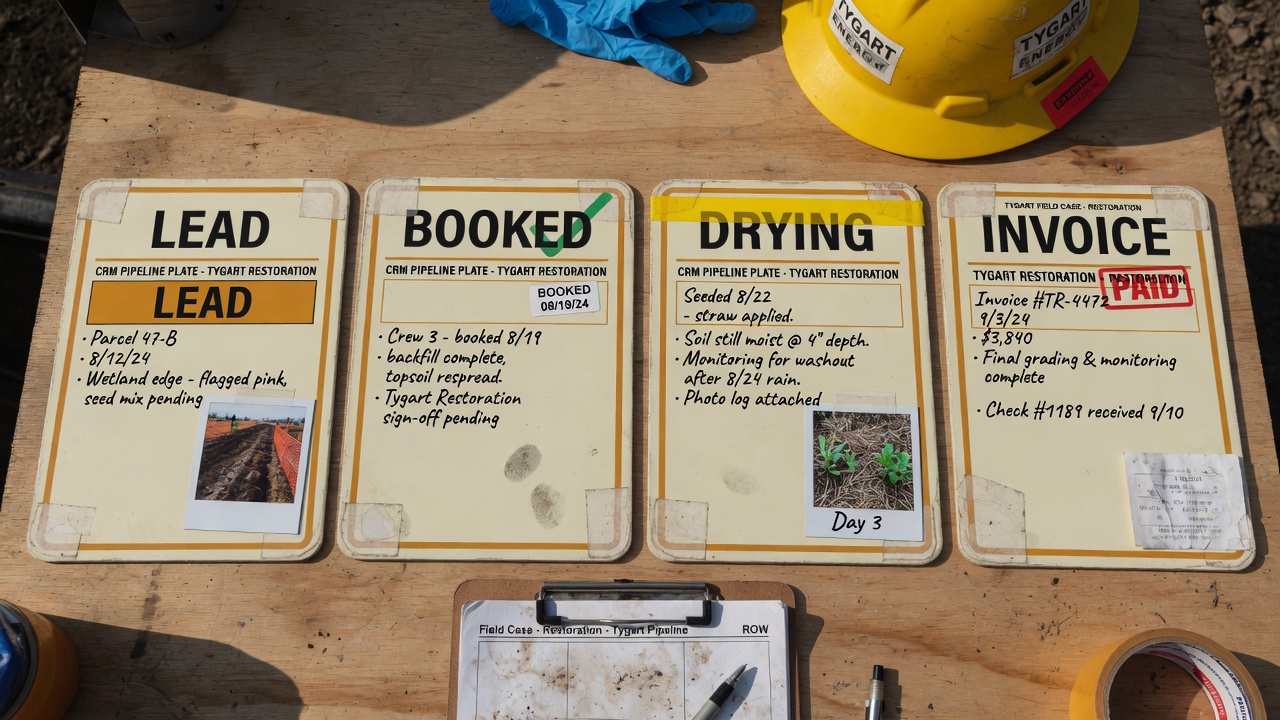
    Forty reviews in one weekend and then silence for a quarter looks like spam. Three honest reviews a week from closed jobs beats a purchased spike. For restoration that means the request goes out when the job is actually closed — after dry-out or after rebuild, not while the house is still in containment and the homeowner is still mad at the carrier.

    Build the ask into the close-out in the field software. SMS with a short GBP link. Track asks, not only reviews received. A 3.9 profile with angry “they billed insurance and left a mess” threads should not get more Maps traffic until the work and the follow-up change.

    The full board is last quarter’s marketing

    Restoration operators feel this in weather. A wet spring plus a decent pin fills trucks. Someone kills Google posts, review asks, and adjuster touches because “we cannot take more water.” Then July is dry and August is quiet and the story becomes “SEO stopped working.” It did not stop. You stopped feeding it on a lag.

    Keep a minimum cadence even when every van is out:

    • Review ask on every closed job
    • Owner reply within a day
    • Fresh job photos on the GBP
    • One service-page or city-page improvement a week
    • Adjuster and property-manager touches that do not depend on a storm

    Pest control at $7M in six years, in Bodhi’s telling, stacked local SEO, review velocity, and recurring contracts. Restoration already has the recurring analog: maintenance, mold follow-up, commercial agreements, and rebuild after mitigation. Organic search without a second touch after the dry-out is a one-call business wearing a marketing budget.

    Sparks from @irentdumpsters on reviews, velocity, lagging indicators, and review-reply indexing. Related: if they hunt for the number, you lost.
  • The Roofer Listed Himself as a GC. Restoration Shops Make the Same Maps Mistake.

    The Roofer Listed Himself as a GC. Restoration Shops Make the Same Maps Mistake.

    Most restoration owners only save Bodhi posts that say “water” or “mold.” That is leaving half the playbook on the table. The useful operating system is in the roofer, HVAC, turf, and dumpster posts. The trade changes. The Maps mechanics do not.

    Primary category is not a branding exercise

    A Long Island roofer sat at position 16 for eight months because the primary category was General Contractor. One dropdown change to Roofing Contractor and the listing was in the top three inside three weeks. Secondary categories help niche terms. The primary category does the heavy lifting on core rankings.

    Restoration translation: if the shop lives on emergency water and the primary category is “Contractor” or a vague “Waterproofing,” you are fighting with remodelers and foundation guys for the wrong pack. Search the money terms in your city — water damage restoration, fire damage restoration, mold remediation — and match the primary category the current top three actually use. Then use secondaries for mold, fire, sewage, and contents. Do not make “General Contractor” the front door because you also rebuild.

    Fake pins blow up the original listing

    A turf company expanded from Fort Lauderdale to West Palm with a virtual office pin. Suspended in four days. Google also froze the original ranking profile during the investigation. The cheap mailbox did not add a market. It put the whole company in timeout.

    Restoration translation: storm season makes owners hungry for the next county. A virtual mailbox in the next metro is how shops lose the pin they already rank on. If there is no real office, warehouse, or staffed shop, stay a service-area business, draw the area to where a crew actually rolls in 45 minutes, and build city pages with real local job photos. A second pin needs a real address, a sign, and a reason Google will not treat it as fiction.

    Citation volume is how HVAC shops buy broken links

    An HVAC company paid $3,500 for 300 low-quality directories. Half of them died. The domain inherited a graveyard of broken backlinks. The move that matters is the core aggregators — Data Axle, Localeze, Foursquare — plus industry directories and the chamber, with identical NAP.

    Restoration translation: skip the “submit to 400 sites” package. Clean the same 15 sources. Add IICRC, RIA, and any state restoration or mold license directories. One wrong phone number on those sources is enough to fight your GBP.

    Google is not the only emergency map

    A Delray plumber booked 28 jobs in a month from Apple Maps and Yelp with no spend. Siri pulls Apple Business Connect and Yelp. If name, address, and categories are empty there, those calls go down the street.

    Restoration translation: claim Apple Business Connect this week. Match categories to water, fire, and mold as the product allows. Make Yelp NAP identical to GBP. After-hours homeowners asking Siri “water damage near me” never see your Google-only effort.

    LSAs cannot rescue a listing people will not tap

    Bodhi’s LSA post: running Local Services Ads against a 4.1 listing with blurry photos and no owner replies is lighting money on fire. The homeowner sees the badge, then scrolls to the organic pack and picks the shop that looks alive.

    Restoration translation: fix photos (truck, containment, meters, not stock smiles), review replies, hours, and services on the organic profile before you raise the LSA budget. Paid badges ride the same reputation the organic pack already shows.

    The dumpster version of “we only need ads”

    A dumpster shop pulled 312 Google calls in a month. No $5k ad spend. Maps cleanup, a review after every pickup, and site pages that answered the questions customers already asked.

    That is the restoration minimum viable system: clean pin, review after every closed job, pages for the questions the CSR already answers. Ads fill gaps. They do not replace the listing.

    Sparks: roofer category, turf fake pin, HVAC citation blast, plumber Apple/Yelp, LSA-on-weak-GBP, dumpster 312 calls — all from @irentdumpsters. Watchlist: ten accounts to mine.

  • If They Have to Hunt for the Number, You Lost the Water Job

    If They Have to Hunt for the Number, You Lost the Water Job

    Bodhi at @irentdumpsters writes plumber and HVAC stories. Restoration owners should read them as dispatch rules, not as another trade’s marketing tips.

    Three recent posts, three different trades, one mechanism.

    • A Boca homeowner with water across the kitchen called three plumbers off Maps at 7:30 a.m. Voicemail lost. Six-ring menu lost. Ring-two booked a $4,200 repipe that afternoon.
    • A lead form on a water or plumbing homepage loses the emergency call. Nobody in a puddle types an email and waits.
    • Most emergency contractor calls happen on a cracked iPhone while the basement is flooding. The About Us paragraph and the hamburger menu are not in the path.

    Swap plumber for restorer and the dollar amount goes up, not down. The homeowner is not shopping a $189 service call. They are trying to stop Category 2 or 3 water before the pad and the drywall come out. The shop that makes the local number easiest to tap, then answers it, gets the mitigation and the rebuild conversation that follows.

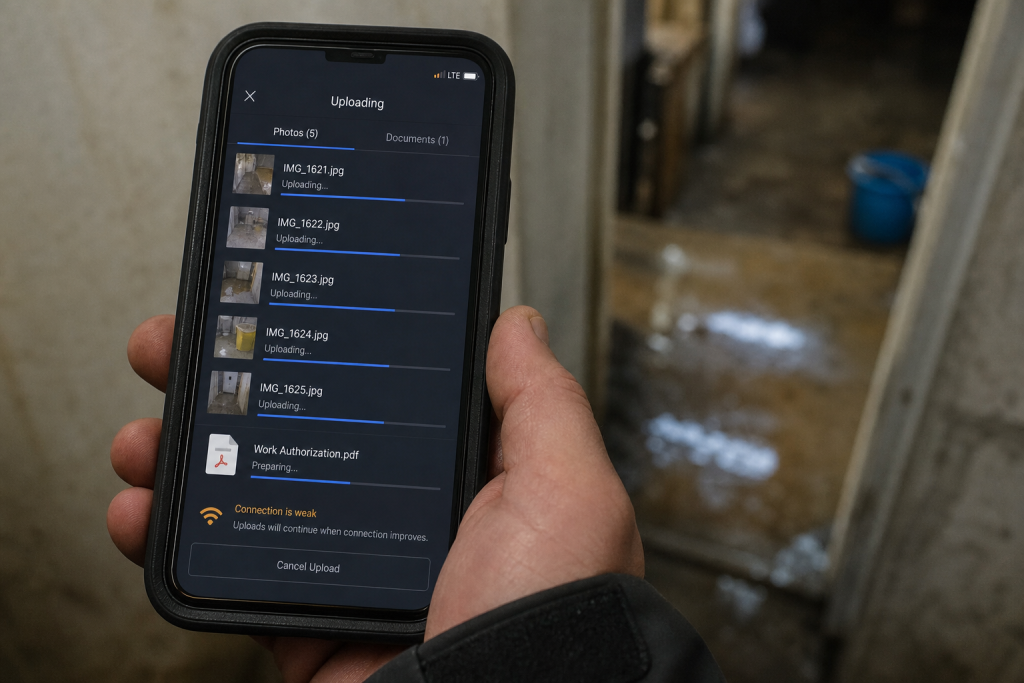
    Field phone showing bars while a moisture map upload fails on a dead-fiber water loss
    The call is placed from the loss, not from a desktop contact form.

    Reframe: speed-to-lead is part of the estimate

    Restoration marketing budgets get judged on cost per lead. That number is a lie if the night board lets three rings dump to voicemail. Maps ranking, LSAs, and SEO are just pipes. The conversion event is a human voice in two rings saying they can roll a crew.

    If you are number one on Maps and the CSR is on a seven-minute hold script, you are paying to educate the competitor who picks up.

    What to change on the site this week

    1. Header on mobile: local area code, tap-to-call, IICRC or license line. No hamburger hunt.
    2. Homepage and every emergency service page: click-to-call first, form second. Forms are for commercial RFPs and insurance follow-up, not for a burst pipe at 11 p.m.
    3. After-hours path that is a person, not a menu tree. If you use an answering service, the first sentence they say has to be dispatch, not “press 2 for billing.”
    4. Measure answer rate and time-to-answer on Map and LSA calls separately from website forms. If ring-two is not the median, fix staffing before you buy more clicks.

    What restoration adds that the plumber post skips

    A plumber can book a morning slot. A restorer often has to quote emergency service, set expectations on source identification, and get permission to start dry-out before the adjuster is awake. The first 90 seconds on the phone are not “can we come out.” They are “are you safe, where is the water, is it sewage, can we roll now.” Script that. The marketing post only gets you the ring.

    Spark posts: two-ring $4,200 job, forms kill emergency calls, cracked-phone layout. Companion: rebuild around emergency terms.

  • 10 X Accounts Restoration Contractors Should Mine for Marketing Intelligence

    10 X Accounts Restoration Contractors Should Mine for Marketing Intelligence

    The seed post was this thread from Bodhi / @irentdumpsters: a plumber drowning in fifty-dollar drain calls because his site was a faucet blog. We already turned that idea into a restoration article: rebuild the domain around emergency high-ticket terms.

    One account is not a research desk. The job now is a living watchlist of people who talk like operators about local SEO, Maps, speed-to-lead, and high-ticket home services — then translate every useful post into language a water, fire, or mold shop can run this week. Most of Bodhi’s best material is not labeled restoration. It is plumber, HVAC, roofing, dumpster, turf, and pest. The method for those posts is here: how to steal a plumber thread and make it a restoration SOP.

    These are not endorsements and they are not a vendor shortlist. They are source nodes. Steal the rule. Ignore the pitch. Rewrite for restoration.

    The ten accounts

    1. @irentdumpsters — Bodhi, Stryker Digital

    The seed. Dumpster operator turned local SEO. Writes in job stories, not frameworks. Recent restoration-usable posts: content mismatch and high-ticket terms; click-to-call instead of homepage forms; one URL per trade; answer in two rings; call-tracking NAP damage; mold as the retail lane while water stays locked by adjusters; Maps number one with a dead phone in a dry season.

    Use him for: emergency-intent architecture and the reminder that weather creates demand, rankings only capture it. Also use every other-trade post. That is now the default ingest rule.

    2. @drewdoesmarktng — Andrew Palacios, Revved Digital

    Home-service SEO and AI. Publishes marketing benchmarks by trade, including water damage restoration, drain and sewer, roofing, and a dedicated restoration report. Talks audits as visibility, tracking, and follow-up problems wearing a marketing costume.

    Use him for: numbers to compare against your own cost per booked mitigation, not for copying another vertical’s offer.

    3. @noahiglerSEO — Noah Igler, Sustained Media

    Calls himself the local SEO guy for home services. Cleanest recent framework on X: GBP wins the map pack, the location page supports that pin, service pages win organic, tracking has to reach sold revenue. Also the rare voice that will tell a $2M plumber not to buy SEO until the review rating is trustworthy.

    Use him for: map-pack vs organic division of labor, and the rule that a 3.8-star restoration profile should not be fed more traffic.

    4. @theseoguy_ — The SEO Guy, Vineyard Growth

    High-volume local SEO checklists. GBP first, physical pin over a fake service-area blob, weekly photos, keyworded review replies, city plus service in the H1, stop writing history-of-the-trade blogs. Explicit that answering the phone is part of SEO.

    Use him for: the unsexy weekly cadence a one-shop restoration company can actually keep. Filter out any “exact match business name” tricks that would look like spam to a carrier or a city inspector.

    5. @localseobot

    Grid-rank case notes, including water and fire restoration terms in Atlanta-area scans. Not narrative. Just “this keyword moved from X to Y on a 169-point grid.”

    Use him for: how to talk about Maps movement without lying. Average rank on a grid is the honest metric. “We are number one” is usually a zip code lie.

    6. @GeorgianBaySEO

    Local SEO for trades. Public portfolio includes roofing, electrical, pest, waterproofing, and water damage restoration. Talks templates and schema as the reason site eight ships in a day after site one took weeks.

    Use him for: the operations lesson. Restoration content should be a reusable service-page system (water, sewage, mold, fire, pack-out) plus local proof — not a new design every time you add a county.

    7. @doctorcalf

    Former SEO and GBP lead-gen for mold remediation. Long client cycles. Useful because mold is the retail lane Bodhi keeps pointing restorers toward when water is locked by preferred-vendor lists.

    Use him for: mold-specific demand and the reminder that remediation clients return years later when the next leak shows up.

    8. HouseCall SEO / Lior Daniel

    Boutique restoration local SEO. Public positioning is six-plus years ranking crews on emergency terms, with published monthly ranges. Less of a daily X firehose than Bodhi, more of a restoration-only specialist to watch when he does post.

    Use him for: emergency-query page structure aimed at 2 a.m. water and fire searches, not general home-service theory.

    9. Outpace SEO (restoration-only shop)

    Oklahoma City firm built around water damage and restoration SEO. Public case: OKC Restorations and a large year-over-year lift in organic clicks. Follow the company and principals when they publish market notes.

    Use him for: single-market restoration case texture — what a water shop’s keyword set actually looks like when it is not mixed with roofing and HVAC.

    10. Restoration Inbound / Restoration Digital Marketing cluster

    Agencies that only sell to restorers (Restoration Inbound, Restoration Digital Marketing, and peers on the 2026 water-damage agency lists). They post less like dumpster-Twitter and more like vendor blogs. Still worth a weekly scan because they write to IICRC language, TPA friction, and storm season instead of “plumber near me.”

    Use them for: insurance-aware copy and the difference between retail water, program work, and storm surge. Discard anything that sounds like a franchise pitch deck.

    Already translated from other trades

    Send the next URL if you want a specific thread run through the same filter.

  • Your Restoration Site Is Booking Cheap Work. Rebuild It Around Emergency Terms.

    Your Restoration Site Is Booking Cheap Work. Rebuild It Around Emergency Terms.

    Inspired by Bodhi (@irentdumpsters). Original post: the Delray plumber / faucet-blog thread. This is a new Tygart article for restoration contractors. We kept the mechanism, added first-party field knowledge, and did not reprint the thread.

    On September 5, 2026, Bodhi at @irentdumpsters posted a plumber story that restoration owners should tape to the office wall.

    A shop in Delray Beach could not understand why the phone only rang for fifty-dollar drain snakes. The website had forty blog posts about leaky faucets and loose toilet handles. The work that buys trucks and pays commercial mortgages was emergency slab leaks and broken sewer mains. When water is moving under tile at two in the morning, the homeowner is not reading a faucet explainer. They are typing slab leak detection plus the city name while standing in a puddle.

    They rebuilt the site around high-ticket emergency terms. In ninety days the shop booked three slab leak jobs averaging sixty-eight hundred dollars each, and stopped waking techs at midnight for kitchen sinks.

    That is not a plumbing anecdote. That is the default failure mode of independent restoration marketing.

    The restoration version of the faucet blog

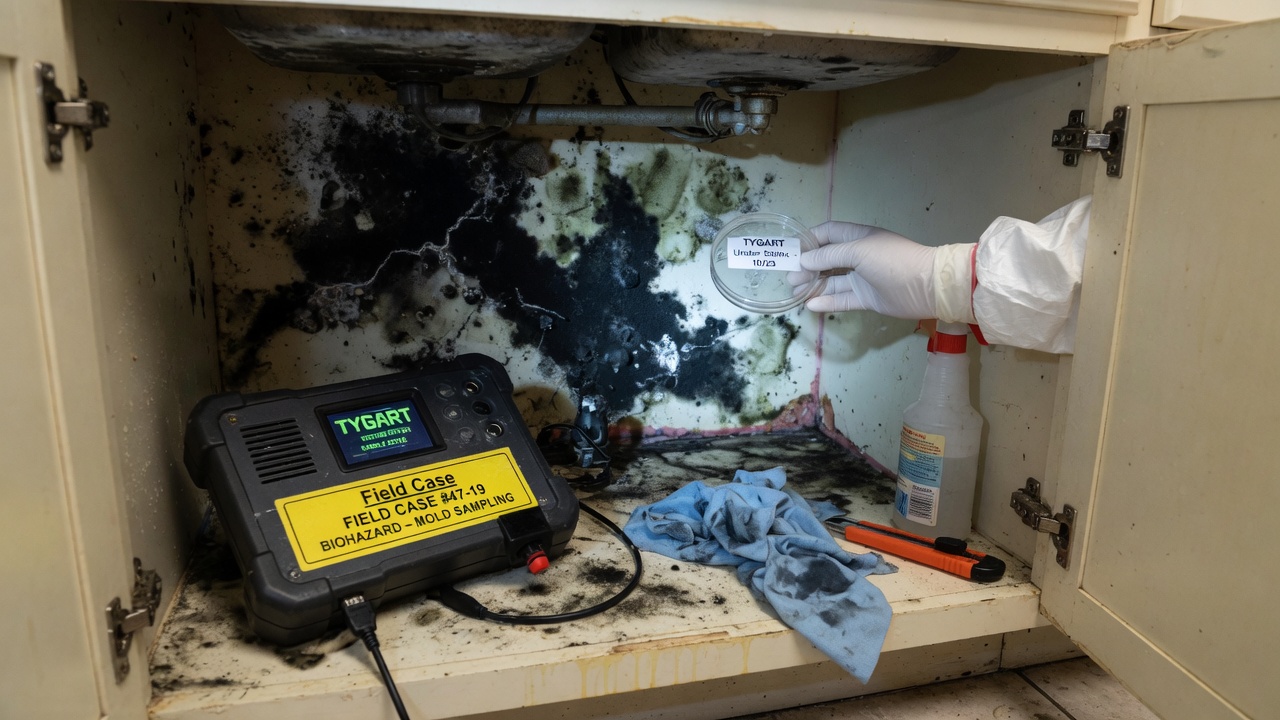
    Walk most water, fire, and mold sites and you will find the same mismatch. The company owns extractors, dehumidifiers, containment, and an IICRC-trained crew. The content library is “10 tips to prevent a wet basement,” “what is humidity,” and a single Services page that dumps water, fire, mold, biohazard, and pack-out onto one URL.

    Google does not send the job you want. It sends the job your pages describe.

    If the strongest pages on the domain answer “how to dry a small leak” and “when to call a plumber,” you will get small leaks and plumber overflow. If the strongest pages answer “sewage backup cleanup [city],” “category 3 water damage [city],” “hidden slab leak under tile,” and “mold remediation after a slow leak,” you get the jobs that fill a week of labor and a rebuild estimate.

    What homeowners actually type at 2 a.m.

    Emergency restoration search is not a research session. It is a cracked-phone query from a hallway that smells like drywall. The phrases that buy trucks look like this:

    • water damage restoration + city
    • emergency water extraction + city
    • burst pipe water damage + neighborhood
    • sewage backup cleanup + city
    • slab leak detection + city
    • black water cleanup
    • mold remediation + city
    • fire damage restoration + city
    • smoke damage cleanup

    Those queries need a dedicated URL, a visible click-to-call number, license and IICRC proof above the fold on mobile, and photos from real local jobs. They do not need a 400-word “welcome to our family-owned company” block.

    The 90-day rebuild for a restoration domain

    Do not start by writing more blog posts. Start by killing the mismatch.

    1. List the jobs that pay the mortgage

    Pull last year’s sold jobs. Rank them by gross and by contribution margin, not by call volume. For most shops the list is some mix of category 2 and 3 water, sewage, hidden leaks, mold after a delayed loss, fire/smoke, and commercial emergency response. Those become the only service pages that matter for ninety days.

    2. Give each high-ticket job its own URL

    Google ranks distinct URLs for specific intent. A single “Our Services” page that lists water, fire, mold, and contents will not outrank a competitor who published 1,200 words on sewage backup cleanup with local photos, category definitions from IICRC S500, and a same-night dispatch CTA.

    Build silos, not buckets. Water extraction. Sewage. Slab / hidden leak. Mold remediation. Fire and smoke. Pack-out. Commercial emergency. Each page answers one search, shows one class of proof, and asks for one action: tap to call.

    3. Stop hiding the phone behind a form

    A lead form on the homepage of a water restoration site loses emergency calls. Nobody standing in Category 3 water wants to type an email and wait. They tap click-to-call and hire the first crew that picks up. Put the local area code, a giant tap target, and license proof at the top of the mobile template. Answer in two rings or the ranking is buying leads for the shop that does.

    4. Write the questions the CSR already answers

    The content calendar is already sitting on the phone log. How long before mold after a flood. Will insurance cover a slab leak. What is Category 3 water. How fast can a crew be on site in this zip. Those are real searches. Company picnic posts are not.

    5. Pick a lane insurance has not locked

    Every restoration owner wants to rank for “water damage repair” on day one. In many markets the twenty-year shops already own the adjuster list. Mold remediation is often the faster retail lane: homeowners pay out of pocket or choose the contractor without waiting on a preferred-vendor sheet. Jobs in the three-to-eight-thousand range, shorter sales cycle, keywords you can actually move in ninety days. Use that cash to stay in front of the water losses when the weather finally turns.

    What not to copy blindly

    SEO puts you in front of demand that exists. It does not invent a wet spring. Rankings without weather, without an answered line, and without a review profile people trust are decoration.

    Call tracking can also sink the listing. Dynamic number insertion that swaps the header number away from the Google Business Profile creates NAP conflict. Track without making Google think the shop moved.

    The operator checklist

    1. Print last year’s jobs by margin. Circle the five that buy trucks.
    2. Map each circled job to one live URL. If it shares a page with three other trades, it does not count.
    3. Open the site on a phone. If the number is not tappable in two seconds, fix the header before you write another paragraph.
    4. Kill or noindex the faucet-class posts that train Google you are a handyman blog.
    5. Publish one emergency page per week for eight weeks: sewage, hidden leak, Category 3, mold after water, fire/smoke, commercial after-hours, pack-out, storm response.
    6. Put IICRC S500 / S520 language and real job photos on those pages, not stock “happy family” images.
    7. Measure booked high-ticket jobs, not impressions.

    Related: why restoration blogs fail to get calls, the translation table.