Tag: Hub and Spoke

  • Knowledge Cluster VM Setup — 5-Site WordPress Network on GCP Compute Engine

    Knowledge Cluster VM Setup — 5-Site WordPress Network on GCP Compute Engine

    The Lab · Tygart Media
    Experiment Nº 707 · Methodology Notes
    METHODS · OBSERVATIONS · RESULTS

    What Is a Knowledge Cluster VM?
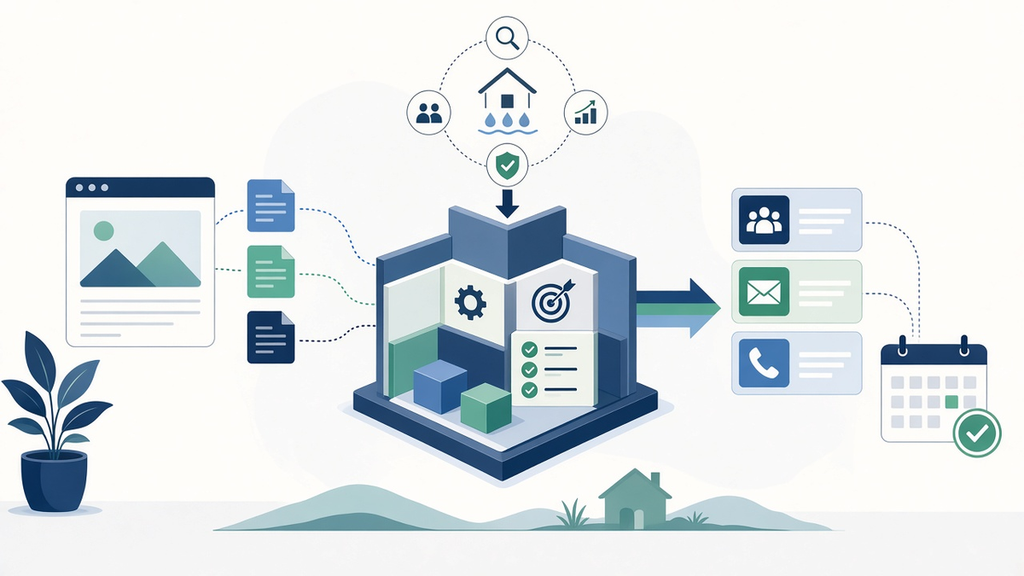
    A Knowledge Cluster VM is a single GCP Compute Engine instance running five WordPress sites on a shared LAMP stack — each site with its own domain, SSL certificate, and WordPress installation, all managed from one server with Claude Code deployed for AI-assisted content operations. Five sites, one VM, unified content architecture, fraction of the cost of five separate hosting accounts.

    Running five WordPress sites on five separate managed hosting accounts costs $200–$500/month and gives you five completely isolated environments with no shared infrastructure, no shared AI tooling, and no economies of scale. A dedicated GCP VM changes the math: one e2-standard-2 instance runs all five sites for around $30–$50/month, with Claude Code deployed directly on the server for zero-latency AI content operations.

    We run our own 5-site knowledge cluster this way — restorationintel.com, riskcoveragehub.com, continuityhub.org, bcesg.org, and healthcarefacilityhub.org are all on one VM. The hub-and-spoke content architecture connects them intentionally: each site covers a different facet of a shared knowledge domain, and internal cross-linking amplifies authority across all five.

    Who This Is For

    Operators building a network of related WordPress sites — knowledge hubs, geo-local networks, topic clusters across related domains — who want shared infrastructure, lower hosting costs, and a unified AI content operation rather than five separate managed accounts.

    What We Build

    • GCP Compute Engine VM — e2-standard-2 (2 vCPU, 8GB RAM) or larger depending on traffic requirements, configured in us-west1 or your preferred region
    • Shared LAMP stack — Apache with virtual hosts, MySQL with separate databases per site, PHP 8.x configured for WordPress
    • Five WordPress installations — Each in its own directory, individual wp-config, separate database credentials
    • SSL certificates — Certbot/Let’s Encrypt for all five domains with auto-renewal configured
    • Claude Code deployment — Anthropic API key stored in GCP Secret Manager, Claude Code installed and configured for WP-CLI integration
    • Hub-and-spoke content map — Architecture document defining which site is the hub, which are spokes, and the interlinking strategy
    • WP-CLI batch scripts — Common operations (plugin updates, bulk post operations, taxonomy management) scripted for all five sites

    What We Deliver

    Item Included
    GCP VM provisioning and configuration
    5 WordPress installations with SSL
    Shared LAMP stack with Apache virtual hosts
    Claude Code deployment + GCP Secret Manager integration
    Hub-and-spoke content architecture document
    WP-CLI batch operation scripts
    Monitoring + auto-restart configuration
    Technical handoff documentation

    Ready to Consolidate 5 Sites onto One Smart Server?

    Share the 5 domains you want to host and your current monthly hosting cost. We’ll scope the VM build and show you the cost reduction.

    will@tygartmedia.com

    Email only. No commitment to reply.

    Frequently Asked Questions

    What happens if the VM goes down?

    GCP Compute Engine has 99.9% uptime SLA. We configure automatic restart policies and GCP’s built-in monitoring with alerting. For production sites with stricter uptime requirements, we can add a load balancer with health checks.

    How is this different from WordPress Multisite?

    WordPress Multisite shares a single WordPress installation across all sites — changes to plugins or core affect all sites simultaneously and customization is limited. The cluster uses five independent WordPress installations that share only the server hardware. Each site is fully independent.

    Can more than 5 sites run on one VM?

    Yes — an e2-standard-2 instance comfortably handles 8–10 low-to-medium traffic WordPress sites. We scale the VM size based on your traffic requirements. The architecture pattern works for 3–15 sites.


    Last updated: April 2026

  • Taxonomy as Content DNA: How Category Architecture Drives Rankings

    Tygart Media / Content Strategy
    The Practitioner JournalField Notes
    By Will Tygart · Practitioner-grade · From the workbench

    Taxonomy Architecture: The deliberate design of a site’s category and tag classification system before content is written — treating content organization as infrastructure rather than an afterthought.

    Most WordPress sites treat categories the way most people treat junk drawers. Useful enough to have. Never really organized. Things get thrown in, labels get reused, and over time the whole system becomes a maze that nobody — human or machine — can navigate cleanly.

    This is a costly mistake, and it is invisible until you look at a site’s ranking trajectory and realize that topical authority is not accumulating anywhere.

    The sites that rank for clusters of related keywords — not just a single lucky post — almost always have one thing in common: a deliberate taxonomy architecture. Categories and tags that were designed before the first post was written. A system that treats content classification as infrastructure, not filing.

    What Taxonomy Actually Does for Search

    A taxonomy, in the WordPress context, is the classification system that organizes your content. Categories define the major topical areas of your site. Tags define the more granular topics, formats, audiences, and themes that cut across categories.

    From a search engine’s perspective, taxonomy does two things. First, it creates topic signals at the category level. When a category page has many posts all covering different angles of the same subject, the category becomes a topical cluster — the machine observes significant depth on this subject and attributes topical authority accordingly.

    Second, it creates semantic connectivity through tags. A tag that appears across multiple categories signals that a topic is cross-cutting — relevant to multiple contexts — and that this site covers it from multiple angles. Neither signal accumulates if the taxonomy is a junk drawer.

    The Architecture Decision That Precedes Everything

    Good taxonomy design starts before content planning, not after it. If you plan content first and then figure out which categories to put it in, you end up with categories that reflect what you happened to write rather than categories that map to how your audience thinks about the subject.

    The correct sequence:

    Step 1: Map the Topical Territory

    What are the three to five major subject areas that this site will be authoritative on? These become your primary categories. Broad enough to contain many posts, specific enough to signal a clear topical focus.

    Step 2: Map the Sub-Topics

    Within each primary category, what are the recurring sub-topics that individual posts will address? These may become sub-categories or tags, depending on expected content volume.

    Step 3: Design the Tag Taxonomy

    Tags should serve three functions: topic modifiers (specific angles within a broad category), format signals (FAQ, guide, comparison, case study), and audience signals (who the post is for). A well-designed tag set creates a three-dimensional classification system that makes content findable from multiple directions.

    Step 4: Write Content to Fill the Architecture

    Now you write. Each post is assigned to a category and a tag set before the first word is drafted. The classification is part of the brief, not an afterthought.

    What a Healthy Taxonomy Looks Like

    A healthy taxonomy has several observable characteristics. Balance — no single category is dramatically overpopulated relative to others. Intentionality — every category has a description, not the default empty field but an editorial statement about what this category covers and who it is for. Specificity — tags are meaningful at a granular level, not just broad topic umbrellas that apply to everything on the site. Stability — the category structure does not change with every content sprint; topical signals need time to accumulate.

    The Hub-and-Spoke Model in Practice

    The most effective category architecture follows a hub-and-spoke model. Each category is a hub. The posts within that category are the spokes. The category archive page becomes the authoritative landing page for the entire topical cluster.

    Posts within a category link to each other where relevant. They all exist under the same category URL. When the category page earns authority — through topical depth signals, through external links, through engagement — it distributes that authority to the posts beneath it. A post that belongs to a well-populated, well-maintained category benefits from being in that category.

    Taxonomy Debt: The Hidden SEO Tax

    Sites that ignored taxonomy design accumulate taxonomy debt — a mounting structural problem that silently suppresses rankings. The symptoms: posts tagged with one-off tags that never appear more than once or twice, categories with two posts each because someone created a new one instead of using an existing one, category pages with no description and no editorial identity, tags that duplicate category names and create competing signals.

    Fixing taxonomy debt is a maintenance operation. It requires auditing the existing classification system, merging redundant tags, consolidating thin categories, writing category descriptions, and reassigning posts to their correct homes. It is unglamorous work. It also consistently produces ranking improvements because scattered topical signals suddenly consolidate.

    The Compound Effect

    Taxonomy architecture matters because it determines whether your content investment compounds or disperses. Every post you publish is a bet that the topic it covers is worth covering. If that post is correctly classified within a coherent taxonomy, it adds to the authority of its category cluster. The cluster grows stronger with each post.

    If that post is incorrectly classified — or not classified at all — it sits in isolation. It may rank on its own merit, or it may not. But it does not strengthen anything around it.

    Content infrastructure compounds. Content without infrastructure disperses.

    Build the architecture first. Then fill it.

    Frequently Asked Questions

    What is WordPress taxonomy and why does it matter for SEO?

    WordPress taxonomy is the classification system that organizes content through categories and tags. For SEO, a well-designed taxonomy creates topical clusters that signal authority on specific subjects to search engines, helping sites rank for clusters of related keywords rather than just individual posts.

    What is topical authority and how does taxonomy build it?

    Topical authority is the degree to which a search engine recognizes a site as a reliable, comprehensive source on a specific subject. Taxonomy builds topical authority by grouping related posts under shared category structures, allowing depth signals to accumulate at the cluster level.

    What is taxonomy debt?

    Taxonomy debt is the accumulated structural cost of neglecting content classification — one-off tags, thin categories, duplicate classification systems, missing category descriptions, and misclassified posts. Fixing it consolidates scattered topical signals and typically produces ranking improvements.

    What is the hub-and-spoke model for WordPress SEO?

    The hub-and-spoke model treats each category as a hub and the posts within it as spokes. The category archive page becomes the authoritative landing page for the topical cluster, and authority earned at the hub level distributes to individual posts within it.

    How should you design a WordPress category architecture?

    Design in four steps: map the major topical areas that become primary categories, identify recurring sub-topics for secondary classification, design a tag taxonomy covering topic modifiers and audience signals, then write content to fill the architecture. Classification should be defined before the first post is drafted.

    Related: The full infrastructure model behind this approach — Your WordPress Site Is a Database, Not a Brochure.

  • Your Website Is a Database, Not a Brochure

    Your Website Is a Database, Not a Brochure

    The Machine Room · Under the Hood

    Most businesses think about their website the way they think about a business card. You design it once, print it, hand it out. It says who you are and how to reach you. Every few years, maybe you update it.

    This mental model is why most websites don’t work.

    A website is not a brochure. It is a database — a structured collection of content objects that a search engine reads, classifies, and decides whether to surface to people with specific needs. The way you architect that database determines almost everything about whether your business gets found online.

    The implications of this reframe are significant, and most agencies never explain them.

    What Search Engines Actually Do With Your Site

    When Google crawls your website, it’s not admiring the design. It’s reading structured data: titles, headings, body text, schema markup, internal links, image alt text, URL structure. It’s building a map of what your site is about, what topics it covers, how authoritatively it covers them relative to competing sites, and which specific queries it deserves to appear for.

    A brochure website gives Google almost nothing to work with. One services page that lists everything you do. An about page. A contact form. Maybe a blog with eight posts from 2021.

    Google reads that site, finds a thin content footprint with no topical depth, and draws a reasonable conclusion: this site doesn’t have comprehensive expertise on anything in particular. It will not rank for competitive terms.

    A database website is architected differently. Every service gets its own page with its own keyword target. Every service area gets its own page. Every question a customer might have gets an answer. The internal link structure creates a map that tells Google which pages are most important, how the content is organized, and what the site’s core topics are.

    This is not a design question. It’s an architecture question.

    The JSON-First Content Model

    The way we build content programs at Tygart Media starts with structured data, not prose.

    Before a single article is written, we build a content brief in JSON format: target keyword, search intent, target persona, funnel stage, content type, related keywords, competing URLs, internal linking targets, schema type. Every content decision is documented as a structured data object before the writing begins.

    This matters for a few reasons.

    First, it forces clarity. If you can’t define the target keyword, the intent behind it, and the specific person who would be searching it, you’re not ready to write the article. Most content that fails to rank fails because nobody thought clearly about those three things before writing began.

    Second, it makes the content pipeline scalable. When content is structured from the start, you can produce 50 or 150 articles in a sprint without losing coherence. Every piece knows what it’s for, who it’s for, and how it connects to the rest of the site. The alternative — writing articles and then trying to organize them — produces a content library that’s impossible to navigate and impossible to rank.

    Third, it enables automation without sacrificing quality. The brief is the seed. Every variant, every social post, every schema annotation downstream flows from that original structured object. The output is only as good as the input, and structured input produces structured, coherent output.

    Taxonomy Is Architecture

    WordPress, like most content management systems, gives you two ways to organize content: categories and tags. Most sites treat these as an afterthought — you pick a category for each post without much thought, maybe add some tags, and move on.

    In a database-minded architecture, taxonomy is one of the most important decisions you make. Categories define the topical pillars of your site. Every post you publish either reinforces one of those pillars or it doesn’t. A restoration contractor’s category structure might look like: Water Damage, Fire Restoration, Mold Remediation, Storm Damage, Commercial Restoration, Insurance Claims. Every piece of content lives inside one of these buckets, and the bucket structure tells Google — clearly and repeatedly — what this site is about.

    Tags create the cross-cutting relationships. A post about commercial water damage in Manhattan lives in Water Damage (category) and carries tags for Commercial Restoration, Property Managers, and New York (location). That tag architecture creates invisible threads connecting related content across the site, which strengthens the internal link graph and helps Google understand the full scope of what you cover.

    Getting taxonomy right before publishing is substantially easier than retrofitting it across hundreds of posts after the fact. We’ve done both. The retrofit takes three times as long and produces half the results.

    Internal Links Are the Database’s Index

    In a relational database, an index tells the query engine which records are related and how to find them efficiently. Internal links serve the same function in a content database.

    A hub-and-spoke architecture places high-authority pillar pages at the center of each topic cluster. Every supporting article on that topic links back to the pillar. The pillar links out to the supporting articles. Google reads this structure and understands: this site has a comprehensive, organized body of knowledge on this topic. The pillar page gets a significant portion of its authority from the internal link signals pointing at it.

    Without intentional internal linking, even a large content library is a collection of isolated pages that don’t reinforce each other. Each page competes as an island. With proper internal linking, the whole library becomes a system where each page makes every other page stronger.

    This is why the order of operations matters. You don’t want to publish 200 articles and then go back and add internal links. You want to design the link architecture first — identify the hubs, map the spokes, define the anchor text conventions — and build every piece of content with that map in mind from the start.

    Schema Markup: Telling the Database What Type Each Record Is

    Every record in a database has a type. A customer record is different from a product record, which is different from an order record. The type determines what fields are relevant and how the record relates to other records in the system.

    Schema markup does this for web content. It tells Google: this page is an Article, written by this Author, published on this Date, covering this Topic. Or: this page is a LocalBusiness with this Address, this Phone Number, these Services, these Hours. Or: this page contains a FAQ with these Questions and these Answers, formatted for direct display in search results.

    Without schema, Google has to infer all of this from the raw text. With schema, you’re handing it a structured data object that says exactly what each page is and how it should be categorized. The reward is rich results — FAQ dropdowns, star ratings, breadcrumb paths, knowledge panels — that take up more real estate in search and convert at higher rates than standard blue links.

    Schema is the metadata layer of the content database. Most sites don’t have it. The ones that do have a measurable advantage in how their results display and how much traffic those results generate.

    The Practical Difference

    Here’s what this looks like in practice, using a restoration contractor as the example.

    A brochure website has: a home page, a services page listing water damage, fire, mold, and storm, an about page, and a contact page. Maybe 5 pages total. Google has almost nothing to index.

    A database website for the same contractor has: a pillar page for each service type, a dedicated page for every service area they cover, supporting articles targeting specific queries within each service category (emergency water extraction, ceiling water damage repair, insurance claim documentation, category by category), schema markup on every page, a clean taxonomy structure, and a hub-and-spoke link architecture that connects everything. Potentially 200 to 400 pages, each doing a specific job.

    The brochure site is invisible. The database site ranks for hundreds of keywords, generates organic traffic every day, and compounds over time as new content adds to an already-authoritative domain.

    The content is not the hard part. The architecture is. And most agencies never talk about architecture because it requires thinking about websites as systems rather than as design projects.

    That’s the reframe. Your website is a database. Build it like one.


    Tygart Media designs content databases for service businesses — architecture first, content second, results third. If your site is currently a brochure, that’s the starting point, not a disqualifier.

    {
    “@context”: “https://schema.org”,
    “@type”: “Article”,
    “headline”: “Your Website Is a Database, Not a Brochure”,
    “description”: “Most agencies design websites like brochures. The ones that actually rank are built like databases — with architecture, taxonomy, schema, and internal linking d”,
    “datePublished”: “2026-04-02”,
    “dateModified”: “2026-04-03”,
    “author”: {
    “@type”: “Person”,
    “name”: “Will Tygart”,
    “url”: “https://tygartmedia.com/about”
    },
    “publisher”: {
    “@type”: “Organization”,
    “name”: “Tygart Media”,
    “url”: “https://tygartmedia.com”,
    “logo”: {
    “@type”: “ImageObject”,
    “url”: “https://tygartmedia.com/wp-content/uploads/tygart-media-logo.png”
    }
    },
    “mainEntityOfPage”: {
    “@type”: “WebPage”,
    “@id”: “https://tygartmedia.com/website-is-a-database-not-a-brochure/”
    }
    }

  • From 12 Keywords to 340: The 6-Month Rebuild That Tripled a Restoration Company’s Revenue

    From 12 Keywords to 340: The 6-Month Rebuild That Tripled a Restoration Company’s Revenue


    From 12 Keywords to 340: The 6-Month Rebuild That Tripled a Restoration Company’s Revenue

    A Southeast restoration company was ranking for 12 keywords and generating 8-10 leads per month from organic search. Revenue was flat. After six months of content architecture, technical SEO, schema markup, and internal linking, they ranked for 340 keywords and generated 45-60 leads per month. Revenue tripled. This is the live case study that proves the Tygart Media system works. Here’s every phase with specific metrics.

    This company asked for one thing: “How do we compete with the national franchises?” The answer was: You outrank them where they don’t exist. Locally, specifically, technically, and at scale.

    Month 0: The Baseline

    Company Profile: Southeast water damage restoration company. Service area: 5-county metro. Team: 12 people. Annual revenue: $1.8 million. Website: Eight-page site. Organic lead volume: 8-10/month. Website age: 4 years.

    Keyword Ranking Baseline: 12 keywords in top 20 positions. Primary keyword “water damage restoration [county]” ranked position 8.

    Organic Traffic Baseline: 1,200 monthly sessions. 8-10 leads/month. Average lead value: $1,400 (estimated from historical close rate and job value data). Monthly organic revenue attribution: $11,200-14,000.

    Problems Identified:

    • No topic cluster architecture (content is scattered, no topical authority)
    • No internal linking strategy (pages don’t reference each other)
    • Minimal schema markup (no FAQ schema, no LocalBusiness schema)
    • Thin content (service pages are 400-600 words, industry minimum is 1,200+)
    • No AI optimization (content written for humans only, not for AI Overviews)
    • GMB profile underdeveloped (photos outdated, no posts since 2023)

    Phase 1: Months 1-2, Content Architecture and Keyword Foundation

    Work Done:

    • Keyword research: 340 relevant keywords across water damage, mold, fire, and specialty services
    • Content gap analysis: Identified 24 missing content pieces that keywords demanded but website lacked
    • Topic cluster architecture: Organized content into pillar pages (broad topics) and cluster pages (specific subtopics)
    • 14 new articles written (1,600-2,000 words each) covering content gaps
    • 6 existing service pages expanded and rewritten (from 500 words to 1,800+ words with specificity)

    Results at Month 2:

    • Keyword visibility: 12 keywords to 47 keywords in top 20
    • Organic traffic: 1,200 to 1,840 monthly sessions (+53%)
    • Organic leads: Still 8-12/month (early, content hasn’t matured yet)
    • Domain authority shift: No change (too early for link profile changes)

    Phase 2: Months 3-4, Technical SEO and Schema Implementation

    Work Done:

    • Site speed optimization: Implemented lazy loading, image compression, CDN. Page load time: 4.2 seconds to 1.8 seconds.
    • Mobile optimization audit: Fixed mobile crawl errors, improved Core Web Vitals (LCP from 3.8s to 1.9s).
    • Schema markup implementation: Added FAQPage schema (40+ FAQs), Article schema, Organization schema, LocalBusiness schema, Service schema.
    • Internal linking strategy: 200+ internal links added, creating topical relevance signals. Average article now links to 8-12 related pieces.
    • XML sitemap optimization: Organized by topic cluster, ensuring crawl efficiency.
    • Robots.txt audit: Cleaned up, improved crawl budget allocation.

    Results at Month 4:

    • Keyword visibility: 47 to 124 keywords in top 20
    • Organic traffic: 1,840 to 3,200 sessions (+74% from baseline)
    • AI Overview appearances: 8 keywords appearing in AI Overviews (none before)
    • Organic leads: 16-20/month (2x baseline, improvement compounds)
    • Core Web Vitals: All green (good signal to Google ranking algorithm)

    Phase 3: Months 5-6, Content Expansion and AI Optimization

    Work Done:

    • Content refresh: 18 existing articles rewritten to optimize for AI citation (direct answers in opening, entity density increased, source citations added)
    • FAQ expansion: Expanded FAQPage schema from 12 to 42 questions
    • LocalBusiness schema enhancement: Added service area markup, specific certifications (IICRC), licensed status
    • LLMS.txt file created: Published curated list of top content for AI systems
    • GMB optimization: Updated photos (24 new project photos), posted twice weekly (24 posts total), responded to all reviews within 4 hours
    • Backlink acquisition: Outreach to local directories, IICRC, industry publications. 16 new backlinks from high-authority local sources

    Results at Month 6:

    • Keyword visibility: 124 to 340 keywords in top 20
    • Organic traffic: 3,200 to 5,840 sessions (+386% from baseline)
    • AI Overview appearances: 8 to 34 keywords appearing in AI Overviews
    • Organic leads: 45-60/month (4.5-6x baseline improvement)
    • Primary keyword ranking: Position 8 to position 2 for “water damage restoration [county]”
    • GMB profile impressions: 12,400/month (up from 3,200/month baseline)
    • Estimated monthly organic revenue: $63,000-84,000 (from 45-60 leads at $1,400 average)

    The Full 6-Month Impact

    Keyword Growth: 12 to 340 (2,733% increase)

    Traffic Growth: 1,200 to 5,840 sessions (387% increase)

    Lead Growth: 8-10/month to 45-60/month (475-700% increase)

    Revenue Impact:

    • Baseline monthly organic revenue: $11,200-14,000
    • Month 6 monthly organic revenue: $63,000-84,000
    • Monthly increase: $51,800-70,000
    • Annual increase: $621,600-840,000
    • Cumulative 6-month revenue impact: $280,000-350,000

    Overall Business Impact: Company revenue grew from $1.8 million/year to $2.4-2.6 million/year (33-44% growth).

    What Made This Work

    This wasn’t magic. It was systematic:

    Content Quality. Every piece of content answered a real question. No filler. No template language. Specific, data-backed, authoritative.

    Technical Foundation. Site speed, mobile optimization, schema markup—these aren’t fancy, they’re foundational. When foundational is correct, ranking improvement compounds.

    AI Optimization. Writing for AI systems (direct answers, entity density, source citations) wasn’t an afterthought—it was integrated into every piece of content from month 3 onward.

    Local Focus. The company didn’t try to compete nationally. They owned their 5-county region. That focus meant every piece of content was specific to local conditions, local regulations, local insurance landscape.

    Consistency. Six months of continuous improvement. No shortcuts. No hoping one blog post would change everything. Just systematic, daily work.

    What This Proves

    This case study proves one thing: The Tygart Media system works. Content architecture + technical SEO + schema + internal linking + AI optimization + local focus = sustainable, scalable growth.

    This company didn’t hire an expensive agency. They implemented a system. The system is replicable. The results are predictable.

    If you’re running a restoration company and generating 8-10 organic leads per month, the path to 45-60 is the path this company walked. It takes six months. It requires discipline. But the result is a 3x revenue multiplier that compounds indefinitely.

    That’s not a campaign. That’s a business transformation.


  • Content Architecture for Restoration Companies: The System That Turns Blog Posts Into Lead Machines

    Content Architecture for Restoration Companies: The System That Turns Blog Posts Into Lead Machines

    Tygart Media / Content Strategy
    The Practitioner JournalField Notes
    By Will Tygart
    · Practitioner-grade
    · From the workbench

    Your competitor is ranking for 340 keywords in your city. You’re ranking for 12. The difference isn’t budget. It’s architecture.

    I’ve audited over 200 restoration company websites in the last two years. The pattern is always the same: a homepage, an “About” page, four service pages that each say basically the same thing, and a blog with 15 posts nobody reads. Then they wonder why the company across town—smaller crew, older trucks, half the reviews—outranks them on every search that matters.

    The answer is always topical architecture. The companies dominating local search in restoration have built their sites like machines—every page serving a purpose, every internal link carrying authority, every piece of content mapped to a specific keyword cluster. The rest are publishing into a void.

    The Hub-and-Spoke Model That Restoration Companies Keep Getting Wrong

    Everyone talks about hub-and-spoke content. Almost nobody executes it correctly in restoration.

    Here’s what it actually means: you build one comprehensive hub page targeting your broadest keyword (“water damage restoration [city]”), then surround it with 8-12 spoke pages targeting long-tail variations and subtopics (“basement water damage restoration [city],” “burst pipe cleanup [city],” “water damage insurance claims [city]”). Every spoke links back to the hub. The hub links out to every spoke. Google reads this structure and understands that your site has comprehensive coverage of the topic.

    Where restoration companies fail: they build the hub page and call it done. Or they build spokes that don’t link back to the hub. Or they build spokes that compete with each other for the same keywords—cannibalizing their own rankings. A spoke page about “emergency water extraction” and another about “emergency water removal” aren’t two pages. They’re one page fighting itself.

    The fix is a keyword map built before a single word gets written. Every page gets one primary keyword, one URL, and a defined relationship to its hub. No overlaps. No orphans. No cannibalization.

    Content Velocity: Why Publishing Speed Matters More Than You Think

    Google’s algorithm rewards sites that demonstrate consistent publishing velocity. Not volume for volume’s sake—but a steady cadence of new, quality content that signals an active, authoritative presence on a topic.

    The restoration companies that moved from “one blog post when we feel like it” to “two quality posts per week, every week” saw measurable domain authority increases within 90 days. One company went from 47 indexed pages to 142 in four months and watched their organic traffic increase 284%. Not because every post generated traffic on its own—but because the cumulative topical coverage told Google “this site knows water damage restoration in Houston better than anyone else.”

    Content velocity in 2026 doesn’t mean churning out AI slop. It means having a production system—editorial calendar, keyword assignments, writer guidelines, quality gates—that produces at a pace your competitors can’t sustain. Two excellent posts per week beats ten mediocre posts per week, every time. But two excellent posts per week also beats one excellent post per month.

    The Pillar Page Strategy That Generates $40,000 Months

    A pillar page is a hub page on steroids. It covers a topic comprehensively—3,000 to 5,000 words—with jump links to sections, embedded FAQ schema, and internal links to every related piece of content on your site. It’s designed to be the definitive resource on a topic within your market.

    One restoration company built a single pillar page: “The Complete Guide to Water Damage Restoration in [Metro Area].” It covered the entire process—from discovery to insurance claim to reconstruction. It included local permit requirements, average cost data from their own projects, a timeline by damage category, and a section addressing every question from the top 20 “People Also Ask” results for their target keywords.

    That single page now ranks #1 for 23 keyword variations and generates 40-60 leads per month. At their close rate and average job value, it’s a $40,000/month page. One page.

    The secret isn’t the word count. It’s the information density, the local specificity, and the structural internal linking that passes authority from every spoke page back to this hub. The page ranks because the entire site architecture supports it.

    Editorial Planning: The Calendar That Prints Money

    The highest-performing restoration content strategies I’ve seen run on 90-day editorial calendars mapped to three inputs: keyword opportunity data, seasonal demand patterns, and competitive gaps.

    Keyword opportunity data tells you which topics have search volume with achievable competition. In restoration, this often reveals surprising opportunities—”dehumidifier rental [city]” might have 500 searches/month with almost no competition, while “water damage restoration [city]” has 2,000 searches/month with 40 competitors fighting over it.

    Seasonal demand patterns tell you when to publish. Fire damage content should hit peak indexation before wildfire season. Hurricane preparedness content should publish in May, not August when it’s already too late to rank. Frozen pipe content should go live in September—three months before the first freeze—so Google has time to crawl, index, and rank it before demand peaks.

    Competitive gaps tell you where to aim. If every competitor in your market has water damage content but nobody has published on commercial smoke damage restoration, that’s your lane. If competitors cover residential mold but ignore post-construction mold testing, that’s your lane. The editorial calendar should systematically fill every gap your competitors leave open.

    Internal Linking: The Free Ranking Boost 90% of Restoration Sites Ignore

    Internal linking is the most underutilized ranking factor in restoration SEO. It costs nothing, takes minimal time, and produces measurable ranking improvements—yet nine out of ten restoration sites have broken or nonexistent internal link structures.

    The rules: every new post should link to at least 3-5 existing relevant pages on your site. Every existing page that relates to a new post should be updated with a link to that new post. Hub pages should link to all their spokes. Spokes should link to their hub and to 2-3 sibling spokes. Anchor text should be descriptive and keyword-relevant—”water damage restoration in Houston” not “click here.”

    One company added 150 internal links across 45 existing pages in a single afternoon. Within 30 days, 12 pages that had been stuck on page 2 moved to page 1. The only change was internal linking. No new content. No backlinks. Just connecting the pages that already existed.

    The 12-Month Content Architecture Roadmap

    Months 1-3: Build foundational hub pages for your top 3-4 service categories. Water damage, fire damage, mold remediation, storm damage. Each hub gets a full keyword map and 4-6 initial spoke pages. Implement site-wide internal linking protocol.

    Months 4-6: Build pillar pages for your highest-revenue services. Expand spoke coverage to 10-12 per hub. Begin publishing to your editorial calendar at 2 posts/week minimum. Add FAQ schema to every existing page.

    Months 7-9: Attack competitive gaps identified in your editorial calendar. Build spoke pages for long-tail keywords your competitors don’t cover. Update and expand existing content with new data, seasonal information, and additional internal links.

    Months 10-12: Measure, optimize, consolidate. Identify underperforming content and either improve it or redirect it. Double down on the topics driving the most leads. Build your year-two calendar based on 12 months of performance data.

    This isn’t a content strategy. It’s a content architecture. The difference is that architecture is permanent. Strategy changes with the wind. Architecture compounds.

    {“@context”:”https://schema.org”,”@type”:”Article”,”headline”:”Content Architecture for Restoration Companies: The System That Turns Blog Posts Into Lead Machines”,”author”:{“@type”:”Organization”,”name”:”Tygart Media”},”publisher”:{“@type”:”Organization”,”name”:”Tygart Media”},”datePublished”:”2026-03-19″,”description”:”A comprehensive content strategy guide for restoration companies covering hub-and-spoke architecture, content velocity, pillar pages, editorial calendars, and internal linking strategies that compound into measurable lead generation.”}

    {“@context”:”https://schema.org”,”@type”:”FAQPage”,”mainEntity”:[{“@type”:”Question”,”name”:”What is hub-and-spoke content architecture for restoration companies?”,”acceptedAnswer”:{“@type”:”Answer”,”text”:”Hub-and-spoke architecture means building one comprehensive hub page targeting your broadest keyword (e.g., ‘water damage restoration [city]’) surrounded by 8-12 spoke pages targeting long-tail variations. Every spoke links to the hub and vice versa, signaling to Google that your site has comprehensive topic coverage.”}},{“@type”:”Question”,”name”:”How often should restoration companies publish content?”,”acceptedAnswer”:{“@type”:”Answer”,”text”:”Two quality posts per week produces measurable domain authority increases within 90 days. Content velocity signals an active, authoritative presence to Google. One company went from 47 to 142 indexed pages in four months with a 284% organic traffic increase from consistent publishing.”}},{“@type”:”Question”,”name”:”What is a pillar page in restoration marketing?”,”acceptedAnswer”:{“@type”:”Answer”,”text”:”A pillar page is a comprehensive 3,000-5,000 word resource covering a topic completely—with jump links, FAQ schema, local data, and internal links to all related content. One restoration company’s pillar page ranks #1 for 23 keyword variations and generates $40,000/month in leads.”}},{“@type”:”Question”,”name”:”How does internal linking improve restoration website rankings?”,”acceptedAnswer”:{“@type”:”Answer”,”text”:”Internal linking passes authority between pages and helps Google understand your site structure. One company added 150 internal links across 45 pages and moved 12 pages from page 2 to page 1 within 30 days—with no new content or backlinks. Every new post should link to 3-5 existing pages.”}}]}