Tag: Everett
-

NAVSTA Everett Military Families: Constellation Impact
If you’re a military family stationed at Naval Station Everett — or planning a PCS move there — the Navy’s cancellation of the Constellation-class frigate program has direct implications for your day-to-day planning and the community you’re moving into.
The short version: base operations are unchanged, your current assignment is unaffected, but the growth trajectory the community expected — more housing, more services, more military-family resources — is deferred indefinitely.
What the Cancellation Actually Does (and Doesn’t Do)
The Navy canceled four of the six Constellation-class frigates already under contract in November 2025. Two ships — USS Constellation and USS Congress — continue construction in Wisconsin, with delivery projected no earlier than 2029. No homeporting commitment for those two ships has been made.
What this means practically: the 2,900 additional sailors and civilian personnel projected by the Navy’s own environmental study are not coming — at least not on the timeline that was anticipated. NAVSTA Everett continues with its current operational footprint. Ships deploy and return. The base runs normally.
Housing: What Changes
Military housing in and around NAVSTA Everett — both on-base and off-base in the surrounding Mukilteo, Everett, and Lynnwood areas — had been expected to face increased demand as 2,900 new personnel arrived. That pressure is now reduced. For families currently looking for off-base housing, this is arguably good news: competition for rental properties and starter homes near the base will not spike the way it might have under the expansion scenario.
On-base housing managed by Lincoln Military Housing serves NAVSTA Everett. Availability varies by rank and family size — the wait list situation that a 2,900-person influx would have created is now less likely. Families expecting a long wait for on-base housing may find the situation slightly less constrained.
Schools: Everett School District and Military Families
Everett School District (ESD) schools serving areas near NAVSTA Everett — including schools in Mukilteo and north Everett — had been expecting enrollment growth tied to the frigate homeporting. That enrollment growth projection is now removed. For families PCS-ing to the area, this means school availability should be less pressured than it might have been in a 2,900-person growth scenario.
The Mukilteo School District (which serves much of the area immediately surrounding the base) has strong academic programming. Everett School District serves students living in Everett proper. Both districts have experience serving military families with PCS timelines, mid-year enrollments, and frequent school transitions.
The Community Services Question
Military family services — childcare, Fleet and Family Support Center programs, commissary, NEX — at NAVSTA Everett are sized to the current population. The planned frigate expansion had created expectations of increased investment in base services to serve a larger population. Those service expansions are now on hold.
The off-base community has also been investing in anticipation of growth — the city’s Outdoor Event Center (400,000 projected annual visitors), the waterfront redevelopment, new restaurants and retail in the downtown Broadway District. These investments continue, driven by the broader Everett growth story rather than military expansion specifically.
Long-Term Base Stability: The Honest Assessment
Military families understandably want to know: Is NAVSTA Everett stable? The honest answer is yes — with a caveat. The base survived the 2005 BRAC process, when it came close to being recommended for closure, only through sustained advocacy by Rep. Larsen, state leaders, and local business groups. The frigate cancellation weakens the strategic expansion argument, but doesn’t remove Everett’s geographic and infrastructure advantages for Pacific Fleet operations.
Rep. Larsen has already begun advocating for Everett as the homeport for replacement vessels under whatever program follows the Constellation. The Navy’s stated replacement concept (based on the Coast Guard’s Legend-class cutter design) is not yet in active procurement, but Larsen’s early engagement suggests Everett will be positioned as a candidate when homeporting decisions are made.
Frequently Asked Questions — For Military Families
Is NAVSTA Everett safe from closure?
No BRAC process is currently active, and NAVSTA Everett is not on any closure list. The base survived the last major BRAC round (2005) and remains strategically important for Pacific Fleet operations. The Constellation cancellation reduces planned expansion but doesn’t threaten current operations. Congressional advocates — primarily Rep. Rick Larsen — remain active in supporting the base’s strategic case.
Are PCS moves to NAVSTA Everett still happening normally?
Yes. PCS orders to NAVSTA Everett continue normally. The cancellation doesn’t affect current ship assignments, deployment schedules, or personnel management at the base. If you have orders to Everett, nothing about the Constellation cancellation changes your reporting situation.
What is the off-base housing market like near NAVSTA Everett in 2026?
The Mukilteo and north Everett rental and housing market near the base is moderately tight but significantly more affordable than Seattle or Bellevue. Average monthly rents for a 3-bedroom in the Mukilteo/Everett area run in the $2,200-$2,800 range. The cancellation of the 2,900-sailor expansion reduces anticipated demand pressure on this market. BAH rates for E-5 and above with dependents in the Seattle/Everett area cover most of the market effectively.
What schools serve families near NAVSTA Everett?
The Mukilteo School District serves most of the area immediately surrounding the base — highly rated schools with strong STEM programs. Everett School District serves Everett city proper. Both have military-family liaison resources and experience with mid-year enrollment from PCS transfers. Contact the specific district for School Liaison Officer information before your arrival.
Related Exploring Everett coverage: Navy Cancels Constellation Frigate Program — Full Story
-
NAVSTA Everett BRAC Risk: Constellation Cancellation Impact
For Everett’s civic watchers — residents who follow city hall, attend council meetings, and pay attention to the economic forces shaping Snohomish County — the Navy’s cancellation of the Constellation-class frigate program deserves more attention than it’s received locally.
The frigate cancellation isn’t just a defense acquisition story. It’s a direct hit to Everett’s long-term economic planning assumptions, its relationship with the federal government, and its strategic argument in any future Base Realignment and Closure (BRAC) process.
What Was Planned — and What’s Gone
In 2021, the Navy formally designated Naval Station Everett as the future homeport for 12 Constellation-class guided-missile frigates. A 2024 Navy environmental impact study was conducted — and cleared — for homeporting 12 frigates at Everett, projecting a net addition of 2,900 sailors and civilian personnel to Snohomish County.
That 2,900-person expansion represented tens of millions of dollars in annual payroll entering the Snohomish County economy, increased demand for housing and services, and a strategic argument for continued federal investment in NAVSTA Everett infrastructure.
Navy Secretary Phelan’s November 2025 cancellation of the program removes all of it from the planning horizon — replaced by uncertainty about whether even the two remaining ships will homeport here.
The BRAC Question
BRAC — Base Realignment and Closure — is the periodic federal process by which the Department of Defense evaluates military installations for consolidation or closure. The last major BRAC round was 2005; Congress must authorize any new round.
NAVSTA Everett has been through this before. In 2005, the base came within a recommendation of being placed on the closure list. Local leaders, Rep. Larsen, and state officials mounted a significant advocacy campaign — and the base survived. The argument that carried the day: NAVSTA Everett’s geographic location (direct Pacific access, deep-water port) is irreplaceable and its infrastructure is modern.
The frigate cancellation weakens that argument by removing the planned growth that would have reinforced Everett’s strategic importance. Ray Stephanson, Economic Alliance Snohomish County president, has flagged this risk explicitly. A base that was supposed to grow to 12 new frigates and 2,900 new personnel is a different BRAC calculus than a base that maintains its current footprint without a clear growth mandate.
Rep. Larsen’s Strategy
Rep. Larsen, who represents Washington’s 2nd Congressional District and has been NAVSTA Everett’s primary congressional champion for over two decades, has been methodical in his response to the cancellation. He’s not fighting the cancellation itself — that fight is over. Instead, he’s positioning Everett for the replacement program.
Larsen has stated publicly that Everett’s geographic advantage — “one of the closest locations to the Pacific Ocean” — makes it the logical homeport for whatever ship class the Navy deploys to replace the Constellation. The replacement concept (Coast Guard Legend-class cutter derivative, targeting 2028 delivery) hasn’t entered formal procurement, but Larsen’s early public positioning suggests he’s laying groundwork for the next homeporting fight.
Local Budget and Tax Base Implications
The federal government doesn’t pay property taxes, but military installations drive significant local economic activity that does generate tax revenue. The projected 2,900-person expansion would have increased sales tax receipts, housing market activity, business revenues, and utility revenues across Snohomish County. That fiscal tailwind is now removed from projections.
Everett’s city budget relies heavily on sales tax, B&O tax, and utility revenue. The city has been investing in downtown redevelopment, the waterfront, and the proposed Outdoor Event Center (400,000 annual visitors projected) — these projects are driven by the broader Everett growth story, not military expansion specifically. But the removal of the military expansion scenario creates a more conservative growth trajectory for the north end of the county.
Frequently Asked Questions — For Civic Watchers
Could NAVSTA Everett be closed in a future BRAC?
Any base can be evaluated in a BRAC process if Congress authorizes one. The 2005 round brought Everett close to a closure recommendation — the base survived through geographic and strategic arguments. The Constellation cancellation weakens the expansion case but doesn’t change Everett’s core strategic geography. No BRAC has been authorized since 2005; Congress has resisted multiple Administration requests for new BRAC rounds.
How much does NAVSTA Everett contribute to Snohomish County’s economy?
NAVSTA Everett’s annual economic impact to Snohomish County has been estimated in the hundreds of millions of dollars, counting direct payroll, contractor spending, and multiplier effects from military family spending in the local economy. The base supports approximately 10,000 military and civilian personnel in the region. The projected Constellation expansion would have added tens of millions annually above that baseline.
Who advocates for Naval Station Everett in Washington D.C.?
Rep. Rick Larsen (D-WA-2) is NAVSTA Everett’s primary congressional advocate. Sen. Maria Cantwell and Sen. Patty Murray have both supported the base in appropriations. Locally, the Economic Alliance Snohomish County (EASC) and Snohomish County government coordinate advocacy through the county’s federal affairs program.
What does the Navy’s replacement frigate program mean for Everett?
The Navy has announced a replacement concept based on the Coast Guard Legend-class cutter design, targeting 2028 delivery. No homeporting decisions have been made. Rep. Larsen has publicly positioned Everett as the logical homeport given its Pacific access and infrastructure. Whether that advocacy succeeds depends on Pentagon force structure decisions not yet made.
Related Exploring Everett coverage: Full story: Navy Cancels Constellation Frigate Program | Military Families at NAVSTA Everett: What Changes
-
Boeing 737 North Line Jobs: Career Guide for Everett Workers
If you work at Boeing’s Everett campus — or you’re trying to get there — the North Line changes your calculus this summer.
Boeing is opening its first-ever 737 MAX production line in Everett in summer 2026. For Everett-area aerospace workers, that means new positions, internal transfer opportunities, and a second major production program running alongside widebody assembly on the same campus.
What’s Actually Opening — and When
The North Line is a 737 MAX final assembly line inside the Everett factory. It will initially build 737 MAX 8 and MAX 9 jets, with MAX 10 capability once FAA certification clears (still pending as of April 2026). Boeing is targeting midsummer 2026 for first production in Low Rate Initial Production (LRIP) — a deliberately slowed build phase where additional quality checks are layered in before full production speed.
Boeing posted shift manager and production management job listings for the North Line in January 2026. Hourly IAM-covered production positions have been posted through the spring. If you’ve missed the first wave of postings, watch jobs.boeing.com — North Line hiring will continue as the line scales up.
Transfer vs. New Hire — What’s the Mix
Boeing has been explicit: North Line staffing is a combination of newly hired employees and existing Boeing workers transferring from Renton, Everett’s own campus, and Moses Lake. If you’re already at Everett working widebody programs (787, 777X), internal transfer opportunities to the North Line are real — especially for workers with experience in flow-based final assembly.
New hires go through 12 weeks of Foundational Training — currently conducted in Renton — before returning to Everett for Structured On-the-Job Training (SOJT) paired with experienced workers. That 12-week window is a significant time commitment to plan around if you have family logistics tied to Everett.
IAM 751 Coverage
North Line production jobs are IAM District 751 positions, covered under the collective bargaining agreement between Boeing and the International Association of Machinists. District 751 represents approximately 30,000 Boeing production workers in the Puget Sound area. The 2024 strike — which lasted nearly two months and cost Boeing an estimated $5 billion — was resolved with a contract that included 38% wage increases over four years. North Line hires come in under that contract.
If you’re not already an IAM member and land a North Line production job, you’ll join 751 as part of employment. The union maintains a training center in Everett that supports members through career development, apprenticeships, and tool-use certifications relevant to aircraft assembly work.
The Commute Picture
The Everett campus sits off SR-526 near Paine Field, accessible from I-5 exits 189 and 186. Workers commuting from south Snohomish or north King County face the same SR-526/I-5 interchange congestion that widebody workers deal with — no change there. Workers transferring from Renton will cut their commute significantly: Renton to Everett is typically 40-60 minutes north on I-405 in morning traffic, versus driving south into the Renton complex.
Community Transit operates routes serving the Paine Field area, and Everett Station (at Smith Ave and Wetmore) is the Sound Transit rail hub for workers using Sounder North or connecting buses. Boeing’s campus shuttle system connects Everett Station to the main factory gates.
What the North Line Means for Everett-Area Aerospace Long-Term
The North Line’s most important signal isn’t just the jobs it creates — it’s what it says about Boeing’s commitment to the Everett campus. After years of uncertainty about the 777X program (still in final certification), rumors of production consolidation, and the disruption of the 2024 strike, adding a second production program to Everett is a counter-signal. Boeing is expanding in Everett, not contracting.
For workers in the Paine Field aerospace ecosystem — that includes Spirit AeroSystems (fuselage supplier), Ducommun, Safran Cabin, and dozens of smaller suppliers with Everett-area operations — a Boeing production expansion means more contract work flowing through the supply chain, more local sourcing demand, and more stability in the Snohomish County aerospace economy.
Frequently Asked Questions — For Boeing Workers
Can current Everett Boeing employees transfer to the North Line?
Yes. Boeing is staffing the North Line with a mix of transfers from existing Everett, Renton, and Moses Lake operations and new external hires. Check internal Boeing job boards for transfer postings; the process follows standard internal mobility procedures under the IAM collective bargaining agreement.
What positions are being hired for on the 737 North Line in Everett?
Initial postings included production shift managers and supervisors (salaried). Hourly IAM-covered positions span the assembly flow: installers, electricians, quality inspectors, and flow day specialists. Postings appear at jobs.boeing.com — search “North Line Everett” or “737 Everett.”
Do North Line workers train in Renton first?
New hires complete a 12-week Foundational Training program, currently based in Renton, before beginning Structured On-the-Job Training in Everett. The Renton training period replicates the 737 assembly flow so workers understand the full process before building at the North Line. Internal transfers may have modified training requirements depending on experience.
Is the North Line covered by IAM District 751?
Yes. All North Line production positions are covered under the IAM District 751 collective bargaining agreement — the same contract covering 737 workers in Renton and widebody workers in Everett. The 2024 contract includes 38% wage increases over four years.
What is the North Line’s production target?
The North Line is designed to contribute to Boeing’s overall 737 MAX production target of above 47 aircraft per month after full integration. The line starts in Low Rate Initial Production (LRIP) and scales up over time. The FAA currently caps total 737 MAX production at 38 aircraft per month as part of an ongoing safety oversight agreement.
Related Exploring Everett coverage: Boeing’s 737 North Line Is Coming to Everett This Summer
-
Moving to Everett? How Boeing Jobs Boost the Local Economy
If you’re considering relocating to the Everett area, Boeing’s announcement that it’s opening its first-ever 737 production line here this summer is a concrete data point about where this city’s economy is headed.
The 737 North Line — a new assembly line opening at Boeing’s Everett factory campus in summer 2026 — adds hundreds of jobs to a campus that already employs over 30,000 people. For anyone evaluating Everett as a place to live and work, that context matters.
Everett and Boeing: The Relationship That Defines the City
Boeing has been the dominant economic force in Snohomish County for over 50 years. The Everett factory campus, off SR-526 near Paine Field, is the largest building by volume in the world. It’s been the final assembly site for the 747, 767, 777, 787 Dreamliner, and now the 777X — Boeing’s widebody jets. The plant, plus the aerospace supply chain that orbits it, employs a substantial share of Snohomish County’s workforce directly and supports tens of thousands more in indirect jobs.
The North Line adds something new to that mix: 737 MAX narrowbody production, which has historically been Renton’s domain. Bringing 737 assembly to Everett effectively diversifies the campus’s production portfolio and deepens the city’s dependency on — but also its value to — Boeing’s broader manufacturing strategy.
What This Means for the Job Market
Direct North Line jobs — production assemblers, electricians, inspectors, quality workers, shift supervisors — are the most visible impact. These are IAM District 751 union positions with wages set by the 2024 collective bargaining agreement, which includes 38% increases over four years. Entry-level assembler wages at Boeing are among the strongest in the region for workers without a four-year degree.
But the indirect impact reaches further. Aerospace suppliers — Spirit AeroSystems (fuselage components), Ducommun (structural components), Safran Cabin (interior systems), plus hundreds of smaller Paine Field-area contractors — will see increased demand as North Line production ramps. Tooling shops, maintenance contractors, catering services, and shuttle operators tied to the Boeing campus all feel a Boeing expansion.
Everett’s economy beyond Boeing is also growing. Mayor Cassie Franklin’s April 2026 State of the City specifically highlighted healthcare and clean-energy companies alongside aerospace as pillars of local economic growth. Everett’s waterfront is undergoing a $1 billion redevelopment — the Millwright District at Port of Everett’s Waterfront Place is expected to receive its first housing residents by 2026, with retail and commercial space following.
Housing and Cost of Living Context
Everett is one of the more affordable entry points in the greater Seattle metro area. Median home prices in Everett run significantly below Seattle and Bellevue — typically 30-40% lower — while still offering Sound Transit access (Sounder North commuter rail to Seattle), Interstate 5 access, and proximity to both the Boeing campus and the Port of Everett waterfront.
The North Line expansion will increase demand for housing near the Boeing campus — neighborhoods like Bayside, Silver Lake, and the areas north of Everett toward Mukilteo are popular with aerospace workers. The Millwright District’s new housing (200+ multi-family units under LPC West development) will add supply in a market that has needed it.
Schools and Family Infrastructure
Everett School District serves the city’s 114,000+ residents and is one of the larger districts in Snohomish County. The district has vocational and aerospace pathway programs — relevant for families with kids considering careers in the industry that dominates local employment. Everett Community College (EvCC) offers a strong aerospace manufacturing technology program that feeds directly into Boeing and supplier hiring pipelines.
Frequently Asked Questions — For People Considering a Move
Is Everett a good place to live if you work at Boeing?
Yes — Everett is the closest major city to the Boeing Everett factory campus, which sits just west of Paine Field off SR-526. Workers at the campus can often commute in under 20 minutes from Everett neighborhoods, avoiding the I-5 or I-405 grind. Housing costs are significantly lower than Seattle or Bellevue while still offering access to the full metro area.
What is the average salary for Boeing jobs at the Everett plant?
IAM District 751 production workers at Boeing earn wages set by the collective bargaining agreement. Under the 2024 contract, hourly rates for journey-level assemblers are in the $35-$50/hour range depending on classification and seniority, with overtime premium pay, full benefits, and pension. The 2024 contract included 38% wage increases over four years.
How far is Everett from Seattle?
Everett is approximately 25 miles north of Seattle via I-5 — about 30-45 minutes in off-peak traffic, 45-75 minutes in morning commute conditions. Sound Transit’s Sounder North commuter rail runs between Everett Station and King Street Station in Seattle on weekday commute schedules. Sound Transit light rail expansion is planned to eventually connect Everett to the broader Link network.
What neighborhoods are popular with Boeing workers near Everett?
Bayside (near the waterfront), Silver Lake, Mukilteo, and Lynnwood are popular with Boeing campus workers. Mukilteo is particularly close to the plant’s main SR-526 access. Marysville and Arlington (north of Everett) attract workers who want more space and lower prices at the cost of a longer drive.
Related Exploring Everett coverage: Boeing’s 737 North Line Is Coming to Everett This Summer | What the North Line Means for Boeing Workers
-
Boeing 737 North Line: Everett Supplier & Business Impact
Boeing opening a new 737 MAX production line in Everett this summer isn’t just a manufacturing story — it’s an economic development event for Snohomish County’s business community.
The North Line, set to open in summer 2026 at Boeing’s Everett campus, adds hundreds of direct jobs and ripples through the supply chain, real estate market, and service businesses that depend on the Boeing workforce. For Everett-area business owners and developers, here’s what to watch.
Supply Chain Opportunity
Boeing’s 737 MAX uses a different supply chain than the widebody programs currently assembled in Everett. The fuselage comes from Spirit AeroSystems (Kansas), wings from Renton (partially transferred via the 737 Wing Transport Tool), and major systems from a global supplier base. But local suppliers — machined parts, tooling, composite work, maintenance services, and logistics contractors — have benefited from Boeing’s Everett presence for decades.
A new production line adds procurement volume. Paine Field’s industrial park, home to dozens of Boeing-adjacent manufacturers, will see increased activity. Small and mid-size suppliers with AS9100-certified operations should be watching Boeing’s Supplier Management portal for North Line sourcing opportunities. The North Line also creates demand for tooling maintenance, calibration services, and facility support that local industrial services companies can pursue.
Workforce Demand and What It Means for Local Employers
Hundreds of new Boeing hires competing in Snohomish County’s labor market means tightening competition for skilled trades — welders, electricians, quality technicians, and aerospace manufacturing workers. Boeing’s wage scales (IAM District 751 contract, 38% increases over four years from the 2024 agreement) are among the highest in the region for non-degreed production work.
For non-aerospace employers competing for the same talent pool — healthcare, construction, manufacturing, hospitality — this creates upward pressure on wages. It also creates opportunity: businesses that serve Boeing workers (commute-corridor retail, childcare, restaurants near the campus, financial services) will see increased customer counts as new hires join the campus.
Real Estate and Development Signal
Boeing hiring in Everett means housing demand. The North Line is another demand signal on top of the waterfront’s Millwright District redevelopment, downtown’s Outdoor Event Center project, and a pipeline of new apartments. For commercial real estate — office space near the campus, retail in Mukilteo and Bayside, industrial near Paine Field — a workforce expansion supports occupancy and rent growth.
The Everett waterfront is the largest adjacent development opportunity: the Port of Everett’s $1 billion Waterfront Place project, which includes the Millwright District (200+ multi-family housing units, 60,000 square feet of destination retail, 200,000 square feet of commercial space), is designed in part to capture the spending power of exactly this kind of workforce expansion.
Frequently Asked Questions — For Business Owners
How do I become a Boeing supplier for the 737 North Line in Everett?
Boeing’s supplier qualification process runs through its Supplier Management organization. Start at boeing.com/company/supplier-resources. Qualification typically requires AS9100 or NADCAP certification depending on the work type. The Economic Alliance of Snohomish County (EASC) maintains aerospace supplier development resources and can connect local companies with Boeing supplier liaisons.
What is the Economic Alliance Snohomish County’s role in the North Line?
The Economic Alliance Snohomish County (EASC) tracks aerospace employment trends and advocates for Boeing’s continued presence in Snohomish County. EASC president Ray Stephanson has been a vocal advocate for the Boeing campus during uncertainty over the 777X timeline and the 2024 strike recovery. EASC publishes workforce and economic data useful for businesses planning hiring and expansion tied to Boeing’s activity.
Does the North Line mean more activity at Paine Field (Snohomish County Airport)?
Yes. As North Line production scales, Paine Field will see increased Boeing flight test and customer delivery activity for 737 MAX jets — adding to the widebody deliveries already occurring there. Paine Field also hosts commercial airline service via Alaska Airlines and United, and North Line worker commutes may increase general aviation and shuttle traffic at the airport.
Related Exploring Everett coverage: Boeing’s 737 North Line Is Coming to Everett This Summer
-
Everett FIFA Watch Party: Boxcar Park Visitor’s Guide
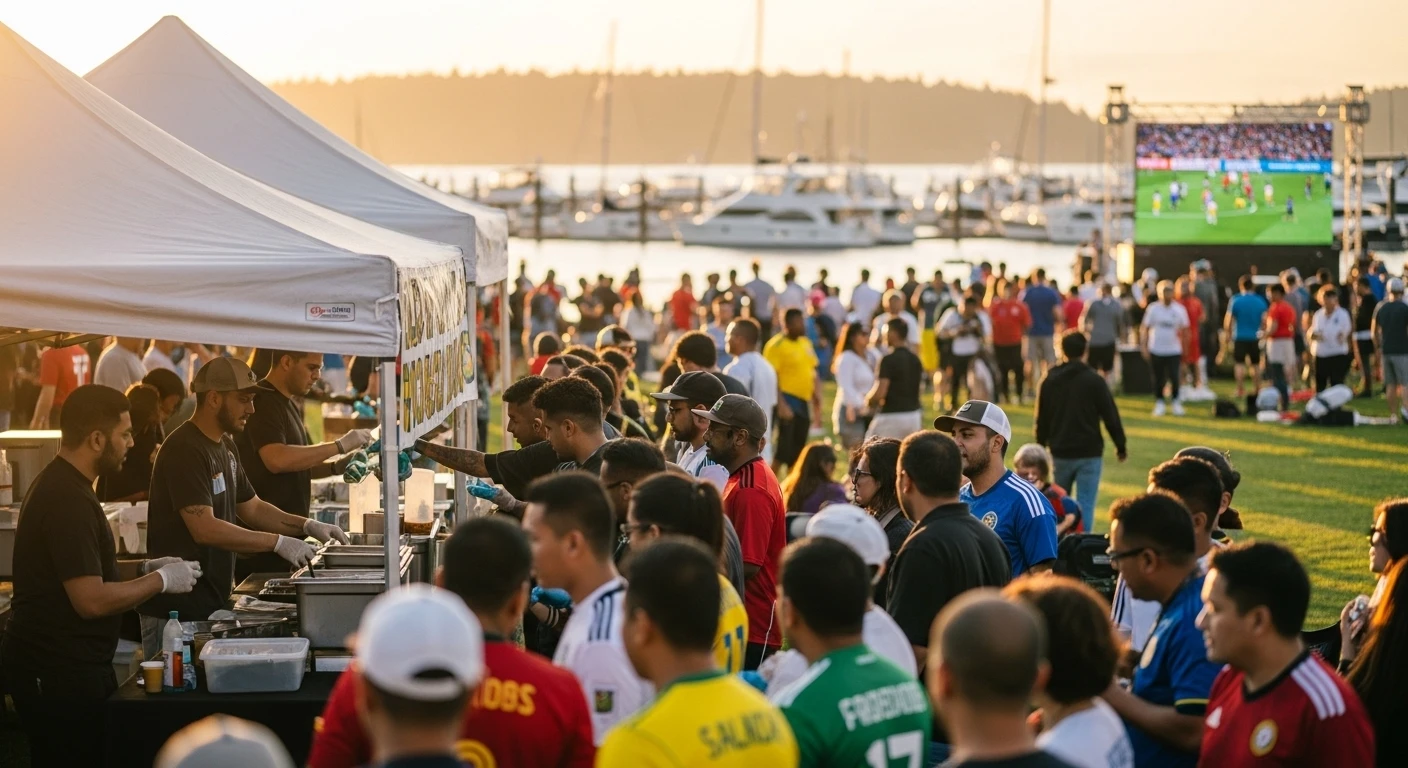
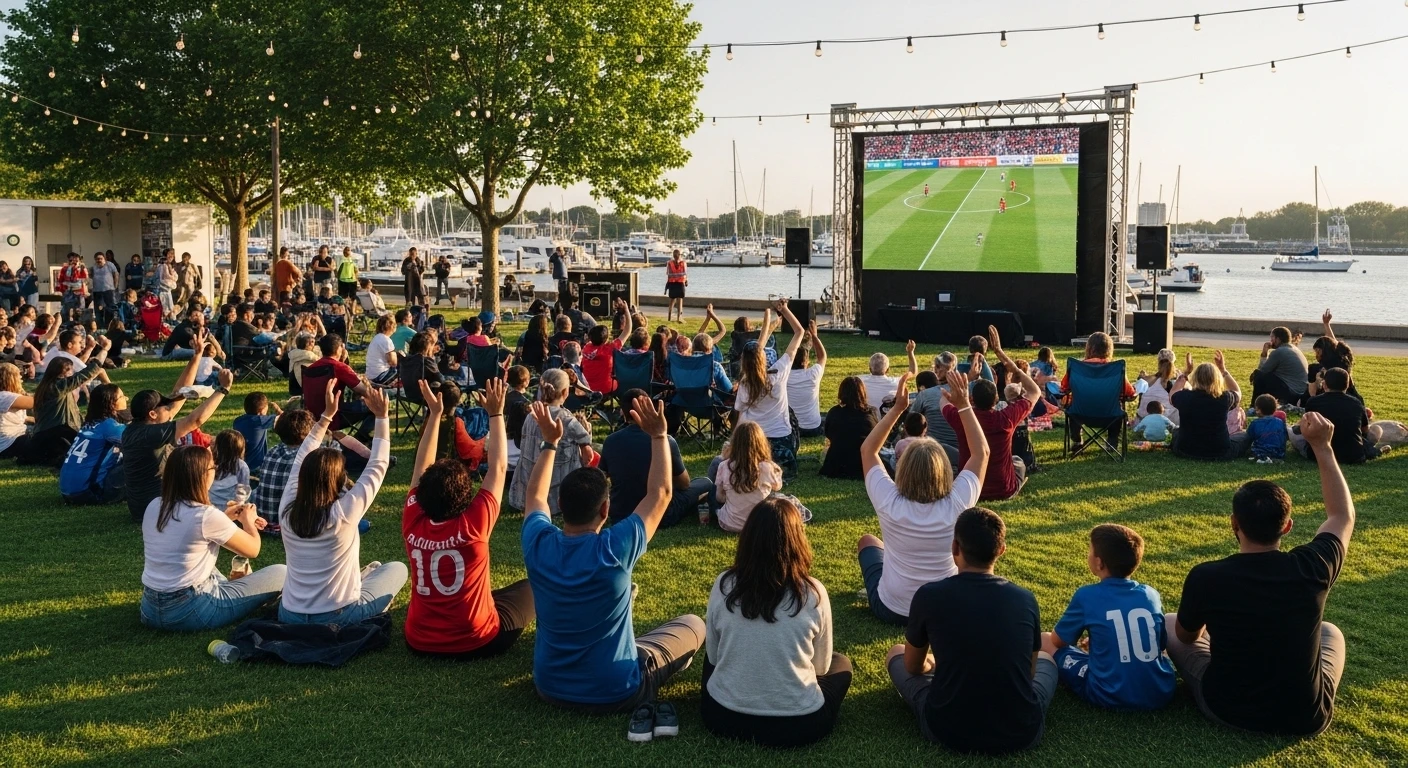
Everett is hosting four official FIFA World Cup watch parties at Boxcar Park this June. If you’re making a trip to the waterfront for one of these events, here’s how to plan a full day out.
The four games — Mexico vs. South Africa (June 11), USA vs. Paraguay (June 12), Mexico vs. South Korea (June 18), and USA vs. Australia (June 19) — draw on Everett’s waterfront location to create an experience that goes well beyond just watching a screen. Port Gardner Bay as a backdrop, marina activity, fresh seafood, and AquaSox games across the street make the Everett fan zone genuinely worth the drive from Seattle or beyond.
Getting There
By car from Seattle: Take I-5 North to Exit 193 (Everett/Everett Ave). Follow Marine View Drive north along the waterfront to Port of Everett. Drive time from downtown Seattle: 35-45 minutes in normal traffic. For USA match days, add buffer — these will draw regional crowds.
By transit: The best option for the evening matches (June 12 and 18) is Community Transit or Sounder North to Everett Station, then the free Everett Transit shuttle to Boxcar Park. Sounder North runs Monday-Friday — check Sound Transit’s schedule. Community Transit Route 512 runs from Lynnwood and Mountlake Terrace; connect at Everett Station for the shuttle.
Parking: Port of Everett marina lots are the closest option. On USA match days, plan to arrive 90 minutes before kickoff to secure a spot. Alternatively, park downtown (free street parking in most of Everett’s downtown grid) and walk 15-20 minutes to the waterfront, or take the free shuttle from Everett Station.
Before the Match: The Waterfront
Arrive at least two hours early — both because the fan zone opens two hours before kickoff and because the Port of Everett waterfront has enough to keep you occupied. The marina district includes restaurants, coffee, and waterfront walking paths with views of Jetty Island and the Olympic Peninsula across Port Gardner Bay.
Anthony’s HomePort Everett is the signature waterfront dining spot — Pacific Northwest seafood with marina views. It books up on event days; call ahead or plan to eat before the main crowd arrives. The Boatyard Bar & Grill is a more casual option at the marina. Walk the marina path north to see the working cargo port and South Terminal area before settling into Boxcar Park for the match.
If You’re Staying Overnight: Everett for a Weekend
The evening matches (June 12 and 18, both 6 PM kickoffs) pair well with a Snohomish County overnight. Hotels near the waterfront and Paine Field area include the Hampton Inn Everett, the Inn at Port Gardner (boutique, directly on the waterfront — book this one well in advance for World Cup weekend), and multiple options near I-5 at the Everett Mall exit.
After the evening matches, Everett’s Broadway District has bars and restaurants open late. The Rocket Bar and Anchor Pub are the most-cited spots for post-event crowds near downtown.
Other Things to Do in Everett on Match Day
AquaSox baseball: The Everett AquaSox (Seattle Mariners affiliate) play home games at Funko Field at Everett Memorial Stadium — about a 10-minute walk from the waterfront. Check the MiLB schedule for June home dates. A waterfront FIFA watch party followed by an AquaSox evening game is a legitimately great Everett day.
Jetty Island: Free ferry from the Everett Waterfront (runs July and August) to Jetty Island, a two-mile natural sand island with beaches, trails, and unobstructed water views. Not running in June — mark your calendar for a return visit.
Funko HQ: If you or your kids are fans of Funko Pop! figures (the collectible vinyl toys), the Funko headquarters is in Everett at 2802 Wetmore Ave — less than two miles from the waterfront. The HQ store stocks exclusive Everett-specific releases and is worth a stop.
Frequently Asked Questions — For Visitors
Is the Everett FIFA fan zone worth visiting from Seattle?
Yes — especially if you want a different experience than the dense urban crowd at a Seattle venue. The Boxcar Park waterfront setting is scenic, the event is free, and there’s enough around the Port of Everett marina to make a half-day trip of it. For families with kids, the outdoor space and less-crowded environment is a plus.
What is the Inn at Port Gardner in Everett?
The Inn at Port Gardner is an upscale boutique hotel directly on the Everett waterfront, adjacent to the marina. It’s the closest accommodations to Boxcar Park and the most atmospheric option for a World Cup weekend stay. Book early — it’s a small property that will fill quickly for the June match dates.
Where can I eat near the Everett World Cup fan zone?
Best options near Boxcar Park: Anthony’s HomePort Everett (Pacific Northwest seafood, waterfront views), the Boatyard Bar & Grill (casual marina dining), and the growing waterfront retail area at Waterfront Place. Event-day food vendors will also be on-site at Boxcar Park itself.
Related Exploring Everett coverage: Complete FIFA Fan Zone Guide — All Match Dates and Details