Tag: Everett Housing

  • Buying or Renting in Everett as a Boeing 737 North Line Worker: A 2026 Housing Guide

    Buying or Renting in Everett as a Boeing 737 North Line Worker: A 2026 Housing Guide

    Q: I’m starting on the Boeing 737 North Line in Everett. Where should I live?

    A: The honest answer depends on your shift, your household income, and whether you’re renting or buying. For Paine Field commute (the 737 North Line is at Boeing’s Everett factory adjacent to Paine Field), the closest Everett submarkets are 98208 (Silver Lake area, currently down 7.5% YoY at $740K median — best buyer leverage in the city), Downtown Everett (median $384K for condos, up 11.4% YoY but the most affordable single-purchase entry point in the city), and the bluff neighborhoods west of I-5. Northwest Everett is premium ($705K median, up 22.1% YoY) and is more attainable on a senior engineer or experienced assembler salary than on a new-hire wage. Mukilteo and south Everett unincorporated areas are also viable. This guide walks through each option for shift workers heading to the North Line.

    Buying or Renting in Everett as a Boeing 737 North Line Worker: A 2026 Housing Guide

    Boeing is onboarding more than 100 assemblers per day for the 737 North Line in Everett, with a midsummer 2026 target to begin operating the first 737 assembly line ever located outside Renton. That is a structural shift in who lives where in Snohomish County, and it is happening into a housing market that is — depending on the neighborhood — softening, holding, or appreciating fast. This is the housing math for North Line workers in mid-2026.

    Where the North Line Actually Is, and Why Commute Math Matters

    The 737 North Line work is in the Everett Production System building at Boeing’s Everett factory complex adjacent to Paine Field. That puts it in unincorporated Snohomish County, immediately west of I-5, near the intersection of Airport Road and Mukilteo Speedway. From the gate, the realistic commute zones for shift work — meaning you can be in your car within 25 minutes of clocking out, in your driveway within 35 — are:

    • South Everett (98208 ZIP code, Silver Lake, the corridors west of I-5)
    • Downtown Everett
    • Northwest Everett (the bluff district)
    • Mukilteo
    • The unincorporated Mariner area west of I-5 (currently subject of an Everett annexation study)
    • Lynnwood (further but I-5 access)

    Shift work matters here because you are commuting at hours when traffic is lighter than typical Seattle metro patterns. The 5:30 AM start and 3:30 PM end of a typical first shift, or the swing-shift end at 11:30 PM, give you windows when 25 minutes from gate to home covers a wider radius than a standard 9-to-5 commuter would expect. Plan around your shift schedule, not around Google Maps’ midweek midday estimate.

    The Three Everett Submarkets, From a North Line Hire’s Perspective

    98208 (south Everett, Silver Lake area). Median sale price approximately $740,000 in January 2026, down 7.5% year over year. This is the most leverage you’ll find in any Everett submarket right now. Single-family homes built in the 1990s and 2000s, three to four bedrooms, attached garages, decent yards. The submarket overshot during 2021–2023 and is correcting back toward sustainable pricing. If your household combines a Boeing assembler wage with a second income — a partner working in healthcare, education, or retail in Snohomish County — 98208 is realistic. The commute to Paine Field is 15–25 minutes depending on shift.

    Downtown Everett. Median sale price approximately $384,000, up 11.4% year over year. This is the cheapest single-purchase entry point in Everett, but it is mostly condo product. For a single-earner Boeing assembler renting or making a first purchase, downtown is the realistic on-ramp. The trade-off is square footage. The benefit is that downtown is the submarket appreciating, and you are walkable to Hewitt Avenue restaurants, Waterfront Place, and Everett Station for an Amtrak or Sounder commute on days you don’t drive. Paine Field commute from downtown Everett is 15–20 minutes off-peak.

    Northwest Everett (Rucker Hill, Grand, Hoyt). Median sale price approximately $705,000, up 22.1% year over year per Redfin’s October 2025 reading. This is character-rich historic housing and inventory is structurally constrained. NW Everett is more attainable for a senior assembler with seniority pay, an engineer at SPEEA scales, or a dual-income household where the second earner is at a comparable wage level. New North Line hires should not target NW Everett until they have a year or two of seniority and pay progression. Paine Field commute is 12–18 minutes off-peak.

    The Renting Path For New Hires

    If you are within your first 12 months on the North Line, renting is usually the smart move. Boeing’s hiring ramp is moving fast and shift assignments can shift between buildings, lines, and even campuses (Renton vs. Everett) in the early months. Locking yourself into a 30-year mortgage in your first six months is not the play.

    Realistic Everett rent ranges in mid-2026 by submarket: Downtown one-bedroom apartments run roughly $1,500–$1,900 depending on building. South Everett (98208) two-bedroom apartments run roughly $1,800–$2,300. NW Everett rentals are scarce and price closer to single-family rates — expect $2,500+ for a small unit if you can find one.

    Boeing’s Everett-area shuttle service from select transit centers can take some pressure off needing to live within driving distance immediately. Verify shuttle routes through your onboarding HR; routes have changed over the past year as the North Line ramped.

    The Buying Path For Established Hires

    If you have 18+ months on the line, your shift is settled, and you have a clear sense of whether you’ll stay on the North Line or move into another Boeing role at Paine Field, buying becomes realistic. The 2026 market gives you two decision points:

    Where to buy: 98208 if your household budget supports the $700K range and you want a single-family home with a yard. Downtown if you’re buying solo or with a partner and want a condo with appreciation tailwind. NW Everett if you have stretched budget and want the long-term hold play in a historically scarce submarket.

    When to buy: The citywide market is down 11.6% year over year and 98208 is down 7.5%. That argues for moving sooner rather than later in 2026 if you find a property you want — appreciation in downtown is already reaccelerating, and the broader market correction may be closer to its bottom than its midpoint. Watch the April 29 stadium vote and the Sound Transit Everett Link decisions as macro catalysts that could lift downtown valuations meaningfully if both move in pro-development directions.

    Things Boeing Workers Should Specifically Watch

    • SPEEA contract expires October 6, 2026. If you are or will be a SPEEA-represented engineer or technical worker, the contract negotiation is the most important fact about your 2026 income trajectory. Lenders will look at your wage stability when underwriting your purchase.
    • 737 North Line operating midsummer 2026. Shift assignments stabilize after the line is fully operating. If you are still in onboarding or training, your shift may not be your final shift.
    • BAH-equivalent housing math. Boeing doesn’t pay BAH the way the military does, but the comparison is useful. A two-bedroom rental in south Everett at $2,000/month is roughly comparable to what an E-5 with dependents in this area receives in BAH. Use that as a sanity check on what’s affordable on a single Boeing wage.
    • Paine Field passenger flights. If your job involves frequent travel for training or program work, Paine Field commercial flights (Alaska Airlines Horizon) are a meaningful quality-of-life factor. Living within 10 minutes of Paine has more value to a Boeing worker who flies frequently than to most homebuyers.

    The 98208 Versus Mukilteo Question

    Many North Line hires consider both Everett 98208 and Mukilteo. Quick framing: Mukilteo’s median is higher than 98208 (roughly $850K+ depending on subdivision) and the school district (Mukilteo SD) is well-regarded. Property taxes and school ratings are the two largest practical differences. If schools are a factor, run both districts before deciding. If schools aren’t a factor and you want price softness, 98208 currently offers more.

    Frequently Asked Questions

    What is the best Everett neighborhood for a Boeing 737 North Line assembler to live in?

    For most new hires, south Everett (98208) for single-family or downtown Everett for condo or rental. Both have realistic commute times to Paine Field and price points within reach of a Boeing assembler wage with one to two years of seniority.

    How long is the commute from south Everett to Boeing’s Everett factory?

    15–25 minutes depending on shift timing. Off-peak shift ends (early morning or late evening) are at the low end of that range.

    Is Northwest Everett affordable on a Boeing wage?

    Generally not for a new-hire assembler. NW Everett’s median sale price is approximately $705,000 with appreciation running at +22.1% year over year as of the October 2025 data. It is more attainable for senior assemblers, engineers, or dual-income households.

    Should I rent or buy in my first year on the North Line?

    Most Boeing professionals recommend renting through your first 12 months while shift, line, and pay progression stabilize. Buying becomes realistic after 18 months on the same role.

    How does the SPEEA contract expiration affect housing decisions?

    SPEEA’s Boeing contract expires October 6, 2026. If you are SPEEA-represented, lenders will look at the contract negotiation outcome when underwriting a purchase. A purchase offer in late 2026 may need to address the contract status explicitly.

    Can I commute to the Everett factory from Mukilteo or Lynnwood?

    Yes. Mukilteo is 8–15 minutes off-peak. Lynnwood is 25–35 minutes off-peak via I-5. Both are realistic for shift work with predictable timing.

    Where can I find Boeing-aware real estate guidance in Everett?

    Several Everett-area real estate brokerages have Boeing-specialized agents who understand shift-worker mortgages, SPEEA contract timing, and Paine Field commute math. Ask in Boeing Everett worker forums or your Boeing onboarding HR for recommendations.

  • Everett’s Three Housing Markets: A Complete Mid-2026 Guide to Downtown, Northwest Everett, and 98208

    Everett’s Three Housing Markets: A Complete Mid-2026 Guide to Downtown, Northwest Everett, and 98208

    Q: What is happening in Everett, Washington’s housing market in 2026?

    A: Everett’s citywide median home sale price is approximately $547,000 in February 2026, down 11.6% year over year per Redfin data. But the citywide number masks three very different submarkets. Downtown Everett is up 11.4% year over year (median $384,000) as Waterfront Place restaurant row and the proposed AquaSox stadium pull in demand. Northwest Everett — the historic mansion district above the waterfront — is up 22.1% year over year (median $705,000 as of October 2025). And the 98208 ZIP code on the south side is down 7.5% (median $740,000 as of January 2026). Homes citywide are going pending in approximately 8 days at about 1% under list price. The right number for your decision is your neighborhood’s number, not the citywide one.

    Everett’s Three Housing Markets: A Complete Mid-2026 Guide to Downtown, Northwest Everett, and 98208

    The Everett, Washington housing market in mid-April 2026 is not one market. It is three markets sitting inside the same set of city limits, and they are moving in three different directions. Downtown Everett is up double digits year over year. Northwest Everett — the historic Rucker Hill bluff district — is up more than 20 percent. The 98208 ZIP code on the south side is down 7.5 percent. The citywide median is down 11.6 percent and tells you almost nothing about any individual block.

    For buyers, sellers, investors, and anybody trying to understand what their own home is worth, the right number is the neighborhood number. Here is the full mid-2026 picture, with the data sources, the catalysts pulling each submarket in its direction, and what to watch through summer.

    The Citywide Snapshot — Why It Misleads

    Per Redfin’s most recent reading, the city of Everett posted a median home sale price of $547,000 in February 2026, down 11.6% from the prior year. Median price per square foot is $394, up 0.9% year over year. Homes go pending in approximately 8 days, and the typical sale closes at about 99% of list price.

    An 11.6% citywide decline is a significant correction by historical standards. It is not a 2008-style collapse — speed-of-sale is still fast, price-per-square-foot is essentially flat, and the market is functional. What’s happening is that the feverish appreciation of 2021–2023 has normalized out and the city as a whole has settled into a market that looks more like 2019 than like 2022.

    That settling is wildly uneven across Everett’s neighborhoods. The next three sections explain why.

    Submarket 1: Downtown Everett — Up 11.4% YoY

    Downtown Everett’s median sale price is approximately $384,000 in early 2026, up 11.4% year over year per Redfin. Price per square foot is $410, down 15.6% year over year — meaning median sale prices are climbing while individual price-per-square-foot is compressing. That is the signature of a submarket where smaller, denser units are appreciating fast and larger units are still adjusting.

    Downtown Everett has historically been the most affordable submarket in the city — older condos, aging multifamily stock, a mix of rental and owner-occupied product that rarely commanded premium pricing. The shift in 2025 and 2026 is the direction of the trend. Several catalysts are stacked on top of each other:

    • Waterfront Place lease-up. Tapped Public House (opened March 2, 2026), Rustic Cork (December 2025), The Net Shed (December 2025), Menchie’s at the Marina (ribbon cutting March 13, 2026), and Marina Azul Cocina & Cantina (early spring 2026) have transformed downtown’s Friday and Saturday evening foot traffic.
    • The proposed AquaSox stadium. The City Council is being asked for $10.6 million in design funding on April 29, 2026. A yes vote is a structural tailwind for downtown valuations.
    • Edgewater Bridge opening April 28, 2026. Cuts a long-running Mukilteo-corridor detour for downtown-proximate commutes.
    • Funko HQ continued pull and Hewitt Avenue restaurant build-out.

    If you bought a downtown condo in 2023 or 2024 when the citywide market was peaking and watched your paper value slide, that paper value has likely recovered and then some. The downtown trend is running counter to the citywide trend, and it is doing so for fundamental reasons rather than as a statistical anomaly.

    Submarket 2: Northwest Everett — Up 22.1% YoY (October 2025 reading)

    Northwest Everett is the historic mansion district — the bluff above the waterfront, the big old homes on Rucker, Grand, and Hoyt, the streets that were Everett’s money before the mills came in. The most recent neighborhood-level Redfin reading shows a median sale price of approximately $705,000, up 22.1% year over year as of October 2025.

    Two forces are pulling Northwest Everett. The first is the same waterfront thesis pulling downtown — everything happening at the Port of Everett’s Waterfront Place is making the bluff above the waterfront more valuable. The second is housing stock scarcity. Northwest Everett doesn’t have teardown-and-build-a-fourplex density potential in most of its blocks. What is there is largely what is there. When demand for character-rich historic Puget Sound homes spikes, Northwest Everett is one of the first submarkets to reprice.

    The October 2025 reading is the most recent neighborhood-level number Redfin has published. The citywide trend since then suggests the appreciation pace has likely moderated, but the relative premium NW Everett commands over the citywide average is structural and not going anywhere.

    Submarket 3: 98208 — Down 7.5% YoY

    The 98208 ZIP code covers Everett’s south and east — Silver Lake, much of the Cascade High School attendance boundary, the corridors that blend functionally into unincorporated Snohomish County. Redfin shows a median sale price of approximately $740,000 in January 2026, down 7.5% year over year. Median price per square foot is $365, down 8.3% year over year.

    98208 is where much of Everett’s 1990s and 2000s single-family stock sits and where a large share of Seattle in-migration landed during 2020–2023. That migration cycle is what’s unwinding. 98208 saw some of the strongest appreciation during the 2021–2023 boom, and it is now seeing some of the sharpest year-over-year declines. The $740,000 median is still substantial — higher than the citywide number — but it is down from a recent peak around $800,000.

    For buyers, the 98208 negotiation leverage is the strongest in Everett right now. For sellers, the inventory pressure is the highest.

    What This Means for Different Everett Buyers

    First-time buyer: Downtown is the entry point. A $384,000 median for a downtown condo is in reach for a dual-earner household at Everett’s median household income with a VA or FHA loan. The +11.4% YoY trend means you are buying into appreciation, not against it.

    Move-up buyer: 98208 is the buy. The submarket is down more than the citywide average. If you already own a smaller unit and want to trade up to a 3–4 bedroom single-family home, the negotiation environment is the most favorable since 2019.

    Northwest Everett buyer: Inventory is the constraint, not price discovery. If a Rucker Hill or Grand Avenue home you want comes available, plan to move quickly. NW Everett listings often go pending in days at full or above asking.

    Investor / developer: Watch Millwright District Phase 2 pre-leasing (120,000 sq ft of office space) and Waterfront Place Restaurant Row foot traffic as leading indicators for downtown. The investment thesis for small downtown multifamily is specifically the Waterfront Place thesis.

    Seller: Price sharp. Eight-day pending times mean well-priced homes move fast and overpriced homes get stale fast. Don’t anchor to what your neighbor got in 2022. Talk to an agent who has closed in your specific ZIP code in the last 90 days.

    What to Watch Through Summer 2026

    • Stadium vote April 29. $10.6 million in design funding from the City Council. Pass or fail moves downtown’s structural thesis.
    • Sound Transit Everett Link Draft EIS. Expected this year. Any movement in either direction repositions downtown and waterfront-adjacent pricing materially.
    • Millwright District Phase 2 pre-leasing. Which tenants sign determines weekday population in 2027–2028, which determines downtown rent trajectory.
    • Boeing 737 North Line ramp at Paine Field. 100+ assemblers per day are being onboarded as of April 2026. Where they buy or rent moves submarket inventory.
    • NAVSTA Everett housing demand. The base’s military housing arrangements affect off-base Everett demand at predictable points in the deployment and PCS cycles.

    The Everett housing market of 2026 is a market in transition. The story is no longer “Everett is up” or “Everett is down.” It is “which Everett.”

    Related Exploring Everett coverage:

    Frequently Asked Questions

    What is the median home price in Everett, Washington in 2026?

    Approximately $547,000 citywide as of February 2026, down 11.6% year over year per Redfin data. The citywide number masks significant neighborhood variation.

    Which Everett neighborhood is appreciating fastest in 2026?

    Northwest Everett, the historic mansion district on the bluff above the waterfront. The most recent reading shows the median sale price up 22.1% year over year at approximately $705,000 (October 2025 data).

    Which Everett neighborhood is the most affordable in 2026?

    Downtown Everett, with a median sale price of approximately $384,000 — though it is now appreciating at +11.4% year over year as Waterfront Place lease-up and proposed downtown stadium investment accelerate.

    Where is Everett housing softening the most?

    The 98208 ZIP code on Everett’s south side, with a median price of approximately $740,000 down 7.5% year over year. This submarket appreciated most aggressively in 2021–2023 and is correcting most sharply in 2025–2026.

    How fast are Everett homes selling in 2026?

    The typical Everett home goes pending in approximately 8 days, selling at roughly 99% of list price (about 1% under asking).

    Is it a buyer’s or seller’s market in Everett right now?

    It depends on the neighborhood. Downtown and Northwest Everett lean seller. The 98208 ZIP code leans buyer. Citywide, prices are softer year over year (favoring buyers) but speed of sale is fast (favoring sellers who price sharp).

    Why is downtown Everett rising while the rest of the city is falling?

    Downtown’s submarket-specific catalysts — Waterfront Place restaurant row, the proposed AquaSox stadium, Edgewater Bridge opening, Funko HQ pull, Hewitt Avenue restaurant build-out — are running counter to broader citywide normalization.

    Should I trust the Everett citywide median for my own home value?

    No. Neighborhood-level variance is wider than citywide averages would suggest. Use a comp pull from your specific ZIP code over the last 90 days, or consult a local agent who has closed deals in your area recently.
  • Living in Delta: Everett’s Quietly Great Middle Neighborhood

    Living in Delta: Everett’s Quietly Great Middle Neighborhood

    What is the Delta neighborhood in Everett?
    Delta is a quiet, mostly residential neighborhood at the northern end of Everett, Washington, between the Snohomish River and Broadway. Roughly 13,000 residents live there. It’s known for older single-family homes, long-running local staples like Ray’s Drive-In and Tampico Mexican Restaurant, a big off-leash dog park, and some of the most affordable housing in north Everett.

    Living in Delta: Everett’s Quietly Great Middle Neighborhood

    Drive up Broadway from downtown Everett and somewhere past Providence Regional Medical Center, you cross into Delta without anyone telling you. There’s no gateway sign, no big intersection marking the change. The blocks just start feeling a little older, a little quieter, a little more lived-in. That’s Delta: one of Everett’s most populous neighborhoods and almost certainly its most underrated.

    If you’ve only driven through, you’ve probably missed it. Delta is not a destination neighborhood — it’s a living neighborhood, and that’s exactly what makes it good.

    Where Delta Is and What It Looks Like

    Delta sits at the northern end of Everett, bounded roughly by the Snohomish River to the north and east, Broadway running through its spine, and the Bayside and Northwest Everett neighborhoods to the west. It’s one of the largest of Everett’s 21 officially recognized neighborhoods by population, with around 13,000 residents according to recent census data.

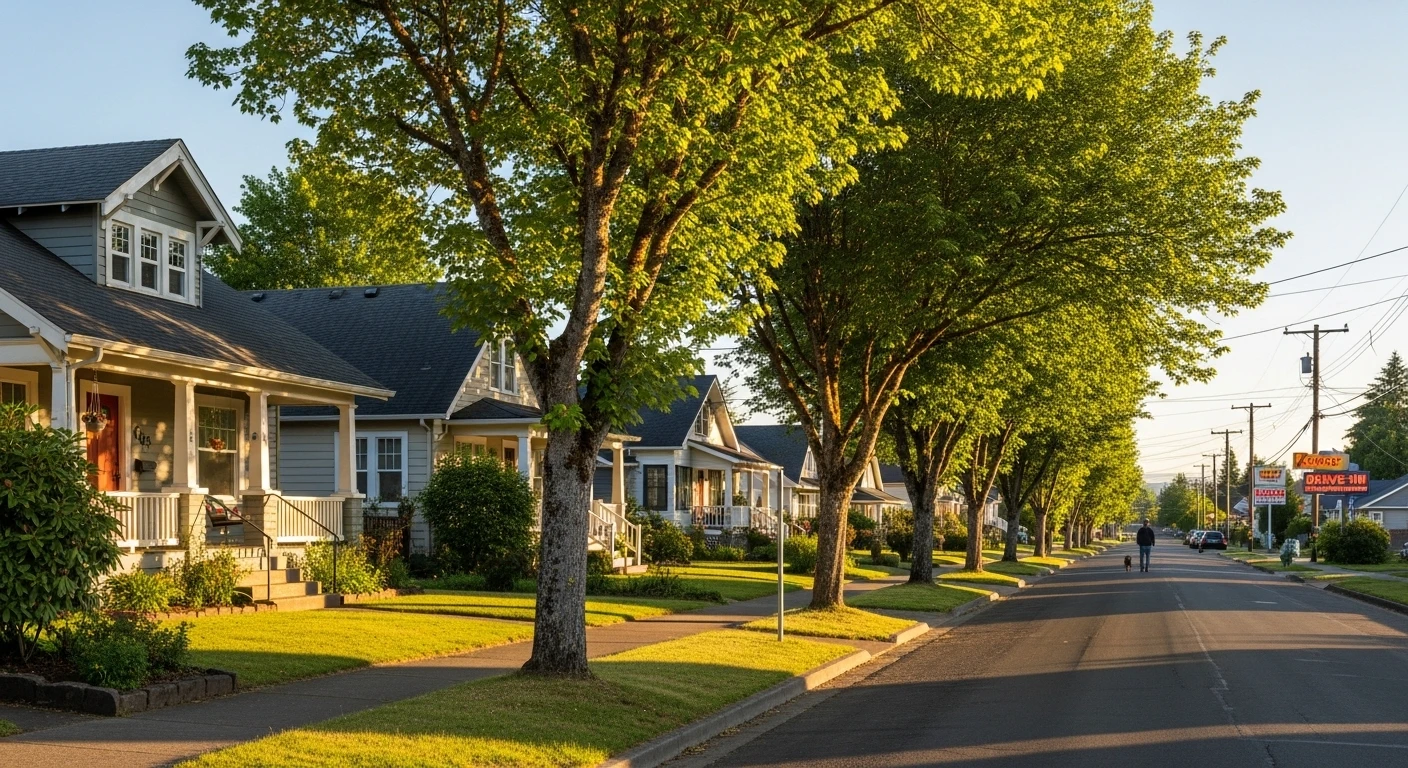
    What you see when you walk it: 1920s craftsman bungalows next to 1940s workers’ cottages next to tidy early-2000s townhomes in the north end. Tree-lined streets. Basketball hoops in driveways. The occasional well-loved ’90s Tacoma in the front yard. It’s the kind of neighborhood where the housing stock has been continuously lived in for a hundred years because no one ever had a reason to leave.

    The Local Staples That Define Delta

    Every neighborhood has the places that anchor it. In Delta, two of them have been anchoring since before most current residents were born.

    Ray’s Drive-In has been flipping burgers and scooping ice cream on Broadway since 1962. That’s 64 years of the same drive-up counter, the same red-and-white signage, the same deep-fried fries that come out almost too hot to eat. Generations of Everett teenagers have had their first after-practice cheeseburger here. Generations of Delta residents have walked over for a shake on a summer evening. If you want to understand how Delta feels about itself, watch the parking lot at Ray’s on a Friday night.

    Tampico Mexican Restaurant opened in 1987 and has been serving tostadas and margaritas to Delta regulars ever since. It’s not flashy. The salsa is good. The prices are what Everett prices used to be everywhere, and the booth you sat in last year is probably still open when you come back.

    The Broadway corridor through Delta also includes a rotating cast of smaller shops, family-owned services, and the quiet kind of storefronts — dry cleaners, barbers, a tire place, a dentist — that keep a neighborhood running without ever becoming “scenes.”

    Who Lives in Delta and What It Costs

    Delta has historically been one of the most affordable neighborhoods in north Everett, and that’s still largely true — with an asterisk the rest of the Puget Sound region has stamped on everything.

    Two-bedroom 1940s bungalows trade in the $380,000 to $430,000 range. A three-bedroom 1920s craftsman lands closer to $470,000. Newer three-bedroom townhomes in the north end of the neighborhood go between $580,000 and $630,000. None of those numbers are cheap in absolute terms, but compared to similar homes in Northwest Everett or Bayside, Delta consistently comes in lower.

    The result is that Delta has stayed one of the most economically mixed neighborhoods in the city. You get long-time Everett families who bought their homes in the ’80s and never left, young couples stretching to buy their first place, and renters in the older duplexes and fourplexes that dot the side streets. That economic mix is probably Delta’s single most underappreciated quality.

    Schools and the Providence Connection

    Many Delta kids attend Hawthorne Elementary School, part of the Everett School District, which has a long-standing presence in the neighborhood. Middle and high school assignments in Delta run through the district’s standard boundary system, with most students funneling into North Middle School and then either Everett High School or Cascade High School depending on block.

    The neighborhood also benefits enormously from proximity to the Providence Regional Medical Center Everett campus on Pacific Avenue — a roughly five-minute drive for most of Delta. Between the hospital, Everett Community College just to the south, and the Washington State University Everett campus, Delta residents have three of the biggest employers and institutions in north Everett within easy reach.

    Parks, Dogs, and Green Space

    If Delta has a spiritual center, it’s Delta Park — and specifically, the big off-leash dog park in the middle of it. Residents have been bringing their dogs there for years. Poop bags are provided at the entrances. On any sunny evening, you’ll find a small democracy of retrievers, doodles, and senior mutts running circles while their owners compare notes on weather, work, and where the best new coffee shop opened. It’s the kind of low-key community space that a neighborhood has to earn.

    Delta also has easy access to the Snohomish River trail system and is a short drive from Legion Memorial Park, Kasch Park, and the waterfront at Jetty Landing.

    What’s Changing in Delta Right Now

    Delta is not being torn down and rebuilt — that’s part of its charm — but a few things are shifting. New construction in the north end of the neighborhood has brought in a steady trickle of townhomes over the past decade, gradually pushing up the neighborhood’s median home value and adding some density near the river. Broadway itself has seen small restaurant and service-business turnover, with newer independent places opening alongside the old staples.

    The bigger story for Delta residents is Sound Transit’s Everett Link Extension, which will eventually bring light rail service to Everett, with station planning that touches the broader Broadway corridor. That’s still years out, but it’s the kind of long-horizon change that is already showing up in real estate conversations in the neighborhood.

    Why Delta Works

    Delta isn’t trying to be the next trendy neighborhood. Nobody is writing breathless Instagram posts about its aesthetic. There’s no coffee cart behind a speakeasy-style door. And that’s the whole point.

    Delta works because the same people have lived there for a long time, the businesses that were there when those people moved in are still there, and the neighborhood has absorbed change slowly enough that it still feels like itself. In a city that is transforming fast — new stadium downtown, Boeing’s 737 line expanding, the waterfront filling in with new restaurants and housing — Delta is the neighborhood that reminds you Everett isn’t just what’s next. It’s also what’s already here, still working, still worth knowing.

    How to Spend an Afternoon in Delta

    If you’re new to Everett and want to get a feel for Delta the way locals do, here’s a simple afternoon:

    1. Grab a burger and a shake at Ray’s Drive-In on Broadway.
    2. Walk it off at Delta Park — say hi to the dogs at the off-leash area.
    3. Drive the residential side streets between Broadway and the river to get a sense of the housing stock and the neighborhood’s rhythm.
    4. Finish with tostadas and a margarita at Tampico Mexican Restaurant.

    Two hours. Maybe three if you linger. That’s Delta — and that’s the whole neighborhood, really.

    Frequently Asked Questions

    Where is the Delta neighborhood in Everett?

    Delta sits at the northern end of Everett, Washington, bounded roughly by the Snohomish River to the north and east and by Broadway running through its spine. It’s immediately east of Northwest Everett and north of the central business district.

    How many people live in Delta?

    Around 13,000 residents, making Delta one of the more populous of Everett’s 21 officially recognized neighborhoods.

    Is Delta a good neighborhood to live in?

    For buyers looking for single-family homes in north Everett at below-northwest-Everett prices, Delta is one of the strongest value options in the city. The neighborhood is quiet, well-established, close to Providence Regional Medical Center and I-5, and has long-running local staples like Ray’s Drive-In and Tampico.

    What are the best restaurants in Delta?

    Ray’s Drive-In (burgers, shakes, and ice cream on Broadway since 1962) and Tampico Mexican Restaurant (tostadas and margaritas since 1987) are the two longest-running locals’ favorites. The Broadway corridor has additional smaller spots worth exploring.

    What elementary school serves the Delta neighborhood?

    Hawthorne Elementary School, part of the Everett School District, serves many Delta families. Middle and high school assignments depend on specific block boundaries within the district.

    Is there a dog park in Delta?

    Yes. Delta Park has a large off-leash dog area with poop bag stations at the entrances. It’s one of the most actively used dog parks in north Everett.

    How much does a house in Delta cost?

    Recent sales have ranged from around $380,000 for smaller 1940s bungalows up to roughly $630,000 for three-bedroom townhomes in the north end of the neighborhood. Prices skew lower than Northwest Everett and Bayside for comparable homes.

    What’s the best way to explore Delta as a visitor?

    Drive Broadway through the neighborhood, stop at Ray’s Drive-In and Tampico, walk Delta Park, and take a loop through the residential side streets between Broadway and the Snohomish River to see the mix of craftsman, bungalow, and townhome housing stock.


  • Moving to Everett? Boeing’s New 737 Line Is a Big Reason the Job Market Here Just Got Stronger

    Moving to Everett? Boeing’s New 737 Line Is a Big Reason the Job Market Here Just Got Stronger

    If you’re considering relocating to the Everett area, Boeing’s announcement that it’s opening its first-ever 737 production line here this summer is a concrete data point about where this city’s economy is headed.

    The 737 North Line — a new assembly line opening at Boeing’s Everett factory campus in summer 2026 — adds hundreds of jobs to a campus that already employs over 30,000 people. For anyone evaluating Everett as a place to live and work, that context matters.

    Everett and Boeing: The Relationship That Defines the City

    Boeing has been the dominant economic force in Snohomish County for over 50 years. The Everett factory campus, off SR-526 near Paine Field, is the largest building by volume in the world. It’s been the final assembly site for the 747, 767, 777, 787 Dreamliner, and now the 777X — Boeing’s widebody jets. The plant, plus the aerospace supply chain that orbits it, employs a substantial share of Snohomish County’s workforce directly and supports tens of thousands more in indirect jobs.

    The North Line adds something new to that mix: 737 MAX narrowbody production, which has historically been Renton’s domain. Bringing 737 assembly to Everett effectively diversifies the campus’s production portfolio and deepens the city’s dependency on — but also its value to — Boeing’s broader manufacturing strategy.

    What This Means for the Job Market

    Direct North Line jobs — production assemblers, electricians, inspectors, quality workers, shift supervisors — are the most visible impact. These are IAM District 751 union positions with wages set by the 2024 collective bargaining agreement, which includes 38% increases over four years. Entry-level assembler wages at Boeing are among the strongest in the region for workers without a four-year degree.

    But the indirect impact reaches further. Aerospace suppliers — Spirit AeroSystems (fuselage components), Ducommun (structural components), Safran Cabin (interior systems), plus hundreds of smaller Paine Field-area contractors — will see increased demand as North Line production ramps. Tooling shops, maintenance contractors, catering services, and shuttle operators tied to the Boeing campus all feel a Boeing expansion.

    Everett’s economy beyond Boeing is also growing. Mayor Cassie Franklin’s April 2026 State of the City specifically highlighted healthcare and clean-energy companies alongside aerospace as pillars of local economic growth. Everett’s waterfront is undergoing a $1 billion redevelopment — the Millwright District at Port of Everett’s Waterfront Place is expected to receive its first housing residents by 2026, with retail and commercial space following.

    Housing and Cost of Living Context

    Everett is one of the more affordable entry points in the greater Seattle metro area. Median home prices in Everett run significantly below Seattle and Bellevue — typically 30-40% lower — while still offering Sound Transit access (Sounder North commuter rail to Seattle), Interstate 5 access, and proximity to both the Boeing campus and the Port of Everett waterfront.

    The North Line expansion will increase demand for housing near the Boeing campus — neighborhoods like Bayside, Silver Lake, and the areas north of Everett toward Mukilteo are popular with aerospace workers. The Millwright District’s new housing (200+ multi-family units under LPC West development) will add supply in a market that has needed it.

    Schools and Family Infrastructure

    Everett School District serves the city’s 114,000+ residents and is one of the larger districts in Snohomish County. The district has vocational and aerospace pathway programs — relevant for families with kids considering careers in the industry that dominates local employment. Everett Community College (EvCC) offers a strong aerospace manufacturing technology program that feeds directly into Boeing and supplier hiring pipelines.

    Frequently Asked Questions — For People Considering a Move

    Is Everett a good place to live if you work at Boeing?

    Yes — Everett is the closest major city to the Boeing Everett factory campus, which sits just west of Paine Field off SR-526. Workers at the campus can often commute in under 20 minutes from Everett neighborhoods, avoiding the I-5 or I-405 grind. Housing costs are significantly lower than Seattle or Bellevue while still offering access to the full metro area.

    What is the average salary for Boeing jobs at the Everett plant?

    IAM District 751 production workers at Boeing earn wages set by the collective bargaining agreement. Under the 2024 contract, hourly rates for journey-level assemblers are in the $35-$50/hour range depending on classification and seniority, with overtime premium pay, full benefits, and pension. The 2024 contract included 38% wage increases over four years.

    How far is Everett from Seattle?

    Everett is approximately 25 miles north of Seattle via I-5 — about 30-45 minutes in off-peak traffic, 45-75 minutes in morning commute conditions. Sound Transit’s Sounder North commuter rail runs between Everett Station and King Street Station in Seattle on weekday commute schedules. Sound Transit light rail expansion is planned to eventually connect Everett to the broader Link network.

    What neighborhoods are popular with Boeing workers near Everett?

    Bayside (near the waterfront), Silver Lake, Mukilteo, and Lynnwood are popular with Boeing campus workers. Mukilteo is particularly close to the plant’s main SR-526 access. Marysville and Arlington (north of Everett) attract workers who want more space and lower prices at the cost of a longer drive.

    Related Exploring Everett coverage: Boeing’s 737 North Line Is Coming to Everett This Summer | What the North Line Means for Boeing Workers

  • What the Frigate Cancellation Means for Military Families at NAVSTA Everett

    What the Frigate Cancellation Means for Military Families at NAVSTA Everett

    Q: Does the frigate cancellation affect my orders to Naval Station Everett?
    A: No. NAVSTA Everett remains a fully operational installation homeporting seven DDGs. Orders to the base are unaffected. What changed is the long-term growth plan — the planned 2,400 new billets tied to 12 frigates will not materialize on the original timeline.

    What the Frigate Cancellation Means for Military Families at NAVSTA Everett

    If you are a military family assigned to Naval Station Everett, or you are PCSing to Everett and trying to make sense of the November 2025 frigate program cancellation, here is what actually matters for your day-to-day life — and what does not.

    The Short Answer: Your Assignment Is Unchanged

    Naval Station Everett is not closing. It is not being consolidated. Representative Rick Larsen’s office has explicitly stated that the Navy’s commitment to the Everett homeport is “ironclad.” The base currently homeports seven Arleigh Burke-class guided-missile destroyers and continues full operations. If you have orders to NAVSTA Everett, those orders reflect real billets on real ships doing real Pacific Fleet missions.

    What the cancellation affects is expansion — specifically, the plans to bring 12 Constellation-class frigates here, which would have added roughly 2,400 billets and their associated families. That expansion is not happening on the original timeline. But the base you are coming to, or already live near, is operating normally.

    Housing: Tight But Stable

    The Everett-area housing market in April 2026 shows a median home price of $635,000, with homes selling in a median of 11 days. Rents for 3-bedroom units in Marysville, Mukilteo, and South Everett — the most common zip codes for NAVSTA families — range from approximately $2,200 to $2,900 per month depending on condition and proximity to base.

    The good news: the frigate cancellation means the housing crunch that locals feared — 2,400 additional billets flooding an already tight market — will not happen on that timeline. The Snohomish County housing market is still competitive, but it is not about to be overwhelmed by a surge of new military families the way it would have been.

    The Navy had already secured $19 million in Congressional funding to build 88 new family housing units at the Navy Support Complex in Smokey Point, in Marysville. That project is currently on hold pending new mission decisions. Existing on-base housing at NAVSTA Everett itself remains available and should not see additional wait-list pressure from the cancellation.

    Schools: MIAD and District Relationships

    Military families at NAVSTA Everett primarily interact with three school districts: Everett Public Schools, Marysville School District, and Mukilteo School District, depending on where they live. The Everett area does not have a dedicated Department of Defense school (DODEA); all military children attend public schools alongside civilian students.

    All three districts have established relationships with base leadership and are familiar with the mobility patterns of military families — mid-year enrollments, flexible records transfer, and family readiness programs are standard. The cancellation does not change any of this. School capacity planning for the frigate influx was a future-state concern; current capacity is adequate for the existing military population.

    Fleet and Family Support Center

    Naval Station Everett’s Fleet and Family Support Center (FFSC) provides the standard suite of services: deployment readiness, financial counseling, transition assistance, relocation support, and crisis response. The FFSC serves both active duty and their families across all ships homeported at the base. Deployment cycles for the seven DDGs currently homeported at NAVSTA Everett follow standard Pacific Fleet rotation patterns — typically 7-9 month deployments with 12-18 months between deployments.

    The Broader Everett Community for Military Families

    Everett and Snohomish County have a long history with the Navy presence — the base has been here since 1994. The Silvertips and AquaSox regularly offer military appreciation events and discounted tickets. Businesses along Everett Avenue, in south Marysville, and along Pacific Avenue near the base cater to the military community. The VFW Post 1641 and American Legion Post 1 both maintain active presences in the area.

    The waterfront at Port of Everett’s Waterfront Place — with Tapped Public House, The Net Shed, and Anthony’s HomePort — is a 10-minute drive from the main gate and has become one of the best Friday night options for families across Snohomish County.

    Frequently Asked Questions for Military Families at NAVSTA Everett

    Q: Will the frigate cancellation cause NAVSTA Everett to reduce personnel?
    A: No reduction in current personnel is expected. The cancellation eliminates planned future growth, not existing billets.

    Q: Is the BAH rate for Everett affected by the cancellation?
    A: BAH rates are determined by housing market surveys in each geographic area, not by base mission changes. Everett’s BAH will continue to reflect actual rental costs in Snohomish County.

    Q: Are there good neighborhoods near the base for military families?
    A: Marysville, Mukilteo, south Everett (near Everett Station), and Mill Creek are all popular with NAVSTA families. Marysville offers the most affordable single-family housing; Mukilteo offers Puget Sound views and strong schools.

    Q: What ships are currently at NAVSTA Everett?
    A: Seven Arleigh Burke-class guided-missile destroyers, USCGC Henry Blake (Keeper-class cutter), and USCGC Blue Shark (Marine Protector-class patrol boat).

    Q: How far is Naval Station Everett from Seattle?
    A: Approximately 25 miles south on I-5, typically a 35-50 minute drive depending on traffic. The Sounder commuter train runs from Everett Station to King Street Station in Seattle — a 65-minute ride that some sailors use on non-duty days.

    Related: NAVSTA Everett After the Frigate Collapse | Naval Station Everett’s Fight for Its Future After the Frigate Program Collapse | Exploring Everett

  • What the Frigate Cancellation Means for Military Families at NAVSTA Everett

    What the Frigate Cancellation Means for Military Families at NAVSTA Everett

    Q: How does the Navy frigate cancellation affect military families at NAVSTA Everett?
    A: The cancellation of the Constellation-class frigate program means that the hundreds of new sailors and their families who would have been assigned to Everett will not be coming. For families already at NAVSTA Everett, the base remains open and operational — but some uncertainty about long-term force assignments makes planning for the future more complicated.

    What the Frigate Cancellation Means for Military Families at NAVSTA Everett

    If you’re a military family at Naval Station Everett — or considering a PCS move here — the November 2025 cancellation of the Constellation-class frigate program raised an immediate and practical question: what does this mean for us?

    The short answer is that the base is not closing. The ships currently homeported here are still here. The community around NAVSTA Everett — the schools, the housing, the support networks — remains intact. But the frigate cancellation changed some things that military families should understand as they plan their time in Everett.

    What Was Lost for the NAVSTA Everett Community

    The 12 Constellation-class frigates that were promised to NAVSTA Everett would have brought hundreds of new sailors and their families to Snohomish County. That growth would have meant expanded housing demand, more enrollment at base-adjacent schools, a larger military community at YMCA programs and faith communities and youth sports leagues, and more demand for the off-base businesses that serve military families.

    For families already stationed here, the frigates would have meant a more robust community infrastructure — more families going through the same transitions at the same time, more established support networks, more familiarity in the local community with military life and its rhythms. That anticipated growth is not coming, and the community that was expected to expand will remain closer to its current size.

    The Base Is Stable — Here’s What That Actually Means

    NAVSTA Everett currently hosts approximately 6,000 military personnel and 500 civilian employees. The carrier strike group elements and surface combatants homeported here have not been affected by the frigate cancellation. The base’s operational status, its infrastructure, and its day-to-day function remain unchanged.

    For a military family weighing a PCS to Everett, “stable” translates into practical terms: the base is funded, staffed, and operating. Schools in the Everett School District and Mukilteo School District that serve military families are enrolled at typical levels. On-base housing continues to operate through the standard process. The commissary, Navy Exchange, and base support services are all functioning normally.

    The Snohomish County Military Affairs Committee — rebooted in early 2026 in response to the cancellation — is actively working with the Economic Alliance of Snohomish County, County Council member Nate Nehring, and U.S. Representative Rick Larsen to ensure NAVSTA Everett retains its current force assignments and potentially receives new ship assignments as the Navy restructures its Pacific Fleet posture.

    Housing: What the Military Market Looks Like Around NAVSTA Everett

    The Everett-area housing market in spring 2026 is tight for renters, particularly in the neighborhoods closest to the base. On-base housing is managed through the standard Navy process; off-base, BAH rates for E-5 and above in the Everett-Seattle MSA have kept pace with local market conditions better than in some other PCS destinations.

    Key neighborhoods for military families include South Everett (close to the base, strong school access), Mukilteo (excellent schools, slightly longer commute to the gate), and Marysville (more affordable, 20-25 minute drive to NAVSTA). The Everett housing market’s median sale price sits near $547,000 as of April 2026, with townhomes moving in roughly six days on average under $750,000 — a competitive but not impossible market for families using VA loans.

    The projected influx of frigate families would have added significant upward pressure to an already tight rental and ownership market. The cancellation means that pressure is eased — counterintuitively, military families arriving now face a somewhat less competitive housing environment than they would have if the frigates had materialized.

    Schools and Family Resources

    Military families at NAVSTA Everett are typically served by either the Everett School District or the Mukilteo School District, depending on where they live. Both districts have experience working with military families navigating mid-year enrollment, records transfers, and the social adjustment that comes with a PCS move.

    Everett Community College offers several programs relevant to military families, including veteran support services and workforce training pathways for spouses seeking employment in the Snohomish County job market. The county’s Boeing economy — including the 737 North Line launching at Paine Field this summer — means manufacturing and aerospace jobs are actively hiring, which matters enormously for military spouses whose career continuity gets disrupted by PCS cycles.

    Fleet and Family Support Center (FFSC) services remain available at NAVSTA Everett, providing counseling, deployment support, financial management assistance, and transition assistance programs. These services are unaffected by the frigate cancellation.

    Deployment Rhythms and Community Planning

    One of the most practical concerns for military families is how base operational tempo affects deployment schedules and community planning. Without the frigate expansion, NAVSTA Everett’s operational rhythm is likely to remain more predictable in the near term — the current ship assignments have established deployment patterns that are broadly understood by the base community.

    The Navy has not announced any changes to current deployment schedules as a result of the frigate cancellation. For families in the middle of a deployment cycle, the immediate practical impact of the cancellation is minimal. The longer-term uncertainty — what new ships or missions might come to Everett in the years ahead — is something the Military Affairs Committee is actively working to shape.

    Frequently Asked Questions for Military Families at NAVSTA Everett

    Q: Is NAVSTA Everett at risk of a BRAC closure following the frigate cancellation?
    A: There is no current indication that NAVSTA Everett is being considered for closure. The base remains strategically important as a deep-water Pacific Fleet homeport, and local, state, and federal advocates are actively working to maintain and grow its force assignments.

    Q: Will BAH rates for NAVSTA Everett be affected by the frigate cancellation?
    A: BAH rates are determined by local housing market costs, not by base population levels. The cancellation’s effect on the housing market is modest — it removes anticipated demand growth, which may slightly ease housing cost pressure, but is unlikely to change BAH rates in a significant way.

    Q: What schools serve military families near NAVSTA Everett?
    A: Depending on where you live, military families are served by either the Everett School District or Mukilteo School District. Both have experience with military family enrollment and transfers. South Everett and Mukilteo neighborhoods are popular with families for their school quality and commute to the base gate.

    Q: Are there employment opportunities for military spouses near NAVSTA Everett?
    A: The Snohomish County economy is robust, anchored by Boeing’s Everett factory (which is hiring for the new 737 North Line this summer), aerospace suppliers at Paine Field, healthcare systems, and a growing retail and hospitality sector tied to the Port of Everett’s waterfront development. Everett Community College offers workforce training and veteran support services.

    Q: What support services are available for military families at NAVSTA Everett?
    A: The Fleet and Family Support Center (FFSC) at NAVSTA Everett provides counseling, deployment readiness, financial management, transition assistance, and spouse employment support. These services are fully operational and unaffected by the frigate cancellation.

    Q: Where do most military families live near NAVSTA Everett?
    A: South Everett (close to the base gate, diverse housing stock), Mukilteo (highly rated schools, waterfront access), and Marysville (most affordable, 20-25 min commute) are the most common off-base choices. On-base housing is managed through the standard Navy process.

    Related: Everett Fights Back: Inside the Community Push to Secure NAVSTA’s Future | Everett Housing Market April 2026: What Buyers and Sellers Need to Know | Boeing’s North Line: Everett Prepares to Build Its First 737 MAX This Summer

  • How Everett’s $10.74 Monthly Water Bill Increase Will Hit Your Household

    How Everett’s $10.74 Monthly Water Bill Increase Will Hit Your Household

    Q: How much will Everett’s proposed utility tax add to my water bill?
    A: The proposed 12% utility tax — doubling the current 6% rate — would add approximately $10.74 per month to the average Everett household’s water bill. If approved by the City Council, the increase takes effect July 1, 2026.

    How Everett’s $10.74 Monthly Water Bill Increase Will Hit Your Household

    For most Everett households, the utility tax debate at City Hall feels abstract — until it shows up on your bill. Here’s what the proposed rate change actually means for residents, broken down by renter vs. owner, apartment vs. single-family home, and household water use.

    The Number That Matters: $10.74 Per Month

    The City of Everett’s proposed ordinance would replace its current 6% “payment in lieu of taxes” (PILT) fee on water and sewer with a formal 12% utility tax. The change doubles the embedded rate in your water bill. For the average Everett household, city officials calculate that translates to approximately $10.74 per month — about $129 per year.

    That’s not a dramatic number in isolation. But Everett households are already absorbing inflation-driven cost increases across utilities, groceries, and housing, and this increase would be implemented without a public vote. The council is expected to take three readings on the ordinance beginning in April 2026, with the final vote and a proposed July 1, 2026 effective date.

    Renters vs. Homeowners: Who Feels It How

    If you own your home and pay your water bill directly to the city, the impact is straightforward: $10.74 more per month starting in July. You’ll see it as a line item change on your utility statement.

    If you rent, the picture is more complicated. Rental properties in Everett where the landlord pays water — common in apartments and some older rental homes — may see landlords pass the cost through over time, either in lease renewals or as part of broader rent adjustments. Rentals where tenants pay utilities directly will see the same bill increase as homeowners.

    Residents who live in multi-unit buildings where water is included in rent should not expect an immediate increase on July 1, but may see the cost reflected at their next lease renewal. This is not a guarantee — landlord behavior varies — but it’s the realistic expectation based on how utility cost increases typically work their way through rental markets.

    Your Sewer Bill Is Affected Too

    The proposed tax applies to both water and sewer services. Over 180,000 sewer customers in the Everett service area will be affected. If your household pays both water and sewer to the city, both line items will reflect the doubled rate. The $10.74 average increase figure represents the combined effect across both services.

    What If You’re on a Fixed Income or Tight Budget

    City officials have stated that they intend to expand the existing utility payment assistance program for income-qualified customers before the July 1 effective date. As of April 2026, the specifics of the expanded program — eligibility thresholds, assistance amounts, how to apply — have not been publicly released.

    If you currently receive utility payment assistance from the City of Everett, monitor city communications closely over the coming months. The program expansion should clarify whether your current assistance level will be adjusted to account for the higher base rate. If you don’t currently receive assistance but are struggling with utility costs, this is the time to inquire — the city’s Water Department and Community Development office handle assistance applications.

    What You Can Do Before the Council Vote

    Because utility taxes in Washington state do not require voter approval, the City Council’s vote is the decision point. Before the final vote — expected after the third council reading in late spring 2026 — residents have the opportunity to comment at council meetings.

    Everett City Council meetings are held at Everett City Hall (2930 Wetmore Ave). Public comment periods occur at the beginning of most meetings and are open to any Everett resident or stakeholder. Written comments can also be submitted to the City Clerk. The Council’s contact information is available at everettwa.gov.

    The Bigger Picture: Why This Is Happening

    Mayor Cassie Franklin said it plainly at her March 2026 State of the City address: “We cannot cut our way to a sustainable future.” Everett faces a projected $14 million budget deficit heading into the 2027 budget cycle — a structural gap created by rising public safety and infrastructure costs outpacing traditional revenue sources constrained by Washington state property tax levy limits.

    The utility tax, if approved, would close roughly half the deficit ($7.5 million per year). The remaining gap has not yet been addressed by a specific public proposal. Residents can expect additional budget discussions — and potentially additional asks — in the coming months as the 2027 budget cycle approaches.

    Frequently Asked Questions for Everett Residents

    Q: Do I have to vote on this or will it just happen?
    A: Utility taxes in Washington state do not require public votes. The City Council approves them through the standard ordinance process. Residents can comment at council meetings before the final vote.

    Q: What if I live outside Everett but get my water from Everett?
    A: You will be indirectly affected. Everett embeds the tax in its wholesale water costs, which flow to the utilities that serve your city or water district. Those utilities may pass the cost through at different rates depending on their own pricing structures.

    Q: When exactly will my bill go up?
    A: If the ordinance passes, the proposed effective date is July 1, 2026. Your first billing cycle after that date would reflect the new rate.

    Q: Is there any assistance for low-income households?
    A: City officials have committed to expanding utility payment assistance before July 1. Specific details have not been announced. Contact the City of Everett Water Department or visit everettwa.gov for current assistance program information.

    Q: What happens to the money this raises?
    A: The approximately $7.5 million per year generated by the utility tax goes to Everett’s general fund, which covers public safety, parks, city services, and the broader municipal operating budget.

    Related: Everett’s Proposed Utility Tax Would Add $10.74 a Month to Most Snohomish County Water Bills | Everett Is Changing How It Talks to Neighborhoods — Here’s What That Means for You | Everett City Council Approves Fair Labor Ordinance 9-1

  • Millwright District Phase 2: A Complete Guide to Everett’s New Waterfront Neighborhood

    Millwright District Phase 2: A Complete Guide to Everett’s New Waterfront Neighborhood

    Q: What is the Millwright District in Everett?
    A: The Millwright District is the 10-acre second and largest phase of the Port of Everett’s Waterfront Place development. Built by private development partner Lincoln Property Company (LPC West) under a long-term ground lease with the Port, Phase 2 will deliver 300+ residential units, 60,000+ square feet of retail and restaurant space, and 200,000+ square feet of commercial and office space on Everett’s working waterfront. Construction began in late 2025 with units targeted to deliver starting in 2026.

    Millwright District Phase 2: A Complete Guide to Everett’s New Waterfront Neighborhood

    Everett’s waterfront has been one of the Pacific Northwest’s most ambitious urban transformation projects for the better part of a decade. Phase 1 of the Port of Everett’s Waterfront Place is now delivering — Restaurant Row is open, Tapped Public House debuted in March 2026, and the Net Shed Fish Market has been drawing crowds since December 2025. But the bigger transformation hasn’t started yet.

    The Millwright District — Phase 2 of Waterfront Place — is a full 10-acre neighborhood being built from scratch on Everett’s working waterfront. Here is what it is, who’s building it, what will be there, and why it matters for the city.

    Scale: What 10 Acres on a Waterfront Actually Means

    The Millwright District sits within the Port of Everett’s 65-acre Waterfront Place project, which is the Port’s $1 billion-plus bet on transforming industrial waterfront land into a mixed-use urban neighborhood. Phase 1 — Restaurant Row and its associated retail — delivered the hospitality anchor. Phase 2 is the residential and commercial core.

    The program for the Millwright District includes:

    • 300+ residential units — waterfront apartment homes on the marina edge
    • 60,000+ square feet of retail and restaurant space — a full neighborhood commercial district supporting the residential population and the broader waterfront draw
    • 200,000+ square feet of commercial and office space — bringing employers directly to the waterfront, something Everett’s downtown has struggled to do at scale

    These aren’t renderings or projections waiting for financing. Lincoln Property Company (LPC West), the Port’s selected private development partner, has an exclusive negotiating agreement and long-term ground lease with the Port. The first residential building’s groundbreaking was targeted for late 2025, and units are expected to begin delivering in 2026.

    Who Is Building It and Why That Matters

    The Port of Everett selected LPC West — the West Coast operating unit of Lincoln Property Company, one of the largest real estate firms in the United States — through a competitive process in late 2021. Lincoln Properties has a significant Pacific Northwest portfolio; its selection was a signal that the Port was serious about executing Phase 2 at scale with a developer who has the balance sheet and track record to deliver.

    The ground lease structure matters for understanding the project’s long-term economics. LPC West leases the land from the Port rather than purchasing it. The Port retains land ownership while the developer builds and operates the improvements. This arrangement generates long-term ground rent revenue for the Port while enabling private capital to fund the construction — a model that protects the public investment while allowing the development to happen faster than the Port could finance it alone.

    The Design: History Built Into the Architecture

    The Millwright District name reflects the site’s industrial heritage — this area of Everett’s waterfront once supported a booming lumber and shingle mill industry. The design team has embedded that history into the neighborhood’s physical form: architectural elements and street names reference the mill era, and a focal point of the district is a “workman’s clocktower” designed to resemble a smokestack, inspired by the Dey Time Register that mill workers used to punch in and out.

    The public realm design includes Timberman Trails — four connecting courtyards — and Champfer Woornerf, a “living street” designed to accommodate events like festivals and pop-up markets. The goal is a neighborhood that functions as a destination, not just a place where people happen to live.

    The marina edge location is the defining feature. Residents in the 300+ units will have waterfront access that doesn’t exist anywhere else in the Snohomish County housing market at this scale.

    What’s Already There: Phase 1 Sets the Stage

    Understanding Phase 2 requires understanding what Phase 1 has already delivered. Restaurant Row at Waterfront Place is now anchored by several tenants:

    • Tapped Public House — opened March 2, 2026, with what is claimed to be Snohomish County’s largest open-air rooftop deck
    • The Net Shed Fresh Fish Market and Kitchen — open since December 2025, already developing a strong local following for its waterfront fish market and miso-glazed sablefish
    • Rustic Cork Wine Bar — established Waterfront Place tenant
    • Marina Azul Cocina and Cantina — announced for 2026, bringing elevated Mexican food and 100+ tequilas to Restaurant Row

    The food and beverage foundation is solid. Phase 2’s residential population will walk directly to these restaurants — and the commercial and office space in the Millwright District will bring a daytime workforce population that sustains the restaurants beyond weekend tourist traffic.

    Connection to the Larger Picture

    The Millwright District is one of three major structural changes reshaping Everett’s downtown and waterfront simultaneously. The other two: the proposed $120 million downtown stadium (currently facing a $38 million funding gap) and Sound Transit’s Everett Link Extension (targeting a 2037 Paine Field opening). If all three execute on their timelines, Everett’s waterfront and downtown in 2030 will look nothing like the Everett of 2020.

    The Millwright District is the piece with the most secured private capital behind it and the clearest execution path. The stadium and light rail are subject to public funding approvals and political processes. Lincoln Properties’ ground lease is a private commitment with a contractual obligation to perform.

    Frequently Asked Questions About the Millwright District

    Q: When will the Millwright District apartments be ready to lease?
    A: The first residential building’s groundbreaking was targeted for late 2025 into early 2026. Units are expected to begin delivering in 2026, with full build-out over several years as the phased development completes. Watch the Port of Everett’s official communications for specific leasing timelines as they are announced.

    Q: Who is Lincoln Property Company?
    A: Lincoln Property Company is one of the largest real estate companies in the United States. LPC West is its West Coast operating unit, active in Washington, Oregon, California, and Idaho since 2005. The company was selected by the Port of Everett through a competitive RFP process in 2021.

    Q: Will there be affordable housing in the Millwright District?
    A: The Millwright District is a market-rate development under a private ground lease. Specific affordability requirements, if any, are governed by the terms of the ground lease agreement between LPC West and the Port of Everett. No public affordability set-aside has been announced.

    Q: What is the total cost of the Waterfront Place project?
    A: The Port of Everett has described Waterfront Place as a $1 billion-plus transformation of 65 acres of working waterfront. The Millwright District represents a significant portion of that investment, with construction funded primarily through private capital from Lincoln Properties under the ground lease structure.

    Q: How does the Millwright District connect to the rest of downtown Everett?
    A: The waterfront is approximately a 10-15 minute walk from Everett’s downtown core along Grand Avenue and the waterfront trail system. A planned hotel component within Waterfront Place and the potential addition of light rail connectivity via the Sound Transit Everett Link Extension (targeting 2037) would strengthen that connection over time.

    Q: What businesses will be in the Millwright District’s retail space?
    A: Specific tenants for the 60,000+ square feet of retail and restaurant space have not been publicly announced as of spring 2026. Leasing for the commercial and retail components is expected to be announced as construction progresses. The existing Restaurant Row restaurants at Phase 1 are immediately adjacent to the Millwright District footprint.

    Related: Everett’s $120M Stadium Has a $38M Funding Gap: Here’s the Full Breakdown | The Net Shed Fish Market and Kitchen: Three Months In, It’s Worth the Hype | Marina Azul Cocina and Cantina Is Coming to Everett’s Waterfront

  • Living at the Millwright District: What Everett’s New Waterfront Apartments Mean for People Moving to the City

    Living at the Millwright District: What Everett’s New Waterfront Apartments Mean for People Moving to the City

    Q: Can I live at the Millwright District in Everett?
    A: The Millwright District’s 300+ waterfront apartments are currently under construction, with the first units targeted to deliver in 2026. The project is being developed by Lincoln Property Company (LPC West) under a ground lease with the Port of Everett. Watch portofeverett.com and lincolnapartments.com for leasing announcements as the delivery date approaches.

    Living at the Millwright District: What Everett’s New Waterfront Apartments Mean for People Moving to the City

    People researching a move to Everett face a problem: most of the content about the city describes what it was, not what it’s becoming. The Millwright District is the clearest example of that gap. It represents the most significant new residential option Everett has produced in a generation — waterfront apartments, minutes from downtown, in a neighborhood being built from scratch with urban amenities designed in from the start.

    If you’re considering relocating to the Everett area, here’s what the Millwright District is, how it compares to other Snohomish County options, and what to watch for as leasing approaches.

    What You’re Actually Getting

    The Millwright District is the second phase of the Port of Everett’s Waterfront Place development — a 10-acre mixed-use neighborhood on Everett’s working waterfront, developed by Lincoln Property Company (LPC West). The residential component is 300+ apartment units situated on the marina edge.

    What makes this different from the typical Snohomish County apartment complex:

    • True waterfront location. Not “near the water” — on it. The marina is the neighbor, not a marketing description.
    • Walkable restaurant district already operating. Restaurant Row at Phase 1 of Waterfront Place is immediately adjacent — Tapped Public House (opened March 2026), The Net Shed Fish Market and Kitchen (opened December 2025), Rustic Cork, and Marina Azul Cocina coming in 2026.
    • Designed neighborhood, not retrofitted. Timberman Trails, Champfer Woornerf (a “living street” for events and pop-up markets), and public realm features are designed in. This is walkable by intention, not accident.
    • Urban energy with Pacific Northwest character. The Millwright District’s design draws on the site’s lumber mill heritage — the workman’s clocktower, the industrial architectural references — making it feel rooted in Everett’s specific history rather than generic new development.

    How It Compares to Other Everett Neighborhoods

    Everett has distinct neighborhoods with different profiles. The Millwright District won’t be the right fit for everyone, but it’s clearly differentiated from the alternatives:

    Bayside (Everett’s historic core) is Everett’s most walkable existing neighborhood — Victorian homes, Clark Park, Grand Avenue views, strong community feel. It’s established and charming. The Millwright District is newer construction with waterfront access that Bayside doesn’t have.

    South Everett is practical — close to Boeing’s factory and NAVSTA Everett, strong transit access, varied housing stock. It’s a commuter neighborhood. The Millwright District is a lifestyle neighborhood.

    Silver Lake (southeast Everett) is suburban and family-oriented, with access to the actual lake and connected parks. The Millwright District is urban — no yards, but walking distance to the marina.

    The apartment market in Snohomish County is tight. Everett’s housing market has a median sale price around $547,000 as of April 2026, and quality rentals with waterfront access simply don’t exist at the scale the Millwright District will provide. For people relocating from Seattle who want urban amenities at Snohomish County prices, this is a new option.

    The Everett-Seattle Comparison

    Everett is 30 miles north of Seattle. For people moving from Seattle or comparing Everett against Seattle-area options:

    Cost: Snohomish County rents run significantly lower than Seattle for comparable quality. Waterfront apartments in Seattle’s South Lake Union or Capitol Hill neighborhoods command premiums that Everett waterfront won’t. The Millwright District will be premium by Everett standards but likely well below Seattle waterfront pricing.

    Commute: Seattle commutes from Everett via I-5 range from 30-60+ minutes depending on traffic and time of day. Sound Transit Sounder North service runs limited trips. The 2037 Everett Link Extension, if it opens on schedule, will be a game-changer for the Seattle commute from Everett — but that’s 11 years away. Plan your commute based on 2026 reality, not 2037 projections.

    Employment base: If you work at Boeing (Everett factory), NAVSTA Everett, or the growing cluster of Paine Field employers, the commute math strongly favors Everett. If you commute to Seattle daily, the calculus is more nuanced.

    What’s Nearby: The Millwright District’s Immediate Context

    Within walking distance or a short drive from the Millwright District’s waterfront location:

    • Restaurant Row at Waterfront Place (immediate neighbor)
    • Port of Everett Marina — kayak rentals, boat tours, boat access
    • Downtown Everett (10-15 min walk along Grand Avenue waterfront trail) — Historic Everett Theatre, boutique shops, Grand Avenue restaurants
    • Angel of the Winds Arena (downtown Everett) — Everett Silvertips hockey, AEW wrestling, concerts
    • Forest Park (10 min drive) — 197 acres, trails, free animal farm
    • Everett Community College (10 min) — continuing education, athletic events

    When to Watch for Leasing Announcements

    Lincoln Property Company manages leasing for its residential developments through its LPC Living platform (also operating as LPC West residential). As units approach delivery, leasing information typically appears on the developer’s website and through major apartment listing platforms (Apartments.com, Zillow, etc.).

    The Port of Everett’s website (portofeverett.com) and Waterfront Place’s official channels are the authoritative sources for project status updates. Given the 2026 first-delivery target, leasing inquiries and waitlist opportunities may open in mid-2026.

    Frequently Asked Questions for People Considering the Millwright District

    Q: When will Millwright District apartments be available to rent?
    A: The first units are targeted to deliver in 2026. Specific leasing timelines have not been publicly announced. Monitor portofeverett.com and Lincoln Property Company’s residential platforms for announcements.

    Q: Is there parking at the Millwright District?
    A: Specific parking details for the Millwright District residential buildings have not been publicly released. Urban waterfront developments of this type typically include structured parking as part of the development program. Confirm with the developer as leasing approaches.

    Q: What are the schools like near the Millwright District?
    A: The Millwright District falls within the Everett School District. The district has a range of elementary, middle, and high school options; specific school assignments depend on exact address. For families with school-aged children, confirm school boundaries through the Everett School District before committing to an address.

    Q: How do I get to Seattle from the Millwright District without a car?
    A: Everett Station (10-15 min walk from the waterfront) is served by Community Transit (CT), Sound Transit Sounder North, and ST Express buses. Sounder North provides limited direct Seattle service; CT and ST Express provide more frequent connections. The 2037 Everett Link Extension would add light rail service.

    Q: Will there be affordable units at the Millwright District?
    A: No public affordability set-aside has been announced for the Millwright District’s residential units. The development is market-rate under a private ground lease with the Port of Everett.

    Related: Millwright District Phase 2: What 300+ New Waterfront Homes Mean for Everett | Living in Bayside: Inside Everett’s Historic Heart and Most Walkable Neighborhood | Living in Silver Lake: Everett’s Neighborhood With an Actual Lake in the Middle of It

  • Moving to Casino Road in South Everett: What New Residents Need to Know

    Moving to Casino Road in South Everett: What New Residents Need to Know


    Q: Is Casino Road in South Everett a good place to live?
    A: Casino Road offers some of Everett’s most affordable apartments within commuting distance of Paine Field, downtown Everett, and (via Community Transit) Lynnwood Link light rail to Seattle. The neighborhood has a strong community infrastructure — Connect Casino Road, The Village — and a rich cultural food scene. It’s a working-class, family-oriented corridor with real community character, not a polished urban center.

    Moving to Casino Road in South Everett: What New Residents Need to Know

    If you’re considering an apartment along Casino Road in South Everett, this is the honest guide that the listing photos don’t give you. What it’s like to live here, what the community infrastructure looks like, what you’ll pay, how you’ll get around, and what makes Casino Road a genuinely good choice for certain types of residents — and not the right fit for others.

    What Casino Road Actually Is

    Casino Road is a 2-mile commercial and residential corridor in South Everett — approximately 4 miles south of Everett’s downtown core. The neighborhood is primarily multifamily apartment housing along and off the main corridor, with a commercial strip serving neighborhood needs: grocery stores, taquerias, salons, laundromats, and community-serving businesses. It’s not a polished neighborhood with boutique coffee shops and weekend farmers markets (for that, you want Everett’s downtown core or the Colby Avenue corridor). It’s a working neighborhood with a genuinely dense community character.

    About 13,000 people live in the Casino Road corridor — one of the highest-density residential areas in Snohomish County. A significant portion of residents have roots in Latin America, Southeast Asia, East Africa, and the Pacific Islands. The neighborhood has a well-established, long-term character shaped by communities that have been here for decades, not a transitioning neighborhood in early gentrification.

    The Cost Reality: Affordable by Snohomish County Standards

    Casino Road is among Everett’s most affordable apartment corridors. As of early 2026, one-bedroom apartments along Casino Road typically range from $1,350 to $1,650 per month; two-bedrooms from $1,600 to $2,100. These are significantly below Everett’s waterfront and downtown core pricing (where two-bedrooms run $2,200-$2,800+) and well below comparable units in Bellevue, Redmond, or Seattle.

    Trade-offs for the lower price point: apartments are older stock (mostly 1970s-1990s construction), parking is often surface lots, unit finishes are typically standard rather than upgraded, and building amenities are basic. If you’re prioritizing cost-efficiency over new construction, Casino Road makes real financial sense.

    The Commute: Who Casino Road Works For

    Casino Road’s location makes the most sense for specific commute patterns:

    Boeing/Paine Field workers: Casino Road sits approximately 5-7 miles from Paine Field’s main Boeing campus. The commute via Airport Road or SR 526 takes 10-20 minutes by car, depending on shift time. This proximity to the aerospace corridor is one of Casino Road’s biggest practical advantages.

    Everett downtown workers: Everett’s downtown core is about 4 miles north on Broadway or Everett Avenue — a 15-20 minute drive, or accessible via Everett Transit and Community Transit bus routes.

    Seattle commuters: Casino Road’s Seattle commute is workable but not easy. Community Transit buses connect the corridor to Everett Station and Lynnwood City Center for Link light rail. Total transit time to downtown Seattle: approximately 75-90 minutes. By car on I-5: 35-50 minutes off-peak, 60-90 minutes peak. This works for occasional Seattle trips but makes Casino Road less ideal for daily Seattle commutes compared to neighborhoods closer to Everett Station.

    What the Community Infrastructure Looks Like

    Casino Road has unusually strong community infrastructure for its density and income profile. Connect Casino Road — a network of 24+ partner organizations launched in 2017 — operates The Village on Casino Road as a neighborhood hub. As a new resident, The Village is worth knowing about even if you don’t immediately need services: it hosts community events, connects residents to resources, and functions as a neighborhood commons.

    Services available through Connect Casino Road and The Village include a food bank (second and fourth Tuesdays), free tax preparation, health services navigation, immigration legal assistance, and youth programming. If you have family members who are recent immigrants or navigating complex systems, this is a genuine on-the-ground resource within the neighborhood.

    Schools in the Casino Road Area

    Casino Road falls primarily within the Mukilteo School District rather than Everett School District — a distinction worth confirming for your specific address, as the boundary runs through the corridor. Mariner High School serves much of the South Everett area, with Cascade High School nearby as well. Cascade High School is adding the International Baccalaureate (IB) Diploma Programme starting fall 2026 — a significant educational development for families in the area.

    For families with younger children, Mukilteo School District’s elementary schools in the South Everett area include Challenger Elementary and Fairmount Elementary. Confirm your specific school assignment at the district’s website with your address.

    Food and Services: What You’ll Actually Use

    Casino Road has strong neighborhood-serving commercial infrastructure. Grocery needs: QFC and Safeway are accessible within 5-10 minutes by car; smaller Latin American and Asian grocery stores are within walking distance for specialty items. The corridor has abundant Mexican, Vietnamese, and Cambodian food options — some genuinely excellent.

    Healthcare: Optum/Multicare clinics serve South Everett, with Providence Regional Medical Center Everett (the main regional hospital) about 4 miles north. Community Health Center of Snohomish County has a South Everett location serving income-qualified patients.

    Parks: Harborview Park and Silver Lake Park are the primary outdoor spaces within reasonable distance of Casino Road. Silver Lake has a county park with boat launch, beach, and trails — a quality of life asset that Casino Road’s central location puts within easy reach.

    For more on what Everett’s neighborhoods offer, read our complete guide to Casino Road’s neighborhood life, our profile of Lowell, Everett’s oldest neighborhood, and what the Sound Transit light rail situation means for people moving to Everett.

    FAQ: Moving to Casino Road, South Everett

    What are average apartment rents on Casino Road in 2026?

    One-bedrooms typically range $1,350-$1,650/month; two-bedrooms $1,600-$2,100/month, depending on building and unit. Pricing is below Everett’s waterfront core and significantly below comparable units in Bellevue or Seattle.

    What school district covers Casino Road?

    Much of Casino Road falls within the Mukilteo School District. Some addresses may fall within Everett School District — confirm at the district boundary lookup with your specific address.

    Is Casino Road close to Boeing and Paine Field?

    Yes — approximately 5-7 miles from Boeing’s main Paine Field campus via Airport Road/SR 526. A 10-20 minute drive depending on time of day and specific destination within the Paine Field complex.

    What community resources are available in Casino Road for new residents?

    The Village on Casino Road hosts Connect Casino Road programming including a food bank, tax prep, health navigation, and legal assistance. The Village is a neighborhood hub accessible to all residents regardless of income.

    What grocery stores are near Casino Road?

    QFC and Safeway are within 5-10 minutes by car. The Casino Road commercial strip has smaller Latin American and Asian grocery stores and markets within walking distance of most apartment complexes.

    How is the transit from Casino Road to downtown Everett?

    Community Transit and Everett Transit bus routes connect Casino Road to downtown Everett and Everett Station. Drive time is approximately 15-20 minutes. For Seattle commutes, the transfer to Community Transit buses connecting to Lynnwood Link light rail is the primary transit option.